Colonization, plague, nuclear fire, an emptied town, and one house that keeps calling out good morning to no one.
Text and illustrations produced by the pipeline
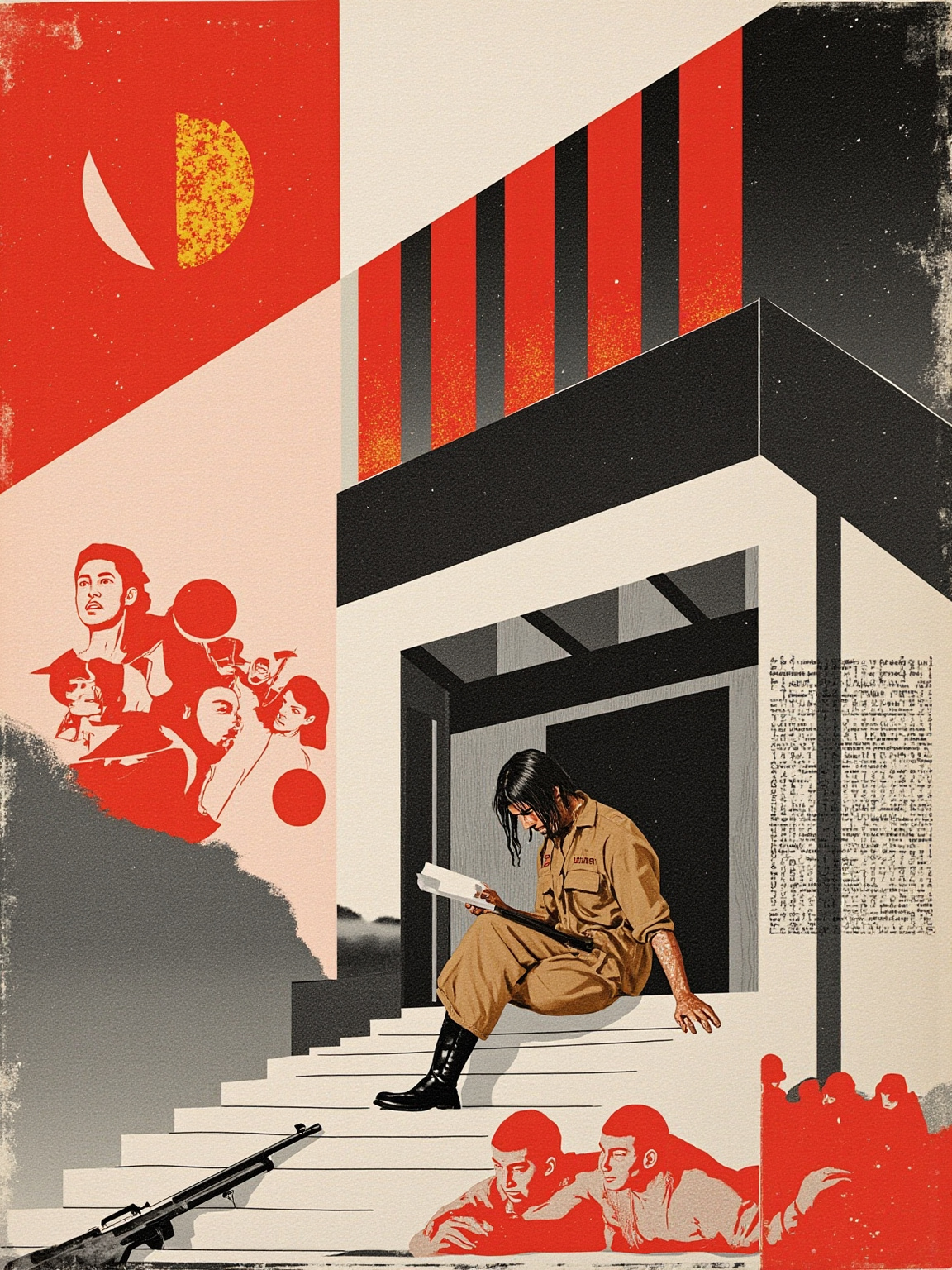
One morning, an empty house on Earth wakes up on schedule. The stove lights itself. An alarm clock speaks in a man's voice. In the kitchen, mechanical hands slide bread into the toaster, and the calendar on the wall reads aloud a poem about peace. There is no one left outside — the bomb took the family and the whole neighborhood the night before, and all that remains of them are their own shadows burned into the stucco. The house keeps making breakfast, keeps wiping its own table, until one day it catches fire and burns itself down. This is the chapter of The Martian Chronicles that ends up in the most English textbooks, "There Will Come Soft Rains." Before you have heard of Martians, before rockets or chicken pox, Bradbury puts this empty house in front of you first: it is not a story about Mars. It is a story about Earth.
Ray Bradbury was still young when he wrote it. The stories first ran separately in magazines in the mid-twentieth century, and in 1950 a publisher strung them into a single book. It isn't a novel in the usual sense — there's no character who carries the whole thing. It's more than twenty short stories threaded onto one timeline, what's sometimes called a fix-up novel. People still bring it up in the same breath as Fahrenheit 451, Bradbury's other essential book. His science fiction is lyrical, not the engineer's prose of hard sci-fi; it pulls you into space through image and atmosphere and a handful of scenes that lodge in you. Don't read it for plot thrills. It's a satire about Earth, told through Mars, and readers have kept coming back to it for generations.
Before the plot, the cast needs setting straight. Bradbury's Martians are nothing like the big-headed little green men of arcade games — in the book, a Martian woman has bronze skin, long gold eyes, a body no different from a human's, and the ability to read minds and change her face. A few names worth knowing going in: Captain John Black, who leads the third expedition into a trap dressed as a dream; Jeff Spender, the archaeologist on the fourth expedition who falls in love with the Martian ruins and turns his gun on his own crew; Captain Wilder, the coolest head in the whole book; and Ylla and her husband Yll — Ylla is a Martian woman who falls in love, in her dreams, with a man who doesn't exist yet, and Yll, consumed by jealousy, shoots the first Earthmen dead the moment they land.
The book's last chapter is called "The Million-Year Picnic." William Thomas and his family flee Earth's nuclear war by rocket, and the first thing they do on Mars is burn the deeds and old newspapers that stood for the old order. The children ask where the Martians are, and their father points down at the canal. In the ripples, a reflection looks back: a couple, two children. Those are the new Martians. The Martians were never extinct. They just changed skins. One reflection on the water rewrites who counts as Martian. Bradbury never spells out that we became the Martians; he just lets a child ask and a father point at the water, and that restraint hits harder than any declaration would.
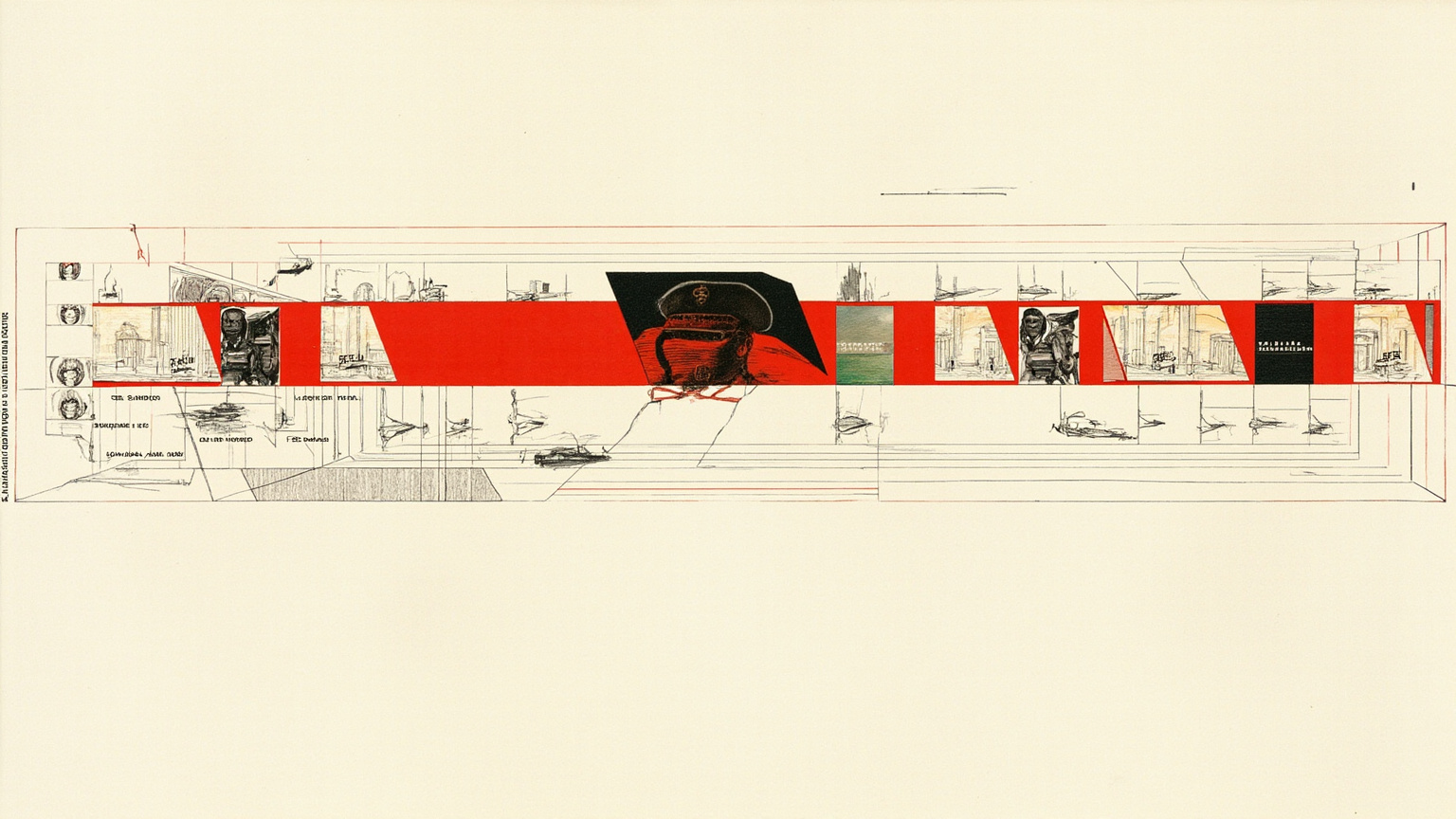
Before the guide was written, this book got a visual foundation — every illustration you just read grew out of it.
Early in the book, the first Earth rocket lands on Mars. Nathaniel York's crew steps out grinning, hatch thrown open — he has no idea that Ylla has spent months dreaming she's in love with him, and describing his face to the neighbors. Her husband Yll has noticed, and decides to go hunting. York's crew becomes the game. They're shot the moment they land. Wiped out. Neither side gets to say a single word. Bradbury lets first contact end before a sentence is exchanged — not a misunderstanding, but jealousy killing goodwill before it has a chance.
The second expedition dies too. The third, led by Captain John Black, meets no gunfire — the Martians read their minds instead, and rebuild each crew member's hometown on Mars: the old street, the porch from childhood, a mother dead for years standing at the door with a cake. The whole crew falls into the joy of seeing family again, their guard drops, and every one of them dies in his sleep that night. It's a brutal piece of writing: not fear that kills you in the end, but tenderness.
By the fourth expedition, Mars is nearly empty. What killed it wasn't war. It was chicken pox: an ordinary cold virus, carried in by an earlier crew, that spread across the whole planet in a few weeks. Martians had no immunity to Earth pathogens, and they dropped mid-stride, coughing. When the fourth expedition lands, the bodies in the street are still warm, and the crystal-roofed buildings stand empty. The archaeologist Spender, meanwhile, has spent his time cataloging what's left of Martian sculpture and libraries, and turned himself into the civilization's sole mourner. He decides humanity has no right to colonize a graveyard, and raises his gun on his own crew. Captain Wilder kills him, without much fuss. Wiping out a whole civilization with an ordinary cold, instead of some alien weapon, is the book's cruelest joke: the disaster a conqueror brings is often just a cough.
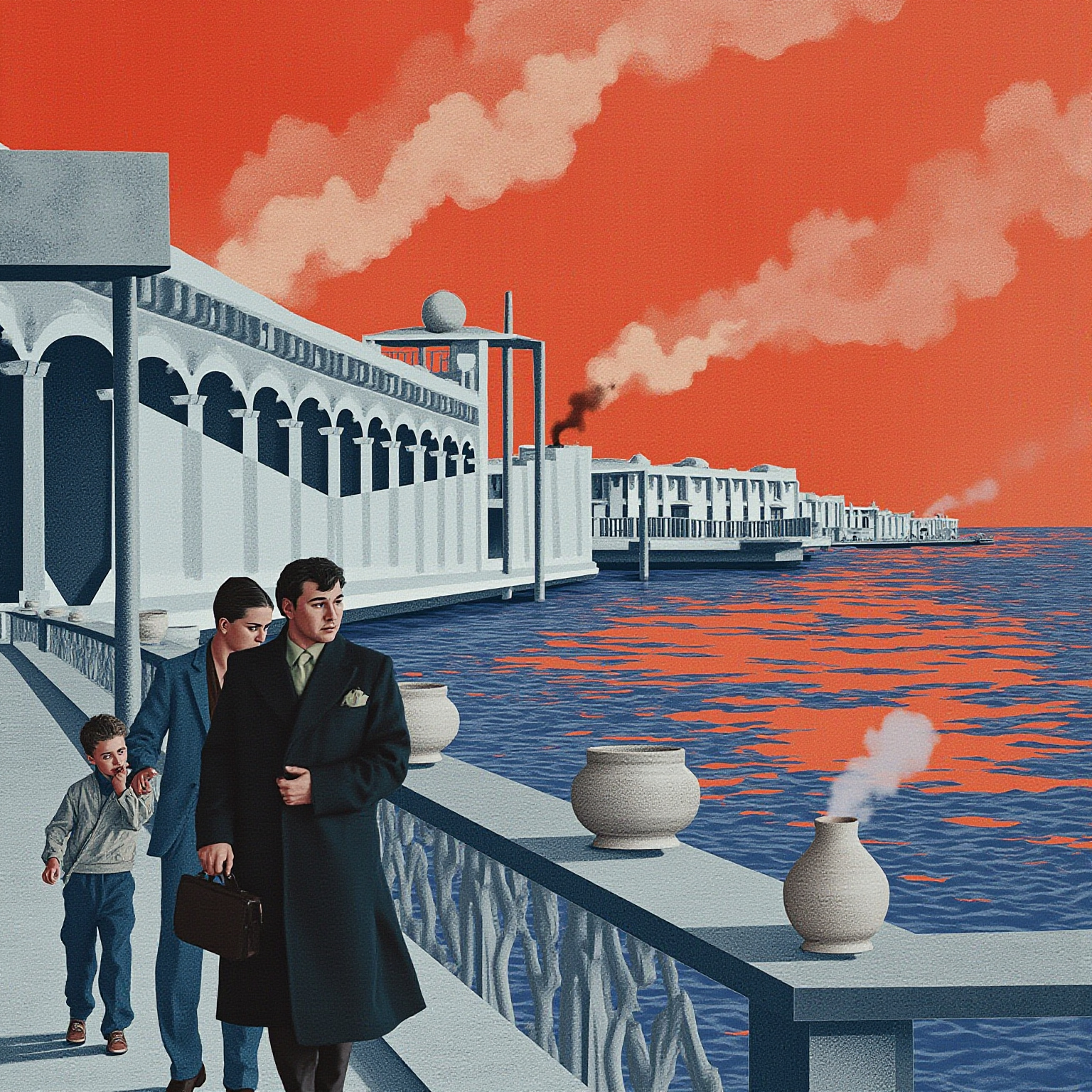
After the plague, Earth settlers pour in — porches, churches, hot dog stands, one small town after another rebuilding Main Street, USA. Bradbury plays this for irony: automated stoves fry eggs right on schedule, robots have the television tuned in before you're home from work, sunlight glints off galvanized signs that smell faintly of barbecue. Mars becomes just another American suburb.
Within a few years of colonization, Earth blows up first. Nuclear bombs level one North American city after another. The radio in the Martian towns crackles, and the settlers scramble onto rockets that same night, heading home to a dying world. Sam Parkhill, who runs the hot dog stand, serves his last customer: a Martian coming in peace, offering a land deed. He shoots him dead anyway, just to be safe, and flees back to Earth himself. With that one shot, the last native Martian falls, and the hot dog stand shuts for good, both doors locking at once.
One detail from the empty-city years has stayed with me. Hathaway, an old astronaut whose wife and children died years ago, refuses to go back to Earth. He builds robot replicas instead: a wife, two kids, breakfast at the round table, mail collected together, newspapers read side by side. This simulated family lives in the empty city for over a decade. Captain Wilder, passing through on patrol, takes one look and understands, and says nothing. It's one of the earliest pictures of a fabricated family that science fiction wrote down, long before anyone was talking about AI.
Writing Mars, Bradbury isn't really doing space anthropology — he's taking an X-ray of humanity on Earth. The chicken pox that wipes out Martian civilization points straight at the plagues European colonizers brought to Native Americans; anyone can draw the line. The more you think of it as discovering a new world, the more people die. The third expedition, wiped out by a hallucinated hometown, makes the opposite point: your own homesickness can be handed back to you as a weapon. What the book is remembered for, in the end, is something other science fiction rarely attempts: writing Earth's obituary in advance, using Mars to do it.
Knowing the ending doesn't spoil the book, because the ending was never the point — this isn't a thriller. What's worth reading for is the temperature of the prose. Bradbury's Martian mornings aren't just nouns laid side by side: canal water settles on your feet like a cool leaf, and the planet's yellow leaves fall like sheets of brass hitting the ground. That kind of sensory memory can't reach you secondhand; any summary of it goes thin in the retelling. Across two cities' worth of colonizing and abandoning, across more than twenty separate stories, he keeps rewriting one question: are the Martians dead? No. We just wear their skin now. That buried answer only lands when you read the last few paragraphs yourself and feel the chill, and that chill is what you're reading the book for.
Bradbury wrote Earth an elegy and set it on Mars — and the line that hurts most is the one where he hands your own homesickness to the executioner.