The Masnavi (Masnavi-ye Ma'navi) — also known as 'The Masnavi of Rumi' / 'Spiritual Couplets' · Companion Guide
玛斯纳维
一支被割离的芦苇,把六卷爱与渴慕的寓言吹成整座科尼亚的夜半讲经——灵魂从根被切,每一口气都在哭诉原初的分离。
I. The Opening: A Cry from the Reed Bed
The reed flute is weeping. Someone cut a reed from its bed, drilled it through, and turned it into an instrument with a mouth, and ever since, every breath that leaves that mouth comes out as a complaint: the pain of being severed from the root it grew from. A plant that was never meant to speak has become the voice of every soul that has lost its root. This is the opening image of a Persian poet writing more than seven hundred years ago, and it is the shape of the deepest wound in the whole of the Masnavi.
II. What Kind of Book Is This
Its author was Rumi, who preached in the small Anatolian city of Konya in the middle and later thirteenth century, and who became the founding figure behind what would later be called the Mevlevi order, the whirling dervishes. He had been the most learned theology teacher in town, until a wandering dervish from Tabriz kicked his door open and pulled him out of his study and into love. After that he stopped teaching and started writing poetry instead: whirling, falling into trance, chanting through the night with his disciples. The book he left behind, the Masnavi, was taken down by Husam Chelebi, the disciple closest to him in his final years. It grew to six books and roughly twenty-five thousand rhyming couplets of Persian verse, a text so central to the Sufi tradition that it is revered as the Persian Quran.
Hear this reed, how it complains, telling a tale of separations.
且听这支芦笛如何哀诉,它在讲一支被割离的歌。
金句 · 第一卷开篇 · 芦笛哀鸣起兴
III. World and Cast: A Book of Poems with No Hero
Let's be clear from the start: this is not a novel. There is no hero, no rising action, no arc. It is a collection of fables, and anyone can take the lead - a shrewd Silk Road merchant, a pious man leading prayers, an insufferable sultan, an ant, a donkey, a drunk raving in a tavern, a dervish sleeping rough on the road. Every story is spoken slowly, in the first person, by Rumi the preacher. Each line he speaks is a direct gift to Husam Chelebi, his disciple, and through him to us.
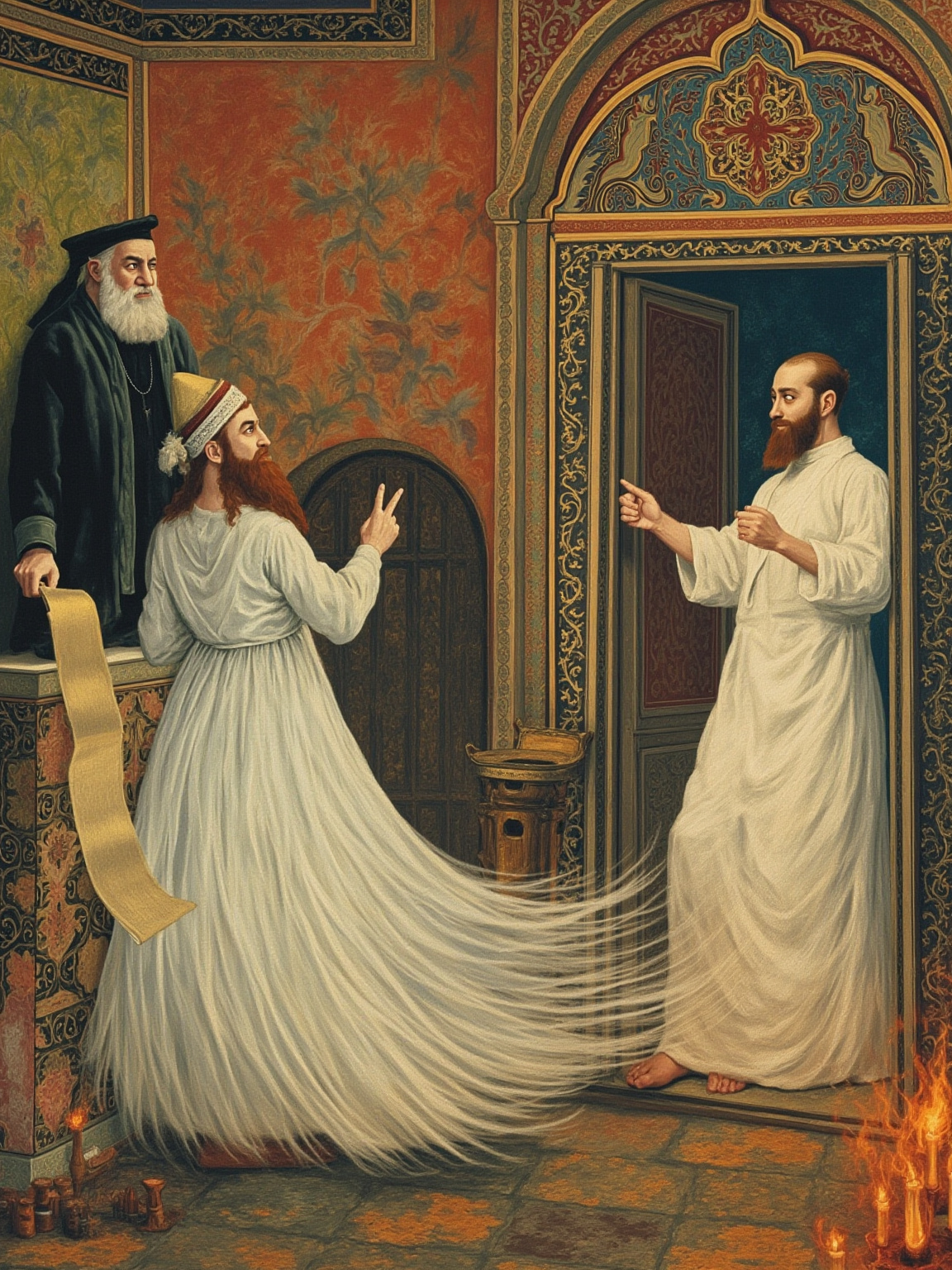
The most important supporting character in this cast is the man who set Rumi alight, Shams of Tabriz, Shams meaning sun. He could barely read, yet he could ask questions no theology professor asked in a lifetime of teaching. He asked why Muhammad bothered to pray at all, since prayer is only a conversation between one created thing and another; what actually deserves worship is the one who disappears from the worshipper, the prayer, and the direction it is said toward. Rumi was in his early thirties and the star scholar of Konya when they met, and everything turned over. Three years later Shams vanished without a trace, and Rumi spent the rest of his life talking to him through poetry.
IV. The Throughline: Seven Poems as the Book's Skeleton
1. The Reed Flute Weeps
The opening is the severed flute described above. It is not a story so much as a motif running through the whole book: the soul was once one with God, and exile turned it into a reed cut from its bed. Separation, in this reading, is not punishment. It is love's hunger. Rumi sets this core Sufi image at the head of all six books, so that every time a reader turns to a new one, the question comes back: why are you still thirsty?
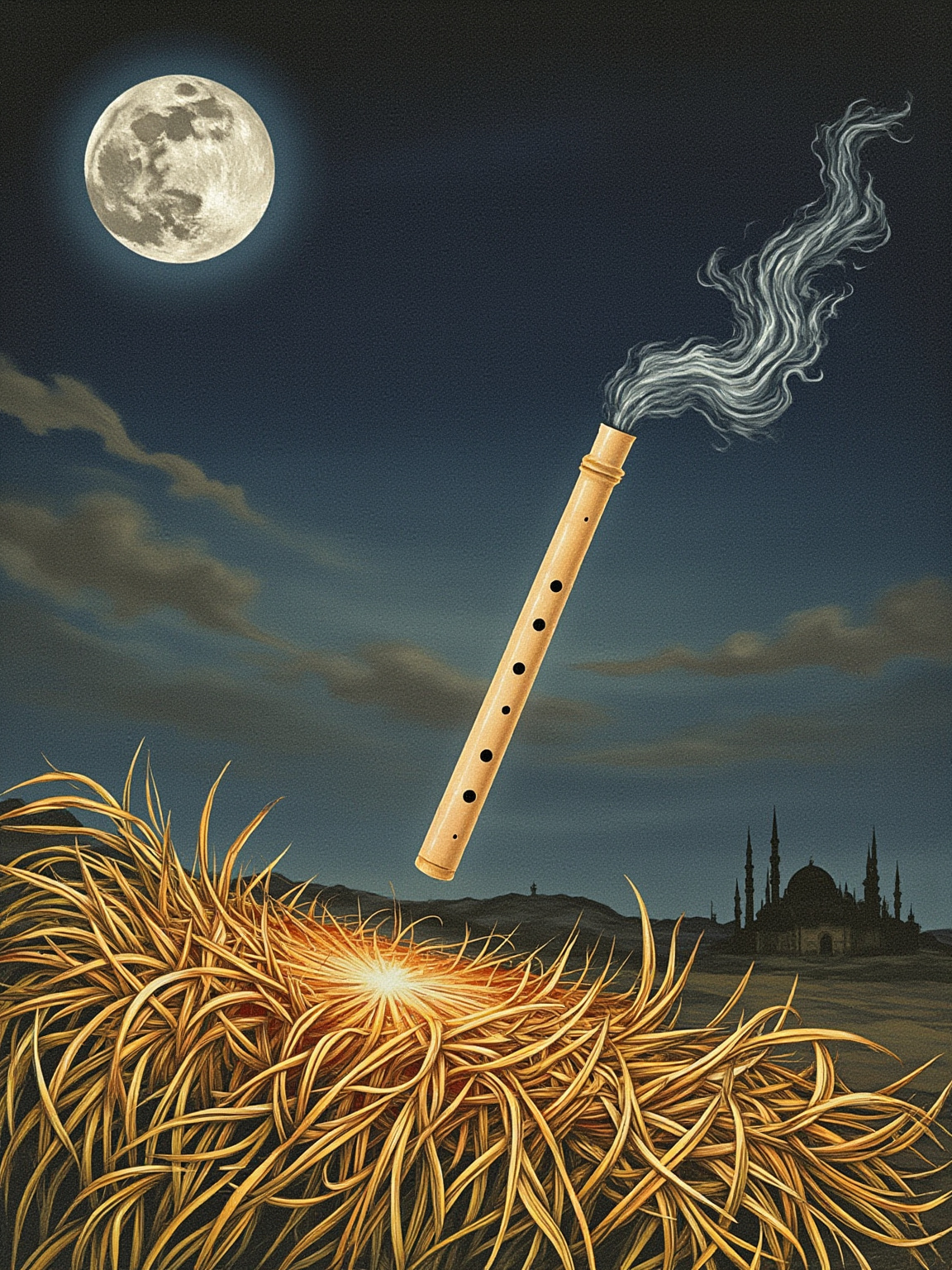
Every note is a cry from the severance of our root: the sound of fire kindled in a reed by the breath of the Friend.
每一个音都是从我们根处的断口发出的哭声——是朋友的气息在芦苇中点起的火。
金句 · 第一卷 · 论被割离之痛
2. The Sun Arrives
By the year Rumi met Shams, he was already Konya's star scholar, his lecture hall packed with disciples every day. Then the sun arrived, and every one of those lecture halls emptied out. The people around him hated Shams for it, because this dervish in rough clothes had pried loose a fire in Rumi that none of them had ever seen. Three years later Shams disappeared overnight, and his body was never found. For the rest of his life Rumi did only two things: he wrote poetry, and he whirled. His declaration I was the Quran made flesh is no longer the statement of a theologian. It is the confession of a man who has been set on fire.
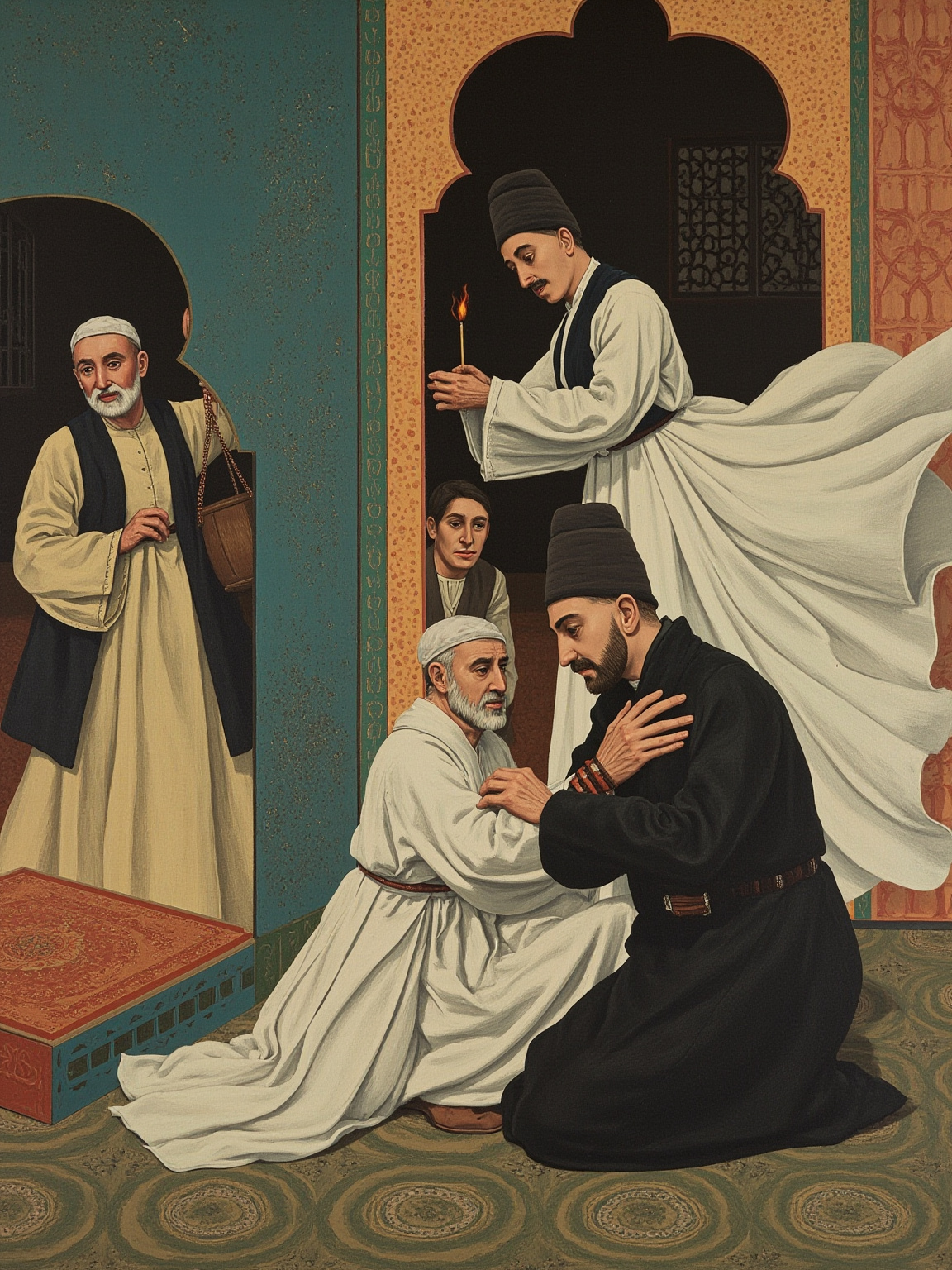
I was a raw recruit upon the day of love's enlistment; the soul's physician am I, and the soul a hidden malady.
我是爱报名那天才入伍的新兵,我是灵魂的医生——而灵魂,是一宗隐疾。
金句 · 第一卷 · 夏姆斯之临
3. The Parable Inverted: Surface and Depth Trade Places
This is the part of the Masnavi that refuses to let a reader settle. Its stories keep flipping common sense on its head. A character who looks lowly wakes up one who looks sharp with a single line: a master of the ledger turns out less humble than an ant, a learned scholar turns out further from God than a drunk, a man praying with great show of piety turns out to be the one deceiving himself most. Rumi will finish a story and then, in two or three lines, turn its surface meaning inside out: the scholar parrots words he has learned, while the true lover simply coos like a dove. In this Sufi logic, reasoning is not a tool. It is a shackle. Only mad devotion runs free.
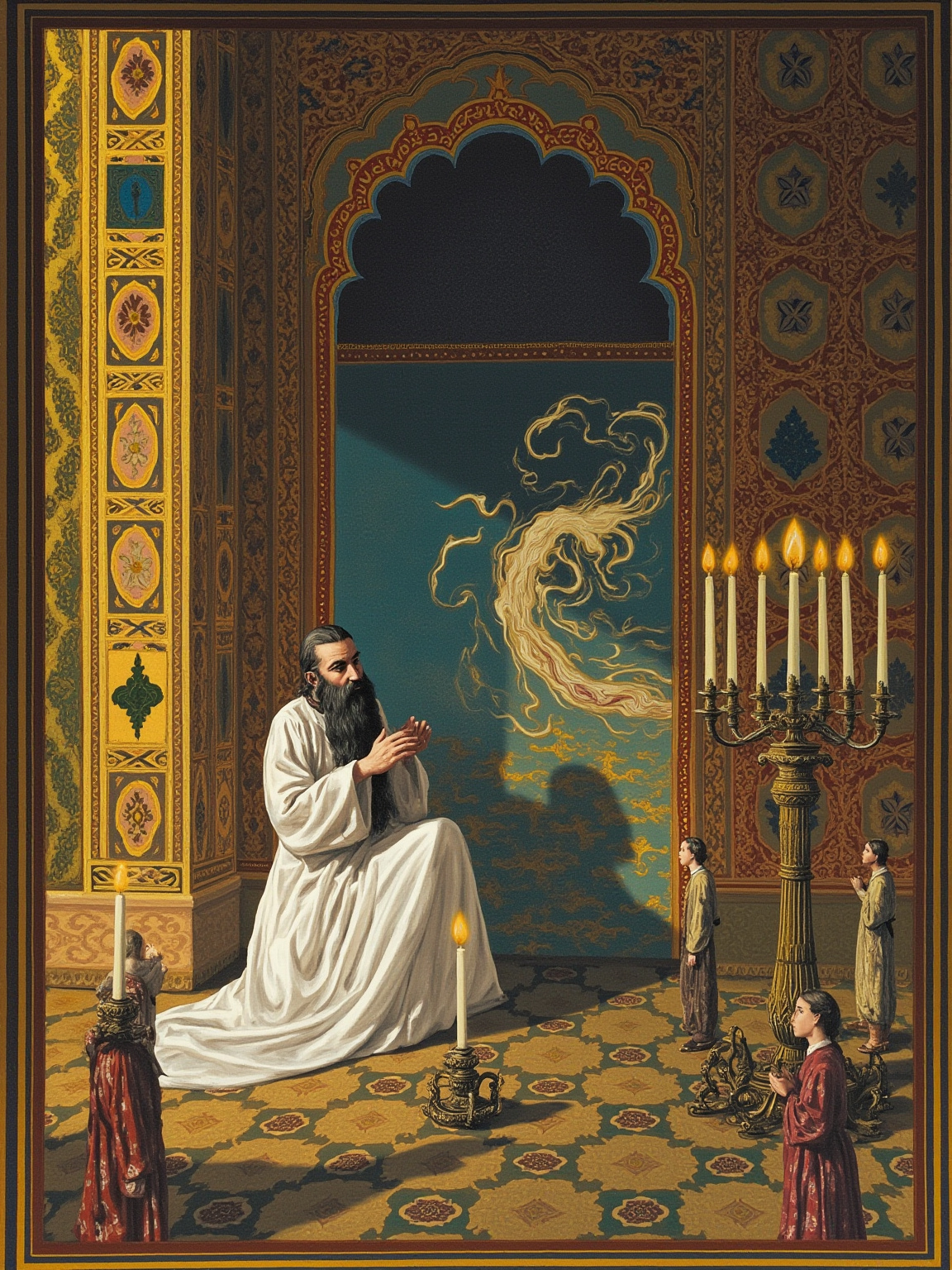
Reason is the chain, and ecstasy the steed that breaks the chain; the saint is drunk, the wine is sure to triumph over the sober.
理智是脚镣,痴迷是挣断脚镣的马;清醒者终将败给醉了的圣徒。
金句 · 第二卷 · 醉汉与清醒者
4. The Bridge Between Law and Truth
Rumi compares Islamic law to a boat and mystical truth to the far shore. The boat is necessary, but no one is meant to live in it. The book keeps returning to a single exchange about prayer: what does the worshipper's direction actually point toward? The answer points to the one who disappears from the worshipper, the prayer, and the direction itself. Law is the skeleton, love is the flesh; ritual is the staircase, and God himself sits at the top of it. That turn, from doing to being, is the method at the center of the whole book.
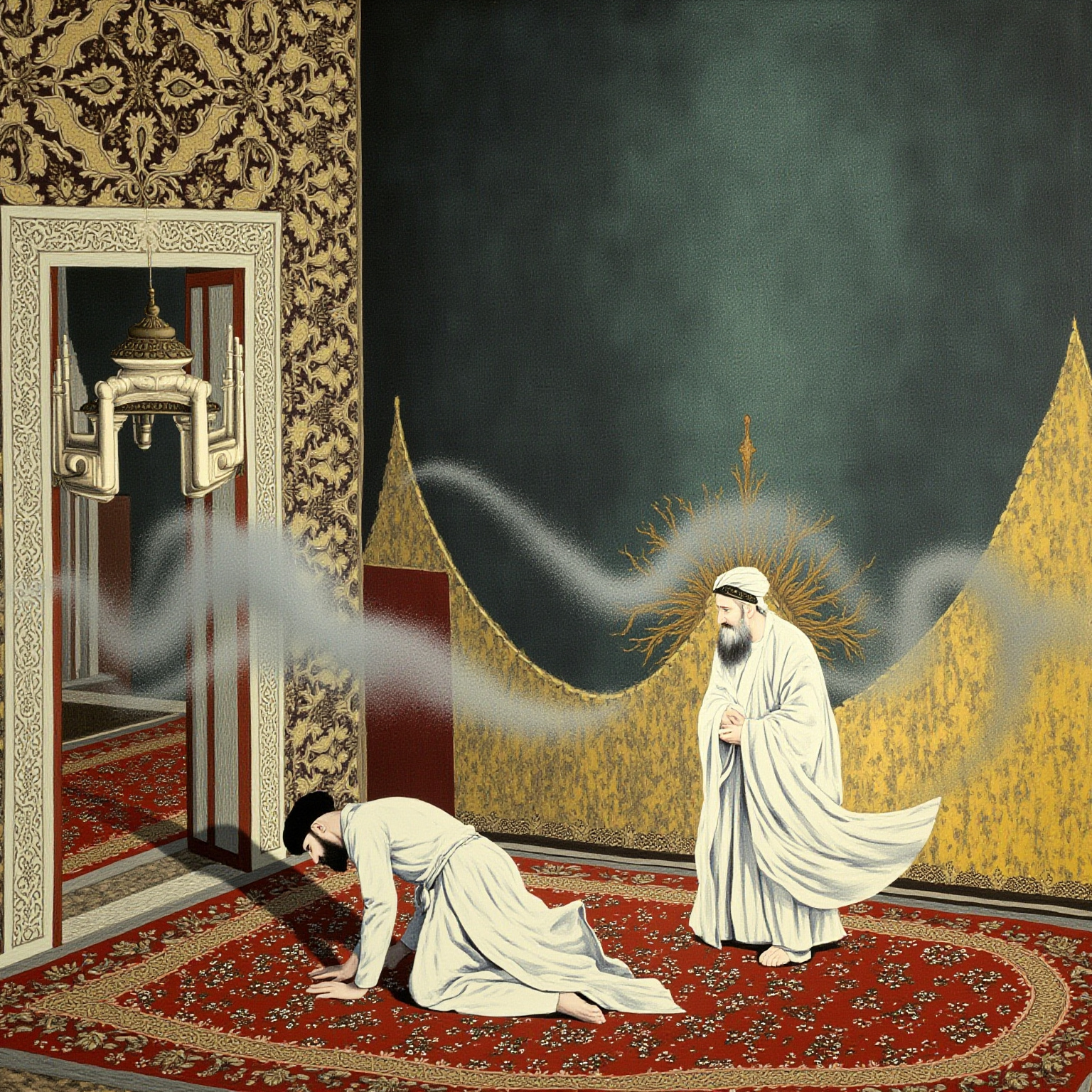
The lovers' pathway is strewn with shards; do not say 'how fared it with the lover?' but 'how fared it with the shards?'
情人的路上铺满了碎片;别问情人过得怎样——该问的是,那些碎片碎成了什么样。
金句 · 第三卷 · 论外在与内在的礼拜
5. The Ladder of Love
The book's metaphysical map starts with the love between husband and wife, with ordinary romantic love, and climbs from there to a burning divine love. Rumi says your place on that ladder is measured by how much reason and how much self you have lost in the climb. Love is not taught, it is woken up. Clay turning on a potter's wheel, the code hidden in a lover's letter, the curve of a mother's neck as she bends to nurse her child - each of these is one more rung.
6. Six Books, Rising in a Spiral
Book One is about law and the piety that stays on the surface. Book Two goes into the heart's own paradoxes and self-examination. Book Three works through the mystery of speech and silence. Books Four through Six climb toward union, self-loss, and drunkenness on God. This rise is a spiral, not a plot. It is the staged ascent of a soul on pilgrimage. Every book opens again with the weeping reed flute, so with every new book the reader is thrown back to the starting point of separation, and has to climb again.
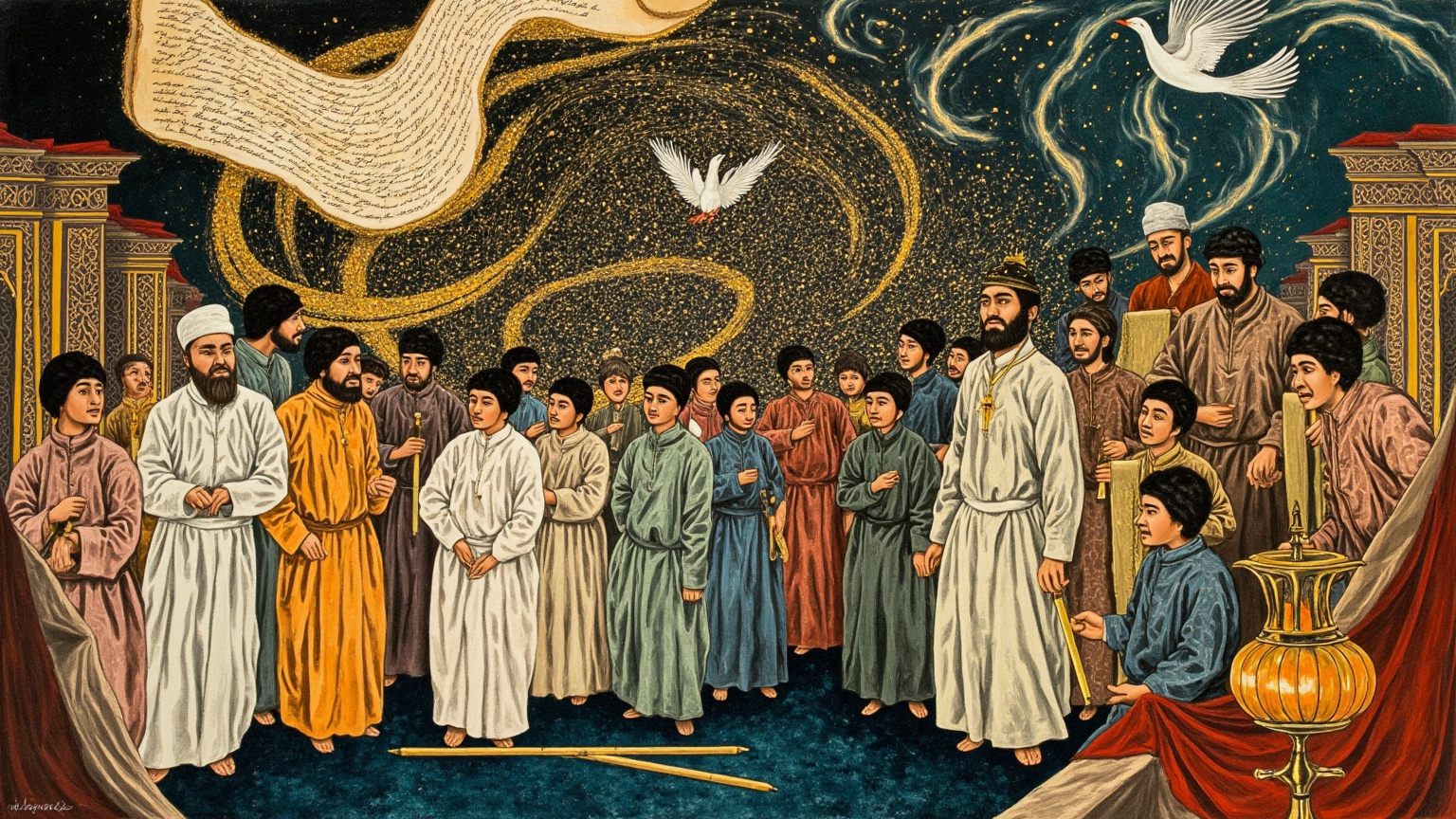
7. Husam at His Side, Taking It Down
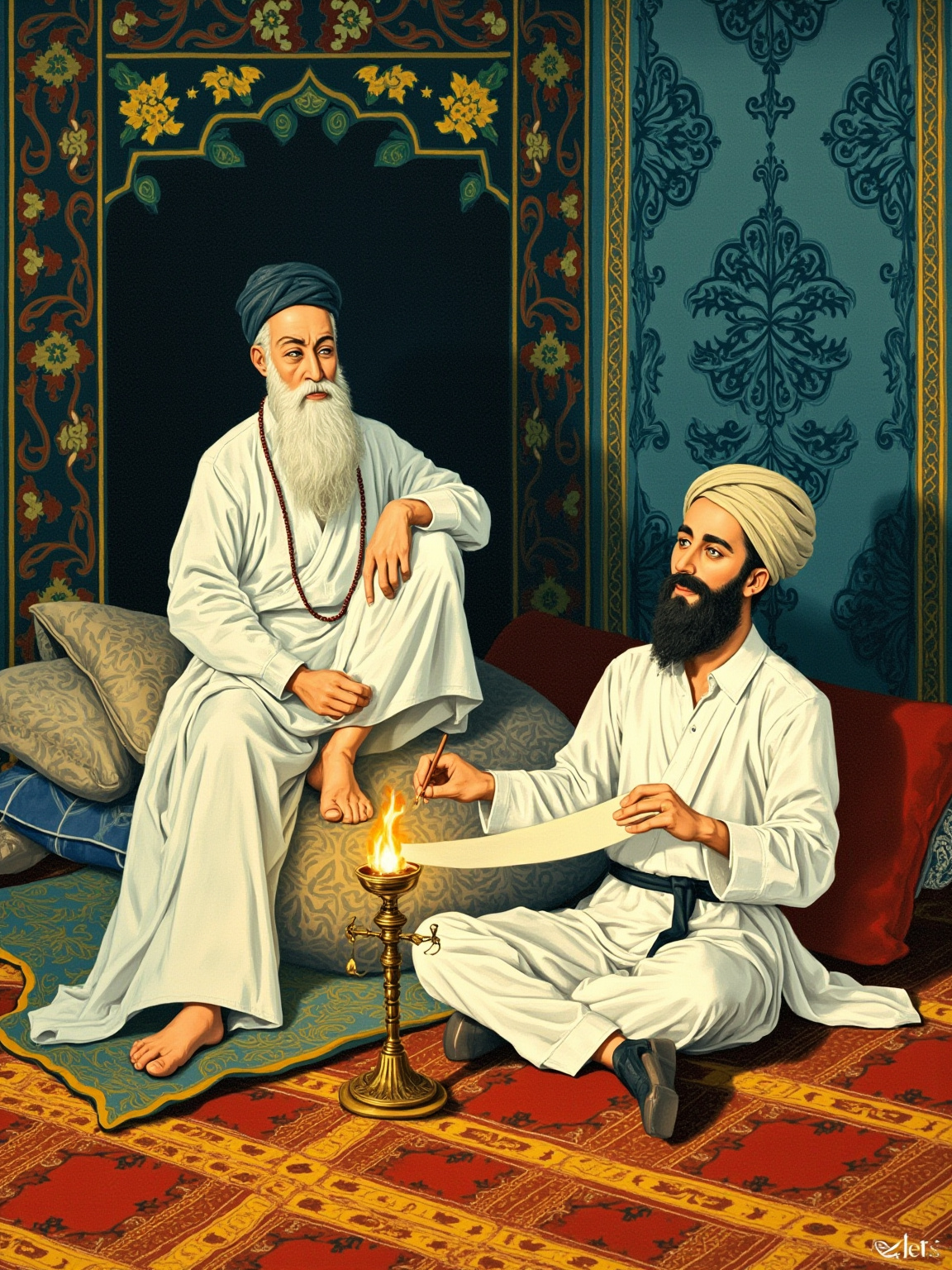
Without Husam Chelebi there is no Masnavi. He was Rumi's ear and audience in his final years, appointed to take the poem down as it was spoken. It was only because he was present that Rumi began dictating an opening like the reed flute weeps at all. Every line of the poem starts from a single voice, an I, and the distance between that I and a you is exactly how the poem exists: two men sitting face to face, one candle burning, teaching through the middle of the night.
V. Themes and Method: What Is It Actually Saying
The Masnavi is about four things: separation and longing, love over knowledge, surface turned against depth, and union between the human and the divine. That sounds abstract, but in plain terms it comes down to this. You think your life is full, but really you are weeping at a break point. You think knowledge can carry you to God, but only love can. You think outward piety is enough, but the inside may be a wasteland. You think this self is the real one, but it is only the ash left after the self has burned away. Every book takes these same four things and tells them again in a new shape, story folded inside story, parable turning parable inside out, like someone by candlelight pointing again and again at the moon, and the moon changing shape with every finger that points at it.
Why is it considered great? Because nothing else in literary history quite resembles it: six books, close to a thousand stories, each one a door into a deeper layer of the mind. It is poetry and philosophy at once, myth and psychology at once, Islamic and, somehow, universal. From Goethe's West-Eastern Divan to Hesse's Steppenwolf, from the whirling dance itself to a playlist put together by the reggae singer Cat Stevens, Rumi's shadow falls across nearly every thread running from Western Romanticism to today's spiritual movements, seven hundred years apart. Among poets, he sits alongside Shakespeare and Dante as a fixture on America's Amazon bestseller lists, a thirteenth-century Persian mystic still holding his own on that list seven hundred years later. That alone is close to a miracle.
VI. The Guide Gives You a Map. The Poem Is the Land.
This is not a book waiting for you to finish it. It is a flute waiting for you to make it sing.
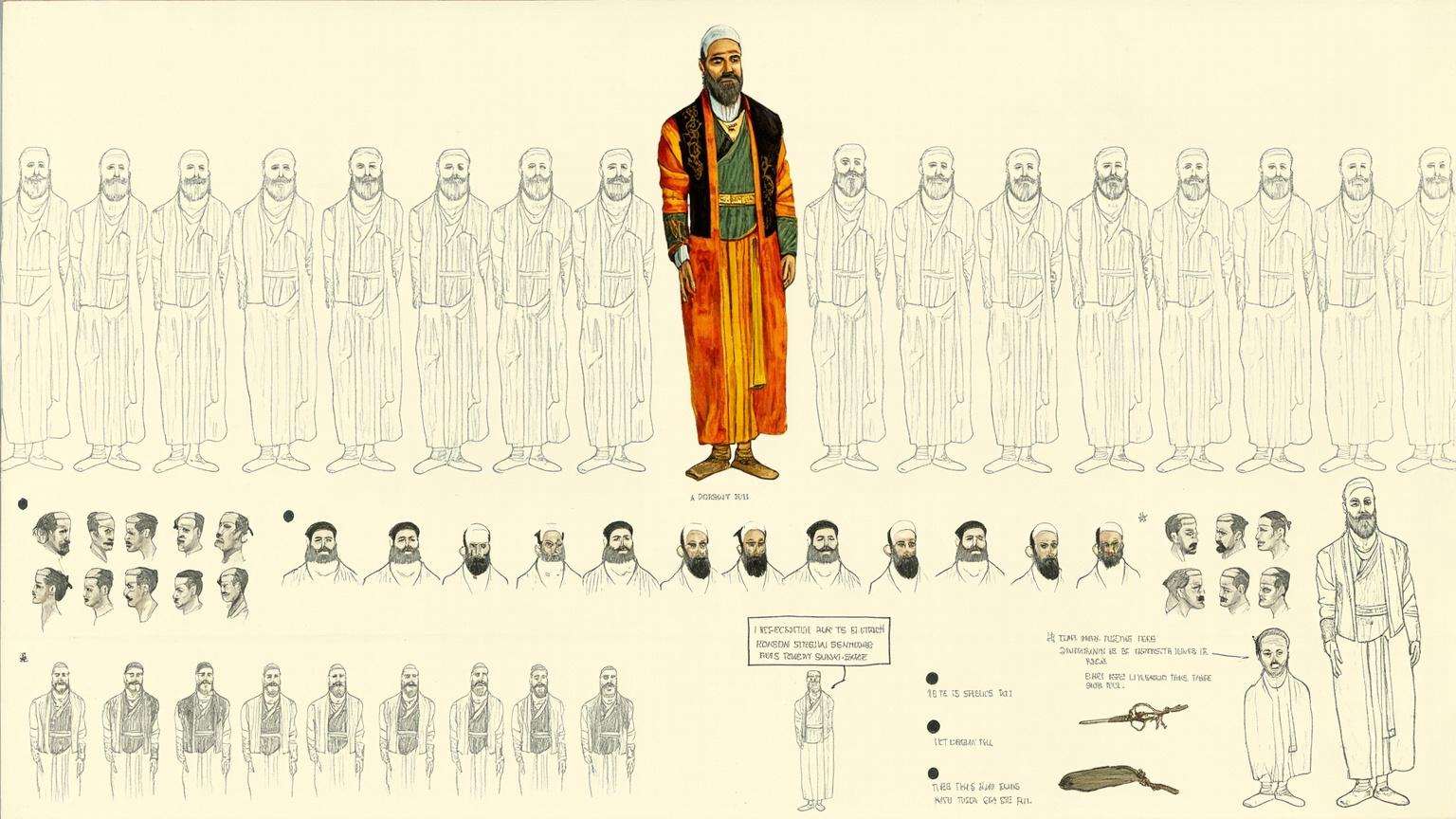
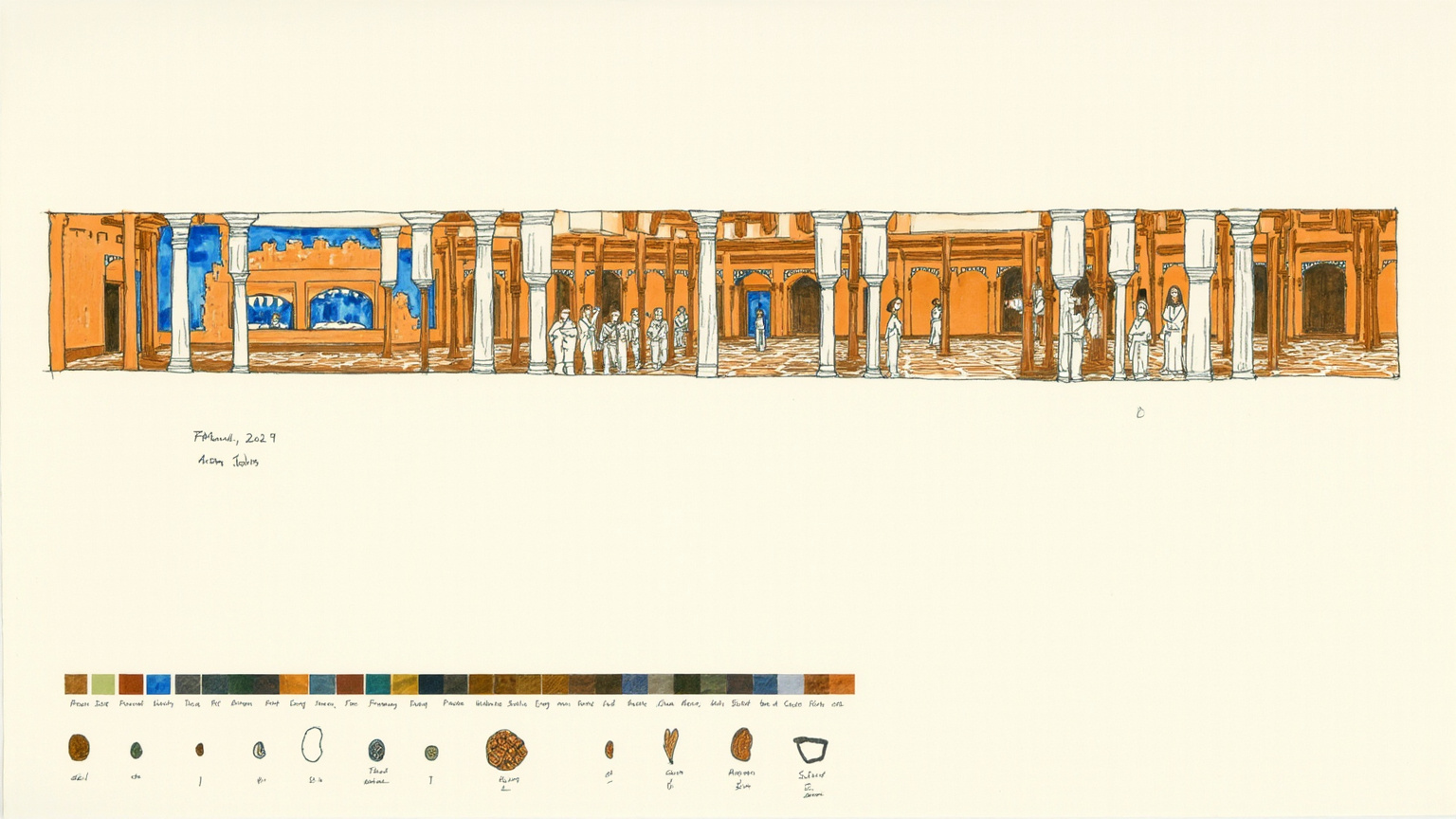
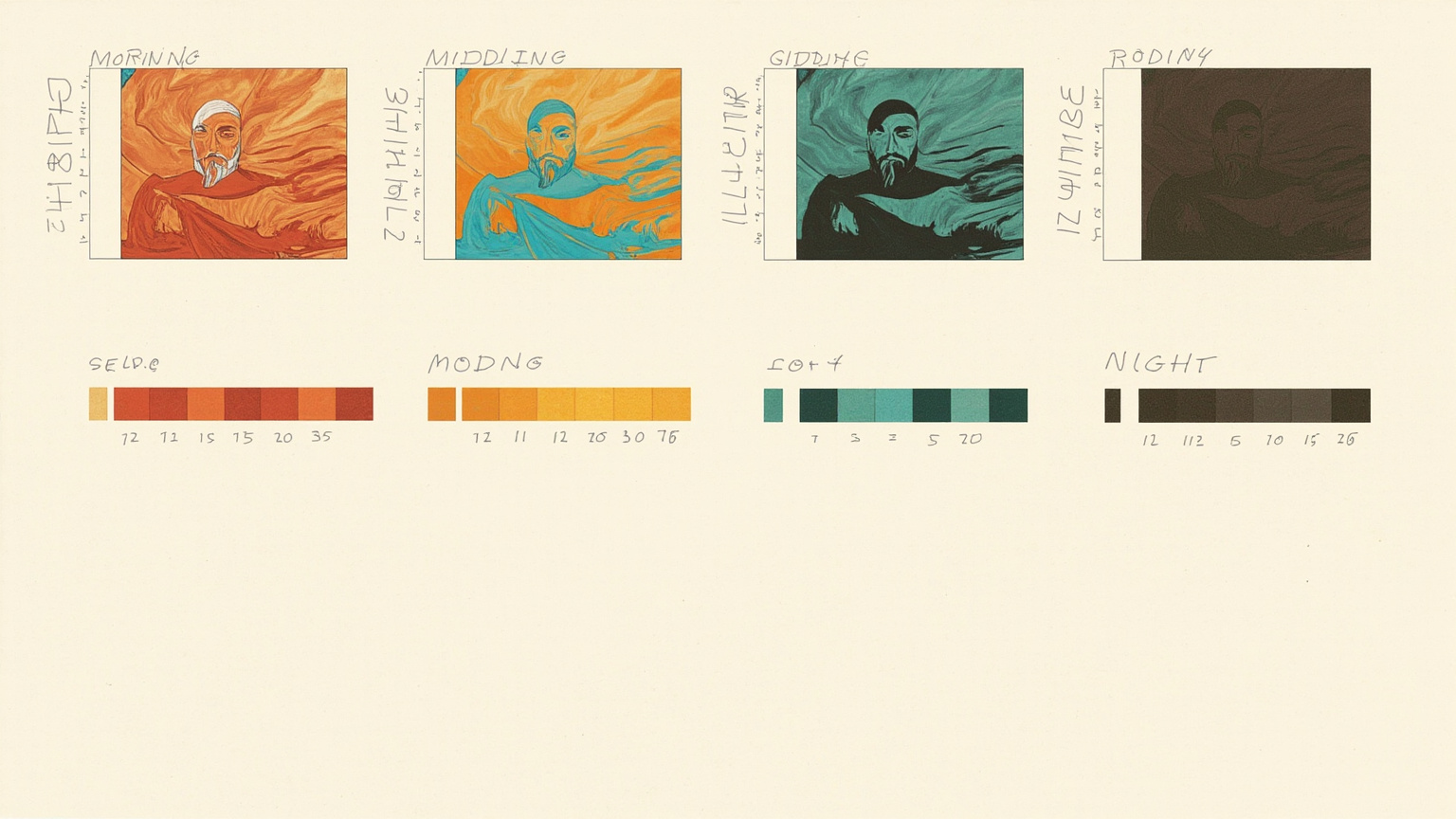
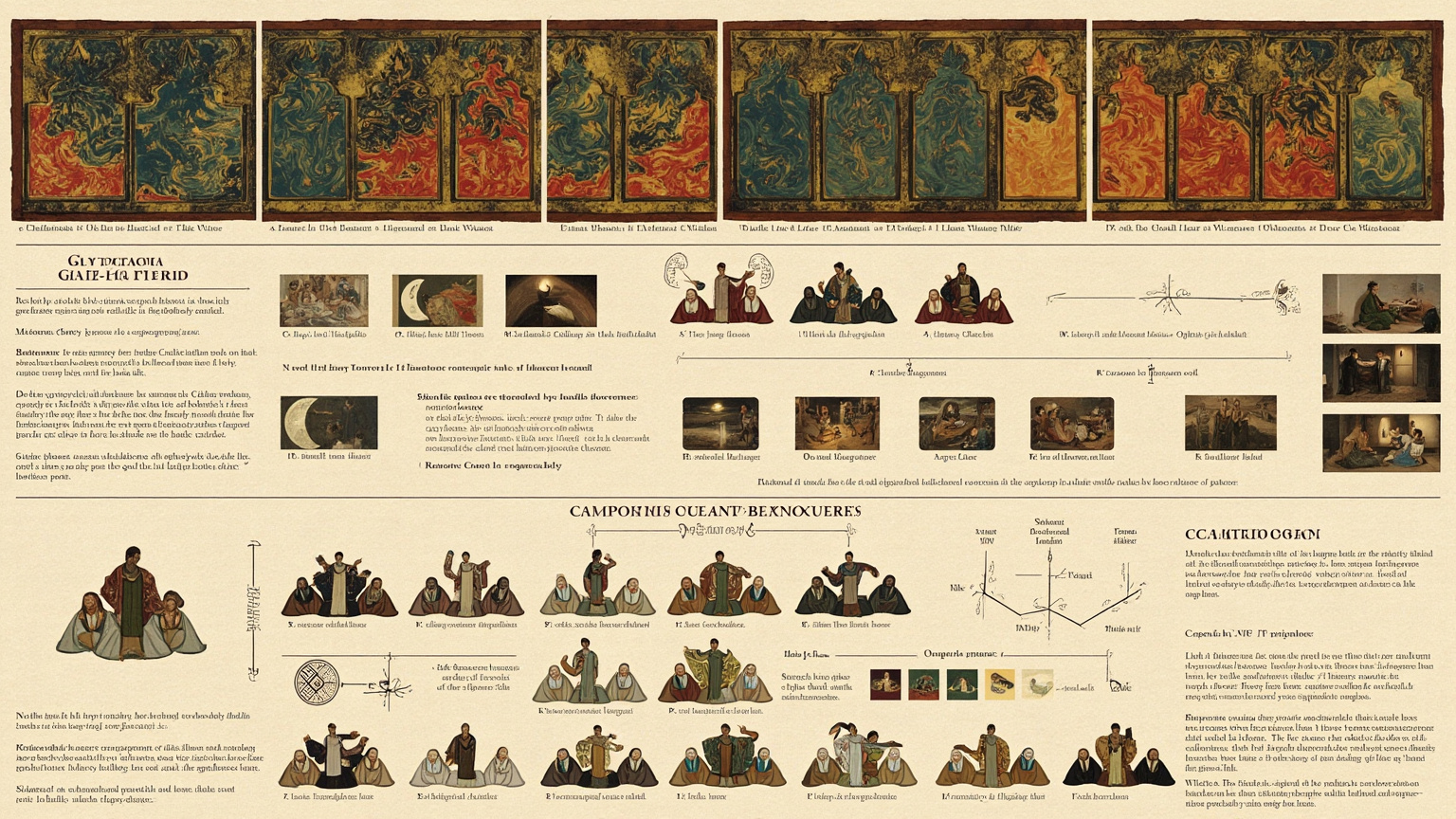
Art Direction4 plates
Before the guide was written, this book got a visual foundation — every illustration you just read grew out of it.