The Mayor of Casterbridge (full title: The Life and Death of the Mayor of Casterbridge: A Story of a Man of Character) · Companion Guide
卡斯特桥市长
一桩醉后的拍卖,耗尽一生偿还,却只换来更深的深渊。
Opening
Under the tent, hot vapor hangs thick, and furmity laced with rum steams sweet and sour in the bowls. A hay-trusser barely into his twenties is on his third bowl, his arm around his wife, when he calls out to the fairgoers: whoever offers five guineas can have her and the child. His wife is holding an infant in her arms. A sailor named Newson actually puts down the money.
I read this passage three times the first time through, not because it was subtle, but because it wasn't subtle at all. A grown man, in broad daylight, in front of a tent full of country folk, auctions off his living wife and daughter like livestock. And Thomas Hardy made this the opening line of the entire book.
What This Book Is
The Mayor of Casterbridge is the novel Hardy finished in 1886, subtitled A Story of a Man of Character. He called this branch of his work novels of character and environment, stories rooted in the southwest English countryside, where the land, the seasons, the markets, and the trades are written into the characters' fates alongside them. Casterbridge is fictional, modeled on Dorchester in Dorset; Hardy set an entire cycle of novels on this same ground, and this is the one that goes deepest into a single man's psychology. It is often placed alongside Shakespeare's King Lear.
Who's Here, and What They Want
Michael Henchard, the protagonist, opens the book as a drifting hay-trusser nobody bothers to remember the name of. Twenty years later he is the leading grain merchant in Casterbridge, wearing the mayor's gold chain, standing above everyone in town. What he wants is simple: to cancel out that one night of madness, to be respected by the whole town, and to be able to respect himself.
What stands between him and that goal is himself. Hardy builds it up stroke by stroke: a rough, overbearing streak in his character, suspicious, unforgiving, quick to boil over, determined to win even at the cost of everything. Donald Farfrae is a young Scotsman new to town, shrewd, mild-mannered, quick with figures, a man Henchard promotes with his own hand and who, within a few years, steadily displaces him. But Farfrae isn't a villain. He simply rises with the current. Henchard is the one who pushes himself down the slope.
Around these two men are three women. Susan, his original wife, the one who was sold that night, returns to town eighteen years later with their daughter, believing Newson has drowned at sea and wanting to make her marriage to Henchard legitimate again. Lucetta, a former lover, comes back from Jersey with an inheritance meaning to marry him, and falls for Farfrae instead. And Elizabeth-Jane, the daughter, proud, determined, a reader, who is not actually Henchard's blood at all but Newson's own child, a mix-up kept from her for nearly twenty years.
How the Story Unfolds
The night he sells his wife, Henchard sobers up fast. His wife and daughter are gone, off with the sailor Newson; he searches the mud for them and finds nothing, only two coins pressed into his hand by the old furmity-woman. The price of sobering up is brutal: he swears a public oath and does not touch a drop of drink for twenty-one years. Hardy doesn't put him on his knees begging forgiveness. He just writes his fingers going white around those two coins. That grip is where the whole book's undertow begins.
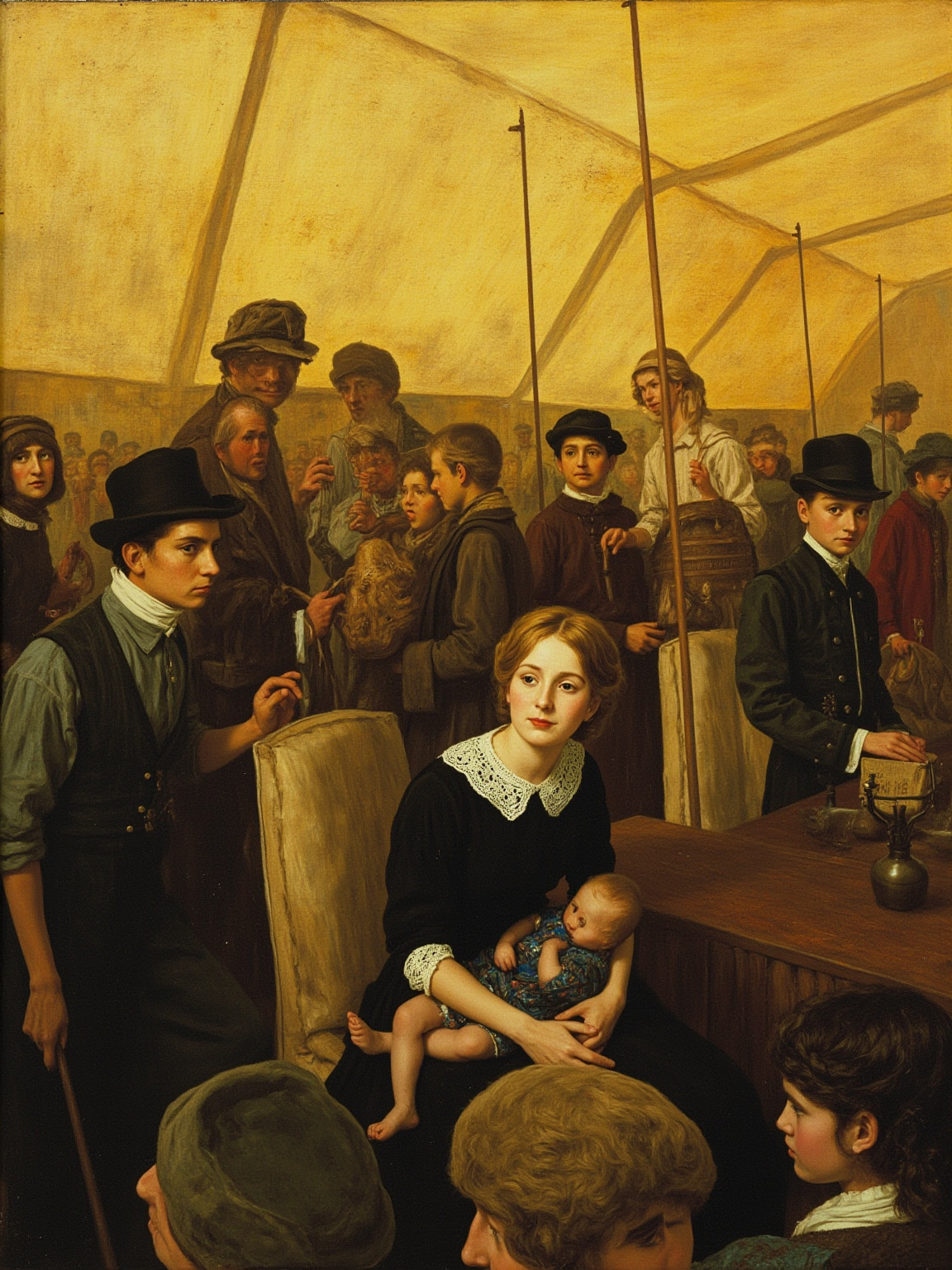
But he speedily lapsed into his former conviction, and said harshly- "Well, then, now is your chance; I am open to an offer for this gem o' creation."
“那就现在,你们的机会来了——我接受对这件创造的珍宝的报价。”
原文金句 · 开篇 · 集市帐篷里的拍卖
Hardy cuts twenty years down to a handful of strokes. Sober, Henchard becomes a different man: on the strength of rough hands and a sheer refusal to lose, he works his way up from the hay barn to one of the leading grain merchants in Casterbridge, and then to mayor. The house, the ledgers, the chair at the head of his own table, all of it earned, stroke by stroke, by his own hand. But he knows the foundation still has that old debt of selling his wife buried underneath it, a secret nobody else knows, and it weighs on him harder with every year.
The morning Henchard takes a liking to Farfrae is beautifully done. A young Scotsman just off the coach, a knapsack on his back, and Henchard overhears him at a street corner explaining a new method of bookkeeping and forecasting the harvest, and decides on the spot: this is the man I need. Farfrae's gift is science, precise figures, a thermometer. Henchard's gift is experience, instinct, temper, sleeping in the granary at night to guard the stock. Two eras of merchant standing side by side, and there's no telling yet which one will win.
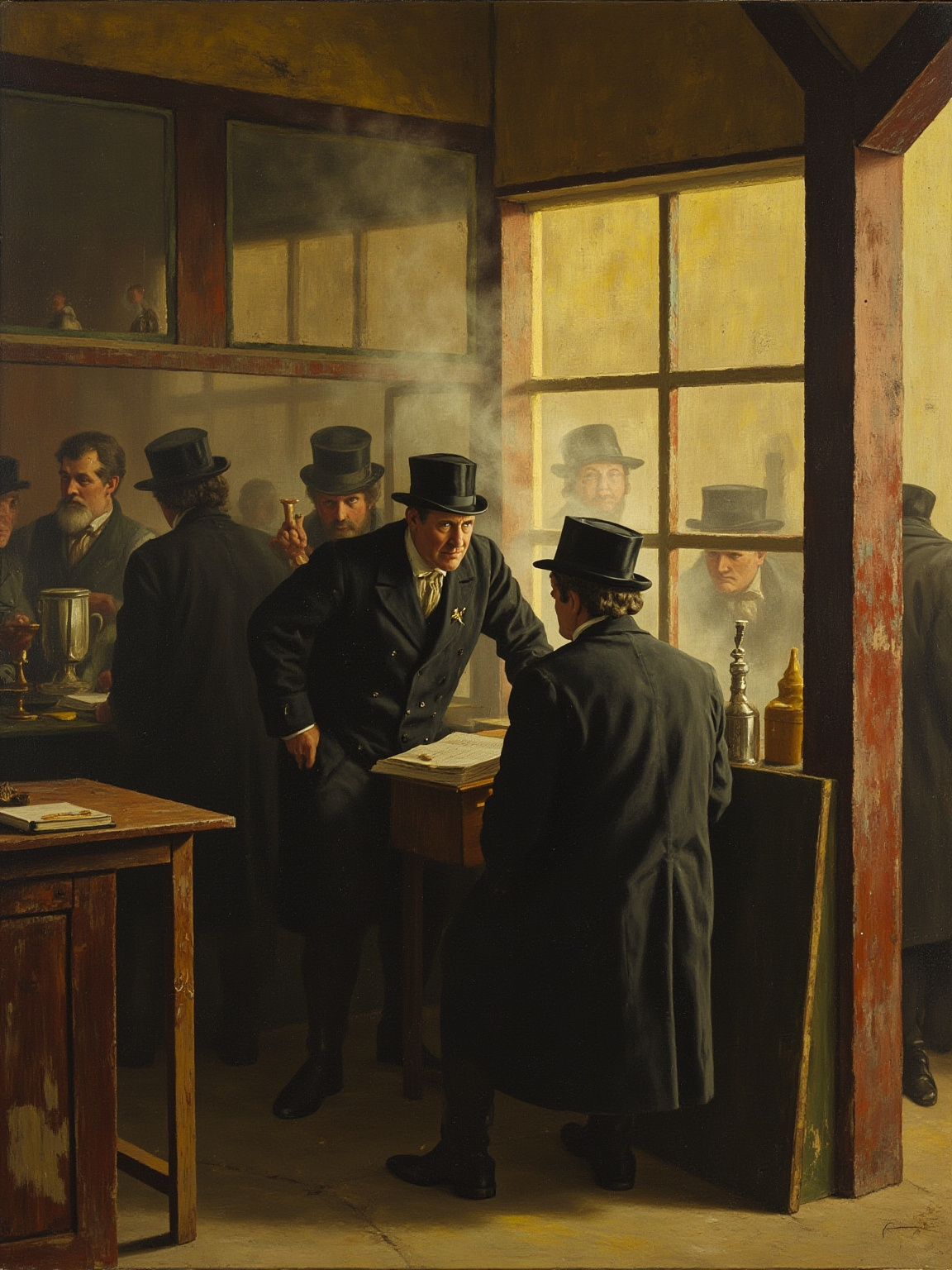
Donald's eyes dropped into a remote gaze as he added: "But I said to myself, 'Never a one of the prizes of life will I come by unless I undertake it!' and I decided to go."
“我对自己说,不冒险就永远得不到人生的任何奖赏,于是我决定去了。”
原文金句 · 第16章 · 法夫瑞的决心
The evening Susan returns to town with her daughter is a grey one. Believing Newson drowned, she has come to make good on the wedding that never happened, and Henchard takes her in without a word, raising Elizabeth-Jane as his own. Hardy doesn't give the secret away here; the town doesn't know, and neither does Henchard. The reader has to wait until Susan is dying, for the letter pulled from under her pillow, to hear it: the Elizabeth-Jane standing in front of you is not your daughter. Your own child died in infancy. This one is Newson's. The bomb is planted in the birthing bed of chapter one and doesn't go off until chapter seventeen.
The two bombs go off almost back to back. The letter comes out, and around the same time Henchard discovers the grain he'd been hoarding has rotted through in days of rain; his first move is to go after Farfrae and try to pin the blame on him. Farfrae takes the blow without hitting back, walks out of the office, and leaves the key on the desk. He rents a shop on the next street and sets up on his own. From there Henchard's luck falls apart without a break: he loses the mayoral election to Farfrae, loses his shirt speculating on grain, and Lucetta, his old lover, marries Farfrae instead of him.
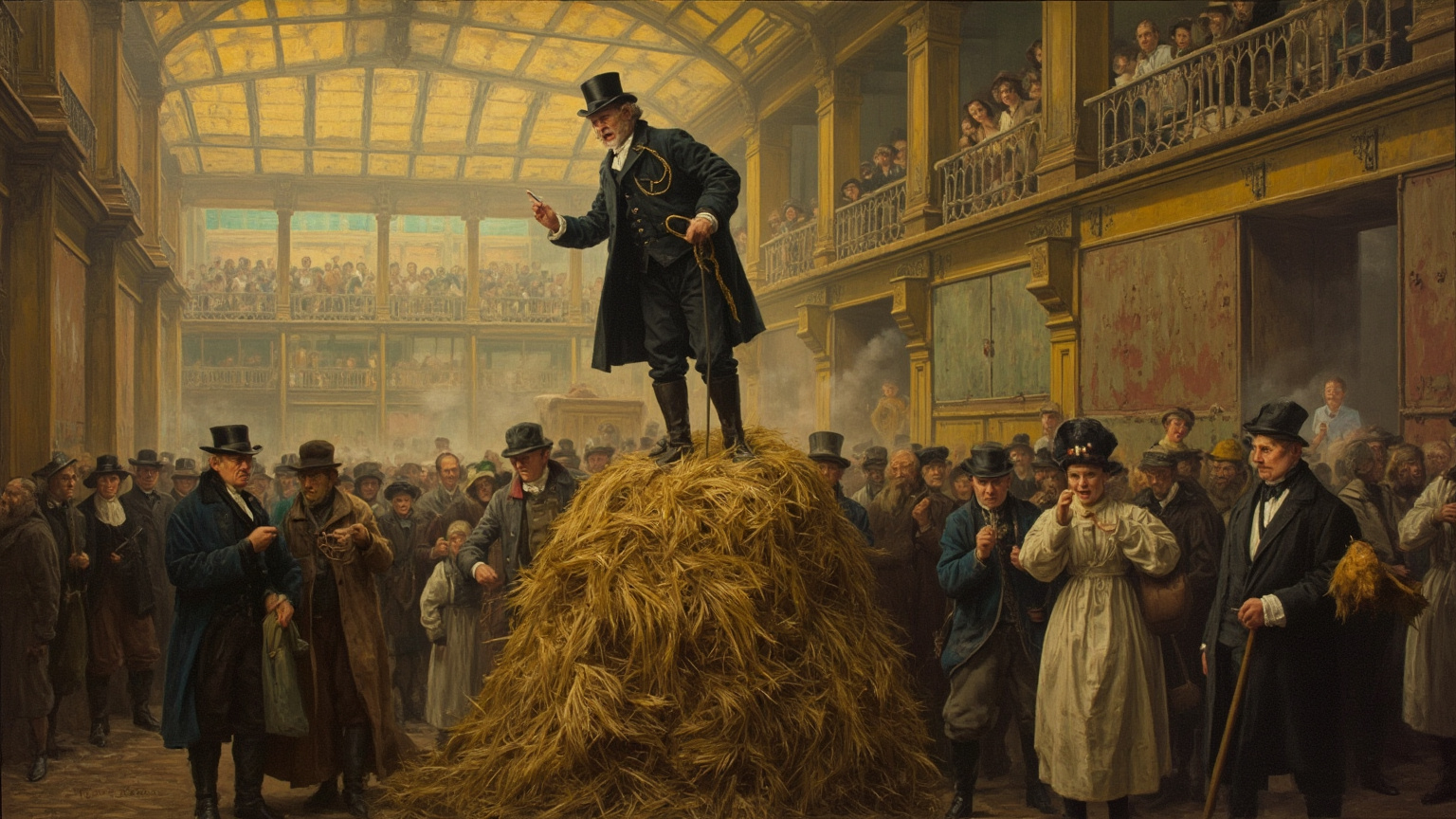
Henchard always looked like one bent on resisting pain when Elizabeth-Jane spoke of Richard Newson as "father."
每当伊丽莎白-简称呼理查德·纽森为“父亲”,亨查德脸上总浮现出一种强忍痛苦的神情。
原文金句 · 第36章 · 不堪的身世
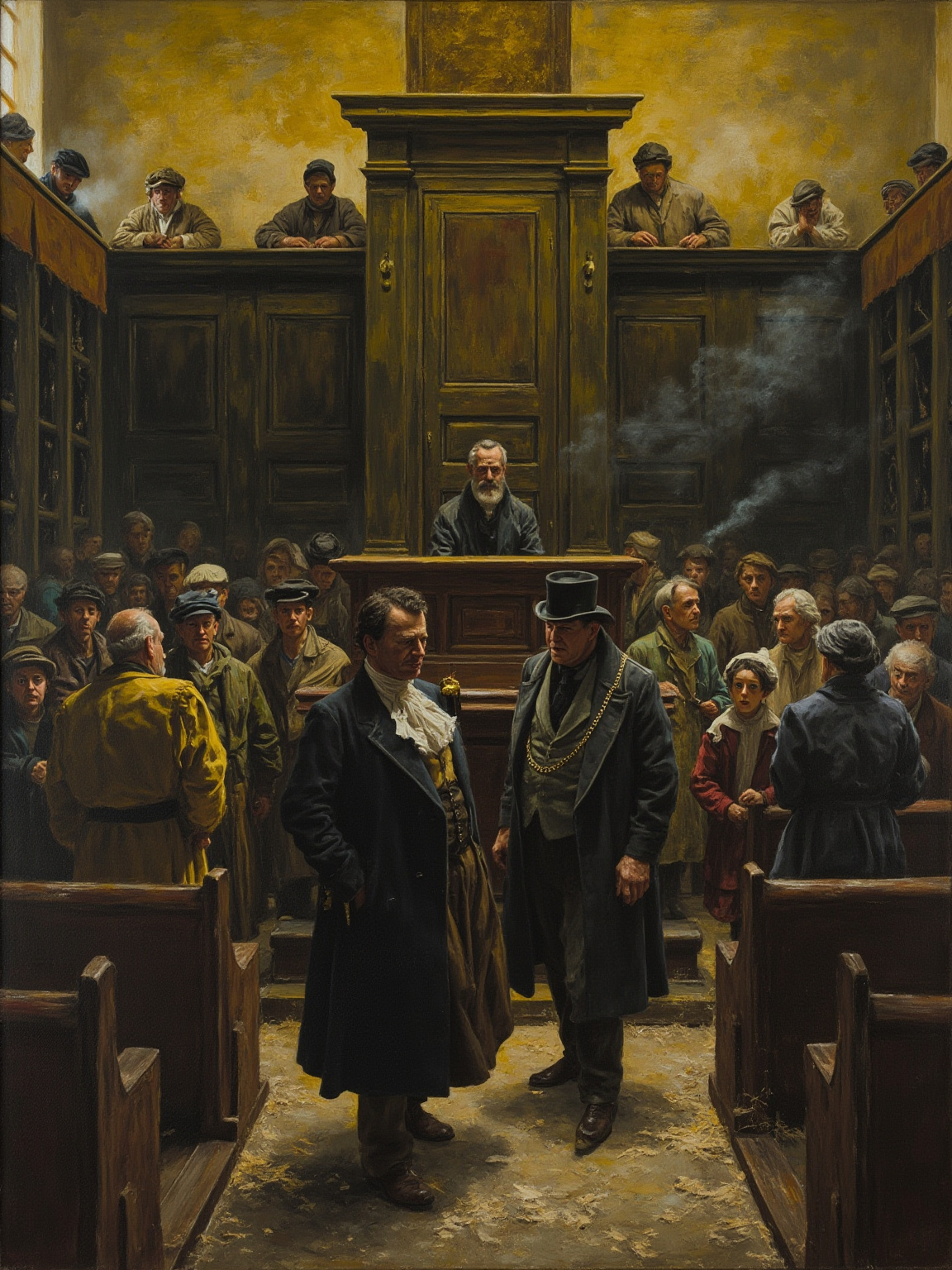
The sharpest turn is the return of the furmity-woman. The same woman who once laced the porridge with rum is now a repeat offender hauled before the magistrate's court. Henchard is presiding, and he recognizes her. In open court she blurts out the story from twenty years back: a murmur runs through the room, the mayor once sold his own wife. Hardy has the old woman, feeble now, held up by two constables, her voice too weak to carry, so that every word has to be repeated by someone else. But the whole town hears it clearly enough.
"And unless you give me your promise this very night to be my wife, before a witness, I'll reveal our intimacy-in common fairness to other men!"
“除非你今晚就当着一个证人的面答应嫁给我,否则我就公开我们的私情——为了对其他男人公平起见!”
原文金句 · 第59章 · 亨查德的要挟
Henchard isn't finished, though he's close to it. He pulls out Lucetta's old love letters to him and threatens to make them public. The town answers with a folk custom centuries old in the English countryside: the skimmington ride. Two effigies of a man and a wife, taller than a person, are carried through the streets to the beat of drums and pans. Lucetta, pregnant with Farfrae's child, collapses on her doorstep and never gets up again. Hardy holds the prose right down for this scene, and it's exactly that restraint that leaves you unable to breathe in a few lines.
The losses queue up one after another. Henchard ends up working in the granary for Farfrae. Newson, the sailor, turns out not to have drowned after all, and comes back to find his daughter. Unable to let go, Henchard lies to him, says the girl died of illness, and sends the old man off in his cart, a move that shows exactly who he is, faking composure right after strangling his own last chance. Newson comes back later and tells the truth, and Elizabeth-Jane falls to her knees in front of her real father, crying out to him. Henchard is left hollowed out.
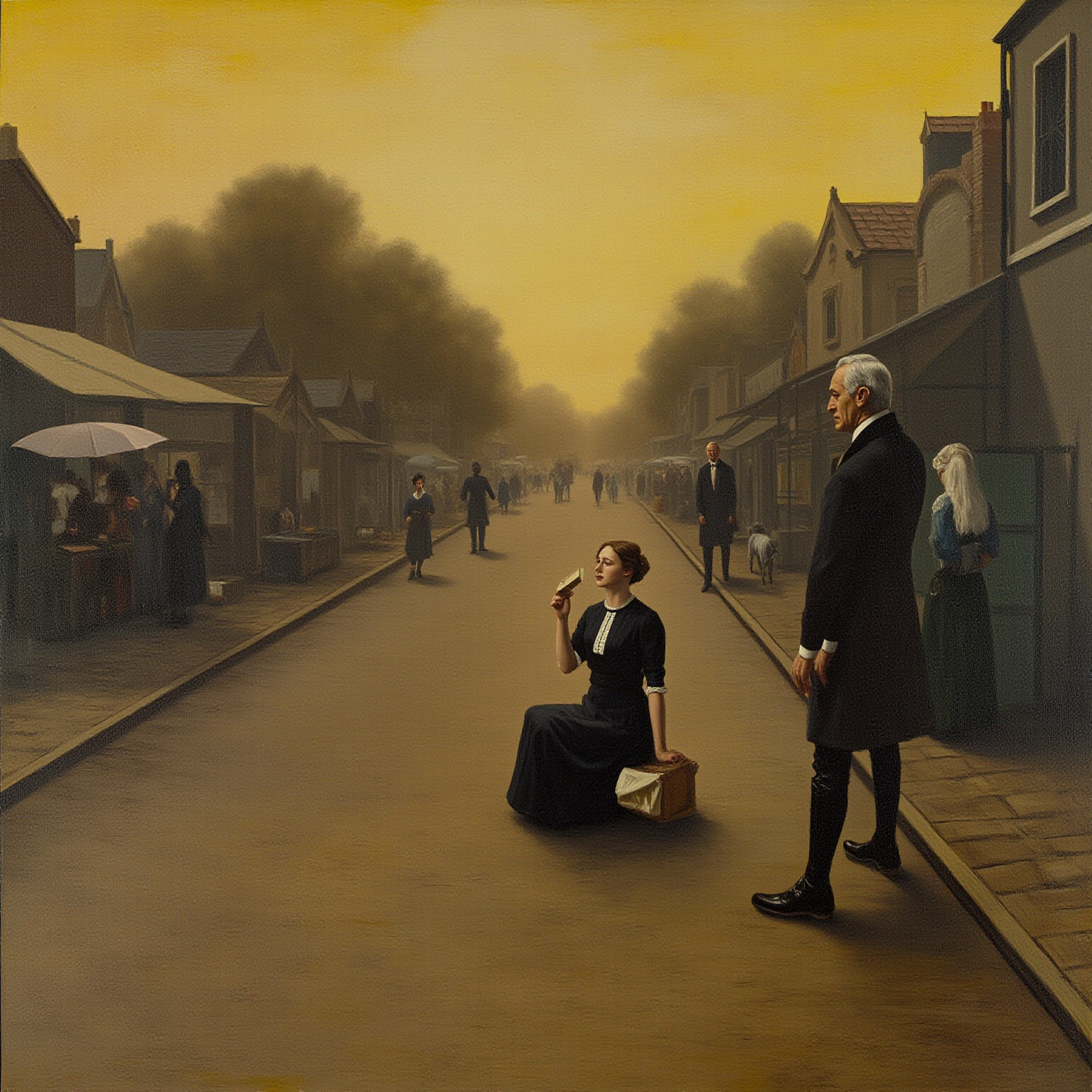
You sold them slily the next morning, and the day after you stood before the magistrates with the eyes of all your sympathizing neighbours concentrated on your back.
你第二天一早就偷偷把她们卖了,再过一天你便站到了治安法官面前,所有同情你的邻居的目光都钉在你背上。
原文金句 · 第76章 · 卖粥老妇的当庭揭露
The ending. Henchard walks alone into a bare cottage outside town, on a few spoonfuls of gruel and two mouldy pieces of bread, and dies one night on a bed of straw. His will reads: no funeral announcement, no headstone, no mourners, let no one remember him. The book closes there, no reunion, no reconciliation, no last-minute mercy from providence. Just a country lane disappearing into the dark.
What Hardy Is Actually Writing About
The top-level claim is that character is fate. Henchard's collapse isn't a frame-up, isn't poison slipped into his cup. His rival is a decent man who barely even has a temper. Every one of Henchard's failures is a shot he fires himself, and every hit lands on himself. Farfrae works like a mirror, lighting up every crack in Henchard's character that Henchard himself refused to see.
Below that is the paradox of guilt and atonement. Henchard spends his whole life paying off the debt of that one night, but the harder he tries to repay it, the tighter he grips, and the more he pushes away everyone around him, including the people who finally came back to him. Hardy doesn't soften this: penance and wrongdoing can grow out of the same root.
Deeper still is a picture of the English market town turning into modern commerce. Henchard's hay barn, his handshake deals, his haggling in the marketplace, are up against Farfrae's ledgers, thermometers, and contracts. Hardy isn't only writing one man's tragedy, he's writing the exit of an entire older England. The three women are caught in between, auctioned, blackmailed, paraded through the streets in effigy. Almost none of it is theirs to control.
Why It Has Lasted
Because Hardy lands the cruelest cut on the very first page and spends all your reserve of shock right there. The twenty chapters that follow aren't there to shock you again, they're there to see how far you can walk through a slow, grinding collapse. Halfway in, you realize the novel isn't going to hand you a dramatic reversal to save you. No revelation exposes a villain, no last-minute rescue turns the tables for the good. Henchard's downfall is his character's downfall, and the book walks you through it, step by step, until you see it whole.
You Know How It Ends. Why Read the Book Itself
A companion guide can hand you a map, but not the wind off that particular stretch of land. Hardy writes with real physical texture: you can smell the damp coming off grain that's overheated in storage, hear the West Country accent turning far into something closer to fur and Farfrae into something that almost rhymes with forever, walk through twenty chapters of Wessex rain. Knowing the plot gets you half of it. The other half is being there yourself, in the granary, outside the tavern, in the moment the drums start up for the skimmington ride. Some sentences you have to read on your own to feel that particular weight, the kind that presses the breath out of you and still keeps struggling upward.
Hardy spends twenty years of story to tell you one thing: the night a man sells himself never ends just because he sobers up and says he's sorry.
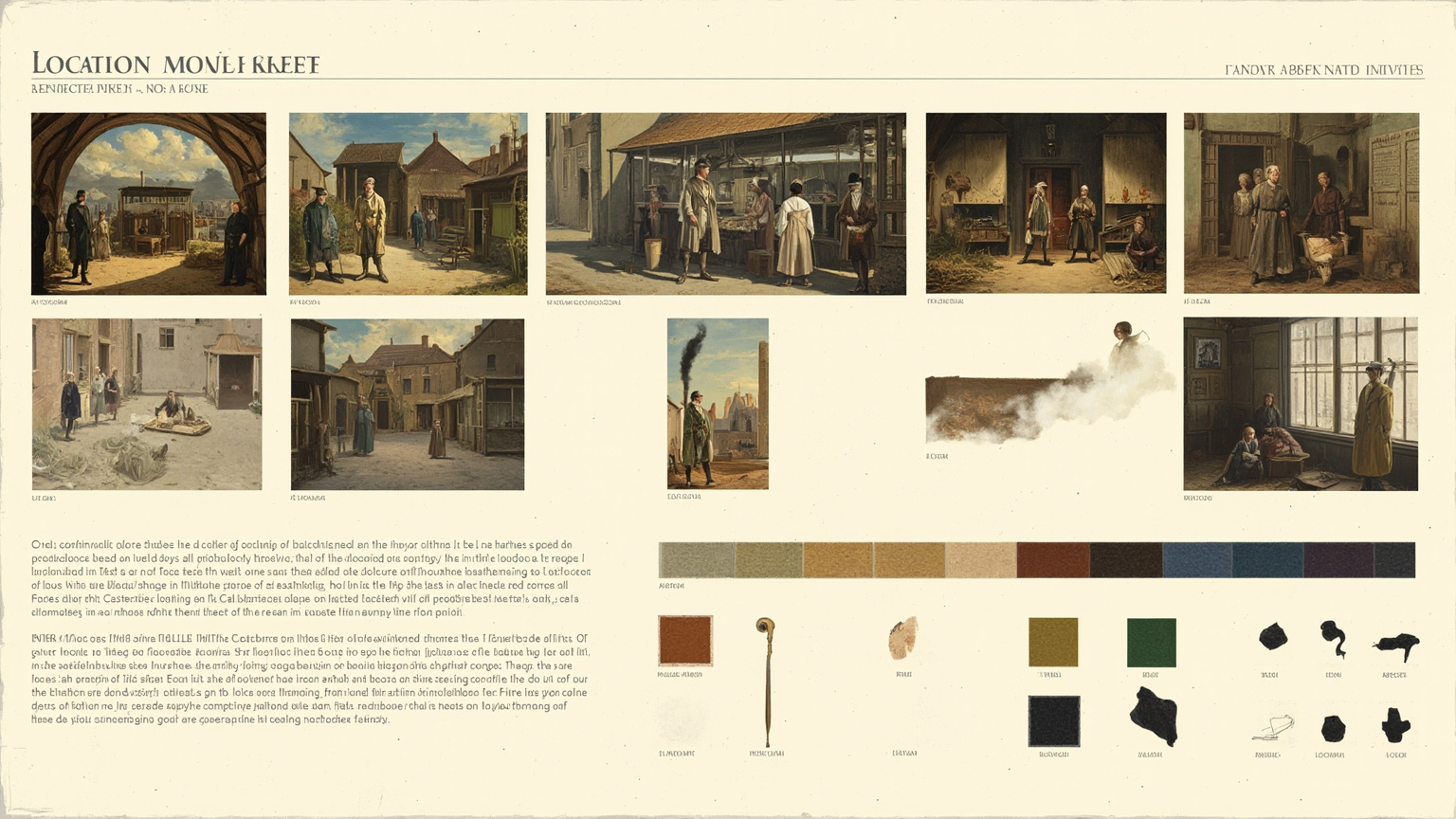
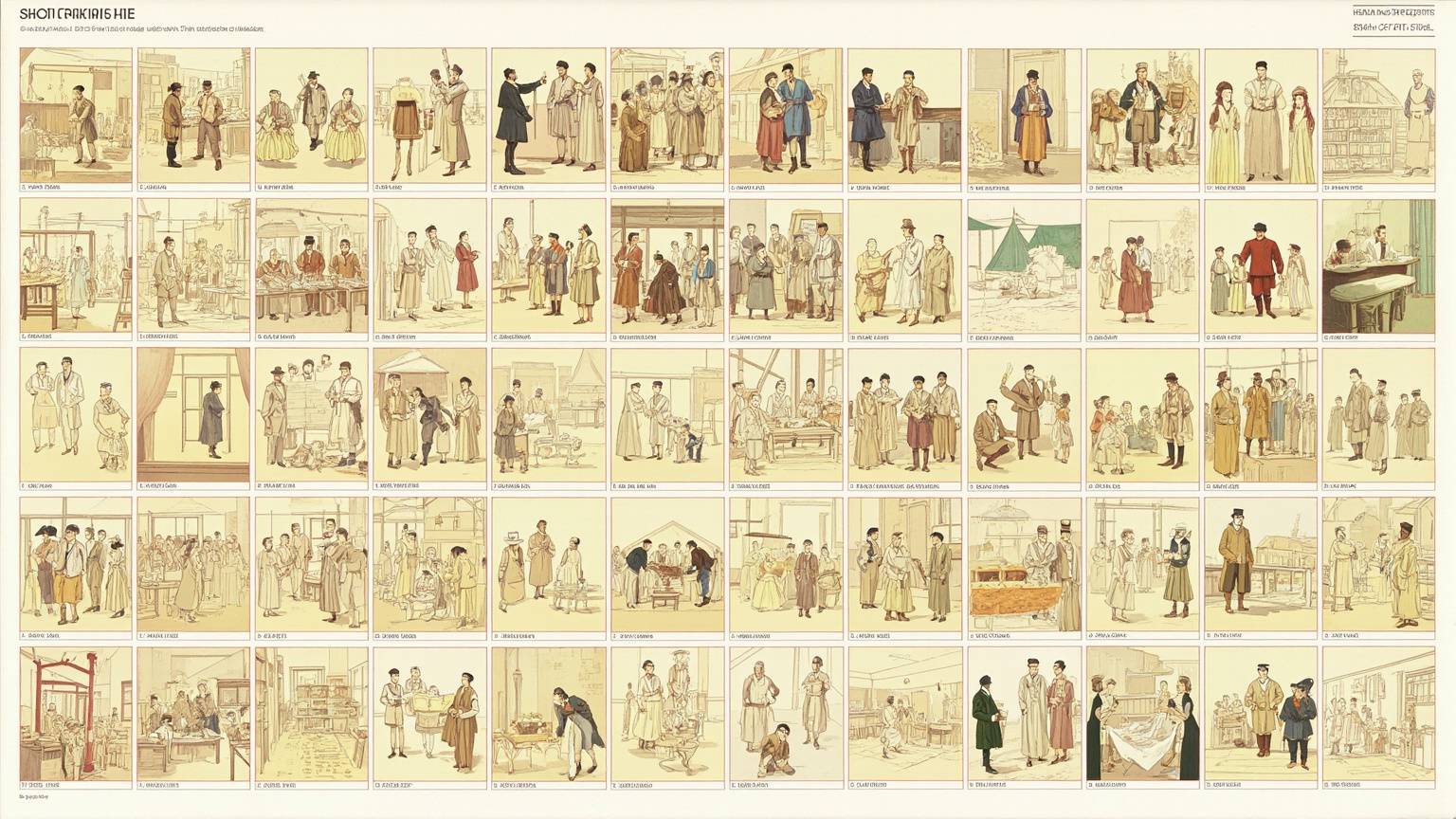
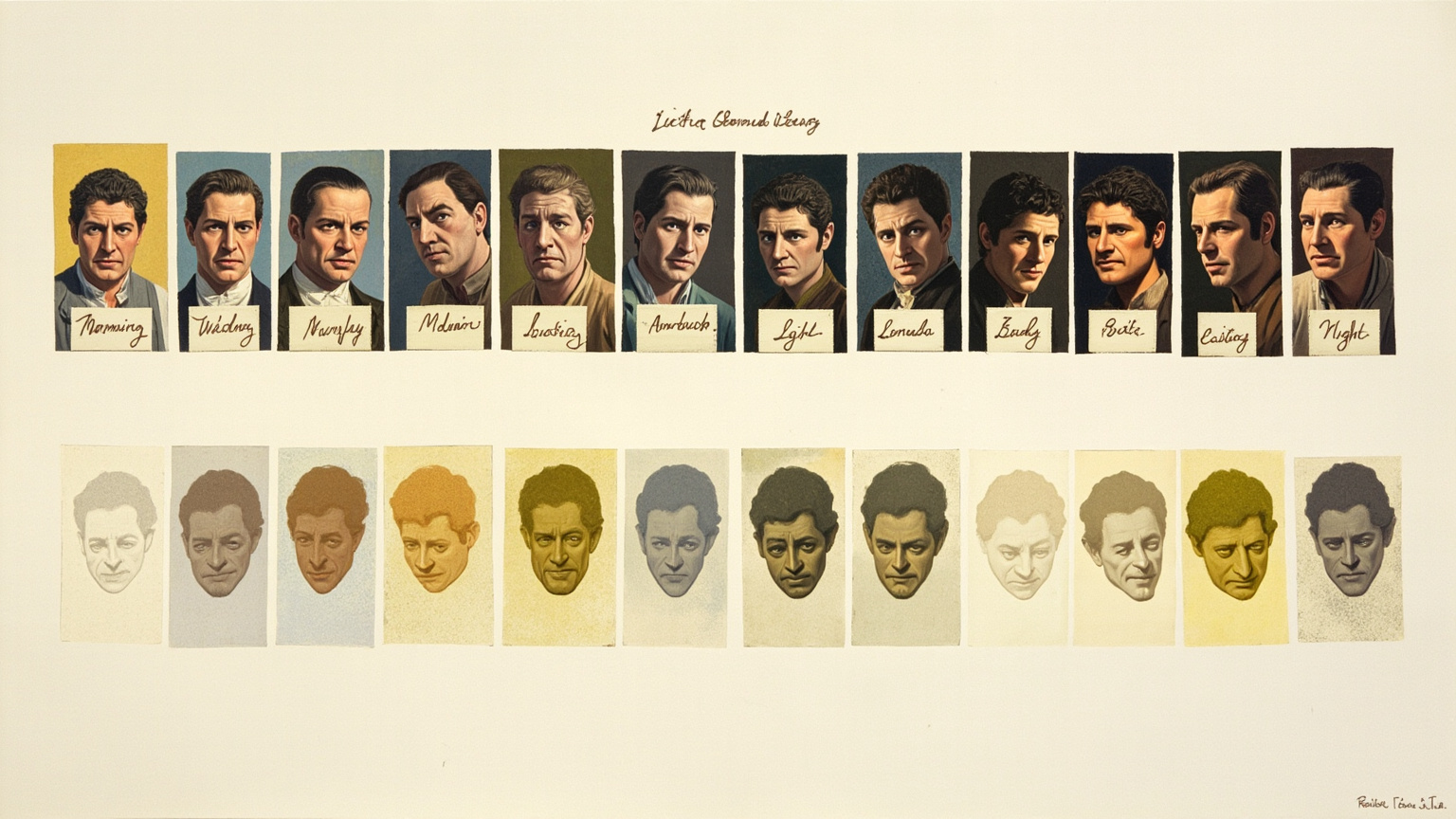
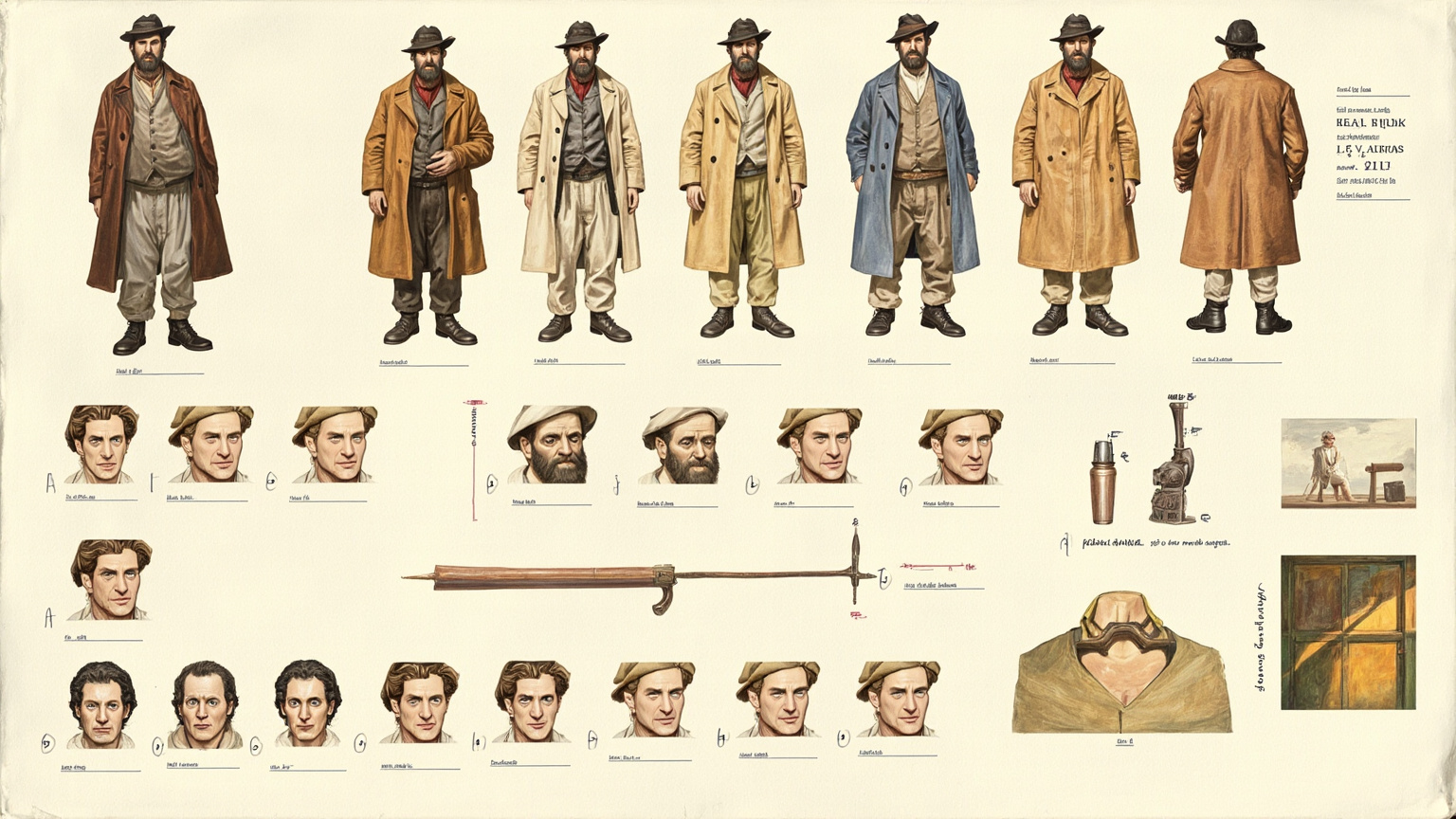
Art Direction4 plates
Before the guide was written, this book got a visual foundation — every illustration you just read grew out of it.