The Merchant of Venice · Companion Guide
威尼斯商人
一纸玩笑般的契约,一磅肉的赌注;爱情藏在铅匣背后,慈悲在法庭上一字之差间逆转。文艺复兴的阳光下,偏见与怜悯刻进湿壁画的人间寓言。
Opening: A Pound of Flesh, Not an Ounce More
The Jewish moneylender lays a freshly whetted knife on the table, in front of the Duke of Venice and a courtroom full of nobles — he means to cut a full pound of flesh from the man who owes him. Not more, not less. The bond says so in plain words: if the debt goes unpaid, he may take exactly one pound of flesh from any part of Antonio's body. The creditor is Shylock. Antonio, the debtor, sits with his head down, ruined — his merchant ships have just gone down at sea. This is the backbone of the play, set down by Shakespeare more than four hundred years ago on some sleepless theater night.
What This Play Is
The Merchant of Venice was written near the end of the Elizabethan era and first printed in London in 1600. Shakespeare filed it under comedy — yet generation after generation of audiences have found little to laugh at. Scholars more often call it a problem play: a breezy romantic comedy on the surface, wrapped around a moral question that will not sit still. It is one of Shakespeare's four great comedies, and the one no school curriculum skips — except the textbook version usually stops at "Shylock wants his pound of flesh." What runs underneath is far deeper than that.
The People and the World
The story moves between two places. Venice: the Rialto exchange loud with trade, the Jewish quarter cramped and damp, the Duke's court grave and severe. Belmont: the country estate Portia's late father left her, lined with cypress and colonnades, where the trial of the three caskets plays out in the garden. In Venice, the merchant Antonio wears a permanent frown — he lacks for nothing and is happy about none of it. His close friend Bassanio, a young gentleman who has run through his fortune, asks him for money to go courting in Belmont. Antonio agrees without hesitation, but his own cash is all tied up in ships at sea — the only one who will lend him the money is Shylock, the Jewish moneylender he has always despised. In Belmont, Portia is bound by her dead father's will: any suitor must choose among three caskets, gold, silver, and lead, and only the one who picks the casket holding her portrait may marry her.
A Deadly Bond
Shylock has been keeping a ledger — not of money, of grudges. Antonio has spat on him in the street, called him a dog and an infidel; Christians throw stones at his shop for sport. Now Antonio comes to him asking for a loan. Shylock thinks it over, then makes a slow, needling offer: for all the curses and kicks and spitting, he will play the friend — three thousand ducats, and a bond struck as a joke: if the debt is not paid on time, a pound of flesh comes off Antonio's body. Antonio signs without a second thought — he trusts his ships too much, trusts friendship too much, trusts his luck too much.
One bond: to him a debt of honor, to Antonio a joke. That confusion is the seed of everything that follows.
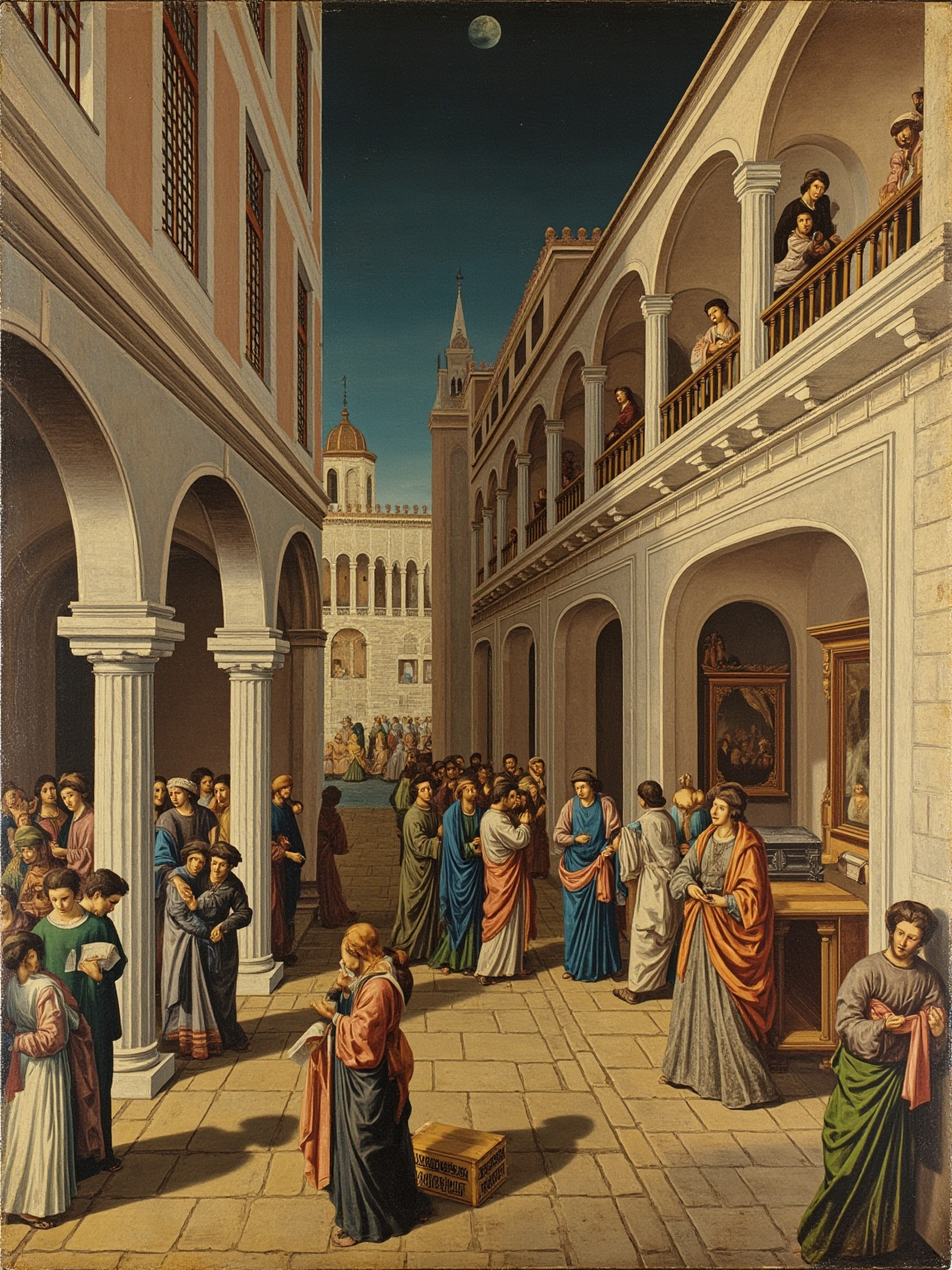
Go to, then, you come to me, and you say "Shylock, we would have moneys."
得了吧,你来找我,开口就是:‘夏洛克,我们要借钱。’
原文金句 · 里亚尔托的借贷
The Trick of the Three Caskets
In Belmont's garden, the gold, silver, and lead caskets sit in a row. The Prince of Morocco comes first — dressed in silk, brimming with confidence, he picks the gleaming gold one. Inside: a skull, and a cold line telling him that all that glisters is not gold, and that those who swear too boldly lose the most. He leaves crestfallen. The Prince of Aragon opens the silver casket and finds the picture of a fool. He loses too. Bassanio comes last. Standing before the three caskets, he mutters that appearance can be a liar, and reaches for the plainest one, the lead. He opens it — Portia's portrait is inside. He has won.
Here Shakespeare plays the oldest trick in the book, and one of the deepest: what glitters is not gold, and the plainest thing is often the real one. The truth inside the caskets and the truth about to unfold in the courtroom are two faces of the same idea — the surface meaning is what deceives, and the real meaning hides somewhere unremarkable.
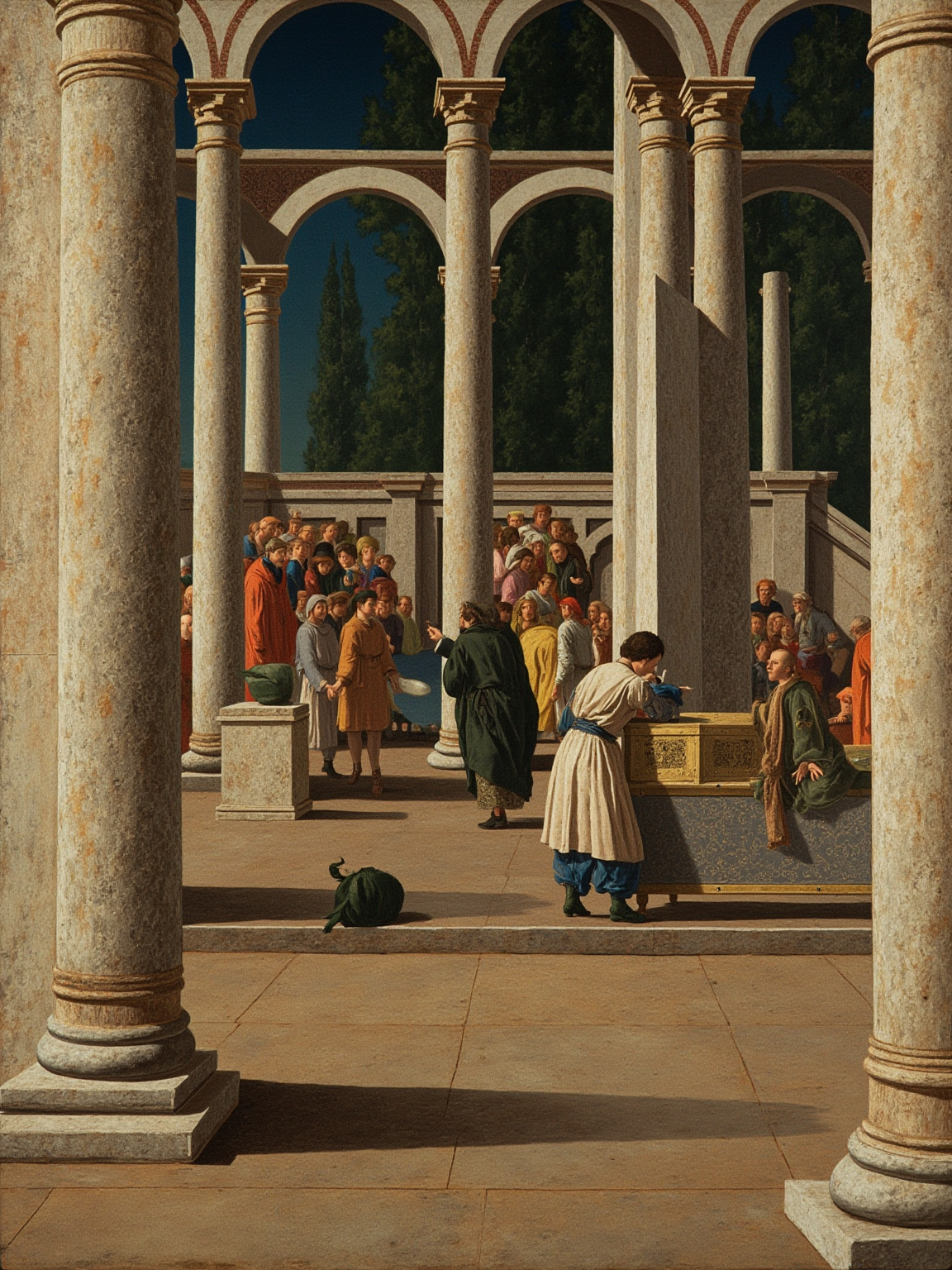
Bring me the fairest creature northward born, Where Phœbus' fire scarce thaws the icicles, And let us make incision for your love To prove whose blood is reddest, his or mine.
去把北方最白皙的美人带来,那里的阳光连冰柱都晒不化;为了你的爱,我们划开皮肤,看谁的血更红——他的还是我的。
原文金句 · 金匣前的摩洛哥王子
Jessica Takes Her Father's Heart With Her
Around the time Antonio signs the bond, Shylock's only daughter, Jessica, does something that breaks her old father's heart. Dressed as a boy, she takes his gold and jewels, leaves a farewell letter, and runs off in the night from the Jewish quarter with her lover Lorenzo — converting to Christianity along the way. Shylock has already spent years absorbing insults. His daughter's flight goes straight to the heart. When the servant brings him the news, he stands frozen for a moment, then runs through the streets shouting for his daughter and his money in the same breath — in that instant he has lost the two things that mattered most.
Shipwreck, and the Court
Then the bad news arrives. Antonio's ships go down one after another — wrecked on rocks, burned, swallowed by storms. He is ruined, unable to pay back even a fraction of the loan. Shylock comes to collect, and what he asks for is the pound of flesh. Friends urge him to take double the money instead. He refuses — he wants the bond honored to the letter. The case goes before the Duke of Venice's court. The Duke pleads with him directly. No. The Christians in the room shout him down. He only nods, smiles, and turns the question back on them: you buy slaves and never let the slaves choose their masters, so why can't he collect what a broken contract owes him? Nobody in the room has an answer.
The first time I read that line of Shylock's, I flipped back a page and read it again — the moneylender everyone in the room is cursing opens his mouth, and the first thing out of it is a question nobody can answer.
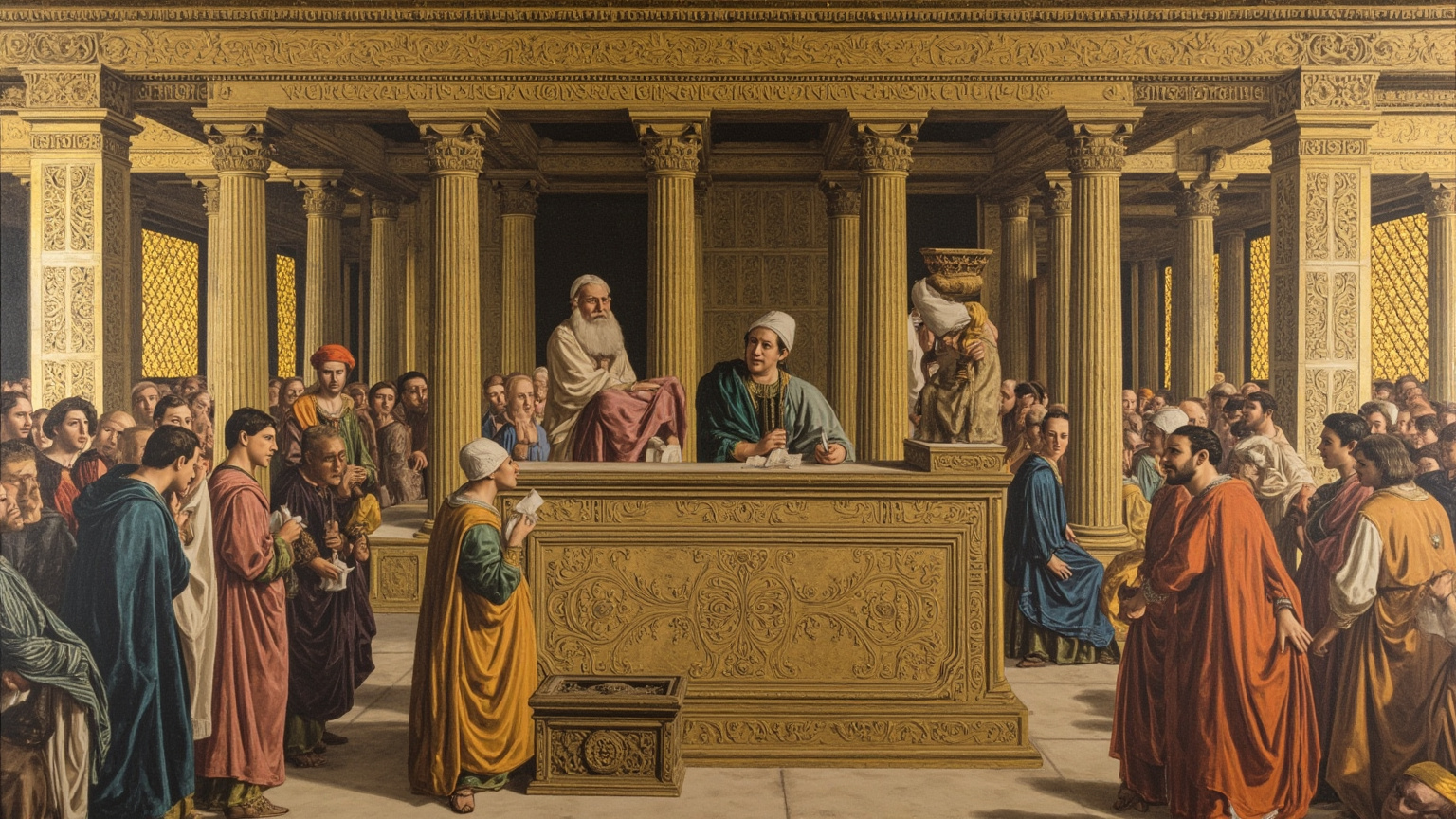
The curse never fell upon our nation till now, I never felt it till now.
诅咒从未降在我们民族头上,直到今天;我从没尝过这滋味,直到今天。
原文金句 · 夏洛克绝望的呐喊
The Young Lawyer in Disguise
At the crucial moment, a young doctor of law named Balthazar arrives from Venice — young, learned, formidably eloquent. The Duke hands the case over to her to preside. She does not attack the bond at first; she speaks only of mercy — mercy is not forced, she says, it falls like gentle rain from heaven, and no earthly power can compel it. Shylock is unmoved. He wants his pound of flesh, and nothing else will do. She nods. Very well — then the bond stands as written. She invites Shylock to take his knife to it right there in court. An instant before the blade falls, she plays her hand: the bond grants not one drop of blood, and it specifies exactly one pound, no more, no less. If the merchant bleeds so much as a drop, or the flesh cut comes up a hair over or under a pound, Venetian law confiscates everything Shylock owns. The knife stops in midair. He cannot cut. He cannot not cut. The courtroom goes silent.
Portia wins — but the win comes entirely from a loophole in the wording, entirely from legal technicality. The speech on mercy never touched Shylock; what corners him is a missing word for blood and an exact measure of weight. Shakespeare's trick is a fine one: he has the bond turn and bite its own author, at a moment when moral persuasion was never going to work.
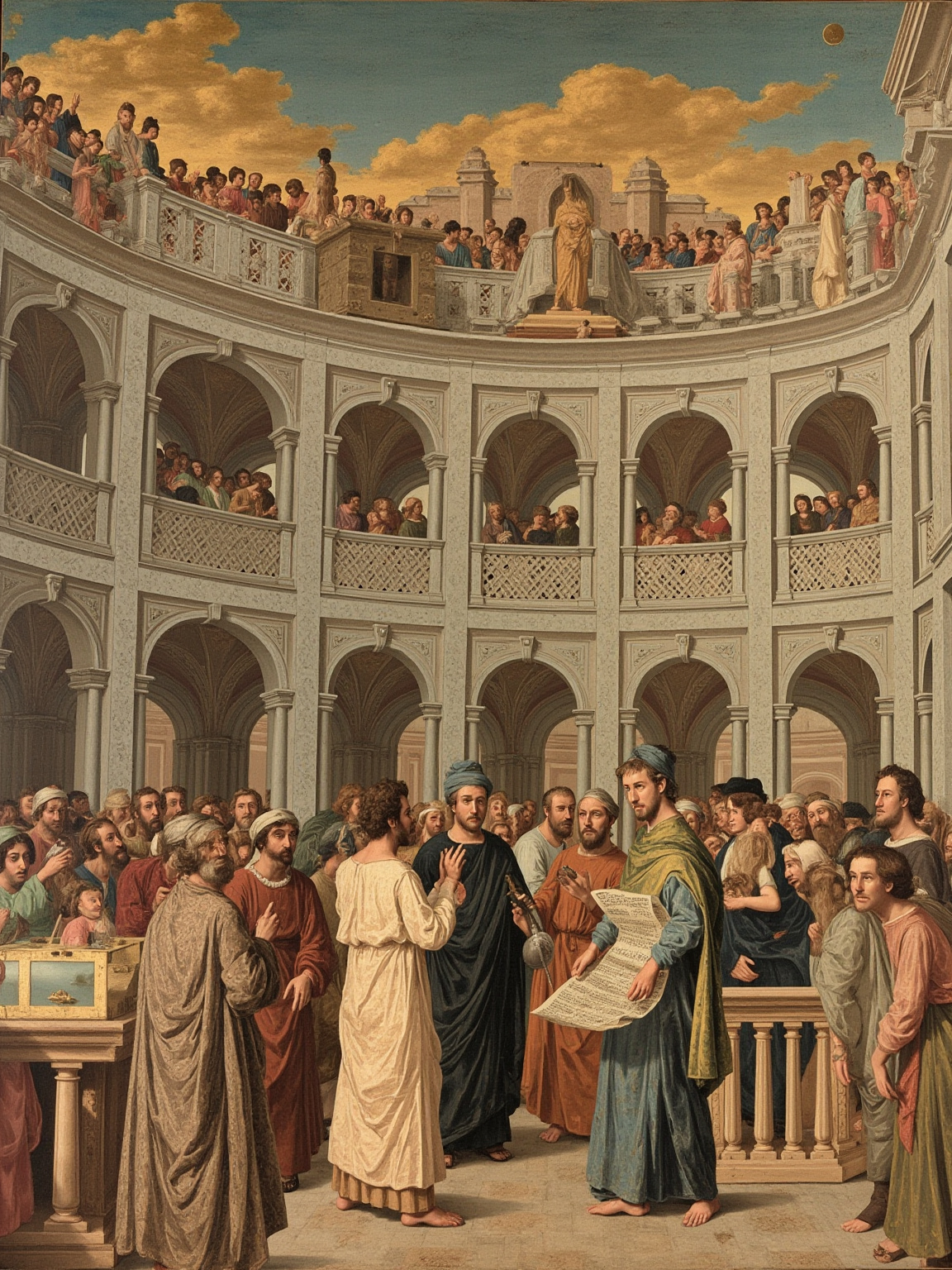
If you deny it, let the danger light Upon your charter and your city's freedom!
若你拒绝,就让这危险落在你的特许状和这城市的自由之上!
原文金句 · 法庭上的博尔萨泽
The Counterstroke
Before Shylock has even put his knife away, the Duke moves to let him go. Portia speaks again — not so fast. There is another Venetian law: if a foreigner is found to have plotted against the life of a citizen, half his estate is forfeit to the state and half to the victim, and the offender must convert. Shylock collapses. He gets no pound of flesh, and loses half his fortune, his faith, and even the share of his estate that would have gone to his daughter — the very daughter who has already run off with the rest of it, Jessica.
Back to Belmont: The Ring Trick
The trouble should have ended there. Portia and her maid Nerissa, still in their men's clothes, hurry back to Belmont ahead of their husbands. Bassanio and Gratiano arrive next — in court, grateful to "Balthazar," they had handed over their wedding rings on the spot, and now dread having to explain it to their wives. Portia and Nerissa seize on it and will not let go, insisting that the young lawyer must have been a woman, and that giving away the ring means their husbands have been unfaithful. The house is in an uproar. Bassanio swears every oath he can think of, until the two wives finally laugh and admit it was a joke. A servant rides in with the news that Antonio's ships have come home safely after all. The play ends in reunion.
The ring scene is Shakespeare letting the audience exhale — the knife that hung over Antonio's chest a moment ago is traded for two wives' teasing, and the lightness of comedy finally reasserts itself.
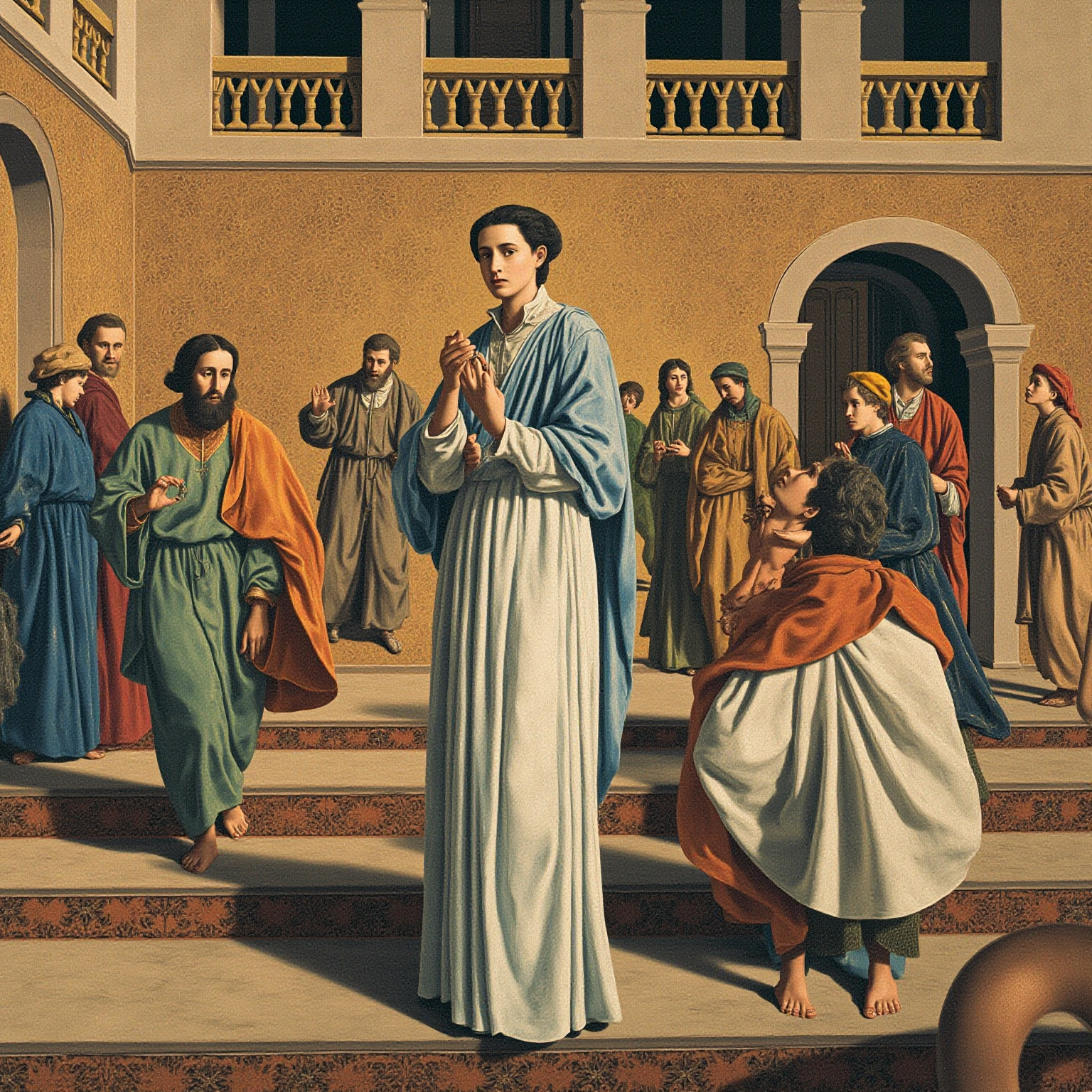
What the Play Is Really Saying
The Merchant of Venice is neither an indictment of Jews nor a tribute to them; it works more like a mirror, showing sixteenth-century London audiences the prejudice they had swallowed and never said aloud. Shylock's speech asking whether a Jew does not have eyes is one of the earliest passages in literature to argue for the humanity of an outsider, and it leaves the Christian conscience nowhere to hide. But Shakespeare does not scrub Shylock clean into a saint, either. What Shylock wants is the bond honored, the flesh cut, his hatred and his revenge satisfied. The grand talk of mercy does not reach him; years of being ground down have turned him into a knife with a fresh edge. Portia's victory deserves closer attention too. What beats Shylock is not mercy — her speech on mercy ends and he has not moved an inch. What actually defeats him is the letter of the law, the legal technicality, the bond growing its own thorn and turning on him. In a society built on contracts, what binds a person is usually not the meaning behind the words but the words themselves.
The casket plot quietly echoes the courtroom plot — gold and silver lose to lead, and one reading of the bond's letter loses to another reading of the same letter. What glitters is not gold; the plainest thing is often the truest one. Shakespeare builds this symmetry without ever pointing at it.
Why You Should Read the Play Itself
I have laid out the skeleton of this play for you — but a skeleton is not the play. What Shakespeare really pulls off is making Shylock a man you cannot quite hate and cannot quite forgive; he lets Portia win, and still you find yourself aching for the old man crumpled on the floor. Feelings that tangled only come from the original lines — their rhythm, their pauses, the word-by-word craft that a summary can never carry. One more point: I have only paraphrased Shylock's great speech here. The particular weight of the pain Shakespeare wrote into it, clenched-jawed and held in check, is something else entirely. And then there are the moonlit love talk and the little songs in Belmont's garden — passages that have nothing to do with the main plot, and without which the play would be nothing but a gavel and a chopping block. Those are exactly what Shakespeare left for the reader who turns to that page and lingers. Knowing the plot is not the same as reading it. Go read the play — it is worth every page.
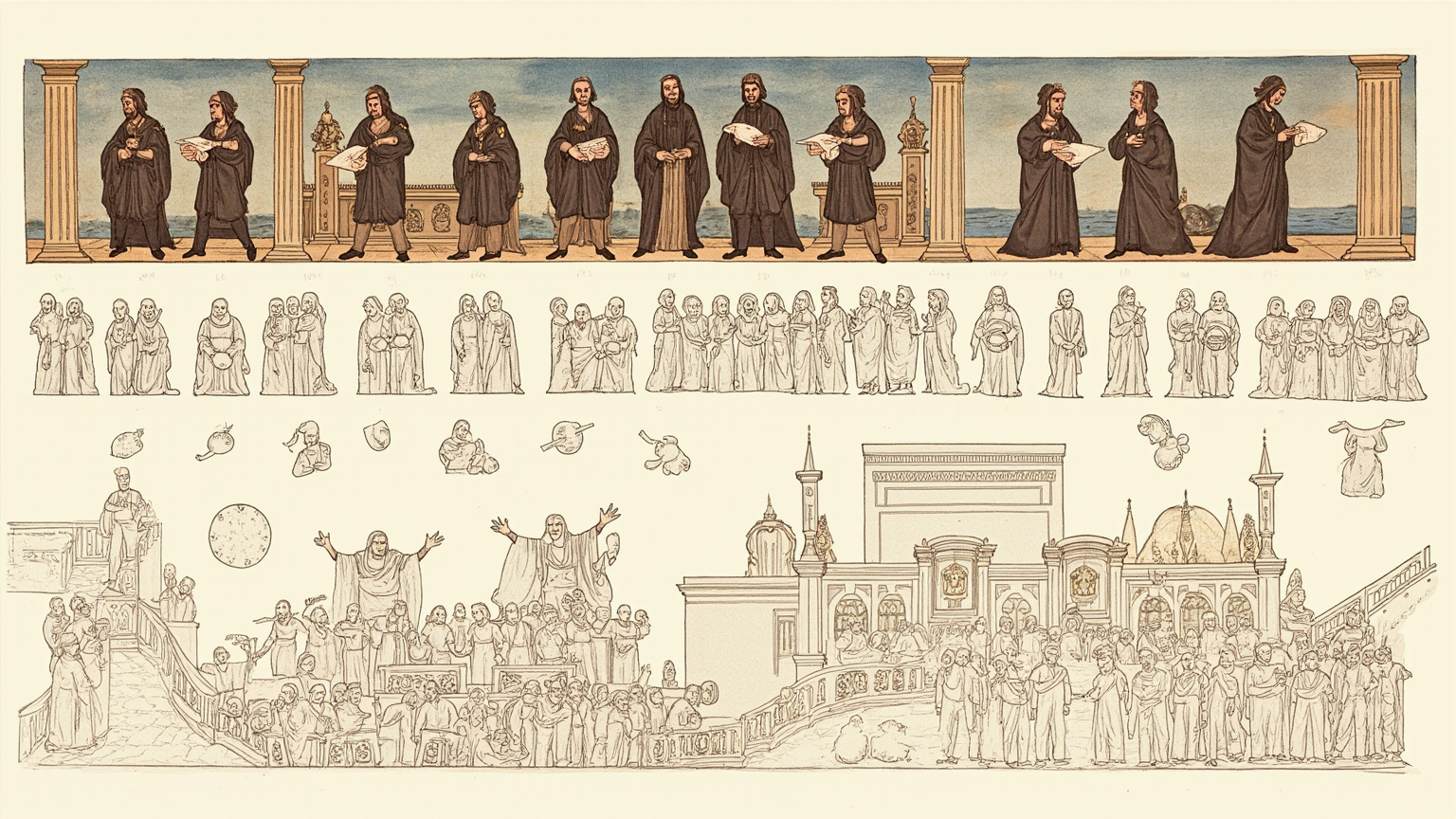
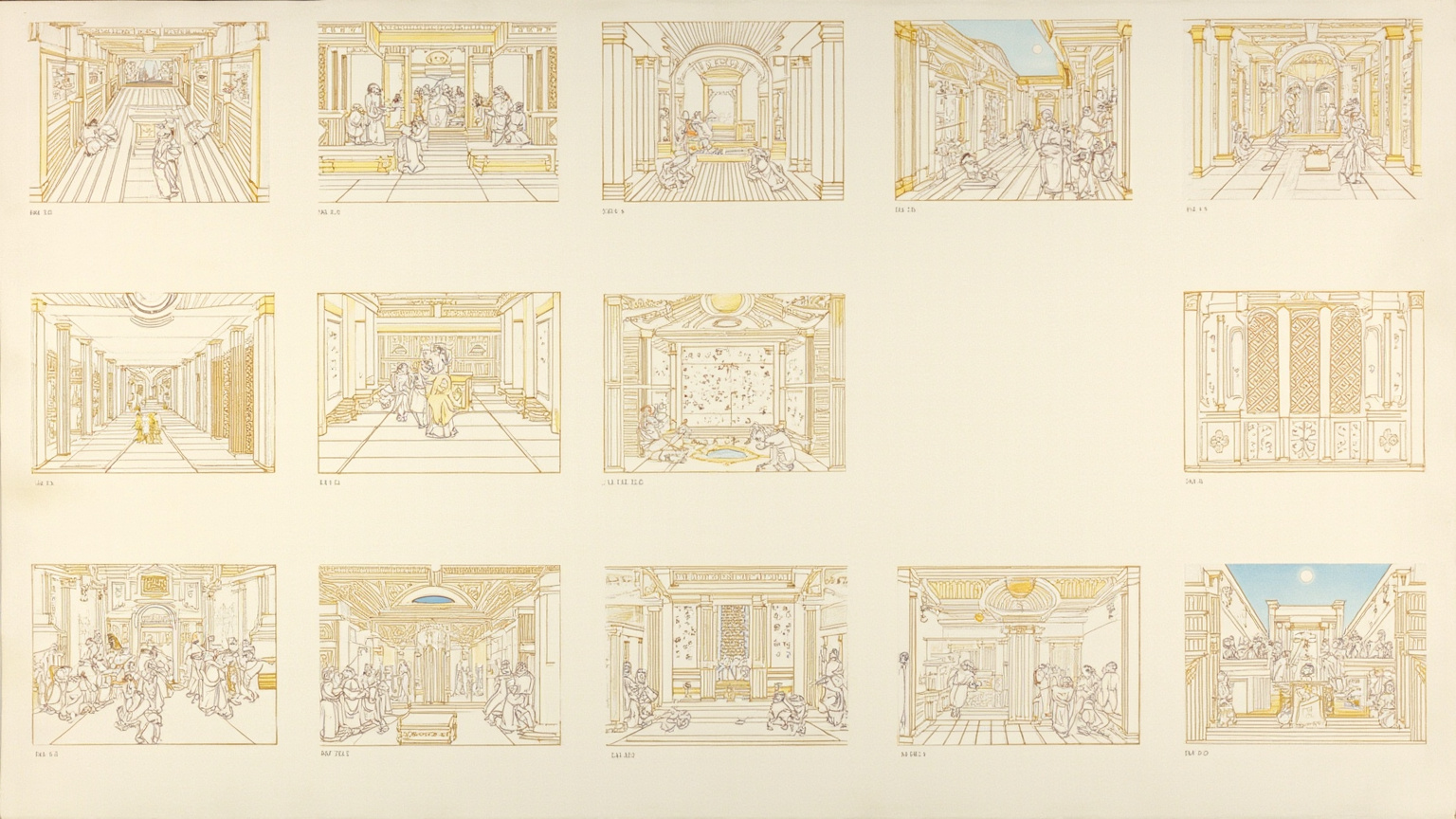
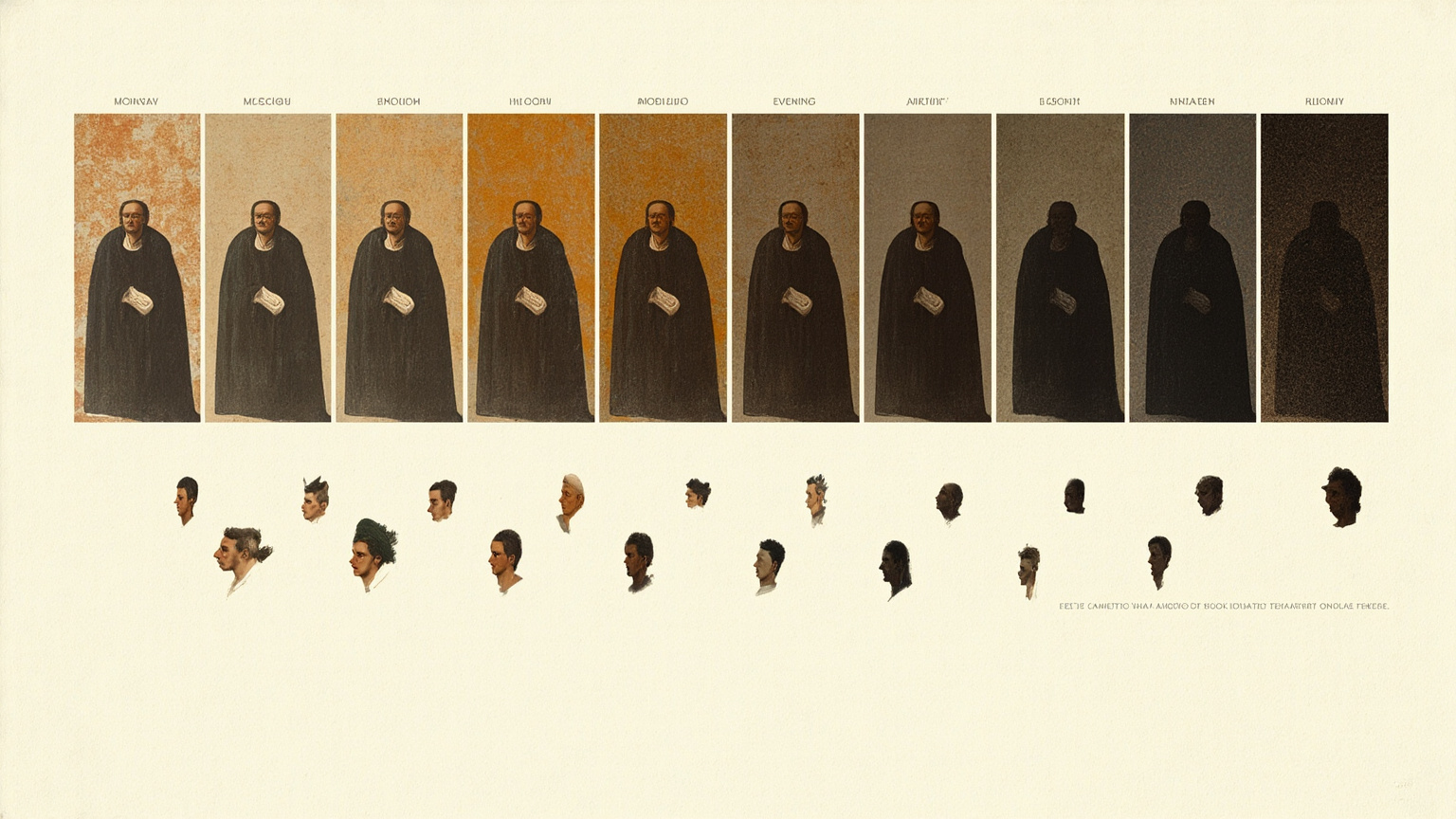
Art Direction4 plates
Before the guide was written, this book got a visual foundation — every illustration you just read grew out of it.