The Painted Veil · Companion Guide
面纱
一场始于虚荣的背叛,终于瘟疫与沉默之爱的精神觉醒——揭开一个人对自己的那层纱
Opening: A Choice, Two Paths, Both Abysses
A note, calm to the point of terror, sits on the living room table. Walter tells his wife Kitty in the same tone he uses to record data in a laboratory: I've found out. Either you get Charlie to promise he'll divorce and marry you, or you come with me to a small town in the interior where people are dying. The note has no anger, no tears, not even a single line of explanation. Kitty stands at the window holding it, and only then realizes that for the first time in over twenty years, life has asked her a question — not whether she loves, but who she actually is.
The story traces back from this note and moves forward to the moment she steps out through the city gate of Mei Tan Fu. There's a technique in Maugham's book that many readers miss: he barely uses beautiful long sentences to write desire. Instead, he shows you the entire marriage's true colors through a blank sheet of paper and one cold sentence. Kitty thought what she experienced in Hong Kong was love. Looking back, she sees it was only a veil.
What Kind of Book Is This
The Painted Veil was published in 1925, written by the Englishman William Somerset Maugham. He spent his life at several respectable professions — intelligence agent, playwright, a travel writer who flew around the world hunting for stories — but what he's remembered for is his novels. Most of his writing takes the form of "English people elsewhere": honest, scalpel-sharp, quietly stripping people bare. The title borrows an image from a Shelley sonnet — life is a painting covered by a veil, and we guess at what's beneath, thinking what we see is the truth. What Maugham's novel aims to do is peel that veil away, bit by bit.
Characters: Three People, Three Kinds of Love
Kitty Gaston is the beautiful daughter of a middle-class London family, raised by her mother as a piece of currency. She kept rejecting suitors until she was twenty-five, and when her younger sister got engaged first, she hastily accepted the proposal of the reticent bacteriologist Walter Fane — marrying not so much for love as for not being left behind. In Hong Kong, she feels stuck in a grey marriage: her husband is polite but not warm, speaks as little as if he were writing a thesis.
Charlie Townshend is the Assistant Colonial Secretary in Hong Kong — handsome, smooth, his words flowing like a glass of fine wine. The moment he appears, he captivate Kitty: you're special to me. She thinks she's finally been truly seen, but she's really just been lightly licked by an old hunter. Walter is a different kind of man. He loves her to the bone, but can only hide that love behind microscope slides: you can't tell someone has a fever from looking at a laboratory, but he does.
Four. The Plot Line
① The Hasty Marriage in London
Kitty's mother had spent her whole life calculating how to marry off her daughter during the London Season. Kitty failed to land a husband, and when she saw her younger sister Doris get engaged first, she panicked. Walter returned to Britain on leave and quietly appeared on the scene—he barely courted her before taking her away. Maugham writes this passage with real cruelty: at the wedding, the guests were congratulating her mother for finally catching a breath of relief, one daughter married off, which made the rest easier. Between the bride and groom there was barely a word. Kitty sat on the deck of the ship bound for Hong Kong, and the sea wind hit her before she realized: she had just handed her life over to someone she barely understood.
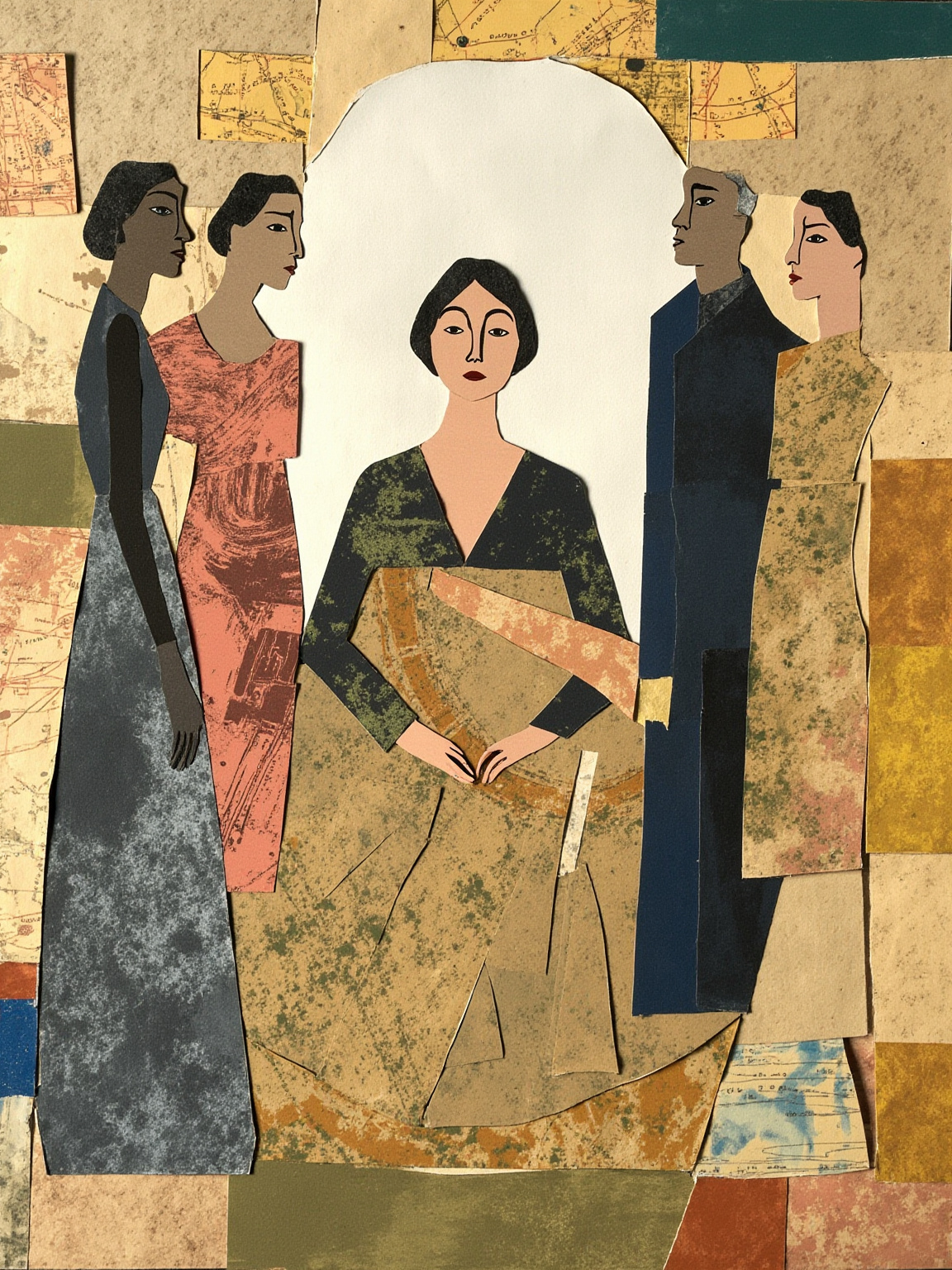
She had a sense of being committed to a catastrophe.
她有一种要投身一场灾难的感觉。
金句 · 第1章 · 仓促婚姻
② The Hong Kong Affair
The European-style houses and clubs in Hong Kong were like another London, only hotter and more stifling. Kitty moved through dinners and dances in her evening gown and quickly noticed Charlie Townsend. He told her: you're the most interesting woman I've ever met. Walter just kept his head down, politely handing her an umbrella. Kitty thought she had found true love—the kind that makes you shine on the dance floor and float on the way home. Maugham is precise when he writes her psychology during these trysts: she feels alive again. The opposite of alive, it turns out, is being used. She didn't notice.
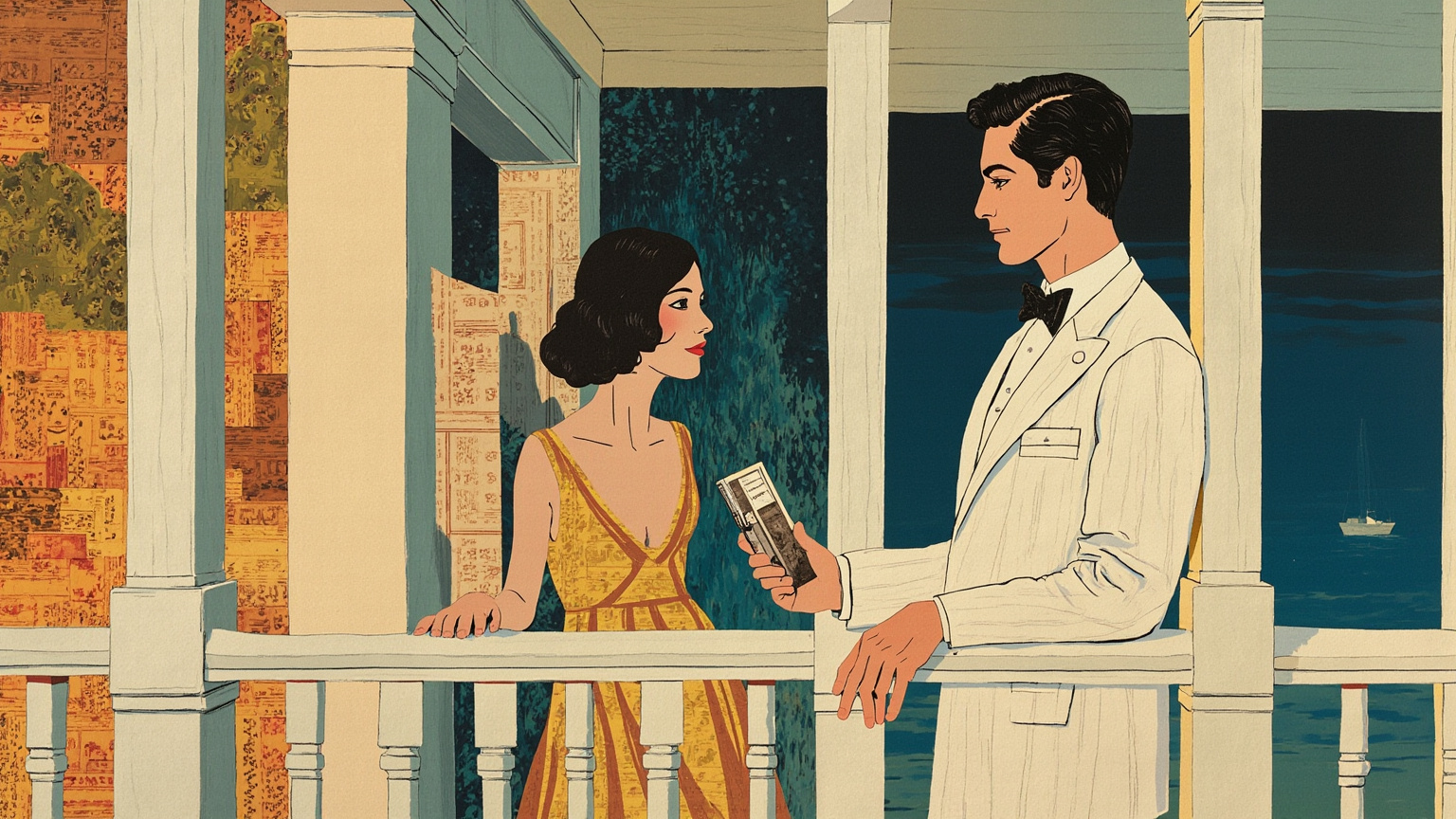
I know everything. I am not a patient man. Will you kindly tell me what you intend to do?
我什么都知道了。我不是一个有耐心的人。你能不能告诉我,你打算怎么办?
金句 · 第3章 · 字条与两条路
③ Walter's Two Paths
The day the affair came out, Walter didn't break anything. He walked in and said, in the tone of someone counting bacteria under a microscope: I know everything. Then he offered two paths—she could go to Charlie and ask him to divorce his wife and marry her, or she could go with him to a small town in the interior where cholera was raging. Kitty ran crying to Charlie for help. His answer was the first time she heard that honeyed voice crack: I can't leave my wife, I can't divorce her, let's just keep things as they are. She stumbled home and finally understood—it wasn't love, just her vanity paired with his selfishness.
④ Meitanfu: The Dead City and the Orphans
She went with Walter to Mei Tan Fu. This is the novel's most gripping section. Outside the city walls are rice paddies and low ramparts; inside, stone streets and coffins carted off daily by cholera. Walter throws himself into epidemic control, working late every night, and earns the locals' respect in the process — science carries more weight than a business card in a place like this. Kitty, meanwhile, sinks into despair. She doesn't speak the local language, has no friends, and stares at an empty house until Wading, who works at the inland customs office, takes her into a French Catholic convent. The nuns there are holding cholera orphans in one arm while ladling rice porridge with the other.
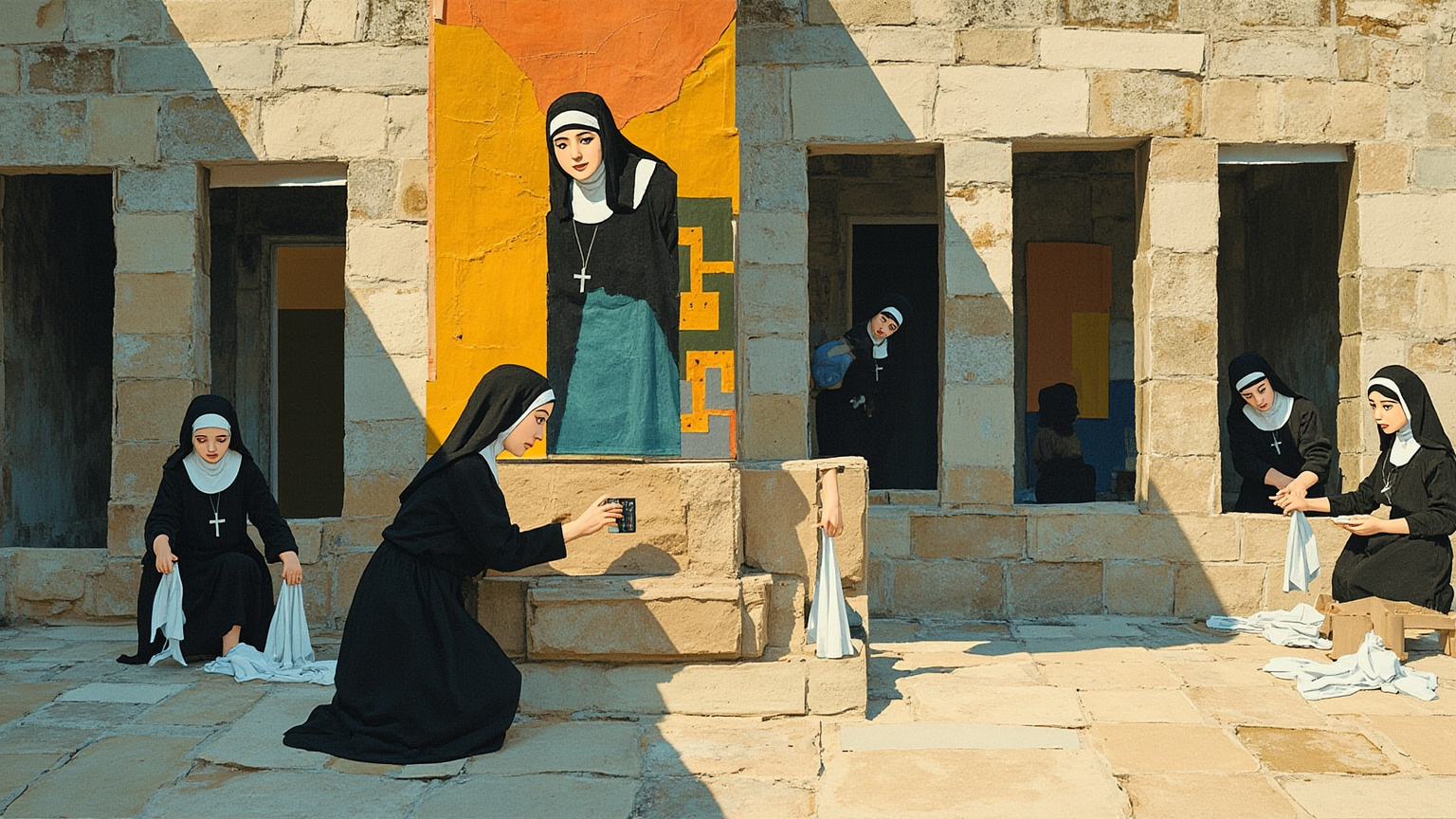
The way of charity is not to seek the applause of men.
慈善之路,不是去博人的掌声。
金句 · 第5章 · 修道院的嬷嬷
Kitty begins volunteering to help — bathing the children, lining up bottles one by one. For the first time, she does something no one praises, something no man sees. The passage where Maugham writes her picking up a baby that doesn't cry or fuss, skin stretched over bones, has almost no adjectives — just actions, her bending down, supporting the back of the head, pressing the child to her chest. I always flip the page back when I read this — this is what awakening looks like, not struck by lightning but slowly pressed awake by a tiny hand.
⑤ The Pregnancy Mystery and the Silent Love
Kitty discovers she's pregnant at this point. She can't work out whose child it should be considered. Unable to lie to Walter, she tells him the truth. He only says one thing in response: "What does it matter?" No follow-up questions, no rage. In that moment, the words crush her instead — she finally reads the person beside her: he had never made her choose between him and anything else, from start to finish, only he had ever been the one who suffered.
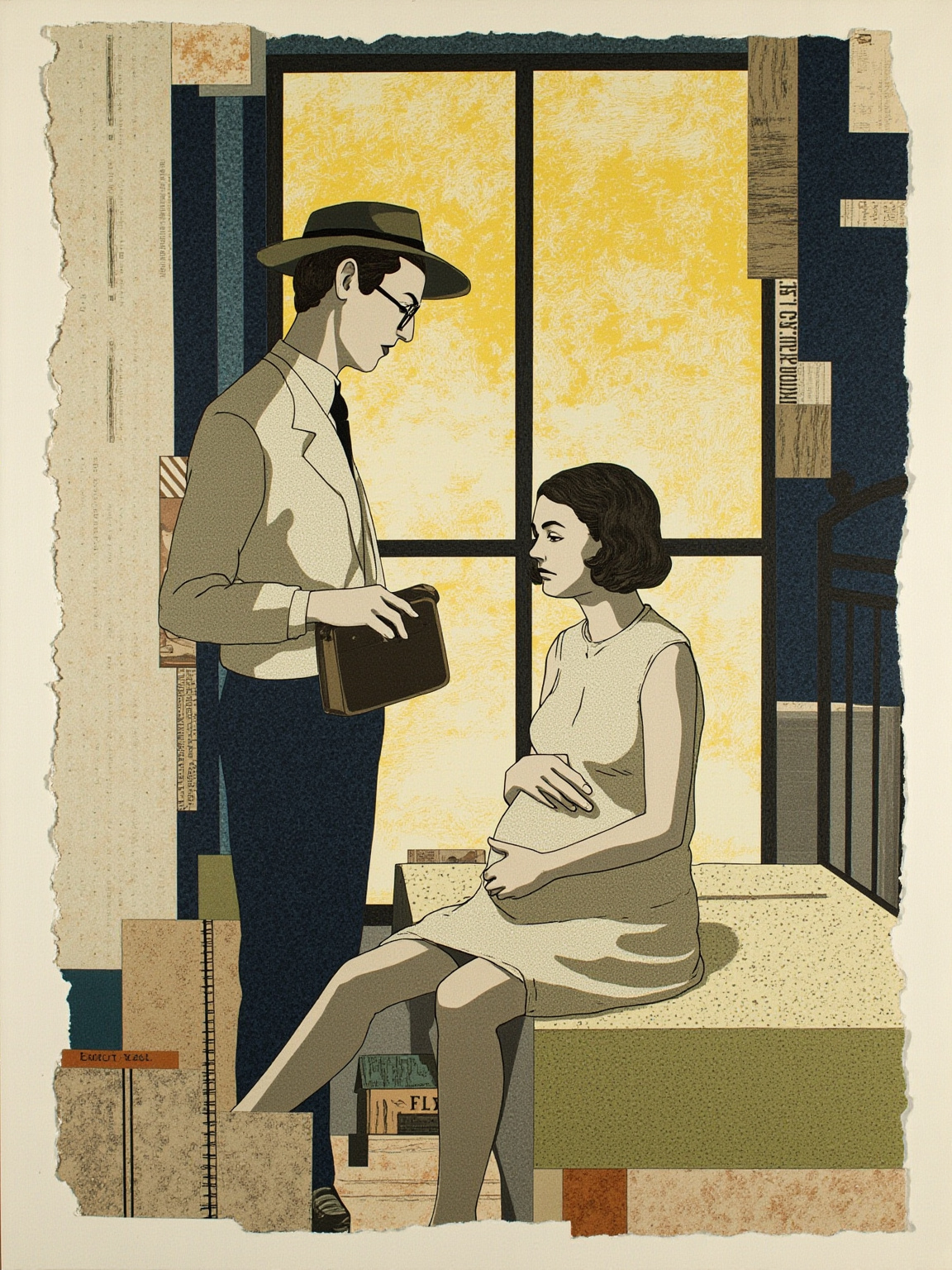
What does it matter?
那有什么关系。
金句 · 第6章 · 沉默之爱
⑥ Walter Contracts the Plague and "The Dog Died"
Walter has spent too long in the epidemic zone and contracts cholera. At his deathbed, Kitty throws herself toward him, but he can no longer form complete sentences — he leaves only six words: the dog died. This line comes from a poem by the English poet Oliver Goldsmith, about a kind man who saves a dog, the dog turns and bites him, and in the end the man lives while the dog dies. This sentence is the one he chooses for his final utterance — any reader has to stop and think about it: who bit whom? Maugham doesn't explain; he doesn't need to.
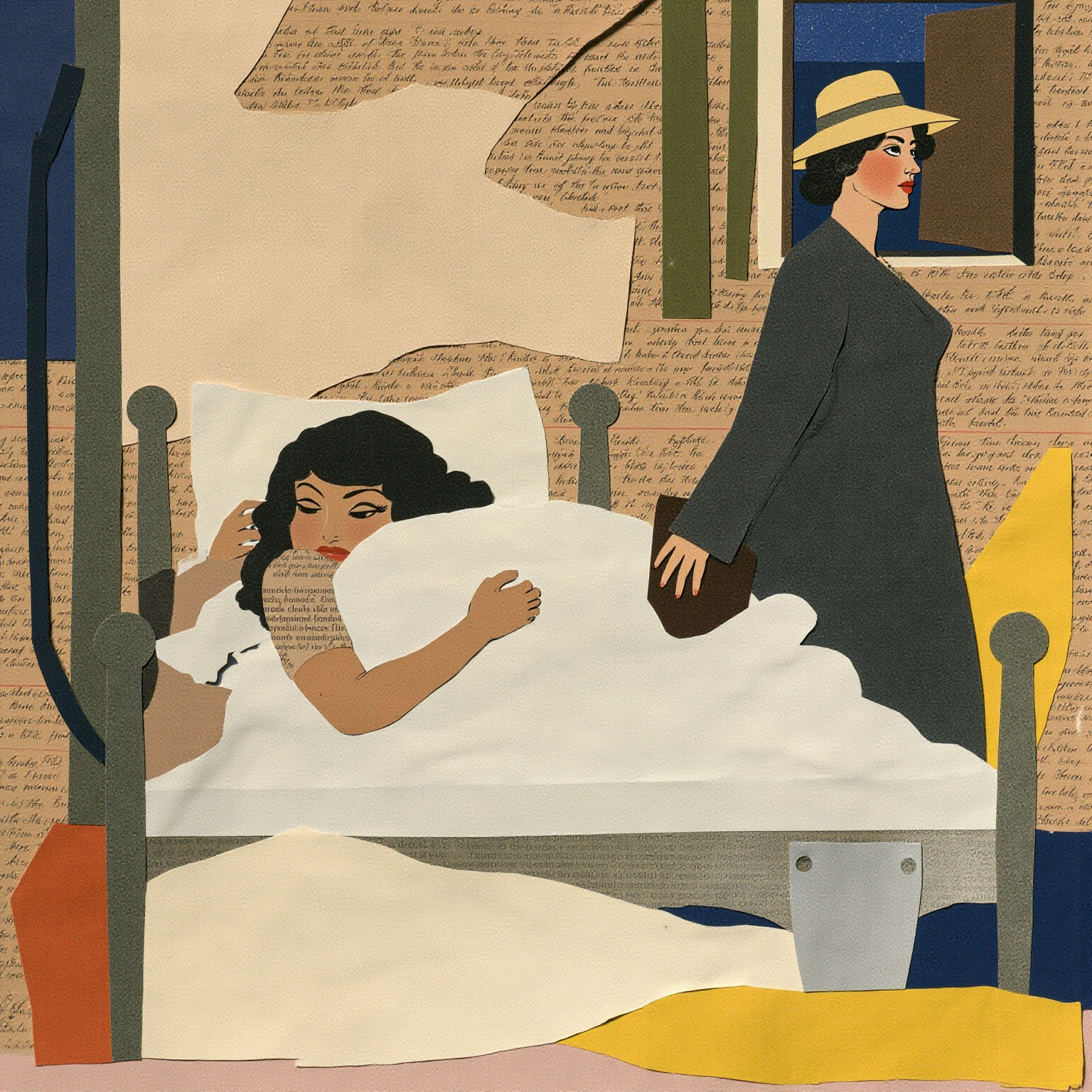
The dog it was that died.
死的却是那条狗。
金句 · 第7章 · 临终遗言
⑦ Final Disillusionment and Setting Off Alone
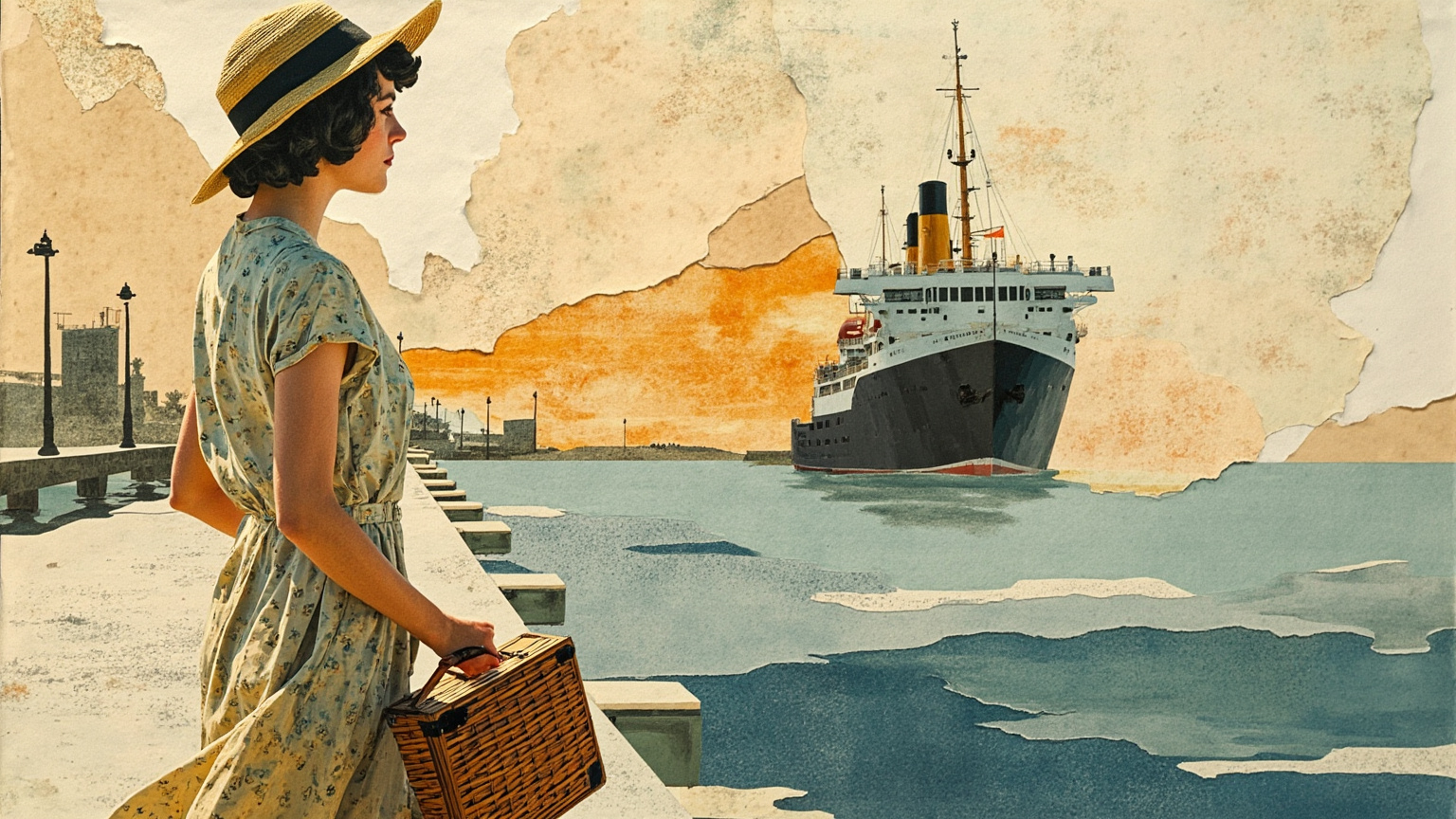
Kitty returns to Hong Kong and falls seriously ill. After recovering, she goes to see Charlie again, as if possessed. He uses only his old familiar sweet voice: "You've lost weight, it hurts me." She looks at this face like she's looking at the illusion of being "seen" that she's pursued for twenty years. The door closes, she turns and walks away. Her father is appointed Chief Justice of the Bahamas, her mother dies, and she voluntarily asks to go with her father to the Caribbean, to raise the child in her belly alone. This is not a romantic reconciliation ending. Maugham writes with restraint: a person carrying a suitcase, standing on the deck looking at the sea, not looking back.
Five — What It Actually Says
On the surface, Maugham's novel is about an affair; at its core, it's about how a person comes to know themselves. For the first twenty-five years of her life, every mirror handed to Kitty was held out by someone else — her mother, her sisters, the men at balls — and in each one she saw herself as beautiful, clever, special. Walter's note was the first time someone took that mirror away, leaving her standing in the room with an empty face, seeing herself clearly for the first time. After that she begins to do things — things no one praises, no one applauds, nothing you'd post on social media. Once the face is stripped away, what remains is a person who can actually do work.
At the same time, the book carries a less-discussed undertone: the colony. Maugham places the respectable official world of Hong Kong side by side with the convent in Mei Tan Fu — one lives in the gaze of others, the other lives among death and orphans. Walter becomes a hero there, not because of any particular charm, but because there are no parties to attend, so he can only pour his energy into work that actually saves people. The nuns are the same way. Maugham has an old-fashioned reverence for people who work with their hands; he doesn't spell it out in the novel, but he writes it heavily.
For Maugham, that painted veil isn't hung over a lover's face — it's hung over a person's understanding of themselves.
Six — Why You Should Read It Even After Knowing the Plot
I've walked you through the plot, but there are three things only the prose itself can give you. The first is rhythm — Maugham writes Walter's coldness, Kitty's guilt, the nuns putting children to sleep, and each passage has a different length; that silent switching is something no commentary video can replicate. The second is temperature — in the convent passage you can smell the rice soup and laundry soap, feel the stifling summer heat of a southern town, watch an English girl learn to work with her hands while crouching on brick floors. The third is his restraint, his refusal to finish his own sentences. The six heaviest words in the entire book turn out to be a line from a poet writing in English centuries ago. When I reach this point, I can't go on explaining for you — you have to open that page yourself and read that passage in silence.
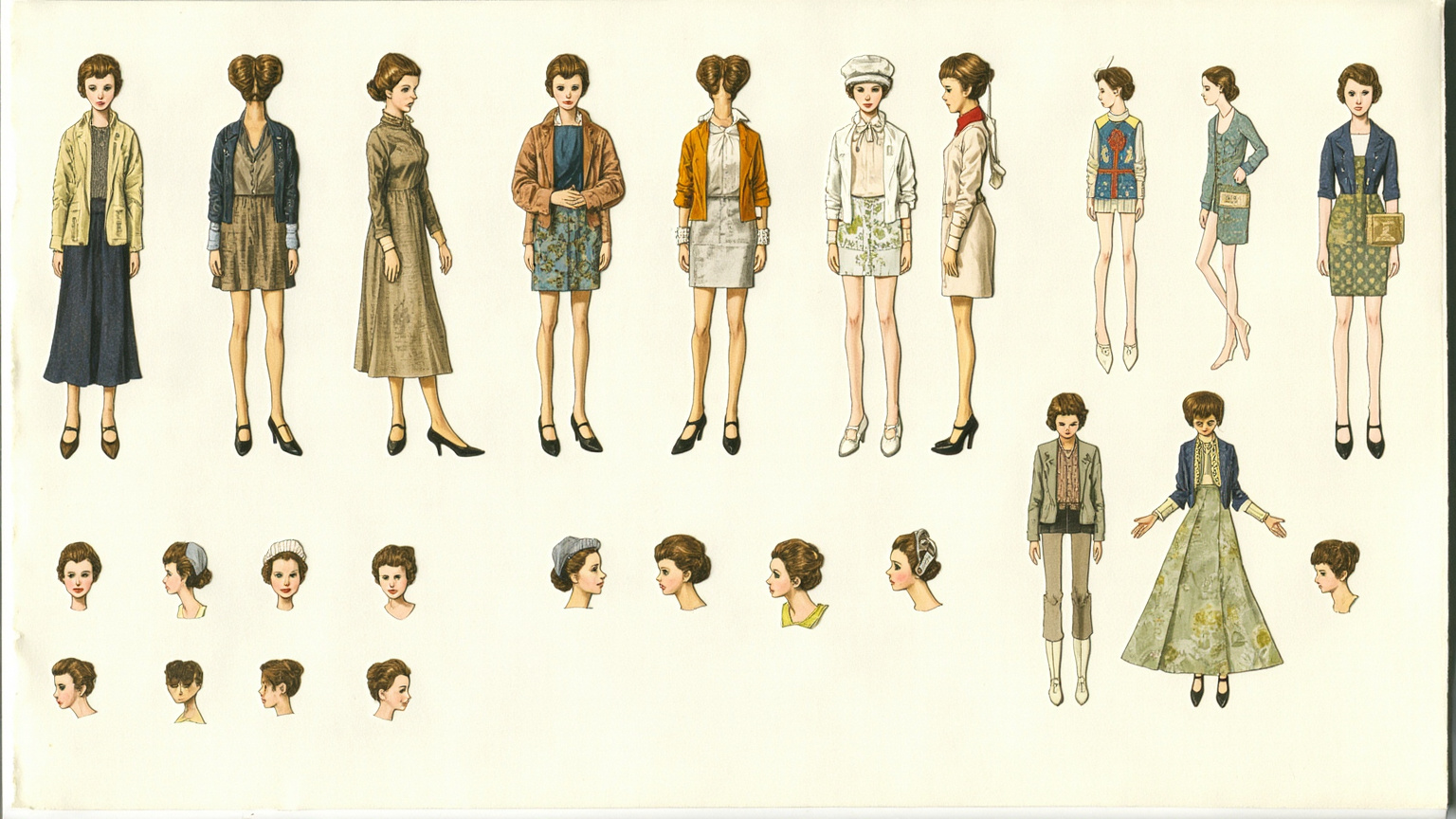
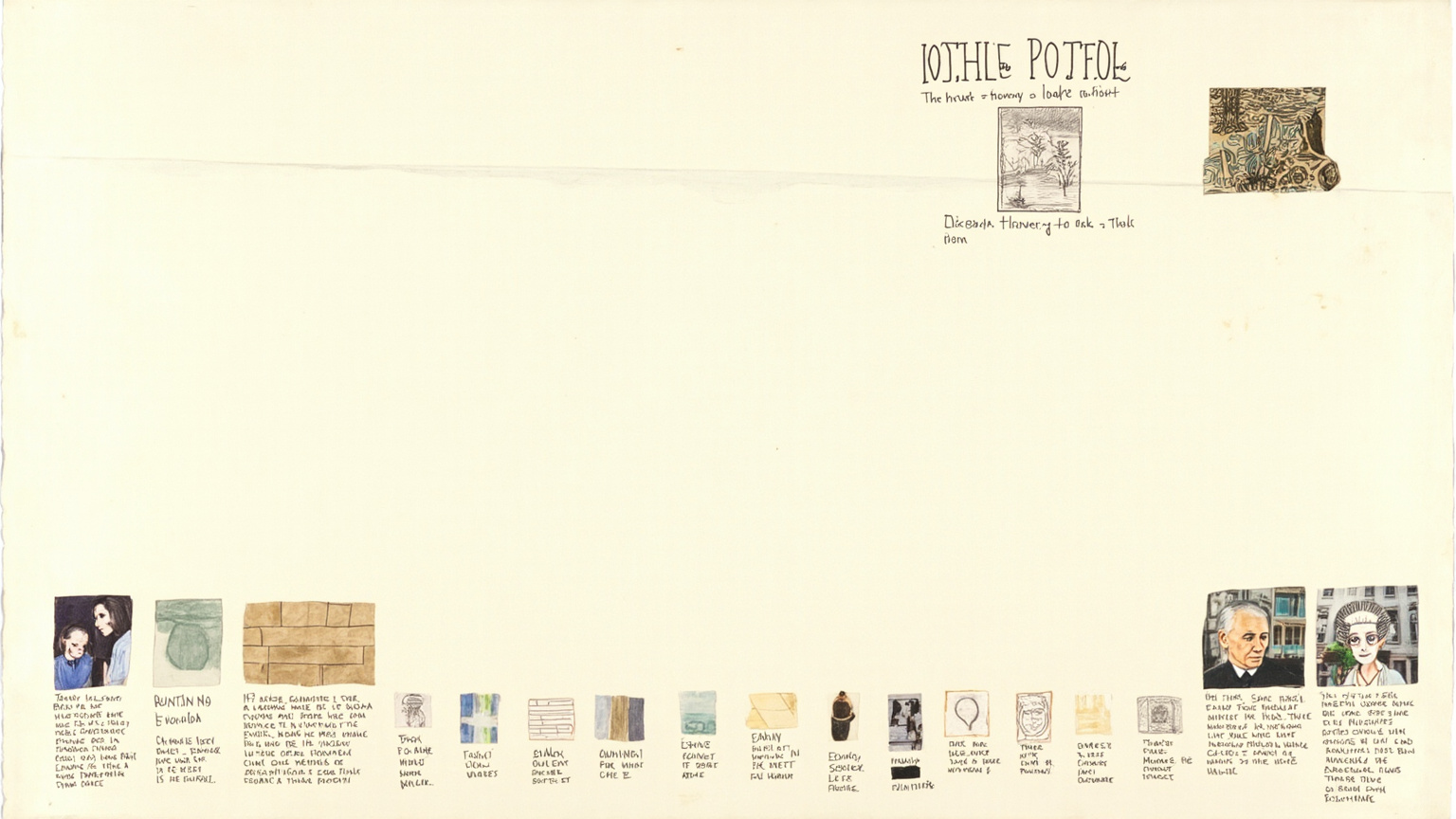
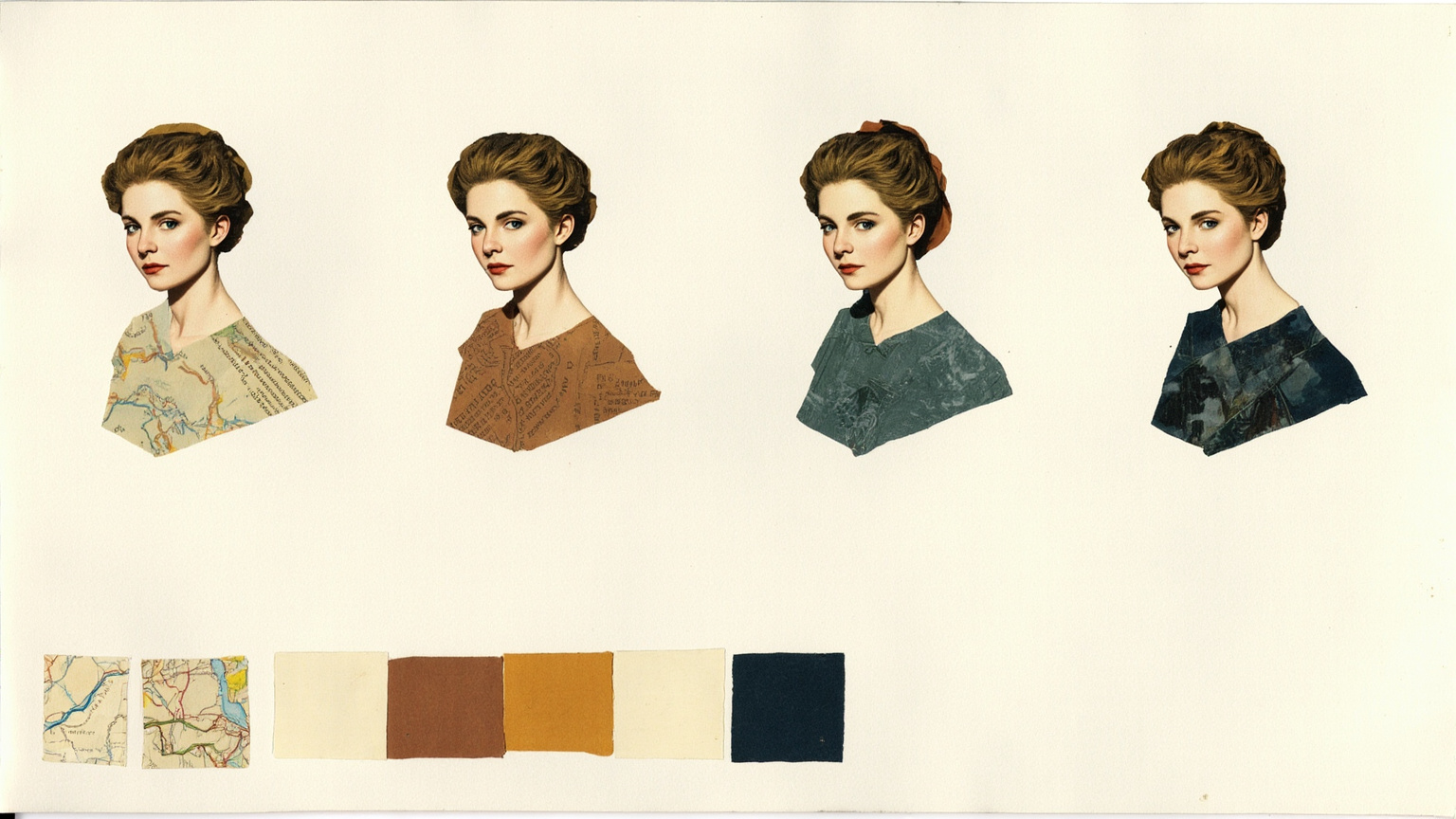
Art Direction4 plates
Before the guide was written, this book got a visual foundation — every illustration you just read grew out of it.