The year the Southern Ming ended, someone on the Qinhuai turned drops of blood into peach flowers
Text and illustrations produced by the pipeline
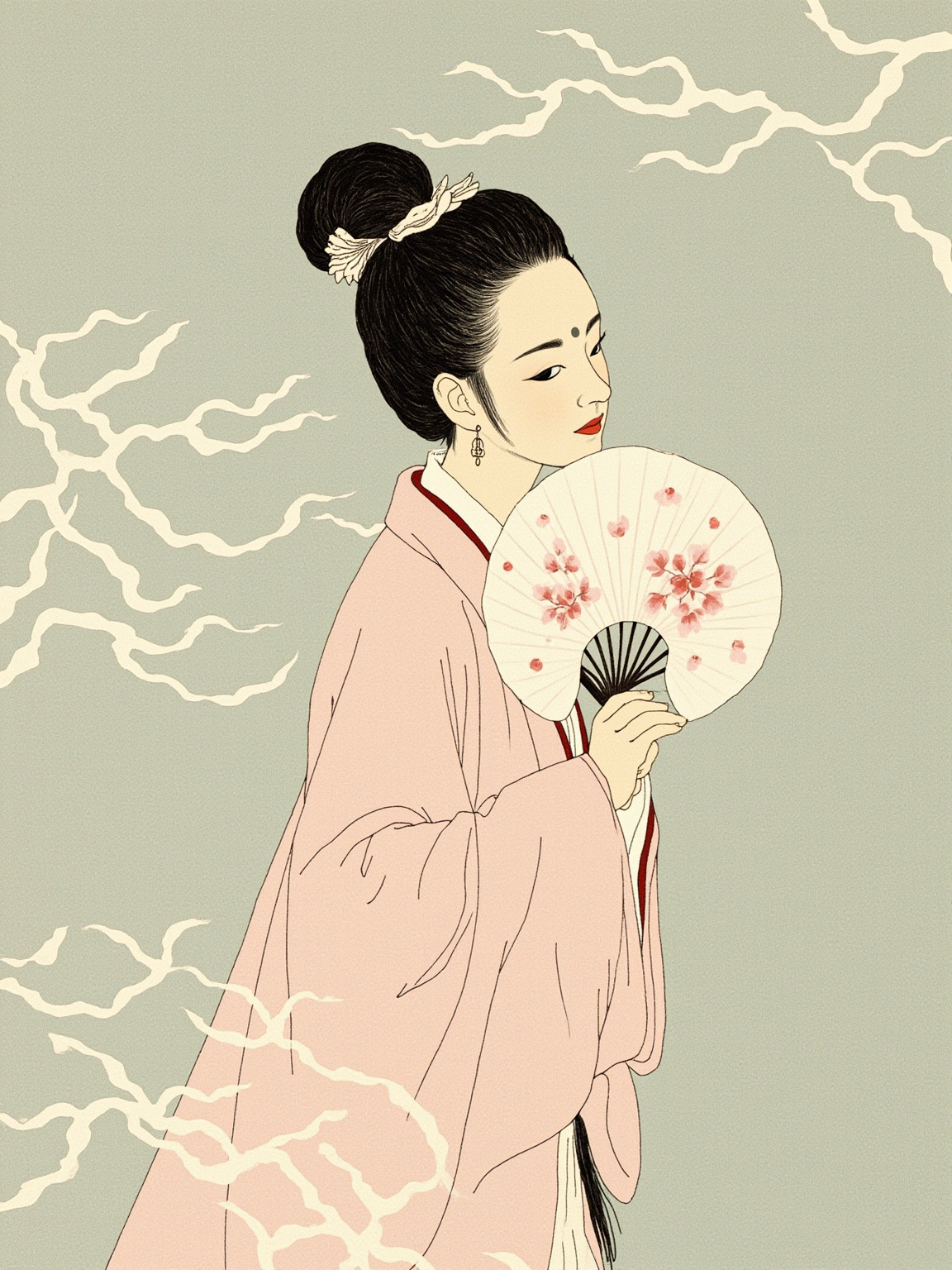
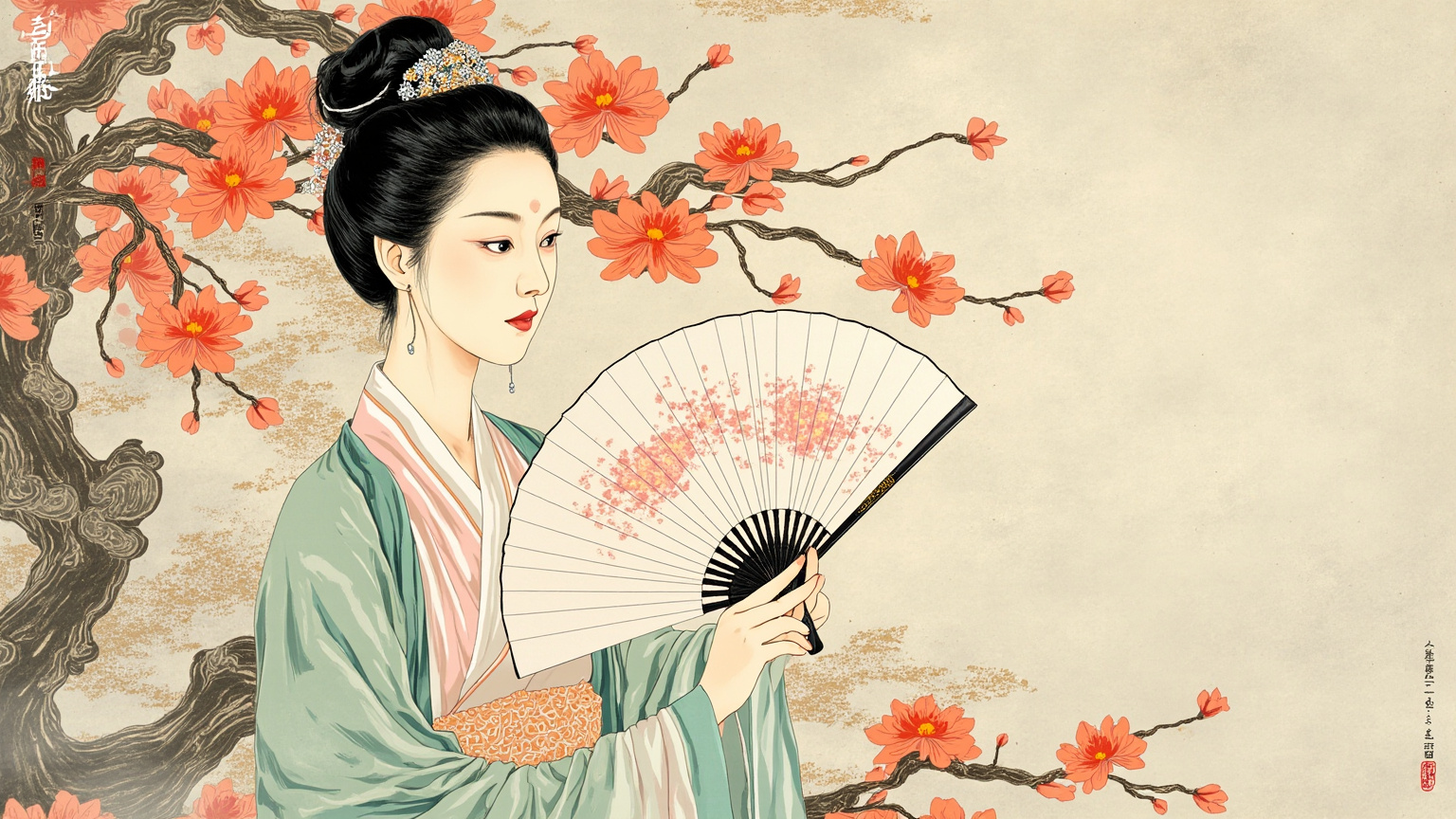
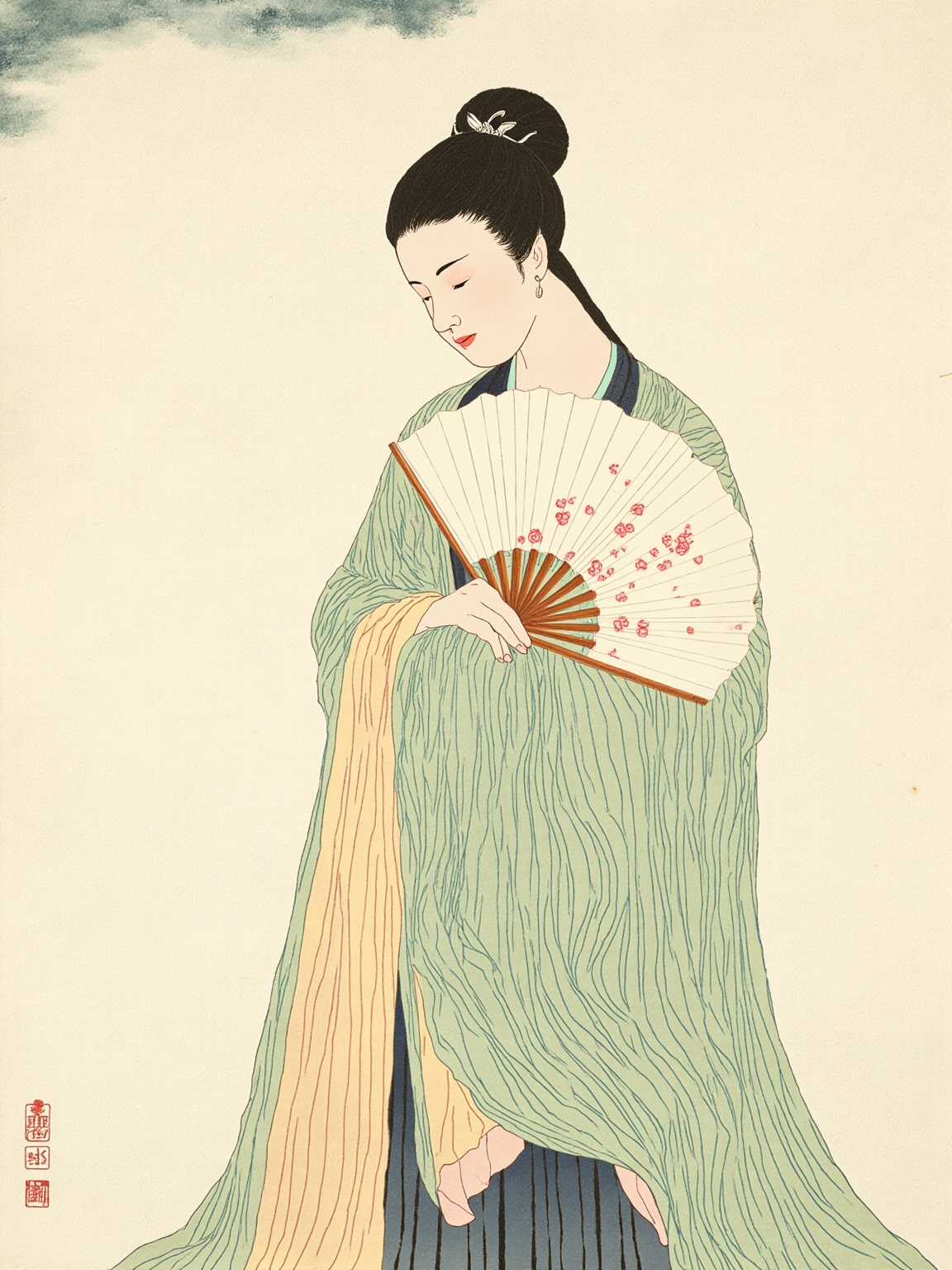
A white silk court fan was meant to hold nothing but a love poem. Then drops of blood fell into the ink of its lines. Later still, a young nobleman who could paint turned those dark red specks into petals, and a white fan became the Peach Blossom Fan.
That fan gives its name to The Peach Blossom Fan, the play by the early Qing dramatist Kong Shangren, and it is the hinge the whole drama turns on. Centuries later, when Chinese speaks of love caught in the fall of a dynasty, this is still the image that comes to mind.
Kong Shangren finished The Peach Blossom Fan in 1699, the thirty-eighth year of the Kangxi reign. He was a sixty-fourth-generation descendant of Confucius. The year after he finished it, he was dismissed from office, a Qing official had written the grief of the Ming's fall with too much feeling, and the court did not trust that. It stands as the high point of early Qing drama's reckoning with a fallen dynasty, paired with Hong Sheng's The Palace of Eternal Youth as the two great plays of the age: Hong in the south, Kong in the north.
On the surface it is a story of two lovers, parted and reunited. At its center is how a Southern Ming court that lasted barely a year rotted from within. The romance of Hou Fangyu and Li Xiangjun is pressed down by the fall of the dynasty from beginning to end, by the close, the author will not even grant them a reunion.
The story begins where the Ming ends: the Chongzhen Emperor hangs himself, and the dynasty's line is cut. Zhu Yousong, the Prince of Fu, takes the throne in Nanjing under the reign name Hongguang, this small court will last barely a year before it collapses. On one side, Ruan Dacheng and Ma Shiying, remnants of the eunuch faction, run the government and shut out the Donglin and Restoration Society reformers. On the other, Shi Kefa holds Yangzhou alone, the four garrisons north of the Yangtze turn on each other, and Zuo Liangyu raises troops in Wuchang.


The peach blossom fan becomes fixed as an image in Chinese from that point on: a poem, a stain of blood, blossoms painted over it, three layers folded into one picture. Whenever later writers reach for love caught in the fall of a country, this is still the fan that comes to mind, no one in Chinese literature has ever managed to take that image away from it.
The Peach Blossom Fan excels in three ways. First, structure: making a court that lasted one year the play's true protagonist, and welding private love to national ruin onto a single fan, is without precedent in the history of Chinese drama. Second, imagery: the blood is not wiped away but painted into something else, a peach blossom, and that gesture cuts deeper than any outpouring of grief could. Third, the ending: Kong Shangren would rather send two living people off into religious vows than hand them a false reunion.
The author's own fate adds the heaviest footnote of all. Kong Shangren, a sixty-fourth-generation descendant of Confucius, wrote the grief of the Ming's fall from within the sage's own lineage, and was dismissed from office the year after he finished. A book of the fallen dynasty's mourners cost its author something real.
A guide like this one gives you the map. The play itself is the ground. Some things here simply do not survive being retold: the exact rhythm of Yang Longyou's brush as the blood becomes blossom, the silence around Zhang Yaoxing's line at the temple on Qixia Mountain, the way the kunqu melodies themselves turn Nanjing's dusk into the sound of a dynasty ending.
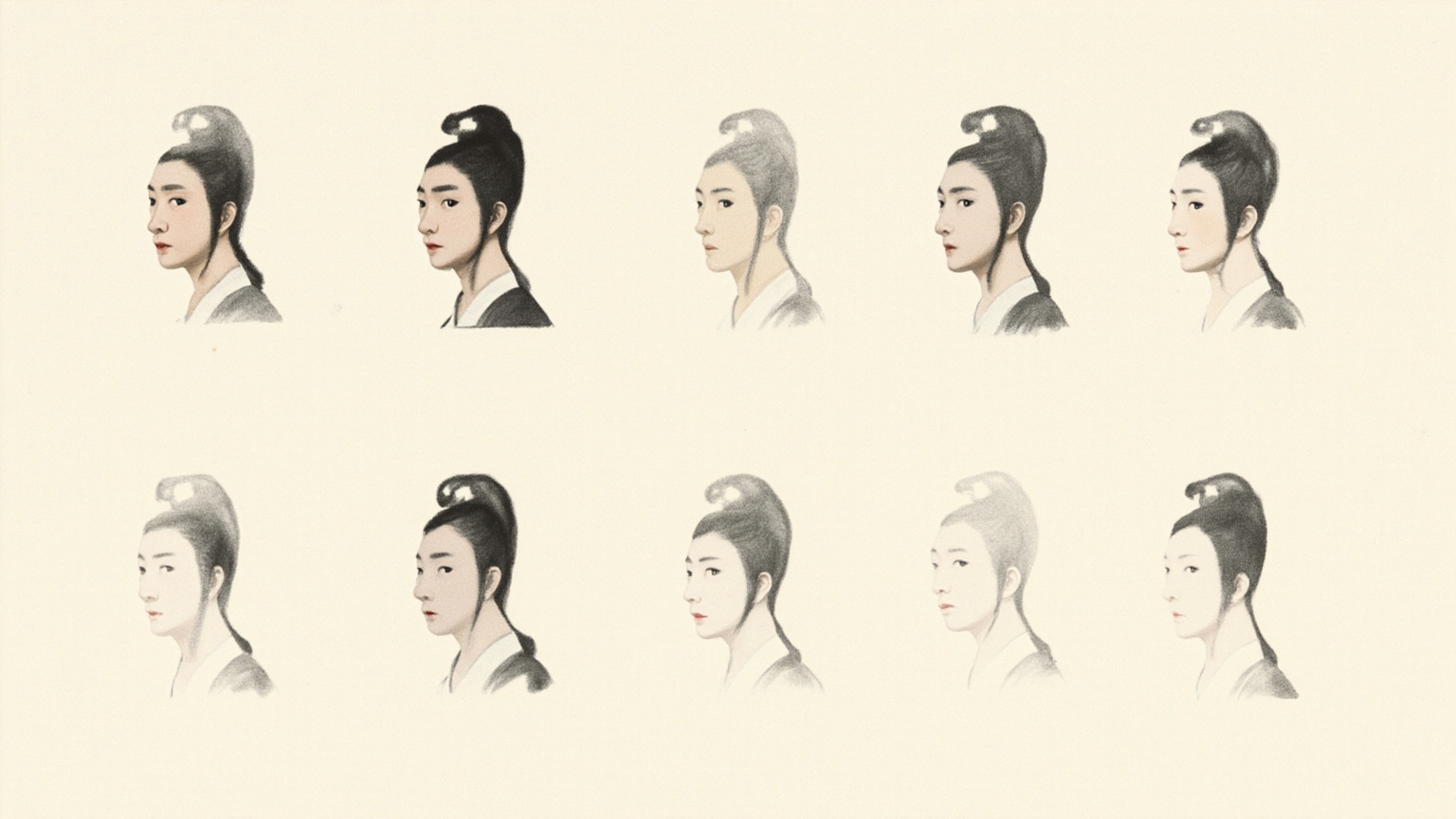
Before the guide was written, this book got a visual foundation — every illustration you just read grew out of it.
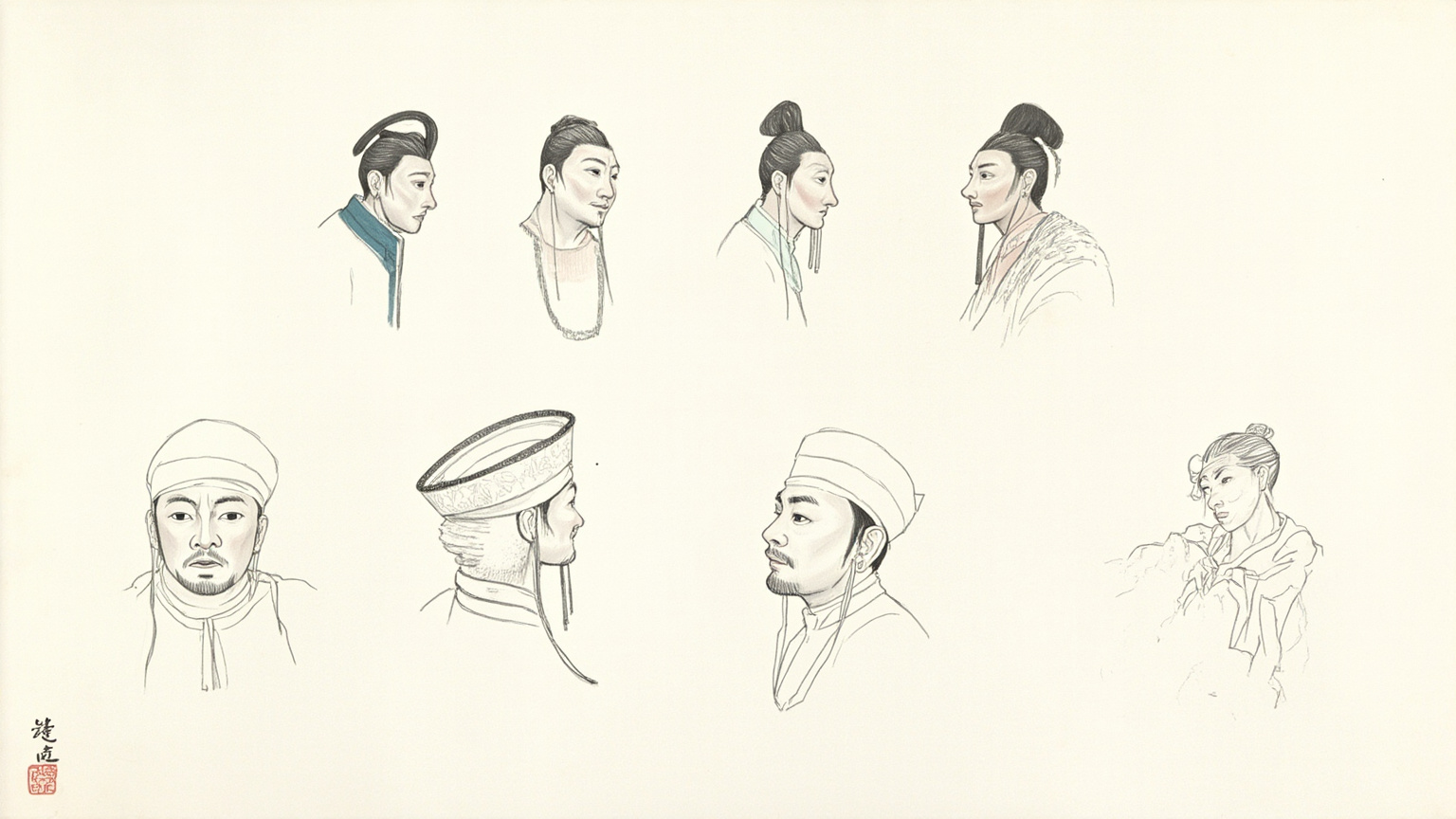
The male lead, Hou Fangyu, courtesy name Chaozong, is a student at the Imperial Academy and one of the four celebrated young men of the Restoration Society. He is from Shangqiu, and after failing the examinations he settles in Nanjing. The female lead, Li Xiangjun, is a courtesan on the Qinhuai River, her status is a plain fact of late Ming Jiangnan society, not a romantic flourish. The betrothal gift that seals their bond is a white silk court fan on which Hou Fangyu has written a poem.
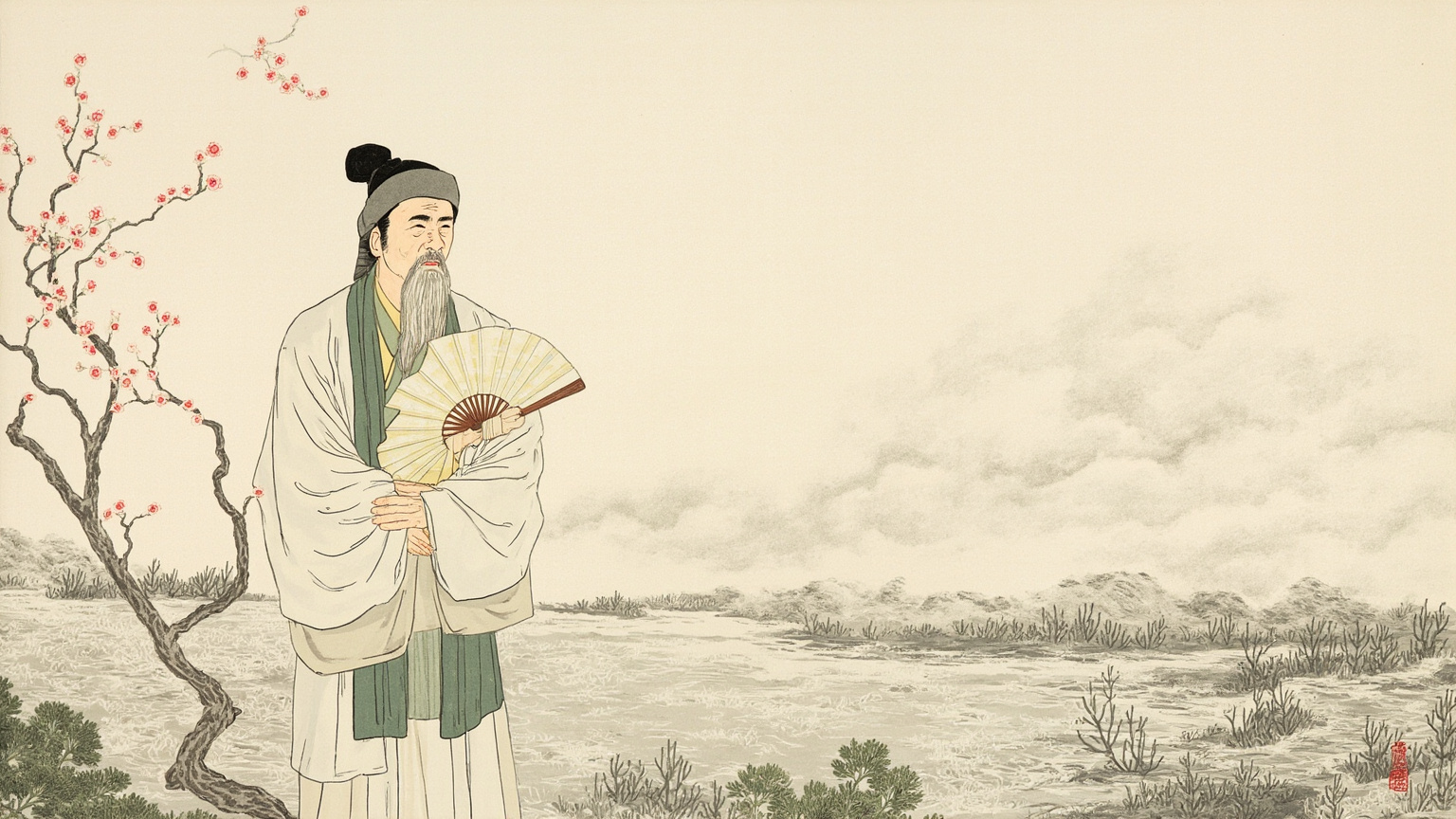
Three more figures thread the story together. Yang Longyou is an affable young nobleman and painter, it is his brush that turns the blood into peach blossoms. Su Kunsheng is a renowned teacher of kunqu singing, and it is he who carries the fan from Nanjing into the war at Yangzhou and back again to a Nanjing turned to ruins. Zhang Yaoxing is the abbot of a Daoist temple on Qixia Mountain, and it is he who, in the play's final moment, jolts Hou and Li awake with a single line.
The courtship of Hou Fangyu and Li Xiangjun should have opened like any story of a gifted scholar and a beautiful woman. Instead an outsider muddies it from the start: Ruan Dacheng. This holdover of the eunuch faction wants back into the good graces of the Restoration Society reformers, so he secretly pays for Li Xiangjun's dowry, hoping to leave the rising young scholar in his debt without ever knowing it.
Li Xiangjun will not take it. She strips off the jewelry on the spot, sends the dowry back, and denounces Ruan Dacheng to his face. The gift had a hook in it, and the hook was strung with the eunuch faction's old debts. By refusing it, she frees Hou Fangyu from an obligation he never asked for, and she pins their love to the side of integrity before it has even properly begun.
Kong Shangren writes this scene with restraint. He does not let Xiangjun cry, does not let her declare her resolve, he simply has her take the jewelry from her hair, cleanly, and hand it back. One concrete object returned speaks louder than any speech would.
Ruan Dacheng does not let it go. With Ma Shiying and himself now running the Hongguang court and the Restoration Society under arrest, he forces Li Xiangjun's hand in marriage to Tian Yang, the Grain Transport Commissioner. She barricades herself in her chamber and would rather die than remarry, in the struggle, her blood splashes across the court fan with Hou's poem on it. This is the hinge the whole play turns on.
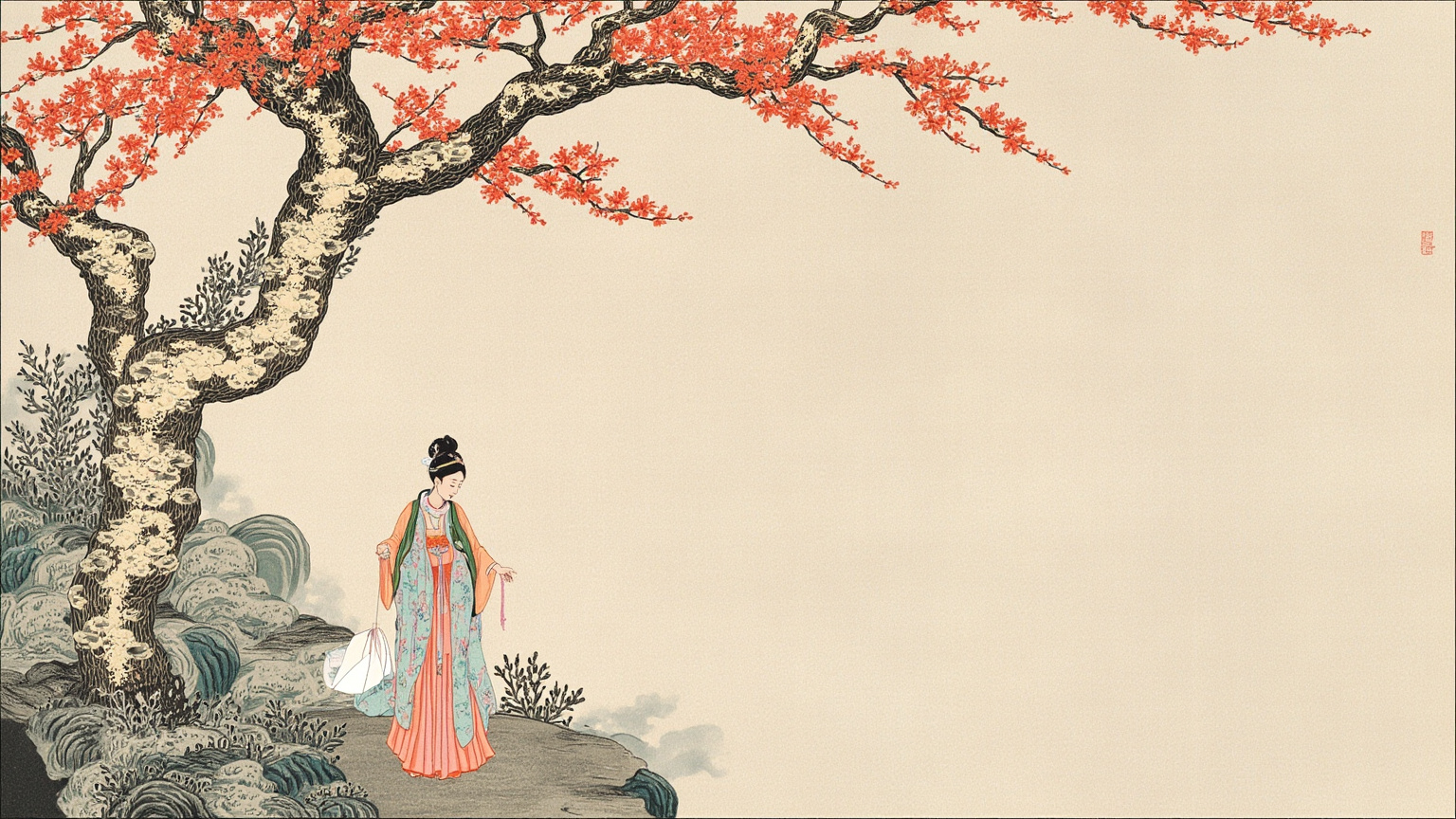
The painter Yang Longyou looks at those drops of blood and does not wipe them away. He dips his brush and works them into a few petals of peach blossom. The betrothal fan becomes something else from that moment on: the blood is real, the poem is real, and the blossoms added over them are real too, three moments in time, layered on one piece of silk.
Kong Shangren never shows how the blood was spilled, never lingers on a wound. He lets the reader see only the result: from this point on, the fan is no longer just a fan.
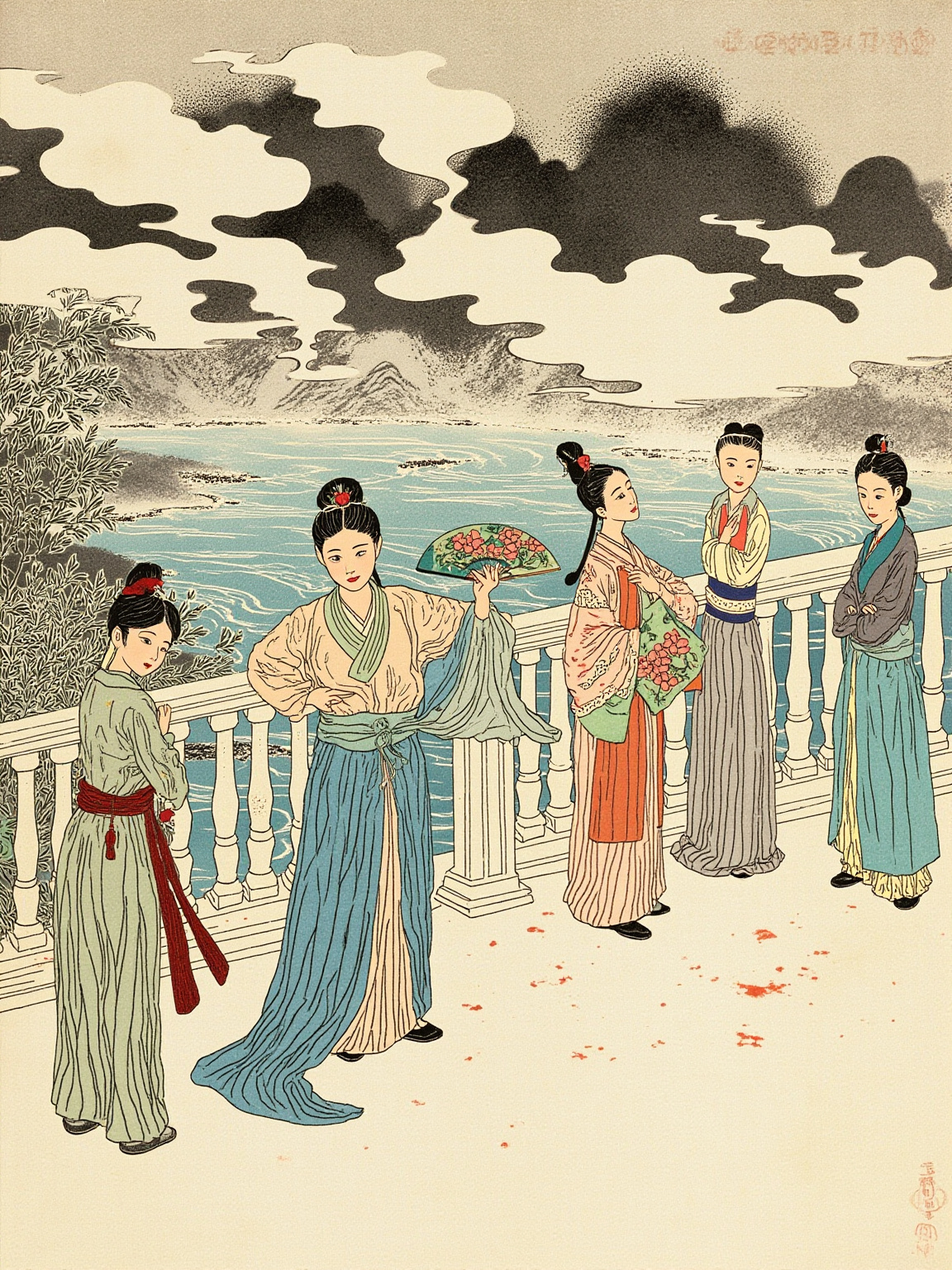
In the year the Southern Ming court is burning down to its last candle, Li Xiangjun is dragged to a banquet held by the men in power in Nanjing. Ma Shiying, Ruan Dacheng, and their circle are all at the table, and she curses them to their faces, a courtesan from the Qinhuai River, sitting in judgment on an entire collapsing court.
That same year, Zuo Liangyu raises his troops in Wuchang, Shi Kefa holds out grimly in Yangzhou, and the four garrisons north of the Yangtze tear themselves apart before the enemy even arrives. A court that lasted one year, favoring the eunuch faction and shutting out the reformers, rots from within exactly this way. The banquet scene is written as one woman's nerve, but it mirrors the collapse of an entire government.
The peach blossom fan travels through the war. Su Kunsheng carries it out of Nanjing, across the river to the north, down to besieged Yangzhou, and back again, and by the time he returns, Nanjing is already a different city. The palace that once stood there is now only an echo, and the mourning rites for the Chongzhen Emperor and his empress have become its epilogue.
This stretch of the play is written loosely, weaving together battlefield, mourning rite, and marketplace. Kong Shangren wants the reader to walk the fall of the dynasty alongside the fan itself: the betrothal by the river in Nanjing, the blood on the tower in Nanjing, and finally the return to a Nanjing left in ruins. Love and the death of a dynasty are welded onto the same timeline, by the same fan.
The Chongzhen Emperor and his empress are dead. The Hongguang court has fallen. Nanjing is in ruins. Hou Fangyu and Li Xiangjun meet again at a Daoist temple on Qixia Mountain outside the city, they are alive, but the country they face no longer exists.
The Daoist Zhang Yaoxing pins them both to the spot with a single line: Where is your country now? Where is your home? He is not asking only the two of them, he is asking every Ming loyalist who lived to see the end. With both country and home gone, where does love belong? The answer is nowhere. Each of them takes vows and leaves the world, one into Daoism, one into Buddhism.
It is one of the least happy endings in Chinese theater. Kong Shangren refuses to give Hou and Li a reunion, a second chance, a life together, he would rather let the morning bell on Qixia Mountain send them off in opposite directions. Love is not the point of the ending. The fall of the dynasty, and the integrity it demanded, are.
On the surface it is a love story. At its center is the fall of a dynasty. This is the play's most ruthless move: making the parting and reunion of two lovers carry the weight of a small court's collapse. The romance is held down for the entire length of the play: Hou and Li are never even given a proper reunion, while the author saves all his force for integrity, and for the sound of integrity being ground down in a collapsing world.
Li Xiangjun carries the sharpest spine in the whole play. She returns the dowry, denounces the eunuch faction to its face; she barricades her chamber, refuses the marriage, and stains a fan with her own blood; she curses the men in power at their own banquet. A courtesan from the Qinhuai River withstands bribery, coercion, and the full weight of a corrupt court, and in doing so becomes another embodiment of the scholar's integrity that defined the Ming-Qing transition. She is not a suffering, love-struck woman. She is a backbone that Kong Shangren wrote into being.
And there is the breath Kong Shangren hides in the arias and spoken lines, the way a scholar of the Ming-Qing transition presses grief into verse, which only comes through in the original. Reading the play once you already know the plot will show you more, not less: you will watch every turn the fan passes through, know exactly which scene the blood falls in, and wait for that line to land in the bell on Qixia Mountain. You have the map. The rest of the road is yours to walk.