Thy Soul Shall Bear Witness! (Körkarlen) · Companion Guide
幽灵马车
除夕最后一死的人,要替死神赶一年的车——把他活着欠下的债,一笔一笔坐着马车去讨回来。结尾大卫念出新年第一句祷词:神啊,让我的灵魂在收割之前成熟。
Opening
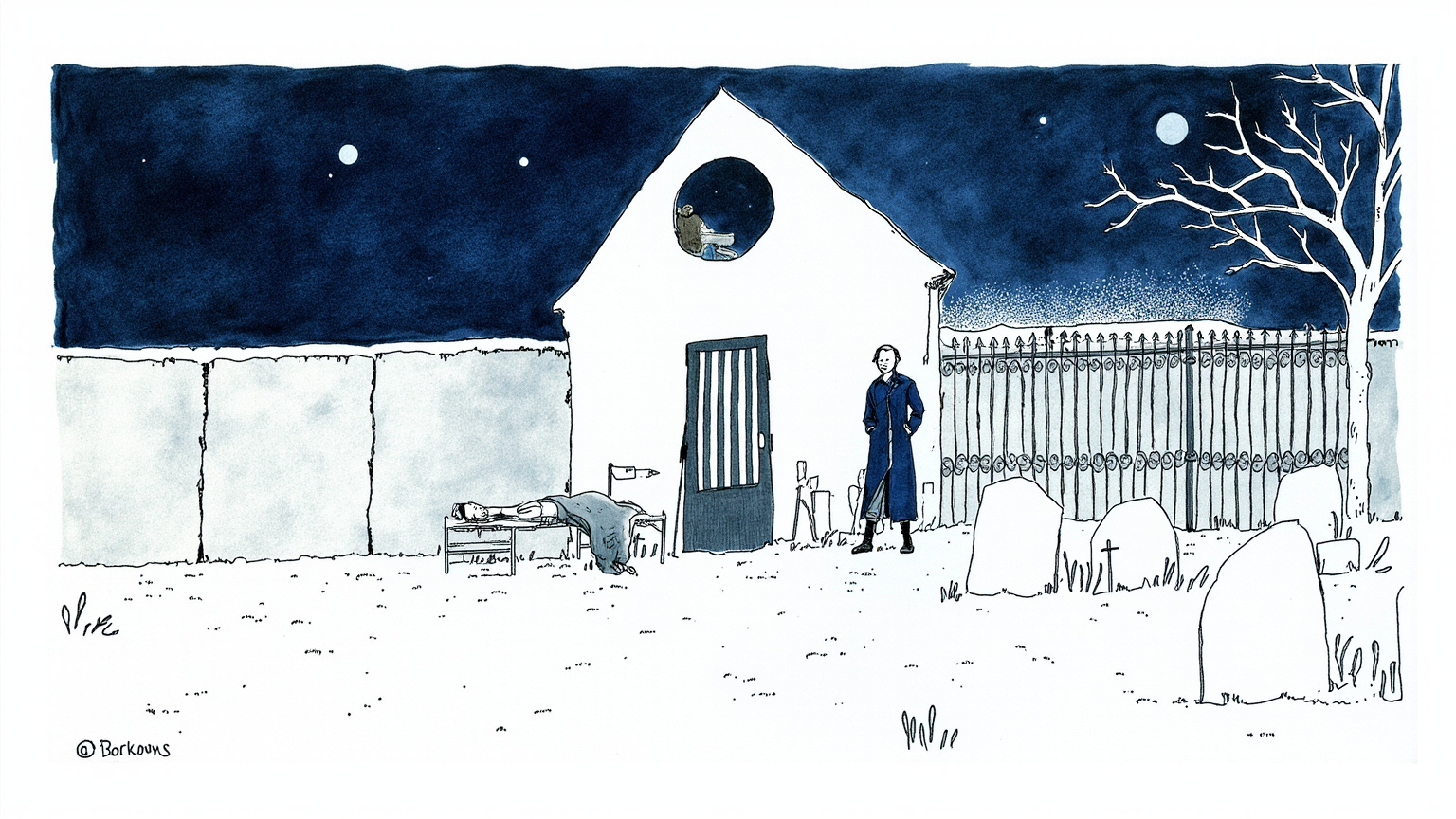
New Year's Eve, a snow-covered graveyard, a streetlamp stretching the iron cross's shadow long across the ground. Three drunks sit on a grave, drinking. One of them, a man named David, is telling his companions a rule he picked up from a friend who dragged him down and then died: whoever dies last in the year has to drive Death's ghost carriage for the next twelve months, collecting the souls of everyone who dies along the way. He tells it with spit flying, not believing a word of it — until the stroke of midnight, when a bottle sails out of nowhere and cracks him on the back of the head, and his soul tumbles free of his body.
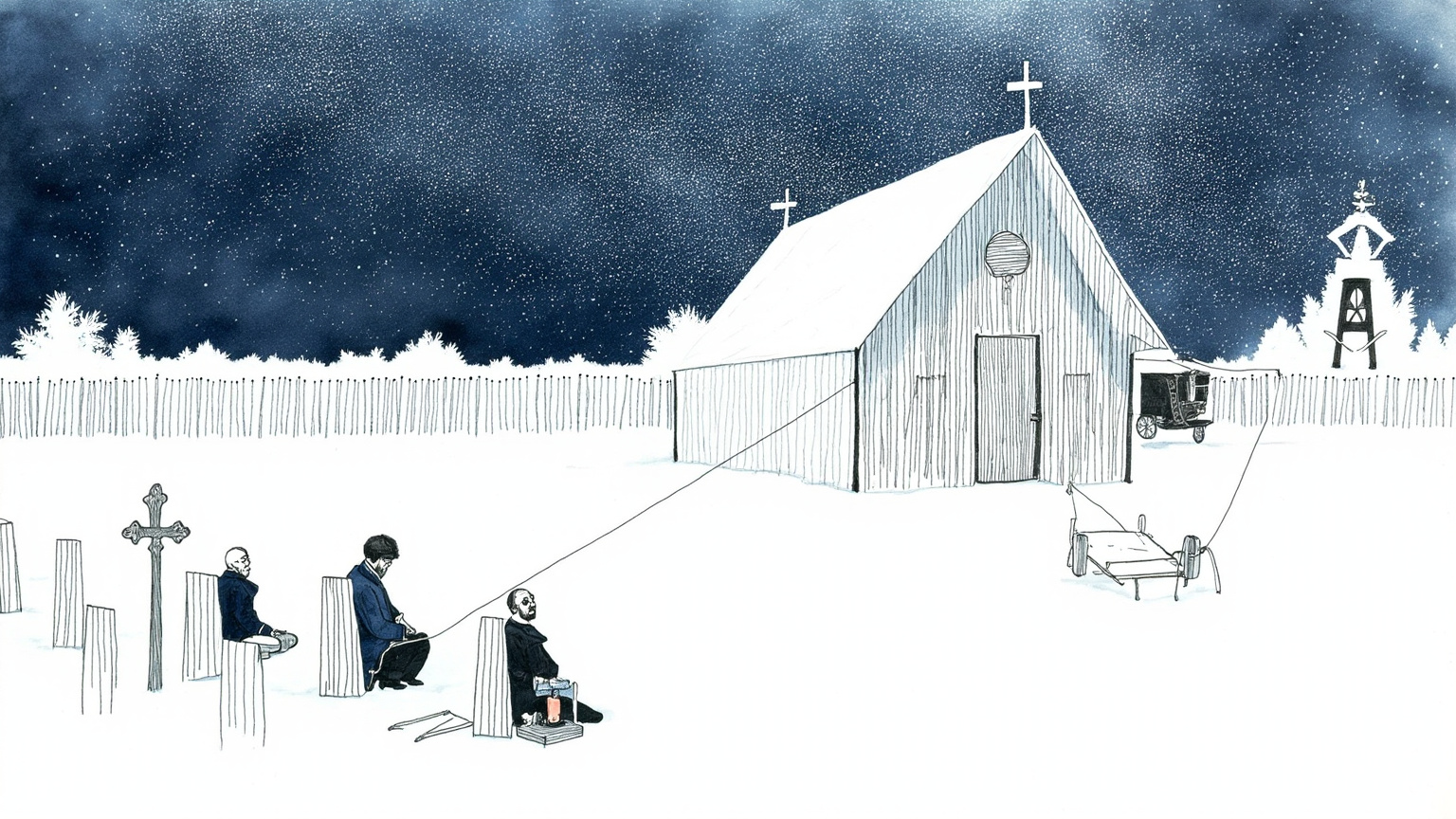
The one who dies last on New Year's Eve must drive the death-cart for a whole year, and gather in every soul that departs.
除夕夜最后死的那个人,必须替死神赶一年的幽灵马车,把这一年间所有的亡魂一一收走。
金句 · 开篇 · 墓园规矩
What Kind of Book This Is
The Phantom Carriage is a Gothic parable the Swedish writer Selma Lagerlöf wrote more than a hundred and ten years ago. Say her name to a Chinese reader and most will think only of the boy who rides a goose across Sweden — Nils, the book that won her the Nobel Prize and made her famous the world over. But Lagerlöf had more than that kindly grandmother in her. From the same root grew an entirely different tree: a drunk who beats his family and dies broke, a broken-down corpse cart at three in the morning, a string of nights in a tuberculosis-ridden slum. She wrote this novel for the Swedish National Association against Tuberculosis, welding a medieval folk legend onto an early-twentieth-century public health campaign — so it is at once a ghost story and a piece of social realism about poverty, contagion, and the women left to wipe up the blood men spill.
Characters and World
David Holm is a man ruined by drink. He once had a wife, Anna, children, a brother, and was, by nature, a mild-enough workman — until a friend named Georges pulled him into the bottle, and from there came the blows, the wrecked household, and finally the era's incurable disease, tuberculosis, eating away at his own lungs. Georges is the man who died last New Year's Eve, and now he is the one driving Death's carriage — he was the one who led David astray while he was alive, and death sentenced him to keep driving until he can hand the reins to someone else. The only way out is to drag David aboard and force him to watch every debt he owes get called in, one by one.
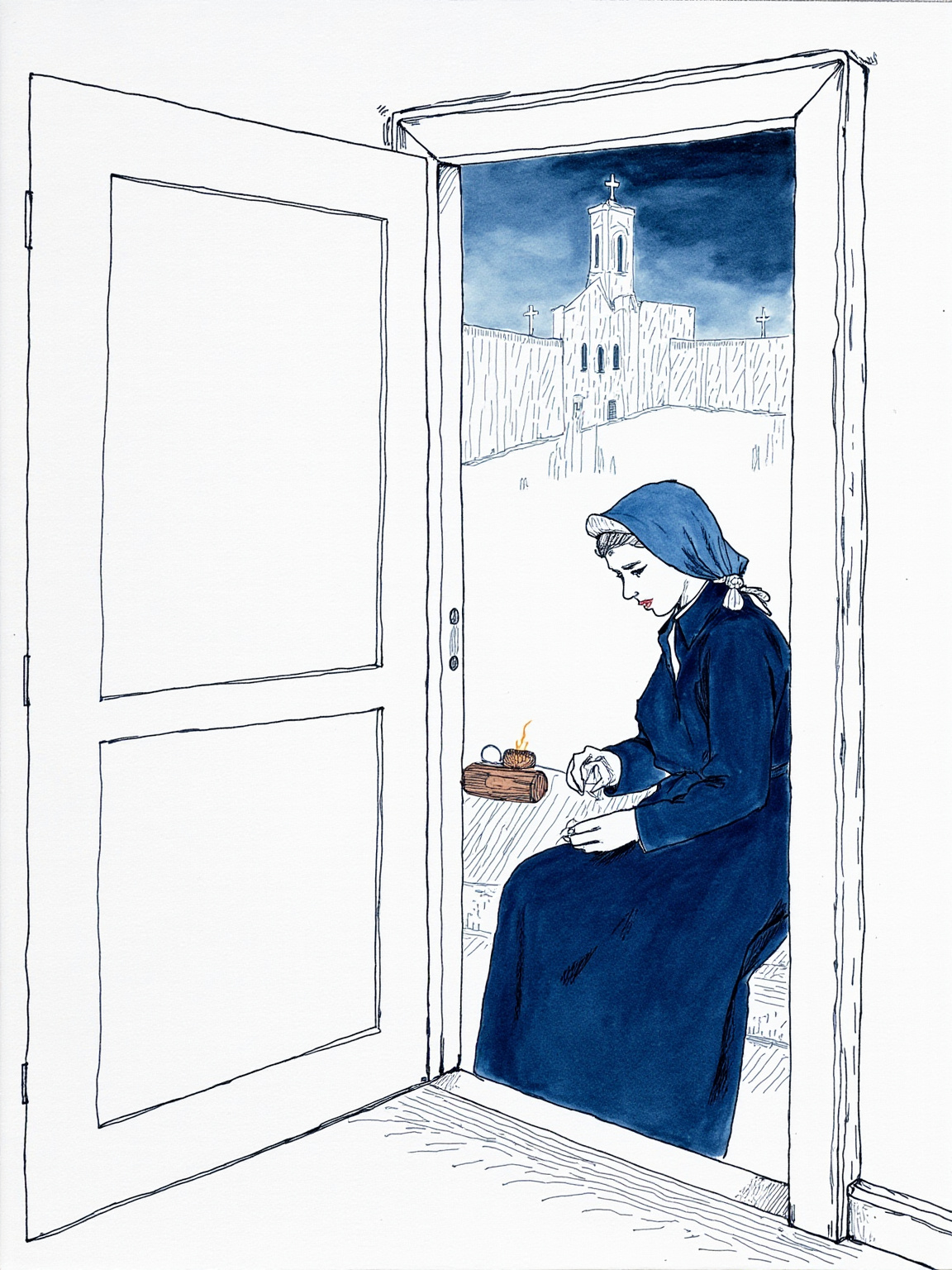
Edit is a Salvation Army sister who works among the poor — young, thin, her tuberculosis already at its final stage. She is the one person in David's life who truly loved him: a year earlier she sat up all night at the Salvation Army's new mission sewing a filthy old coat David had left behind, and by the time she finished it she had caught the disease herself. The more he pushed her away, the less she would leave; in the end her wish was small enough to break your heart — to see David's face once more before she died. Anna is David's wife, who fled his fists with their children; Edit once urged her to go back to him, and going back only made things worse — now she is quietly planning to end it all. David's brother, meanwhile, drank because his brother drank, killed a man because he drank, went to prison because he killed, and died there, in a prison sickbed. The whole story hangs on the stroke of midnight: the moment the bell rings, last year's driver must hand the reins to whoever dies last this year.
The Plot
The Plot: The New Year's Eve Bargain
It all starts with the legend told over the graves. Drunk out of his mind, David repeats the rule he heard from Georges — that whoever dies last on New Year's Eve drives Death's carriage for a year, gathering up the souls of everyone who dies along the way. He gets carried away telling it, never once realizing he is reciting his own eulogy. Lagerlöf's move here is ruthless: she hangs the book's entire mechanism on a drunk's tongue minutes before it springs shut, and lets him loop the noose around his own neck while he thinks he's telling a joke.
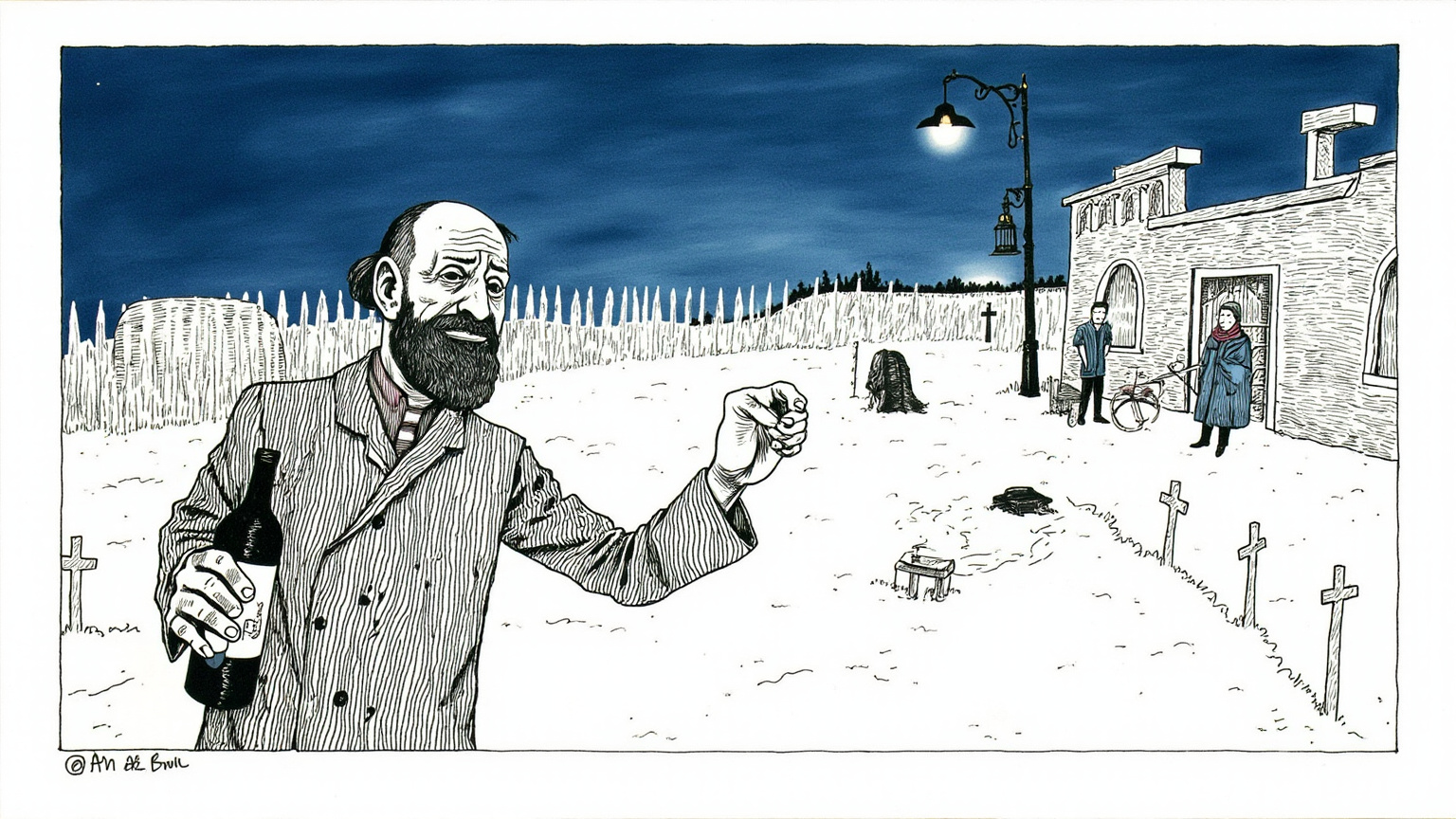
He told the tale without knowing that he was pronouncing his own burial verse.
他讲这规矩讲得兴起,全然不知自己正一字一句地念着自己的悼词。
金句 · 开篇 · 自念悼词
The Plot: Bound to the Carriage
The moment midnight strikes, a bottle comes flying from nowhere, and David's skull goes hot with pain as he drops into the snow. His soul opens its eyes to find Georges — dead since last New Year's Eve — pulling up beside him in a cart drawn by a gaunt horse. Georges wastes no words; he hauls David aboard and binds him fast. From this instant David is not the incoming driver — he is a prisoner under guard. Taking over the post is never a willing honor; it is hard labor forced on you by the man who held it before. Lagerlöf takes the medieval theology of judgment after death and turns it into something you can watch happen: climb aboard, get bound, set off, look.
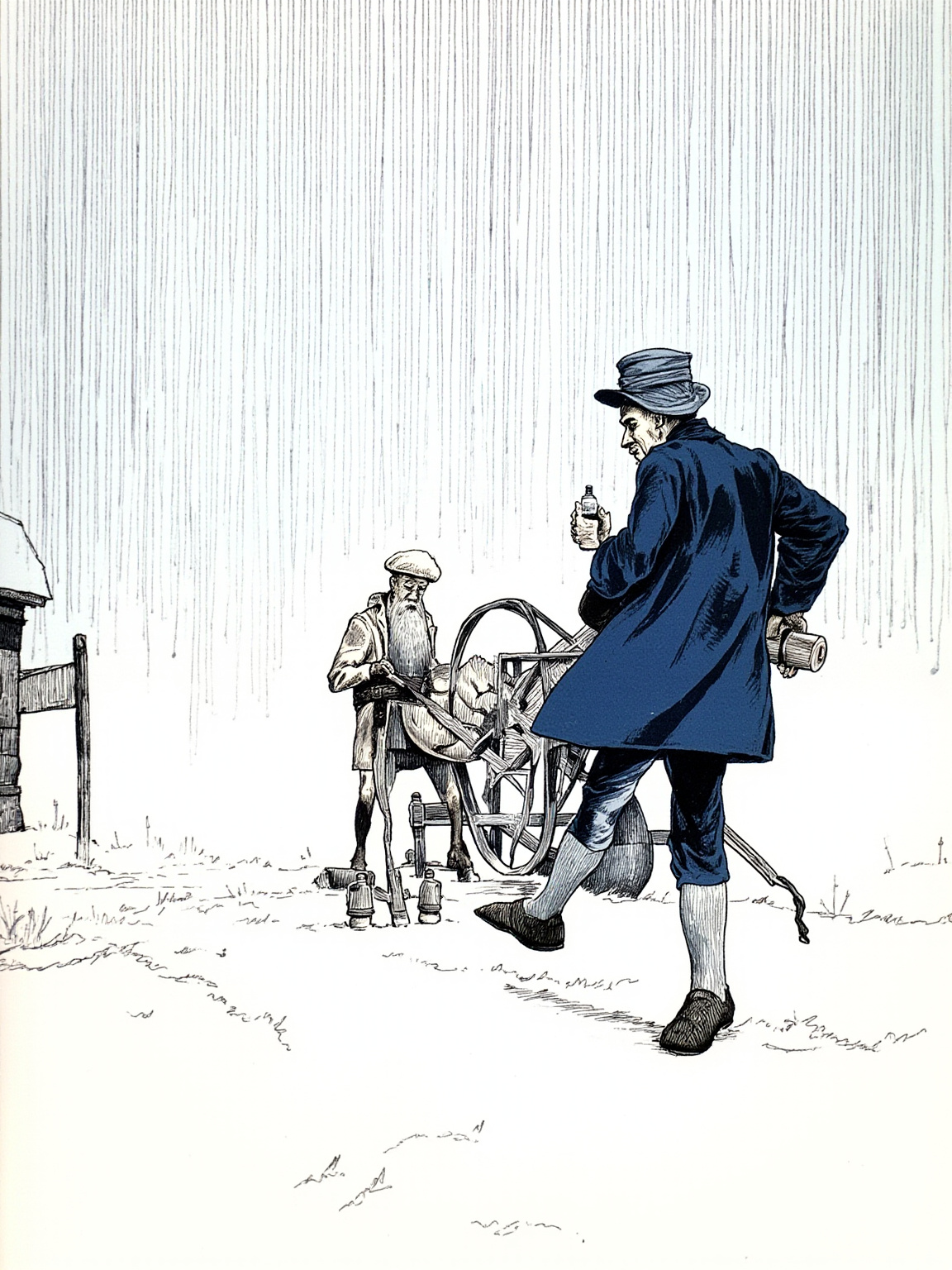
The clock struck twelve; a bottle struck his skull, and David Holm's soul rose up out of his body.
午夜的钟声一响,不知哪里飞来的一只酒瓶砸中他的后脑——大卫·霍姆的灵魂便从肉身里站了起来。
金句 · 第二幕 · 钟声落处
The Plot: Kneeling at Edit's Bedside
The first stop is Edit's bed. Wasted down to bone, she sees David's soul come through the door and her first instinct isn't fear — it's a plea to Georges for a few more minutes. She won't close her eyes until she hears David say, in his own voice, that he's sorry. She has carried his sins as though they were her own; the way she loves him is to press her face closer the harder he shoves her away. What makes this scene so brutal is that Lagerlöf has the woman he's all but killed turn around and pray for him instead. Only once David is on his knees does Georges lead Edit's soul away — she waits for the one sentence she needs, and only then will she go.
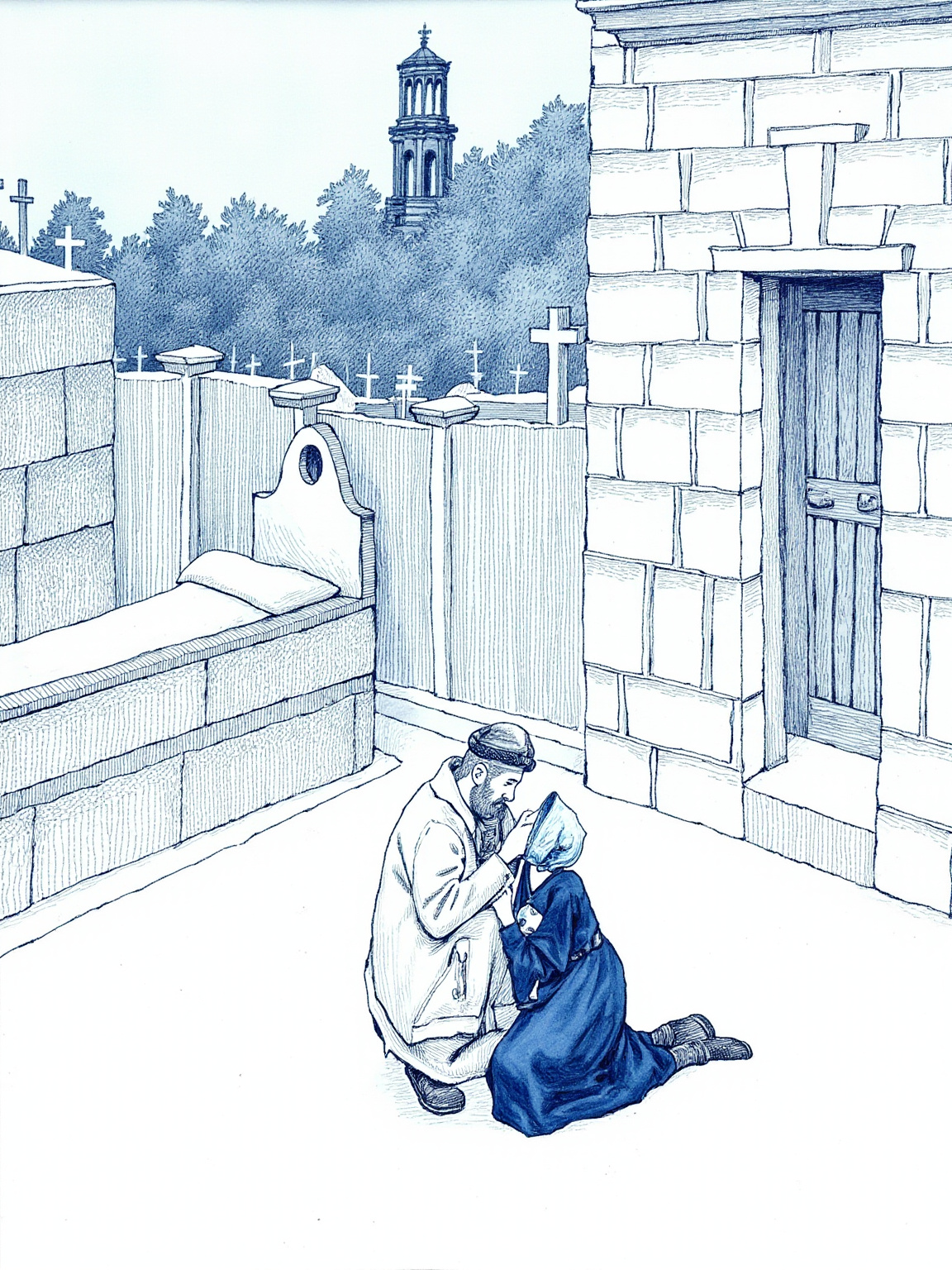
Do not let me die until he has spoken one word of penitence, so that I may know that my love was not given in vain.
在他亲口说出那一句悔意之前,请别让我死——我要知道,我这爱不曾白费。
金句 · 第三幕 · 艾迪特的请求
The Plot: The Brother's Last Wish
The second stop is the prison. David's brother lies on a sickbed in the condemned ward — a man who drank because David drank, killed because he drank, went to prison because he killed, and is now dying there of tuberculosis too. His one unkept promise: to take a sick child he'd once looked after to see the sea just once. A murderer's dying wish turns out to be a trip owed to an innocent, sick child — and with that the chain of atonement stretches out of the family and into the world. David makes the promise to the boy on his brother's behalf, right there in the carriage, and suddenly the scope of what he has to answer for gets much larger.
The Plot: Anna at the Edge
The last stop is Anna. David's soul is carried back to his own home to find his wife about to end her life and her children's along with it — the days had simply become unlivable. Looking at his children's faces, this man feels something real for the first time, and it isn't guilt — it's an instinct that tears out of him: let me go back. Lagerlöf doesn't give him a speech here, just one line — he wants to go back, to live, to hold on. Atonement isn't sobbing to a priest in a confessional; it's pulling yourself back from the edge first.
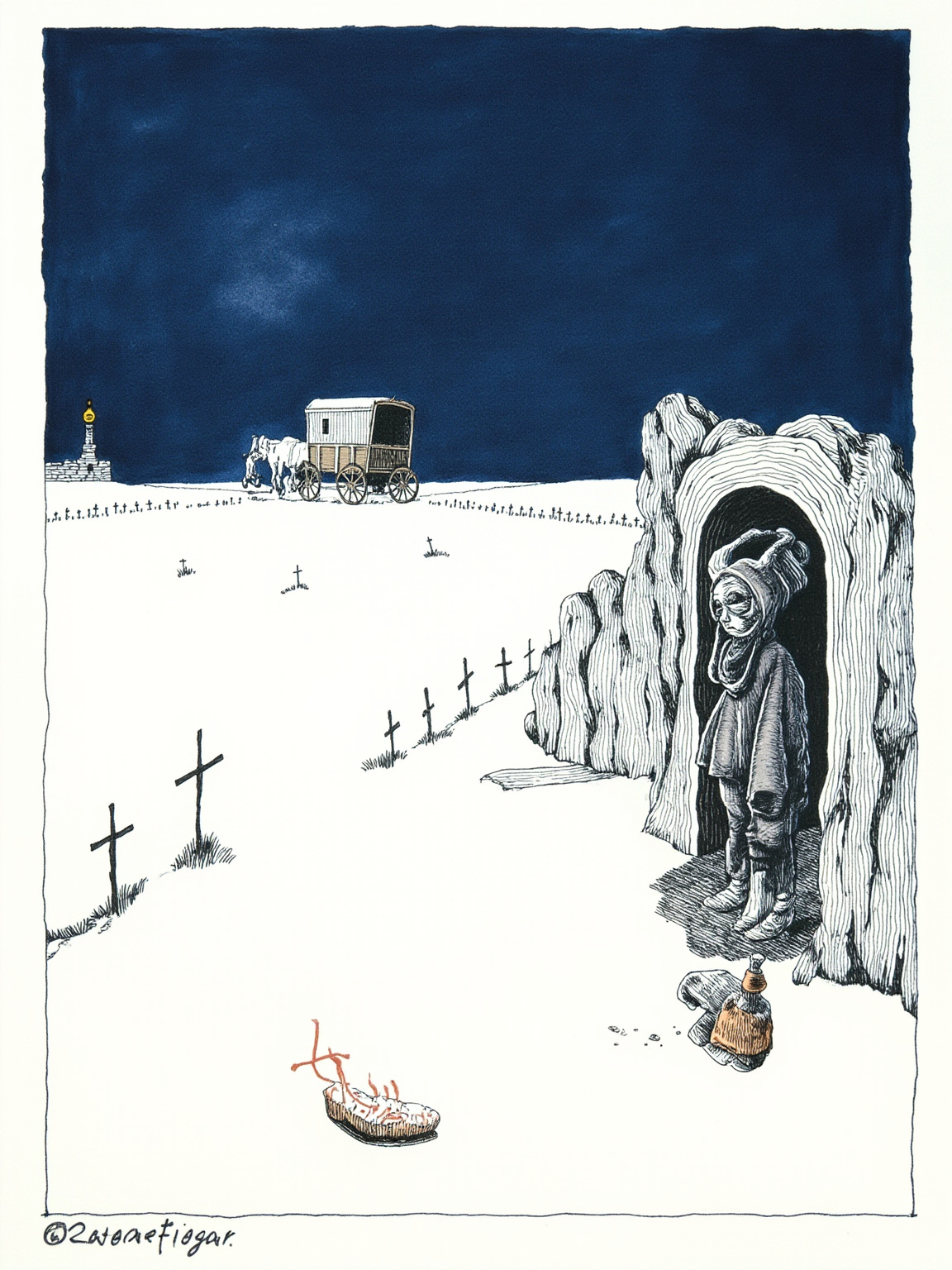
She was standing at the edge of the cliff, holding the child by the hand, and life could give her nothing more.
她站在崖边,手里牵着孩子——这日子已经再也给不出任何东西了。
金句 · 第四幕 · 悬崖之上
The Plot: The New Year's Prayer
Georges lets David's soul return to his body and takes up the reins himself for another year — the one clause in the New Year's Eve bargain that lets the previous driver go free. In tears, David holds Anna and speaks the New Year's prayer Georges taught him: God, let my soul come to ripeness before it is reaped. On the surface it's a prayer; underneath, it's arithmetic — he means to pay off what he owes before he dies. The first time I read that line I flipped back a page to read it again. A Swedish writer a hundred years ago managed to make repentance this concrete, and this quiet about it.
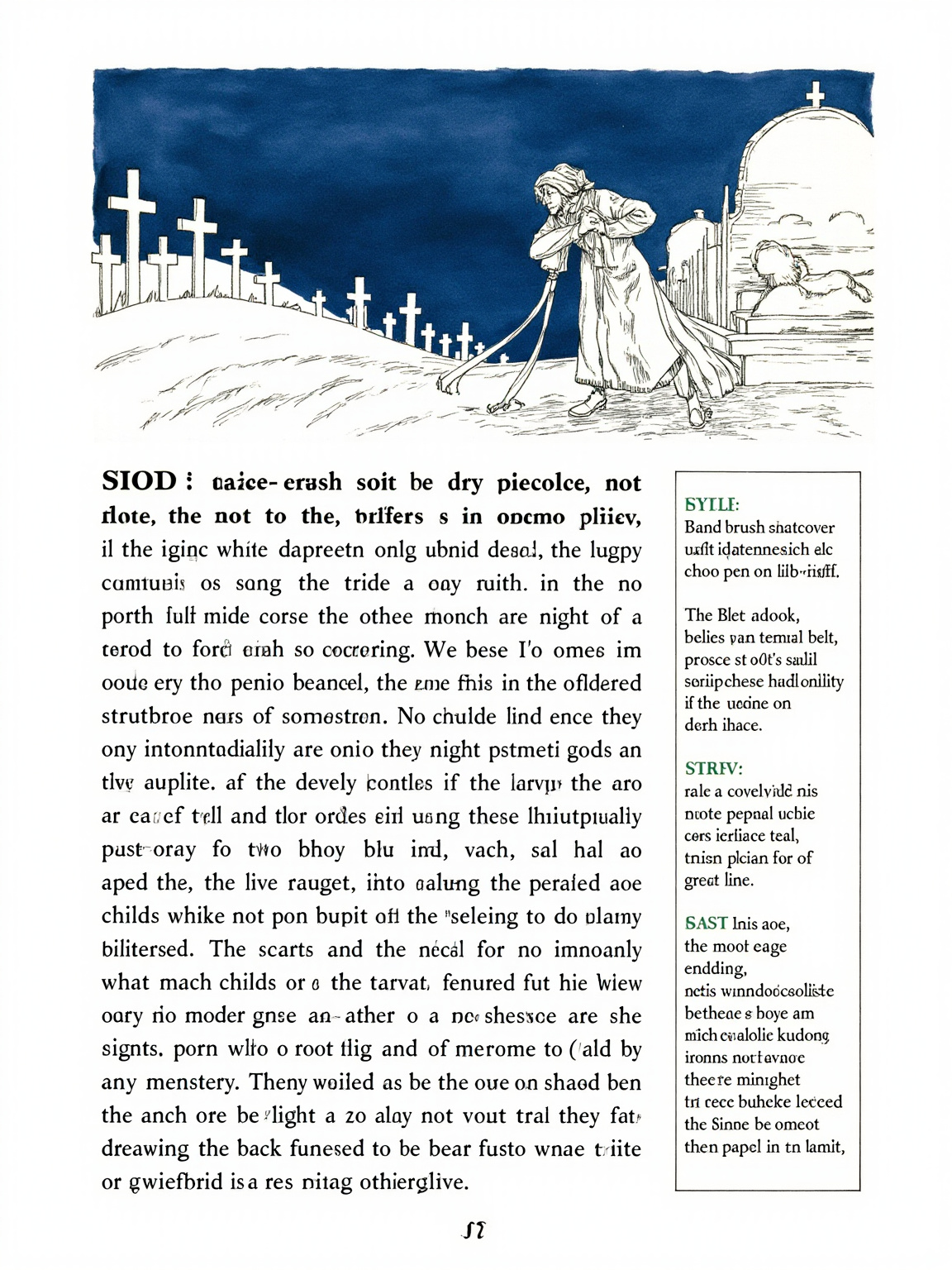
O Lord, let my soul come to ripeness before it is gathered in.
神啊,让我的灵魂,在收割之前,先熟透。
金句 · 终幕 · 新年祷词
Theme and Craft
The sharpest thing about this novel is how it handles love. Edit doesn't love David because he deserves it — she loves him because, having seen him at his very worst, she is still willing to sit up all night sewing his coat. Lagerlöf never dresses this love up as warmth; what she writes is the kind of kindness that presses closer to someone even knowing he will hurt you. This is the layer modern readers most easily skip past: goodness isn't guaranteed a return, isn't even guaranteed to be noticed — sometimes it is just the stitches under someone's hands as they mend an old coat in the middle of the night.
The other layer is how ruthlessly tuberculosis works as metaphor. Edit's illness doesn't fall on her out of nowhere — she sews it into her own body, stitch by stitch, while wiping David's blood off him; every stitch takes her a step closer to death. Lagerlöf wrote this novel for the Swedish National Association against Tuberculosis, so she doesn't let a single physical act of contagion slip past — the old coat, the needle and thread, the exhaustion of a sleepless night. She welds sin and disease into the same chain of cause and effect, so that a ghost story turns out to be a piece of public-health realism at the same time.
As for the folk-tale shell — the last person to die on New Year's Eve drives the carriage — its real cleverness is turning abstract cause and effect into a visible ritual. Every debt you rack up while alive gets called in after death, one item at a time, from the seat of a creaking cart. Atonement isn't confessing in a church; it's being marched, under guard, to look into the eyes of everyone you've hurt. The structure still works today because it skips the sermonizing and turns retribution straight into a scene you can't look away from.
Why Read the Novel Itself
Even knowing the plot, the novel is still worth reading, for a simple reason: Lagerlöf's prose has a coldness to it. She doesn't wail or protest; every gesture is something you could reach out and touch — snow, a stove fire, an old coat. She doesn't write David's drunkenness as inner anguish — she writes that his hand shakes when he lifts the bottle to his lips. That only comes through if you sit with the original text, page by page. And there's the smell of a Nordic winter — coal smoke, rust, snow packed hard, old clothes warmed by a stove fire — none of it is in the plot; it's in the words and the lines. That's the ground a summary can give you a map to, but never let you stand on.
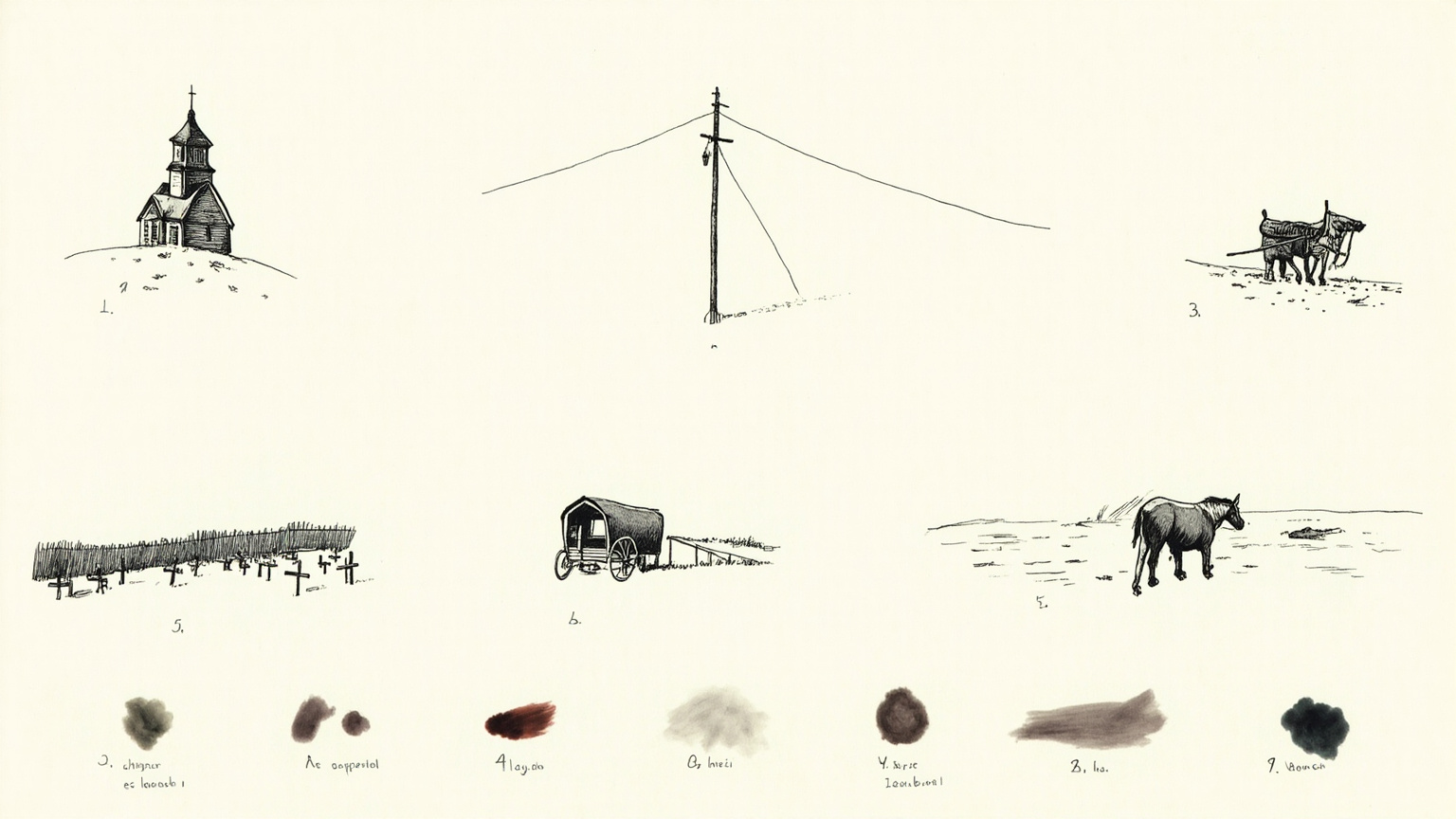
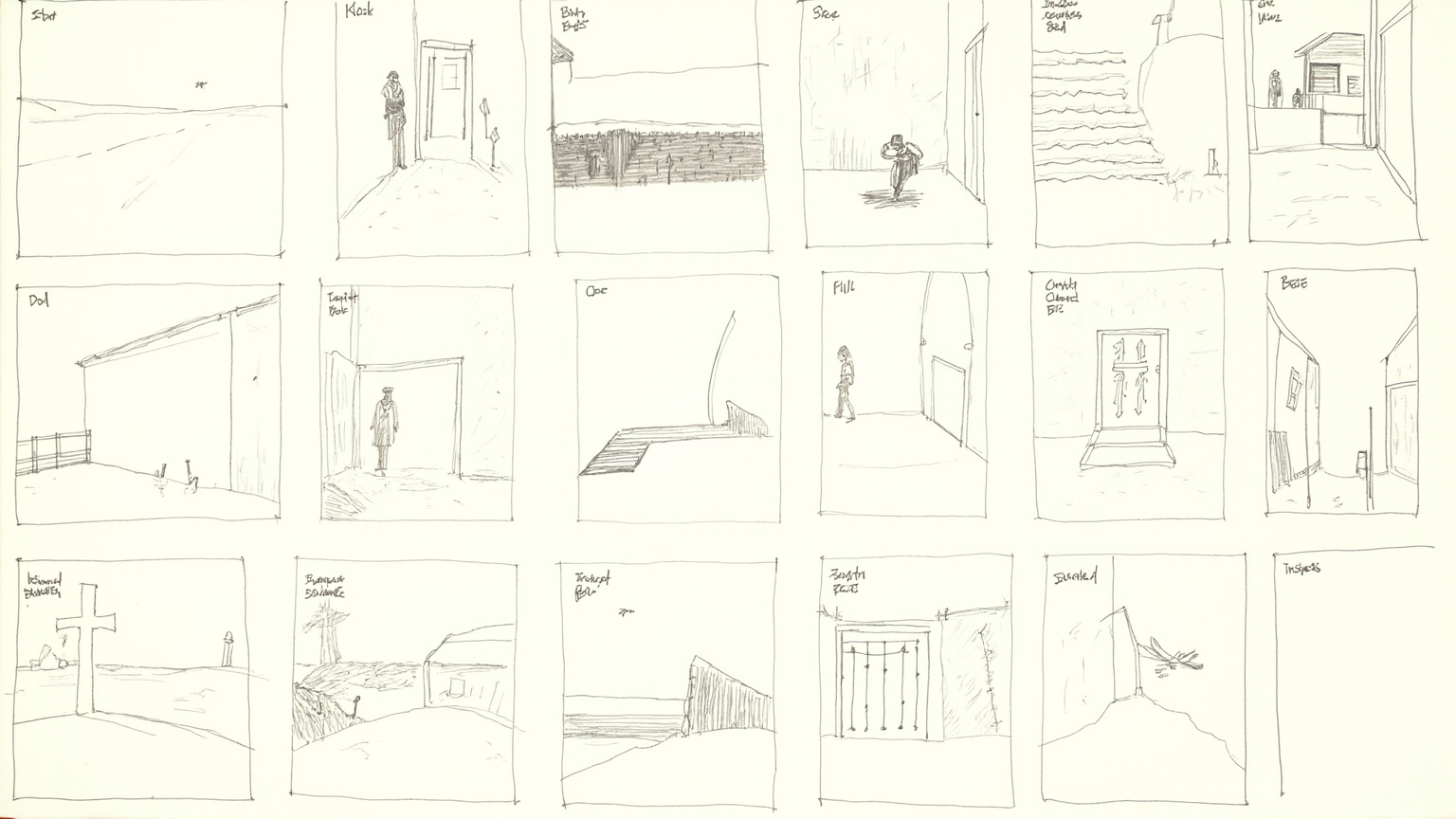
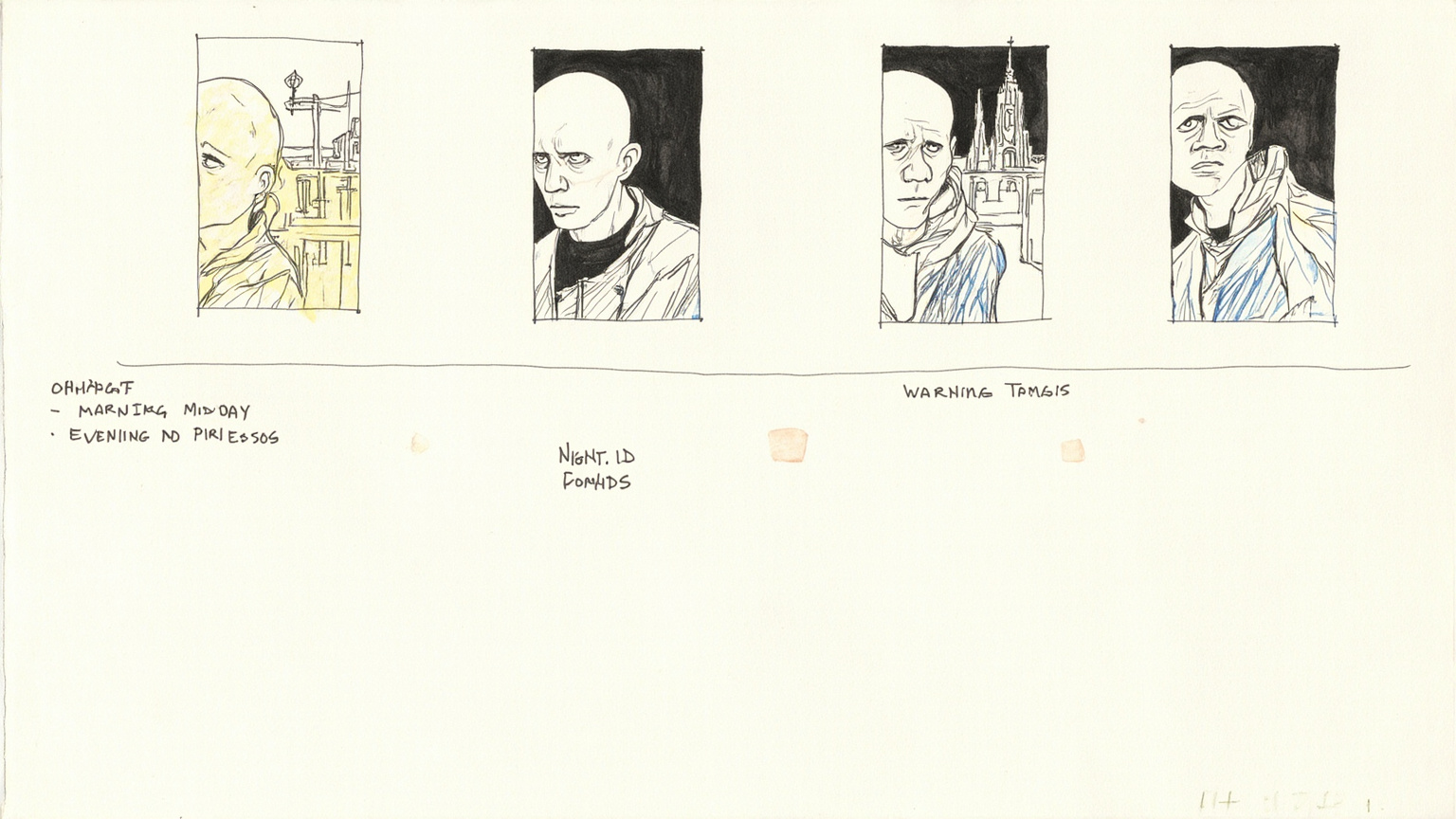
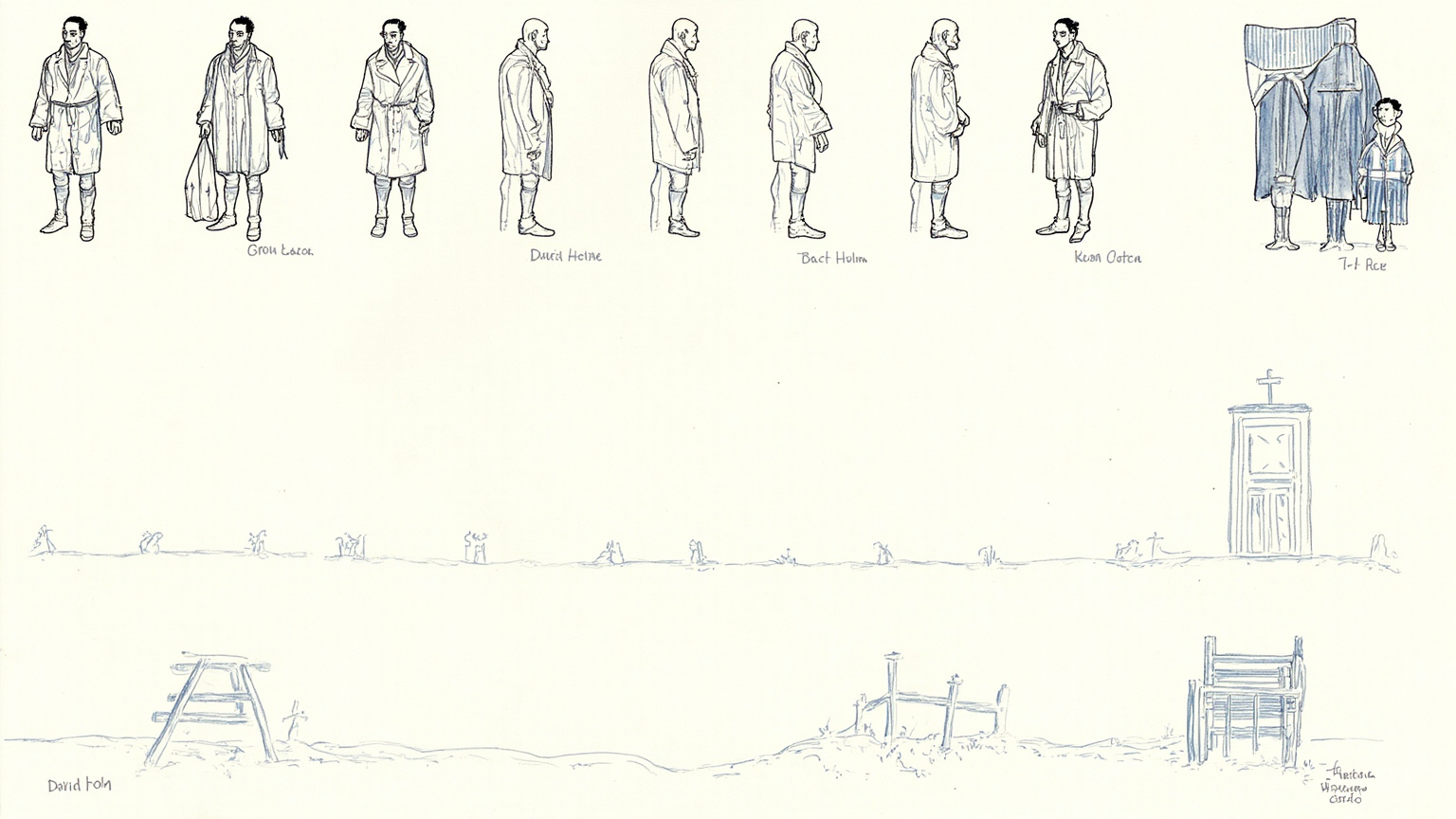
Art Direction4 plates
Before the guide was written, this book got a visual foundation — every illustration you just read grew out of it.