Camus wrote this after the Second World War, and it is not a book about the Second World War.
Text and illustrations produced by the pipeline
Dead rats start turning up in the stairwell. One, then two, then heaps of them swept out with a broom. Then the rats stop coming at all, because the city's rats are nearly wiped out — and then people start running fevers.
Oran is a practical town, built for business and getting on with life, and nobody there is braced for a plague happening somewhere else. By the time Dr. Rieux is kicking heaps of dead rats out of his way in the clinic stairwell, it takes only a few days for the whole city to be shoved into a lockdown, a few iron gates, and tons of silence. That is The Plague — a book that never writes World War II head-on, and still packs an entire occupation into one invented town.
The Plague first came out in 1947. Camus was born in 1913 in Mondovi, French Algeria, just across the water from France, and died young in a car crash in 1960. His whole career circles the absurd — Sisyphus, and Meursault, the young man who shows almost no reaction to his own mother's death. The Plague is the thickest book in his absurd cycle, and the one no account of his Nobel Prize in Literature can skip. Camus moved a real epidemic to North Africa without ever naming the year — the original just says "194–." Spread flat, the book works like a mirror held up to France, to the occupation, to the resistance, without once cutting to a scene of actual war.
Rieux, the protagonist, is a doctor born and raised in Oran; his wife caught tuberculosis early and was sent off to a sanatorium in the hills outside the city, leaving him to run the clinic alone. Tarrou is an outsider passing through, notebook always in hand, who puts together a volunteer relief squad on his own. Rambert is a reporter sent from Paris, meaning only to file one dispatch and leave. Grand is a low-level clerk at Oran's town hall, spending years rewriting the same opening sentence of a novel that never gets past its first line. Father Paneloux is a Jesuit-trained preacher who opens his mouth and God comes out. Cottard is a townsman nobody can place, and early on you still cannot tell what he is so afraid of.
These six men are packed into the same city gone under, and once the gates shut, everyone becomes the same thing — an exile. Some are cut off from the people they love by an iron gate; for others, going home to bury a parent becomes, overnight, a luxury out of reach. Inside the city, only one rule of the world is left: can you get through it, get through it, get through it.
The night the gates reopen, the whole city winds up like a machine suddenly given its spring back. Telegrams go out, the port reopens, people are waiting on the train platform again, the streetcars are shoulder to shoulder once more. Crowds push toward the edge of the city, everyone wanting to be first to see a face they have not seen in months — and then someone starts shooting at them. The shooter is Cottard, the one figure in the whole novel you never quite manage to place as good or bad. The lockdown had stopped frightening him, because everyone else was trapped along with him; once it ends and the law starts closing back in, his own fear gets away from him.
A plague forces people into decency — and decency was never for sale, never for show.
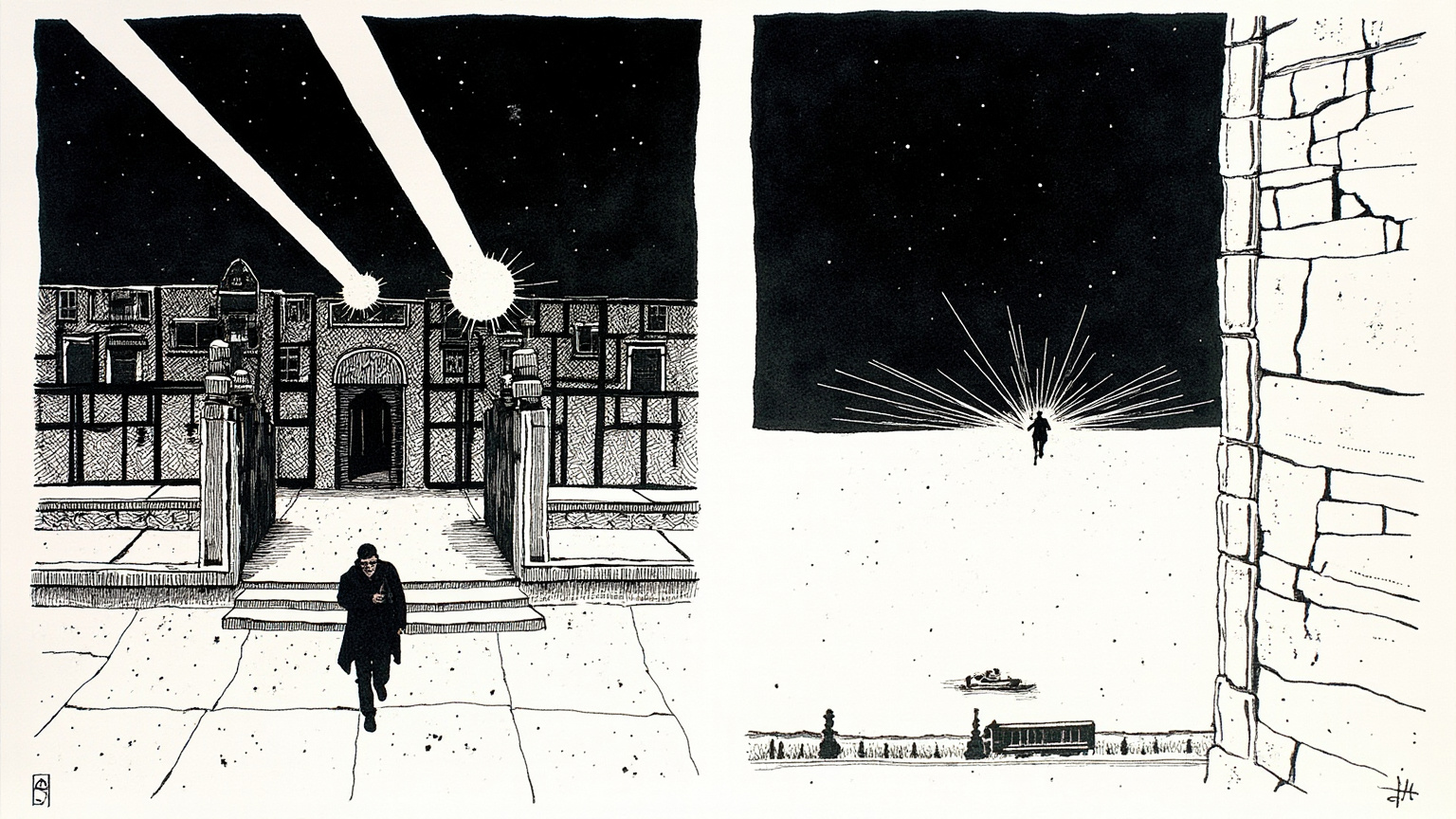
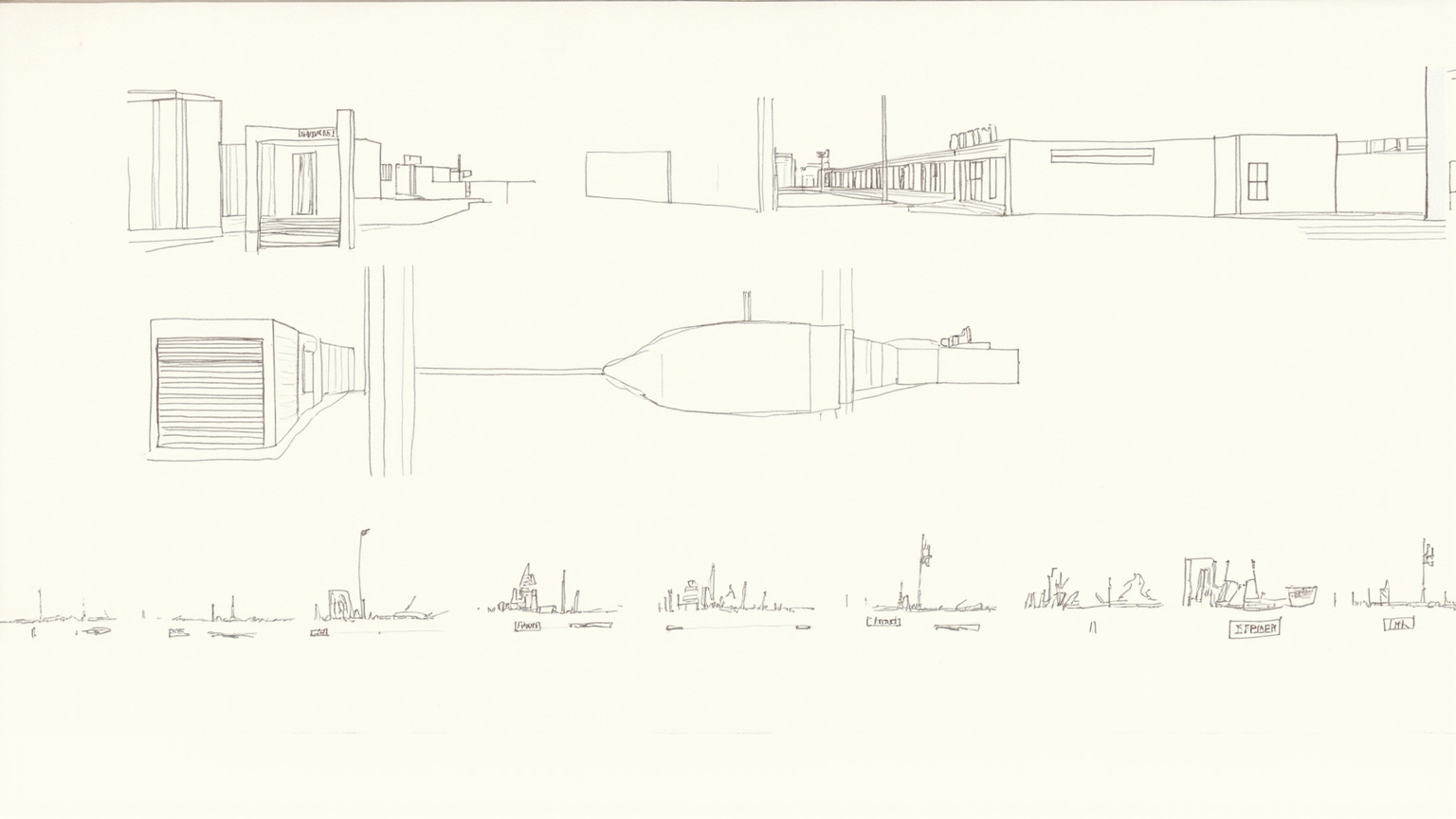
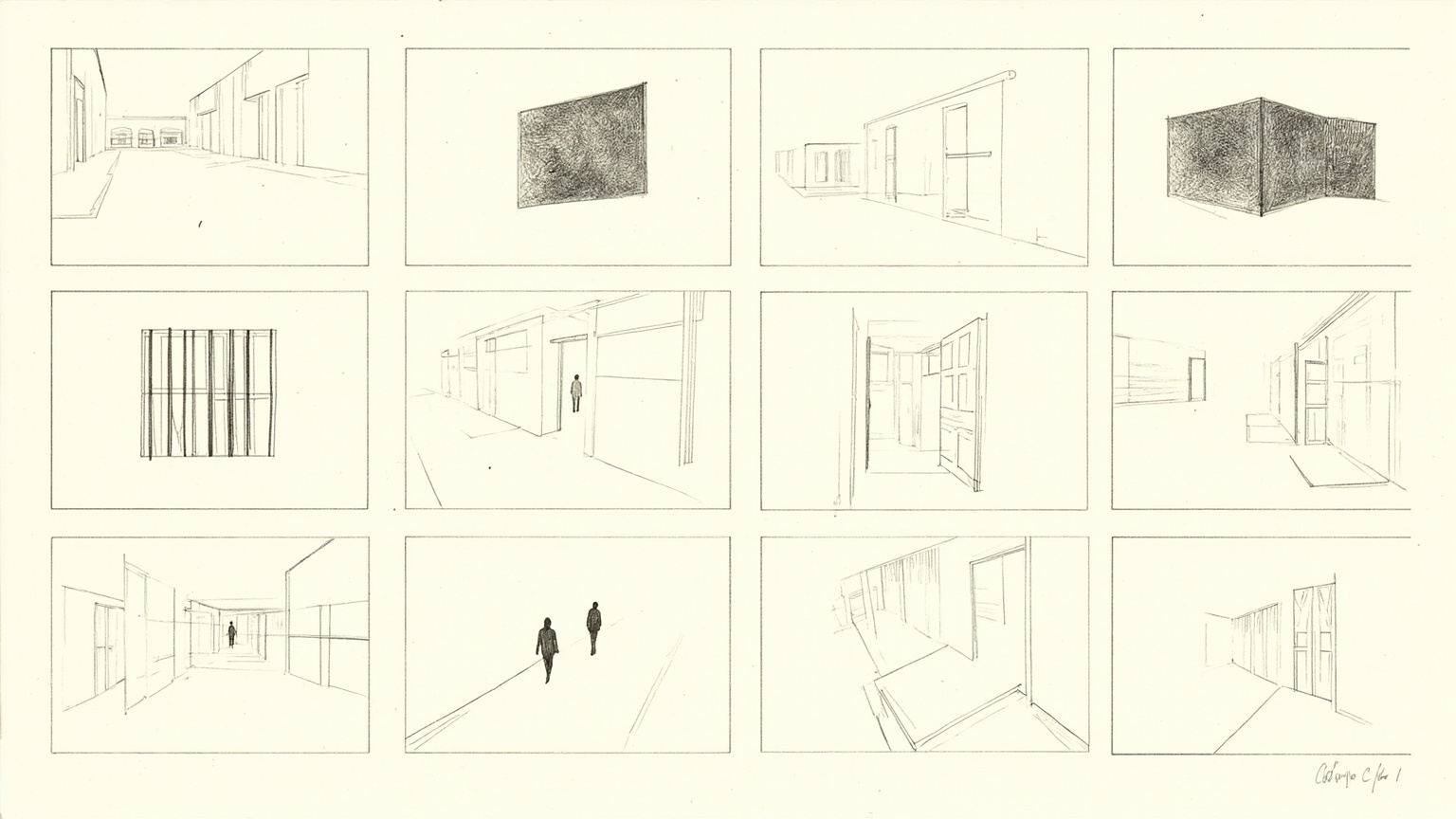
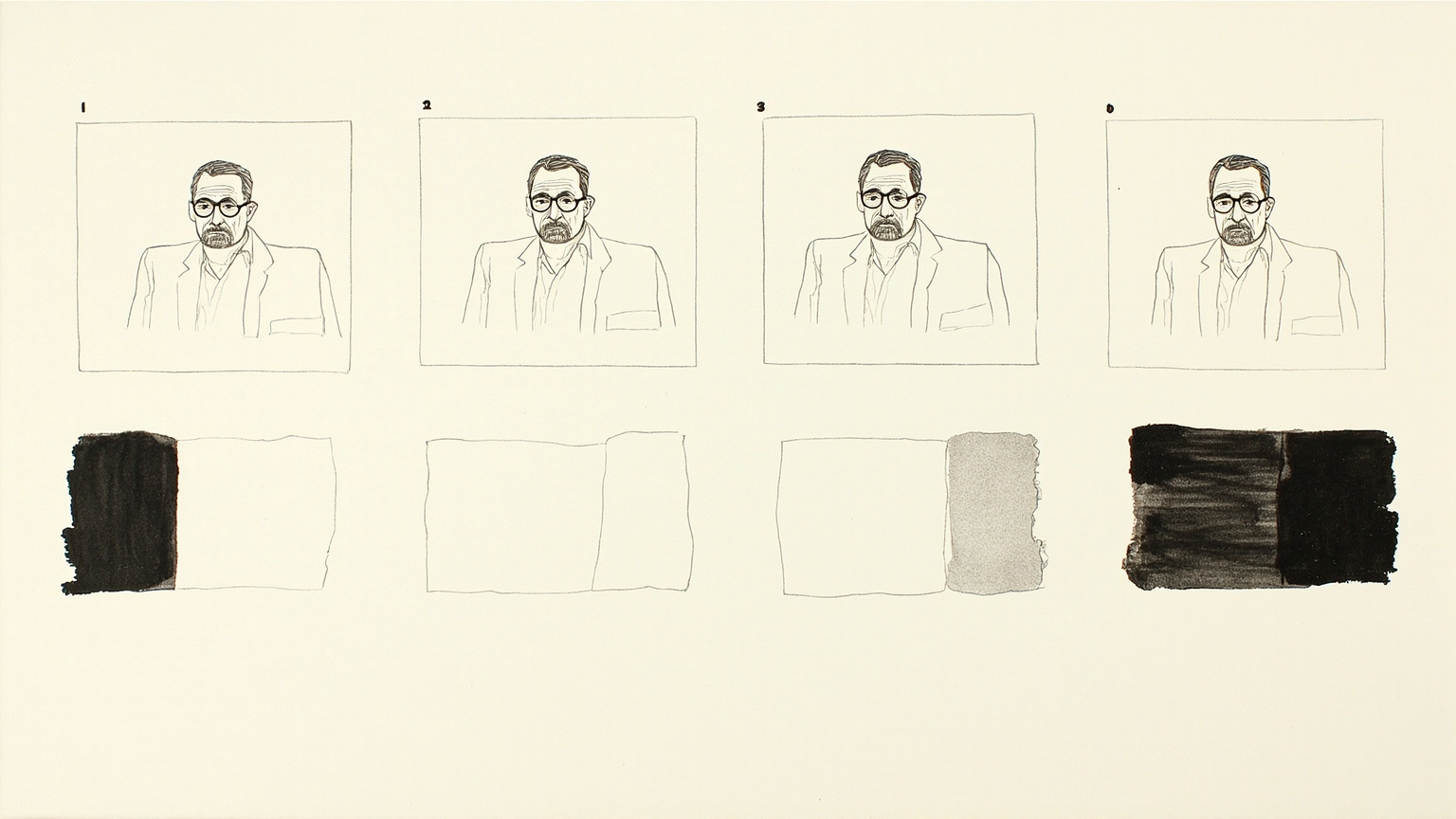
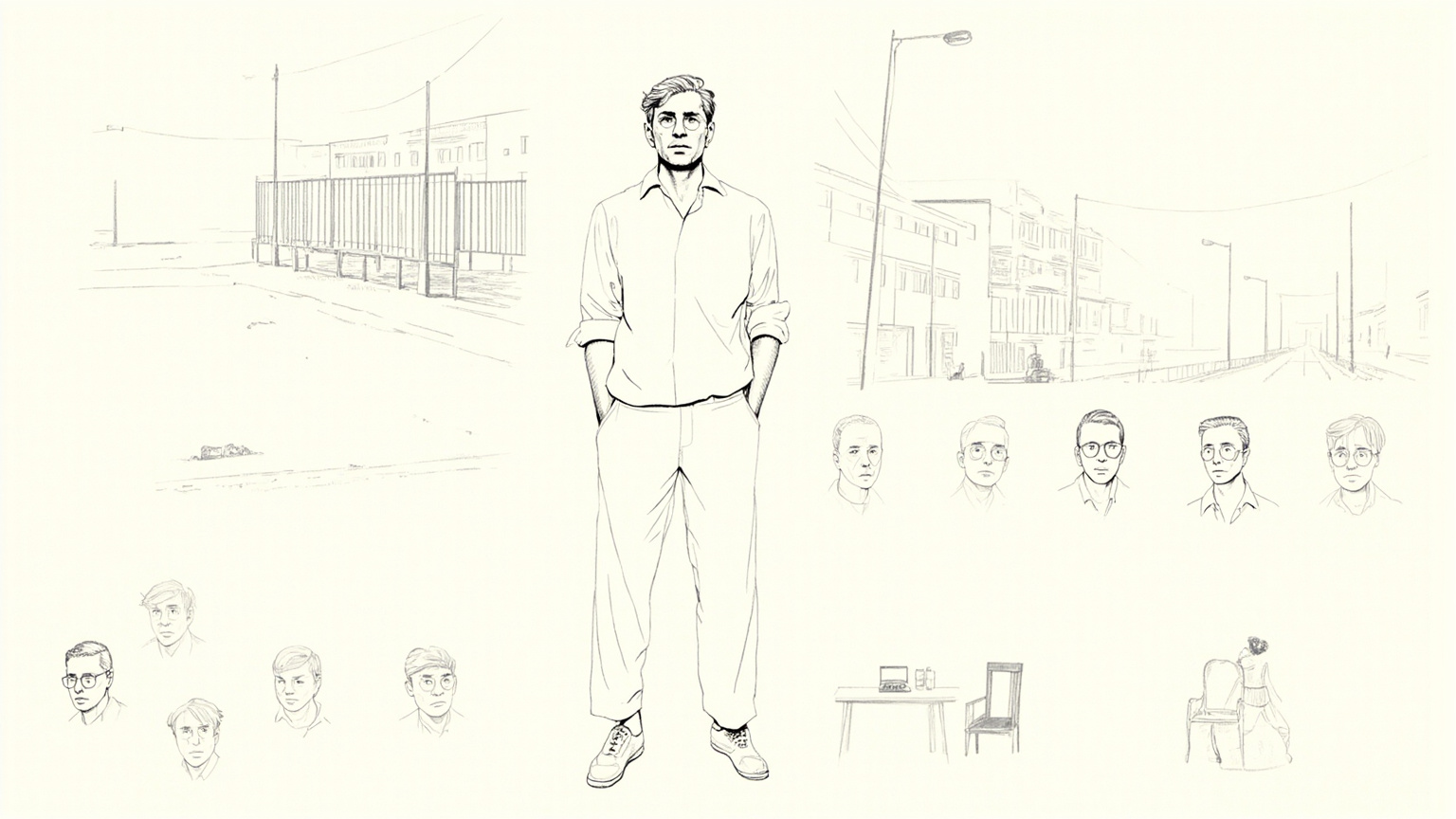
Before the guide was written, this book got a visual foundation — every illustration you just read grew out of it.
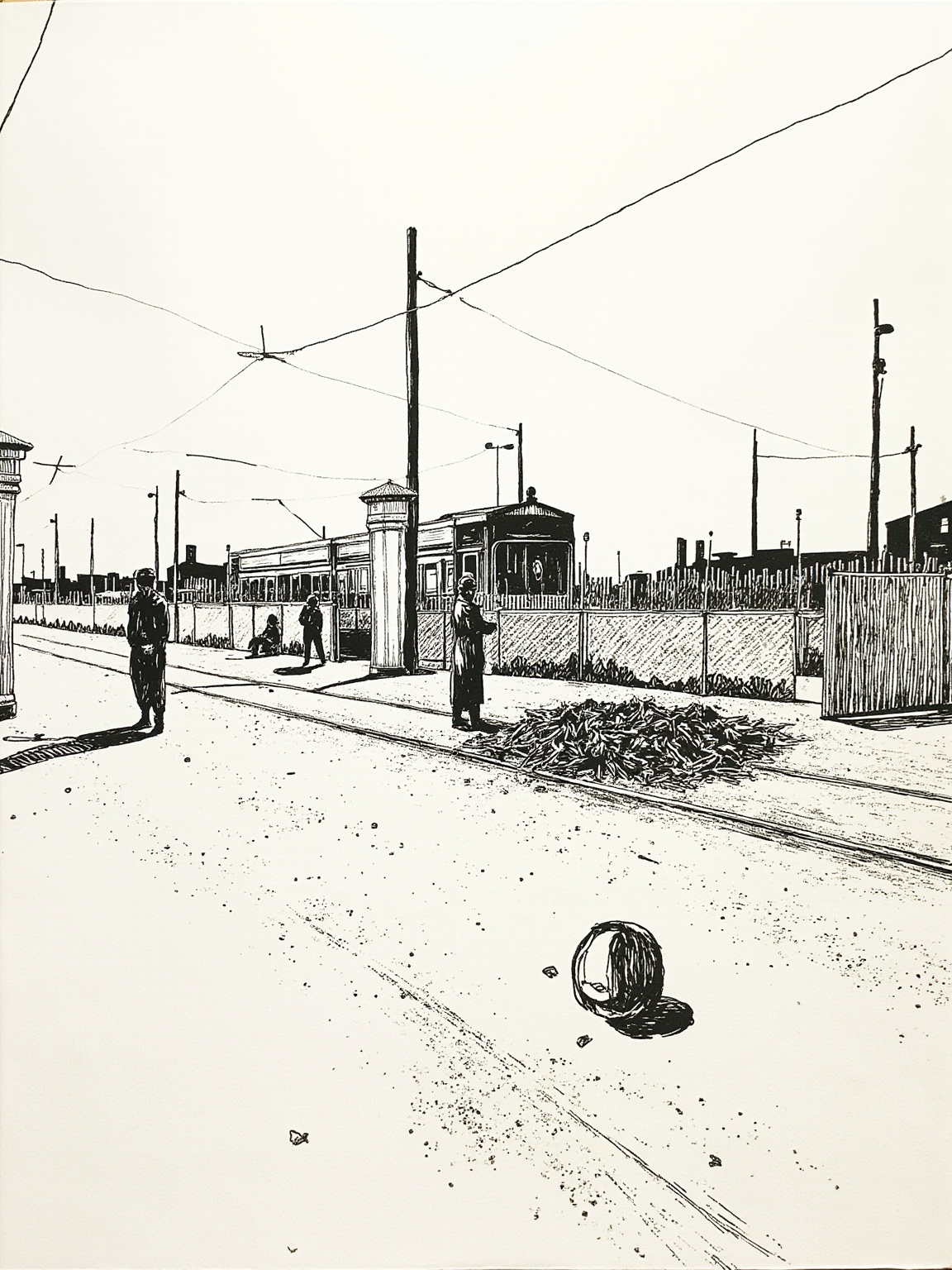
The first wave of panic belongs to the rats. Rieux is the first to notice the dead ones piling up in stairwells, on rooftops, along the train platform, and he sends samples off for testing; the public health officials resist first, then stall. Only once people in the street start running fevers, their lymph nodes swelling, collapsing through the exact clinical course of plague, does the administration finally admit it — this is plague. Oran, a town built for business, has no defenses against a disaster like this, and the moment the word is official, the gates come down at midnight, iron bars and a seal. Telegrams and letters stop; mail that used to arrive in a few days now has no date it might come again.
The lockdown does not weigh the same on everyone. Rambert is the first to break under it — his wife is in Paris, and they have only just married. He starts working connections, begging smugglers, naming a price, willing to do almost any favor in exchange for a pass out of the city. It is written as an entirely unromantic gamble, with no swelling dialogue anywhere — just a grown man under a lamp, going through the same stack of addresses that might still be useful, again and again.
Meanwhile Tarrou is already at something else — a volunteer sanitation squad made up of Rieux, Grand, a few nurses, a few porters. He holds no title and gets no funding, just a pen and a notebook, and he keeps a running list: how many died that day, which street needs disinfecting. "Not heroism" is the note Camus strikes for the whole squad. No medals, no masks — just staying, night after night, at the bedside of someone who was still asleep the evening before.
Tarrou, the outsider, carries a darker shadow than the rest of the cast. He lets it show once, in his notebook: his father was a prosecutor who once demanded a death sentence, and ever since, Tarrou has hated anything that kills in the name of justice. It is not hatred of one man — it is hatred of a structure. So he chose the opposite path for himself: to be a saint in a world without God. It sounds like a grand claim, but what he actually does is small — disinfecting, carrying stretchers, writing down names. He pays the highest price for it eventually, though not at the start of the story, and not at a moment he was ever ready for.
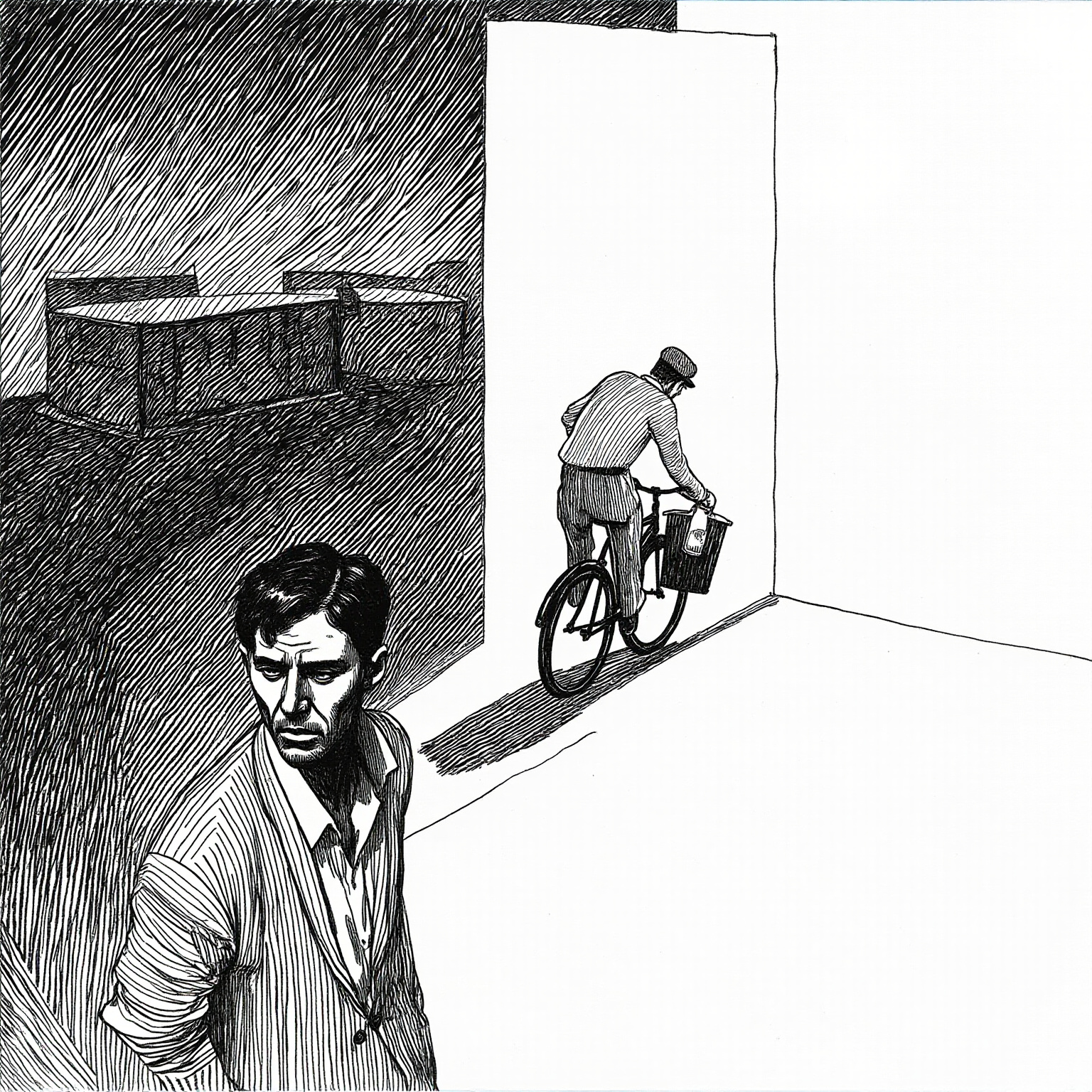
Rambert's turning point is the single scene that has stayed with me most out of the whole book. He has already bought his way out of the city, and on the night he is meant to leave, he goes to say goodbye to Rieux. He finds the doctor coming out of the ward, gray-faced from another sleepless night, with a very quiet pair of eyes behind his glasses. Rambert goes home and tells his wife he is not leaving. When he goes back to report to Rieux, he does not bring one convincing sentence with him — just one action.
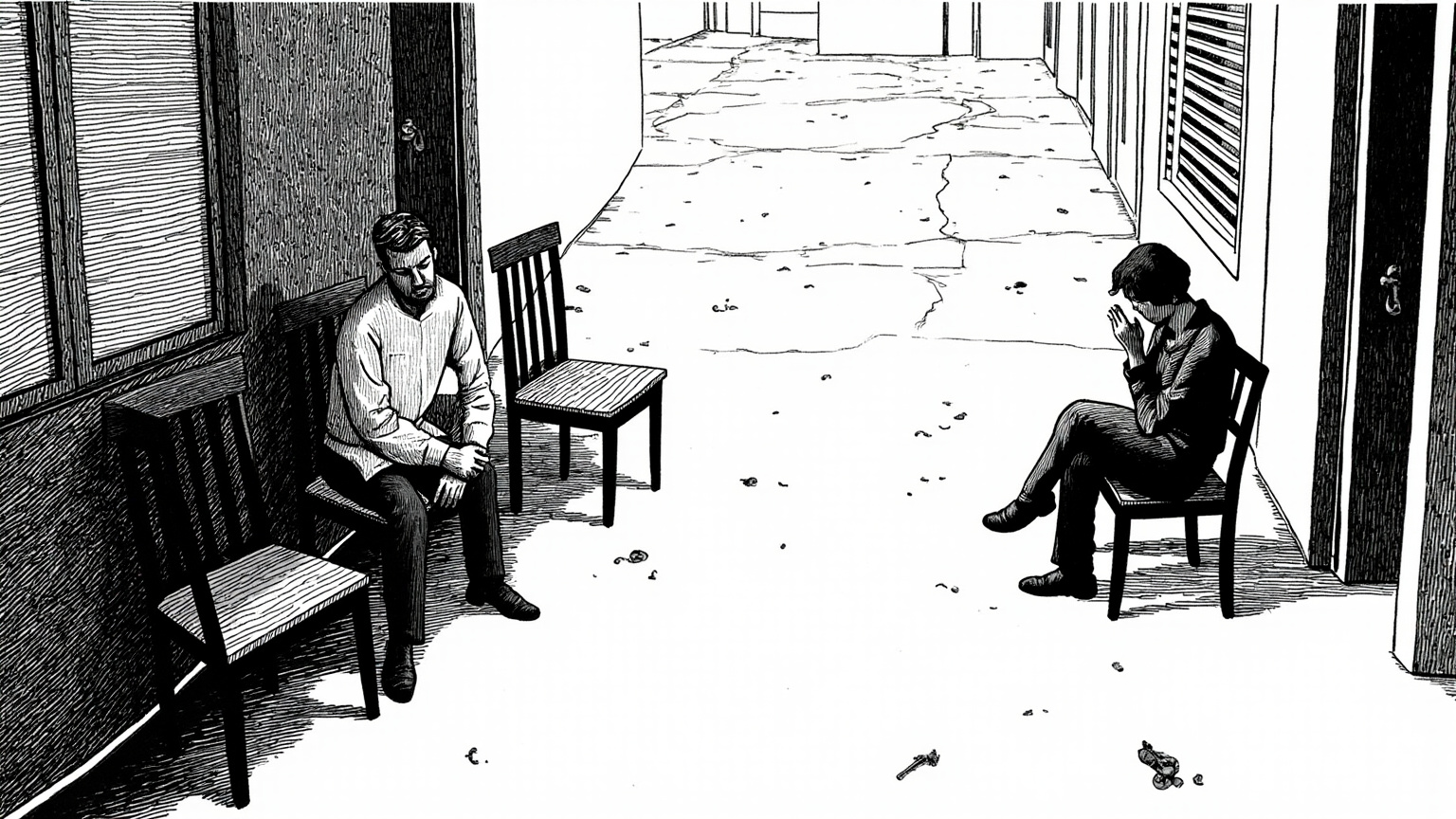
Father Paneloux is the most thoroughly humiliated man in the whole book. He starts out preaching in church that the plague is heaven's punishment on Oran — a line that sells well enough during an epidemic, since people always want a disaster explained. Then Camus does something both cruel and honest: he makes the priest watch a child die with his own eyes. A magistrate's small son runs a high fever, convulses, his glands swell; they give him serum and he still thrashes in agony on the bed for long hours, the priest standing over him with his mouth open on a half-finished prayer. The instant the boy dies, Paneloux never says his old line again. Afterward he goes down among the sick alongside Rieux and the rest, and the word "punishment" never leaves his mouth again. When his own death comes, he calls no one — he simply lets it take him.
The epidemic does not end all at once. It thins out slowly, case by case. By the day the papers start printing that the numbers are falling, the gates are still shut, but everyone already knows — it will not be much longer.
Tarrou falls in the last stretch of the book. Not during the worst of the epidemic, when one more death was just one more name, but right when the numbers are already dropping and people are starting to celebrate — the worst possible time to fall. He holds out through days and nights in the ward and then dies of the plague itself. At almost the same moment, Rieux receives a telegram he had stopped expecting: his wife has already been dead for some time at the sanatorium in the hills, not of the plague, and not even in Oran. A man who held this city together alone for half a year gets both of these things at once, at the end.
The most common reading of The Plague treats it as an allegory for the Nazi occupation of France from 1940 to 1944 — the plague as occupation, the lockdown as life behind the wire, the volunteers as the Resistance. That reading is close to settled fact by now, but Camus's own writing stays deliberately restrained: no occupying soldiers, no underground contacts, no direct political symbol anywhere on the page. He simply closes an entire, real town in on itself and lets everyone inside find a way through a disaster with no way out — or fail to find one.
A more personal layer is about decency. Rieux says something to the volunteers, roughly, that what lets a person set aside the whole question of being a hero or not is just being a decent man. That tier sits below hero and above good man: it asks you to do the least visible work, day after day — disinfecting, filling out registers, carrying stretchers — with no one watching. What Tarrou wants, to be a saint in a world without God, turns out to be the same thing done again in a more ordinary posture.
The third layer is exile. The lockdown cuts every person off from whoever they care about most, and once longing is stretched out with no end in sight, it turns into something that almost has a physical shape. Camus writes one short, prose-poem passage — the harbor at dusk, the glare of Mediterranean light, and every man and woman on the shore wearing the same expression, which is not hope for the gates to open but a private reckoning of whether this separation can be endured. Read today, anyone who has been through something can probably find themselves in it.
As for craft, many readers mistake The Plague for a third-person omniscient narration. The moment this gets revealed at the end catches people off guard: the man who wrote this "chronicle" is Dr. Rieux himself. Camus holds back the narrator's identity until the very last pages — which turns the whole novel from a record of a city into something a man who lived through the plague sat down and wrote afterward. Those two readings are practically two different books.
A guide gives you the map; the text itself is the ground. Specifically, it gives you things like this: how Camus collapses a priest's entire faith into one child's night of thrashing on a hospital bed; how a man from Paris sets down a travel pass he has already won and has to rebuild his own goodbye speech from scratch; how the night the lockdown ends gets written as both a citywide celebration and, on the same page, a man firing a gun from a stone step. None of that survives being summarized — its force lives in the actual sentences. The story is the same city either way, but the prose is not the same city at all.