The Railway Children · Companion Guide
铁路边的孩子们
父亲一夜蒸发,母亲只说『勇敢些』,三姐妹在约克郡铁路边学会向陌生人挥手,也替陌生人拦下一列火车。
Opening: A Torn Red Petticoat
A girl just past ten stands in a railway cutting, a strip of red cloth torn from her petticoat, waving it at a steam train bearing down on the line. The driver crouches by the coal afterward and weeps. She did not start this. The slope gave way first, and mud came down the red bank and buried the rails. There was no time to run back for help, so she tore her petticoat instead.
What Kind of Book This Is
The Railway Children first appeared in 1906, written by E. Nesbit. She is a name no account of the Golden Age of English children's literature can skip past. Plenty of English writers before her had written railways and adventures, but few could take something going wrong at home and tell it without tears or shouting, in a way that still leaves a child willing to keep going. The book has sat near the top of British polls for the nation's favorite children's book for decades, and not because of its plot. It is the dignity that survives being knocked flat that keeps it there.
People and Place: Four Names at Three Chimneys
The Weston household comes down to four names worth holding onto: Bobbie, Peter, and Phil, ages eleven, ten, and seven, plus a mother who never complains. Their father vanishes overnight from a senior post in a colonial office in London, taken away without explanation, and their mother says only, "be brave," before moving the children to their aunt's house in rural Yorkshire. Overnight they fall from a red-brick parlor into a flagstone kitchen. This is not bad luck falling from the sky. It is a wrong done to them, and the original never names the charge. It only says he has been shut away.
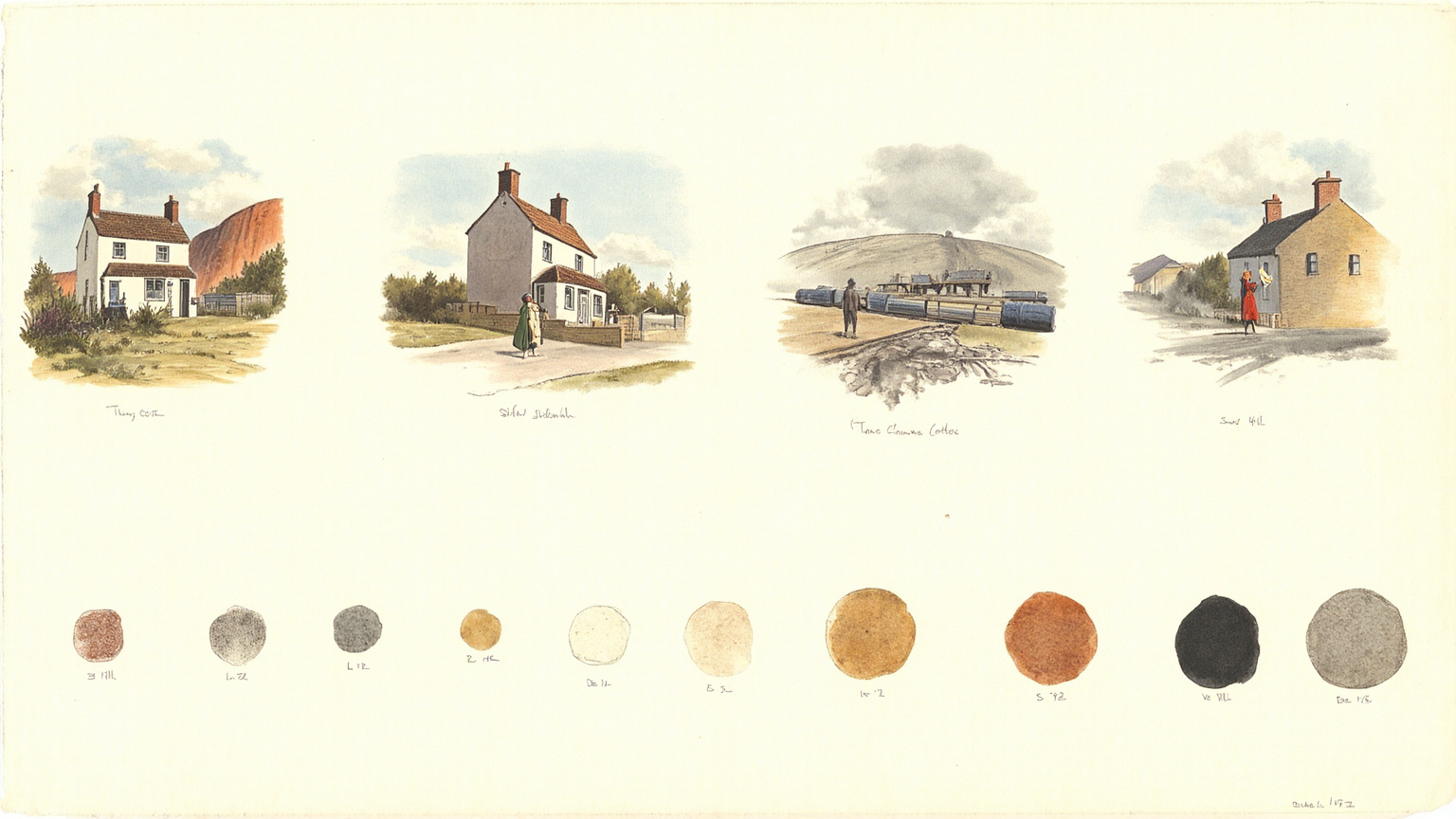
Their new home is called Three Chimneys: white walls, three chimney stacks, set right against the cutting of the Great Northern line. The railway runs past their own garden, and across from it is the slope of the red bank and the mouth of the canal tunnel. The platform, the signal box, the coal heap, the station clock: all of it becomes the children's everyday scenery. The book's world is not large: one house, one stretch of railway, one village. But it gives its people exactly the room they need.
The 9:15 Gentleman, and a Wave Through the Window
The first small mystery of the story is the gray-haired gentleman who passes every morning at 9:15 sharp. He lives in London, rides the same train to town each day and back again in the evening, and along the way he lifts his hat to the three children by the window, gracious every time. At first they are only watching signal colors and naming engines: five green, four green, nine green, thirteen red. Then one day they look up and realize they have been seen back.
It is the lightest touch in the book, and the heaviest: seeing and being seen. Mother sits in the empty chair to write her letters, her back to the children; the old gentleman lifts his hat through a train window, and the children wave back across the platform. A family drops overnight from the center of the world into a countryside where nobody notices them, and being noticed again is something they win back on their own.
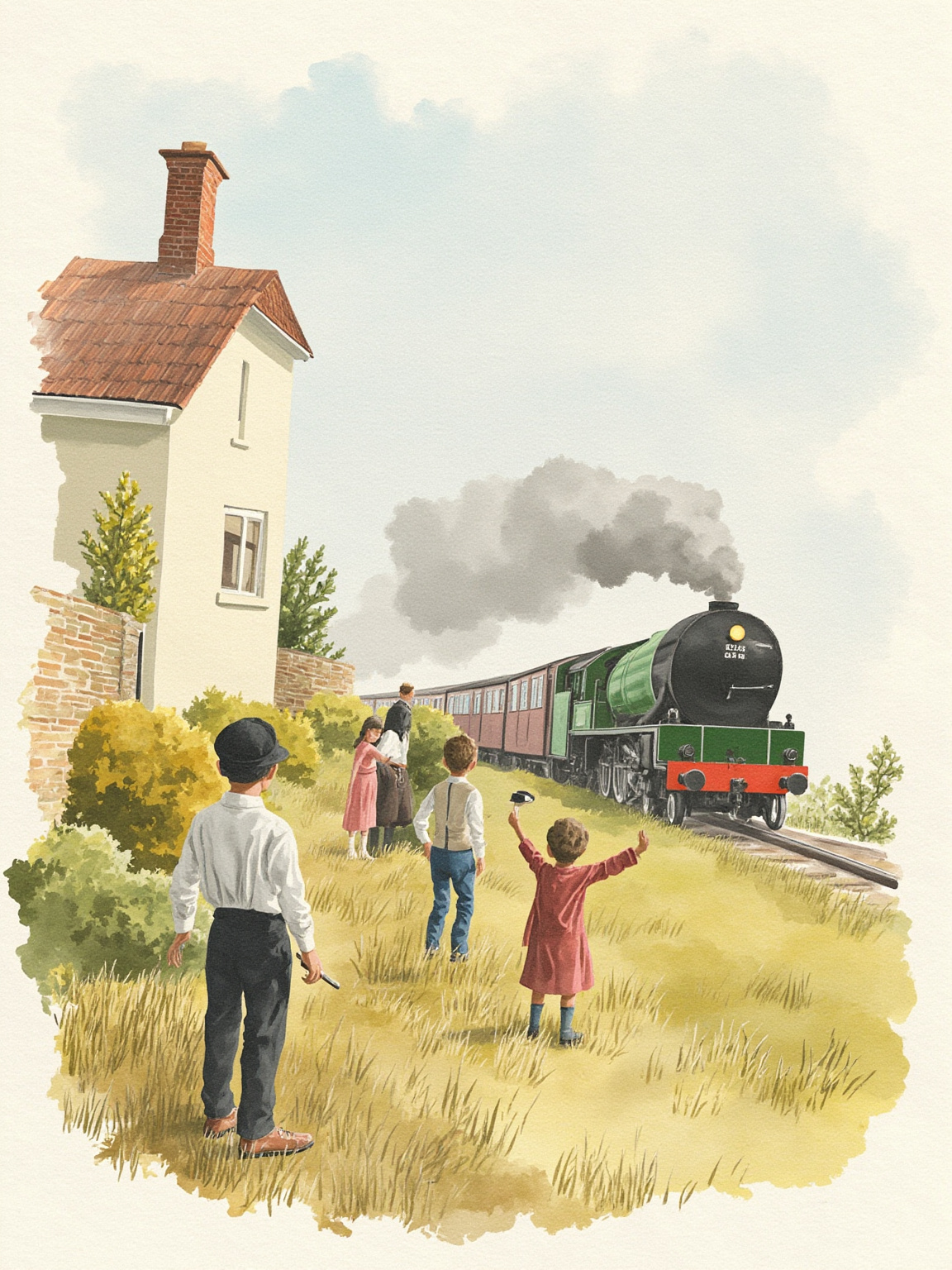
We had to wave at the train every day, because it was the only thing we could do.
我们每天得对火车挥挥手,因为那是当时我们唯一能做的事。
金句 · 第2章 · 九点十五分的先生
The Red Petticoat Flag: An Emergency Brake Made of Cloth
Bobbie has just read a line in one of her father's old books, that a man struck on the right cheek should turn the left, and sets out to forgive a girl who has been rude to her. Halfway there, the red bank gives way, and mud and stone come down the slope and bury the rails. There is no time to run back to the village for help, and it does not occur to her to try. She tears a strip from her petticoat and runs into the cutting, waving it at the oncoming train. The driver sees the red catch and jump, slams on the brake, and the passengers are saved, though the engine's front wheels sink into the landslide. Afterward he crouches by the coal and cries.
It is she who stops the train, not the mother, not the old gentleman. He is not even there; his identity only comes out later. The scene is written with restraint: no heroic slow motion, only the sound of tearing cloth, hard breathing, and the driver's sudden brake the instant he sees the red. Bobbie never means to be a hero. She simply has no time to be anything else.
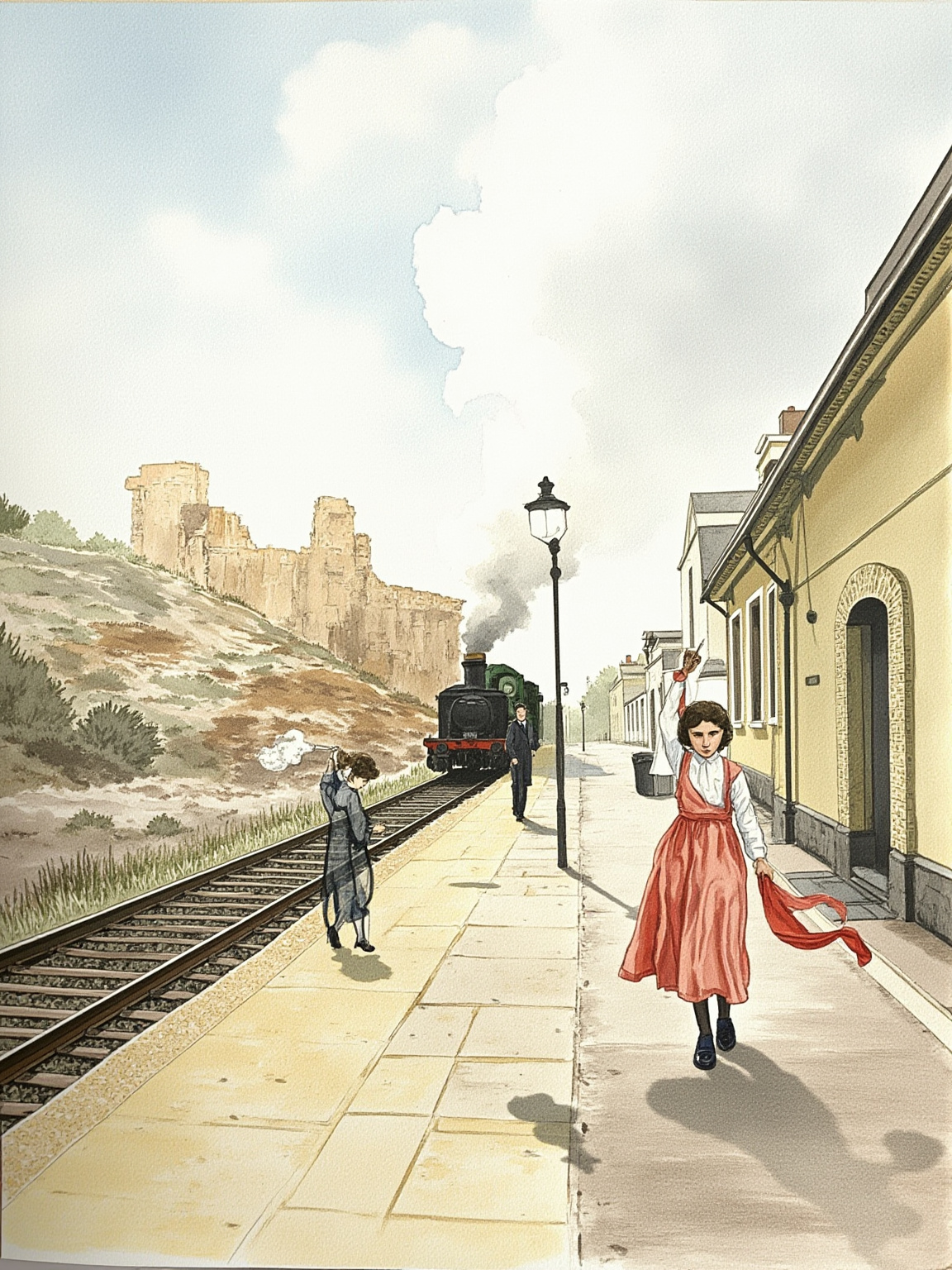
I tore it—the red of it—as one tears a flag for a thing that must be stopped.
我把那条红布撕了下来,像是要撕下一面旗,去拦住一件必须拦住的事。
金句 · 第4章 · 红衬裙拦车
Carrying Jim Out of the Canal Tunnel
Peter and a boy from a nearby family are playing a paper chase, tearing strips of paper and scattering them across the fields and the slope for the others to follow, when the run carries them straight into the mouth of the canal tunnel, where the red bank has just come down. A schoolboy named Jim is trapped under the fallen brick, his leg pinned. Peter climbs down into the tunnel, Bobbie comes running at the sound, and by the light of a stub of candle and a pocketknife the two of them work Jim free of the rubble, then send him off in the village doctor's gig.
The original deliberately keeps the blood and broken bone off the page: no severed limbs, no screaming, only broken brick, coal dust, dripping candle wax, and the mother's shaking hand on her children's shoulders afterward. That restraint is Nesbit's sharpest skill in this book. She lets you feel the fear without ever showing you the wound. It is the version made for children, and it is also the version made for adults.
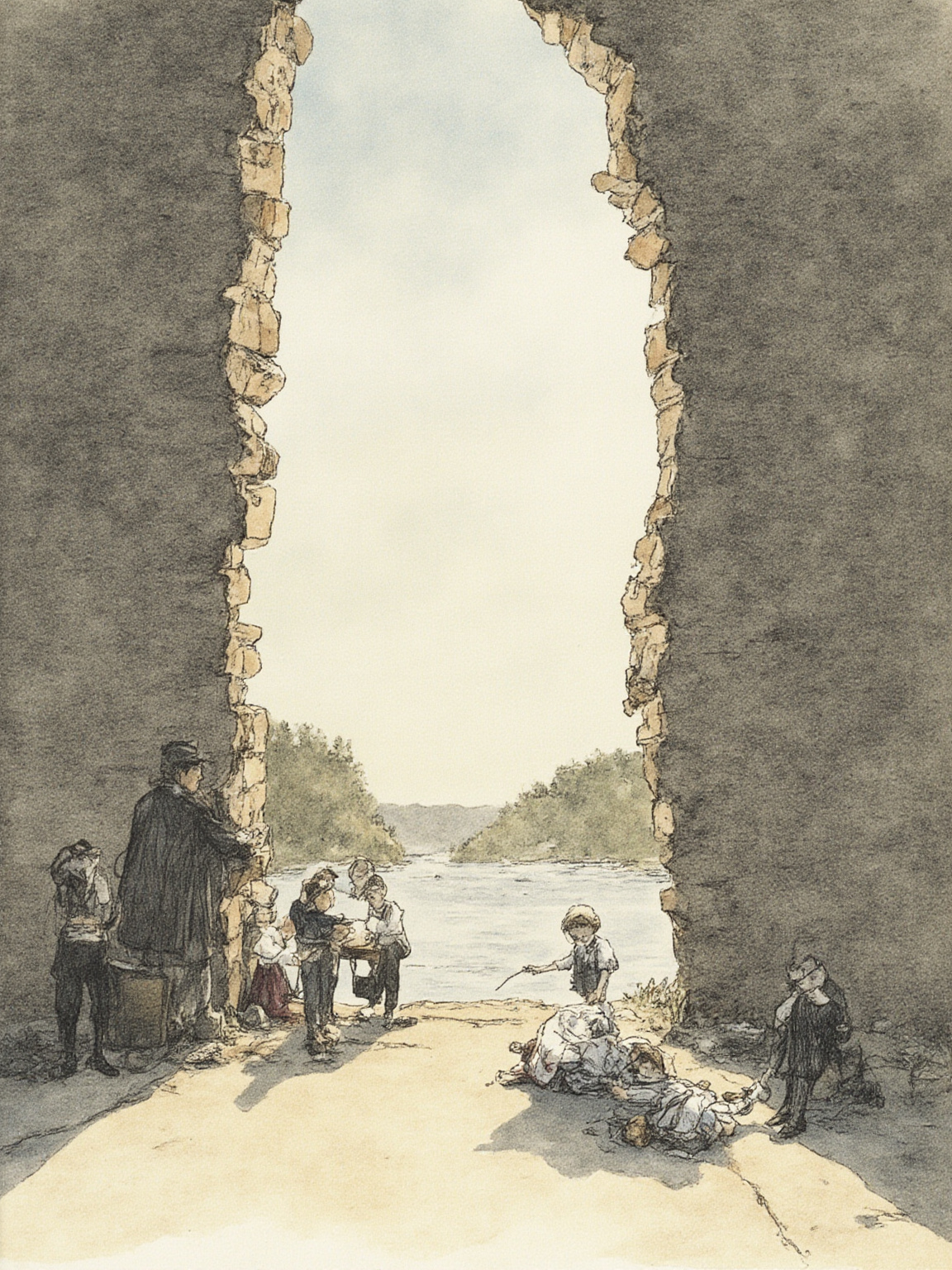
In the dark, with the candle guttering and the bricks shifting, we did not speak of what we feared.
洞里漆黑,烛火摇得厉害,碎砖还在松动,我们谁也不提自己心里害怕的事。
金句 · 第5章 · 运河洞里抬出吉姆
The Letter That Gave Him Away
On a train, Bobbie writes a letter for an old man, the kind of letter she calls an imaginary letter, and only after finishing it, and getting off at the wrong stop, does she realize the man sitting across from her is the same gentleman who lifts his hat every day at 9:15. She recognizes him, and he recognizes her. He turns out to be an old college friend of her father's, now a senior Member of Parliament, and it is through him that her father's wrongful case first begins to come loose. Letters travel back and forth between London and Yorkshire late into the night, Mother writing from that empty chair, the old gentleman answering from his desk in London, and neither of them says more than they must.
The mystery unravels slowly, with no dramatic unmasking. He was there all along; nobody had simply put together the gray-haired gentleman at the window and her father's old classmate. The delay is not a device. It is the ordinary speed of life.
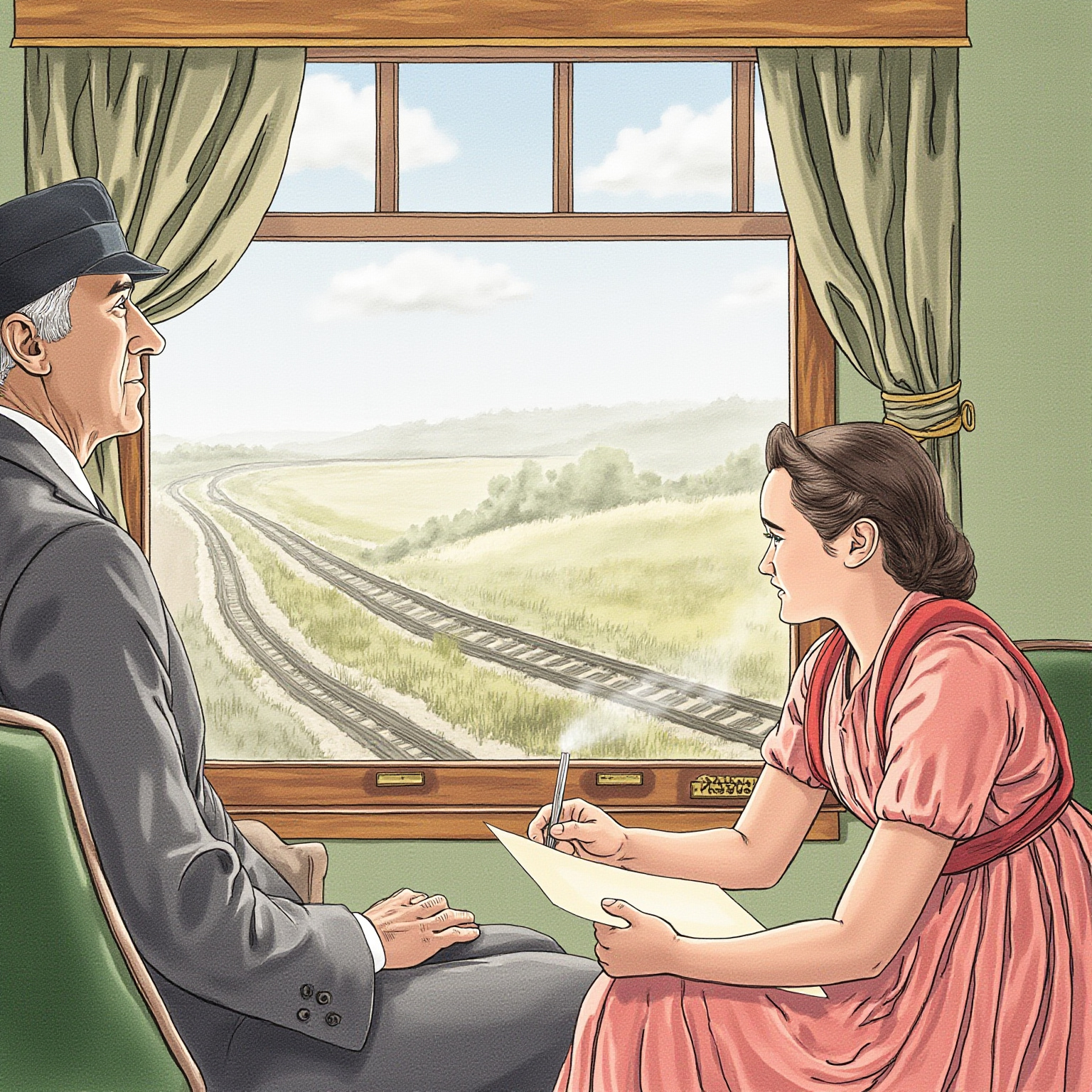
I did not know it was he, and he did not know it was I, until the letter found us out.
我不知道对面坐的就是他,他也不知道对面坐的就是我,直到那封信替我们说破了。
金句 · 第7章 · 认出门的那一封信
Under the Porch Light, a Man With a Brown Briefcase
Near the end of the book, one evening, the porch light comes on at Three Chimneys. A man is standing on the steps, carrying his old brown briefcase. The children freeze for a moment, then run and throw their arms around him. In the parlor, the chair that has sat empty is finally sat in again. There is no courtroom, no bell ringing, no villagers lined up to watch. Just an embrace.
That embrace is the longest silence in the whole book. The original gives him no heroic speech, and it does not let the children collapse in tears either. The restraint holds so tightly that even reading it, I find myself wanting to be happy on their behalf. The father comes home, the chair in the parlor is no longer empty, and that is the largest reunion this book has to give.
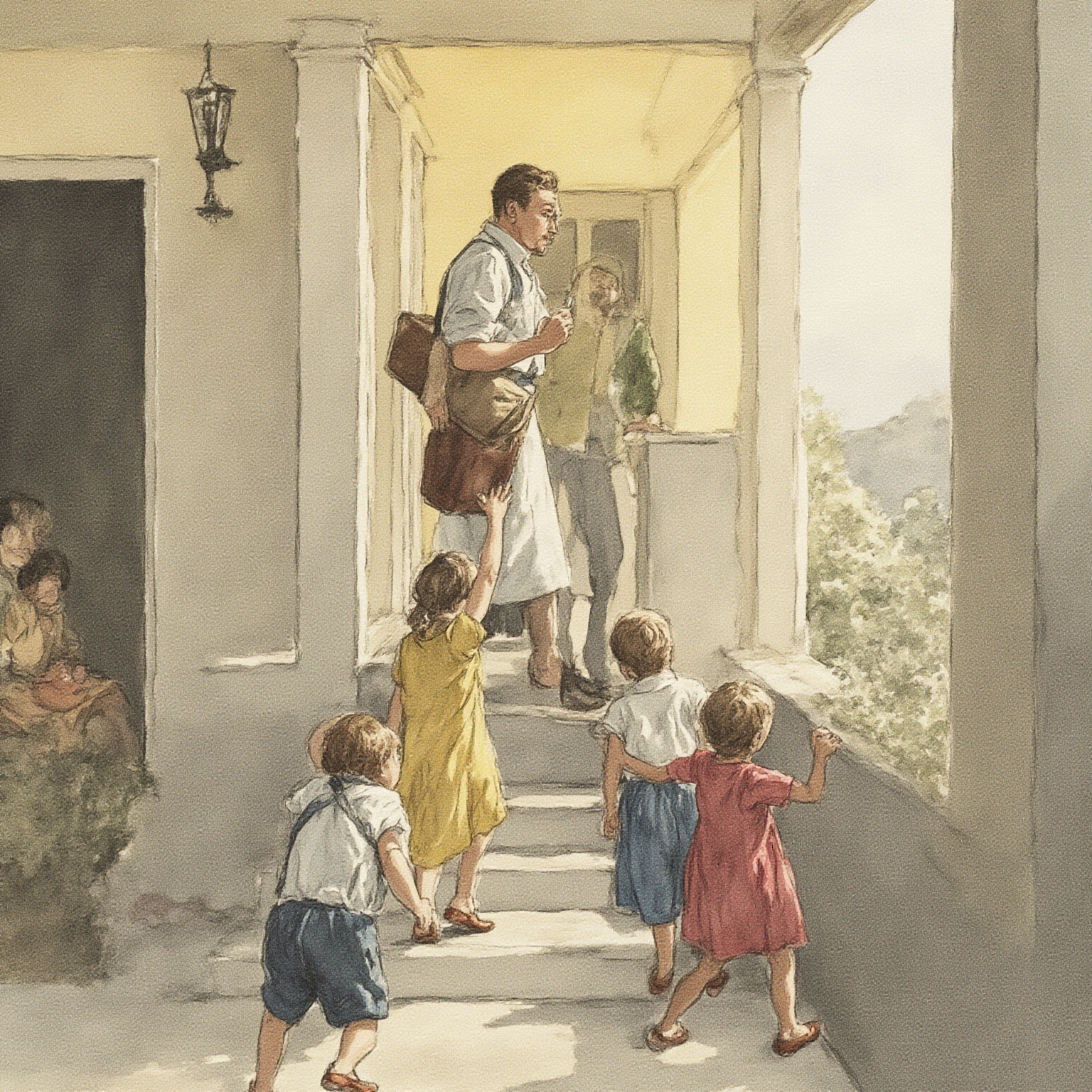
He stood on the porch with his old brown bag, and the lamp made a little gold of him.
他提着那只旧棕皮公文包站在门廊上,廊灯在他身上镀了一层薄薄的蜂蜜金。
金句 · 第12章 · 门廊灯下归来
What It Is Really About
The book's real subject is not the railway. It is dignity after a fall. The father is imprisoned for something he did not do, and the mother alone carries three children from a London parlor into a flagstone kitchen in the country, no dramatic confrontation, no line demanding why us. She says only, "be brave," turns her back to write letters, and the chair in the parlor sits empty for most of a year. This coming-of-age story sets its real test not out in the world but inside everything the mother swallows instead of saying.
Bobbie learns to carry weight. Peter learns to reach out. Phil learns to let go of the chipped blue china shepherdess she treasures most. In the same small house by the railway, the three children each grow up a year, not through any miracle but through the daily work of waving, stopping trains, carrying the injured, writing letters. What this book still gives a reader today is an account of how to keep living after being knocked flat, a skill the twenty-first century still runs short on.
Why the Text Is Worth Reading Even When You Know the Ending
A companion guide is a map, in the end. The text is the ground itself. Knowing that Bobbie will stop the train, that Peter will climb down into the tunnel, that the father will come home under the porch light, still leaves things in the text no summary can hand you: the second the 9:15 steam engine throws the three children's faces back at them off the window glass, the firelight jumping on the kettle lid while Mother sits alone at that chair writing letters, the sound of coal dust and dripping wax and tearing cloth, the slowness of Phil's fingers letting go as she hands Jim the chipped blue china shepherdess. You only see these by turning to that page yourself, and they happen to be everything this book is.
The test was never the railway: it was the "be brave" their mother swallowed before she said it.
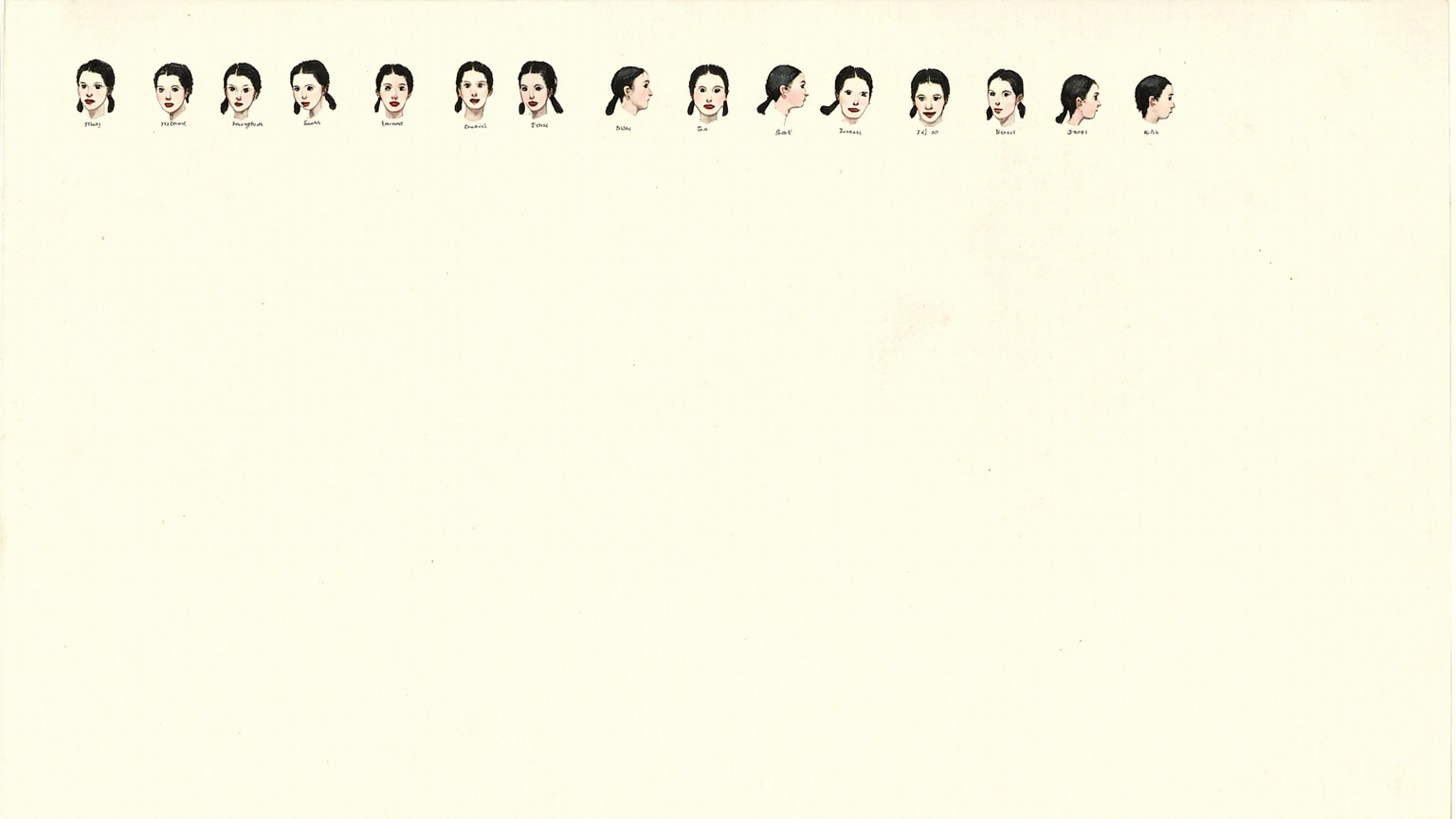
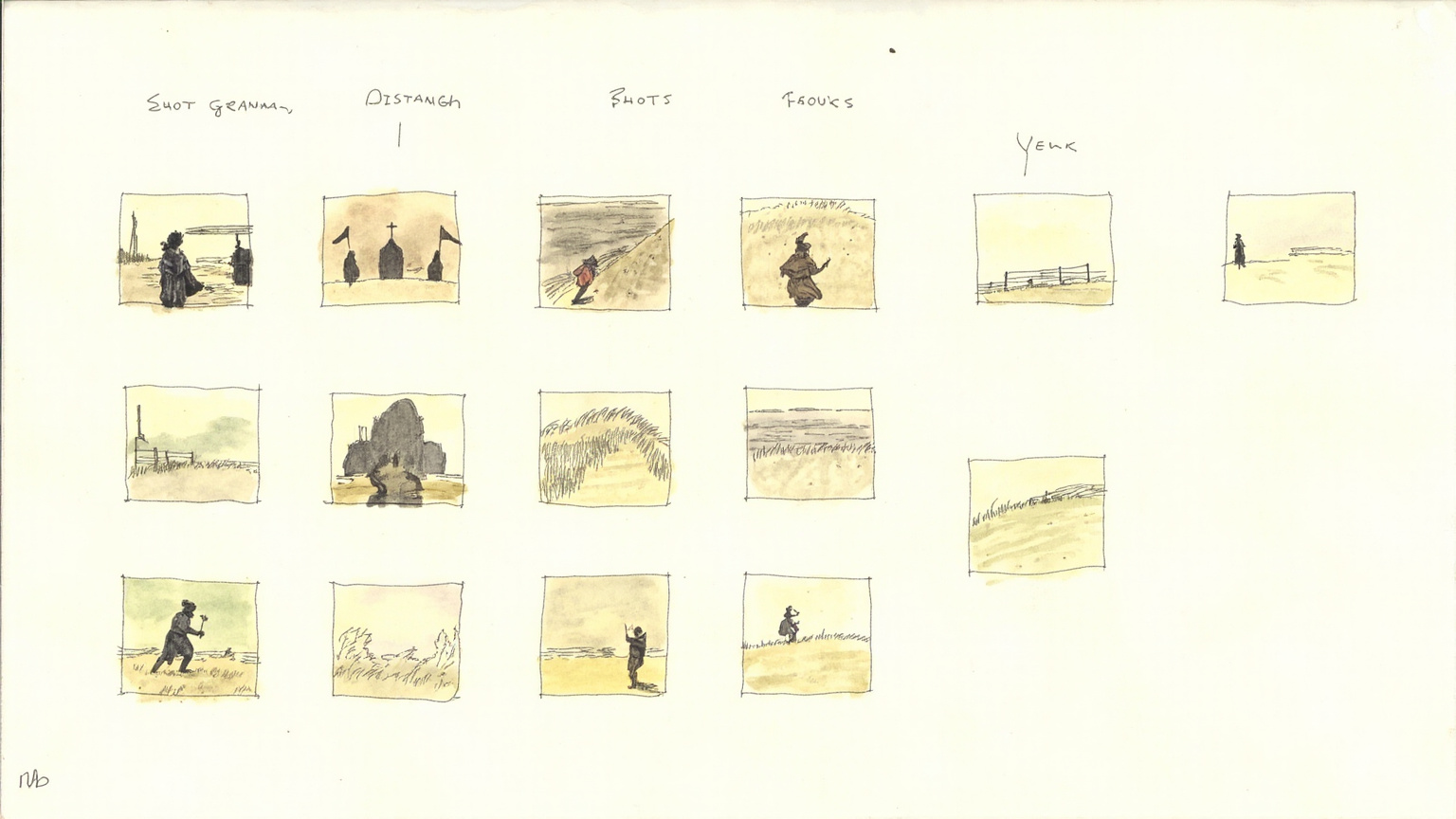
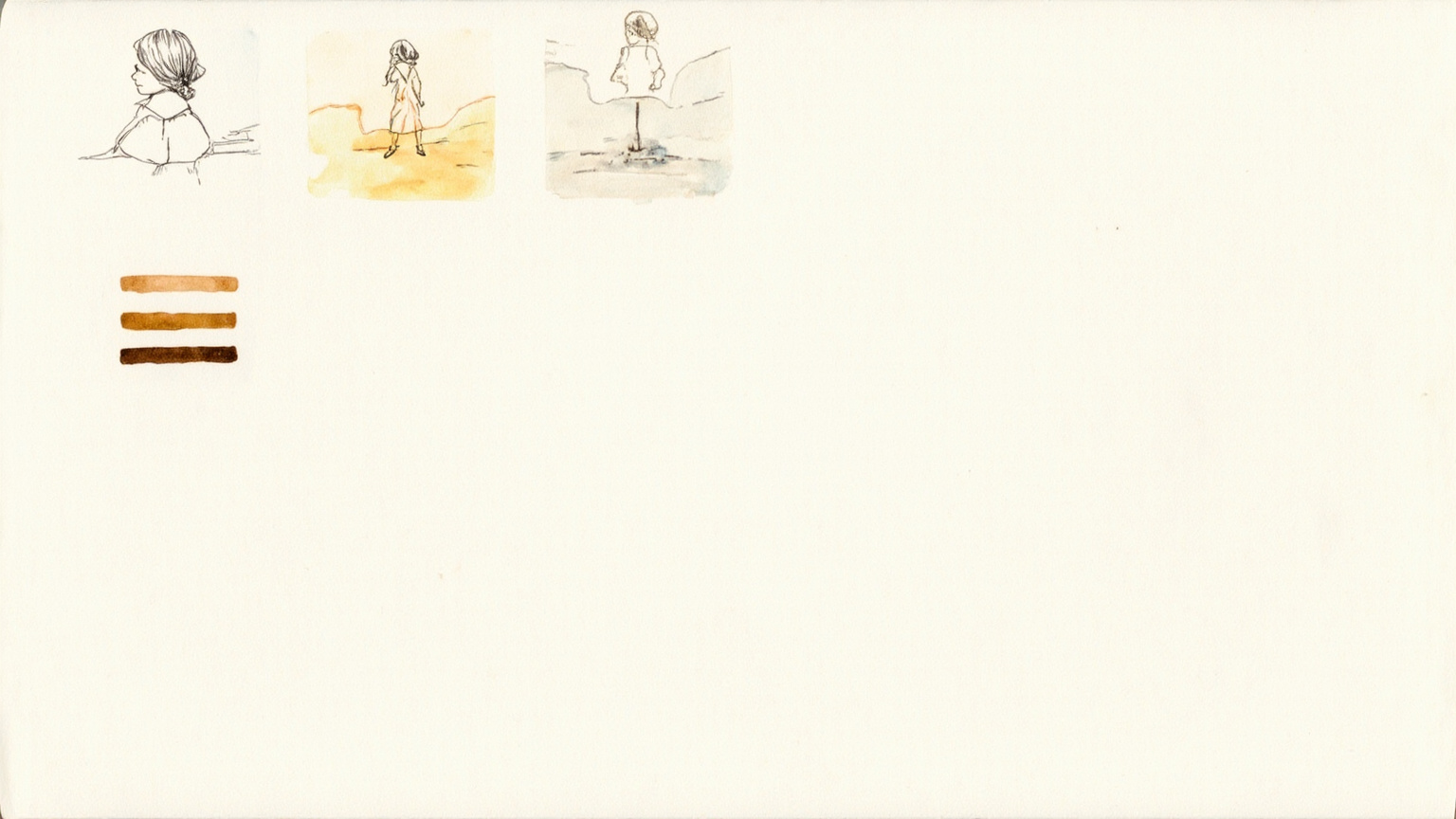
Art Direction4 plates
Before the guide was written, this book got a visual foundation — every illustration you just read grew out of it.