The Red and the Black (Le Rouge et le Noir) · Companion Guide
The Red and the Black
The sawmill owner's son memorizes the Latin Bible cold, climbing from a woman's windowsill to a marquis's study — until two gunshots in a church send him to the guillotine.
A young man finds that the path he wanted to live is already dead
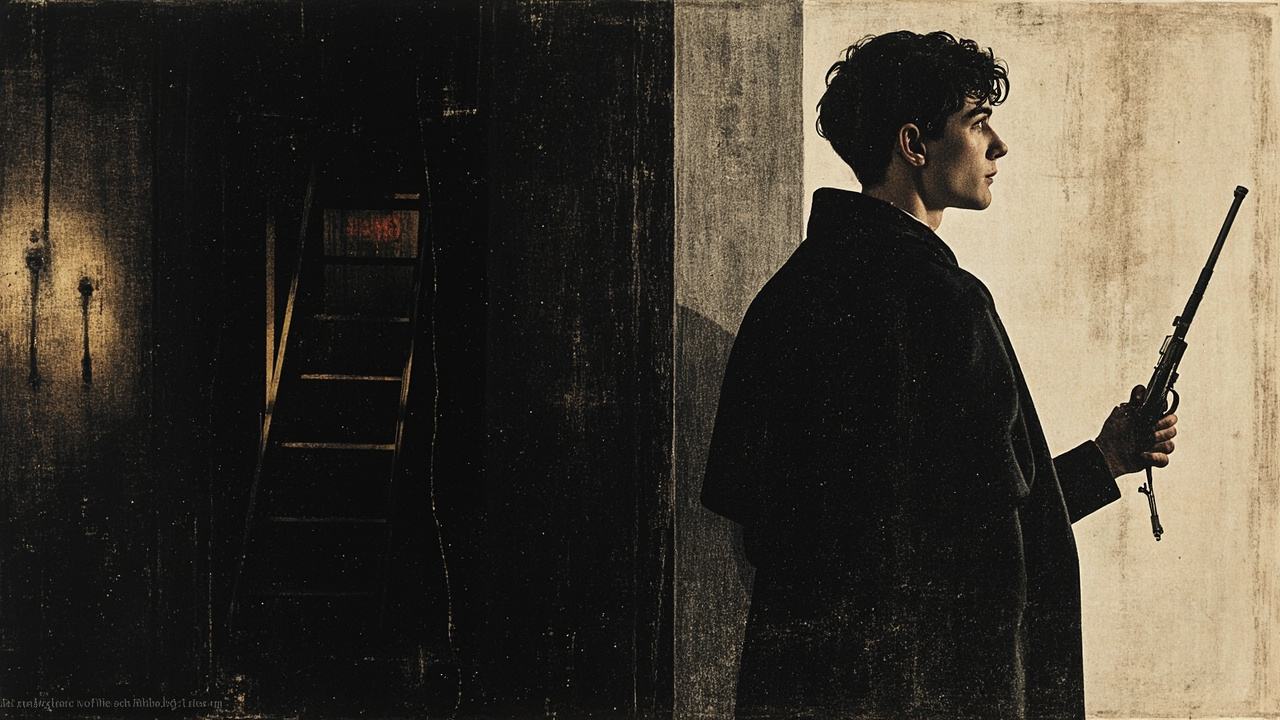
Your father is a carpenter, and you can recite the whole Latin Bible by heart. The heroes you worship fell in dispatches from years before you were grown, and the men who now sit comfortably in power are people you despise from the bottom of your heart. Only two colors are left in front of you: red — the uniform, the battle honors, the glory an entire generation of commoners earned sword in hand, already out of your reach; black — the cassock, the clergy, the Church, the one rope the Restoration left dangling for a commoner's son to climb. Which one will you put on? That was Julien Sorel's situation.
What kind of book is this
The Red and the Black, subtitled A Chronicle of 1830, was published in Paris in 1830. Its author, Stendhal, was a pen name — his real name was Marie-Henri Beyle, a man who carried Napoleonic-era battlefield experience and a love of Italian opera in his chest. He was forty-seven when he wrote this novel, and the air of the Restoration nauseated him — he set out to slice open, layer by layer, the hypocrisy of that age, from provincial parlors to Parisian salons. For more than a hundred years it has been recognized as one of the founding works of the modern psychological novel and literary realism: a full century before the phrase psychological realism existed, it laid bare every one of a single mind's thoughts, calculating, insecure, feverish, one by one, for you to see.
Characters and world
The protagonist, Julien Sorel, is the son of a sawyer in the mountains of Franche-Comté. He is intelligent, sensitive, his head full of Napoleon, but his eyes look out on a reactionary society where only the Church and old bloodlines hold power again — this is the cage his ambition is locked in. Two women surround him: Madame de Rênal, the pious, gentle wife of the mayor of Verrières, who has never once tasted real affection; and Mathilde de la Mole, the proud, willful daughter of the great ultra-royalist Marquis de la Mole in Paris, who lives inside the legend of her own ancestors. Two men are worth remembering: Abbé Pirard, the stern, upright Jansenist director of the Besançon seminary, who is the bridge that carries Julien from the provinces to Paris; and the Marquis himself, who values Julien and is driven half mad, cornered by Julien's low birth. The rule of this world is simple — a hierarchy sealed shut by the Counter-Revolution: who your father is decides which chair you get to sit in for the rest of your life.
How the story unfolds
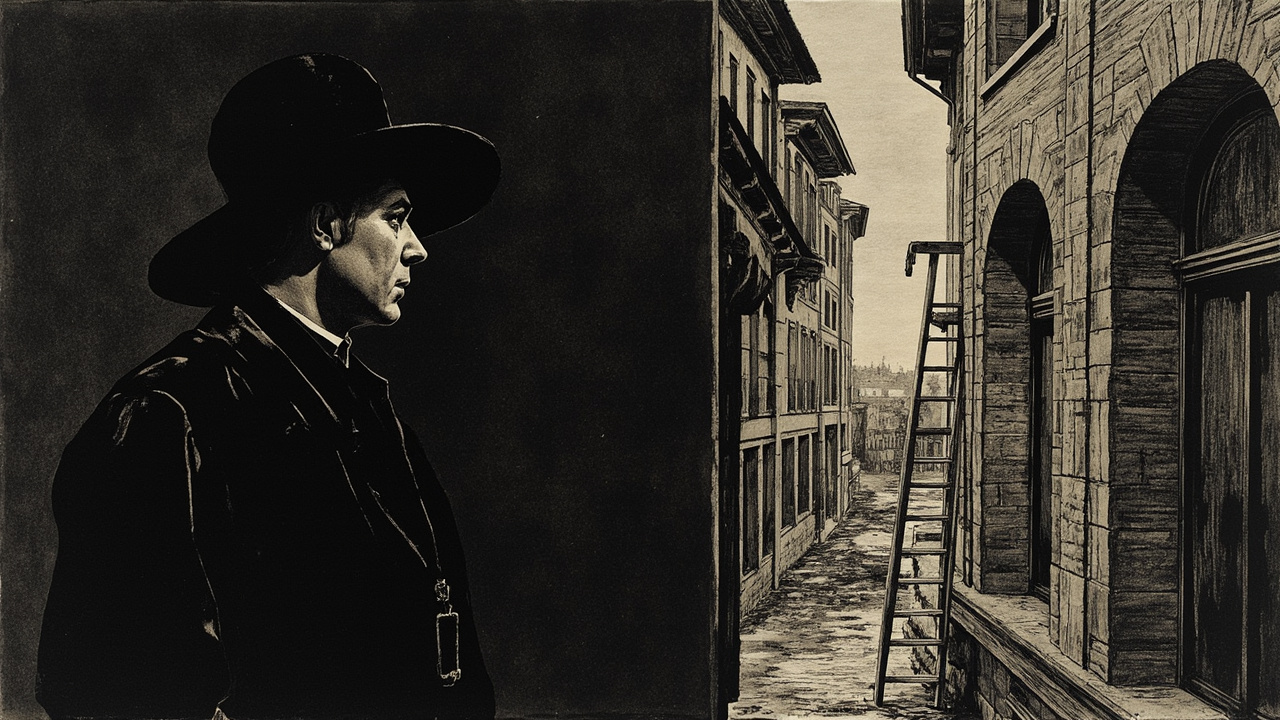
The story begins in Verrières, a fictional small town in eastern France. The old parish priest Chélan taught Julien to recite the Latin Bible by heart, a skill that later becomes the closest thing he has to a passport. Julien's childhood friend Fouqué, a timber merchant from the mountains, once offers him a partnership in the timber trade, a safe, respectable path he could have walked to the end with his head held high. But Julien's mind holds room only for higher, and he never looks back. The cassock is not faith to him; it is a ladder. This is where the novel quietly plants its cleverest device: he spends his whole life performing piety, performing coldness, performing calculation, yet the truly devout people around him are the very ones who trust him most.
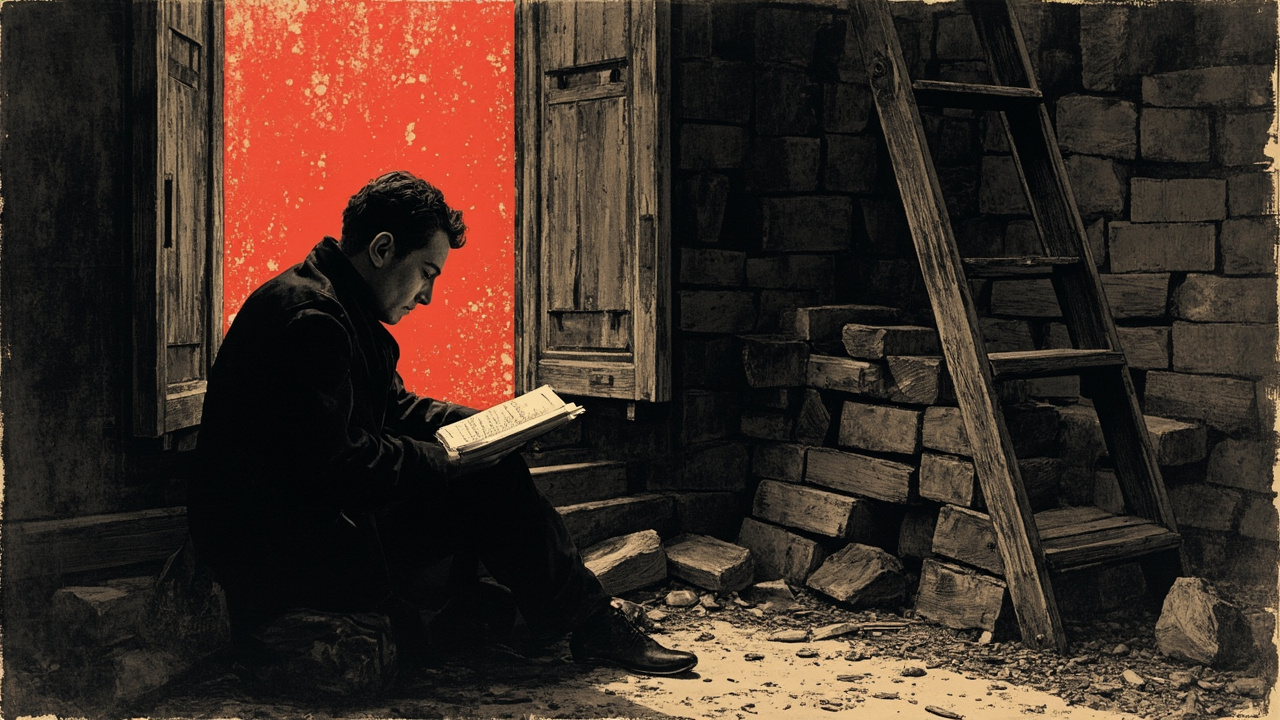
I must be a priest.
我必须当教士。
Original line · young Julien's calculation · Red (the uniform) is already dead; black (the cassock) is the road to power
Julien becomes tutor in the household of the mayor, Monsieur de Rênal. His first feeling toward the mayor's wife is calculation, one more rung on the ladder upward. But things do not go the way he planned. Madame de Rênal has never been truly cared for by a man, and the moment Julien's hand reaches through her window in the dark, something in her simply gives way. This is the first time in the novel that Julien, without meaning to, lets a true feeling slip out through all his performing. Gossip forces him to leave Verrières for the seminary at Besançon. Stendhal's writing turns coldest here: the seminary is an institution held together by mutual informing and enforced silence, where a full meal is a luxury for the young men in it, and the only person willing to shield him is Abbé Pirard, a man the ruling faction is already pushing out the door.
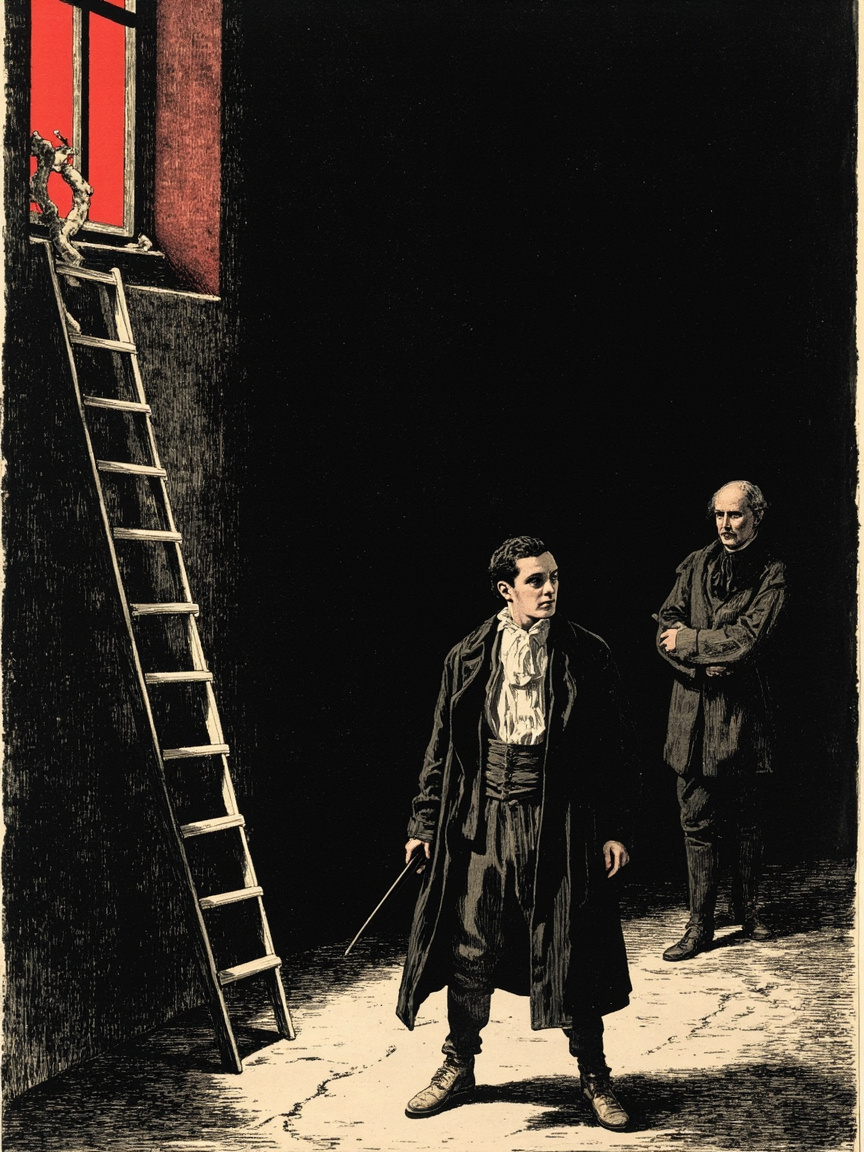
I will perform what I have resolved to do all through the day, or I will go up to my room and blow out my brains.
我要么做成这一整天里我下定决心要做的事,要么就回到房间,把自己的脑袋打开花。
Original line · the garden at Verrières · before the clock strikes ten, he takes her hand as though dueling himself
Cornered and pushed out, Pirard, before leaving, introduces Julien to the Marquis de la Mole in Paris. This is where Julien enters the second half of the novel — Paris, the Marquis's mansion, the salons of the ultra-royalists. He becomes the Marquis's private secretary and carries out a dangerous secret mission on his behalf, the kind of errand that puts your head on the line, and he handles it flawlessly. What cuts even sharper here is the writing itself: the salon of the Marquis's house looks to Julien like a glass room he can see straight through but never speak into — every idle remark the aristocrats trade is really ranking who outranks whom, and Julien hates it even as he studies it.
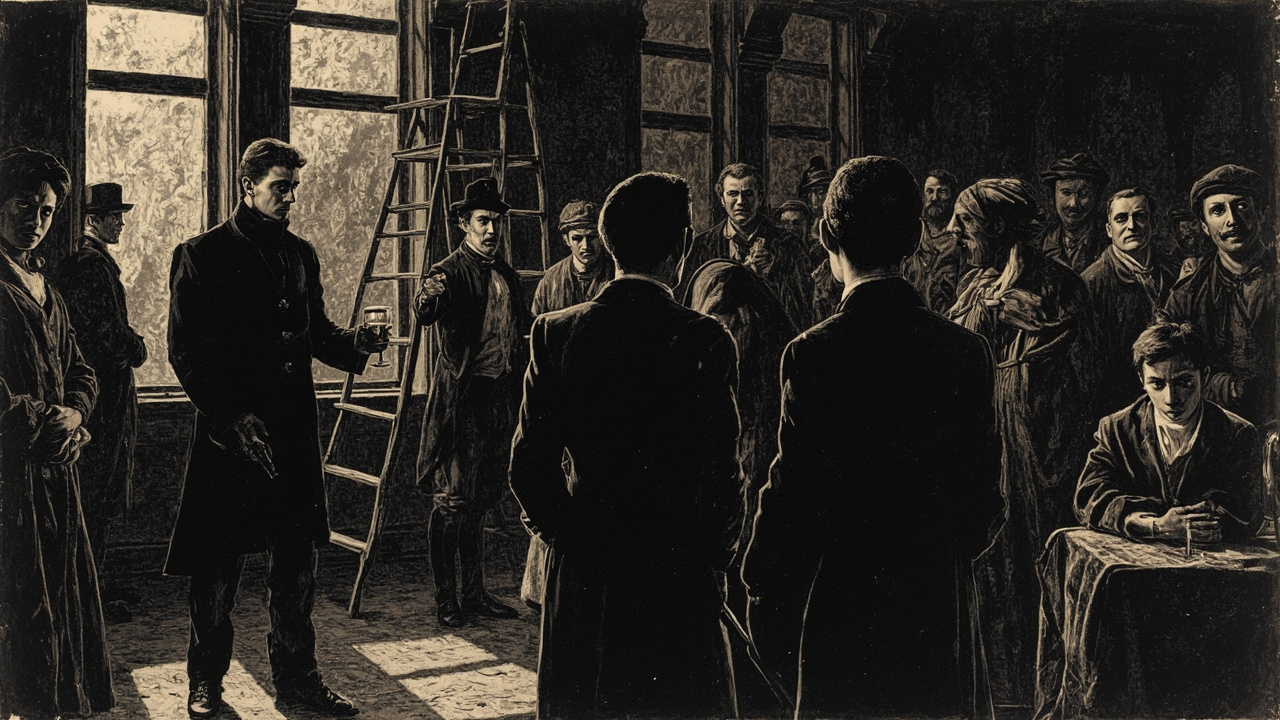
The slightest live idea appeared a crudity.
任何一点鲜活的思想,在这里都显得粗鄙。
Original line · the salon at the Marquis de la Mole's mansion · Parisian respectability, and the deadness beneath it
The Marquis's daughter, Mathilde, is a different creature altogether. Proud, willful, she lives inside the romantic legend of her medieval ancestor Boniface de La Mole, whose lover was, in fact, Queen Margot herself. What Mathilde wants is a love worthy of her ancestor, and she is willing to pay for it with herself. She gives herself to Julien, then recoils, frightened by how quickly he has conquered her, back and forth, until she becomes pregnant and makes up her mind. Cornered, the Marquis actually agrees to grant Julien a noble title and make him heir apparent to the family's military standing. Julien comes within a hair of succeeding, one letter short of the finish line.
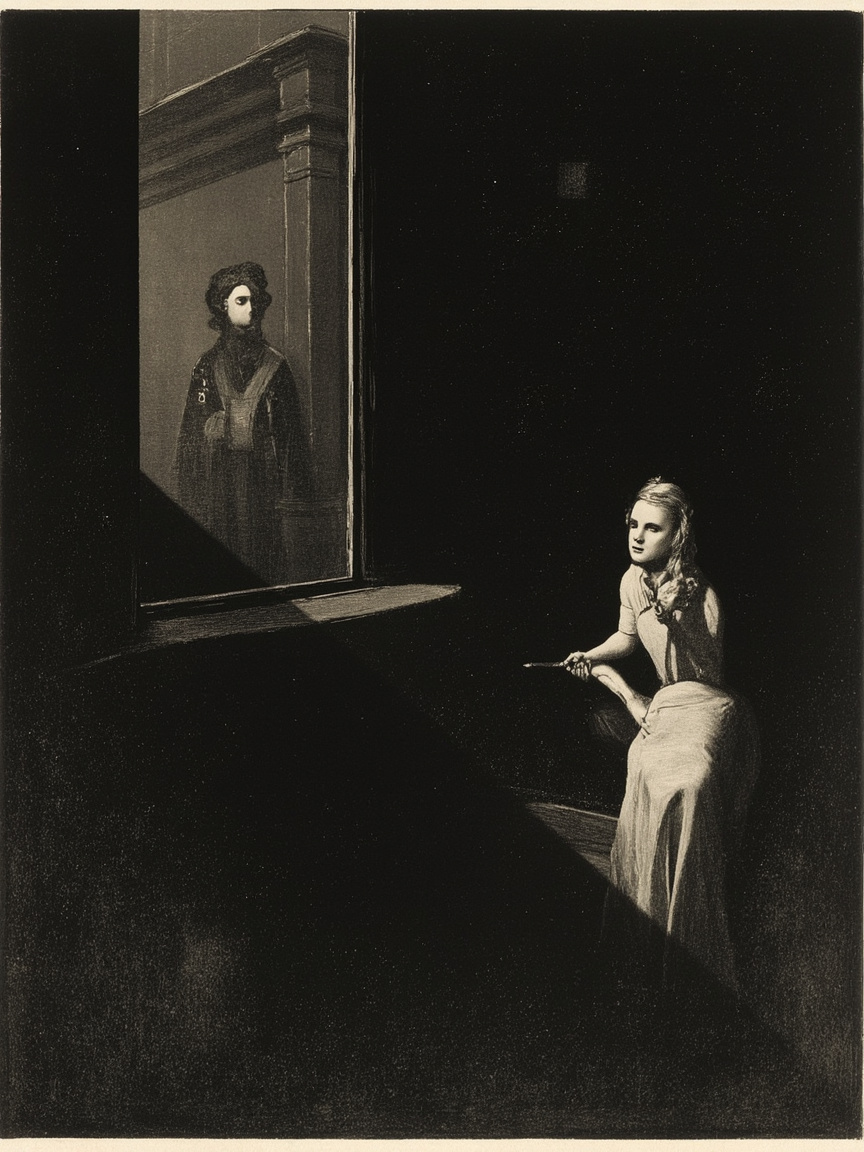
What woman alive now would not be horrified at touching the head of her decapitated lover?
如今活着的女人里,哪一个碰到情人被砍下的头颅而不惊骇?
Original line · Mathilde on her ancestor Boniface · a line spoken to herself that becomes prophecy
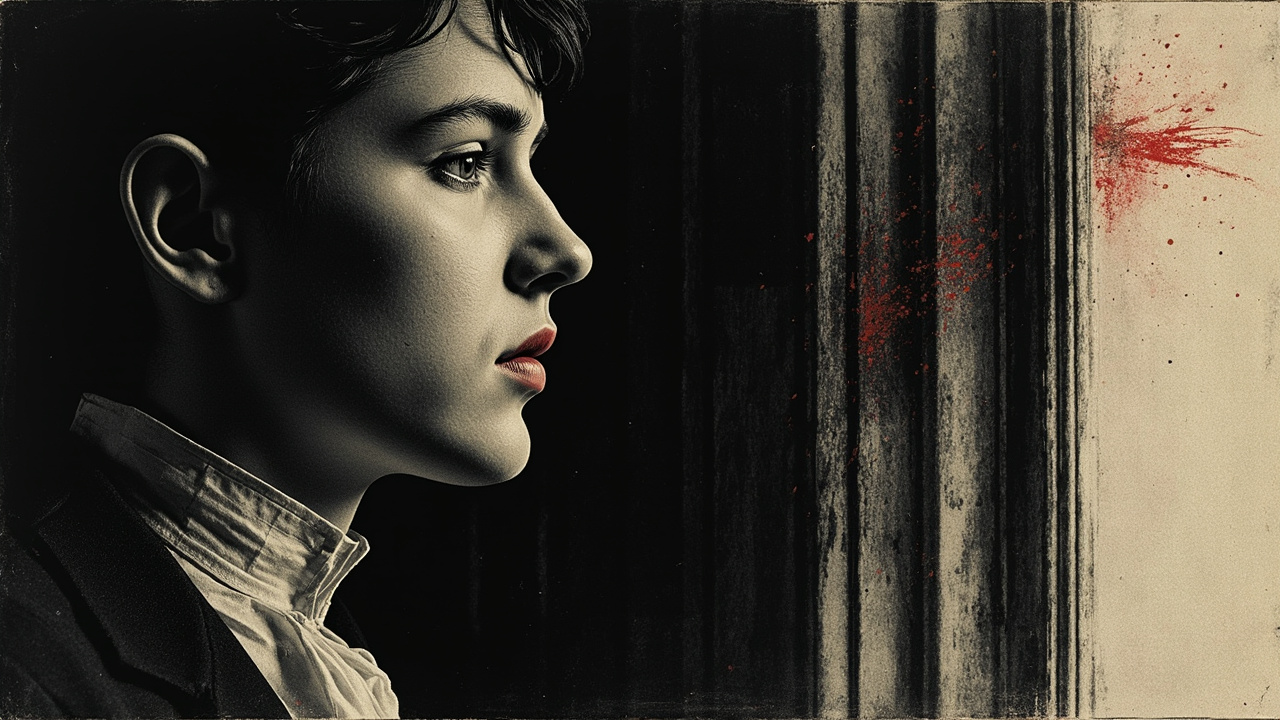
That letter comes from Verrières. Madame de Rênal's confessor, a priest worldly to the bone, dictates a letter of denunciation describing, step by step, how Julien once seduced his way up through her household. The letter lands on the Marquis's desk. In an instant, every rung of Julien's ladder to the top is kicked away. He rides through the night back to Verrières, walks into the church during Mass, and fires at Madame de Rênal, once, then again. She falls, wounded, but not dead — he is arrested for attempted murder. Here Stendhal delivers the sharpest stroke in the whole book: Julien raises his hand against the one woman who ever truly loved him, and the motive is not hatred but something closer to madness, instinctive, after a single letter has crushed him to pieces.

Gentlemen, I have not the honour of belonging to your class. You behold in me a peasant who has rebelled against the meanness of his fortune.
诸位先生,我没有荣幸属于你们这个阶级。你们眼前站着的,是一个反抗自己卑微命运的乡下人。
Original line · his courtroom speech refusing to beg for mercy · the most famous passage in the novel
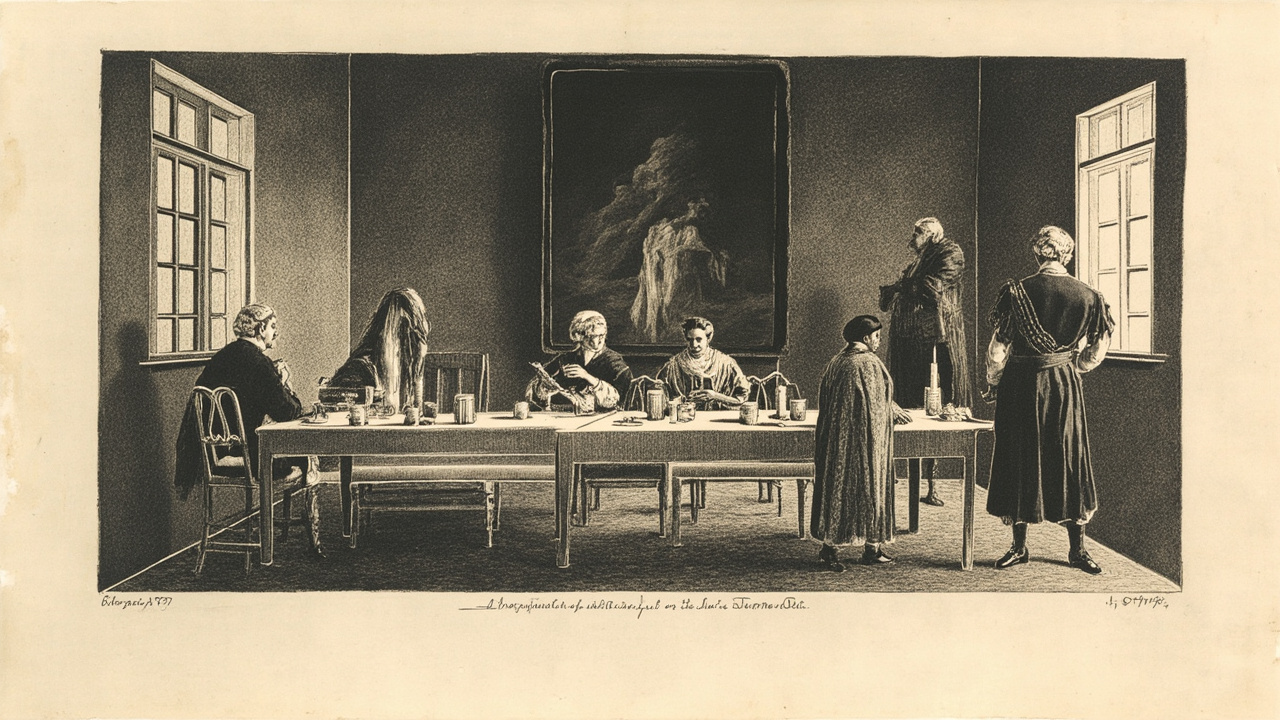
Then comes the trial. This is the novel's most famous scene: Julien refuses to beg for mercy. Instead he turns it around — gentlemen of the jury, you mean to kill me not for anything I have done, but because I, a commoner, dared to step outside my class. He delivers it like a speech. Sitting on that jury is Valenod, the self-made new money of Verrières who built his fortune squeezing the poor, and it is that kind of petty class revenge that finally seals Julien's fate. Stendhal's technique here is icy: he lets you watch every face on that jury, every small gesture, and see exactly what each of them is calculating.
The ending rests in the hands of two women. Julien is sent to the guillotine. Mathilde, imitating her ancestor's legend, buries Julien's severed head with her own hands — this is a real detail out of the history books, not a figure of speech. Madame de Rênal is not killed by the gunshot; she lingers three days among her own children, then dies of grief. The way these two women die is the sharpest mirror the novel holds up: one writes I still love you in an act, the other writes the same sentence in her death.
What this book is really saying
It is not only about ambition. Ambition is only the engine; what the whole novel is really asking is this: in a society where birth decides everything, what does a sensitive, gifted person have to pay just to survive? Julien's price is a lifetime of performance, performing piety, performing coldness, performing calculation, and only when he truly falls in love, and again in his cell before his execution, does he briefly become himself. Stendhal's sharpest cut is making the reader feel for a man who does not entirely deserve it: one moment he seems repellently cunning, the next he breaks your heart. This is exactly why he is called the founder of psychological realism — he lays every one of his character's thoughts bare for you, and you read on cursing yourself for understanding him.
On another level, it is a social satire honed down to the bone. The provincial parlor — vanity, one-upmanship, mutual suspicion; the seminary — hunger, hypocrisy, mutual informing; the Parisian salon — grand talk, empty at the core; the courtroom — class revenge dressed up as morality. The subtitle, A Chronicle of 1830, is not a throwaway detail: it means to pin down exactly that moment in France. Read it today and you will recognize plenty of familiar faces — the systems that seal off every path upward and then complain that the young are trying too hard; the people who use the language of morality to clear the way for class revenge; the people who truly loved you and still, with their own hand, pressed the button at your finish line.
This is not the story of one man's ambition. It is the smartest way to live that an age which has sealed off every path upward can force out of a person.
Why read the novel itself
A companion guide gives you the map; the novel is the ground itself. What makes Stendhal truly formidable is exactly what no summary can hand you: first, the texture of every thought passing through Julien's mind — how he hates himself and pities himself in the same breath, calculates and breaks in the same breath, that stream of consciousness switching at top speed, only the rhythm of the original sentences can put you inside it; second, the almost physical presence of Madame de Rênal and Mathilde on the page — they love in completely different ways, one lit up from outside, the other burning herself from within; third, the nearly cutting, Parisian sense of humor tucked inside every seemingly flat sentence of narration — you laugh, and then a chill runs down your back. Knowing how it ends, you still owe yourself one more pass through the text, to live Julien's brief, burning life again.
Art Direction4 plates
Before the guide was written, this book got a visual foundation — every illustration you just read grew out of it.