The Return of the Native · Companion Guide
还乡
巴黎归来的理想主义者克莱姆渴望扎根荒原办学,而尤苔莎满心只想逃向巴黎。两个方向截然相反的人相爱了,爱敦荒原亘古的沉默将吞没所有挣扎。
The Hook
On the night of November the fifth, a bonfire goes up on Egdon Heath in southern England. A young woman climbs to the top of an ancient Roman barrow and turns her face toward the flames. Her name is Eustacia. Moments before, in the dark, she kissed a man who is not yet her husband; another part of her is already scheming how to get off this heath of heather and furze and reach Paris. The ground beneath her is far older than she is, and could not care less about her.
The same night, a man dyed red from head to foot drives another jilted bride home in his cart. This reddleman has loved her in silence for years and says nothing now either, just drives the wagon on through the black heath. What he will regret most is not speaking up, one more time, that night.
What This Book Is
The Return of the Native is Thomas Hardy's 1878 novel, the darkest of his Wessex novels. Hardy trained as an architect and renamed the heath country of Dorset, in southwest England, Wessex; this book is the story that plays out on that heath. He later became more famous for Tess of the d'Urbervilles and Jude the Obscure, but The Return of the Native opens with a full chapter devoted to the heath alone, before a single character appears, one of the most famous instances in English fiction of a setting written as a character.
People and World
Several lives are staked on this heath. Clym Yeobright quits the diamond trade in Paris and comes home to start a school for the heath's children, the returning idealist the title promises. Eustacia Vye is Captain Vye's granddaughter, living out at Mistover Knap on the far side of the heath, with Paris in her bones; she thinks of herself as goddess material wasted on a heath. Damon Wildeve is the new landlord of the local Quiet Woman Inn, handsome and well off, once engaged to Eustacia himself. Thomasin is Clym's cousin, gentle and dutiful, made a laughingstock in local gossip the day her wedding to Wildeve collapses over a botched marriage license. And there is Diggory Venn, the reddleman, forever stained red by the dye he trades in, driving a cart the color of blood across the heath, quietly in love with Thomasin for years.
The world runs on one rule: the heath is master. Hardy gives it a face, a temper, seasons of its own. The story we follow opens on Guy Fawkes bonfire night, November the fifth, and runs through Christmas, high summer, and late autumn, a year and more in all. Captain Vye's lonely house at Mistover Knap, the Yeobright house where Thomasin's aunt lives, Venn's red cart, and Shadwater Weir, which will finally take two lives — every one of these places is stitched together by the same heath.
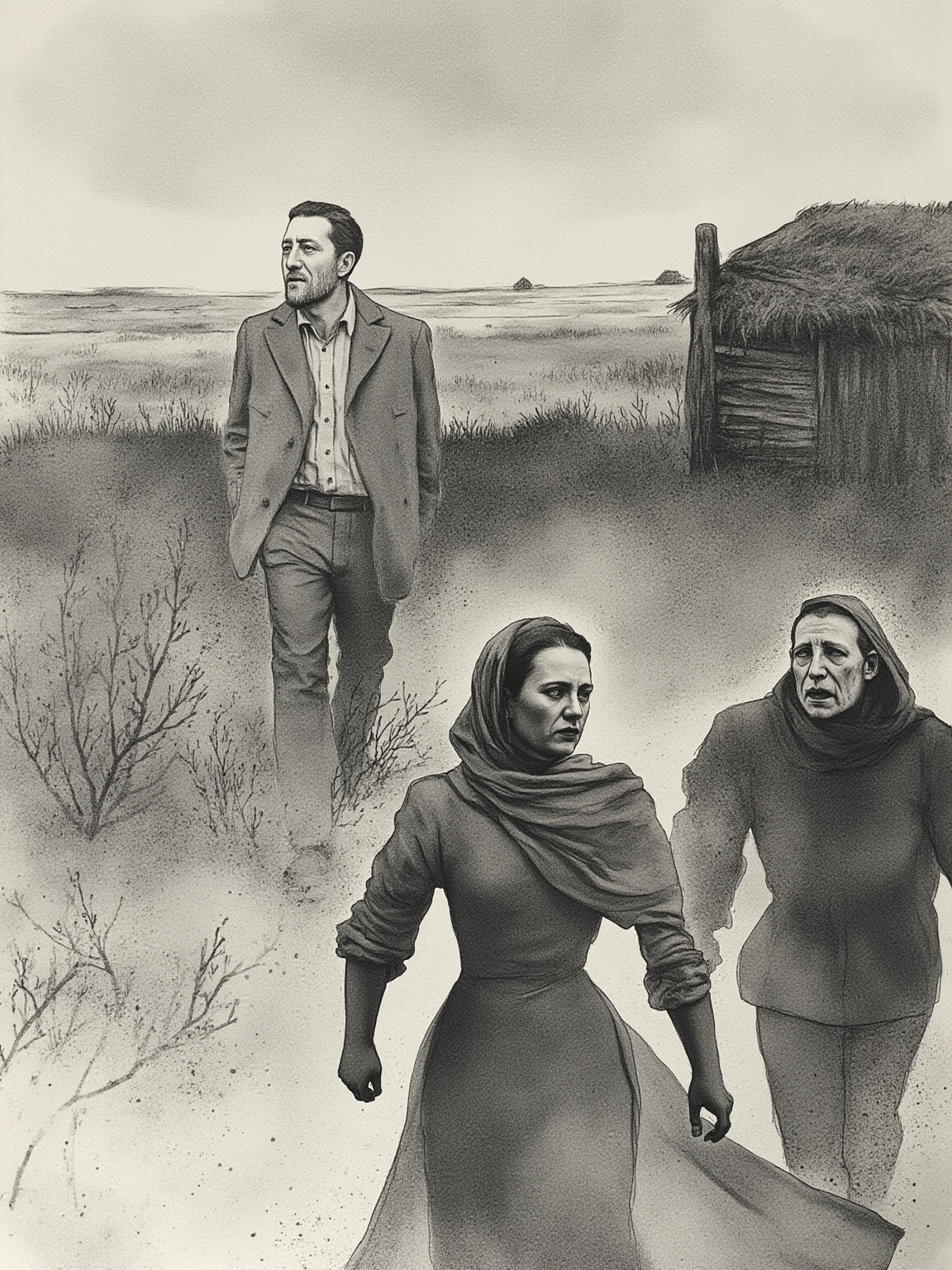
Her prayer was always spontaneous, and often ran thus, "O deliver my heart from this fearful gloom and loneliness; send me great love from somewhere, else I shall die."
她总是即兴祈祷,常常这样祷告:‘哦,求你救我脱离这可怕的阴郁和孤独;从某处赐予我伟大的爱,否则我必死。’
原文金句 · 第五章 · 古墓独祷
Bonfire Night: Two Threads, Two Sparks
On the night of November the fifth, two fires burn on the heath at once. Venn drives his red cart to take Thomasin, still crying, home to the Yeobright house; her wedding to Wildeve fell through at the last minute over a licensing mix-up in Anglebury, so she is not yet actually married, and the heath's gossips have already spread the story everywhere. The same night, on top of Rainbarrow, Eustacia is meeting Wildeve in secret, the old attachment between them not yet over. One fire burns the reddleman's silent love a shade redder; the other burns the lovers' kiss a shade hotter. Neither fire has yet burned out of control.
The way Hardy opens this chapter carries an irony he can barely be bothered to hide: the whole heath is gathered round the bonfires roasting chestnuts, drinking, trading gossip, with no idea that a woman whose fate is about to change is quietly deciding something at that very moment. A few words on top of a barrow, and six months later, lives are gone.
The Native and the Watcher
Before Christmas, Clym comes home from Paris. His mother, Mrs. Yeobright, had been planning a career for him as a curate in London, and her face goes pale the moment he says he means to give it up and start a school on the heath instead. Word reaches Eustacia, and she wants to see for herself what this Paris returnee is really made of. She joins the village mummers' Christmas play in disguise, dressed as a man, her skin darkened with paint, playing the Turkish Knight. Clym watches from the audience.
It is one of the finest strokes in the novel: their first meeting has Eustacia in disguise as the Turkish Knight and Clym as the real returning native. She never gets to speak; he takes her for nothing more than some comical local lad. Hardy does not let the misunderstanding pass as a joke — he has her carry that scene in her chest, carry it all the way into the following year.
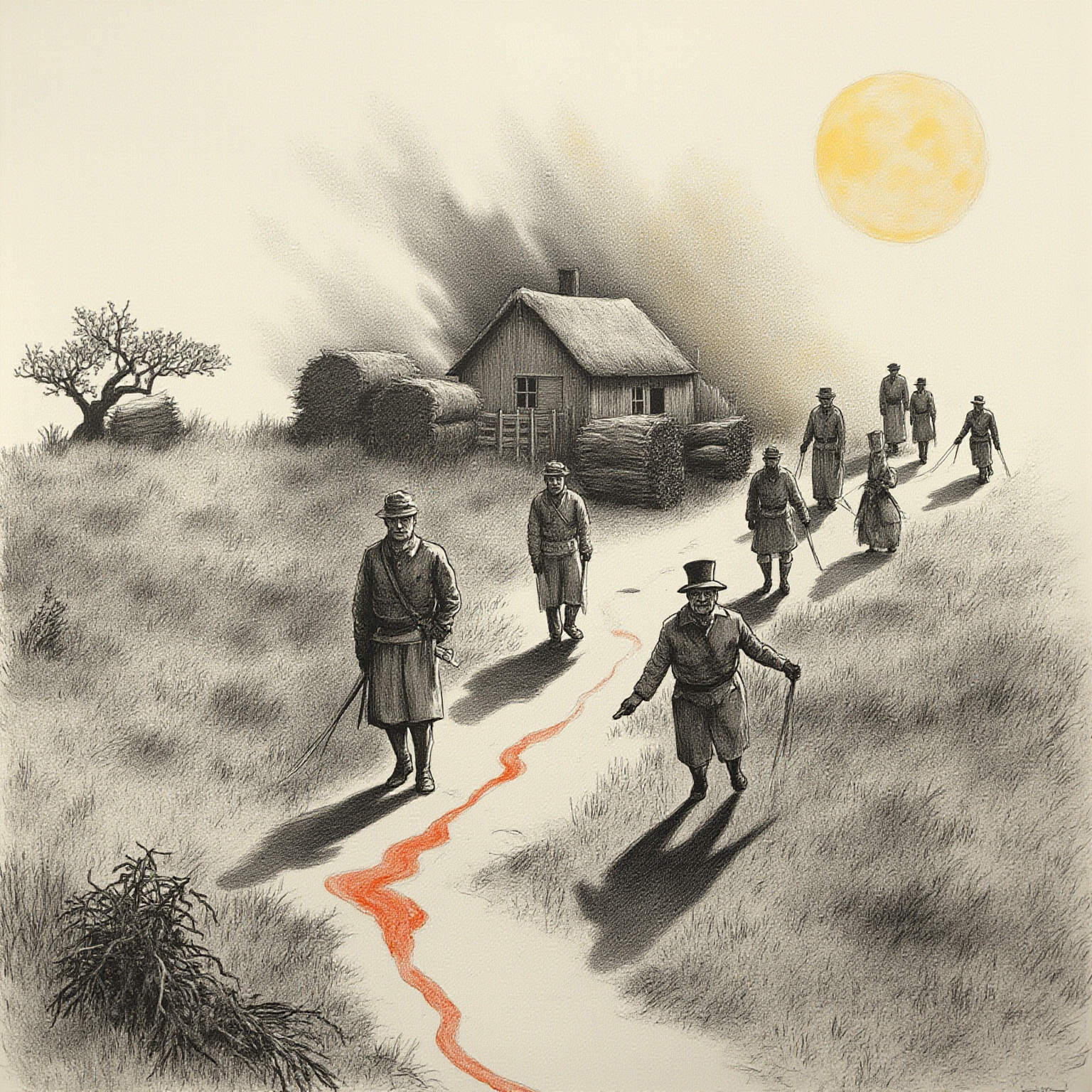
She was at the modulating point between indifference and love, at the stage called "having a fancy for."
她正位于冷漠与爱情的转折点,处在所谓的‘对他有意思’的阶段。
原文金句 · 第九章 · 芳心暗动
Marriage and Disillusion
By spring they are in love regardless. Mrs. Yeobright objects to the match, and the two of them defy her; they marry, and on the same day Wildeve, having lost Eustacia for good, turns what is left of his feeling toward Thomasin and marries her instead. In the first months of his own marriage, Clym throws himself into preparing for his school, reading day and night, until half his eyesight gives out. Unable to read or study any longer, he ends up a furze-cutter on the heath, his coat hung on a bush, bent double, working alongside the hired laborers.
What Eustacia had hoped for was Paris ballrooms; what she gets is a cottage, an oil lamp, and a husband who comes home sweating from the fields. This is the moment Hardy's suffocated soul takes its final shape on the page. I stopped short the first time I read this part: two people who love each other, pulling in opposite directions, so that every effort either of them makes only makes it worse.
The Door That Never Opened
One high-summer day, Mrs. Yeobright walks across the heath in the full sun to make peace with her son. She knocks and knocks, and no one answers, though someone is home: Wildeve has come by secretly to talk to Eustacia, and Clym is asleep in the back room and does not hear. Eustacia hears the knock and assumes Clym will wake and answer it himself, so she does not go to the door. His mother waits outside until she cannot wait any longer, convinced her son has shut her out on purpose, and turns for home, bitter.
On the walk back, exhausted, she is bitten by an adder. By the time Clym follows the trail of blood through the grass and finds her, she can no longer speak. She dies that night in her house at the edge of the heath, still clutching the gifts she had brought for her son and his wife.
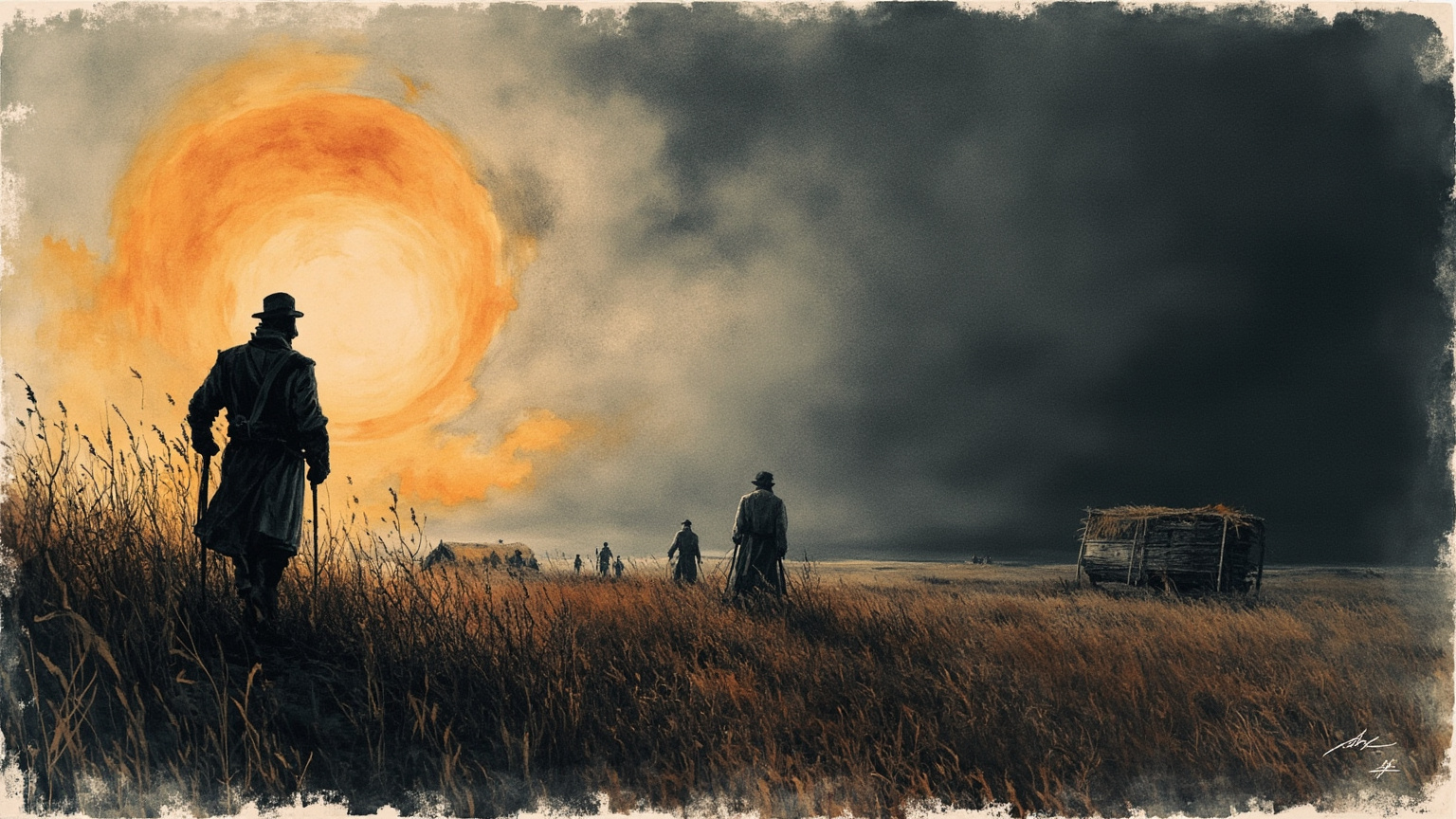
"The poor lady went and knocked at your door, and the lady with black hair looked out of the side window at her."
那位可怜的太太去敲了你的门,那个黑头发的女人从侧窗往外看了她一眼。
原文金句 · 第二十三章 · 致命的错过
Hardy pushes the chain of misunderstanding as far as it will go here: nobody does anything wrong, everybody just misses each other by a few seconds. The cruelest part of the tragedy is that no one is to blame.
The Break, and Two Separate Islands
Piece by piece, from what others tell him, Clym works out that Wildeve was secretly in the house the day his mother died. He cannot forgive himself for not hearing the door, and he pushes Eustacia outside this chain of coincidence altogether, treating her as somehow responsible. He never confronts her directly, only goes cold. Eustacia cannot bear the coldness and packs up to go back to her grandfather, Captain Vye, at Mistover Knap. Husband and wife live apart from then on.
I feel for Hardy in how he writes this part: he will not let the two of them fight it out, will not let either say one word more than necessary. The door closes, and all the reader hears is the sound of their footsteps scattering in the wind.
Storm Night at Shadwater Weir
In her despair, Eustacia and Wildeve plan to run off to Paris together; he has just come into an inheritance, and going with him is her way out. On a stormy night, she makes her way across the heath in the dark to meet him. The rain is heavy, the wind is heavy, and the water roaring over the weir is heavier still. Whether she loses her footing or lets go, Hardy does not say, only that she slips into the flood at Shadwater Weir. Wildeve dives in after her, and neither of them comes up. Venn goes into the water too, but all he pulls out is the shape of a tragedy already finished.
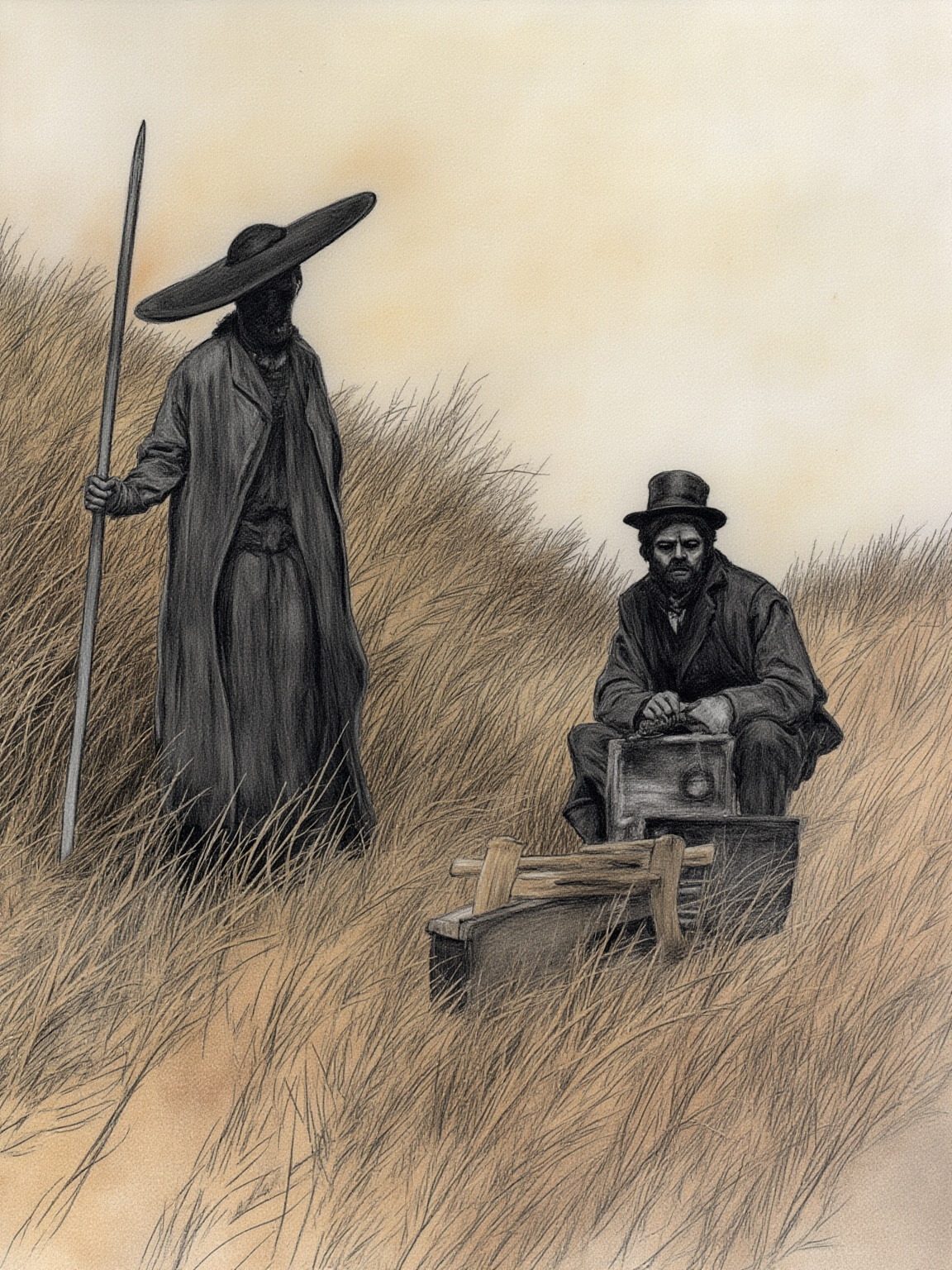
"You have been heart-broken all the morning, as if you did not want to live."
你整个上午都心碎不已,好像不想活了。
原文金句 · 第二十五章 · 荒原哀悼
Hardy leaves a cruel ambiguity here: accident, or a woman choosing to end her own life? He deliberately never says. Readers have argued about it ever since. More than a hundred years later, they still are.
Aftermath: The Heath Is Still There
Book Six, Aftercourses, picks up another year on. Guilt makes Clym ill; he gives up cutting furze and becomes an itinerant open-air preacher, traveling from village to village across the heath, not for any glory but to empty out the bitterness sitting in him. Thomasin is a widow for a time before she marries Diggory Venn, who has since given up the reddle trade to become a dairy farmer — the same man who once loved her too much to say a single word finally gets her, in the end.
Hardy admits as much in his preface: the happy ending was added under pressure from the magazine serial, and the ending he actually believed true had Thomasin remain single for life and Venn vanish back into the heath. Even the author, it turns out, was overruled by the world he had made — the heath does not allow for happy endings.
What It's Really About
If I had to sum up The Return of the Native in one word, it would be direction. Clym's longing is to sink into the heath: to put down roots, to teach, to make peace with the soil. Eustacia's longing is to escape it — toward Paris, toward brightness, toward a louder kind of life. They pull in opposite directions, both of them straining as hard as they can, and both get pinned to the ground by a heath too old and too indifferent to care which way anyone wants to go. Through this one man and one woman, Hardy is asking a question that runs deeper than love: can a person ever make peace with the place they come from?
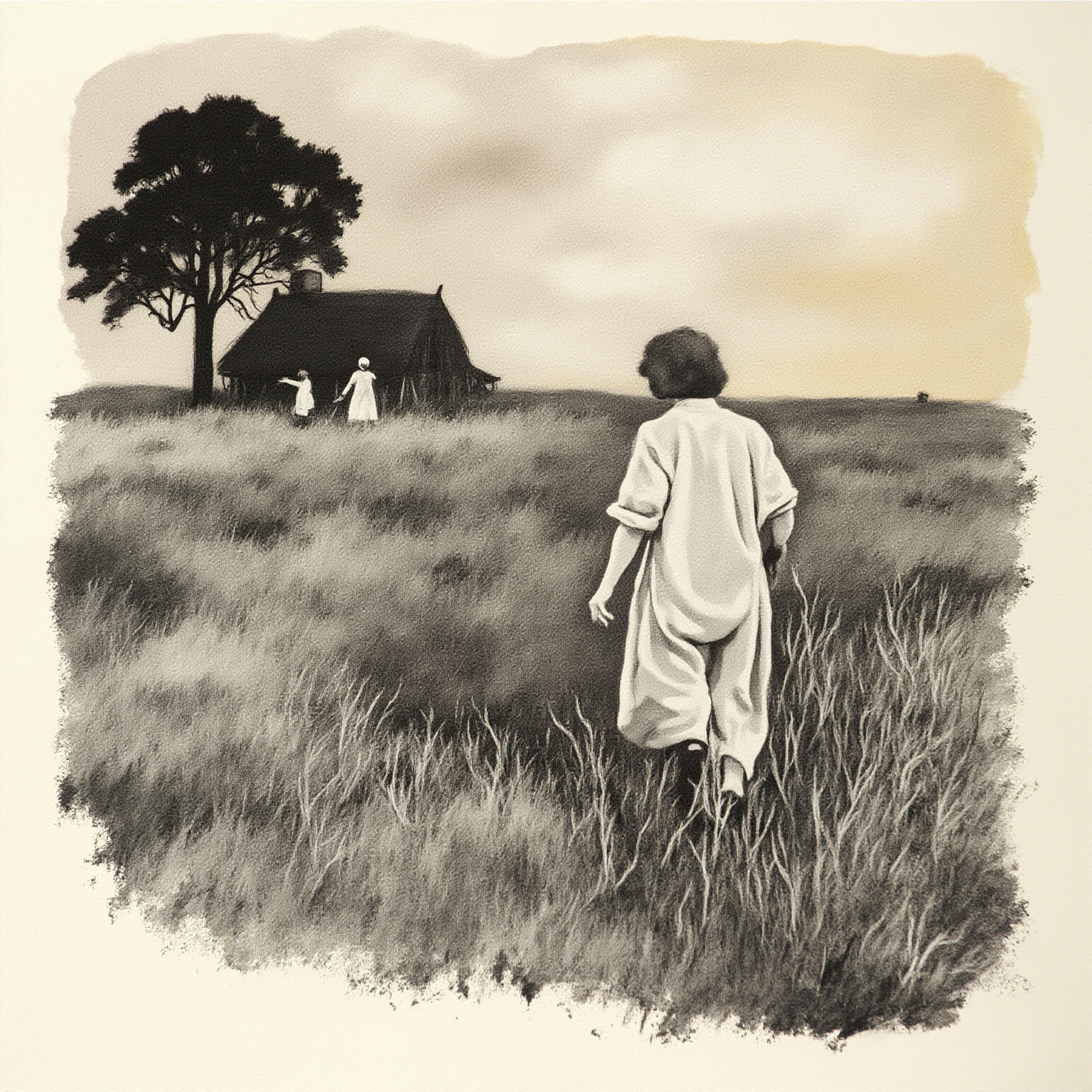
The other thing worth remembering is how he uses coincidence as fate. He does not lean on coincidence as a shortcut; he stacks it so thick the reader runs out of breath — a door that goes unanswered, a snake that happens to bite, a storm that happens to come on the one night it matters. What he believes in is not some divine plan but the idea that fate can be a matter of a few seconds, missed.
Why It's Worth Reading for Yourself
A guide like this can give you a map. It cannot give you the wind in that opening chapter, which is nothing but the heath talking. Hardy lets a stretch of wasteland speak for itself before anyone else gets a word in. You can smell the bitterness of the heather, hear the wind moaning over the barrows, feel the November cold climbing up from your feet. This heath is not scenery; it is present, in a way you will not find in other books, the feeling of ground older than any person standing on it.
And then there is the door that never opens. I can tell you that she did not answer it, that his mother died, that I sat stunned when I got to that page myself. But the chill that runs up your arms the first time you turn to that page and realize the knocking is echoing into an empty room, that one you have to get for yourself.
The Return of the Native is not about one man coming home. It is about a heath that presses everyone against its old, brooding chest: the ones coming back, the ones trying to escape, the ones in love in silence, the ones scheming to leave.
Art Direction4 plates
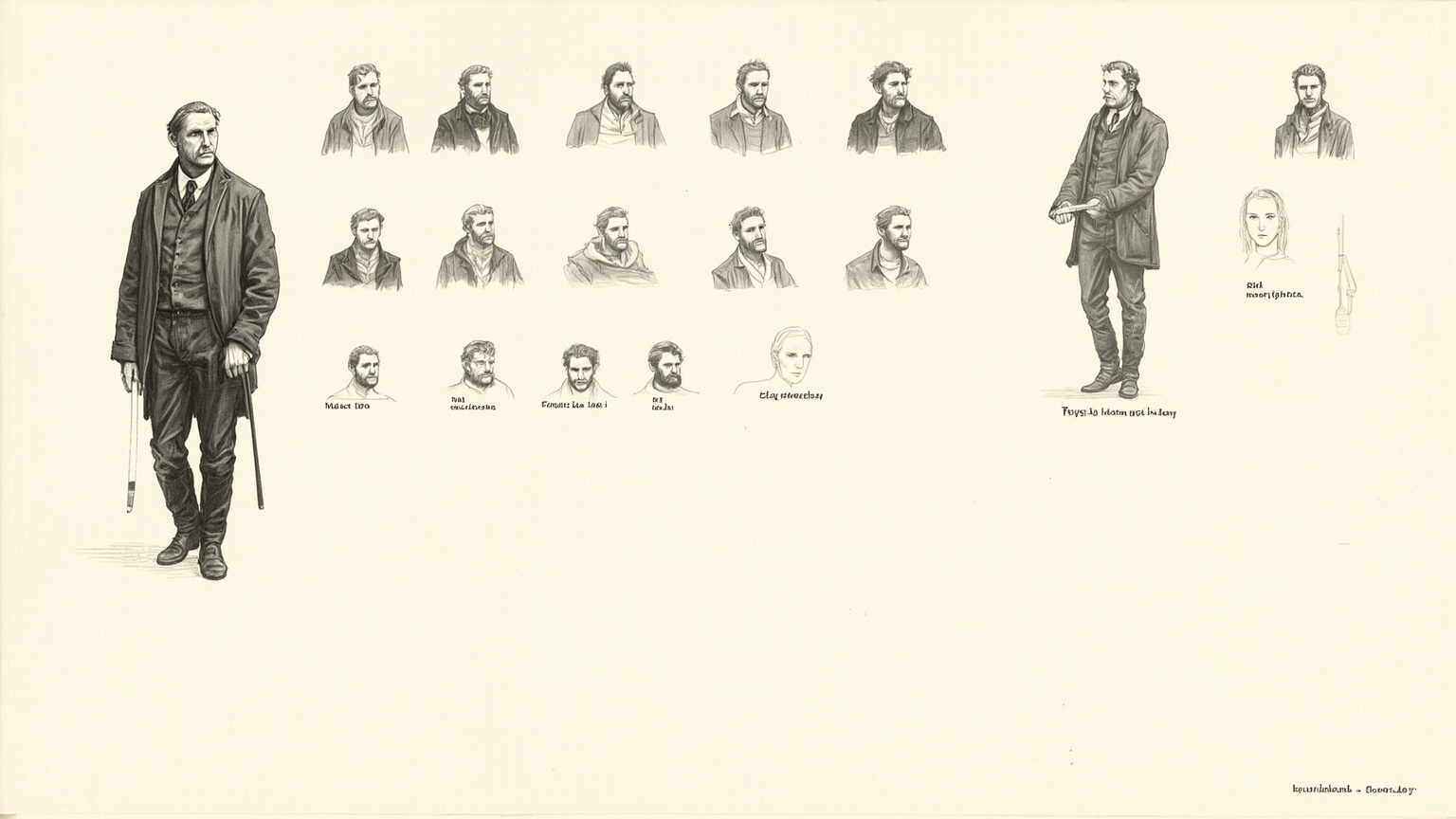
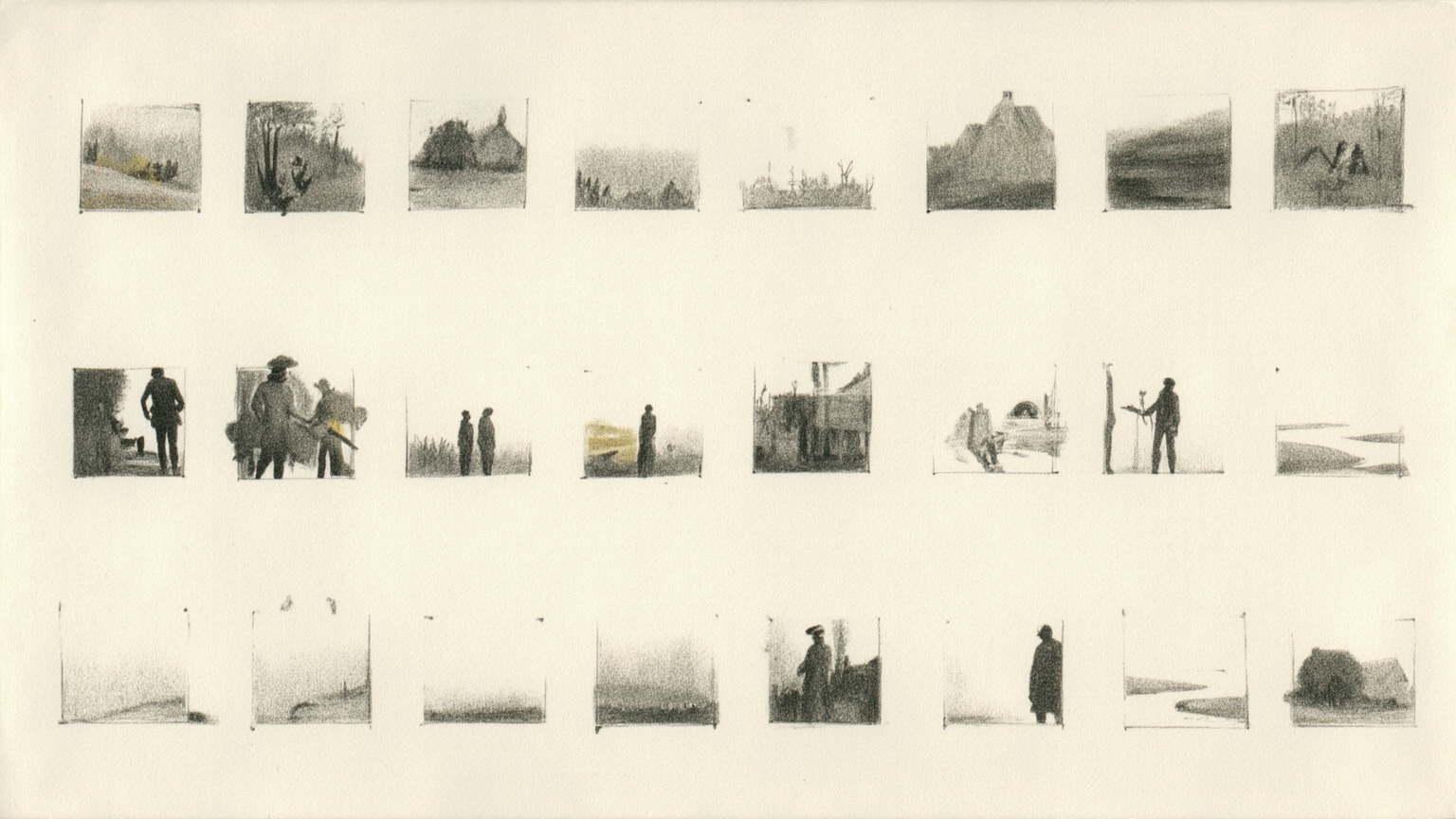
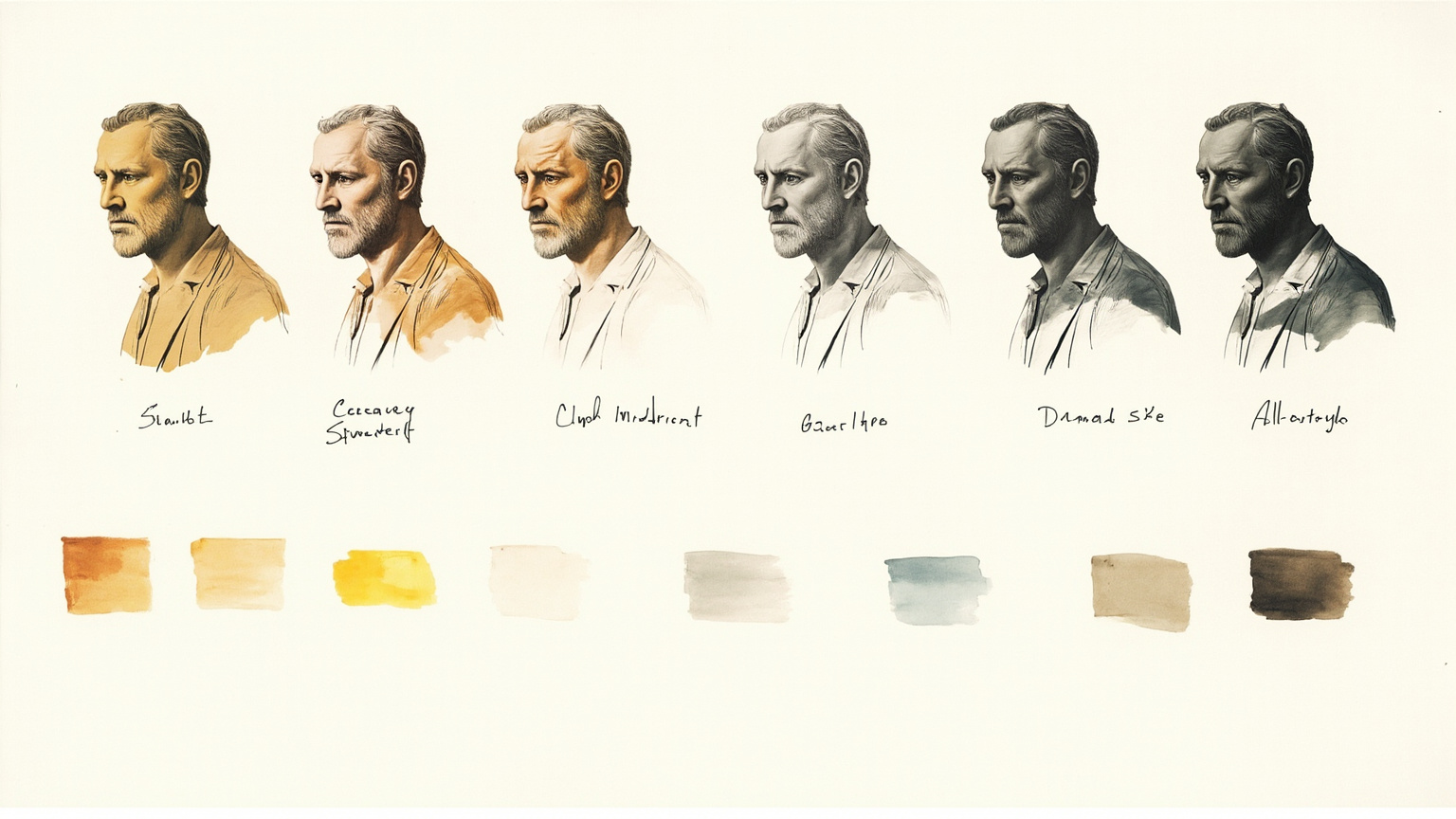
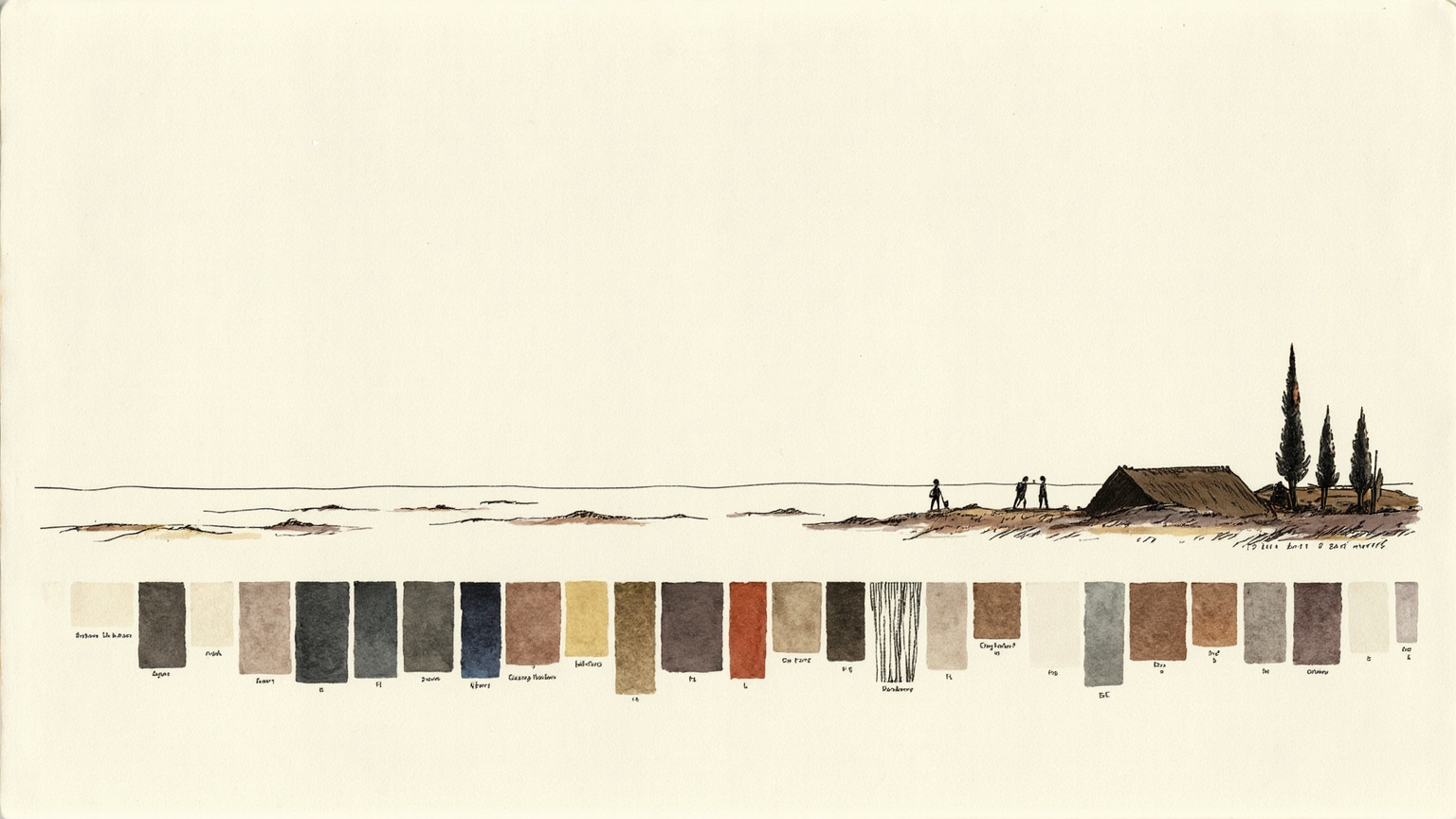
Before the guide was written, this book got a visual foundation — every illustration you just read grew out of it.