
The Rider on the White Horse (Der Schimmelreiter) · Companion Guide
骑白马的人
北海旅店里的鬼故事:一个人算对了一道堤,却被所有人活埋进了迷信。
A Hook That Won't Let You Sit Still
In an inn by the North Sea, a white-haired old man is telling a guest a ghost story. He opens with a question of his own: who was Hauke Haien? Let me tell you, he says, and starts from the beginning. Follow it far enough and you realize this was never a ghost story. It is the story of a man who did the math right, and no one believed him, until the sea swallowed him whole.
What This Book Is
The Rider on the White Horse is the last thing Theodor Storm wrote, finished the year he turned seventy-one, and it is one of the most famous novellas in German literature. The German title translates directly as The Rider on the White Horse, but by the halfway mark you realize the book was never really about a horse. It is about a dike. Storm was born in Husum, on the North Sea coast, and he kept writing that flat, low shoreline until the day he died. German schools still assign it, and not for the plot, but for the way the story keeps turning in the wind long after it has ended.
Characters and World
The protagonist is Hauke Haien. He grew up an orphan, the son of an illiterate man who watched the fences along the dike. He studied mathematics for a while in Bonn, dropped out, and came home. His skill with geometry and land surveying won him a place as apprentice to the former dikemaster, Tede Volkerts, who later took him on as a son-in-law, and eventually Hauke inherited the post himself. Which meant that this stretch of North Frisian coast, forever wrestling the sea for land, now answered to a self-taught engineer.
His real opponent was never one man. It was a whole climate of opinion: the dike council, made up of the village's leading men. They resented his origins, the wife he had brought in from outside, the horse that was white from head to hoof, the drawings spread across his table. They had no slide rules. What they had was a rule passed down from their grandfathers: something living has to be buried alive under the dike, or the sea god comes to collect. To an outsider it sounds like superstition. In the village it was harder law than the dike itself.
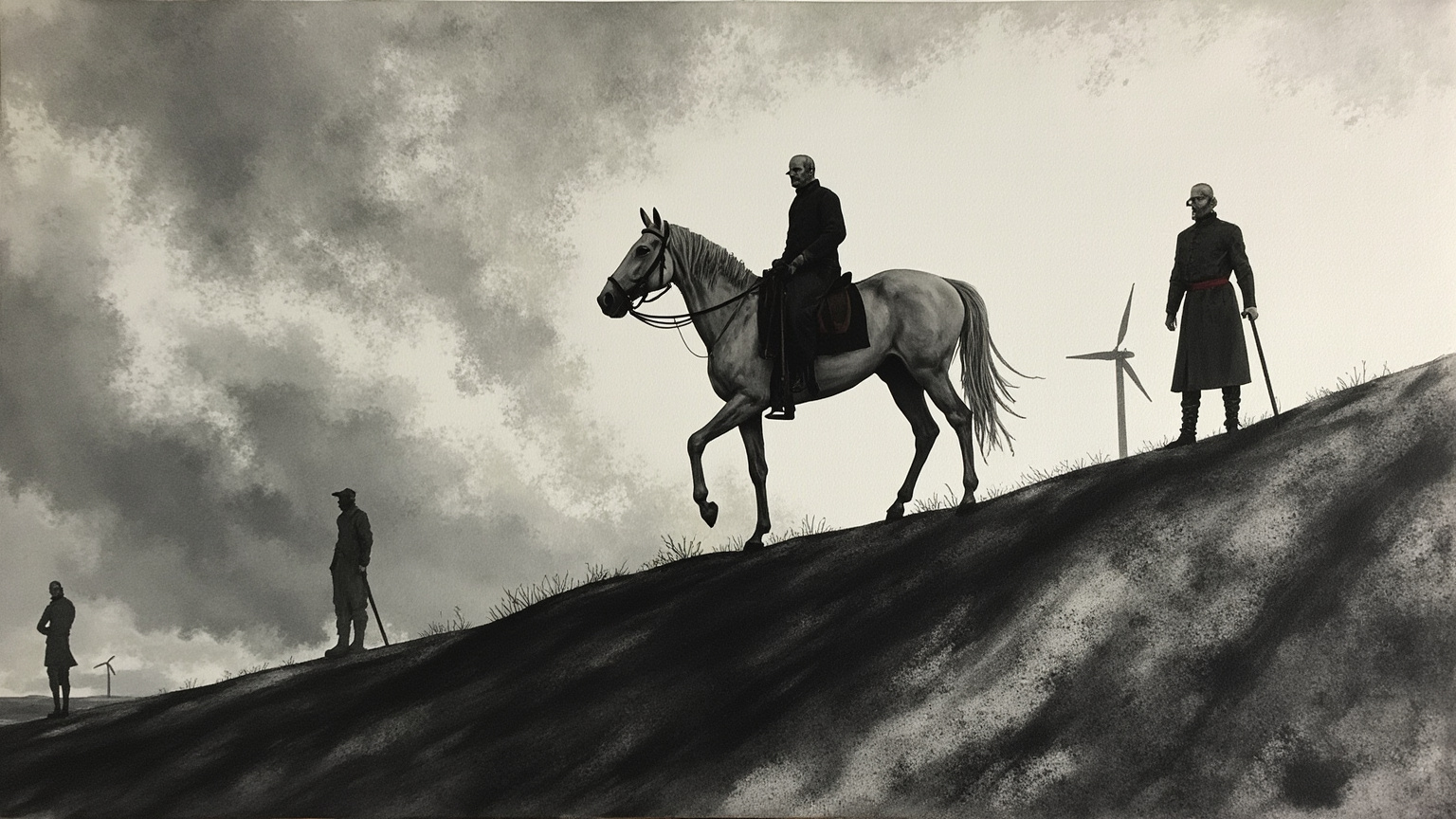
But the old gentleman took his pipe from his mouth, tapped it on the table, and said: "Hauke Haien—who was he? Let me tell you."
老校长把烟斗从嘴边拿下,往桌沿上轻轻一磕:哈克·海因是谁?请您听我从头讲起。
金句 · 套层开场 · 旅店一夜
The setting itself is plain and dangerous in equal measure: on one side, tide and mudflat; on the other, thatched farmhouses, windmills, the dikemaster's office. The sky is enormous, the wind never ambiguous about its direction. This is land locked in a permanent arm-wrestle with the sea, the water outside the dike, the low ground inside it, and if the dike gives way, the whole village gets licked flat. Salt works its way through every door crack, the weathervane never stops turning, and nobody out here can pretend not to see the sea.
How the Story Moves
The book opens in an inn. Outside the wind is high, and a traveler asks a white-haired old schoolmaster what he knows about the legend of the rider on the white horse. The schoolmaster knocks his pipe against the table and starts, unhurried: who was Hauke Haien? Let me tell you. The story peels open one layer at a time from there. The old schoolmaster is the narrator, a man who lived through Hauke's own time, and his voice sets the tone for the whole book, calm, faintly rueful, turning an engineering accident into folklore.
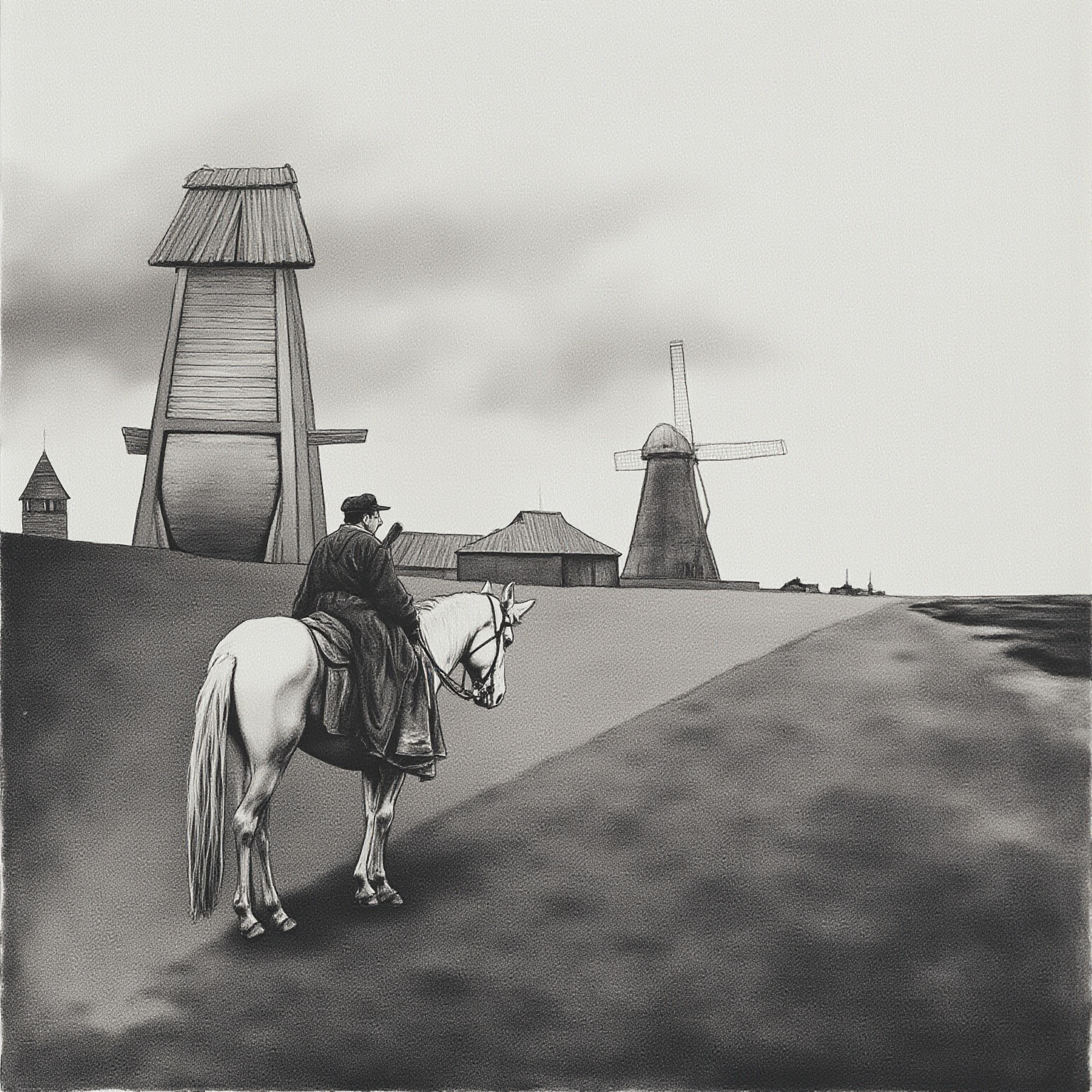
He had learned to read the shapes of things—in the curved tracks the tide left on the flat sand, in the arc a wave inscribes as it withdraws from the dyke.
他从潮痕里读形状,从浪退回堤坡那道弧线里读形状,沙地上画三角形,量角度。
金句 · 第2章 · 泥滩上的几何
How did Hauke become dikemaster? His father was an illiterate hedge-watcher; there wasn't a scrap of paper in the house. Hauke fell for geometry anyway. He read shapes into the tide marks on the mudflats and the curves the water left on the dike slope after it drained, drew triangles in the sand with a stick, checked his angles against reed stalks. Later he studied mathematics in Bonn for a while, dropped out, came home. His first real case was a dispute over sheep killed by wolves: the farmer wanted compensation, and Hauke ran the numbers, saved the man his money, and folded the formula straight into his own geometry notebook. It's a telling passage. Storm never bothers showing us that Hauke is hardworking. He just shows him solving problems.
The real drama is the new dike. The old one is steep and vertical, and every wave hits it head-on and opens another crack. Hauke's plan is to build a sloped dike out in front, so the waves ride up and spend their force gradually, which is, by modern engineering standards, correct. The village doesn't buy it. The village trusts the old dike, distrusts the white horse, and believes the ground under a dike needs a buried animal. Hauke brings his drawings to the dike council and the men across the table look at him like an outsider who has lost his mind. The plans lie open on a corner of the table. Nobody leans in to look.
The new dike gets built to his design anyway. It goes up layer by layer, packed tight, the seaward slope stretched long and gentle, workers laying turf over it strip by strip. On the day it's finished, Hauke does something reckless: he tests the dike's strength by triangulation, and he stakes his wife and daughter's lives on the answer. If he's right, the dike holds. If he's wrong, all three of them go under. He has his wife take their little daughter to stand on the thinnest stretch of the new dike's crest, rides his horse out along the seaward side through the surf, and has a sailor watch from a boat to see how high the waves bounce off the slope. It's an extreme test by any engineering standard, and it's the author's last word on whether this man is really gambling. He wins.
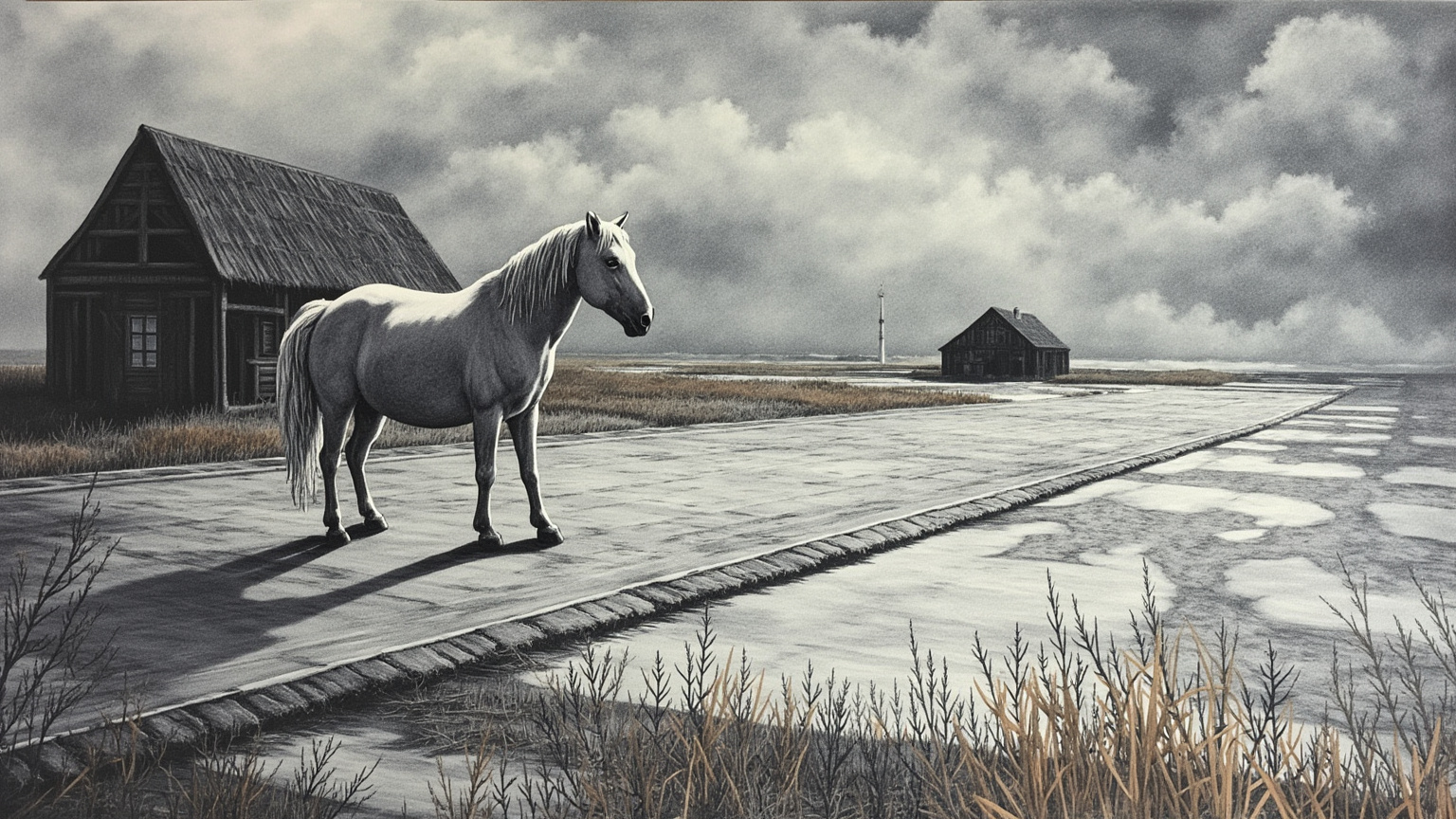
He wagered his wife and child against the strength of his own dyke: if the line held, the work held; if it gave, all three went down together.
他把妻女押上自己的性命去赌这道堤——线稳,堤就稳;线塌,一家人都塌。
金句 · 第7章 · 三角试堤
But he loses the village. The dike council pins three charges on him: too reckless, no sacrifice, an unlucky horse, and forces him out of office. A man who got the math right, removed by men who got it wrong: that is the real wound at the center of this novella. The village never wanted his triangles. It wanted him to admit the horse was cursed and the dike needed a body under it. He won't, so they push him out. The new dike stays standing anyway.
Years later, on a night of storm surge sometime in the 1860s, it's the old dike that gives way, the stretch Hauke once repaired but never replaced, the one the village never got around to rebuilding. He doesn't hesitate. He rides his white horse straight at the breach, trying to plug the gap with nothing but himself. The waves take him, horse and all. His wife and little daughter die in the same breach; the book tells us so and moves on, no scene, no lingering.
The outer frame closes here. The old schoolmaster finishes his story, and the traveler walks out of the inn. Outside, the wind is howling and the tide is rising. The schoolmaster glances up: another storm is building. The book ends there, and the legend of the rider on the white horse is what's left behind.

He was a man who had calculated aright, and was cast out by men who had calculated wrong.
一个算对了的人,被一群算错了的人罢免——这才是这部中篇真正的伤口。
金句 · 第9章 · 大潮之夜
Theme and Craft
On the surface it's a ghost story. Underneath, it's a war between engineering and superstition. Storm takes a question of hydraulic engineering, whether a sloped dike holds better than a steep one, and turns it into a miniature epic, and what drives it isn't action but that oldest of tensions: a man who is right, and nobody who will believe him. The sloped design was already sound engineering by the nineteenth century. What got rejected was never the math. It was the man doing the math: an orphan, a son-in-law from nowhere, a rider on a white horse who won't bow his head.
The white horse is not a natural ghost. It's Hauke's companion, a tall animal, pure white, that follows him along the survey lines, on his rounds of the dike, and down into the breach with him at the end. Its bad reputation comes entirely from the villagers' own mouths. Put another way: the ghost here is what's left of a rejected engineer, not something sent down to frighten people. When North Frisians say they see the white horse patrolling the dike on stormy nights, what they're really saying is that the man they drove out is still keeping watch for them.
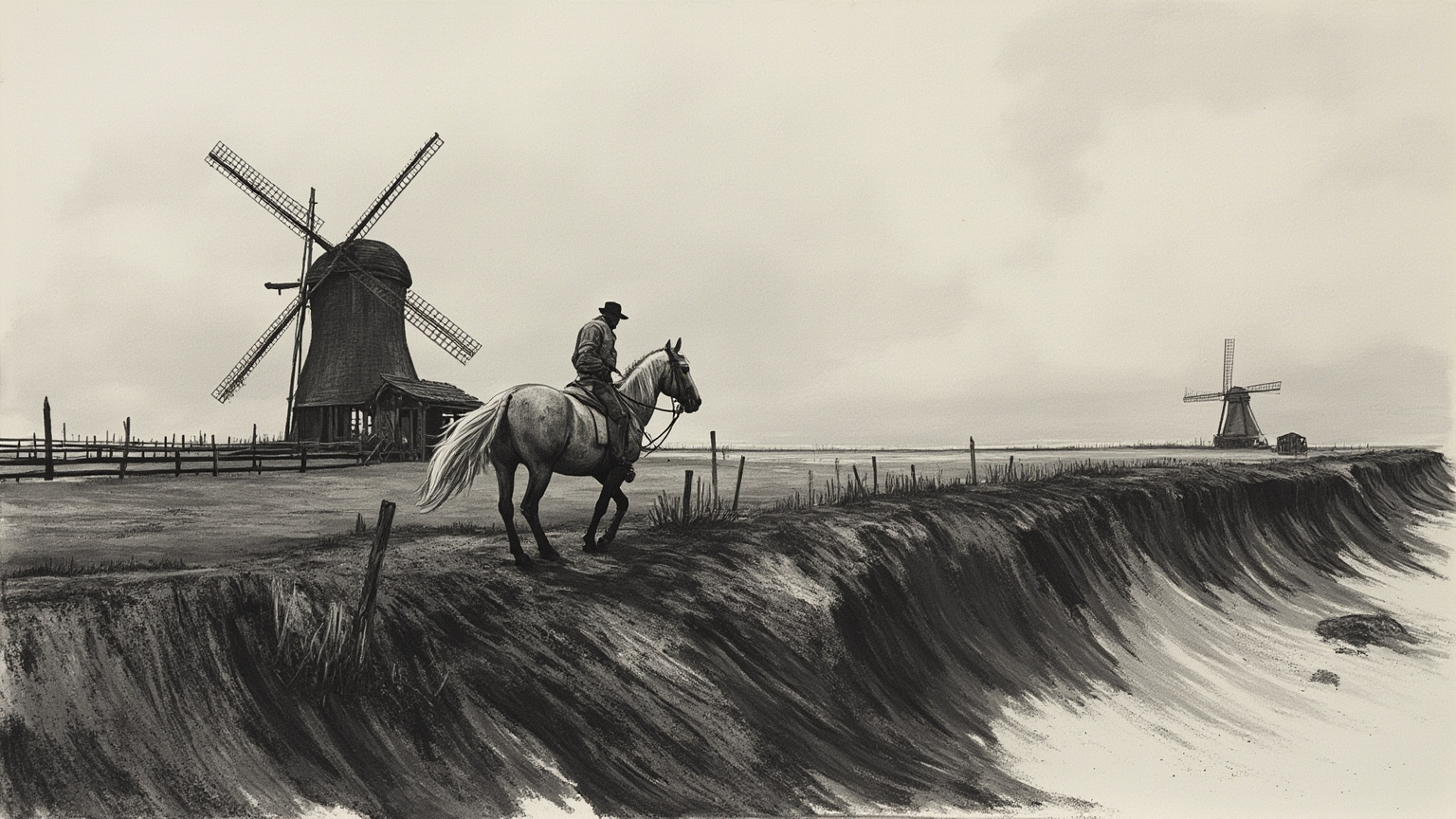
Then the ghost is only the refused engineer, walking the dyke after the storm has answered him at last.
白马不是什么天生不吉之物,那是他们念出来的;鬼是被拒绝的工程师死后剩下的影子。
金句 · 尾声 · 暴风雨夜的白马
The craft's finest trick is the nested frame: the inn on the outside, the memory in the middle, the engineering tragedy at the core, each folded inside the last. Storm welds together Gothic horror, frame narrative, and North German naturalism. The prose stays cool, almost clinical, right up until the white horse appears and the back of your neck goes cold. Best of all is the narrator. There's no omniscient voice anywhere in the book, only a white-haired old schoolmaster knocking his pipe by the fire, and his sighs do the work that authorial commentary would do in a lesser book.
Why Read the Actual Text
A guide like this can only give you the map. The actual text is that North Sea coastline, flat enough you can barely see it rise or fall. You have to walk into the inn yourself, hear the pipe knock against the table, hear the wind working through the door crack, hear how an old man turns a dike into a legend. The coldness of the prose, the distance the white horse keeps, the sea that says nothing at all when the dike finally breaks: no summary can hand you those, and no summary exhausts them either. Read it already knowing the ending, and what's left isn't suspense. It's the wind.
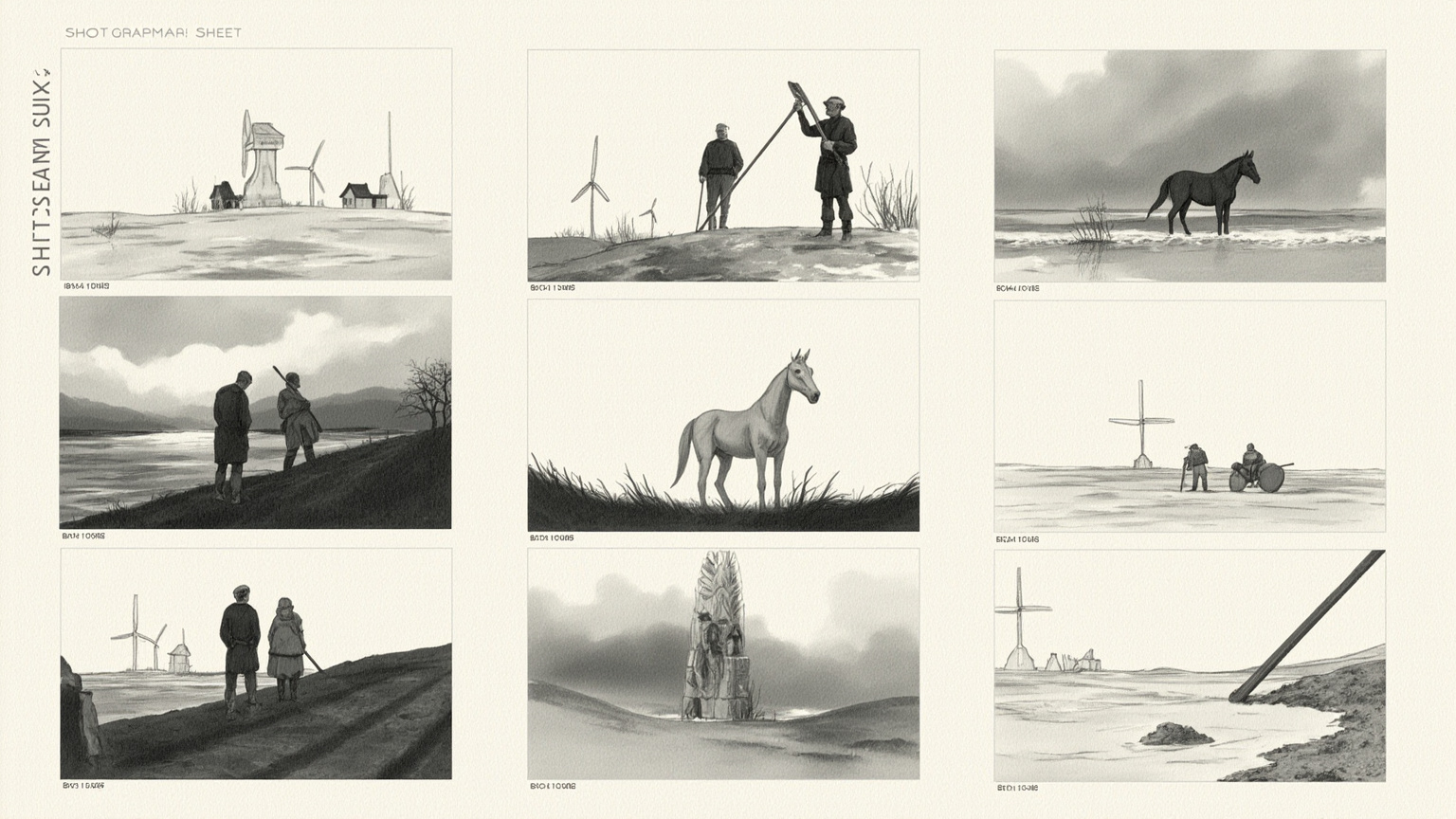
Art Direction4 plates
Before the guide was written, this book got a visual foundation — every illustration you just read grew out of it.


