The Romance of Antar (Sīrat ʿAntar ibn Shaddād) · Companion Guide
安塔拉传奇
黑奴之子凭刀与诗挣出一世英名,半生求娶堂妹阿卜莱未得,直至整片沙漠认下他的名字——阿拉伯世界自己的《伊利昂纪》。
A Son Bought for a Camel
In a tent of black wool, the grandfather lifted the newborn and looked him over: skin thick as an elephant's hide, eyes like embers, bones already hard, feet already long, ears strangely large. The boy's mother was Zabiba, an Abyssinian slave; his father was Shaddad, chief of the Abs tribe. Shaddad had captured Zabiba in battle and fallen for her on the spot, trading his entire share of the spoils plus a camel to buy her and her two children. Now she had borne him a son. Shaddad, overjoyed, named him Antar -- a slave's son, born strange and marked, in a tent of black wool.
This is the great epic that a thousand years of Arab storytellers built up together, the closest thing the Arab world has to an Iliad. Written in Arabic, its rhymed prose is threaded through with more than ten thousand lines of verse, and it tells the most classic story of the pre-Islamic Arabian Peninsula: a hero born a slave who wins his honor by his own hand. No single author claims it. Al-Asma'i, a court scholar of the ninth-century Abbasid caliphate, first gathered it from oral recitation; in the tenth century Yusuf ibn Isma'il expanded and reworked it; generations of anonymous Persian and Arab compilers kept adding after that, until the whole thing settled by the fourteenth century into a sprawling work of thirty-two volumes. This is the one old storytellers in Arab coffeehouses can still recite for months without running dry.
Black Tents and Camel Herds
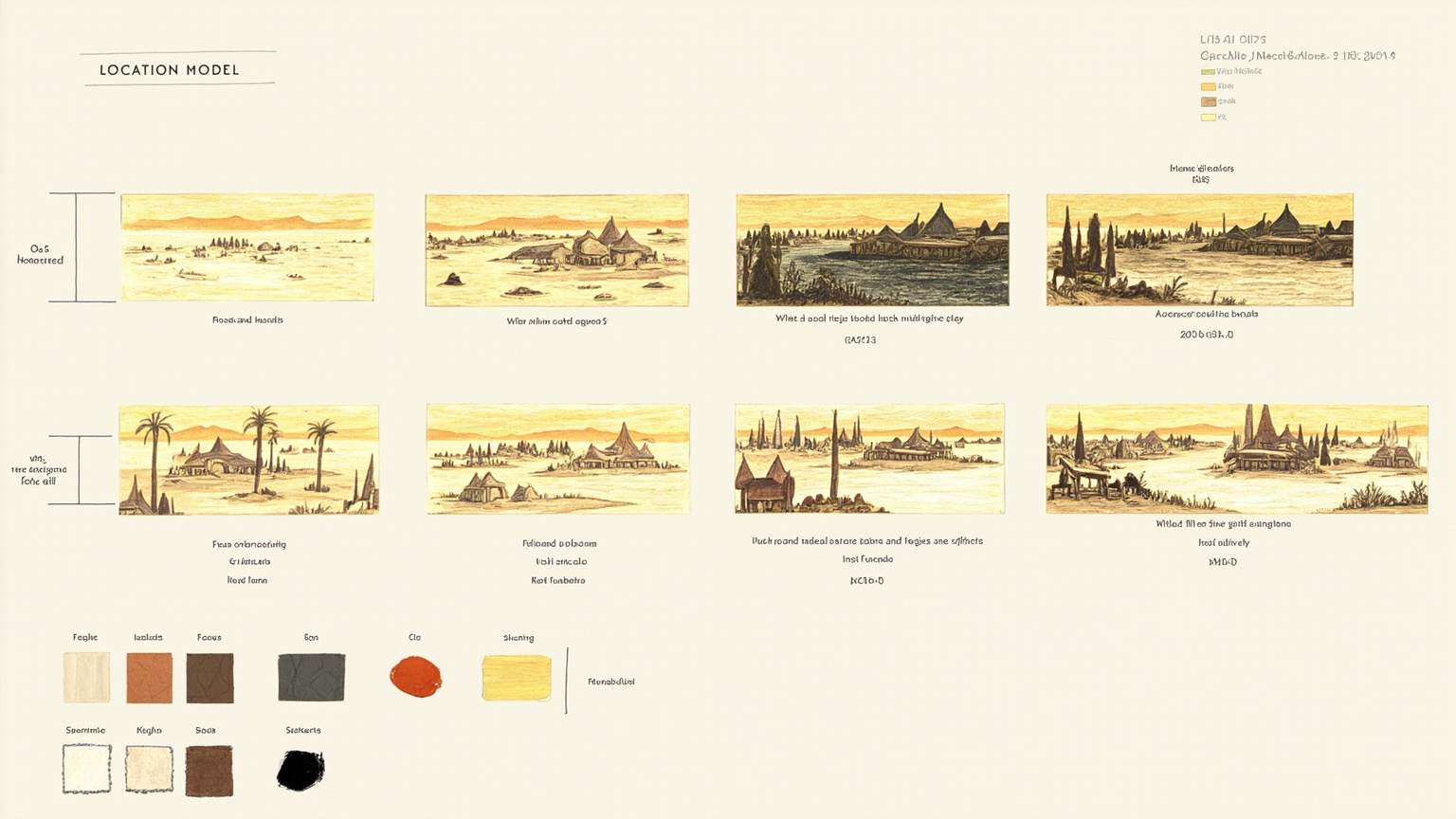
The story is set in the Najd desert of the pre-Islamic Arabian Peninsula, its stage built around the camps of two great Bedouin tribes, Abs and Adnan. The rules of this world are simple and unbending: people are either free or enslaved, and a slave's son stays a slave's son no matter what he can do, unless he wins his own way out. Honor rests on exactly two things -- the spear and the poem. Men in belted robes and plain headcloths ride out under chain mail with lances leveled; chiefs sit on the ground in the royal tent to hold council, and disputes are tested by the throwing of objects and settled by verse. The desert here is not scenery, it is a code -- generosity, courage, protecting the weak, revenge. Miss one and you are not worth singing about.
The cast is small. Antar is the undisputed center of it -- a slave's son, a knight and a poet, later called the Achilles of Arabia, the El Cid of Spain, the Arthur of England. Abla is his cousin and the love of his life, the woman he spends half his life fighting to deserve; she bears him no children, but she keeps faith with his name to the end. Shaddad is his father, a nobleman of Abs who fell for Zabiba on the battlefield but, bound by custom, would not publicly claim his son. Zabiba is his mother, an Abyssinian slave of striking beauty, who raises and herds with all three of her sons at her side. Zuhayr is his grandfather, king of the Abs and the most powerful chief in the tribe, who marvels at the infant Antar's strangeness the moment he sees him in his swaddling. And there is Harith, a formidable warrior who declares, proudly, that he loves battle more than any noble girl -- the very picture of a warrior who lives for honor alone. Between them, they hold up the whole desert.
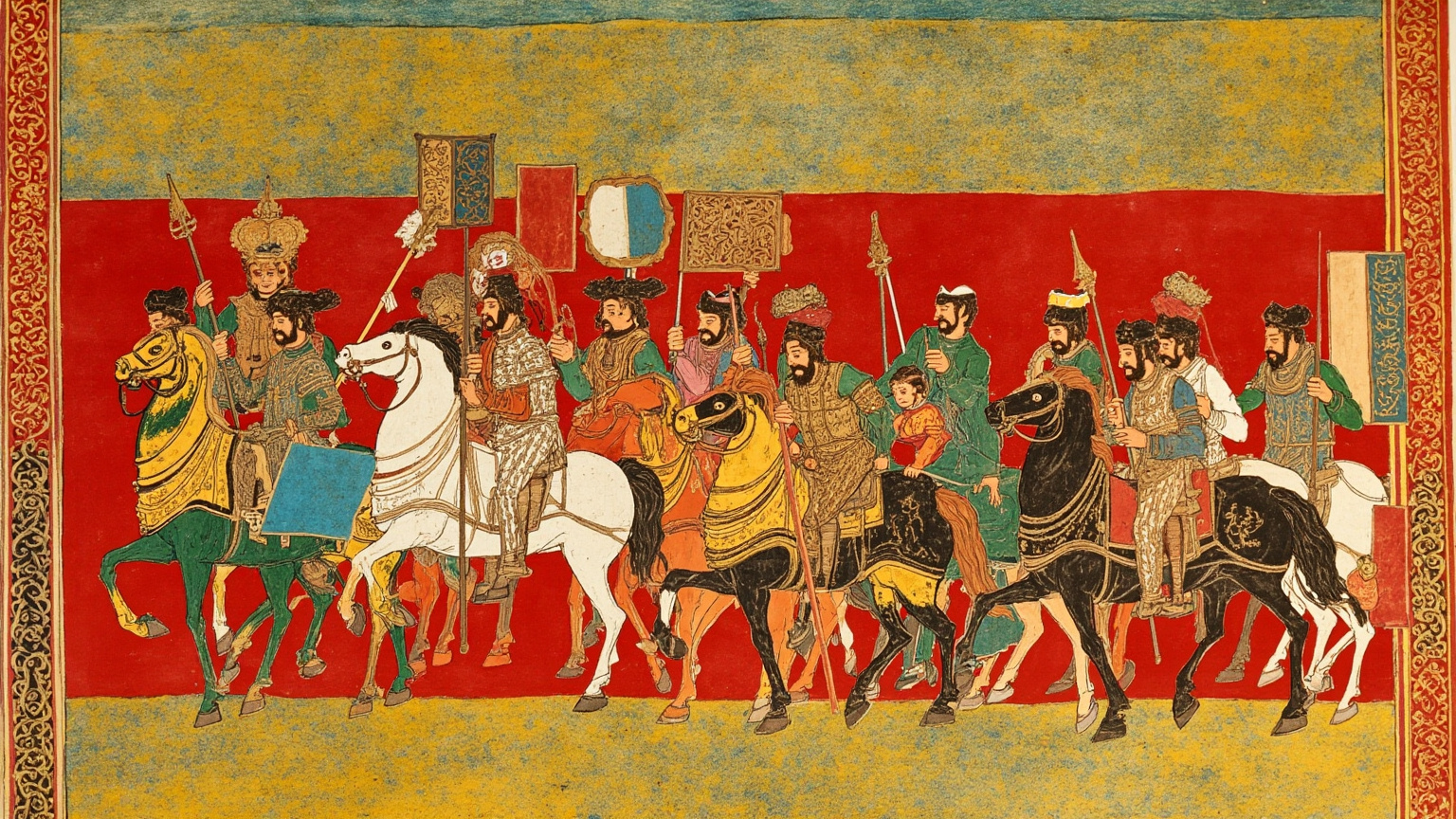
He was black-skinned, thick as elephant hide, his gaze like a brand, and his ears so wide they seemed made to catch the wind of the desert.
他肤厚如象皮,目光如炬,耳阔欲揽荒漠之风。
金句 · 第一卷 · 黑奴之子降生
The Boy Who Tore a Wolf Apart Bare-Handed
When Antar was ten, a young wolf attacked the flock in the night. No one saw what happened, only a dull thud somewhere in the dark. The next morning they found the wolf's throat torn out by bare hands, the lambs untouched. The news shook the whole camp -- a slave's son with a gift like that. King Zuhayr, astonished, tested him himself: he threw down a piece of meat and let a dog snatch it, to see how the boy would react. Antar charged in and wrestled the meat back from the dog, meeting the king's gaze without flinching. On the spot, the king ruled: the boy belonged to Shaddad, to herd camels and sheep alongside his mother and his two brothers.
A Slave's Son Refused
Antar grew into a powerful young man and fell in love with his cousin Abla. He worked up the courage to go to his uncle's tent and ask for her. His uncle lifted the tent flap, looked at him once, and in that look was the whole law of the tribe: your mother is a slave, so you are a slave, and no marriage to a free woman is coming to you. The flap fell shut. Antar stood there a long time. Finally he took out the token he had meant to leave with her, closed his fist around it, and walked off into the desert. He did not look back, and he said nothing -- the old wound of his father refusing to claim him as free had never healed, and now there was a new one laid over it. The scene is told with restraint. No weeping, only the act of walking away -- he packs every grievance into the shaft of his spear and spends the next ten years of victories digging it back out.
A Reputation Won at Spearpoint
Ten years on, a new name was moving through the desert. When enemies attacked, he rode out lance leveled and scattered them in the dust, pulling his tribe back from disaster. He raided deep into Iraq and drove off the king's own camel herds, marching the whole royal train back to the Abs camp. In the arena, a giant sent by the Roman emperor was taken alive at his hands and carried off trussed like a bundle. Each of these was concrete evidence washing his birth clean, not a claim but a fact -- the stain of being a slave's son beaten off him, one battle at a time.
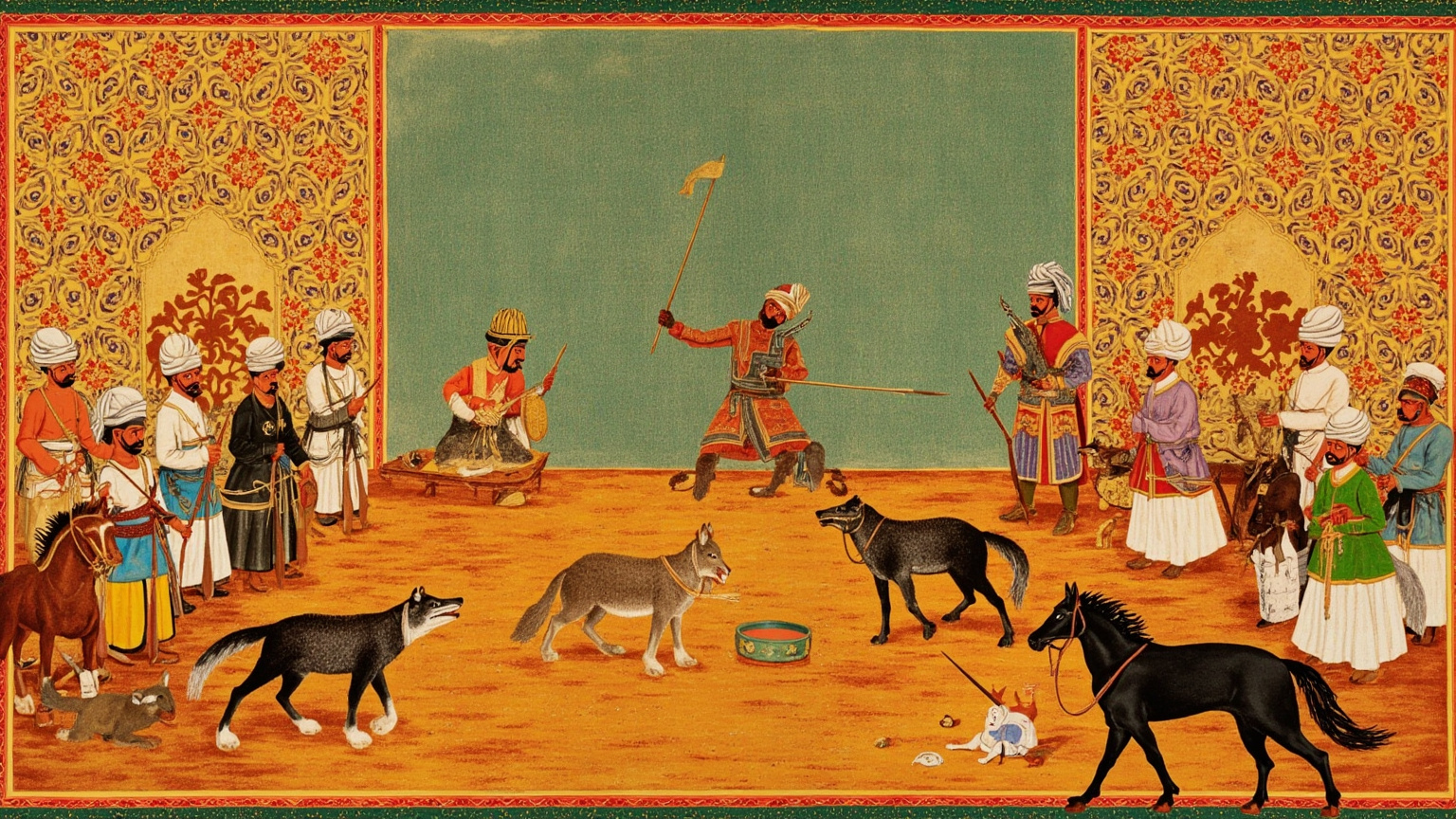
Reputation is not bestowed; it is counted blow by blow, witnessed by every tent in the tribe.
名声不是被赐予的,是被一场一场打出来、被每一顶帐子亲眼看见的。
金句 · 中卷 · 枪矛之上立英名
The storytellers work here by accumulation, not escalation. Every victory adds another ring of onlookers outside the Abs camp; every rescue wins him one more elder willing to speak up for him in council. Reputation is not granted, it is noticed a little at a time -- an old storyteller's trick, counting heads alongside Antar so the reader counts them too.
Poet and Blade Together
What makes Antar formidable is not brute strength alone. The bedrock of Arab chivalry rests on two things standing side by side, the spear and the poem. Men who can charge with a leveled lance are common; men who can stand in the victory tent afterward and improvise a poem that silences the whole tribe with respect are rare. Antar was both. He is one of the seven poets of the Mu'allaqat -- the Hanging Odes, as later ages called them -- set alongside Homer's Achilles and the Arthur of legend at the summit of his people's epic tradition.
There is a saying in the tradition of the Hanging Odes: the poem most worth honoring is composed on horseback, not at a writing desk. This romance takes that literally. Every one of Antar's battlefield poems is tied to a specific victory, and every victory feeds the next poem in turn. Poem and sword are two strands of the same rope -- neither holds without the other.
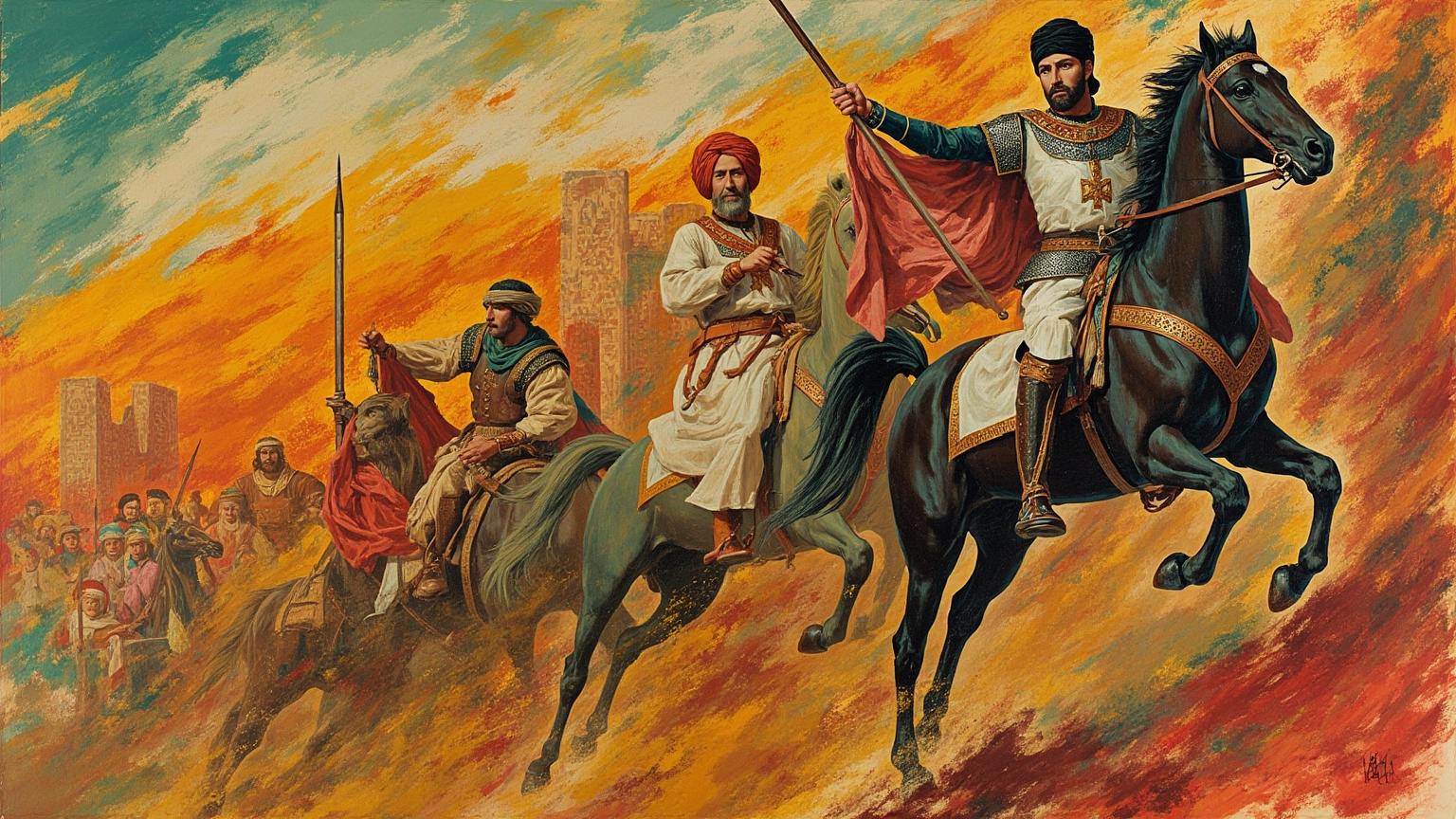
A horseman who cannot rhyme his own exploit is only half a Bedouin: the spear strikes, but the verse gives the stroke its name.
只会策马横矛的,还只是半个贝都因人;矛落下,诗为落下的一击正名。
金句 · 中卷 · 悬诗与战马
Winning Abla at Last
Years later, Antar's name had traveled across the lands of both tribes. Shaddad finally relented, and his uncle stopped refusing. The marriage came together not because of any one plea, but because the whole desert had by then accepted the man. Antar and Abla were married -- a slave's son who spent half his life on battlefields and in verse to earn one belated verdict: you are worthy of her. She never bore him children, but through every night of his campaigns far from home, she kept faith with his name.
A Relay of Storytellers, a Thousand Years Long
Antar's story did not end with his marriage. It outlived Antar himself, outlasted the rise of Islam and the rise and fall of the Abbasid caliphate, reshaped again and again by generation after generation of nameless storytellers. It began as oral recitation, was then gathered and written down by the ninth-century Abbasid court scholar Al-Asma'i, expanded again in the tenth century by Yusuf ibn Isma'il, and finally extended further by a succession of Persian and Arab compilers -- in the romance, Antar campaigns far beyond Arabia, into Iraq, Persia, Syria, Egypt, North Africa, Spain, even Constantinople and Rome. The whole work settled by the fourteenth century into a sprawling thirty-two volumes, and traditional storytellers in Arab coffeehouses still recite it for months on end.
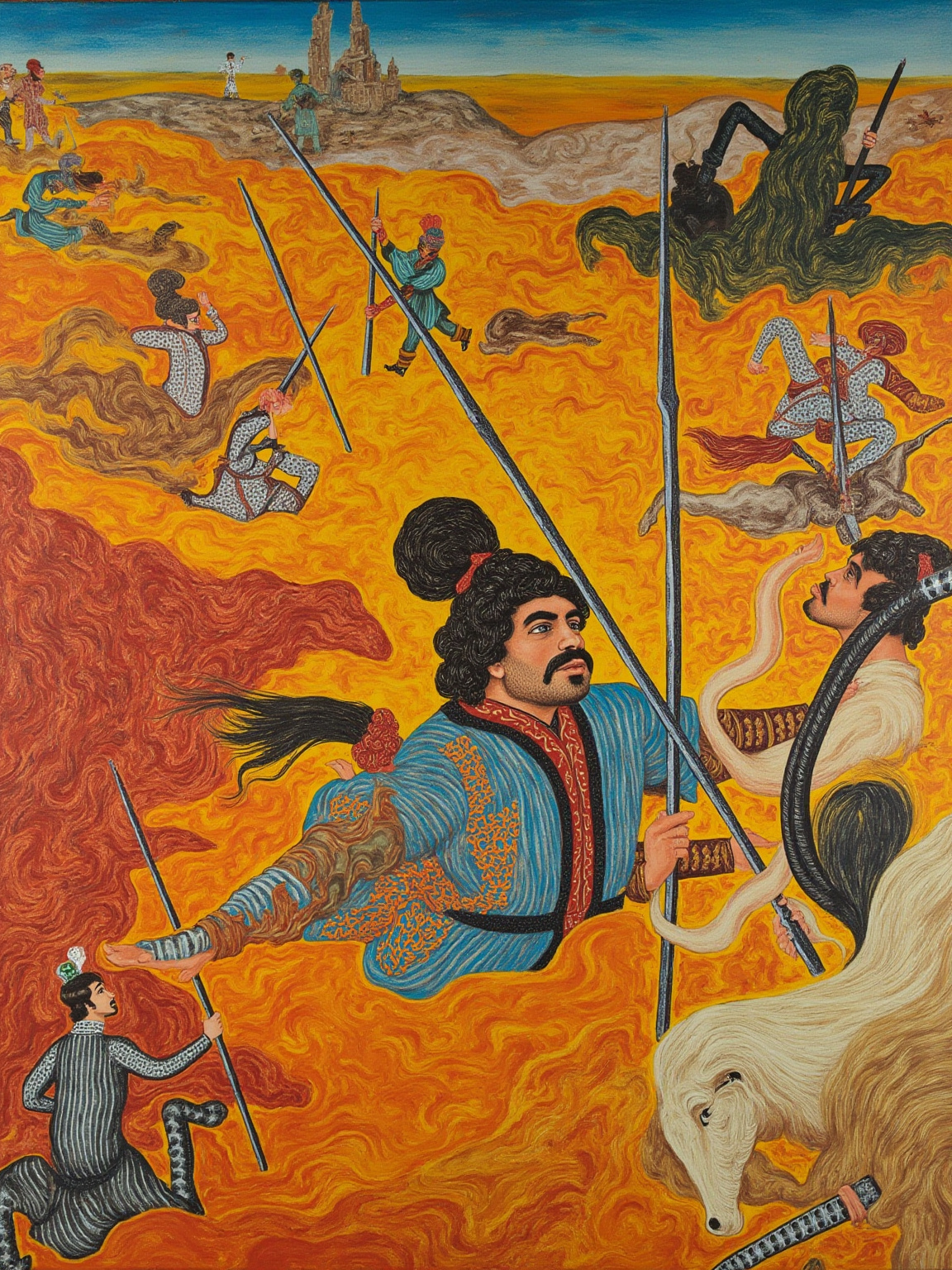
He did not die, and the singers would not let him: century after century, in Baghdad teahouses and desert tents alike, they lifted his story back onto their tongues.
他已死去,可说书人不许他死——一代又一代,从巴格达的茶室到荒漠的帐下,他们把这故事重新托上舌尖。
金句 · 末卷 · 千年的口传接力
This is why it is called Arabia's Iliad -- not as a figure of speech but as a matter of scale. Orientalist scholarship has set it beside Homer and ranked its epic standing next to The Thousand and One Nights. It is not the work of a single genius but an accumulation built by storytellers, scribes, and men of letters across hundreds of years, each age laying its own longing over Antar in turn.
What It Is Really About
On the surface it is a tale of chivalric adventure. Underneath, it is a question Arabs have turned over for thousands of years: can where you come from be washed clean? The answer is yes, but only at a price the whole desert has to watch you pay. Antar has stayed the number one folk hero for a thousand years not because he fights best, but because he had the hardest hand to win with -- a slave's son, a Black mother, a father who would not claim him. That opening hand is a dead end in any age, in any place. He forced it open with nothing but a spear and a poem. That is why medieval Arab storytelling kept singing it back again and again -- every generation of listeners heard its own hard luck inside it.
There is a rarely mentioned layer to the romance: after the rise of Islam, its pre-Islamic hero was not discarded but reread as an early sign of the new faith's own ethics. Antar's generosity, his courage, his readiness to protect the weak, were folded into a new spiritual lineage. This is what folk literature knows how to do -- an old story survives by changing its coat. There is an even less-noticed layer beneath that: the sheer scale of the book's travel across civilizations gives Antar a double identity, at once the hero of a native Arab epic and a knight-errant crossing cultures. That double identity is rare elsewhere, and it is part of why the book rewards reading.
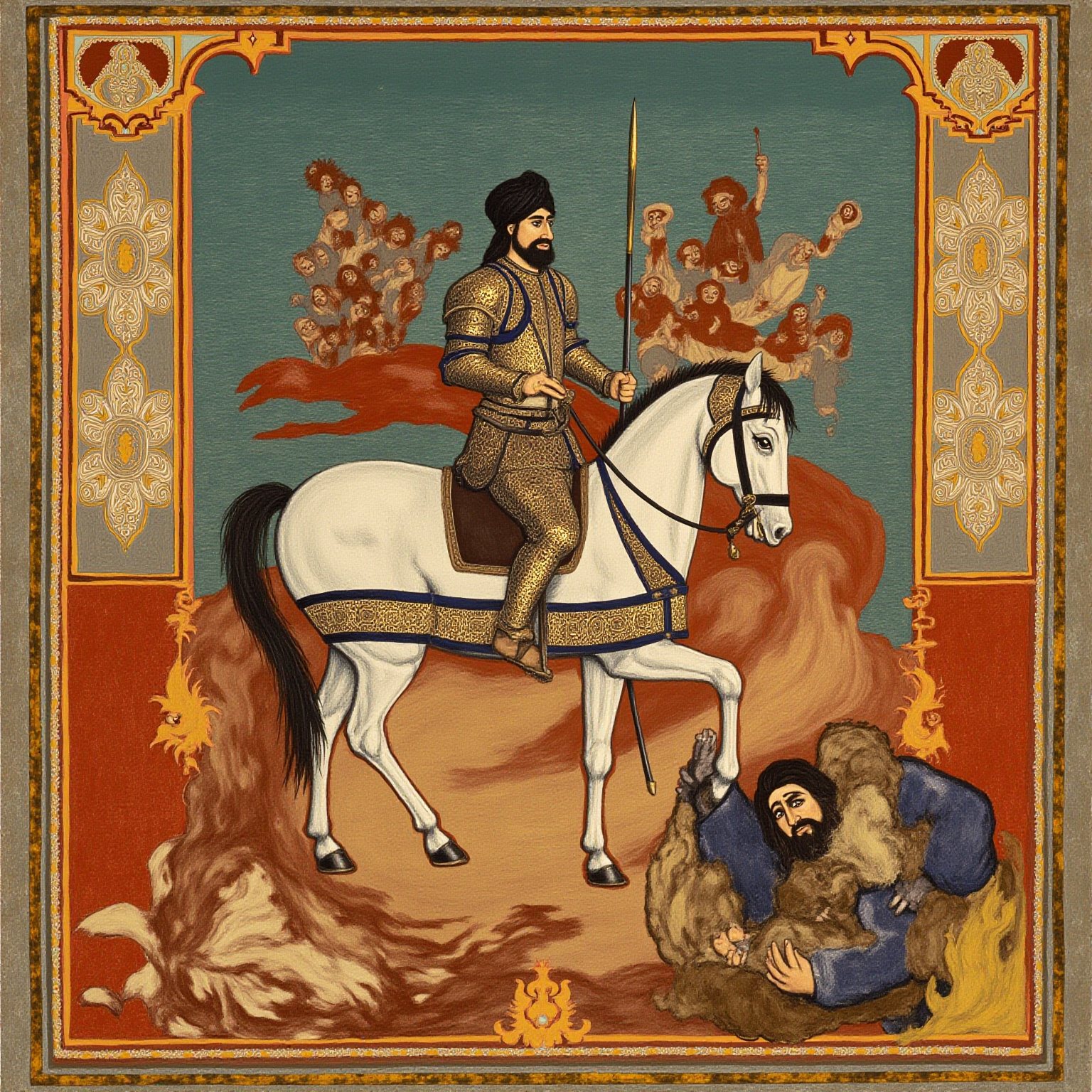
Born a slave, he reforged himself into a knight — and thereby turned Bedouin honor into a question every generation must answer for itself.
生而为奴,他把自己重铸为骑士——从此贝都因的荣誉,变成了每一代人必须亲自作答的考题。
金句 · 末卷 · 它真正在说的事
For readers today, this book offers a rare experience: the Arab world's native oral-hero tradition is not only The Thousand and One Nights, it also has a thirty-two-volume chivalric epic. Complete Chinese translations already exist, from People's Literature Publishing House and Hunan Literature and Art Publishing House. It is not widely read, but it carries real weight, and belongs on a shelf beside The Thousand and One Nights and The Adventures of Amir Hamza -- filling in a piece of the Arab imagination that has long been missing from our view.
In other books the hero is born. In this one he is earned -- and earned for a lifetime.
Why the Text Itself Is Worth Reading
A guide gives you the map. The text is the land. The one thing about this book that cannot be relayed secondhand is the verse itself -- its rhymed prose and its ten thousand-plus lines of poetry were written in Arabic to be rhythmic, and something of that rhythm survives translation, but what is lost is the particular cadence of Arabic that was chanted and re-chanted in the desert for hundreds of years. That physical quality only comes through in the original, or in a translation that stays close to it. Then there is the sense of accumulation -- thirty-two volumes running from Antar tearing apart a wolf as a boy to his campaigns as an old man, each decade adding only a little more to his name, a density no summary can reproduce. And last there is the coffeehouse feel: this book was spoken, not read, and the text still carries the beat of a storyteller slapping his knee, holding a pause, letting the crowd cheer. Knowing the plot in advance, if anything, makes it easier to hear the voices the plot was covering up.
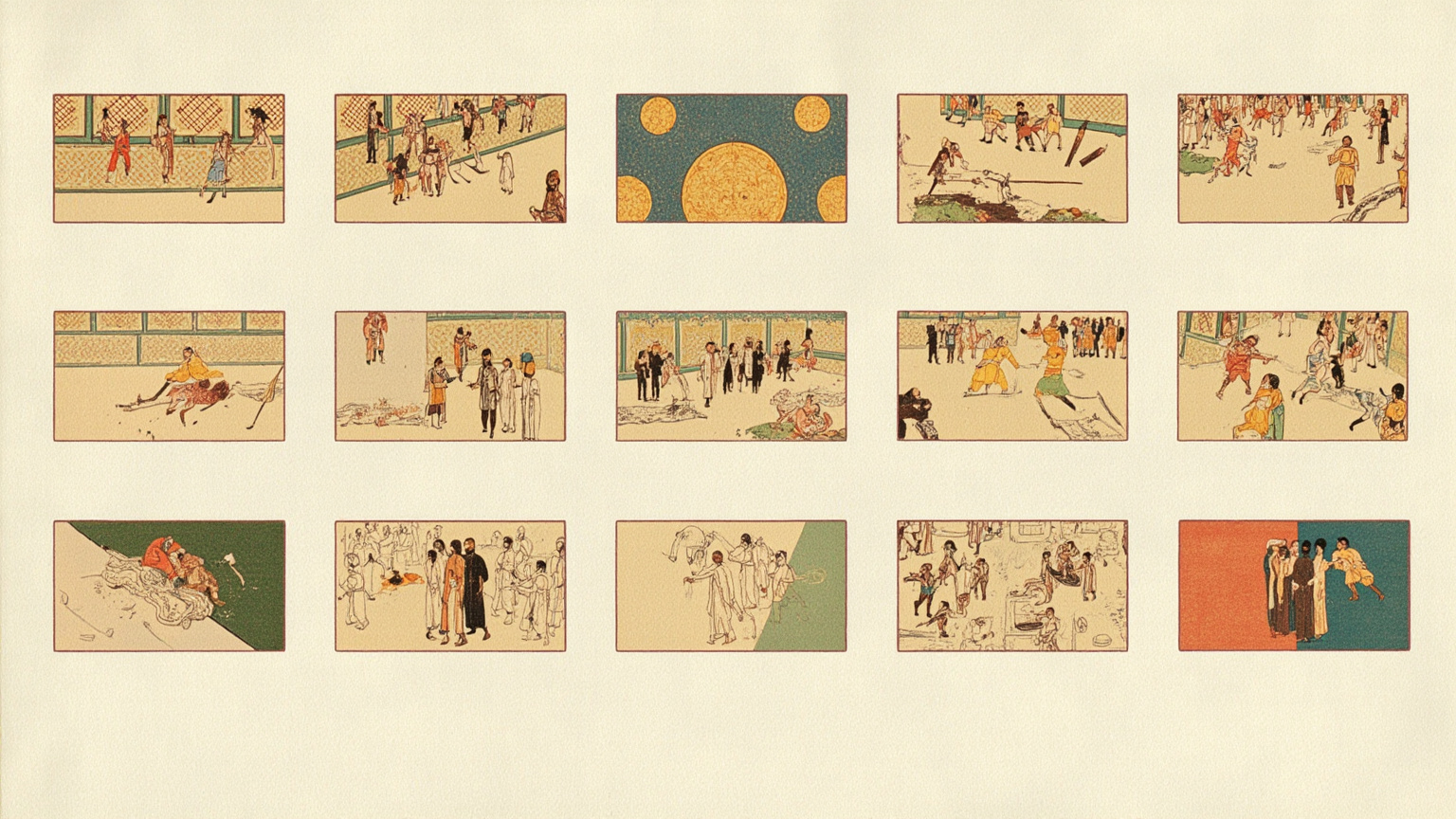
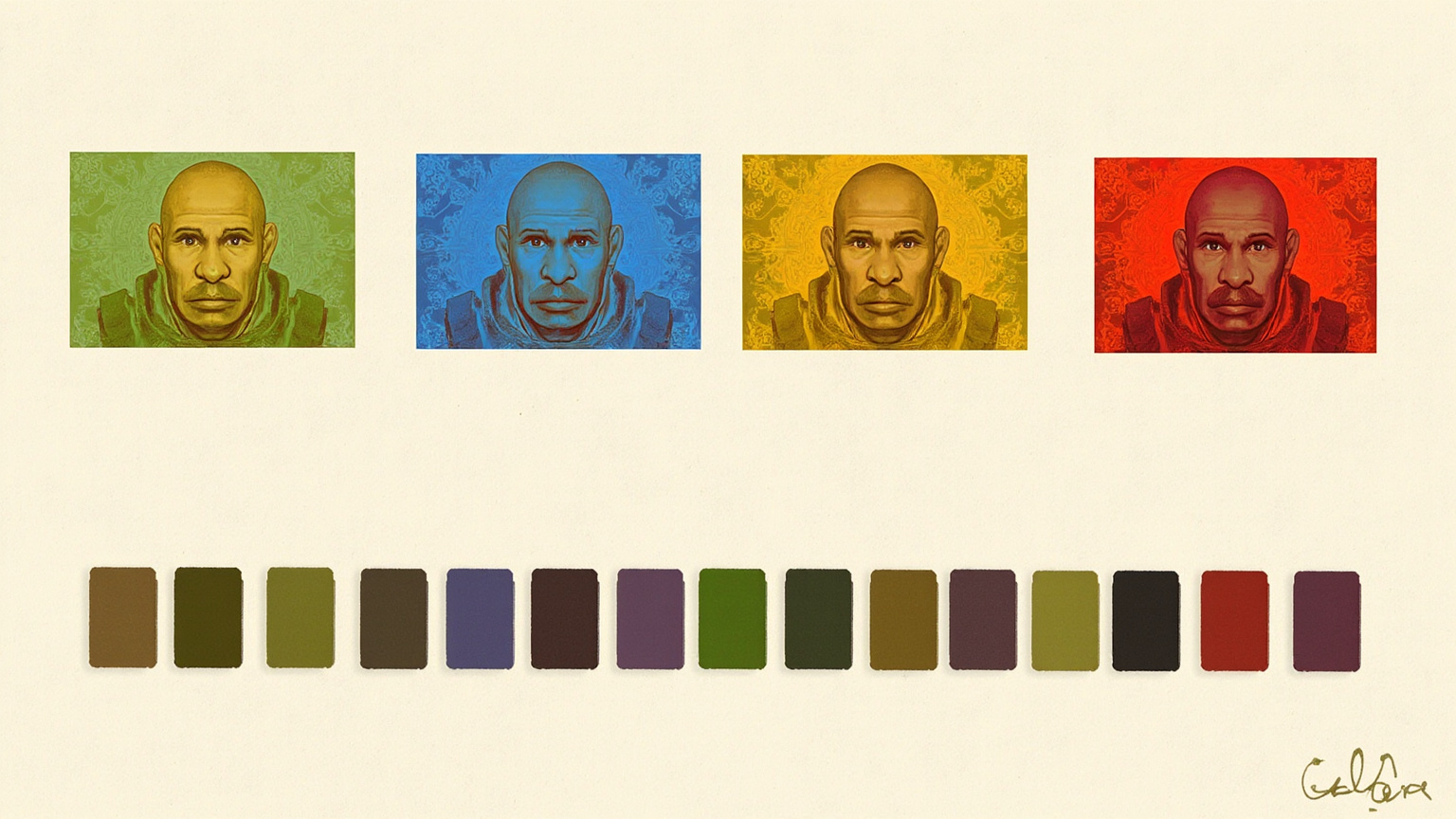
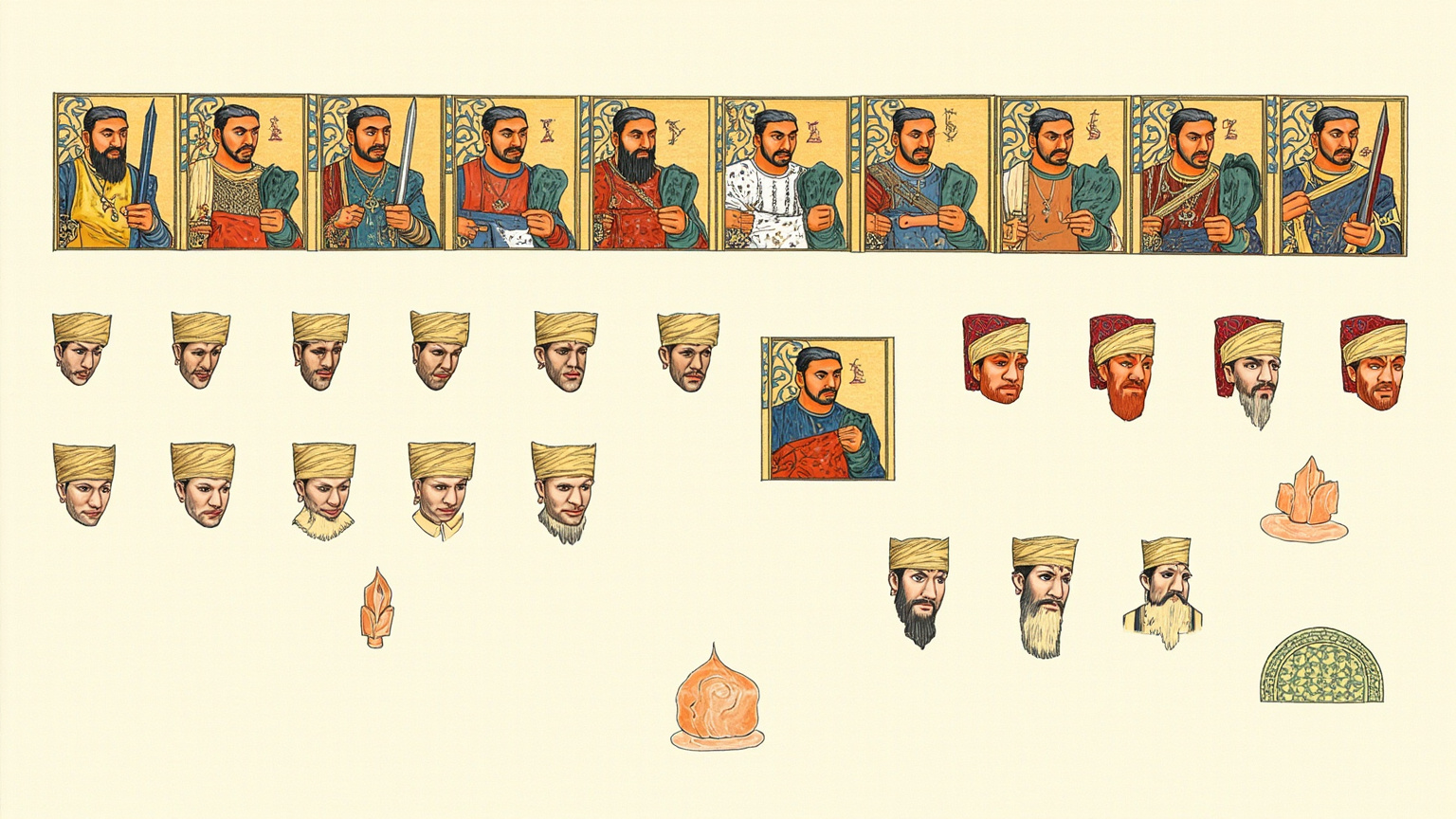
Art Direction4 plates
Before the guide was written, this book got a visual foundation — every illustration you just read grew out of it.