A young monk walks one night through the mountains of Hida, and only on the way down learns what he passed
Text and illustrations produced by the pipeline
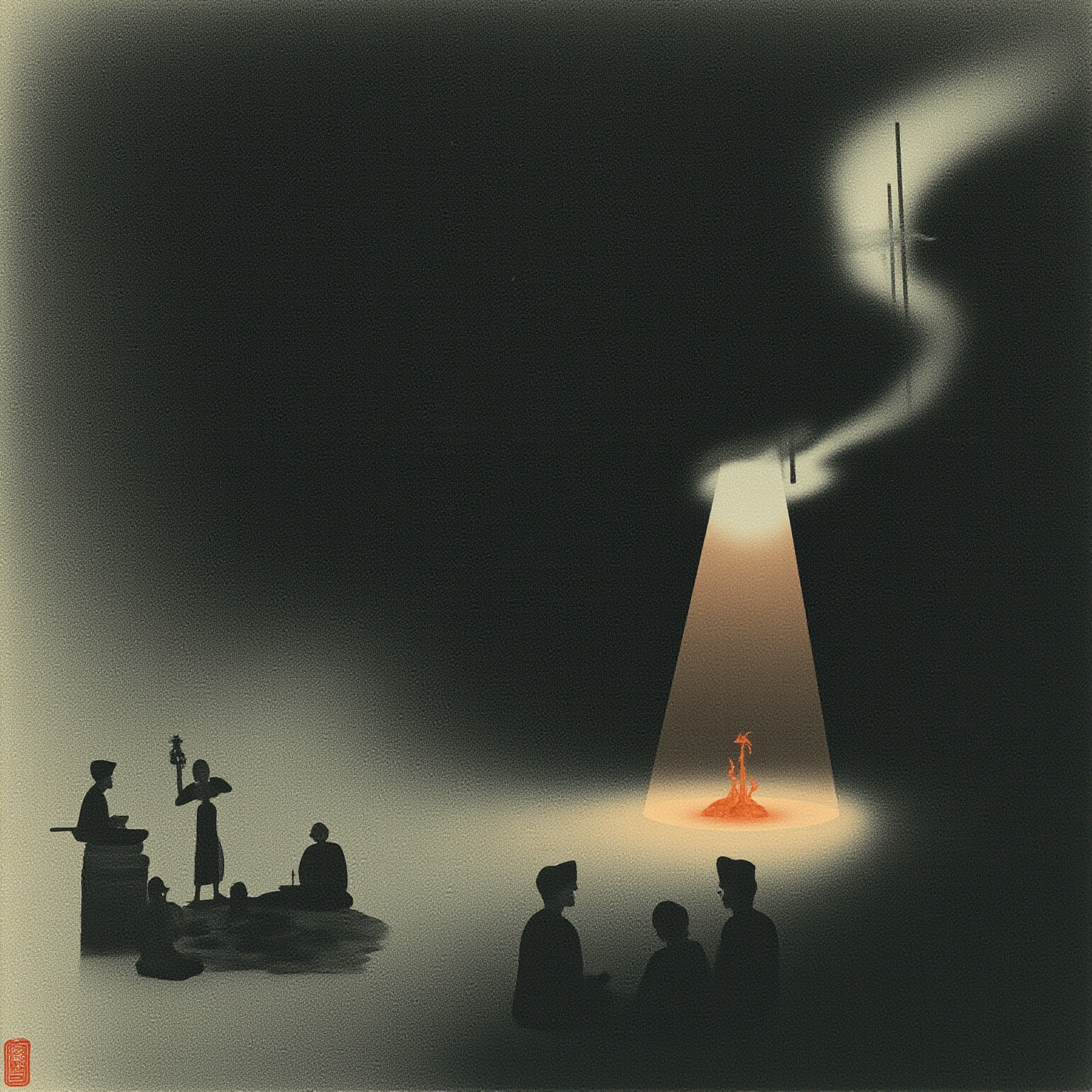
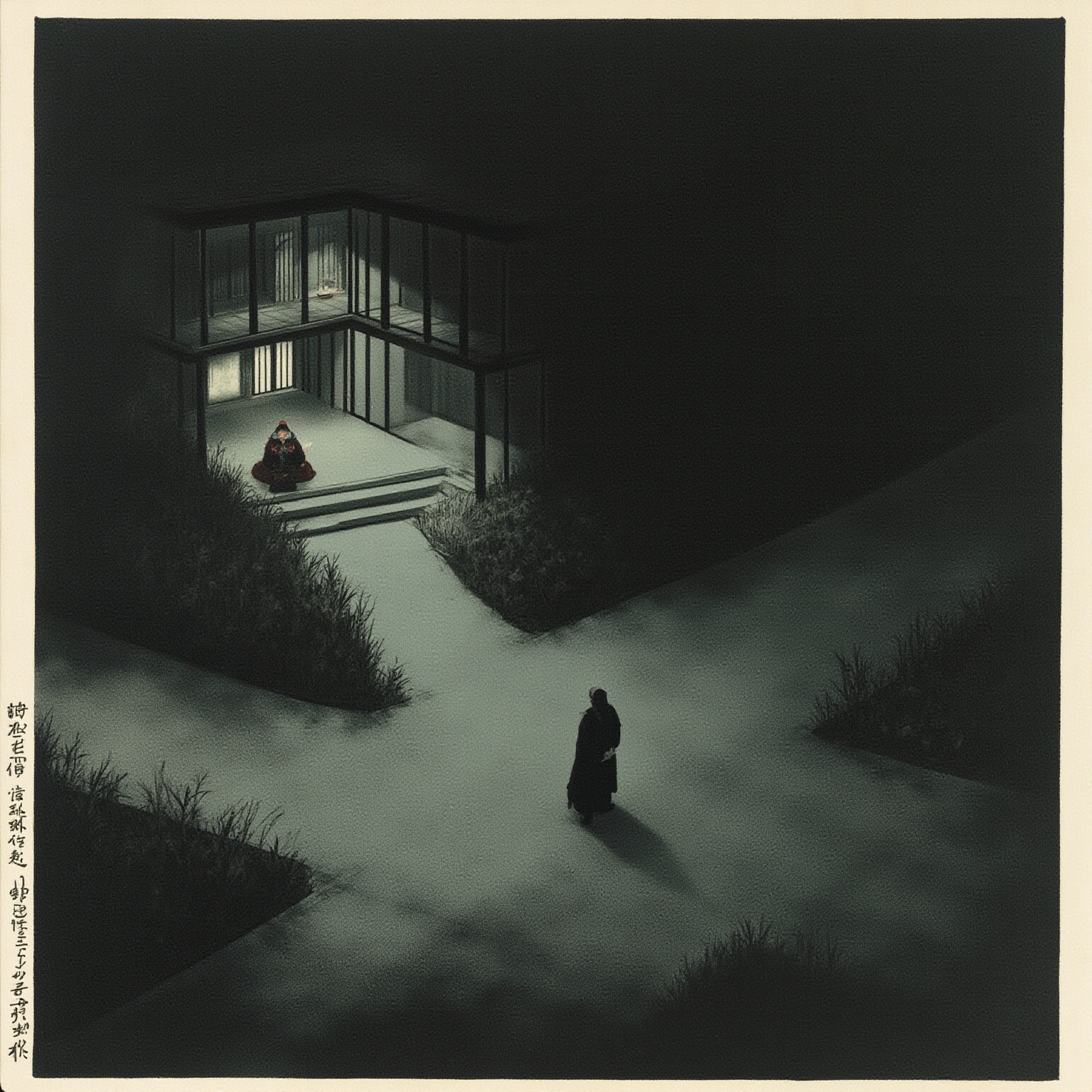
At a mountain inn, the night held to a single bean-flame of lamplight. A young monk sat cross-legged by the hearth, and when a fellow traveler asked him for a story, he agreed. He told of the night, years before, when he had cut through the deep mountains of Hida to save time on the road — a night when floodwater had washed out the old path, when a cedar forest hung with vines showed him nothing but its shape and its damp, and when, as dusk came on, he met a stone Jizō at a fork in the trail. He told of the lone house he found that night, and of the horse trader he passed on the road down once the weather cleared, and he finished, in the same even voice he had used throughout, by saying he still had to press on to Kōya.
The way this story frightens you is not like most ghost stories you have heard. It does not scare you in the moment. It sits you down by the inn's lamp and has the man who lived through it tell the whole thing calmly, start to finish, without ever knowing at the time what he was walking through. Only when a horse trader lets the truth slip in passing do you look back and realize your spine has already gone cold.
The author, Izumi Kyōka — born Izumi Kyōtarō in the latter half of the nineteenth century — was in his prime around 1900, the year he published The Holy Man of Mount Kōya in the magazine Shin Shōsetsu, New Fiction. It made him a small mountain no history of Japanese fantastic literature can walk around. Yukio Mishima named him one of the most underrated writers in modern Japanese fiction, and Shūji Terayama went further still, letting Kyōka into the bloodstream of his own films. That a single ghost story could earn the shared admiration of two masters working in such different registers is worth pausing over.
The reason it is remembered is simple: it took an old motif from Japanese folk tale and wrote it as Gothic literary art. Nothing else in the history of modern Japanese fiction did quite that.
There are few people in this story. The narrator is a young itinerant monk who identifies himself as a Kōya hijiri, a term that goes back to Kūkai, who founded the temple complex on Mount Kōya and sent monks out into the world to preach to the living. He is not a holy man of Mount Kōya itself; he is a traveler in that lineage, young, gentle-mannered, carrying the bearing of a monk who keeps his precepts. The woman in the mountain house, dressed in a kimono, belongs to a figure old in Japanese ghost-tale tradition, the thing that pulls a man under. Kyōka gives her nothing but the layering of her robes and the shape of her hair; he never poses her in anything suggestive. A second figure shares the house, a man whose mind has gone slack. He appears only as a detail of the house's condition, never as a character in his own right.


What it is really about is neither a demon woman nor what the men were turned into. It is about beauty and danger as one thing. The green of Hida gone nearly black, the damp, the mist, that single point of orange from the hearth: the allure in Kyōka's prose is never simply pretty. It is a dark, dangerous kind of beauty, indivisible from the danger itself. The cedar forest exists to be walked through. The lone house exists to keep travelers for the night. The woman exists to bathe the men who pass. Every beautiful thing here is a gesture that draws you in.
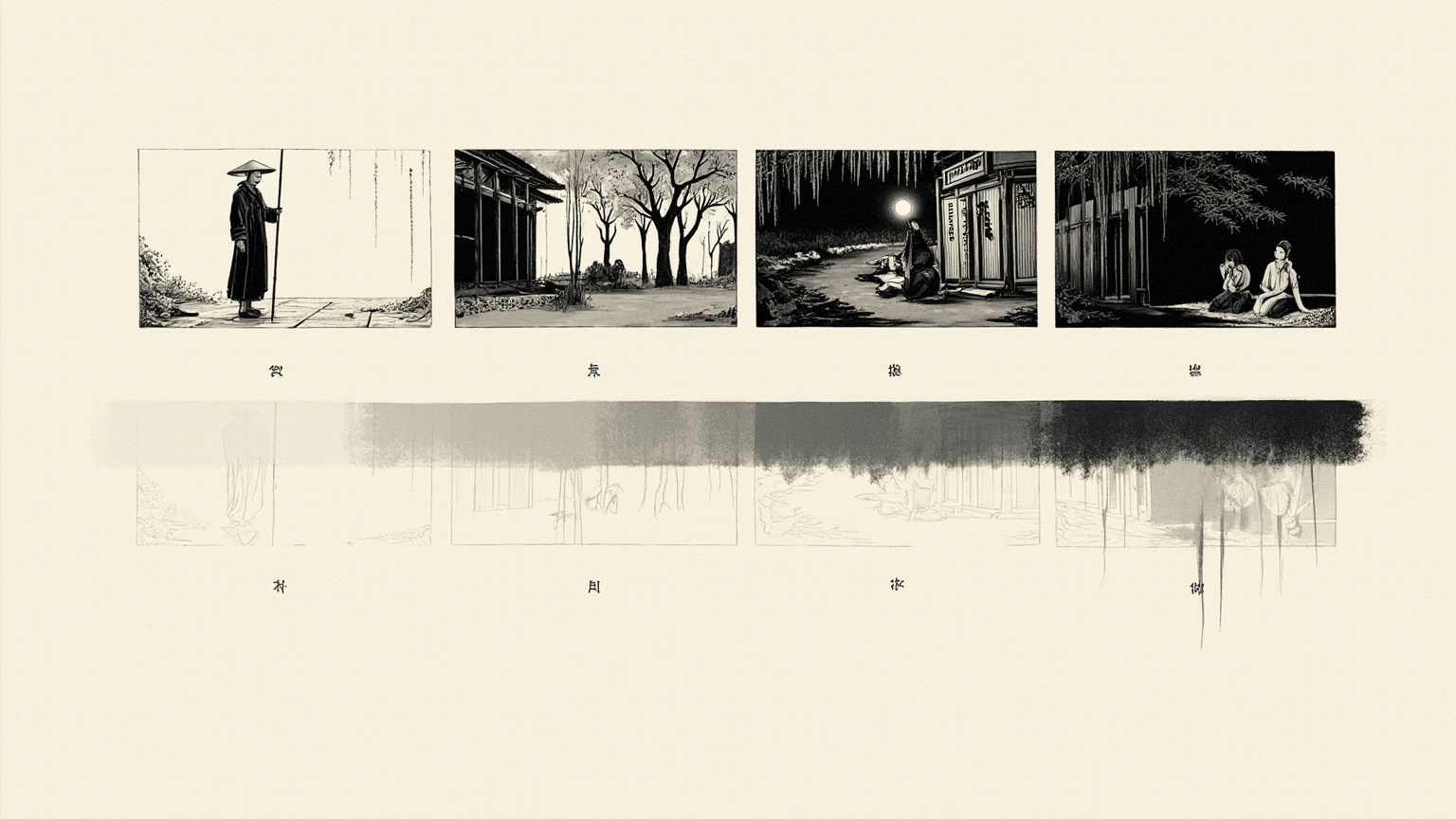
Before the guide was written, this book got a visual foundation — every illustration you just read grew out of it.
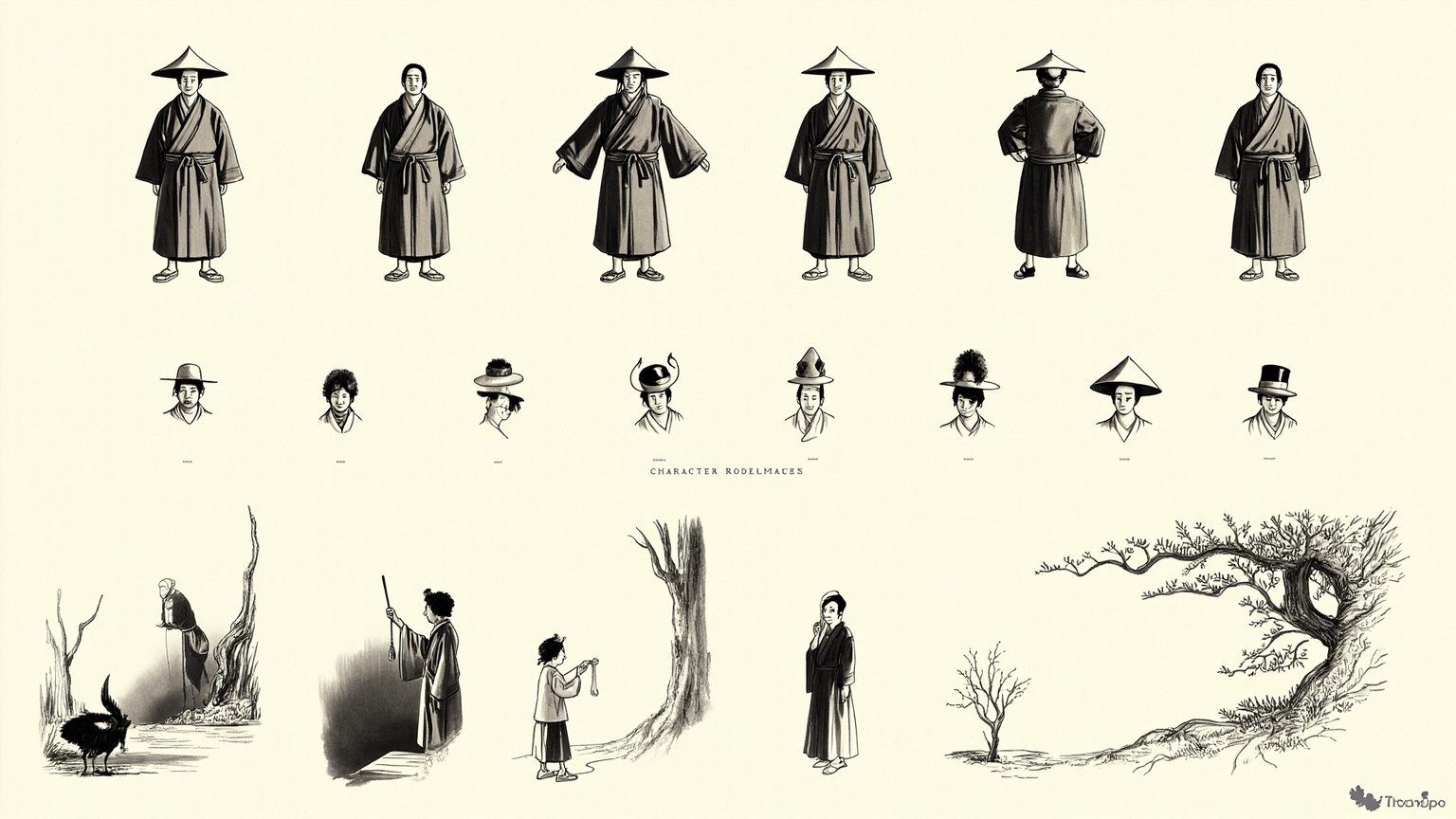

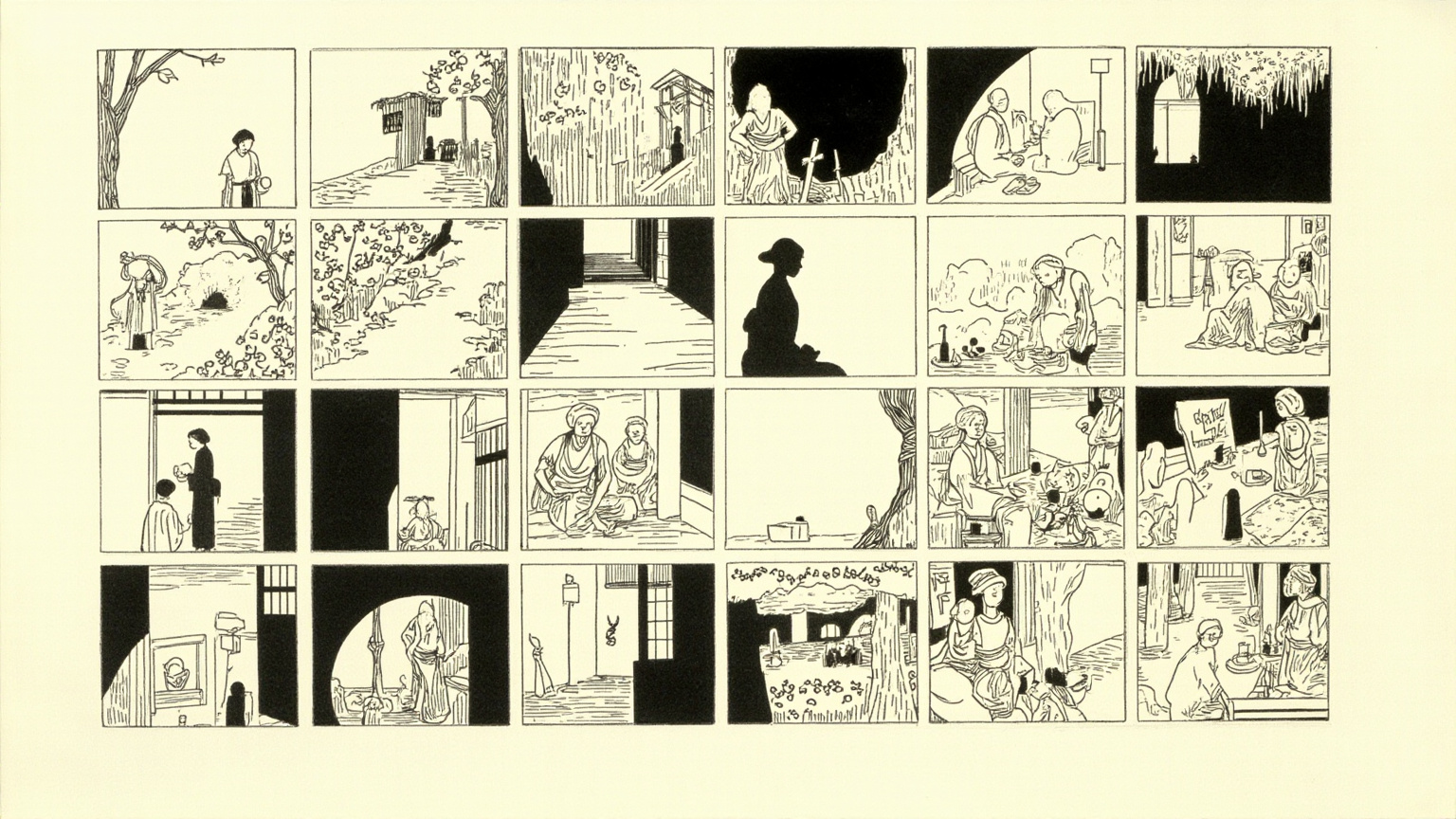
The horse trader who passes him leading his horse the next day, on the way down, is a local from the foot of the mountain, lean, practical, thick with the regional accent, and gone as soon as he has dropped his line on the monk. The travelers gathered at the inn are only silhouettes around the lamp; they never ask the story out of him and never judge it, they just give it an audience.
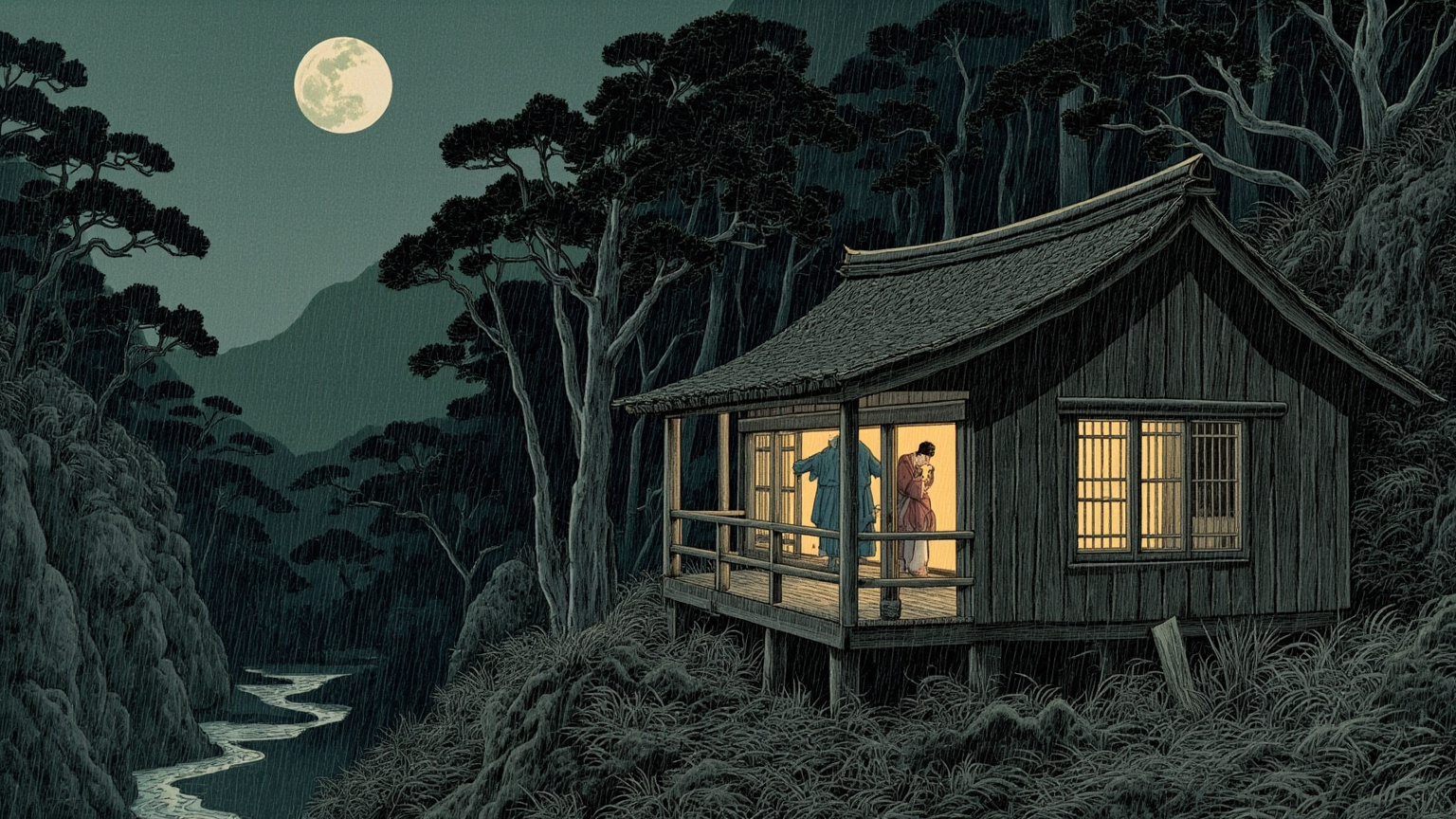
The story is set deep in the mountains of Hida in the late Meiji period, in what is now the northern part of Gifu Prefecture. An old road just after a storm, stretches of it drowned; a cedar forest hung with vines; a single house alone at the bottom of a valley; a wooden veranda, a hearth fire, one lamp, a stream and great boulders outside. None of this is spectacle. It exists only to leave a man with one road left to take.
It opens by lamplight. A young monk, staying the night at a mountain inn and identifying himself as a Kōya hijiri, is asked by a fellow traveler for a story. He tells of the time, years earlier, when he cut through Hida alone to save a day's travel.
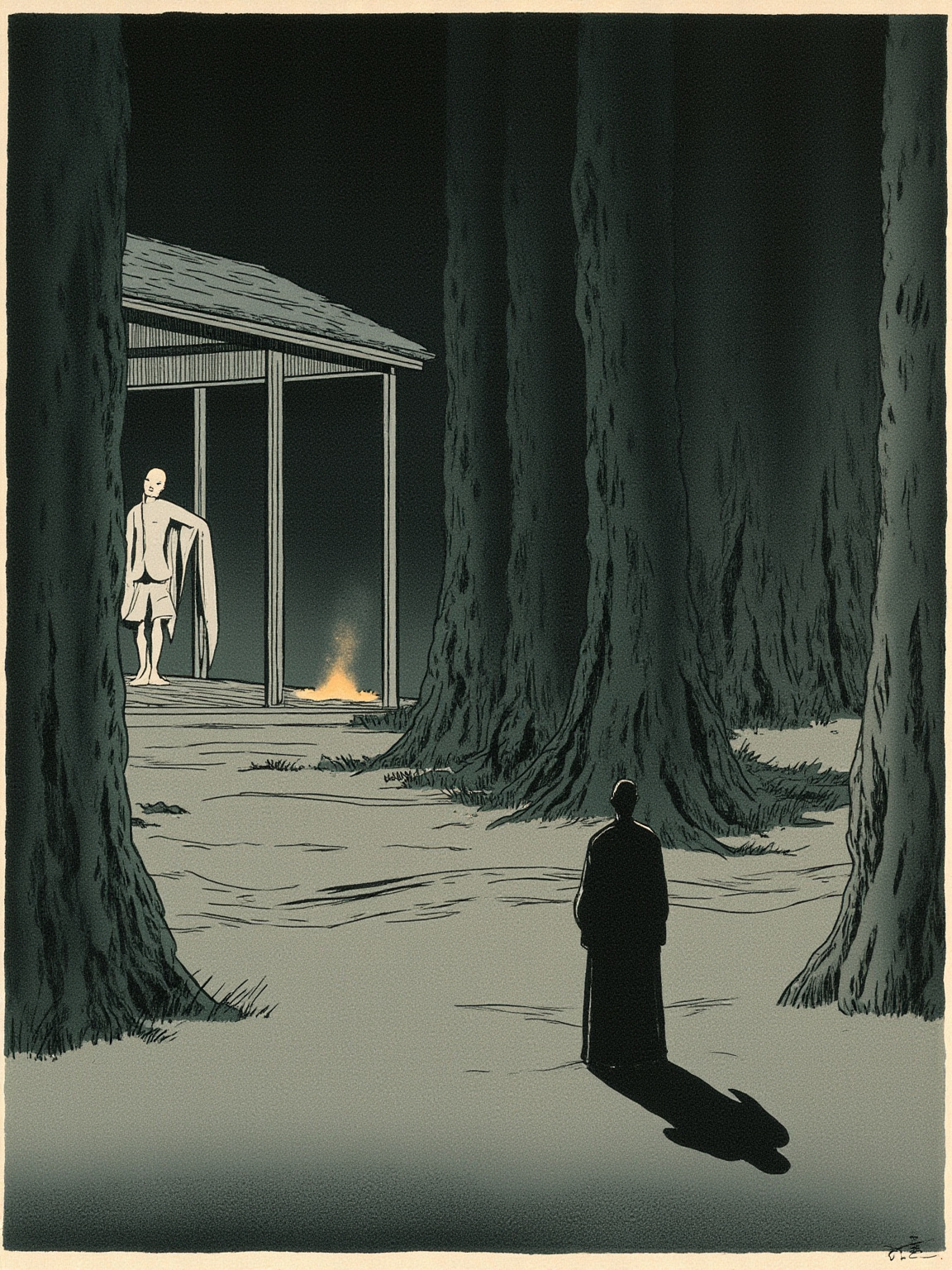
The mountain road had been washed out by a flash flood. He took the old path instead and pushed into a cedar forest hung with vines. Kyōka writes nothing of it but the shape of the trees and the wet in the air, the light pressed dim, every step raising the sound of water underfoot. At a fork in the forest stood a stone Jizō, its face worn to the blunted half-smile that weather gives every roadside statue in the Japanese countryside.
He had meant to be clear of the forest before dark, but the forest would not let him. The light kept failing, the air kept thickening, and he all but stumbled into the house at the bottom of the valley. The door stood ajar. Inside were only a woman in a kimono and a man whose mind had gone slack. A hearth threw off a point of orange light, one lamp burned, and outside the stream never stopped talking. That night, he would have to stay.
The center of that night is an old motif in the Japanese ghost-tale tradition: temptation and trial. The woman takes the monk to the stream to bathe him. Kyōka uses the motif but never lets it slide into anything of the body or the senses. What is worth noticing in this section is how clean the prose stays, restricted to the folds of a robe, the shape of hair, nothing more, so that the whole weight of the scene is carried by the air around it. The tension a reader should feel is not in what Kyōka wrote. It is in the blank space he chose not to fill.
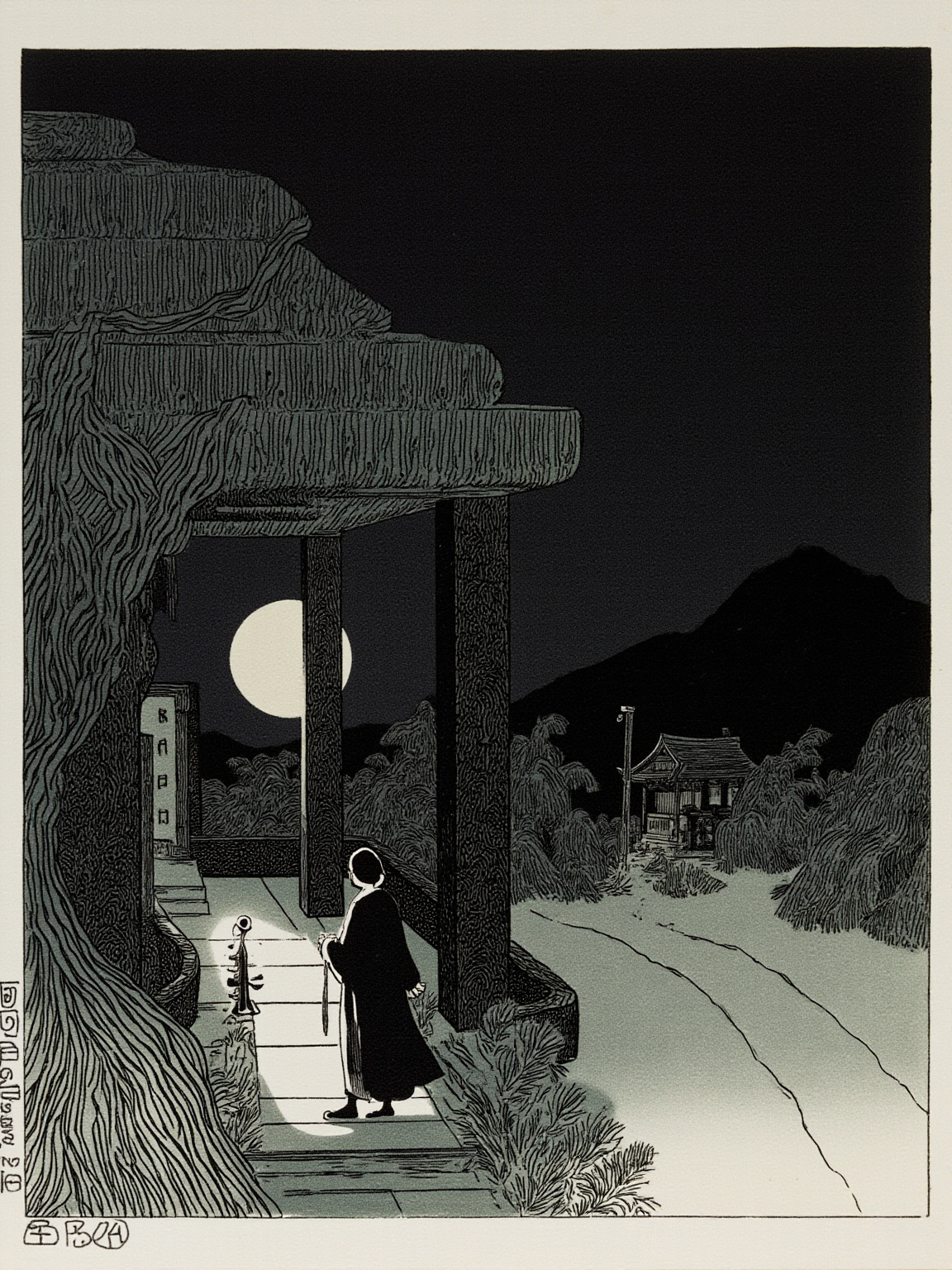
Nothing happens that night. It passes, and the weather clears. The monk sets out and starts down the mountain, and on the road he meets a man leading a horse. The trader is a local from the foot of the mountain, and with barely a preamble he tells the monk, offhand, what has become of that house, that woman, and the men who have passed through there over the years, what they were turned into. That single line is the heaviest turn in the whole story, and Kyōka lets the horse trader deliver it and nothing more. He never expands on it.
The craft to notice here is retrospective horror: the monk himself only learns afterward what he lived through that night. Reading through his eyes as the night unfolds, you know just as little as he does. The truth leaks out through one idle line from the horse trader, and once it leaks out, you have to go back and live through the whole night again. The first time I read that line, I went back and reread the page before it.
Back at the inn, in the present. The travelers around the lamp have heard the whole night out, and no one presses him, no one passes judgment. The young monk straightens the hem of his robe over his knees and says he still has to press on to Kōya, in the same even voice he used for the rest of the telling. That is where the story's frame closes shut. Only once you have finished it do you see why Kyōka set the telling by an inn's lamp in the first place: he needed that cleanliness, so that the dark beauty at the center could run unfathomably deep while the frame around it never so much as trembled.
Another reason it is remembered is Kyōka's Japanese itself. Reading this story is not really reading a plot, it is reading a texture of language, the kind that wraps around a reader and will not let go. What Mishima and Terayama admired was not what he told but how he told it. The imagery and atmosphere depend entirely on the language carrying them; strip it down to the bare bones of the plot and there is almost nothing left, but set inside Kyōka's actual sentences, the whole of Hida turns damp and alive.
For readers today, The Holy Man of Mount Kōya is a reminder that real fright does not need a bloody face, a jump scare, or a hand shooting out of the dark. It only needs a young monk telling, in an even voice, the whole of something he did not understand while he was living through it.
The truth leaks out through one idle line from a horse trader, and once it does, you have to go back and live through the whole night again.
What a companion piece like this can give you is the skeleton of that night: the inn's lamp, the forest of Hida, the fire in the lone house, the line spoken on the road down. But the real substance of The Holy Man of Mount Kōya is Kyōka's Japanese itself. Sentences that thick, that clinging, that pull a reader down into the damp of Hida, are exactly what a summary can never carry over. You read the original so that language can wrap itself around you, at least once.