The Sarashina Diary (Sarasina Nikki) · Companion Guide
更级日记
一个平安少女朝东国磕头求书,挑灯抄诵时以为自己比皇后还快活——直到丧夫独居庵室,才明白故事再亮,也救不了她。
Books from the East, Worth More Than a Father
One night a thousand years ago, a girl of about ten knelt facing east and bowed until her forehead bled, until she collapsed with fever. She was not praying for a husband. She was praying for a book — she wanted her father, posted as a provincial governor in Kazusa, to send her the full fifty-some scrolls of The Tale of Genji locked away in his official residence, all the way to the capital. This happened in mid-Heian Japan, more than a thousand years ago. The woman who wrote it down was the daughter of Sugawara no Takasue.
Women of that age did not write novels or sit in court. Owning even one scroll of a tale was a luxury. She wanted the whole set, not one scroll short. The Healing Buddha she prayed to could do nothing for her. In the end it was her mother who sighed, wrapped her back up like an infant, and sent word to bring the father home from the far end of the country. The day he walked back in, the books she had waited more than a decade for came in with him.
What Kind of Book Is This
The Sarashina Diary was written in the mid-Heian period by Sugawara no Takasue's daughter, a descendant of Sugawara no Michizane. It is her own record of herself, from girlhood to old age — one of the earliest and most complete works of female autobiographical prose in Japanese literature, more personal than The Pillow Book or the Murasaki Shikibu Diary, more ordinary in its days than the Izumi Shikibu Diary. It compresses one woman's entire life into a slim book: how a story becomes an addiction, and how it stops working by middle age.
Sarashina in the title is the place name of where she lived out her widowhood, read either as the Sarashina district of Sagami Province, or a residence in the capital that carried the same name. That comes later in the story. The text still survives today through manuscript copies and annotated editions, and it stands in the first rank of Japanese classical literature.
People and World: Behind the Curtain, Under Lamplight
Takasue's daughter grew up at her grandmother's house in the capital while her father served out long postings in the eastern provinces. She was her mother's daughter, the child of an official stationed somewhere past the far end of the Tokaido road, a small girl at her nurse's knee. It was her nurse who first read her passages of The Tale of Sagoromo, The Tale of Sumiyoshi, and The Tale of Genji in a woman's voice — the first spark. Her mother, back in the capital, watched the addiction take hold, and later was the one who tried to stop it. Her husband, Tachibana no Toshimichi, is almost a silhouette in the text: she marries him, bears his children, he dies, and she is left alone in her hermitage at Sarashina.
The rules of this world are simple: the capital and the eastern provinces are separated by the mountain road of the Tokaido, and inside the noble households of the capital there are curtained stands, standing screens, lampstands, scrolls, and household shrines — every real scene in this book happens behind a curtain, under a lamp. The standard course of a Heian noblewoman's life, court service, marriage, widowhood, is the background color of the diary's second half.
The Nurse's Reading Was the First Spark
Still a small child, Takasue's daughter sat at her grandmother's knee in the capital while her nurse read her scenes from The Tale of Sagoromo, The Tale of Sumiyoshi, and The Tale of Genji in a woman's voice. She listened until she was carried away, and somewhere in that small mind a conviction formed: this was real, somewhere in the world. From then on, the world of the Third Princess, Ukifune, and Genji himself became, in her head, another and brighter place.
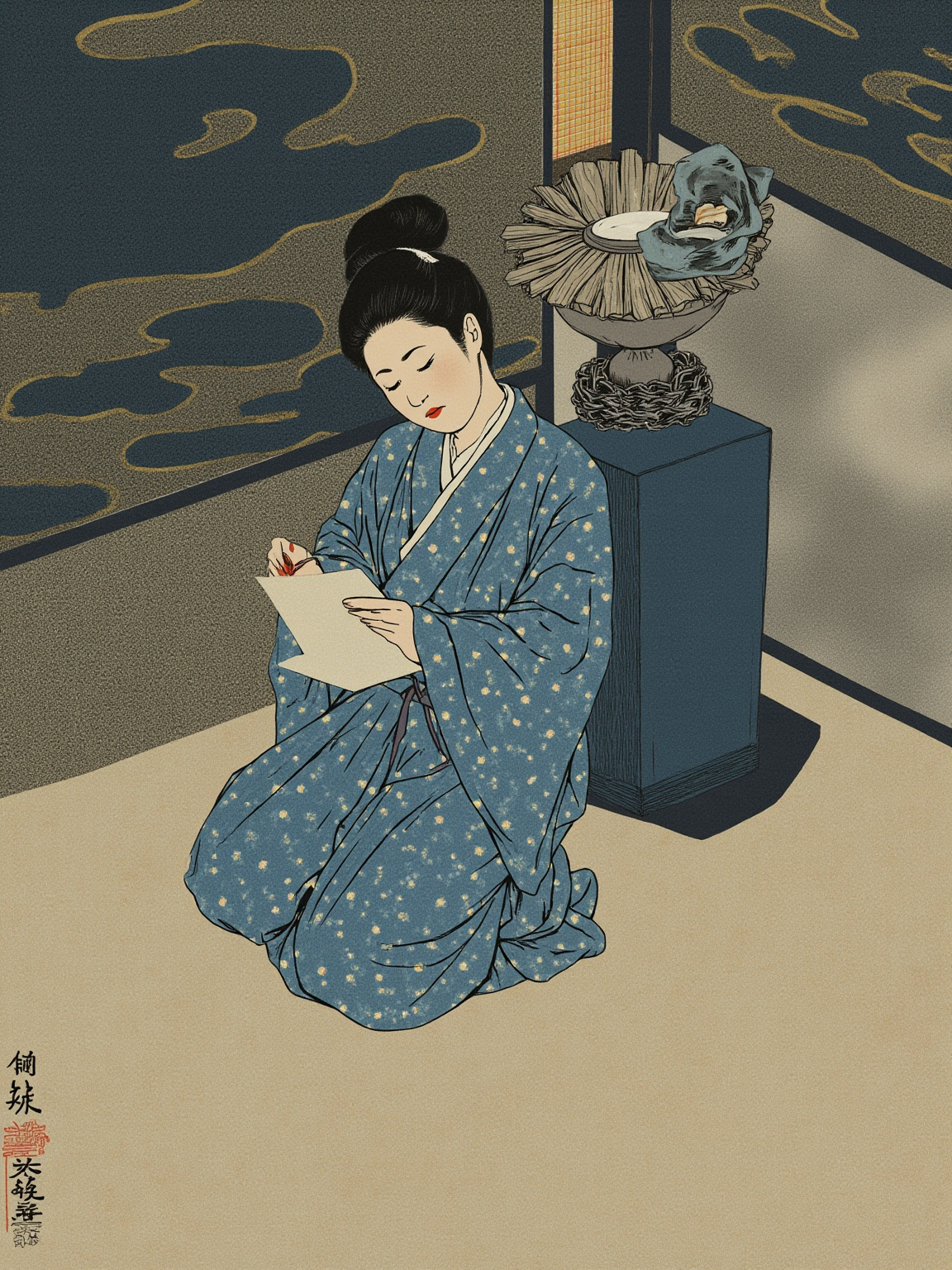
I thought such things truly existed in the world.
我以为世间当真有此事。
金句 · 开卷 · 闻乳母讲物语之夜
The author's touch here is light. She does not write that this was when she fell in love with literature, only that she came to believe such a world was real. That single line is enough. It buries the root of decades of obsession in one evening.
Bowing East Until She Fell Ill
By the time she was about ten, Takasue's daughter had heard from someone that her father kept the complete fifty-some scrolls of The Tale of Genji at his residence in Kazusa. She made up her mind on the spot to get that set into her own hands. She bowed facing east, always east, toward wherever her father was. She kept at it day and night until she fell seriously ill. Her mother found her there, her face gone sallow, the skin of her forehead broken, sighed, wrapped her back up like an infant, laughed and asked what madness had gotten into her, and sent for the father to come home from the eastern provinces.
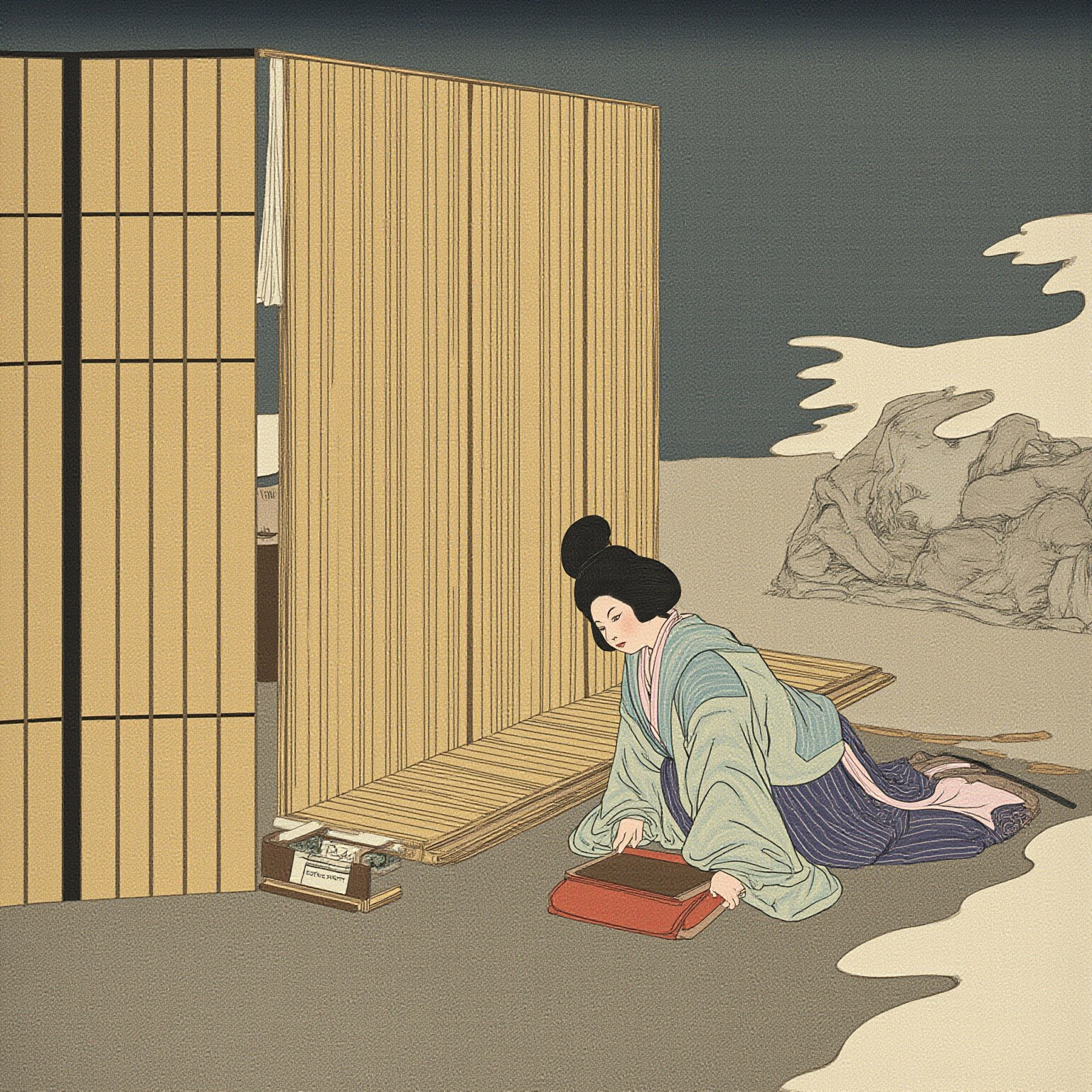
I bowed toward the east, day after day, until I fell ill in my bed.
我日日朝东国礼拜,竟至于卧床不起。
金句 · 求书之愿 · 朝东磕头
There is something shrewd in that gesture. By wrapping the girl back up like a baby, the mother pushes a girl who has done something far too grown-up for her age back into the place of a child, while at the same time bringing the father home, and the books with him. This is not a mother scolding a child. It is how a mother handles a dream she already knows she cannot win against.
The Full Set Arrives, and She Copies by Lamplight
The day her father returned to the capital, the books came in with him. Takasue's daughter describes how she felt copying and reading them: happier, she says, than an empress. That is all, one line. Lamplight, night, scrolls — she shut herself behind the curtained stand and copied day and night, and gave up her post as a lady-in-waiting to do it.
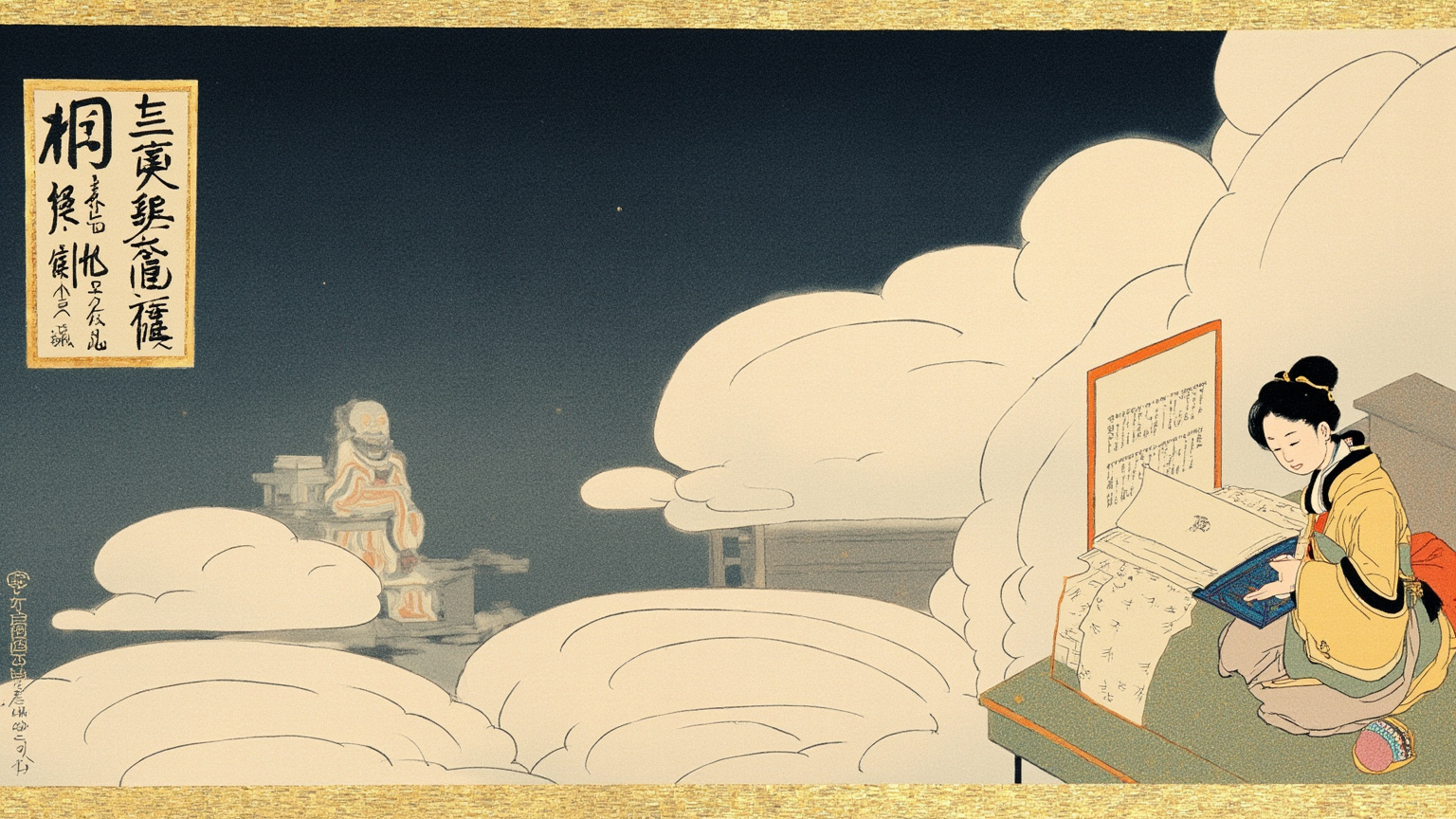
Even the Empress, I thought, could not be happier than I.
我那时觉得,便是皇后,也不如我这般欢喜。
金句 · 抄诵之极 · 五十余卷到手
This is the brightest point in the whole diary. She did not leave her post to marry, to take religious vows, or to devote herself to the Buddha. She left it to wait for more of Genji, and when there was none to wait for, to copy what she had. Nothing else in Heian women's writing quite matches this, wanting a book badly enough to quit your job, a thousand years before anyone quit a job to chase a celebrity.
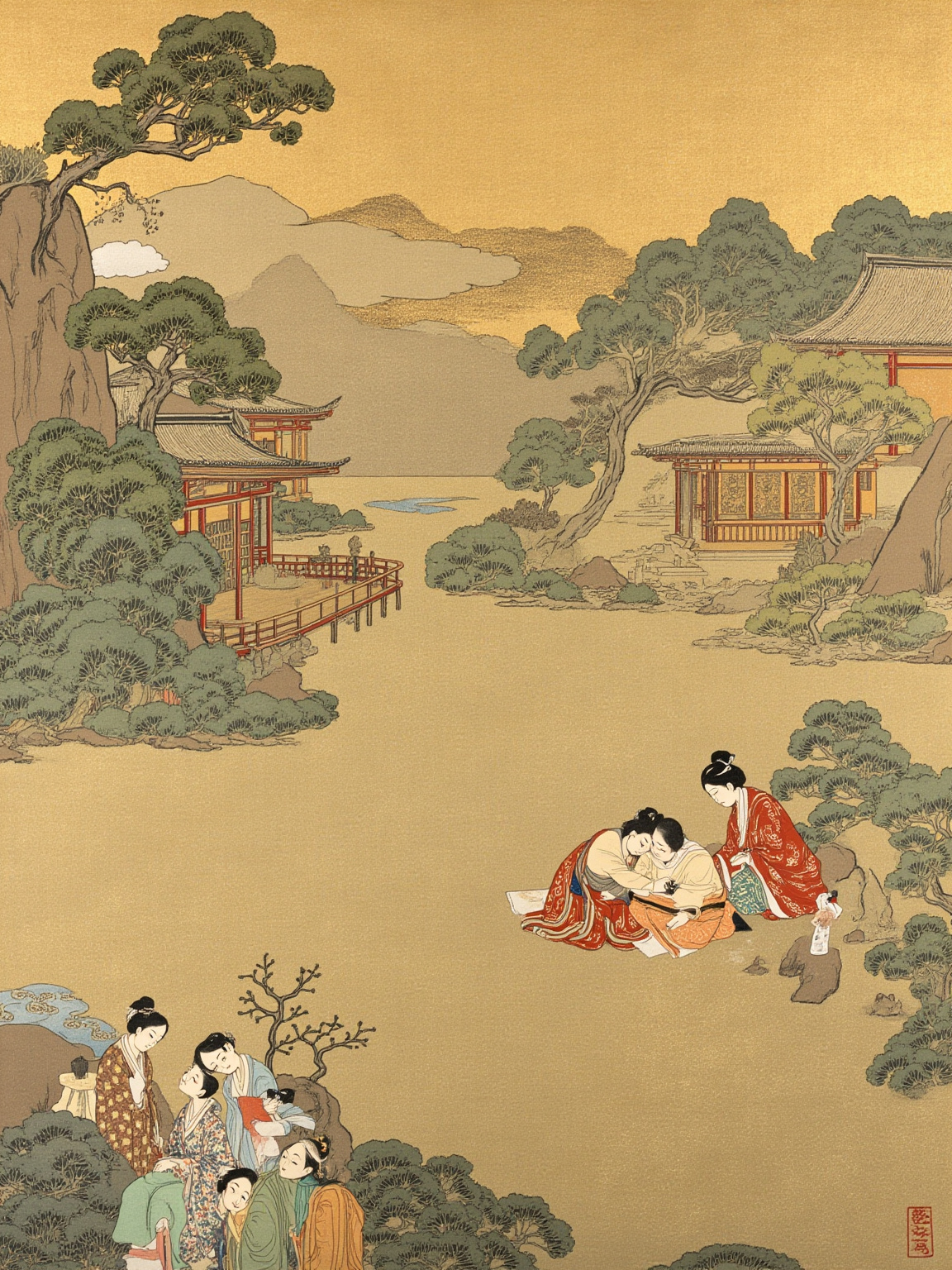
I gave up my place in the palace, and gave myself to the brush.
我辞了女房之职,一心只在笔砚之间。
金句 · 辞宫 · 专待源氏外记
She believed such a world was real, and that single belief carried her for the next thirty years.
No Story Is Bright Enough to Save Middle Age
After girlhood, Takasue's daughter followed the ordinary path of a Heian woman: she entered court service as a lady-in-waiting, married Tachibana no Toshimichi, and had children. Then her husband died. She lived out her widowhood alone in her hermitage at Sarashina. From this point on, the happiness of copying by lamplight behind the curtain never came back.
She does not write widowhood as weeping and wailing. She writes the emptiness of the hermitage. The brighter world the tales once gave her, she says, has withdrawn beyond recall. This is the sharpest cut in the whole book: it is not that she stopped loving stories. It is that stories stopped being enough. A woman loses her husband in her thirties, opens The Tale of Genji again, and no matter how clearly Murasaki Shikibu writes, it cannot comfort a lonely woman in middle age.
Over the Mountains, to the Temple Gates of the North
In her later years, Takasue's daughter made several long journeys: over the mountains out of the capital, through Hokuriku, into the Kanto region, on pilgrimages to the sacred temples around Echigo and Kazusa. Mountain paths, snowy nights, plain temple halls, a monk reading sutras by lamplight — she does not write the gilded splendor of the Phoenix Hall at Byodo-in. She writes the cold inside a temple gate at midnight.
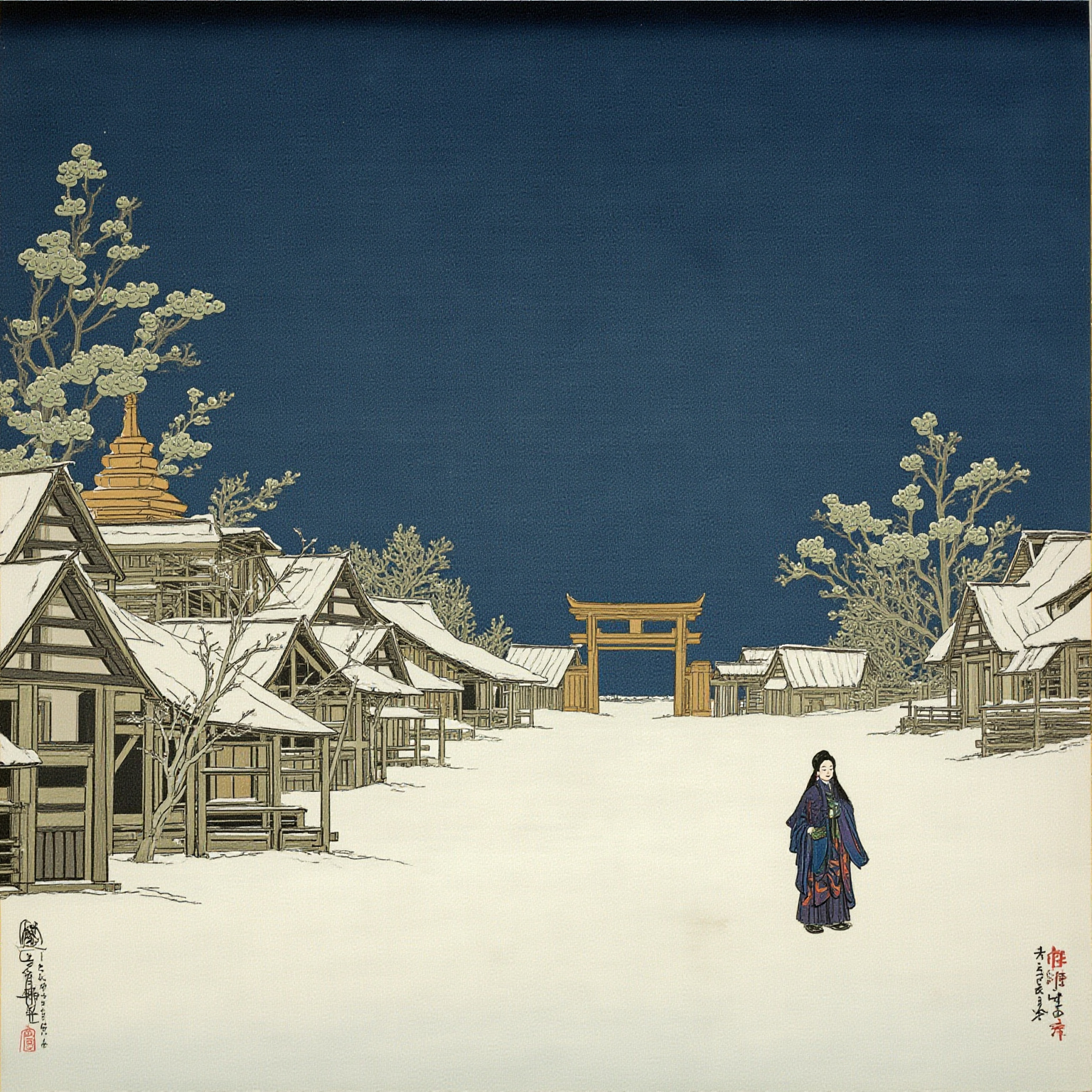
The brighter world the tales had given me was gone, and would not return.
物语曾给我的那个更明亮的世界,已无可挽回地隐去了。
金句 · 寡居之庵 · 故事退场
What she is asking for now is not a husband but the next life, and some comfort in this one. She once brought a religious devotion to stories; now she brings a story-lover's absorption to prayer. Her inner map has shifted from the tales to the temples. The first time I read this passage, I went back and reread the page before it: a woman who spent an entire life switching tracks, from chasing a story to kneeling before a god.
Why It Works: A Thousand-Year Arc of an Addiction Failing
The Sarashina Diary is remembered because it takes how a story becomes an addiction, and how that addiction stops working in middle age, and folds the whole thing into the arc of one lifetime. That Genji's story cannot comfort a widow in middle age is not a new idea. Few writers, though, have carried it across a single book, from the lamplight of a girl copying scrolls to the emptiness of a widow's hermitage.
It is also one of the earliest works of female autobiographical prose anywhere in world literature. It is more personal than Sei Shonagon, more ordinary in its texture than Murasaki Shikibu, and simply outside the range of a love diary like Izumi Shikibu's — it holds an entire life. That capacity, to fit a whole life into one slim book, was rare a thousand years ago.
Why Read the Original: What No Map Can Give You Is the Warmth Under the Lamp
This guide has given you the map: a girl bowing, a girl copying, a widow, a pilgrim, a whole life. What no map can give you is the feel of that lamplight, the curtain half lowered, a low lamp catching the scroll, a girl's cheek warmed by the flame, the exact pressure of her mother's arms around her, the words that went unsaid between father and daughter when he set the books down. Only the original text brings that back to life. Read it for that one evening's lamp.
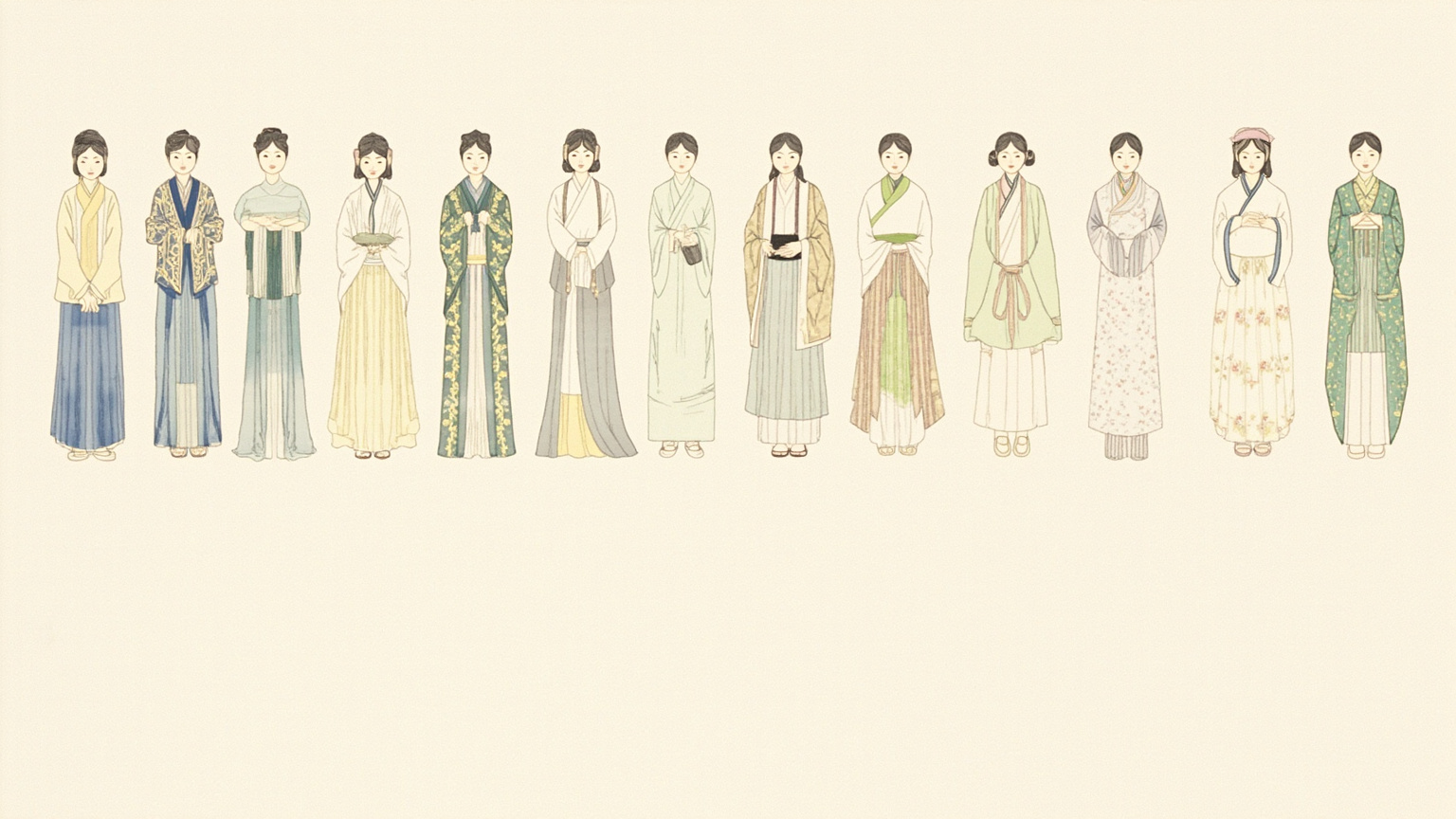
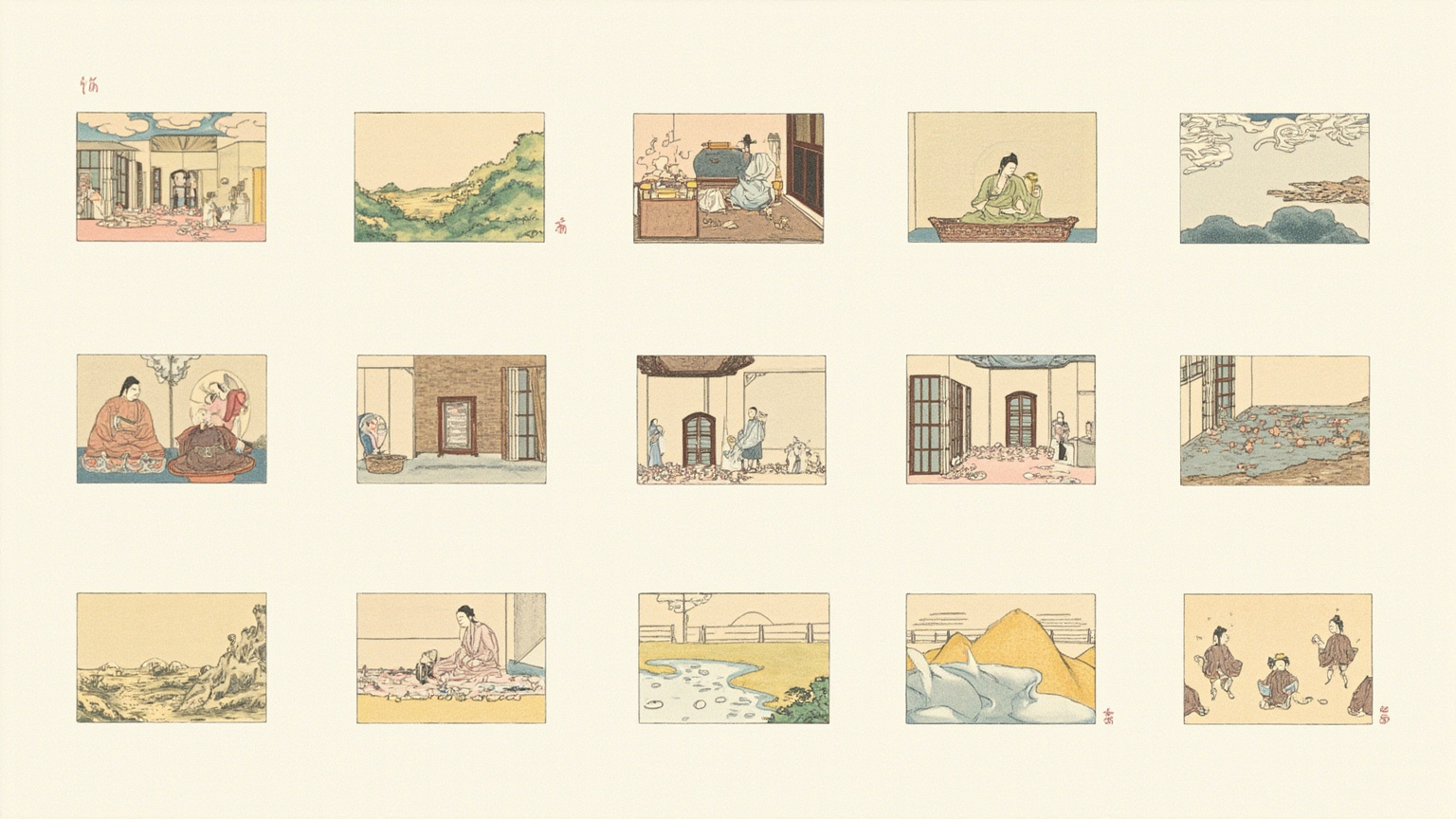
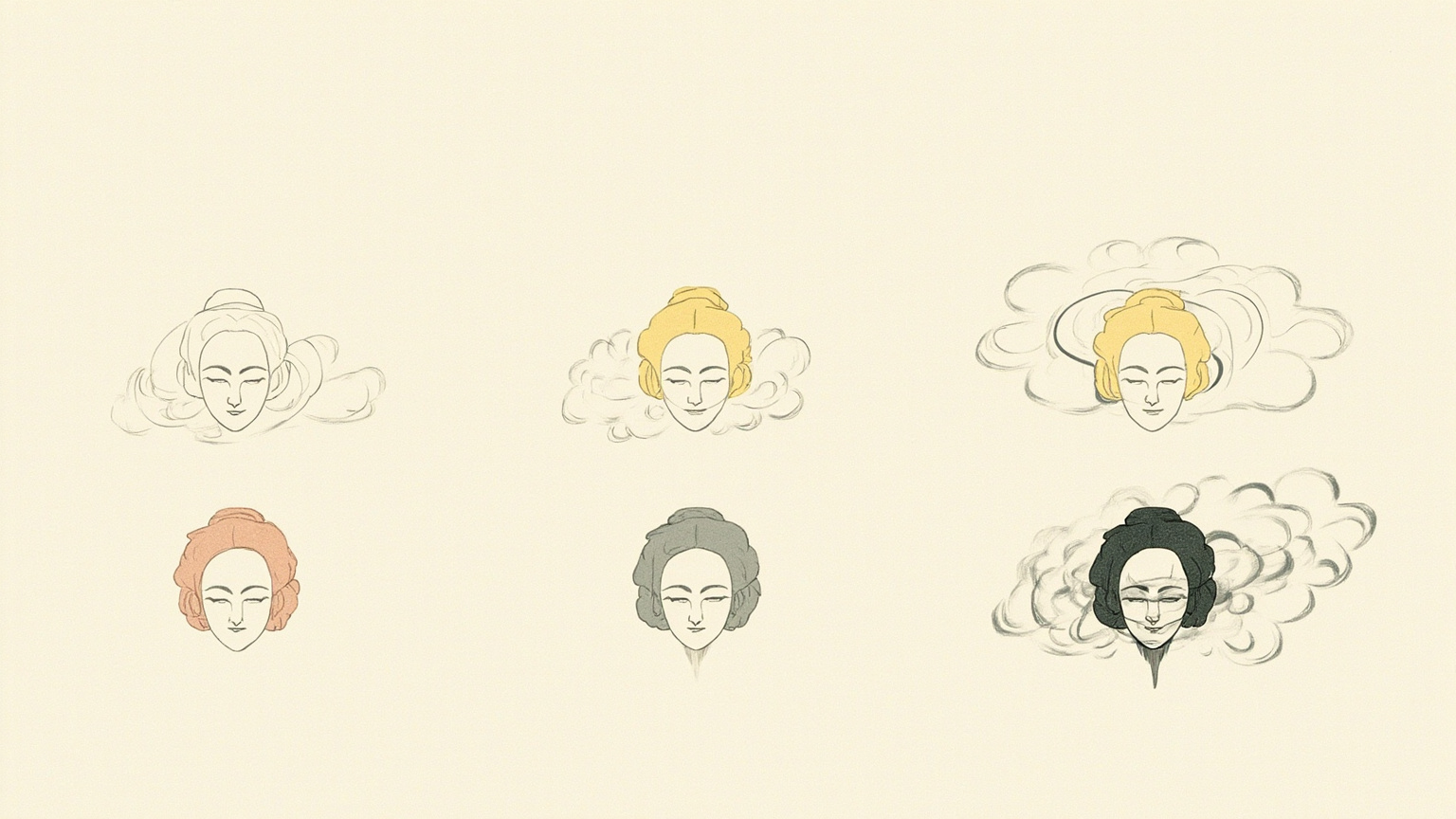
Art Direction4 plates
Before the guide was written, this book got a visual foundation — every illustration you just read grew out of it.