The Scholars (The Unofficial History of the Scholars) · Companion Guide
The Scholars
A cool, unflinching brush that captures every face the examination system produces: the man who passes goes mad, the miser can't bear to die with two wick-stems still burning, and the truly gifted end up hiding in a tailor's shop and a teahouse.
A Scholar Smashes His Head Against the Exam Board and Weeps on the Ground
A gray-haired old man walks into the examination hall — the place that will decide the whole shape of his life. He is only passing through, curious to see what the exam boards look like. He stops, stares at the narrow plank, and the tears start. Then he lunges at it head-first, collapses, and weeps and rolls on the ground, wailing without stop. People crowd around asking what's wrong, and he can't get the words out. He is past sixty, and he has still never passed even the first rung of the examinations. A lifetime of trying, a lifetime of failing, and he has never once earned the right to sit inside these walls and compete. This is not a novelist's exaggeration. It is the scene in The Scholars that nobody reads with a straight face: this classic Chinese satire spends its length showing you, inch by inch, exactly what the examination system could do to a man, with a humor so cold it goes straight to the bone.
If this book leaves you with only one image, it is probably that old man smashing his head against the exam board, plus one more: a poor scholar who hears he has passed the provincial exam and bolts out of his house half mad, sprinting through the streets shouting the news, until his father-in-law, a pig butcher, slaps him back to his senses. You have probably met both scenes before; they get quoted in Chinese textbooks over and over. What the textbooks do not tell you is that these are just the opening chapters. What follows is nearly two hundred characters across more than fifty chapters, an entire world of scholars with no single hero, only a long scroll of human types. This guide walks you through that whole world, watching a two-hundred-year-old pen carve open, one stroke at a time, what ambition, propriety, and the human heart actually look like.
What Kind of Book This Is: The Ceiling of Chinese Satire
The Scholars was written in the mid-eighteenth century by Wu Jingzi, a vernacular novel told in linked chapters. Wu came from a prominent family in Quanjiao, Anhui, but his own path through the examinations went nowhere, his family's fortunes collapsed, and he ended his life in Nanjing living off his writing and his friends' charity. His contempt for the eight-legged examination essay was paid for with his own ruin. The novel is nominally set in the Ming dynasty, opening with the painter Wang Mian at the close of the Yuan, but no reader is fooled: what Wu is really describing is the world of scholars around him, in his own Qing dynasty. Lu Xun, in A Brief History of Chinese Fiction, gave it a verdict that has stuck: sorrowful yet witty, gentle yet cutting. The peak of classical Chinese satire begins with this unofficial history that borrows the Ming to write about the Qing.
Characters and World: An Entire World Without a Hero
Open this book and drop one habit first: stop looking for a protagonist. There isn't one. Fan Jin, Zhou Jin, Yan Jiansheng, Mr. Ma the Second, Kuang Chaoren, Du Shaoqing, Wang Yuhui, Shen Qiongzhi: nearly two hundred characters take their turns on stage, pulling each other along, stitched together into one long scroll of a world. Read the whole book as a single world of scholars: the examination halls, the studies, the wine houses, the country gentry's estates, the banks of the Qinhuai River, are all one stage. The settings range across the south of the Yangtze and beyond: the provincial exam halls of Shandong, Zhuji and Hangzhou in Zhejiang, Nanjing, Anhui, Yangzhou. There are men driven half mad chasing office, the true scholars the author believes in, a daughter destroyed by the demands of propriety, an extraordinary woman who takes her money and runs, and in the end, the last trace of real refinement turns up in the hands of craftsmen in the street. This is a group-portrait structure almost unheard of in Chinese fiction, and the structure itself is the argument: the world of scholars is an ecosystem, with no heroes in it, only people.
The Shape of the Story: Seven Scenes to Understand This World
Scene one, the prologue. The author opens with a recluse painter from the end of the Yuan dynasty and the start of the Ming: Wang Mian, a former cowherd who taught himself to paint magnificent lotus flowers, and who turned down the court's summons again and again, choosing to go home and farm instead. Through this true scholar who wants nothing to do with rank, the author lays out the book's whole moral yardstick before the story even begins: a reader could live like this instead. From the first page, everything that follows, an entire world of scholars driven half mad by ambition, is measured against him.
Craft note: the prologue's job here is not to tell a story but to set a standard. Classical Chinese novels usually use a prologue to lay out background; this one uses it to install a moral coordinate system that every character afterward will be measured against. It does not matter that Wang Mian never appears again. His absence is the shadow that falls across every striver who follows him.
Two Specimens Driven Mad by the Examinations
Scene two: two specimens of exactly what the examination system could twist a scholar into. Zhou Jin is past sixty and still hasn't passed the entry-level exam, when a visit to the examination hall ends with him smashing his head against the plank and weeping without control. A crowd gathers to watch, and afterward a few merchants pool their money to buy him the rank of jiansheng, a purchased place at the Imperial Academy that lets him sit the higher exams. From there his career takes off. Fan Jin has it worse: he sits the exams for most of his life while his father-in-law, Butcher Hu, calls him a useless disgrace to his face. The moment he finally passes the provincial exam, he goes mad with joy and runs through the streets shouting the news, until Butcher Hu slaps him back to his senses. And Butcher Hu himself? When Fan Jin was failing, he called him worthless; the instant Fan Jin passes, he starts calling him his worthy son-in-law, a star fallen from heaven, and complains that the hand he once struck him with now aches from the shame of it. The whole of society's opportunism turns on that single about-face.
Craft note: the author never steps in to condemn anyone; he simply lets you watch. Fan Jin's madness, Zhou Jin's collision with the plank, Butcher Hu's about-face: none of it comes with authorial comment, all of it delivered in plain, undecorated description, the characters performing themselves for you. This is what Lu Xun meant by gentle yet cutting: the edge hides inside a completely level tone, and that is ten times more savage than any outright denunciation.
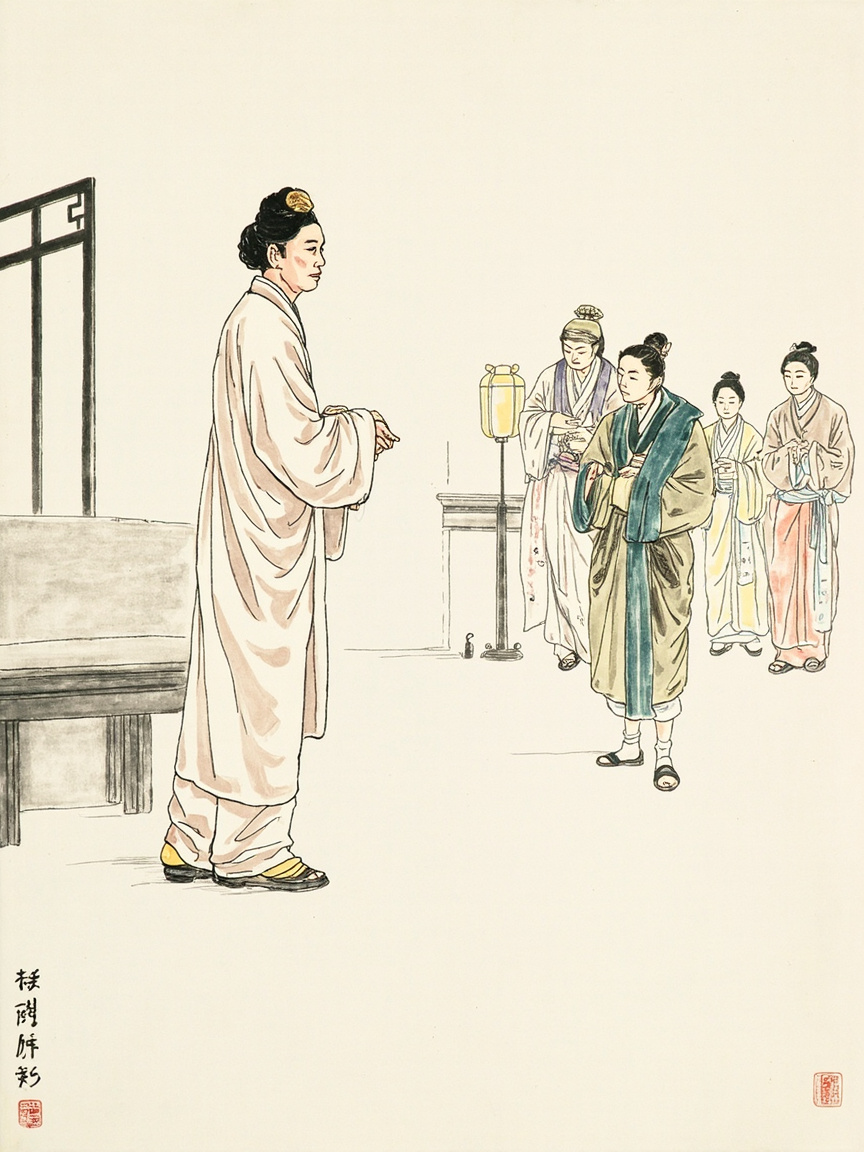
One common misreading needs correcting here: the famous episode of Fan Jin passing the exam is just one turn in the third chapter, one face among many, not the whole book. The Scholars is not Fan Jin's story; it is a long scroll on which nearly two hundred people take their turn. Treat Fan Jin as the protagonist and you miss the very thing that makes this book remarkable.
The Miser's Last Wick
Scene three: plain description at its sharpest. The country gentleman Yan Jiansheng is dying, and as death nears he holds up two fingers and will not let go of his last breath. His family crowds around guessing: two people he hasn't seen? Two sums of silver left unsettled? Nobody can work it out. Finally his youngest concubine, Zhao, understands: the oil lamp has two wicks burning, and it is wasting oil. She pinches one out, and only then does Yan Jiansheng nod, lower his fingers, and die. It is the single most famous portrait of miserliness in Chinese literature. Standing beside him is his elder brother, Yan Gongsheng, who bullies and cheats his way through the neighborhood for a living. One brother stingy to his last breath, the other a swindler to his, between them exhausting every shade of small-town greed that has nothing to do with rank at all.
Craft note: Yan Jiansheng never gets a single line of interior monologue. One finger and one gesture are all the author needs to nail a miser to the wall of literary history. This is plain description at its most extreme: the character shows nothing, and the reader is left shaken.
Men Formatted by the Examination Life
Scene four: two more people ruined by the examinations, in different ways. Mr. Ma the Second is a decent, devout believer in the eight-legged essay, a provincial graduate who makes his living compiling anthologies of model exam essays and genuinely believes this is the only honest path for a scholar. He tours West Lake in Hangzhou, hills, mist, willows, painted bridges, all of it, and notices none of it, ducking straight into a bookshop to bury himself in essay collections instead. Through the kindest man in the book, the author shows just how thoroughly a life can be reformatted by the pursuit of rank. Kuang Chaoren hurts more: he first appears as a simple, devoted son studying hard to support his father, then Mr. Ma the Second takes him under his wing and pulls him into the world of fame and fortune, after which he abandons his wife to marry again, forges documents, and brags without a trace of shame. How a good man is corroded step by step by ambition is the most painful arc of decline in the whole book.
Craft note: Kuang Chaoren does not turn bad overnight; he rots one joint at a time, a little worse with every reappearance, so that the reader has to flip back to figure out exactly where he first went wrong. This slow, boiling-frog corrosion is far more brutal than simply writing a villain from the start.
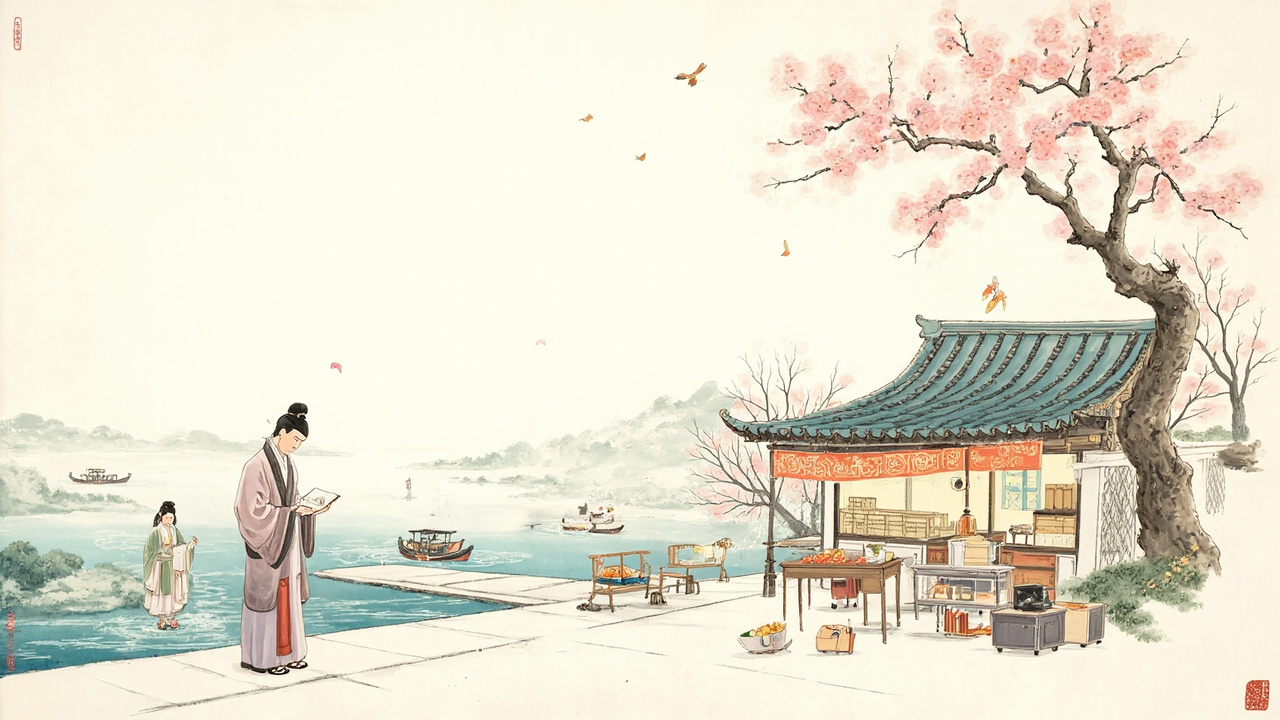
Mr. Ma walked past with his head down, and never once looked up.
馬二先生低著頭走了過去,不曾仰視。
Original line · Chapter 14 · Mr. Ma the Second tours West Lake without once looking at the scenery
The Author's Dream: The Rite at the Shrine of Tai Bo
Scene five: the ideal of the true scholar the author actually believes in. Du Shaoqing, born into a great family and carrying more than a little of the author's own likeness, cares nothing for money and everything for principle, gives away his whole fortune to help people who have fallen on hard times, scorns both the examinations and official recruitment, and scandalizes everyone by touring the mountains with his own wife at his side. Together with fellow true scholars Chi Hengshan, Zhuang Shaoguang, and Yu Yude, he leads the great rite at the Shrine of Tai Bo in Nanjing, an ancient ceremony revived, worthy men gathered under one roof. It is the high point of everything positive in the book, the single brightest light in the whole gallery of characters.
Craft note: what makes Wu Jingzi formidable is that he knows this light will dim. The more solemn and stately he makes the rite at the shrine, the more desolate its later neglect becomes. The ideal is not shattered; it is simply forgotten, slowly, by time.
Propriety Devours: A Father's Laughter and His Tears
Scene six, the coldest cut in the book. The old scholar Wang Yuhui's daughter, widowed, decides to starve herself to death in the name of wifely virtue. Wang Yuhui approves to her face, tells her it is a good death, the kind that gets written into the histories. She really does starve to death. At first he throws his head back and laughs with satisfaction, believing he has helped his daughter achieve a noble name. But later, out on a boat, watching the autumn river and the withered reeds, he suddenly breaks into tears he cannot stop. The man who laughed and urged her toward death is the one left alive, and only now does he learn what that pain actually feels like. This is the coldest single stroke in the whole indictment of how propriety devours people: the laughter and the tears living in the same man. Standing just beside this scene is the remarkable Shen Qiongzhi, who sees through a salt merchant's scheme to keep her as a concubine, escapes with money of her own, makes her own way alone in Nanjing selling poems and embroidery, and faces down a courtroom without fear. In a book that catalogs every kind of pettiness among scholars, a woman with this much self-respect and independence stands out all the more.
Craft note: Wang Yuhui's laughter and his tears are pages apart, and the author never comments or explains, leaving the reader to feel that thorn alone. This is sorrowful yet witty in practice: comic laughter and tragic tears occurring on the same face, cutting deeper than any direct accusation could.
Refinement Falls to the Streets: Four Remarkable Men at the Book's End
Scene seven: the world of scholars breaks up. The true scholars scatter, the shrine falls slowly into neglect, and real refinement ends up, of all places, in the hands of ordinary craftsmen: the calligrapher Ji Xianian, the tinder-paper seller Wang Tai, the teahouse keeper Gai Kuan, and the tailor Jing Yuan, who plays the zither, plays chess, and practices calligraphy purely for his own pleasure, refusing to curry favor with any gentleman. The dignity that once belonged to scholars has gone missing, and it has turned up instead in a tailor's shop and a paper-seller's stall. The book closes on these four remarkable men of the streets, desolate and long in its afterglow. The final chapter, a posthumous honor roll in which the court formally recognizes worthy men after the fact, answers back to the opening prologue, closing the curtain on a whole world of scholars twisted by ambition and, in the end, forgotten.
Craft note: the book opens with Wang Mian, a true man of letters, and closes with four remarkable men of the streets, with an entire world of scholars corroded by ambition standing between them. That structure is itself a massive irony: once the scholarly class collapses, where does the old integrity of the true scholar actually go? Into a tailor's shop and a teahouse. This kind of bookend is the single most masterful stroke a novel of this scale can pull off.
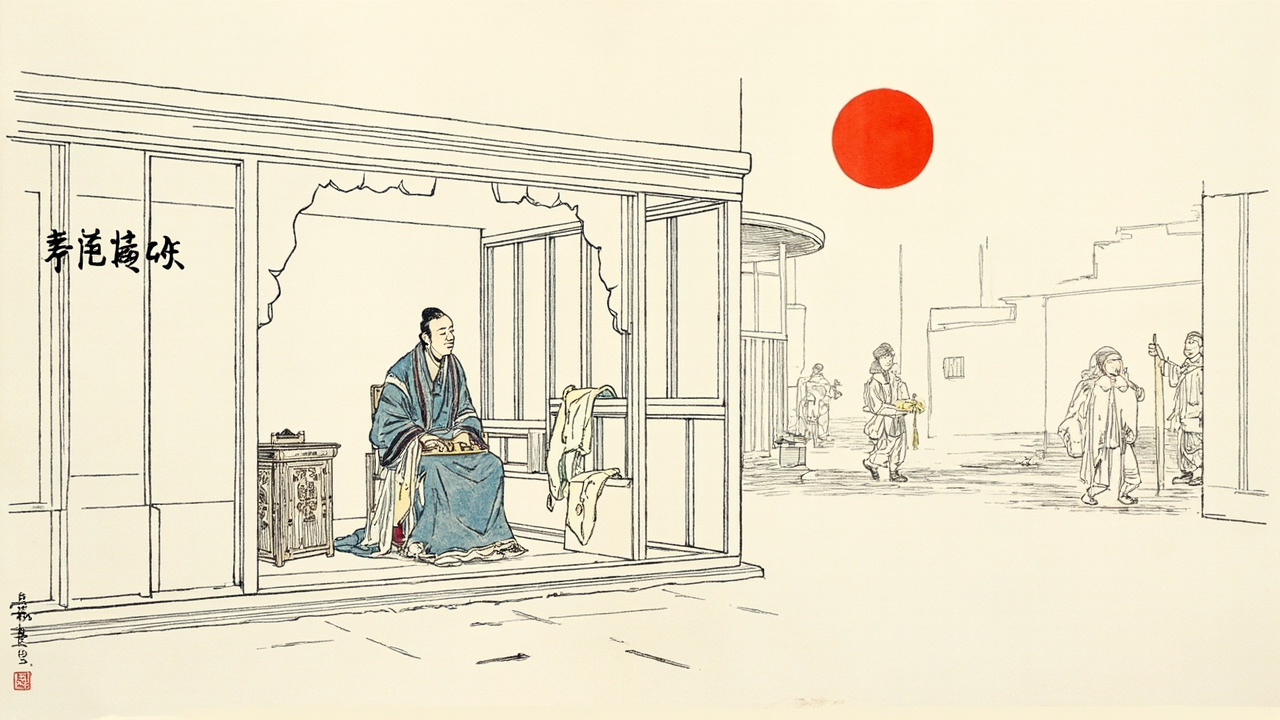
I covet no man's riches and study no man's face; heaven does not claim me and earth does not rule me — is that not a happy life?
又不貪圖人的富貴,又不伺候人的顏色,天不收,地不管,倒不快活?
Original line · Chapter 55 · Tailor Jing Yuan, one of the Four Eccentrics at the novel's close
What It Is Really About: System, Human Nature, and Cold Humor
The spine running through the whole book is a critique of the examination system. The eight-legged essay twists scholars into people like Zhou Jin, Fan Jin, and Kuang Chaoren, an old case file on exactly how a system shapes people. But Wu Jingzi does not stop there: he also shows how propriety devours its own (Wang Yuhui urging his daughter toward death), how opportunism switches faces overnight (Butcher Hu's about-face), how ideals get forgotten by time (the shrine falling into neglect), and how a woman can fight back (Shen Qiongzhi). What the book is really saying is that rank and fortune are a mirror, and whatever it reflects in each person is that person's softest, greediest, most frightened place.
Desolation Inside the Laughter: Why Lu Xun's Verdict Stuck
Lu Xun named The Scholars the starting point of Chinese satire, summing it up in eight words: sorrowful yet witty, gentle yet cutting. Reading it today, the examinations are long gone but the chase for status is not. Fan Jin's kind of madness, Butcher Hu's kind of opportunism, Kuang Chaoren's kind of decline still hold up a mirror to us. This is not a book that makes you laugh for laughing's sake; its humor is cold, written with a historian's hand, desolation living inside the laughter. That is the real reason it has stayed sharp for more than two hundred years.
What makes The Scholars so formidable is not who it satirizes, but the moment right after you laugh, when you suddenly can't anymore.
You Know the Plot. Here's Why You Should Still Read It
A guide gives you the map, but the text itself is the ground. There are three things this summary genuinely cannot give you. First, the texture of the plain description: Kuang Chaoren rots joint by joint, Mr. Ma the Second tours West Lake stall by stall poring over essay collections, and this kind of detail, dense enough to make you flinch, gets compressed into a single sentence in any retelling when the original runs ten pages. Second, the breathing rhythm of the group portrait: you have to follow the author page by page, from Fan Jin to Yan Jiansheng, from Mr. Ma the Second to Kuang Chaoren, on to Du Shaoqing, and that sense of an entire world breathing only comes through reading it straight, without skipping. Third, the physical feel of the wick pinched out, the slap, the kneeling, the sudden tears: you cannot know what temperature the air was when those things happened unless you actually read the line. That is why it is worth opening the original text: a guide tells you what happened; the text lets you feel how it happened.
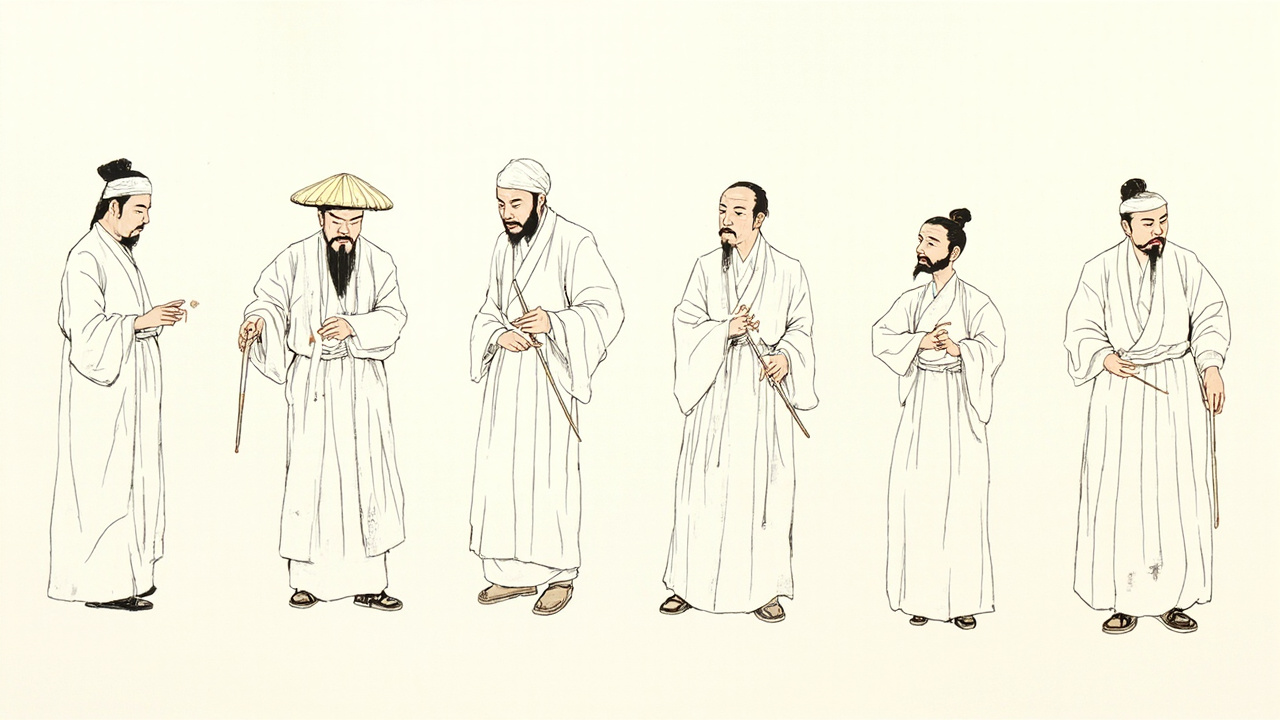
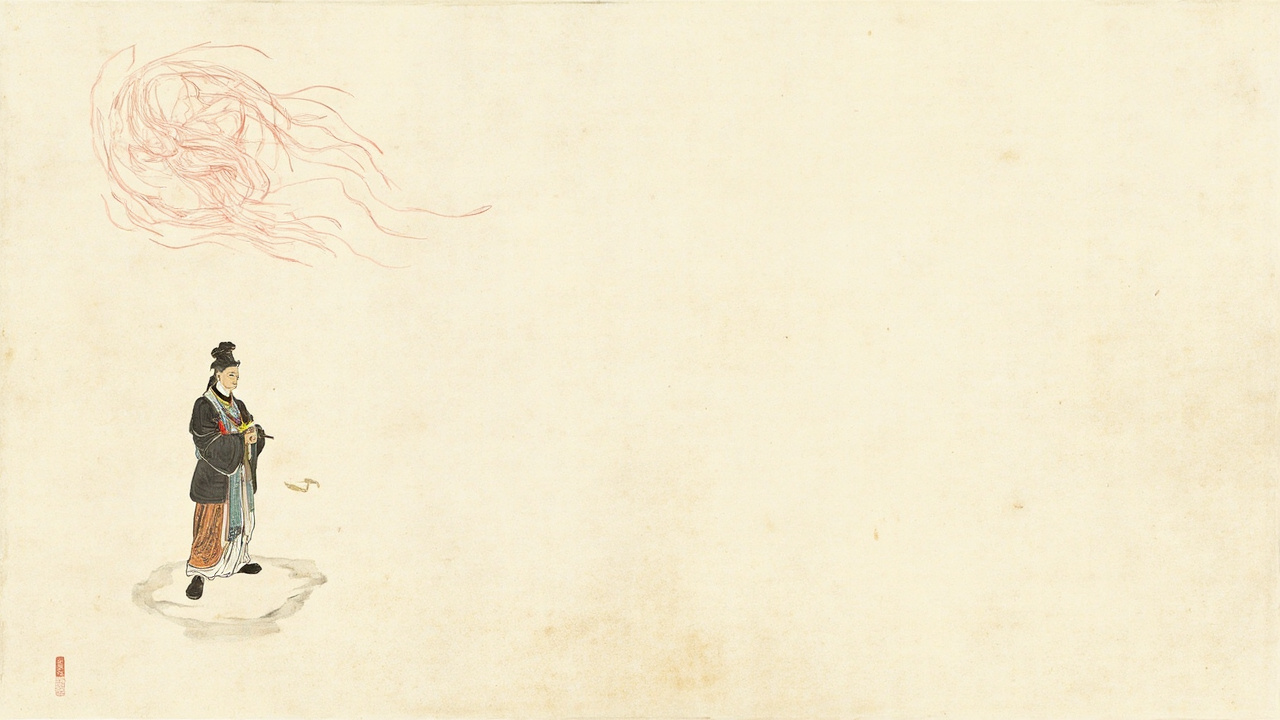
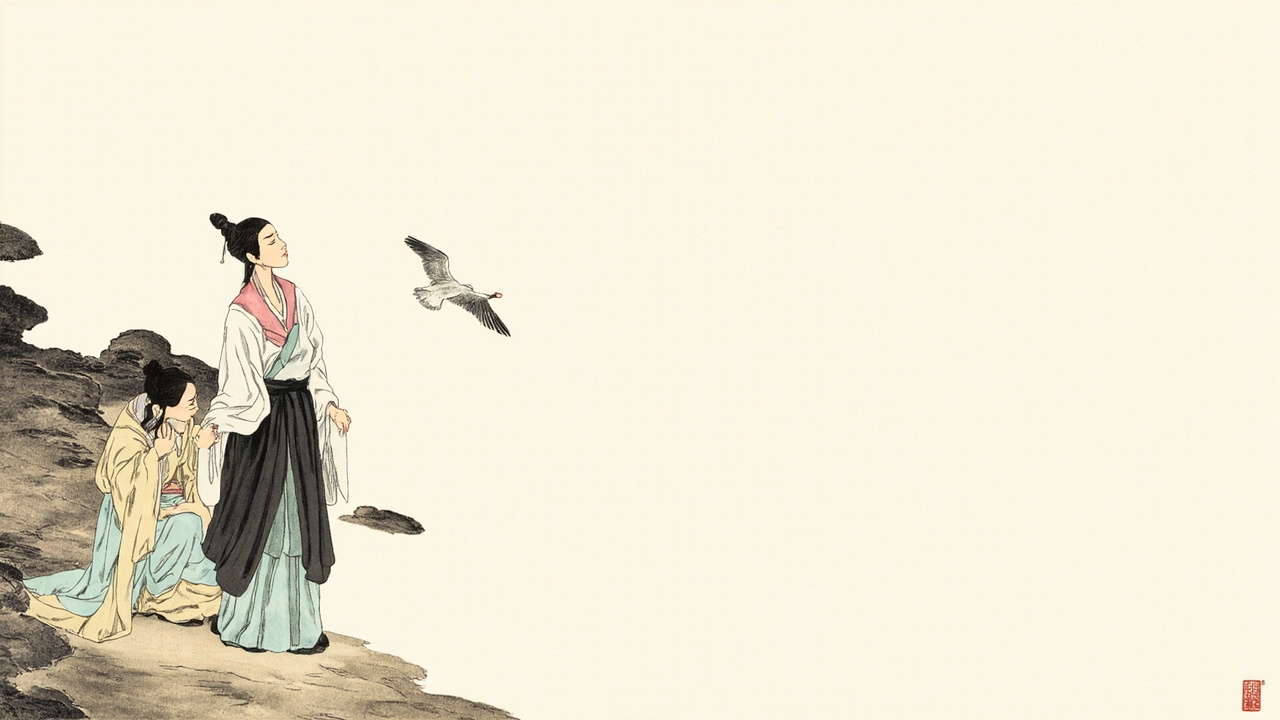
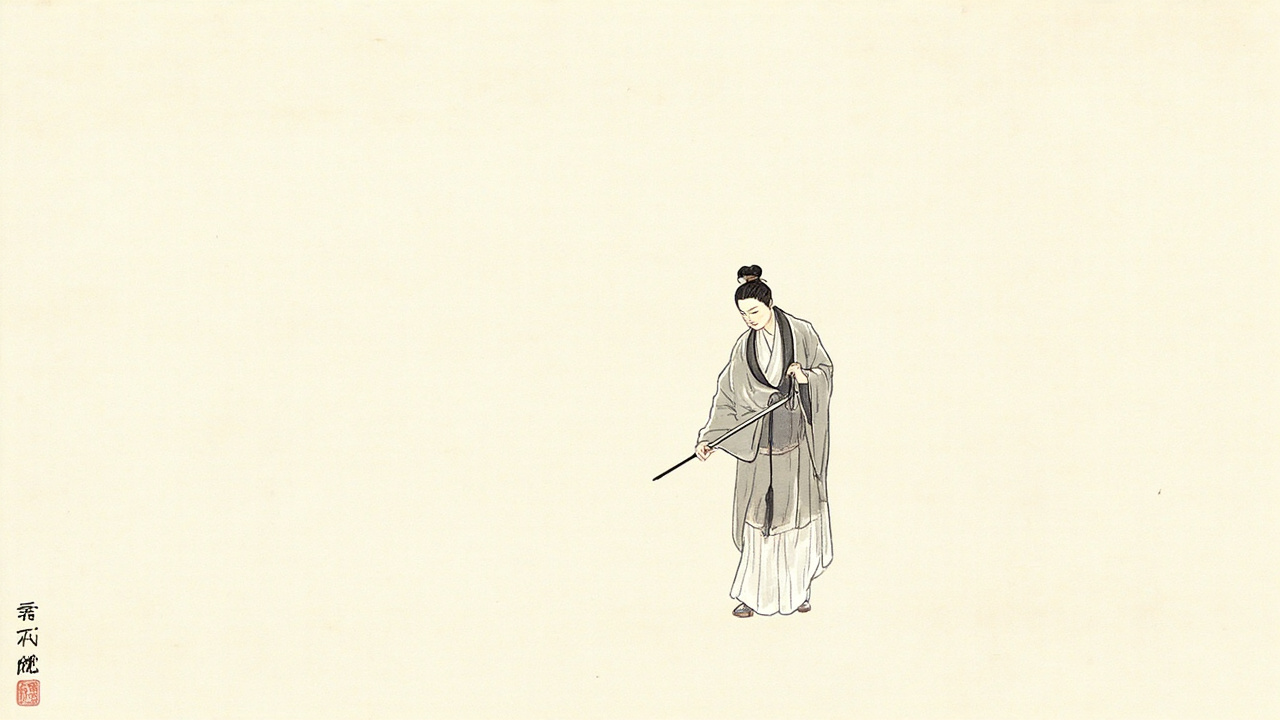
Art Direction4 plates
Before the guide was written, this book got a visual foundation — every illustration you just read grew out of it.