Winner of the 1978 Booker Prize, and Iris Murdoch's most mature novel.
Text and illustrations produced by the pipeline
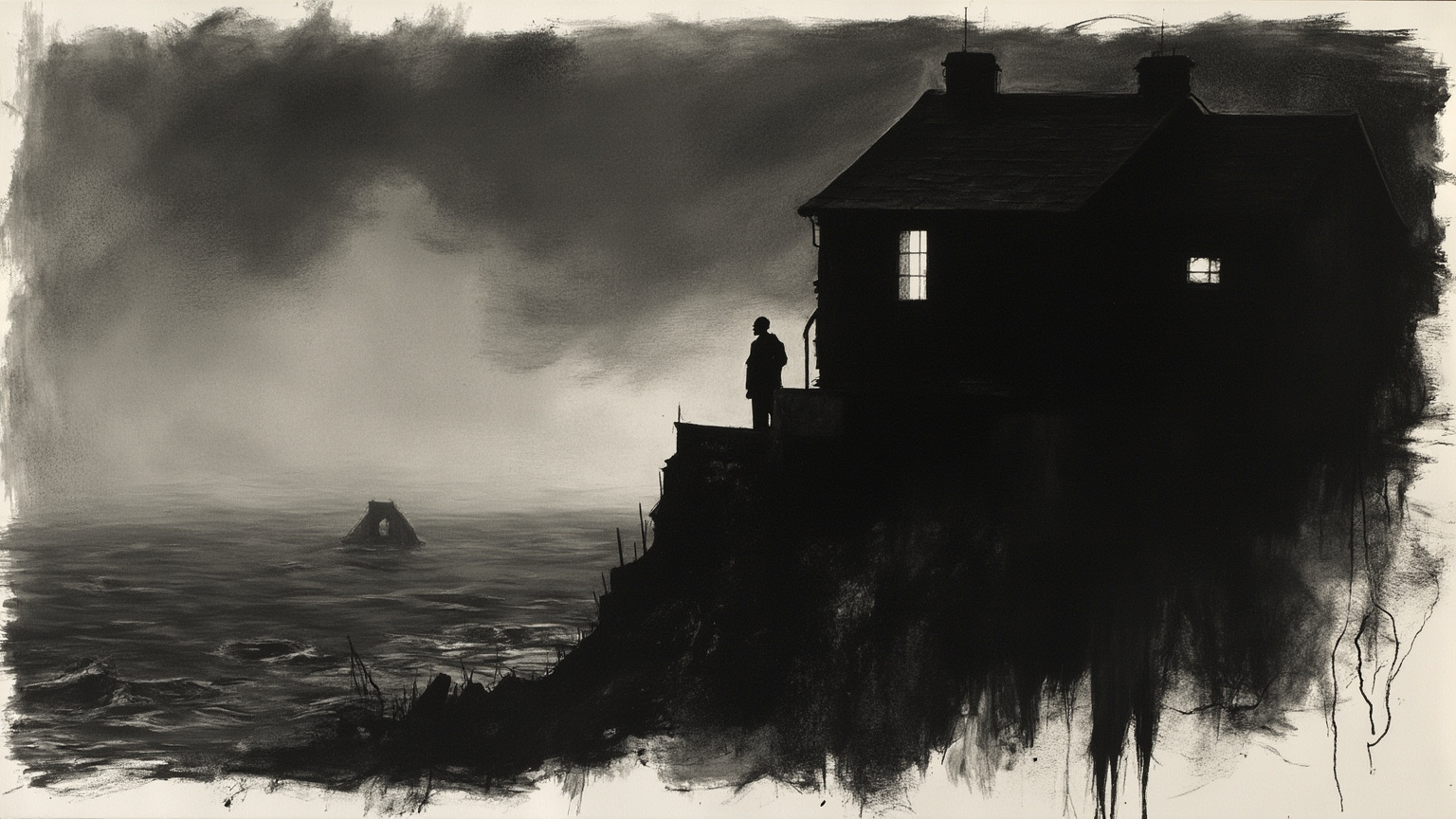
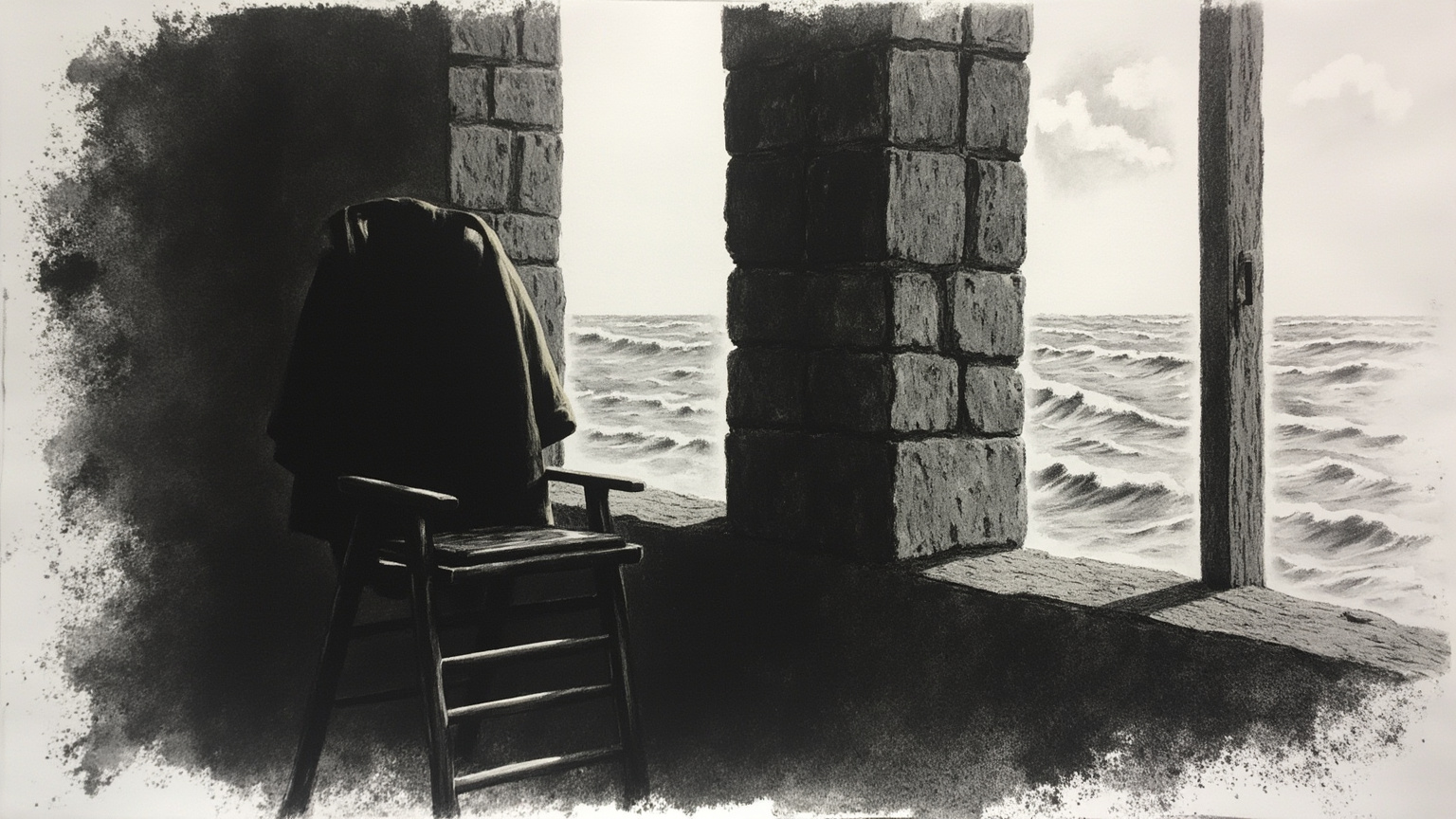
A windowless stone house sits under a cliff, pounded by the waves of the North Sea. Its owner is a newly retired, famous theater director named Charles Arrowby. On his first day there, a shapeless black mass rises out of the water, and later, in his memoir, he swears up and down that it was a sea monster. The book opens with that diary, and it only grows less reliable from here.
Iris Murdoch was British, a philosopher by training who spent her career writing novels around philosophical questions. In 1978 she won the Booker Prize for The Sea, the Sea, and it is still generally agreed to be the book where she got everything right. It is not long, and it runs entirely on one man's first-person memoir, a narrator readers trust less and less the further they get.
This is not a book about what sea monster he saw. It is about why he needed to see one.
Charles spent his working life directing plays in London's West End, discovering leading men, tangling with actresses. The day he retired, he cut every old lover loose and bought himself a stone house on a bleak stretch of England's northern coast, which he named Shruff End. He meant to write his memoir, remake himself, and get clean somewhere no one would be watching.
He did not manage to cut anyone loose. The world caught up with him inside three days: he discovers that Hartley, the girl he loved as a boy, is married and living in the next village, to a taciturn ex-army schoolteacher named Ben. He decides on the spot that she has been miserable all these years and still carries a torch for him, and that it falls to him to rescue her from the marriage.
By now the map is drawn: who these people are, what they do, how the illusion breaks, where everyone ends up. But the real substance of the book, Murdoch's particular English humor, cold and warm at once, the light on the North Sea changing its face eight times a day, the dead-serious self-inflation running through Charles's diary, only lands if you meet it yourself on the page.
This is also a book you have to spend time arguing with. Every sentence Charles gives you needs a silent Really? in response, and that back-and-forth with the narrator is something no companion guide can hand you; it only comes from wearing it down yourself, line by line, in the original text. If you are willing to walk into a middle-aged director's windowless stone house and sit through his account of just how brilliant his life has been, you are ready for this book.
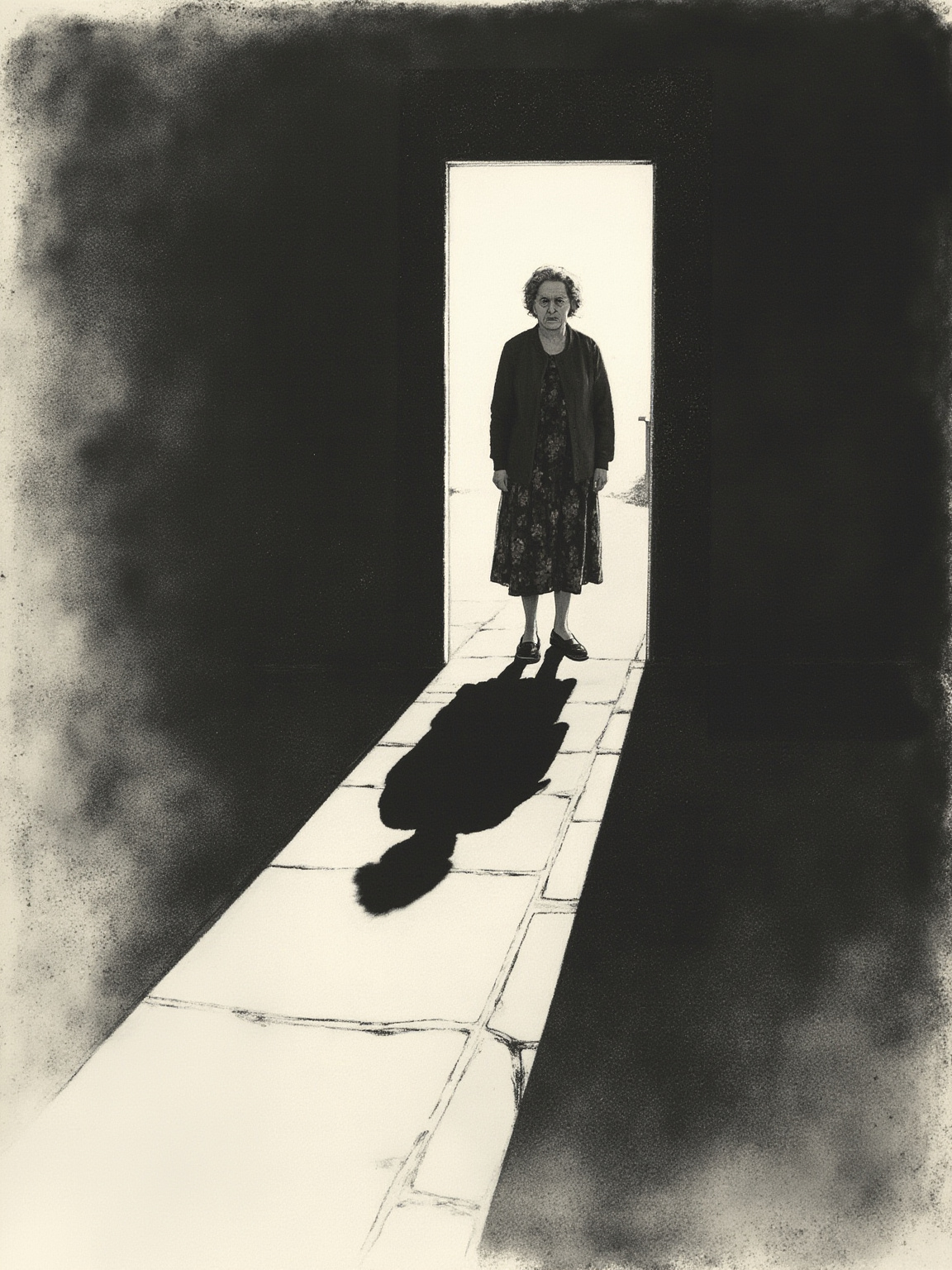
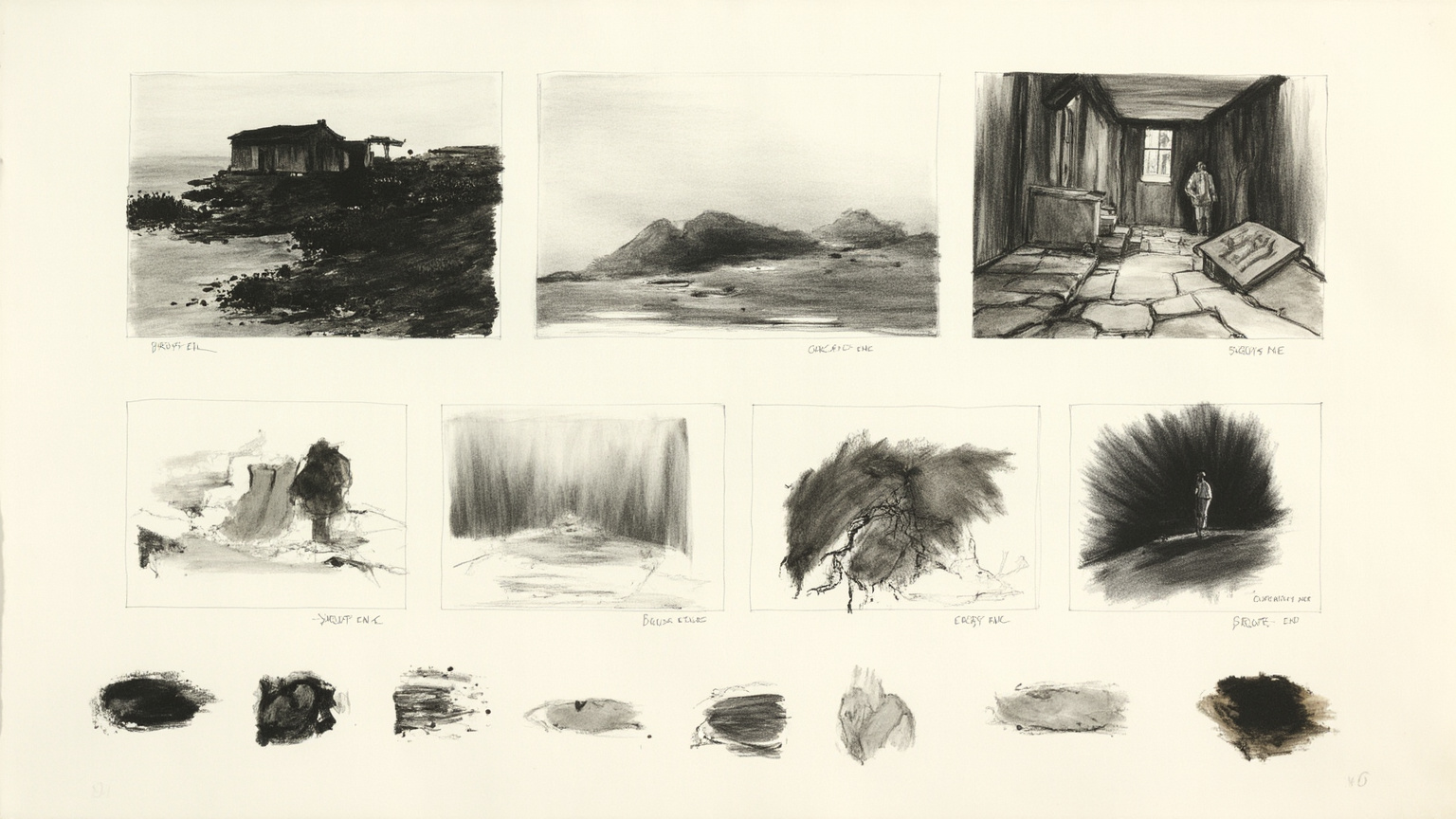
Before the guide was written, this book got a visual foundation — every illustration you just read grew out of it.
Not long after Charles settles in, that black shape in the water surfaces again at dusk. He writes it into his diary with great solemnity, as if it were an omen. It is really just a thing he needs to see, and the rest of the story collapses along exactly that crack.
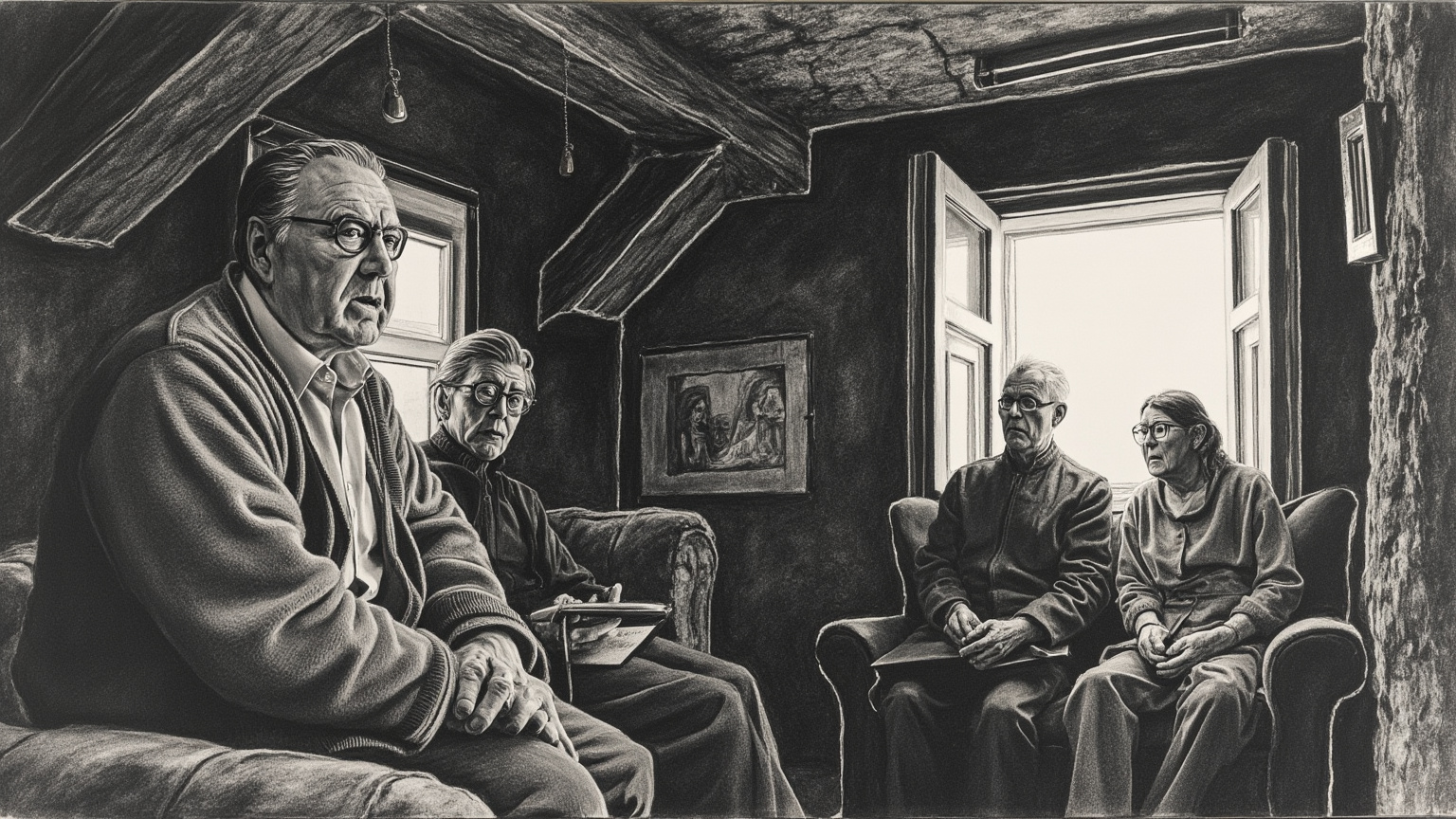
His reunion with Hartley is a small detonation. Forty years apart, and she is now an old married woman, an adoptive mother, living in a cottage so cozy it almost hurts to look at. Charles sits in her front room already writing her lines for her: she is unhappy, Ben does not love her, she is simply trapped. The longer he watches her, the more certain he is that he has seen straight through to her real feelings. I stalled out the first time I read this passage. How does anyone get that certain, that fast?
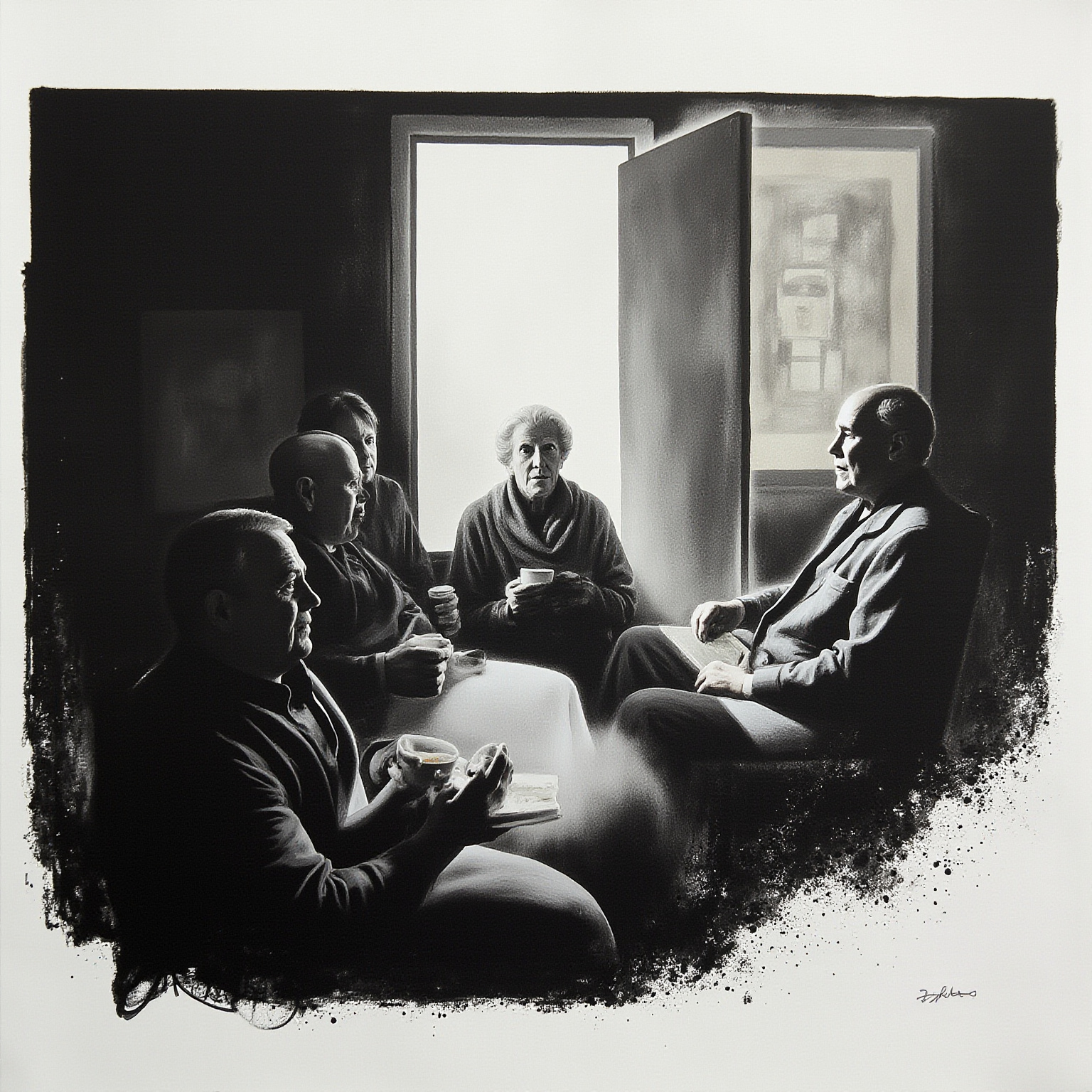
No sooner has he made up his mind than London shows up at his door. First comes Peregrine, his reckless, hard-drinking old collaborator; Charles once had an affair with Peregrine's ex-wife, Rosina, and the account was never settled. Then Rosina herself arrives, glamorous, sharp-tongued, colder with grievance than the North Sea wind. Then Lizzie, an actress so gentle she borders on bland, the least difficult of Charles's old lovers, with her steady, good-natured partner Gilbert in tow.
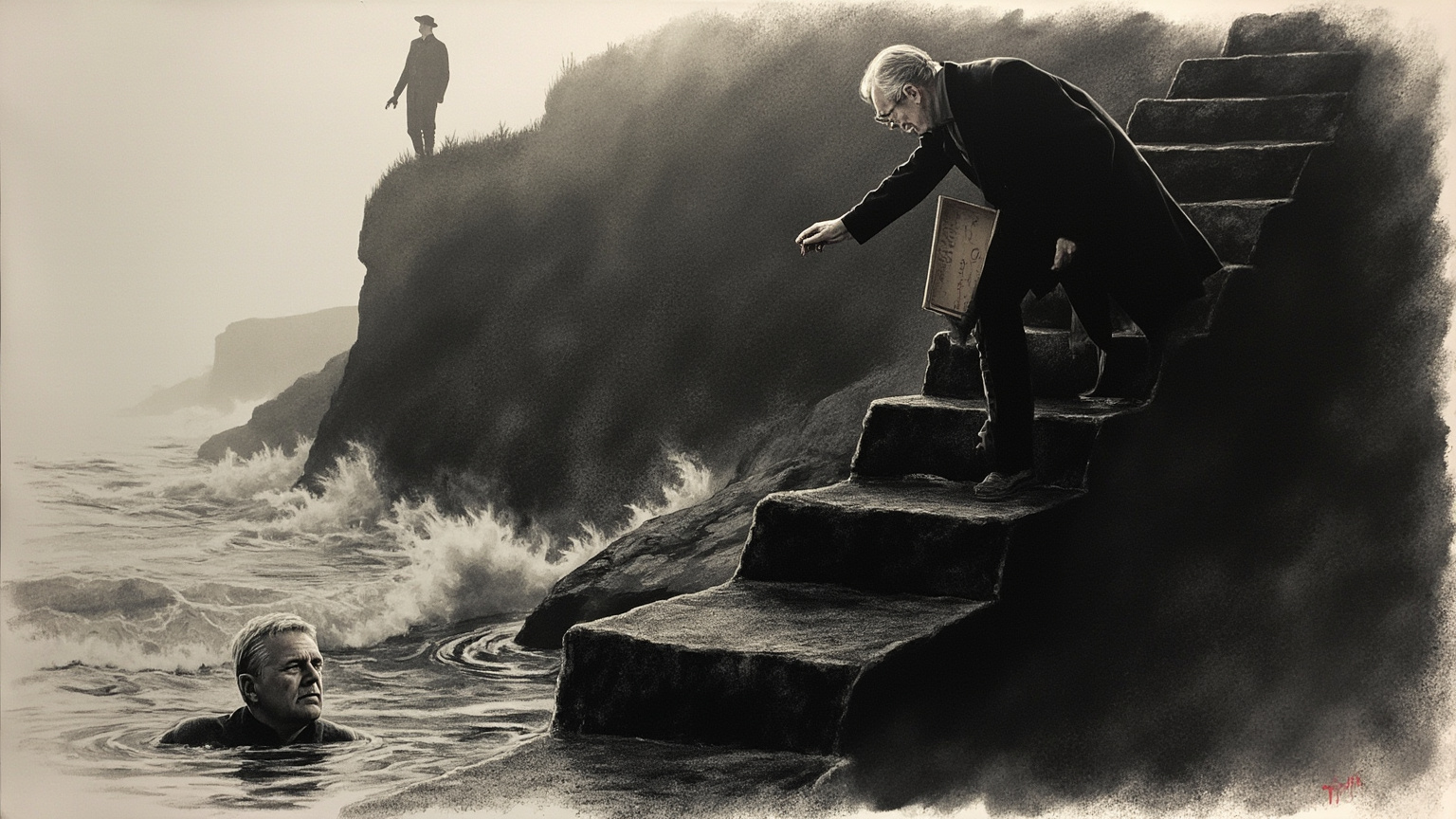
Then James arrives, Charles's cousin, a retired army officer whose manner carries some faint trace of Eastern discipline that Charles can never quite place. The two of them are walking the rock steps down to the water when the tide comes in and swallows the path. Charles slips and goes under, and barely comes back up. James somehow hauls him out, in a way that feels almost like a miracle, the kind that has no business happening on the north coast of England.
One uninvited guest is still missing: Titus, Hartley and Ben's adopted son, a young man who has broken with his family and turns up at Charles's door looking for shelter. Charles has no children of his own, and taking Titus in produces something like a fantasy of fatherhood; the diary fills again with paragraphs of self-congratulation. Titus lives with him in the stone house, the relationship warming and cooling by turns, until one ordinary afternoon the young man goes swimming in the sea and never comes back up.
Titus's death does not wake Charles up. It pushes him a step further in. He becomes fixed on the idea that Hartley must leave Ben and come to him. At one point he brings her to the stone house and all but holds her there, forcing her to choose between him and Ben. Hartley does not choose either. She chooses a third door: she goes back to Ben, and the two of them move abroad.
Near the end, James dies too, quietly, inexplicably, leaving behind a small inheritance and a mystery Charles never solves. Charles finally sells the stone house and moves back to London. On the last page, he says he is living a little more humbly now than he did by the sea. Coming from a man who spent three hundred pages boasting about himself, that line carries more weight than it looks like it should.
Murdoch trained as a philosopher, working on Sartre and on moral psychology. On the surface this novel looks like the stock plot of a retired old man chasing his first love. Underneath, it is a precise clinical report on self-deception. With every page of the memoir, the reader has to ask a question on Charles's behalf: how much has he prettied up, what has he left out, what expression did he read onto someone's face that was never actually there. He is one of the most exasperating, most compelling unreliable narrators in the novel's history.
Every big word in the book, love, redemption, freedom, art, passes through Charles's self-centered filter and comes out reshaped. By the end, the reader sees what is underneath: his fixation on Hartley is not love, it is a need to pin the girl he knew forty years ago in place forever; his retreat to the stone house is not freedom, it is just a more respectable cell; and the monster he saw in the water was never really out there at all.
Murdoch keeps her symbols spare: the windowless inner room of the stone house, the rock steps the tide swallows, the old photographs, the sea monster that is never confirmed one way or the other. All of it serves one idea: how a person can lock himself into a place, then talk himself into believing it.