The Seagull (Чайка / Chayka) · Companion Guide
海鸥
湖畔别墅的夏日里,所有人都在错爱、都在忍受庸常,一声枪响被藏在打牌的闲谈之下。
Opening
A seagull lies dead by the lake. A young man in his early twenties shot it, then laid it at a neighboring girl's feet. He said: look, it was flying, now it's finished — so am I. The girl stood frozen, unsure whether this was a confession or a curse. Years later, when she returned from wandering in Moscow, she understood that the bird had been her own fate.
This is Chekhov's The Seagull — a story about "freedom shot down," and also a story about "tragedy not needing to happen on stage." The loudest sound in the play is a gunshot, and it doesn't even let you hear it.
What This Book Is
The Seagull was written in 1896 and first premiered in St. Petersburg to a disaster. Two years later, the Moscow Art Theatre restaged it, and from that night Chekhov became the founder of modern psychological drama. The theatre's emblem is a seagull. It's rare for a single script to redirect an entire dramatic form.
What's more worth discussing is what it got right: before Chekhov, stage conflict depended on quarrels, fights, declarations; after him, the people onstage could just be drinking tea, chatting about the weather, playing cards — and you'd feel cold from your scalp to your soles. That path later led to Pinter, to Chekhov's own artistic grandchildren.
Characters: A Circle of Wrong Loves
First, lay out the people. Konstantin Trepleff, early twenties, a new-style young playwright who writes symbolic monologues, hates his mother's success and hates that he hasn't achieved his own yet. Nina Zarechnaya, the girl next door, dreams of being an actress, her eyes bright as fish just pulled from water. Boris Trigorin, a wildly popular writer, the lover of Arkadina, passing through the estate on holiday and carrying off the girl's heart. Irina Arkadina, Trepleff's mother, a famous middle-aged actress, afraid of aging, afraid of being abandoned, afraid her son's new art will steal her stage. These four are locked together, none willing to let go.
The estate also has a circle of supporting characters, each carrying their own resentment: Masha wears black all her life because she loves Trepleff and he doesn't want her; Sorin, the estate owner, spent his life as a bureaucrat, regretting at the end that he never really lived; Dorn, the country doctor, sees through everything but can only stand by. Chekhov gives this play no hero—everyone loves the wrong person in the wrong place.
Lake-side premiere: collapse in a mother's laughter
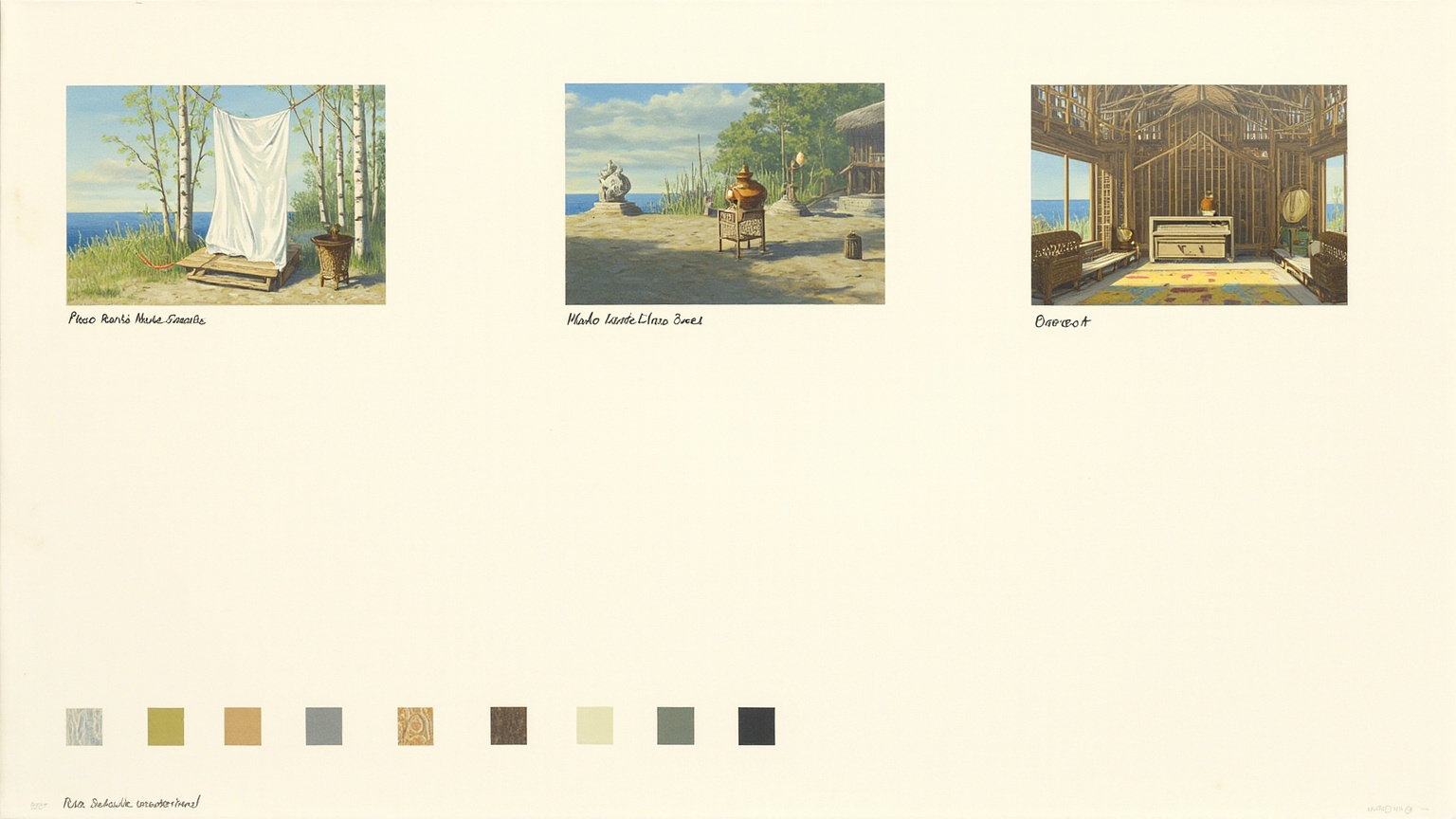
Act One, the improvised stage by the lake, white canvas backdrop, birch forest. Trepleff sets up the stage and asks Nina to perform his new play—all monologues, symbols, abstract imagery his mother can't understand at all. Arkadina sits in the audience, unable to hold back her laughter from start to finish. Halfway through the performance, a snort from her tears the whole atmosphere apart; the actors on stage can't hold themselves together, the play falls apart. Mother and son turn on each other on the spot.
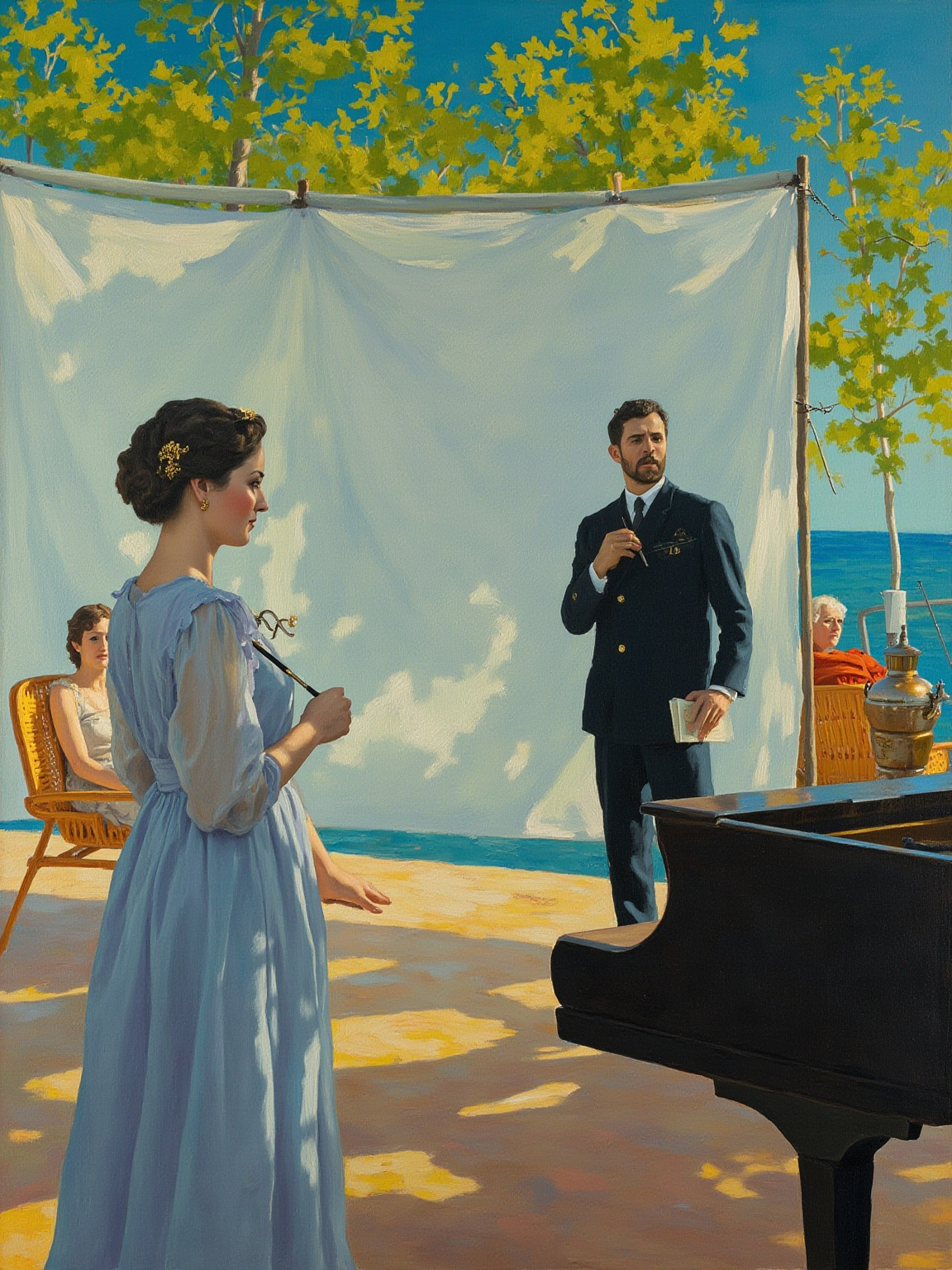
People don't understand. They despise the play. They don't understand.
他们不懂,他们瞧不起这出戏——他们什么都不懂。
金句 · 第一幕 · 湖边首演
The brilliance of this scene: the play on stage announces its failure, while the real-life conflict below explodes simultaneously. Chekhov's method—don't let anyone shout, let them break down, let an abstract piece of dialogue collapse completely because of a single laugh. He writes "the new art is sentenced to death by its mother before it's even born," and this death sentence is both formal and emotional.
The seagull's death: creators devouring each other
That night of the premiere, Trepleff flies into a rage, grabs his gun, goes to the lake, and shoots down a seagull. The dead bird is placed at Nina's feet. He says: someday I'll die for you like this. Nina doesn't understand, only finds it romantically frightening.
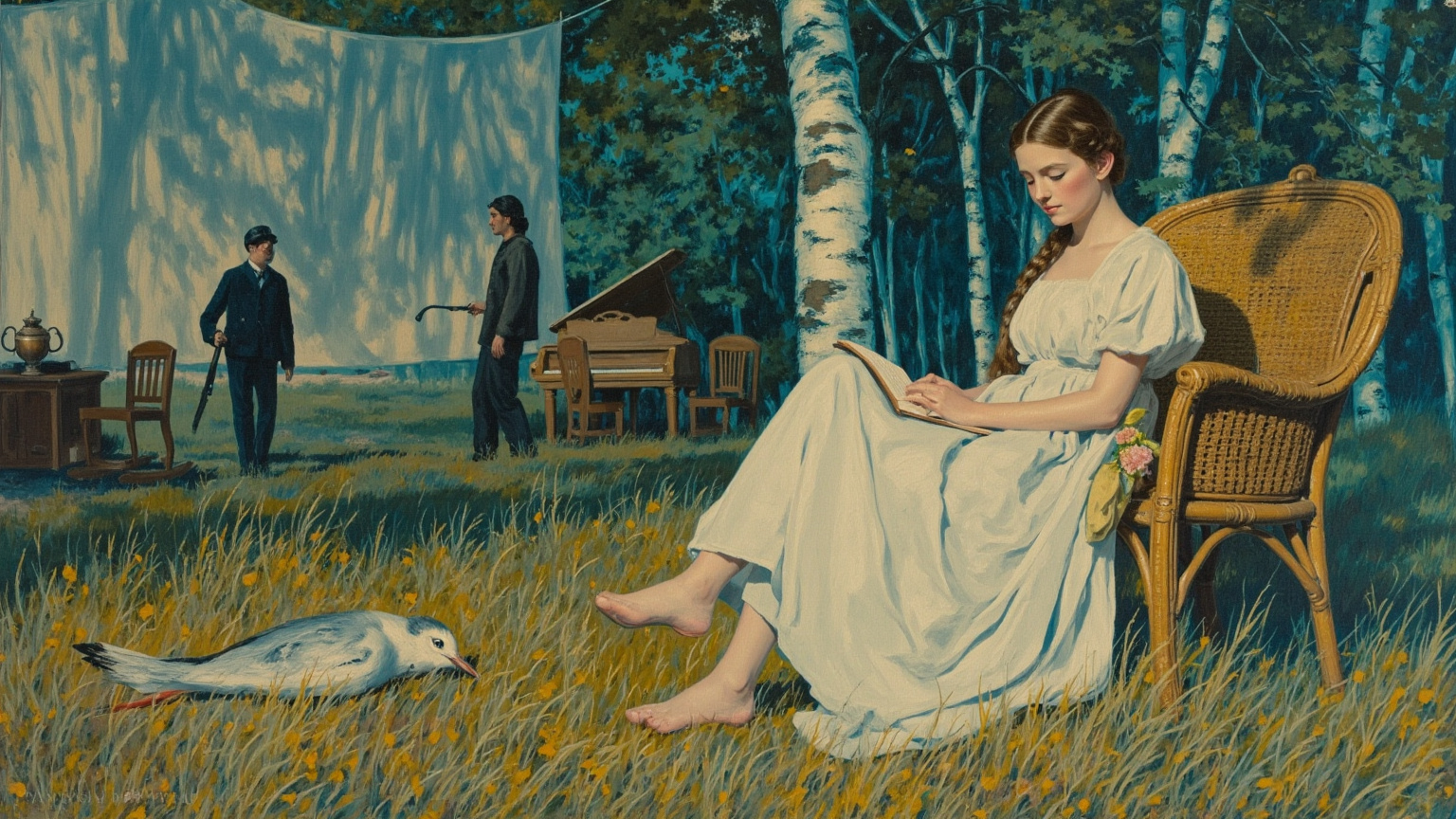
I shall kill myself someday like that gull. A girl comes to me—a story to be written.
终有一天我会像那只海鸥一样死去。而旁边的人已经在构思下一篇小说了。
金句 · 第一幕尾声 · 海鸥之死
And Trigorin sees all this from nearby. He's not there to save anyone—he's there for material. He notes on the spot: "A girl like a seagull, destroyed when a man passes by." — this becomes the opening of his next novel. Across that dead bird, the two creators complete a silent mutual devouring: one treats it as love, the other as copy.
The Moscow appointment: the chain of mistaken love takes shape
Nina didn't accept Trepleov. She was seduced by Trigorin's fame — that talented, bearded man who had published a novel, to her he was the real faraway. On the night she left, she pressed into his hand a small medal engraved with the page number of one of Trigorin's books. One gesture, and several lives became forever tangled.
Chekhov lets love turn like a millstone: Nina loves Trigorin, Trepleov loves Nina, Masha loves Trepleov, Medvedenko loves Masha. Around it goes, not a single pair gets a response. This isn't a love triangle — it's a chain of misplaced affection. Everyone is someone else's backup, and everyone is someone else's castoff.
Two Years Later: Echoes on the Estate
Act Two jumps straight two years ahead. The estate hasn't changed, but the people have. Trepleov finally published something, but he's more hollow than before — his new plays are starting to sound more and more like his mother's style, and that disgusts him more than failure would. Masha married the poor teacher Medvedenko, had a child, and still wears all black — she turned that black into mourning clothes. Sorin lies in bed, chattering all day about the things he should have done when he was young, like a living tombstone.
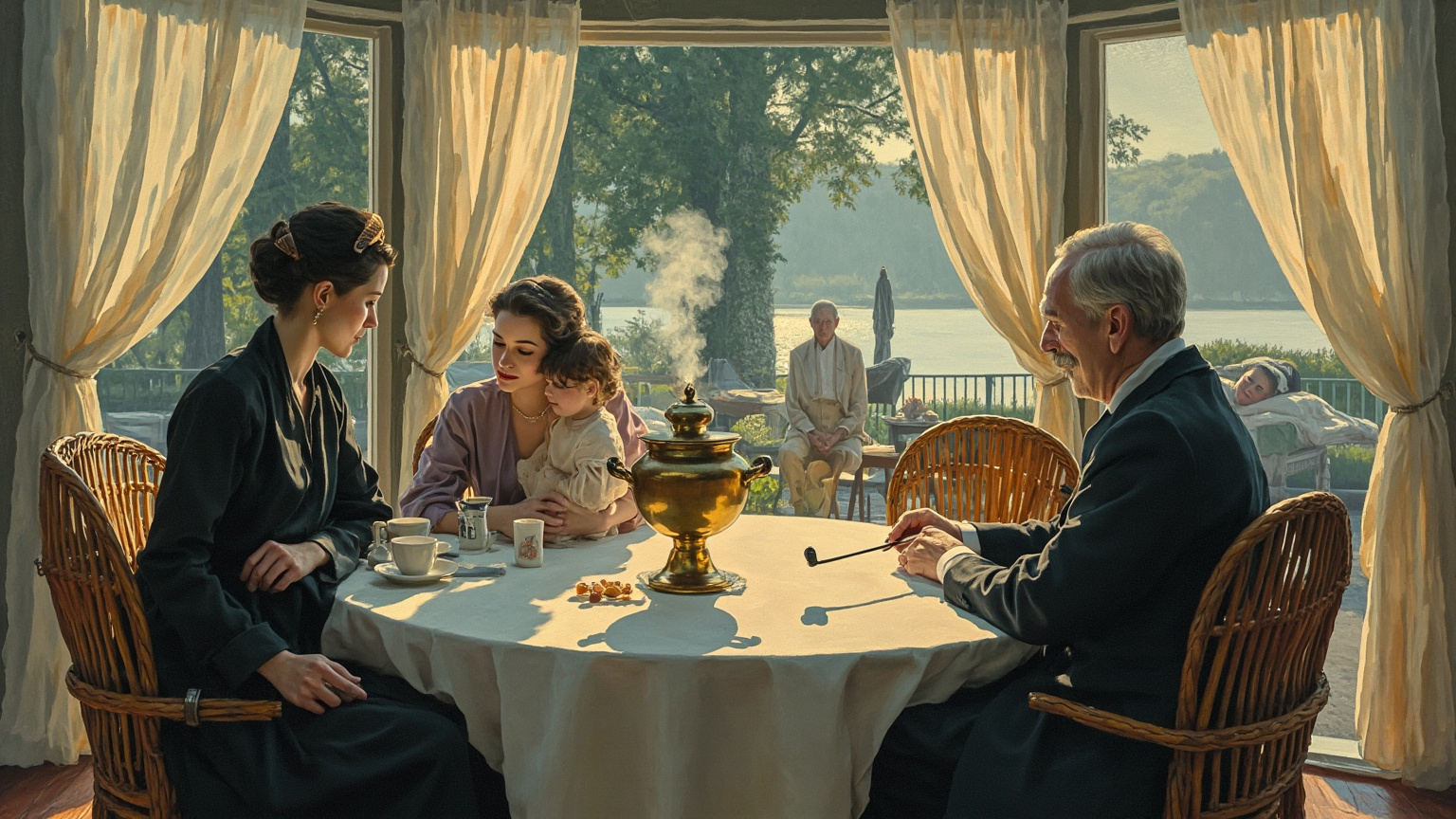
I thought I was a seagull… No, I am an actress.
我曾经以为我是海鸥……不,我是演员。
金句 · 第四幕 · 暴风雨夜的重逢
Chekhov's cruellest trick is here: in two years' time, he arranges no dramatic scenes, just lets people sit drinking tea, getting fatter, sighing. The cruelest form of tragedy isn't death — it's the days going on and on while the wound in your heart never heals.
Stormy Night: The Seagull Returns
Act Three opens with Nina's return. She had been used and discarded by Trigorin, her child died, she acts as a bit player in a small theatre company, and she's wasted to a twig. She knocks on the door in the storm, and no one recognizes her. She finds Trepleov and says let's run away together — his eyes light up. Then she refuses him.
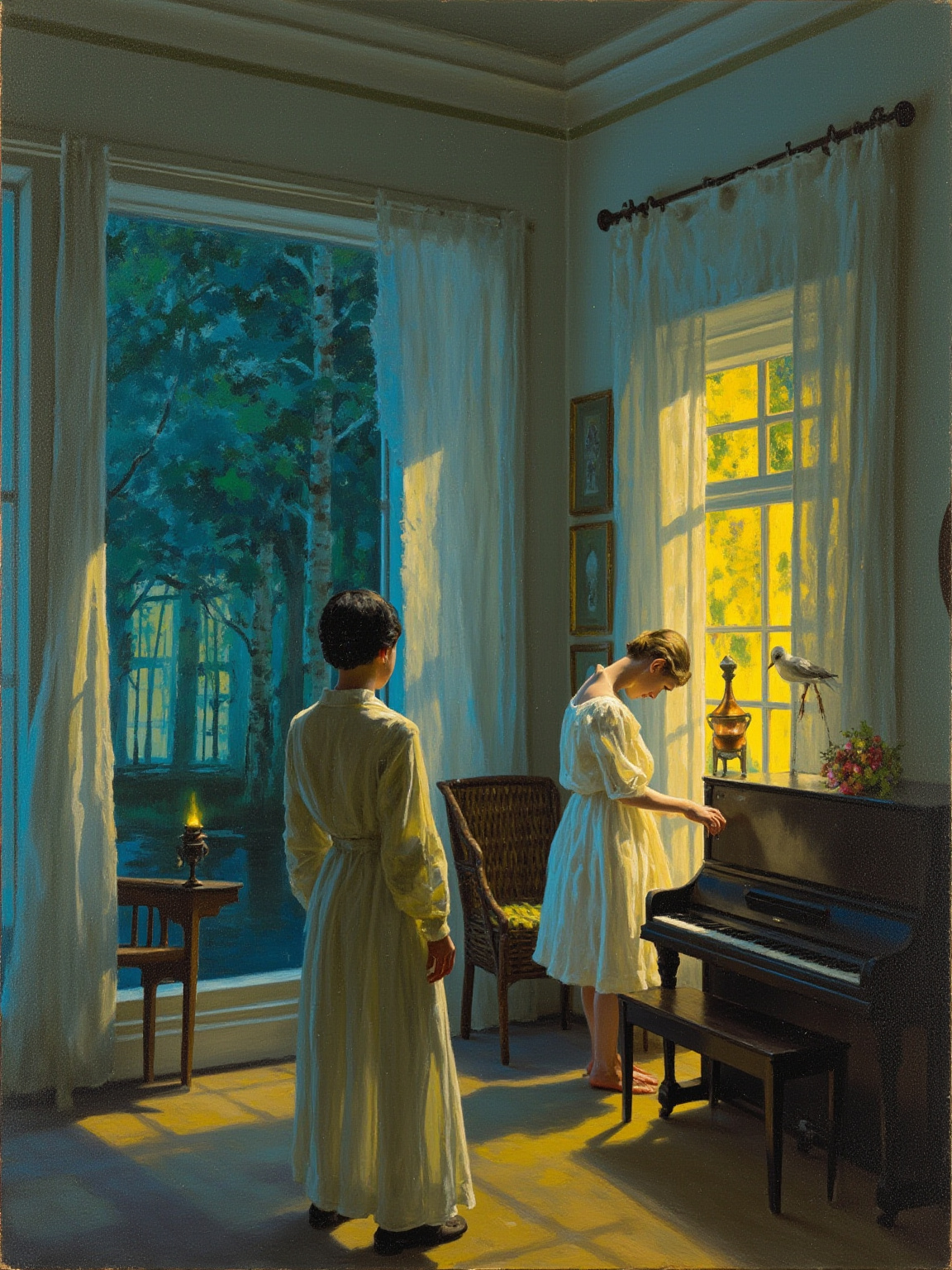
My life is broken. I have nothing left—no courage, nothing.
我的生活已经碎了。我什么都没有了——没有勇气,什么都没有了。
金句 · 第四幕 · 妮娜归来
She says it herself: "I once thought I was a seagull... no, I'm not a seagull, I'm an actress." This line lands like the hardest blow in the whole play. She admits she is no longer that bird flying free, but someone who has learned to roll in the mud and is still willing to carry the cross and live. The tragedy didn't kill her — it made something else grow in her.
I froze the first time I read this — Chekhov didn't let her die, didn't let her win, only let her accept her fate. But that acceptance contains something harder than rebellion.
The Gunshot Behind the Curtain
After Nina leaves, Trepleff tears up all his manuscripts and shoots himself behind the side curtain. Onstage, in the other room, Arkadina and Trigorin are still playing cards. The shot rings out; Dorn goes to look, then comes back with a light remark: "The ether in the bottle exploded." It's the lie he offers the dead, and it's also how this family survives.
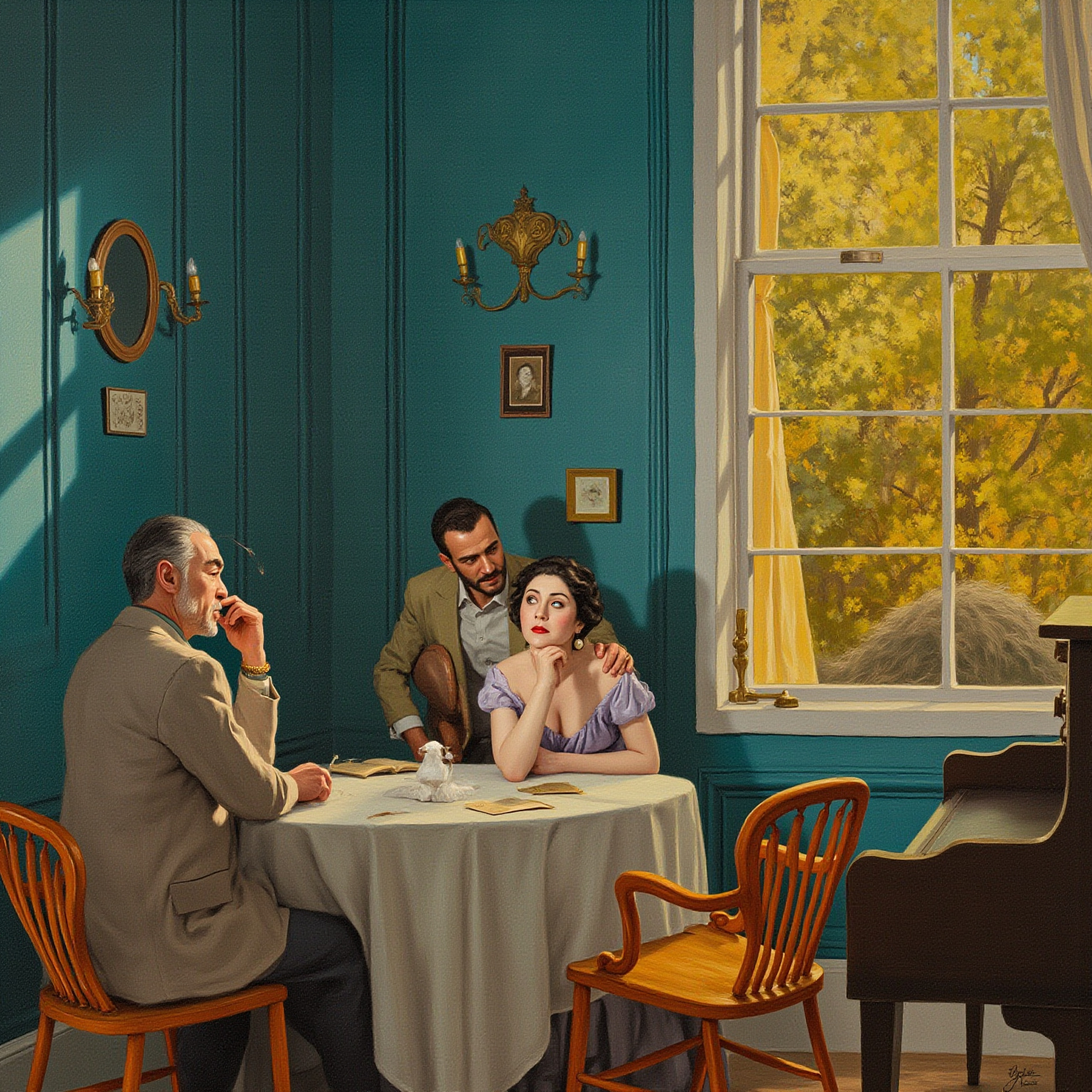
Konstantin is dead. A bottle of ether burst beside him.
康斯坦丁死了。他身边那瓶乙醚爆了。
金句 · 第四幕尾声 · 枪声藏在幕后
This is the coldest writing in the whole play: a man is dead, and in the living room another table continues its card game. The tragedy isn't performed — it's covered up — just like every unmentioned death in life. What Chekhov makes you hear is the silence, the ignored bang, the sun rising again the next day.
Why It Becomes the Turning Point
Before The Seagull, drama happened onstage; after The Seagull, it happens in the heart. Chekhov compresses an entire play's conflict into "a gunshot sounding among the card games" — the part you can write is far less than the part you can't, and it's the can't-write parts that kill you.
What does he mean to today's readers? That you no longer need to wait for a climax to feel weight. The samovar steaming, the wicker chair creaking, the lake outside going gray — that's the weight. If you've always thought life too bland for stories, this play will make you look again at the lamp in your own living room.
The Seagull's cruelest trick is stuffing tragedy into the samovar, letting it sound alongside the card game.
Reasons to Read the Text
Commentary gives you a map, not the land. The truly valuable part of The Seagull is what goes unsaid — how many times Trepleff's hand trembled as he tore his manuscript, why Masha never once took off that black dress throughout the whole play, whether Arkadina's palms tightened when she heard the word "ether." These details aren't in the plot outline; they live only between the periods and commas of the original. You have to turn the pages yourself to know just how cold the wind by the lake can make a person's heart feel.
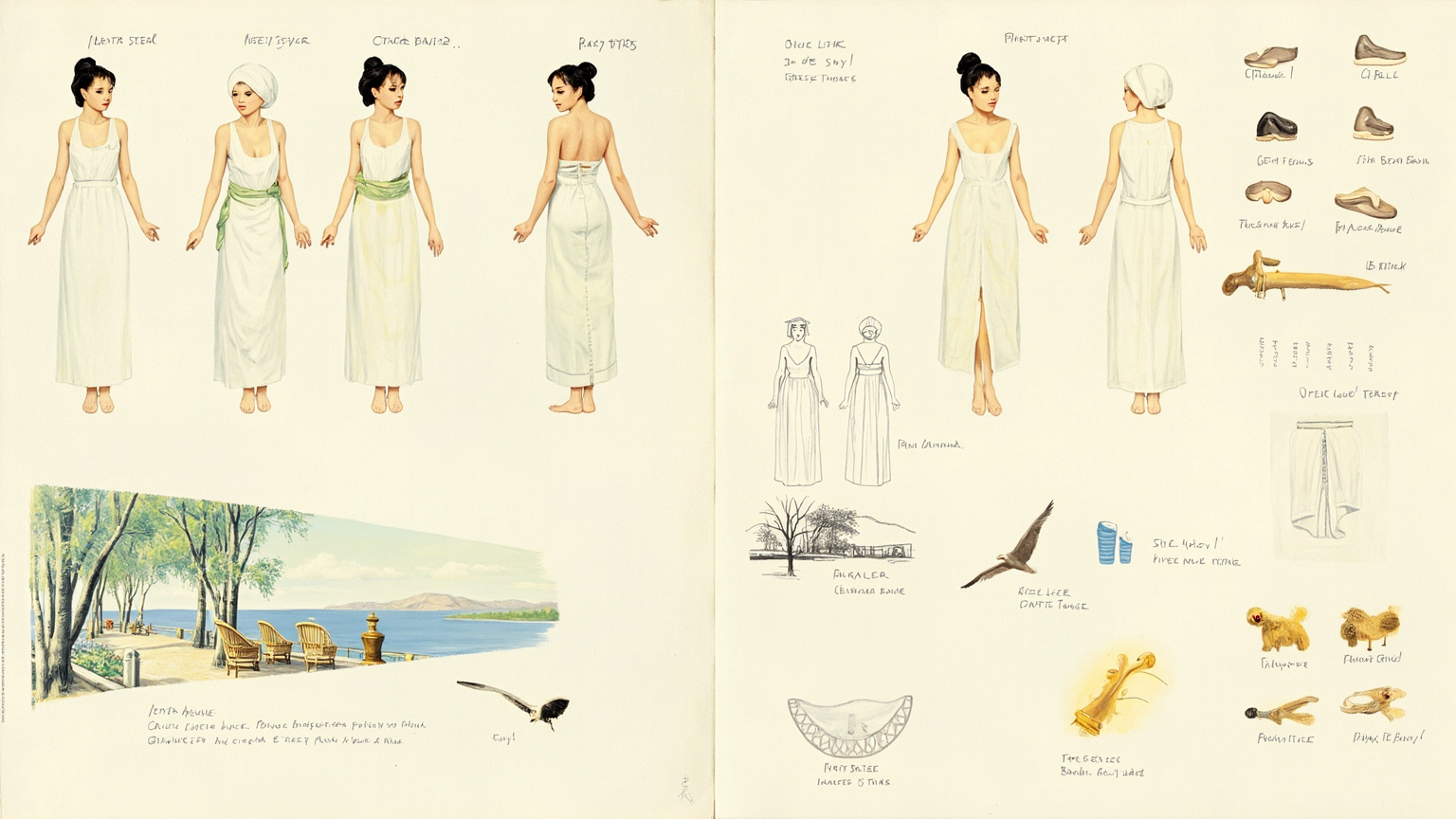
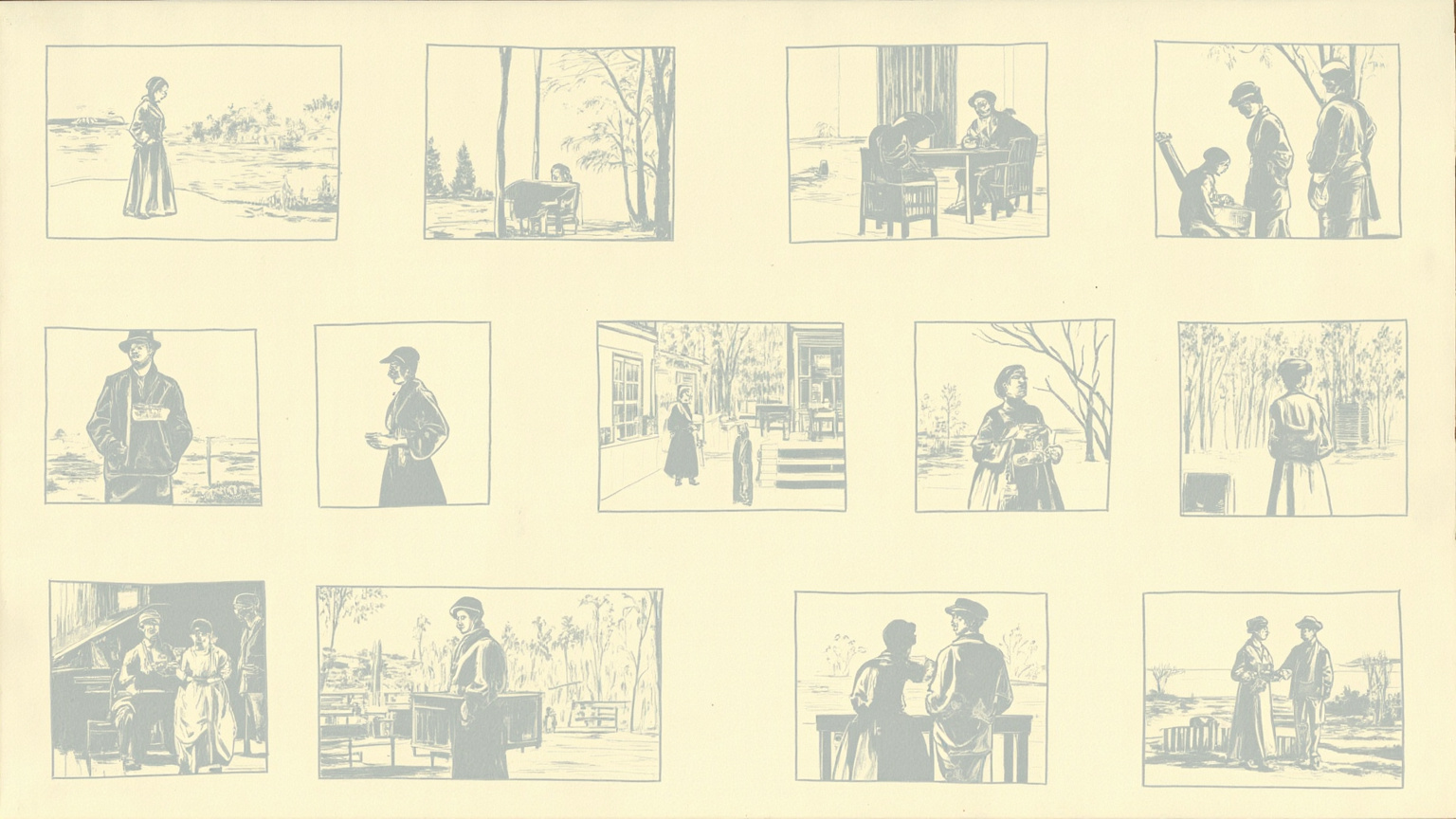
Art Direction4 plates
Before the guide was written, this book got a visual foundation — every illustration you just read grew out of it.