The Seven Who Were Hanged · Companion Guide
七个被绞死的人
同一根绞索,七个死囚。革命者与强盗并排而立,死亡面前,无人特殊。
Opening: A Man Who Didn't Sleep
A high-ranking official sits alone in his study, the desk lamp throwing a dim yellow ring on the wall. Someone has told him: tomorrow, they will come to kill him. He goes nowhere. He sets the intercepted report on the desk and sits with it from dusk until dawn. No assassin comes that night — none was ever coming — yet by morning he looks more like a dead man than any corpse.
What Kind of Book Is This
Leonid Andreyev, the writer Russia's Silver Age called the father of Expressionism. This is not a revolutionary epic, and it is not a spectacle of execution. He locks seven people in the same death cell and presses a stethoscope to each of their minds in turn, listening to how each heart beats through its last days before the gallows. Written in the first years of the twentieth century, this short book remains one of the coldest, sharpest psychological studies of capital punishment ever set down.
Seven People, One Noose
Five of the seven are caught: young revolutionaries who plotted to assassinate a minister. Werner is the operation's mastermind, calm and ironic, dissecting his own death sentence like a philosopher examining a specimen. Sergey, a retired general's son with an athlete's build, pins his attention to his breathing and his muscles, letting the body stand guard so the mind doesn't have to. Vasily, the youngest and most highly strung, can be driven half mad just by the thickness of the rope, or his own height and weight. Musya, the only young woman among the five revolutionaries, treats her death as a kind of offering. Tanya, the oldest of the group, has her whole heart fixed on her comrades — whether she herself lives or dies barely crosses her mind.
Two more have nothing to do with politics at all: they just happen to be sentenced to hang alongside the rest. Yanson is an Estonian farmhand who killed his employer in a fit of rage and never, to the end, quite grasps what the word hanging actually weighs. Mishka is a career thief, cynical enough to still be cracking coarse jokes with his last breath. Revolutionaries, a bewildered laborer, a robber — five plus two, shut in one cell.
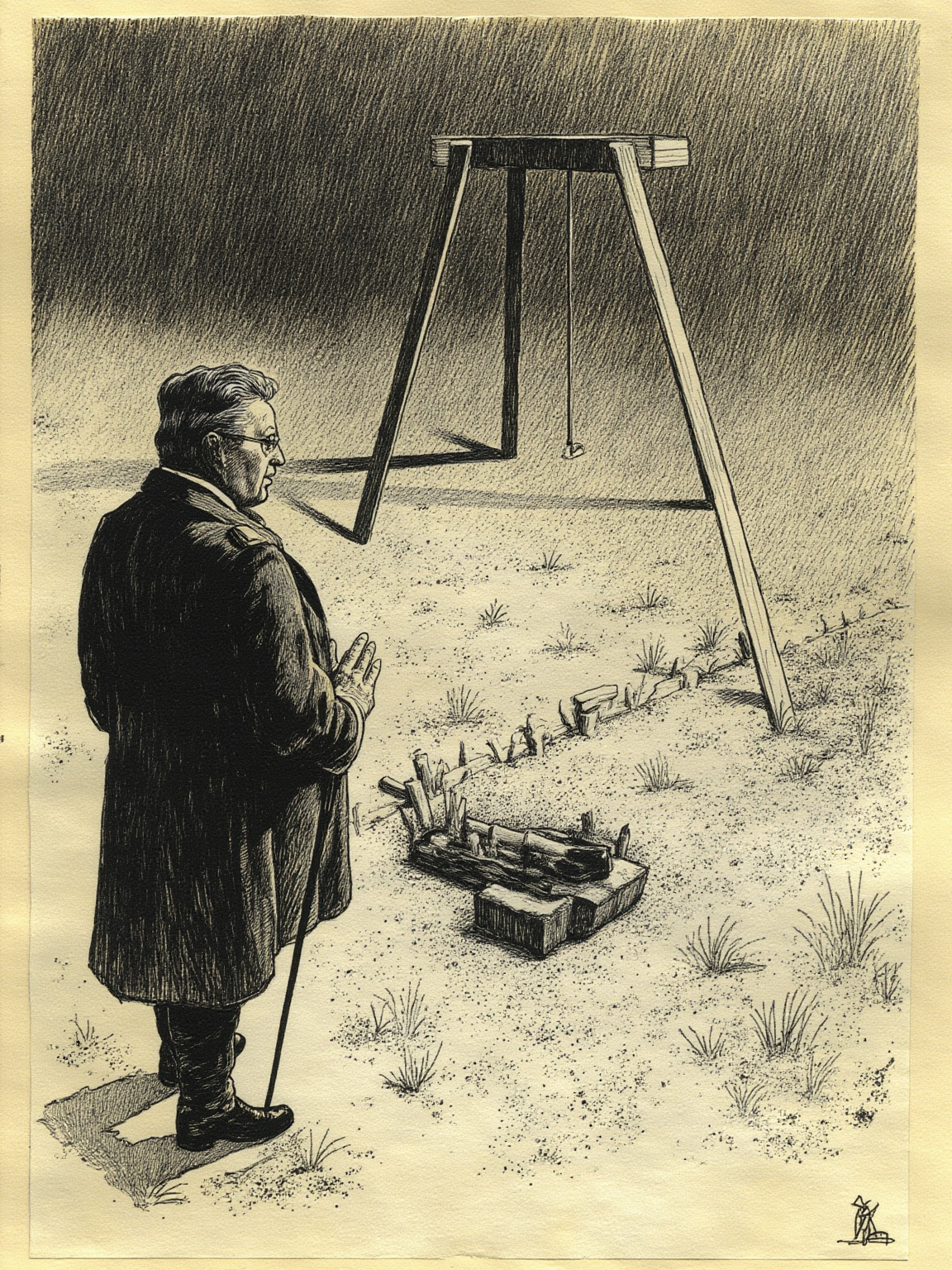
But Yanson succeeded in repeating once more, convincingly and weightily: "Why must I be hanged?"
为什么非得吊死我?
原文金句 · 第二十五章 · 扬松的茫然
I. The Minister's Night
The report reaches him at night. The Minister sends the servants away, shuts the study door, and sits alone with a single sheet of paper. He starts working through it: which door the killer will come through, which wall the bullet will pass through, whether he'll hear his own blood. The study lamp burns all night, and Andreyev spends an entire chapter on how a man about to be assassinated imagines his own assassination — the joke being that the assassin never gets anywhere near him. The book's irony is planted right here, in this study: death never arrives, but fear kills the man first.
II. The Plot Collapses, Five Are Caught
The police move faster than the trigger ever could. The plot is uncovered before it can be carried out, the Minister walks away unharmed, and Sergey, Werner, Vasily, Musya, and Tanya are all arrested. Add the two criminals who have nothing to do with any of it, and seven lives come down under the same verdict. One gallows, one dawn, parceled out to seven very different people.
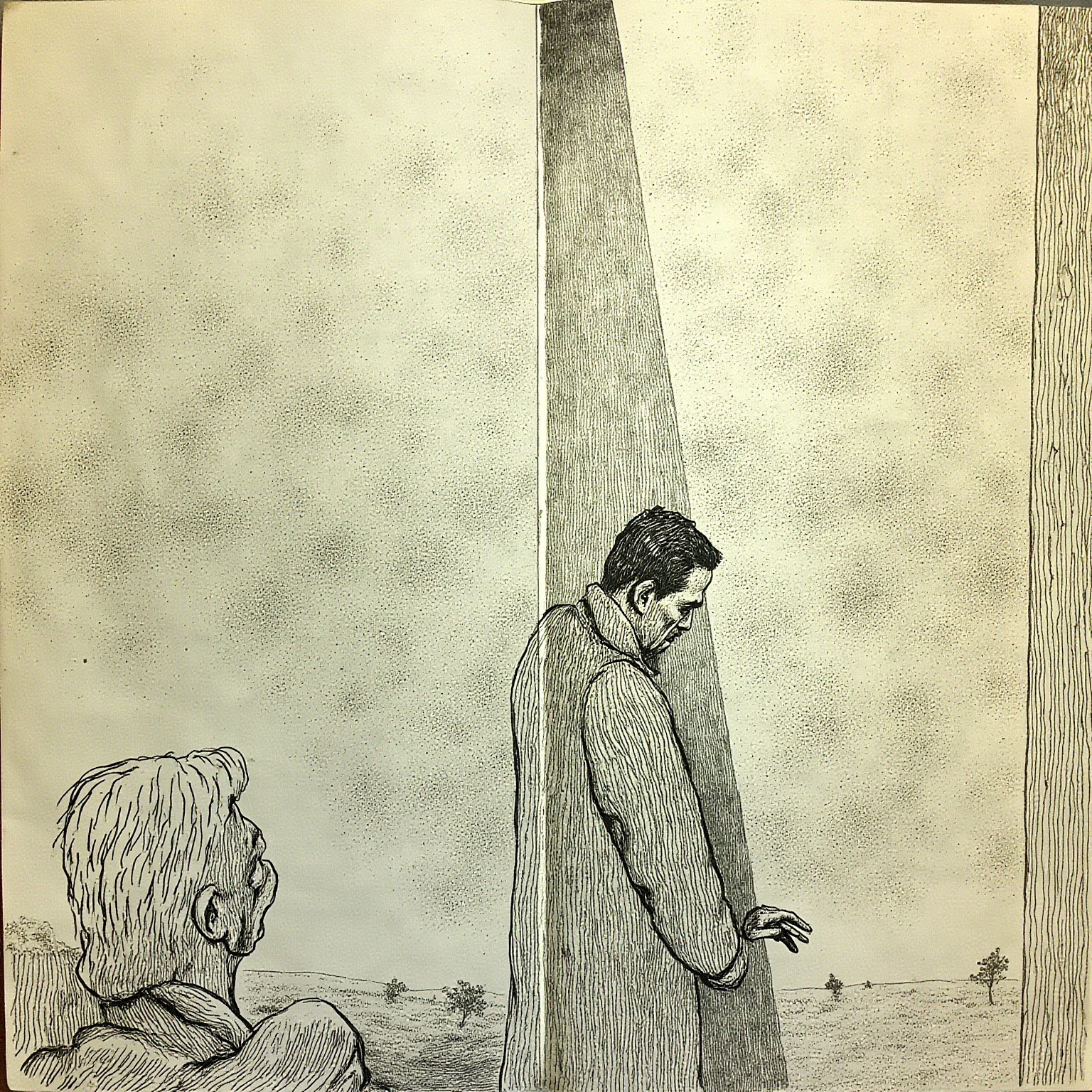
Once or twice Werner quietly touched his knee with his hand, and each time Kashirin spoke shortly: "Never mind!"
维尔纳悄悄碰了碰他的膝盖,每一回卡希林都简短地答:「不要紧!」
原文金句 · 第十七章 · 审判庭上的克制
III. Three Ways to Face the Death Cell
In the dim light of the cell, Andreyev pushes in on one face after another. Werner is the most detached spectator in the whole scene — he discusses death the way he might discuss someone else's manuscript, laughing ironically now and then, as if the rope were meant for another man's neck. Sergey takes the opposite route: eyes shut, he feels the ache building in his biceps, counts his own breaths, listens to his heart's rise and fall, and welds his entire mind to his body. His way of facing death is refusing to think about it at all. Vasily gets the cruelest pages in the book. He takes the word hanging apart, magnifies it, takes it apart again: how thick is the rope, how high is the stand, does a thin neck take longer to die? He is nearly strangled, well before the gallows, by the sheer animal force of his own imagination.
IV. Musya and Tanya: Two Kinds of Silence
Musya's chapter reads less like a death row and more like a convent. She imagines death as a kind of transcendence, a clean sacrifice finally granted permission. Her calm is not numbness — it's genuine joy, and set right beside Vasily's collapse in the same book, Andreyev tears fear and transcendence into two entirely different colors. Tanya moves the reader in a different way. From the day of her arrest, she has barely thought about herself: whether Musya cried this morning, whether Vasily can hold together, whether the two young men are cold. She is the softest person in the book, and the only light that gives this death cell any warmth at all.
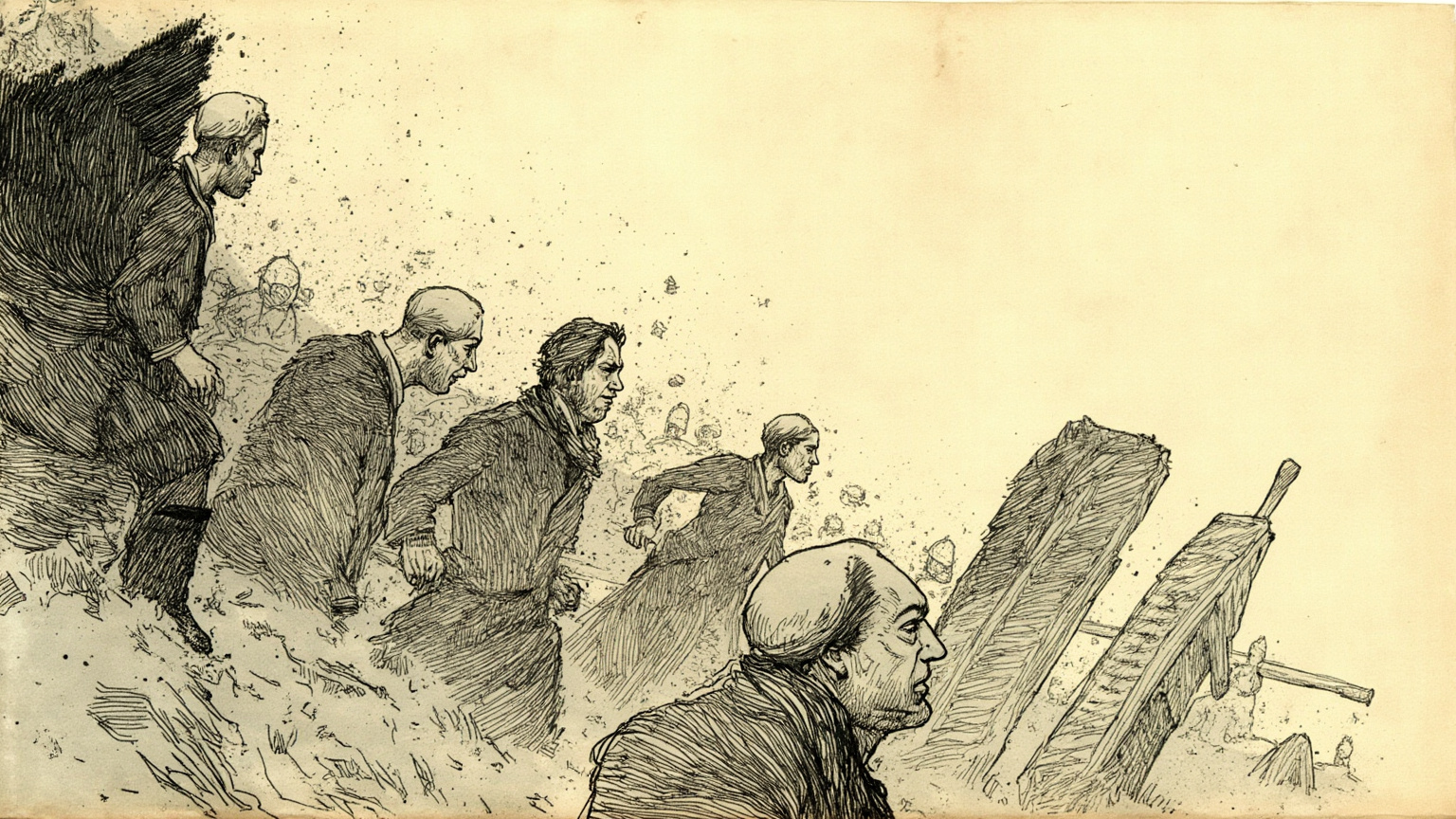
They flapped their wide wings and the darkness supported them, even as the light had supported them.
它们扑扇着宽大的翅膀,黑暗托举着它们,一如光曾经托举着它们。
原文金句 · 第六十章 · 穆夏的幻象
V. Yanson and Mishka: Two Outsiders
Dropping two ordinary criminals with no connection to politics into this story is Andreyev's most deliberate move. Yanson is a stocky farmhand who never truly grasps, right up to the end, the weight of the sentence tomorrow I hang. His fear is instinctive, animal, and confused — he doesn't even know what he's afraid of. Mishka lives an entirely different way: he turns his last hours before execution into a stand-up routine, cursing out the guards while betting his cellmates on who'll go up the gallows first. He fights off the void with crude gallows humor, and that stubborn refusal to quit has something almost likable in it.
VI. The Prison Cart and the Train
The night before the execution, all seven are marched from cart to train and out toward the execution ground on the city's edge. No one speaks in the carriage, and yet everyone is speaking. Andreyev lets the seven reflect off each other one last time: Werner still composed, Sergey holding himself in check to the last degree, Vasily trembling, Musya at peace, Tanya still fussing over the others, Yanson blank, Mishka still cracking jokes. Different convictions, different classes, different roads that led them here, locked together in the same boxcar, riding toward the same rope. Outside the window, Russian countryside under snow. Inside, seven people's last murmured words.
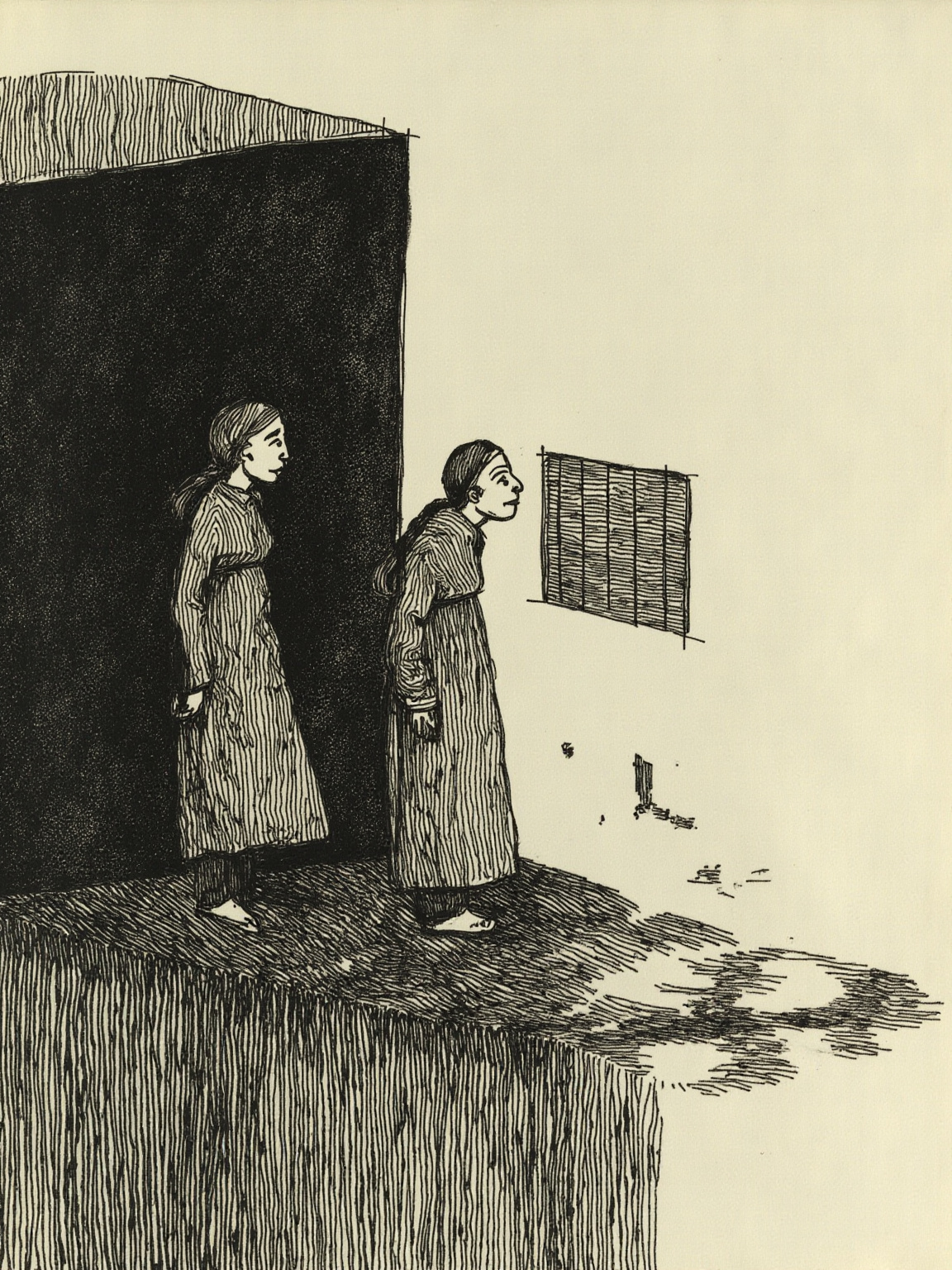
He had killed him in cold blood, but when he saw that dead, deceitful, now calm, and after all pitiful, human face, he suddenly ceased to respect himself and his work.
他冷血地杀了他,可当他看见那张死去的、狡诈的、如今却平静而终究可怜的人脸,他突然不再尊重自己,也不再尊重自己的事业。
原文金句 · 第七十五章 · 维尔纳的自我瓦解
VII. The Gallows at Dawn
At the execution ground, Andreyev suddenly pulls back. There is no dwelling on the rope biting into flesh, no screaming, no close-up — he writes only the last posture each of them takes on the way to the gallows. Werner, ironic to the end. Musya, at peace to the end. Vasily, carried up by two comrades on either side. Tanya, still turning to look after the others. Yanson, still blank. Mishka, still cursing. Revolutionary, robber, laborer — one rope reduces them all to zero.
What Is This Book Actually About
Andreyev never sings a hymn for the revolutionaries, and he never argues the state's case either. He won't even let a single one of the condemned become a hero — that's exactly why he walks a bewildered laborer and a robber up the same gallows steps beside them. In the face of death, identity is wiped clean off the ledger; what's left isn't political conviction but simply what kind of person you are when death is certain. Fear, faith, numbness, wildness, black humor, a mother's instinct: this isn't really a book about hanging. It's an existential checkup, administered early and without consent, on how a person dies.
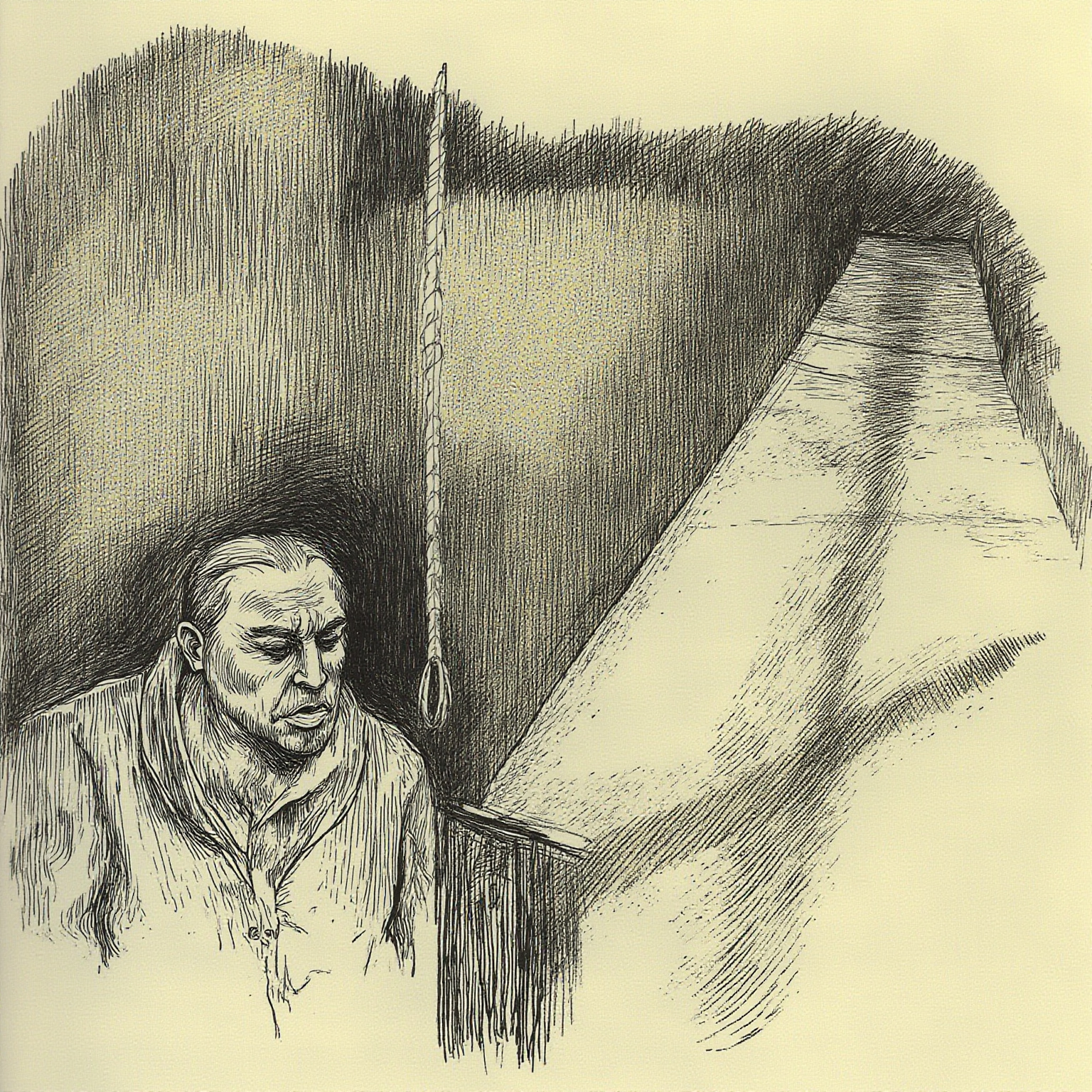
He possessed another rare quality: just as there are people who have never known headaches, so Werner had never known fear.
他还有一样罕见的品质:就像有人从不头疼,维尔纳从不知道恐惧。
原文金句 · 第七十六章 · 死亡面前的疏离者
Andreyev's sharpest cut isn't aimed at the Tsar's gallows — it's binding revolutionary and robber to the same rope, forcing the reader to admit that equality before death is neither glorious nor romantic.
Why It Cuts This Deep
What's most frightening about this book is its restraint. Andreyev barely shows emotion, laying out the final consciousness of all seven like specimens on a dissection table — every twitch of every nerve rendered in precise detail, without a single tear shed on their behalf. He pioneers a psychological realism for writing group death, assembling seven wildly different souls into a miniature spectrum of human nature. The Vasily pages are especially brutal: you watch him driven mad by the mere thickness of a rope, and you can't blame him for it, because what he fears is what any living creature would fear.
Why Read It, Once You Know the Plot
Because the value here isn't in the plot — you can sum that up in one sentence. It's in the way Vasily's fingernails dig into the crack of the floorboard under that dim night light; in the small pause where Tanya pins back Musya's hair; in the few seconds of dead silence in the carriage after Mishka finishes his last dirty joke and no one answers. None of that survives being summarized. You have to go in yourself, and let the mildew of that cell, the steam off that prison train, and the quiet of that snow at dawn settle over you slowly.
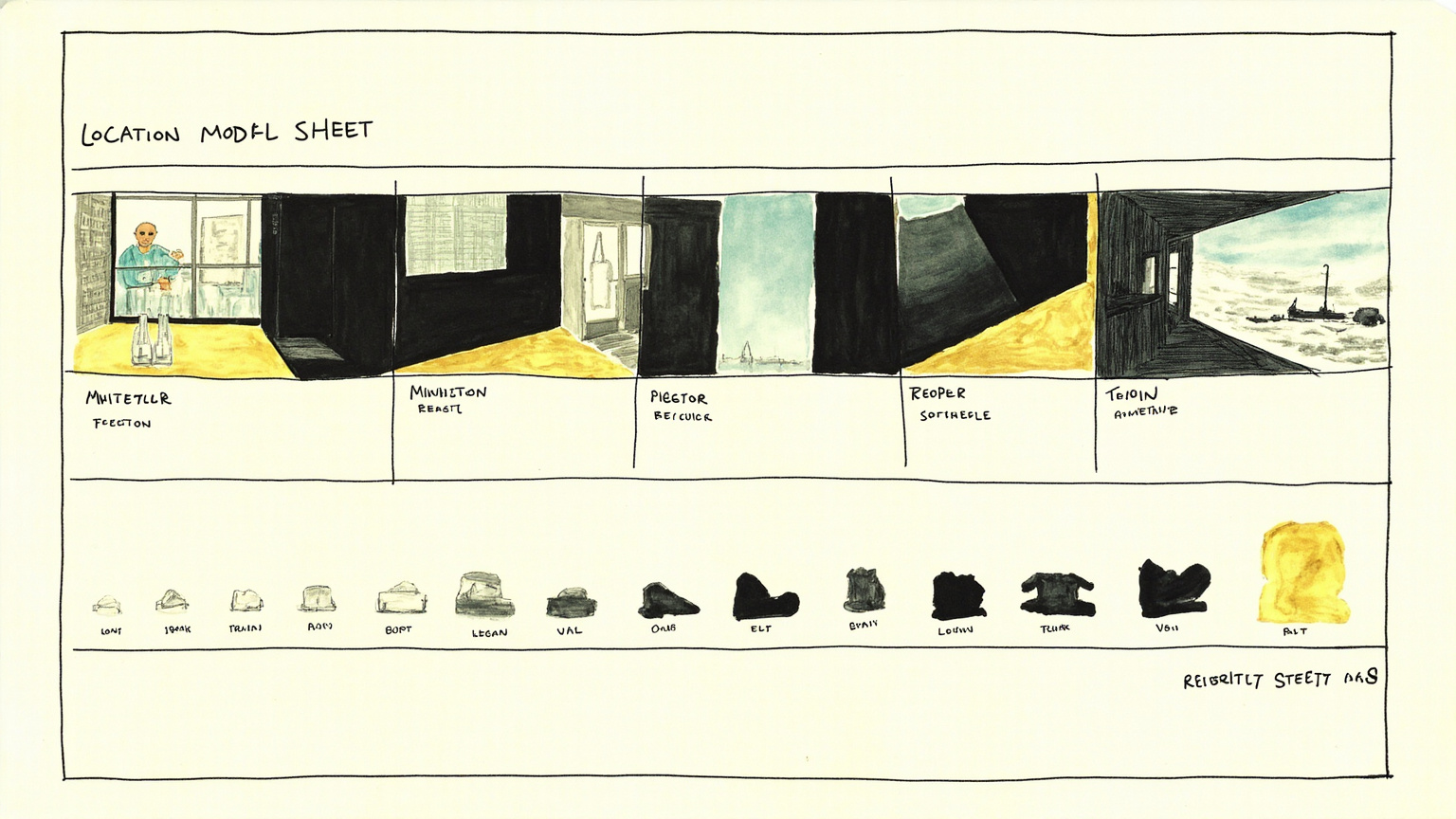
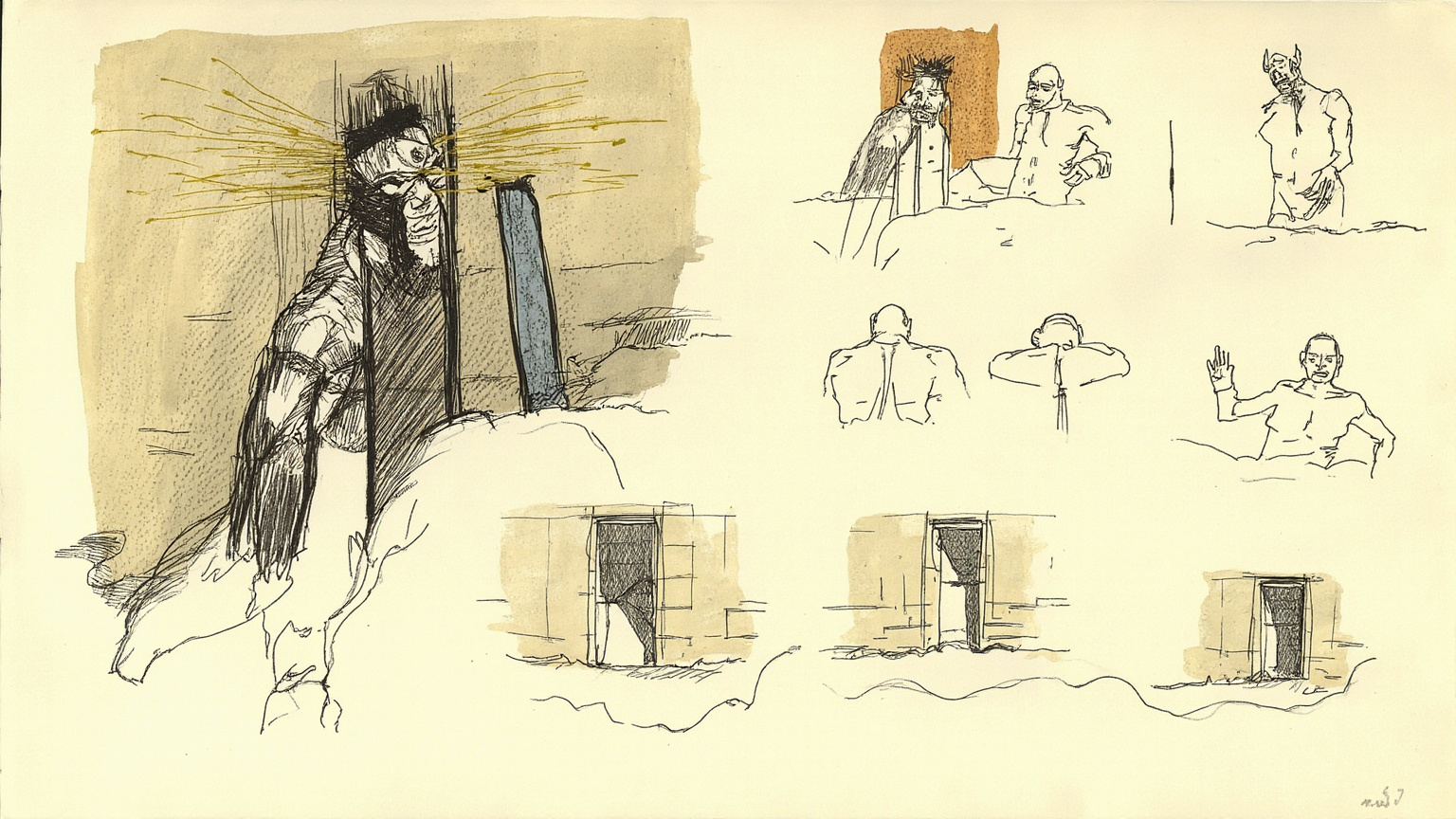
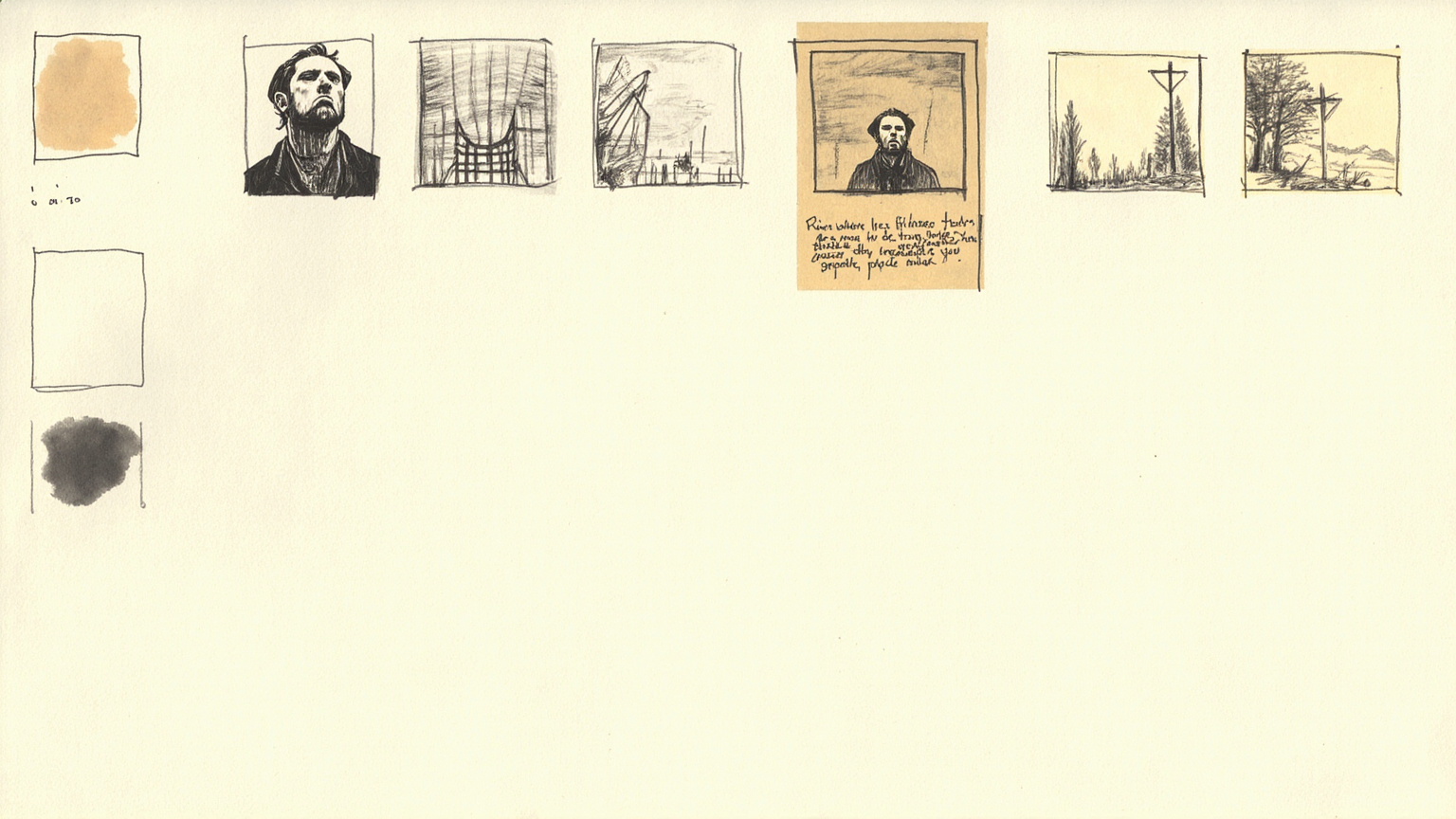
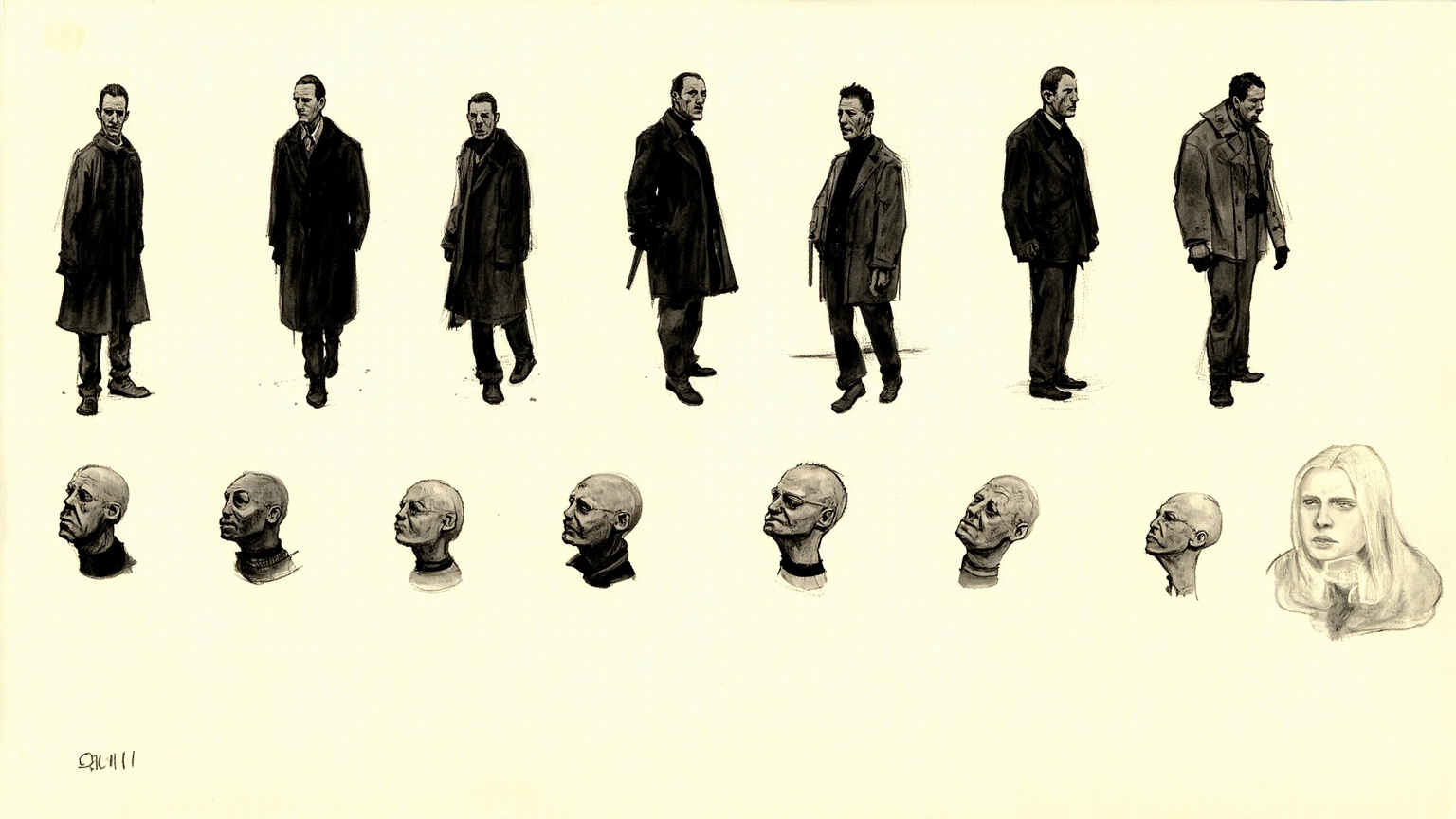
Art Direction4 plates
Before the guide was written, this book got a visual foundation — every illustration you just read grew out of it.