The Silver Spoon (Gin no Saji / Gin no Sajī) · Companion Guide
银汤匙
一个体弱男孩的整个童年,被一把小银匙、一顶蚊帐、一张伯母的后背,稳稳托住
A Small Silver Spoon, Hidden Away
A small silver spoon lies hidden in a drawer. It is nothing like heirloom silver, just the kind used for shaved ice. The boy falls ill again and again, and each time his fever breaks he lies by the kotatsu and quietly fishes it out to lick clean. It is his entire hoard. Later the rough boys at school find it and take it from him, and he cries too hard to speak, watching a thin silver handle flash once in someone else's dirty hand.
Naka Kansuke opens The Silver Spoon exactly this quietly, the way you set something down on a table without a sound. It ran as a serial in the Tokyo Asahi Shimbun starting in 1913 and was collected into a book three years later. Naka had just become a student of Natsume Sōseki, who read the manuscript, struck the table in admiration, and wrote to the newspaper himself to recommend it. This memoir of a childhood survived because one very discerning pair of eyes found it first.
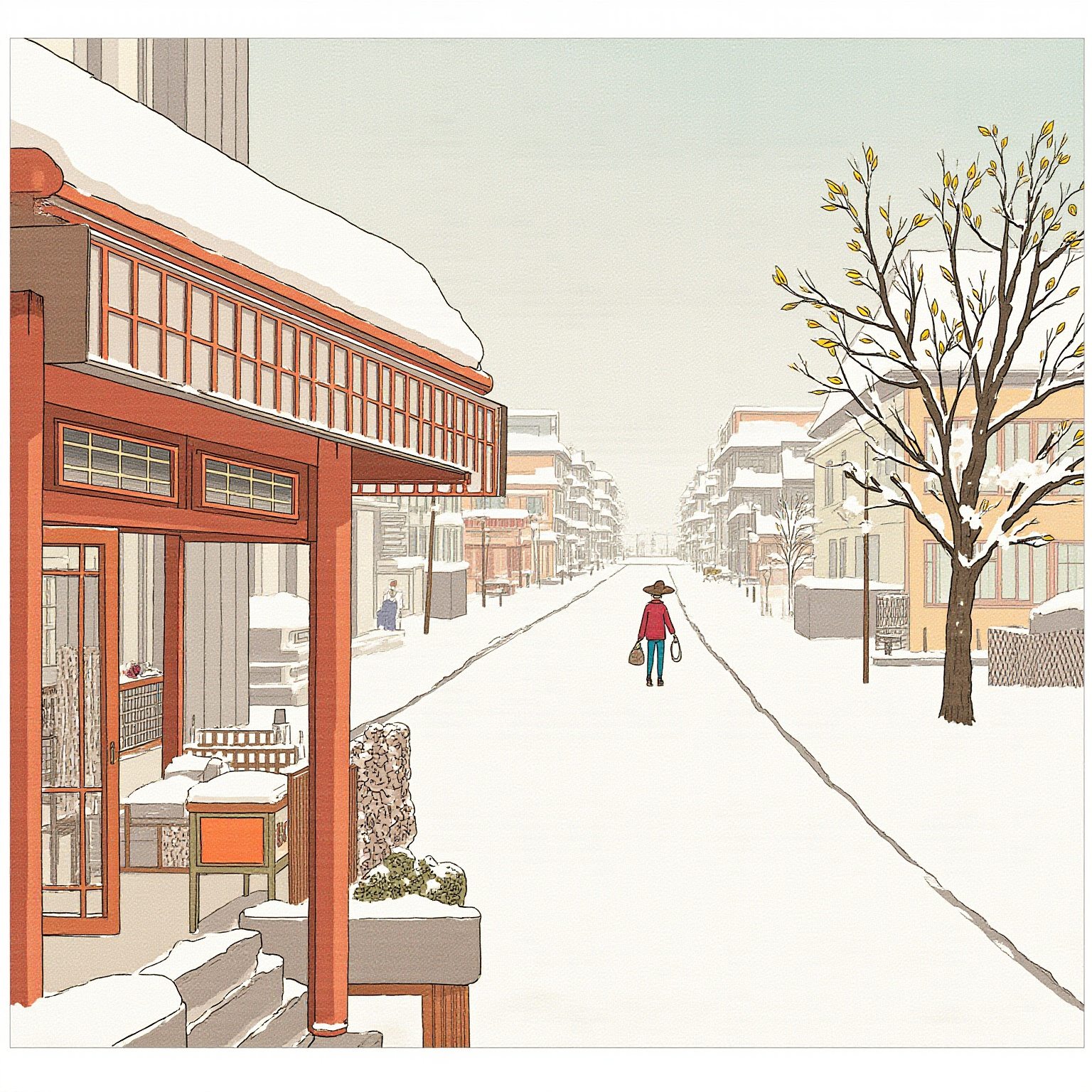
The book has almost no plot. No revenge, no running away from home, no great events. It follows a sickly boy carried on his aunt's back from infancy into his teens, inside an old wooden house in Tokyo's shitamachi, the low old-town district of shopkeepers and craftsmen: mosquito netting, a charcoal brazier, paper sliding doors, plum blossoms in the yard, crickets against the garden wall. Naka's prose is nearly transparent; light, wind, insects, ordinary objects, all rendered until you can see them. The first time I read the line about snow-light seeping in thread by thread under the eaves, I found I had stopped breathing too.
A Whole World Inside One House
At first the boy's world is a single house. His aunt carries him on her back through the shitamachi lanes and past the night stalls of a festival, goldfish and wind chimes and paper lanterns swaying past his eyes. He does not walk there himself; he is carried, so the earliest "outside" he ever sees is a shivering field of lantern light glimpsed over other people's shoulders.
His aunt is the real foundation of the book. She is warm, talkative, burns incense before the household Buddha, chants sutras, and every summer gathers herbs and sews him a light kimono. The boy's world is her back: its warmth, the smell of incense ash, the murmur of her prayers, a safe island wrapped tight in the folds of cloth. His actual father and mother recede behind a screen, leaving only the distance of "the woman who bore me"; his birth mother is not the one who raises him. The book stages no drama between a birth mother and a foster mother, only the daily fact of a quilt and a stick of incense.
The First Cold at School
However warm the house, he must eventually step outside it. The boy enters a school in Meiji-era shitamachi, and the first cold he meets there is other children his own age. They are nothing so grand as villains, just the neighbors' and classmates' sons, but a child's cruelty needs no reason. His satchel gets hidden, his sweets and his silver spoon get taken, and the frail, slow boy learns, one incident at a time, that the cold outside is a different kind of cold.
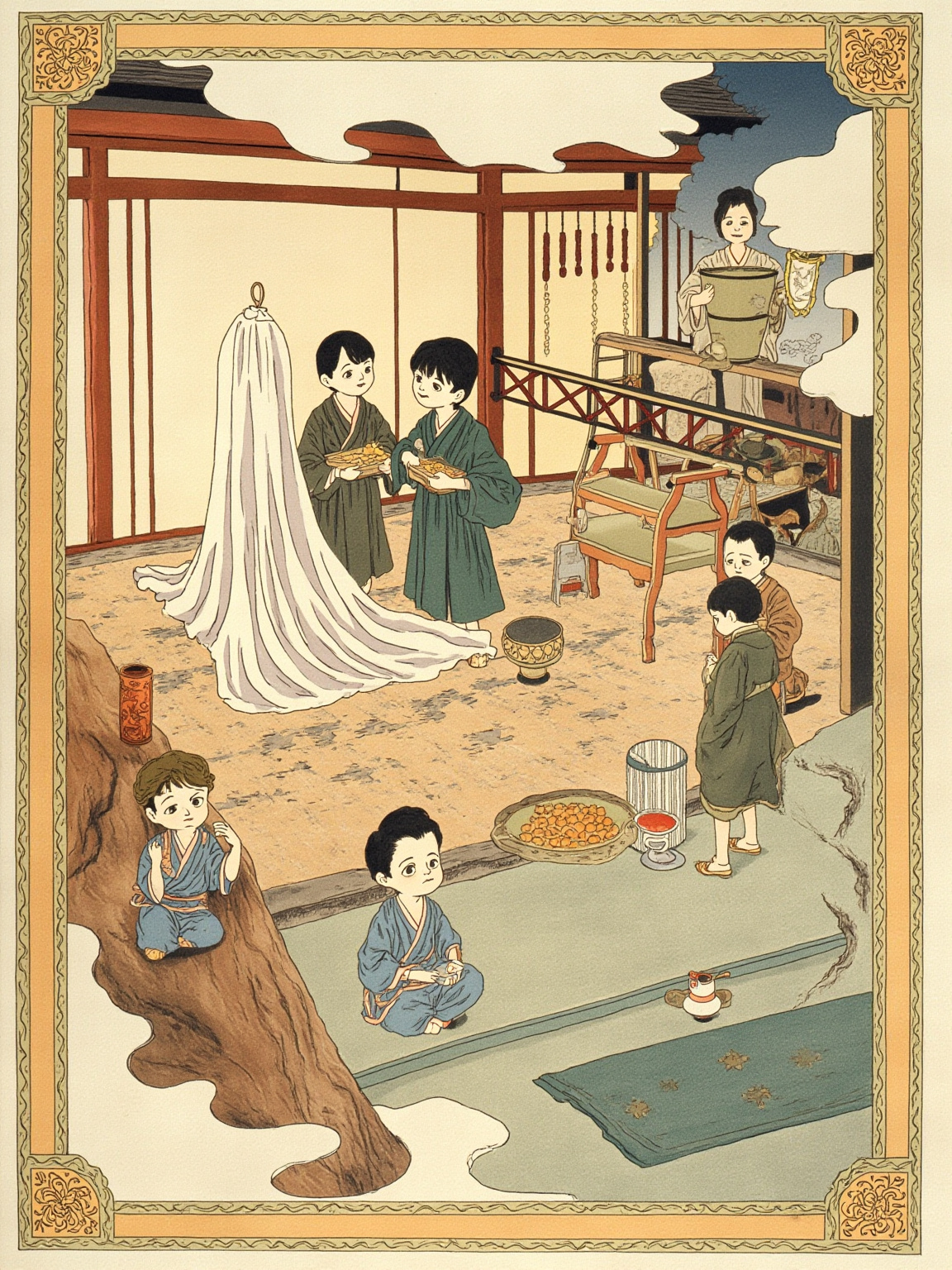
I was too sickly to walk, and the world I first learned was the warmth of someone else's back.
我体弱得走不动路,我最初认识的世界,是别人的后背上的温暖。
金句 · 开篇 · 伯母的背
Naka writes this passage almost without emotion. He does not write how wronged I felt; he writes that the other boys hid his satchel in a corner of the ceiling, that he stood on his toes and still could not reach it, that his nose pressed against the wall boards and caught the smell of mildew. Physical action speaks louder than inner monologue here. That is the temperament of this book.
Summer Festival, Seen Over His Aunt's Shoulder
Every summer his aunt carries him on her back to see the festival. This is the first "outside" seen from her back: tinkling wind chimes, paper lanterns, children in masks weaving through the crowd, and the boom of a taiko drum rolling in from the distance like muffled thunder. The boy is not standing in the crowd; he is pressed against his aunt's back, and his world is a swaying, feverish thing, wrapped in the smell of sweat and incense ash.
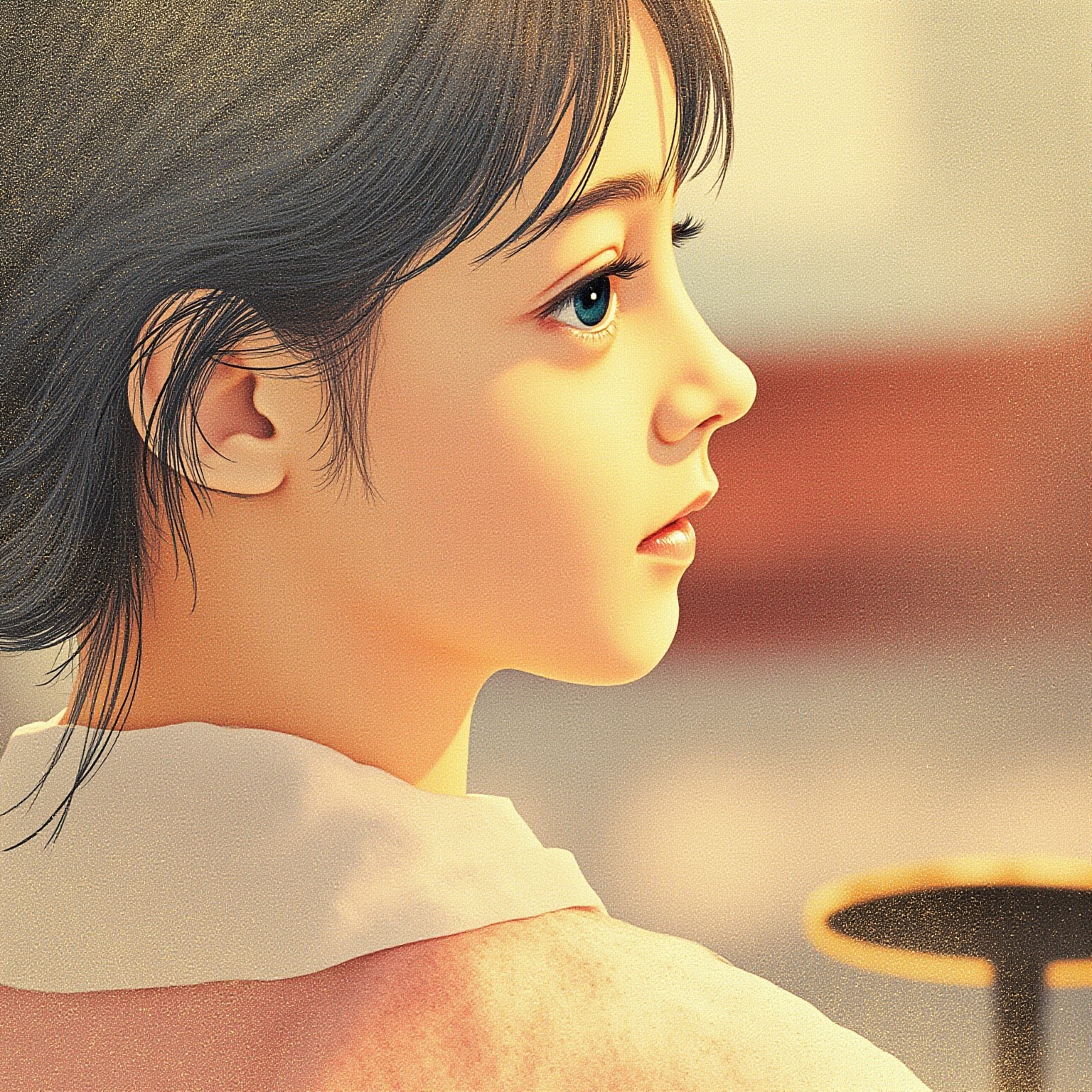
From my aunt's shoulder the festival lanterns swayed past me like a whole sea of faint fire.
从伯母的肩头望过去,庙会的灯笼像一片薄薄的火海,在我眼前摇晃着流过去。
金句 · 夏日庙会一节
This is also the place in the book most often illustrated wrong. The festival is not a close-up of a goldfish vendor; it is a whole field of light glimpsed through gaps in the crowd by a boy lying against his aunt's back. Naka keeps his focus on her back, on her sweat-damp collar, on the boy's small hand resting on her shoulder. That one choice of vantage point decides the flavor of the entire book.
Seasons of Illness: Objects Speak Louder Than Plot
The boy is sick every other week. He survives smallpox, suffers heart palpitations from beriberi, and stays frail for years. But Naka never writes him as a pitiable child; his frailty gives him a strange transparency instead. Feverish, he can hear a single drop of rain fall from a roof tile onto the stone step below, can watch one thread of snow-light cross the eaves onto the tatami. These are things a healthy child would let slide past unnoticed; in his hands they are recorded inch by inch.
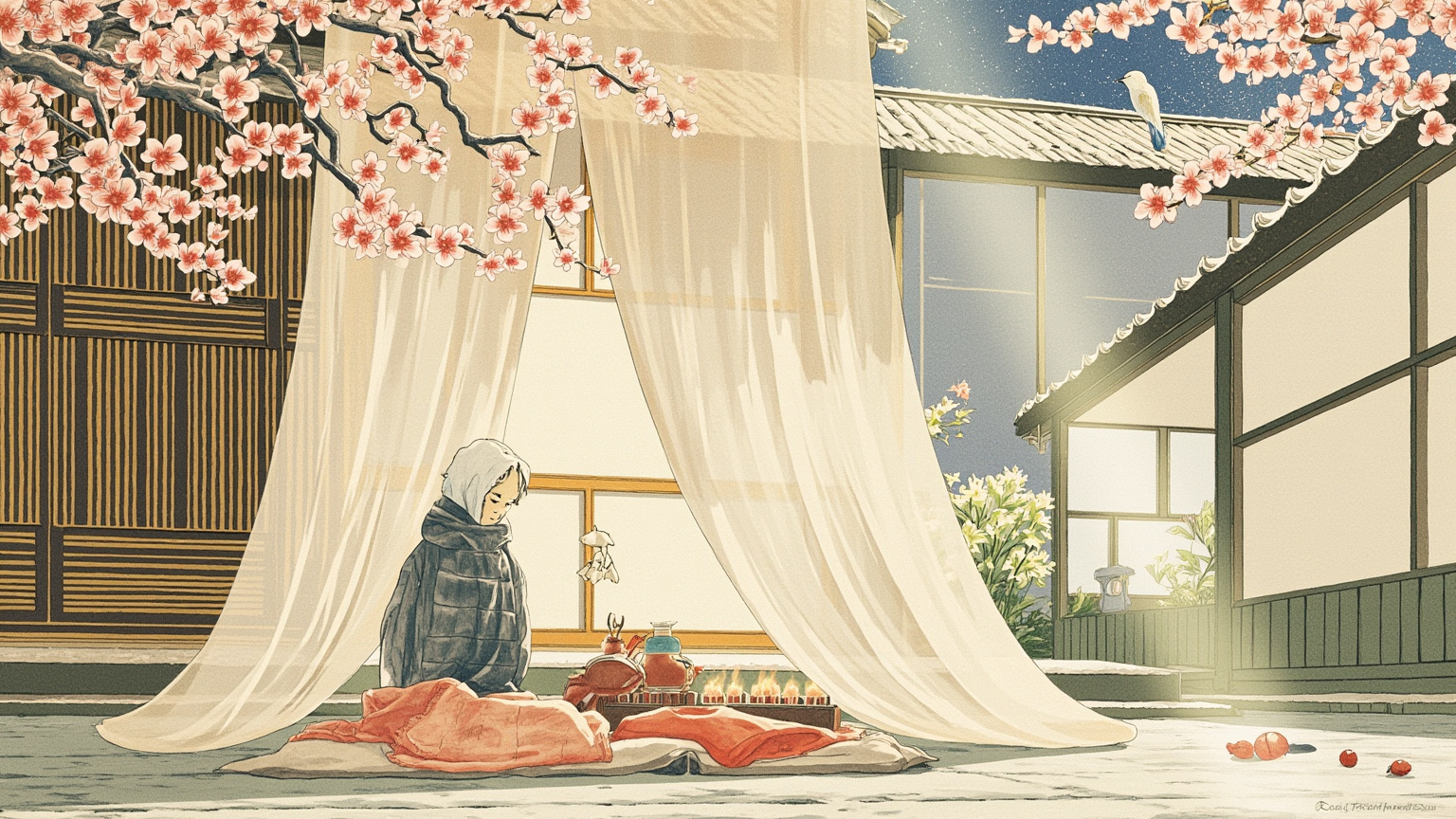
Illness did not make me pitiful; it gave me a strange transparency, so that I could hear a single drop of rain slide from the eaves down onto the stone step.
病弱不曾使我可怜,它给了我一种奇异的透明,使我听得见檐下一滴雨从瓦缝落到石阶上。
金句 · 病中四季一节
So the most important thing in this book is not the people, it is the objects. The silver spoon in the drawer, the mosquito net, the charcoal brazier, the wind chimes, the paper lanterns, the plum and pomegranate trees in the yard, the crickets by the garden wall. These are what hold up an entire childhood. If an illustration can get only one thing right, let it be the objects: the mosquito net swelling gently in a summer night's breeze, the charcoal glowing and dimming in the brazier, the first plum blossom bowed low under a weight of snow.
Leaving Home for the First Time: Snoring in the Dormitory
Time carries him into adolescence. The boy enters the preparatory course of Tokyo Imperial University, then moves up into the main program, and for the first time leaves home to live in a dormitory. On the first night he lies in unfamiliar bedding, listening to a stranger's snoring from the bunk above, staring at the ceiling, and realizes for the first time that the world beyond that one house is cold, distant, and nothing like his aunt's back.
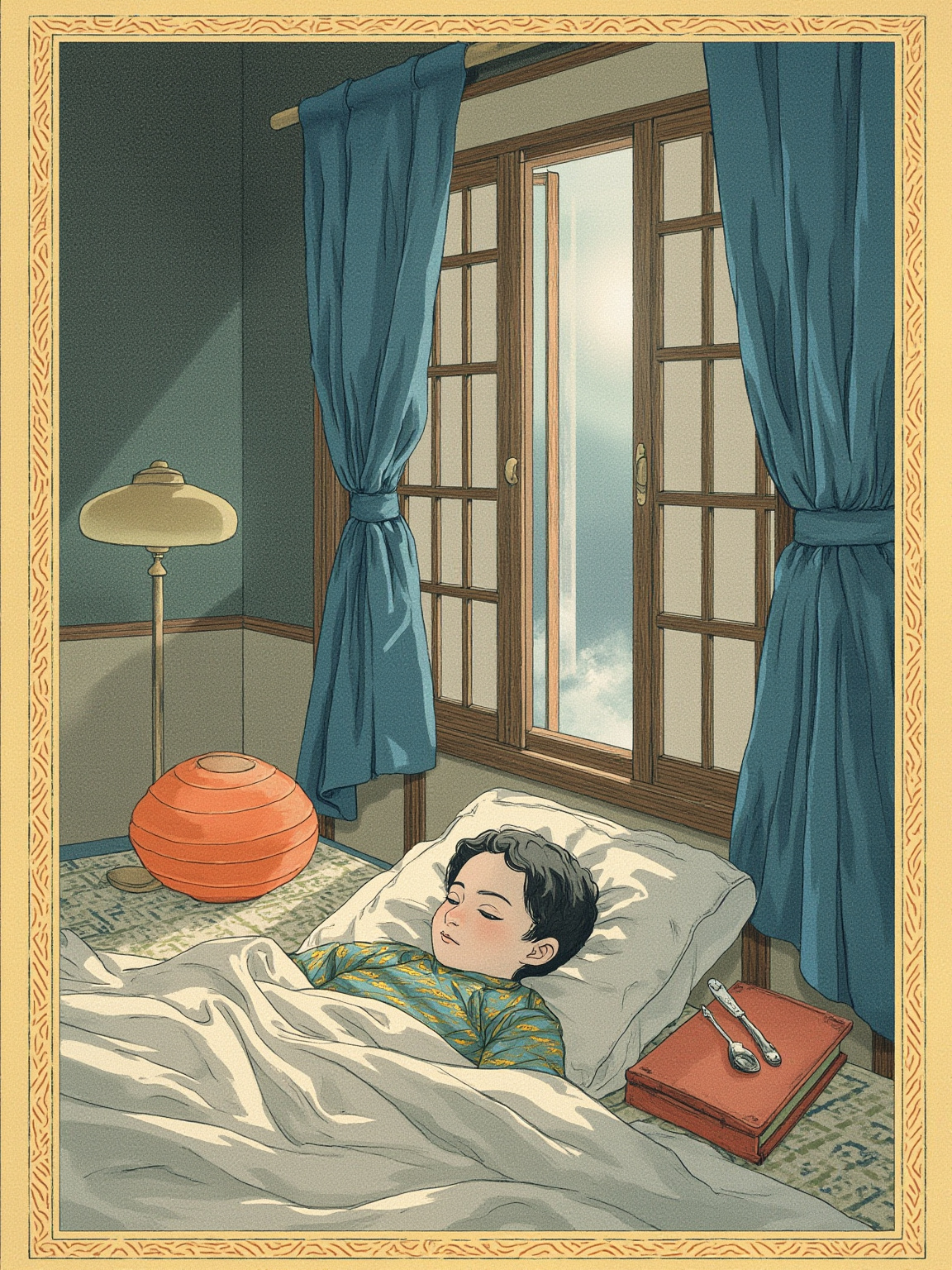
That first night in the dormitory, I lay still and listened to the breathing of strangers—it was the first time the world outside the house felt cold, and far.
寄宿寮第一夜,我静静躺着,听陌生人起伏的鼾声——这是我头一回觉得,屋子以外的世界是冷的,是远的。
金句 · 寄宿寮一节
It is the quietest coming-of-age moment in the whole memoir. No rebellion, no declaration, just a boy lying in bed, hearing a stranger snore in the next bunk, and feeling something turn over quietly inside him. This is what Naka does best, this small turning-over. He never forces it; he lets you hear it for yourself.
Sōseki's Distant Shadow: The Teacher Who Brought This Book Into Being
Natsume Sōseki is not a character in the book; he appears only at a distance, as "the teacher." He is the grown man the boy glimpses from across the university grounds, and later the man who read this years-in-the-making memoir, admired it, and recommended it himself to the Tokyo Asahi Shimbun for serialization. Sōseki died in 1916, the year after the book appeared in single-volume form, and this small piece of literary history is itself evidence that the book is quietly, genuinely great.
I gathered up, one by one, the small lights of my ailing childhood, and placed them in the hands of someone willing to see.
我把自己病弱童年里一寸一寸攒下的微光,捧起来,交给了一个愿意看见的人。
金句 · 漱石一节
So the book is a fruit grown under Sōseki's tutelage. Naka handed the small flickers of light he had seen in his frail childhood to a man willing to see them, and that man passed them on to an entire generation of readers. The chain of that handoff is, in itself, more like a story than anything that happens on the page.
Why It Is Remembered
The book has another, stranger claim to fame in Japan. At Nada Junior High School in Hyōgo Prefecture, a teacher named Hashimoto Takeshi once spent three straight years having his Japanese-language class read nothing but The Silver Spoon, and a striking number of those students went on to Tokyo University. His "one book, three years" method later became a bestselling book and a documentary of its own, and generation after generation of students have picked up the text again because of it. That it can sustain a full school year of close reading shows how much it holds up under repeated scrutiny; not many works of Japanese prose can do that.
Naka is not writing what kind of childhood I had. He is writing the objects of childhood are myself: the silver spoon, the mosquito net, the brazier, not props, but the scaffolding a frail child used to hold up his entire world.
Knowing All This, the Book Itself Still Waits
But no companion guide can give you the feeling of being slowly drawn in. Naka's prose is nearly transparent, and no plot pulls you forward; you have to sink into the house yourself, listen for rain in the gaps between fevers yourself, lie against your aunt's back and let the lantern light sway across your own eyes. That is the book's greatest barrier, and also its greatest reward: give it an uninterrupted stretch of time, and only then will it hand you that thread of snow-light slipping in under the eaves.
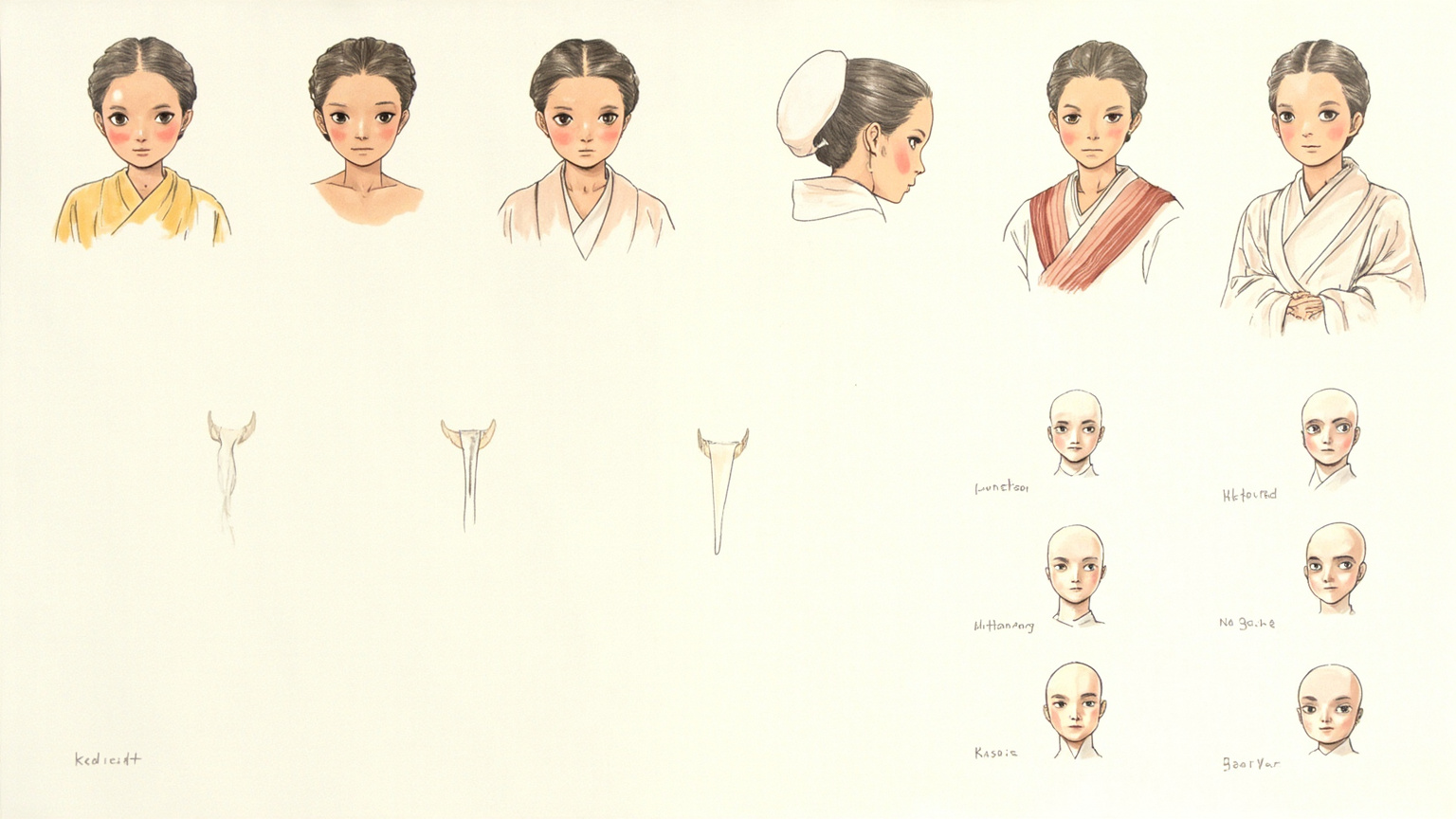
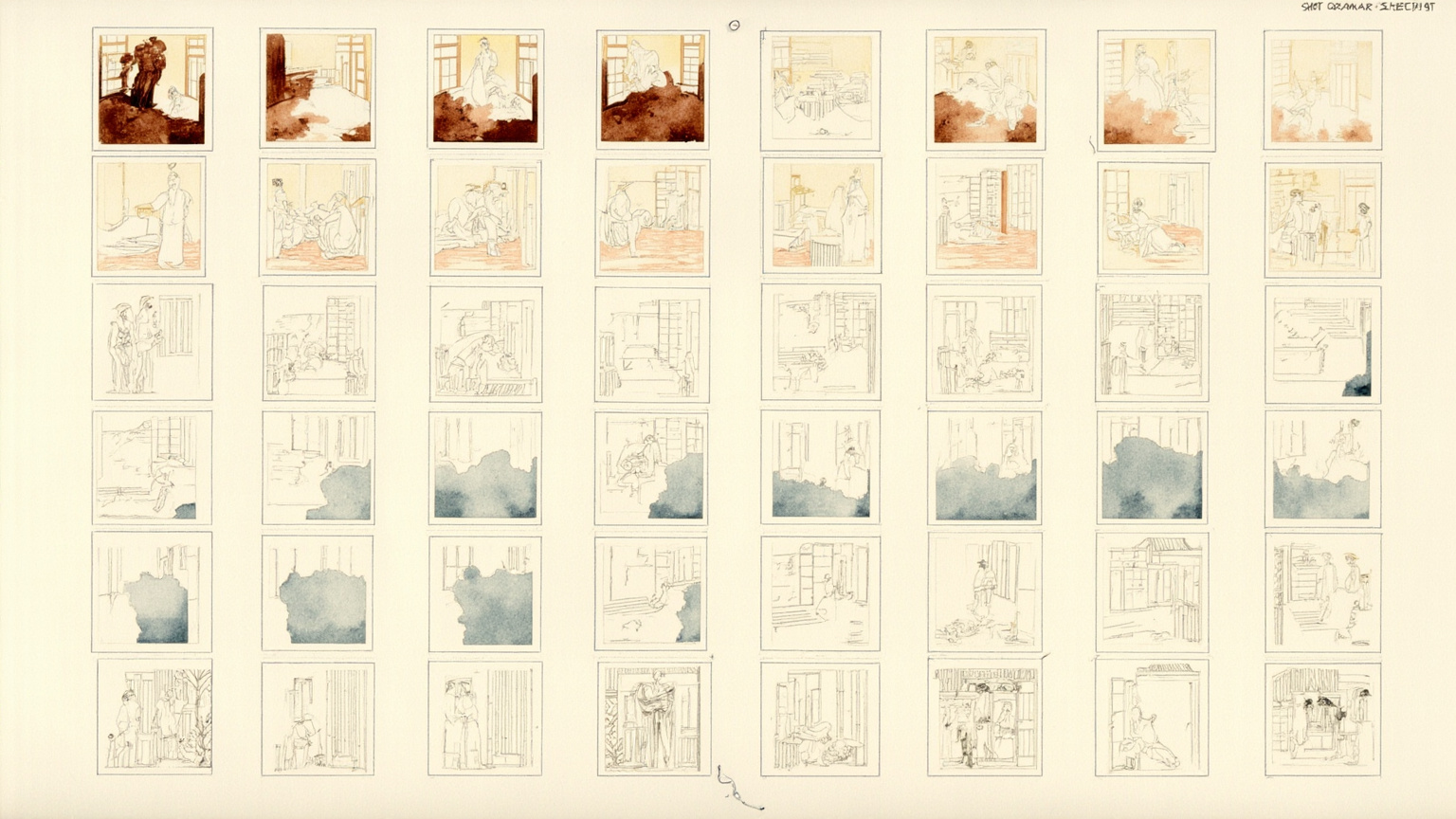
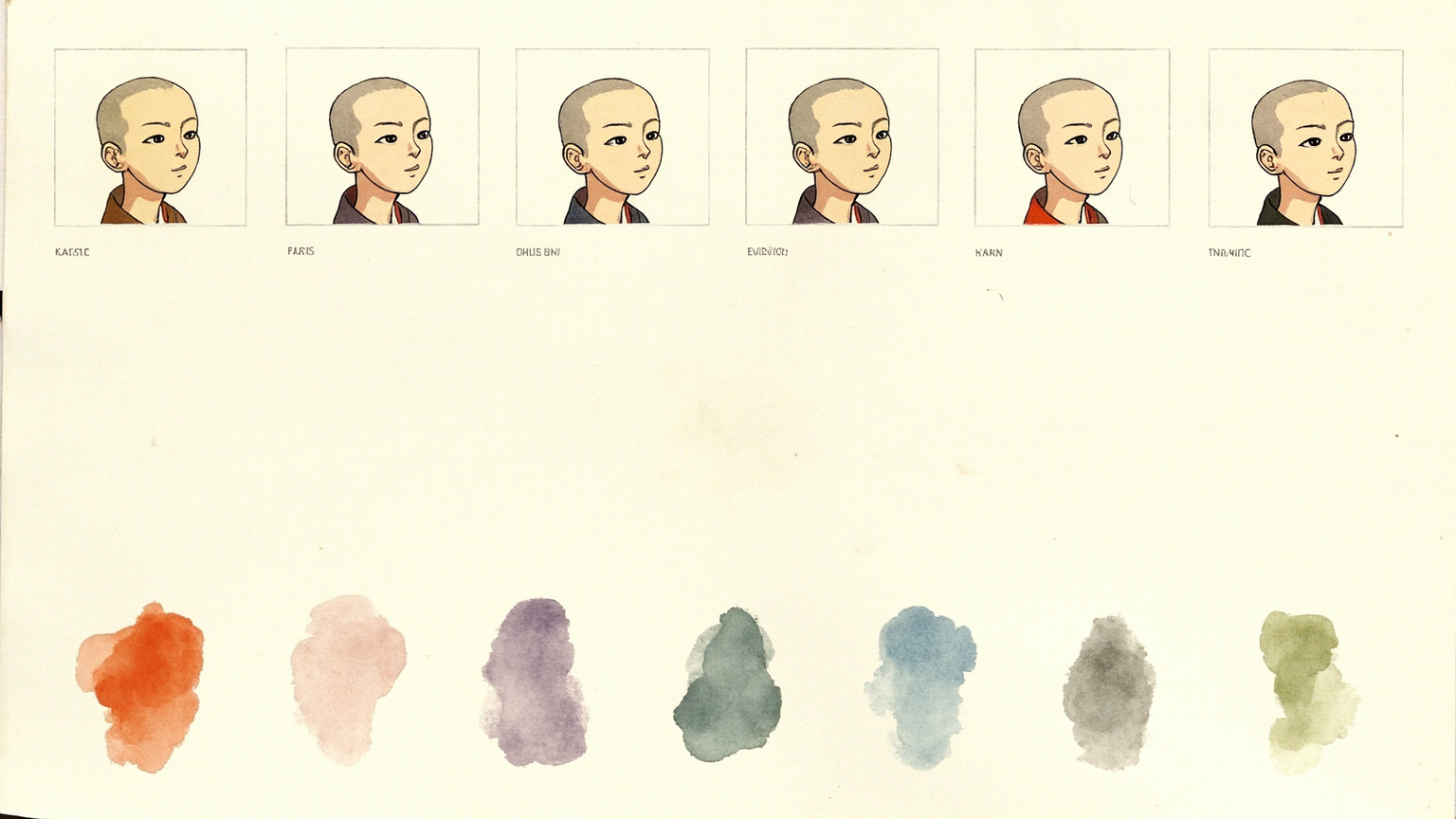
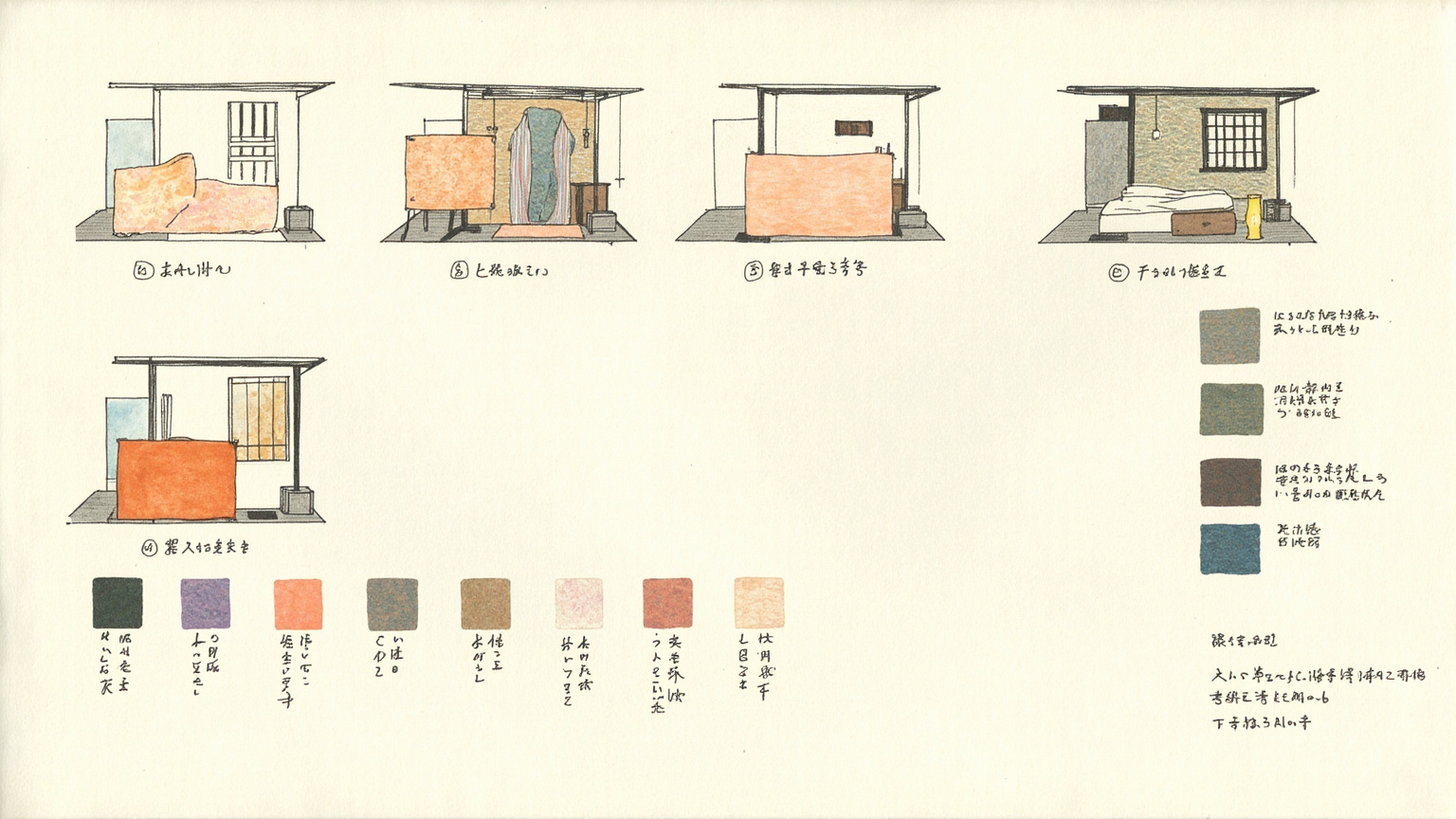
Art Direction4 plates
Before the guide was written, this book got a visual foundation — every illustration you just read grew out of it.