A slim volume of two hundred and sixty years ago that won you your vote
Text and illustrations produced by the pipeline

Here is the first sentence: Man is born free, and everywhere he is in chains. A Genevan in exile wrote that line at the head of a pamphlet in 1762, not for a king, not for a nobleman, but for every ordinary person like himself. It still rings in your ears more than two hundred years later because it doesn't read as a complaint. It reads as a demand for an answer: if no one is born to obey anyone else, where did all this order come from?
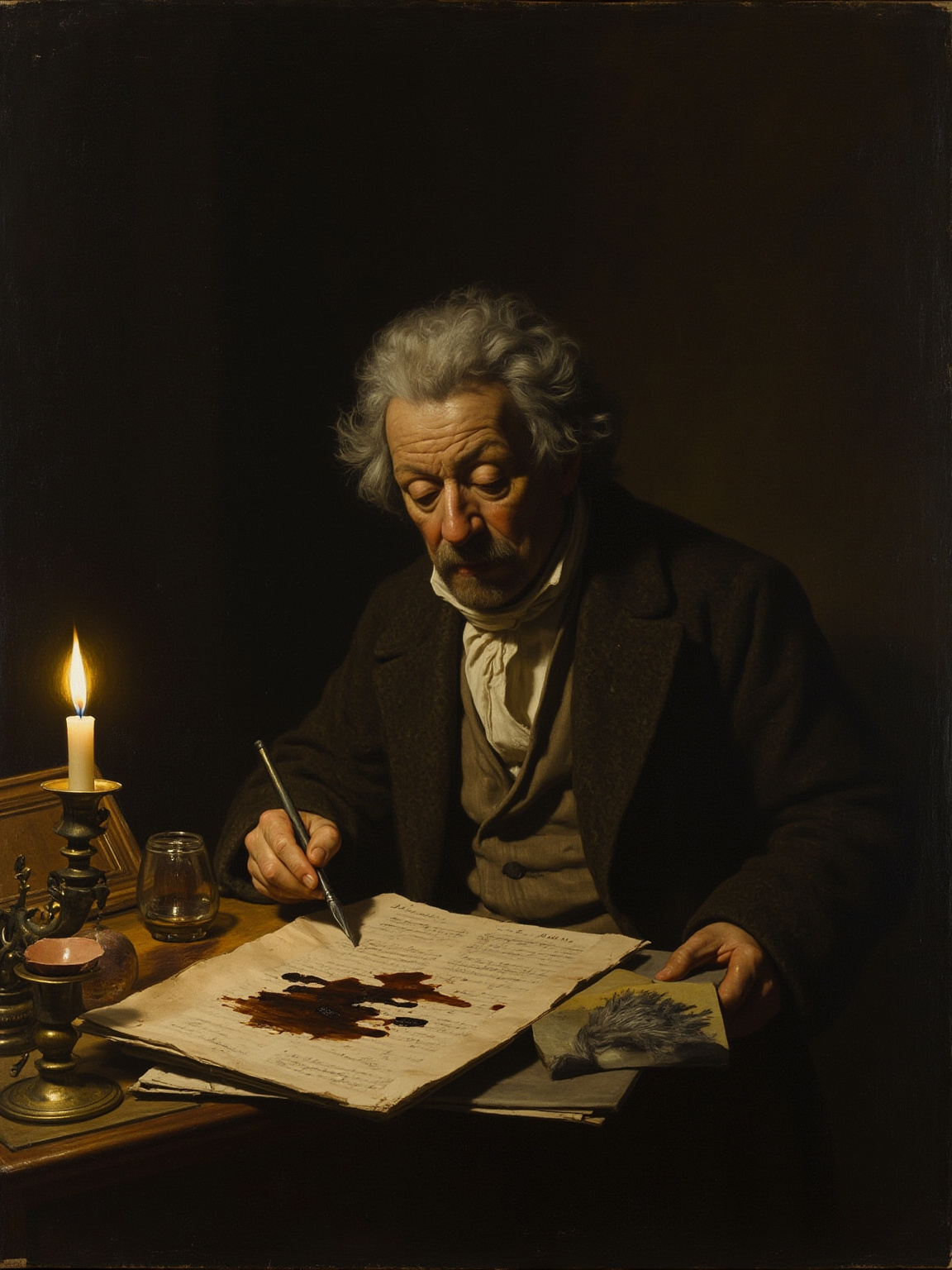
The author, Jean-Jacques Rousseau, was the son of a Geneva watchmaker, later exiled, and he made his living copying music scores and collecting plant specimens. In 1762 he put out The Social Contract and Emile in the same year: the Parlement of Paris banned and burned the first, Geneva's own city council burned it too, and Rousseau found himself a wanted man with nowhere to stand. On the title page he still signed himself Jean-Jacques Rousseau, Citizen of Geneva, a city that had produced almost no famous men in his lifetime and so became, in his mind, the model for his small republic. A man two governments had just declared dangerous turned around and wrote the most authoritative founding text modern democracy has. That gap is the book's real footnote.
This isn't a novel. There's no hero, no villain, just a set of concepts pulling against each other from the first page. The Sovereign is the body of citizens as a whole. The Government is the temporary staff the citizens hire to run things. The Legislator is the engineer who puts the general will into words, and Rousseau conjures him through the shadows of Moses, Lycurgus, and Numa. Rousseau draws a hard line between two things: the Sovereign is the master, the Government is the steward, and the master can dismiss the steward whenever it wants. Everything that happens later in the book grows out of that one cut.


Burned by his own city, canonized eleven years after his death, Rousseau's career as a writer was political argument with no other way out.
So you can't read this book with a single mirror. Both sentences genuinely sit in Rousseau's text at once: the government can be recalled the moment it betrays the general will, and the general will is always right, and every individual answers to it. The first line got written into the constitutional right of revolution. The second got used to manufacture enemies of the people. The same hand wrote both, and they sit side by side in one two-hundred-and-sixty-year-old pamphlet. That's exactly why the book still needs rereading today. It doesn't hand you an answer, it hands you an argument that has never closed. Read it once and you've worked through a nineteenth-century political problem. Read it more than once and you've installed a reflex in your own head for the words general will, so the next time someone claims I speak for the people, you pause for a beat before you believe them.
Before the guide was written, this book got a visual foundation — every illustration you just read grew out of it.
Book One lays out the problem right away: legitimate authority can only come from agreement. Rousseau's solution sounds almost brutal: every party to the contract has to hand over the whole of his rights to the collective as a whole, not to a king, not to any person. Once that's done, everyone stands in exactly the same position, equally free and equally bound, and what he obeys turns out to be his own will, cast as one member among all the others. Out of that surrender he pulls a new term: the general will. The general will isn't the will of all, the sum of everyone's votes; it's the thing that keeps asking whether the common good has been harmed. Add up everyone's private interests and you get the will of all, which can be entirely selfish; the general will is what's left once you strip those private interests away. It's an elegant cut, and a dangerous one, and you'll see below how two very different readings grow out of it.
Book Two is the hardest chapter in the book. Rousseau closes off representative government with a single line: sovereignty cannot be represented. What he means is that the people's will cannot be handed to a body of delegates to work out on their behalf; the law has to be made by the citizens assembled in person, or it's counterfeit. So what is the government? It's the executive body the Sovereign appoints, an office that carries out sovereignty's business rather than embodying it. The Sovereign can dissolve the government whenever it wants, government is a tool, not an end in itself. But the moment a government declares itself sovereign and turns public business into private gain, the contract is broken and the people have the right to revolt. That isn't a threat. It's a promise.
Take that cut out and look at it alone: when you vote thinking this benefits me, that's a private will. When you vote thinking is this good for the whole city, that fraction of the vote is the general will. Rousseau's conclusion runs against intuition: the general will is always right. When a citizen votes for private gain, he has, in effect, withdrawn his vote from the general will, and to that degree the general will starts to come apart. The line works like a two-sided mirror. Read it generously and a minority can resist majority tyranny, because as long as the general will still points at the common good, numbers alone can't override it. Read it darkly and whoever gets to say I speak for the general will has just claimed the right to judge every citizen. We'll come back to how much weight that carries.
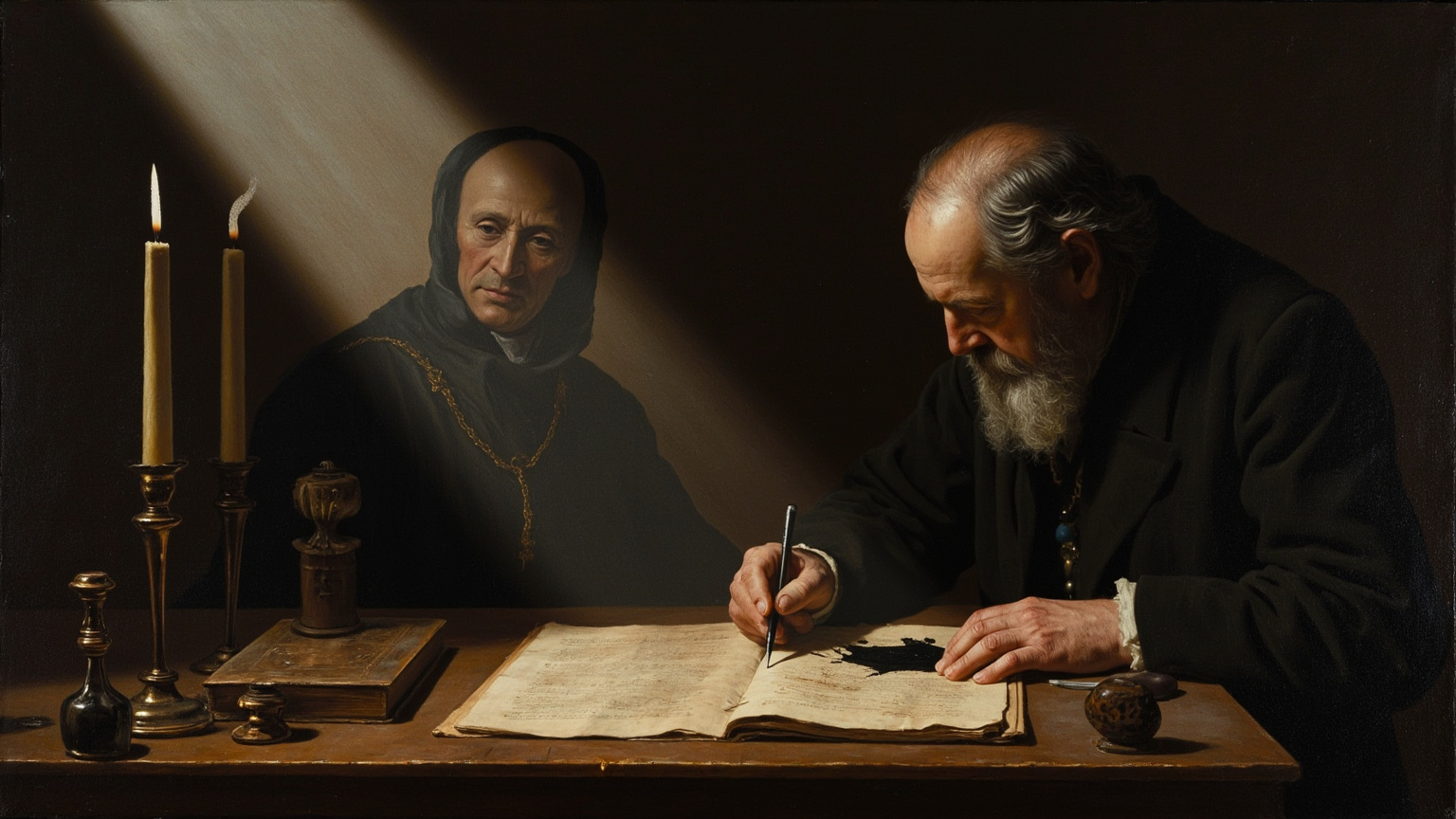
Book Three brings in a very particular figure: the Legislator. He isn't the Sovereign; he's the one who sees the general will for the whole city and translates it into legal text, and Rousseau shapes him after Moses, Lycurgus, and Numa. The Legislator doesn't command the people directly; he has to make the gods speak for him before anyone will listen, because the task is too large for an ordinary mortal, reshaping an entire people's customs when he himself has no natural authority to do it. Book Four follows immediately with civil religion: strip out narrow theology and keep only love of the community and respect for the law. A small republic with no virtue in it can't carry that weight, so Rousseau is doing politics and poetry at the same time. That's also the root of why so many different political movements later fought over him.
A pamphlet banned by two cities at once in 1762 rose onto a revolution's banner within twenty-odd years. In 1789 the Third Estate of the French Estates-General renamed itself the National Assembly and swore, on a tennis court at Versailles, not to disband until France had a constitution. That year's Declaration of the Rights of Man and of the Citizen wrote Rousseau's claims straight into law: sovereignty belongs to the people, and law expresses the general will. By then Rousseau had been dead for eleven years. In life, both his hometown and Paris had driven him out; eleven years after his death, his words became the new nation's scripture. In 1794 his ashes were carried into the Panthéon. The man who wrote that small book ended up finishing, as a dead man, the page he'd never let himself claim while alive; he became the Revolution's own Legislator. The first time I read this part, I went back and checked the date Emile was banned, just to line the two up again.
A guide gives you the map. The text is the ground itself. Rousseau's sentences actually have temper: he'll box himself in with a rhetorical question, then drive it home with a shorter sentence right after, and that rhythm only reaches you through your ear. There's also his botanist's precision, and the bursts of near-rapture that break through it now and then, both only come alive off the rough edges of the actual pages. And if you want to know why this book still reads like an unexploded bomb today, you only find out by finishing it: exactly how much weight civil religion is meant to carry, Rousseau never quite nails down himself, and the room he leaves there is something you can't guess at secondhand.