The Straw House (also translated Bronze House) · Companion Guide
草房子
一九六〇年代苏北水乡,一群十一二岁的孩子在茅草顶的校舍前,第一次学会了告别。
The opening: a boy drops his bowl in front of the straw house
A blue-and-white bowl hits the sun-bleached stone steps and breaks into five pieces. It happens one morning at the Youmaidi primary school, sixth grade — Sangsang, the son of the principal, Sang Qiao, has just knocked over his own breakfast. He isn't hungry and he isn't angry. It's the lump that has grown on his neck. He is twelve that year, and he doesn't know what to call it yet, let alone that he will carry it through the whole year ahead, watching the kids around him get knocked down by life one after another.
What kind of book is this
The Straw House was written by Cao Wenxuan in 1997. Cao is one of the leading figures in contemporary Chinese children's literature, and in 2016 he became the first Chinese writer to win the Hans Christian Andersen Award. This novel is the one he's remembered for, a fixture on Chinese school reading lists for decades, with sales in the tens of millions. It has no fantasy in it and no adventure. It follows a group of eleven- and twelve-year-old children at a village school in the wetlands of northern Jiangsu through everything one year throws at them: first love, a family's ruin, humiliation, death, and a grave illness that resolves itself almost like a miracle. What it's really about is how childhood shapes the person you become, which is why people keep coming back to it.
Youmaidi: straw houses, reed marshes, and a handful of eleven- and twelve-year-olds
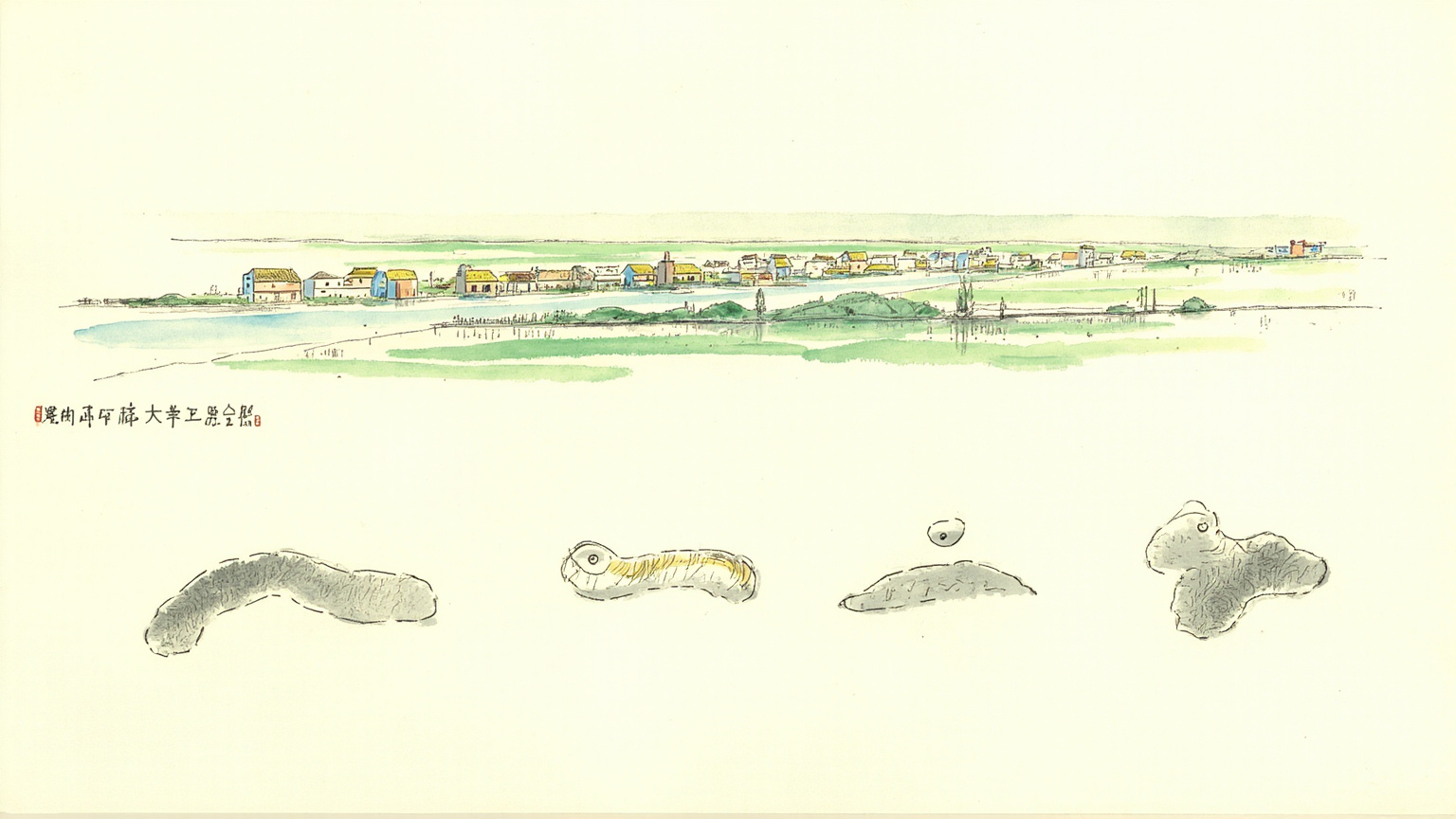
The story is set in Youmaidi, on the wetland plains of northern Jiangsu in the 1960s. Rows of thatch-roofed schoolrooms, wooden doors bleached white by the sun, a river bending around the threshing ground — that's the book's visual ground note throughout. The viewpoint is Sangsang's, the principal's son: clever, mischievous, a prankster with a soft heart, and the whole novel follows his eyes. Around him that year are a handful of kids his own age. Zhiyue, quiet and fine-featured, has just transferred in from Banchang — she's the first girl Sangsang ever feels anything for, in that hazy, half-formed way. Lu He, nicknamed Baldy, was born without hair and is the easiest target for laughs in the class. Du Xiaokang is Youmaidi's richest kid, the one with a bicycle and brand-new school supplies. Xima, a shepherd boy Second Master Qiu adopted from outside the village, is two or three years older than the rest and still speaks with an outsider's accent. A handful of eleven- and twelve-year-olds, dropped into the same year on the same stretch of water.
Zhiyue arrives — the first time a boy wants to protect someone
Zhiyue transferred in from Banchang: quiet, a beautiful hand at calligraphy, no mother, raised by her grandmother. From the day Sangsang meets her, he starts stammering whenever he talks to her. It isn't the kind of crush that pounds the table in a TV drama — it shows up as him taking the long way round every morning to walk her to school, as his fists clenching whenever someone picks on her. Some boys from Banchang have their eye on her, and Sangsang can't stop any of it; he can only watch from a distance. This is the first time he learns that wanting to protect someone has an actual shape to it — a hand closing and opening again, a distance he can't run fast enough to cross.
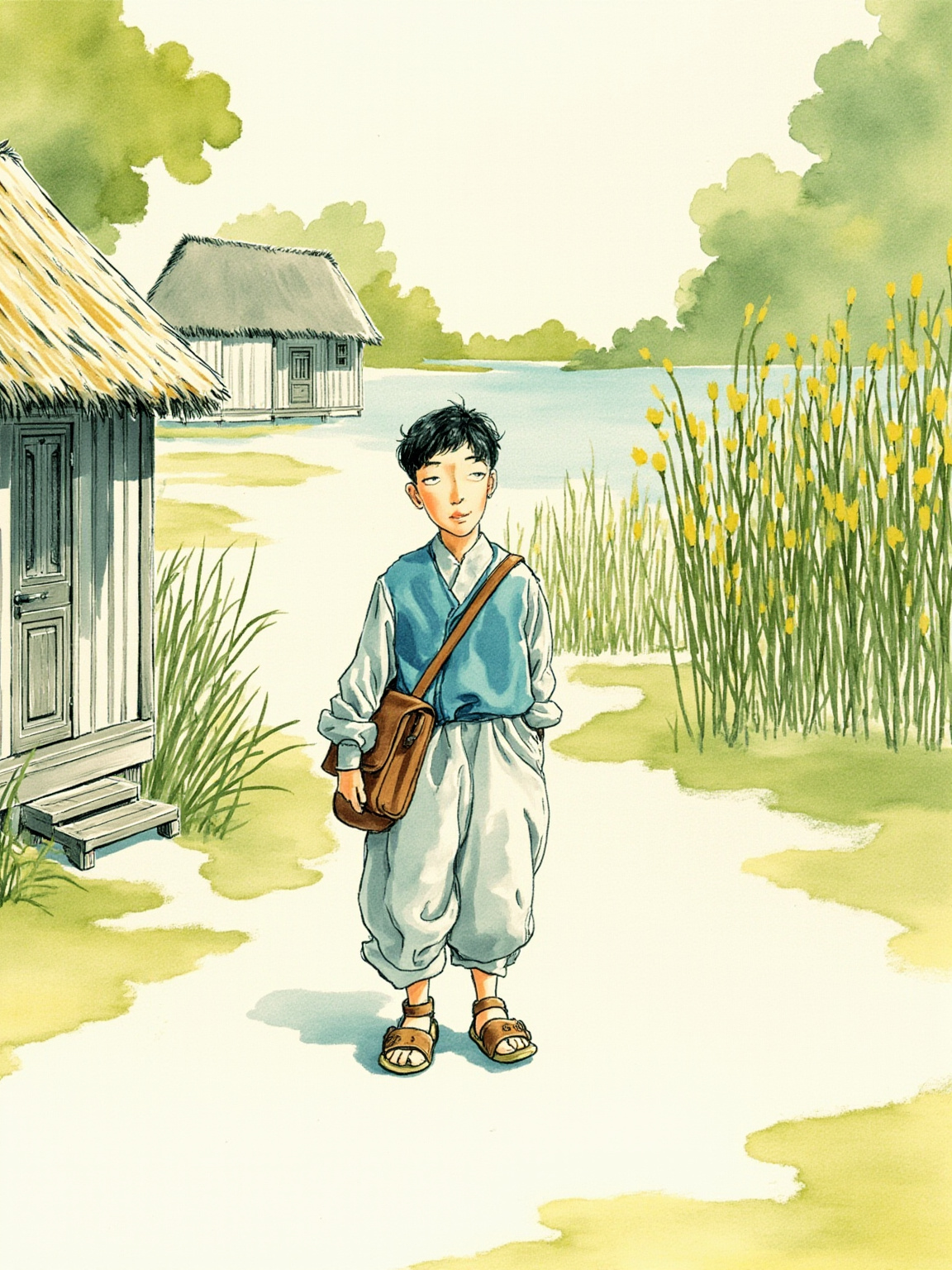
His heart had never held this feeling before — the wanting to shield someone, without yet knowing how.
他的心里有了一种从未有过的感觉——他想护住一个人,可他还不知道该怎样去做。
金句 · 第四章 · 纸月
Cao doesn't have Sangsang shout anything brave here, and he doesn't send him into a fight. He just writes that particular ache down to the bone — the feeling of I should step in, but stepping in might not even help. It's the first time in the book a child has to look straight at his own powerlessness.
Baldy's bald head — how a mocked boy makes peace with himself
Lu He got laughed at for his bald head for an entire year. Sangsang led the mockery, and later led the regret too. The best moment comes when the school puts on a play and needs someone to play the villain — bald, of course — and Lu He volunteers himself. The moment rehearsal starts, he takes off his cap. The stage light hits a real bald head, and the kids in the audience go still. The laughter they'd been ready with never comes — they hadn't expected the boy they'd mocked for three years to walk to center stage like that, on his own terms. What he wins back is bigger than an audience's silence: the way people look at him afterward.
Cao doesn't turn Lu He into a triumphant underdog, and he doesn't turn him into a victim either. He writes a boy who has gotten used to being laughed at and decides, on his own terms, how he wants to be seen. That dignity isn't handed to him. He walks to the middle of the stage and earns it himself.
Du Xiaokang: the young master, the reed marsh, carrying his father through the snow
Du Xiaokang starts out as the boy everyone envies. His father, Du Yonghe, is Youmaidi's big businessman, trading in medicinal herbs and dry goods, with rosewood furniture and a bicycle at home. Then a boat capsizes, and the family loses everything overnight. Father and son are forced to leave Youmaidi and drive ducks a few hundred miles away, out into the reed marsh. It's the most remote stretch in the whole book: the two of them spend a full season in a hut in the middle of open water, winter comes, the ducks scatter, and Du Yonghe falls seriously ill. The last image is Du Xiaokang carrying his father on his back, walking home to Youmaidi step by step through the snow.
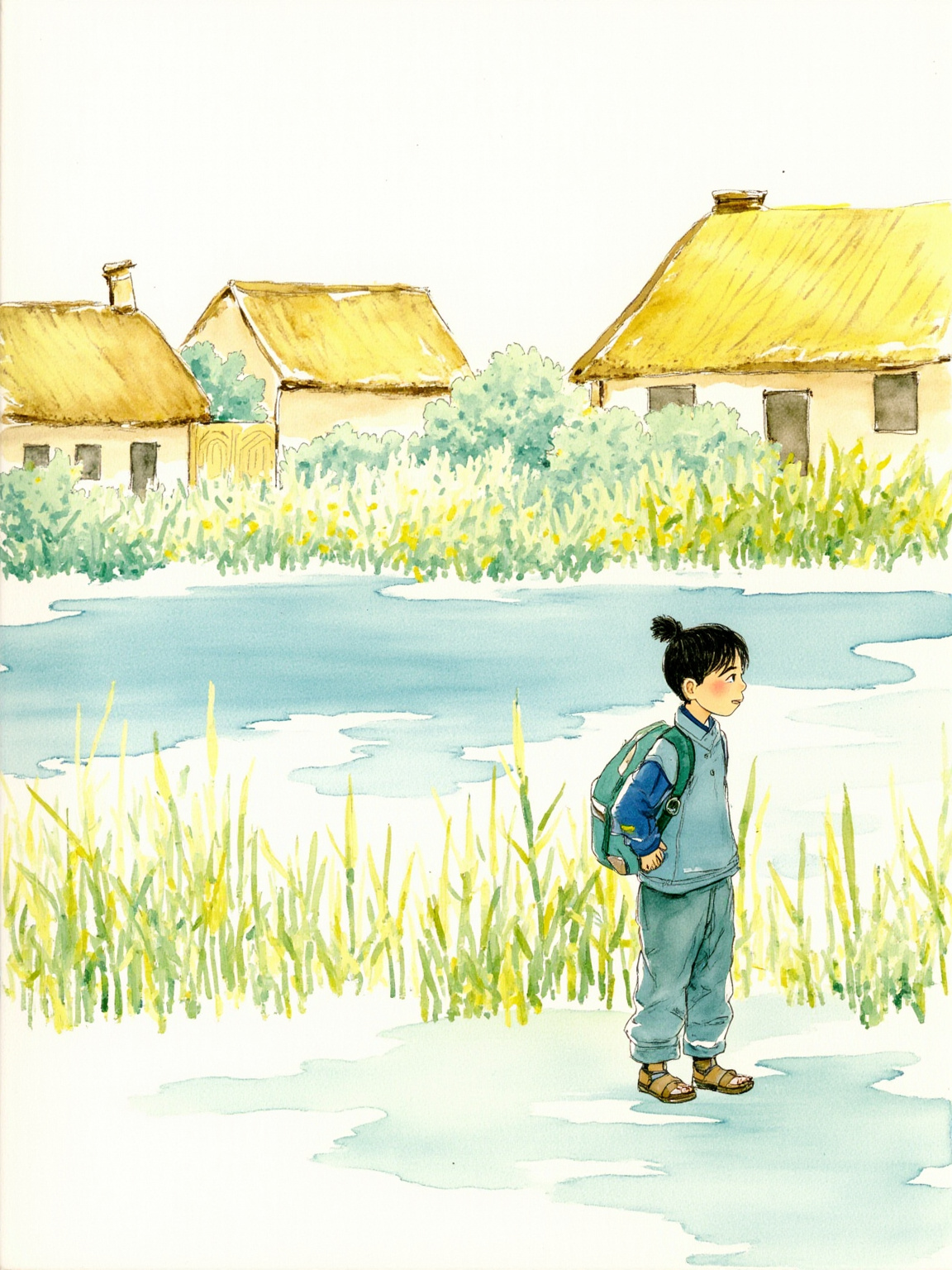
The boy walked through the snow, step after step, carrying his father home on his back — and no one in the world knew.
杜小康背着他父亲,踏着雪,一步一步地朝油麻地走去——这世上,没有一个人知道。
金句 · 第七章 · 杜小康
The heaviest weight in the book lands on Du Xiaokang. But Cao doesn't dwell on exactly how much he suffers. He works instead with wide shots — reeds, river water, a cold wind — and lets the reader finish the picture of that boy walking through the snow. That restraint hands the heaviest part of the story over to the reader to complete.
Xima and Second Master Qiu: an adopted outsider holds up a household
Xima is two or three years older than his classmates, a shepherd boy Second Master Qiu adopted from another town. An outsider's accent and an adopted son's status leave him with almost no friends that first year in Youmaidi. Second Master Qiu had planned to raise him and let Xima care for him in old age. Instead the story turns around: Second Master Qiu falls ill, and Xima, still in his teens, is left alone in the old house — hauling timber, building, tending sheep — and somehow holds the household together on his own. Second Master Qiu dies quietly in the end, in the house Xima built, without much suffering.
This section is about how much more a child can carry than adults tend to think. Xima has no grand heroic moment. He just gets through one concrete task after another, day after day — and that turns out to be more convincing than any hero's story would be.
Jiang Yilun and Bai Que: a love letter hidden inside a lesson plan
Jiang Yilun is the young language teacher at Youmaidi's school, and Bai Que is a girl from the town. A river runs between them, and that's how their whole relationship happens — letters, messages passed along, looks exchanged from a distance. Jiang keeps her letters tucked inside his lesson plans and never dares open them in front of a colleague. Bai Que's mother and the town's gossip cut the relationship off before it can go anywhere, and the two never end up together. It's the lightest touch in the whole book, and the saddest one: it's the first time Sangsang understands that grown-ups lie awake over someone too.
Love letters were slipped between the pages of a lesson plan, never opened where any colleague could see.
他把那些信,夹在教案的中间,从不敢当着别人的面打开来看。
金句 · 第八章 · 蒋一轮与白雀
Cao writes the two adults with deliberate restraint. There's no running away together, no dramatic heartbreak — just letters put away and tears swallowed back down. Much of the book's quiet, waterlogged sadness comes from exactly this.
The lump on his neck — a father carries his son through a whole summer
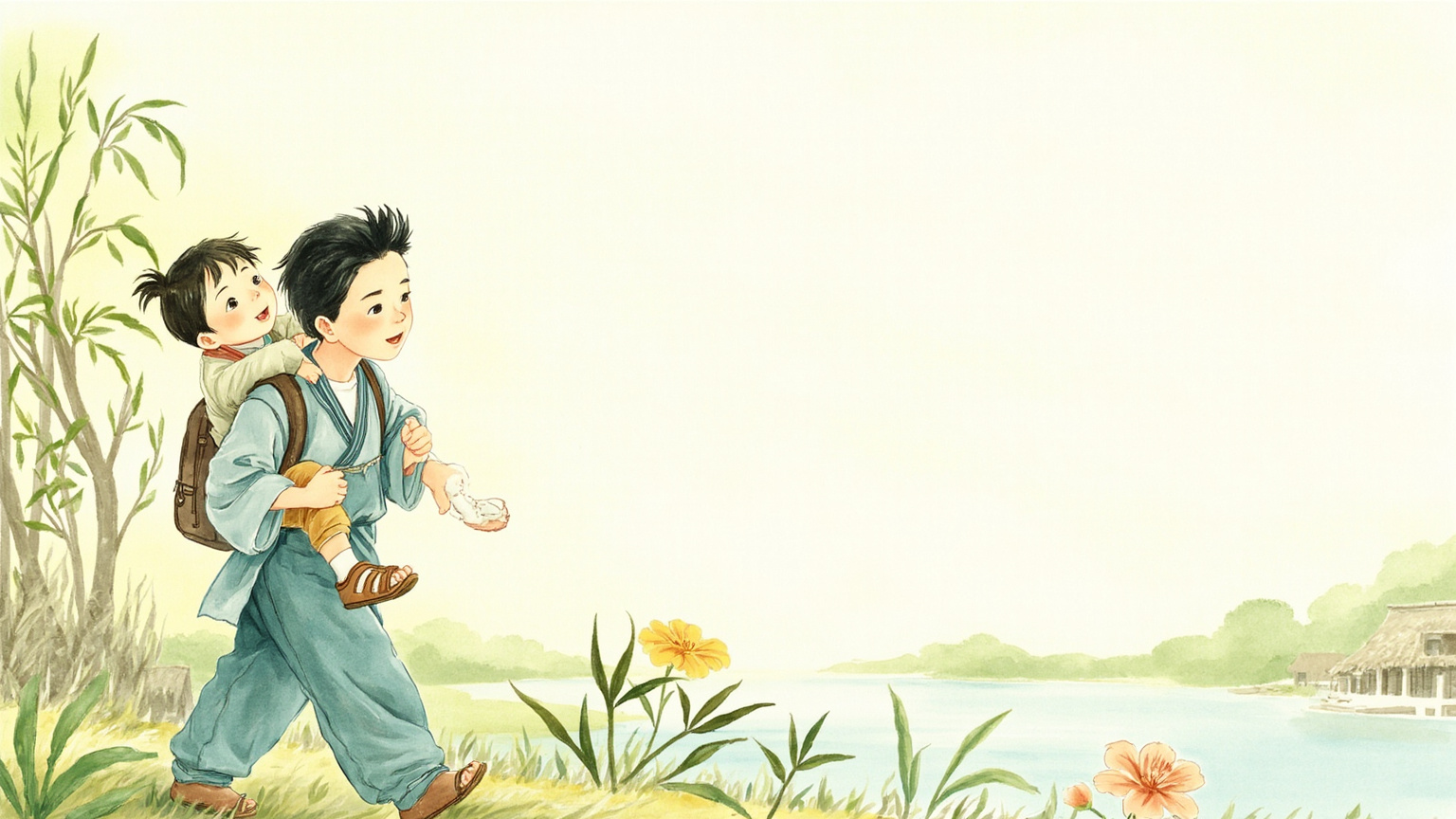
Summer comes, and the lump on Sangsang's neck keeps growing. The day a doctor calls it terminal, Sang Qiao says nothing. He just puts his son on his back and goes. Father and son move from one doctor to the next, selling off nearly everything the family owns. At the end of it, an old herbal doctor by a river gives them the miracle: it was never terminal at all. It was something else, and the first diagnosis was wrong. Sangsang recovers.
This is the heaviest emotional beat in the book, and Cao doesn't play it for tragedy. He writes a father in a very particular register — strict enough at ordinary times to send his son ducking under the table, and silent when it matters most, simply lifting him onto his back and walking. The image of Sang Qiao carrying Sangsang is the one image from The Straw House that stays with readers for life, heavier than any first love or any family's ruin.
When the reed flowers turn white, the year ends
In autumn, the reed flowers in the marsh turn white, and Sangsang stands in front of the straw house of Youmaidi's school, watching his classmates run across the yard. Zhiyue, Baldy, Du Xiaokang, Xima, Jiang Yilun, Bai Que — this year has rewritten every one of them. Sangsang has changed too. The lump on his neck is gone, and something has grown in its place that he'd never known before he turned twelve. Cao closes with a single line: a heart grown warm and hard at once. That line is the whole book's thesis.
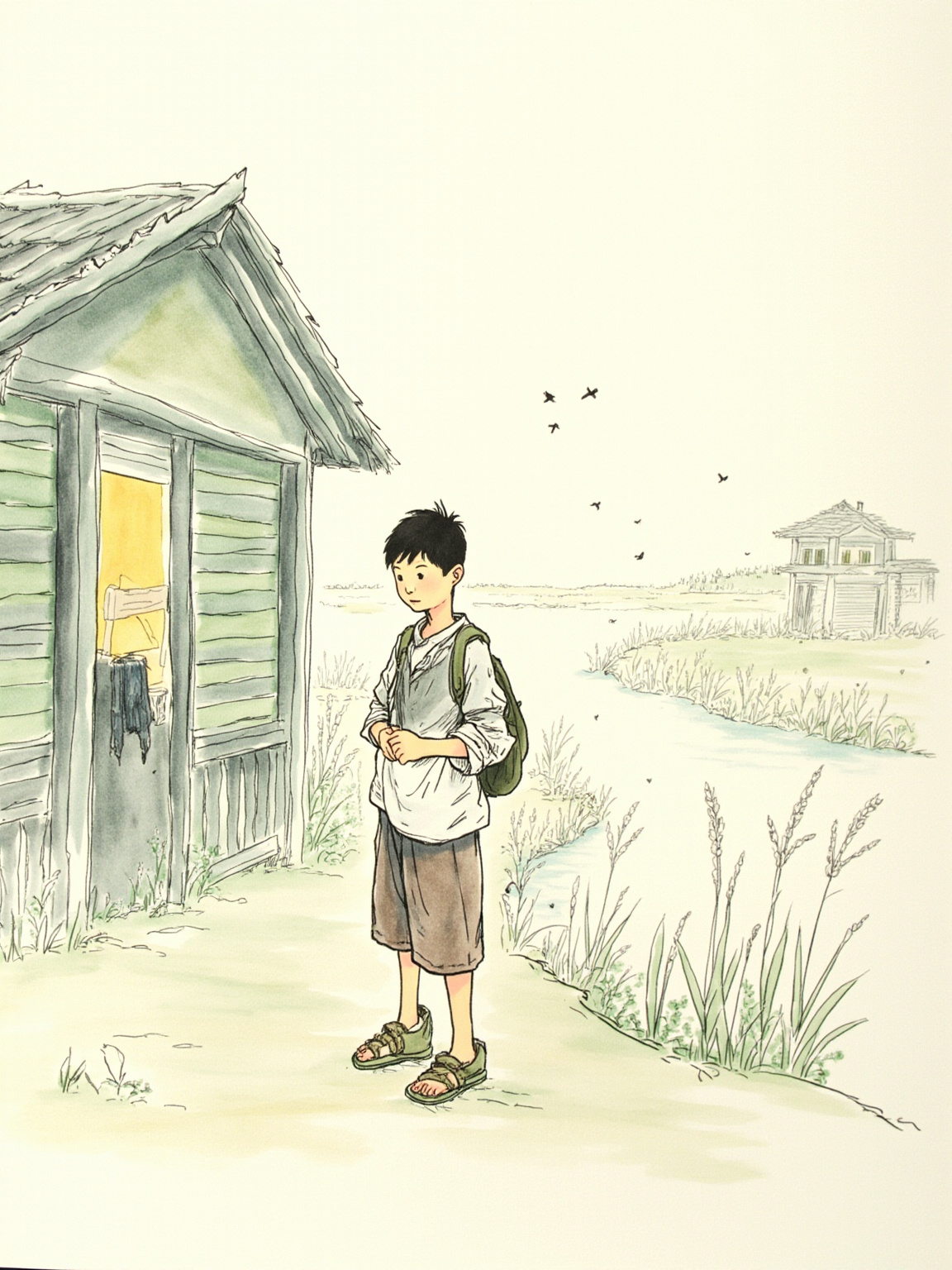
When the reed catkins took flight and turned the sky white, Sang Sang stood before the straw houses and understood: he was no longer a child.
当芦花飘起来的时候,桑桑站在草房子前,看着奔跑的同学们——他忽然觉得,他已不再是小孩了。
金句 · 尾声 · 芦花
Why it's remembered — growing something soft inside hardship
The Straw House is a group portrait of rural Chinese childhood. Illness, poverty, death, first love, separation — the hard things that belong to the adult world get pushed, one by one, into the arms of eleven- and twelve-year-olds. But Cao never turns the suffering into an accusation, and he never turns childhood into a utopia either. He writes reeds, rice paddies, thatched roofs, the sound of a bronze bell — wrapping the weight of it all inside a clean, uncluttered landscape and letting the children grow up inside that landscape, slowly. That approach went on to shape a whole generation of Chinese coming-of-age fiction.
Childhood isn't the absence of worry. It's the first time you see how much the world weighs, and choose which part of it to carry inside you.
Why the plot alone isn't the reason to read it
A plot summary is the map. The novel itself is the ground. Here you can learn what illness Sangsang had, how the Du family lost everything, how Lu He won back his dignity. What you can't get here is the smell of reeds sun-dried in an autumn wind, the sound of an old bronze bell worn bright from ringing, the sweat-soaked cotton shirt on Sang Qiao's back as he carries his son. Cao's wetlands aren't scenery — they're one of the book's characters. You have to read the landscape yourself: how the reed flowers turn white, how the river bends around the threshing ground, how a boy feels the wind turn cool for the first time on the morning he's finally well.
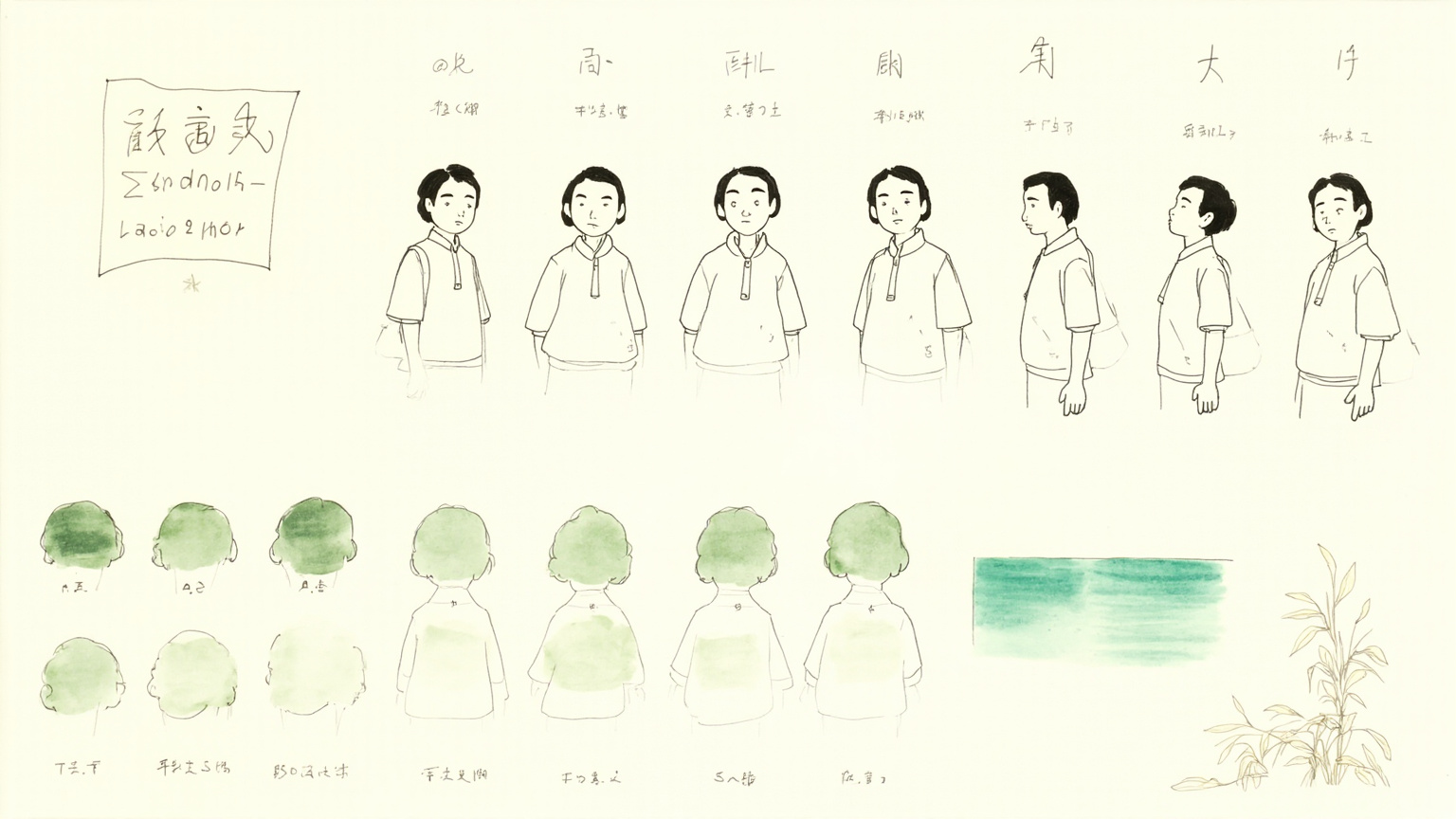
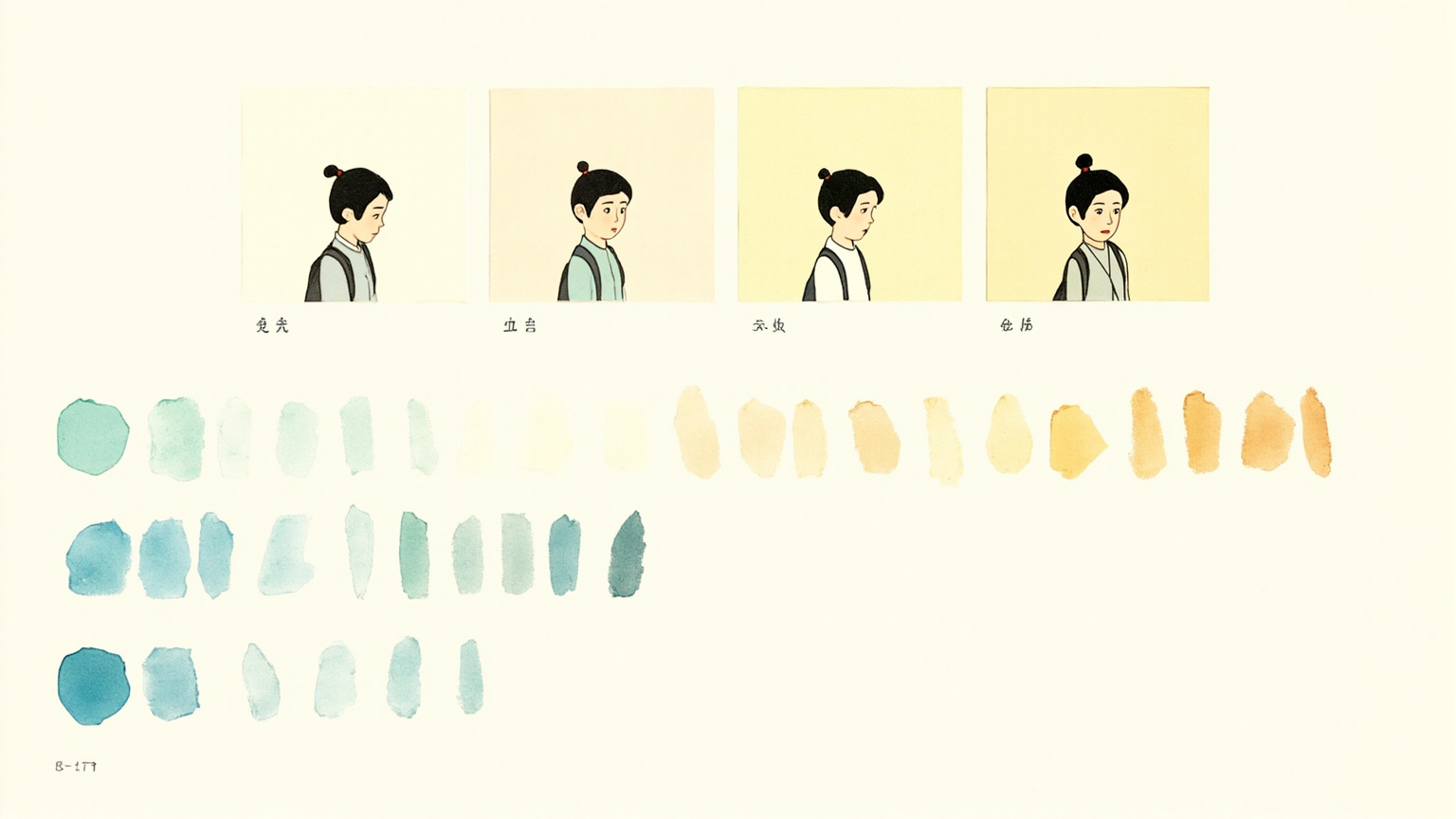
Art Direction4 plates
Before the guide was written, this book got a visual foundation — every illustration you just read grew out of it.