The Sun Also Rises · Companion Guide
太阳照常升起
战后巴黎,一对无法相爱的男女,在苦艾酒与斗牛场的狂欢中,用伤痕累累的优雅对抗虚无。
Opening: The Drink in the Vesper Bells
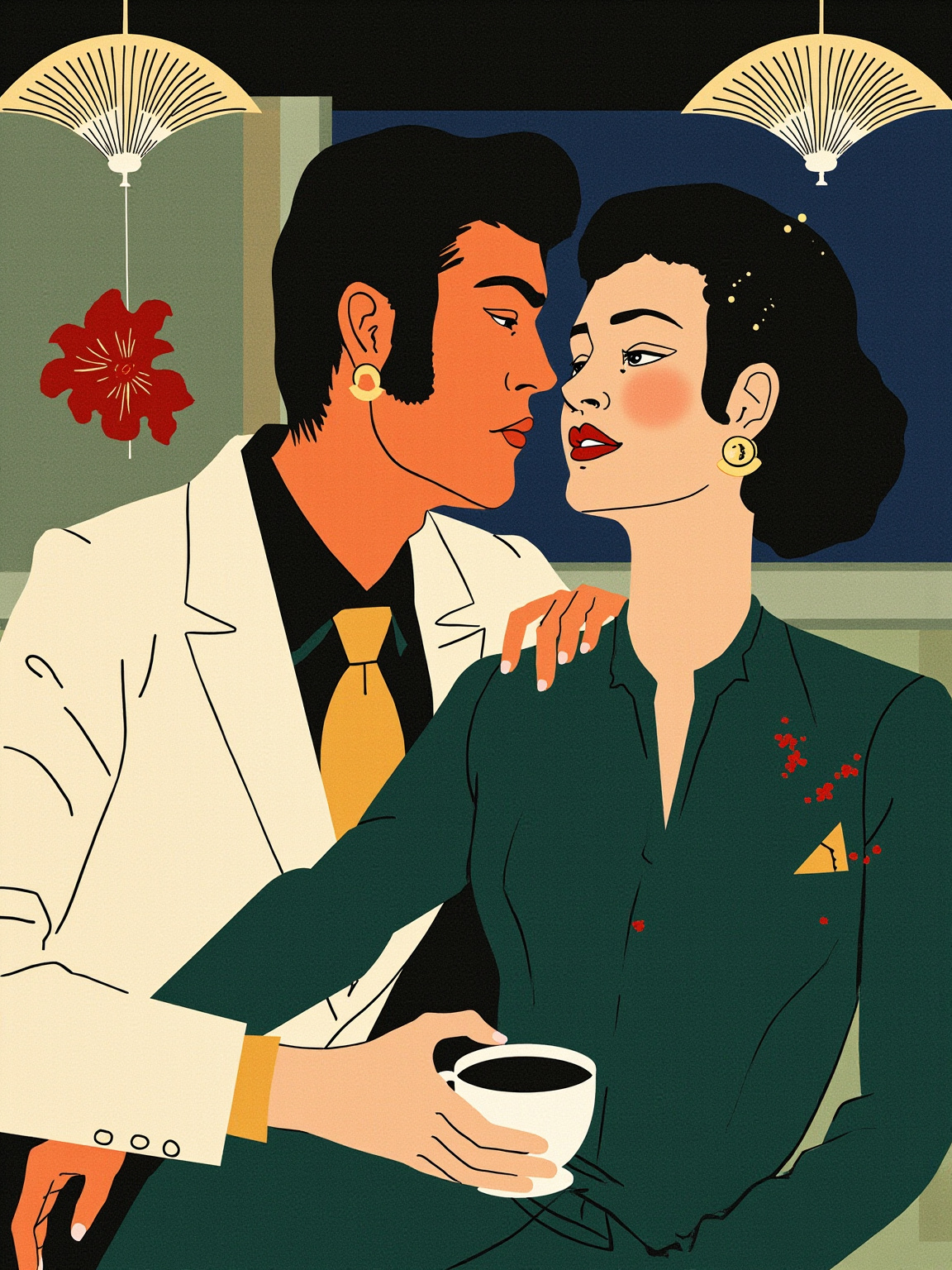
The Englishwoman pushes open the door of a Left Bank café in Paris, her hair cropped close, an unlit cigarette between her fingers. The man across the table has already drunk his absinthe down to the last of it, an American journalist, a veteran of the war, silence arriving at the table before he did. She sits, says nothing, and takes a sip from what's left in his glass. That they love each other has never needed saying. That they can never be together needs it even less.
What Kind of Book This Is
The Sun Also Rises is Hemingway's first novel, published in 1926. The British edition came out first, under the title Fiesta; the American edition followed with the name it carries now, taken from Ecclesiastes: the sun also ariseth, and the sun goeth down, and hasteth to his place where he arose. Eight years after the war ended, young Americans and Europeans were holed up in the cafés of Paris, drinking, drifting, with nowhere in particular to go. Hemingway packed this crowd into a trip from Paris down into Spain and came out with a portrait of an entire generation, and almost as a byproduct, a style: say seven-tenths of it, and let the rest sink below the waterline.
People and Place: Two Who Never Arrive
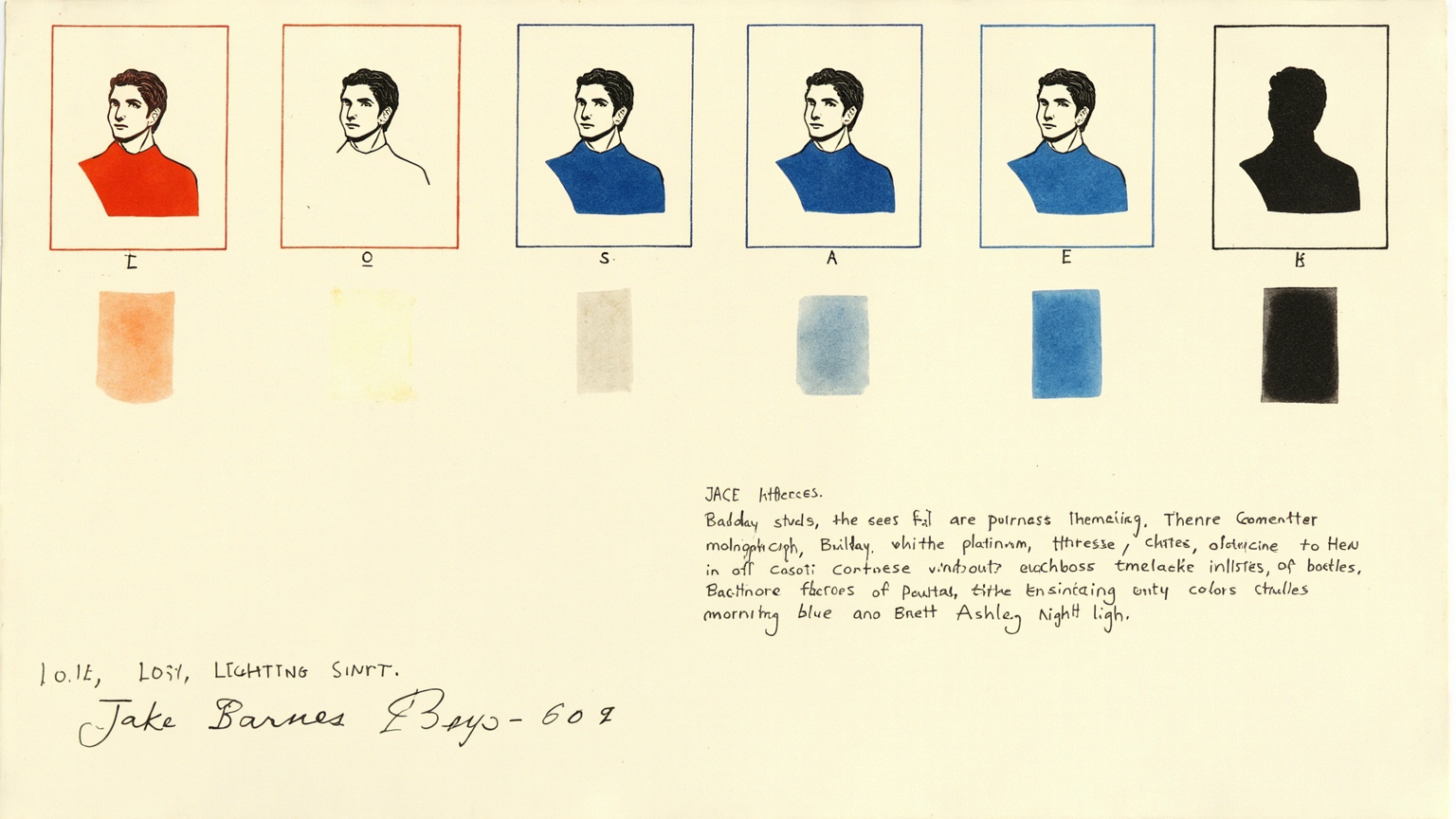
Jake Barnes narrates: an American journalist living in Paris, carrying a wound from the war that no one names outright. He can walk, ride, fish, watch a bullfight with a clear head, and do everything except consummate anything with Brett. Lady Brett Ashley is English aristocracy, mid-divorce, her hair cut short, and she turns heads wherever men are gathered. She loves Jake too, but she can't live on a man who can't give her what she needs, so she leaves. And so the two of them sit next to each other at other people's tables, raise a glass, trade a look, and swallow the want back down.
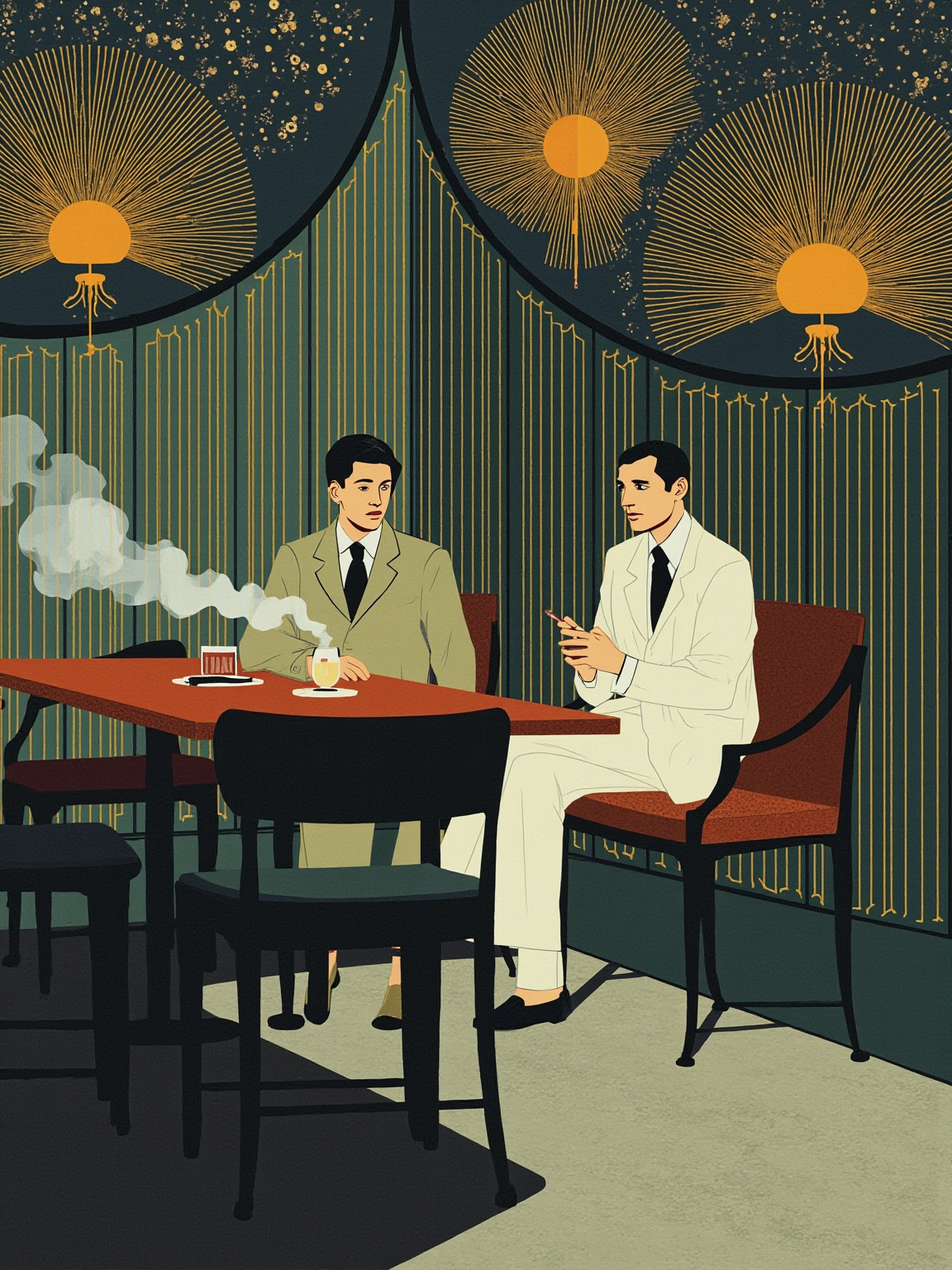
"I can't stand it to think my life is going so fast and I'm not really living it."
一想到生命飞一样地流走,而我根本就不算真正地活,我受不了。
原文金句 · 第3% · 巴黎咖啡馆
Around them drifts a crowd equally unmoored. Robert Cohn, a Jewish novelist and a former Princeton boxing champion, is insecure underneath and prone to romantic delusion. He had a brief affair with Brett once and never let it go, which makes him the outsider this circle of Paris expatriates mocks and shuts out. Jake's closest friend, Bill Gorton, is the group's one loose, easy presence. Mike Campbell, Brett's nominal fiancé, is a twice-bankrupt Scottish drunk whose jealousy of Cohn is the least hidden of anyone's. The whole crowd of American and English expatriates holes up in Montparnasse on the Left Bank, mocking each other at night and mocking each other again the next morning with a hangover.
Paris: The Heat Before the Slap
The book opens with Cohn. He's in Paris to publish a book, asks Jake to go a few rounds with him, and Jake can't be bothered. Only later does it come out that Cohn is carrying an old account: a fling with Brett in San Sebastián that ended for her and never ended for him. One word from her and he'll follow her to Pamplona. Hemingway fixes the shape of this outsider in three dinners: everyone else drinks, he sits apart; everyone else trades jokes, he can't get inside one. For the rest of the book he sits there fermenting into a time bomb.
Burguete: Ambition Thrown in the Stream
Jake can't take the heat in Paris anymore and takes Bill into Burguete, a small town in the Pyrenees. Two days at the streamside fishing for trout: rod, lead sinkers, shadow, the cold of early morning. It's the cleanest chapter in the book. No fights, no drinking, no Brett. Hemingway drops the pace hard and lets the reader breathe with Jake.
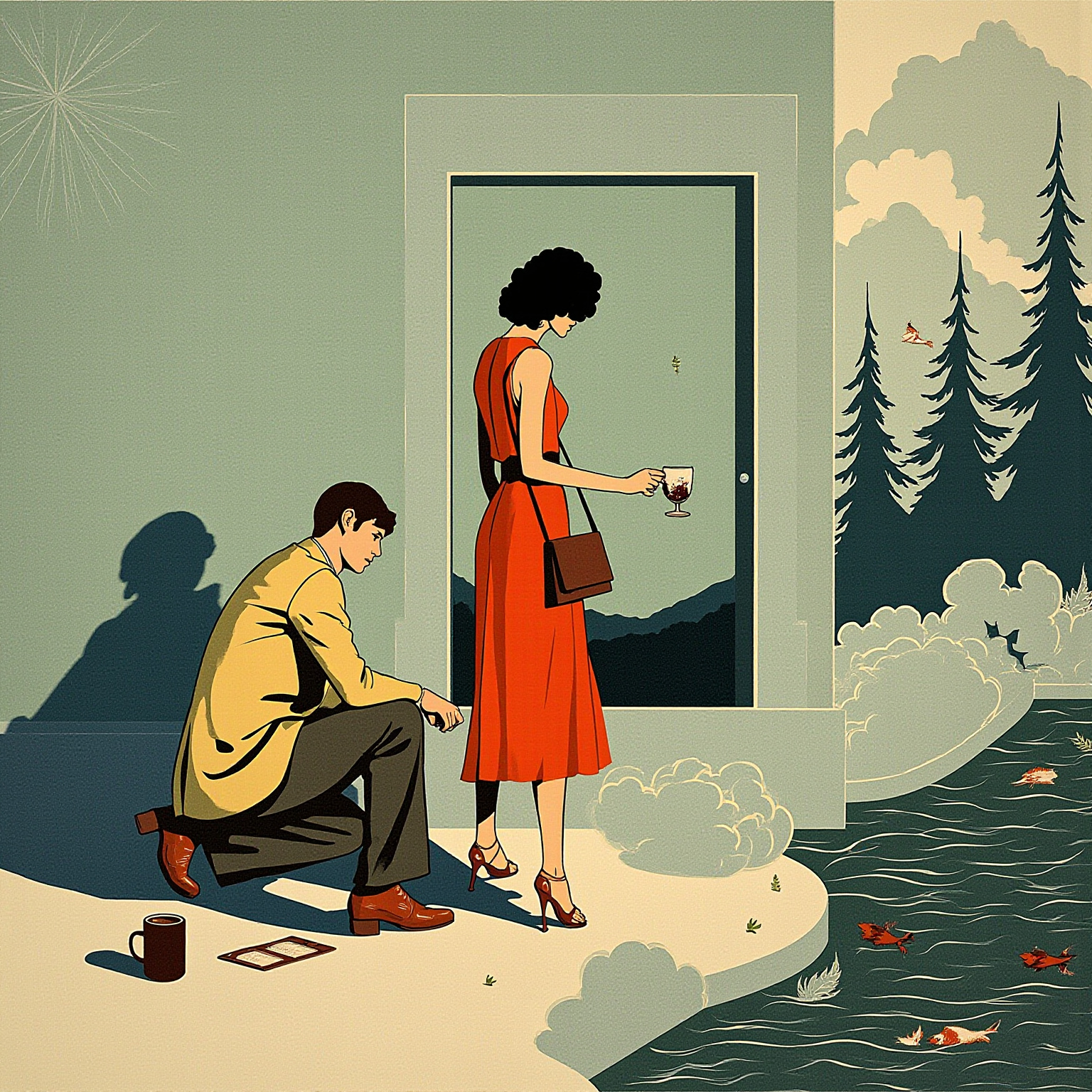
There were wide fire-gaps cut through the pines, and you could look up them like avenues and see wooded hills way off.
松林间伐开宽阔的防火道,你抬头望过去,像林荫大道一样,可以看见远处的山林。
原文金句 · 第33% · 比利牛斯山中
It's not just for the scenery. He wants you to feel, before you're thrown into the frenzy of Pamplona, what's still left of these people. And there's something left, as clean as the stream and the trout.
San Fermín: The Fiesta as a Boiler
The moment Burguete ends, the whole group heads for the running of the bulls in Pamplona. At first light, men in white shirts and red scarves run the narrow streets ahead of a few hundred black bulls; by day the bullring fills with dust, and nineteen-year-old Pedro Romero, in a suit of pink and gold, lets the bulls pass close by his body. At night the drinking goes table to table, brandy, Rioja, glasses never empty. Jake is in good spirits here, this is the one thing he genuinely understands, the connoisseur's passion the Spanish call aficion, and it's why Montoya, who runs the hotel, counts him as one of their own.
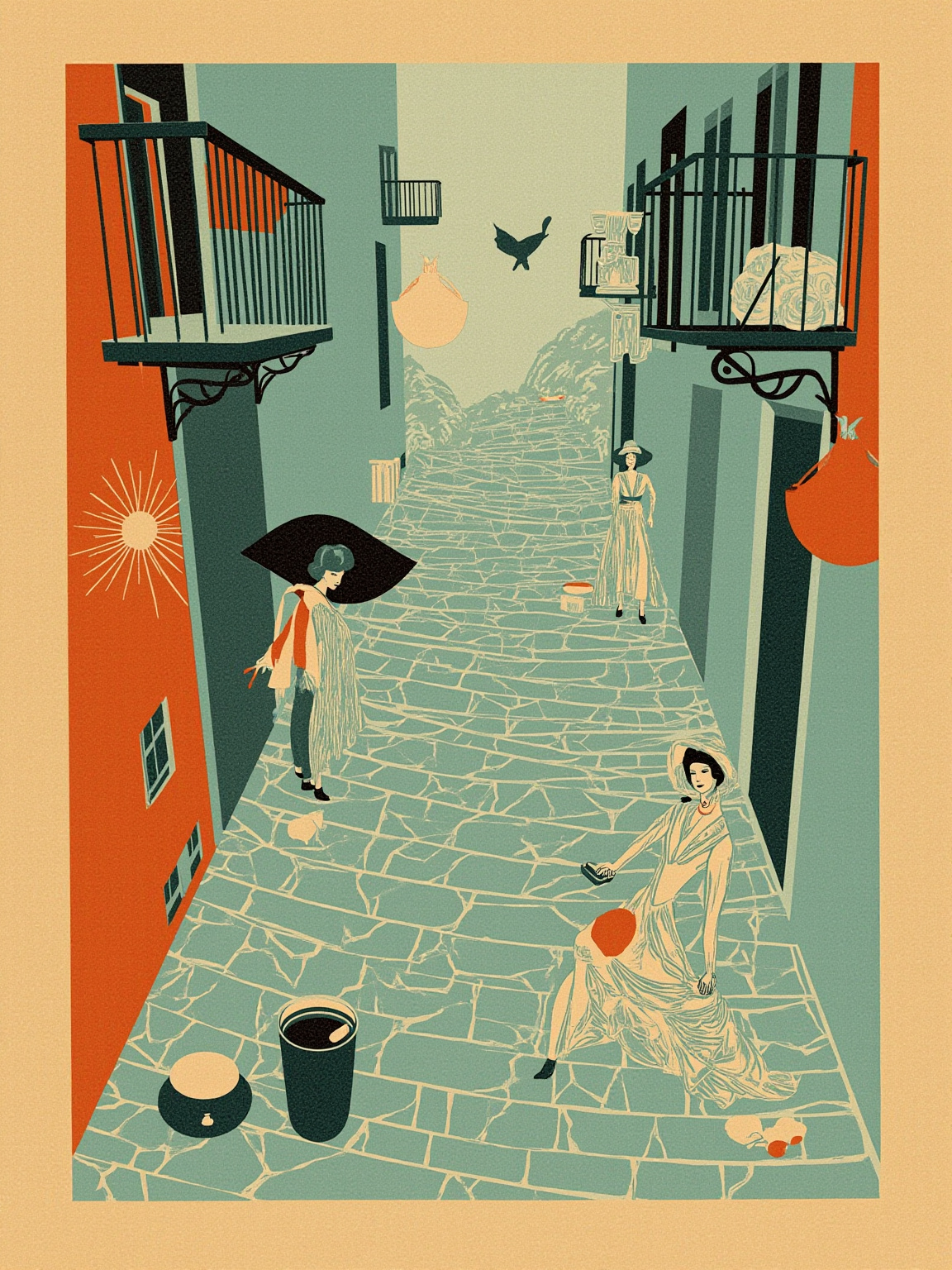
The fiesta was going on outside in the night, but I was too sleepy for it to keep me awake.
节日在夜色中继续,但我太困了,它无法让我保持清醒。
原文金句 · 第63% · 圣费尔明节
Two days into the fiesta, Brett runs into Romero.
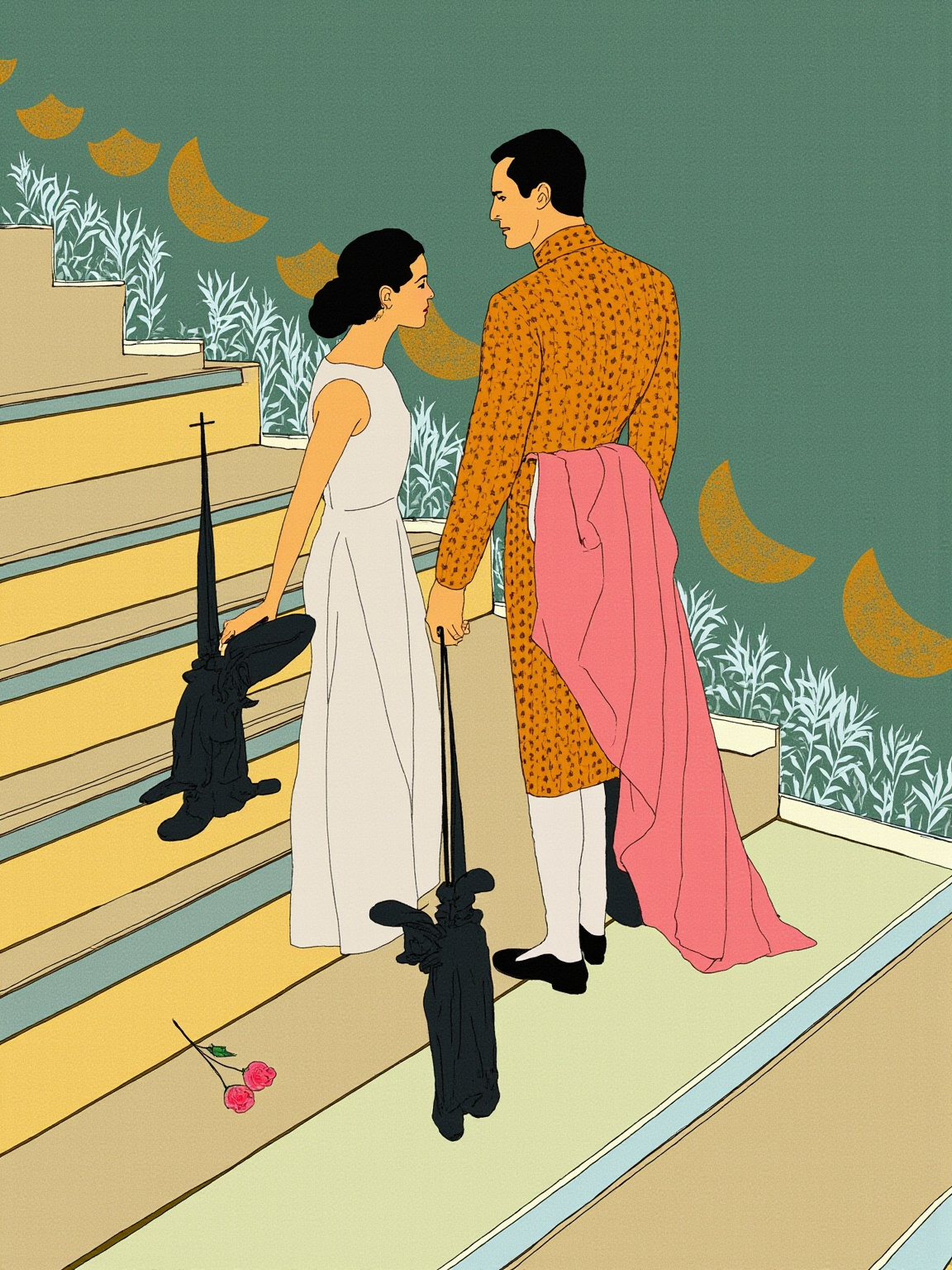
"I believe, you know, that she's falling in love with this bull-fighter chap,"
我说,你知道,我相信她爱上那个斗牛小子了。
原文金句 · 第67% · 圣费尔明节
Nineteen, younger than any of them by a stretch. The young bullfighter is almost absurdly beautiful, and he bows like a man standing on his own floor. Brett is taken with him; Romero is taken too, distracted. Montoya's look at Jake cools by degrees. These foreigners, he seems to be sighing to himself.
Cohn's Fists: The Fiesta Blows Up
Cohn lights the fuse. He won't let go of Brett, he's eaten up with jealousy over Romero's youth, and Mike humiliates him in front of everyone. Once the drink takes hold, he punches Mike first, then goes straight to Romero's room and beats him badly. Pamplona detonates three times in one night. Jake gets Romero upstairs and out of it. He can't stand to watch a man with real aficion get wrecked by a drunk, and it's one of the rare moments in the whole book where Jake actually steps in.
Romero's Wounds: Fighting Hurt
Romero's face is a mess of bruises, and the next day he goes into the ring anyway. The battered young bullfighter kills all five bulls, clean, one after another, and Jake, watching from behind the barrera, finds he's crying. He doesn't even notice it himself; it's Mike who spots his eyes wet. It's the most contained, and the fullest, release in the whole book: Jake watching a man who can still hold steady, someone who understands living out the part of life Jake can't.
Madrid: The Sun Comes Up Anyway
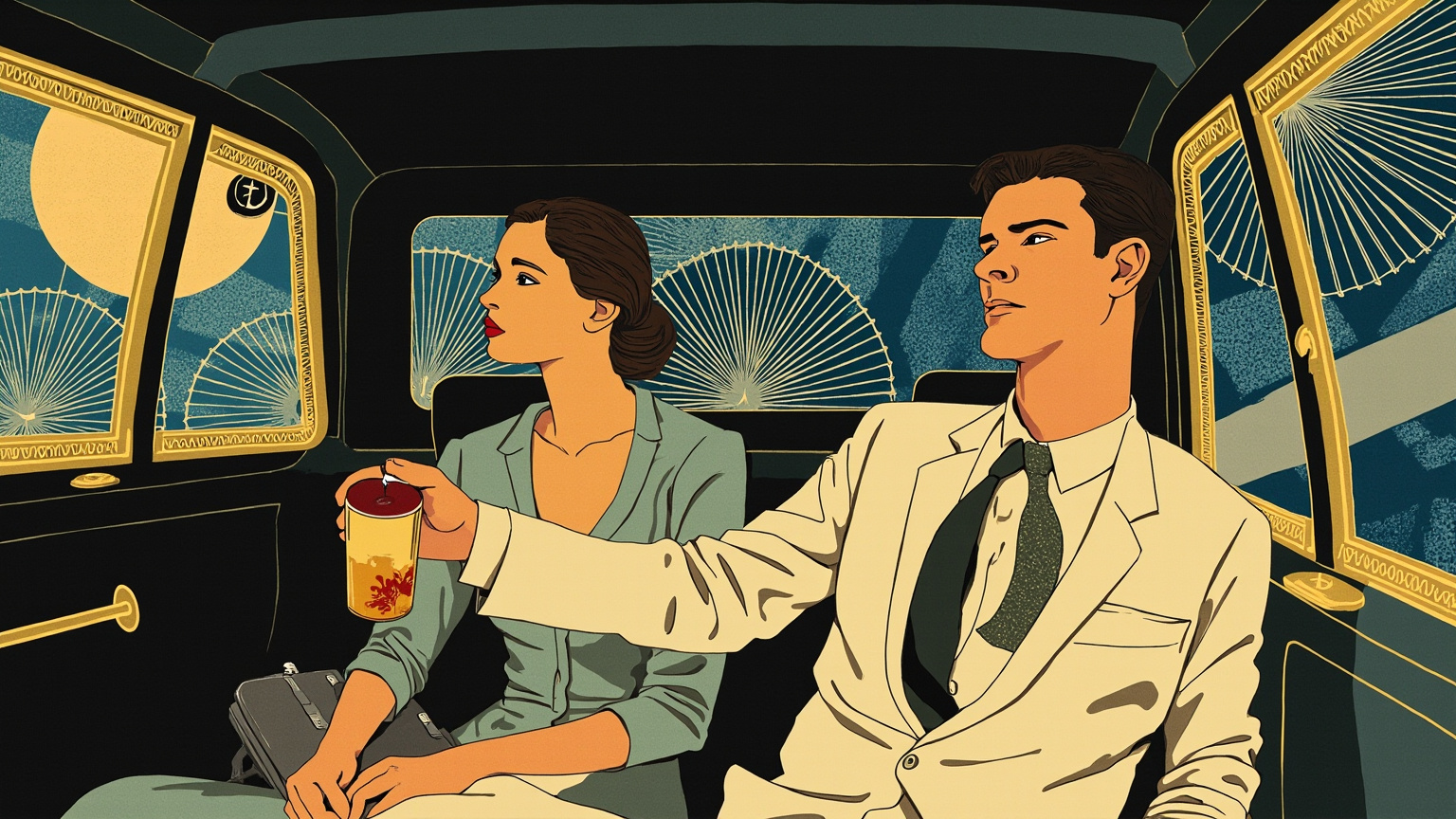
The fiesta is over. Romero takes Brett to Madrid, and she comes to her senses fast: she's years older than the boy, and staying with him will wreck his career. She lets him go, stays behind alone in Madrid, runs out of money, and wires Jake. Jake comes from Pamplona and finds her in a taxi.
The red door of the ring went shut, the crowd on the outside balconies of the bull-ring were pressing through to the inside, there was a shout, then another shout.
斗牛场的红门关上了,外面看台上的人群挤向里侧,一声高喊,接着又是一声。
原文金句 · 第78% · 斗牛终场
She sighs something like: we could have had such a damned good time together. He answers: isn't it pretty to think so. The taxi keeps moving, and the book closes on that irony. Wanting and not having is the permanent posture of the two of them. Hemingway lets neither of them win, neither lose, and neither get what they wanted.
What It's About: What's Under the Iceberg
The Lost Generation, that's the label stuck to the whole book, but the line from Ecclesiastes is more honest than any slogan: the sun rises just the same, the earth keeps turning the way it always has, and whoever got hurt swallows it alone. Jake's war wound is just the most literal version of the metaphor; a whole generation of young postwar Europeans was carrying some accident inside them that couldn't be named, no blood showing, but never gone.
Writing this book, Hemingway invented what's now called the Iceberg Theory: the sentences above the waterline read like telegrams, short, flat, almost stripped of feeling, while underneath, the characters are being torn apart. He never shows you the heartbreak directly, only two people finishing a cigarette on a couch. The restraint of the style becomes the content itself: this is what trauma is, something you don't say, can't say, and that stays anyway.
Why It Still Has Force Today
It doesn't read as dated today because its pain isn't a period piece anymore, it's a permanent condition for a certain kind of person: loving someone you can't have, a journey that never lets you stop, a weightless crowd that survives by mocking each other and nothing else. Before this book put San Fermín into world literature, almost no one outside Spain knew it existed. Hemingway shows you the empty streets of a Spanish town at dawn, five bulls, and five separate kinds of isolation.
Seven-eighths of the iceberg is underwater, the war wound, the wanting, the tenderness, the understanding, all pressed into what Hemingway never says, and The Sun Also Rises is the first iceberg he ever built.
Read This, Then Read the Original
This companion gives you the map; the novel is the ground itself. What's most valuable in this book is Hemingway's prose, dialogue so spare it carries tremendous weight in the white space around it. Now that you know the whole plot, turn to that page and watch how the sentence gets cut short when Jake answers Brett, and how it still lands somewhere in you. Pour the glass, settle into the couch, and let Hemingway close this one for you.
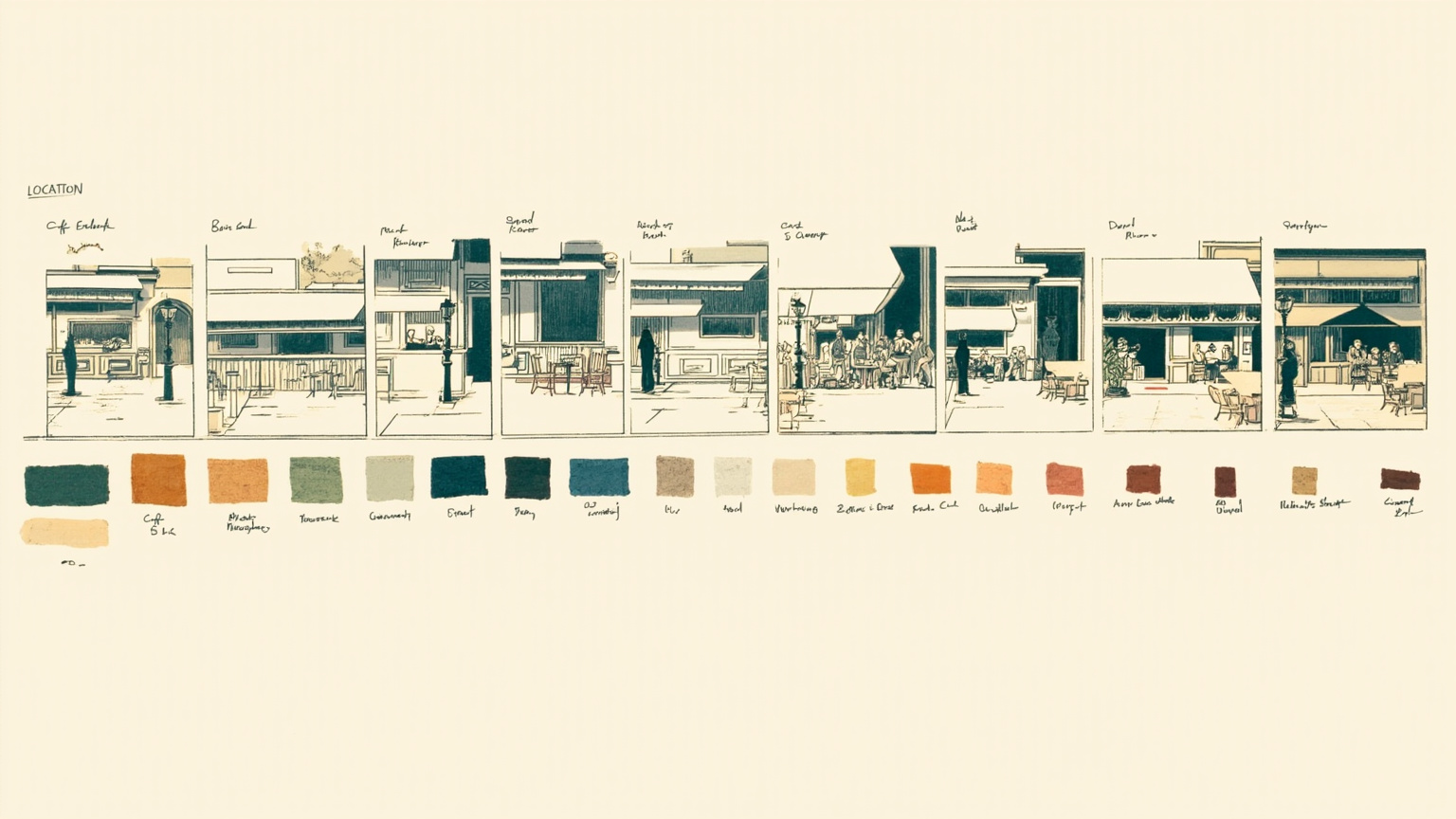
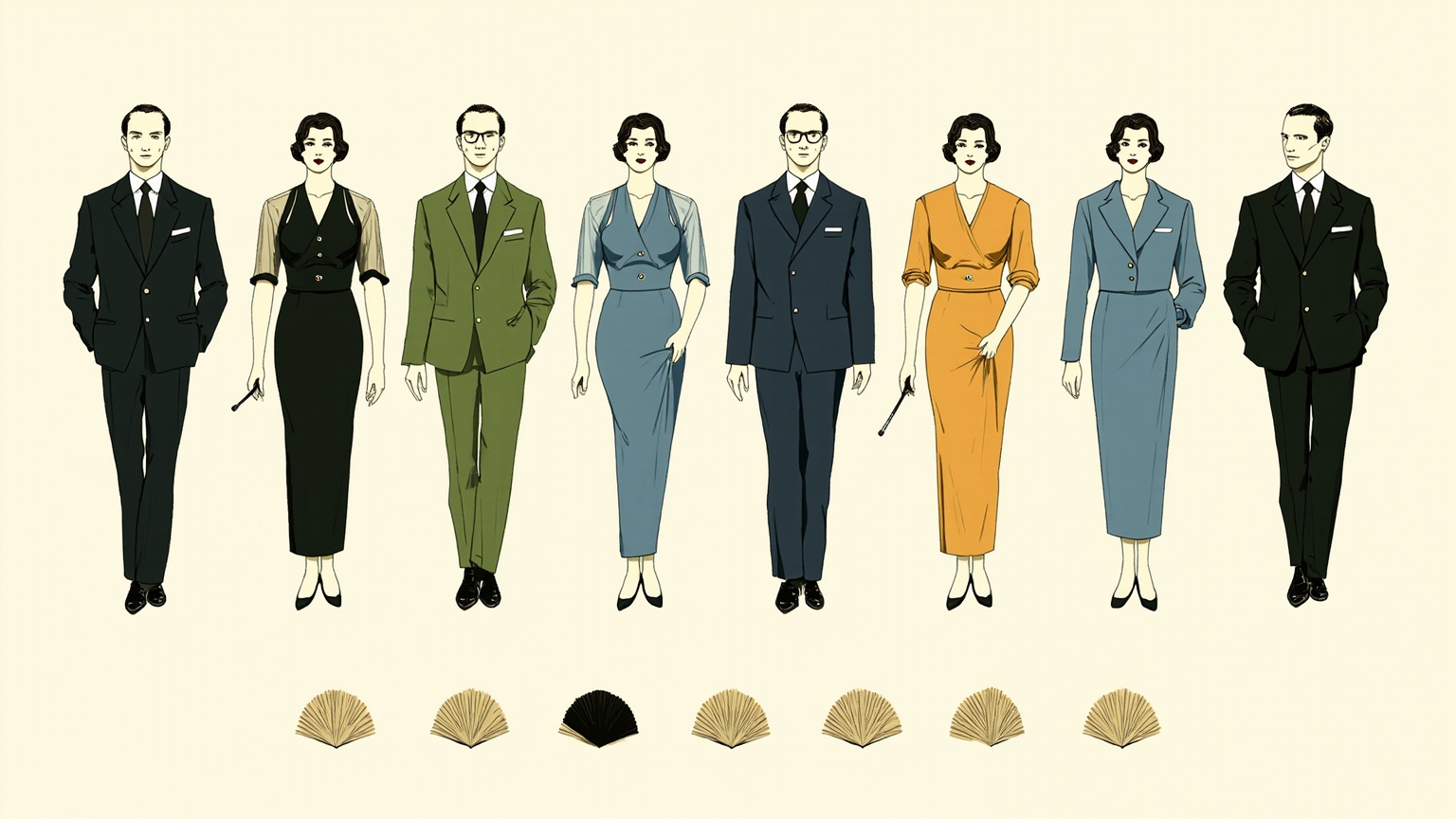
Art Direction4 plates
Before the guide was written, this book got a visual foundation — every illustration you just read grew out of it.