The Tale of Kiều (Truyện Kiều / Đoạn Trường Tân Thanh) · Companion Guide
金云翘传
一个中国言情骨架被越南诗人重铸为民族哀歌——才命相妒、身顺两朝而心怀故主,三千二百五十四句六八体里藏着一整部断肠心声。
Opening: A Lone Grave on Tomb-Sweeping Day
On the banks of the Qiantang River, a fine rain falls on Tomb-Sweeping Day. A young woman is out with her family for the spring outing when a lone grave by the roadside stops her in her tracks. Its occupant was a singing girl named Đạm Tiên, gifted and beautiful in her day, now reduced to this mound of yellow earth. Standing before it, the girl feels, without knowing why, that she is looking at herself. Her name is Kieu. She does not yet know that fifteen years from now she will remember this grave, and will finally understand what that weeping was for.
What Kind of Book Is This
Kim Vân Kiều truyện goes by a shorter name in Vietnam: Truyện Kiều, "The Tale of Kieu." It is a long narrative poem written by the Vietnamese poet Nguyễn Du between the late eighteenth and early nineteenth centuries — 3,254 lines, composed entirely in chữ Nôm, Vietnam's native script, in the country's own verse form, lục bát: a six-syllable line followed by an eight-syllable line, alternating all the way through. In Vietnam, the poem holds roughly the place Dream of the Red Chamber holds for Chinese readers. Nearly anyone with an education can recite whole passages, and lines from it turn up at weddings, funerals, and festival rites. There is even a folk custom called bói Kiều — opening the book at random and reading the line you land on as an omen for the year ahead.
Characters and World
The heroine, Kieu, is beautiful and gifted at poetry, the eldest daughter of a scholarly family in northern China. Out with her younger sister Vân on Tomb-Sweeping Day, she meets a young scholar, Kim Trọng — the two fall for each other by the river and pledge to marry. Kim must return home to observe six months of mourning for his late father, and before he leaves, he gives her a token of the engagement. Kieu has a younger brother too, Vương Quan, who lives with their father. The quiet of the household is about to break: a cloth merchant has laid a trap, and her father is walking straight into it.
The story is set in northern China during the Jiajing era of the Ming dynasty, moving through the capital, Qiantang, and Linzi. But the man who wrote it was not Chinese. He was a Vietnamese poet of the late eighteenth century, Nguyễn Du. He had served the old Lê dynasty, and when the Nguyễn dynasty replaced it, he took office under the new court and later led a diplomatic mission to Qing China. Serving the new dynasty in body while his heart stayed with the old one — that was the real shape of the second half of his life. He folded that condition, quietly, into fifteen years in the life of a Chinese woman.
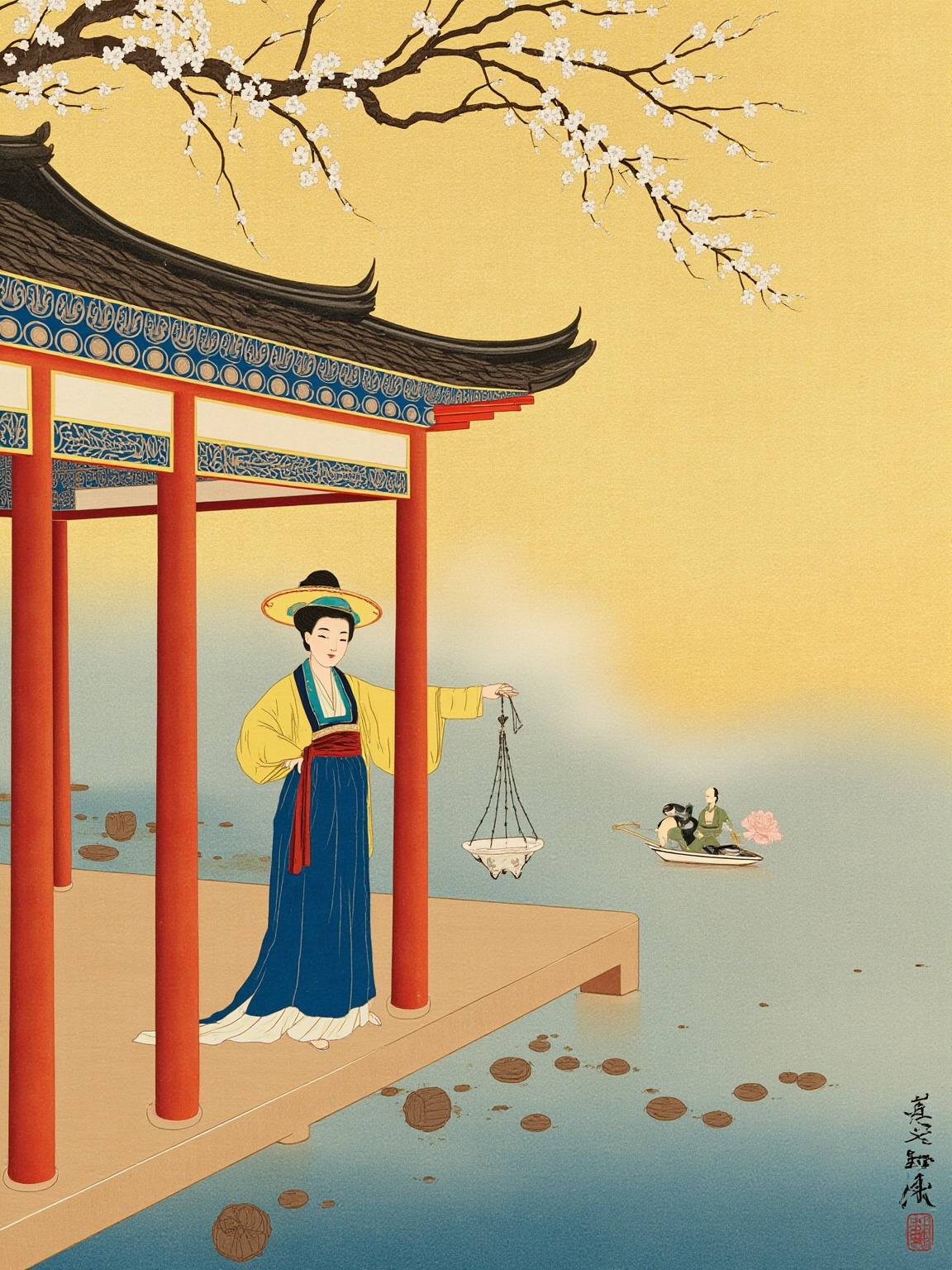
A grave by the river in the Qingming rain — she stands before it, and recognises herself.
钱塘江畔,清明细雨,孤坟一座——她立在墓前,忽然觉得那坟里埋的是另一个自己。
金句 · 开篇 · 清明孤坟
A Betrothal at the Tomb-Sweeping Festival, an Empty House Six Months Later
The marriage was already settled — the two families were only waiting for Kim to finish mourning and complete the six formal rites. But within those six months, disaster struck Kieu's household: a cloth merchant in league with corrupt officials brought a false charge against her father, and he and her young brother Quan were both thrown into prison. A scholar's daughter can write a fine verse; she cannot buy her father's freedom with one. The road Kieu takes is the one that sells herself — her body traded for her father's and her brother's release. That sale is where the fifteen years of exile begin.
A Sister Entrusted at the Parting: Confucian Duty Made Flesh
Before she is sold, Kieu does something that doubles the weight of the whole poem. She calls her sister Vân to her side and hands over Kim's token, the engagement itself, and the promise to the Kim family that she can no longer keep — and asks Vân to marry him in her place. Vân accepts. Through the fifteen years of Kieu's exile that follow, it is Vân who stays at Kim's side, carrying out the daughterly duty and wifely role her sister cannot. This is not a simple substitution at the altar. It is the Confucian virtues of loyalty, filial piety, chastity, and righteousness made flesh: the sister who sells herself to save her parents is filial; the sister who marries in her place to keep the promise is righteous; and Kim, without knowing it, receives a vow that cost one woman her entire life.
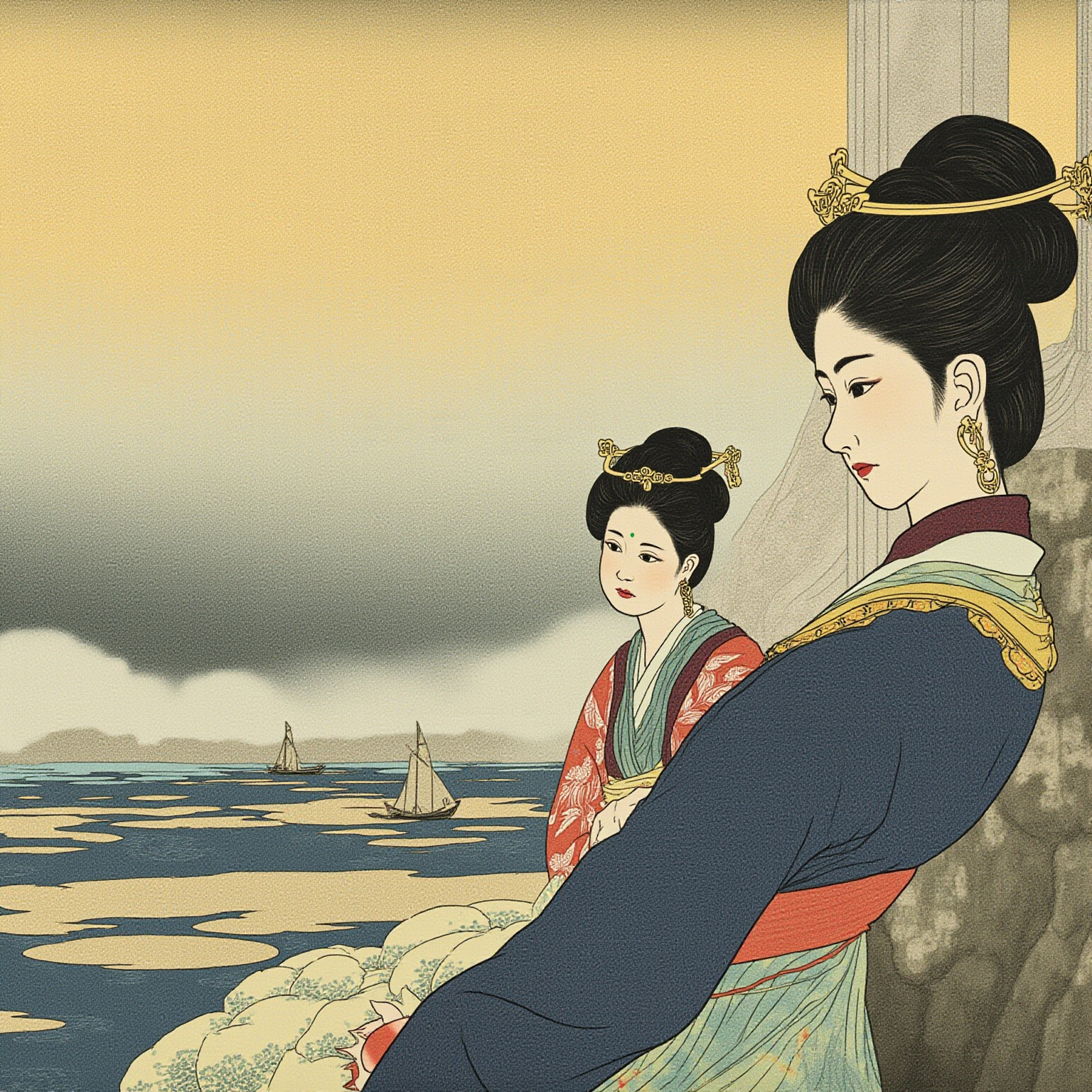
She pressed into her sister's hands the keepsake, the vow, the promise she herself could not keep — and asked her to take her place.
她把金重的信物、未尽的婚约,连同自己不能履行的承诺,一并交到妹妹手里——请她替自己嫁过去。
金句 · 临别托妹 · 儒家伦理的具体承担
Fifteen Years of Exile: A Body Bent to Fate, a Heart Bound to First Love
After she sells herself, Kieu drifts through brothels and through the wider world, and the poem records each hardship in turn. But above every one of them hangs the same shadow: Kim Trọng. The same images recur through the whole poem — the moon over the river, a boat alone, a broken bridge. At every low point, Kieu lifts her eyes and thinks of the same boy she promised herself to that Tomb-Sweeping Day. For fifteen years her body is dragged wherever fate pushes it, while her heart never leaves that one spring. This is the poem's real theme: talent and fate are jealous of one another. A woman beautiful and gifted is fated to suffer for it. When the Vietnamese carry this poem in memory, what they are really carrying is that refusal to accept it.
Nguyễn Du's Own Shadow: A Body Serving Two Courts, a Heart Loyal to One
When Nguyễn Du wrote Kieu, he was living through something hard for an outsider to name. He had been a loyal official of the old Lê dynasty; once the Nguyễn dynasty took power, he served it too, and even led a mission to the Qing court as chief envoy. To the world, this looked like a man reading the times correctly. To himself, it looked like a broken vow. He poured that split — the body serving the new court, the heart still lodged with the old one — into Kieu's fifteen years. She is a body bent to fate with a heart bound to first love; he was a body serving two dynasties with a heart loyal to one. A Chinese romance became, in his hands, the spiritual autobiography of a Vietnamese scholar caught in a change of dynasty. This is not translation. It is transplant — flesh and blood grafted onto a bare plot. What had been a straightforward romance novel became, under his pen, a national epic.
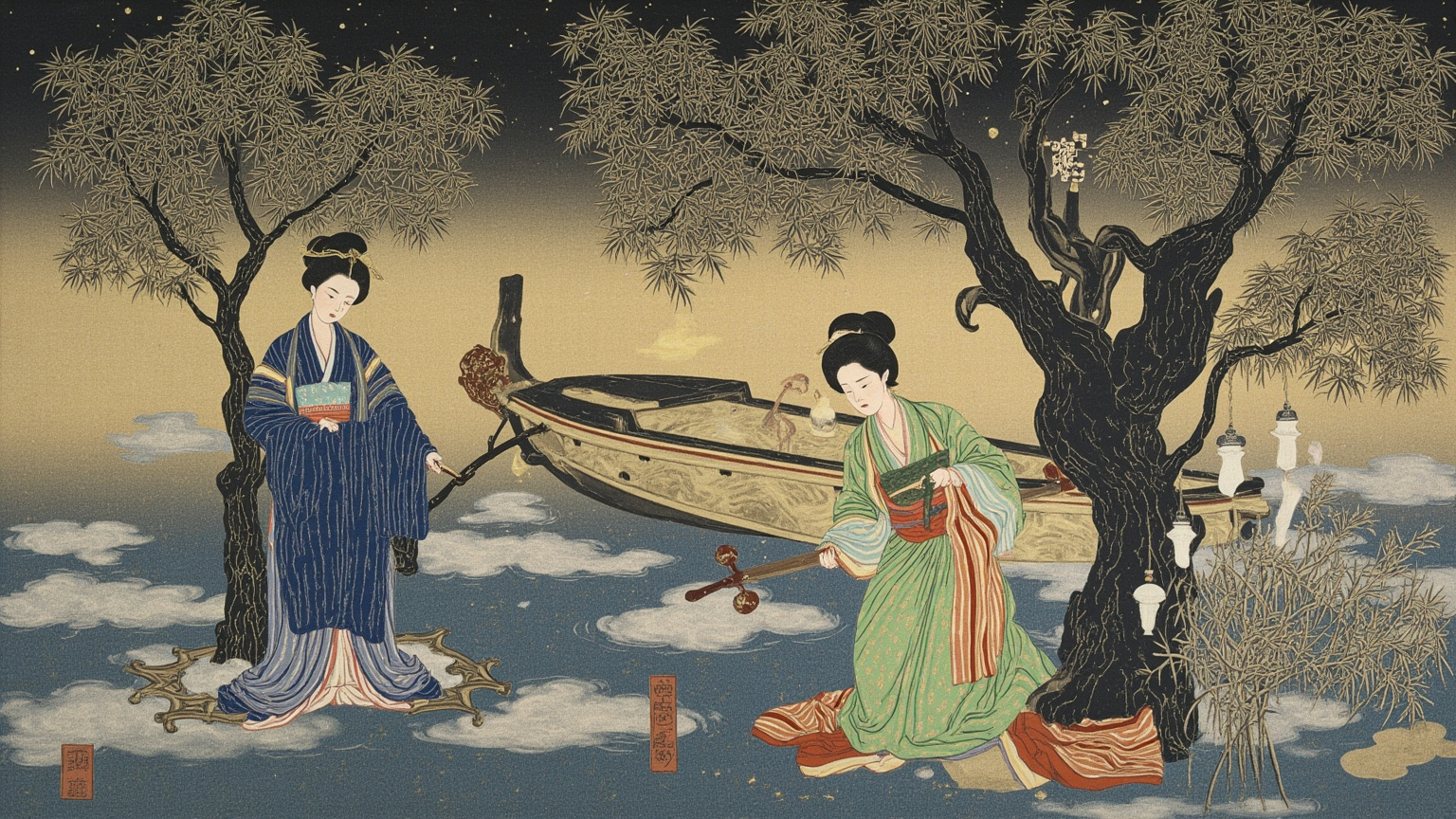
Her body bowed before fate; her heart, unbowed, kept turning back to the first love of a Qing-morning by the river.
身顺命运,心怀初恋——十五年颠沛里她低过头,却从未把那个人从心底放下。
金句 · 阮攸的影子 · 身顺两朝心怀故主
Chữ Nôm and Lục Bát: Turning Folk Song into Epic
The poem's form is itself a kind of miracle. It is written in chữ Nôm, Vietnam's own script, and its 3,254 lines run in paired couplets: a six-syllable line followed by an eight-syllable line, over and over. This is lục bát. Lục bát began as a folk meter, the stuff of love songs and field songs and short ditties. Nguyễn Du took that humble form and made it carry a tragedy spanning fifteen years and a change of dynasty — more than three thousand lines long, and it never sags. It is the work of widening a stream into an ocean, and it is recognized as the high point of Vietnamese classical verse.
Why It Endures: A Singular Case in Sino-Vietnamese Literary History
The poem's material comes from a Chinese novel of the Ming-Qing transition, Jin Yun Qiao Zhuan, signed by an author using the pen name Qingxin Cairen. But what Nguyễn Du did was not translation. He kept the bare romance plot and filled it with everything else: the upheaval of Vietnam's own change of dynasty at the end of the eighteenth century, his own contradiction of serving two courts, and the collective Vietnamese conviction that talent is always fated to suffer. For a Chinese reader, that gives this Vietnamese national epic a built-in point of entry. If you already know the Chinese original, reading this poem lets you watch the same story rewritten from the ground up — in another language, another verse form, another state of mind — into an entirely different work. The poem is, in itself, a case study in Sino-Vietnamese literary exchange.
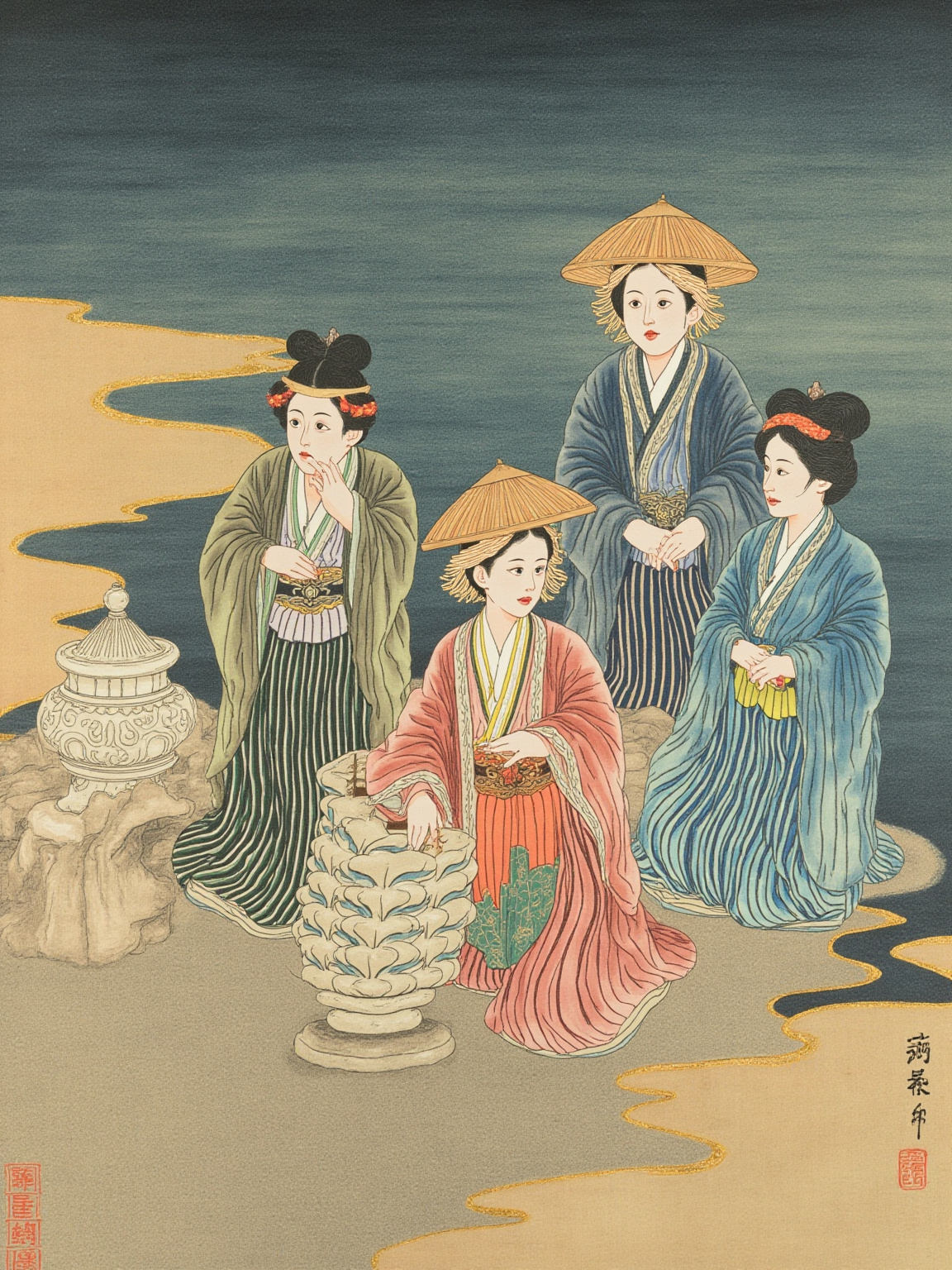
A Chinese tale, taken into Vietnamese hands, became the heartbeat of a whole nation.
一个中国故事,落在越南诗人笔下,竟成了整个民族共同的情感索引。
金句 · 跨境改写 · 中越文学交流史的一个特例
A Chinese story, rewritten by a Vietnamese poet, became an entire nation's shared emotional vocabulary — a literary miracle that crosses borders.
Why the Plot Alone Isn't the Reason to Read It
The plot is only the skeleton. The flesh is in the 3,254 lines of lục bát themselves — the damp of that Tomb-Sweeping Day rain, the weight of the sigh before a lone grave, the tremor in Kieu's fingers as she hands her sister a promise, the sound of an oar breaking moonlit water around a boat sailing alone. No summary can hand you any of that. And the poem is meant to be recited. In Vietnam, a family gathered around a table, a festival rite, a wedding, a funeral — any of these might draw someone to speak a passage aloud. It has stopped being only a piece of literature and become part of how a nation breathes. To read it is not to read a story. It is to step into a chant that has never stopped.
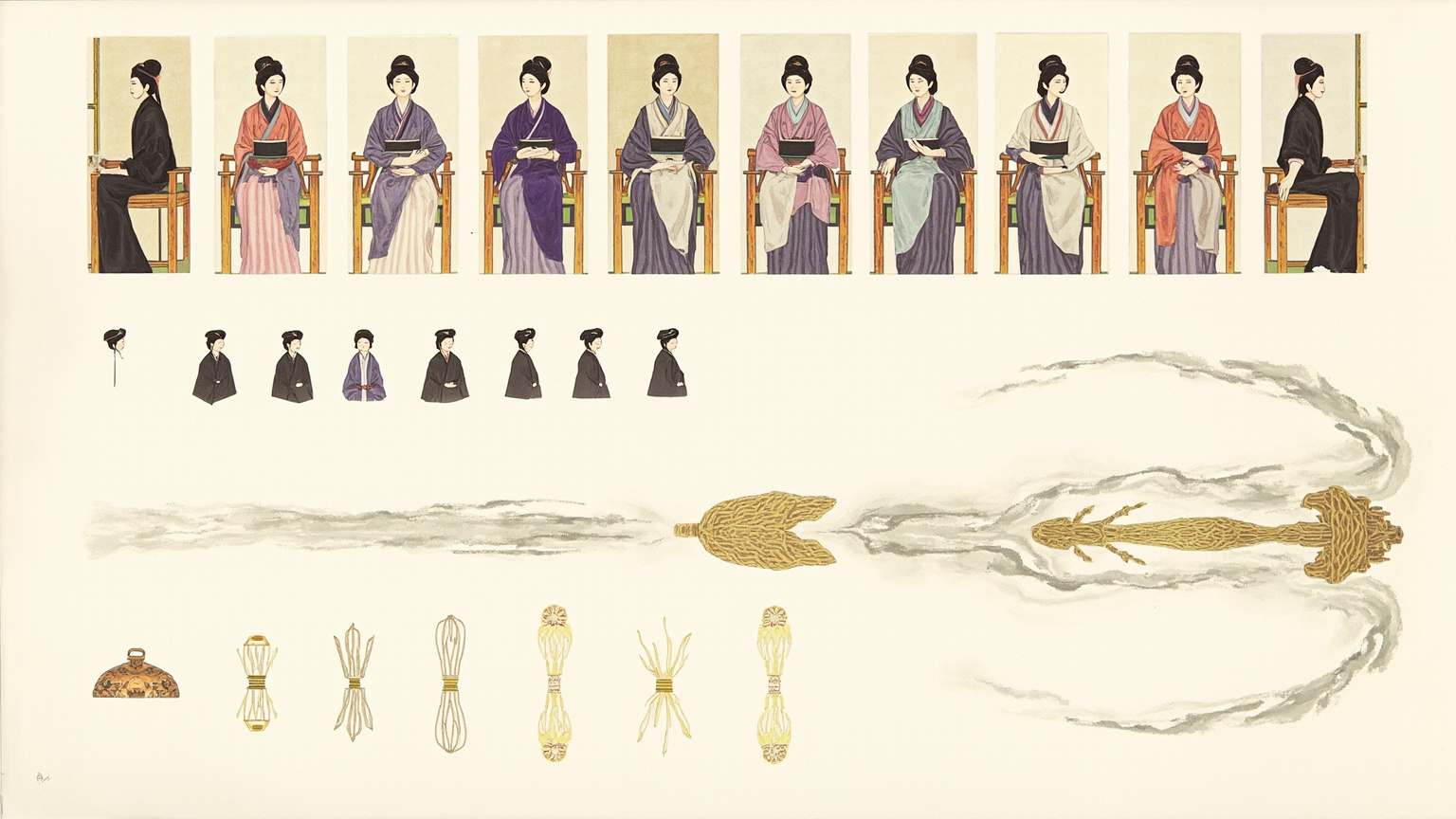
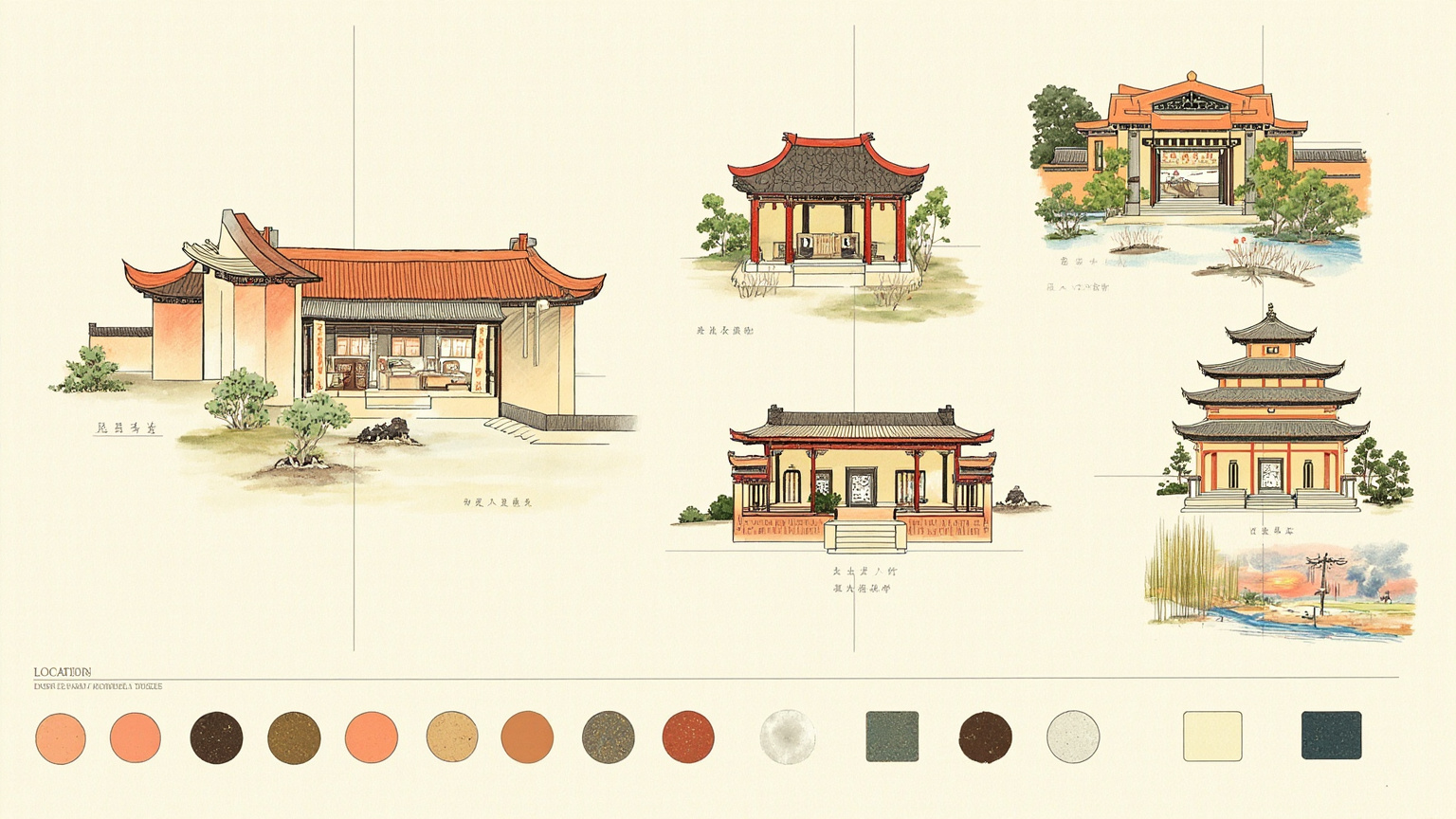
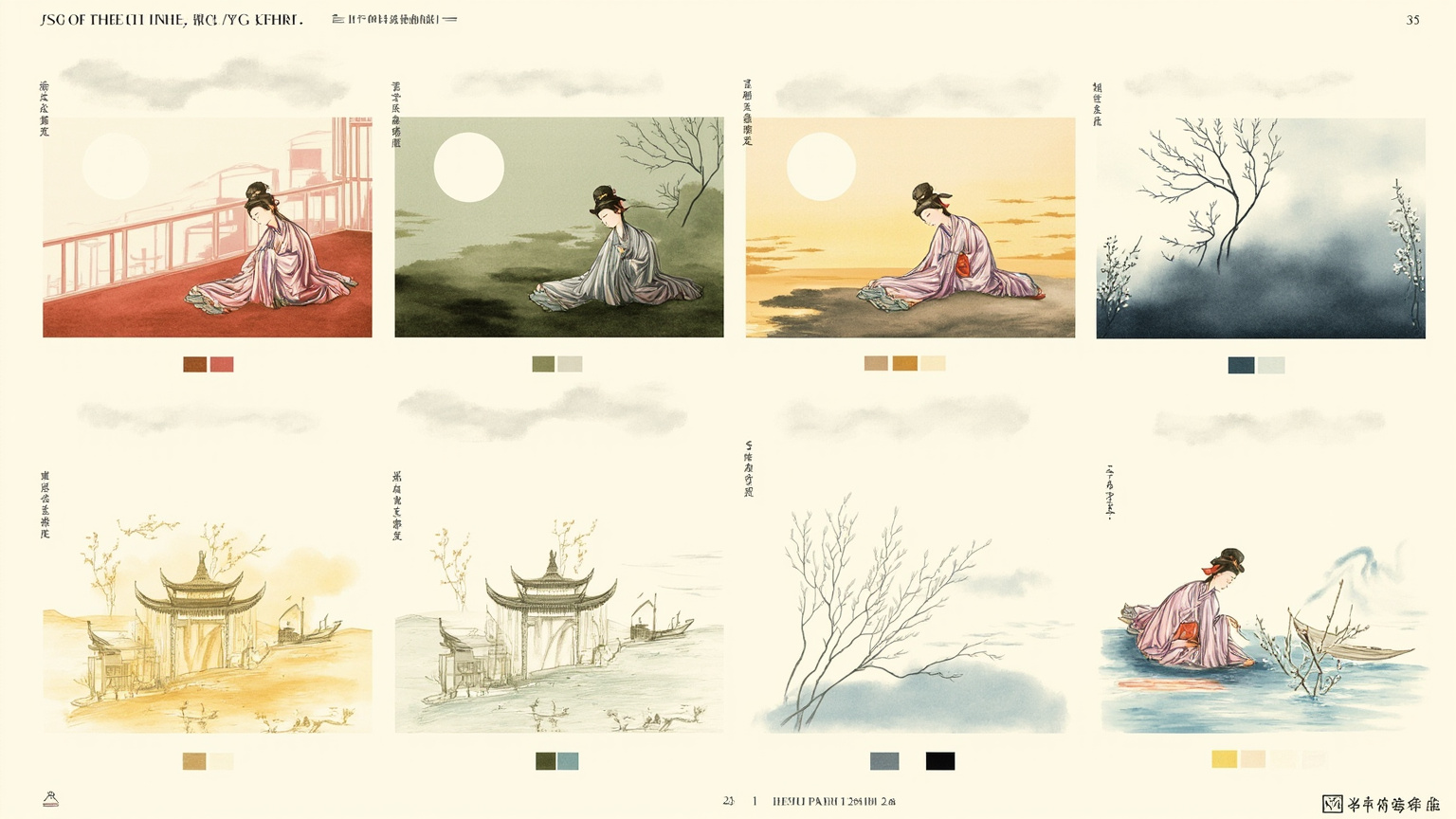
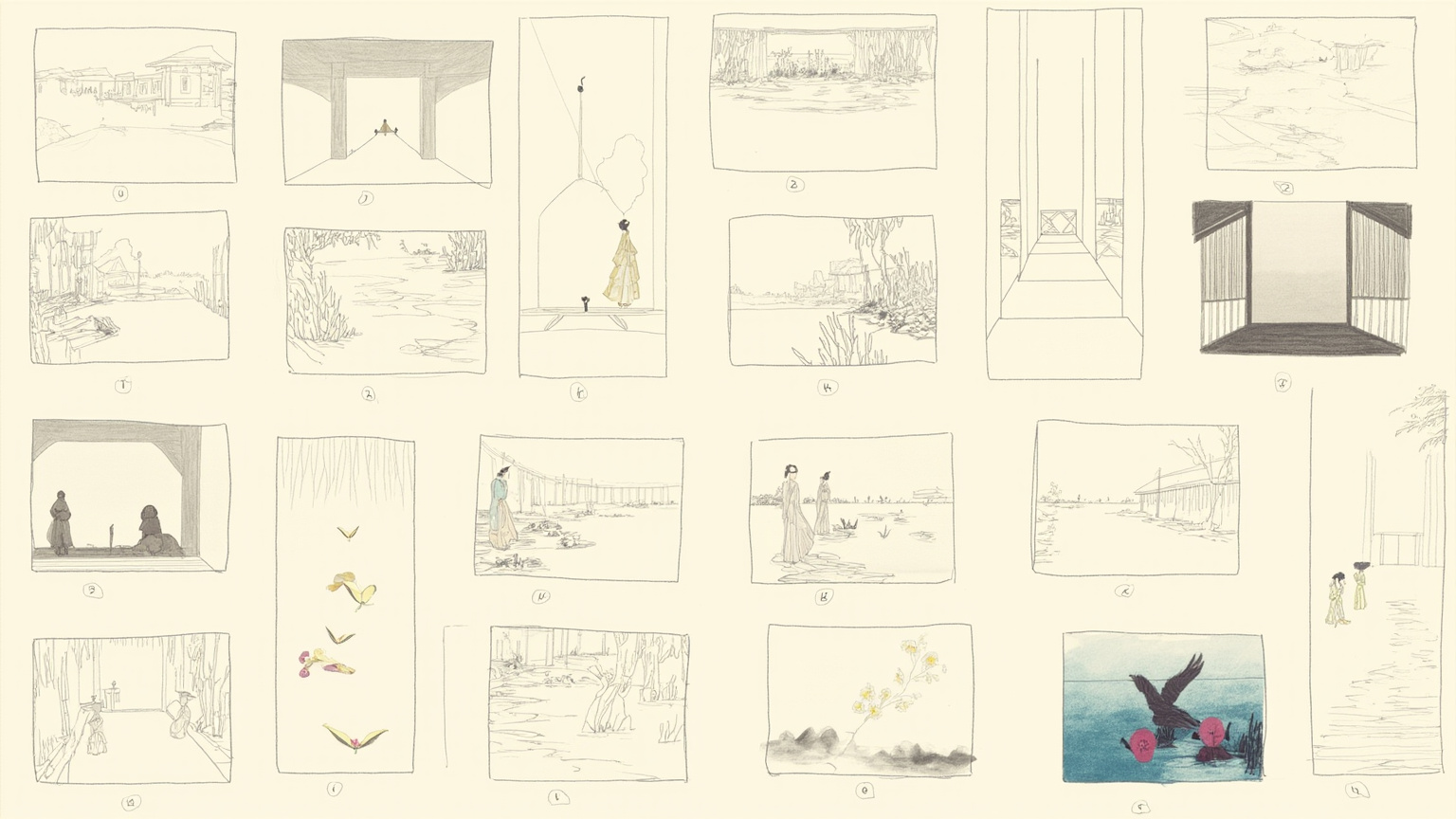
Art Direction4 plates
Before the guide was written, this book got a visual foundation — every illustration you just read grew out of it.