The bell tolls, and everything that has ever risen begins to fall.
Text and illustrations produced by the pipeline
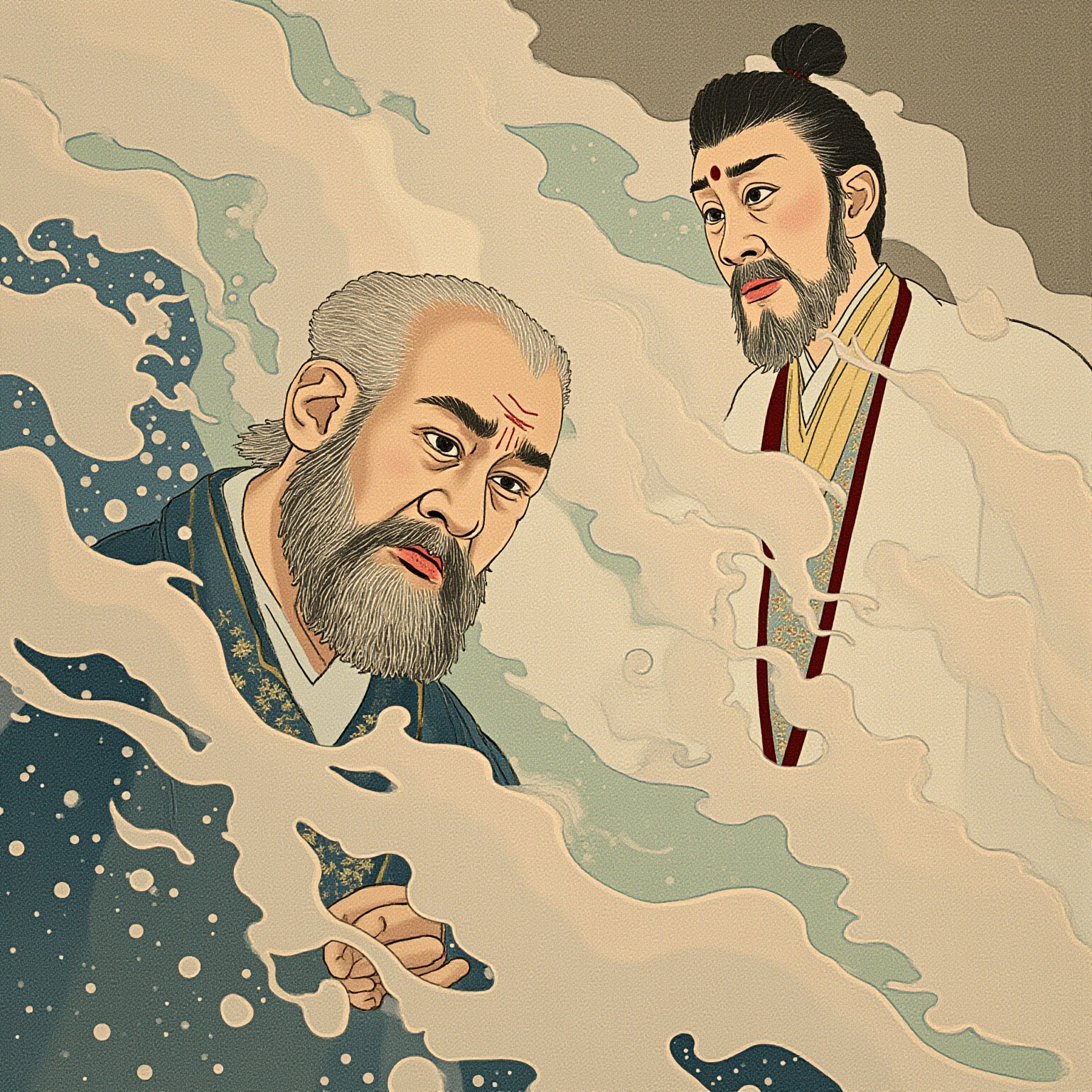
The bell of Gion Shoja tolls. A blind monk cradles a biwa, plucks the strings, and opens with four words: all things are impermanent. This is not a chant from morning prayers -- it is a story sung continuously since the end of the Heian period, about a family that took ten years to climb to the summit of power and five to shatter at the bottom.
The Tale of the Heike took shape in the mid-thirteenth century, and no one knows who wrote it -- it was not composed at a desk by a single author, but sung beat by beat by generations of blind biwa priests, passed down for hundreds of years before it settled into text. Tradition credits the first compiler as Yukinaga, the former governor of Shinano, though when the priest-poet Kenko tells the story in his Tsurezuregusa, he tells it the way you would tell half-legend, half-history -- even he does not quite trust it. The most authoritative surviving version, the Kakuichi-bon, was fixed by the blind biwa priest Kakuichi in 1371, and only then did the text truly settle. It stands as the pinnacle of Japan's war chronicles and is often paired with The Tale of Genji as one of the twin peaks of Japanese classical literature -- but do not confuse the two. One is Heian court romance. The other is a clan wiped out by steel.
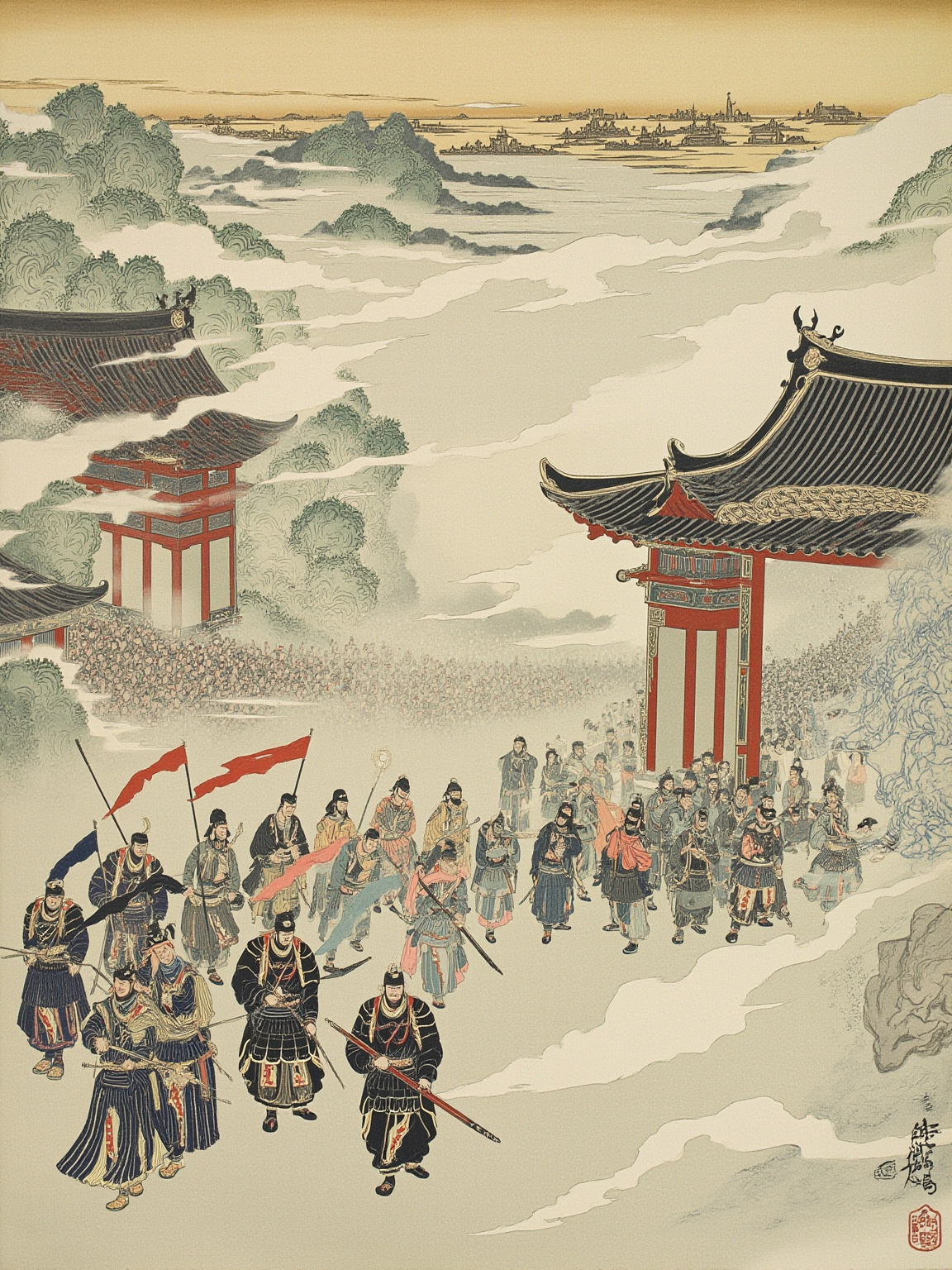
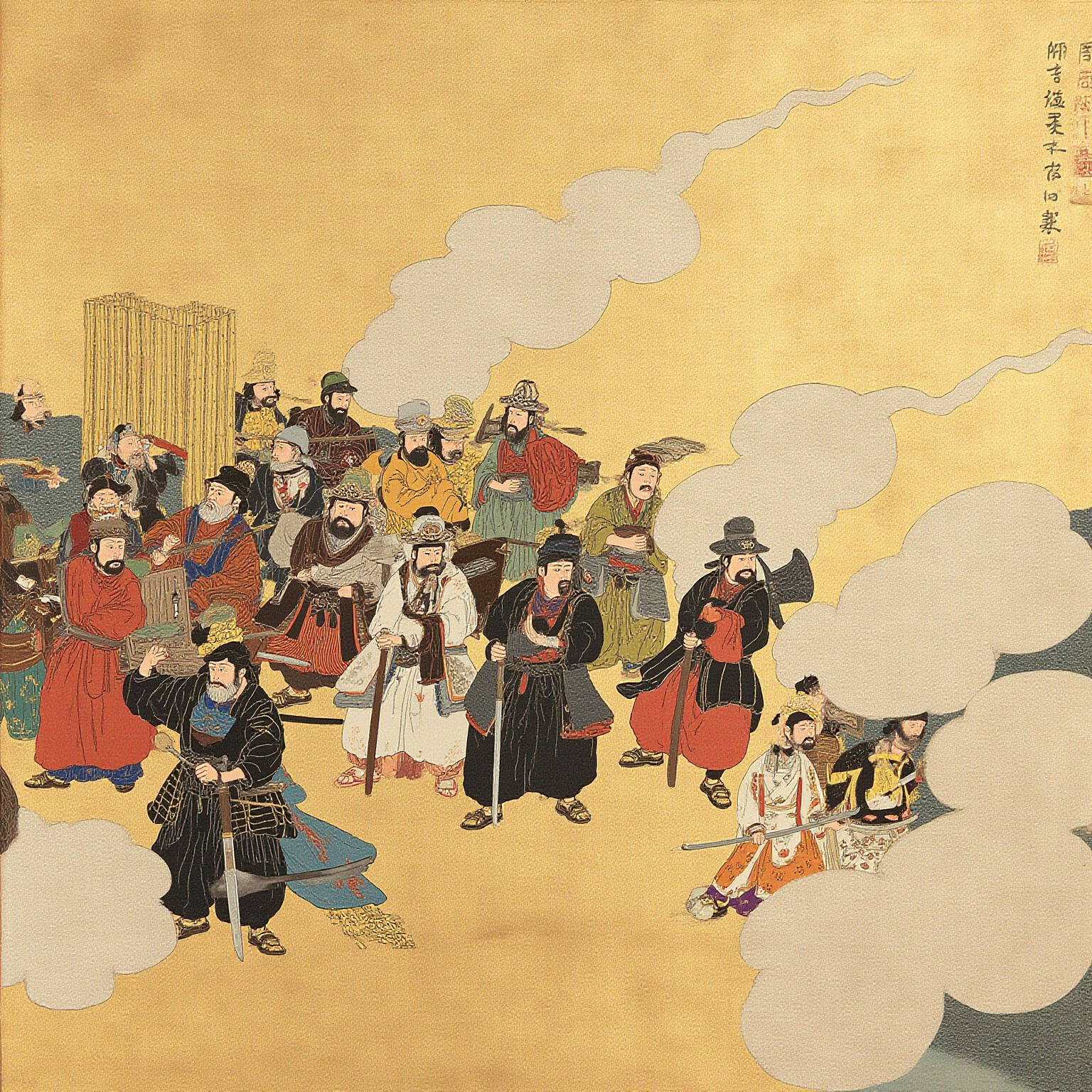
The story centers on the Taira clan. Its head, Taira no Kiyomori, climbed on military merit all the way to Chancellor, married his daughter into the imperial line, and saw his grandson enthroned as Emperor Antoku -- the Taira grew so powerful that the saying went: whoever is not Taira is not human. His eldest son, Shigemori, was measured and mild, the only one in the family who dared push back against his father; once he died, nothing slowed the Taira down, and they drove straight toward the cliff edge. The younger son, Munemori, was mediocre but inherited the whole estate anyway. On the Minamoto side, the supreme commander Yoritomo ran the war by remote control from Kamakura in the east, while the man who actually broke the Taira on the battlefield was his younger brother, Yoshitsune -- a tactical genius who treated cliffs, tides, and open water as variables to be calculated.
And there is a child standing at the dead center of the story -- Emperor Antoku, seven years old, the tie between Taira blood and the imperial line. He makes no decisions of his own. He is destined to become the book's most suffocating moment anyway.
But what makes it good is not just the theme -- it is the deliberate restraint in the writing itself. A sword kills a boy, and the page describes the flute beside his body. A child emperor drowns, and the page describes the empty armor drifting on the waves instead of the splash. The Japanese later gave this technique a name: mono no aware. The first time I read this passage, I went back and read the page before it again.
It is a living fossil of oral literature -- blind priests sang it to the biwa for centuries, and countless Noh, joruri, and Kabuki plays grew out of it: Atsumori, Funa Benkei, Kumagai Jin'ya. Trace any of those plays back far enough and you land here. It is also the aesthetic template for Japan's warrior culture -- what loyalty means, what duty means, what it means to die well. The book never answers any of it directly; it all leaks out through the posture of one corpse after another.
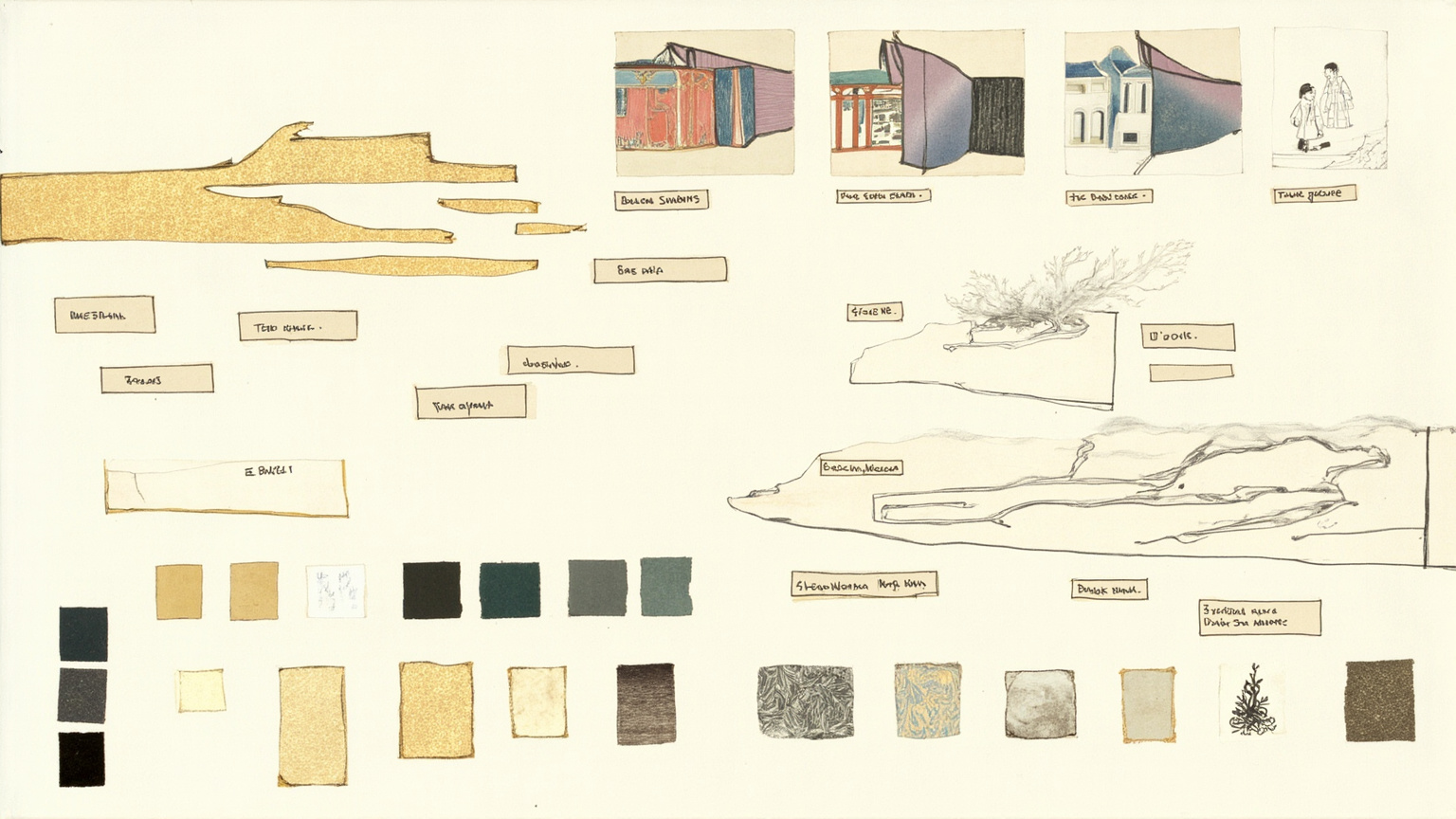
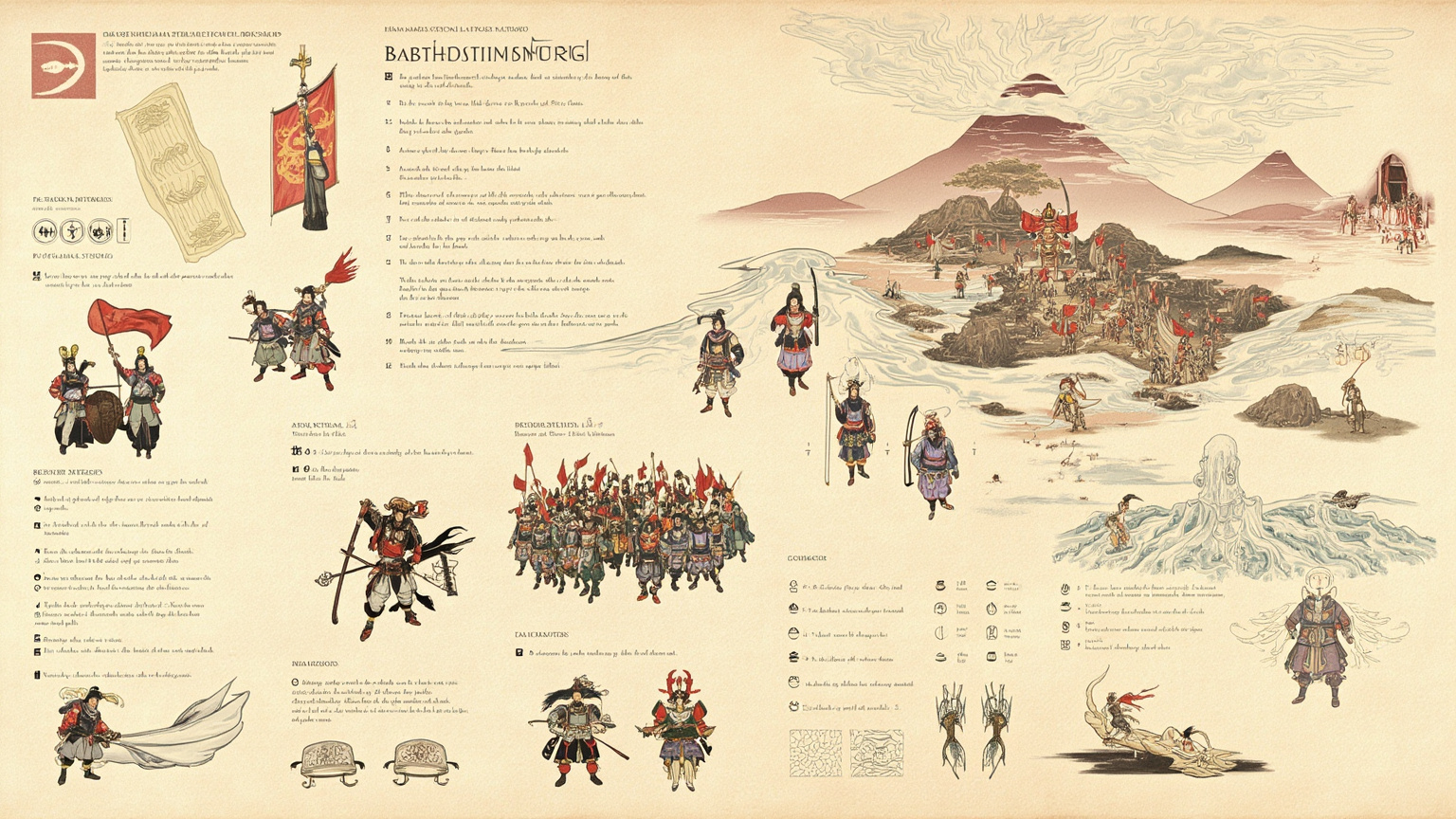
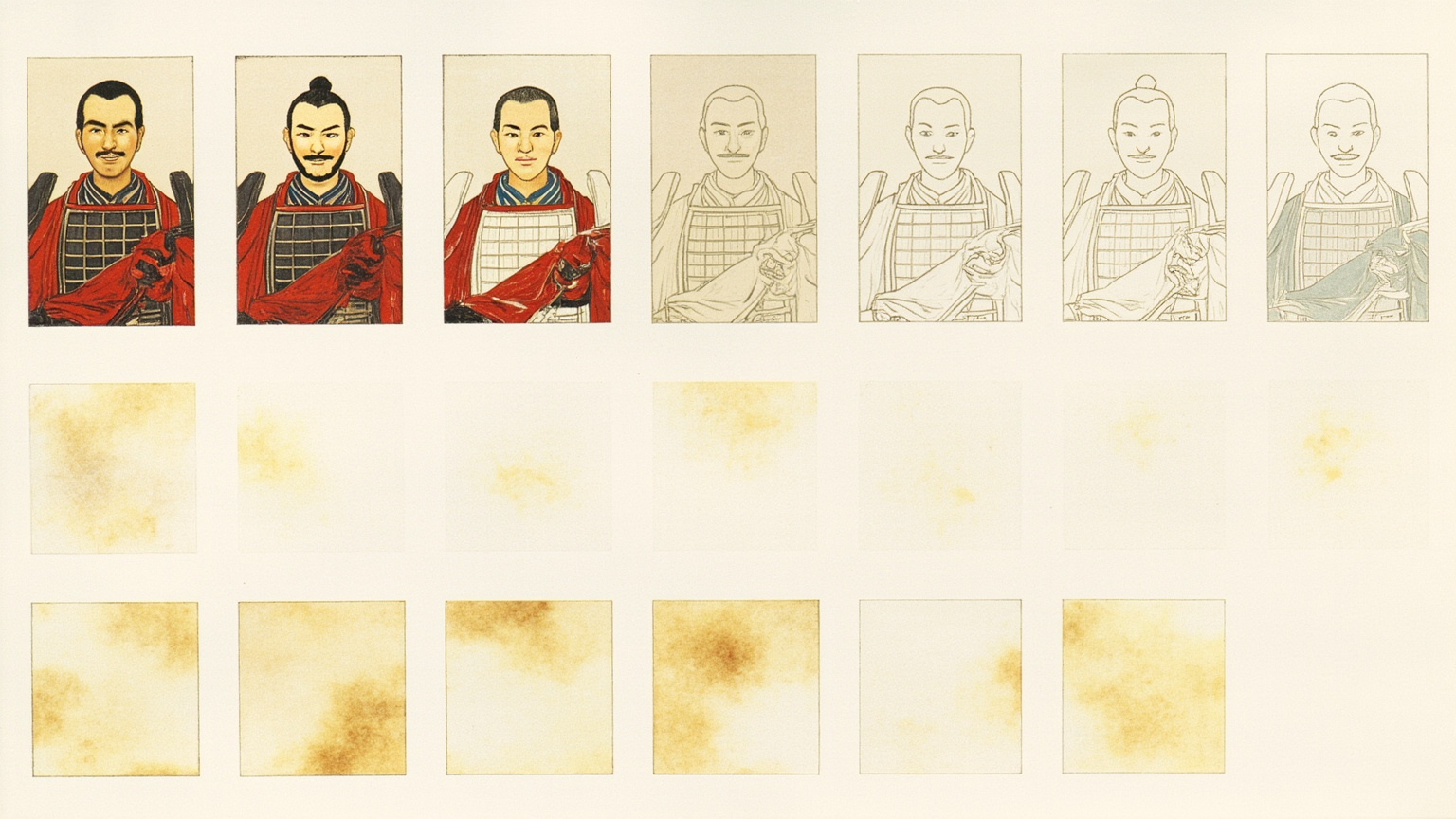
Before the guide was written, this book got a visual foundation — every illustration you just read grew out of it.
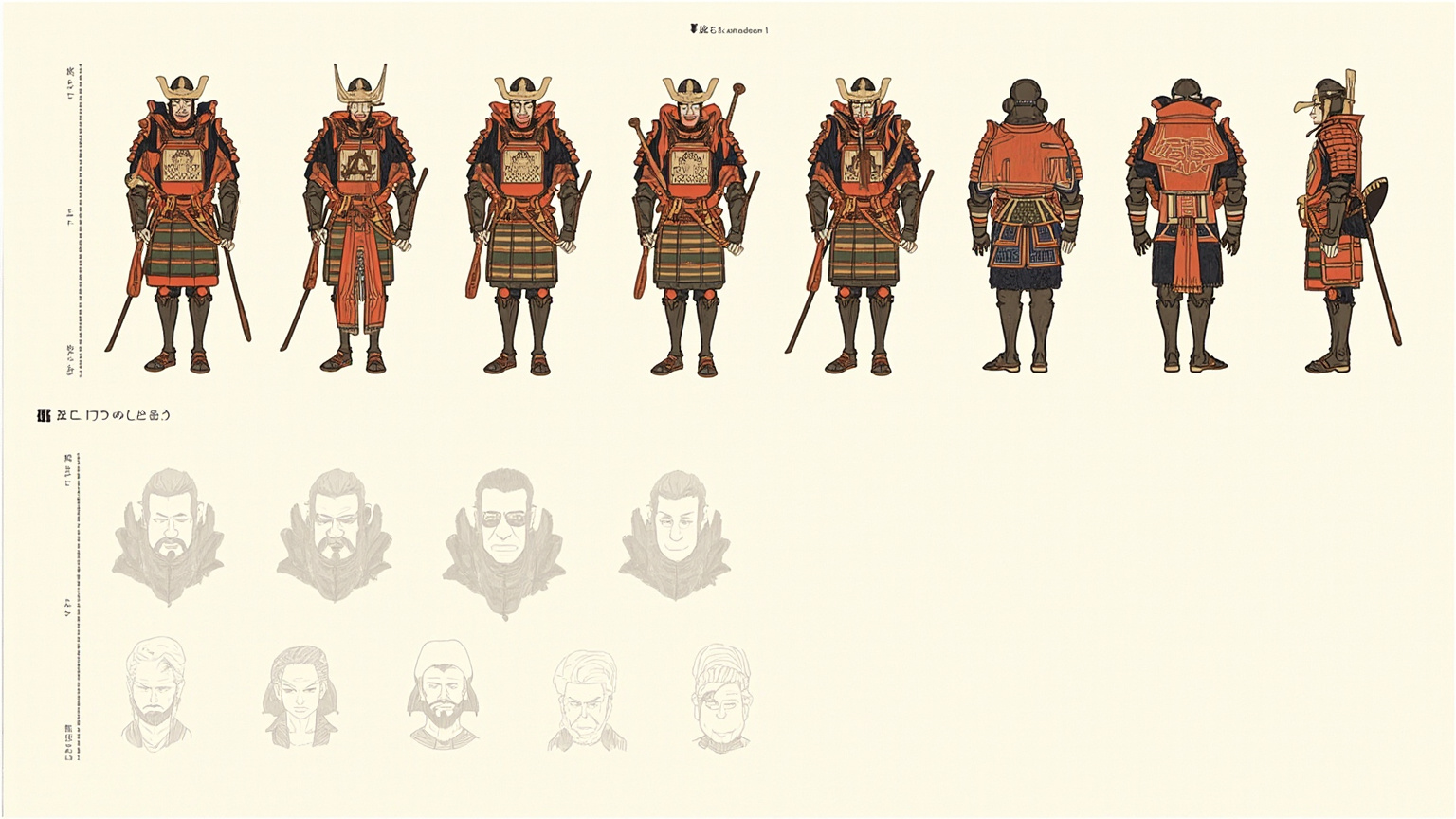
Kiyomori rose on the strength of putting down the Hogen and Heiji rebellions, and pushed the Taira to a height neither court nobility nor warrior clans could touch. All of Kyoto bowed to him.
Then Shigemori died. In the third year of Jisho, the one son who could rein his father in died of illness before Kiyomori did, and the family's moral valve shut with him. For the two years that followed, Kiyomori grew only more reckless -- exiling rivals, planting loyalists everywhere, forcing the capital to move to Fukuhara, the site he favored -- until the spring of the fifth year of Jisho, when a sudden fever killed him. The story goes that his body burned so hot that water thrown on him turned to steam, and people of the time called it divine punishment.
With Kiyomori gone, the Taira had only Munemori to lean on -- a pillar with no beam behind it. The author never states outright that Munemori is incompetent; he simply shows him making decision after decision, none of which steers the Taira fleet out of the storm. Decision-making itself becomes a way of delaying the same failure. Rebellion breaks out everywhere on Prince Mochihito's call to arms, and the war between the Minamoto and the Taira erupts in full. The young Yoshitsune enters -- at Ichi-no-Tani he leads cavalry straight down a cliff face in a surprise attack, and at Yashima he strikes again, tearing the Taira up by the roots. What makes the writing work is what it leaves out: the author never tells us how brilliant Yoshitsune is, only the shape of the mountain, the pull of the current, the exact minute the tide turns in the fog. The victory reads less like his doing than the land's, working through his hands.
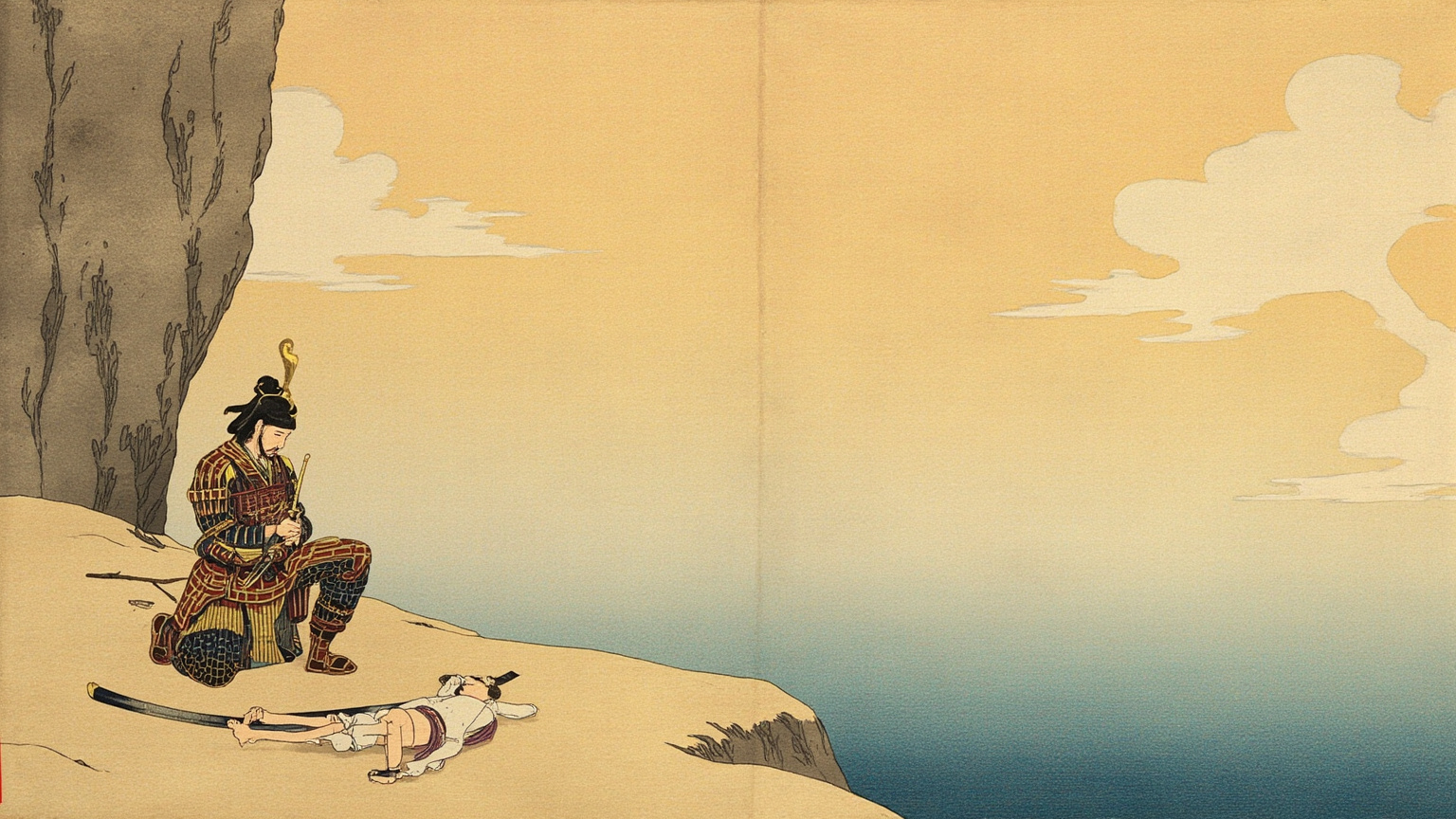
Below the cliffs at Ichi-no-Tani, the young Taira nobleman Atsumori was run down by the Minamoto warrior Kumagai Naozane -- he was sixteen. Kumagai cut him down, and afterward, reaching into the boy's armor, found a flute. It stopped him cold: this was a boy the same age as his own son, killed in an earlier battle, and here, under a warrior's armor, was something so delicate. Whether the flute's sound crosses from death back to the living, the author never says -- only that Kumagai shaved his head and became a monk not long after. The scene was later taken up by the Noh play Atsumori and has been restaged as one of the most repeated deaths on the Japanese stage.
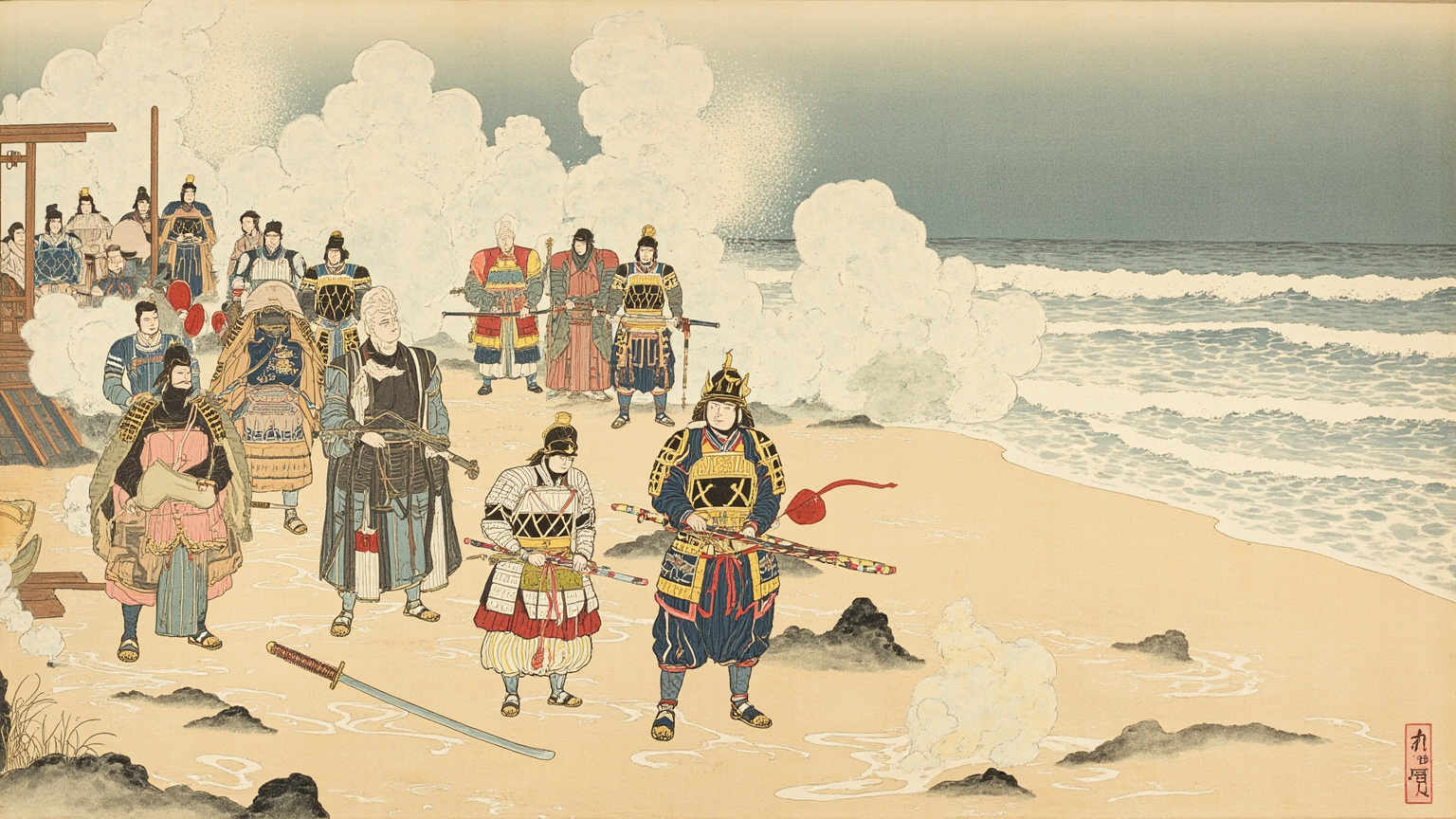
In the second year of Genryaku -- 1185 -- the last Taira fleet was destroyed at the Battle of Dan-no-ura, in the Kanmon Strait. Ships capsized, fire broke out, bodies covered the water. Kiyomori's widow, known as the Nun of the Second Rank, took the seven-year-old Emperor Antoku in her arms, the sacred sword Kusanagi tucked against her -- one of the Three Sacred Treasures -- and said, there is a capital at the bottom of the sea too, before she carried her grandson down into it. The sword was lost to the seabed and has never been recovered; the mirror and the jewel were later retrieved. Again the author refuses to write the moment of the drowning itself. He writes the shore instead: a small suit of armor with no one inside it, a red banner drifting on the waves, an unclaimed sword left on the sand when the tide pulled back.
The Taira line was all but wiped out. Only one survived -- Kiyomori's daughter, Emperor Antoku's mother, Kenreimon-in. Minamoto soldiers pulled her out of the sea; she shaved her head and withdrew to Jakko-in, a temple in Ohara outside Kyoto. The book's final scene is her in old age, receiving a visit from the retired Emperor Go-Shirakawa, recalling the Taira's vanished splendor by candlelight -- and then the door closes, and the story ends.
You would think that was the ending. The author has one more cut to make. Yoshitsune, the man most responsible for destroying the Taira, earned so much glory on the battlefield that it turned his half-brother Yoritomo against him. Lord and vassal fell out; Yoshitsune was driven into flight and eventually cornered with nowhere left to go. The distance between the height of his fortune and its collapse was a single spring. Yoritomo then founded a shogunate at Kamakura, opening the age of warrior government. This is where the book shows its skill: it tells the story of one clan's fall, and in closing it, quietly hands you the shadow of the next era already arriving. Read it again and you notice the whole structure is built to say one thing -- what rises must fall.
In one line: what rises must fall. This is not an anti-war tract, and it is not making a case for the Taira. It simply takes seven years to push an entire house of power from its summit to the sea floor, so the reader sees plainly that power -- along with the daughter you married into the imperial family, the seven-year-old grandson, the flute hidden in a suit of armor -- all goes under with the same tide in the end. It is the fullest landing the Buddhist idea of impermanence ever made in Japanese literature.
There is something readers coming to this in translation often miss: it was shaped collectively by generations of blind priests performing it aloud, not composed on the page by one hand. Every passage was reworked in performance before it was ever written down -- the text is only a temporary freeze-frame of a sound. Read it with the biwa's rhythm somewhere in your ear, and it moves a great deal more easily.
What good is holding the whole world -- by the book's end, Kyoto has only one shaven-headed old nun left, alone in an empty temple, remembering a family for whom, once, whoever was not Taira was not human.
Because a companion guide only gives you the names and the events -- Kiyomori died, Atsumori was sixteen, Emperor Antoku went under the waves in his grandmother's arms. That is the skeleton. What the book actually offers is not the skeleton -- it is how the biwa priest's voice slows at that passage, where the phrasing breaks, how the audience holds its breath. Classical Japanese literature loses a layer of that breath in translation, and loses another layer in any guide describing it. You can only get close to it by going to the text itself, even a modern Japanese translation. And the instant the flute is found in the armor, the exact brushwork of a small empty suit of armor left on a sandbar as the tide pulls out -- that is craft that only exists on the page. No one can tell it to you.