The Tale of Unyong (Unyongjeon / 운영전, also known as The Tale of the Suseong Palace) · Companion Guide
云英传
宫墙隔开两个人,诗笺替他们说完了所有的话;等墙合拢,已是亡魂在月下回望。
A Palace Wall, a Poem in Reply
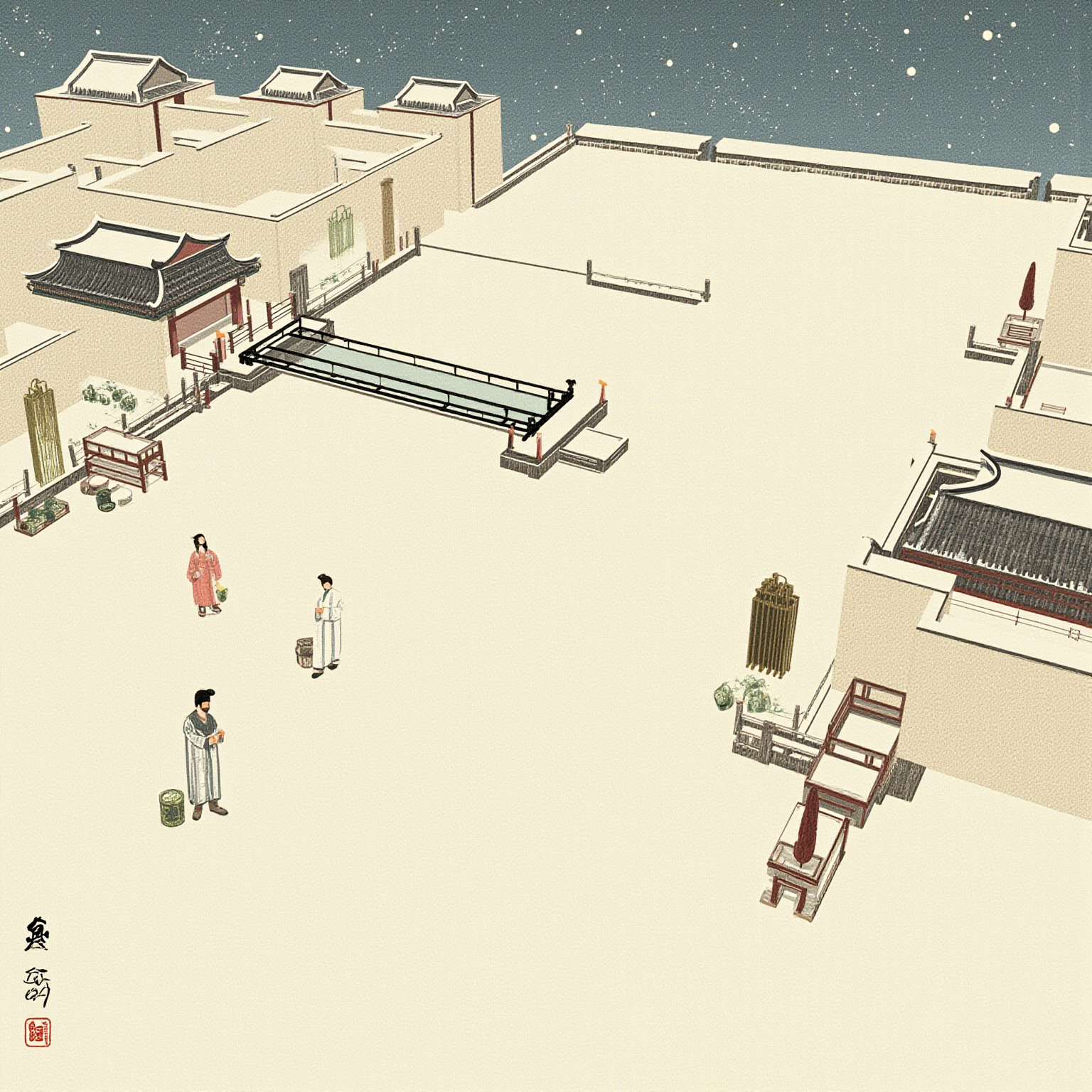
The story opens with moonlight on the roof tiles of a detached palace at the foot of Inwangsan, in old Seoul. Inside the wall live the palace women; outside it, a young scholar has come calling. The wall is too high for either of them to climb. He slides a poem written in classical Chinese through the gap under the gate; that night the palace woman Unyong tucks her answer under an inkstone and waits for the moon to rise again. This is the whole of their courtship, a few sheets of paper passed back and forth. A high wall, lamplight, an inkstone, traces of ink: that is all they will ever have.
This is The Tale of Unyong, a short story written in classical Chinese in the first half of Korea's seventeenth century. It comes from an anonymous collection called Hwamongjip (loosely, Tales from a Flower Dream), though later scholarship credits this particular piece to Yu Yeong. All nine stories in the collection are written in classical Chinese, styled after Tang and Song prose, with poems exchanged between characters woven through the narrative. Alongside The Tale of Chunhyang, a romance rooted in the everyday world, and The Nine Cloud Dream, a gaudy fable about waking from illusion, it is one of three classical works taught in Korean literature classrooms today. Of the three, it is the only tragedy.
A Detached Palace, Three People
The setting is Suseong Palace, called by two different names in the surviving manuscripts; this is the one that stuck. It was home to Yi Yong, Grand Prince Anpyeong, a son of the Joseon royal house. Behind its walls lived a permanent staff of palace women; beyond them, men of letters were occasionally invited in. In the story, the prince is neither villain nor judge. He simply owns the wall: the palace is his, and so the order that governs it is his too. Who actually gave the order to end the affair, the story never says, and has no intention of saying. That silence is itself typical of Joseon court fiction: propriety does not need to walk onstage. It is already the air everyone breathes.
On one side of the wall is Unyong, a palace woman gifted in both learning and verse. Her tragedy is not that she goes unloved. It is that love, once found, has no right to land anywhere. On the other side is the visiting scholar, surnamed Choi; his given name has not survived. He can enter the palace but cannot stay. He can pass a poem through the wall but cannot pass a person through it. The whole affair hangs suspended between his poems and her replies. Both of them are trapped, just trapped in opposite directions.
How the Poems Got Through
The story gives no backstory. It drops the reader straight into a moonlit night at the palace. The scholar enters, and he and the palace woman begin exchanging poems across the wall; this is the story's central act, verse becoming the only language that can pass through stone. There is no meeting, no touch, no account of a private tryst, only paper handed over and handed back under lamplight. From the first exchange, the channel feels perilously thin. Thin enough that one wrong fold of paper could let the whole affair slip through someone's fingers.
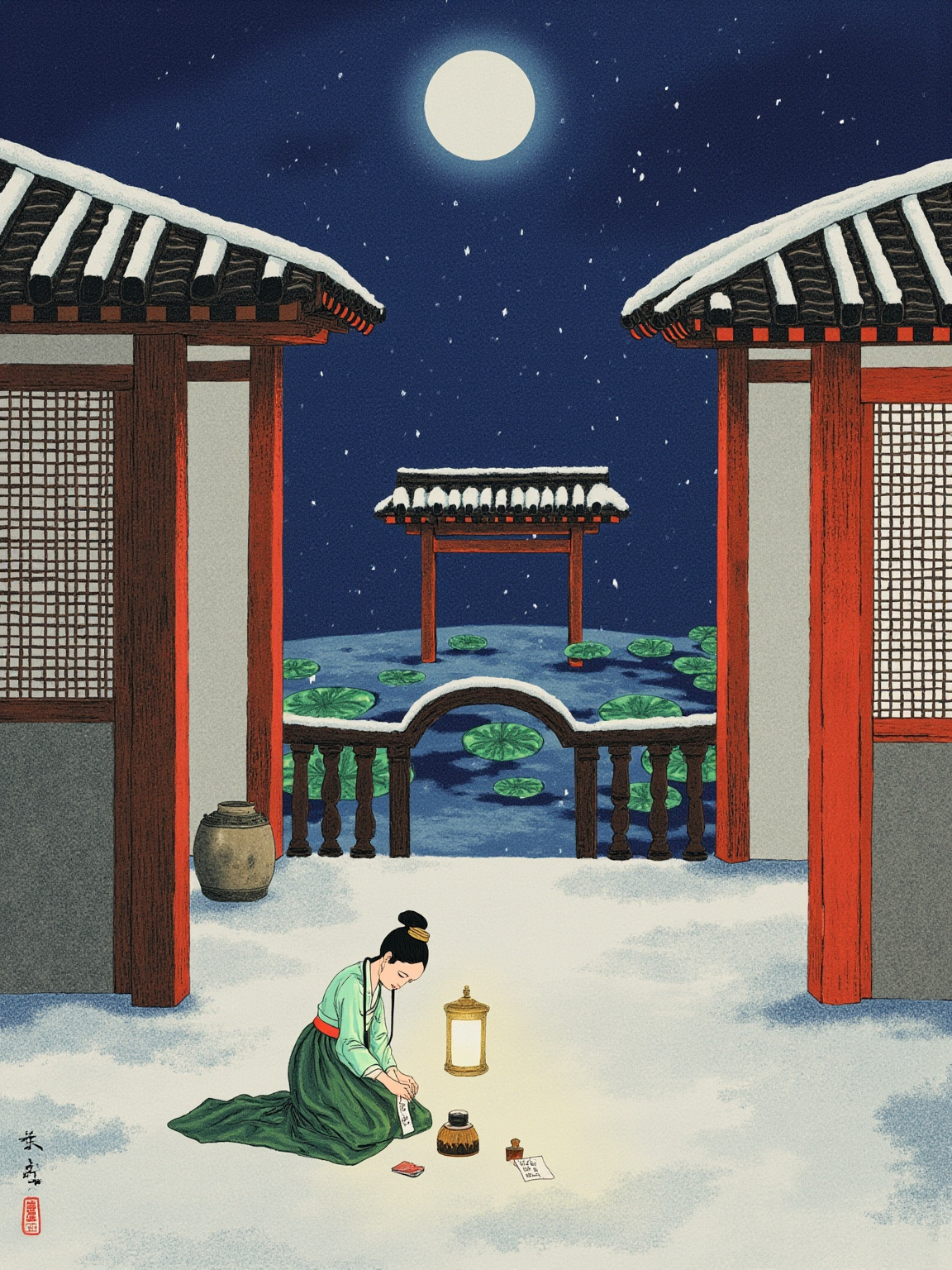
Beneath the tiled eaves of Suseong Palace, moonlight fell on a folded verse slipped through the crack of a gate — and somewhere inside, a woman set her inkstone over the reply.
月照寿圣宫瓦当,一张诗笺从门隙递入;墙内有人将回诗压在砚下,候下一个月升。
金句 · 开篇 · 月夜递笺
That is where the craft shows. Classical Chinese fiction from seventeenth-century Korea tends to pile up allusions and rhyme schemes, easily curdling into a scholar's private amusement. What The Tale of Unyong gets right is making the poems themselves carry the plot. A poem sent out and never answered means the relationship has stalled. A poem answered means a heartbeat has been confirmed. The reader never has to watch the two of them fall in love; watching their verses cross the wall and come back is enough to track exactly how far things have gone.
Unyong Writes Back
Unyong is not simply the subject of the scholar's poems. She is the one who writes back. The story gives real space to her replies, placing her talent on equal footing with his, and the tension of the tragedy sits precisely in that equality. Two people of matched gifts, separated by a palace wall, and neither has the power to break it down. All they can do is prove themselves to each other in verse: I am on this side of the wall. I heard you. You did not mishear me.
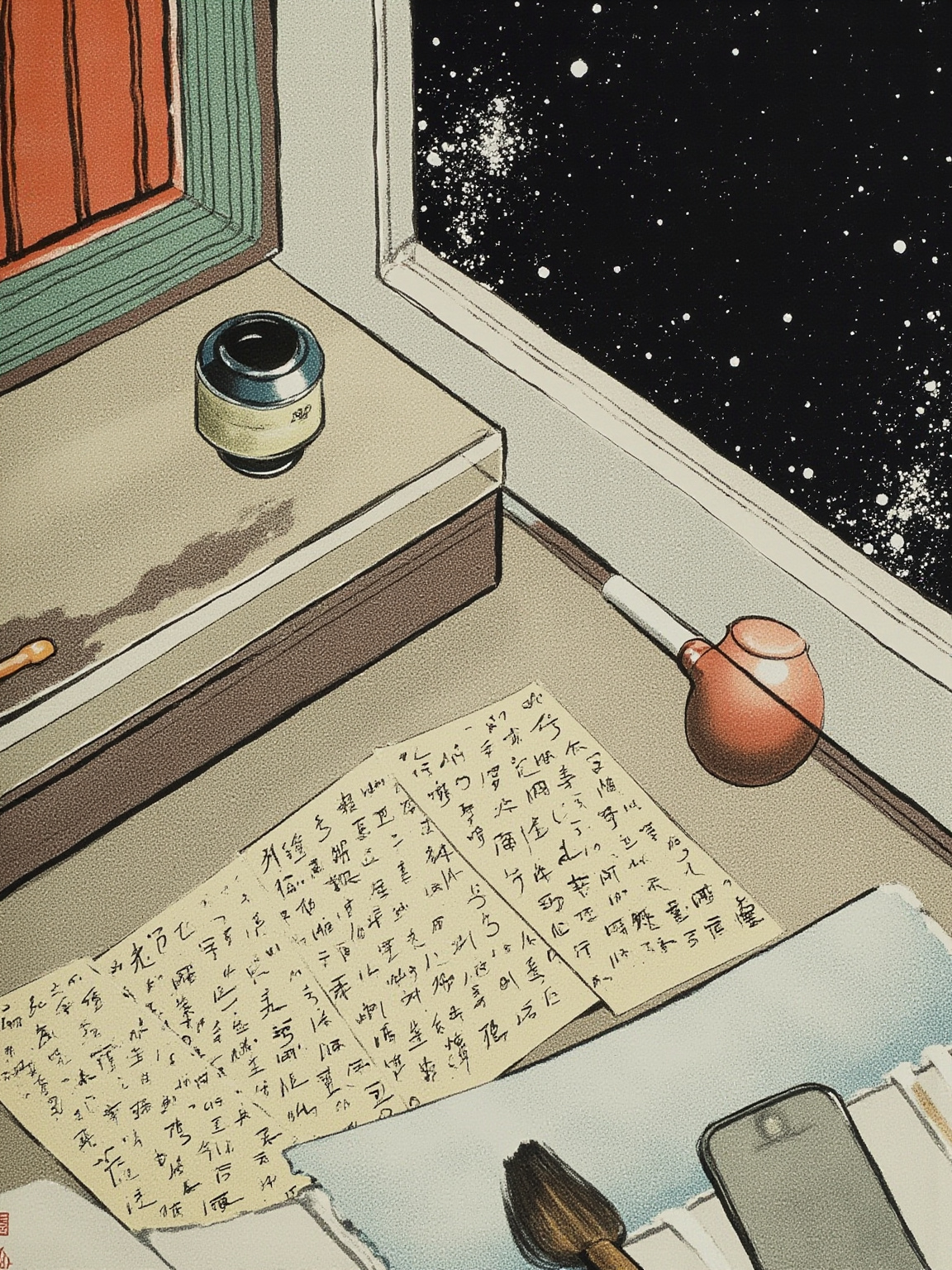
She was not the one written of — she was the one who answered. Her verse met his at the same height, and the wall between them learned, line by line, to tremble.
云英非被咏之人,乃回应之人;其诗与书生对等,墙遂于唱和之间一寸一寸地动摇。
金句 · 中段 · 云英回诗
Give the author credit here: in East Asian narrative of the same period, a palace woman is usually an object viewed from a distance by men of letters, the source of a poem rather than its author. The Tale of Unyong will not have it that way. It lets the palace woman write too, and lets her poems be heard. A romance between two people who can both write carries more weight than one where a single person writes and the other is only written about, because both of them know exactly what they are doing, and exactly what it will cost them.
The Moment of Discovery
When the affair is discovered, the story stages no chase, no interrogation, no confrontation. The moment discovery lands, order closes back over both sides of the wall at once. A court this rigidly ranked does not hold a debate over an affair like this one; a single verdict is enough. The reader can feel that the ending was waiting on the far side of the wall from the instant the scholar first slipped his poem through. The only open question was which day the guards would push the door open.
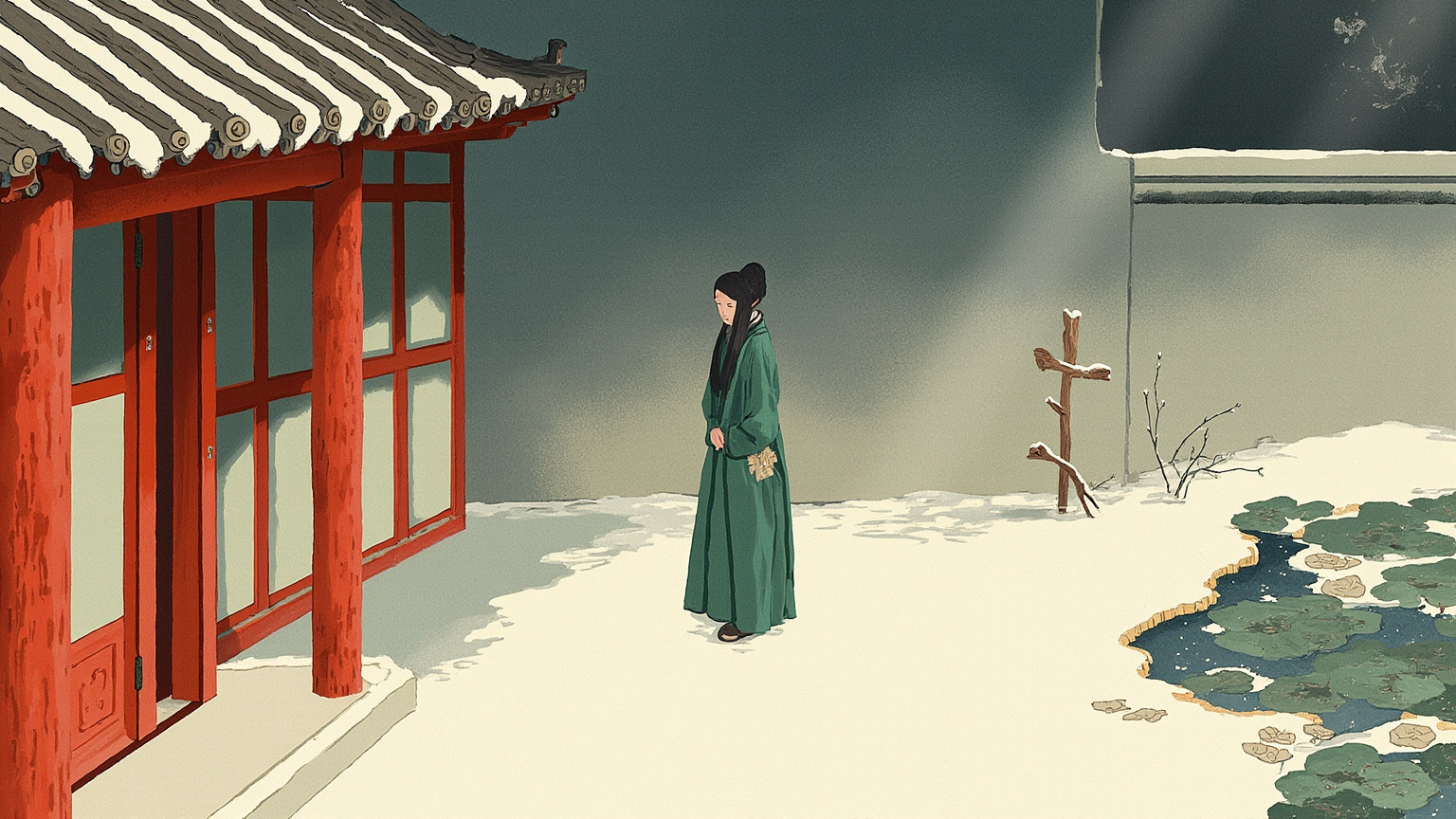
The order closed in with a single word. No chase, no trial — only the gate drawn shut, and snow beginning, very quietly, to cover every footprint of their verse.
一声令下,秩序合拢;无追捕、无鞫讯,唯门阖而雪落,将往来诗迹一一覆去。
金句 · 事变 · 事发瞬间
The craft here is in the pacing. All that slowness earlier, the moonlight, the lamplight, the poems going back and forth, exists so that this sudden speed can land colder. The story never gives the reader a full account of the confrontation. It just pushes the door open, lets the light in, and leaves the reader to imagine the instant the wall comes down.
Both of Them Die
Both of them die. The story spends no long passages dramatizing the deaths; it simply hands the reader the outcome through the voices of their ghosts. They are gone. The wall is still there. The inkstone is still there. The next moonlit night will still come, only now no one will be writing a poem back by lamplight. This choice pulls the tragedy back a step: it does not shock with blood and rope, it stings through absence.
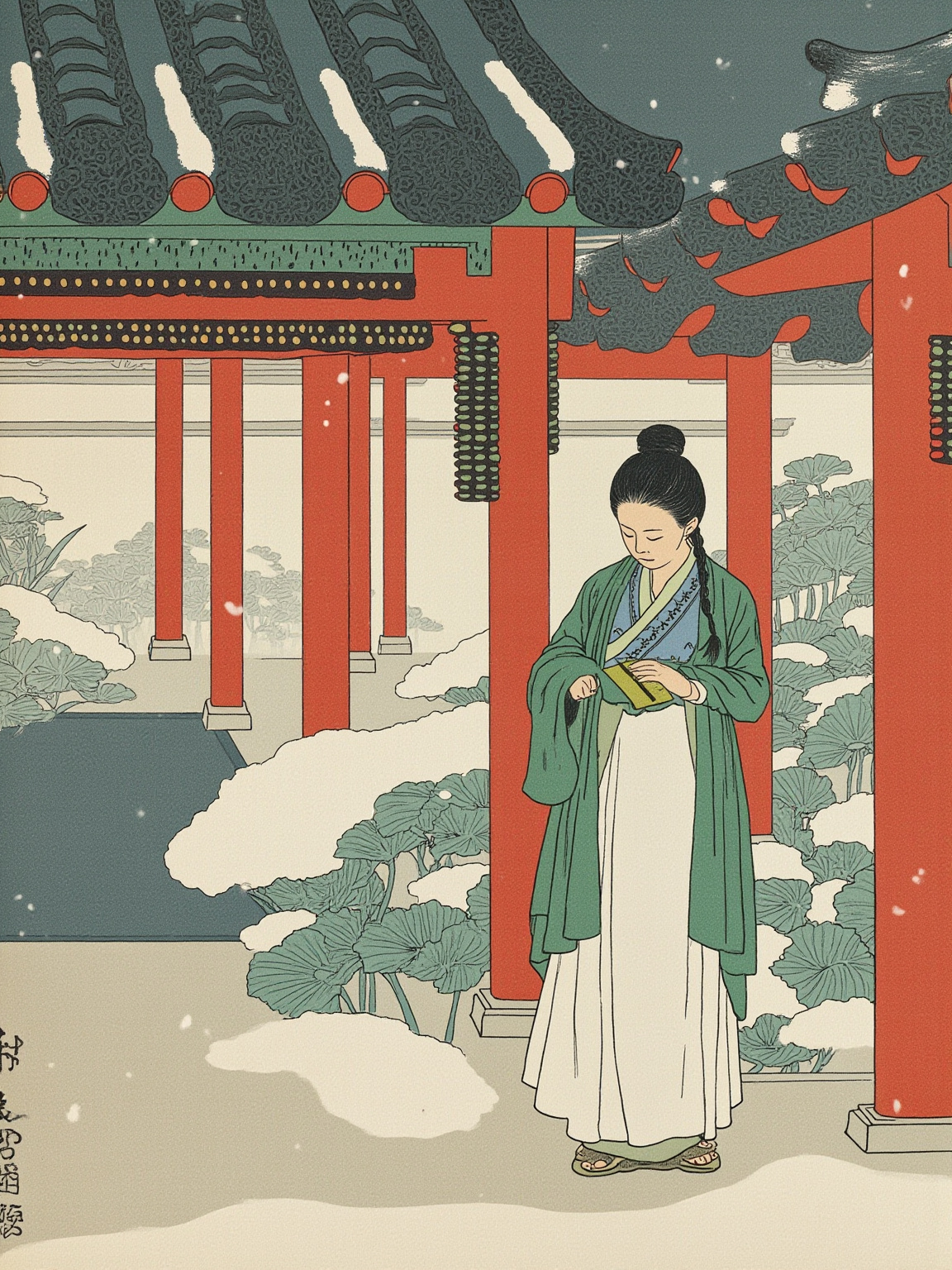
Both are gone. The wall still stands, the inkstone still rests on the desk, and the next moon will rise as before — only no one now sits beneath the lamp to write back.
两人俱逝。宫墙犹在,砚犹在案,下一月夜仍来,唯灯下再无人与君唱和。
金句 · 尾声 · 亡魂自述
Set The Tale of Unyong back alongside the other two, and the difference is stark. The Tale of Chunhyang is a match made in the everyday world, ending in reunion and a family made whole. The Nine Cloud Dream is a gaudy illusion whose hero sees through the world and takes monastic vows. Both give love somewhere to land, either in ordinary domestic life or in renunciation. Only The Tale of Unyong refuses to let it land anywhere. The part of the love that lived on paper is dead. The part that lived outside the wall is dead too. The whole affair leaves nothing behind in the physical world.
Ghosts Speaking: Handing the Tragedy to Memory
The story's most distinctive feature is its frame: the dead are the ones telling it. Ghosts speaking sounds like a figure of speech, but it is a structural choice. The whole tale is set at the distance of looking back, so every moonlit night, every poem, every covered walkway becomes something recalled, that year, that particular night. Memory carries its own chill, and the tragedy does not need a death scene to hold it up. It runs on the rhythm of remembering itself: half a beat slow, a line spoken softly, like snow settling on roof tiles.
The frame has a hidden advantage too: a ghost cannot be charged with a crime for speaking. Inside the palace wall, Unyong never had the standing to tell her own story; her position was defined for her, her fate arranged by others. Once she becomes a ghost, the wall stops being a barrier and turns into the distance that finally lets her speak. Through this frame, the story gives a voice to someone who was never supposed to have one, and lets her tell her own part of it at last.
The Piece Missing from Korean Classical Fiction
Read Korean classical fiction today and you cannot get around The Tale of Chunhyang and The Nine Cloud Dream, the first the model of romance held in the popular imagination, the second a scholar's fantasy blueprint of the cosmos. Both represent love that is allowed to exist. The Tale of Unyong represents the opposite: love that was never permitted in the first place. It sets the romance inside the court, the most closed space there is, the one place private feeling is least allowed, and starts the countdown from the very first line of verse.
Set against the wider map of East Asian classical Chinese fiction, The Tale of Unyong holds its own place. It is not The Story of the Western Wing, which still has secret meetings, a go-between in Hongniang, and the possibility of eloping at the end. Nor is it The Peony Pavilion, where Du Liniang dies and returns to life, the strongest possible affirmation of feeling. The Tale of Unyong is colder than either. It gives love no what-if to escape through. It asks a single question: when the wall is too high, propriety too rigid, and the people involved too clear-eyed to fool themselves, what shape does love take when it is left with nothing? The answer: one sheet of poetry, half a line written back, and nothing else.
You Know How It Ends. Why Read the Original?
A guide gives you the map. The text itself is the ground. What cannot be replaced here is the voice on the page that only a classical-Chinese short story can produce: the way a poem gets written before it is sent out, the instant a reply lands beside the inkstone with the ink still wet, the tone of a ghost's account, soft, half snowfall and half sigh. No retelling can recover that. And the precision of the allusions, the slowness of the pacing, the silences left on the page, none of it holds still for you until you read it yourself. Go back to it knowing how it ends, and the moonlit nights feel colder than they did the first time, the wall taller than it did the first time. That feeling of having known all along how this would go is something no guide can hand you. You can only read your way into it.
Other love stories ask whether the two of them can end up together. The Tale of Unyong does not ask that question. It simply lets two people, on either side of a wall, finish writing the poem.
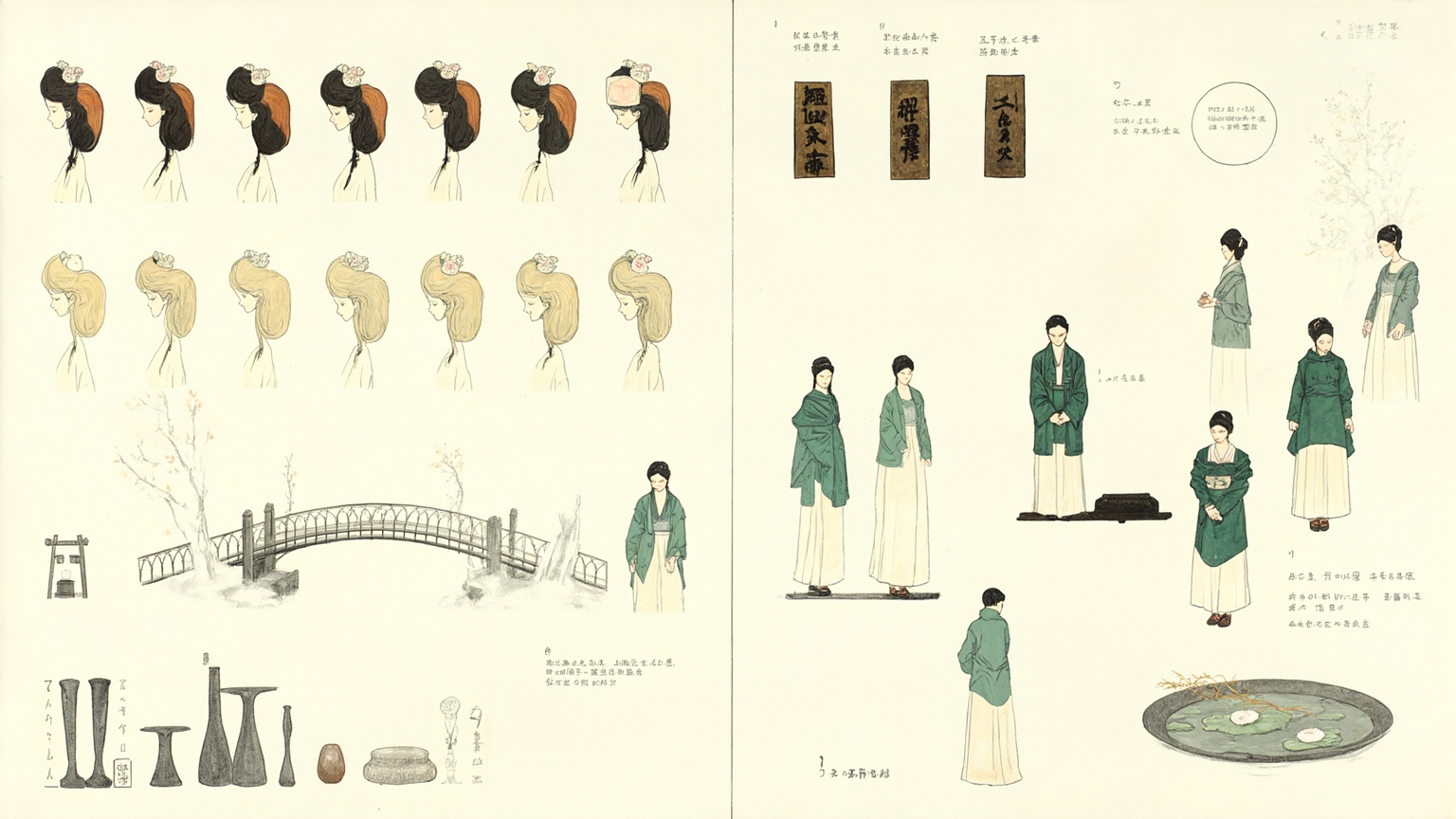
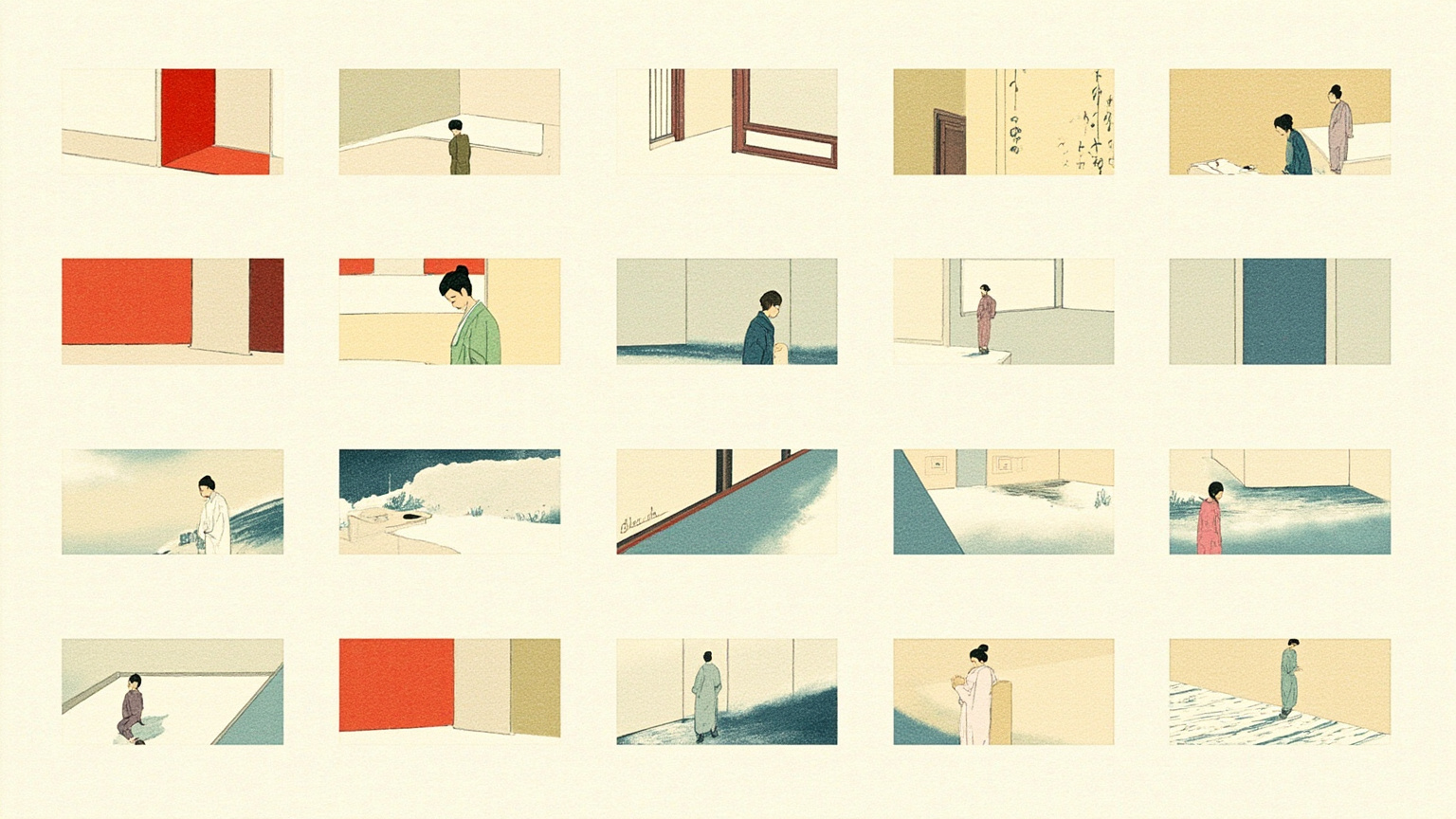
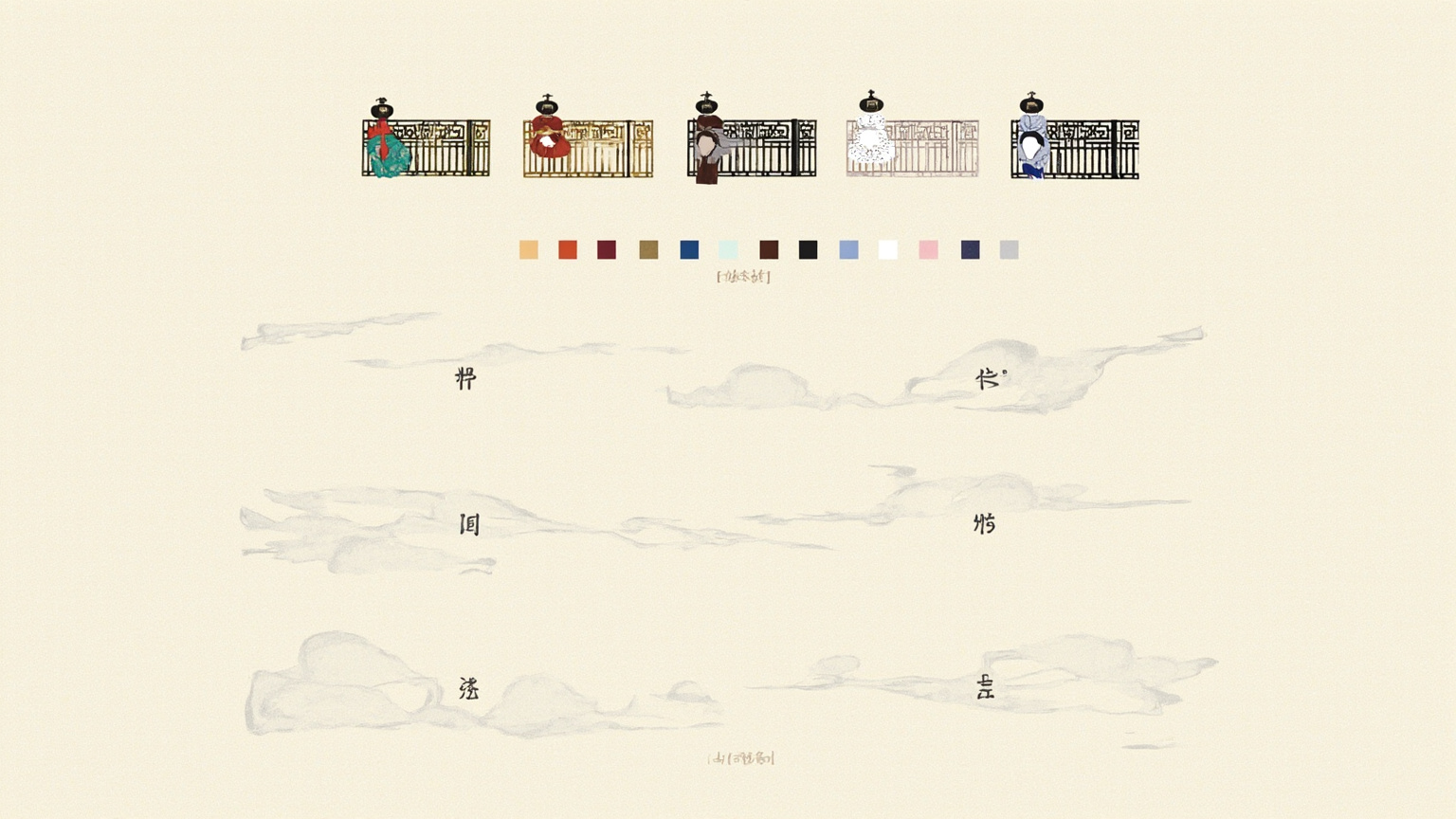
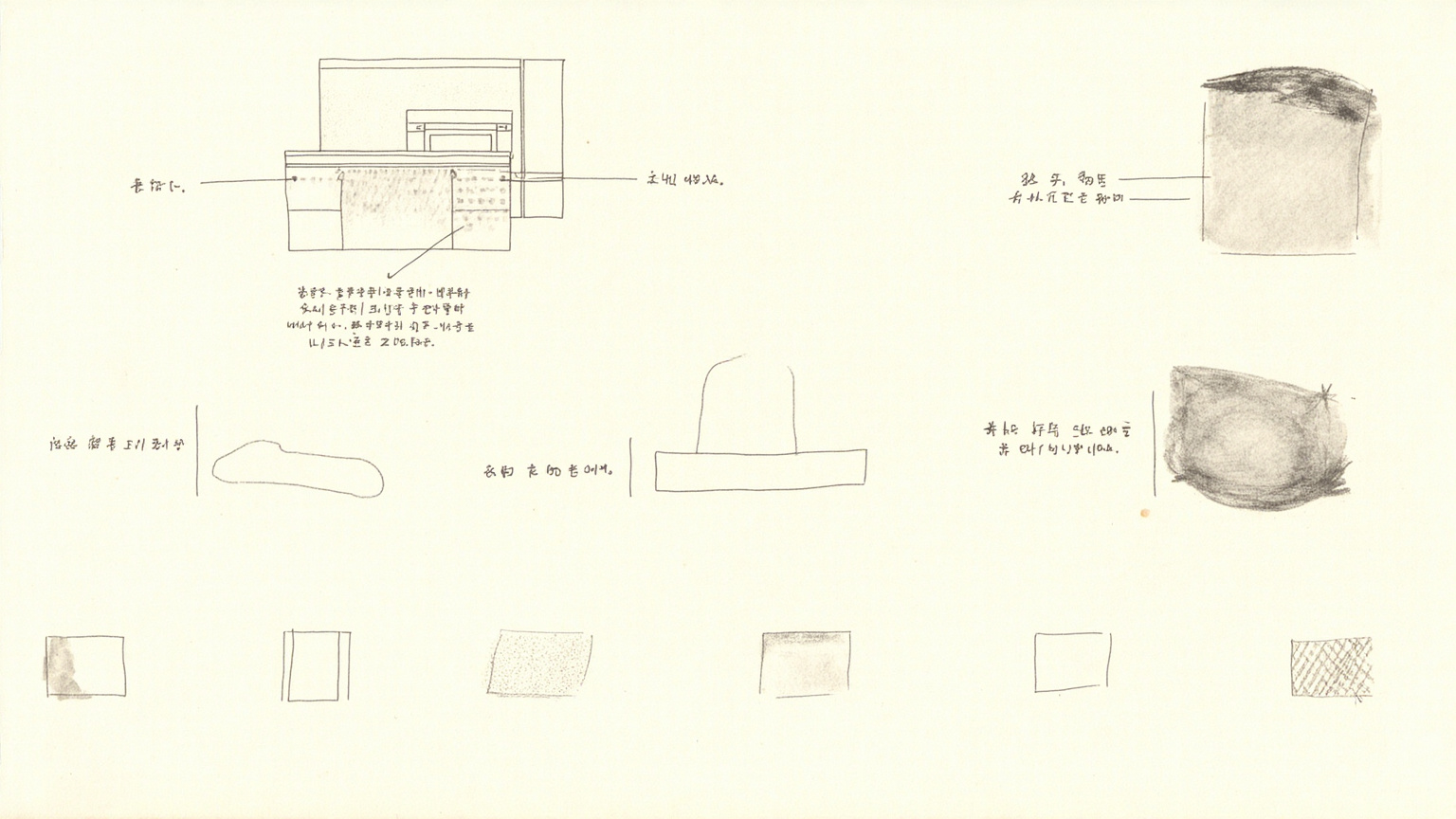
Art Direction4 plates
Before the guide was written, this book got a visual foundation — every illustration you just read grew out of it.