The Tannisho (叹異鈔) · Companion Guide
叹异抄
京都草庵席上,一杯浊酒之间,八十老人与弟子剖尽自力——唯叹世间异义何其多。
Opening: A Cup of Wine in the Thatched Hut
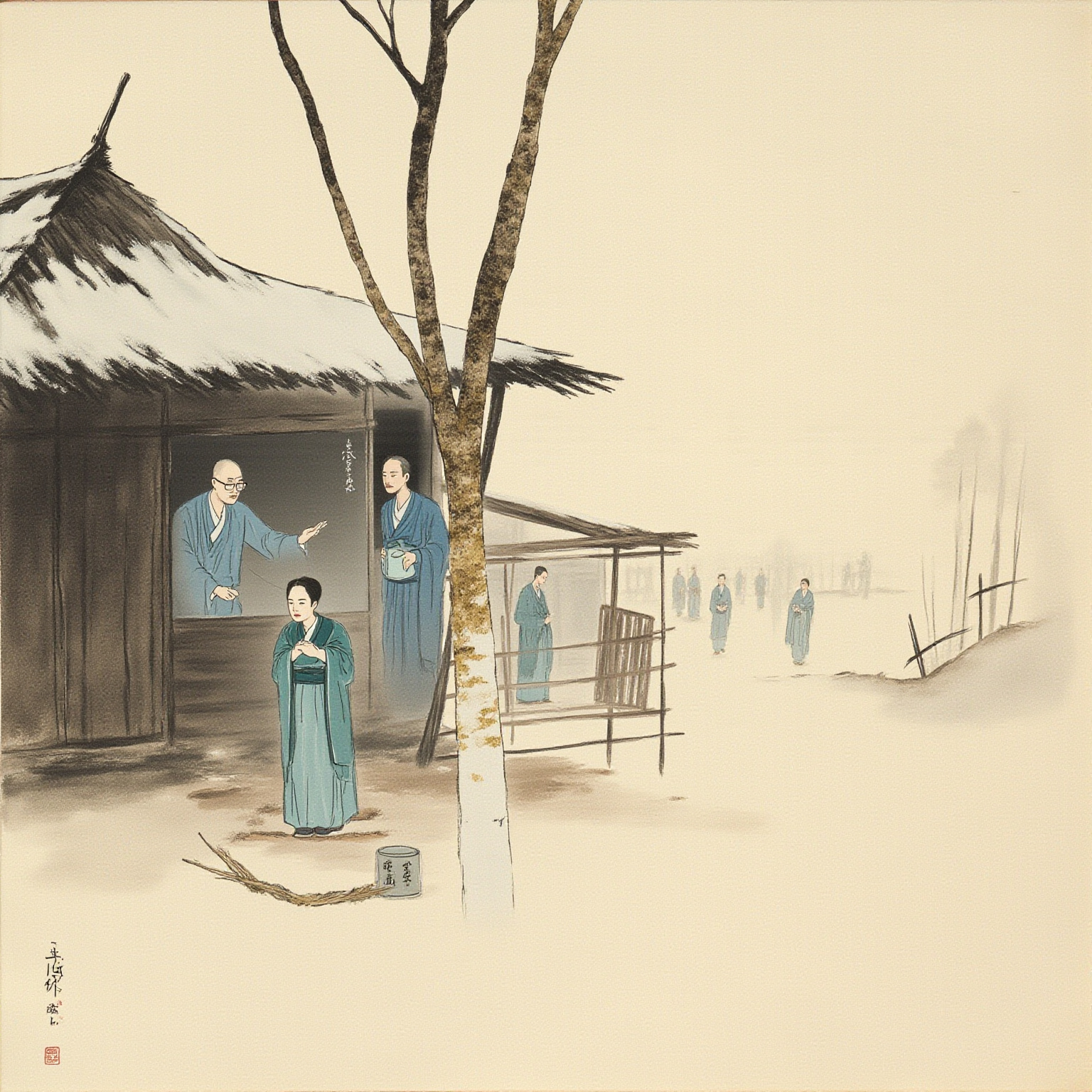
In a thatched hut on Higashiyama in Kyoto, snow is probably falling outside. A monk in his eighties sits cross-legged, facing a younger man he watched grow up. The younger man lifts his cup of wine as if to ask a question he has been holding in for years — and as if he cannot quite bring himself to ask it. The old man reaches out and presses down on his wrist. Hear me out first, he says. This is thirteenth-century Japan, and what teacher and disciple are discussing, over a cup of wine and the recitation of a Buddha's name, is whether a person can spend a whole life letting go of his own strength.
The book itself is oddly short — a little over a hundred questions and answers, the kind of thing you can finish in an afternoon. And yet it has circulated in Japan for seven hundred years; names like Nishida Kitarō, Shiba Ryōtarō, and Maruyama Masao keep coming back to it. It has been translated into dozens of languages, but the Chinese-speaking world has almost entirely skipped it. Shelves are full of Zen and Tibetan Buddhism, while Jōdo Shinshū, the school with more followers in Japan than any other, goes almost unmentioned. So this small book deserves a proper introduction.
What Kind of Book Is This
The author, Shinran, was born in the 1170s into the Hino family in Kyoto, aristocrats from the Fujiwara clan's northern branch. He entered Mount Hiei at nine, came down at twenty having studied every school on offer, and finally became a disciple of Hōnen, devoting himself to the single practice of reciting Amida's name. In the early thirteenth century the court banned that practice; Shinran was stripped of his monastic status and exiled to Echigo, present-day Niigata. He was just past thirty, and overnight his identity shifted from monk to something that was neither monk nor layman. For roughly thirty years afterward he taught in the farming and fishing villages of the Kantō region, and at sixty he took the name Gutoku Shinran, foolish, shaven-headed Shinran, before writing his massive Kyōgyōshinshō. The Tannishō is something different: a set of sayings Shinran dictated late in life, in a thatched hut near Nishi Hongan-ji in Kyoto, taken down by his disciple Yuien and compiled the year after Shinran died. It is not a treatise Shinran wrote. It is a transcript of a teacher answering questions.
Its place in the history of Japanese Buddhism is not up for debate. It pulled Buddhism out of the temple, out of the monastery, out of the frame of precepts and ordination, and opened the door to a Buddhism practiced by ordinary people living ordinary lives. It is not only a religious text. Its thinking on self-power and other-power, on the individual and society, on sin and salvation, has shaped the modern Japanese sense of self at a deep level. You cannot claim to understand the Japanese spiritual temperament without having read it.
The Cast: Teacher and Disciple
There are really only two people on this stage. One is Shinran himself, founder of Jōdo Shinshū. He never talks like a scholar: he opens with I tell you, I am a wicked man. He spent his life stripped of monastic rank, teaching in his later years from a Kyoto hut, dressed as a layman, no longer even bothering to keep his head shaved. The other is Yuien — said to be the son of Zenran, a nephew of Shinran, though some accounts call him a senior disciple instead, and the record is uncertain — who plays the part of the one asking, on behalf of everyone who comes after, the sharpest questions of all. He does not circle around anything. He goes straight for what any disciple actually worries about: how to keep the precepts, what to do at the moment of death, and whether he should kill a thousand people if his teacher told him to.
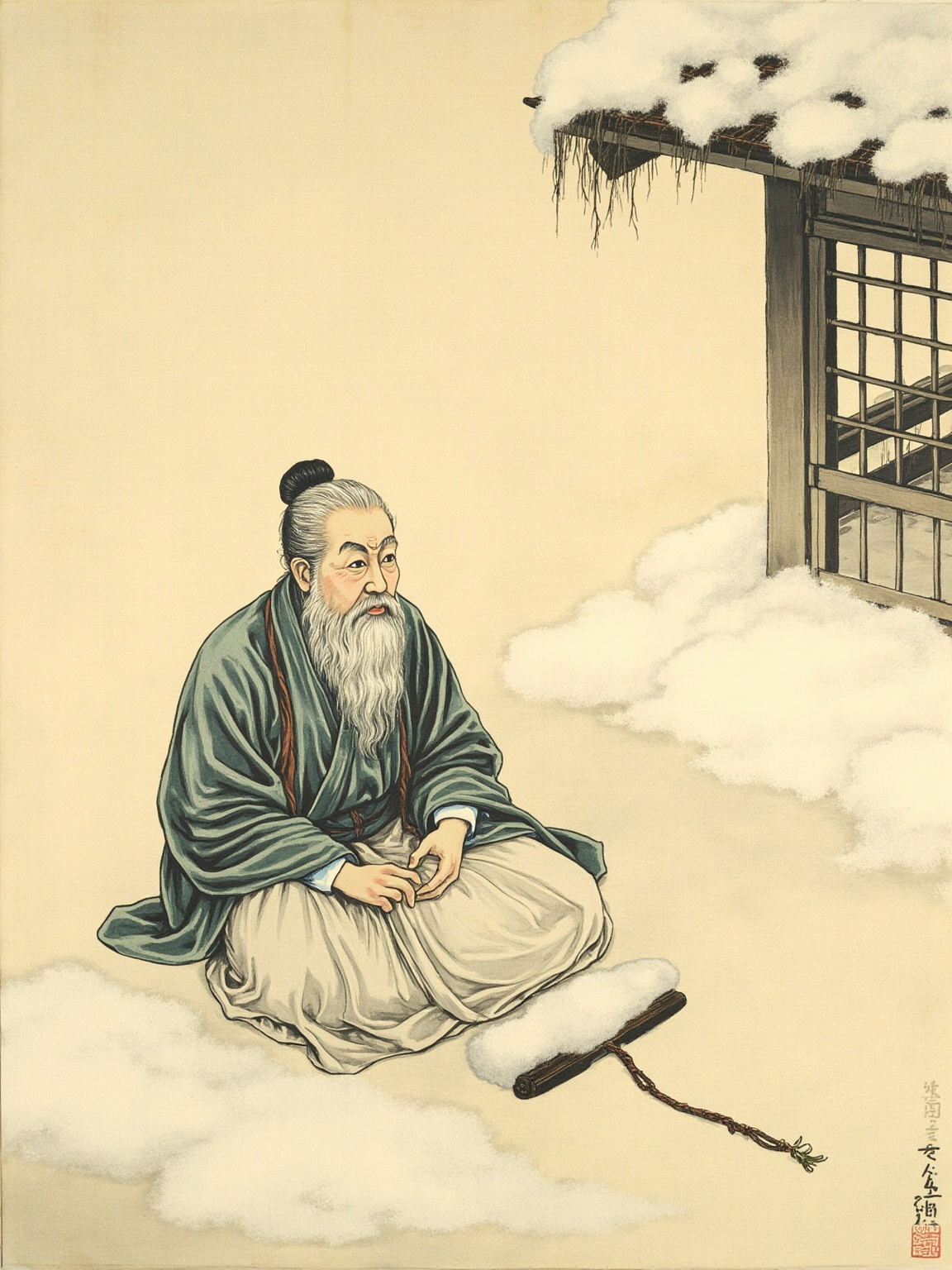
I have no wisdom that I may attain enlightenment by any practice of my own; I entrust myself wholly to the Tathagata's Other Power.
我既无智慧可凭自力证悟,唯将自身全然归凭如来他力。
金句 · 序段 · 亲鸾自述
Three more figures stand in the background. Hōnen: Shinran's teacher, founder of the Jōdo school, the source of both the single practice of nembutsu and the faith in other-power that Shinran would go on to teach. And Ryūkan and Genchi, monks from a rival branch within the Jōdo school itself, who opposed that single practice. Yuien lays out their objections one by one, forcing his teacher into his most uncompromising replies. None of this happens in an academic debate. It happens on a straw mat, over a shared cup of wine.
Exchange One: The Moment His Monastic Status Was Stripped Away
Yuien opens by tracing the lineage: the virtue and the debt owed to Shinran's teacher, the venerable Genkū, known to history as Hōnen. This is standard etiquette in Japanese Buddhism — you name where the teaching came from before claiming any of it as your own. Only then does Yuien turn to Shinran's own history. In the early thirteenth century the court declared the single practice of nembutsu a heresy. Shinran was stripped of his monastic status and exiled to Echigo. That was the real turning point of his life, and not because exile itself was hard. From then on he could never again stand before anyone as a monk. He had become neither monk nor layman.
Notice the craft here. Shinran does not turn the 1207 persecution into a complaint about suffering. He treats it as a theological event: losing his monastic status is exactly what let him step outside the old framework of precepts and self-power. Traditional Buddhism says you are closer to salvation because you are a monk. From this point on, Shinran says the opposite — monk or layman makes no difference; what matters is admitting you have no power of your own, because that is the only qualification other-power salvation requires. A defeat forced on him became the thing that made him a revolutionary.
Exchange Two: Can Keeping the Precepts and Single Practice Coexist
Yuien's second question is a practical one. If you devote yourself entirely to reciting the nembutsu, what is your obligation to the precepts, to purity, to good works, to all the other scattered practices? In plain terms: is reciting the name really enough? Do the precepts stop mattering? Do good deeds stop mattering? Shinran's answer allows no wiggle room. Take his teacher Shandao as the foundation, abandon the miscellaneous practices of self-power, and rely on other-power alone. Even keeping the precepts has to come after hearing and believing — hearing Amida's original vow, and believing it — because that is the ground everything else stands on. Without that ground, the precepts are just paving stones you lay for your own merit.
Those who solely say the nembutsu and follow no other practice—let them be supported by a good friend; discard self-power and entrust all to Other Power.
专修念佛、舍诸杂行之人,当以善知识为本,舍自力而全归他力。
金句 · 第二问答 · 持戒与专修
What makes this passage work is that Shinran never denies the precepts outright. He just moves them. They are no longer a ladder up to salvation; they become whatever naturally follows once you have heard and believed. He inverts the traditional order completely — keep the precepts first, then be reborn in the Pure Land — into faith first, precepts after. Faith is the root, precepts are the branches. The man came in worried about whether to keep the rules. Shinran sends him back to ask a different question first: have you actually believed?
Exchange Three: What Makes Amida Superior to Other Buddhas
The third question comes from outside the room. Genchi and Ryūkan, monks from a rival branch in Kyoto, opposed the single practice of nembutsu and pressed Shinran on it: what makes reciting the name superior to any other practice? How do you even measure that superiority against every other Buddha and every other discipline? Shinran's answer holds back nothing. It is not that reciting the name is a better technique than other practices. It is that Amida's Eighteenth Vow — that whoever calls his name will without fail be reborn in his Pure Land — has no equal among the vows of any other Buddha. Other Buddhas teach other paths. Amida says only this: call my name, and I will come for you. That is not a comparison. It is a claim to stand alone.
Every sentence here is drawing the same line: this is not a ranking of practices, it is a lifting of Amida's vow clean out of the whole system of Buddhas and disciplines. There's something in the abruptness that recalls Zen's refusal to rely on words. But Zen cuts toward sudden self-power awakening, while Shinran cuts the opposite direction, pushing the entire weight of salvation onto a single name that is not your own.
Exchange Four: What Happens at the Moment of Death
Yuien's fourth question is the one that lands hardest. What state is a practitioner of nembutsu in at the moment of death? In other words: what if you cannot get the name out? What if you are too clouded, too disoriented, too far gone in pain to remember anything at all? Shinran's answer is an enormous relief. Whatever the weight of your sins, whenever your time comes, whoever has gone on reciting the name will be reborn in the Pure Land. Your rebirth there is settled while you are still alive and still believing; death only lets it play out. You do not have to perform a flawless recitation on your deathbed to be received.
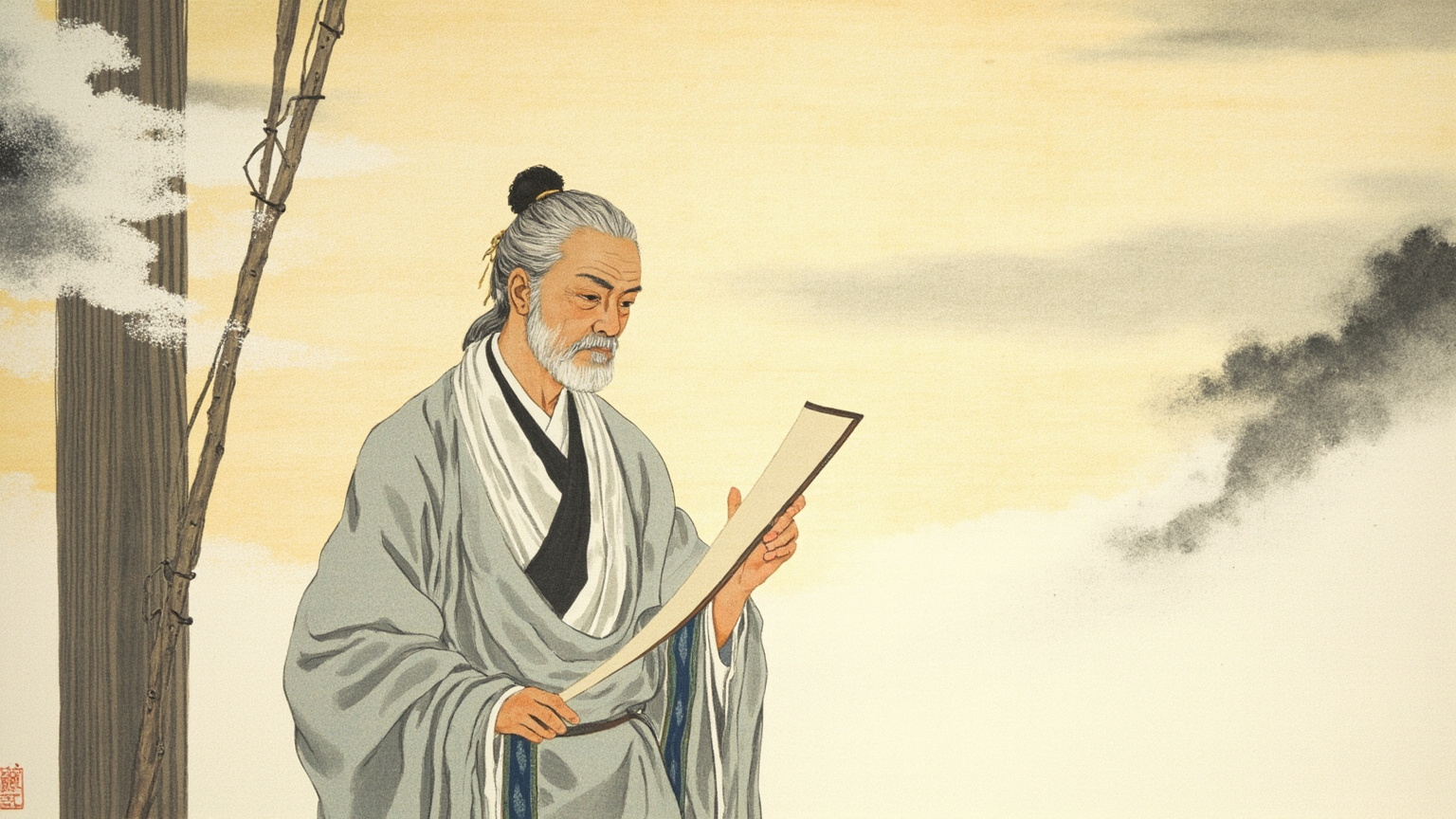
Whether one's karmic sins be heavy or light, whether the hour come early or late—those who merely say the nembutsu without cease shall all attain birth.
不论罪之轻重,不问时之早晚,唯相续念佛者,皆得往生。
金句 · 第四问答 · 临终之相
Traditional Buddhism treats death as a final exam: can you hold on to right mindfulness in your last moment? Shinran simply cancels the exam. He is not saying the moment of death does not matter. He is saying salvation was never riding on how well you perform in it. Think what that meant for a Kamakura-era farmer or fisherman — no last-minute cramming, no need to hold a posture on a sickbed. A lifetime of reciting the name was already enough.
Exchange Five: The Line About Killing a Thousand People
Chapter thirteen is the sharpest passage in the whole book. Yuien poses an extreme case: if you ordered me to kill a thousand people, would I do it? Shinran answers that whether a person can carry out any act at all is not decided by that person's own goodness or wickedness — it depends on whether the karma for it has already ripened. If you were fated to kill, you would kill. If you were fated not to, you would not.
Read it carefully and this is not an incitement, not a slogan, not a provocation. It is an argument by contradiction. Yuien forces Shinran into the most concrete ethical dilemma he can construct, and Shinran turns the blade straight onto the phrase my own power. If even something as external as whether I kill a thousand people is not mine to decide, how could salvation possibly be? Every calculation of self-power gets cut away in one stroke. Follow that logic all the way down, and it is the only way to reach the line that follows: even the good are reborn, how much more the wicked.
Exchange Six: How the Wicked Became the True Object of Salvation
Yuien asks again: how can the wicked possibly be reborn in the Pure Land? This is where Shinran states the doctrine directly: even the good are reborn, how much more the wicked. It is the most quoted line in the book, and the most misread. It is not a moral claim — it does not mean wickedness is fine because it makes rebirth easier. It is a theological claim. The wicked here are not the wicked of everyday speech. They are people who recognize they have no power to save themselves and have therefore let go of self-power entirely, throwing themselves on other-power. The good, by contrast, are the ones still clinging to their own good deeds, still trusting their own strength, still not fully willing to let go.
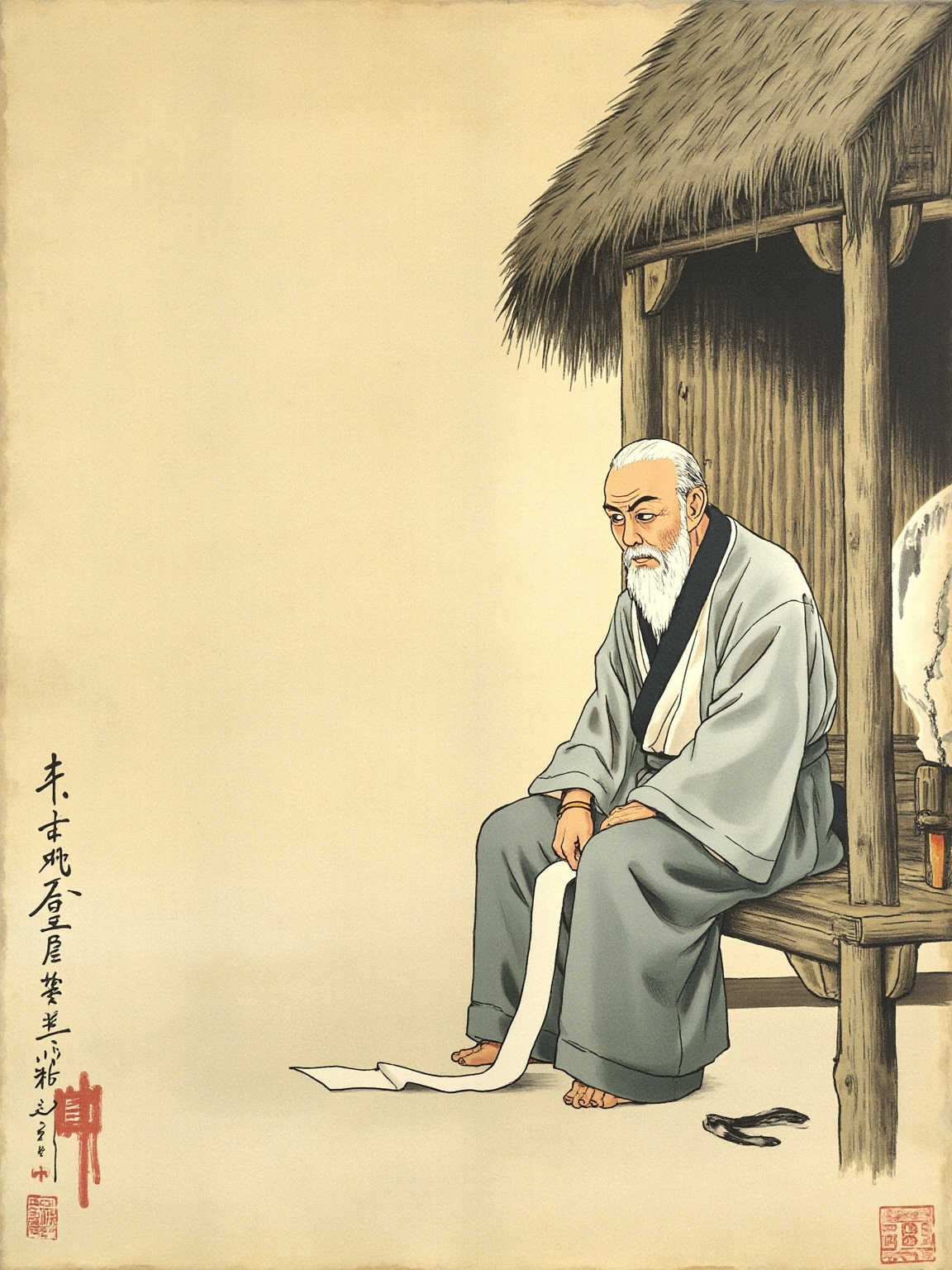
Since even the good man is born, how much more the evil man! For the good man merely relies on himself, while the evil man has nothing to rely upon at all.
善人尚且往生,何况恶人——善人犹恃一己之善,恶人则彻底无恃。
金句 · 第六问答 · 恶人正机
Shinran redefines good and wicked from the ground up. In ordinary usage the good person is the good man, the one who gets into heaven easily. Shinran says the opposite: the good are harder to save, because they still believe they have some ability of their own. The wicked are easier, because they have already given up on themselves. They know they cannot save themselves, and the only thing left to do is hand every last bit of strength to Amida. I stopped short the first time I read this. For centuries the default assumption among Buddhists everywhere had been that the good are reborn more easily. Shinran flips it with one line, and he does not even argue you into it — he just quietly swaps the dictionary definitions of the two words.
Exchange Seven: Gutoku Shinran, and Why the Book Is Called Tannishō
In the closing pages Shinran explains why he calls himself Gutoku Shinran, foolish and shaven-headed, placing himself among the ordinary sinners rather than above them. This is not false modesty. It is a flat admission that he has no power of his own — he is exactly as powerless as everyone else, and the only difference is that he says so. He then turns to pay homage to Vasubandhu, the Indian Yogācāra philosopher whose Treatise on Rebirth is one of the central texts behind the doctrine of other-power faith.
At the very end, Yuien explains where the title Tannishō comes from: it laments the divergences between what Shinran taught and what other schools teach, and it laments his own compassionate grief over that. The tan in the title is the grief of lamenting, not a sigh of exhaustion and not the tan of finding something strange. Shinran is grieving how many wrong readings of his teaching have spread, and how deep the misunderstanding runs. An old man of about eighty-five sits in a thatched hut while a man decades younger takes down every word he says, stroke by stroke. What he is grieving is simple: why do you still not understand me. That single lament carries more weight than any other line in the book.
What Actually Makes This Small Book Good
What makes it good is that it breaks two pieces of received wisdom in traditional Japanese Buddhism at once. First, that the good are reborn more easily — Shinran says no, the good have it harder, because they have not yet given up on themselves. Second, that salvation belongs to temples and to the ordained — Shinran says he himself is neither monk nor layman, and salvation belongs to anyone willing to admit powerlessness. Move those two stones and the whole foundation of Japanese Buddhism shifts. The temple-parish system of the Edo period, the lay Buddhist movements of modern Japan — trace either one back far enough and you land here.
What does that mean for a reader today? Here is one concrete scene. The next time something happens to you that you cannot control — losing a job, a breakup, an illness, the death of someone close — you will find you actually have very few resources to draw on in that moment. The whole wisdom of this small book is that it makes that powerlessness legitimate. Your powerlessness is not a failure. It is the one precondition for being caught by a power outside yourself. Even the good need to be caught; how much more the rest of us. It does not teach you to save yourself. It teaches you that it is fine not to.
Why the Summary Is Not the Same as Reading the Original
You now know Shinran was exiled. You know about the question over killing a thousand people. You know the definition behind the wicked as the true object of salvation. But you have not read that cup of wine in the hut. The tension in Yuien as he finally asks his hardest question, the pressure of Shinran's hand on his wrist, the sound of snow settling on the thatched roof outside — none of that lives in a list of facts. It lives in the rhythm of Yuien's own writing, in where he lets a sentence stop and start again. This is a short book of sayings, and the cost of its shortness is that you have to pause every few lines and actually think, instead of being pulled along by plot. That experience — a book so short it forces you to slow down — is not something a summary can give you. Open it yourself. Give it the time it takes to drink a cup of tea, and let Shinran sit across from you.
The good are harder to save — they have not yet given up on themselves. Shinran simply swapped the dictionary meanings of good and wicked.
Art Direction4 plates
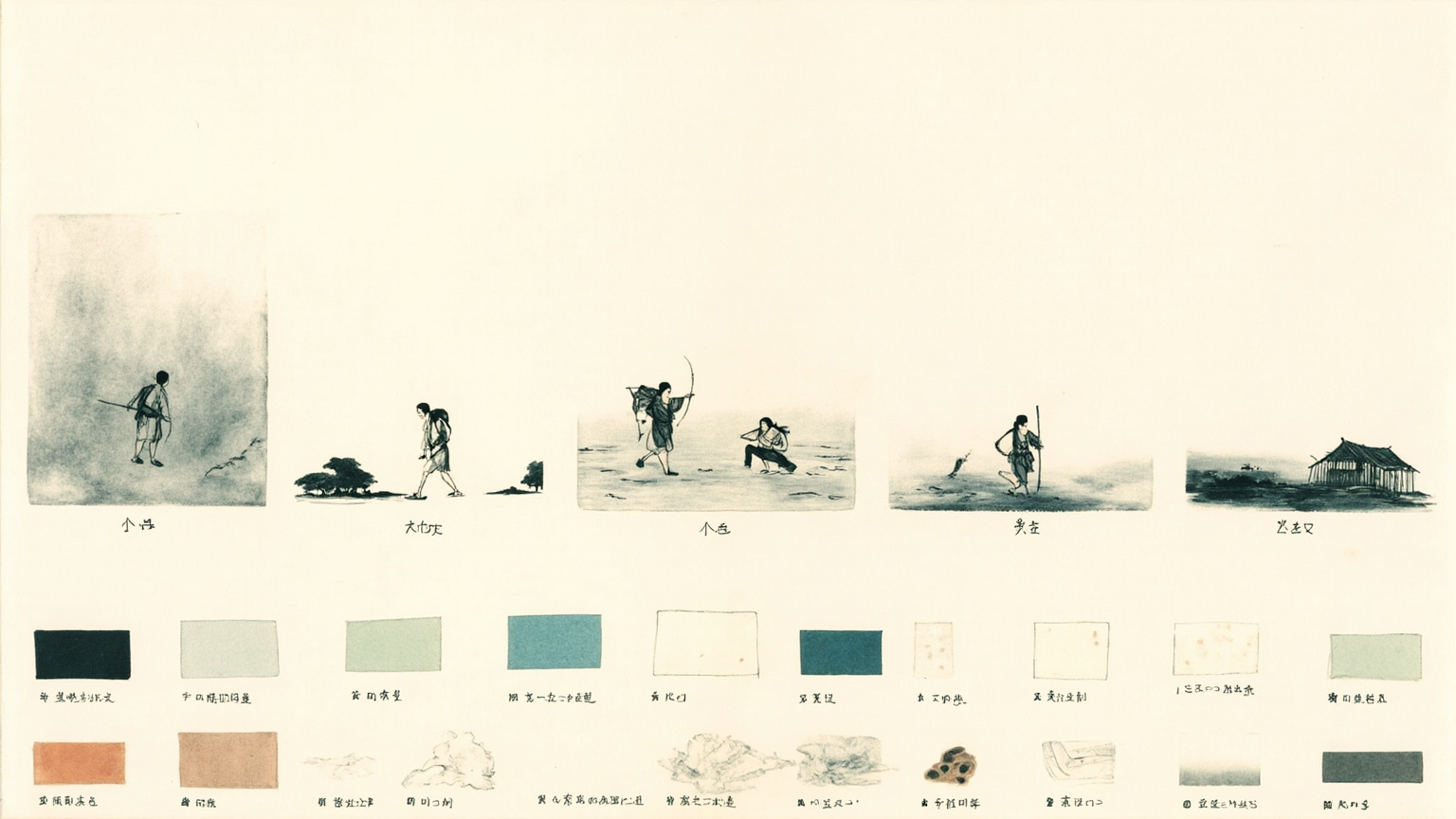
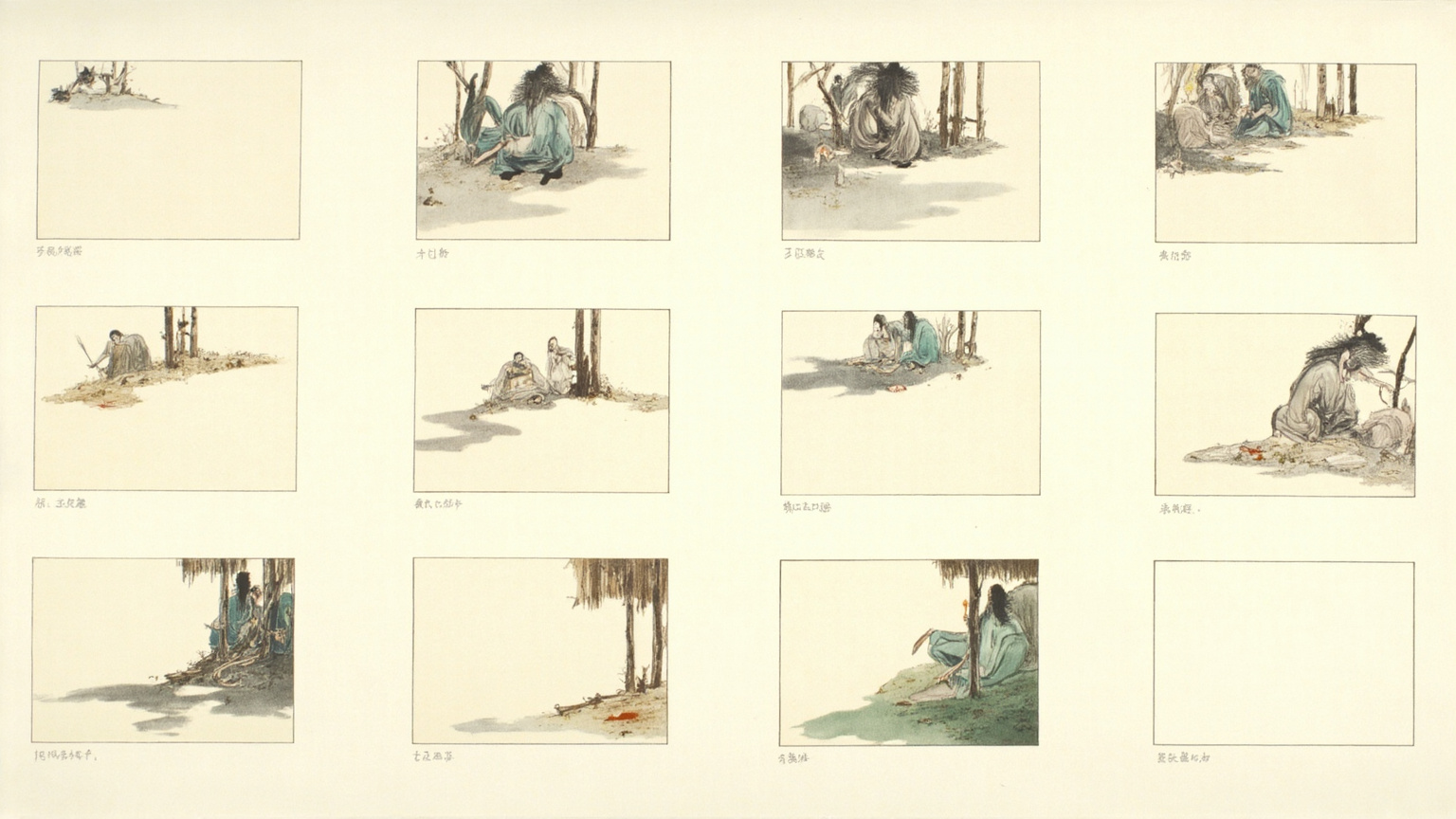
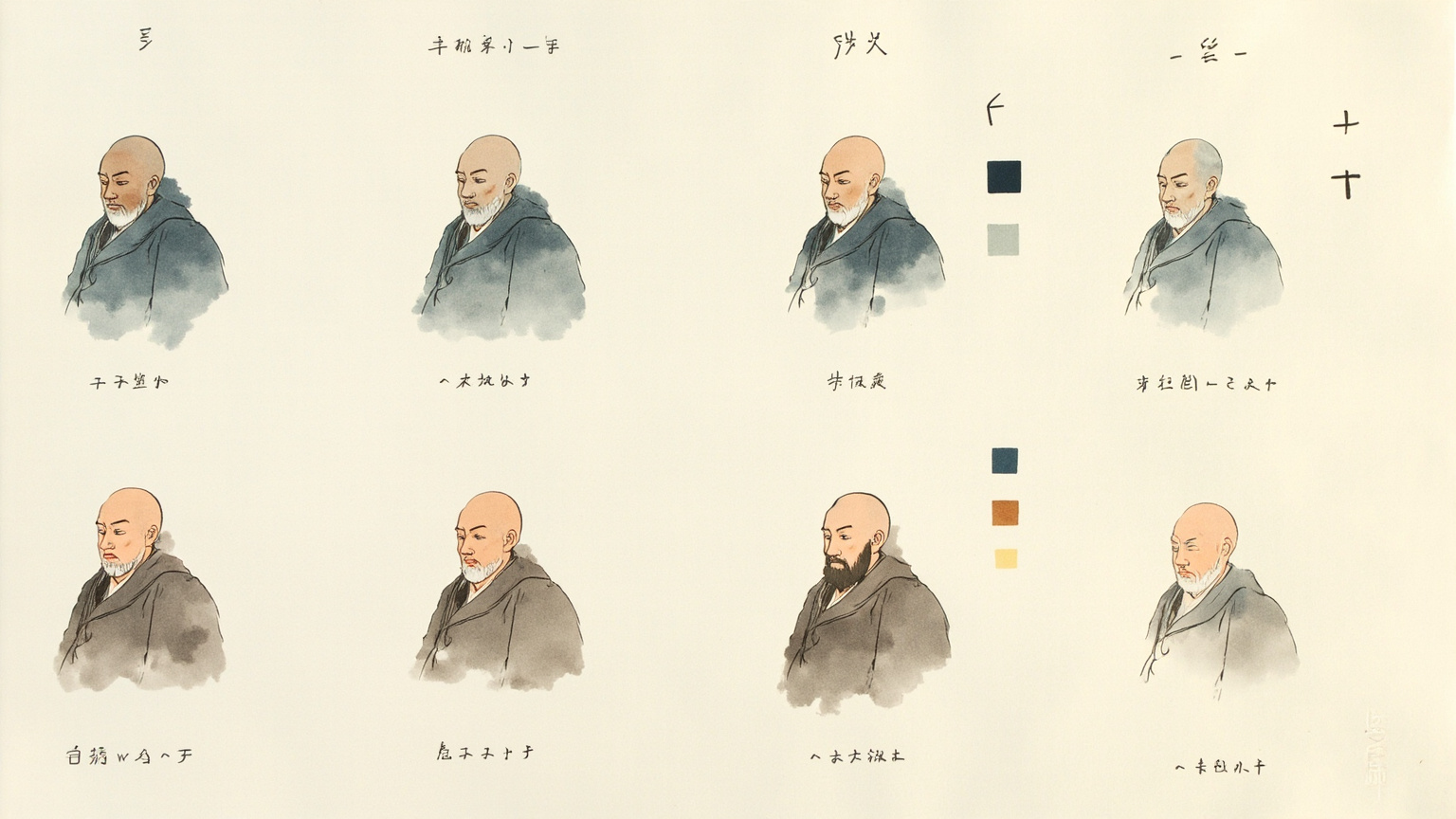
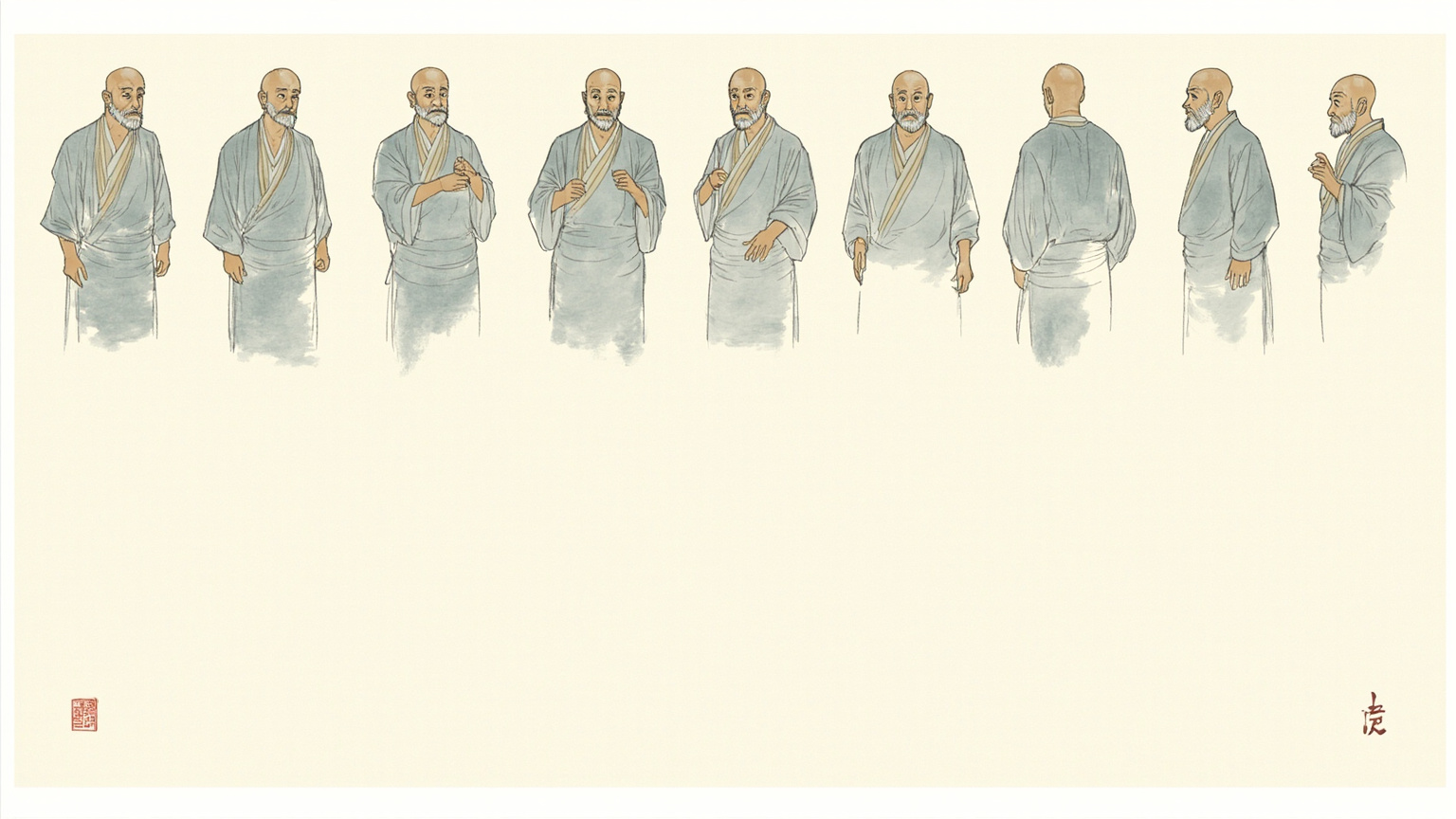
Before the guide was written, this book got a visual foundation — every illustration you just read grew out of it.