The most famous lecture in detective fiction was delivered in a study with snow falling outside
Text and illustrations produced by the pipeline
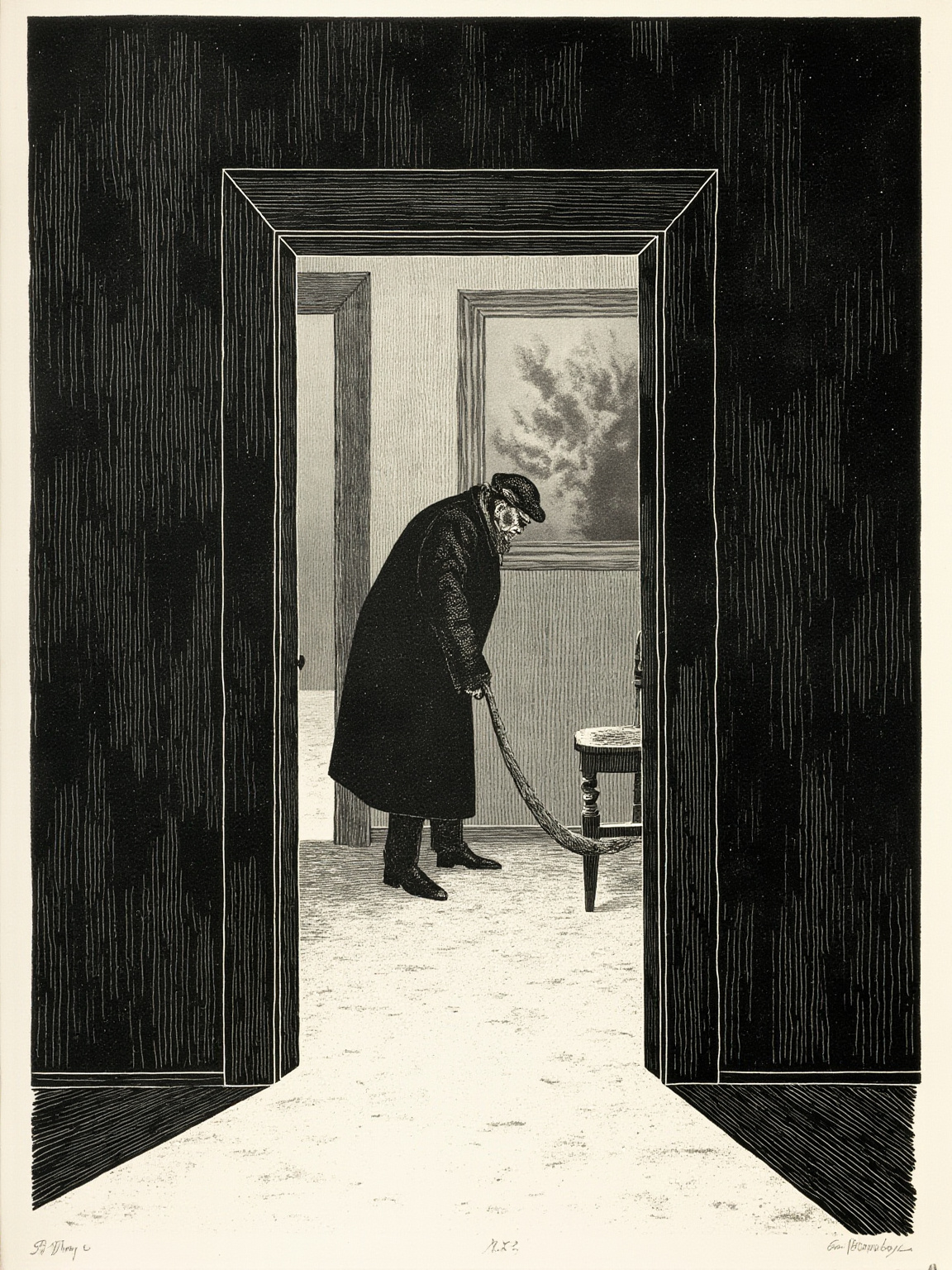
A door is locked from the inside. Outside it, the snow lies smooth as paper, without a single footprint. The man in the room is already dead. And before anyone went in, no one else came out. It is a scene the whole history of detective fiction keeps returning to — Carr set it down on a snowy night in 1935, and no one since has found a way around it.
The Three Coffins is the 1935 locked-room landmark by John Dickson Carr (1906 to 1977), one of the defining names of the American golden age. That same year the British edition ran under a more striking title, The Three Coffins, which is where the title circulating in Chinese today comes from. Among mystery readers it goes by a shorthand: the locked-room lecture book. Chapter seventeen holds the famous Locked Room Lecture, where the detective stops the story cold to teach the reader, laying out the basic approaches to this kind of trick in one systematic sweep. Every writer who has attempted a locked room since has had to reckon with it, and so has every writer who set out to refute it.
Before this book, the locked room was a trick, one flourish among many. After it, the locked room became a discipline with a lineage of its own. With one snowbound murder, Carr pushed it into the position of an archetype in the history of the genre.
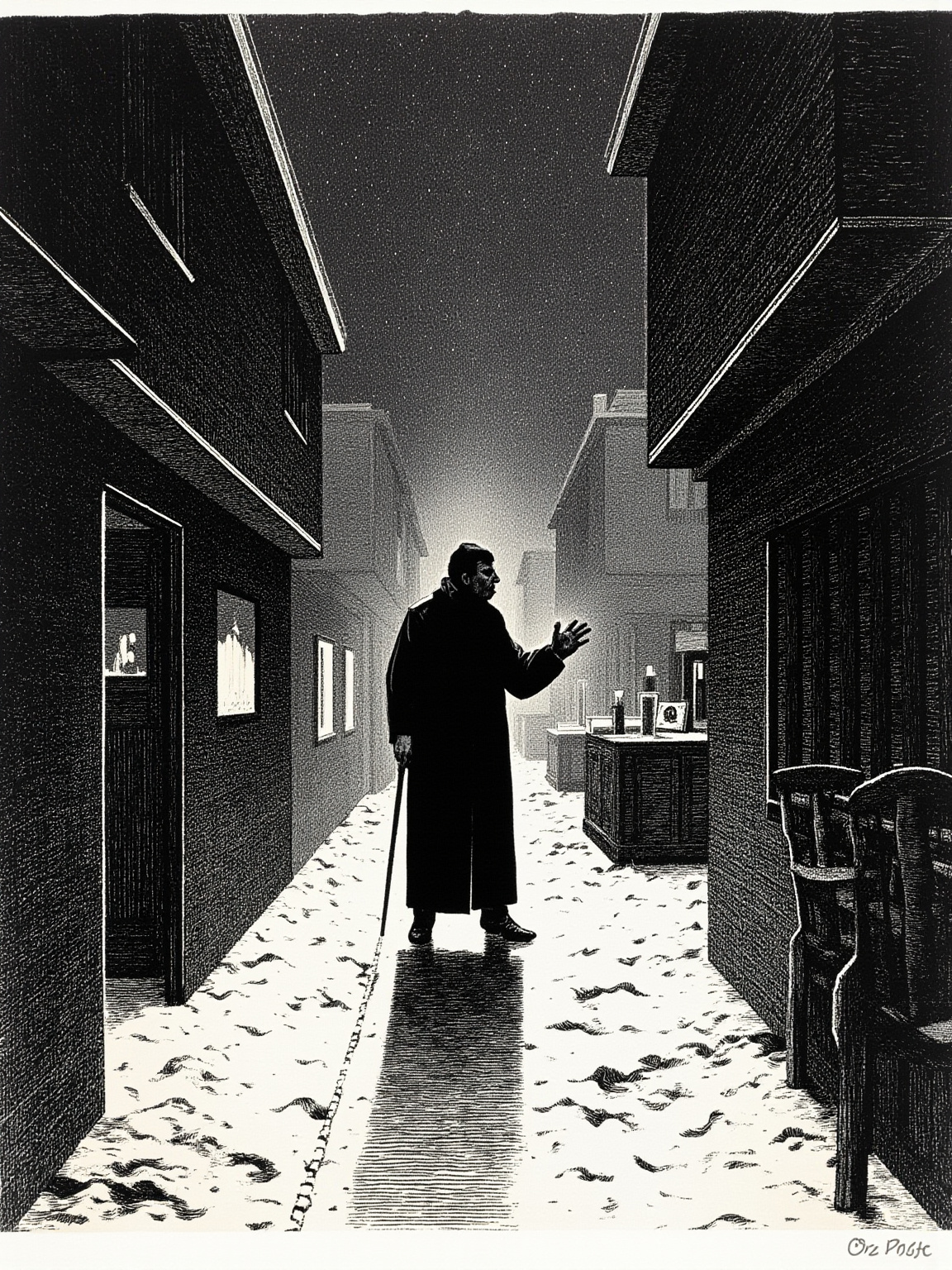
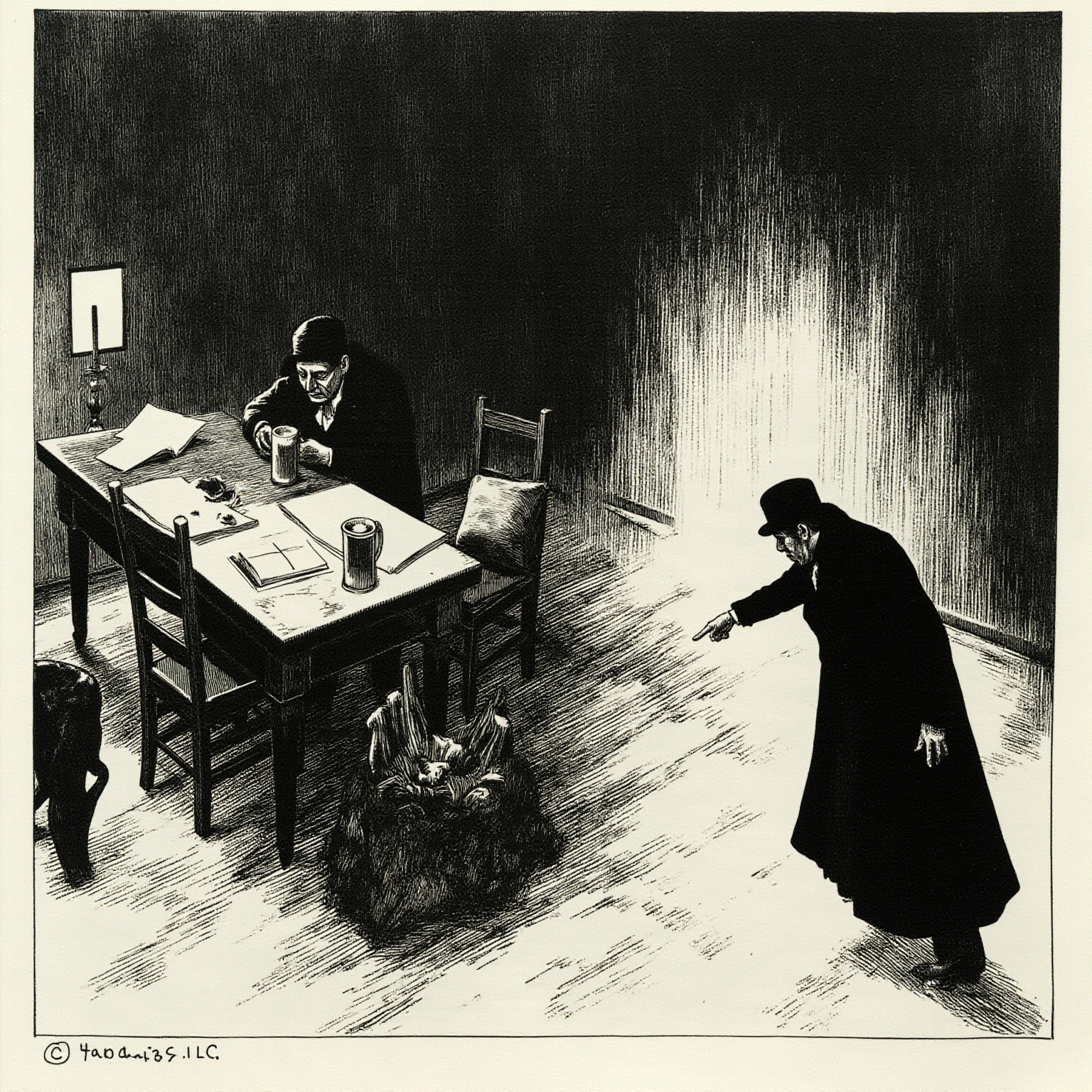
The real center of the book is Dr. Fell, a heavyset old Oxford-style scholar in horn-rimmed round glasses and a heavy black cape. He carries two walking sticks at once and can put away half a dozen beers sitting down, but what he actually spends without counting the cost, you soon realize, is the mind he uses to take diagrams apart. Beside him stands Superintendent Hadley of Scotland Yard, a serious, worn-down professional who has to turn a case into a solved case. His job in the story is to make sure the lecture in chapter seventeen is delivered to someone who genuinely needs the answer, not to a room of hobbyists.
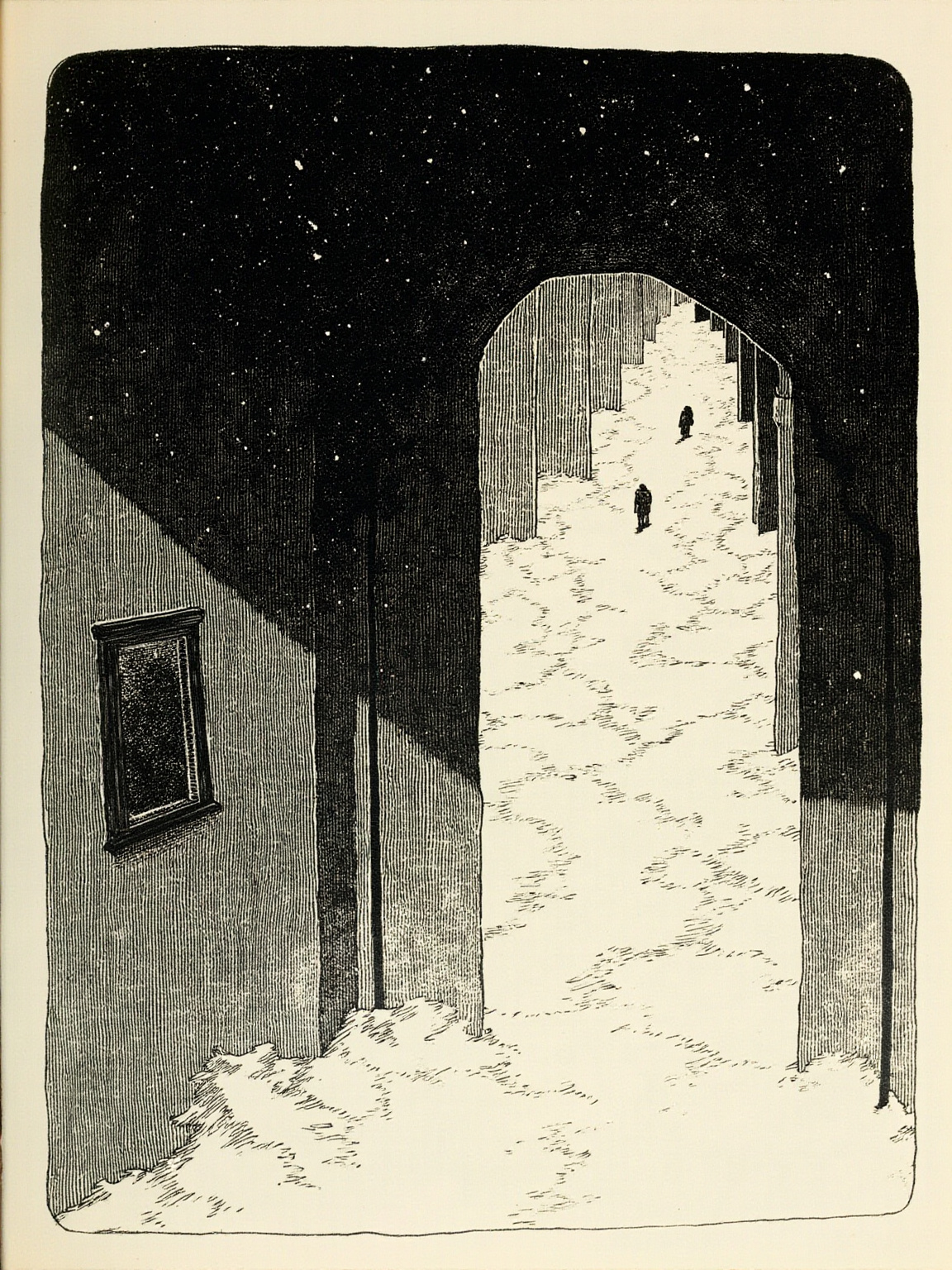
The case has two victims — Professor Charles Grimaud, and the man shot dead that same night in the middle of an empty street — and each of them carried history into that snowy night. Grimaud's past reaches back to Hungary, and it plays less like gothic set dressing than like an old wound still sounding. The vantage point that night is itself the classic locked-room composition: looking out a window at an empty, snow-covered street. The narrator is young Ted Rampole, a friend of Dr. Fell's. He is the eye we follow into that night, and he is also the student sitting in the pub for the lecture in chapter seventeen.


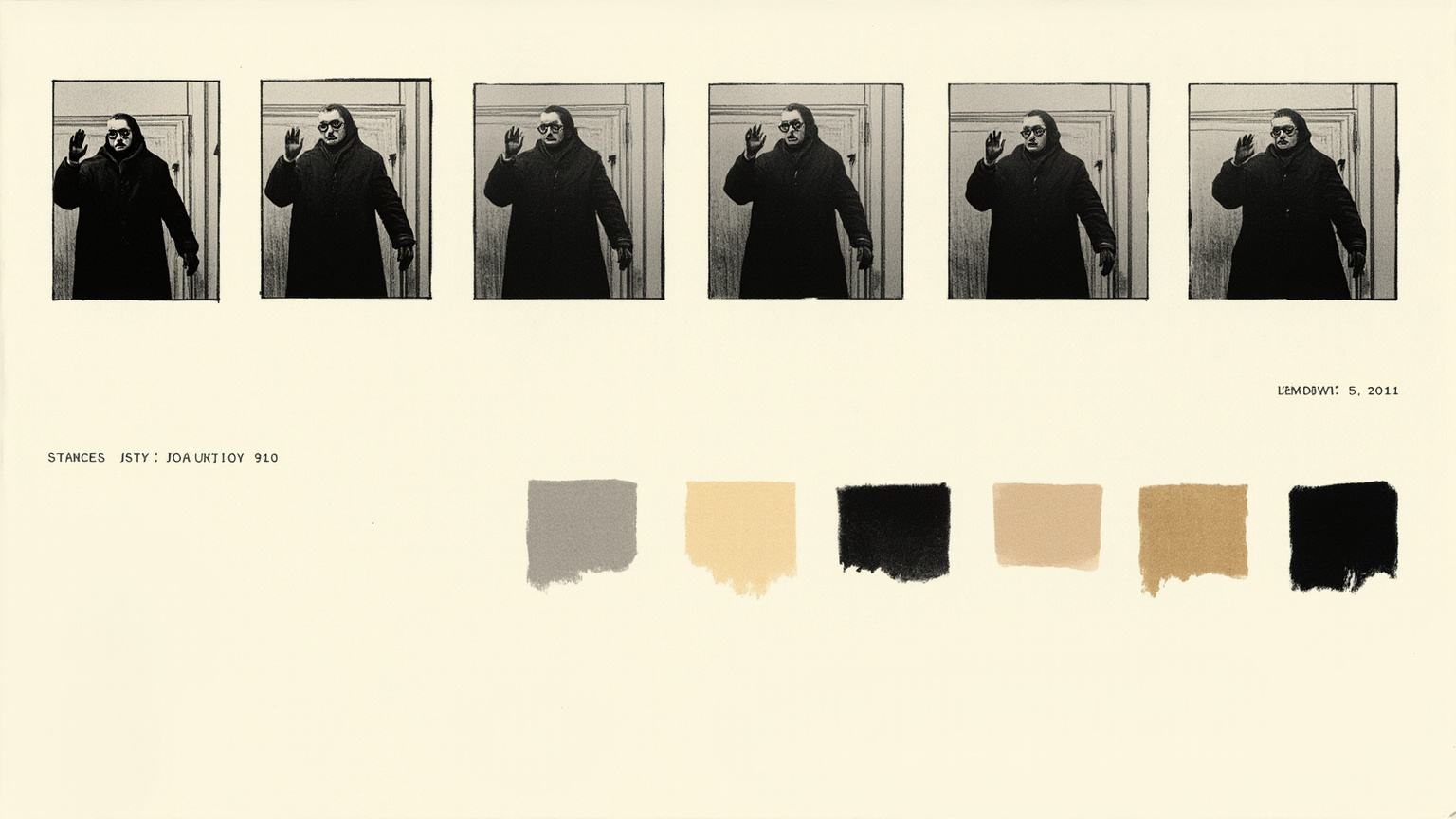
Before the guide was written, this book got a visual foundation — every illustration you just read grew out of it.
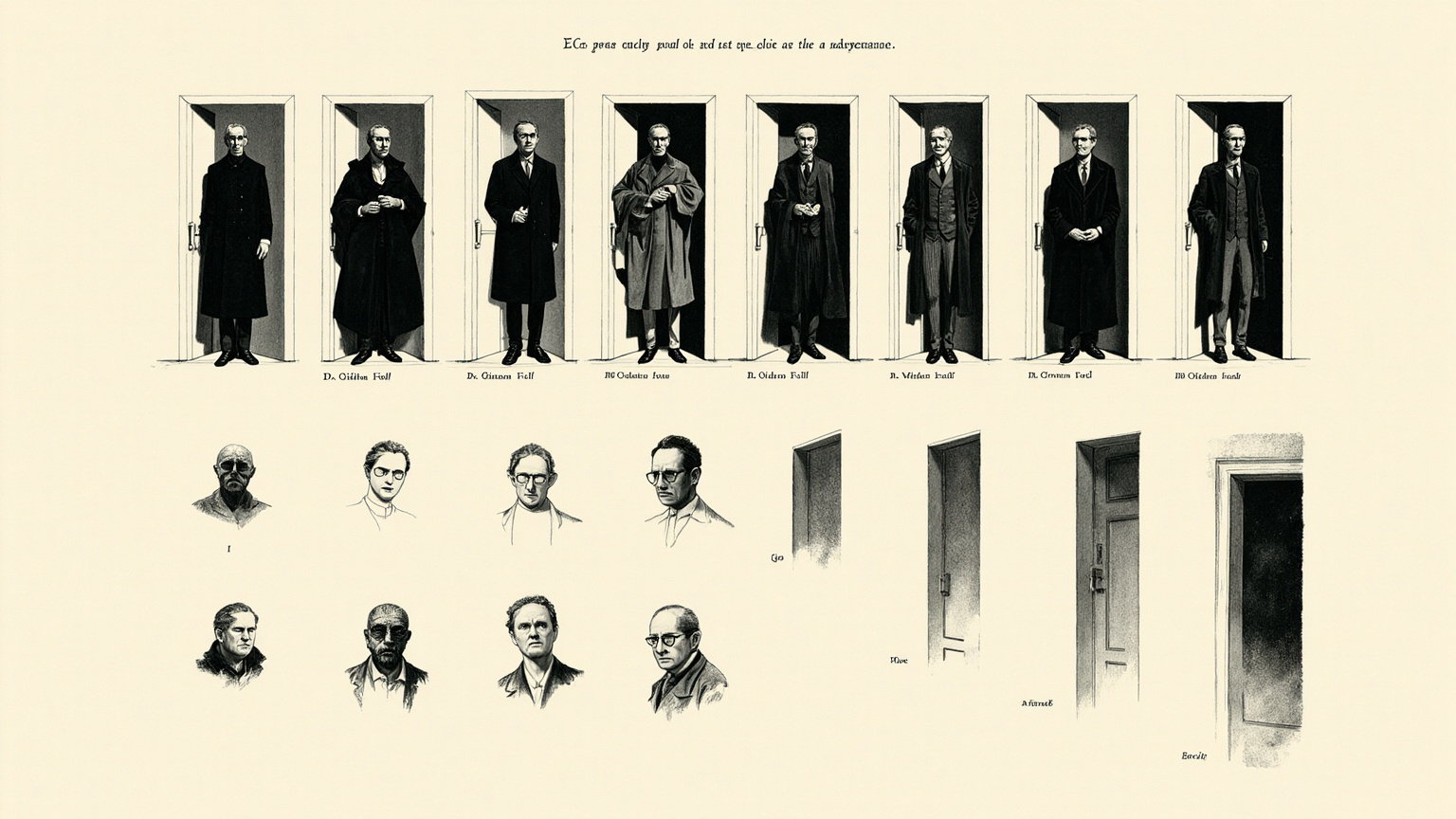
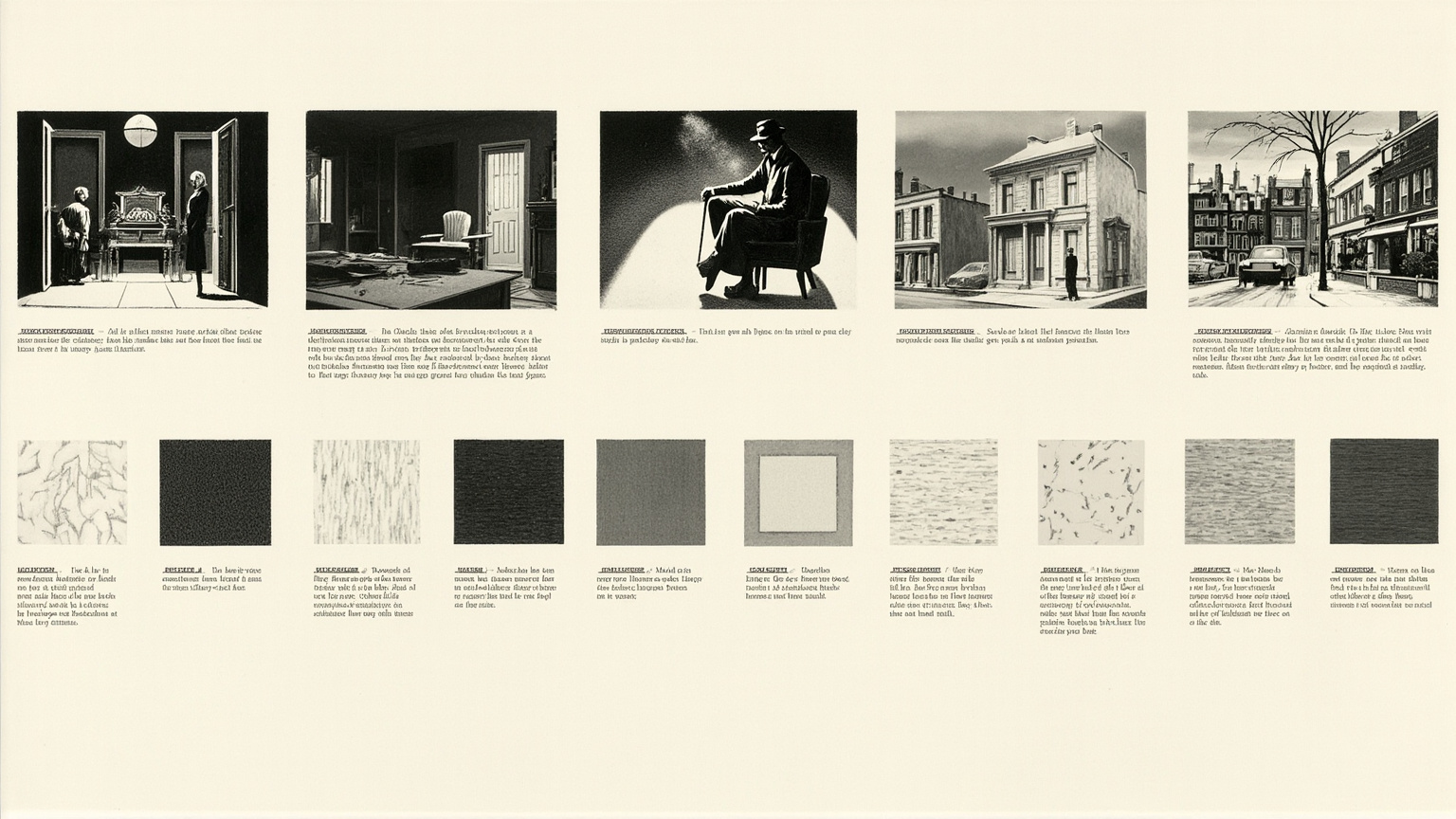
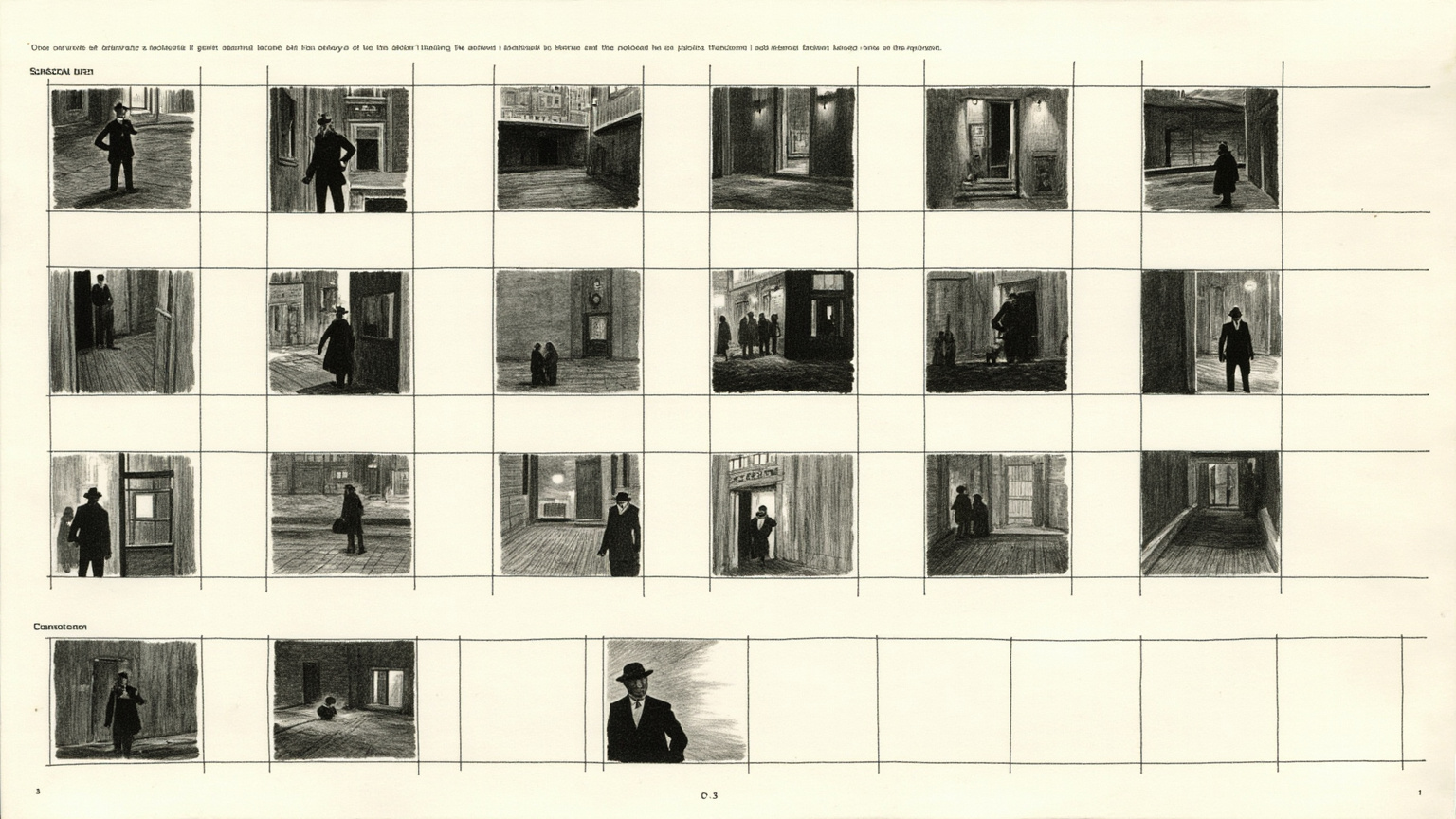
There is one more figure: the mysterious foreign magician Pierre Fley. His rooms, his props, his old photographs form the physical backdrop to the locked-room lecture. Carr puts someone who genuinely understands stage machinery on the scene so the reader notices something: the tricks that make a man vanish in a theater and the engineering behind a crime novel's mystery are, underneath, the same craft.
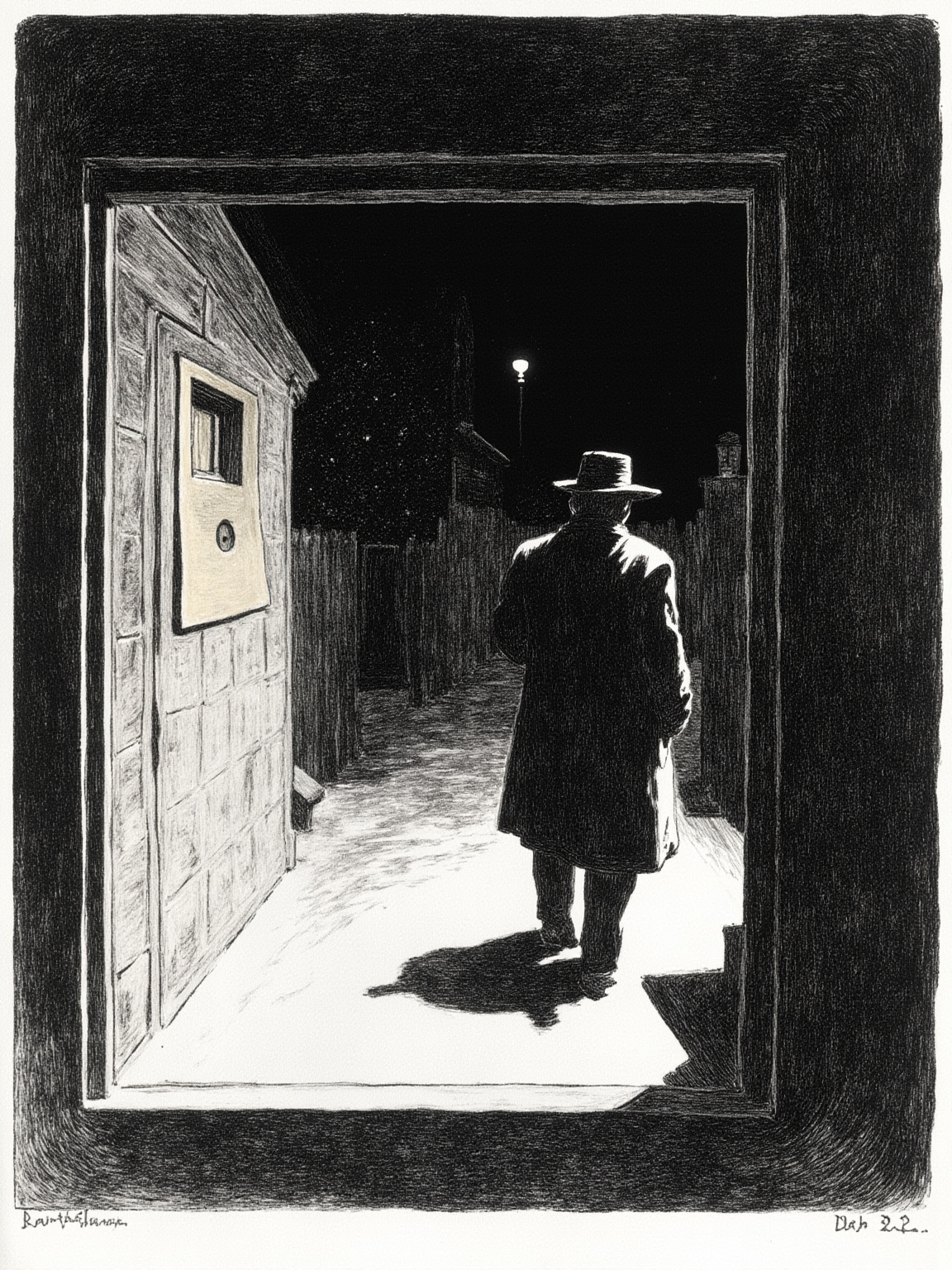
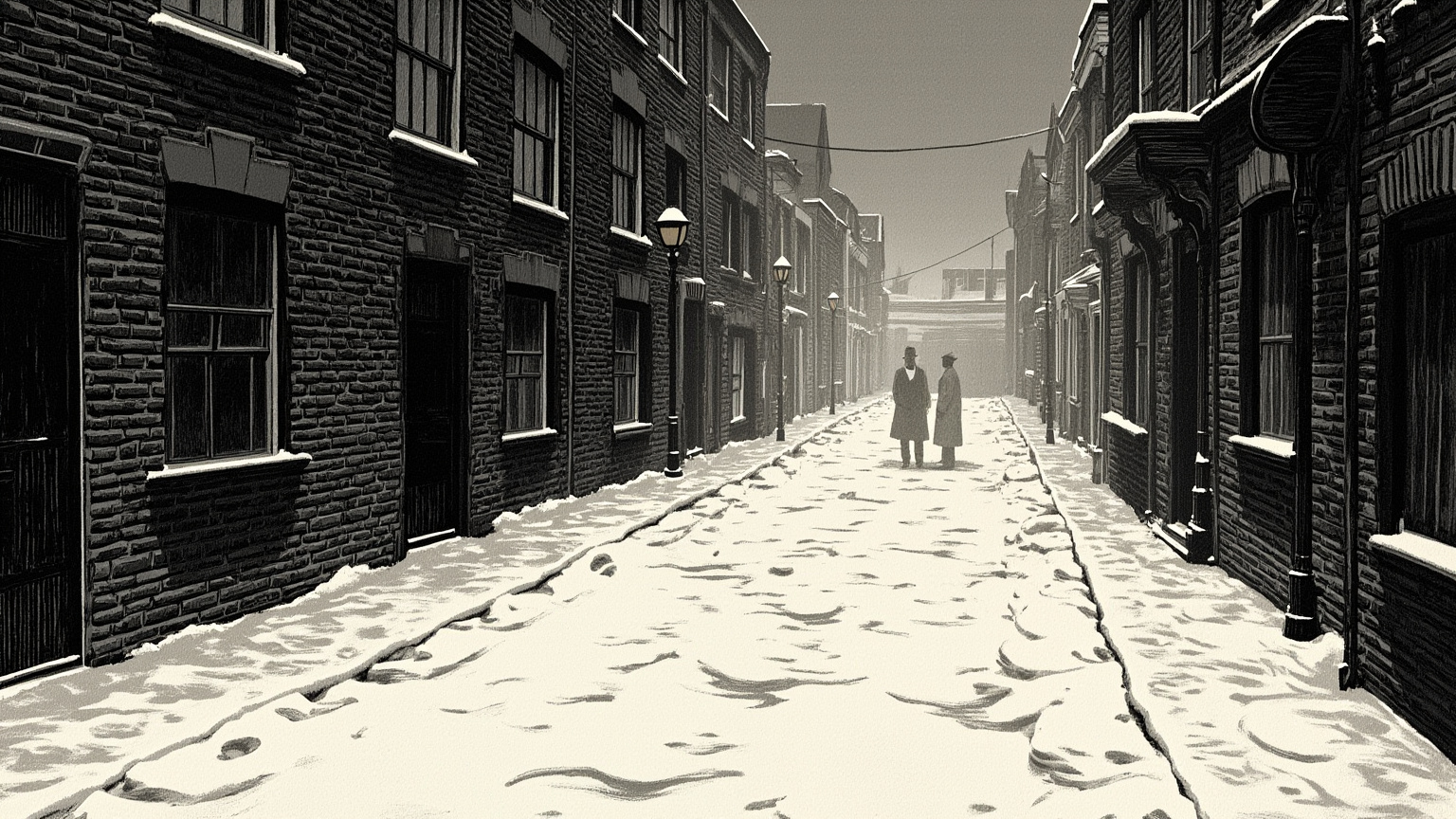
The story opens on a snowy night. In a Bloomsbury townhouse, an impossible crime happens in the study: the door is locked from the inside, the snow outside the window and the door shows no footprints at all, the man inside is killed, and the murderer vanishes in front of witnesses. The book's first image is that sheet of snow, smooth as paper and untouched by a single print.
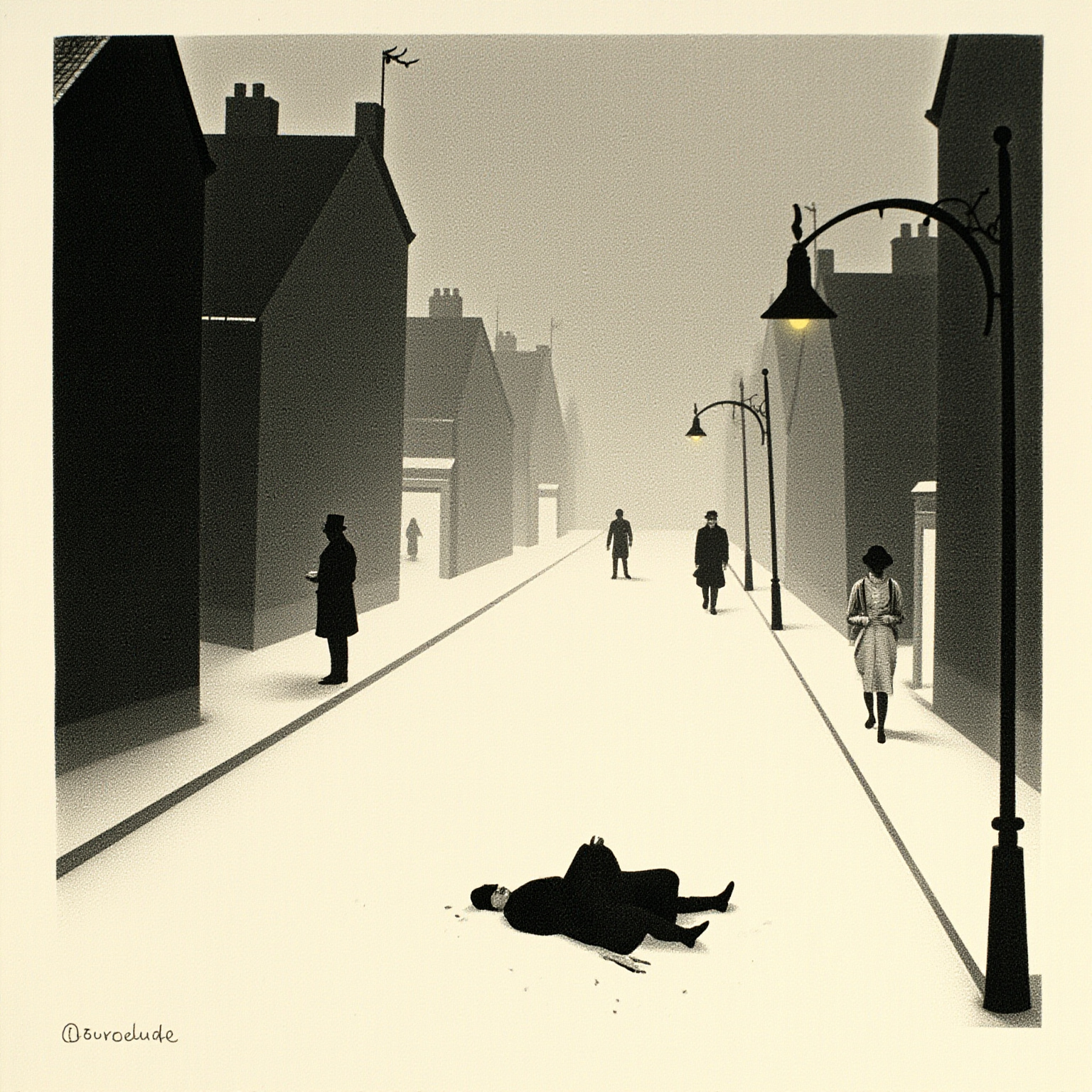
That is not the whole of the night. In the middle of a deserted street, a second victim is shot at close range while three witnesses watch from three different directions. Three people, three vantage points, covering the whole street between them — and no one sees a killer, no one sees a gun. It is a variation on the locked room: this time it is not a room that traps the murderer, it is an empty street that traps every witness's eyes.
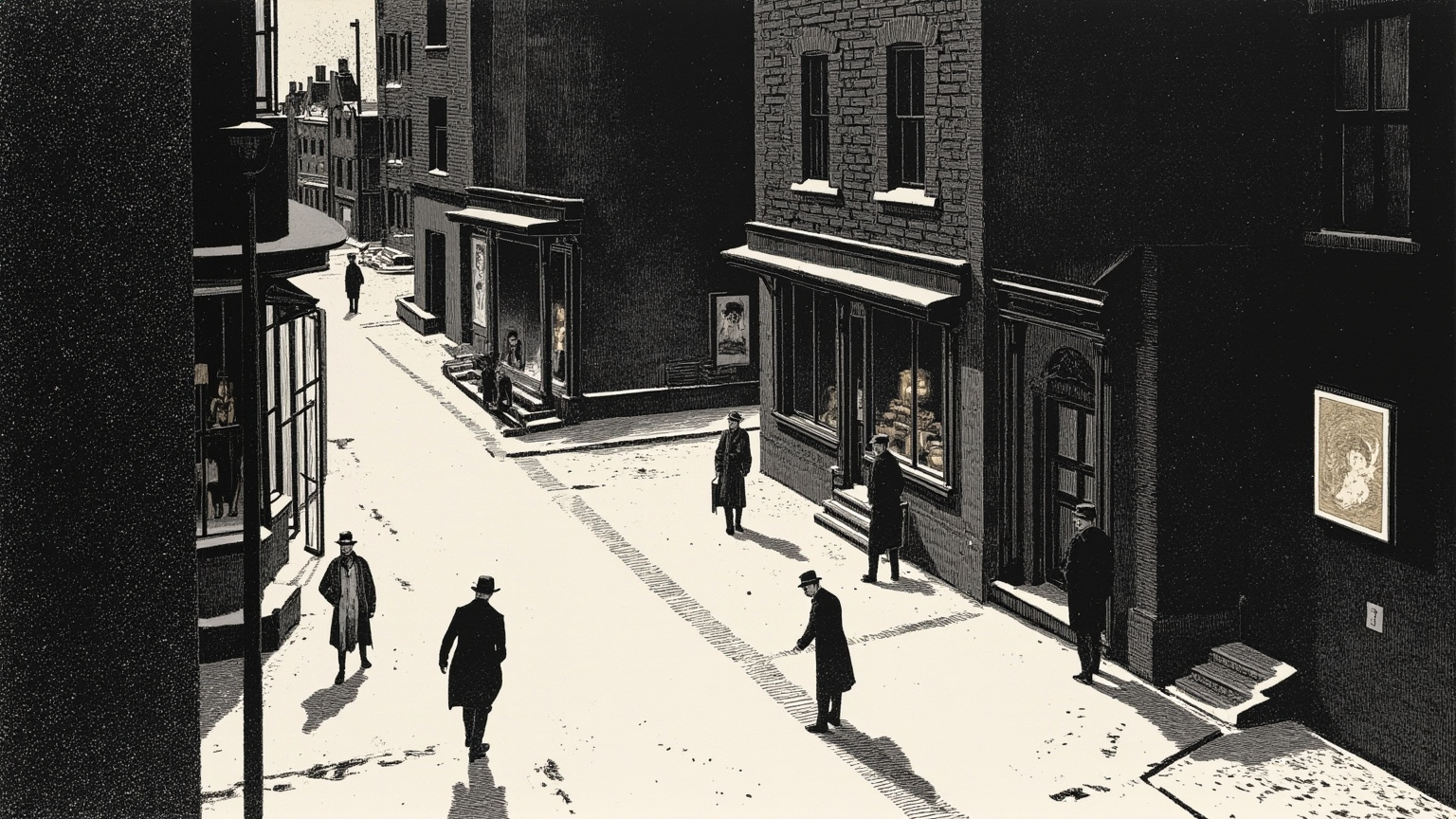
Scotland Yard steps in. Superintendent Hadley arrives with his forensic team, and Dr. Fell comes too. Between them they move from study to street, from witnesses to physical scene, from the fireplace to a painting on the wall that will later be swapped out. What makes this section suffocating is not the two bodies. It is the emptiness — the empty street, the empty room, the absence of anyone who walked through, touched, or entered.
The clues have mostly come together by now. Dr. Fell is in no hurry to announce an answer. Instead he suggests moving to a pub, a small place where foreigners gather, where the magician Fley is a regular, where old acquaintances from the stage-magic world sit alongside people willing to hear him out. Ted Rampole shuts the door, Dr. Fell plants himself in the middle of the room, and announces he is going to lecture on locked-room tricks. Chapter seventeen begins.
Dr. Fell takes his time laying out the taxonomy. Locked-room tricks run, broadly, along six lines. One: the person everyone thinks left the room never really did, and the locked door and window are fooling the eye. Two: the door and window look sealed, but a hidden mechanism lies behind them. Three: the killer gets in and out by rope, rope ladder, skis, or some other means that leaves no mark on the snow. Four: the killer was never inside at all — the bullet came through the window, the sound came from outside, and whether that door was locked never mattered. Five: the body's presence or absence is used to fake the timing of the crime. Six: the mechanism was set up before the murder and only discovered afterward. None of these six is Dr. Fell's invention, but the way he lays them out becomes, from this book on, the map everyone after him works from.
The first time I read this chapter, I went back and reread the one before it, and it hit me: the author is teaching a class while quietly filing the answer into one of its own boxes. That is the trick of this book. It appears to be laying out categories of locked-room mechanics, but the real solution is hidden in the correspondence between that taxonomy and the two murders on that snowy night.
Once the lecture ends, Dr. Fell takes the two murders apart again, this time running each through his own taxonomy. That is where the book's real solution surfaces — not as an answer to who did it, but as an answer to exactly how this kind of trick was built in this particular room. The reader slides with him from one box on the chart into the matching detail at the actual crime scene, and the click of recognition lands heavier than an ordinary reveal.
What The Three Coffins is really about is the impossible crime as a subject in its own right. A man killed in a room with one door, no footprints in the snow outside, and a murderer who vanishes in front of witnesses — this is the single most classic image the locked-room subgenre has. This book carries that image to the position of an archetype. Every locked-room writer after it works inside a discipline that already has rules, whether or not they admit it.
Underneath that, the book is unusually self-aware. Having the detective stop the story to lecture the reader, laying the basic approaches to this kind of trick out in a system, is itself a piece of metafiction: the book defines its genre while writing it. What you are reading is two cases, yes, but also an account of which pillars actually hold up the craft of the locked-room mystery. Later mystery writers who cite it, argue with it, or pay tribute to it are, at bottom, still arguing with that one lecture.
Carr also lays a quieter thread underneath: stage magic and criminal trickery share a structure. A magician who genuinely understands mechanical illusion turns up at the scene, and Dr. Fell's lecture sets aside space for exactly that kind of device. The point is to remind the reader that crime fiction and stage illusion run on the same engineering. That cross-disciplinary awareness means the puzzle here is elegant, and so is the ambition behind it.
What this guide can give you is a map: the outline of the two snowbound puzzles, the six categories from the chapter seventeen lecture, where the Hungarian shadow sits in the background. What it cannot give you is the feel of that London night — the fireplace baking a small ring of warmth into the room while cold gray fog holds the street beyond it, Dr. Fell with both walking sticks under one arm and his black cape swinging open at the pub door, the moment on the empty street when three witnesses are pinned to three directions and the emptiness of the whole street suddenly gains weight.
The book lays these images down one layer at a time, and no summary can lay them down for you. There is also the rarest pleasure detective fiction offers: listening to Dr. Fell lecture while realizing the author has already buried the answer inside that lecture, waiting for you to dig it out. That particular thrill — being led by the hand and resenting it at the same time — only comes from reading the actual pages. Knowing the plot in advance is still worth it, because once you finish the book, you find this snowy night colder by one more degree than the version you thought you knew.
The solution was never who did it. It was how this kind of trick gets built inside one particular room — and that is the moment the locked-room mystery got written into the textbook of its own genre.