
The Triumph of Death (Il Trionfo della Morte) · Companion Guide
死的胜利
没落贵族乔治奥将病态占有欲哲学化为宿命,一步步把爱人引向亚得里亚海悬崖,以一场谋杀-自杀完成他臆想的“爱之死”。
Opening scene: a man talks himself into pushing his lover off a cliff
On a cliff above the Adriatic, he takes her hand and tells her to look at the view. She has no idea what is about to happen. She will die without ever knowing.
This scene comes from the Italian novel The Triumph of Death. The title sounds like classical tragedy, but underneath it is a case file: the record of a man quietly repackaging a sexual love affair as a fate that can only be completed in death, then pushing her off the cliff with his own hands. The heroine is not a woman who dies for love. She is prey.
What kind of book this is: the swan song of Italian Decadence
Its author, Gabriele D'Annunzio, was one of the most controversial talents in late-nineteenth-century Italian letters. In 1894, in his early thirties, he published The Triumph of Death, the last novel in the trilogy known as the Novels of the Rose, following The Child of Pleasure and The Intruder. The trilogy is the high-water mark of Italian Decadence, a movement of aesthetes who treated sensation, sickness, death, and jealousy as raw material to be worked into art. D'Annunzio went on to be a poet, a soldier, and a politician, and lived to seventy-five, leaving behind a private life wilder than anything in his fiction. But The Triumph of Death is where he pushed diseased psychology furthest.
The book is remembered for turning a murder into something that feels inevitable, dressed across hundreds of pages in philosophy and aesthetics. The reader watches the killer plan every step and still can't quite hate him, because he has told it all as fate.
Characters and world: four family ghosts, one poisoned love affair
The protagonist, Giorgio Aurispa, comes from a fading Roman noble family, his head stocked with Schopenhauer's pessimism and the Liebestod from Wagner's Tristan and Isolde, the idea that love only completes itself in death. He loves Ippolita by turning her into a screen for his own darkness: love so total he wants to swallow her whole, and when he can't, to destroy her instead. Ippolita is a married woman, sensuous and given over to desire, trapped in the affair and never quite seeing how far gone the man across from her already is.
The story's real protagonists aren't the two lovers, they're three dead men. Giorgio's uncle Demetrio was the elder he revered, and he shot himself before the novel even opens; the fact sits in Giorgio's head like a thorn, the psychological landmine the whole book is built around. Giorgio's father is a different matter: he burned through the family fortune, abandoned his wife to chase mistresses, and dragged the whole family into poverty. That is the real root of Giorgio's later, furious break with his family. Two father figures, one dead and one living: one a ghost he worships, the other a man he curses.
Plot: how the shadow of death closes in, step by step
The story opens on a street in Rome. Giorgio and Ippolita watch a stranger take his own life in front of them, and from that moment death spreads through the story like ink dropped in water, impossible to pull back out. Their love changes taste from that second on: what began as desire becomes a rehearsal for death, run over and over.
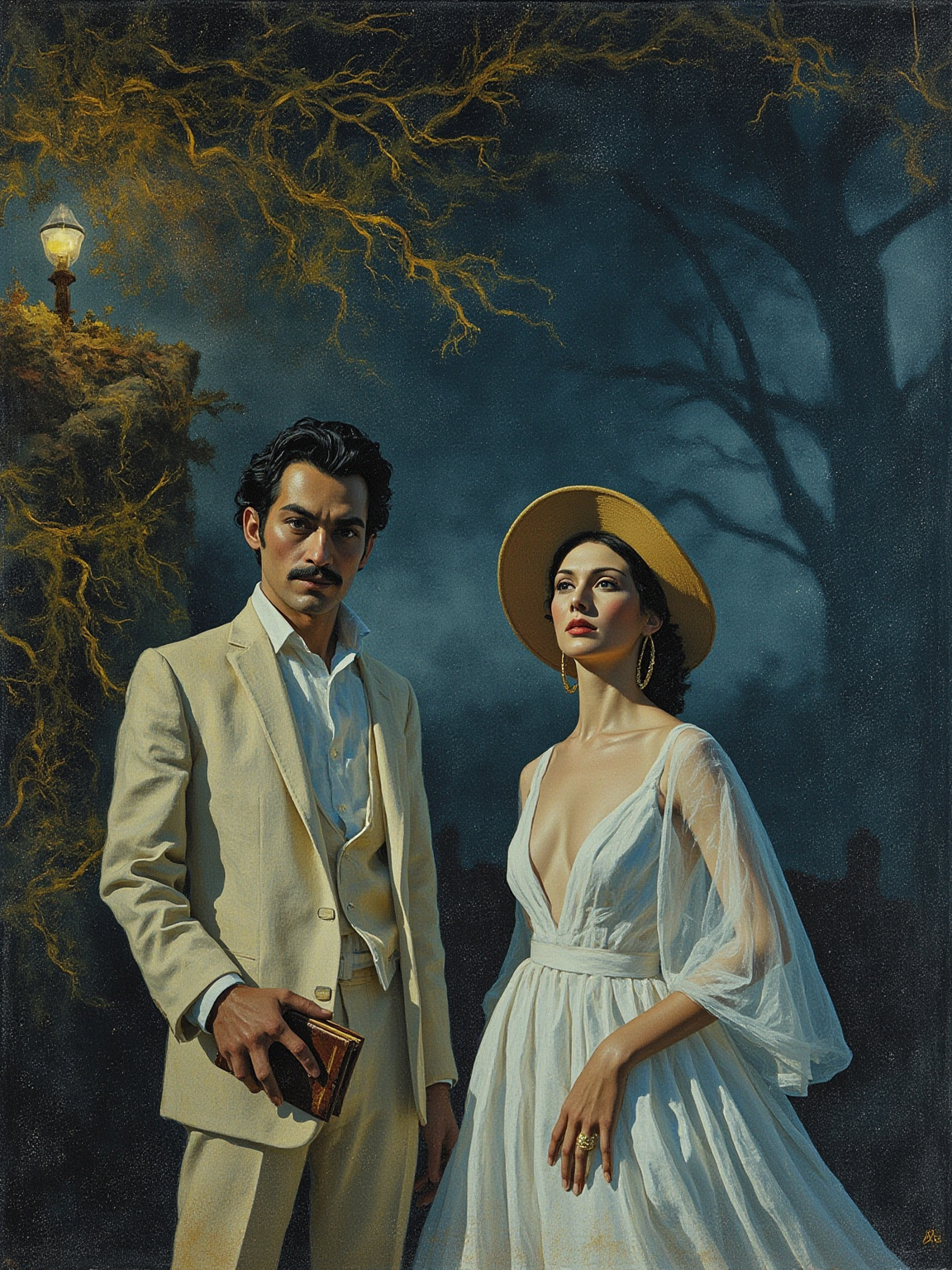
"Did you believe, in your heart, that we should reach our second anniversary?"
你心底里,可曾相信我们能挨到两周年纪念日?
原文金句
Looking for relief, they flee to Orvieto in Umbria, then on to Lake Albano. The change of scenery does nothing. In the square in front of Orvieto's cathedral, Ippolita's beauty draws a stranger's gaze and Giorgio erupts on the spot: jealousy burning through him, a slap across her face, then remorse so sharp he kneels for forgiveness, and then he does it again. Among the lake views of Albano, they ride a carriage through the town, and inside it he keeps tormenting her, and himself. The escape turns into a journey chasing death instead of outrunning it.
A telegram arrives from his mother in Guardiagrele, a mountain village in Abruzzo, and Giorgio goes home. The village is thick with superstition and with the shadow of his dead uncle Demetrio, the one man in the family he ever respected, and the one who put a gun to his own head. Giorgio keeps returning to that wound in memory, pressing on it until it goes deeper. The village witch, the women murmuring behind his back, the mildewed rooms of the old house: all of it feeds the fire.
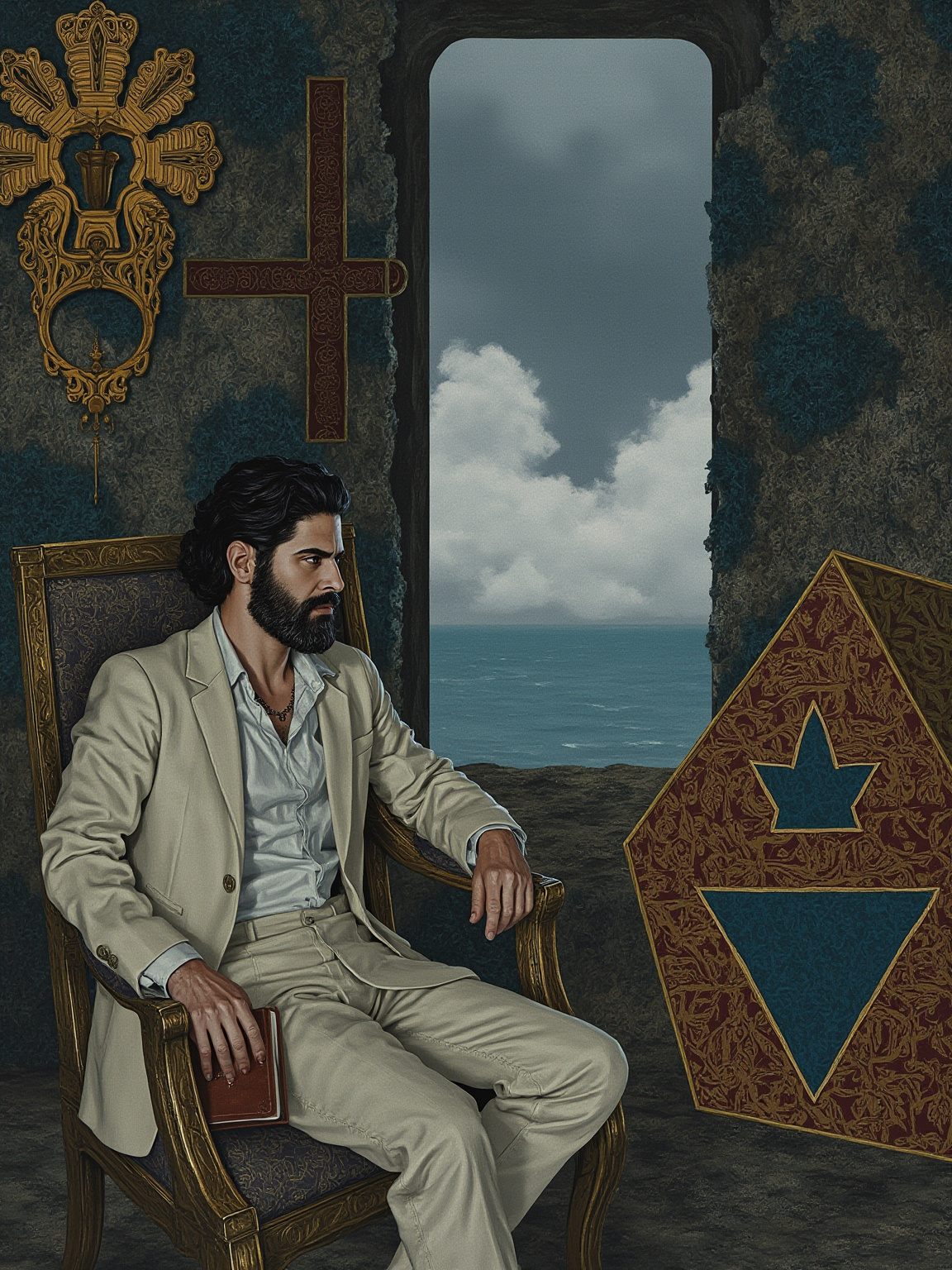
Since the day of his corporeal death I have felt his presence every minute.
自他肉身死去的那天起,我无时无刻不感觉到他的在场。
原文金句
The truth surfaces on this trip home: his mother's long hardship traces straight back to his father, who gambled away the family fortune years ago and ran off with a mistress. Giorgio had spent years blurring all of this under the vague phrase family decline; now it lands on him piece by piece, fully named. He writes his father a poisonous letter, cursing him, declaring the break final, and leaves the village without looking back.
The Adriatic town of San Vito Chietino becomes their hiding place. Giorgio buys an isolated house on the cliffs, where the window opens onto a grey-blue sea. They shut the door and live cut off from the world. Giorgio has by now fully absorbed his uncle's death and Wagner's Liebestod into a working philosophy: love, if it is total, has to die at its peak. He listens to the prelude of Tristan and Isolde until he loses himself in it, and Ippolita, lying beside him, feels him drifting further away.
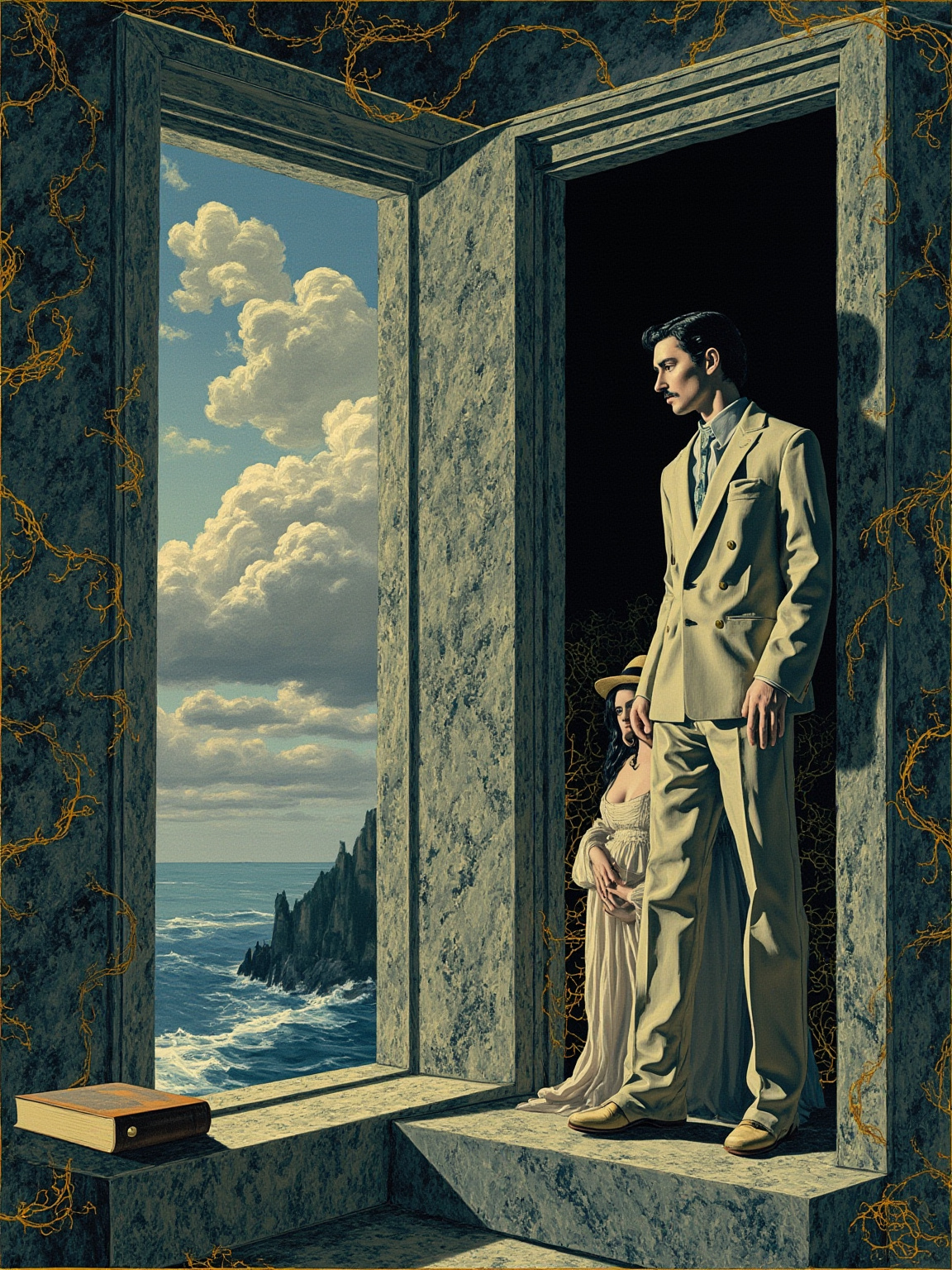
George thought of Othello's words: "I had rather be a toad, and live upon the vapour of a dungeon, than keep a corner in the thing I love for others' uses."
我宁可做一只癞蛤蟆,在地牢的湿气里过活,也不愿在我心爱之物的角落里,容他人染指。
原文金句
This is where the sickness ferments. Giorgio's feelings toward Ippolita's body run to attachment and revulsion at once: he kisses her over and over, then shoves her away; he is jealous of every breath she takes, then holds her through the night until morning. His diary starts filling with a plan only he can read, working the Liebestod philosophy, Wagner's music, and the height of the cliff into something like a justification for murder. Ippolita is never told any of it. As far as she knows, she is on holiday.
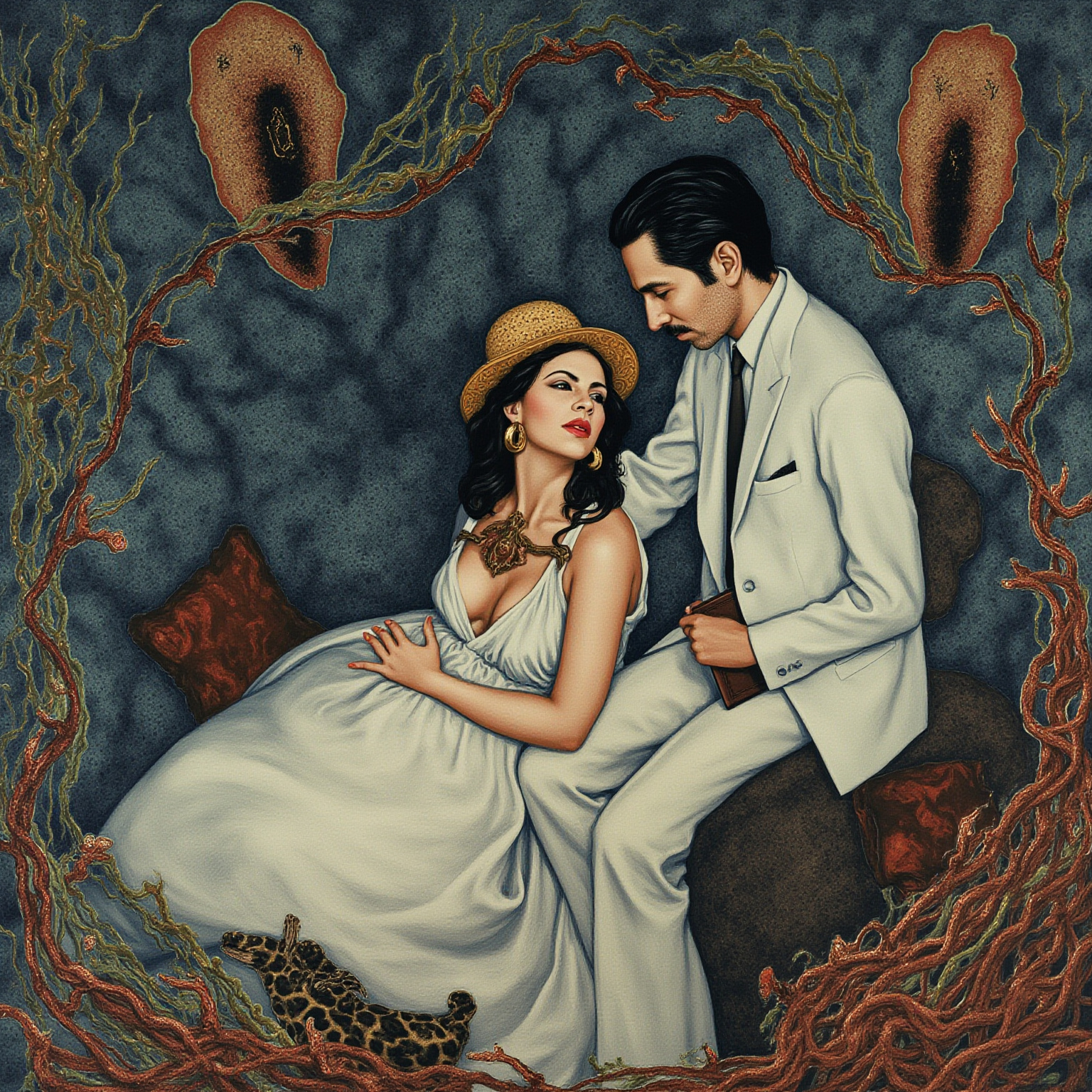
"Death is not as mysterious as this remnant of life in this human ruin,"
死亡,并不比这人类废墟中残存的生命更为神秘。
原文金句
The novel's last scene takes place on the sea cliffs. Giorgio suggests they go look at the view and walks Ippolita up the path to the edge. The wind is strong. She does not know it is the last walk she will take. He lunges, and they go over together, a murder-suicide Ippolita never sees coming, even as it happens. D'Annunzio does not stage it as a grand death for love. He stages it as a debt finally called in: philosophy, jealousy, possessiveness, and a family he can never go back to, all arriving at once, in this single second.
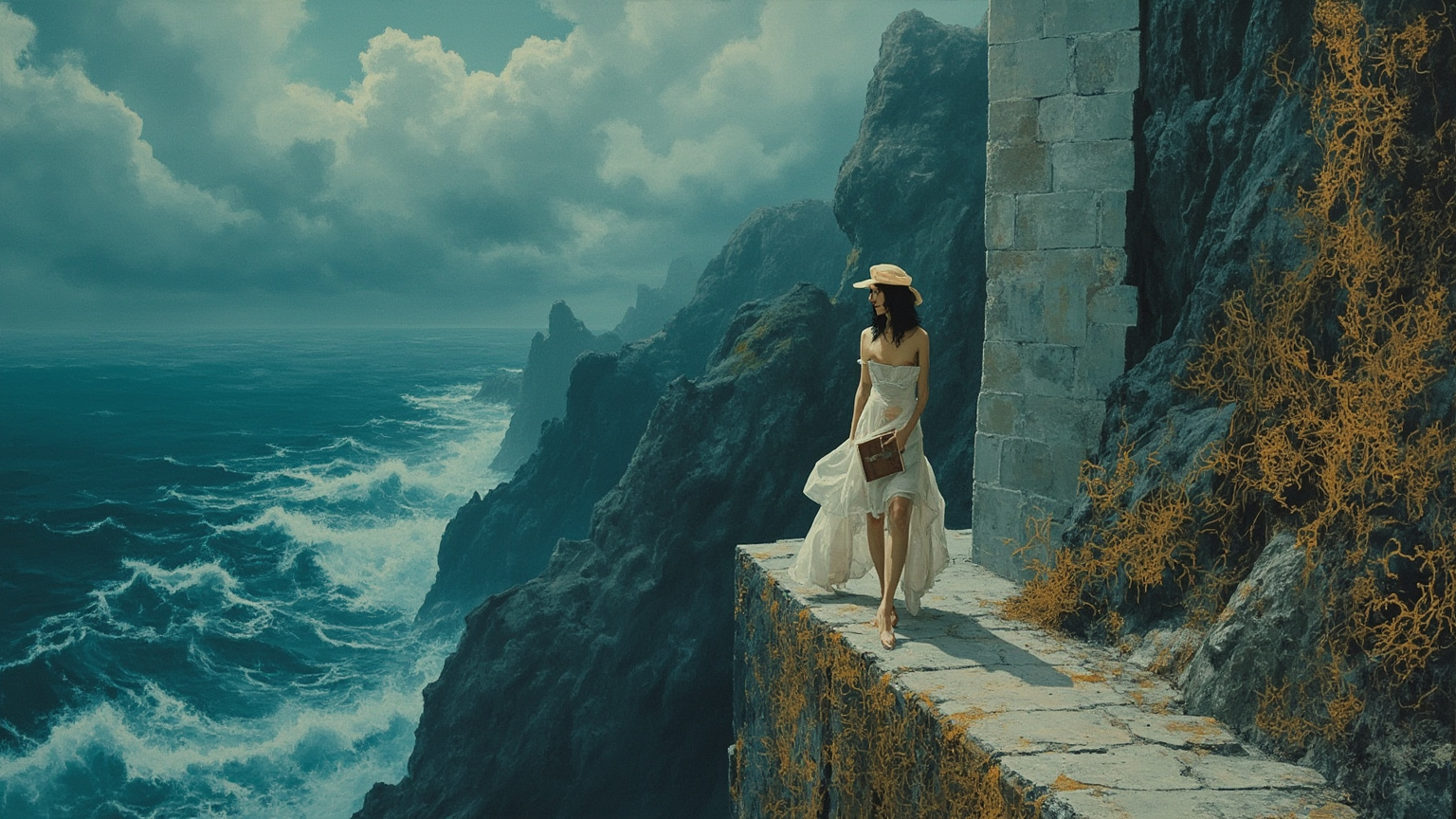
I know you fear me, but the desire I arouse in you is stronger than your terror.
我知道你怕我,但我在你身上唤醒的欲望,胜过你的恐惧。
原文金句
Craft: dressing up a murder as philosophy
D'Annunzio's cruelest trick is to hand the entire narrative over to the killer's point of view. The reader is forced inside Giorgio's head, listening to him justify each step of the plan in the language of Wagner and Schopenhauer. By the time the cliff scene arrives, the reader has spent hundreds of pages thinking alongside him, and only looking back does it become clear that every line about love taken to its limit, from chapter one on, was laying a brick toward murder.
Sensory writing is D'Annunzio's other great skill. The Mediterranean light, the fog over the Abruzzo hills, the waves against the Adriatic cliffs, all of it written so vividly you can smell the salt. But the beauty is not decoration. It is an accomplice: it dresses up the killer's scene as sacred ground for dying together, and it draws the reader into the same daze, if only for a few seconds.
Theme: is loving someone completely the same as destroying them?
The question The Triumph of Death is really asking is whether turning another person into a screen for your own darkness counts as love at all. Giorgio's possessiveness toward Ippolita wears the costume of devotion, but it is devotion so complete he decides where her life ends. D'Annunzio passes no moral judgment; he simply lays this psychology out across hundreds of pages and lets the reader's stomach turn on its own. The book is an early template for the psychological thriller: it was making audiences understand the killer long before Hitchcock made that his signature move.
Read today, the book still stings. Anyone who has been on either side of control disguised as care will feel a chill reading Giorgio's monologues. D'Annunzio was writing about a decadent nobleman at the end of the nineteenth century, but what he caught was a poison in human feeling that does not stay in its century.
He is not killing her. He is completing a philosophy. That is what makes this book so chilling.
Why you should still read the novel, even knowing how it ends
A companion piece can only tell you what happens in that second on the cliff. It cannot tell you how D'Annunzio spends hundreds of pages of sensation, dialogue, and interior monologue simmering that second into inevitability. The suffocating feel of being trapped inside Giorgio's head, Ippolita's sensuality and fragility under the Mediterranean light, the way Schopenhauer and Wagner turn into murder weapons inside one man's mind: none of that reaches you until you open the actual text.
The subtler gift is D'Annunzio's prose itself. The Arthur Hornblow translation keeps most of the fevered, ornate rhetoric of the Italian original intact. You do not read it to learn psychology. You read it to watch language pushed to its limit: lush, nauseating, and intoxicating all at once, a combination that turns your stomach and will not let you put the book down.
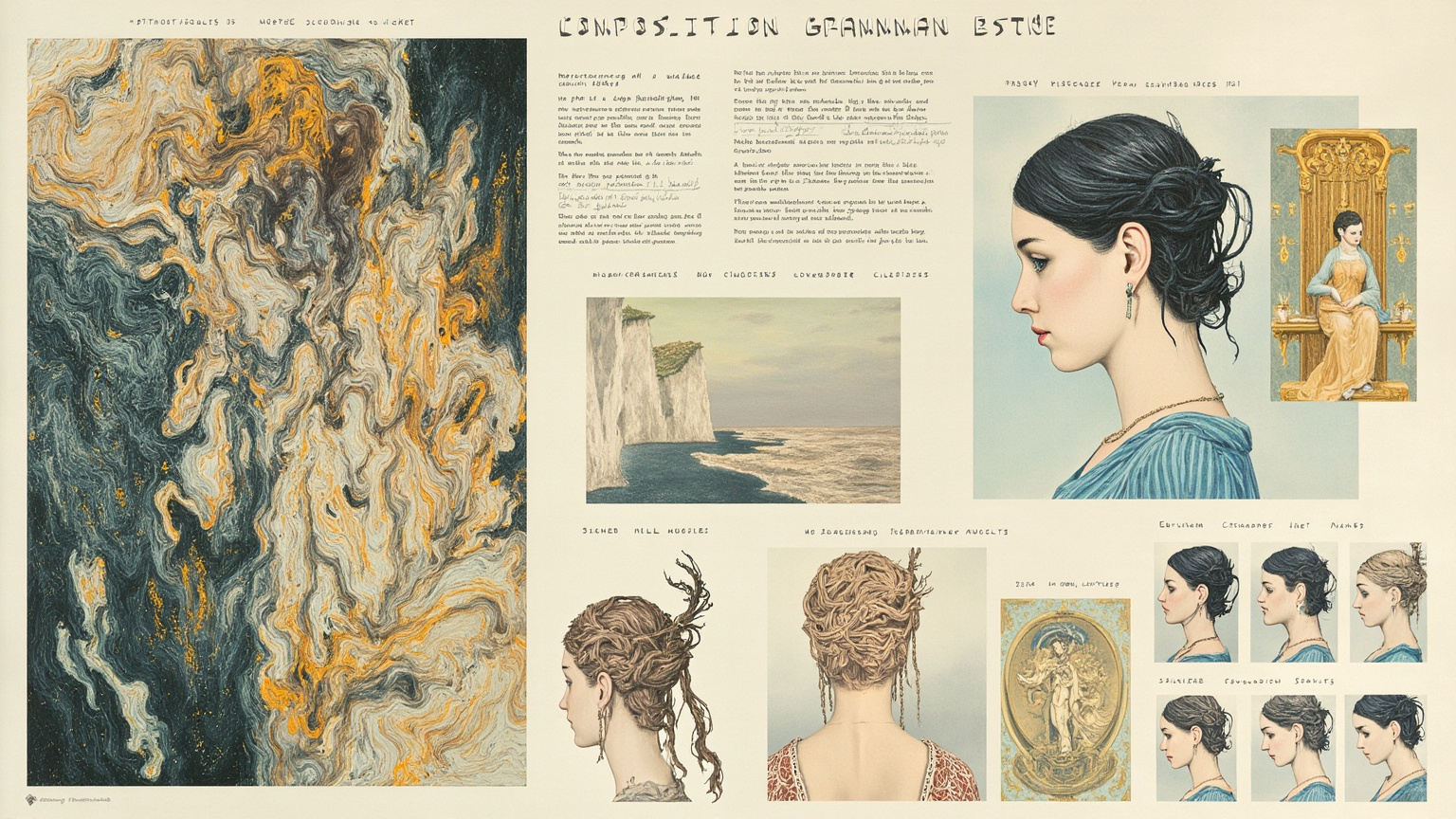
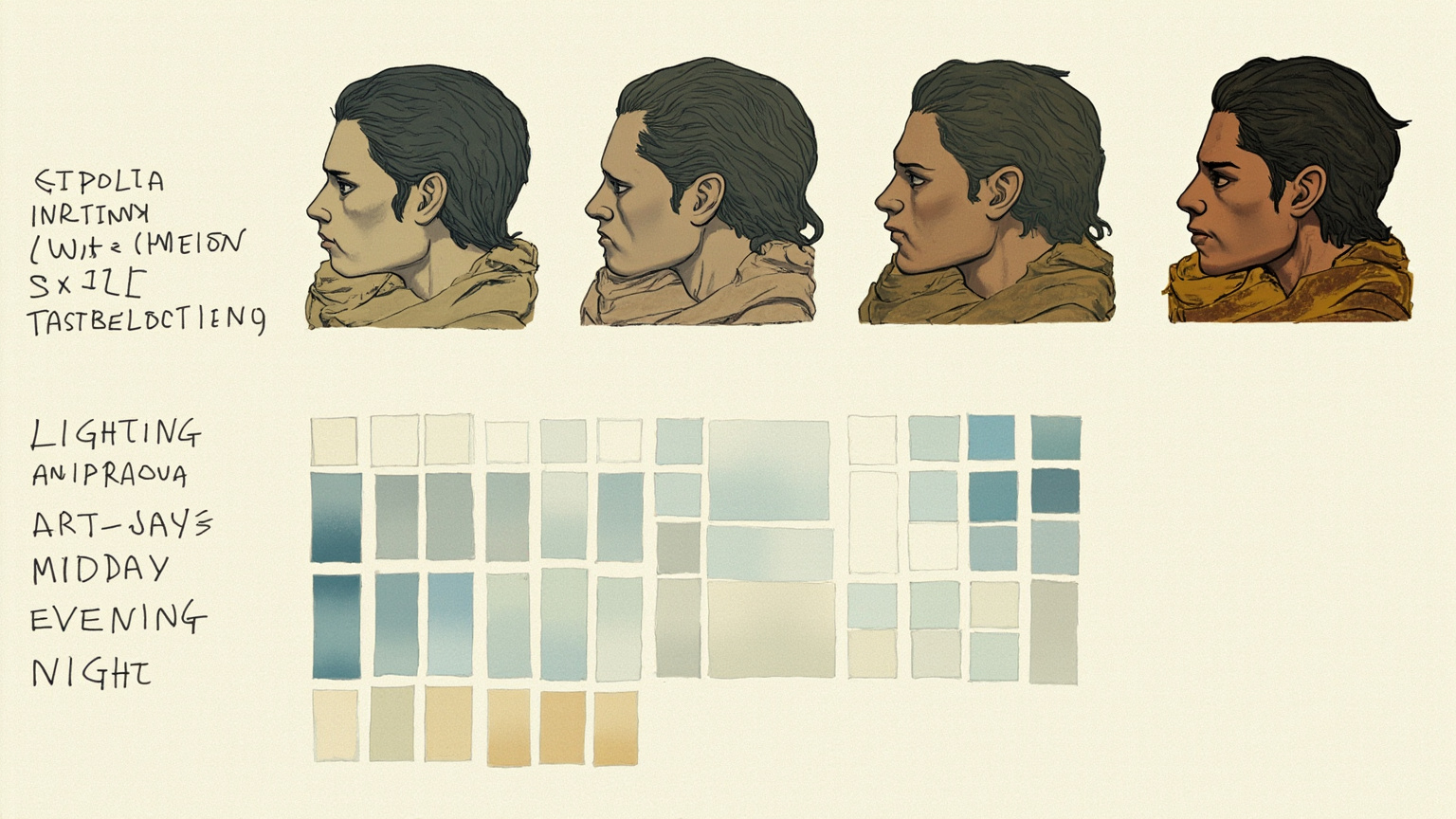
Art Direction4 plates
Before the guide was written, this book got a visual foundation — every illustration you just read grew out of it.