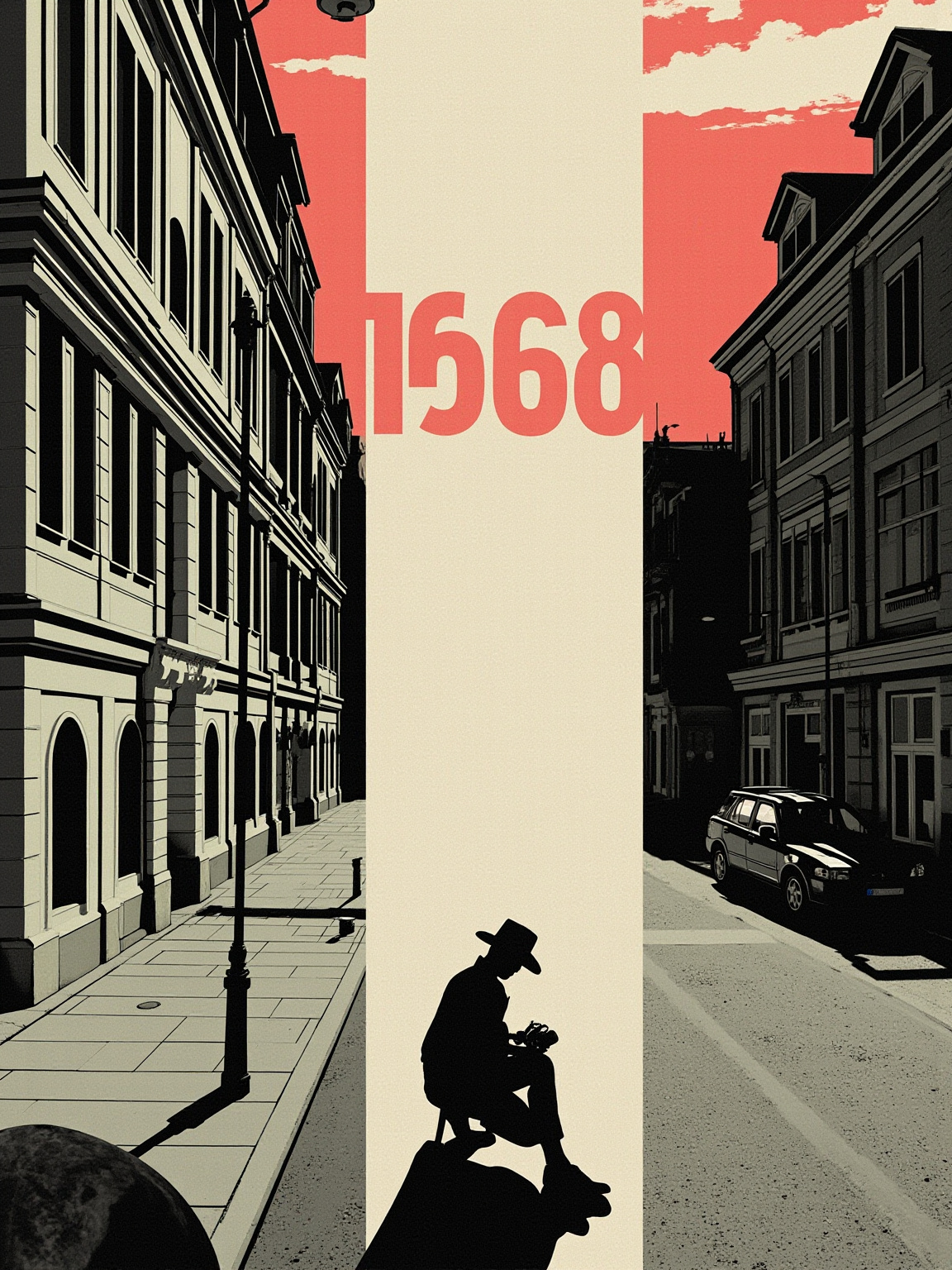
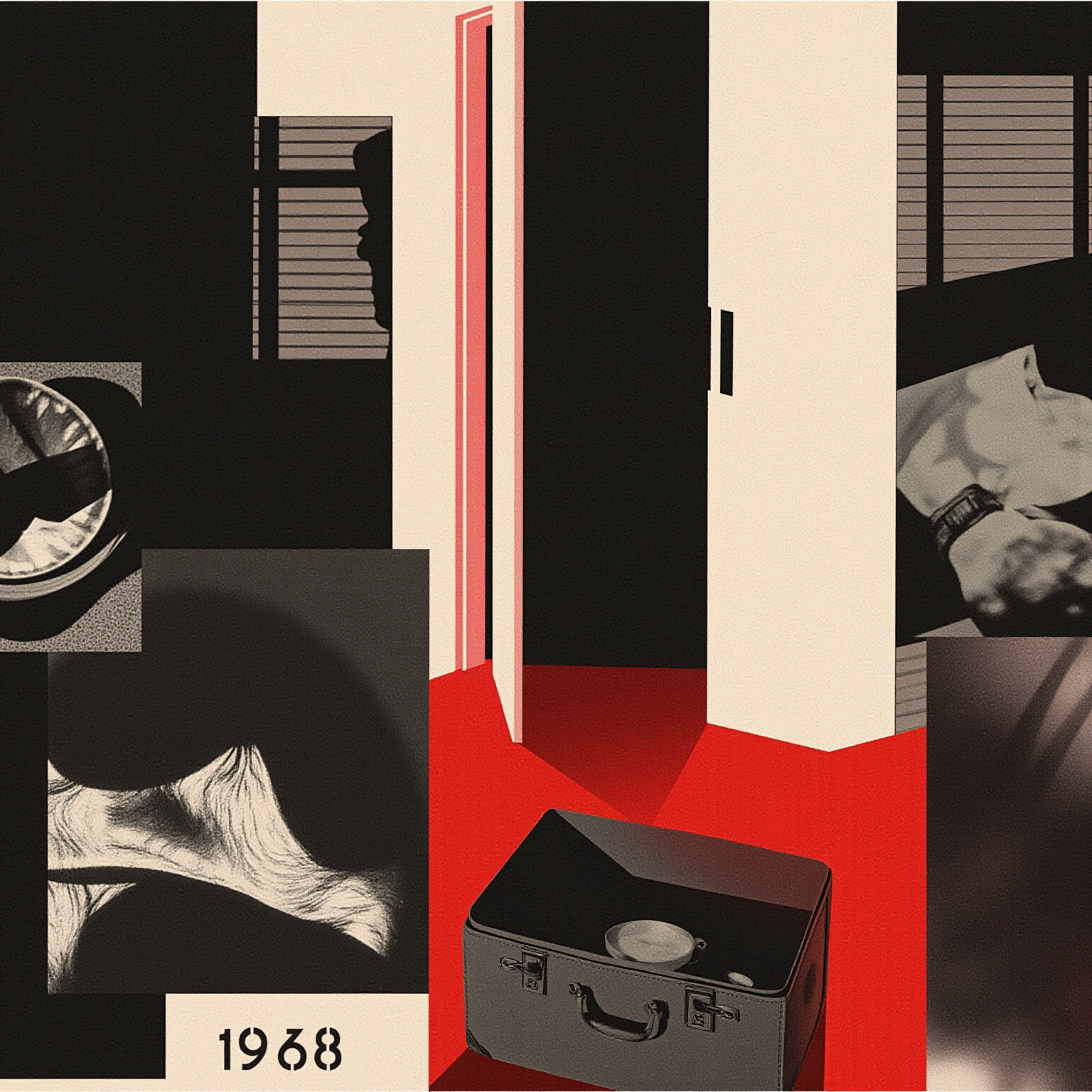
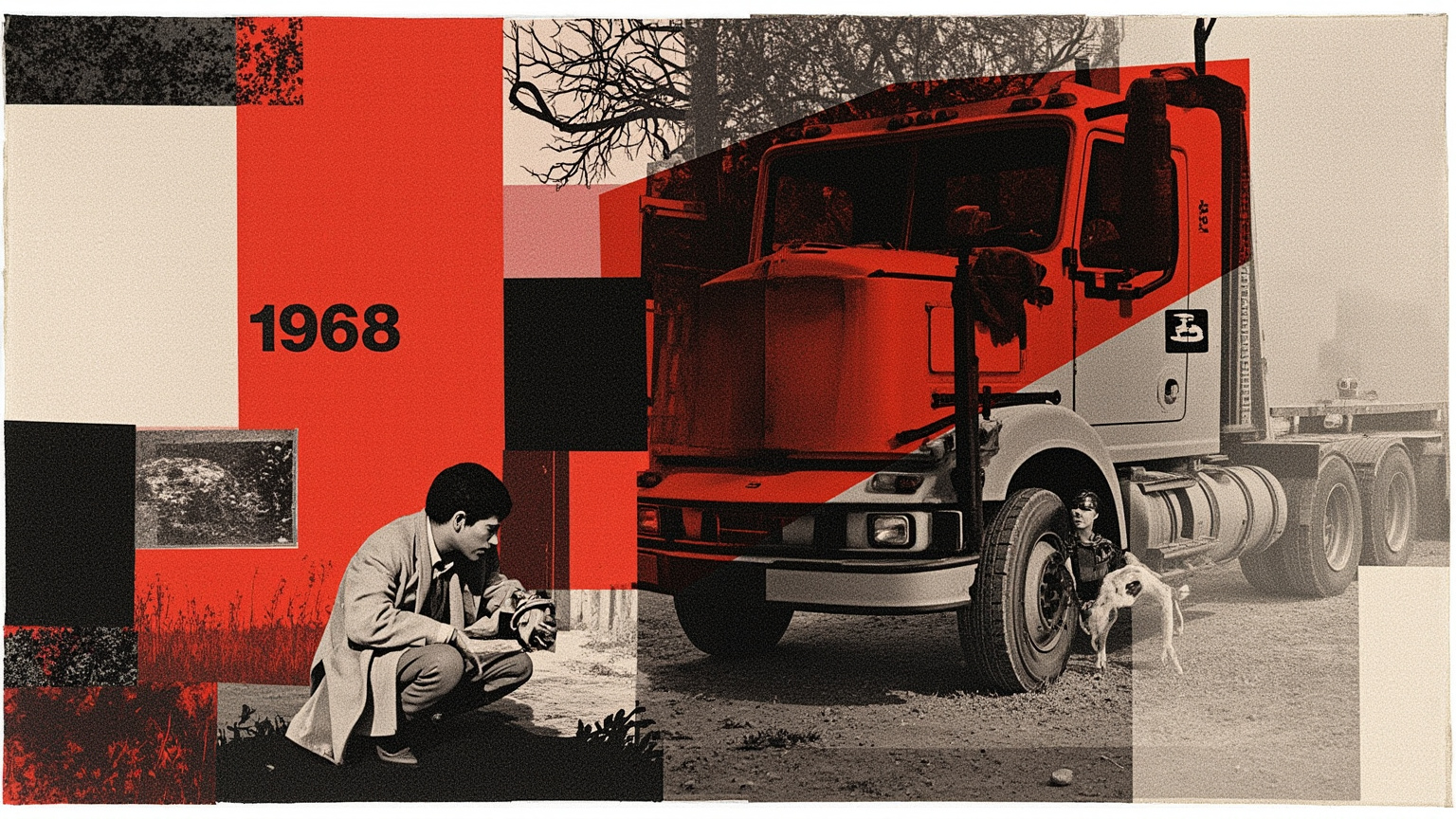
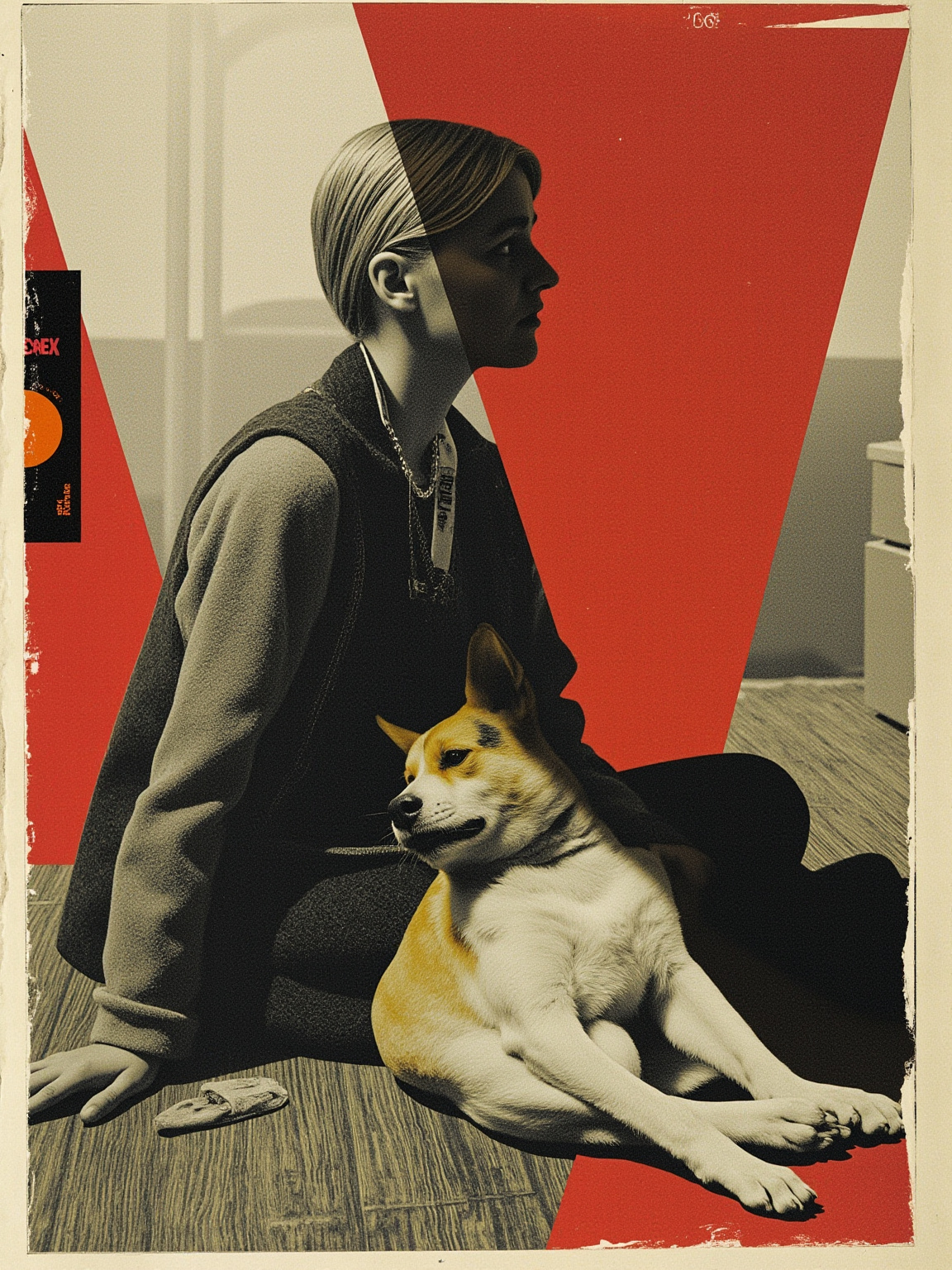
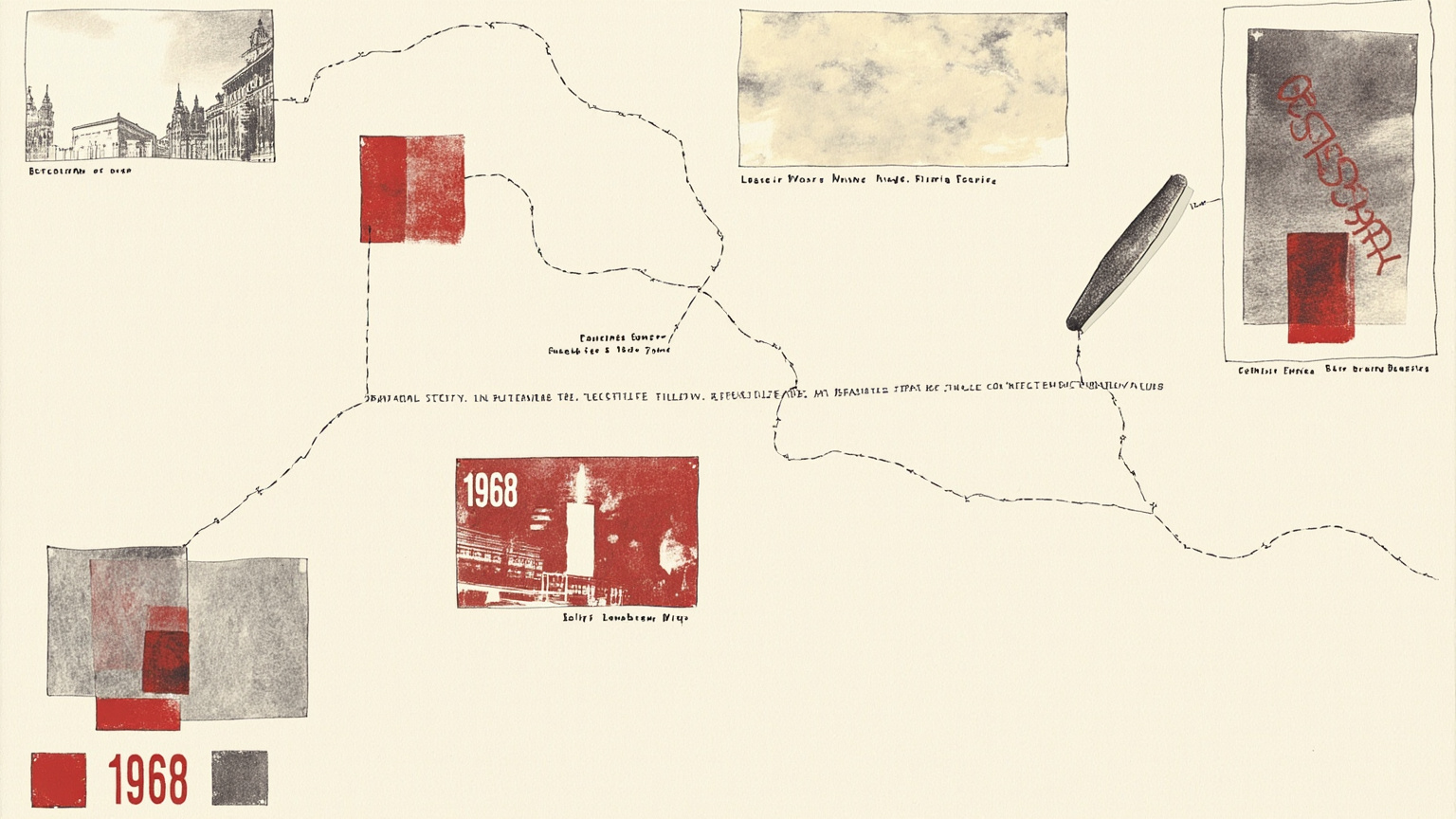
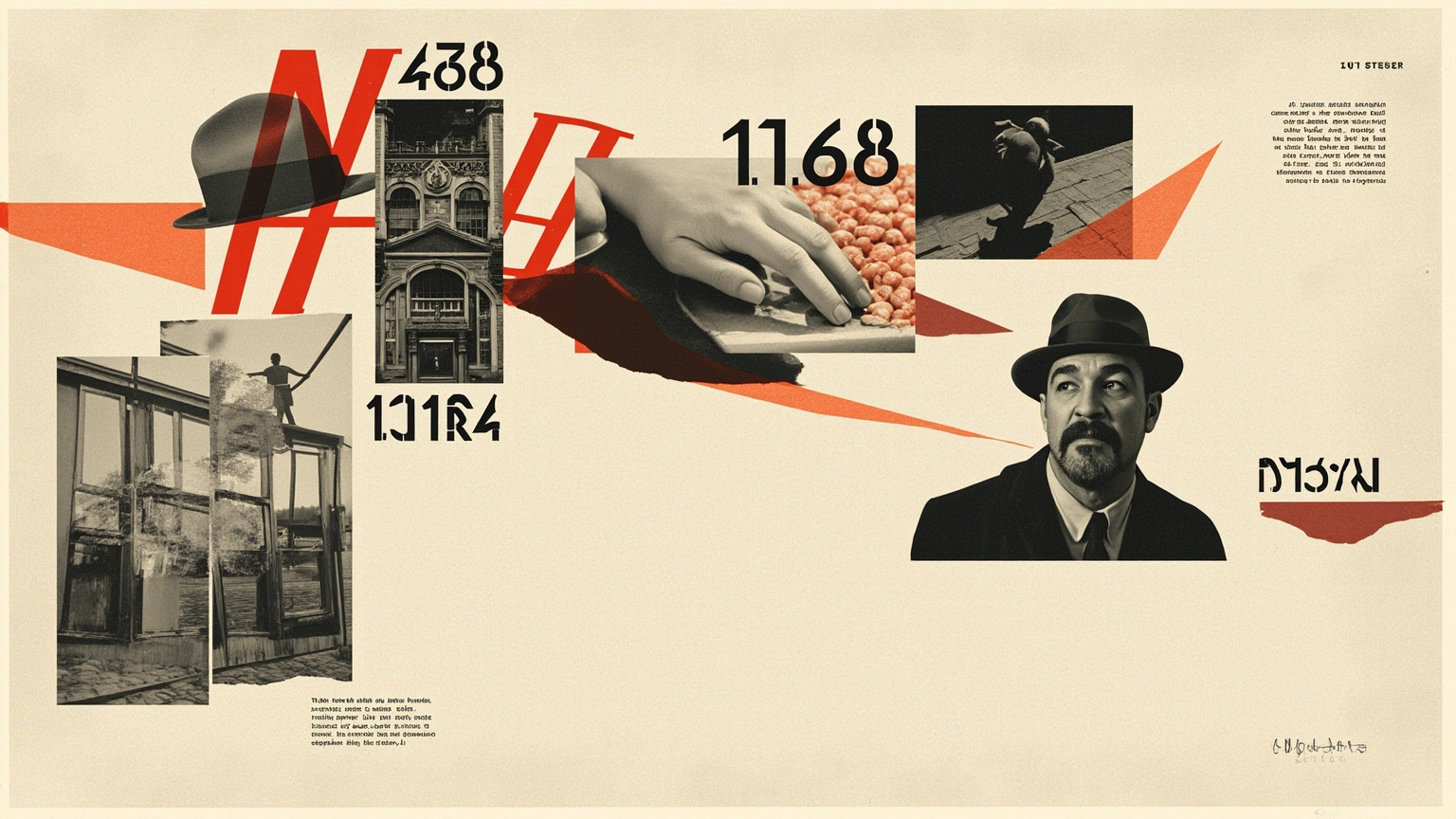
Kundera runs a class on Nietzsche's eternal return, stringing love affairs, politics, a dog's death, and a truck crash onto the same thread.
Text and illustrations produced by the pipeline
A man's bowler hat, pulled from a drawer by a woman and set on her bare shoulders. It is the quietest scene in The Unbearable Lightness of Being, and the most talked about. The hat blocks no sun, keeps out no cold — it is a sign the two of them settled on long ago. A relic passed down from a grandfather, it carries memory, and it carries the kind of understanding between two bodies that never gets spoken aloud. The first time it appears, Tomas is the man underneath it. The next time, it is Franz, the professor from Geneva. Same prop, different man; the hat stays, the men don't.
Milan Kundera wrote the title as a philosophical proposition, not a plot summary. What's unbearable isn't that life is hard — it's the fact of having no weight at all. The whole novel is trying to answer one question: if a choice happens only once and never comes around again, is it still a choice? If life doesn't recur, is lightness freedom, or is it emptiness? The answer lives in the lives of four people and a dog. Here's that thread, laid out.
Kundera was Czech, born in 1929, died in 2023, and nearly all his major midlife work was written just before and just after he went into exile. This 1984 novel was first published in French — Czechoslovakia banned it at home until the late eighties, so the original Czech text, printed by a small Czech émigré press in Toronto, actually reached readers after the 'official' translation did. It's held up as the model of the essayistic novel: philosophy, political history, and a love story twisted into one rope, the timeline deliberately scrambled, the ending given away on page one. It's remembered half for that proposition everyone keeps quoting, and half for how it makes the private fallout of the 1968 Prague Spring something you can touch.
Tomas is a Prague surgeon who lives by what he calls erotic friendship: he sees his mistresses, never stays the night, never lets feeling in the door. A house call sends him to a small provincial town, where he meets Tereza, a waitress working the tavern. He brings her back to Prague and marries her, the one heavy, it-must-be-this-way decision of his life, made by the last man you'd expect it from. Sabina is a Prague painter, Tomas's longest-running mistress, and the woman who wears that hat. Her life's practice is betrayal: of family, of country, of lovers. The moment a promise turns heavy, she's gone. Franz is a professor in Geneva who falls for Sabina after she settles in Switzerland and loves her enough to want it public, to want to answer for it, exactly the kind of weight Sabina fears most. The four of them split into two pairs: Tomas and Sabina stand for lightness, Tereza and Franz for weight, and the rope pulled taut between them is love — and it's also the political condition of that generation of Czechs after 1968.
The tenderest chapter of country life isn't about the people. It's about the dog. Karenin gets cancer, and Tereza sits up with her night after night, turning her, wiping the corners of her eyes, watching her to the end. Kundera writes it with real restraint: love a person, and you stay with her until she dies; love a dog, and you stay for her last smile. This female dog named after a man in Tolstoy is the most concrete thing the novel has to show for weight. Then, a chapter later, the truck arrives — Kundera tells you from page one that Tomas and Tereza will die in a car accident, and he chooses to write these two people already knowing how it ends. The technique is the argument: if no choice ever comes around twice, then tragedy isn't a matter of whether it happens. It's a matter of when.
Before the guide was written, this book got a visual foundation — every illustration you just read grew out of it.
Tereza arrives in Prague from her small town carrying one suitcase, a copy of Anna Karenina pressed inside it. Tomas has no reason to take her in; a man like him, by his own rules, sends people away. He doesn't send her away. He explains it to himself later: a person is just something history throws out, and for the first time he feels pinned down by something — Es muss sein, it must be. He rebels against himself and marries her, but he doesn't rein in the chasing either, and at night Tereza keeps waking from the same nightmare: stripped bare, laid out beside a row of identical bodies, unable to tell which one is hers. What frightens her isn't Tomas straying. It's not knowing whether her body carries a weight that's actually her own.
The night Soviet tanks rolled into Prague, the whole city shook. Tereza grabbed her camera and ran into the street — she could never explain afterward where the nerve came from. She shot the tanks, the crowds, and those rolls of film later became the evidence that marked her out in the underground circles of Eastern Europe. This night is the novel's real hinge: politics stops being something in the newspaper and starts growing into these people's bodies: Tereza gets watched because of the film, and an article Tomas writes, comparing Party officials to an Oedipus who refuses to see what he's done, costs him his job outright.
Tomas takes Tereza to Zurich, where he can still stand at an operating table. Sabina has already landed in Geneva and met Franz, and the two of them drown happily in each other's lightness, until Franz starts weighing a divorce, planning to make the relationship real. The word real is barely out before Sabina is gone. She'd rather start over in another city than be tied down by so much as a gravestone. Tereza, meanwhile, only grows heavier in Zurich — she can't stand being a guest in the émigré circuit, can't stand the café talk, can't stand being treated by Tomas as the one exception among his many mistresses. She goes back alone to occupied Prague. Tomas stares at the empty apartment in Zurich and does something that breaks every rule he's ever lived by: he packs a bag and follows her, giving up the operating table for good. It's the second time in his life something has felt like it must be this way — the first was marrying her, the second is going home to suffer with her.
Through Prague's years of 'normalization,' Tomas refuses to print a public retraction of his Oedipus article and gets swept out of the hospital, ending up on a rope outside office windows, washing glass for a living. Tereza works as a photographer at a magazine, still trailed by the shadow of those tank photographs. Eventually the two of them, along with their dog Karenin — a female dog named after a male character in Tolstoy, one of Tomas's black little jokes — leave Prague for the Bohemian countryside. Tomas puts on work clothes and drives a truck. Tereza goes out to feed the chickens. It's a rough, near-agrarian life. The irony of all that weight: two people who spent their whole lives struggling to understand lightness finally find peace in the heaviest life they've ever lived.
The weight side of the story ends on the other side of the world. After Sabina leaves him, Franz joins the Grand March, a demonstration for Cambodia — a line of Western intellectuals marching through the streets of Bangkok, chanting slogans, meaning to change the world. Kundera nails this performance to a single word: kitsch. Lining up to be moved by someone else's suffering on the far side of the planet is just another way of scrubbing out everything ugly. Franz is beaten badly by street thugs in Bangkok and dies in a hospital there. Sabina, by then living alone in America, hears the news standing in a California wind, and for the first time looks back at a lifetime of lightness. It turns out to be empty too.
Strip the love story down to its bones and one divide keeps recurring: Tereza and Franz both crave weight, commitment, responsibility, a love that can be named and pointed to. Tomas and Sabina are both addicted to lightness, freedom, staying undefined, letting things end when they end. Kundera doesn't take a side. He lets the light ones shiver in their own emptiness and the heavy ones gasp under their own load, but the sharpest cut he makes is pinning both ends to the same question: if your life never comes back around, if everything happens exactly once, then lightness is really just the absence of weight, and weight is really just the fact that nothing can happen twice — the two things turn out to be one thing.
Kundera coined another word to condemn this state: kitsch. He defines it as the absolute denial of shit — sweeping everything ugly, complicated, or doubtful under the rug and putting only the prettified, harmonious picture on display. By that measure, a Communist parade is kitsch, and so is the Grand March of Western intellectuals lining up in Bangkok. It isn't the property of one side of the political map. It's a universal human failing. Reading it today, you keep running into familiar faces: the people who edit their suffering into a tidy grid of photos for their feed, the people who line up to be moved by tragedies happening far away from them, the compulsion to have a public opinion on everything. Kundera turned this into a philosophical proposition in 1984, and it still holds.
What stopped me cold the first time I read this book was that Kundera tells you the ending on page one — the truck is coming, the dog dies first — and then just keeps writing anyway. It isn't a trick. It's structure proving the argument: if life never comes back around, then a story can only flatten its people into fate, told with the ending already known.
The most uncomfortable thing about this book is what it makes you see: lightness and weight aren't opposites. They're the same coin — it just depends which side lands in your hand first.
A guide can give you the map. It can't give you the ground. Kundera is good at two things in particular. One is the way he cuts in like an unsparing piano teacher: two people are still in bed, and by chapter three you're suddenly inside Nietzsche, or Parmenides, or a particular Beethoven sonata, then swung back to the bed as if nothing happened, and you land in the same position you left. The other is what he does with bodies and objects: a hat, a roll of film, a dog's smile, the radiator on a truck. These concrete things carry more weight than any adjective could. In one of the sex scenes, Tereza's own nightmare tears through her, and she sees herself laid out among a row of identical bodies, the split between body and self written so well that it gets under your skin too, and no summary can carry that feeling across. Then there's the rhythm of already knowing the ending — you know the truck is coming, and the author keeps going anyway, one shot at a time, washing the window, feeding the dog, scrubbing the pot. That's the book's real cruelty, and its real tenderness. Reading it is mostly about feeling that rhythm.