Edinburgh, a century ago: twenty lectures that moved religion out of theology and into psychology
Text and illustrations produced by the pipeline
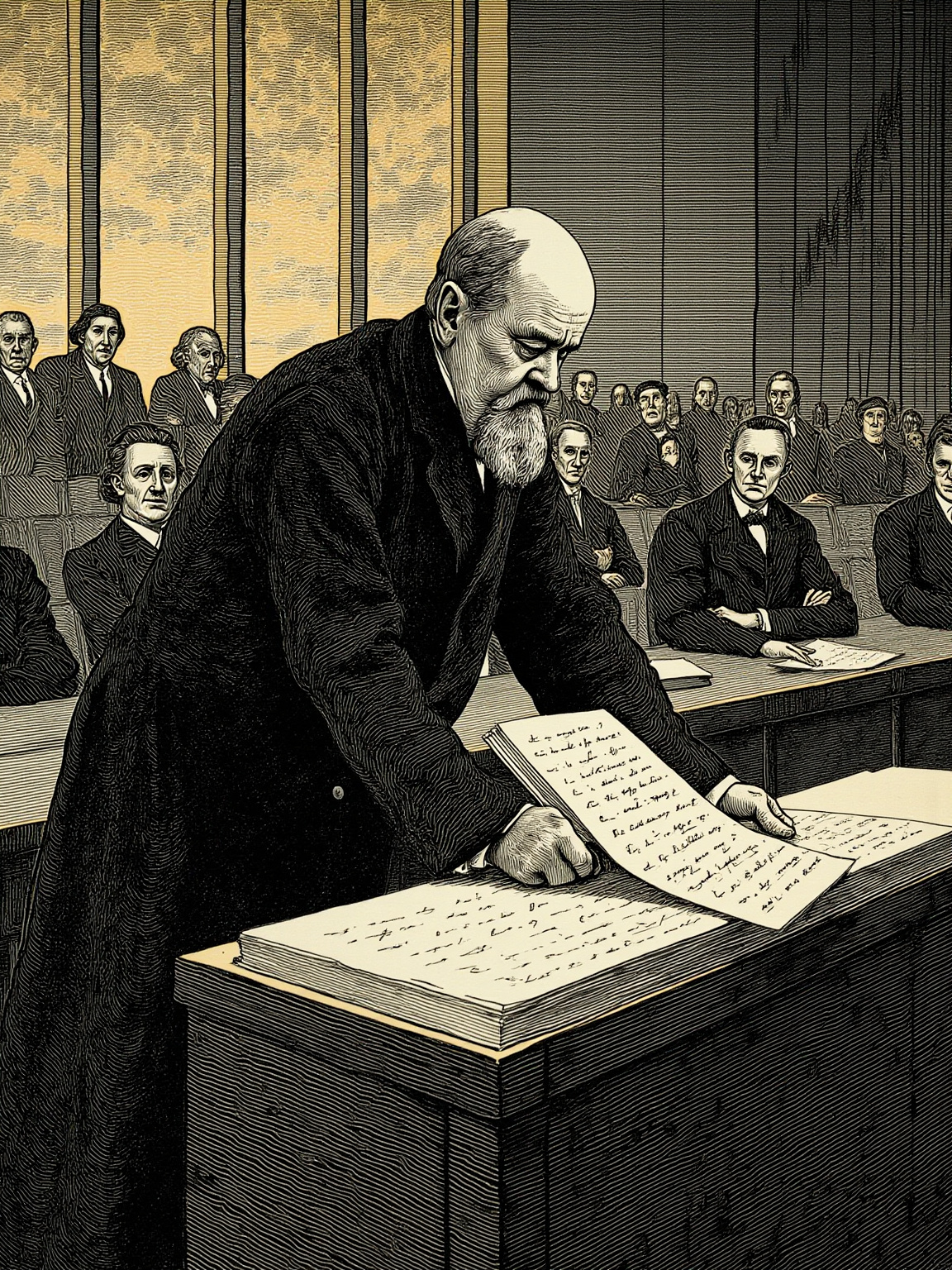
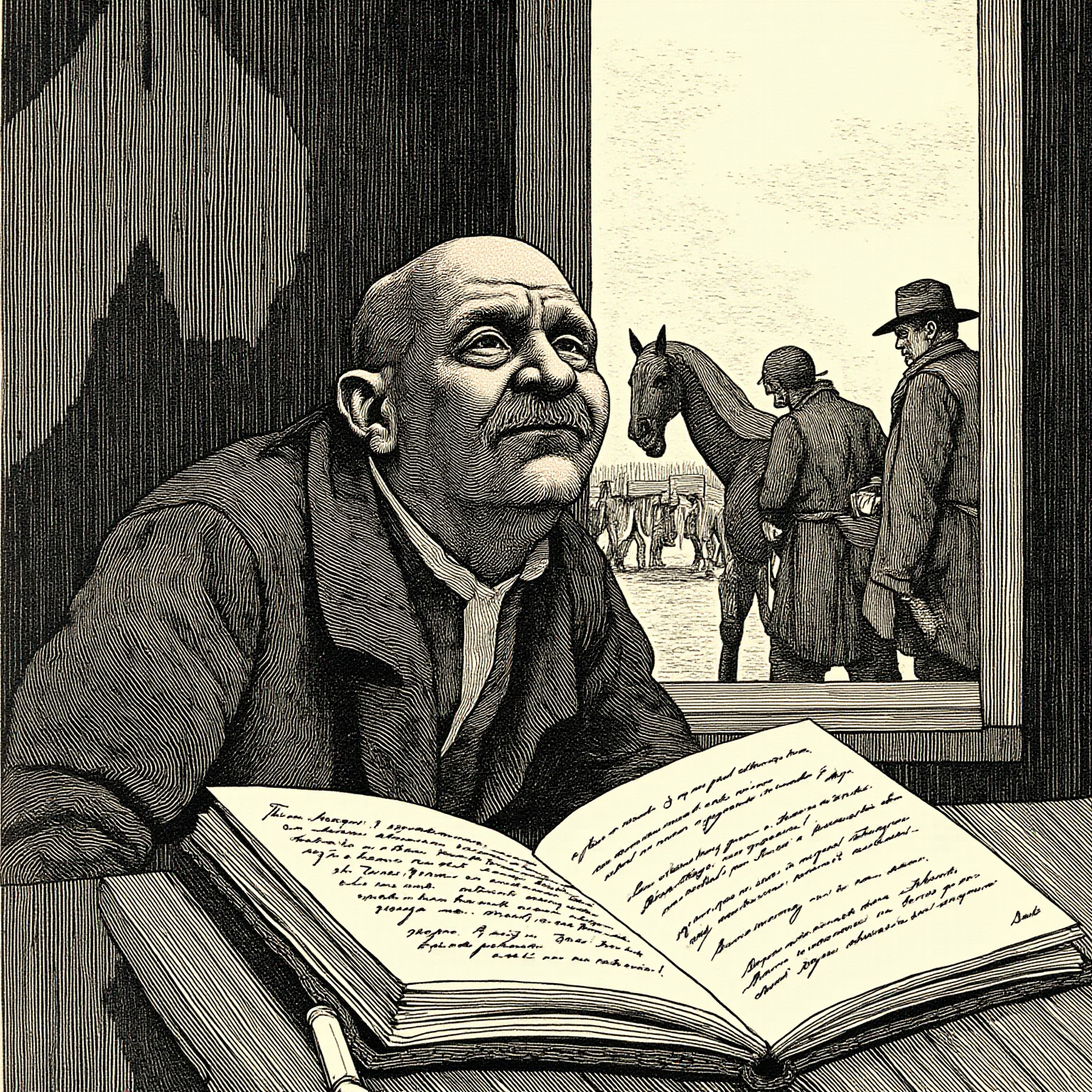
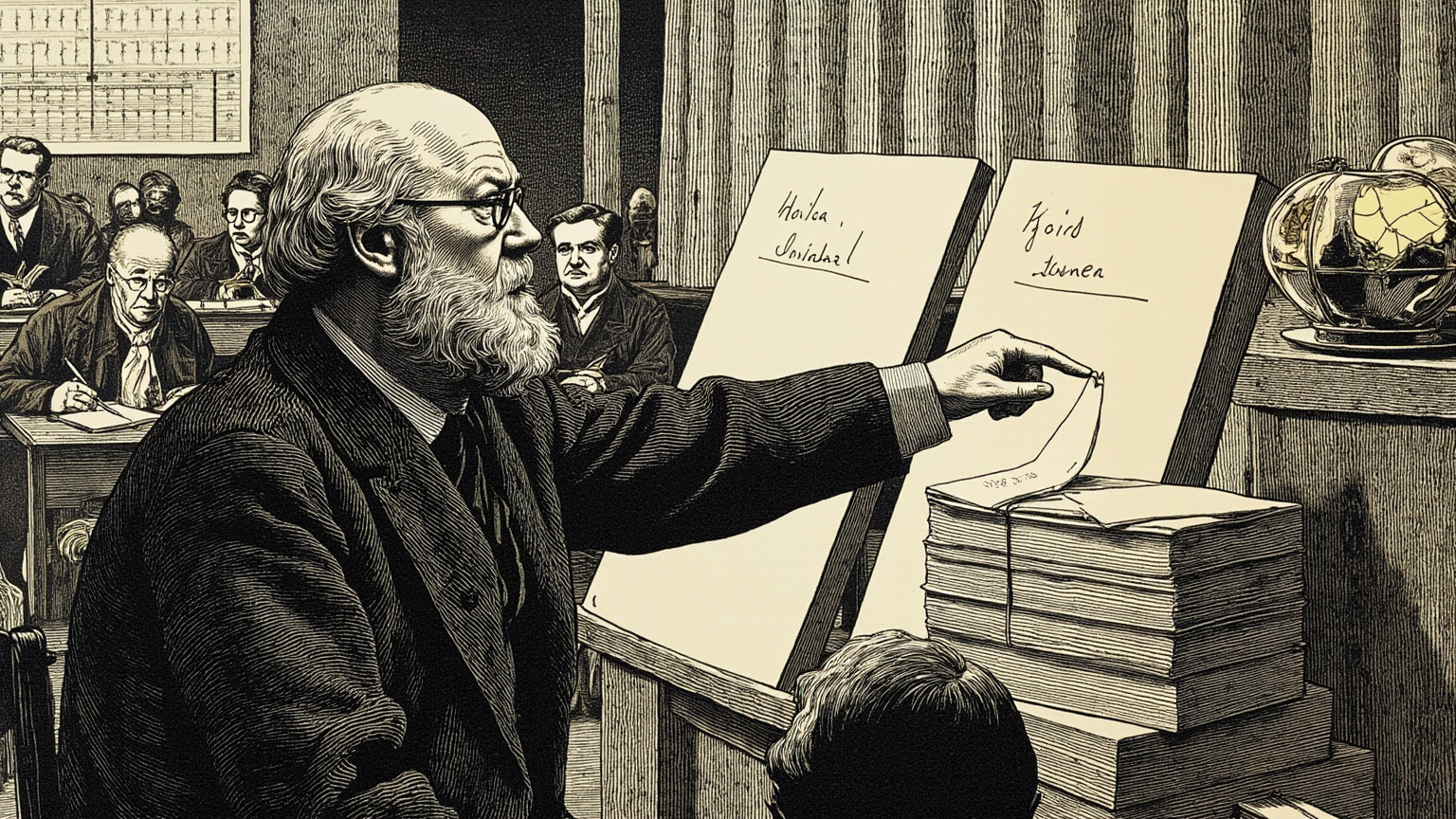
A middle-aged man in a dark suit climbs the lectern at the University of Edinburgh and spreads a stack of readers' letters across the table. They have come from Europe, North America, India, Japan -- from a minister's daughter, a drunkard merchant, an old man who once wrote War and Peace. They all describe, without knowing it, the same thing: a moment when the world suddenly flips over. This book is what that man at the lectern -- William James -- made of several hundred such accounts, after cutting, annotating, and sorting them into twenty lectures.
It is the manuscript of a public lecture course delivered more than a hundred and twenty years ago. James does not argue over whether God exists, and he has no interest in handing down a verdict; he dissects religion as a psychological phenomenon, laying it on the same table as dreaming, depression, and falling in love. He was the first to do this, and later work -- Alcoholics Anonymous, present-day neuroscience experiments on mystical states -- traces its lineage back here. It is the founding text of the psychology of religion, and one of the earliest places American pragmatism was put to work.
The only person actually present in this book is the man at the lectern -- James himself, an active classifier. He picks through hundreds of letters, cuts them down, compares them, and splits their writers into two piles, without ever stepping forward as a case himself or laying his own conversion or breakdown on the table as a specimen. His subject is not a character. It is several hundred anonymous people.
He splits them into two piles. One he calls the healthy-minded: people naturally inclined toward sunlight and goodness, able to feel directly that the world means something. The other he calls the sick soul: people who have spent half a lifetime crushed under meaninglessness, fear, and despair, who feel for years like there is no ground under their feet. These are turn-of-the-century terms, not insults -- James says plainly that the two types are not right and wrong, not sick and healthy, but two ends of the same spectrum. One is simply born standing in the light, the other born standing in the dark.
The story starts with a decision. Sometime in the eighteen-nineties, letters began arriving at James's study at Harvard. Readers who had gotten through his earlier psychology books wrote up their own conversions, breakdowns, repentances, and epiphanies, a few pages each, and mailed them in unprompted. James did not lock the letters in a drawer. He copied every one into his card catalogue.


What a guide like this gives you is a map: who gets quoted, which terms got coined, which judgment came out of which lecture. What the map cannot give you is the lectern itself -- the English James actually spoke in Edinburgh in 1901, carrying the pauses of live questions and the corrections he made on his feet, prose so conversational it reads like talking to a friend.
What it gives you even less of is the bodily feel of the first-hand accounts in their original words. One anonymous reader writes of ten years of repeated suicide attempts before his conversion; a Japanese Zen monk describes sitting in meditation until, on the seventh day, he suddenly heard his own breathing as though the floorboards of a room were splitting apart. Pulled out of context, sentences like these are just outlines. Back in the book, they still have body heat. Read the original not to learn the conclusion, but to sit for a while at the scene itself.
Before the guide was written, this book got a visual foundation — every illustration you just read grew out of it.
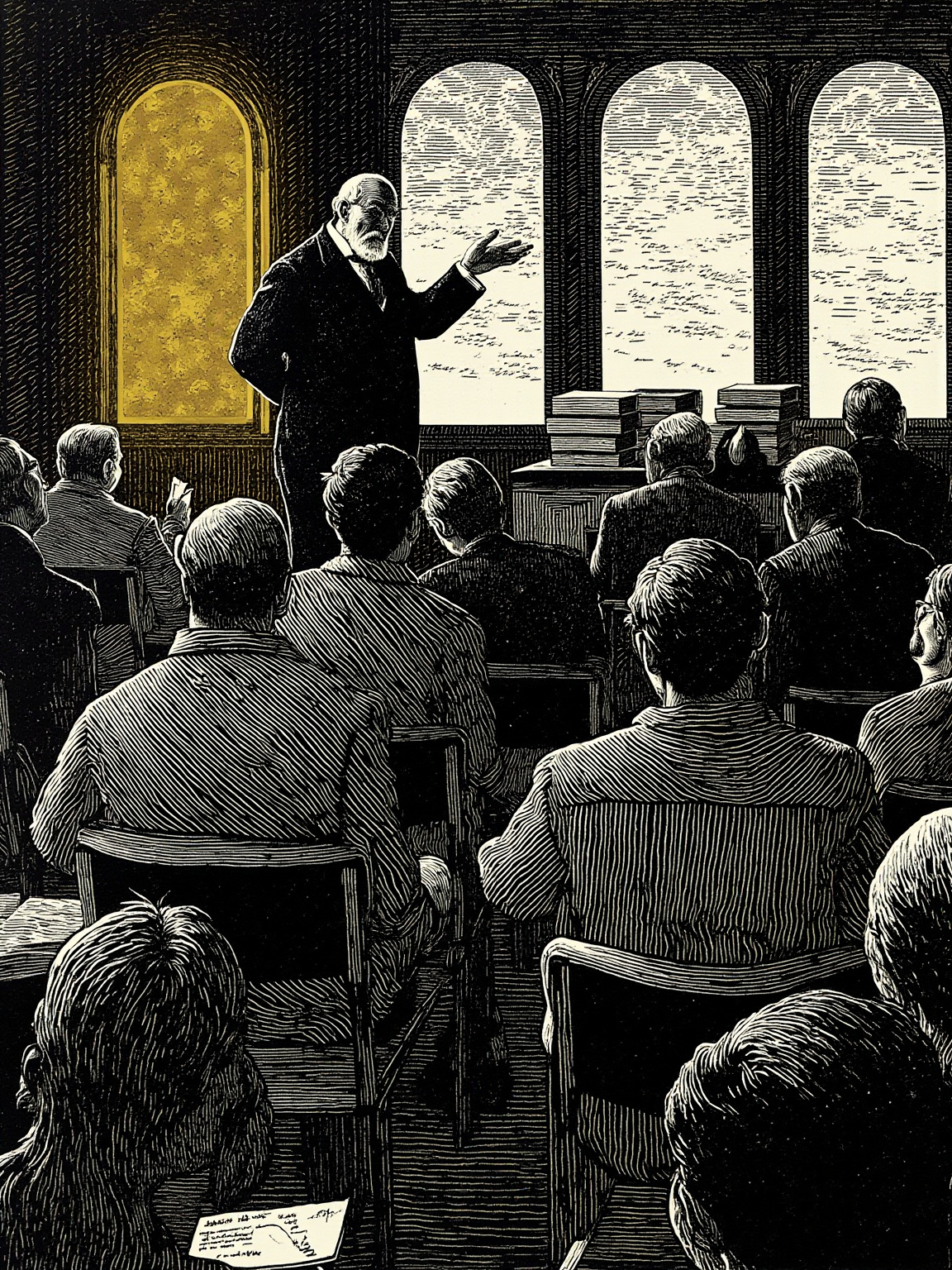
In the winter of 1901 he carried those card boxes to Edinburgh for the Gifford Lectures. The first lecture offers no conclusions. It does one thing: it states the material. James lays the readers' letters, the anonymous confessions, the classic texts of mysticism in front of his audience and tells them -- what I am about to do is neither defend God nor prosecute him. I am going to treat this material as psychological fact, and sort it in front of you.
In lectures two and three he throws out the book's loudest distinction. The healthy-minded believe in optimism, that the world is fundamentally good; some even hold that every evil in it is a kind of misunderstanding, and that once the misunderstanding is cleared up, all will be well. James sets this against Jonathan Edwards, the eighteenth-century American preacher whose sermons painted hell so vividly that listeners in the front pews fainted on the spot. That is not a lapse, James says. It is the opposite pole of the same spectrum of religious feeling.
He goes further in. The sick soul is not a passing bad mood. It is a permanent undertone. These are people who can watch the world run smoothly and still feel that none of it means anything; what floors them is not fear but meaninglessness. James is careful to say this is not a matter of who is right. It is that human existence comes in these two undertones. Psychology kept returning to this distinction long after him -- it maps the actual shape of human nature more closely than any moral judgment does.
Lectures four and five turn to conversion. James has no interest in the debate over whether conversion is a miracle. He wants to see the mechanics of how it happens. What he finds is that conversion is not a gate but a long slope -- some people grind along it for years, cycling through a few idols, before reaching the bend he calls the moment of insight.
He offers a mechanical image for it: the instant of conversion is the moment a person's center of attention shifts from one set of objects to another. Before the shift, the world is gray; after it, the world is lit -- not because the world changed, but because the load-bearing foundation did. What makes the image work is that it never rules on true or false, only on structure. Whether what you believe in is God, the universe, a lover, or some total surrender of the self, the shape of that moment -- the foundation changing under you -- is the same.
Lectures six through ten enter mystical experience. James is careful to the point of severity here -- he wants to separate the mystical from the merely pathological. He offers four yardsticks: ineffability (it defeats description), transience (it lasts seconds to minutes and no longer), passivity (it is not summoned but arrives on its own), and selflessness (the boundary of the self briefly disappears). Meet two or three of the four and the experience earns serious treatment as mystical.
As his classical case he uses Saint Teresa of Avila, the sixteenth-century Spanish mystic; as his modern case, subjects who inhaled nitrous oxide in psychology laboratories at the end of the nineteenth century. He sets them side by side. It's a sharp move -- putting a medieval nun next to lab reports from his own era lets the reader see for themselves that the human brain, across different centuries and different cultures, can produce reports that are almost identical in structure.
Lectures eleven through fifteen take the sick soul's story to its deepest point. James draws on Tolstoy's account of his later years -- the old man who had already written War and Peace, and who one day found himself swallowed whole by a sense of meaninglessness. He could find no reason to keep living; hunting, writing, society, none of it could save him. For a time he considered suicide.
The turn comes after a stretch of manual labor in the fields -- he grabs hold of something he cannot name, and the reason for living lands again. James is not quoting this to tell Tolstoy's story. He is using this secular European intellectual as proof of how the sick soul rebuilds itself: meaning is not thought up, it is suddenly seized on some ordinary day. I stopped short the first time I read this passage -- the collapse of a nineteenth-century Russian aristocrat and the letter from an ordinary American reader turn out to have almost the same shape.
Lectures sixteen through nineteen cut from a different angle. James puts personal religion and institutional religion on two separate tables: the first is a direct relationship between a person and an unseen order; the second is the church, the theology, the rites, the calendar -- everything that came after, secondhand.
His verdict is blunt: institutional religion grows out of personal religion, never the other way around. Theology is the instruction manual written after the fact for an experience that already happened; the church is the reception desk built after the fact to receive it. This is not an anti-church argument -- James grew up in America steeped in Protestant tradition -- he is simply putting the hierarchy in order. The line has been quoted, and requoted, ever since.
The final lecture, and the long postscript that follows it, close the book. In the postscript James delivers the one methodological cut that runs under the whole thing -- rather than ask what reality a proposition corresponds to, ask what difference it makes in a life. If conversion gets you off the bottle, brings your family back together, and lets you face death without your hands shaking, then it works. This is not pragmatism as cynicism. It is James's whole approach to religious experience: every piece of material has to answer what difference it made, and where it can't answer, he refuses to rule.
That same knife is what holds the book's central division together -- healthy-minded and sick soul are not right and wrong, only two paths judged by which one leaves a person steadier, fuller, more able to bear what comes.
Faith is not something proven. It is something lived -- and this book's only job is to lay a few hundred ways of living it on the table, without scoring any of them.