
The Wonderful Adventures of Nils (Nils Holgerssons underbara resa genom Sverige) · Companion Guide
尼尔斯骑鹅旅行记
一个被咒成拇指小人的瑞典顽童,骑上自家白鹅,随雁群飞越整个国家——在学会不伤害一只灰雁的那天,他才能重新长大。
The Hook
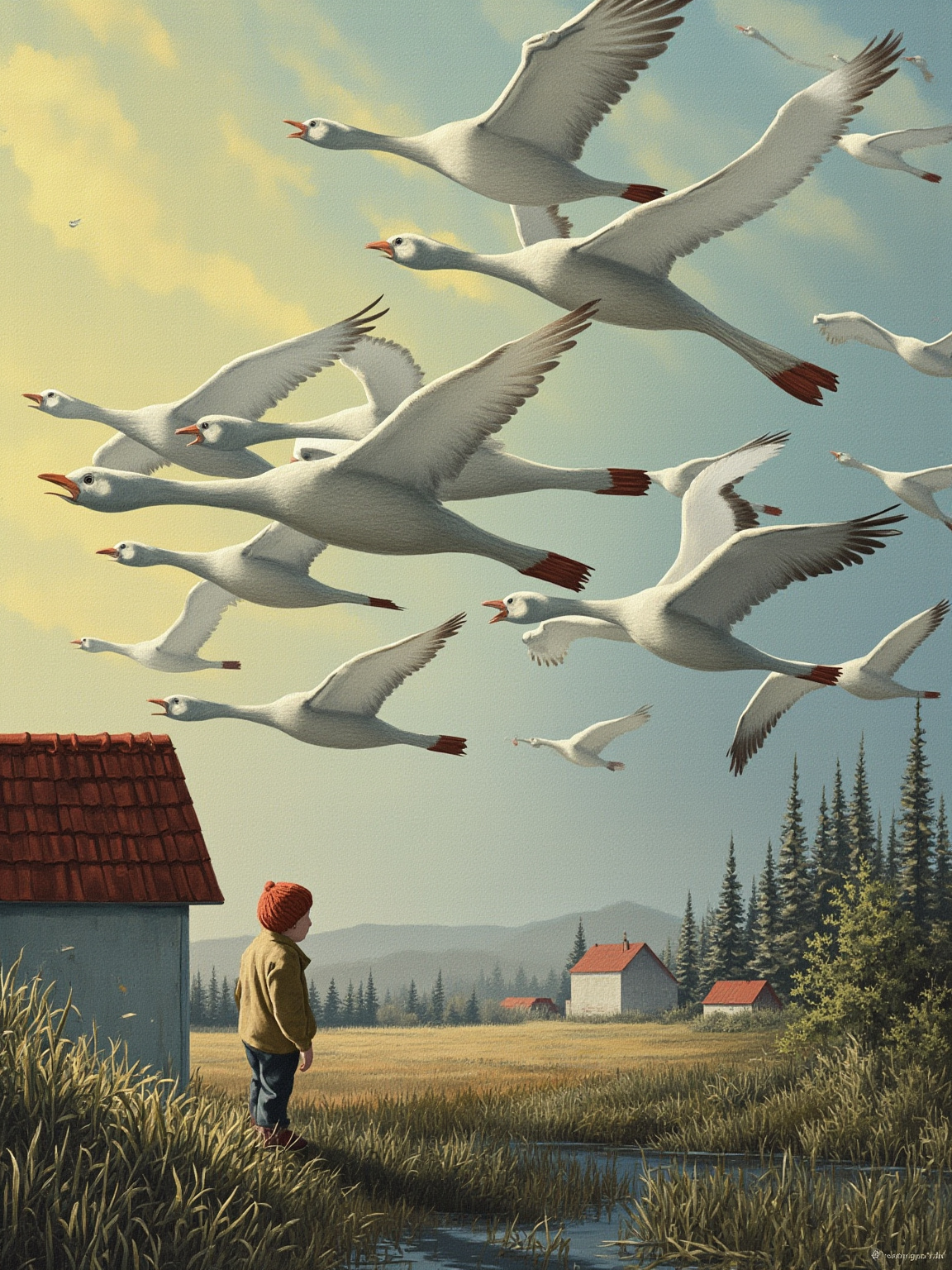
One spring morning, fourteen-year-old Nils Holgersson claps his butterfly net over a little elf in the farmyard — he only wants to catch it for fun. Before it slips through his fingers, the elf mutters a curse, and his body begins to shrink. His clothes crumple at his feet like an empty sack, and when the yard's white gander lifts a foot and sets it down, that single webbed foot is bigger than he is now. He runs back to the goose pen and finds one of the three geese marked for slaughter with its neck craned skyward, eyes bright, watching a flock of wild geese pass overhead — Morten, the one white gander in the house who won't go quietly to the block.
What Kind of Book This Is
The Wonderful Adventures of Nils is a novel-length fairy tale the Swedish writer Selma Lagerlöf wrote for children, published in two volumes, in 1906 and 1907. It won her the Nobel Prize in Literature in 1909, making her the first woman ever to receive it, and one of the very few writers to take the prize on the strength of a children's book. It began as a geography reader the Swedish government commissioned for its own schoolchildren, an attempt to pack the country's mountains, rivers, lakes, coastline, flora, fauna, and local history into the itinerary of a flying boy. So it is a fairy tale, a geographic survey, and an animal fable all at once, three things tangled together, and it was that tangle that later translations carried into the childhoods of readers in China.
Characters and World
Nils starts out as a typical farm-boy troublemaker — mischievous, willful, fond of chasing the chickens with a broom and netting sparrows for sport. Once he's shrunk, his opponent is no longer the grown-ups around him but his own smallness: a thumb-sized body has no room left for his old temper. He has to become a true human being to grow back, and the curse hands him that condition without explaining what it means. Morten, the white gander who becomes Nils's mount, was marked for the pot until the sight of the wild geese overhead moved something in him: I want to go with them. Nils only makes the trip because he leaps onto Morten's back at the last second; without that jump, the story ends in the farmyard. The flock's leader, Akka from Kebnekaise, comes from the Kebnekaise range in northern Lapland, dignified, steady, a bird of few words, mother to the whole flock and the most restrained character in the book. Trailing the geese all the way from Gotland to Lapland is a fox named Smirre, whose ear-tip a hunter's shot has clipped off, and who has sworn to settle the score with Akka ever since. He is the only villain in the entire book, no second fox, no accomplices.
Act One: Shrunk, and Onto the Gander's Back
The opening scene plays out in the family goose pen in southern Skåne. The boy teases the elf, is cursed down to thumb-size, and leaps onto the gander's back — all three happen in almost one breath. Lagerlöf's prose is clean to the point of ruthlessness: she never explains where the elf came from, never explains the limits of the curse, and never gives her hero a moment of interior monologue to mourn his lost size. A boy wakes up one morning to find himself thumb-high, and that drop is not conveyed through adjectives — it is conveyed through the pile of old clothes at his feet, through the gaps between the pen's boards that he used to cross without even a step and now has to jump.
He was suddenly no bigger than a thumb, and the clothes that he had worn lay on the floor in a heap, as if they had been emptied of their contents.
他忽然变得只有拇指那么大了,他原来穿在身上的那些衣裳,堆在他脚边的地板上,像是一堆被人倒空了的口袋。
金句 · 开篇 · 鹅栏咒语
When Nils throws himself onto Morten's back, what's still on his mind is getting home to his parents for a fix — he has no wish to travel at all. That detail matters: he doesn't set out, he gets swept out. A tiny person who wants to stay home, strapped to a gander who wants to fly, tagging along after a flock of wild geese who never asked to carry a passenger. The friction between all three keeps the first half of the book taut. The flock crosses the Skåne plain in a V, and Nils, flattened against Morten's back, sees his own village from this height for the first time. The passage is written with restraint, no lyricism, only the fact of the drop below him.
The Middle: North Across All of Sweden
The flock sets out from Skåne, the southernmost tip of Sweden, and flies north. Lagerlöf cuts the country into a series of aerial slices: the half-melted spring ice on Vomb Lake, cod drying on wooden racks in a Bohuslän fishing village, the medieval ruins and underground army of black rats on the sandbank island of Gotska Sandön, the bronze statue built for a king's eye on the naval-yard square at Karlskrona. At every stop, she writes the landscape first, the event second, and only then lets Nils pick a small lesson out of it. Reverse that order and it stops sounding like her.

They flew over all of Sweden, from the southernmost province to the northernmost, and he learned how the country looked from above.
他们飞过了整个瑞典,从最南的省份一直飞到最北,他就这样从空中一点一点认出了自己脚下那片土地的模样。
金句 · 上卷 · 越过斯科耐的平原
Smirre the fox enters right after Gotland, and from that point on he is the fixed shadow trailing the flock north. The scene where a hunter's shot wounds him carries no gore: the ear-tip is clipped, the oath is sworn, he sets off, all in a couple of sentences. Every bit of tension after that comes from the sense of distance between him and the geese: how many thickets away, which river separates them, how many steps closer he's gotten today. Lagerlöf never dwells on the gruesome side of a hunt; she only shows the hunted noticing, again and again, that their pursuer hasn't given up. That choice lets one fox carry a longer dread than any actual killing would.

Smirre the Fox had taken a vow to follow the wild geese wherever they went, and wherever he appeared the white-throated birds fell silent with fear.
狐狸斯密尔立下誓言,雁群飞到哪里他就跟到哪里,凡是他出现的上空,那些白喉的野鸟都一下子安静下来,噤若寒蝉。
金句 · 中卷 · 斯密尔的誓言
The middle section's richest detour happens on Gotska Sandön, a remote sandbank island in the sea north of Gotland. Under the ruins of a medieval stone town there, a great army of black rats is debating whether to crown a cat as their king, the most ironic scene in the whole animal parliament. Lagerlöf stages a debate over whether to hand your throne to your own natural predator, and it ends with one small black rat standing up against the idea, getting crowned king of the underground rats himself, and the cat candidate dropped. This passage comes closer to a modern fable than anything else in the book: she has smuggled a whole argument about authority, imitation, and self-respect into a rats' town meeting.
Act Two: Deeper North, Into Lapland
Past Dalecarlia's forests and the copper mine at Falun, the landscape starts to change. Norrland's rivers pick up speed, the islands multiply, the tree line keeps retreating, and finally, Lapland, at the foot of Kebnekaise, where the sun still hangs in the sky at midnight. The flock stops inside the Arctic Circle to hatch their goslings, and over those weeks of rest, everything that's been building comes to a head: the chase with Smirre, the trust growing between Nils and Akka, his dependence on Morten, all of it tightens slowly under a sun that never sets.

The sun stood at midnight on the edge of the mountain, and the light lay golden and long across the marsh and the still water.
太阳在子夜还挂在山脊上不肯落下去,那道光斜斜地、淡淡地金着,把脚下的沼泽和静水一寸一寸地铺开。
金句 · 下卷 · 凯布讷山下的午夜阳光
This passage is slow, the one place in the book that visibly slows down. Lagerlöf's pace was never brisk to begin with, but here she's practically sketching from life, recording one sunless midnight after another in Lapland. The first time I read these pages, I went back and reread the one before it. She isn't saying anything profound; she's just tracking how the light slides from one birch to the next, and only then does it dawn on you how far from home he's gotten.
The Close: Two Acts of Letting Go in Stockholm
The flock turns south for home. In Stockholm, Nils lures Smirre into a wire trap set by a hunter, the full stop on the fox's thread through the book. There's no grand contest of wits about it; he simply uses his tiny size and Smirre's own familiar terrain to walk the fox, step by step, into a human trap. From Gotland to Lapland to Stockholm: one fox chasing a flock of wild geese, and a boy finally handing him back to the people he came from. The structure closes here.

He did not kill the wounded goose. He only laid his hand upon her breast and listened to her heart, and then he walked on.
他没有杀那只受伤的灰雁。他只是把手轻轻放在她胸口,听了一会儿她的心跳,然后站起来,一声不响地继续往前走去。
金句 · 终章 · 灰雁的心跳
Then comes the scene in the whole book that most rewards a slow read. On the way home, a wild goose lies wounded by the road. Nils, and only here does the reader register that he is a genuinely hungry small creature, one whose body instinctively wants meat, crouches down, sets a hand on her chest, and feels her heart beating. Then he stands up without a word and swallows his hunger back down. In that exact instant, his body quietly grows back to its old height. No curse gets lifted, no elf pops back up to wave him whole again. The hunger is still there, but he doesn't eat, and that is what makes him a true human being. This is the book's real ending, more restrained than any piece of magic in it: growing up isn't ceasing to be hungry, it's being able to let go while you still are.
What It's Actually Saying
On the surface, The Wonderful Adventures of Nils is a fantasy story about transformation. Underneath, it's a children's-eye map of Sweden as a nation. Lagerlöf slices the country into provinces you can fly across, working every lake, every stretch of coast, every copper mine into the itinerary Nils shares with the geese, so that by the end, a reader has picked up a long string of Swedish place names without ever feeling like they were sitting through a geography lesson. That is the book's best trick: the story and the geography keep making room for each other, and each comes out stronger for it. The theme is restraint. A boy punished with the curse of smallness is, in the end, restored not by the curse but by himself. What shrank was only his size; what actually grows is the pause that says I could, but I won't. More than a century after it was written, that theme still reads plainer, and holds up better, than most young-adult fiction written today.
Why It's Still Worth Opening the Actual Book Today
A companion piece gives you the map. The book itself gives you the wind. Half of this novel is written in light: how the half-thawed ice of Vomb Lake catches the sun, what the bronze statue at Karlskrona looks like at noon, how many shades sit between rust and deep green at the edge of a Stockholm wood in autumn. None of that is visible from anywhere except low over a gander's back. Then there is that final pause, Nils's fingertips pressed to a wounded goose's chest, her heartbeat coming through one beat at a time. A companion piece can only tell you that he didn't eat. You have to read the line itself to know what the air felt like in that moment. Lagerlöf's sentences are clear, slow, restrained, like a Nordic winter. Winter never explains itself, but you remember having been cold.
What shrank was only his size. What actually grows is the pause that says: I could, but I won't.
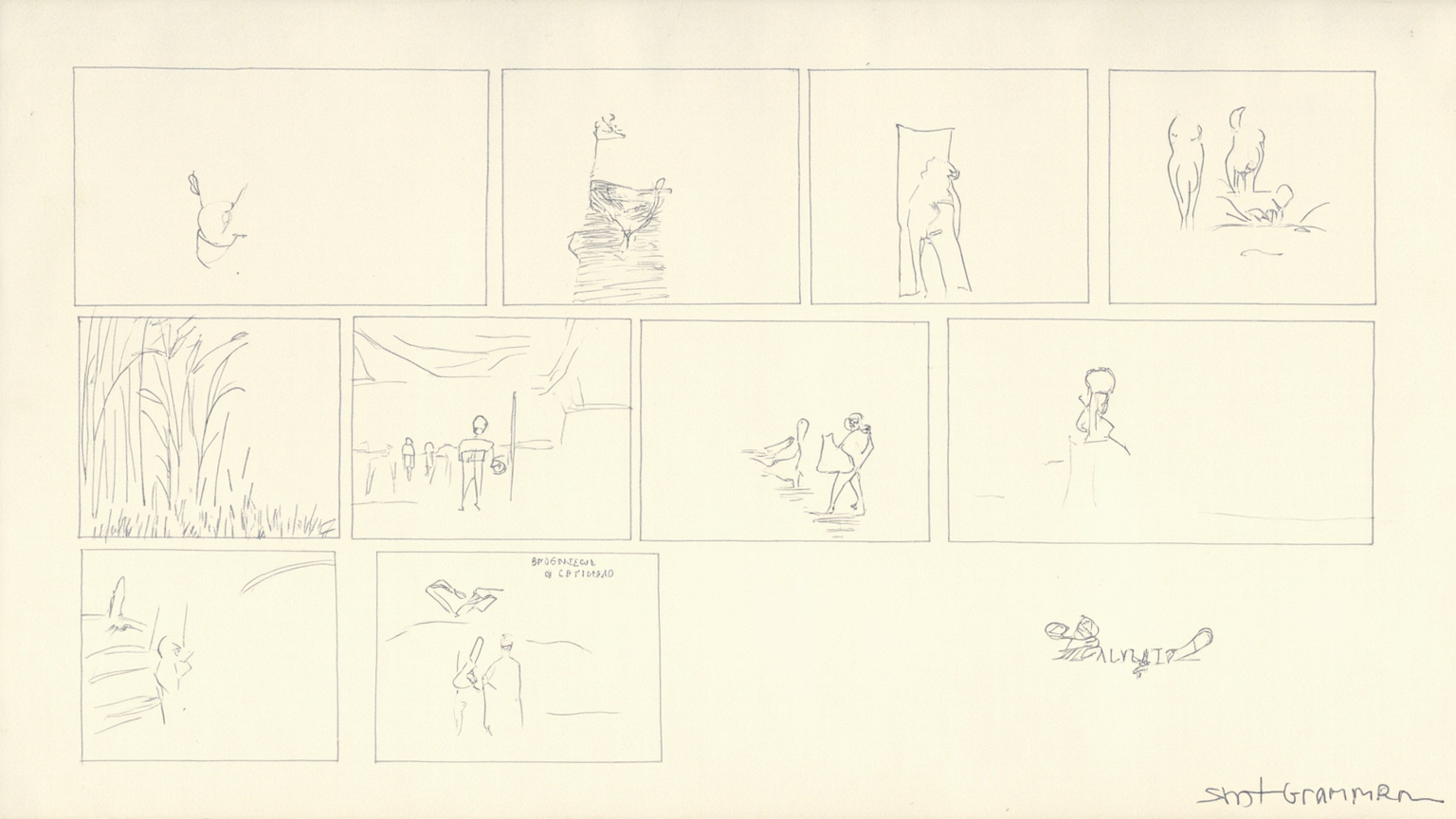
Art Direction4 plates
Before the guide was written, this book got a visual foundation — every illustration you just read grew out of it.