The Yearling · Companion Guide
鹿苑长春
一个十二岁的男孩,被父亲把猎枪塞进手里,跪在院子中央对准他亲手养大的小鹿——这一枪杀死的不是一只鹿,是他全部的天真。
Opening Scene
A twelve-year-old boy kneels in the mud at the center of a yard, aiming a rifle thicker than his own arm, straight and steady, at the deer he raised with his own hands. The deer doesn't run. It just looks up at him. The boy pulls the trigger. This isn't the opening of some Western. It's the quietest, and the cruelest, page in Marjorie Kinnan Rawlings's 1938 American novel The Yearling.
The Pulitzer committee handed her the prize the following year with a citation only one sentence long: a simple and moving story of a boy and his pet deer. That citation picked out the softest part. Open the book and read on, and underneath you find nothing but hard things: floods, rattlesnakes, a pine split by lightning, a corn crop that came up short, debts that neighbors carried right to the door. What tenderness this book has, it wrings out with a stone.
What This Book Is
The Yearling is one of the most widely read coming-of-age novels in English, and one of the most durably adapted. It belongs to a branch of American writing called regionalism: no New York, no Washington, but a stretch of Florida backcountry scrub that maps of the time hadn't even fully drawn. No polished city voice either, just the dry, hard dialect of the homesteaders who actually lived there. Rawlings spent years living in that scrub in the late 1930s, eating and sleeping alongside the settlers, and folded their turns of phrase, their instinct for when a corn stalk was ripe, their read on a deer's tracks, straight into a book written for children. Every boy-and-animal narrative that came after, from Charlotte's Web to The Sign of the Beaver, owes it as an ancestor.
People and Place
Jody Baxter is the boy at the center of the book, an only child growing up around a log cabin, a cornfield, a smokehouse, and a well. Neighbors are few and scattered, and the nearest market town is a long ride away. His schoolroom is the whole scrub: what's safe to eat, what's poison, which trail the rattlesnakes favor for sunning — all of it lives in his head.
His father, Penny (born Ezra, called Penny by the neighbors) says little, gives less, and carries more callus on his hands than anything else about him; he is the kind of man this frontier turns to iron. His mother, Ora, was the prettiest girl in the market town before she married in, and a decade and more of scrub life has worn her thin and hard; she gets by on sharp jokes, except where her son is concerned, and there she softens. Buck is a distant cousin of the Baxters and kin to the neighbors as well, a man who drifts by now and then for a meal, about the only warmth left in this wilderness.
Flag, the orphaned fawn Jody carries home, is no minor character in this book. He is the first living thing, and the only one, that answers Jody's voice on its own. He sleeps by the hearth, and his ears go up the moment Jody speaks. For an only child raised alone in the scrub, that kind of answering back outweighs everything else.
A Fawn Comes Into the Yard
The story opens in spring. Jody finds a fawn in the woods, abandoned by its mother, and carries it home tucked inside his shirt, hiding it from his father, raising it bottle by bottle. He names it Flag, for the tuft of fur at the tip of its ear that flicks like a small banner. Flag grows from something that fits in one palm into a handsome young buck, nuzzling the back of Jody's hand, trailing him on his rounds of the place, butting its nose against his stomach.
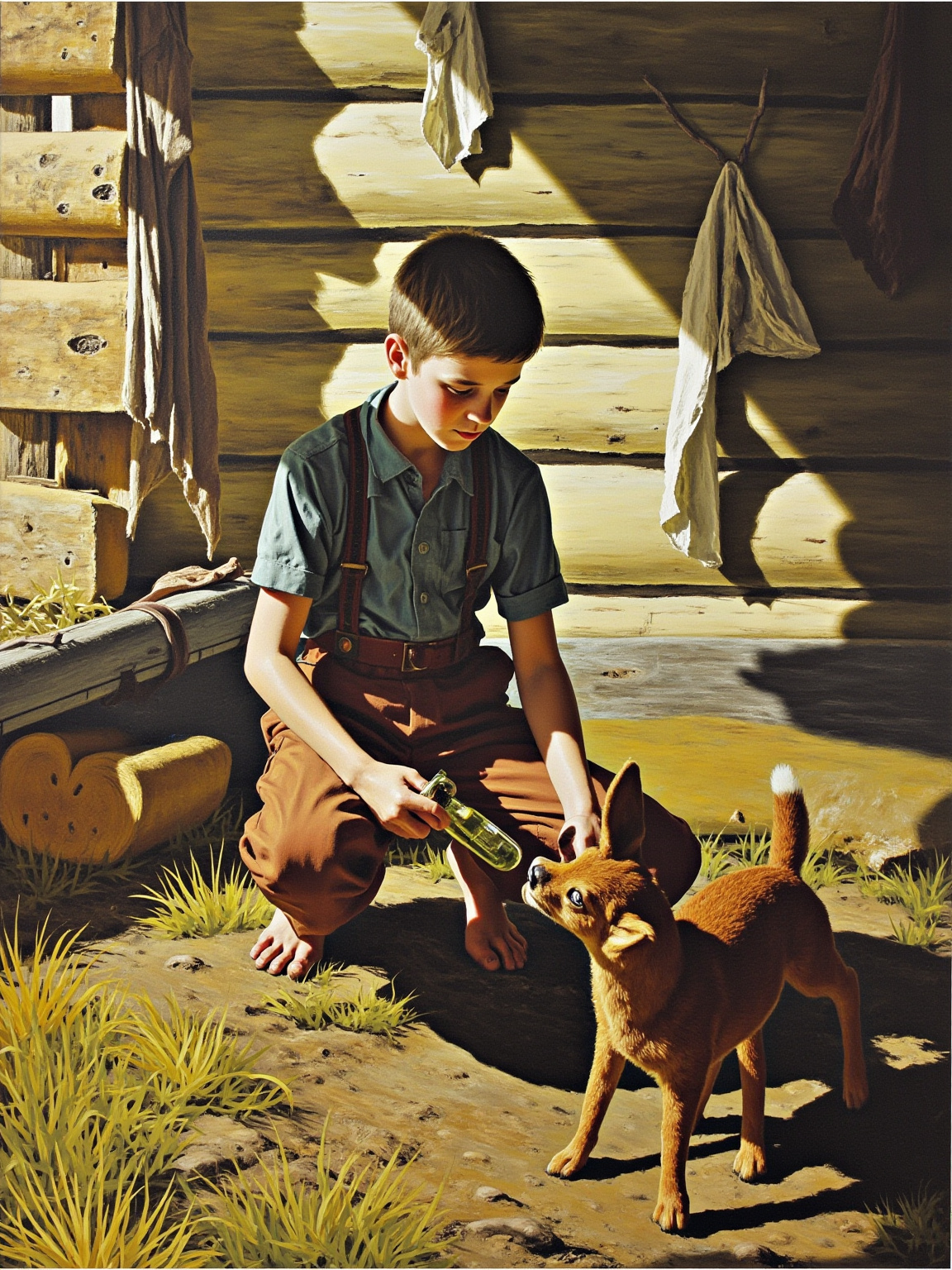
He came upon the fawn in the hammock, where it lay pressed against the body of its dead mother, and he took it home in his arms.
他在林地的低洼处撞见了那只小鹿崽,它紧偎在已经死去的母鹿身边,他把它抱回了家。
金句 · 第3章 · 拾鹿
Jody treats Flag not as a pet but as a brother. What makes this stretch of the book work isn't tenderness, it's restraint. Rawlings almost never lets Jody say the words I love you; every feeling lives instead in a string of small, specific actions — lifting each of Flag's hooves to wash them, checking for ticks, throwing on a coat at night when he hears a cough. The first time I read the passage where Jody tucks straw around Flag at midnight, I went back a page to reread it, because it took a moment to register what she'd actually written: this is a childhood with no other children in it at all. The deer is the only one Jody has.
Flag Starts Making Trouble
The good times don't last. Flag grows, and so does his appetite. Stripping a cornfield bare isn't the worst of it — he butts down the smokehouse wall, where the family hangs its meat for winter, breaks doors off their hinges, chases the hens, and gnaws away what little peace is left in the household, piece by piece. Worst of all, one day he breaks through the fence and runs straight onto a neighbor's land, and leaves the man's crop in ruins.
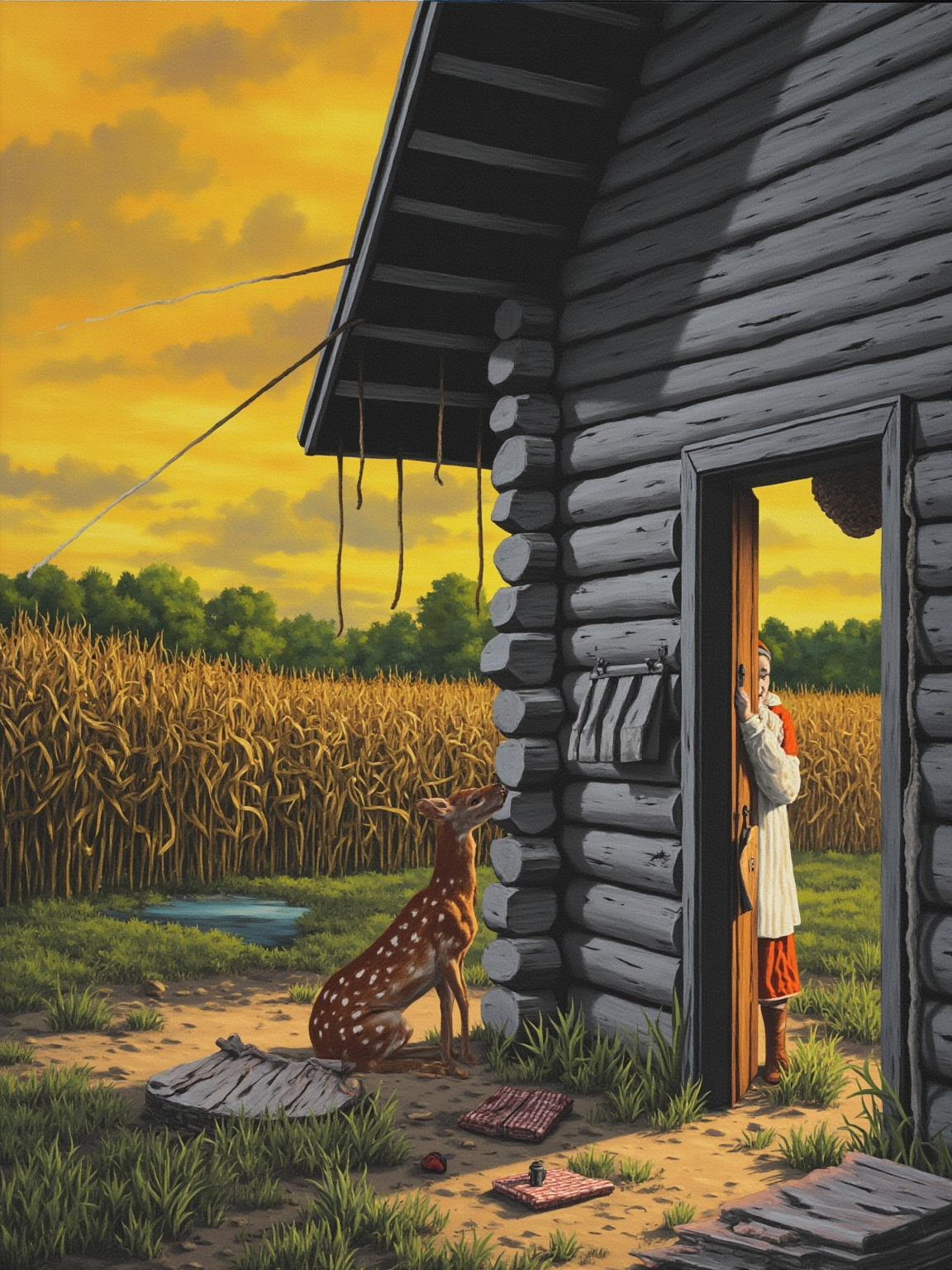
The flag had grown into a young buck, and the young buck was eating them out of home and home.
旗儿长成了一头年轻的雄鹿,而这头年轻的雄鹿,正把他们的家一口一口吃空。
金句 · 第12章 · 祸害
The neighbor comes to the door. Not to fight, to collect: pay in deer or pay in cash, or the two families are through with each other. This isn't a literary flourish. In the Florida scrub of the 1870s, this was the single most common reason homesteading families turned on each other. Flag is Jody's brother. To the neighbor, he's livestock that just wrecked a season's food. This is the moment the whole book turns dangerous: quietly, the scale tips from whether you love something to whether you'll live through the winter.
The Father Puts the Rifle in His Son's Hands
The Baxters cannot pay in cash. Penny makes a decision — no explanation, no comfort, just lifting the rifle down from the wall and putting it into Jody's hands. The book spends more words on that motion than on anything Penny says: the gun is heavier than the boy's own arm, and Penny has to seat the stock in Jody's shoulder for him and lift the barrel into line. The reader is walked, sentence by sentence, into pressing a twelve-year-old squarely into the one place he least wants to stand.
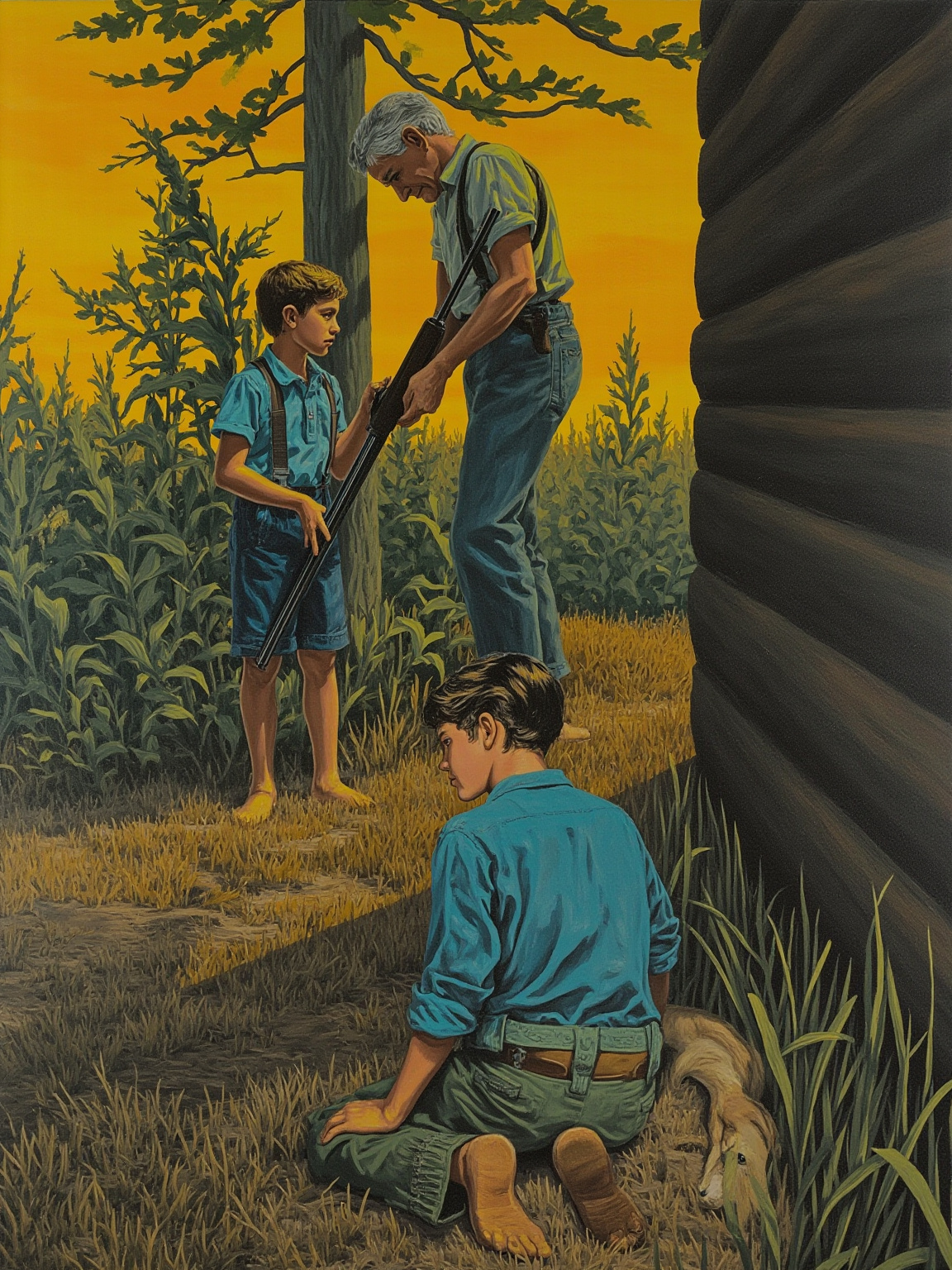
Penny took the gun down from the wall and put it into the boy's hands, and the boy's hands were too small to hold it.
彭尼从墙上取下猎枪,塞进男孩手里,男孩的手太小,握不住那支枪。
金句 · 第20章 · 那支枪
It isn't that Penny doesn't love his son, or the deer. His reason for marching Jody out to fire that shot is as hard as the ground under this place: spare the deer, and the family doesn't make it through winter; fail to make it through winter, and twelve years of raising this boy come to nothing. This is what the most painful kind of love looks like in a coming-of-age story. It will not take the blow for you, but it will put the weapon in your hands and teach you, with its own hands over yours, to pull the trigger.
The Shot in the Middle of the Yard
The next day. The middle of the yard. Jody kneels, and Flag walks over and stands in front of him, looking up — the book makes a point of it, Flag doesn't run. After the shot, nothing in the yard moves. Dust lifts on the wind and settles again. Ora finally breaks, crouched by the hearth, sobbing outright. Penny stands on the porch and says nothing at all. Jody gets up, picks up the hound Flag used to chase, and doesn't speak again. Each of the Baxters carries his own stone, and they go on living side by side.
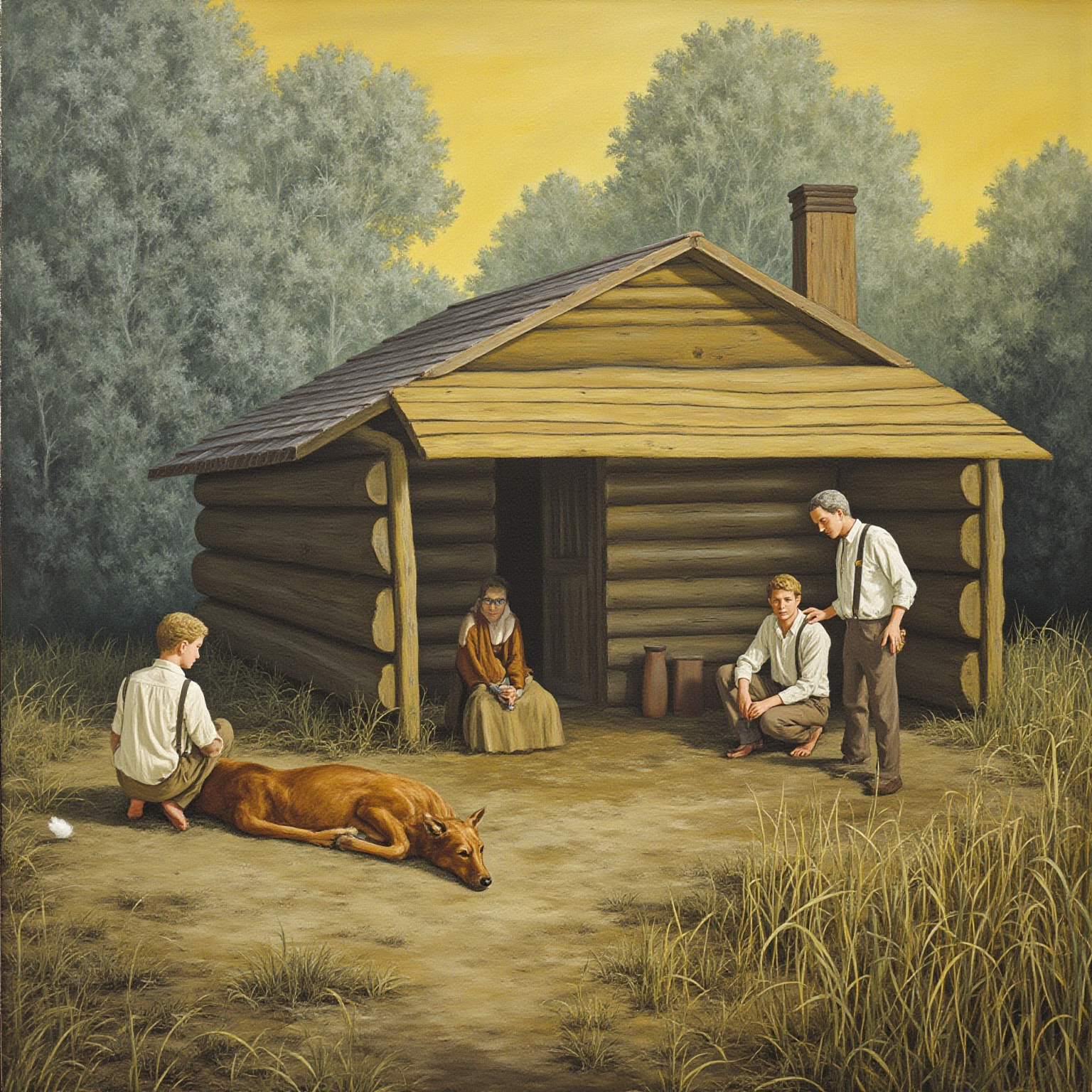
The fawn did not run. It stood still and looked at him, and the boy knelt in the dust and pulled the trigger.
旗儿没有跑。它就那么站着,抬头看着他,男孩跪在尘土里,抠下了扳机。
金句 · 第21章 · 那一枪
This shot kills more than a deer. Flag was the only voice in the wilderness that ever answered Jody back, and when that answer stops, his childhood stops with it. So at the end he doesn't cry again, and no one comes to console him. He just hangs the rifle back on the wall, picks up the hound, and becomes, from that point on, a different child, one who now has to decide for himself whether he wants to go on living.
Leaving the Homestead
After Flag dies, the Baxters can't stay on this land any longer: the neighbor's grudge, their own wound, a place that no longer feels like home. In the end they lock the cabin door, drive the mule wagon out of the scrub, and go to stay with relatives far off. The book's last page holds an empty yard, a cold hearth, and a boy who will never again come back to raise a deer. This isn't reconciliation, and it isn't peace. It's simply we have to go now, and Jody has aged more than a year or two beyond where he was.
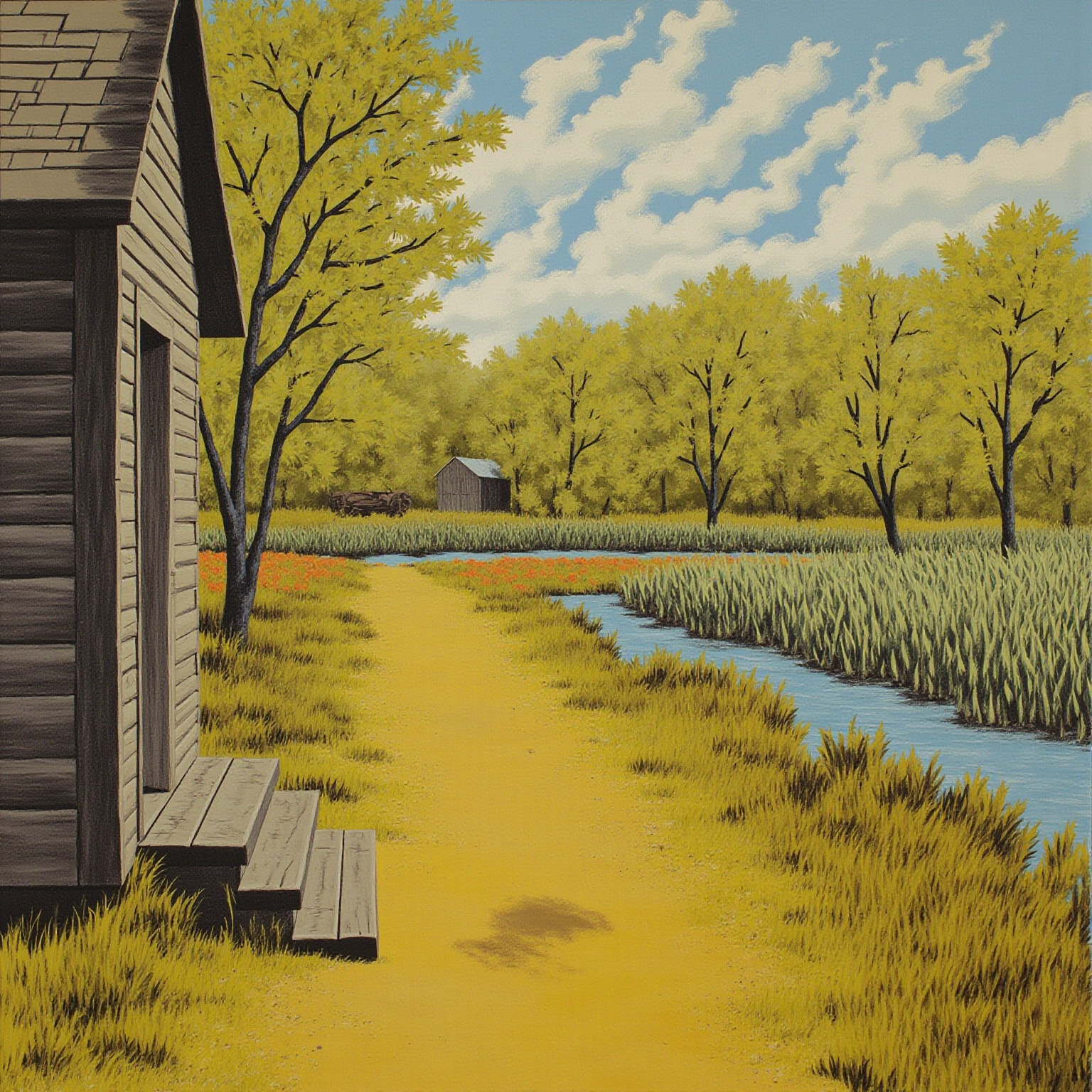
He would have no need of any flag now, for his heart was as bare as the winter scrub.
他再也不需要任何旗儿了,他的心已经和这片冬天的灌木荒原一样空旷。
金句 · 第24章 · 弃屋而去
What Actually Makes This Novel Good
First, it pushes growing up all the way into real wilderness. Other children come of age in schoolrooms, in parlors, at the grown-ups' table. Jody comes of age among rattlesnakes, floods, a pine felled by lightning, and a neighbor collecting a debt. His curriculum isn't arithmetic and grammar, it's whether he survives. Rawlings makes the setting itself a kind of godfather, not a backdrop.
Second, the prose itself: dry, restrained, almost never sentimental. You will not find a sentence in this book that says Jody was sad. The sadness is written entirely in action — picking up the hound, crouching down, saying nothing. That restraint carries more weight than any amount of weeping would. Every novelist since who has written well about animals and plants has, quietly, learned something from Rawlings.
The Yearling strips growing up down to its coldest layer: the one you love most is exactly the one you have to end with your own hands.
Why It's Worth Reading Even Knowing How It Ends
Knowing the plot isn't the same as having read the book. What this novel actually carries over doesn't live in its events: the way the Florida scrub changes color, inch by inch, across twelve months; the way a corn stalk gnawed by a deer sways in the wind; the light of the oil lamp while Jody tucks straw around Flag at midnight. Rawlings writes both animals and plants as if each had a temperament of its own, and you can smell longleaf pine and wet earth on every page. No summary can hand you that. Go read it yourself.
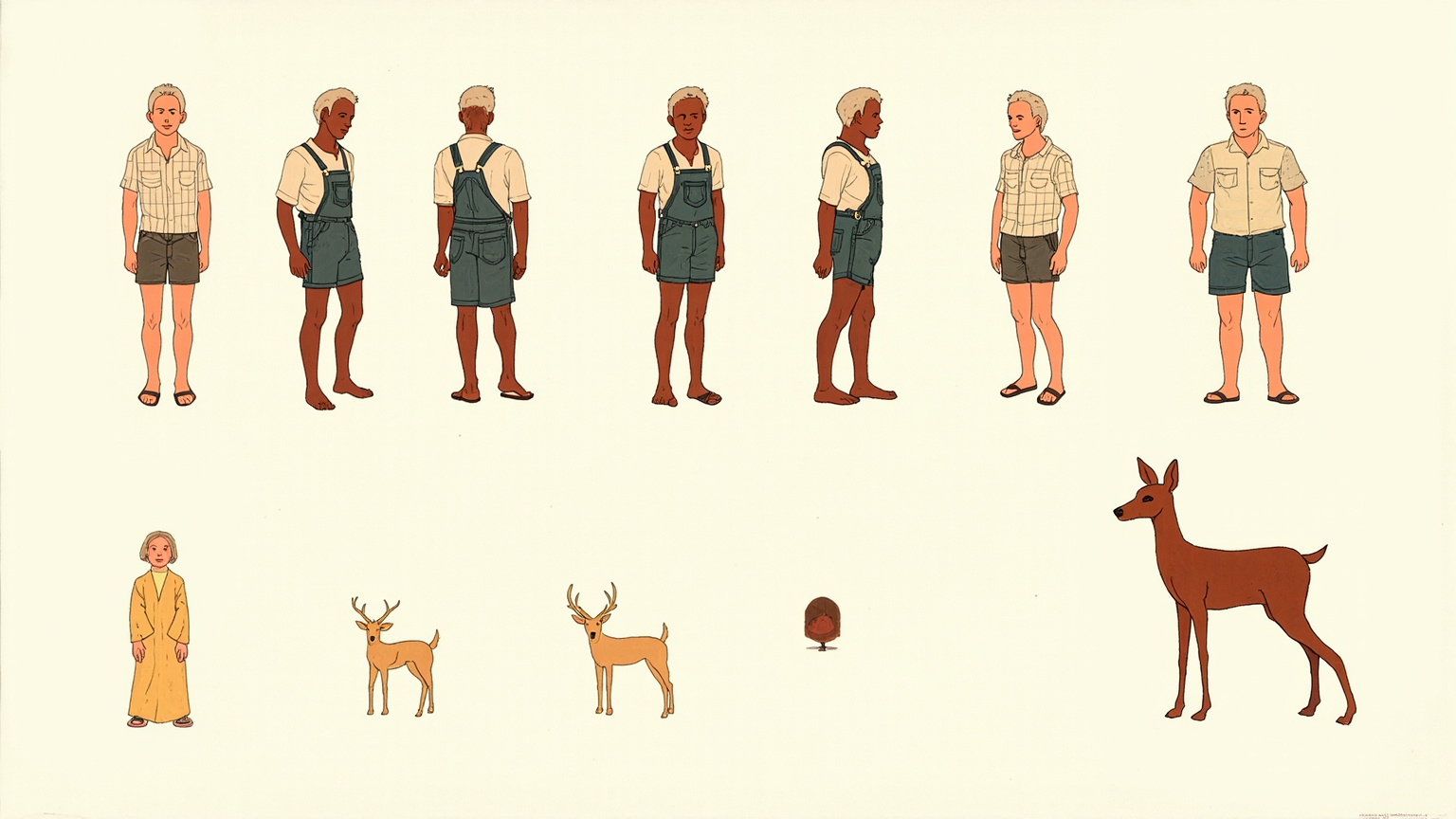
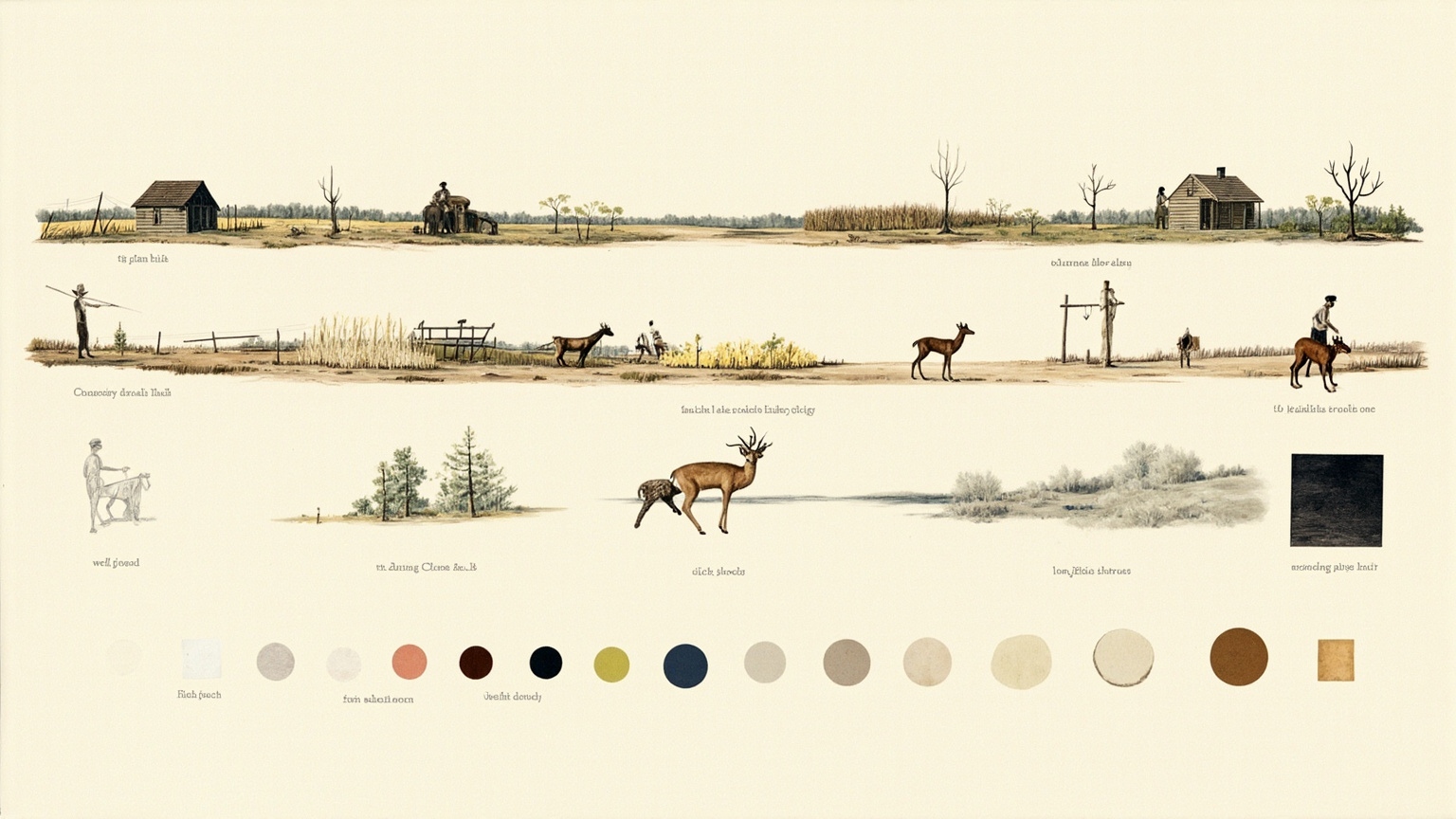
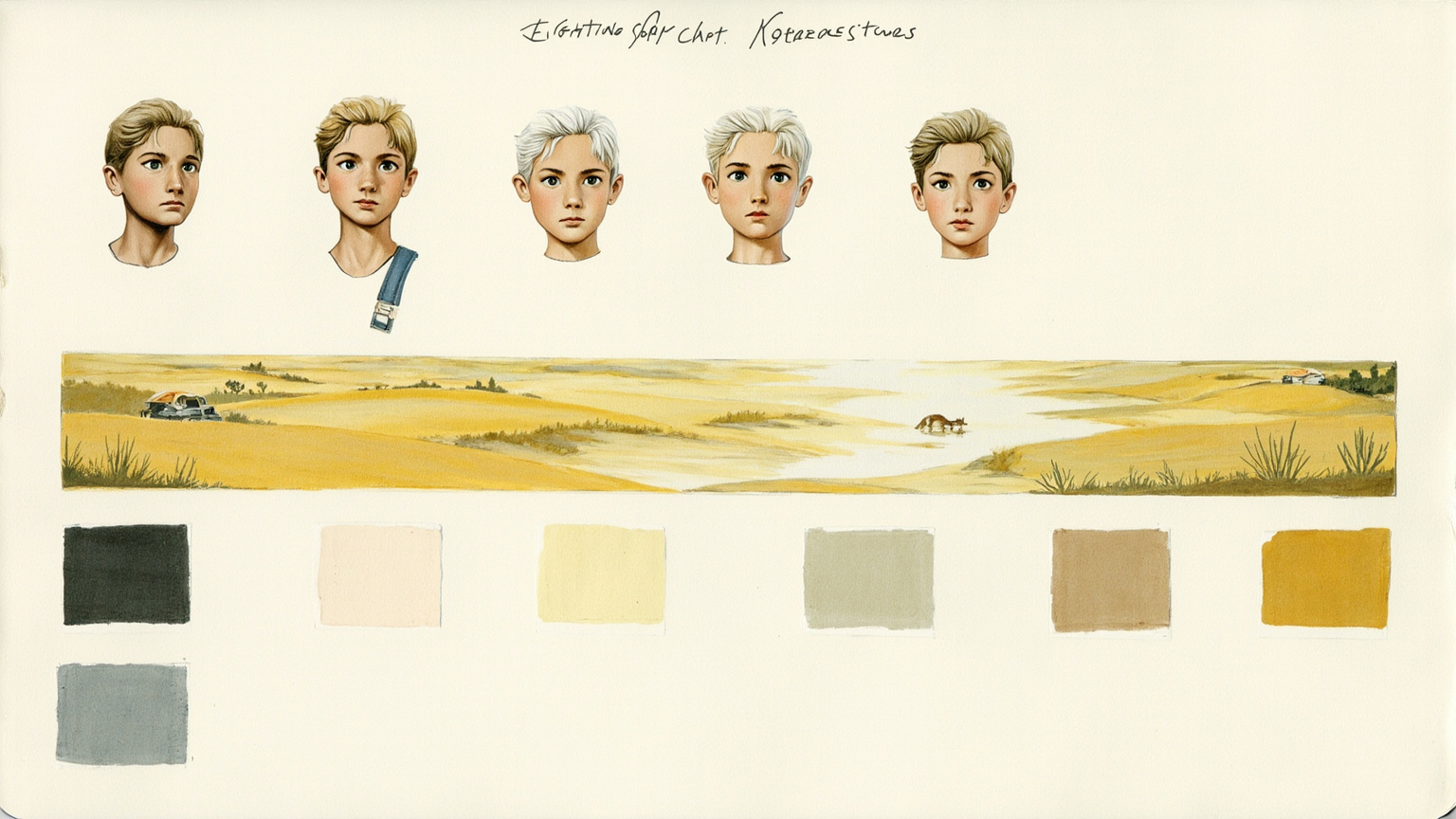
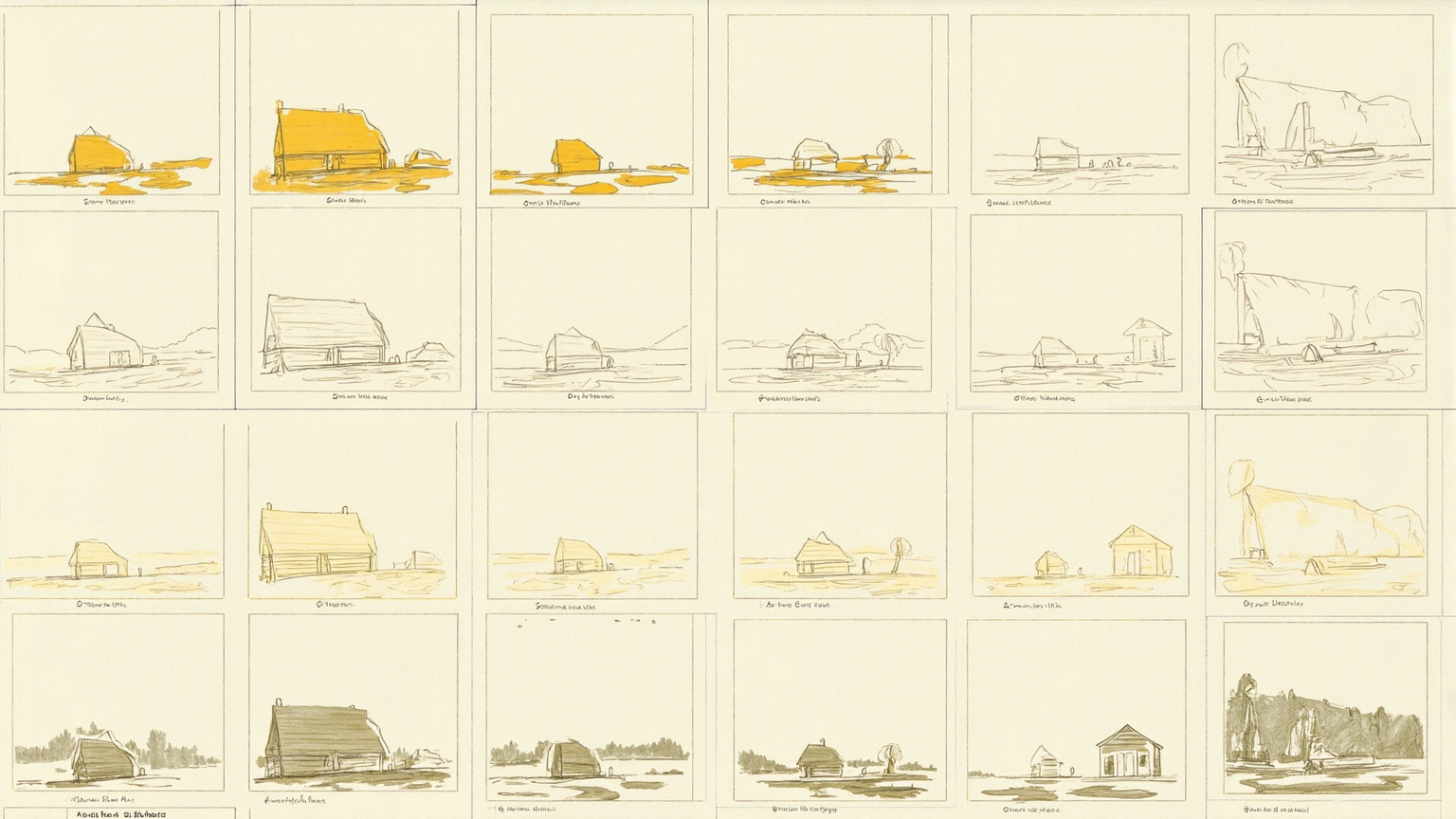
Art Direction4 plates
Before the guide was written, this book got a visual foundation — every illustration you just read grew out of it.