The Zohar (Sefer ha-Zohar / "Book of Splendor" or "Book of Radiance") · Companion Guide
光辉之书
一本自称出自两千年前拉比之手的书,出自十三世纪西班牙抄经人的笔下——托名即立威,古语即背书
The Prophet in the Cave, and the Scribe Thirteen Hundred Years Later
According to legend, Rabbi Shimon bar Yochai fled into a cave in Galilee with his son sometime in the second century and stayed there for thirteen years. A carob tree grew at the mouth of the cave, and one afternoon the prophet Elijah walked in and dictated the secrets of God to him. Shimon wrote it all down — or so the Zohar claims of its own origin. The old man who leads the discussions throughout the text, wandering Galilee with ten companions to argue over the Torah, is supposed to be this same cave sage.
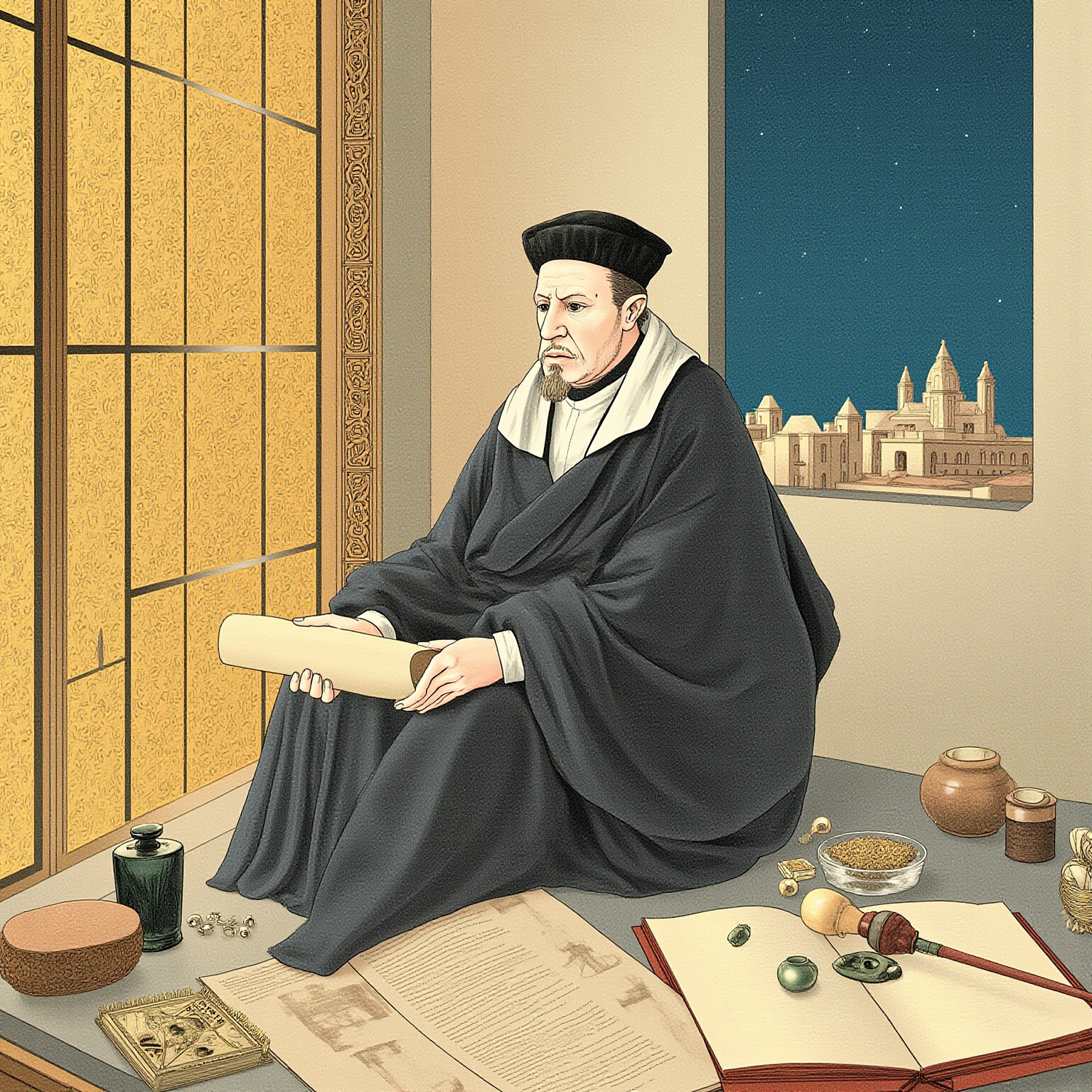
But in a scribe's room in a Jewish quarter of thirteenth-century Castile, a different hand was holding the quill. A booklet claiming to be copied from an ancient original began circulating in installments through Guadalajara, written in Aramaic, and buyers in the market paid well for it. The scribe was Moses de León, and he pinned an entire body of his own school's Kabbalah on a famous rabbi who had supposedly died in a cave two thousand years before.
What Kind of Book This Is, and Why It Is Remembered
The Zohar is the central text of Jewish mysticism, Kabbalah. Traditional kabbalists credit it to Rabbi Shimon bar Yochai in the second century; modern scholarship, above all the twentieth-century historian of Jewish thought Gershom Scholem, has settled instead on late-thirteenth-century Spain, largely the work of Moses de León. The book moves verse by verse through the Torah, the Book of Ruth, and the Song of Songs, reading out an inner meaning beneath each line, and from that builds a full cosmology running from God down to the world.
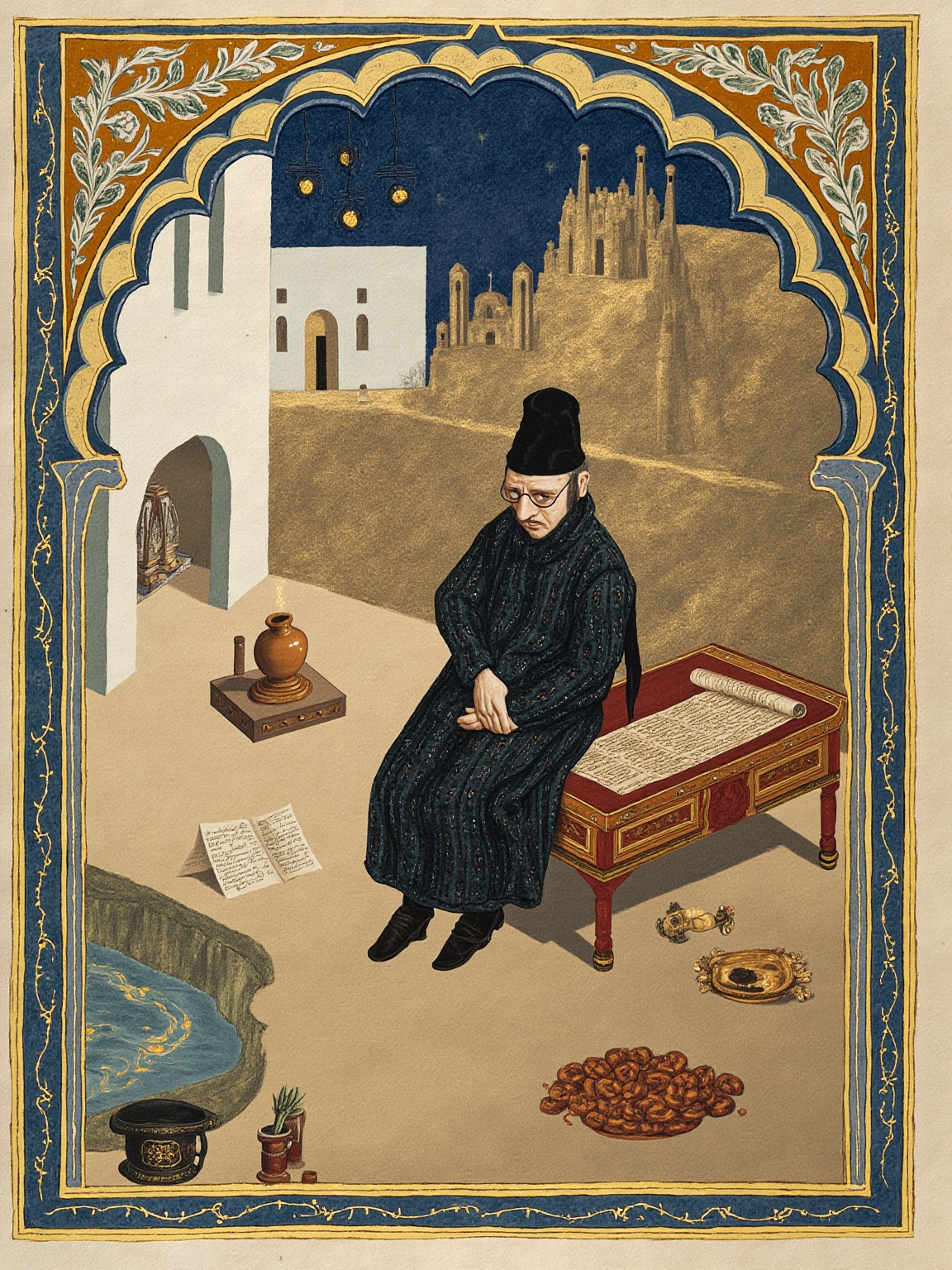
Woe to the man who says that the Torah gives mundane stories and words of ordinary speech! … The garments are the stories of this world; the deeper sense is the sense above.
哀哉此人说:'托拉不过讲述世俗之事、平实言语罢了!'——衣裳是这世上的故事,衣裳之下的,乃是那上界的义。
金句 · 《光辉之书》本节论托拉之表与里
It is remembered not because it is the world's oldest book but because the structure it built — the ten sefirot, letters as cosmic code, the Infinite and a shattered divinity — seeped into popular culture like groundwater. The Tree of Life you see today on tarot cards, New Age posters, and mystic blogs, and the numerology that reads hidden meaning into Hebrew letters, all trace back to this thirteenth-century booklet.
Characters and World
On its surface the text has only two kinds of characters: Rabbi Shimon bar Yochai, and the ten companions who sit around him. His son Eleazar is one of the companions and also, in legend, the one who spent those thirteen years with him in the cave. There is no protagonist here in the usual sense, no rising action, no ending. The plot, such as it is, is simply a group of men sitting in the shade of olive trees in Galilee, taking turns picking a verse apart.
The real protagonist, outside the text itself, is Moses de León — a middling Spanish kabbalist who borrowed the name of a famous rabbi dead two thousand years to give his own Kabbalah authority. His widow and daughter later told a fellow kabbalist, privately, that he had written the book himself and put another man's name on it because it sold for more that way. The source for this story is the memoir of the thirteenth-century kabbalist Isaac ben Samuel of Acre.
One more key figure comes later: Isaac Luria, known as the Ari (the Lion), who in the northern Galilee town of Safed in the sixteenth century took the Zohar's sefirot system out to a wider audience and argued that, starting with his generation, kabbalistic knowledge no longer had to stay secret. Every later step in the Tree of Life's journey into popular culture starts with him.
The Plot
How this book came to be written is the best place to start. In the traditional account, Shimon heard Elijah's dictation in the cave and wrote down this Splendor — which wraps the text in two thousand years of borrowed light. But when twentieth-century scholars turned up de León's own handwriting, the paper trail of the manuscripts, and testimony from people who knew him, a different picture emerged: a small-town thirteenth-century scholar borrowing an ancient name to sell his own Kabbalah, and to outdo a few rival schools doing much the same thing. That single thread ties together textual history, intellectual history, and legend into one rope. I remember sitting with this for a while the first time I read it, because the same book carries two questions at once: who wrote it, and why it pretends someone else did.
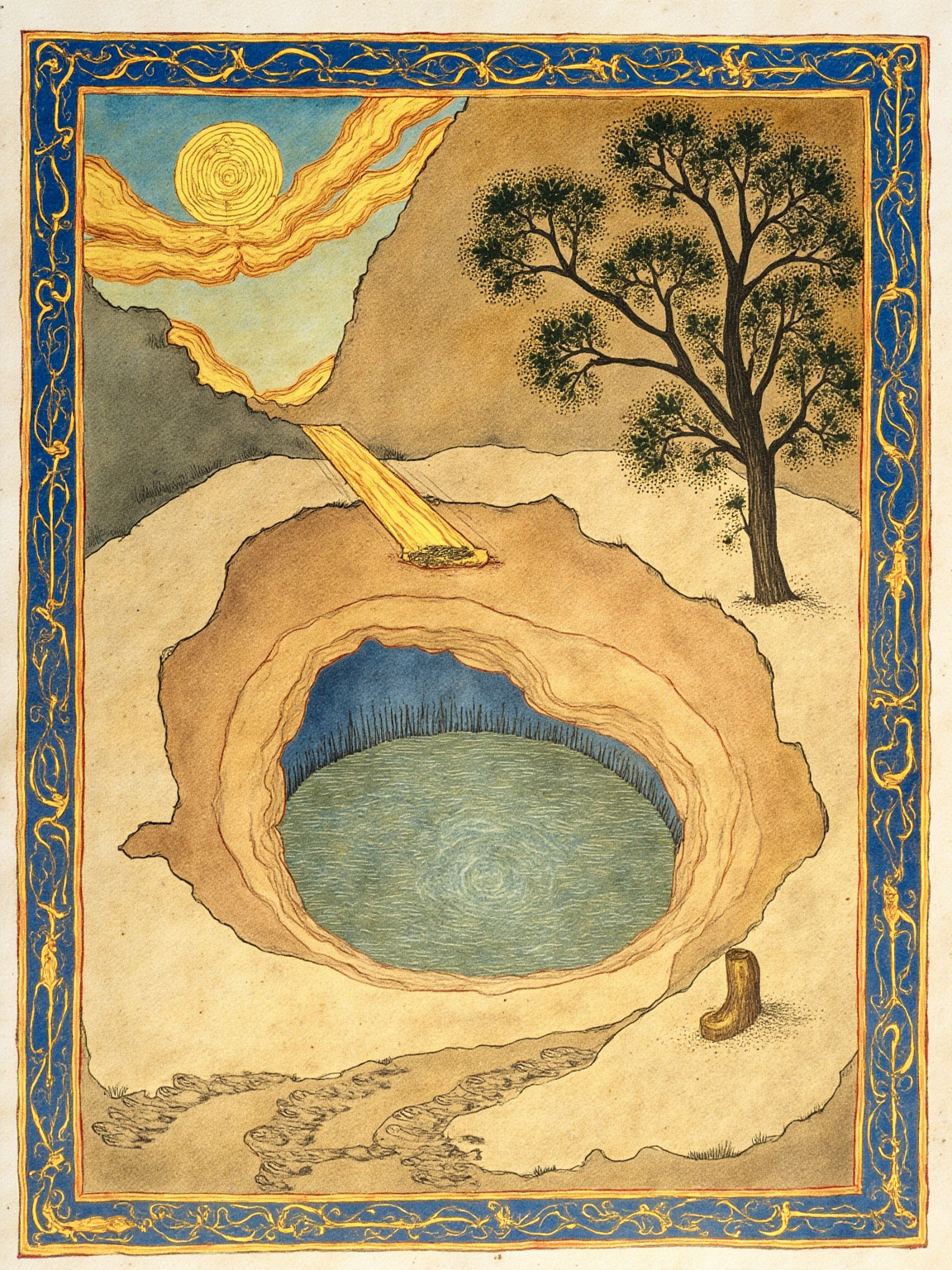
It is the oral tradition, and the secret of the oral tradition, that the essence of wisdom is there concealed.
口传之秘,口传之秘中之秘——智慧的精髓,正藏于那不可见处。
金句 · 《光辉之书》论口传及其内层
Moses de León's project went further than borrowing a name. The language itself is a disguise: he wrote in an invented Zoharic Aramaic, built on the Aramaic of the Babylonian Talmud and the Targum Onkelos, with crude grammar and a thin vocabulary, deliberately salted with contemporary Hebrew loanwords and a few stretches of archaic-sounding, near-unreadable strings of characters. One section partway through the text, the Midrash ha-Ne'elam, the Hidden Midrash, is written in Hebrew and mimics the feel of early midrash, though underneath it is still medieval through and through. The whole book is an exercise in lending Kabbalah the authority of an ancient language — he forged the language in order to forge the author.
What actually carries the weight in this text is its cosmology: the ten sefirot (literally numbers) — Crown, Wisdom, Understanding, Love, Strength, Severity, Beauty, Endurance, Foundation, Kingdom. This ten-part structure describes how God emanates out of himself, step by step, until he reaches the world and holds the universe together. Arranged as a diagram, this becomes the tree shape that later generations would call the Tree of Life. That column of ten circles you see on any mystical chart today has its source right here.
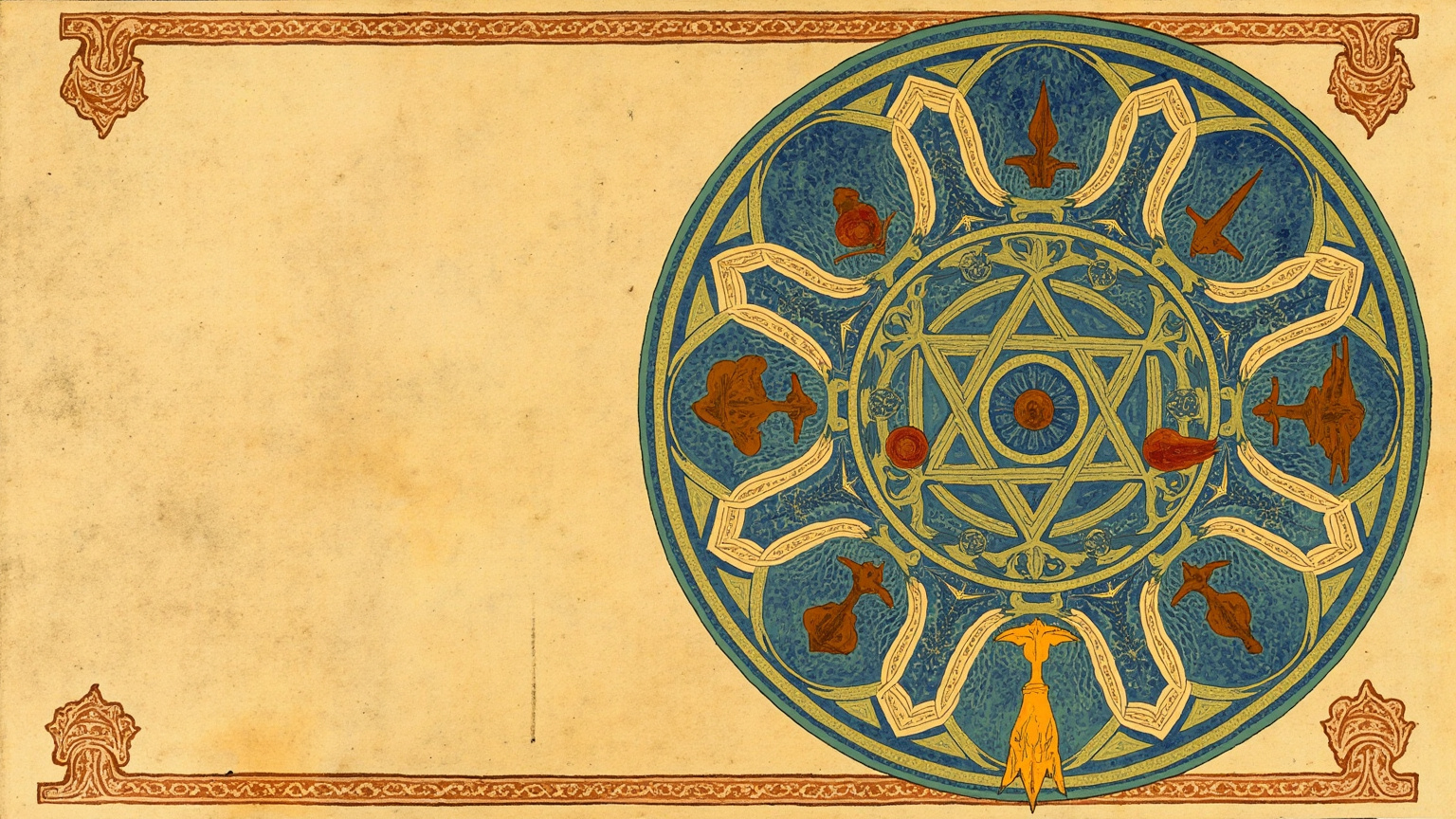
Come and see: Ein Sof can never be comprehended, nor can It be known by any intellect … It is forbidden to inquire how It is, for there is no 'how' with respect to It.
来观:无垠者(Ein Sof)永不可测,凡心智皆不能识——莫问它如何,因对它而言,本无'如何'可言。
金句 · 《光辉之书》论 Ein Sof 不可知
The bolder move is what it does to God. The text replaces the knowable, personal, throned deity of traditional Judaism with a single term: Ein Sof, Hebrew for the Infinite. In the Zohar's universe God is no longer a being seated somewhere but a distant presence, shattered by his own act of emanation, reachable only through piety and good deeds that repair the world. This is the deepest break between Kabbalah and two thousand years of mainstream Jewish theology afterward — and for that reason, it is the book's most original move.
Another far-reaching move is the idea that letters are the code of the universe. The shape, numerical value, and combination of Hebrew letters become the key to the Torah's hidden layer, and also the skeleton of the cosmos itself — in the kabbalistic view, letters are the actual building blocks of creation. Countless later uses trace back to this: the letter correspondences on tarot cards, the New Age game of adding up letter values into numerology, the mystic blog post claiming this Hebrew word secretly means something else. All of it starts here.
After that, the book's fate followed the fate of the Jews who carried it. When Jews were expelled from Spain in 1492, the Zohar's booklets scattered with them, to North Africa, to Italy, and on into Eastern Europe. In sixteenth-century Safed, Isaac Luria turned it from an esoteric text into something that could be taught openly; in the seventeenth and eighteenth centuries it entered the Hasidic movement and put down roots in Jewish popular life; later still it spilled out of the Jewish world entirely, into tarot, New Age culture, and popular books. The red string you may have seen on someone's wrist belongs to a later, separate offshoot of Kabbalah Centre teaching, but the Tree of Life and the code of letters had by then run all the way out of the esoteric circle and into everyday life.
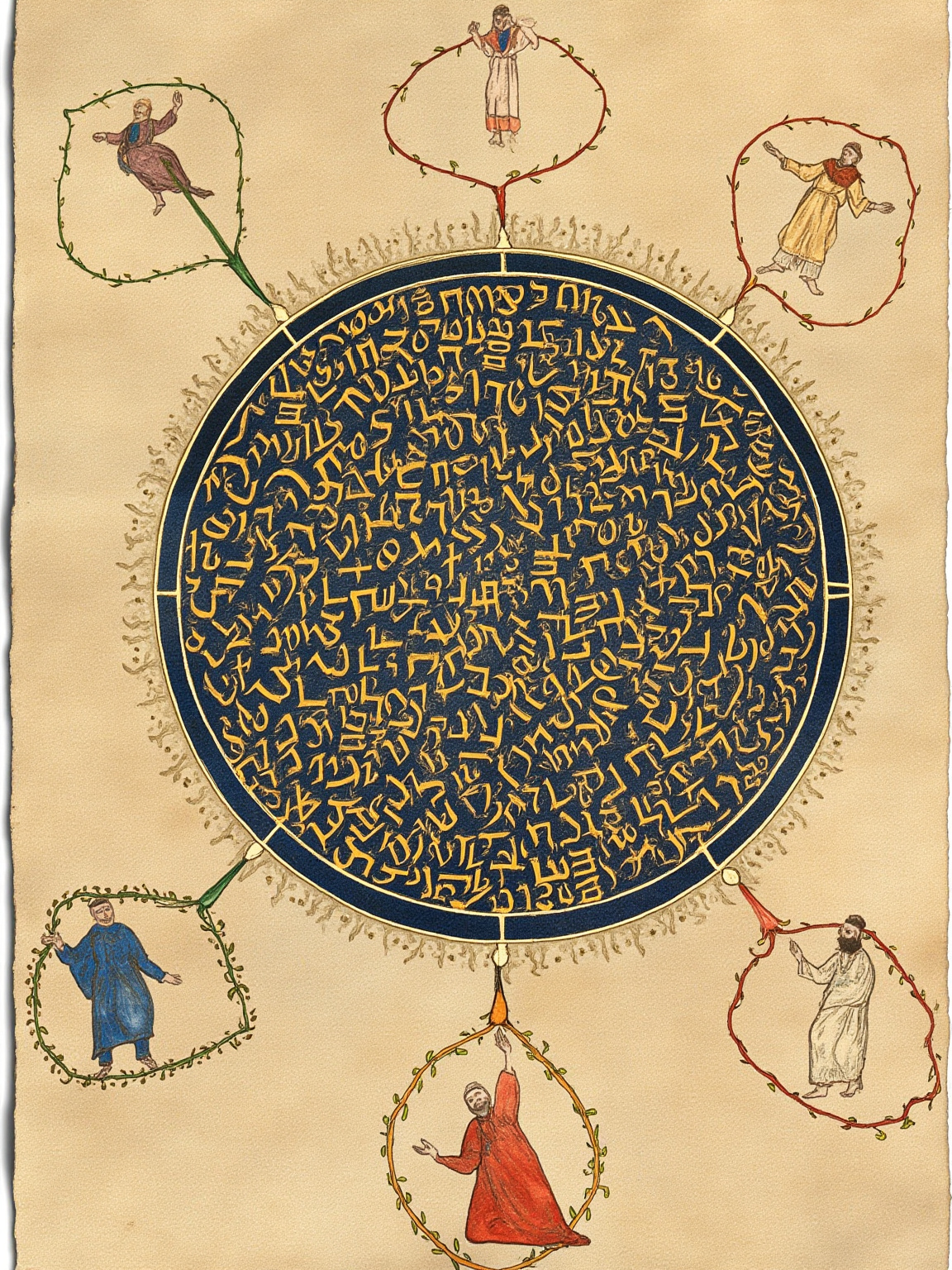
All the streams flow into the sea, and the sea is never full; the place to which the streams return, there they flow again.
众川归于海,海却不满;川流所归之处,川仍复归于彼。
金句 · 《光辉之书》本节(仿传道书之笔)
Themes and Craft
What is the Zohar actually about? Reading it, I found three layers stacked on top of each other. The first is cosmology: how God becomes, out of the Infinite, a world we can perceive. The second is exegesis: every verse of the Torah hides a deeper meaning underneath, waiting to be unpacked with the sefirot and the code of letters. The third is ethics: human beings live inside a shattered divinity, and piety and good deeds are how the world gets repaired. The three layers carry no fixed order — the text shifts between them wherever it happens to be going.
The most striking piece of craft here is not inside the text at all, but in the relationship between the text and its author. A small-town thirteenth-century scholar dressed his own Kabbalah up as a two-thousand-year-old original, and built a language from scratch to make the disguise hold — one of the most successful engineering jobs on a classic that the Middle Ages ever produced. Later scholarship settled the question of forgery, but the book's poetry, its theosophy, and its mystical pull were not diminished by the verdict. That is the thing worth sitting with here: a fake book can still be a real classic.
A fake book can be a real classic — that is the thing about the Zohar that will not let you sit still.
Why Read It Today
For a reader today, three things make the Zohar worth the time. It explains where the Tree of Life and the letter-numerology you run into everywhere actually come from. It shows a medieval way of engineering a classic — how to use language, legend, and a borrowed name to give an idea authority. And its reimagining of God, as distant, shattered, in need of repair, still lands hard in an age where everyone is talking about a missing sense of meaning.
A Hook Into the Text
A companion guide can give you the map, not the territory. What actually pulls you into the original is its texture — that invented Aramaic, half scripture, half sermon, half riddle, that sounds like a voice deliberately lowered; the rhythm of revelation when Shimon and his companions sit together, peeling back one layer at a time like an onion; and in the letter-values and symbols buried on purpose inside the verses, you can just about feel how much a group of thirteenth-century scribes were thinking, worrying, and standing in awe. None of that comes across unless you open the original.
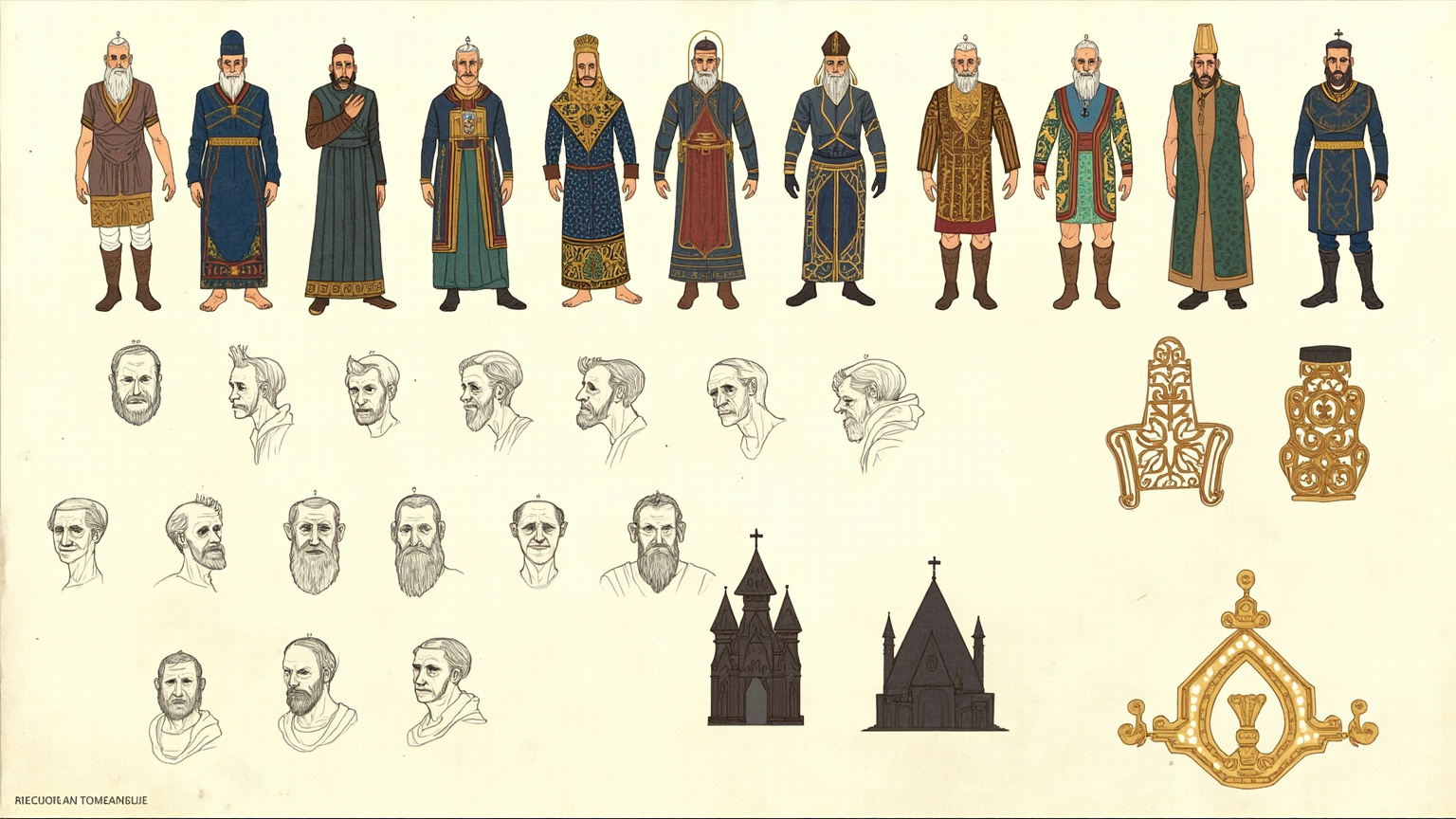
Art Direction4 plates
Before the guide was written, this book got a visual foundation — every illustration you just read grew out of it.