Theogonia / Theogony · Companion Guide
神谱
从最先的虚无到第一位女人——世界被一层一层写下名字的诞生档案。
Opening: a herding staff on the mountain, against a song
A shepherd was tending his flock on Mount Helicon, in central Greece. Thirsty and worn out from walking, he sat down against a rock. Then the mountain air stirred and nine Muses appeared. They put a laurel branch and a song into his hands, and turned to leave. The song had no room for him or his flock, only a string of names he had never heard: Chaos, Gaia, Tartarus, Uranus, Cronus, Zeus. Strung together, these names form a genealogy that starts before the world had any shape and runs down to the heavens and the earth as they stand today. That shepherd was Hesiod, and the poem later came to be called the Theogony. He is not the hero of it. He is only the man who sang the Muses' song for them.
What kind of poem is this
It was composed early in the Archaic period, centuries before the Acropolis or the classical theater existed. It has no publication date, because it was made to be spoken, carried forward through generations of singers before anyone wrote it down. Along with the Iliad and the Odyssey, it counts as one of the three great early Greek poems, but it does a different job: Homer tells you what the gods do, Hesiod tells you where they came from. When we talk about Greek mythology today and the names come out, Zeus, Hera, Apollo, Athena, the shape those names have taken owes less to Homer's battlefields than to Hesiod's genealogy. This poem is the first brick in that wall.
Who is there, and what do they want
The gods here are not a cast of named characters so much as a series of positions. Chaos is the first one, the state before which the world had no shape. Gaia is the earth itself, the mountains, the seas, the springs all growing out of her body. Uranus is the sky, the first generation of gods alongside Gaia, when heaven and earth were still locked in an embrace. Cronus is the son who overthrows his father, the second generation's ruling god. Rhea is his sister and wife, the one who hides their youngest child away. Zeus is that youngest son, saved from his father's jaws, the third generation's ruling god, and the gods only become the gods we recognize once he takes over. In between stands Prometheus, the one who shapes humankind out of clay and steals fire for them. Pandora is the first woman on earth, holding a clay jar in her hands. The Muses are the nine goddesses of poetry who appear together at the start, and they are the real authors of this song. Hesiod is only the one who carries their voice.
The world in this poem runs on a simple layout: three levels, stacked. Above is the sky and the stars, Olympus. In the middle is the earth, Gaia, with its mountains and seas marking the borders. Below, deep underground, is Tartarus. The gods change hands generation by generation, and every change rewrites the genealogy and the rules along with it. This is the earliest Greek picture of how the world came to look the way it does, and unlike other peoples who wrapped up creation in two or three days, the Greeks needed a whole poem, working through one succession after another.
The plot line: from the first shape to the first woman
First beat: Chaos appears. Before him the world had no shape. He was not born of anyone, he is simply the first thing to come into being. Then Gaia, Tartarus, and Eros arrive together: the womb of the earth, the floor of the abyss, and the force that drives things to be born. This is the first image the poet can hold steady. Before Chaos has even settled, three original things already have names.
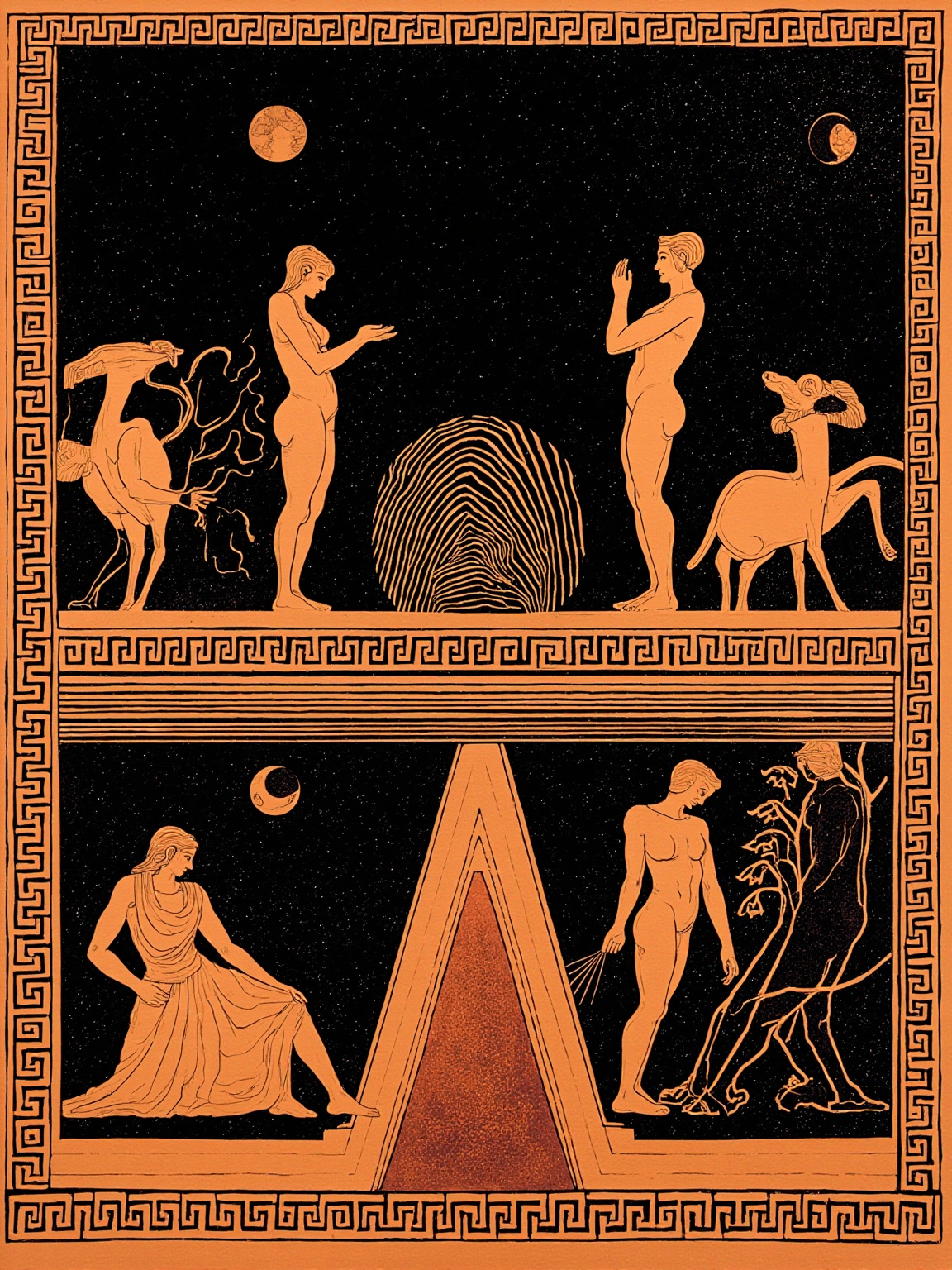
Verily at the first Chaos came to be, and after him wide-bosomed Gaia, the ever-sure foundation of the immortals who hold the peaks of snowy Olympos.
最初出现的是混沌,随后便是胸怀广阔的大地——她是永固的根基,承载着奥林匹斯雪山诸神的峰巅。
金句 · 开篇 · 混沌初显
Second beat: Gaia bears Uranus, and heaven and earth separate for the first time. Above and below split apart, mountains and rivers and seas and springs grow out of Gaia's body, and the twelve Titans and the giant broods are born from that first pair of gods, setting the first order in place. There is no real drama in this stretch, just a genealogy laying out what came before what. But it has its own visual pull: the poet first lets you watch the sky lift away, watch the earth spread out beneath it, and only then has you count off the first names born from that pairing of heaven and earth.
And Gaia first bore, equal to herself, starry Ouranos, that he might cover her all about, to be an everlasting seat for the blessed gods.
盖亚首先生出了与她等高的、繁星缀顶的乌拉诺斯,使他自四面将她覆护,作为诸神的永恒居所。
金句 · 第一代 · 天地初分
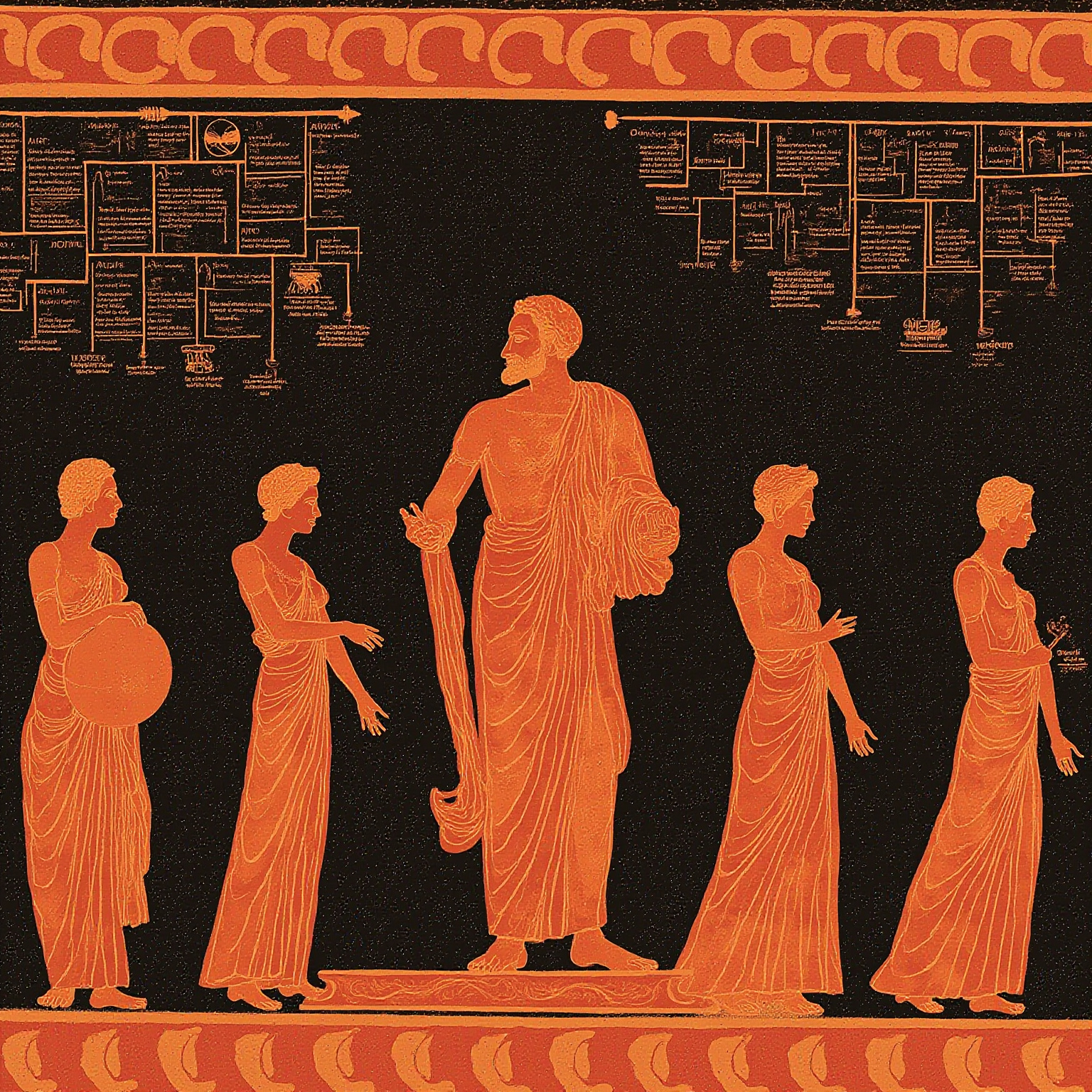
Third beat: the succession turns over. The son overthrows the father. Cronus becomes the second generation's ruling god. Afraid of losing his throne, he swallows each of his newborn children as they arrive, until Rhea hides the last one away and feeds Cronus a stone wrapped in swaddling instead. That saved youngest child is Zeus. Years later Zeus turns on his father and forces him to give back the siblings he swallowed, and the war between the old generation and the new settles the outcome. This is the tightest, most driven stretch in the poem, but it is still not drama. It is a turning point inside a genealogy. The poet leans hard on this section because he needs to show that succession is the gear that turns the whole order forward.
Fourth beat: Zeus builds the new order. He marks out who governs what, who may not touch whom, what crime draws what punishment. The Greeks called this set of rules themistes, law and due measure. Hera becomes his lawful wife. Athena is born fully armed from her father's head. Apollo, Artemis, Hermes, Hestia: the names settle one by one into their new places. The Greek gods we mean when we say the phrase today start from this generation, from Zeus. The poet writes this beat with the cleanest hand in the poem, because he wants the reader to see that the new order is not a story. It is a set of rules written straight into how the world runs.
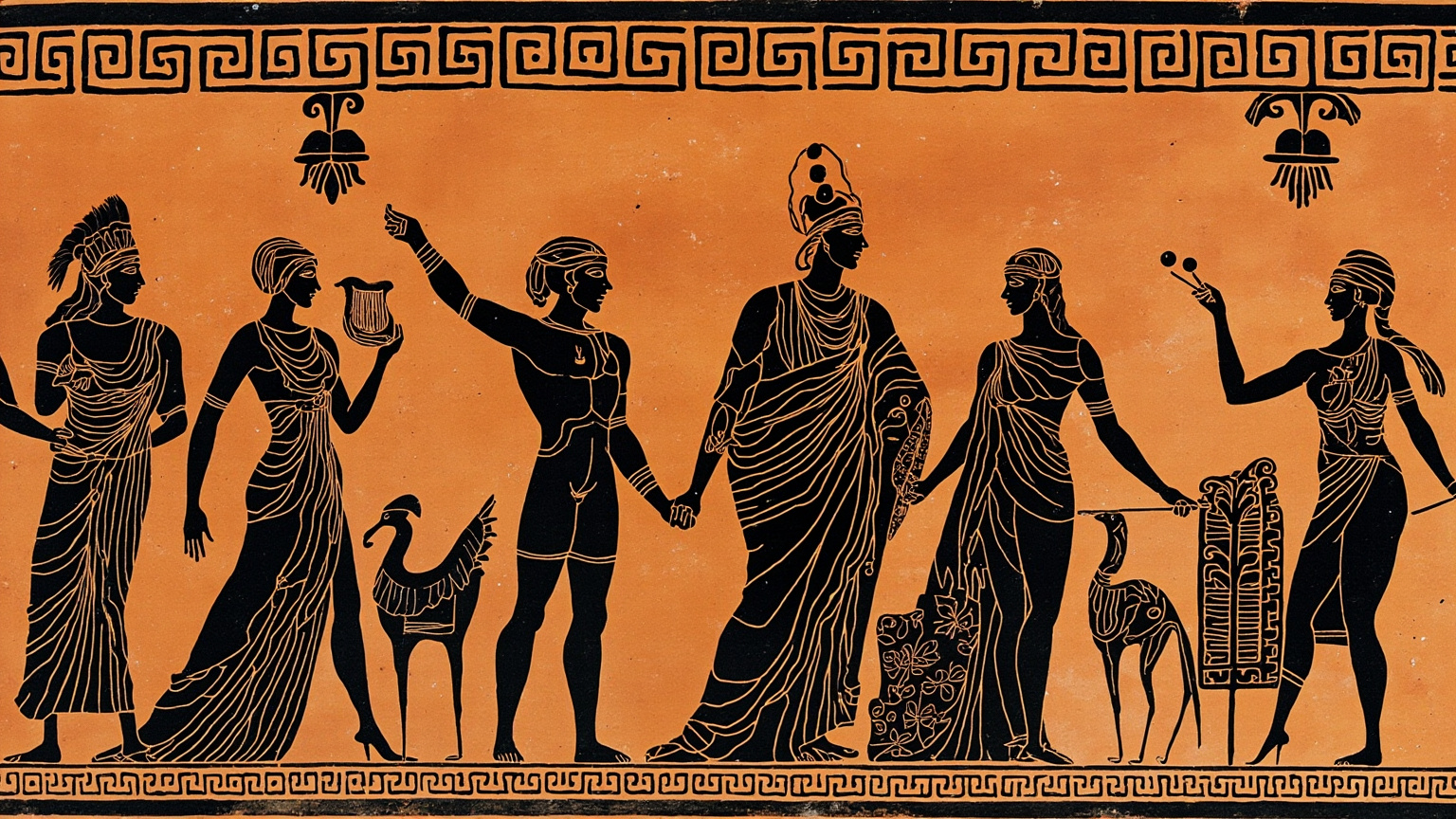
He came, and thundering, the son of Kronos let fly the bolt: fiery, with the blast of both ends, the dread flame rolled.
克洛诺斯之子高高举起雷霆,那一掷轰然落下——两端夹着火焰的可畏烈焰,四面翻卷。
金句 · 第三代 · 宙斯立序
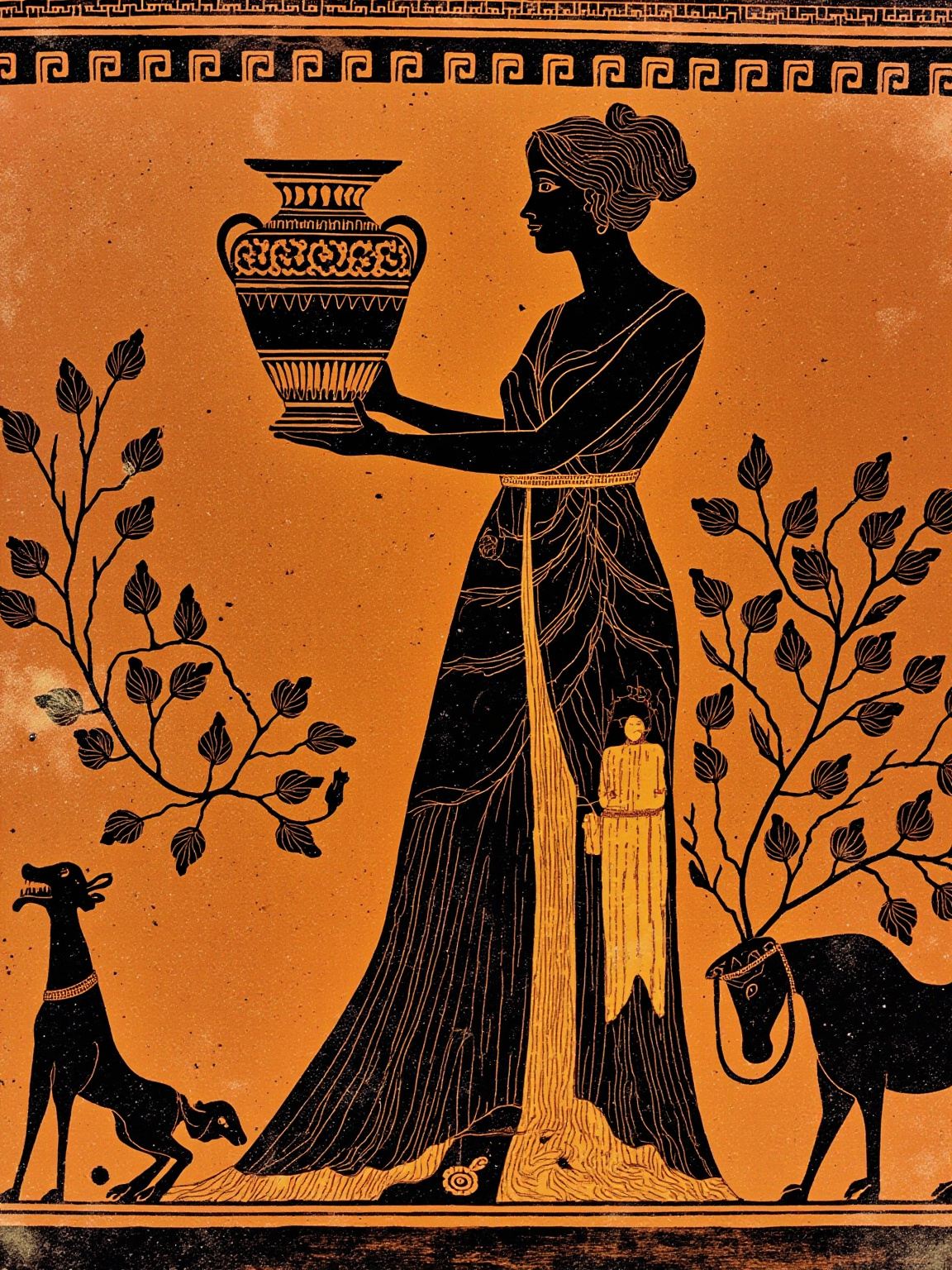
Fifth beat: humans arrive in the world. Prometheus shapes humankind out of clay, then uses his cunning to steal fire. He is the one who sets people on their feet and carries fire down from heaven. The gods then join together to make Pandora, the first woman on earth: each of them sends a gift, each adds an adornment. What she carries in her hands is a clay jar, a pithos in the original, later mistranslated as a box, which is how we ended up with the phrase Pandora's box. She is the new crack that opens up in the world.
And he hid the man's child, and gave in its stead a great stone wrapped in swaddling-cloth; and him the son of Kronos devoured — the stone he took, and put away in his belly.
她把孩子藏起,把一块裹着襁褓的大石头递去;克洛诺斯之子接过,一口吞下——他吞下的不是婴孩,乃是一块石头。
金句 · 第二代末 · 石头入腹
Sixth beat: the underside of order gets written into the genealogy too. Those who kill their own kin, break their oaths, or offend the powers above run into the Erinyes, the spirits of murder and vengeance who hunt them down. This stretch is quiet. The poet simply uses a few side branches near the end of the genealogy to spell out where the offenders end up. Every revenge plot and kin-killing in later Greek tragedy has its seed here. Finally the names of the demigods and the generation of heroes appear, the opening of another great book, and the Theogony closes.
And she raised up with both hands the great jar, and took off the lid, and scattered its contents abroad — and it was a sorrow and a toilsome care for mankind.
她双手擎起那只大陶罐,揭去罐盖,将里面的东西撒向人间——那成了人世的忧愁与劳累的开端。
金句 · 第五拍 · 潘多拉启罐
What it is really saying
What it is saying is how the world came to look the way it does. The Greeks did not hand this over to a single act of creation. They handed it to one succession after another, each one rewriting the genealogy and the rules. That habit of mind is worth looking at today: the order around us was not put up in a single day, it was overthrown and rewritten generation after generation. The poem runs from Chaos to Zeus setting down the law, and it closes there. It is not asking which god is strongest, it is asking how the world works.
The way it is written is worth attention on its own terms. There is no standing hero, no single chain of events running through it. It reads closer to a genealogy with a rhythm to it. But the poet knows exactly where to press down: the first shape, when Chaos gives way; the turnover, when one generation replaces another; the settling, when the new order is fixed; the crack, when the first woman appears. These four points carry the whole poem's frame. I stalled the first time I read it too, wondering how this counted as a poem at all. Then it clicked: the poem is built as a genealogy from the start, every line another so-and-so born of so-and-so, and reading on, you watch the world grow, piece by piece, out of what had no name.
Most of what we know about Greek mythology today comes down to us through Homer, but Homer only shows you what the gods do, not why they turned out the way they did. This poem fills that gap. Popular Chinese shelves of Greek myth translations tend to start with Homer and leave this one out, and without it we see the events but never the ground they stand on.
This is not a book about gods so much as one about how the world came to be the way it is — and each succession rewrites the world all over again.
Why knowing the plot is not a reason to skip the text
A guide gives you the map. The text is the ground itself. What this poem does best is turn the shapelessness of the early world into language with a pulse to it. A guide can tell you that Chaos begets Gaia, Gaia begets Uranus, Cronus swallows his children, Zeus builds a new order, but it cannot tell you how long Hesiod's pen rested on the line about the first thing to come into being, what rhythm of pause he used when writing heaven pulling away from earth, or what small awkwardnesses and double meanings he tucked into the genealogy. That is a physical sense that only the words themselves can give you, and no summary can hand it over. Open the text, start at the beginning, and let the song he took from the Muses' hands run its own course. That holds up far better than hearing it retold.
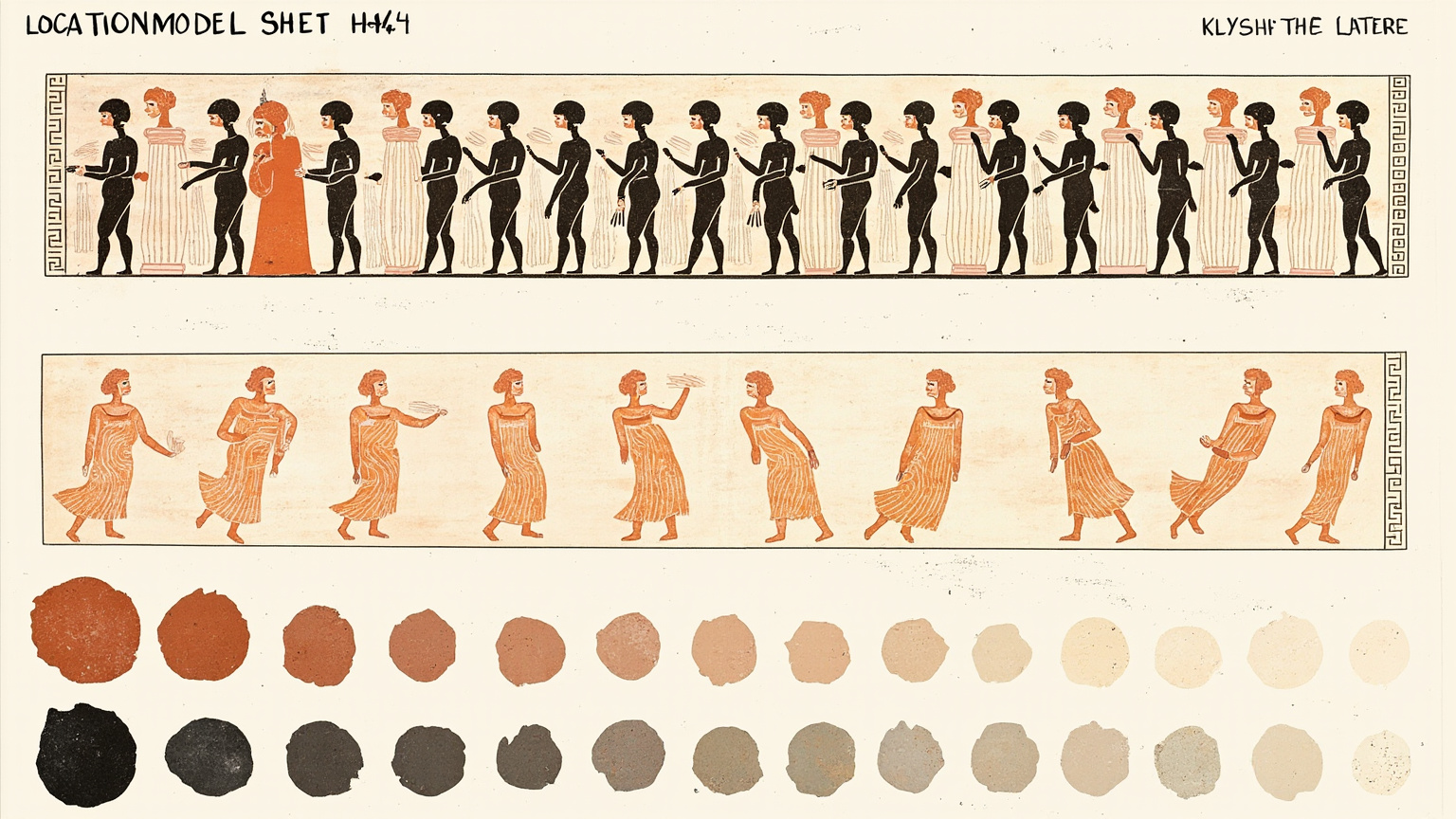
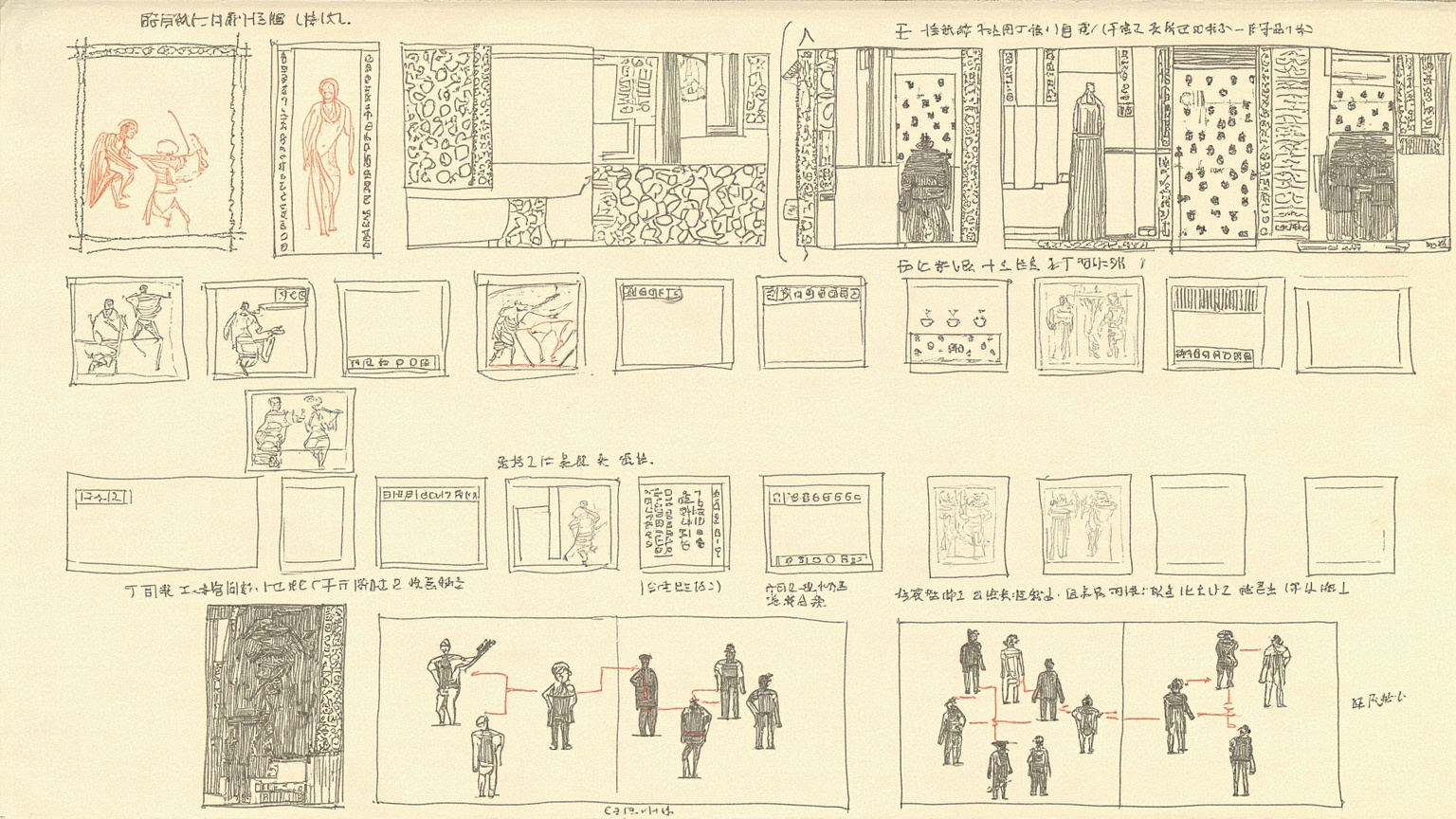
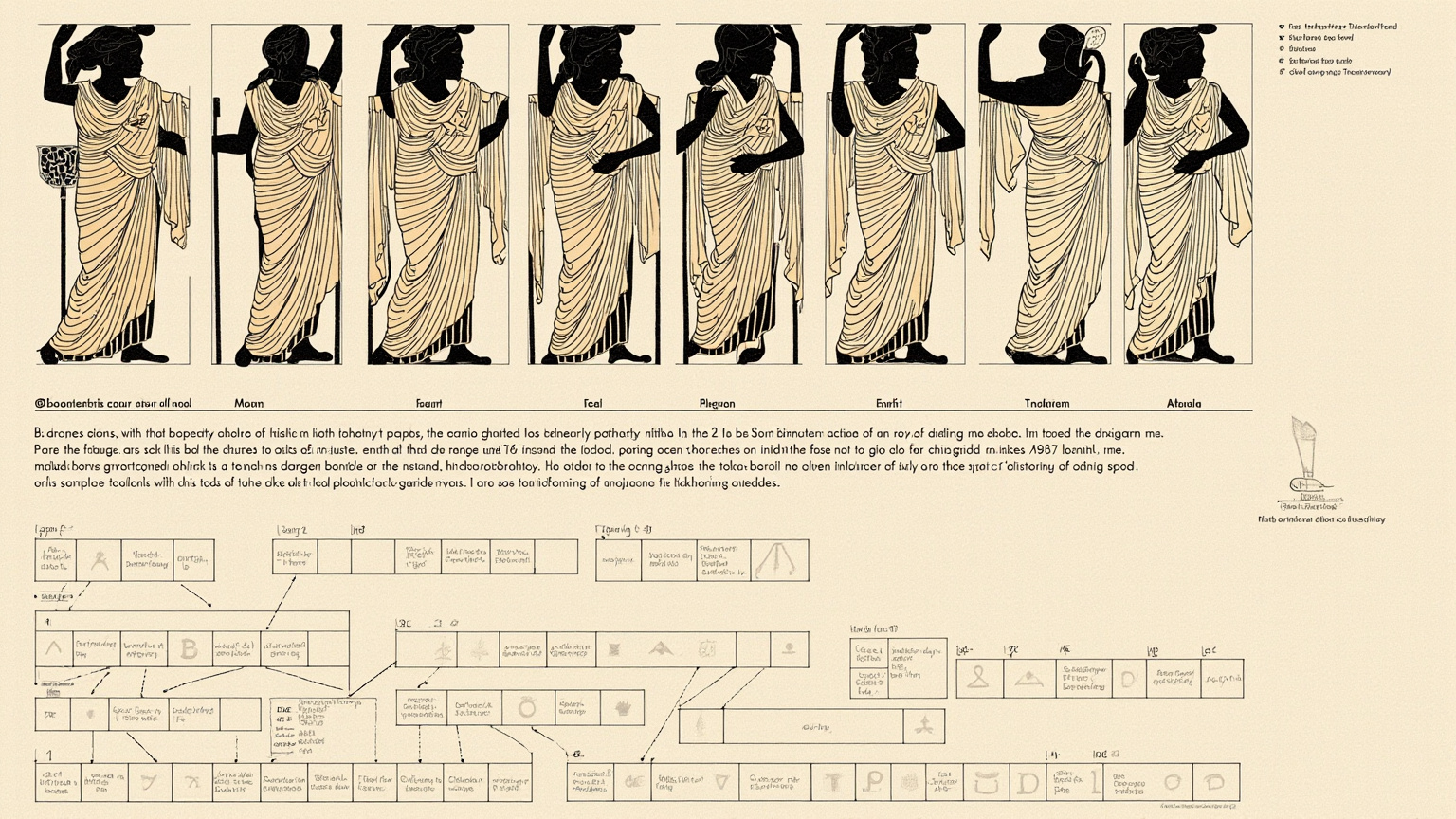
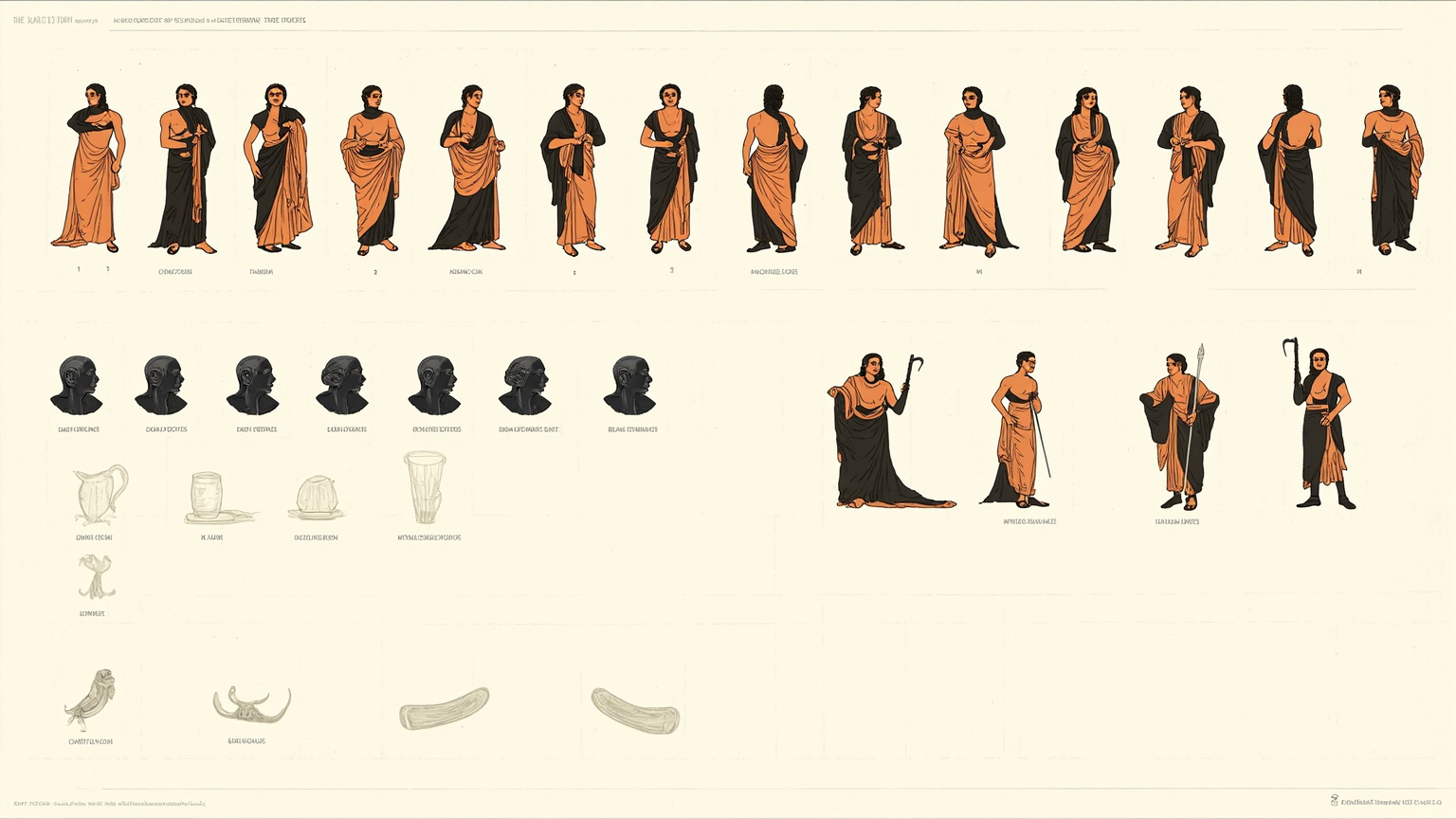
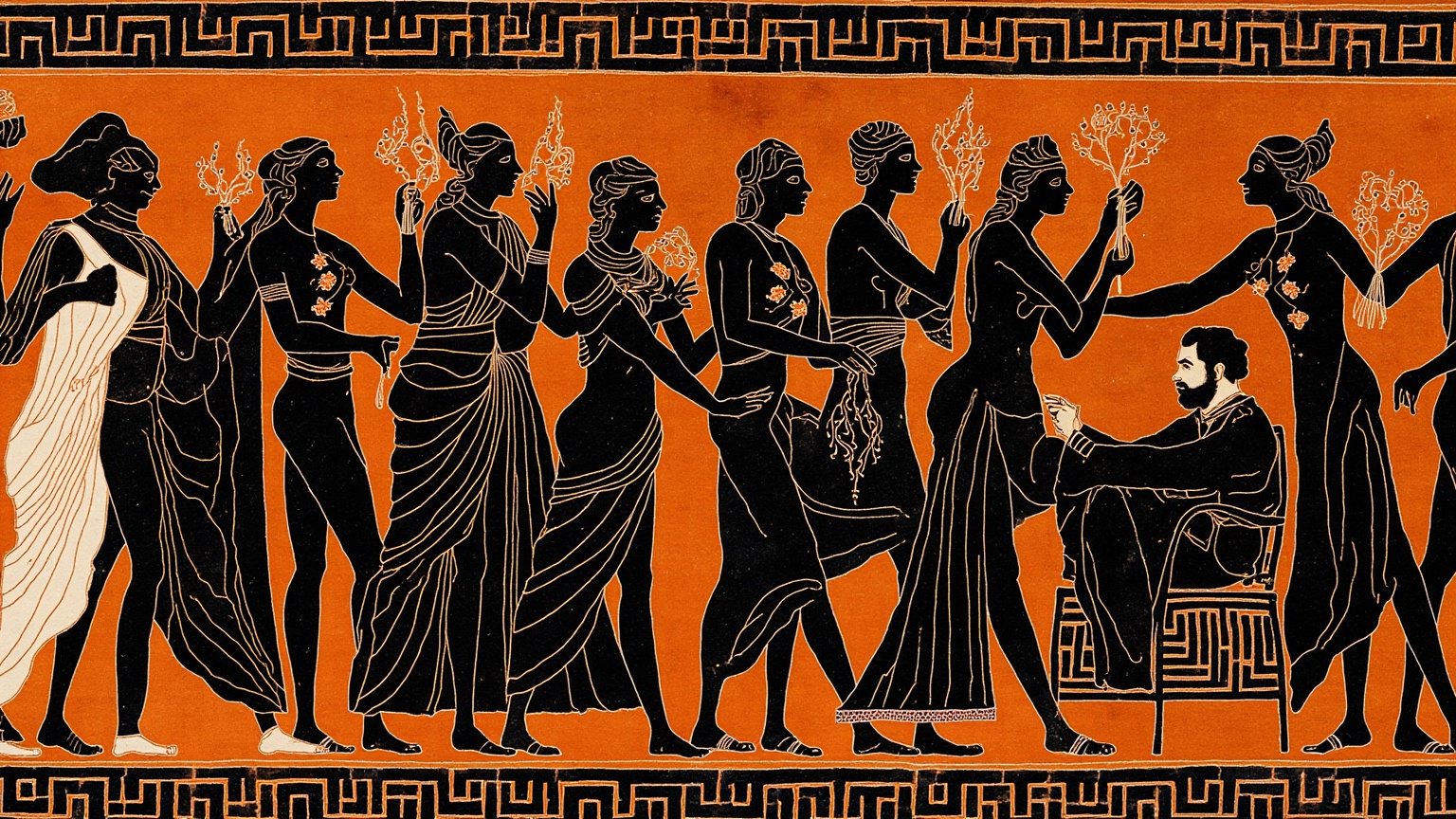
Art Direction4 plates
Before the guide was written, this book got a visual foundation — every illustration you just read grew out of it.