The founding novel of modern African literature: a man who refuses to be pitied, and the village around him.
Text and illustrations produced by the pipeline
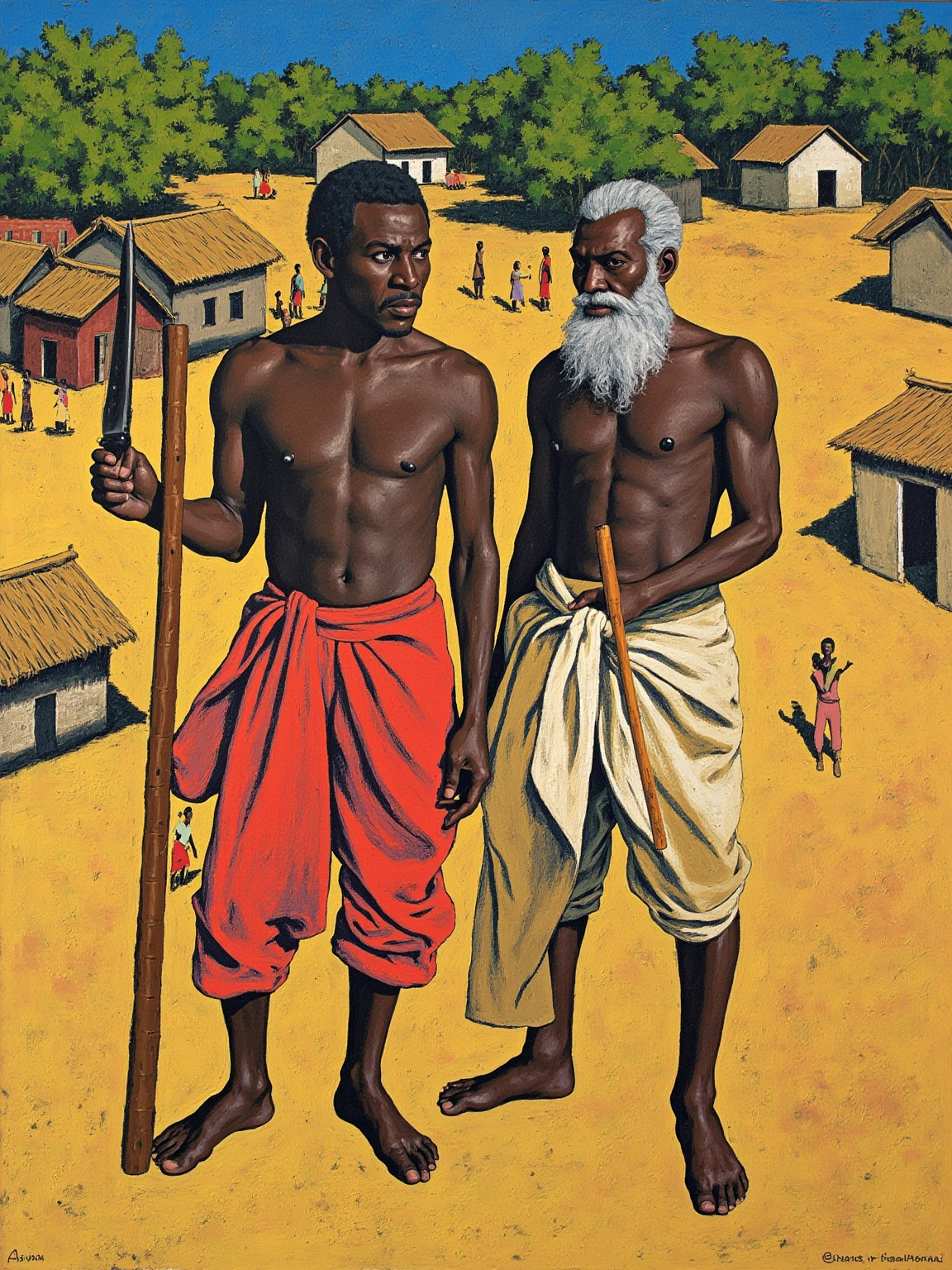
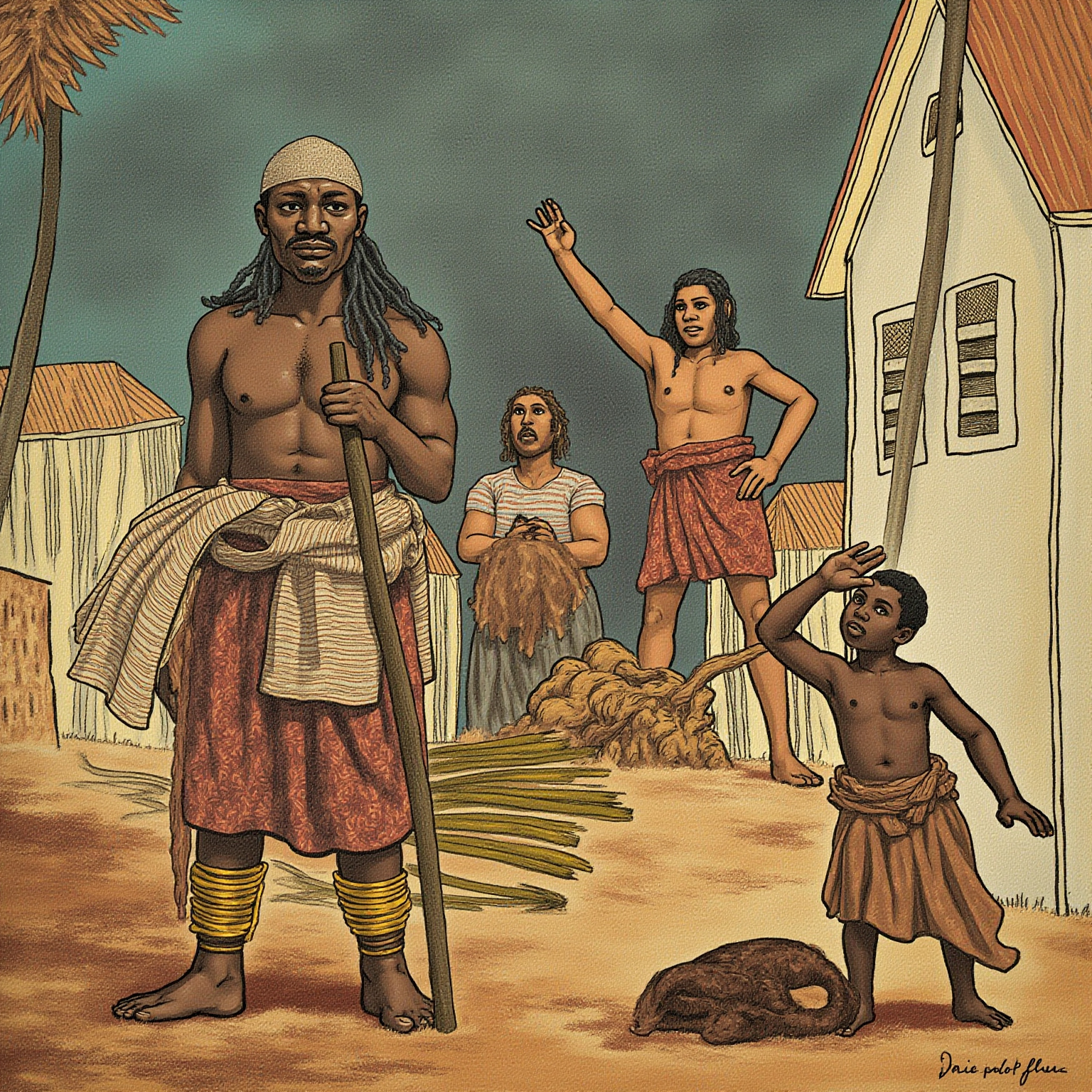
When the machete went up, he understood better than anyone that this boy called him father. Ikemefuna was not his own blood — a hostage boy handed over by a neighboring village, raised in Okonkwo's household for three years, as close to his eldest son Nwoye as one person is to another. An elder had already pulled him aside and told him plainly: do not take part. Okonkwo raised the blade anyway. What he feared was never killing the wrong man. It was looking soft in front of the men of Umuofia. Everything the book does after that stroke, it does inch by inch: show how he snapped himself in two.
Things Fall Apart is the 1958 novel by the Nigerian Igbo writer Chinua Achebe, often called the first true African novel written in English. It lays an Igbo village out from the inside — its law, its proverbs, its festivals, its tastes, the way its people quarrel — spread flat on the table for the reader to see. Then it yanks the tablecloth out from under it all with a colonial courtroom, iron chains, and a missionary's cross. The title comes from Yeats, from the line about a stable order breaking apart at the center under outside force. Not a natural disaster. A foundation, changed by other hands.
The story opens in Umuofia, a federation of nine Igbo villages in what is now southeastern Nigeria at the close of the nineteenth century. Okonkwo's father, Unoka, is a man the village only sighs about: gentle, fond of his flute, perpetually in debt, and dead in the end of the swelling disease the Igbo consider most unclean, his body dumped in the Evil Forest without so much as a proper burial. Okonkwo spends his whole life trying not to become Unoka.
While still young, he throws Amalinze the Cat and takes the village wrestling championship. By middle age he is a wealthy yam farmer, holder of two titles, a warrior with two human heads to his name, and husband to three wives. He turns himself into a kind of strength that borders on self-harm — no waste, no weakness, no idle talk, no moods. The book shows him refusing to give a neighbor wood he had already planed smooth, pushing his daughter into a marriage with a family he had no standing to bargain with, even keeping tally of the yams on his own breakfast plate. A perfectionist running on fear.
Disaster follows close behind. At Ezeudu's funeral, Okonkwo's gun goes off by accident and kills Ezeudu's son. In Igbo law this is a crime against the earth itself, and Umuofia exiles him for seven years. His maternal uncle, Uchendu, takes him in at Mbanta and, by the fire at night, explains why mother is supreme: a man's bones can break in his life, but his mother's people will always open the door. For the first time in the book, someone puts a hand on Okonkwo's shoulder without blame in it.
Achebe does not write Igbo society as a pastoral. Women who bear twins abandon them in the Evil Forest. The osu, an outcast caste, are cut out of ritual life while still living. Even Ikemefuna's death is a sentence Igbo custom hands down itself. What he is arguing against is not colonial rule so much as the Western story that Africa had no history, no civilization, no language worth listening to. He sets a whole, dignified, internally coherent society on the table first, and only then lets you watch it get pried open from within.
Okonkwo is one of the harder tragic figures literature has produced. The hardness he believes in is the very virtue Igbo society prizes most, and it is the same force that crushes him, his adopted son, and his own son. He is not simply a victim of the colonizers, nor a hero of Igbo civilization. He is a man run over by his own fear and by his historical moment at the same time.
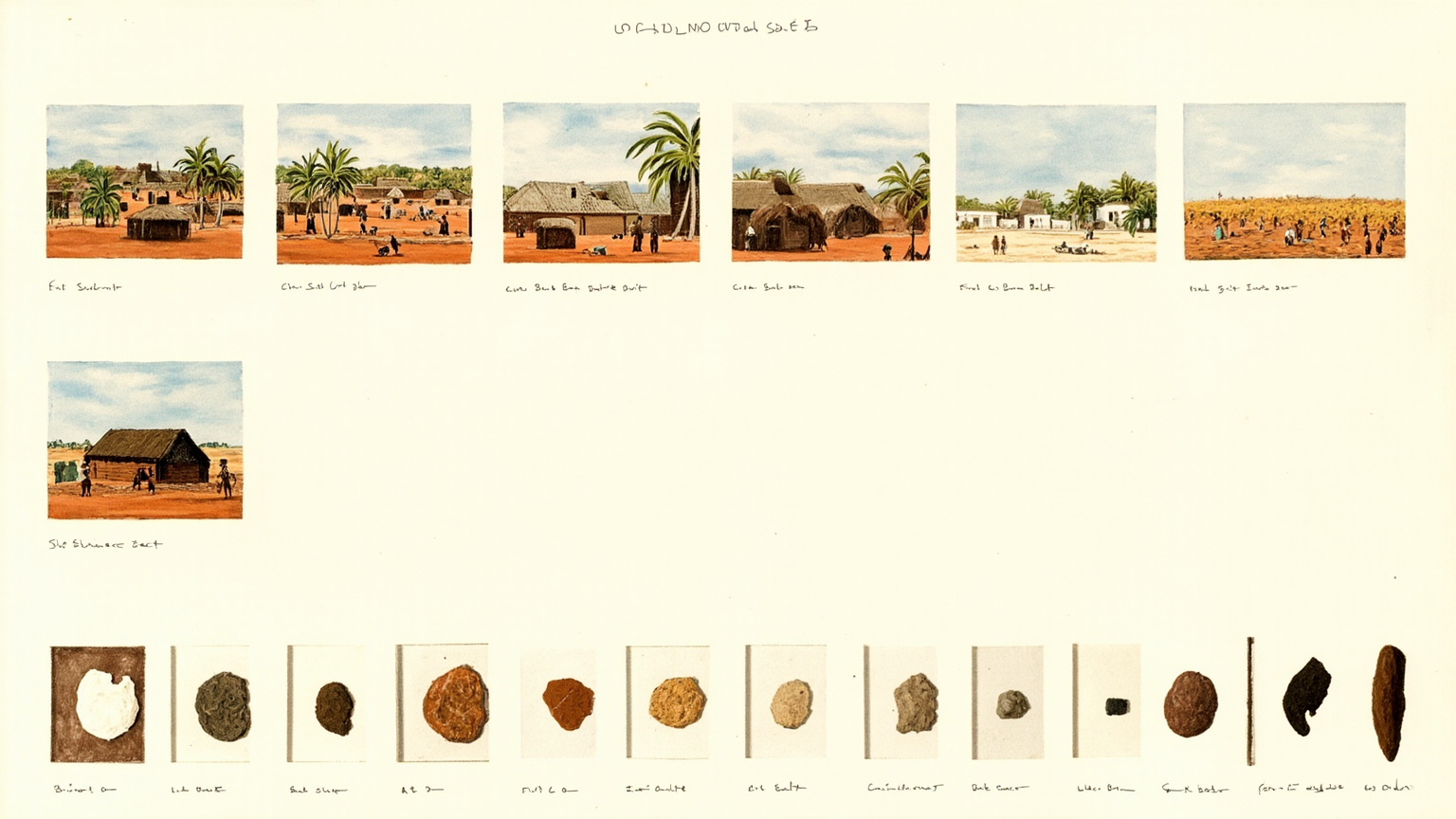
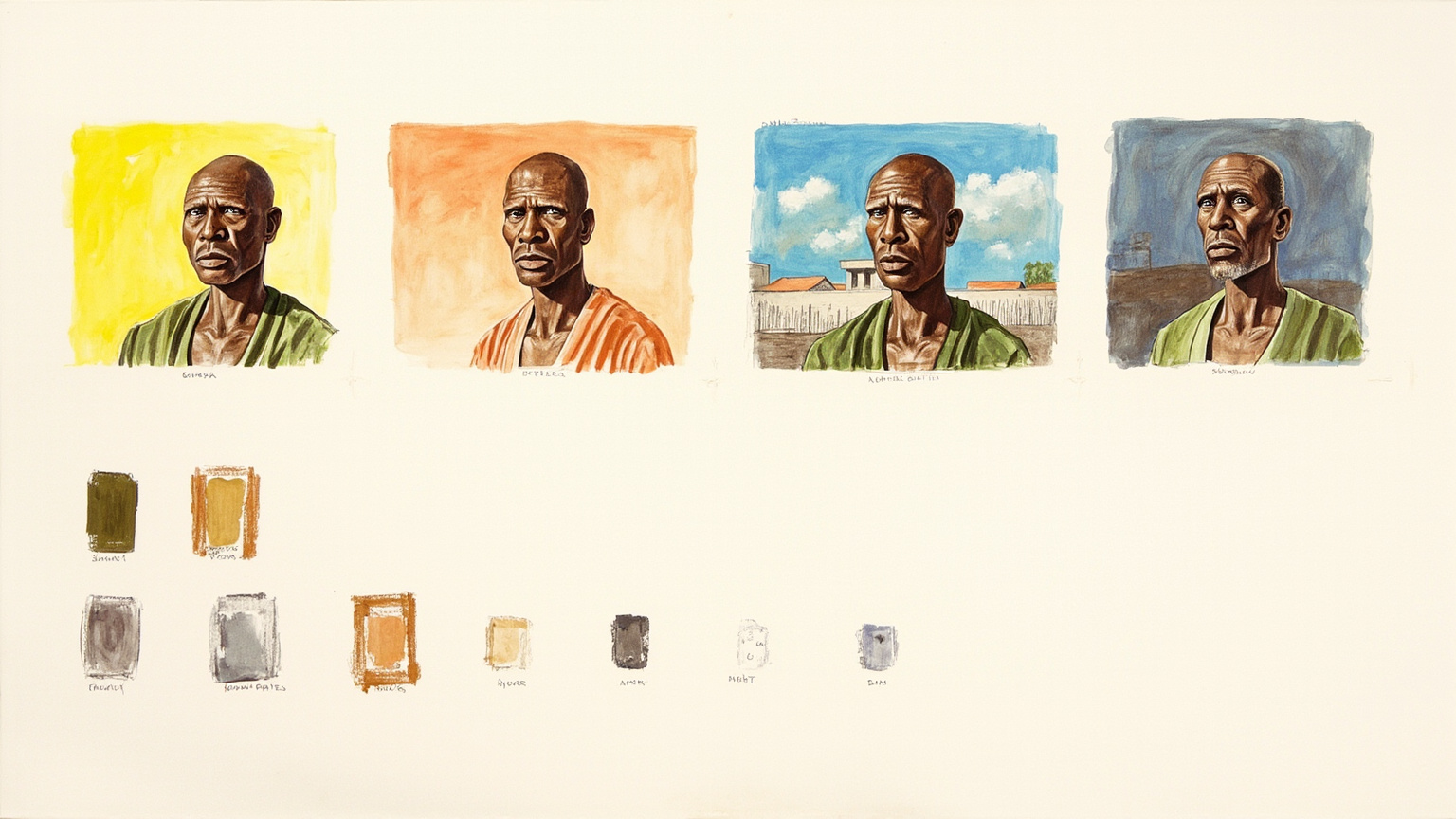
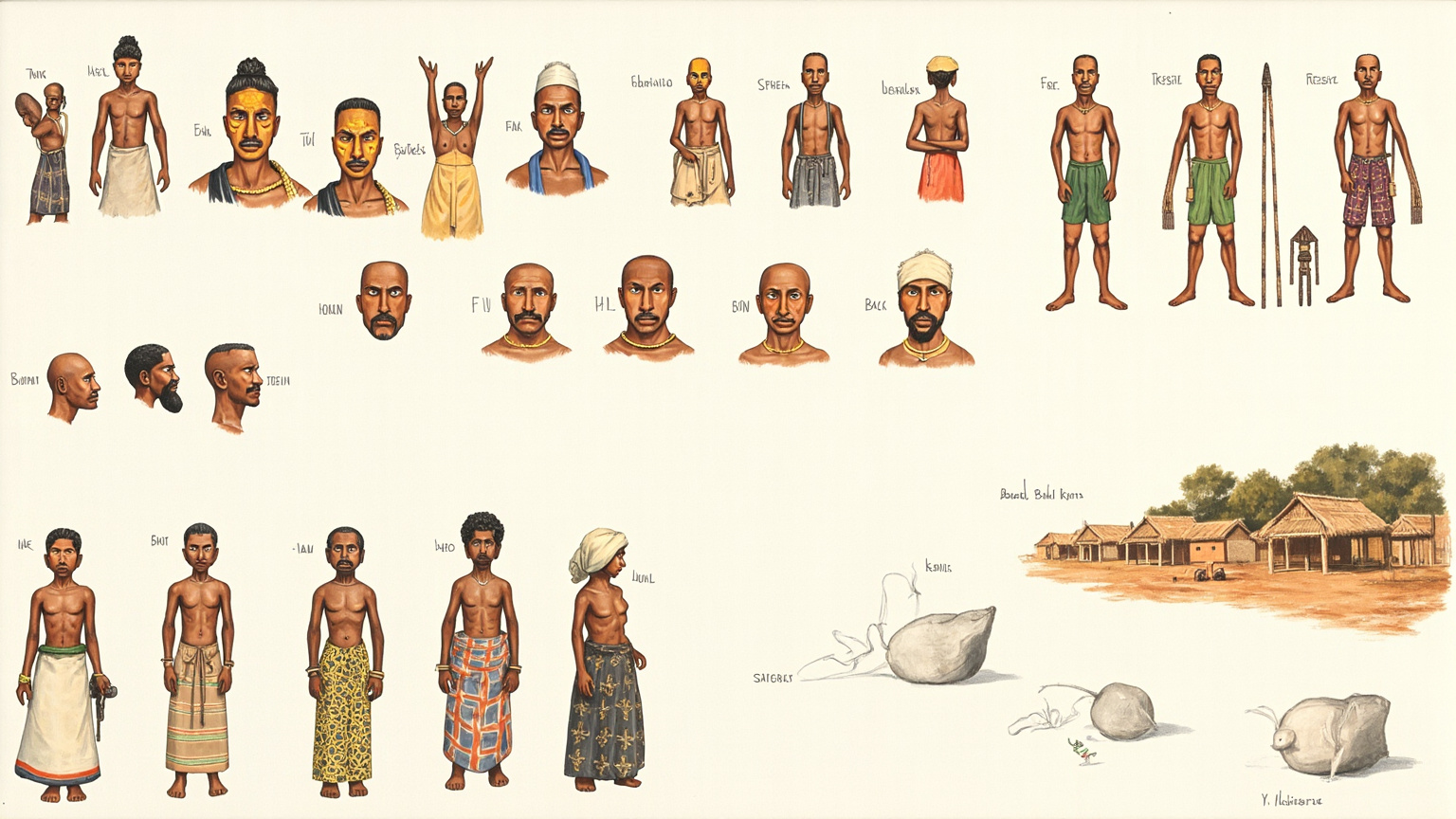
Before the guide was written, this book got a visual foundation — every illustration you just read grew out of it.
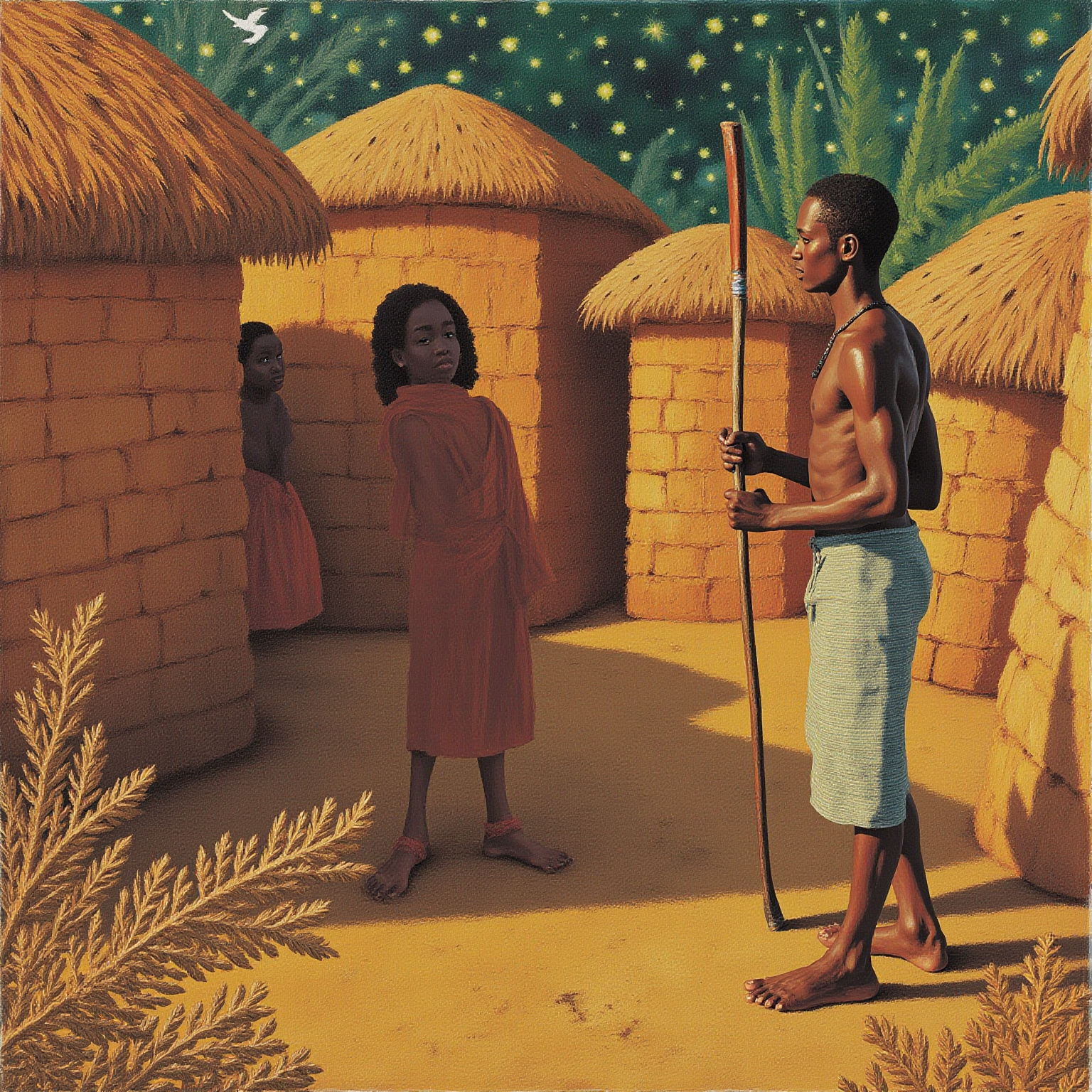
Three years earlier, the neighboring village of Mbaino sent a boy as payment for a life, and that boy was Ikemefuna. Quick-witted and quick to laugh, he cuts grass for the cattle and stacks firewood in the yard alongside Nwoye, Okonkwo's eldest son. Okonkwo never says a kind word about him, but softens toward him more than he will admit. Then the Oracle hands down its order: the boy must die. Ezeudu, the oldest elder in the village, pulls Okonkwo aside to warn him — if you raise your own hand against a boy who calls you father, you will never have peace again.
Okonkwo went anyway. The men escorting the boy take turns with the machete as the procession moves on, and when it reaches Okonkwo, Ikemefuna runs to him and says, Father, they are going to kill me. He raises the blade. The first time I read this scene, it took me the rest of the afternoon to recover — what he feared was never the Oracle. It was someone calling him weak. After that stroke, Nwoye does not cry. He simply walks off alone, and he never really returns to his father's world again.
During Okonkwo's seven years away in Mbanta, the first white man arrives in Umuofia: Mr. Brown, a missionary. He causes no trouble. He is willing to sit down with the village elders, builds a church and opens a school at the same time, and steps politely around Igbo festivals rather than through them. The book credits him with doing exactly one thing: giving curious children and uncertain adults somewhere else to go.
Nwoye goes. His father's hardness could not hold him, Ikemefuna's blood could not hold him, the rites of his elders could not hold him. He walks into the church and takes the name Isaac. Okonkwo hears the news in Mbanta, in front of his mother's kin, and grinds his teeth audibly. The book says he is angry at his son, but angrier at himself — a man who cannot even hold on to his own blood has no business claiming he will never live like his father.
When his seven years are up, Okonkwo returns to Umuofia and finds it changed. Mr. Brown's successor, the Reverend James Smith, gives Igbo custom none of his predecessor's slack. A local convert named Enoch tears the mask off an egwugwu at a public gathering — the masked spirits through whom the ancestors sit in judgment — and exposes the man beneath it. The men of the village explode with rage and burn the church to ash. Okonkwo takes no part, but the fire gives him the first scent of blood he has had in years: Umuofia is not dead yet.
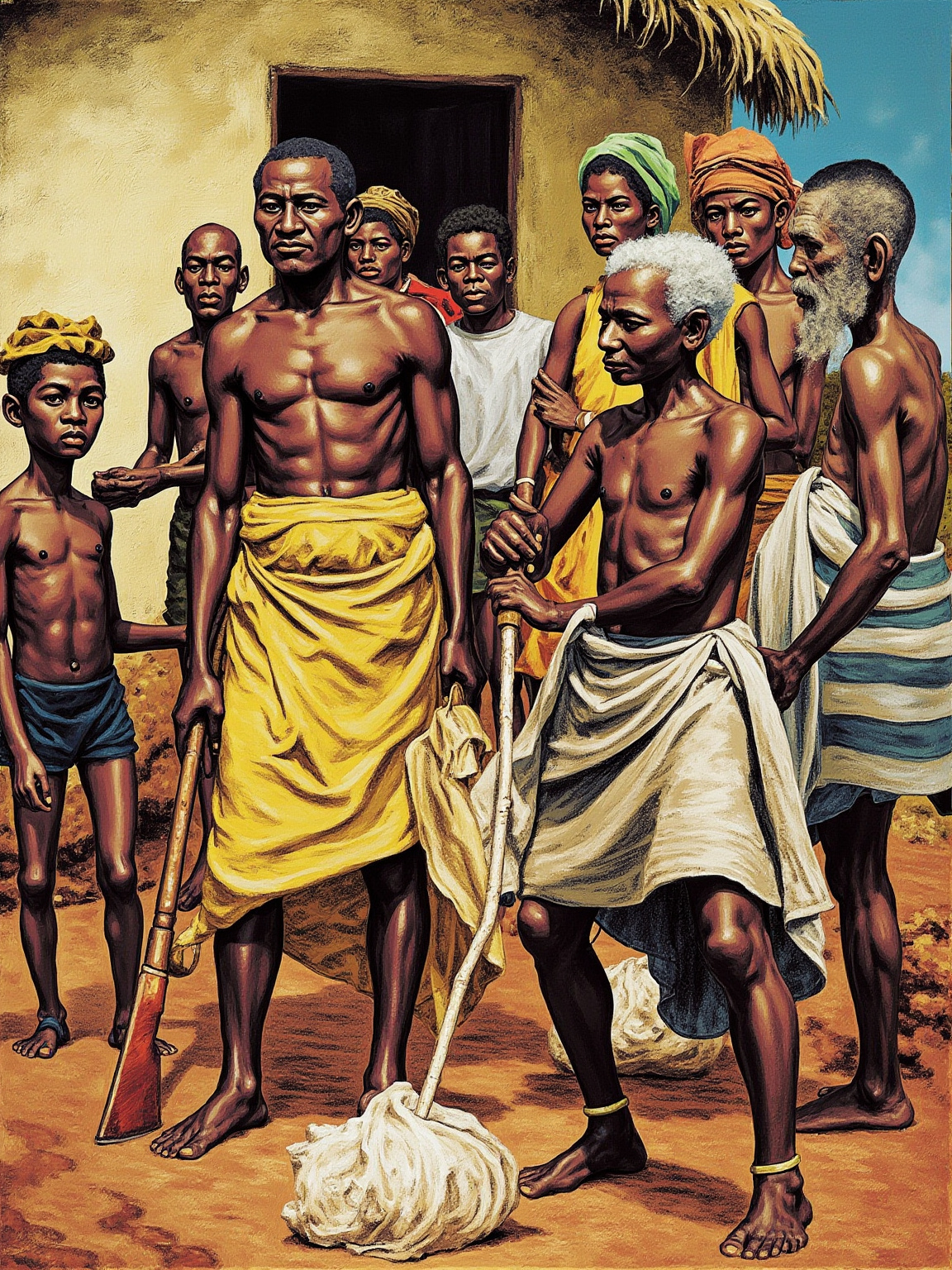
Next comes the District Commissioner. Under the banner of a meeting, he summons the five leading men of Umuofia — Okonkwo among them — into the administrative compound. The door shuts, the irons go on, a razor scrapes their scalps, a whip lands on their backs. Until the fine is paid, they are not men but a row of things chained in a shed. This humiliation cuts deeper than the fire: the men of Umuofia used to be bound by their own tribal law. Now they are bound by an outsider's idea of order.
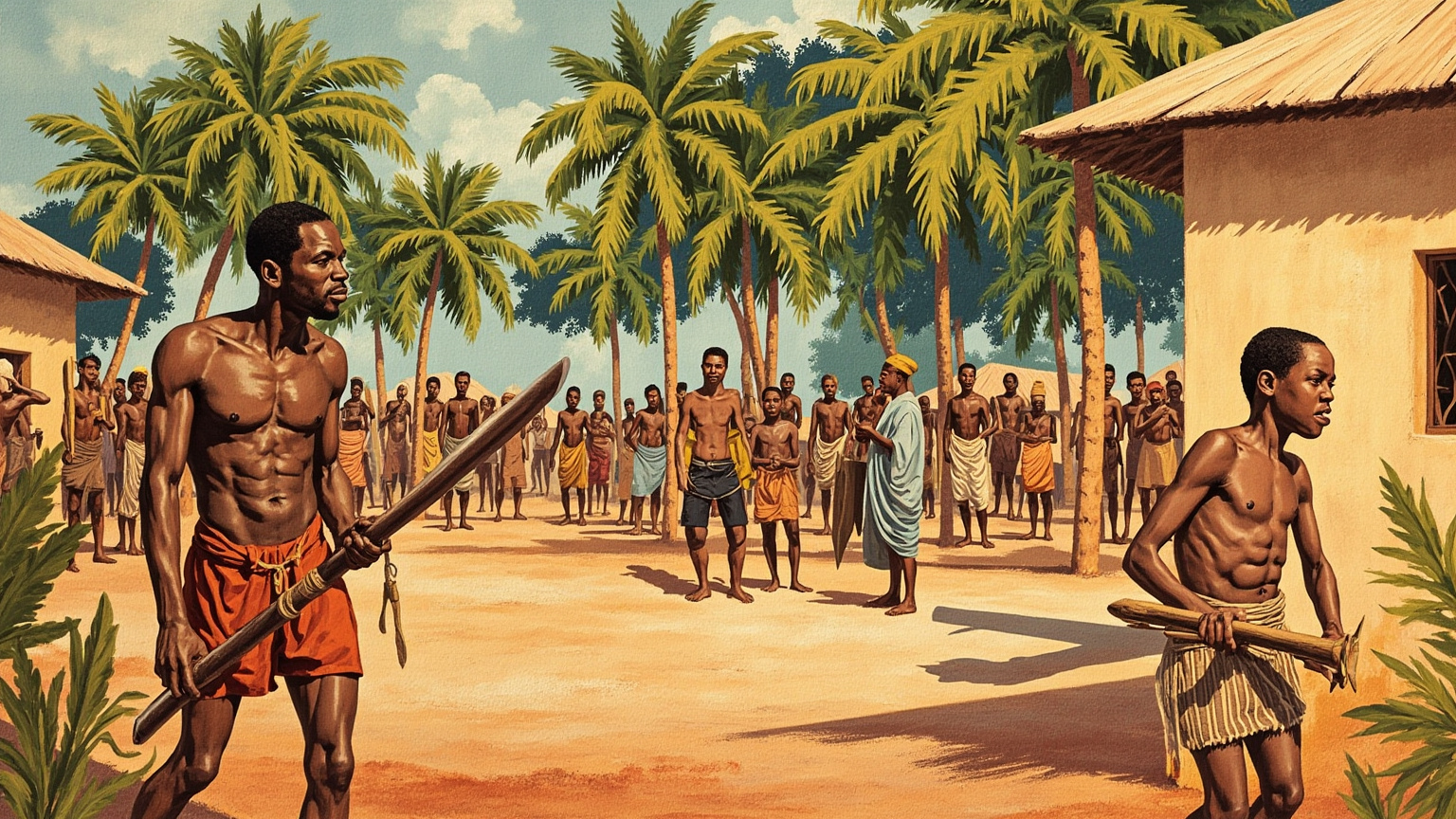
The clan raises the fine and the elders are freed. That night Umuofia holds a mass meeting in the open, arguing until dawn about whether to confront the white men. A colonial messenger arrives with an escort to break it up. Okonkwo's blood finally gets away from him — he draws his machete and cuts the messenger down. Then he turns around, and no one else has raised a weapon.
The crowd only stirs. No one shouts to charge. In that single moment Okonkwo understands: Umuofia will not rise for the old order anymore. The string he had kept taut his whole life is the one that snaps first.
He goes back to his compound and hangs himself. Igbo custom forbids anyone from touching the body of a man who has taken his own life — it is an abomination against the earth, and not even his own kinsmen may carry the coffin. In the end it is the District Commissioner's men who take down a body they cannot begin to recognize.
The novel's final page finds the Commissioner at his desk, considering how to fit this story into the book he is drafting, The Pacification of the Primitive Tribes of the Lower Niger — deciding Okonkwo's death is worth a paragraph, maybe. A whole book of Igbo laughter, wrestling, proverbs, funerals, and one hard man's last stand, and in his hands it comes down to a paragraph.
A village torn down by outsiders is one thing. A village handed over by its own people is another. Okonkwo dies of the second.
The title comes from a line of Yeats. What breaks is not the world. It is the center.
A summary can tell you what Okonkwo did and what Achebe means by it. What it cannot give you is the feel of the language itself — Achebe deliberately pouring Igbo proverbs, the rhythm of Igbo oral speech, the light laughter of Igbo talk into the borrowed vessel of English, a little at a time. The book returns again and again to the saying that words are like palm oil, something you eat with, and to the pauses in a night's conversation, the beat of drums under moonlight.
That is the air behind the picture. Following the plot will not give it to you. You have to turn the pages yourself. The book is short, and it renders a civilization the colonizers called savage so vividly that every reader can smell the woodsmoke against its mud walls. That is why, in sixty years, it has been translated into more than fifty languages and sold twenty million copies, instead of sitting quietly on a syllabus.