This Side of Paradise · Companion Guide
人间天堂
一个青年在爵士时代前夕,用一次次幻灭把浪漫利己主义的外壳剥落,直至露出自我赤裸的底座。
Opening
A young man walks alone toward Princeton as dusk closes in, and he says to himself: I know myself, but that is all. It sounds like a middle-aged man's surrender to life, but the one saying it is barely past twenty, and in a very short span he has been stripped, layer by layer, of almost everything he had — a lover, a mother, a spiritual guide, a family fortune. Fitzgerald put that line as the last sentence of his first novel, as if writing an obituary for the whole Jazz Age in advance.
The book is This Side of Paradise, Fitzgerald's first novel. It made him famous overnight the year it came out, and the royalties let him marry Zelda soon after. Literary history gives it a distinctive place: the starting gun before the Lost Generation stepped onto the stage, the marker where the Jazz Age novel officially begins. Even in the thirties, Hemingway would still recall the book that left him stunned when he first read it, and call it one of the most beautiful things a young man had ever written.
The Boy Before Princeton
Amory Blaine's mother, Beatrice, was a worldly grande dame. She never let him grow up in one place, dragging him instead from resort to resort across the country — the kind of childhood that produces children who are clever, precocious, good-looking, and self-centered as a matter of course. Before boarding school, Beatrice introduced her son to an old family friend, the Catholic Monsignor Darcy. Darcy was learned, gentle, and worldly-wise, a middle-aged man who became Amory's confessor in everything but name. Even after the two of them went their separate ways, they kept up a long correspondence, writing about books, about faith, about how a young man ought to face himself. It was one of the few genuinely stable relationships in Amory's life.
Princeton: An Alliance of Aesthetes
Once he got to Princeton, Amory found his camp immediately. The poet Thomas Parke D'Invilliers — precious, bookish, sensitive to form — became his closest friend. The two of them formed a small alliance of aesthetes, drunk on literature, on self-fashioning, and on the youthful illusion of greatness. Amory was clever, but he spent all of that cleverness on his social circle and his literary taste; coursework got only what was left over.
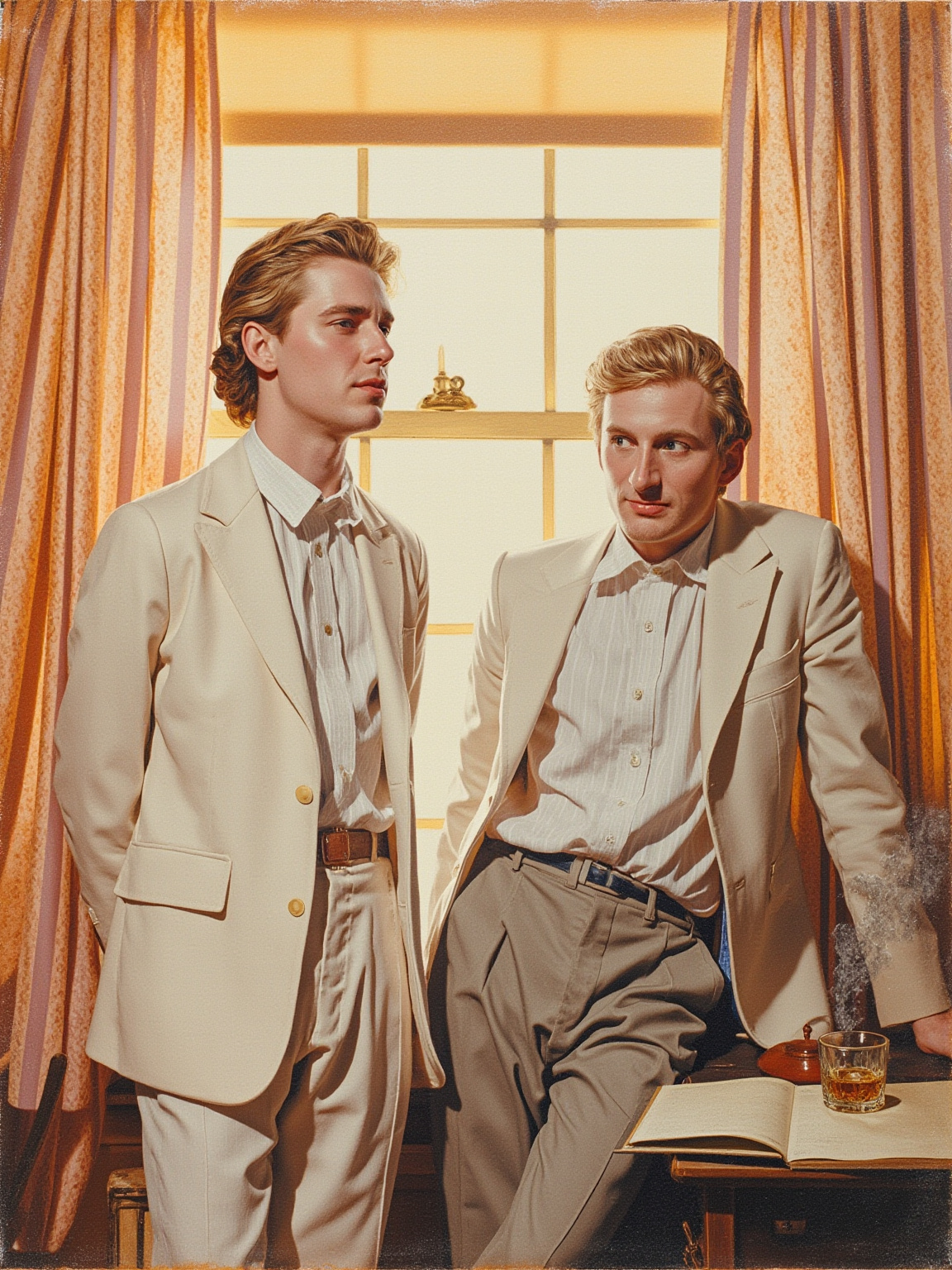
The world became pale and interesting, and he tried hard to look at Princeton through the satiated eyes of Oscar Wilde and Swinburne-or "Fingal O'Flaherty"
世界变得苍白而有趣,他竭力用王尔德和斯温伯恩餍足的眼睛审视普林斯顿。
原文金句 · 第一部 · 浪漫利己主义者
As for the writing itself, Fitzgerald gives the Princeton chapters a salon-like, high-speed rhythm: short sentences, bright wordplay, dialogue that fires like rounds from a gun — language written for twenty-year-olds by someone who was still twenty. Structurally he cuts loose too, mixing conventional narrative with letters, free verse, and play-script dialogue, as if a first-time novelist were out to prove a novel could take any shape at all.
First Romance: Isabelle in Minneapolis
Home in Minneapolis for winter break, Amory meets the pretty debutante Isabelle Borgé. The two of them fall fast into a romance carried mostly by letters — she writes a line, he answers with three, each convinced the other is bound to understand. But feelings at that age are brittle: one petty quarrel is enough to shatter it, and Isabelle exits the story. Of Amory's three loves, this is the greenest and the shallowest, a piece of fruit that drops before summer has even ripened it.
First Disillusion: The Death of Dick Humbird
On campus Amory worships a classmate named Dick Humbird — in Amory's eyes, Dick is nobility by birth, flawless in manner, a living specimen of the aristocratic youth he imagines himself becoming. The worship runs deeper than any romance, because it points at self-projection: Amory wants to be that man. Then Dick dies in a car wreck on a drunken joyride. Not a battlefield, not a hero's death, just a night when someone drank too much — and that is exactly what makes it cruel.
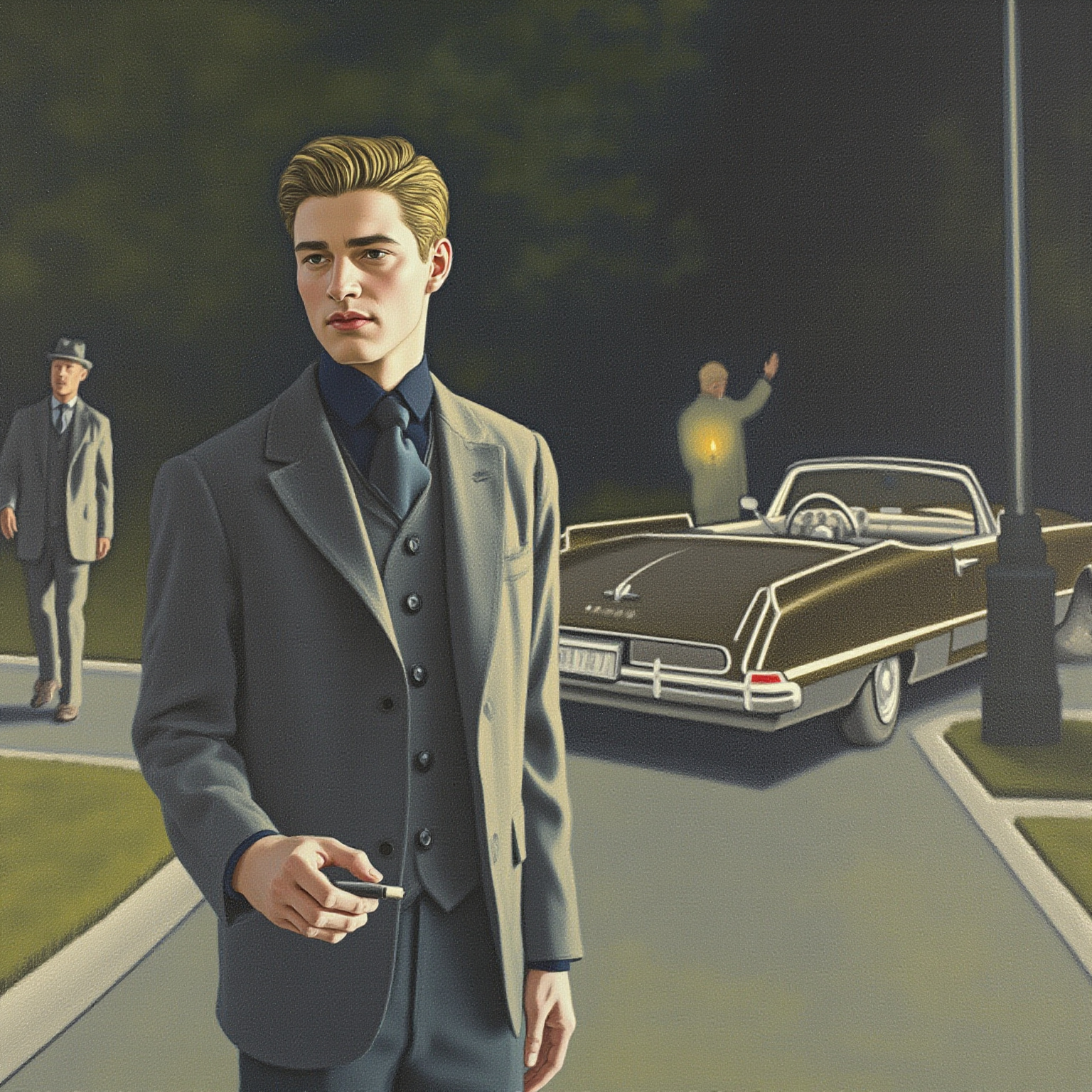
"Dick was driving and he wouldn't give up the wheel; we told him he'd been drinking too much-then there was this damn curve-oh, my God!..."
迪克在开车,不肯交出方向盘;我们告诉他喝太多了——然后就是那个该死的弯道——哦,天哪!……
原文金句 · 第一部 · 浪漫利己主义者
It is the first time Amory has really run into death. Not the distant kind, the kind that lives in books, but someone he knew, envied, wanted to become, gone all at once. Fitzgerald doesn't stage any large grief here; Amory just goes a little quieter afterward, as if something inside him had been quietly crossed out.
War Interlude: France, His Mother's Death
When America enters the war, Amory leaves school and enlists, and the army sends him to France. Fitzgerald doesn't write the service itself head-on; instead he turns it into an interlude told through a handful of letters, with the battlefield itself almost absent. That was a risky choice at the time, but it spares the book a lot of effort and creates a strange sense of distance: the war is background noise for Amory, not a wound. The real wound comes from home — while he is serving in France, his mother, Beatrice, dies.
Beatrice's death is harder to digest than Dick's. When Dick died, Amory could still cover the wound with shock; his mother's death costs him the person who shaped him from childhood — the one who dragged him across the world and fed him his entire sense of self.
Rosalind: A Love Cut to the Bone, Judged by Jazz Age Money
Back in New York after the war, Amory is introduced by his friend Alec to Alec's sister, Rosalind Connage. Rosalind is clever, beautiful, and fluent in the rules of New York high society, and the two of them strike the fiercest spark of Amory's life. Fitzgerald handles this romance with far more weight than the one with Isabelle — he slows the dialogue down, lets the two of them probe each other, see through each other, and pretend not to notice, and gets exactly right that particular tension of two sharp people falling in love.

The very qualities I love you for are the ones that will always make you a failure.
我正是爱你这些品质,而这些品质也注定你一事无成。
原文金句 · 第二部 · 一个人格的教育
Then the story drops: Rosalind, faced with the decline of Amory's family fortune, chooses to marry the wealthy Dawson Ryder instead. It isn't a change of heart, it's clear-eyed arithmetic. Fitzgerald already had this figured out back then — love in the Jazz Age isn't struck by Cupid's arrow, it's decided by a bank balance. Losing Rosalind hits Amory harder than either of the other two romances, because it forces him to see that what he thought charm and wit could win, he lost to a number on a page.
Eleanor Savage: A Mad Interlude in Maryland
Heartbroken, Amory meets Eleanor Savage in the Maryland countryside — a young woman who lives in books, unconventional, clever in a jittery, high-strung way. What passes between them is a different thing entirely: a meeting of minds, mutual torment, each trying to wring an answer out of the other. But Amory has no promise to give, and before he leaves, Eleanor tries to kill herself.

"And you're holding my hand, which is dangerous without seeing my face."
而你正握着我的手,看不见我的脸,这很危险。
原文金句 · 第二部 · 一个人格的教育
Of the three romances, this is the wildest and the emptiest. Fitzgerald doesn't let it become love; he lets it become the embarrassment of two people who cannot hold each other up — and it is precisely because of that failure that Amory finally sees clearly what he has nothing of to give.
A Triple Collapse and One Closing Line
Losing Rosalind isn't where the blows stop. His mother Beatrice had already died of illness while he was still serving in France; then, after he returns to New York and Rosalind leaves him, his mentor Monsignor Darcy dies too. Right after that, the family fortune collapses entirely through bad management. In under a year he loses a lover, a spiritual guide, and a family fortune — three supports giving way almost at once. Fitzgerald writes this passage without a trace of tears, in a strange, level calm, as if drawing up a list of losses.
For the ending, Fitzgerald sends Amory back to Princeton alone. In the dusk, the line I know myself, but that is all sounds like surrender; it is really a very young kind of clarity. Once everything that had propped him up — money, love, his mother's favor, Darcy's shelter — is pulled away, he finds there is still one patch of ground left under his feet: himself. The book's two part titles spell out that arc on their own: "The Romantic Egotist" and "The Education of a Personage." Between narcissism and self-knowledge lies a string of bankruptcies.
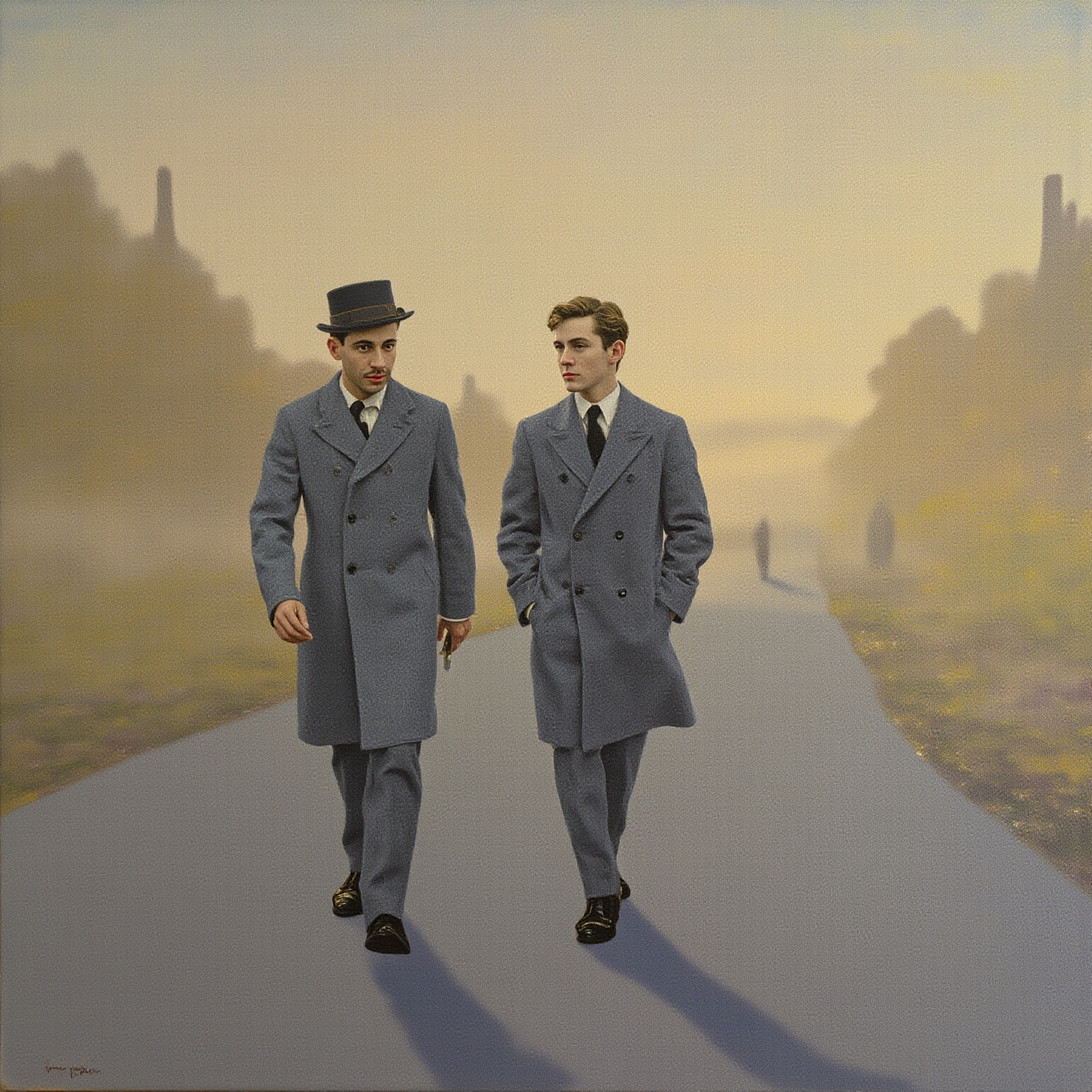
So he wrote one day, when he pondered how coldly we thought of the "Dark Lady of the Sonnets,"
于是他有一天写道,思忖着我们何以如此冷漠地看待那位'十四行诗里的黑夫人'。
原文金句 · 第二部 · 一个人格的教育
Why This Book Still Matters Today
This Side of Paradise's biggest contribution to literary history is that it wrote a type into American fiction: the romantic egotist as a young man. Fitzgerald himself pushed that type further later, in The Great Gatsby, but its source sits in this rawer, rougher, more personal first novel. Amory's illusion that he was somehow bound for something special, that instinct to treat his own feelings as the center of the world — every sensitive young person still carries a trace of it.
In his first novel, Fitzgerald wrote something only a beginner could have written: a person just starting to doubt himself, before that doubt has had time to become a pose.
Why Read the Full Text
A companion guide can tell you what Amory loses, but not what it feels like in the body while he's losing it — the sound those sentences make on the page, how Fitzgerald uses a stretch of dialogue to let two people pretend not to understand each other, how he packs an entire era into the length of one letter. On its own, I know myself, but that is all is a nice line. As the last line of the whole book, it carries a different weight. You can only weigh it by finishing the book.
Art Direction4 plates
Before the guide was written, this book got a visual foundation — every illustration you just read grew out of it.