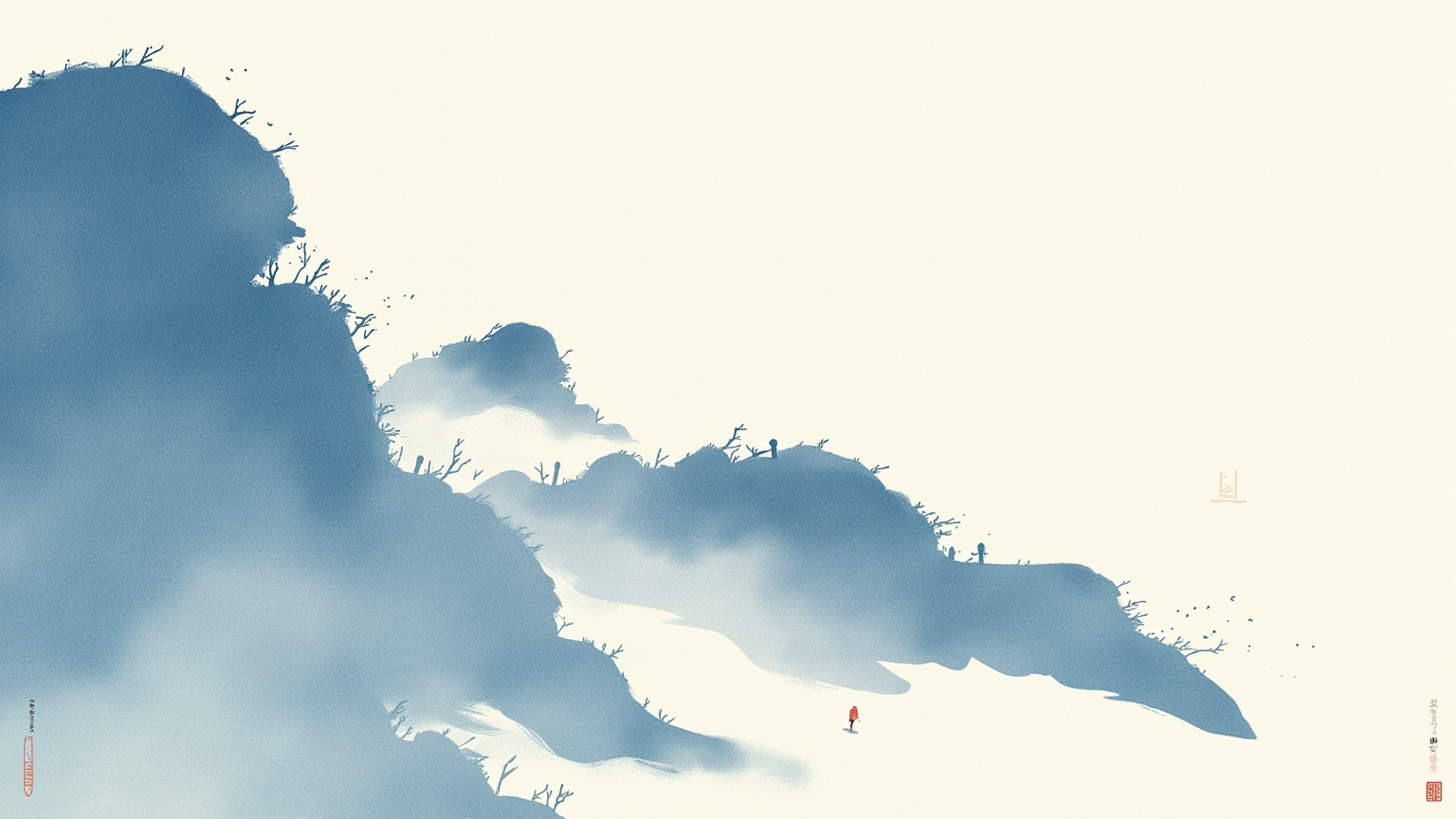
Why nearly every Chinese person's first memorized poem comes from this one anthology.
Text and illustrations produced by the pipeline
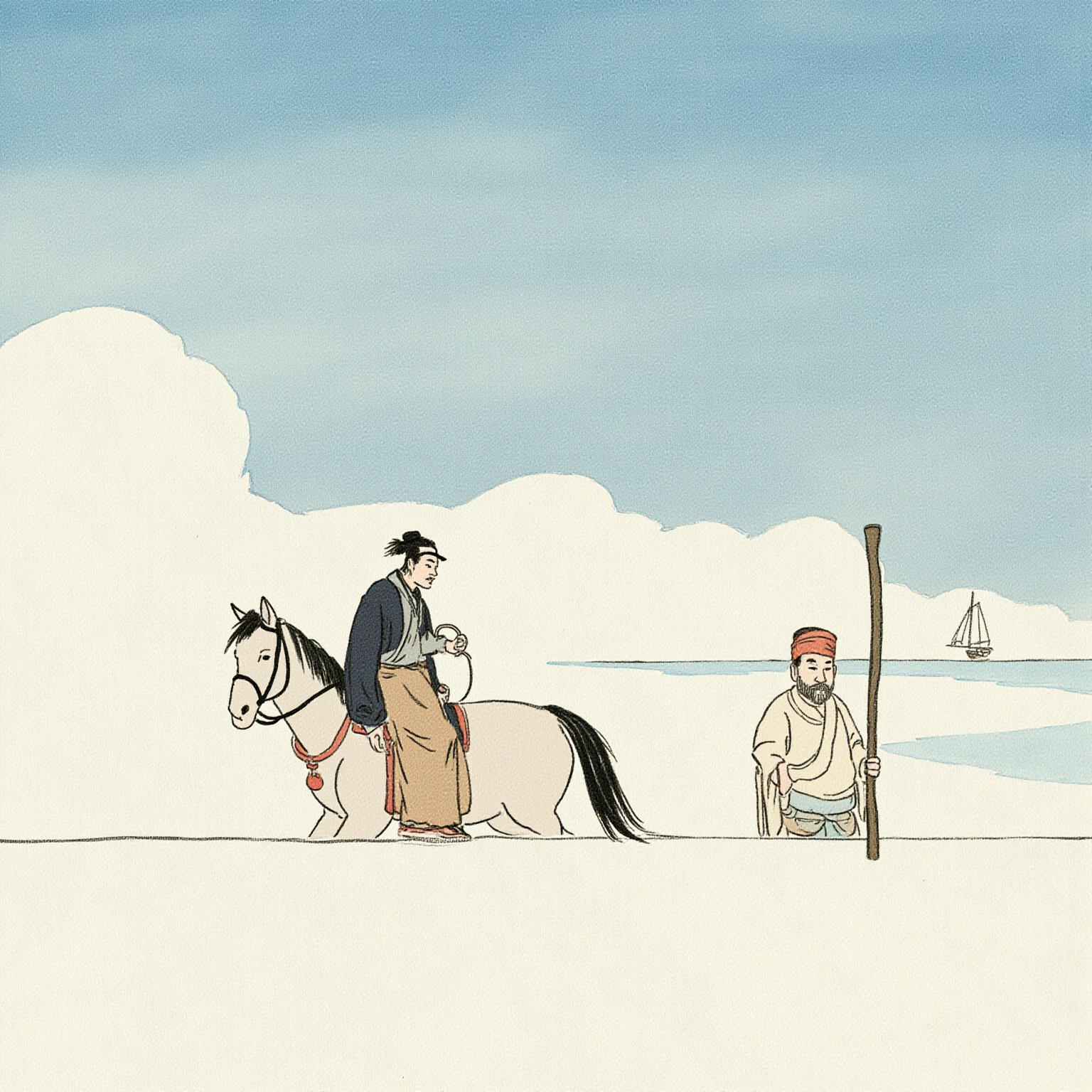
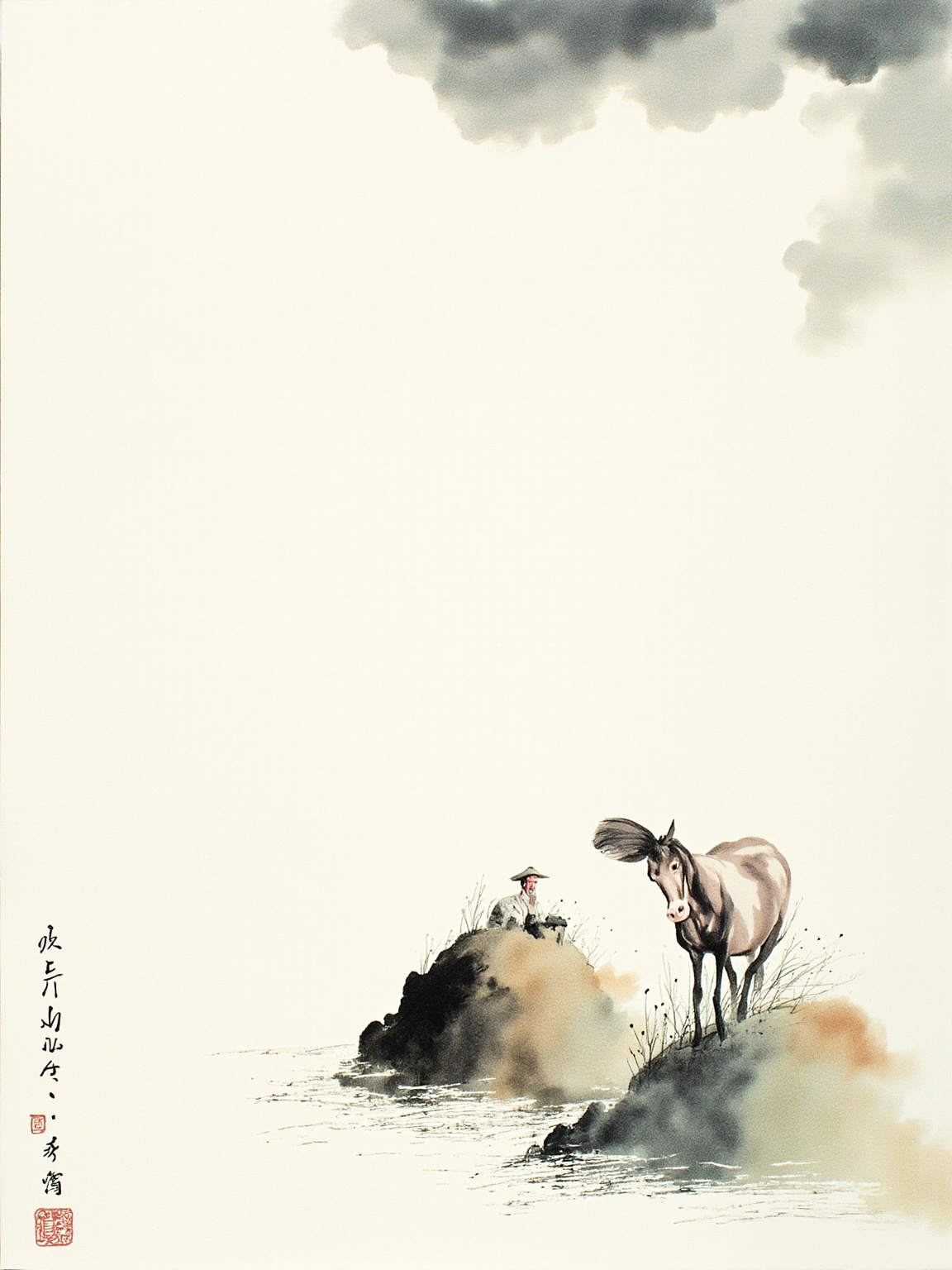
A sprig of willow passed from hand to hand, the rain over Weicheng just wetting the tavern banners. This is the single most worn image in this whole anthology — have one more cup, I urge you; west of Yang Pass, there will be no old friends. For two hundred years, village schoolchildren, travelers jolting along on long cart rides, old men murmuring at their deathbeds have all done the same thing: pressed a seven-character line of Tang verse down into the throat and made it their own.
A minor county magistrate in Hebei decided the poetry anthologies being handed to children were simply not good enough. So he and his second wife shut the door and spent a year working it out between them, picking out some three hundred poems from scratch. That is how this book — the one nearly every Chinese household has opened at some point — came to exist.
Three Hundred Tang Poems was compiled by a married couple. The editor of record, Sun Zhu — styled Hengtang Tuishi — was a native of Wuxi in Jiangsu, a jinshi graduate of the Qianlong era who served as magistrate of Dacheng County, Hebei, the kind of local post that meant drafting official documents, hearing court cases, and overseeing river works all at once. His second wife, Xu Lanying, courtesy name Lixian, worked through the selections with him, sorting the poems by form; the whole project took a full year. They began compiling in the spring of the twenty-eighth year of the Qianlong reign and finished the following year. The book went out under Sun Zhu's pen name alone, and most readers since have never known Xu Lanying had any hand in it — the detail this anthology's own history erases most often.
Before it, village schools taught children from Poems of a Thousand Poets, a mixed bag chosen with no real logic. After it, Poems of a Thousand Poets all but vanished from the schoolroom. In other words: the order we now take for granted — five-character quatrains first, seven-character regulated verse next, Li Bai and Du Fu last — was laid out for us by this couple, working it out in a county-office study more than two hundred years ago.
Reading Li Bai and Du Fu side by side is the greatest gift this anthology leaves later readers. Both men lived through the High Tang, and each wrote it in an opposite posture.
Li Bai flies upward. Drinking alone under the moon, he makes three of himself with his shadow for company. When a friend's boat has long since vanished, he is still standing at the tower rail, watching the river run into the sky. There is no hardship in his poems, only abandon, as if nothing could ever weigh him down.
Du Fu sinks into the ground. When Chang'an fell during the An Lushan rebellion and the rebels held him there as their prisoner, what he saw was a spring in which the state lay broken while its mountains and rivers remained — five words that carry the whole poem's weight. His wife and children were far off in Fuzhou, and he pictured that night's moon over Fuzhou being watched by his wife alone. Personal hardship and a dynasty's collapse are welded into a single line here, in a way Li Bai never wrote. The first time I read those five words, I went back and read them again. They sit like lead.
Almost as soon as Three Hundred Tang Poems appeared in the Qianlong era, it pushed Poems of a Thousand Poets out of the schoolroom. In the Tongzhi era, Chen Wanjun added a supplementary commentary that is still the standard edition in use today. The saying that followed it down the generations — read three hundred Tang poems well enough and you can recite verse even if you can't write it — works as both an advertisement and a plain fact: the selection is sharp, the arrangement is clever, and the whole thing was built for a child's first lessons.
But it has stayed in print for two hundred years on more than just its usefulness as a primer. Every single poem in it can stand on its own, pulled out of the collection entirely. Grade schoolers memorize the one about lifting your head to look at the bright moon. Middle schoolers memorize the one about the state broken and its mountains and rivers remaining. By college, readers come back to those Li Shangyin lines that never quite say what they mean. There is a poem in this book waiting for every stage of a life. Most anthologies never manage that kind of staying power, no matter how hard they try.
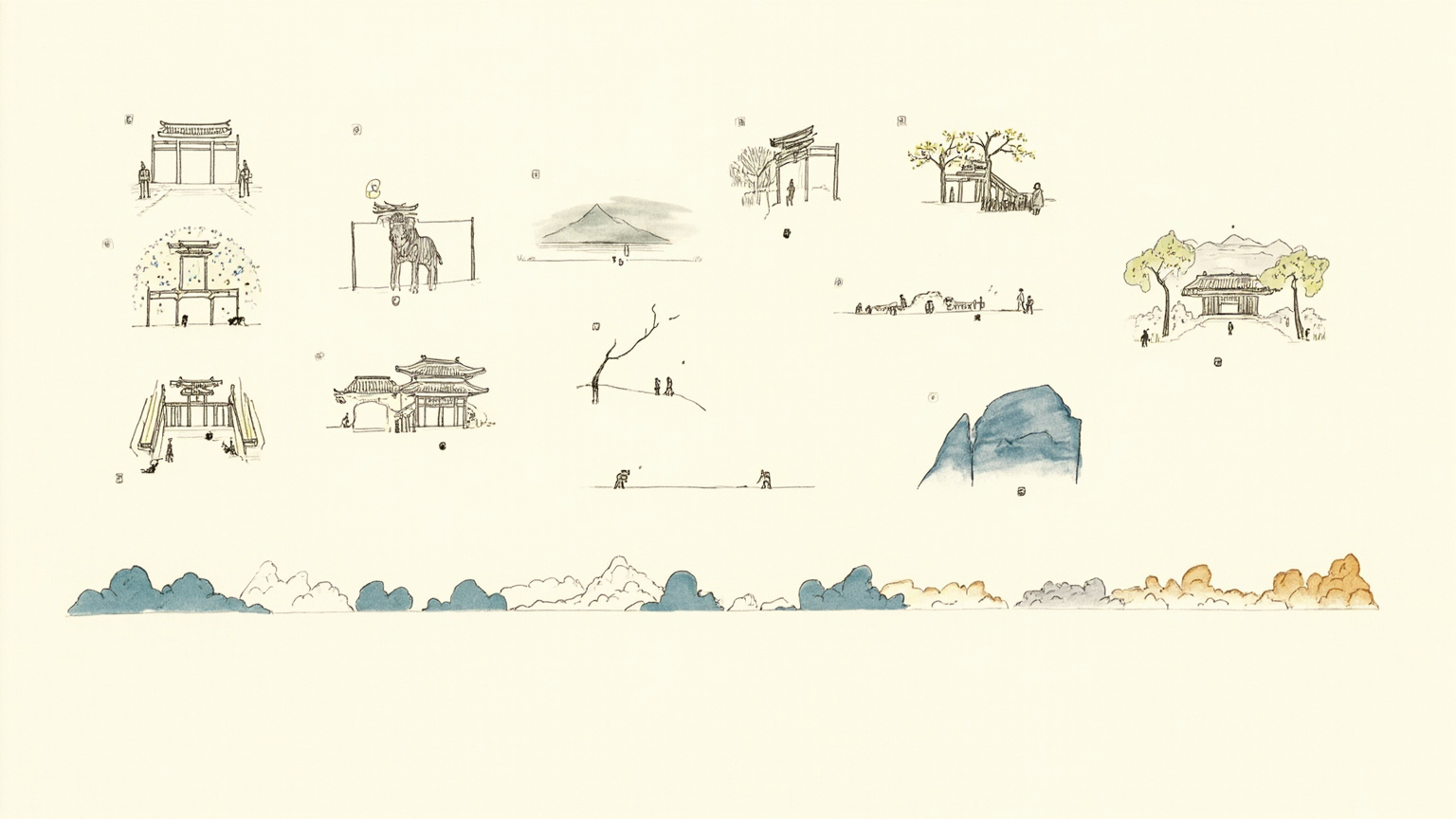
Before the guide was written, this book got a visual foundation — every illustration you just read grew out of it.
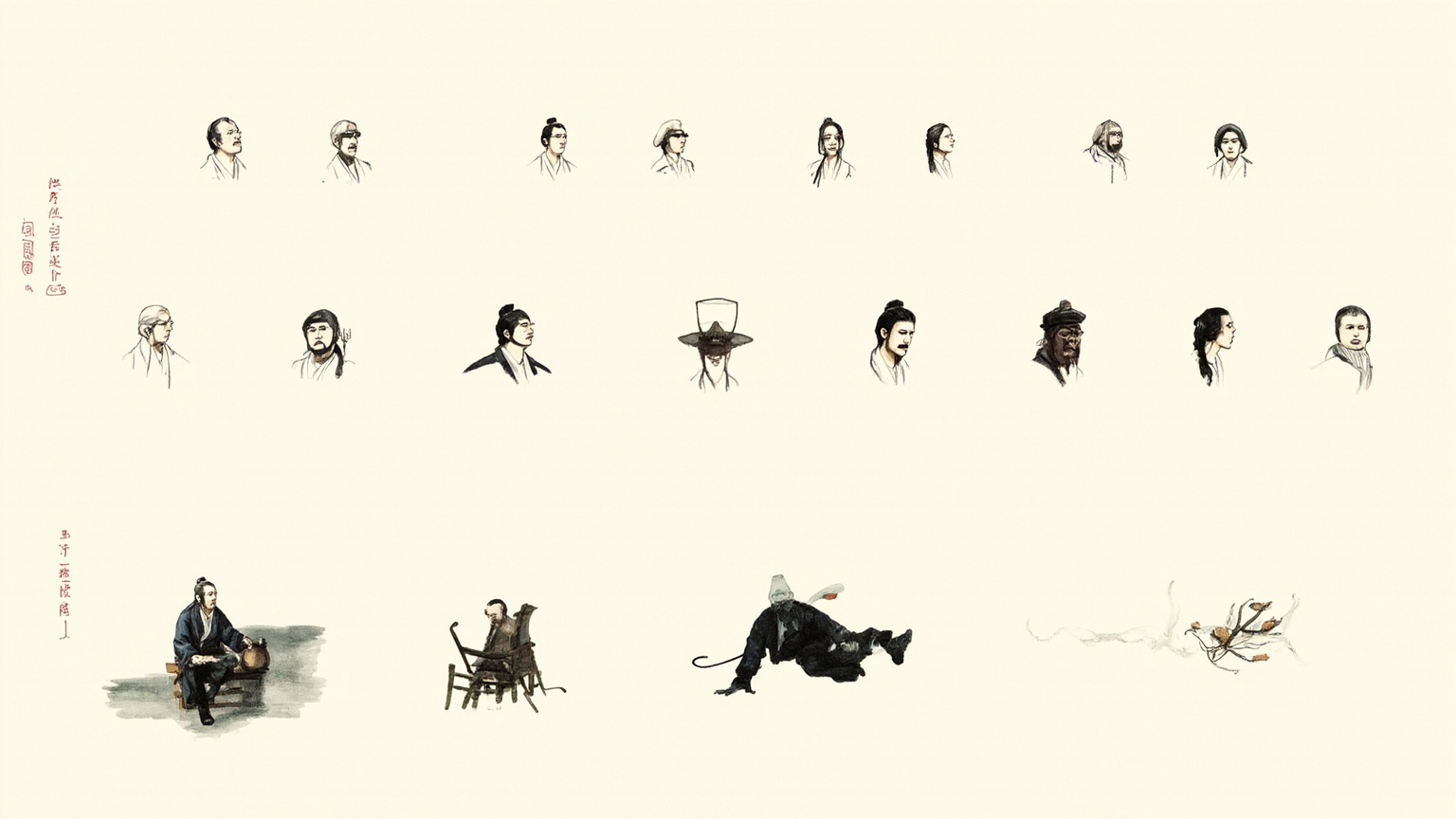
Seventy-seven poets appear in the book, running from Zhang Jiuling in the early Tang all the way to Li Shangyin and Du Mu in the late Tang — a miniature history of Tang poetry in itself. None of these are invented figures, and two peaks tower over the rest that no reader can get around. One is Li Bai — fond of wine and swordplay, calling himself a banished immortal, his poems full of moonlight, lone boats, and a sword drawn while he looks wildly around him. The other is Du Fu — battered through middle age, sick and poor by the end of his life, who wrote the ruin of his country into his own bones. One man flies toward the sky, the other digs into the ground; together they are called Li-Du, and they are the two load-bearing beams of this whole anthology.
The rest of the poets each hold their own ground. Wang Wei and Meng Haoran keep to mountains and fields, cool and spare as pale ink wash. Wang Changling and Cen Shen travel out to the western regions, writing of beacon towers, snowfields, and border guards who never get their letters from home. Bai Juyi wrote so a peasant woman could understand him; Li Shangyin wrote so that no one could. Reading this anthology means walking the full three hundred years of Tang geography — Vermilion Bird Street in Chang'an, the ferry crossing at Weicheng, the desert beyond Yang Pass, moonlight over Yangzhou, the plank roads through Sichuan.
The book is organized by poetic form into separate scrolls: five-character old-style verse, seven-character old-style verse, five-character regulated verse, seven-character regulated verse, five-character quatrains, seven-character quatrains, with yuefu ballads appended under each. At first glance this looks like a cataloguer's fussiness. In fact it hides a whole progression — fewer characters before more, loose old-style meter before the strict rules of the new style, and only at the end the seven-character regulated verse that demands even its couplets match line for line. A village teacher never had to explain any of this out loud. Turn the pages in order, and a child walks into Tang poetry one step at a time.
The opening was chosen with real care. The five-character old-style scroll leads with a set of reflective verses by Zhang Jiuling, their tone upright and settled — as if the book first makes you sit up straight before letting you watch Li Bai run wild. The selection itself is sharp: seventy-seven poets, over three hundred and ten poems in all (three hundred is a round number, borrowed from the old reference to the Book of Songs' three hundred poems), and nearly every single one holds up as a schoolroom text.
Two thematic currents run loudest through the whole collection.
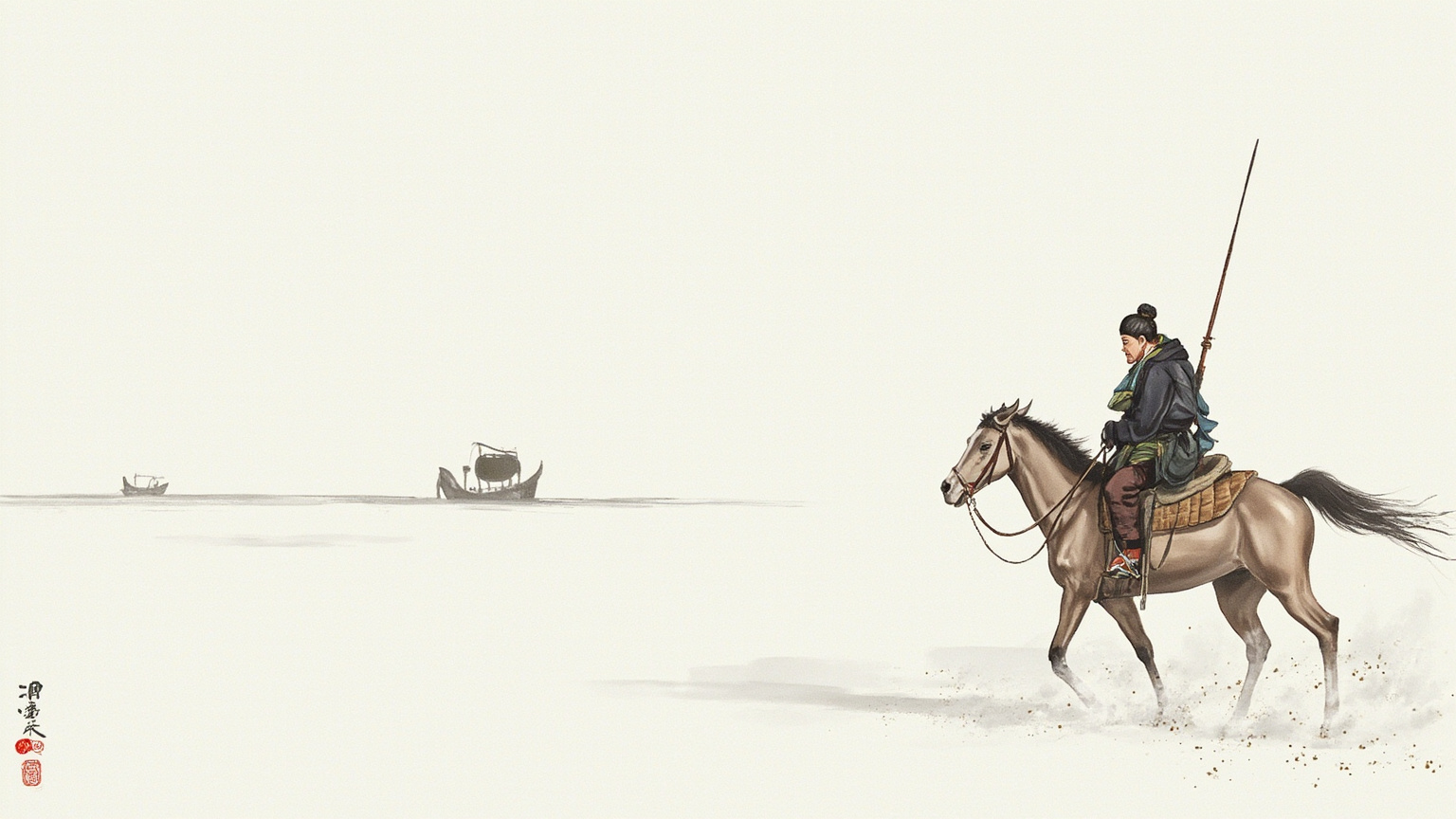
One is the frontier. Wang Changling was known as the master of the seven-character quatrain, and his poems on the border garrisons are not about killing — they are about a soldier under a beacon tower looking up at the moon and aching for home. Cen Shen went out to the western regions on campaign twice, and turned the region's brutal cold into a single overnight spring wind that opens ten thousand pear trees into bloom, misery rendered so beautiful it leaves you wordless. This current runs cold, carrying the sound of nomad flutes and snow.
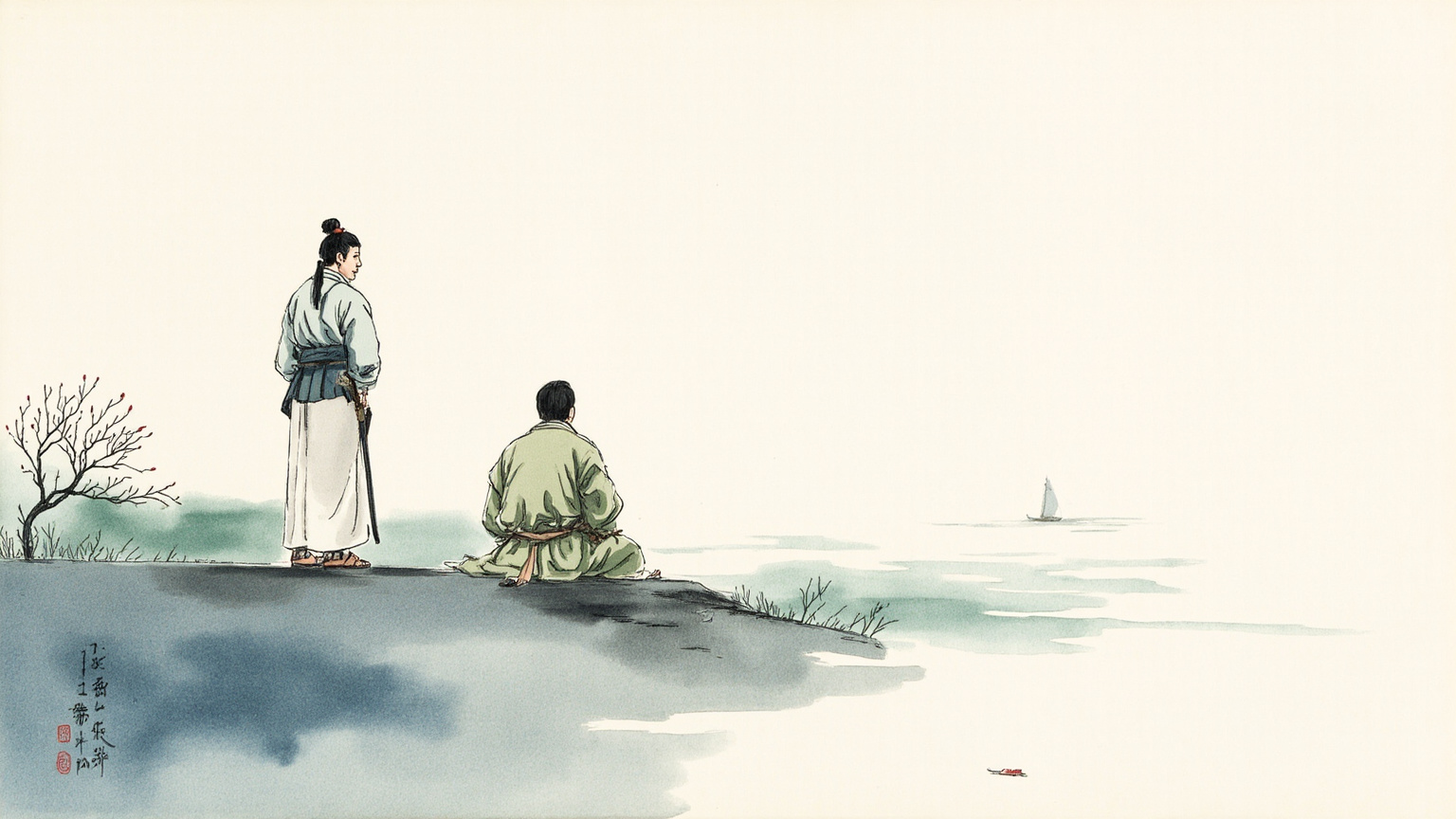
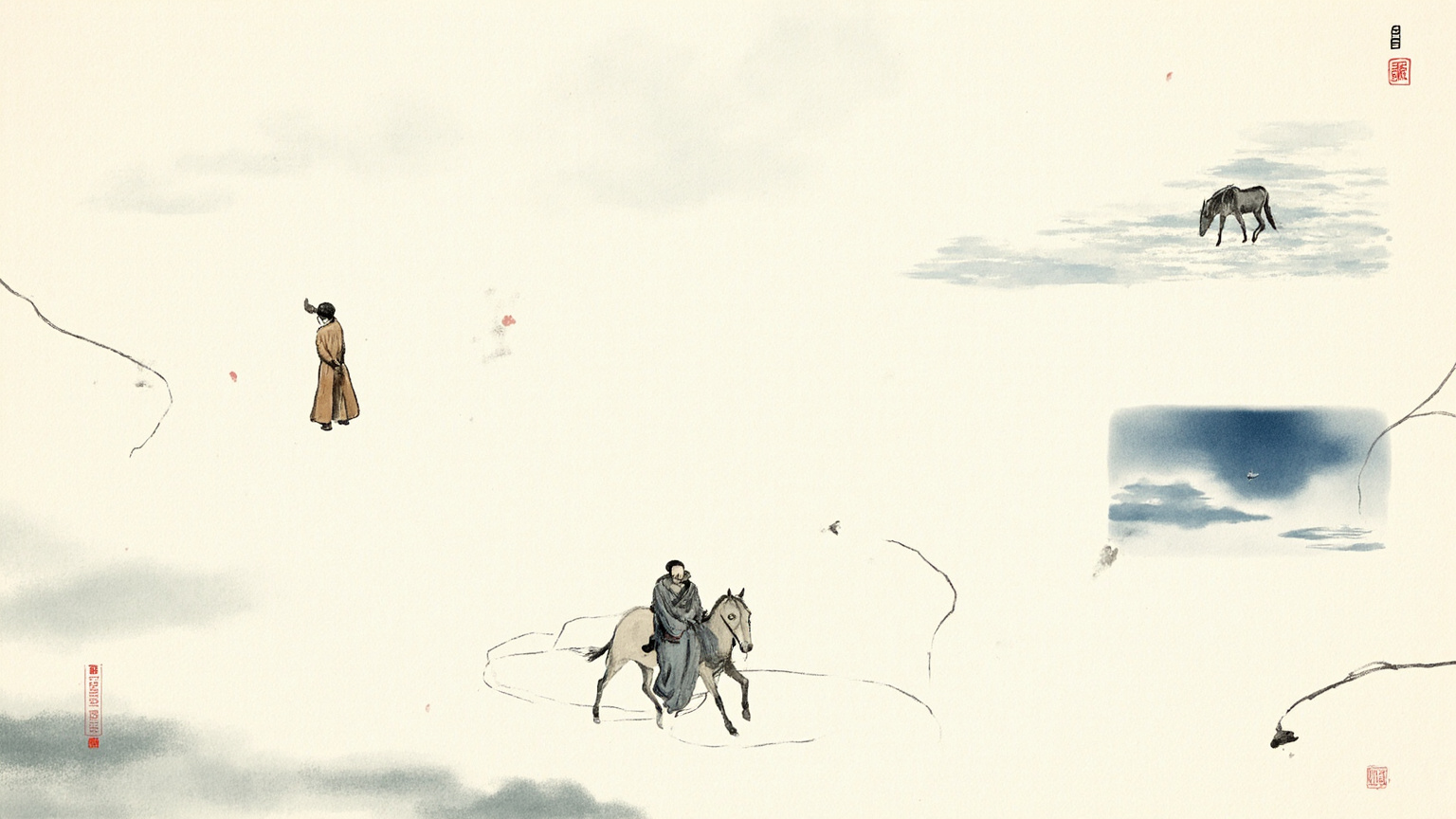
The other is farewell. Wang Wei, at Weicheng, wrote have one more cup, I urge you, because west of Yang Pass there will be no old friends left. People in the Tang really did break off a willow branch at parting — hand it over, and the two of you belonged to opposite ends of the earth from then on. Li Bai saw Meng Haoran off from Yellow Crane Tower, watching a lone sail shrink into the horizon until nothing was left but the Yangtze running into the sky. Weicheng, Ba Bridge, Yellow Crane Tower, Yang Pass — these places keep recurring, and the broken willow branch becomes the single most frequent image in the whole book. Tang poets did not write about parting out of some natural love of the subject. The examination system kept every one of them on the road for their entire careers, and any goodbye could turn out to be the last.
By the time the book reaches its later pages, the frontier's bravado has thinned out and the farewell wine has gone cold. Emperors changed like lanterns on a wheel, and Li Shangyin scraped by wedged in the cracks of factional infighting, writing poems that no longer said anything outright — this is where his Untitled poems come from.
Du Mu, writing in the same period, took a different tack: dashing, clear-eyed, given to looking back. His years in Yangzhou felt like a single dream in hindsight, and all he had to show for it was a name for fickleness in the pleasure quarters. The two of them are called the Lesser Li-Du, and they close out the anthology's late-Tang section. Once the atmosphere of the golden age had receded, Tang poetry turned from outward expression toward inward retreat, from the public voice to the private one, a current Sun Zhu and Xu Lanying buried poem by poem through the second half of the book, purely through what they chose to include.
This piece has given you a map: who Li Bai was, who was writing about the frontier, why farewell keeps coming back, how the mood shifted in the late Tang. But a map is not the ground itself. The real pleasure of this book is turning the pages one by one and chewing over every word: why this particular character sits where it does, how each couplet's parallel halves pull apart and click back together, how a five-character quatrain can pack only twenty characters and still leave no room to breathe. None of that comes from a summary. You have to turn the page yourself, read it under your breath, and memorize it until it becomes part of your own body. No one else can do that for you.
A poem you haven't memorized is only words. Memorized, it becomes your own voice, your own breath, the line that will come out of your mouth unbidden, someday, when you need it.