Woolf compresses a whole family, an era, and a war into the perception of three afternoons.
Text and illustrations produced by the pipeline
A small boy stands at the window, pointing at the pale grey spire far out on the water, saying he wants to go to that light. His mother answers him: if the weather holds, they'll go. His father doesn't even look up: it won't be fine. The boy's eyes are still bright when the verdict comes down. The book begins at this window.
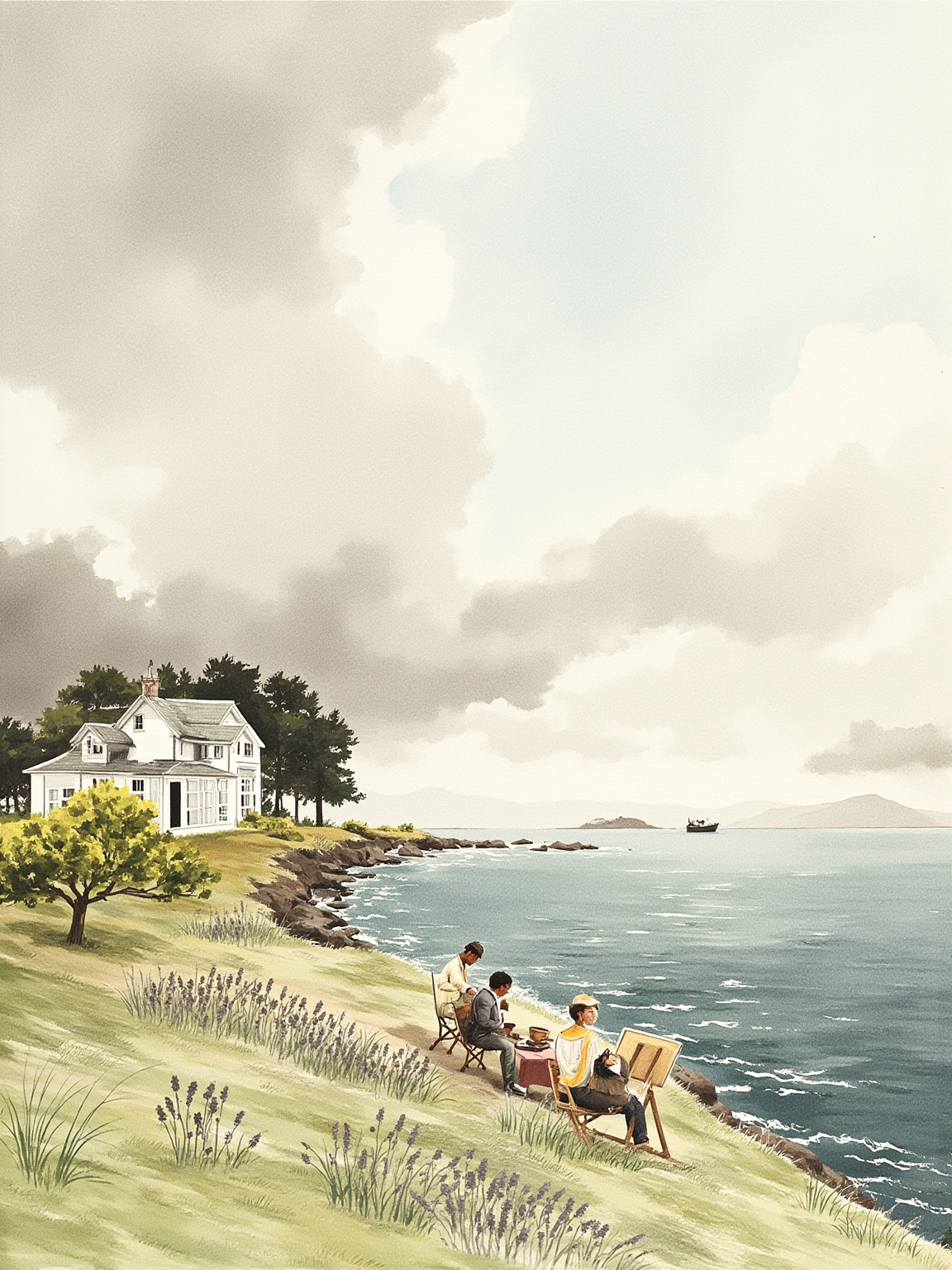
Outside the window, the sea gives off a silver-blue haze, light breaking apart on the crests of the waves. Inside, a rented summer house holds a dozen people living through a season they assume will go on forever. Woolf crams the family's names, relations, and histories into the first thirty pages, then wheels time around and sends it running somewhere nobody expects.
Virginia Woolf was born in 1882 and died in 1941; this novel came out in 1927, one of her defining later works and one of the most discussed books in English modernism. The story takes place at a house on the coast of the Hebrides, modeled on Woolf's own childhood summers. It doesn't win you over with plot -- the plot is thin as a pancake. What it does is put the tangled mess inside a human mind on the page, exactly as it is. Readers don't remember what happened. They remember the light in front of them at that moment, the crease in the tablecloth, the ache of being shut up by a single sentence. That's exactly why it stays with you.
Mrs. Ramsay is the center of the house: mother of eight, beautiful, tender, carrying a gathering force you'd expect from a Madonna in a religious painting. She hosts the dinners, matches the young people up, talks every self-doubting adult in the house back down, and for a while stitches a roomful of awkward souls into something whole.
Her opposite is Mr. Ramsay: a brilliant philosopher who behaves like a child who always needs feeding sugar -- he cannot function without a constant supply of praise and reassurance from the people around him. His blunt refusal of his son's wish to visit the lighthouse is exactly this fragility erupting as tyranny.
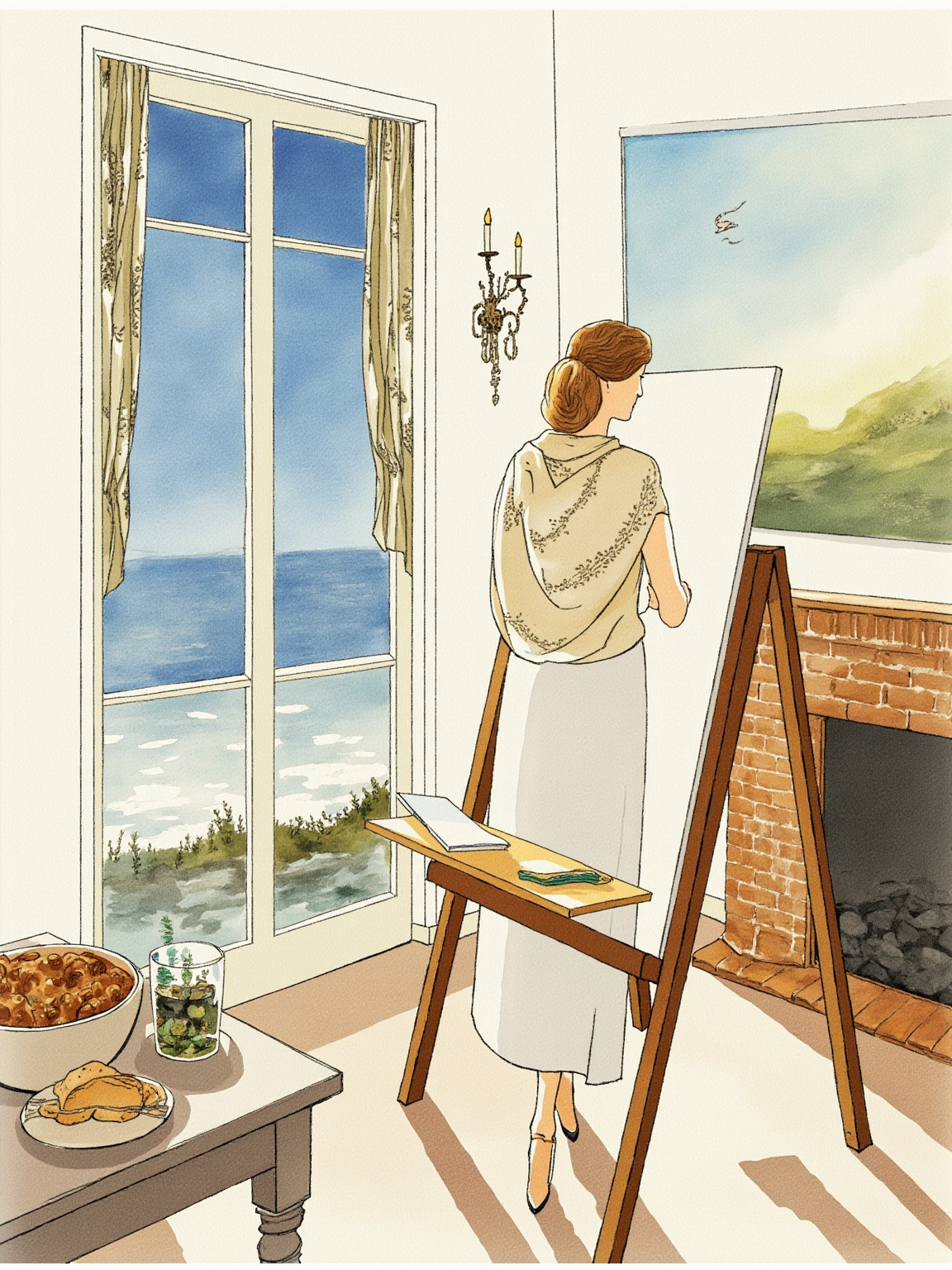
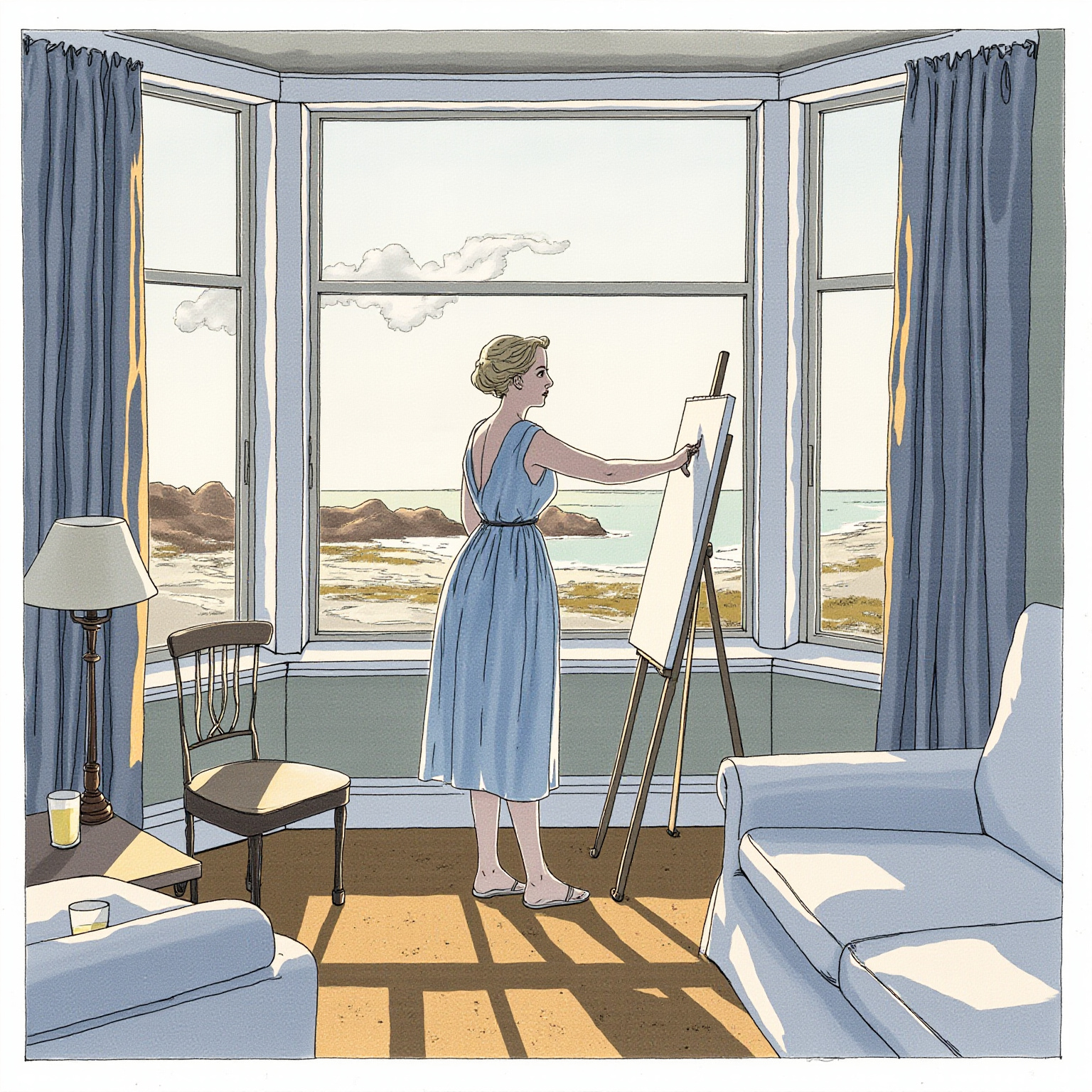
Back on shore, Lily Briscoe returns to her easel. She has no idea what's happening out on the water -- she only knows that the light in front of her, the tree outside the window, the house itself, have suddenly shown her what the painting has to be. She sets down a line in the center of the canvas. She has her vision at last. The novel ends there.
On the surface it's about a lighthouse. What it's actually about is time. A lighthouse by itself means nothing -- it's a fixed, cold thing, almost divine when seen from a distance. The meaning is in the wanting on the day the boy was six, in the cost of ten years that took a mother and two siblings, in the two overdue words exchanged the moment the boat finally lands. Arriving isn't the point. Arriving is what compresses years of distance into one moment that can finally be acknowledged.
And then there's the moment itself. In Part Two, the deaths of the mother and her children pass in three bracketed sentences -- you can't feel the weight of that restraint unless you read it yourself. Woolf never says how they died, only that the house stood empty, and those three brackets land like three silent nails. There's also the stroke Lily can't put down for ten years -- you won't feel the years of frozen dread, or what actually stands between her and that final line, until you've read it for yourself.
The plot is only the map. What Woolf gives you is the sea itself.
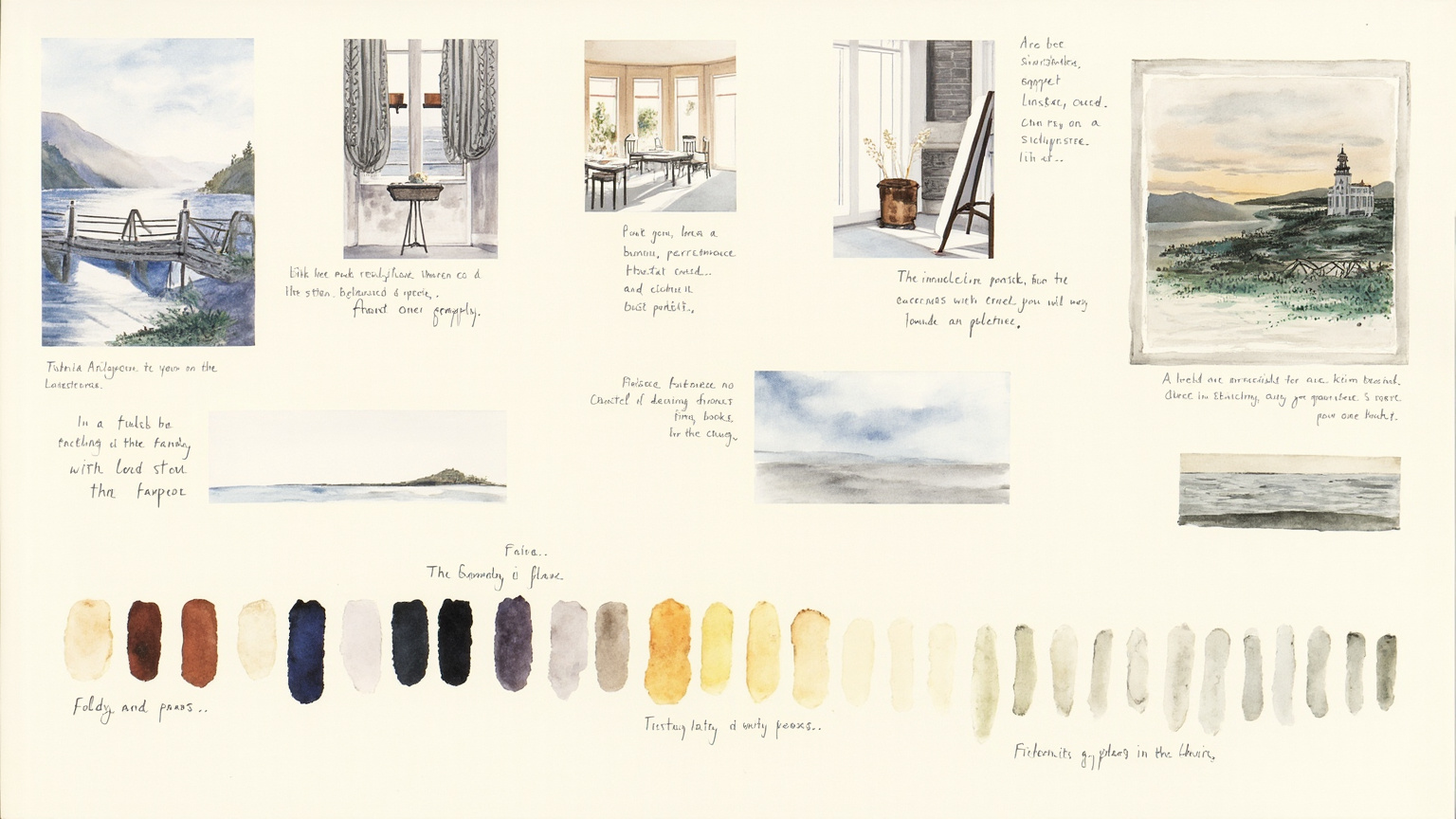
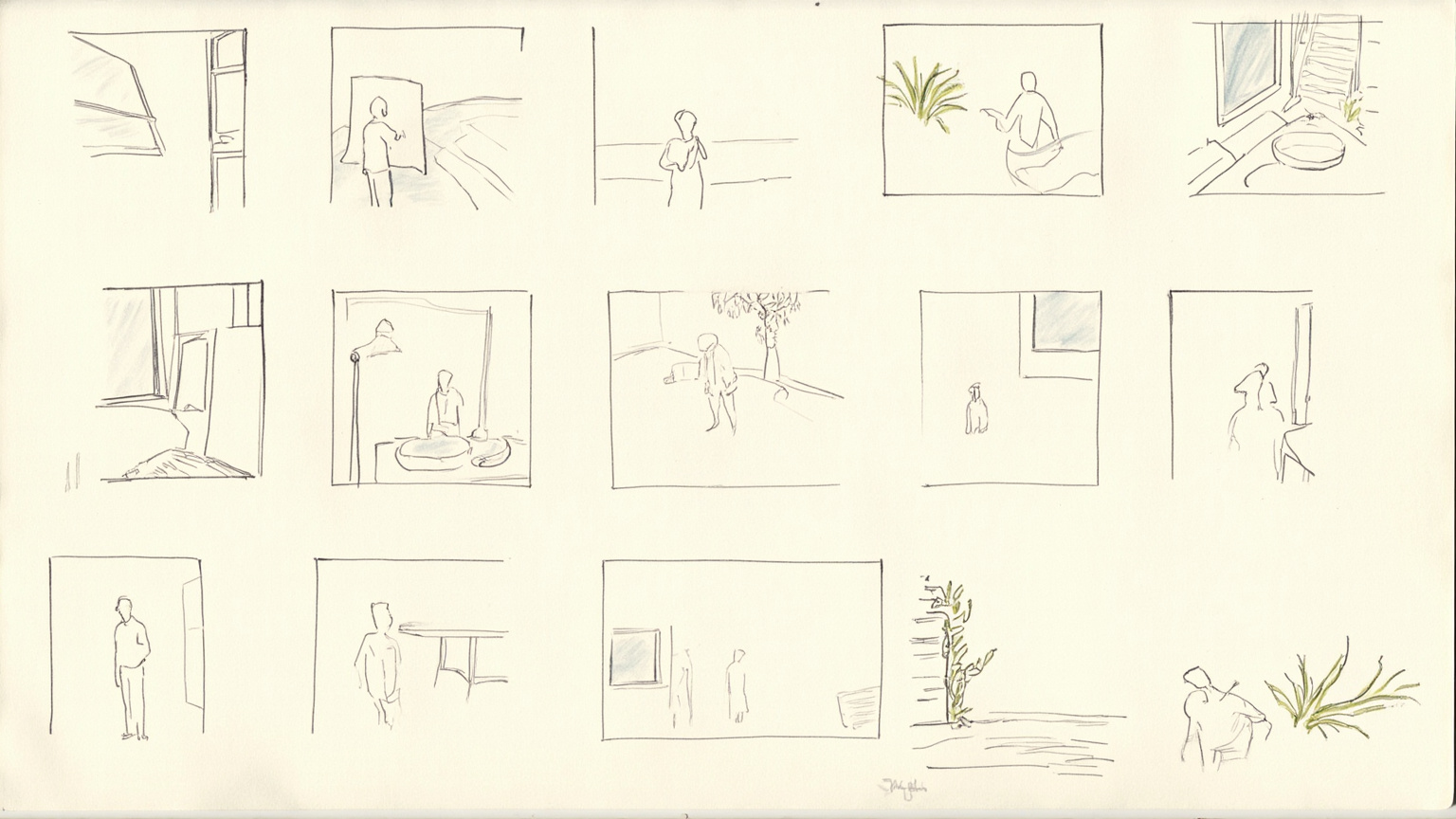
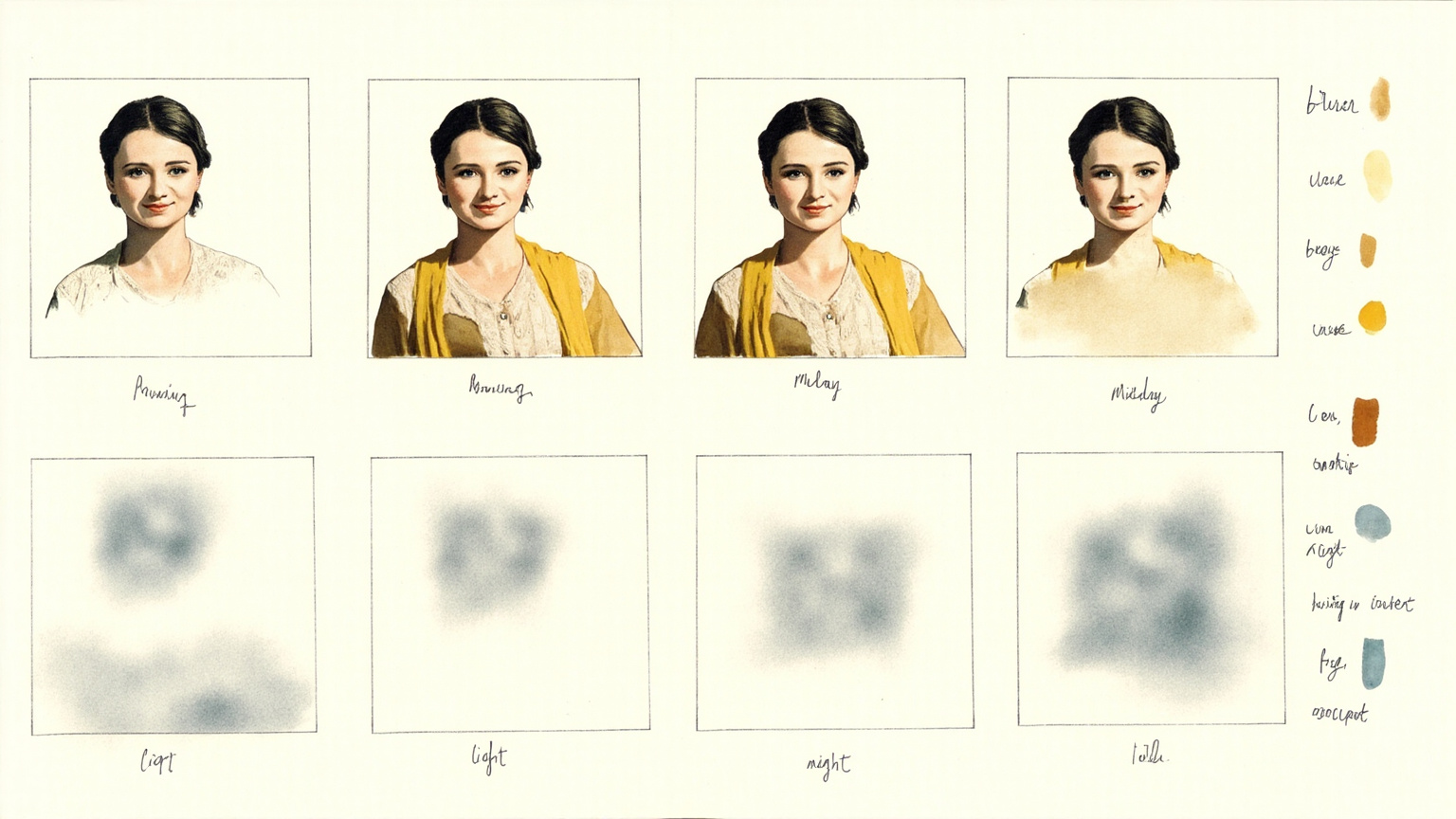
Before the guide was written, this book got a visual foundation — every illustration you just read grew out of it.
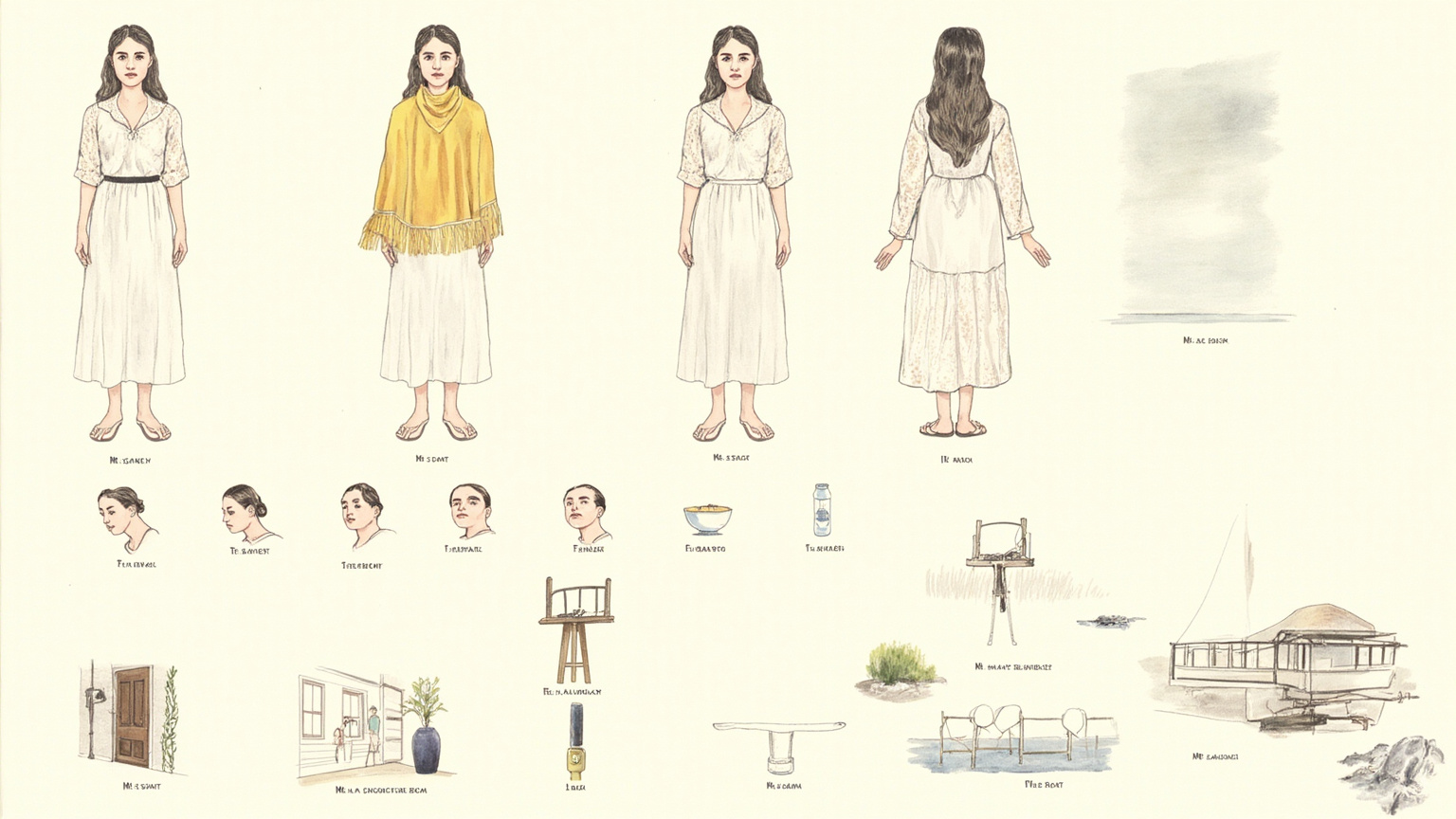
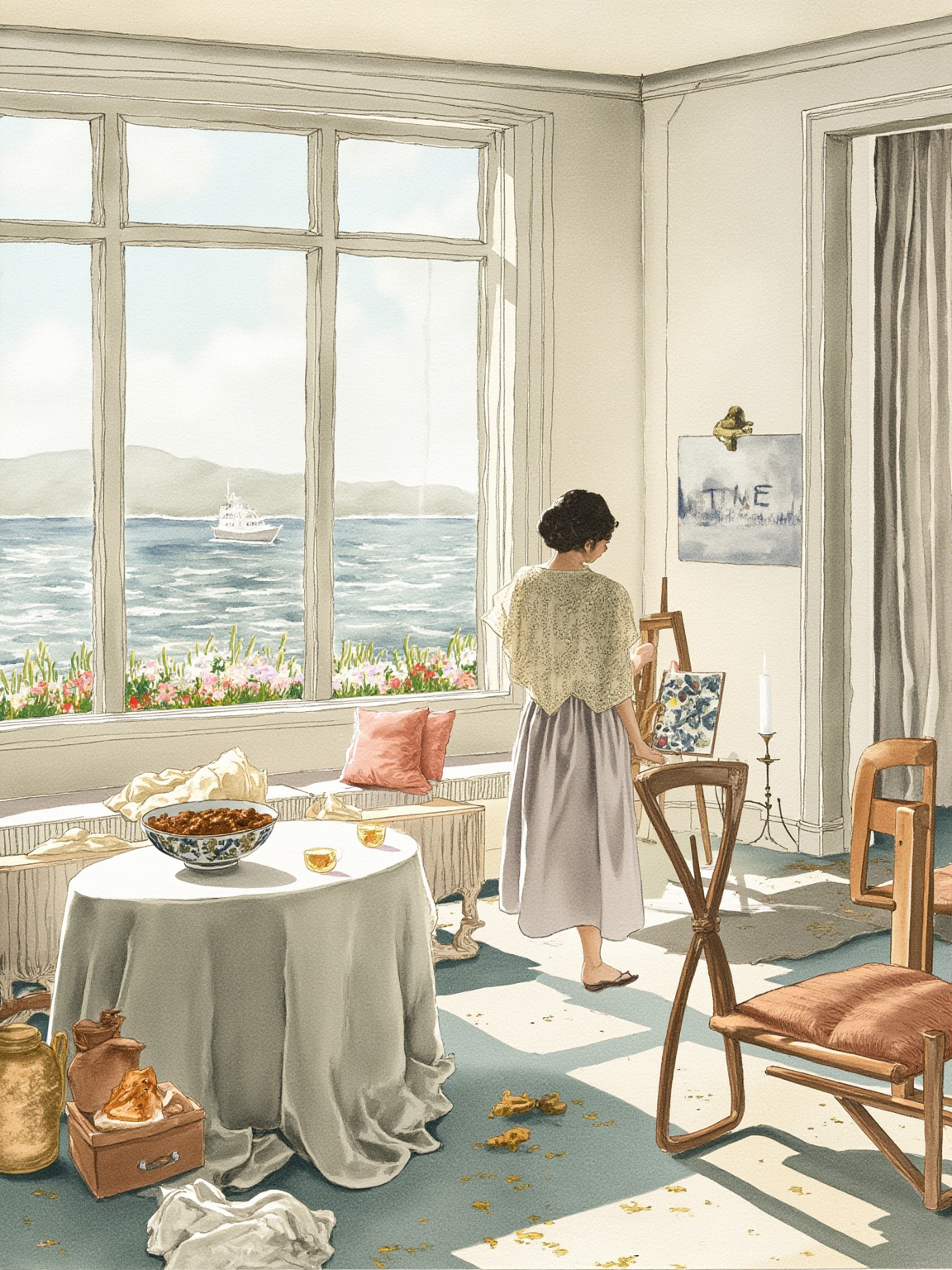
Lily Briscoe is an unmarried painter, a regular guest of the family. In Part One she sets her easel up by the window, trying to get Mrs. Ramsay and James into the canvas, and can never quite bring herself to put down the one stroke that matters. Carmichael is a silent old poet who spends his days in a deck chair, doped on opium. Tansley is Mr. Ramsay's young disciple -- awkward, worshipful of his teacher, and full of contempt for women. He tells Lily women can't paint, can't write, and the remark lodges in her like a fish bone for years.
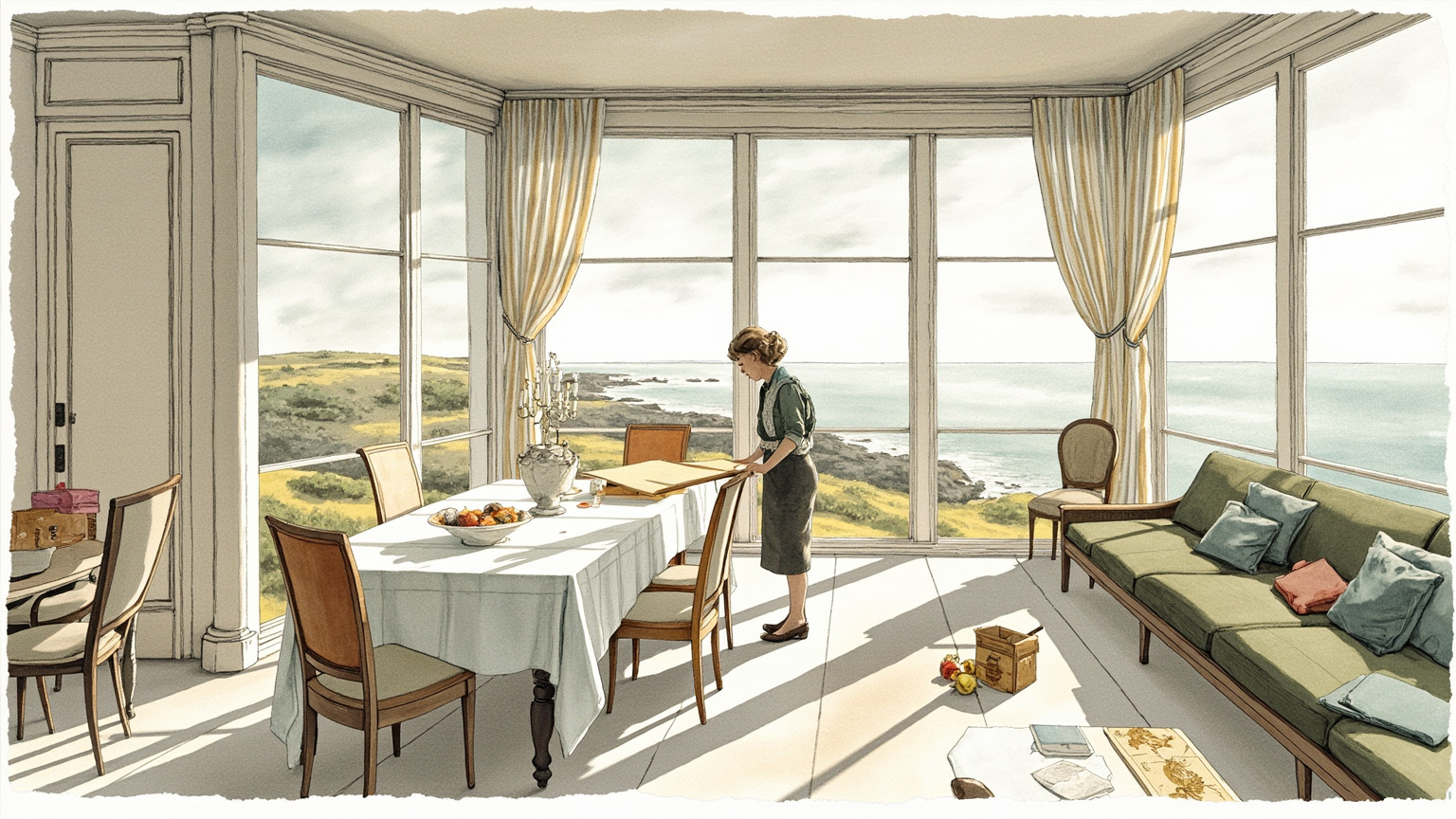
From morning into evening, the light moves through the house while everyone's thoughts run like a current underneath the surface of the sea. James's wish gets cut down by his father in a stroke, and he stalks off to the garden to sulk and kick at tree roots. Lily stands at the window mixing colors that won't come together. Mrs. Ramsay is already running the evening's menu in her head -- Boeuf en Daube, a lot of guests to feed, the table has to seat them all, they'll need to pull out the long one from the sitting room.
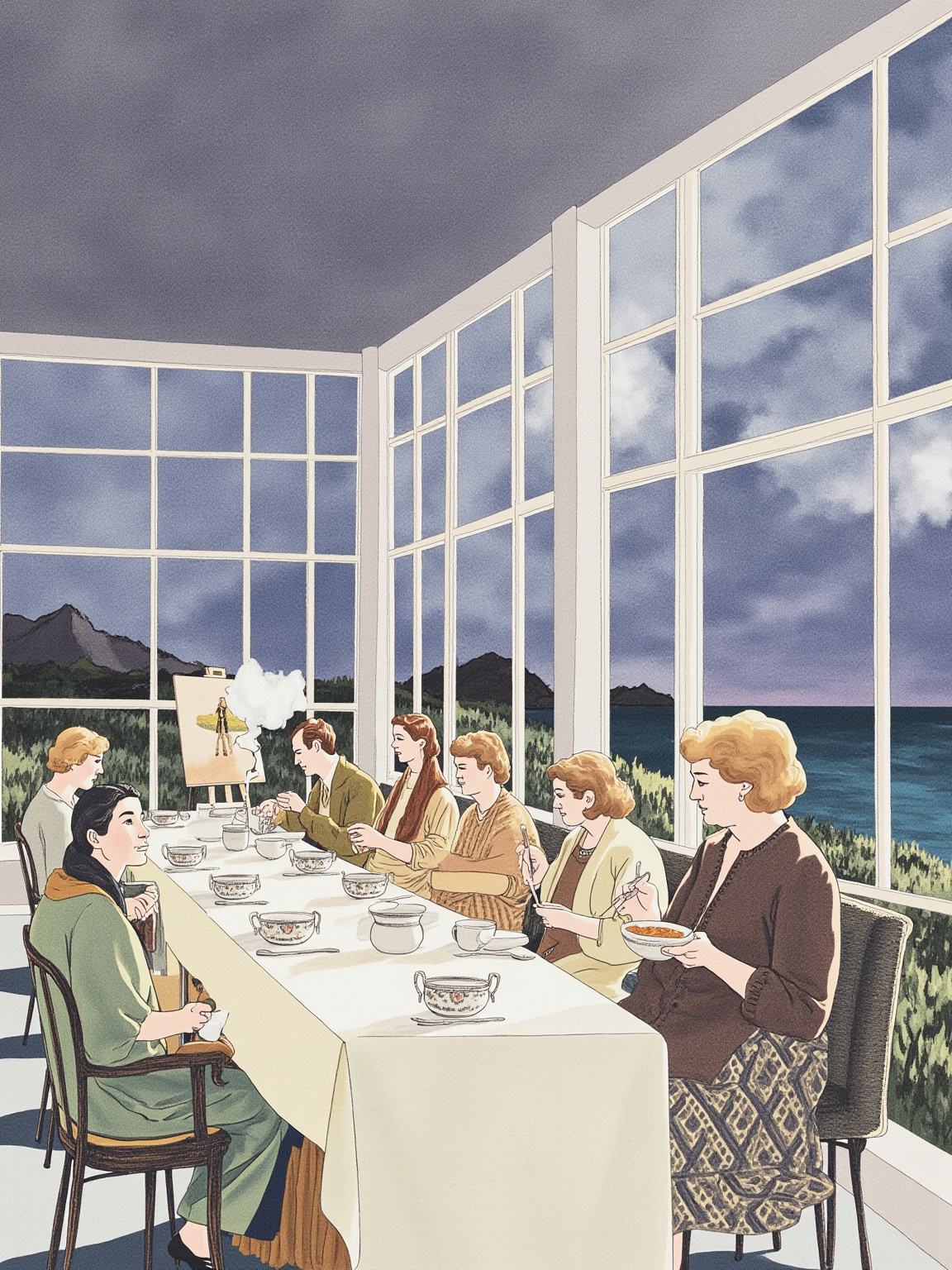
Dinner is the house's high point. Ten people of wildly different temperaments are drawn together, briefly, into something that can actually talk to itself, held there by Mrs. Ramsay's attention and small gestures: Tansley clumsily praising Mr. Ramsay's philosophy, Bankes talking botany with his usual calm, Paul and Minta freshly engaged, Carmichael silent as ever. What makes the scene work isn't the talk -- it's the hostess at the head of the table, threading it all together, knowing who needs to speak to whom and who's gone quiet too long to be left alone.
After dinner Lily goes back to her easel, and outside the window the lighthouse has already been swallowed by the sea and the dusk. What she wants to paint is that instant of mother and son side by side -- a shape, a relation, something she can see but can't put into words. Tansley's line from earlier comes back to her: women can't paint, can't write. She puts down her brush, her eyes stinging.
What follows is the book's sharpest cut. Woolf doesn't narrate the ten years -- she lets the house tell it, in a few dozen pages of lyrical montage: vines climbing the window frames, the roof leaking, furniture going grey with dust. The First World War breaks out inside parentheses. Andrew dies in the shelling. Prue dies in childbirth after her marriage. Mrs. Ramsay dies suddenly one night. None of it is shown directly -- three lives, three lines tucked inside brackets.
In the end it's only Mrs. McNab, the housekeeper, who comes to clean -- wiping away the dust, changing the sheets. The house is like a body its own family forgot, put back in order by an outsider, made ready for whoever survives to come back. This chapter is the novel's most radical formal experiment: an entire era, a war, the deaths of several central characters, all compressed into the image of a house going from new to derelict to freshly cleaned.
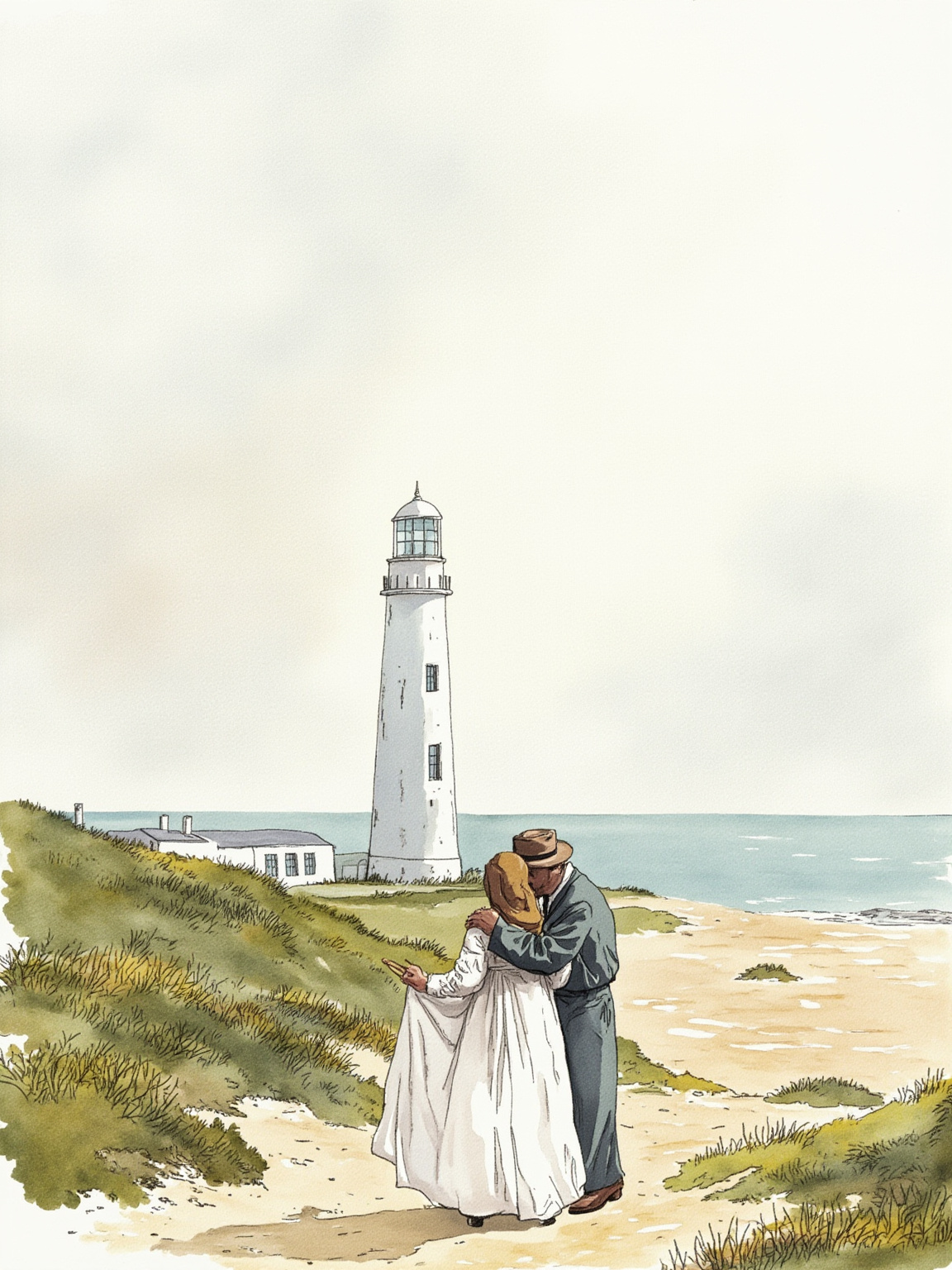
The survivors are back. Mr. Ramsay takes James and Cam, both grown into their teens now, out in a small boat, headed for the lighthouse that was refused them ten years before. As the boat pulls from shore, James stares at his father's back, years of resentment nearly boiling over -- he hates the old man for that blunt verdict, for needing praise from everyone around him, for never once saying a gentle word.
The moment the boat touches the rocks below the lighthouse, his father turns and says: well done. That's all. Something presses gently against the tightness James has carried in his chest for years. A reconciliation that was never spoken happens in those two words -- not forgiveness, but a willingness, finally, to admit that both of them were there.
A second, quieter thread runs through the book: two kinds of intelligence. Mr. Ramsay stands for the masculine, abstract mind, a philosophy that can't run without outside approval. Mrs. Ramsay stands for the feminine, intuitive force that binds the people around her together. Lily Briscoe's refusal of marriage, her refusal to have children, her insistence on painting -- all of it is the quietest and most forceful answer there is to the idea that women can't paint, can't write.
The technique most worth remembering is the stream of consciousness -- Woolf can crack open ten minds in the same single second, jumping from one sentence to the next, from one person's private worry straight to the soup the person across the table happens to be eating. She proves a single point: what matters isn't the plot, it's perception itself.
Finish this book and you'll understand: arriving was never about the lighthouse. It was about finally earning the right to say -- we were all there.
Because everything above is just the skeleton. What the book actually gives you is light -- the silver-blue sea mist through the window, candlelight cutting a face into half-shadow, the morning glare off the waves on a boy's face. None of that light survives this essay. It only rises off the page when you turn to those pages yourself.