Tom's Midnight Garden · Companion Guide
汤姆的午夜花园
一扇普通后门劈开两个年份——赤脚少年推开它,遇见了维多利亚花园里与他同龄的她。
The Clock That Strikes Thirteen
In the hallway of an old red-brick house, the grandfather clock strikes thirteen into the midnight quiet. A boy crosses the cold carpet barefoot and pushes open the back door. Behind him is the drab concrete yard of the 1950s; ahead of him, a summer garden closed in by tall yew hedges.
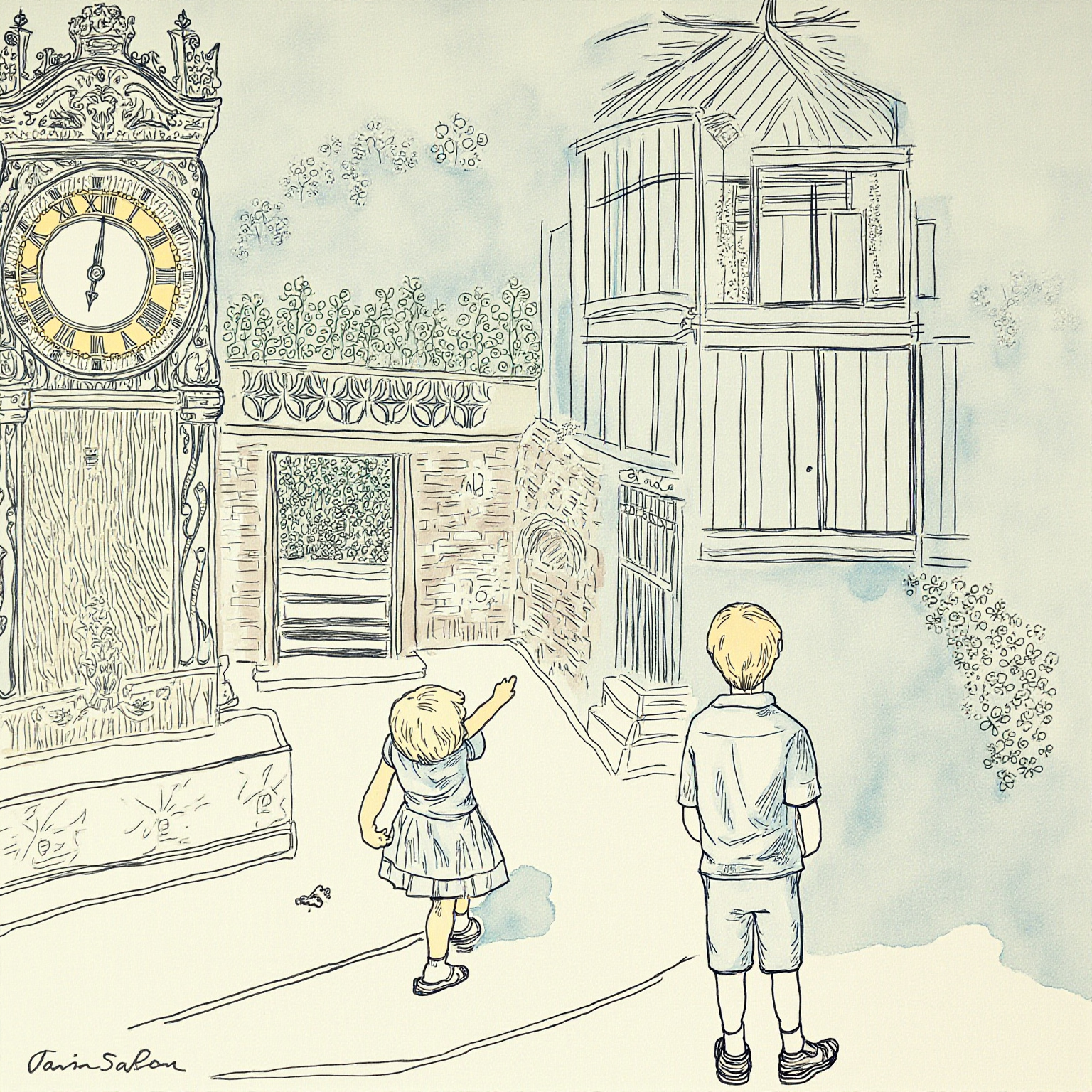
It's the image the book leaves you with longest: an ordinary backyard split into two different years by the same door. On this side, weeds push up through cracks in the concrete. On the other, the lawn is trimmed as if someone measured it with a ruler, a wrought-iron sundial casts its own shadow, and a few grey geese splash in the ditch by the greenhouse.
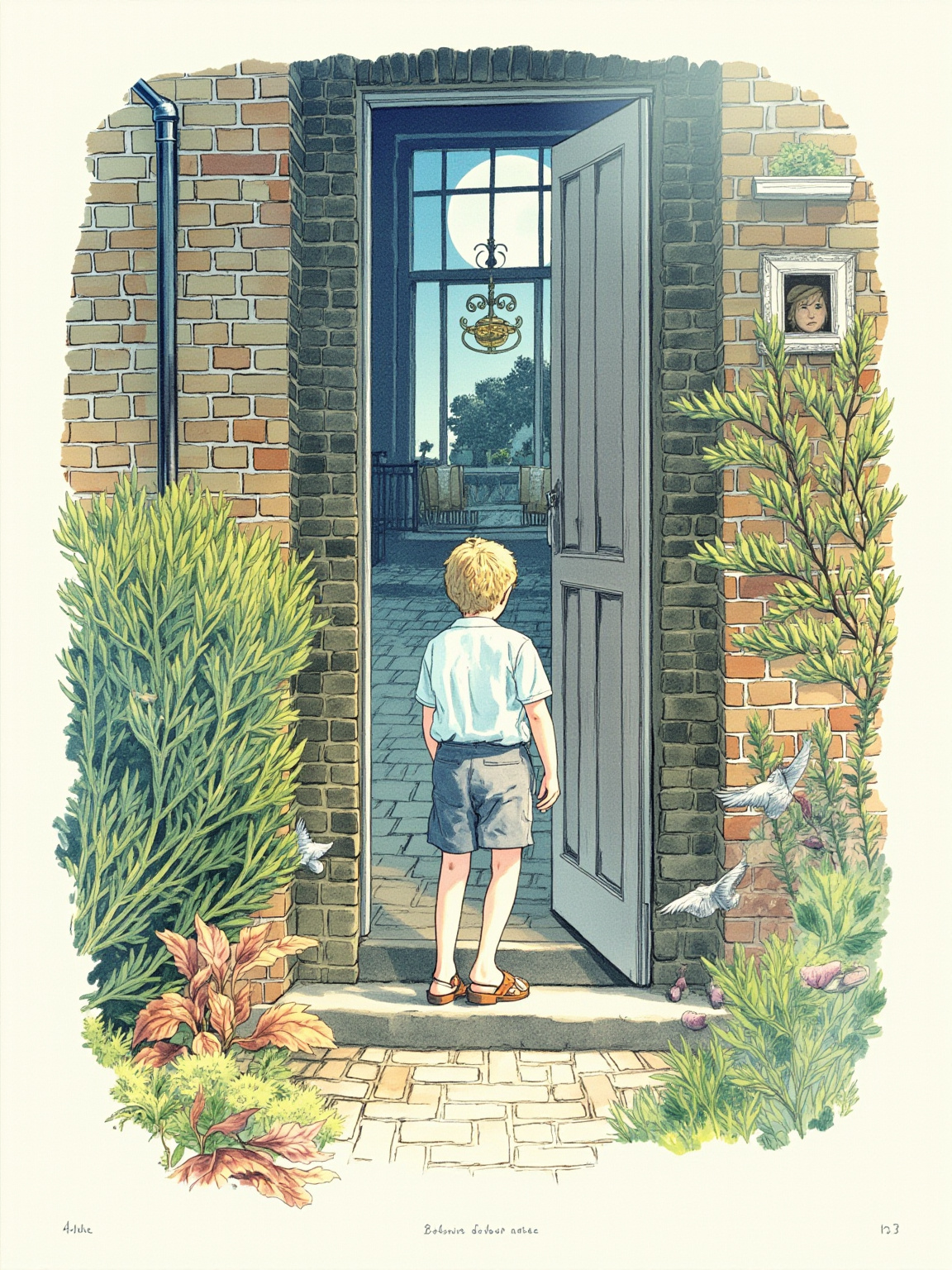
And then he heard the clock strike thirteen.
接着他听见了那座钟敲响了第十三下。
金句 · 第1章 · 十三下
What Kind of Small Book This Is
Tom's Midnight Garden was published in 1958, written by the English novelist Philippa Pearce. She was nearly forty by then, a former editor who had written a few books nobody much remembers, and this short novel for children won her Britain's most prestigious prize for children's writing the following year, the Carnegie Medal. Any postwar history of English-language children's books runs into it sooner or later; it keeps turning up on lists of the best English children's books of the twentieth century. It gets filed under coming-of-age fiction, but the better description is a novel about how time lives inside a person, dressed up as a story for children.
The story is set in a small English town in the 1950s. Tom, twelve years old, is sent to the country to stay with his Uncle Alan and Aunt Gwen after his younger brother comes down with measles, quarantined, in effect. They rent rooms in the old Bartholomew house, where an elderly woman lives alone upstairs behind a door that is always locked, though the window is always open. That house becomes Tom's prison for the whole summer, and the stage for every wonder in it.
The Names, and How They Fit Together
Start with Tom: twelve years old, sulking, caught for the whole summer between his aunt and uncle's carpeted sitting room, where milk pudding is always on the boil, and that bedroom door upstairs that never opens. The summer presses down on him until he can barely breathe.
Then there's Hatty. The girl in the midnight garden, dressed in Victorian children's clothes and fond of giving orders, about the same age as Tom. She has an older brother, Jim; the two of them play cricket on the lawn and name the geese. Old Abel the gardener works bent over the yew hedge nearby, clipping and talking to her at the same time, his shears going snick-snick. The garden is her whole world.
Last is Mrs. Bartholomew. She lives in the attic, rarely goes out, and keeps her window open; everyone takes her for nothing more than an odd landlady. Only near the end of the book do you start to recognize her face as Hatty's. She is what Hatty became: after most of a lifetime in Australia, she came back alone in old age to this house, settled into the attic, and kept watch for decades over a garden that had long since vanished.
After the Thirteenth Stroke, the Garden Comes
The night the clock strikes thirteen, Tom goes downstairs barefoot and pushes open the back door. The 1950s concrete is gone, replaced by a lawn, yew hedges, a sundial, a greenhouse, and a few flapping grey geese. Hatty is standing right there, about twelve, dressed as a Victorian girl. Just like that, the two of them become playmates. Nothing about it is explained: no portal, no glowing particles, no time machine, only an ordinary back door, called open by thirteen strokes of a clock.
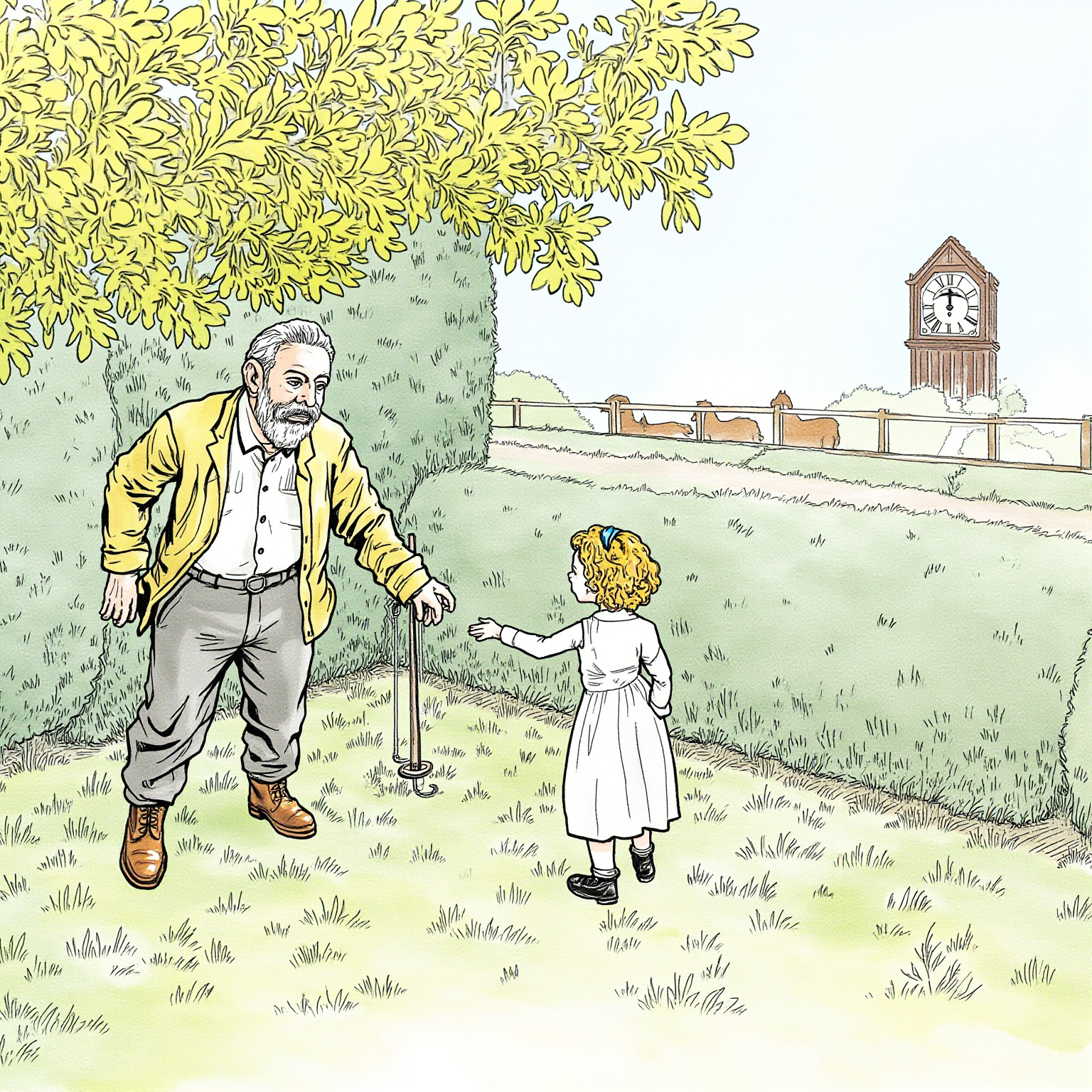
He opened the back door and stepped into another time.
他推开后门,跨进了另一个年代。
金句 · 第3章 · 午夜花园
After that, Tom goes through the door every midnight. He and Hatty play hide-and-seek in the garden, play house, name every goose in turn. Once Hatty falls into the shallows of the River Ouse and scares him half to death. Jim plays cricket on the lawn while Abel mutters that the yews need cutting. Children from two different eras grow up on the same patch of grass, and none of it strikes anyone as strange, because they are all just children.
Time Starts to Slip
But the garden stops obeying him. Some nights Tom can stay only a few seconds before the yew hedge collapses into dead branches; other times the grass turns from green to yellow overnight, and Hatty's pinafore gives way to a long coat. She is growing up, the cruelest turn in the book, into a young woman Tom can no longer keep pace with. Summer ends, Jim is collected by his own family, and the garden's summer breaks apart along with it.
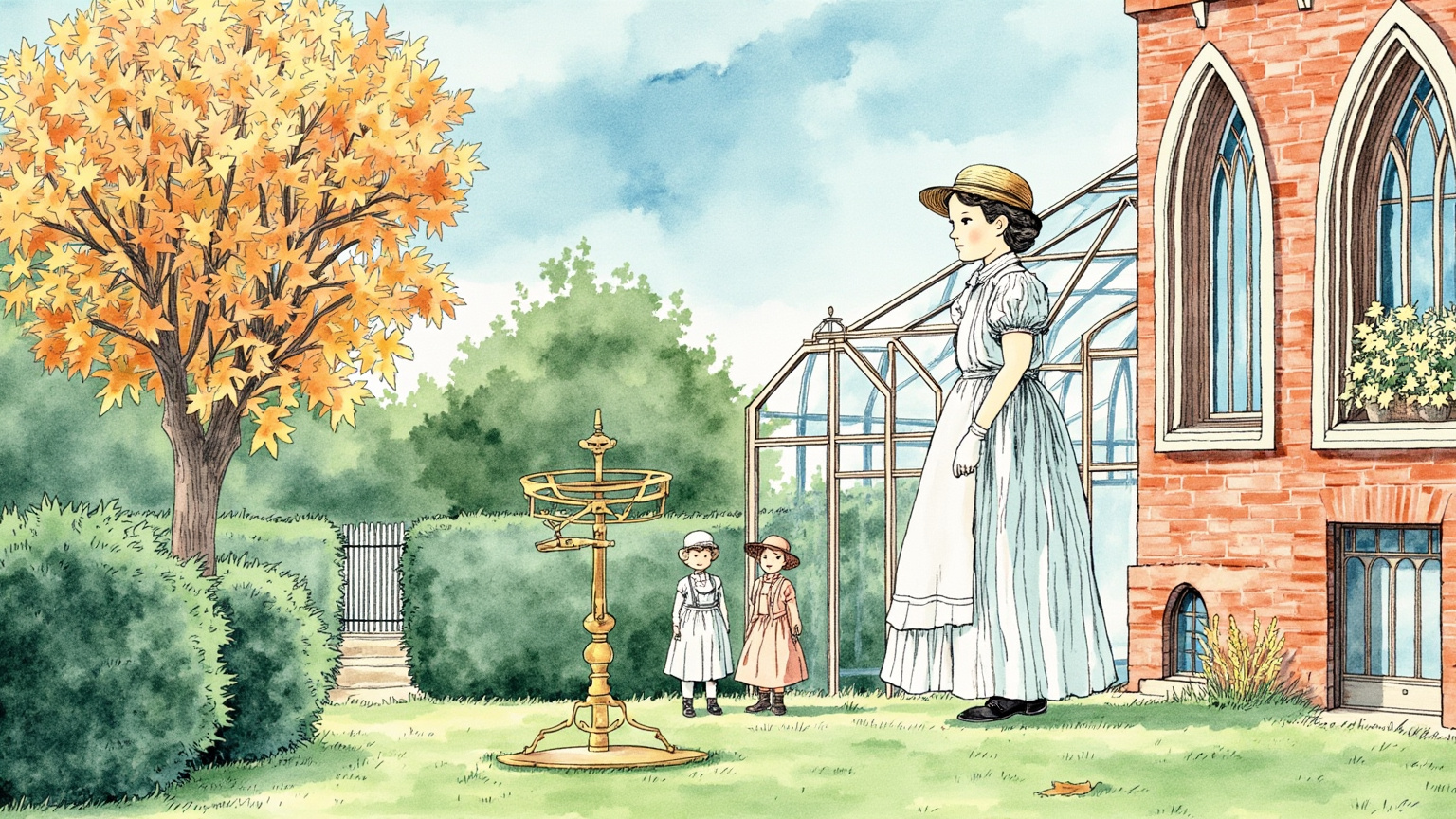
The garden was not the same: it had grown older, as she had grown older.
花园变了样——它也老了,和她一起长大的。
金句 · 第8章 · 时间失灵
The next time Tom pushes the door open, all he finds is concrete and a damp towel. The garden is gone, taken away by Tom's own summer running out: his stay ends, his parents collect him, and the door never opens for him at midnight again. It is the quietest passage in the book. He doesn't cry. He just stands there, still holding a blade of grass that was there a second ago. The first time I read this, I stopped: Pearce never writes a line like "he was sad," she just lets that towel appear, once, and moves on.
Home Again, the Garden Gone
Summer runs out, the measles pass, and Tom's parents bring him home. The midnight garden never appears after the clock again, not for lack of trying; the back door is just a back door now. The book gives him no time to grieve. Life simply cuts to the next scene: the boy is back in his own room, homework stacked on the desk, his brother running in to borrow a pen.
Then years pass. Time carries us straight over them. One day long after, Tom's uncle sends a telegram: Mrs. Bartholomew has died.
The Attic, the Will, a Ring
Tom rushes back to the old house. Aunt Gwen is clearing out the attic to hand the place over to its buyer. Mrs. Bartholomew's will names one small bequest: a turquoise ring, its blue-green stone no bigger than a thumbnail, left to "the boy who came to the garden at midnight."
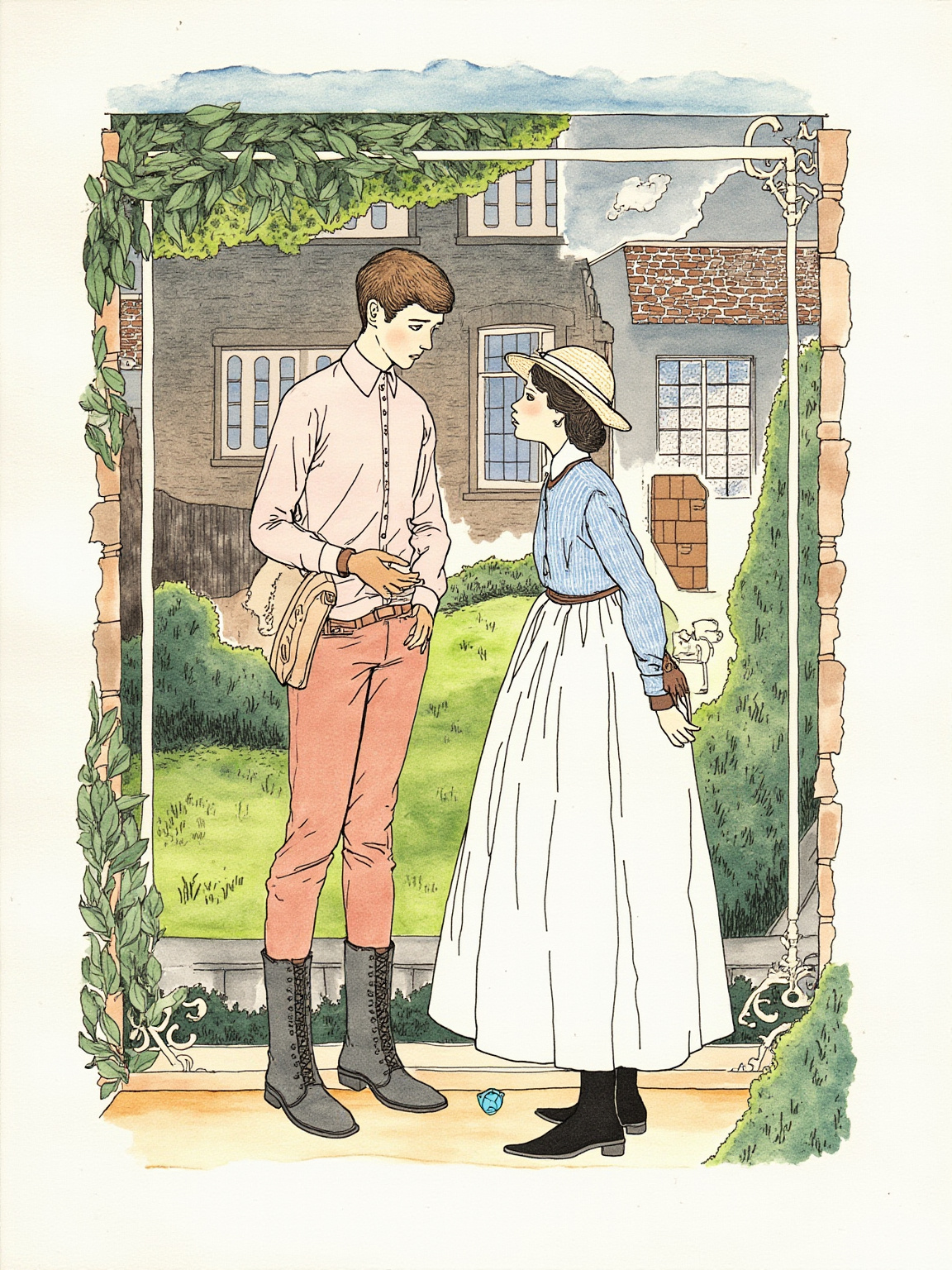
It was time's slough: a little ring of turquoise, no bigger than a thumbnail.
那是时间蜕下的旧壳——一枚绿松石戒指,不过拇指盖大小。
金句 · 第14章 · 遗嘱与戒指
When I read that line, I flipped back a chapter. Pearce lets Tom work it out only now: the old woman upstairs was Hatty all along. She had come back from Australia to spend what was left of her life alone in this attic, her window open toward a garden that no longer existed. And after all those years, she still remembered the boy who had come at midnight, remembered to leave him a ring.
All things great as well as small must come to an end; but the garden did not.
再宏大的、再微末的,都会有尽头——可那座花园没有。
金句 · 第15章 · 最后一章
The reveal doesn't land like a thriller's twist. It's closer to a photograph slowly coming into focus. You had taken Hatty and Mrs. Bartholomew for two separate characters, and only here do you see they were always the same person, split by time into two tenses: one present continuous, one past perfect.
How Time Actually Lives
The final chapter runs only a few pages. Tom closes his hand around the ring and shuts his eyes, and it all seems to come back: the summer garden, Hatty standing by the sundial, the snip of Abel's shears. Through him, Pearce says what the whole book has been building toward: loss, growing up, none of it really vanishes from the world the way a garden gets torn down.
That is why the book has stayed with reader after reader. It was never really about time travel; time travel is only the shell around something a child spends a whole summer slowly learning to see, the way time and a person's life sit layered over each other like a double exposure. Hatty kept watch in that attic for a lifetime, and what she was guarding wasn't a memory. It was her own youth.
Time never really leaves a garden — it only changes how it goes on living in a person's hands.
Why It's Still Worth Reading, Child or Adult
Pearce invented a grammar of time travel that belongs entirely to English children's fiction: no glowing doorway, no special effects, no parallel universe, just an ordinary back door. That restraint is the reason the book still moves readers more than sixty years on. It takes the wonder back from science fiction and hands it to a barefoot boy crossing a carpet.
And it never turns maudlin. Throughout, the book treats Mrs. Bartholomew with something close to tenderness. She isn't a discarded old woman; she is someone who spent a lifetime guarding one childhood summer. That approach was rare in 1958, and it still feels rare now.
Knowing the Plot Doesn't Spoil the Book
I have already given away the ending, and you should still read the book. What it actually sells isn't the twist, but the texture of those dozens of midnights: the smell of freshly cut yew, the splash of geese in the ditch, Hatty laughing, soaked, by the River Ouse, the air going suddenly thick the instant the door swings open. None of that can be ruined by a spoiler. It only happens as you turn the pages yourself.
There's something else only the book itself can give you: pacing. When Pearce writes the stretch where time turns unstable, or Hatty's slow growing up, or why the attic window stays open, she takes five or six pages to get there and refuses to just tell you the answer. A guide like this one can hand you a map, but a map isn't the ground it describes.
You can also read it as a children's book meant for adults. By the time you reach that turquoise ring at the end, you may find yourself thinking of some garden of your own that isn't there anymore.
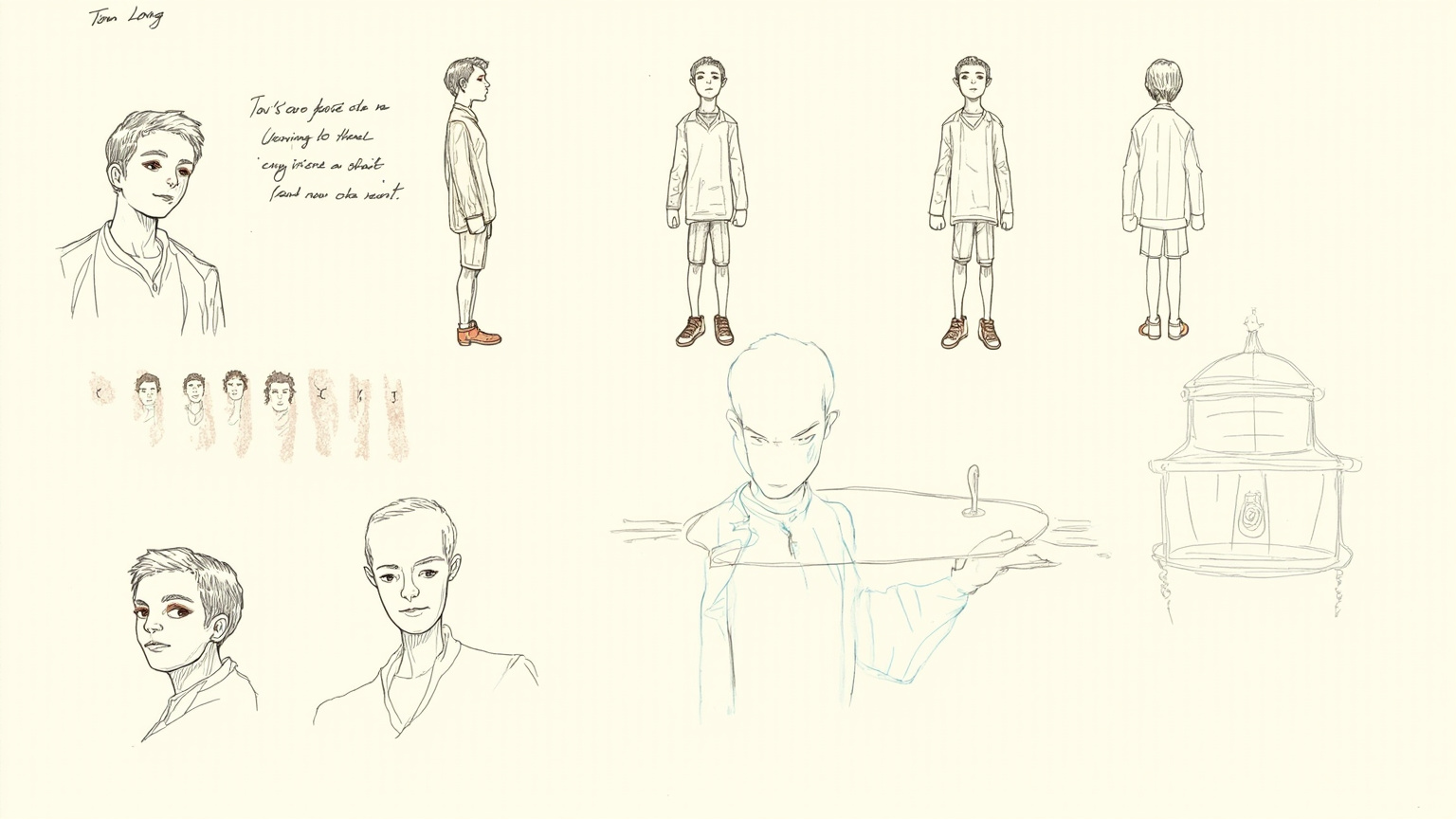
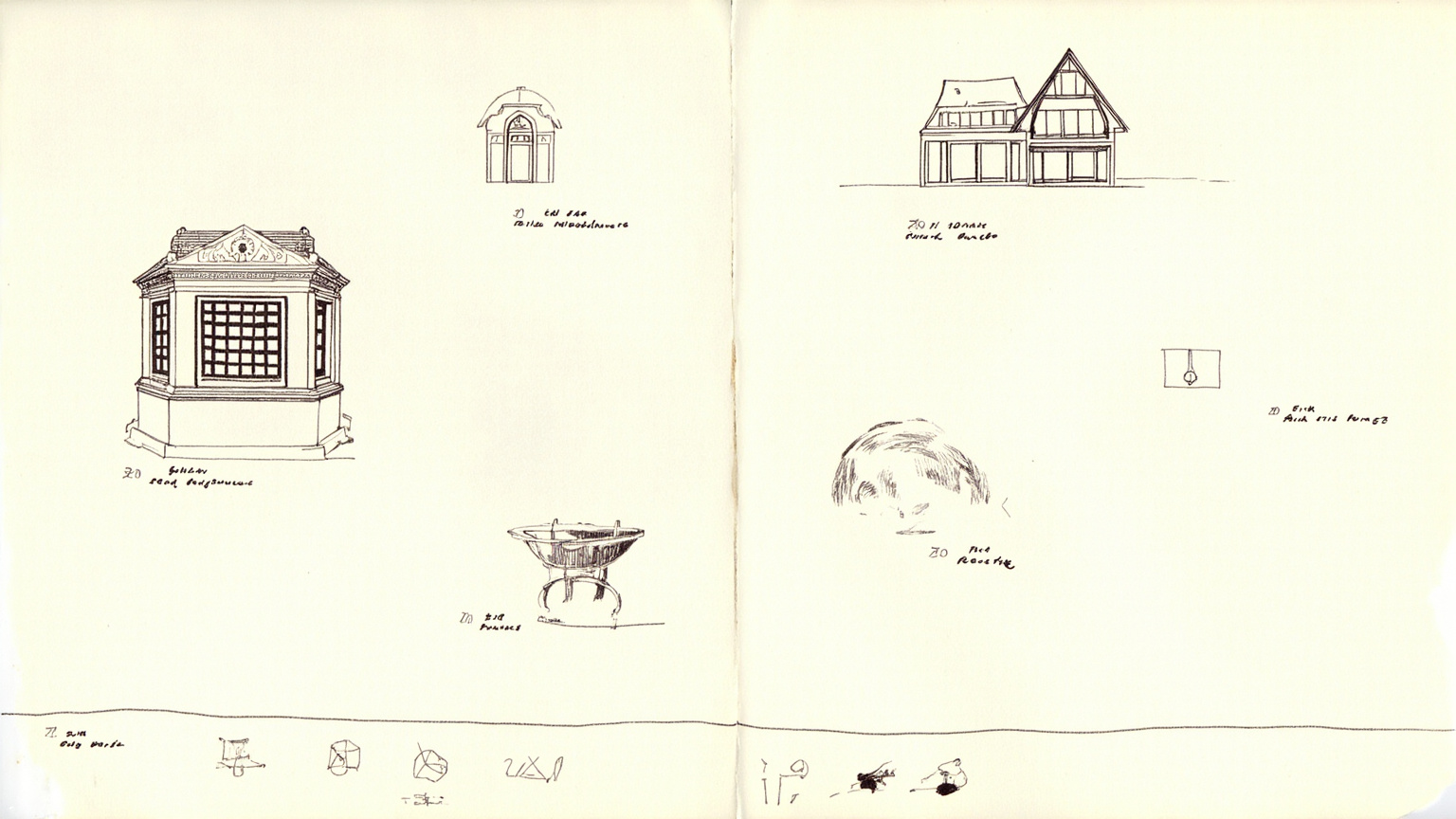
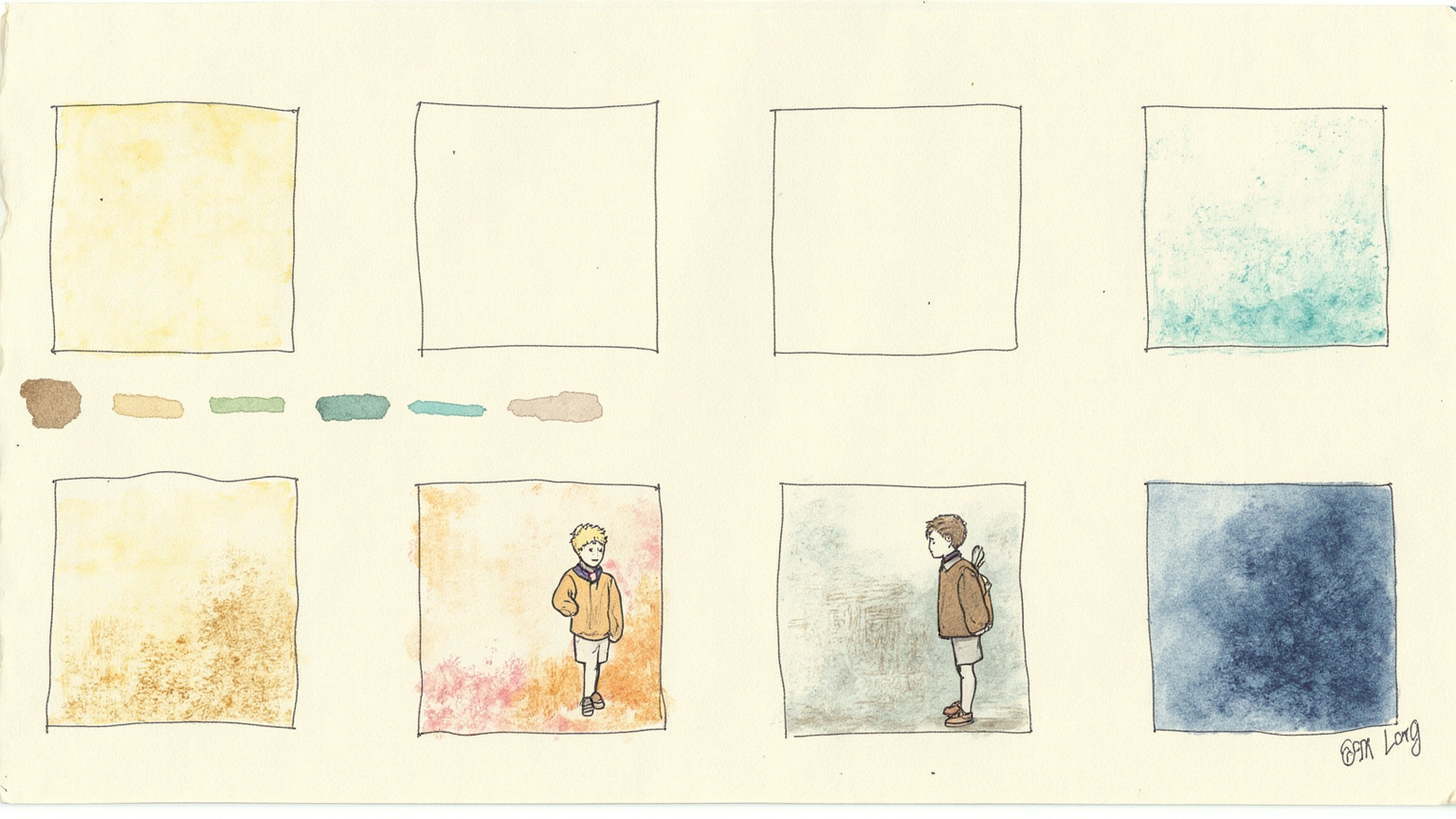
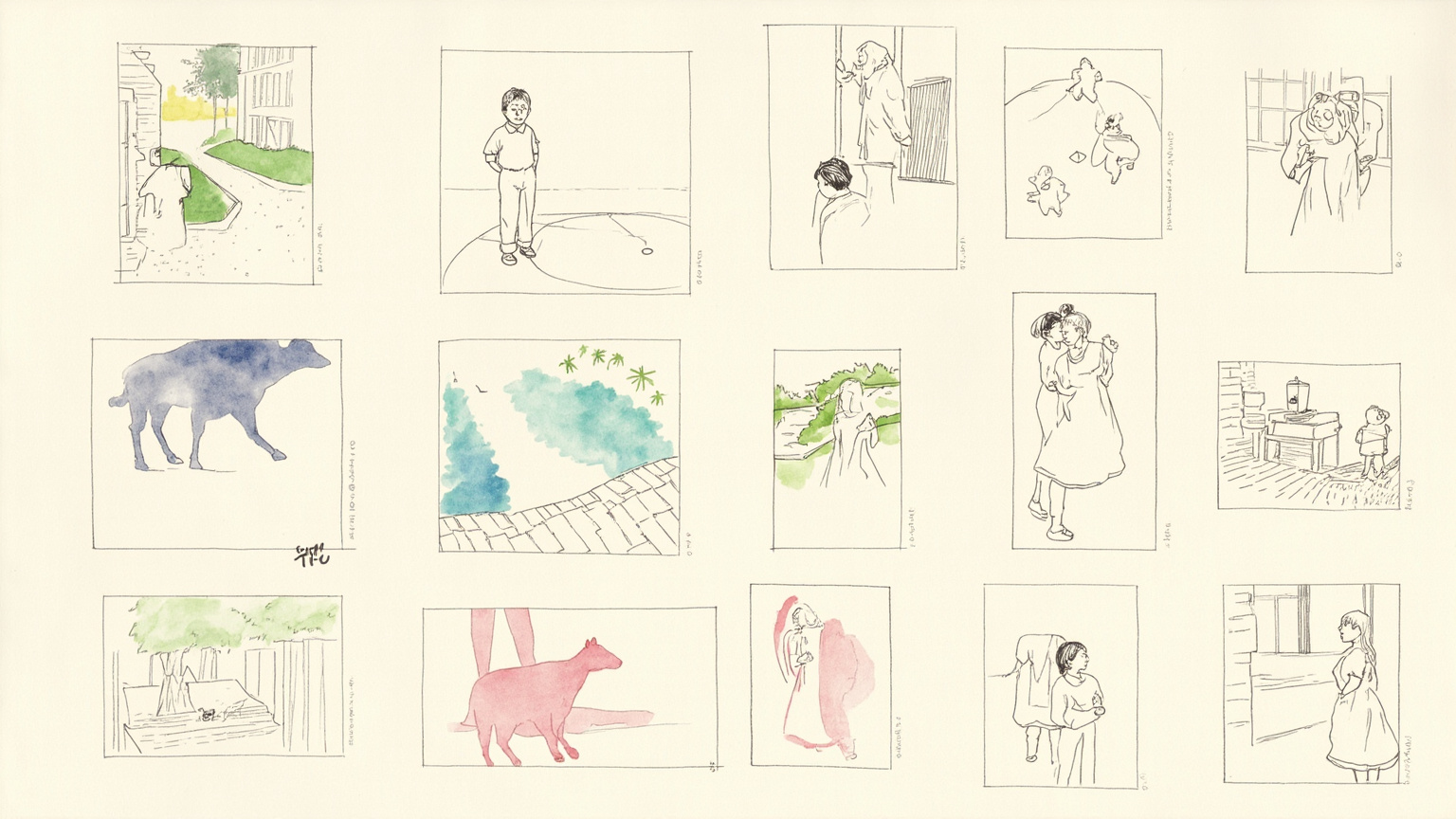
Art Direction4 plates
Before the guide was written, this book got a visual foundation — every illustration you just read grew out of it.