Tonio Kröger · Companion Guide
托尼奥·克勒格尔
北德客厅里那双褐色眼睛的少年,终在北海沙丘间认领自己是怪人——夹在市民秩序与艺术家气质之间的灵魂
A Brown-Eyed Boy and a Letter from Russia
His mother died young, and all that remains of her is a small portrait on the wall — dark hair, and a pair of brown eyes from “the south” that never fully explained themselves. Every time Tonio Kröger looked up and met that gaze, it felt like hearing someone call to him from a life that wasn’t his own. Downstairs was his father’s world: the gabled merchant houses of northern Germany, decorum so exact that even the chairs stood in line. Two bloodlines were at war in this boy — his father’s far north, his mother’s south.
Thomas Mann was twenty-eight when he put that war on paper, in a slim novella first published in 1903 in a German journal called the Neue Rundschau. He had been born into a merchant family in northern Germany, and by twenty-eight he had already thrown himself headlong into literature. Generation after generation of readers has taken this small book as his most honest self-portrait, and it became the founding text of a whole genre in German letters — the novel of an artist’s coming of age. Set beside Mann’s later Death in Venice, the two read like the same man looking into two mirrors, one held up to the north, one to the south.
What Kind of Book Is This
It’s a novella under two hundred pages, its story running from the turn-of-the-century north of Germany into the new century. How a boy who once watched other children from the edge of a bourgeois parlor grows into a man who writes about that life but can no longer live inside it — Mann handles the whole arc with a restraint that borders on coldness. No weeping departures, no slammed doors, no raised voices. Just a pair of watching eyes, always standing at the far edge of the group photo, always half a room away.
Three People, Young
At the grammar school, two names surround Tonio — Hans Hansen and Inge Holm. Hans is blond, blue-eyed, the kind of boy who flashes a row of white teeth when he laughs, marked from birth to take over his father’s business, a living specimen of bourgeois health and order. Inge is the girl he once danced with in a middle-class parlor, who later became a dancer known across the whole of northern Europe. Tonio burns for both of them, and acts on neither: he loves Hans from across the classroom, watching that patch of blond hair; he loves Inge by remembering how he stood a little apart in the group photo, and how her back grew smaller as she walked away after the dance.
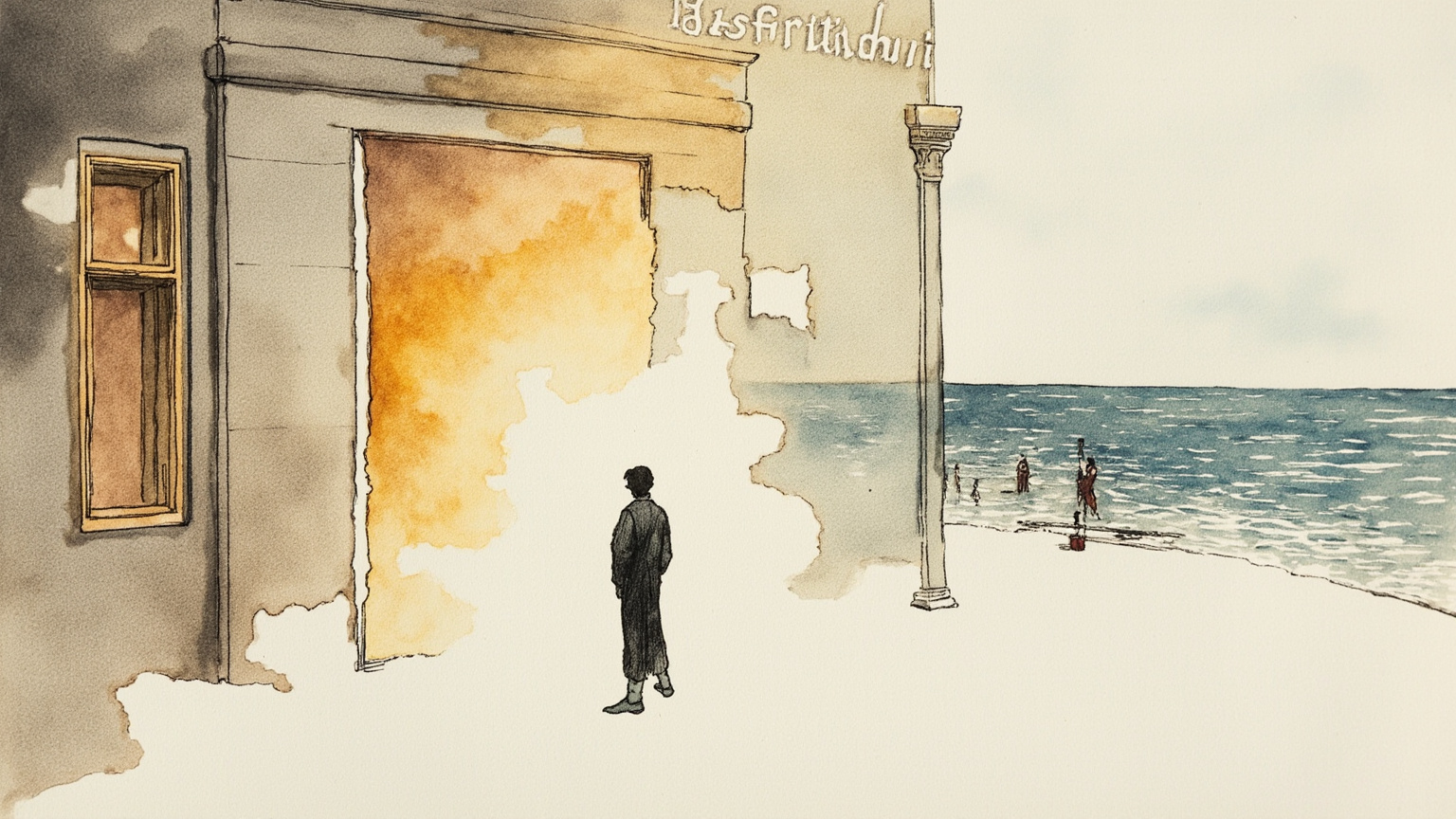
There were two beings within him, one that warmed itself at the bright hearth of bourgeois life, and another that the bright hearth could not warm.
他身上住着两个人:一个在市民生活的明亮炉火旁取暖,另一个,那团火怎么也暖不了。
金句 · 第3章 · 两种血统
I stopped short the first time I read that scene with the group photo — in the whole novella there isn’t a single kiss, a held hand, a private confession. The weight is carried entirely by an empty chair, a closed piano lid, a back growing smaller in the distance. That restraint is itself Mann’s stance: the passion of youth did burn, it just burned in front of someone standing close enough to see it clearly, which made it too embarrassing to raise its voice.
Fifteen, and Heading South
Past fifteen, Tonio left the Baltic port town behind. He headed south, straight into the studios and cafés of Munich, into windows that never seemed to close. The world put on a different face: lanky, rootless, sun-browned painter friends laughed beside him, and writers sat around him in clouds of smoke. Mann calls the life among them “days of manual labor” — it sounds romantic and turns out to be exhausting.
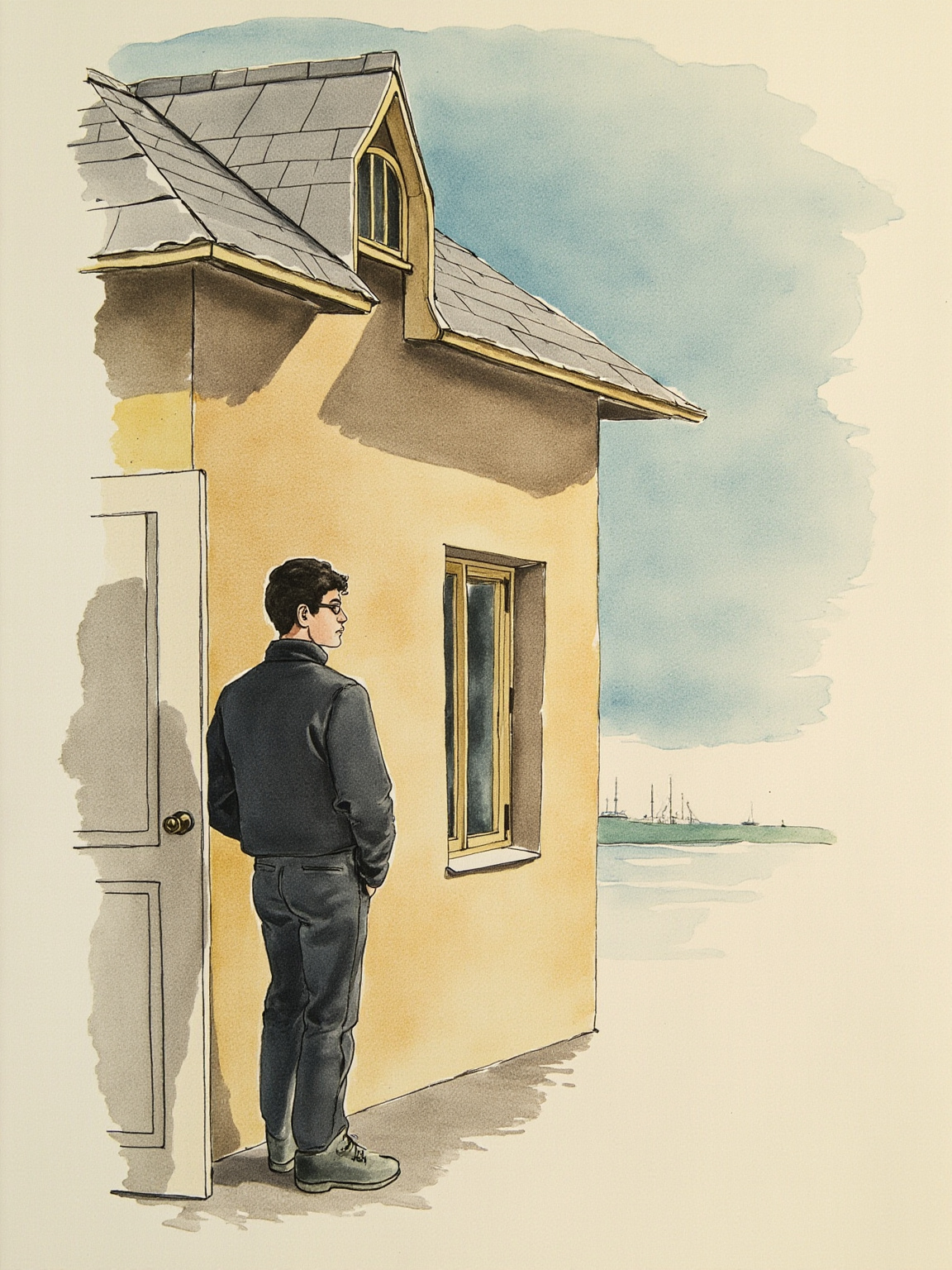
He stood on the shore of existence and looked out toward the beautiful, cruel mystery of life.
他站在生活的岸边,望着那美丽而残忍的生命之谜。
金句 · 第7章 · 慕尼黑
The woman who shared his lodgings there was named Lisaveta Ivanovna, a Russian, with a past of her own and talent to match. She stood closer to “love and life” than anyone else he knew, yet he never moved any closer to her either. For years afterward his days split in two: manual labor on one side, and what Mann calls “the soul business” on the other, one a life he could hold, the other a life he could only write down. The two sat side by side, and he stood between them, reaching neither.
Going Home, Like a Goldfish Back in Its Bowl
Midway through the book, Tonio makes a trip home. Mann describes the moment as a goldfish swimming back into its bowl. His feeling for the bourgeois world is double-edged, he is drawn to it and shut out of it at once. What draws him is the plain, settled ease of that life; what shuts him out is that he is no longer someone who could live inside it. He can write the life his merchant father led, but he can no longer live it himself. The point cuts clean through him at home, watching his father cut bread, listening to the family talk.
The sharpest cut hides in the irony of the last line — the writing he would later be proudest of turns out, again and again, to be about the very life his father led. A writer living off the safety he consumes in order to produce his pages. Mann tells this whole tear in the artist’s conscience in the plainest sentences he has.
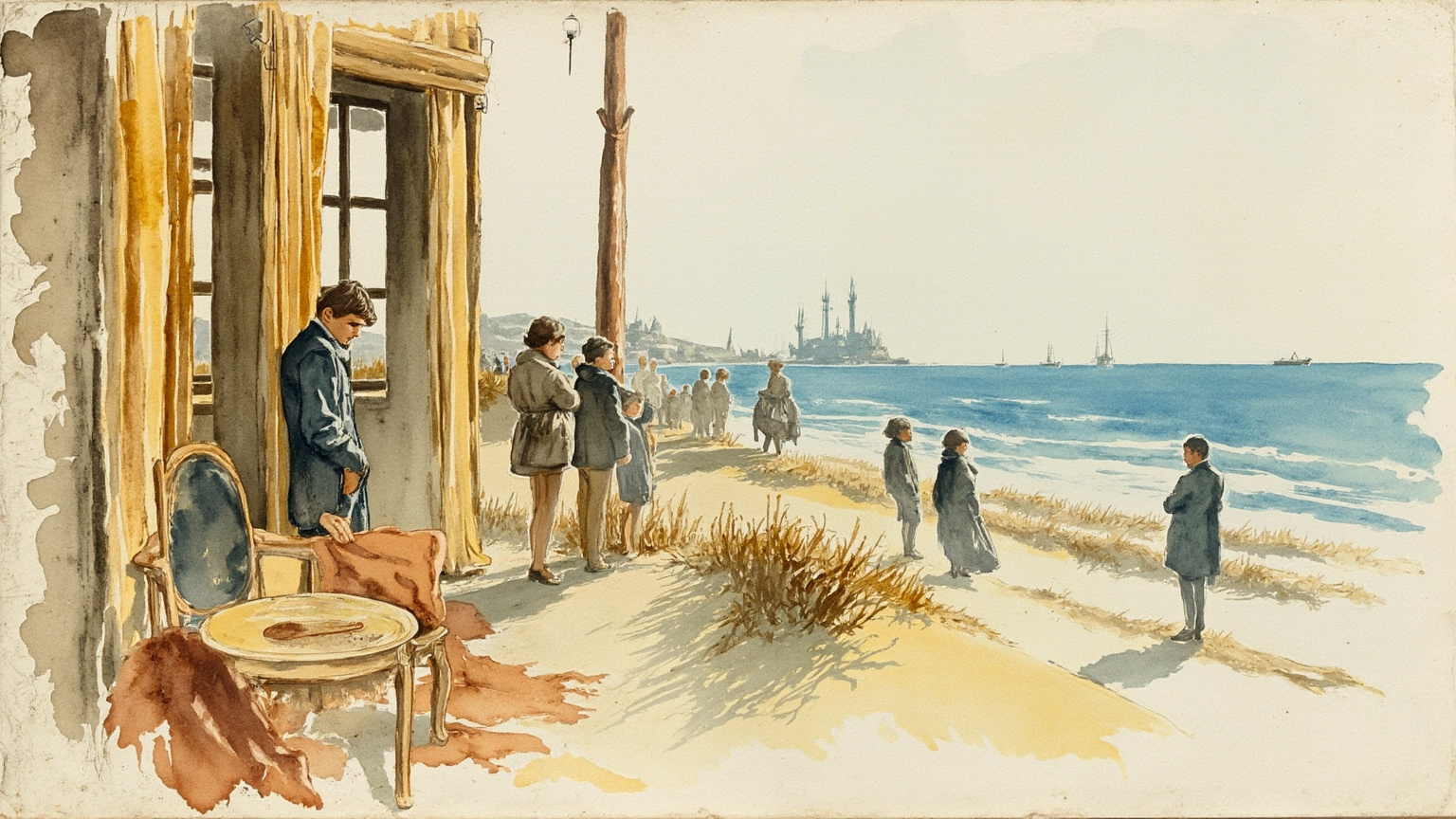
By the North Sea, Pale Dunes
The ending shifts to a seaside hotel in northern Denmark. White sand, low pines, a gray-green sea, a northern summer sky that refuses to darken. Tonio sits alone among the dunes. It’s the kind of place built for a reckoning — the sea too wide, the man too small, and the past rises to the surface on its own.
It’s into this quiet that the letter from Russia arrives. Lisaveta drops just one line in it, more or less: you’re an odd one, so go on and walk your own road. The German word she uses is Sonderling — an odd one, a stray, not a sinner. The letter is the novella’s final gesture, and it isn’t a verdict. It’s a release.
Claiming Himself, Not Confessing a Crime
That’s what wakes Tonio all the way up. Sitting among the dunes, he writes down, and says to himself, the clearest admission in the whole novella: I stand in the middle of life... what is past will never come again. He admits he is the odd one who has taken the soul onto his own books as a debt. This isn’t a failure’s confession. It’s the first time a man who has drifted a long while claims his own name.
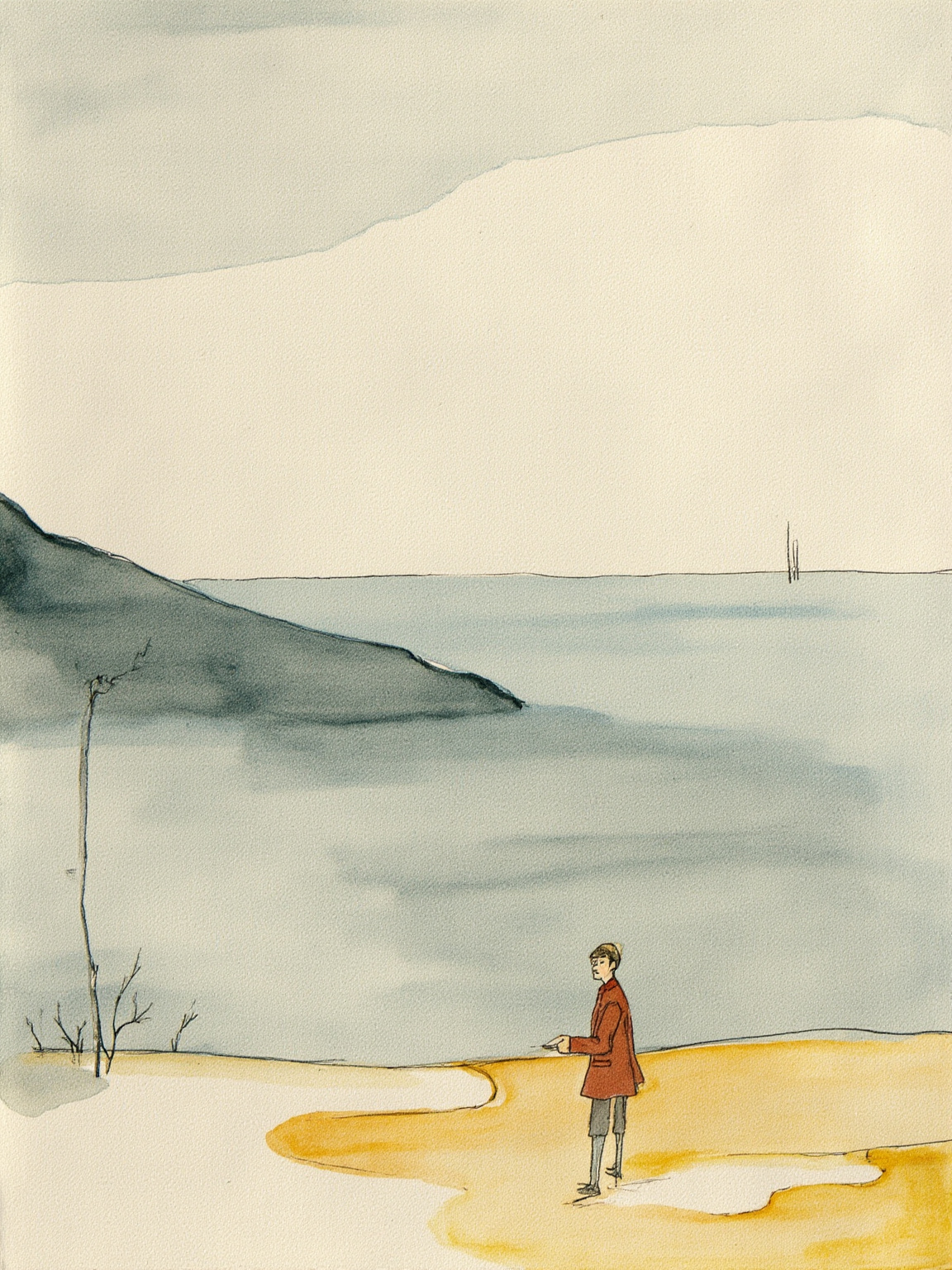
I stand in the midst of life, and I have found that I am a strange being, that I have taken the soul upon me as a debt.
我站在生活的中央,而我已经发现,我是个怪人,我把灵魂当债务认在了自己账上。
金句 · 第10章 · 北海沙丘
Mann is careful not to let him break down here. At the close, Tonio turns and walks back into his own solitude and clear sight — away from the strait, back into life. The half-room distance of his boyhood longing, the steady lamplight of the bourgeois parlor, he sets both down, without a slammed door, without a backward glance. He carries those two eyes forward with him.
What Makes It Good
This novella went on to become the founding example of the German novel of an artist’s coming of age — a man caught between two bloodlines, two ways of living, working out how to go on. Writers from Hermann Hesse to Peter Handke, from Elias Canetti to Walter Benjamin, have all kept talking to this same predicament ever since. It’s more personal than Mann’s thick Buddenbrooks, and an easier read besides. Two hours will get you through it, and in that span it compresses the entire arc of a north German merchant’s son making his way to a Scandinavian shore.
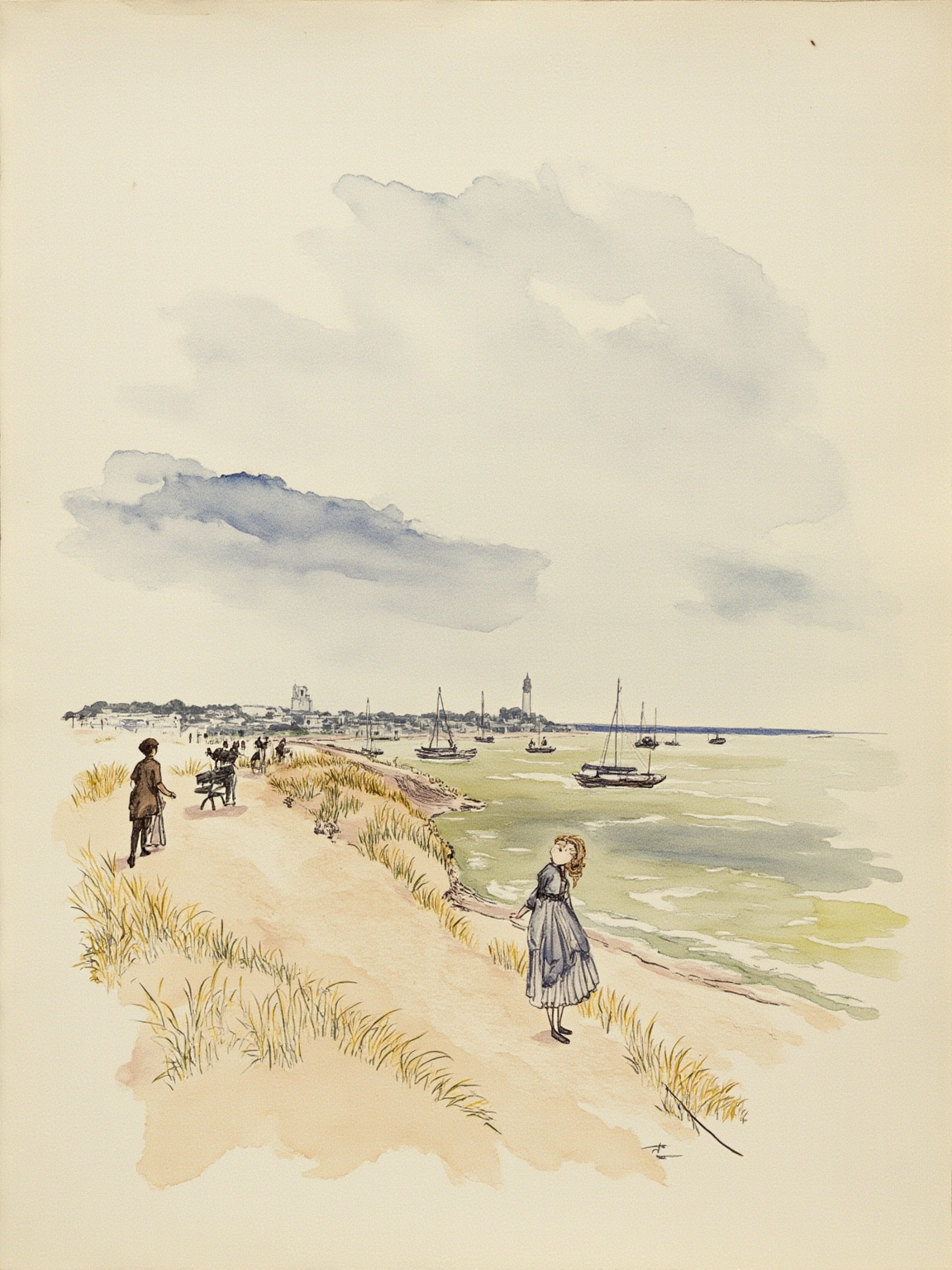
He turned away from the strait and went back into life.
他转身离开海峡,回到生命里去。
金句 · 结语 · 认领
Mann’s method is the book’s real subject. The way in worth grabbing hold of: he almost never lets Tonio see the world except through his own narrow view, and the reader ends up locked half a room away right alongside him. Hans laughs in the classroom while Tonio can only watch that patch of blond hair from a distance. Inge dances in the middle of the parlor while he stands at the door watching her skirt turn and turn. The feeling is never handed to a character to speak aloud. It lands on objects instead: joy pressed into a closed piano lid, a goodbye turned into a back that keeps shrinking, and that final line about leaving the strait, which completes his self-recognition with the quietest verb in the book — not a single tear, not one raised voice. The restraint of his boyhood longing, the restraint of his final turn, the restraint built into the sentences themselves: three faces of the same thing.
You Know the Plot. Why Read It Anyway
A guide like this one gives you the skeleton. The original gives you the flesh. The skeleton is: a boy caught between two bloodlines finally claims himself as the odd one out. The flesh is the air inside a north German merchant house: piano notes slipping under a door, a boy standing a little apart in a group photo, a train pulling slowly out of a port town — details you can only catch by opening the book yourself.
The road from a north German parlor to the dunes of the North Sea, you have to walk yourself: the piano notes slipping under a door, the boy standing a little apart in the photograph, the afternoon a train pulls slowly out of a port town — only then have you actually been there.
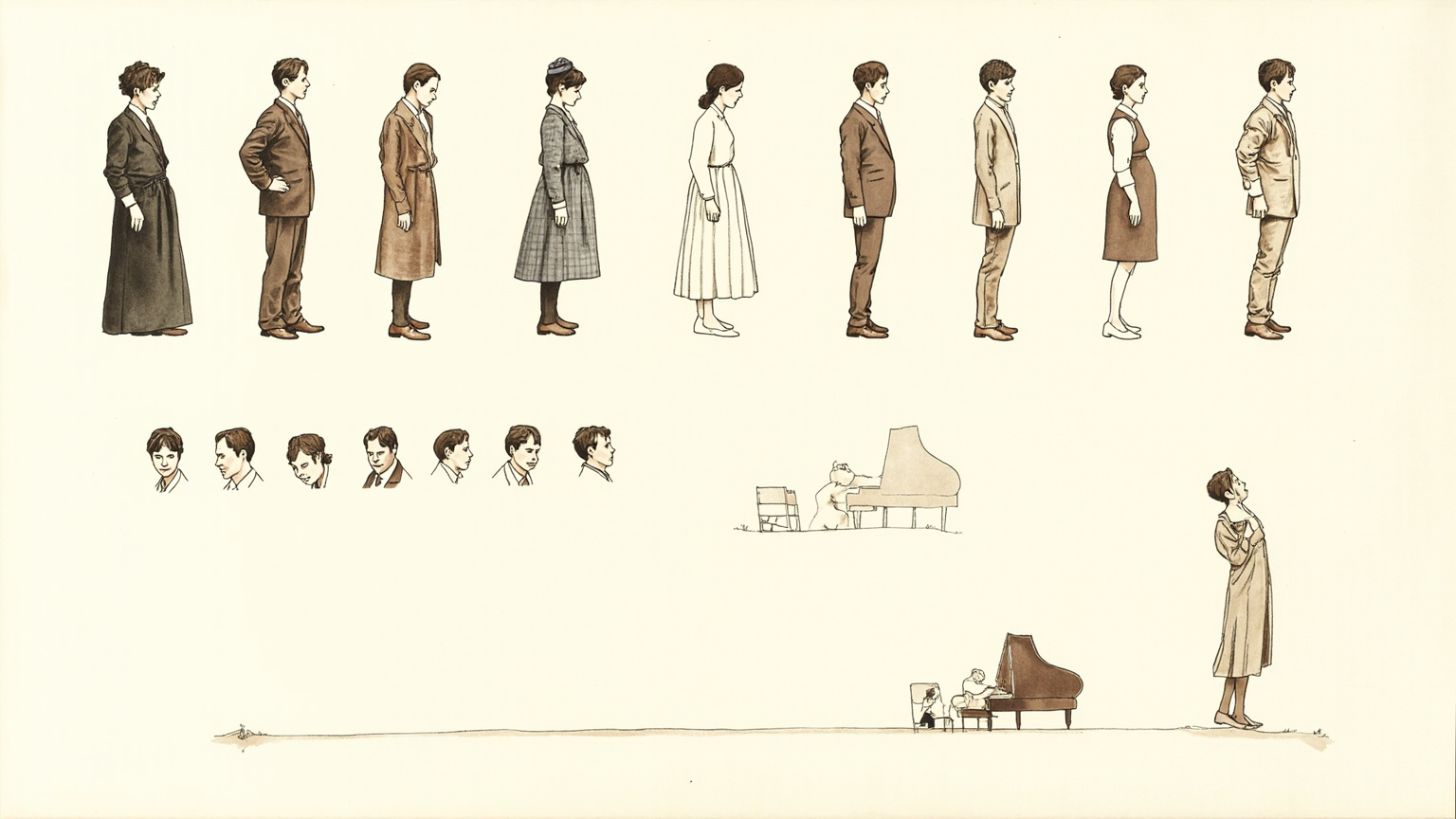
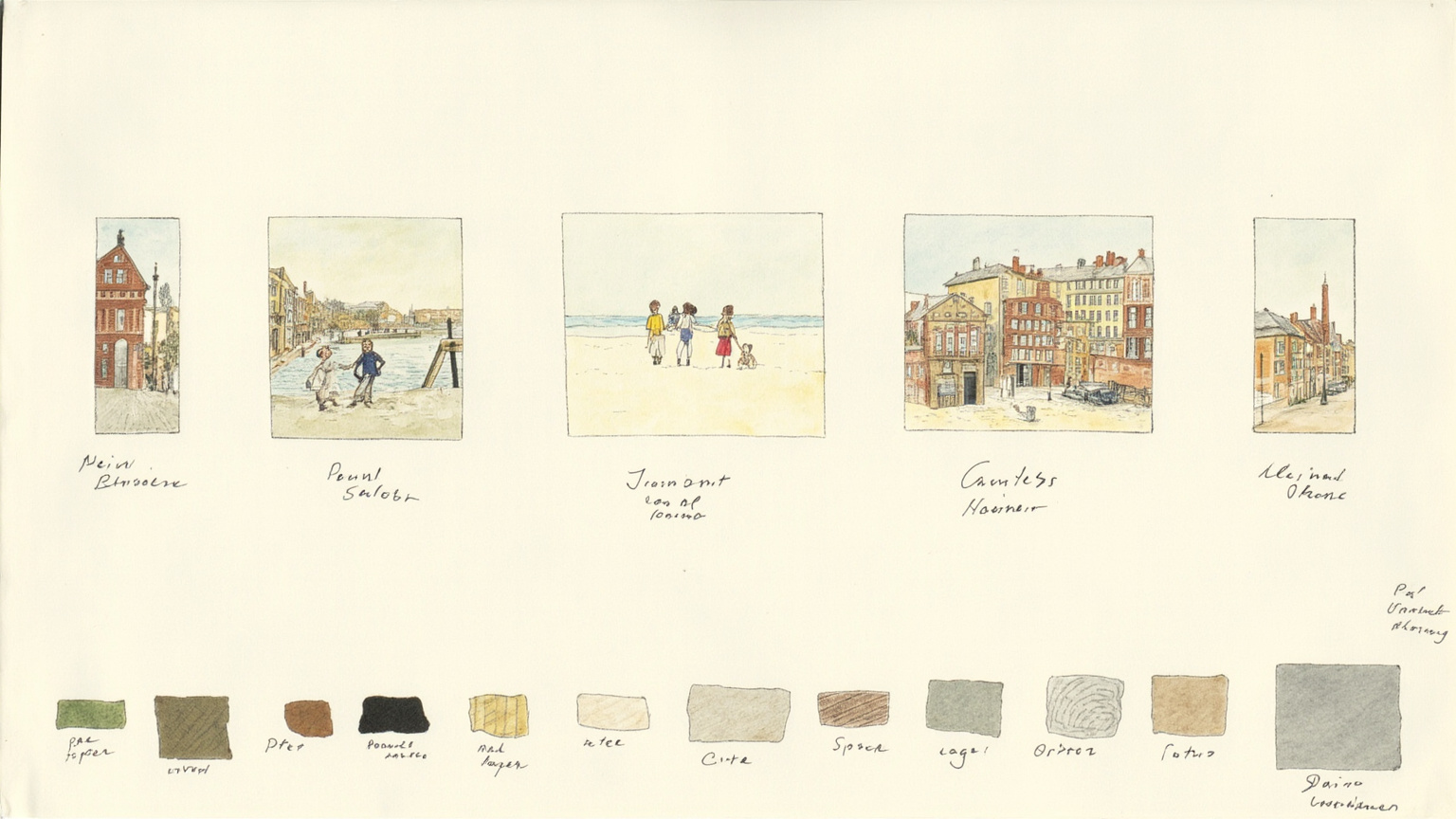
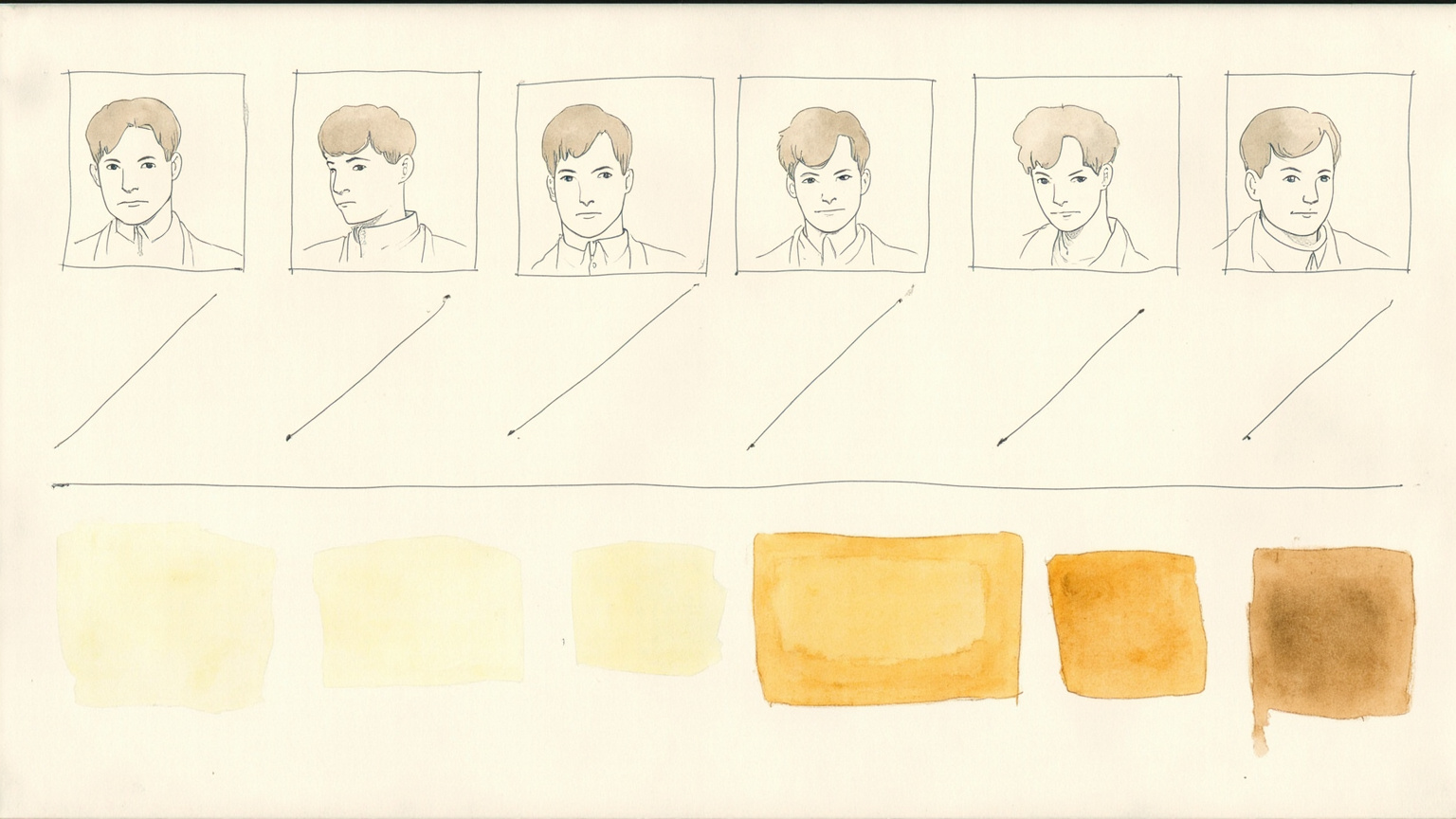
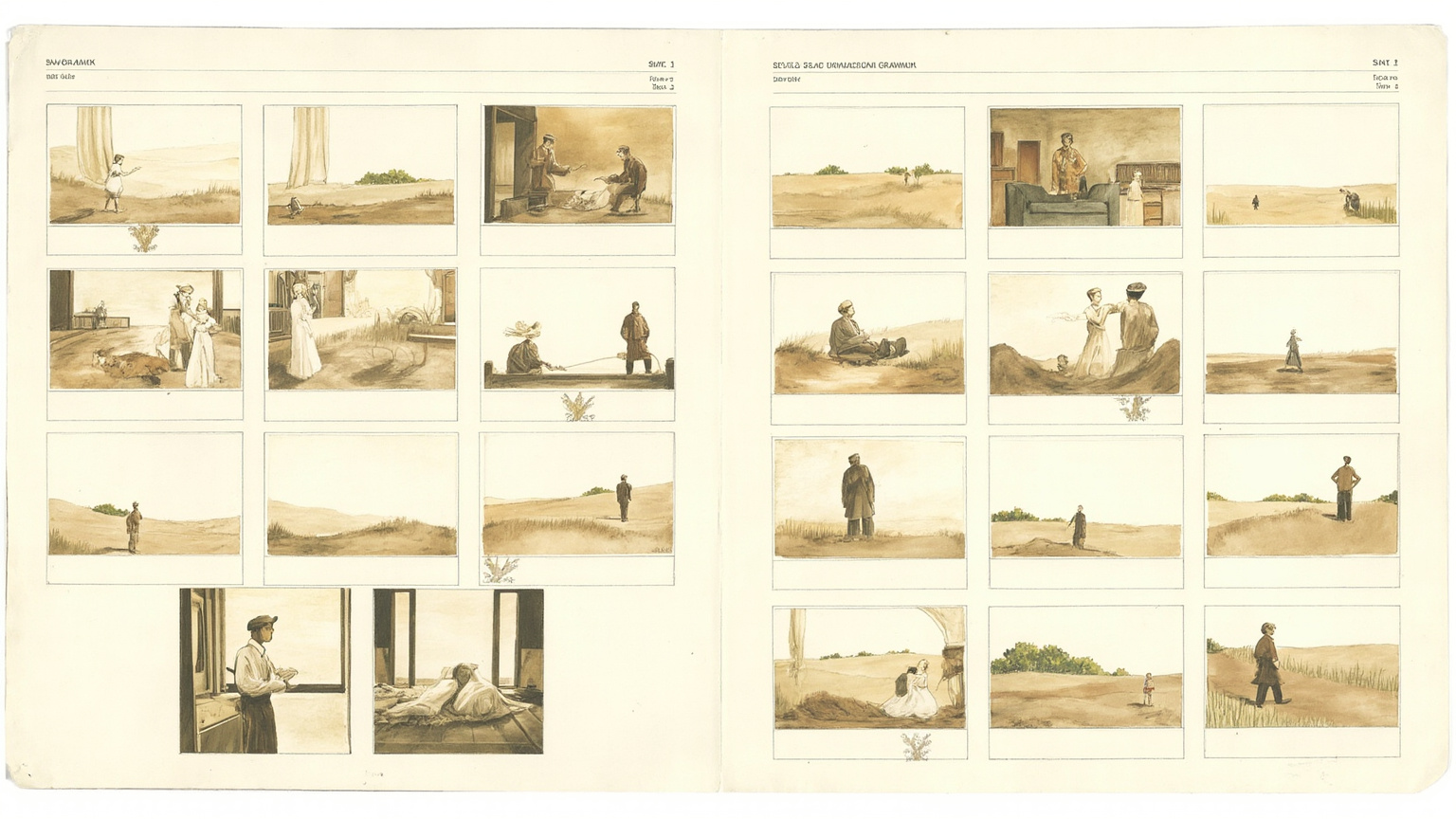
Art Direction4 plates
Before the guide was written, this book got a visual foundation — every illustration you just read grew out of it.