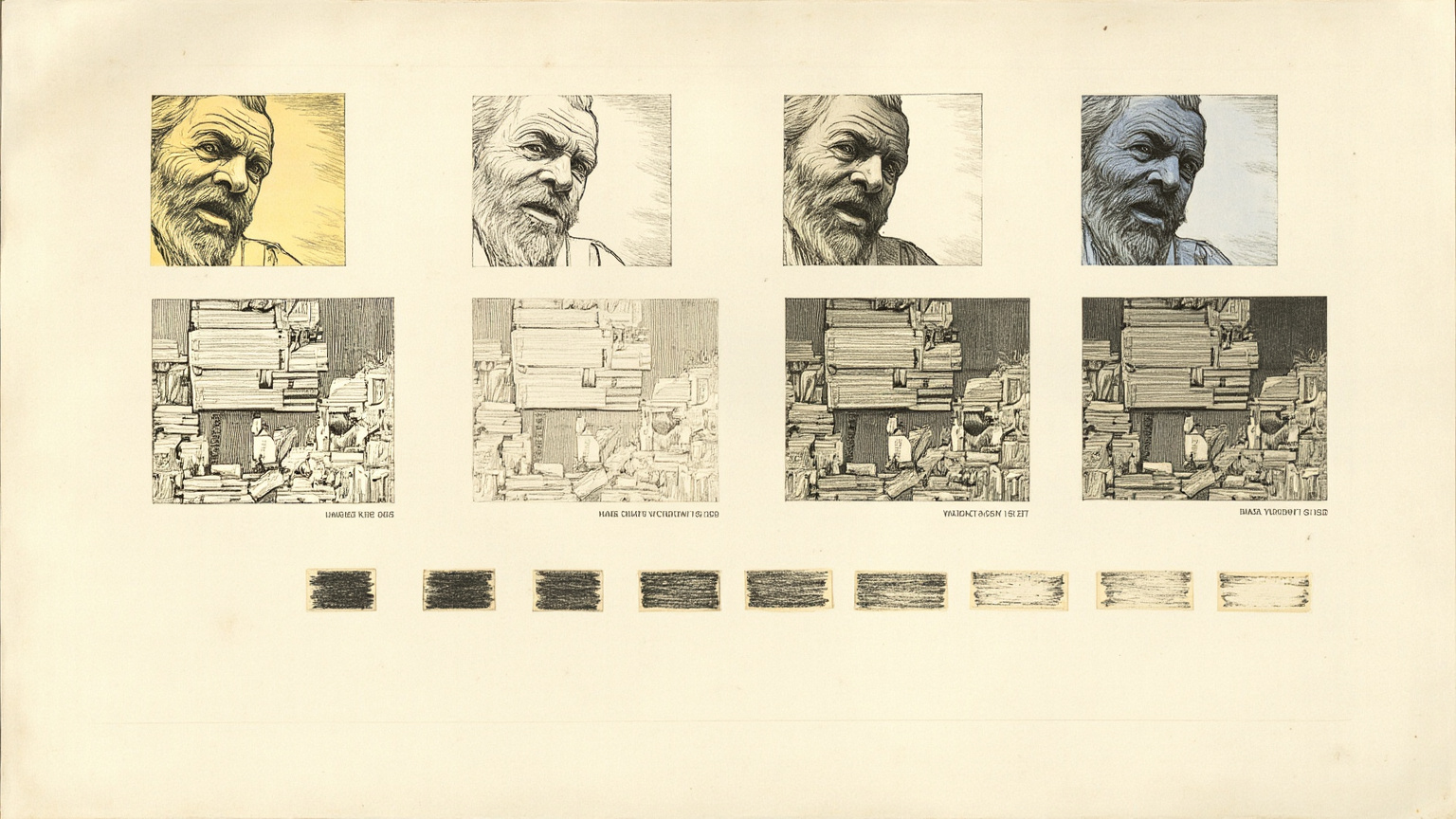
The book closest to Hrabal's own heart: philosophy salvaged from wastepaper, love crushed flat, and an old man finally swallowed by his own baling machine.
Text and illustrations produced by the pipeline
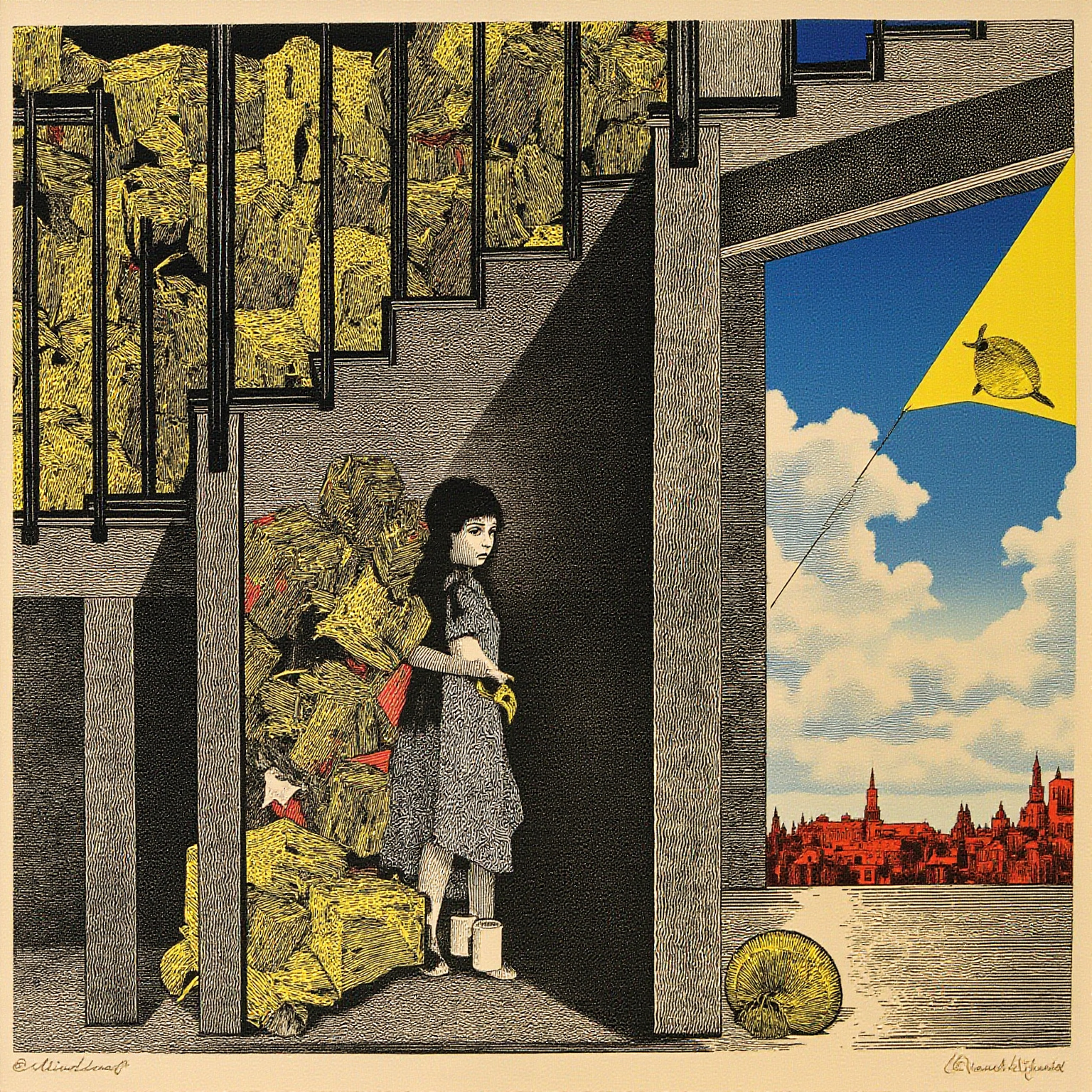
A kite rises over the red roofs of Prague's Castle District, and printed on it is an old man's face. Thirty meters underground, in a cellar, that same face is crushing the books he has loved his whole life. This is the image Bohumil Hrabal wrote: a wastepaper compactor, in the hallucination before his death, watching his dead love fly a kite again.
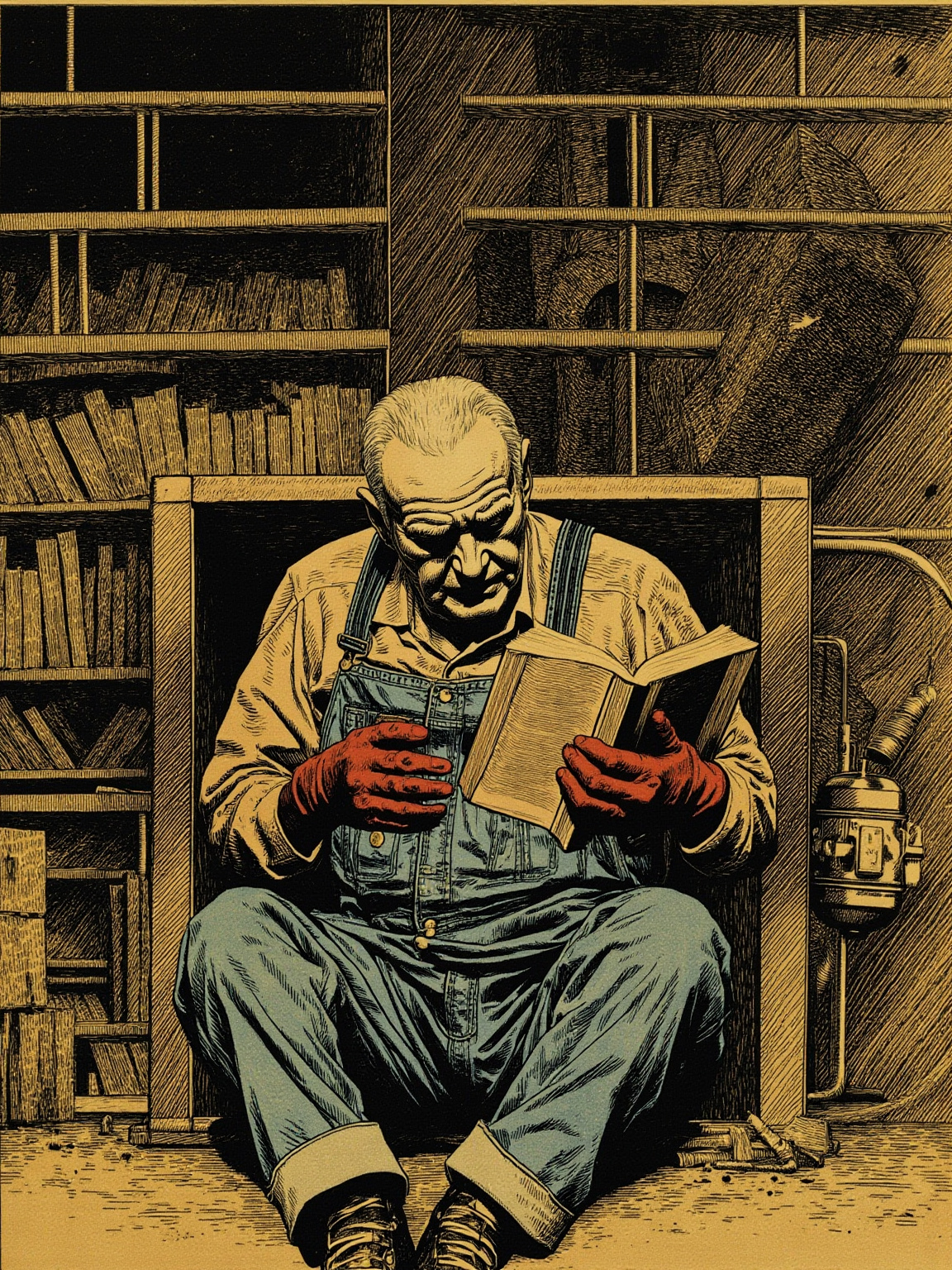
The one flying it is Ilonka, a Gypsy girl. The old man on the kite is named Haňťa, and for thirty-five years he has run a battered hydraulic press in a cellar at the heart of Prague, compacting wastepaper. Much of what he crushes is not ordinary trash — it is banned books. As he works, he pulls a few from the bottom of each load, opens them to the pages he loves, and hides them in a hole under the machine.
Too Loud a Solitude is a novella the Czech writer Bohumil Hrabal wrote in 1976. Born in 1914 and dead by 1997, Hrabal ranks among the most important Czech writers of the later twentieth century. Censorship kept the book from official publication at home; it circulated in samizdat copies and émigré editions abroad until it was cleared for domestic release around the 1989 revolution. Hrabal himself said that if he could keep only one of his books, it would be this one — the one closest to his own heart.
It runs under a hundred pages, loosely built, and still carries more than it should be able to hold: how a totalitarian state crushes books and the people who read them, how an old man turns a compacting machine into his own thirty-five-year funeral, how a Gypsy love the Nazis took away rises again in a dying man's last vision. All of it is packed into the beat of a hydraulic press.
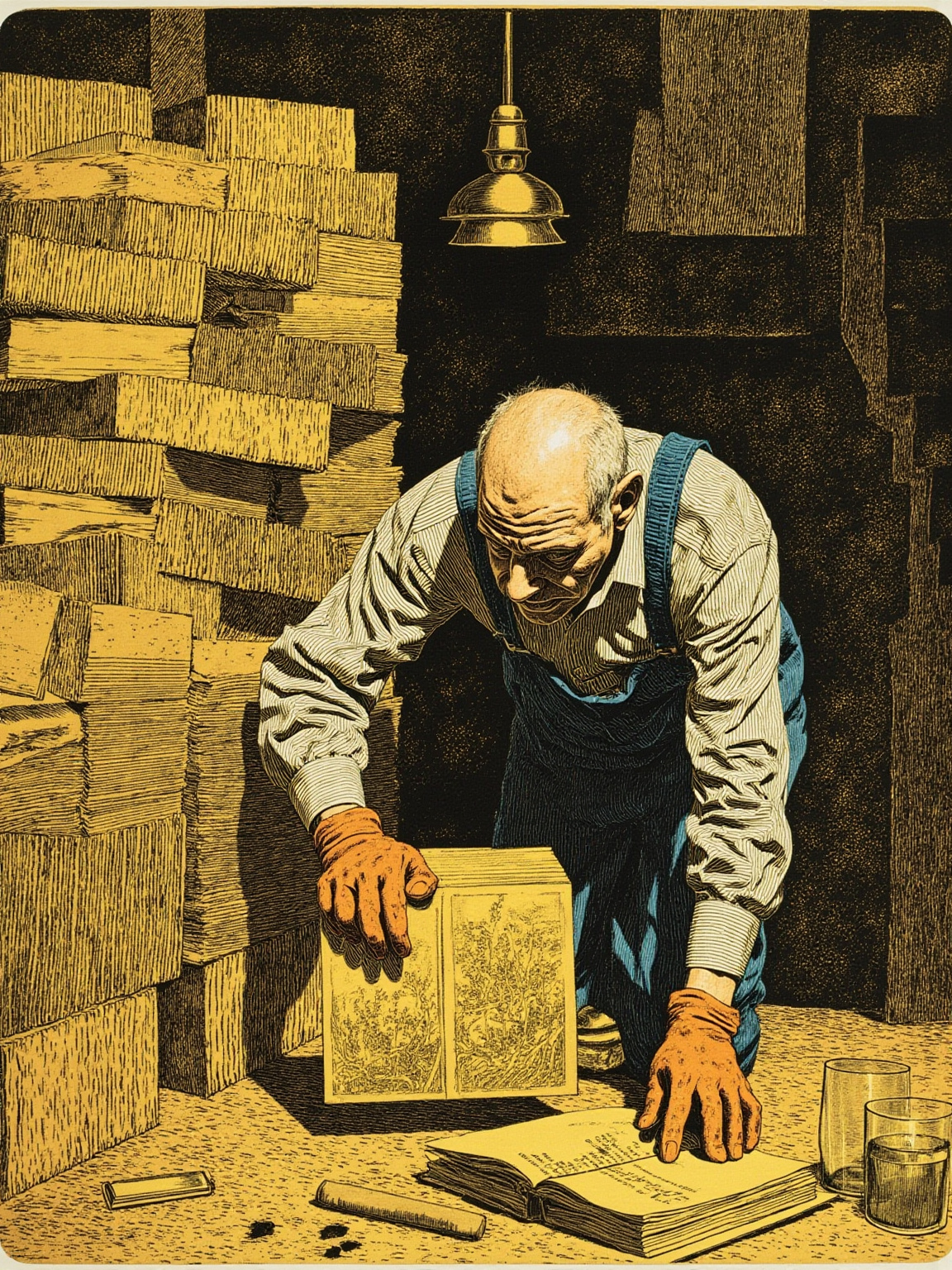
Haňťa is an old bachelor nearing retirement, alone in a Prague cellar, and for thirty-five years he has done exactly one thing: press wastepaper and banned books into square bales. The machine made him learned by accident. Every time a load comes down the conveyor, he pulls out the passages that catch his eye before they can be crushed, and from these scraps his head has filled up with Kant, Hegel, Lao Tzu, and Jesus. He drinks enormous quantities of beer every day and treats each bale as a work of art, wrapping it in a reproduction of a famous painting with a rare book opened to its finest page tucked inside, then watches the truck haul the whole thing off to be pulped at the paper mill.
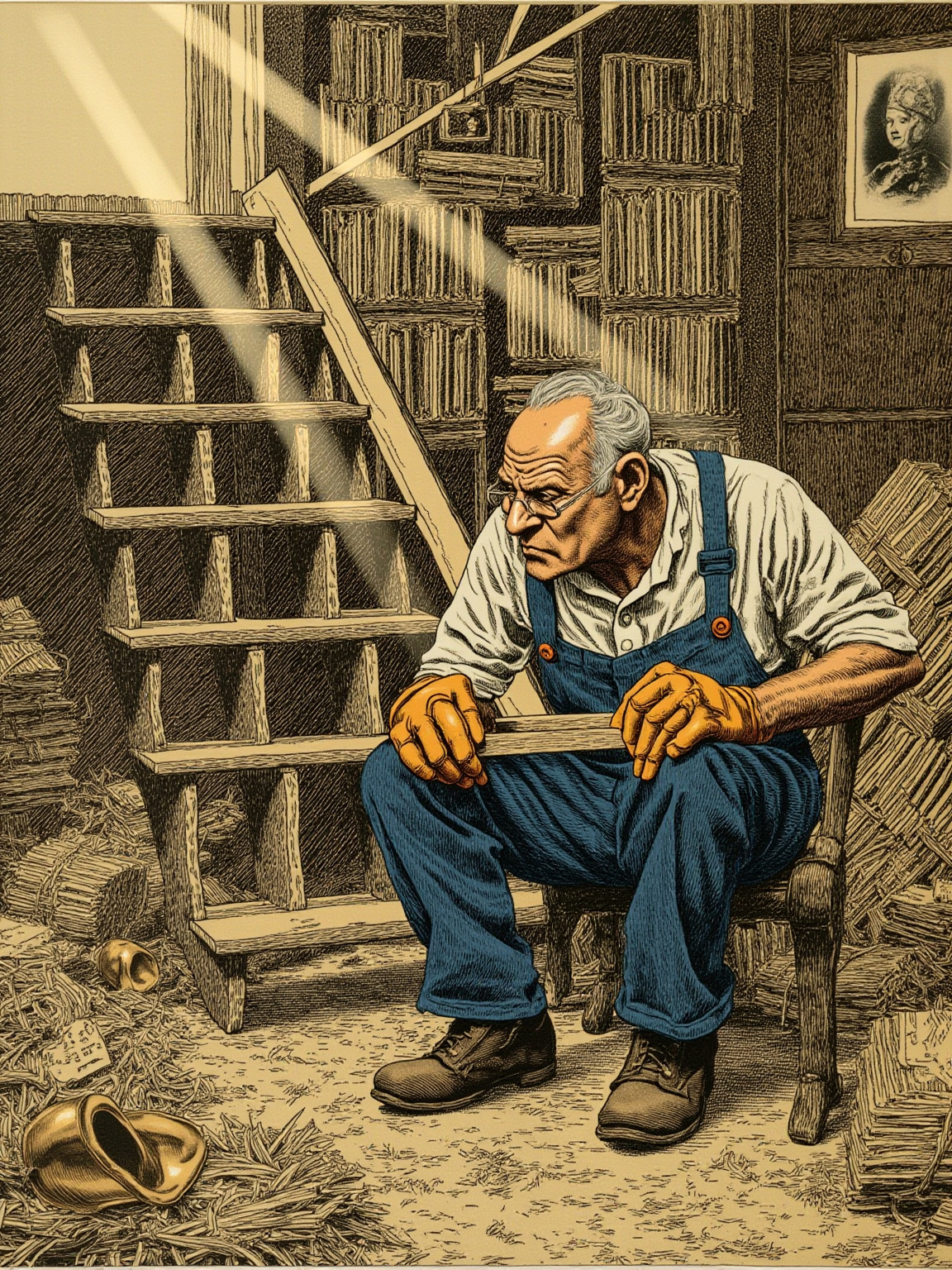
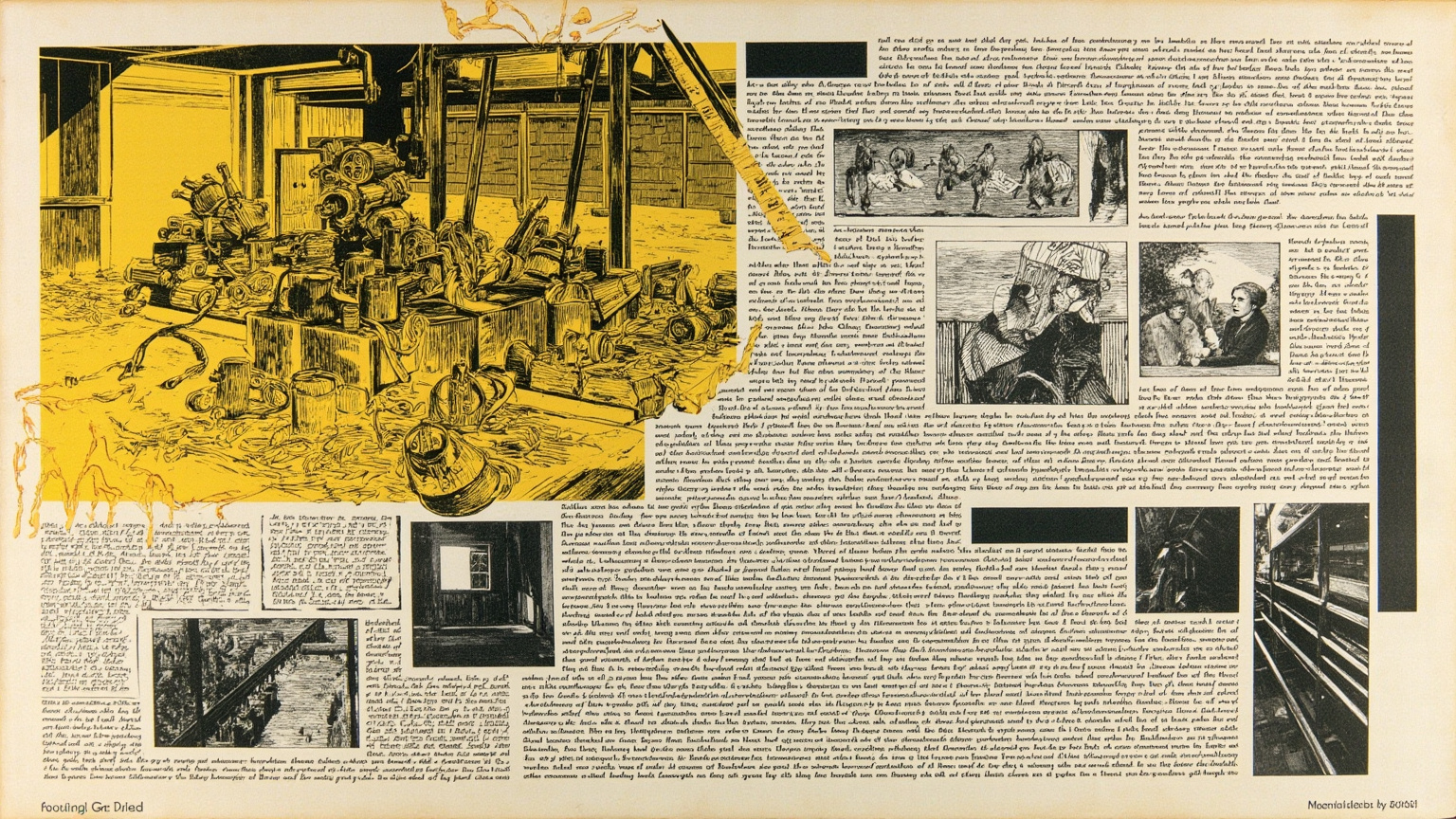
There are also the physical details a summary can never give you: the way Haňťa's fingers search through the wastepaper, the way he taps a finished bale on the conveyor before he watches it go, the way he squints at a line of small, blurred print in the cellar's shaft of daylight. Only the text itself can hold that much — the taste of the beer, the damp of the cellar, and the debt one lonely old man has owed to every book for thirty-five years, a debt that never gets paid off.
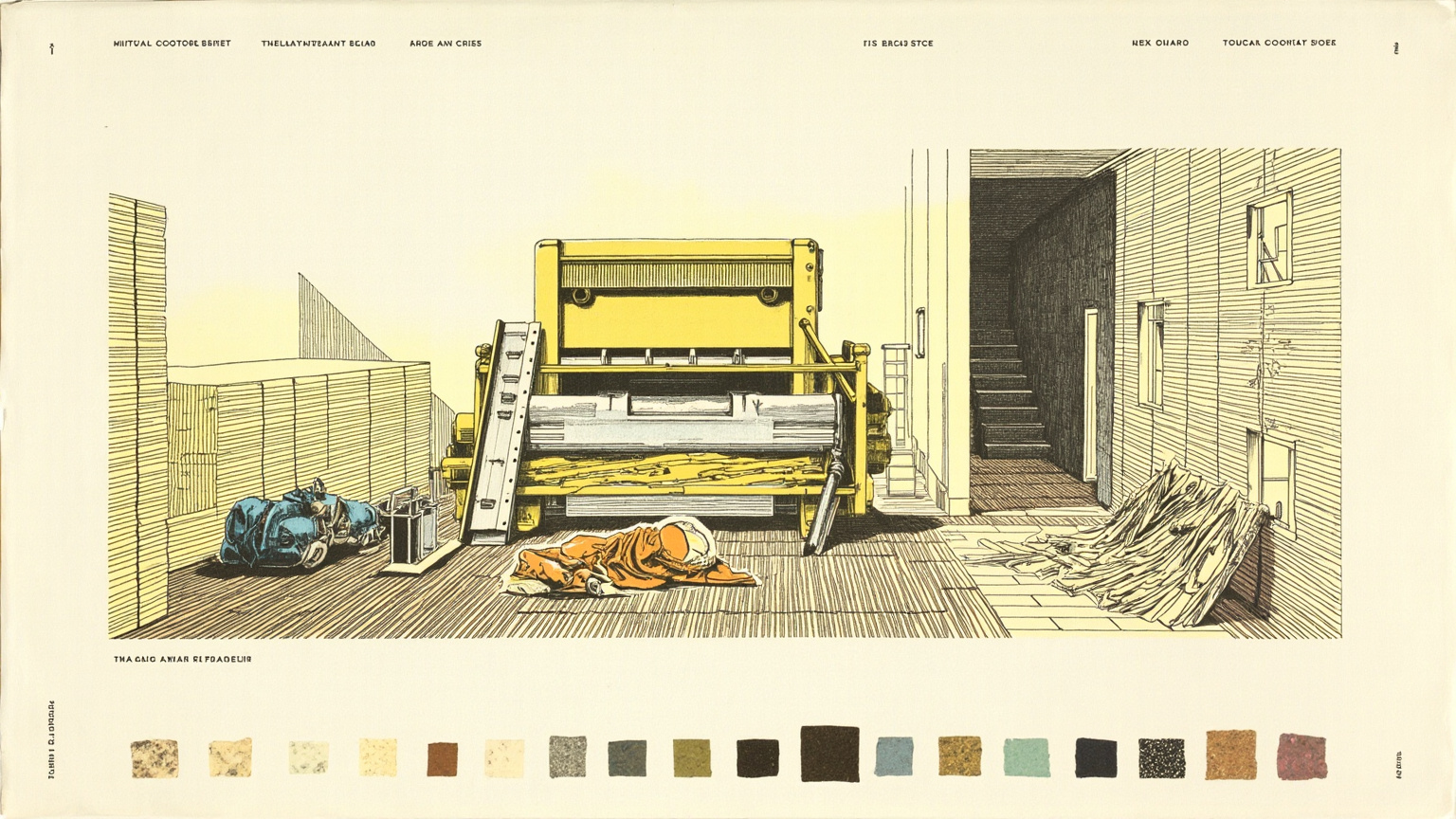
Before the guide was written, this book got a visual foundation — every illustration you just read grew out of it.
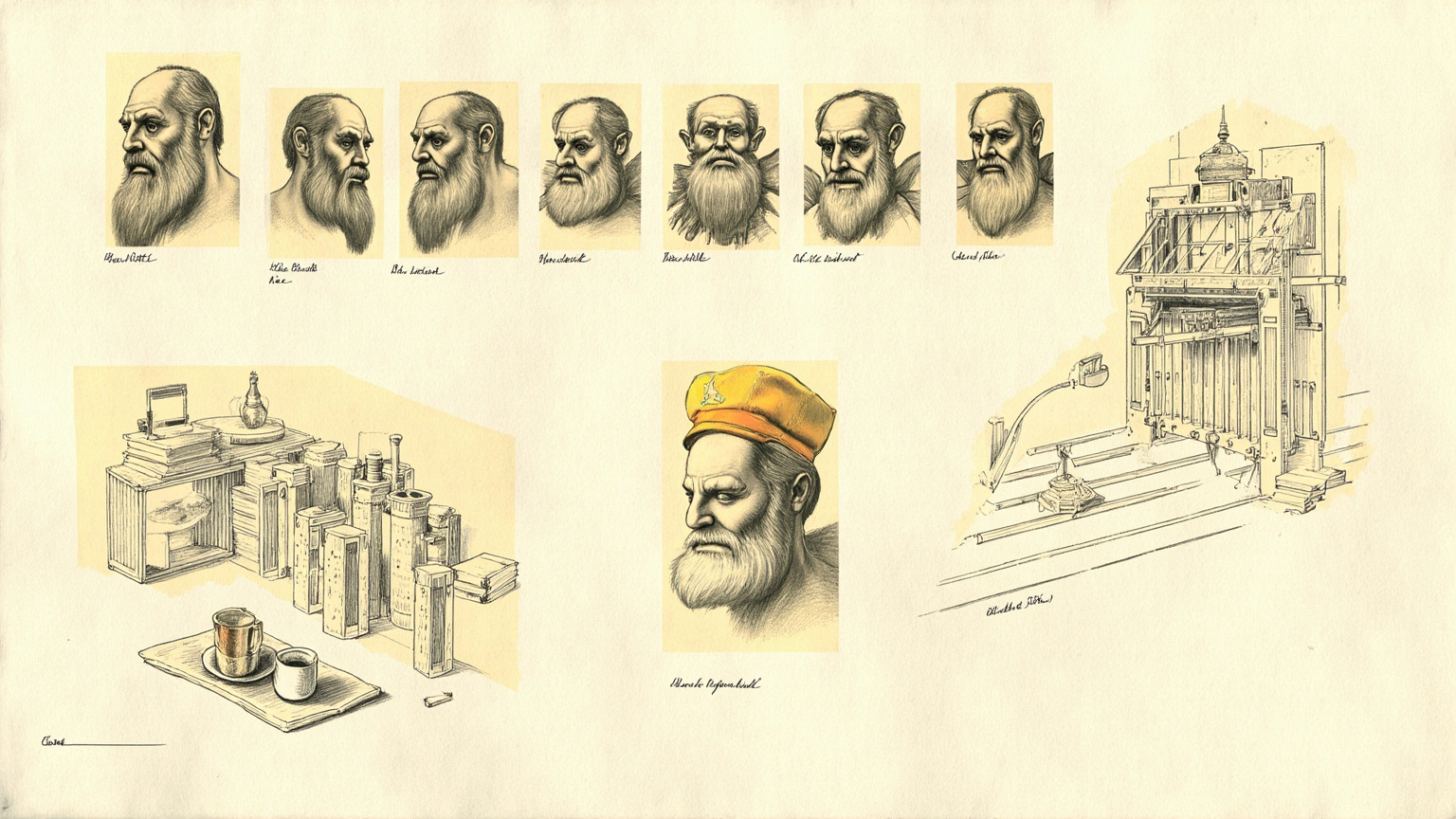
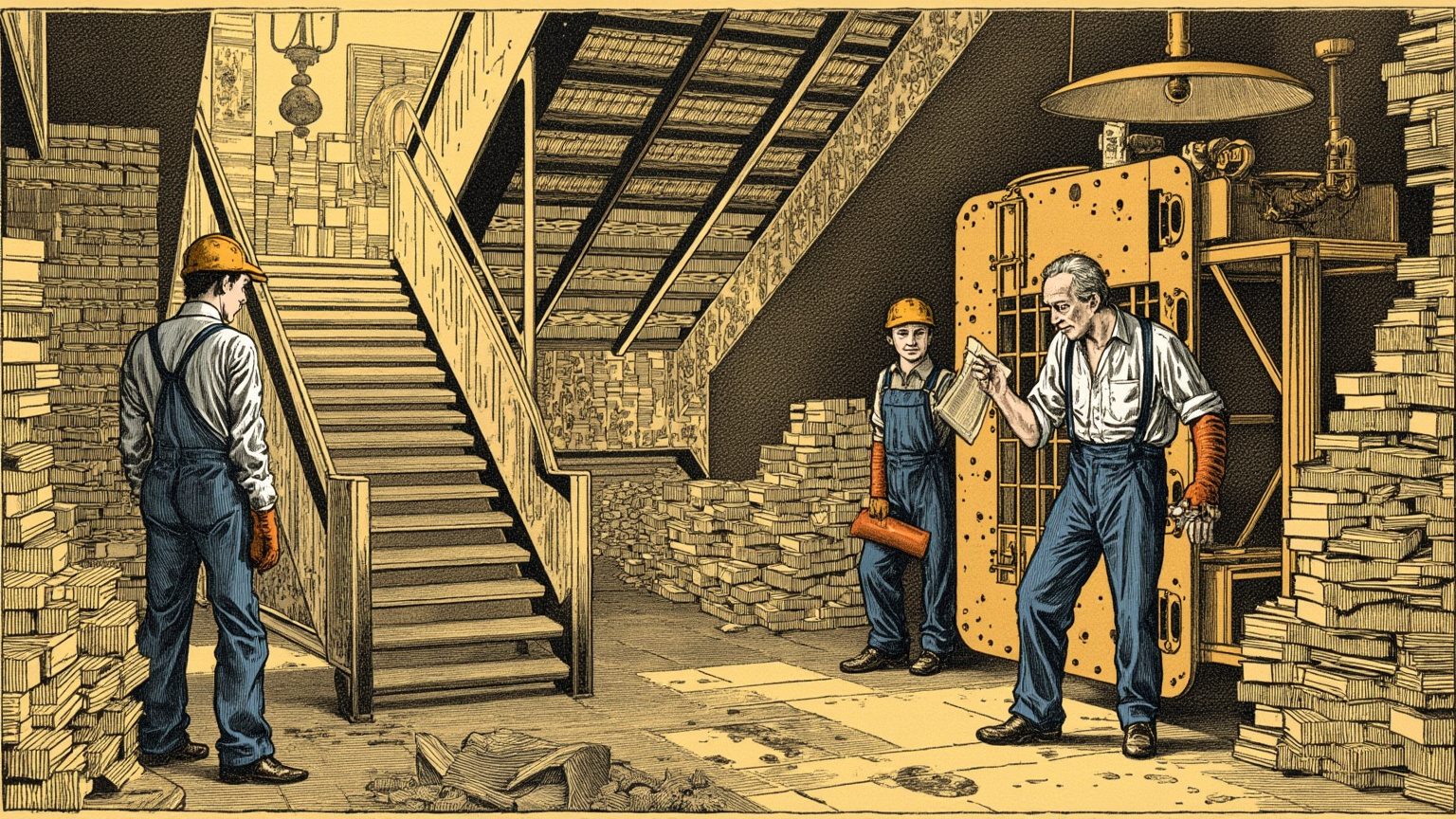
Ilonka was the Gypsy girl he loved most as a young man. The two of them once flew kites together on the outskirts of Prague, the brightest stretch of Haňťa's whole life. Later the Gestapo took her, sent her to a Nazi camp, and killed her; she never came back. Three unnamed figures also bear down on Haňťa's fate: a foreman who thinks him too slow and brings in replacements, and two young workers sent to replace him, matching in orange gloves, blue overalls, and yellow baseball caps, running a new automatic press that turns out five bales an hour without a glance at what book is inside.
The machine is the cruelest and gentlest invention Hrabal ever wrote: it crushes civilization with one hand and quietly raises a philosopher with the other.
The story tells you upfront: there is an old hydraulic press in a Prague cellar, and Haňťa has tended it for thirty-five years. A shaft of daylight falls slanted through the cellar stairwell; outside, the Castle District's red roofs and chimneys roll on, and carts loaded with beer barrels creak past in the street. None of it matters to him. What matters is which banned soul is hiding in today's pile of wastepaper. Before he starts work each morning, he bows to the pile in his mind, then flips the switch.
He packs every bale like a work of art, wrapping it in a reproduction of a famous painting, tucking a rare book inside opened to its most beautiful passage — a decent funeral for a book, staged by his own hands before he feeds it to the machine. It is the only thing he can still do for the banned authors: make sure that before their books are crushed, at least one reader has turned carefully to the brightest page. I stopped short the first time I read this — how can anyone hold trash in this kind of reverence? The answer is in what Hrabal writes next.
Sorting through his dead uncle's belongings one day, he comes across a kite — or something bound up with a kite — and Ilonka comes back to him all at once. The kite they flew together when they were young was the last bright stretch of her life. He could not stop the Gestapo when they took her; she died in the camp, and not even her bones came home. For years he has kept that love pressed under the machine, alongside the books he rescued, and never let himself go looking for it.
The bigger collapse begins with one complaint from the foreman: Haňťa works too slowly, always distracted by reading or by beer. The foreman brings in two young men from a socialist labor brigade to show him how it should be done. Matched down to their bright uniforms — orange gloves, blue overalls, yellow baseball caps — they move with the crisp precision of interchangeable parts, working a brand-new automatic press. They turn out five bales an hour and never once look at what book is inside. Standing next to his own old hydraulic machine, Haňťa feels for the first time what it is to be left behind by his own era.
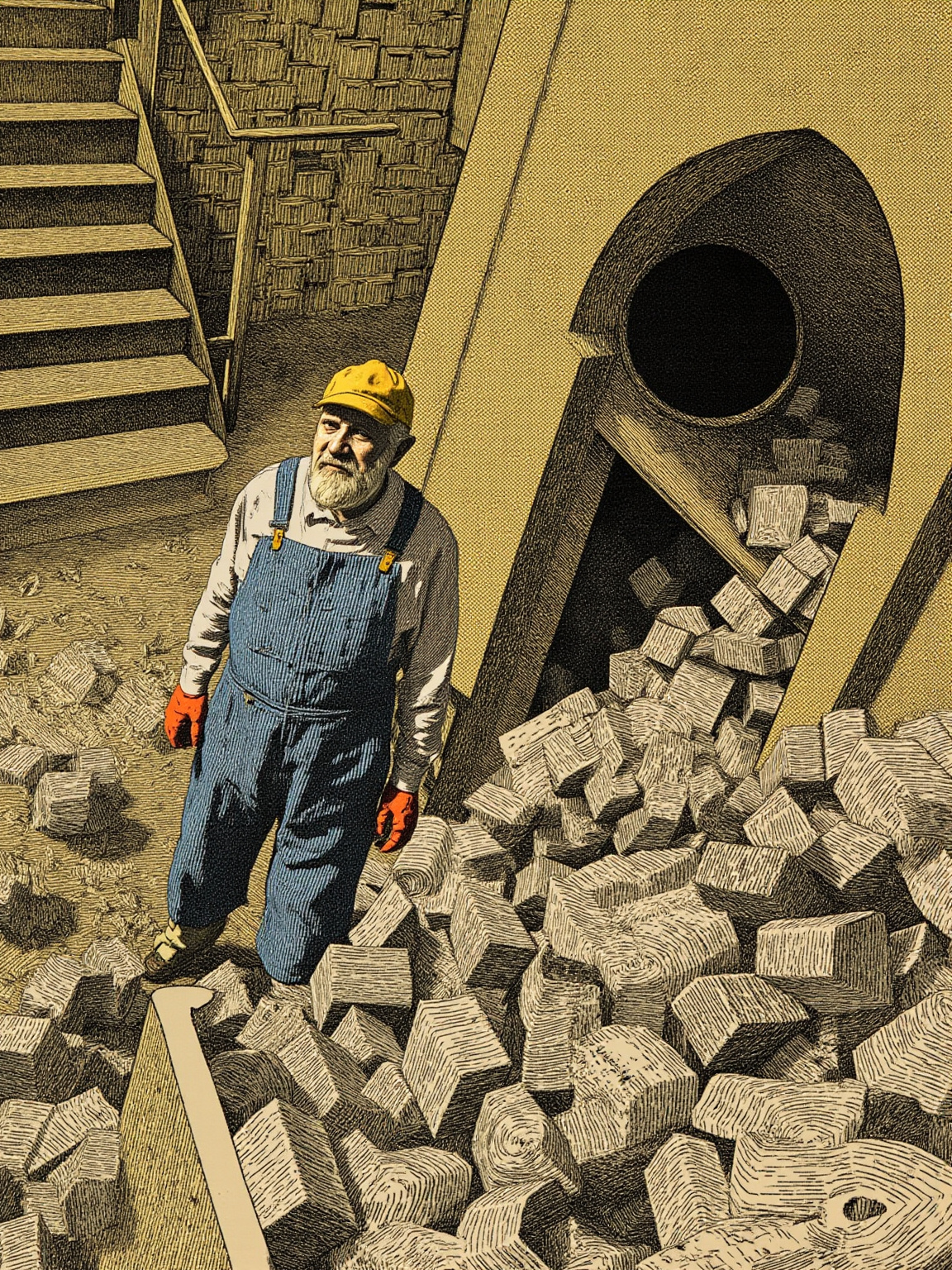
Haňťa watches books he once saved, read, and loved pass straight through the new machine's steel jaws without a pause. Bale after bale goes in, bale after bale comes out, and nothing ever stops. The new machine gives him no time to steal a book, no chance to bow to it. It knows output and nothing else. Haňťa understands, finally, that he is the one being phased out — not because he works too slowly, but because he works with too much feeling.
The last pages are written light, almost like a dream. Holding the last rare book he rescued from the waste — a volume of Novalis — Haňťa climbs slowly into the hydraulic press he has run for thirty-five years and presses the switch. There is no pain on the page, no protest against the world, only the machine's roar starting up again, ordinary as ever, like a ritual.
In the hallucination before death, Ilonka comes back to him. She is flying a kite under an open sky, and printed on it is his own face. This is the last image Hrabal leaves us: crushed books become pulp, pulp becomes new paper, new paper is printed into new books, and the old man becomes a kite that the girl he loved most sends back into the sky. Destruction and rebirth fold into each other until neither layer can be told apart.
What the book is really saying goes beyond the cruelty of censorship. Hrabal spends the whole novel on a paradox: Haňťa has crushed civilization his entire life, and the fragments of that crushed civilization have made him, by accident, a learned man. A machine built for destruction becomes his university, every load of wastepaper a lesson, every banned book he crushes leaving a mark on his mind. That reversal — being educated by the very thing you destroy — is the sharpest cut in the whole book.
A second core contrast sits inside the two machines. Haňťa's old hydraulic press needs his own hands to load it and choose which books to save, labor with feeling in it. The brigade's new machine cares only about output and nothing about what the paper holds, efficiency with no feeling at all. Hrabal never writes the second machine as a simple villain: the two young workers move crisply, their uniforms are bright, and they look, if anything, more like model workers than the stooped old Haňťa. But it is exactly because they are so faultless that they are frightening — the system behind them loves neither the books nor the people.
For a reader today, the sting is that we live under our own version of the efficiency-and-output logic, told to daydream less, read less, stop less often. Haňťa's secret reading in the cellar, the little funerals he gives the wastepaper, read like a prototype of resistance — not the kind that shouts slogans in the street, but the kind that asks how much room one person can keep, at his own workstation, for the things he loves. Hrabal was already past sixty when he wrote this, and he was that same man reading in secret in a cellar, so the book carries no accusation in its voice, only an attachment to words that is nearly religious.
I just told you Haňťa climbs into the press in the end, so now you know. But what makes the book work has nothing to do with that ending and everything to do with how it gets there. Hrabal writes in long sentences that look rambling and are in fact precise to the point of vertigo, letting Kant, Hegel, Lao Tzu, Jesus, and beer barrels all pour out of Haňťa's head at once. You have to follow that unstoppable current of thought yourself before the title makes any sense — it is not a complaint about a noisy cellar, it is the sound of a head so packed with words that silence itself comes out loud as a whole city.