Tetsuko Kuroyanagi's childhood memoir: giving childhood back to children turns out to be something you can actually do.
Text and illustrations produced by the pipeline
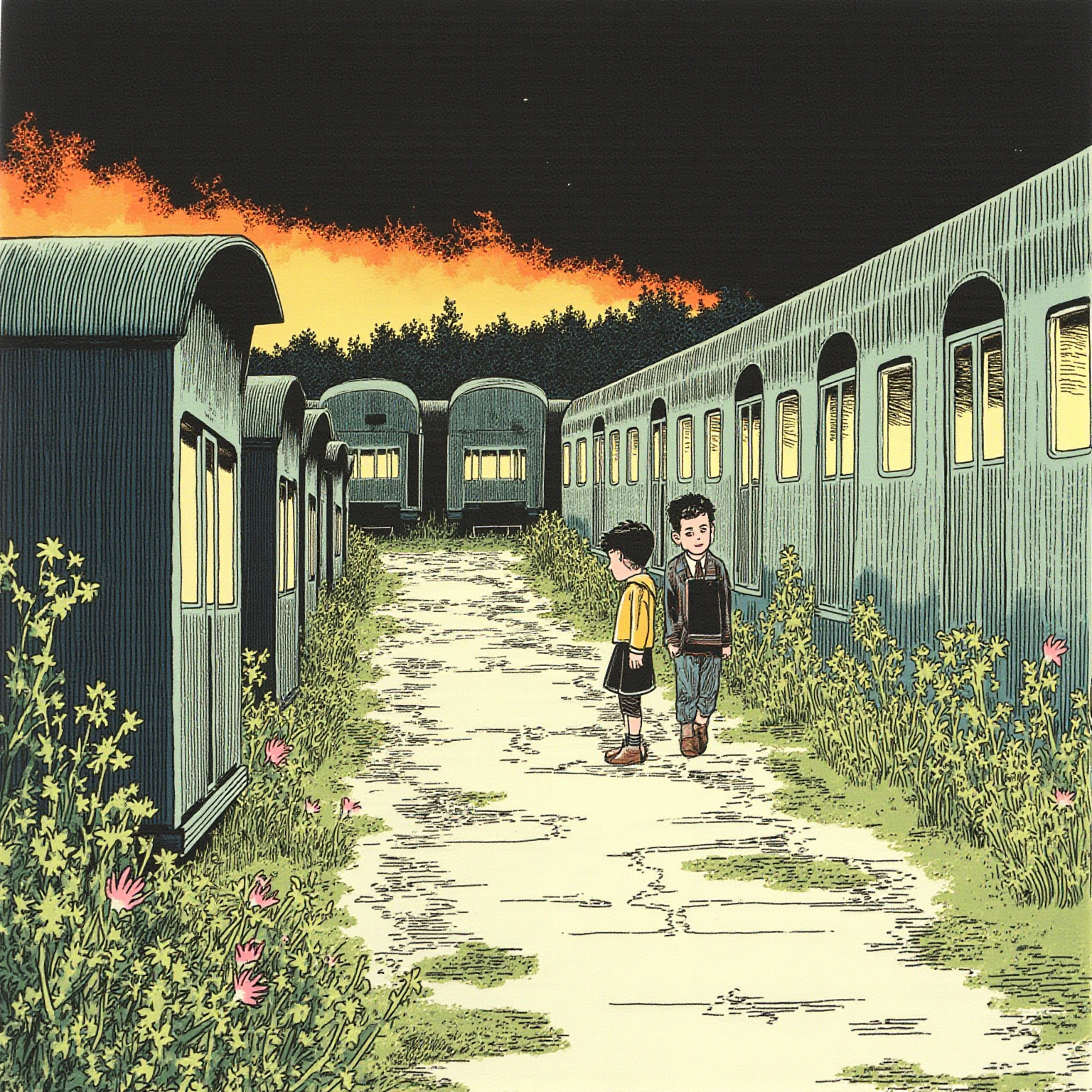
A retired train car, wheels removed, half its body set into a low hillside. Push the door open and there's a blackboard, desks, a row of windows left open. At a small school in Jiyugaoka, Tokyo, a handful of children sat through their lessons exactly like that. Some opened their math books first, some their language books, and nobody minded the order. This is a true thing Tetsuko Kuroyanagi wrote down in Totto-chan: The Little Girl at the Window — that train car sat there for nearly a decade, until it burned to ash.
The author, Tetsuko Kuroyanagi, is a television host known across Japan, but the identity that has stuck to her for life is Totto-chan — the little girl in this book who waves at street performers from the window, gets expelled, and lands at an unusual school that catches her. The story runs from the late 1930s to 1945 in Tokyo. Published in 1981, it became one of postwar Japan's bestselling books and has been translated into more than thirty languages. It is not fiction. It is the author's memoir of her own grade-school years — a real educational experiment, seen through the eyes of a real child, who grew up and wrote it down.
The protagonist is called Totto-chan, born Tetsuko Kuroyanagi. In first grade she was expelled from her original school for talking too much and staring out the window too often. Her mother never told her the real reason, only that they were going to visit a new school. That school's principal was Sosaku Kobayashi, an educator and the founder of Tomoe Gakuen. He had studied an approach to education called eurythmics in Europe, and in 1937 he opened this small school in Jiyugaoka, Tokyo. It was tiny, and every child arrived free to be exactly who they were.
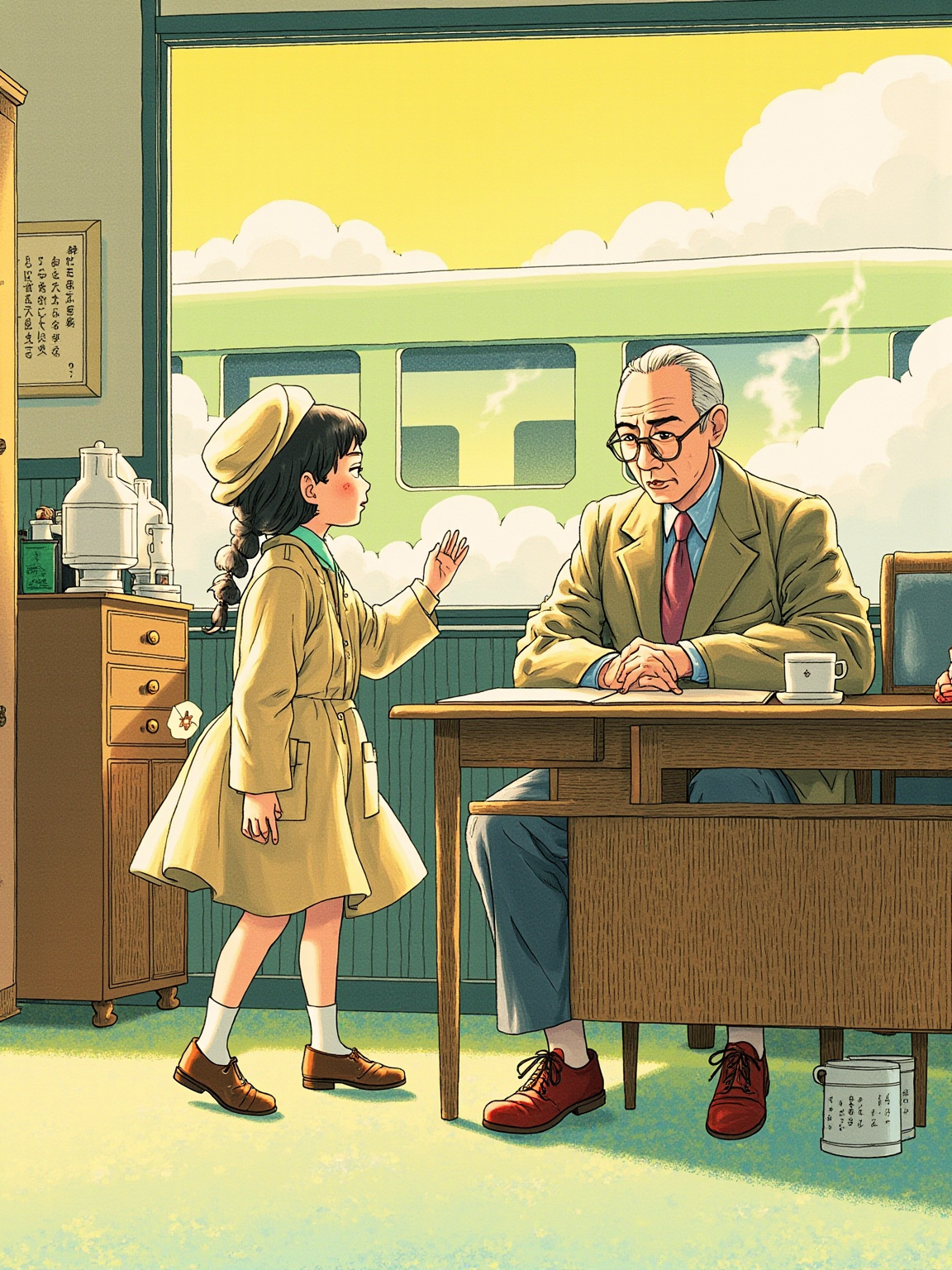
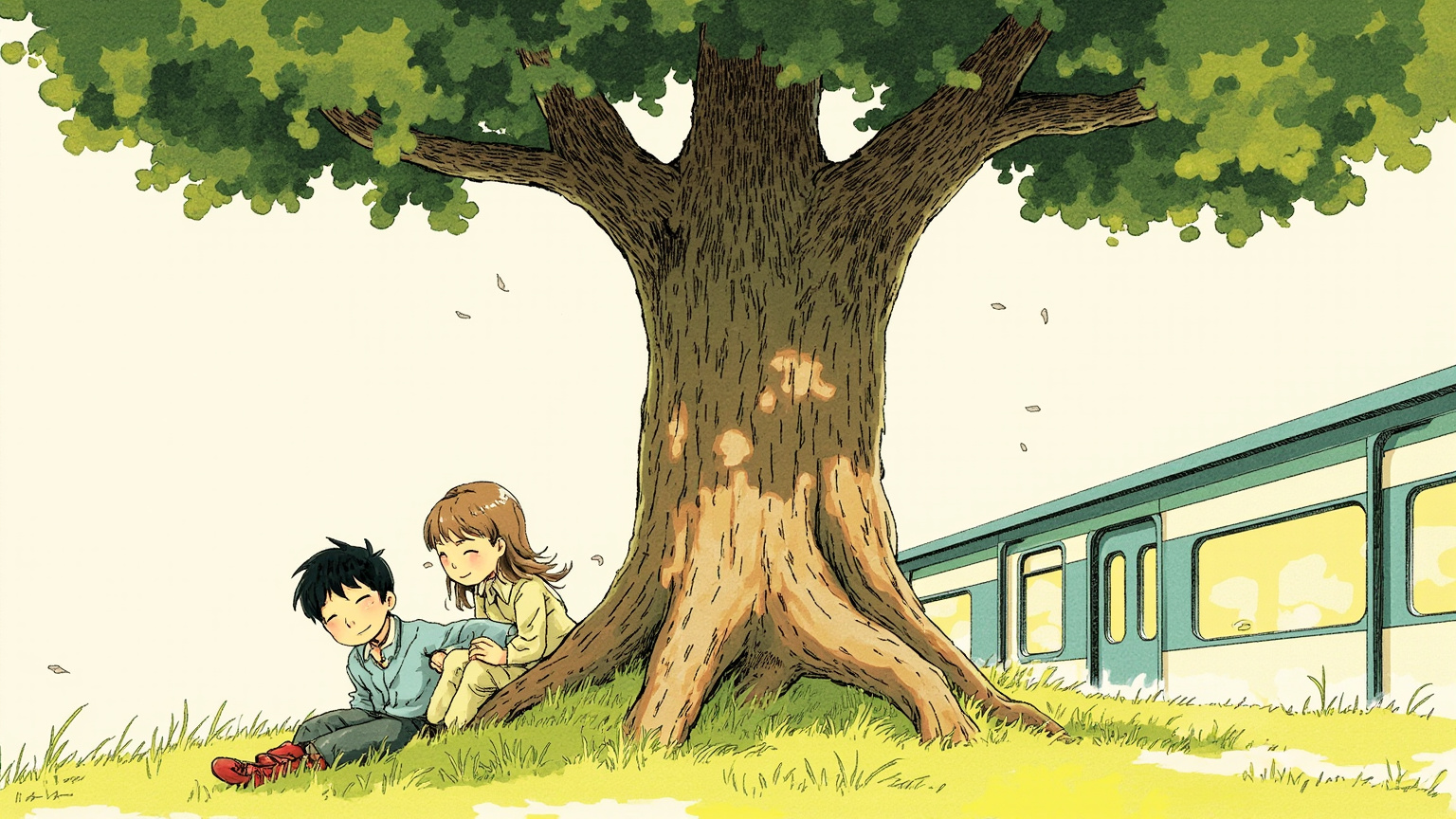
When Principal Kobayashi met Totto-chan for the first time, he didn't ask why she'd been expelled and didn't hand her any form to fill out. He just told her to say whatever she wanted to say. Then he sat there and listened to her talk for four straight hours — something no one had ever done for her before. At school her closest friend was Yasuaki-chan, who'd had polio, walked with difficulty, and was smaller and thinner than the other children his age. He and Totto-chan worked out, together, a way for him to climb their favorite tree. At home there was a German shepherd named Rocky, the one who bounded at her every day when she got home from school.
An essay like this can give you a map. It can't give you the grass. What makes this book worth reading is the specific detail: what "something from the mountains" actually looks like the day the lunchbox opens, whose feet end up propped on the seat across the aisle in a train-car classroom, whether Totto-chan let go of Yasuaki-chan's hand the first time he made it up the tree. None of that lives in a summary, only on the page. It's the kind of book that makes you want to read one more section, then one more, light enough that you never feel the weight of a long book in your hands. And it bears repeating: none of it is invented. It's a real school that really existed, written down by someone who grew up and still remembered it.
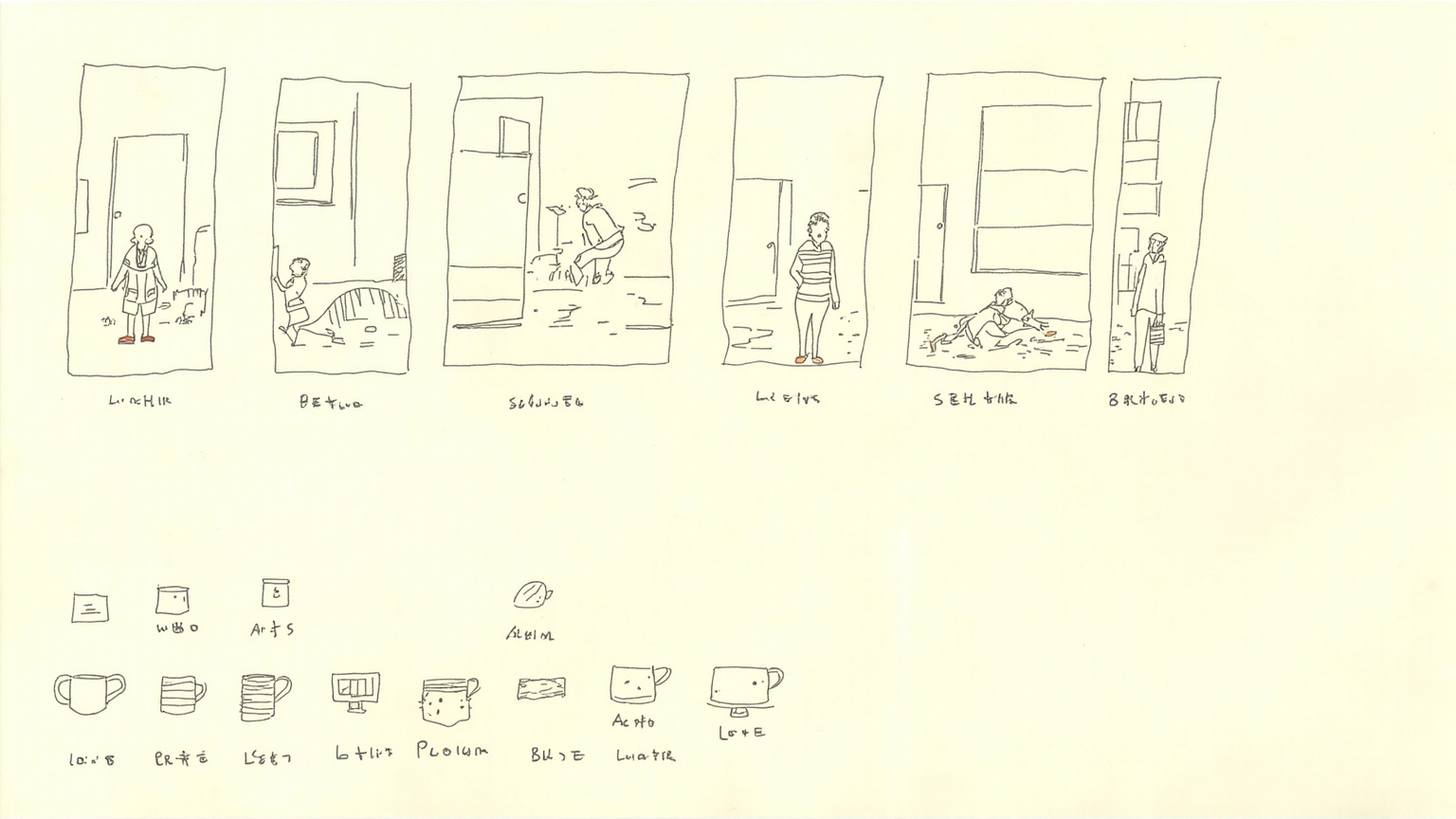
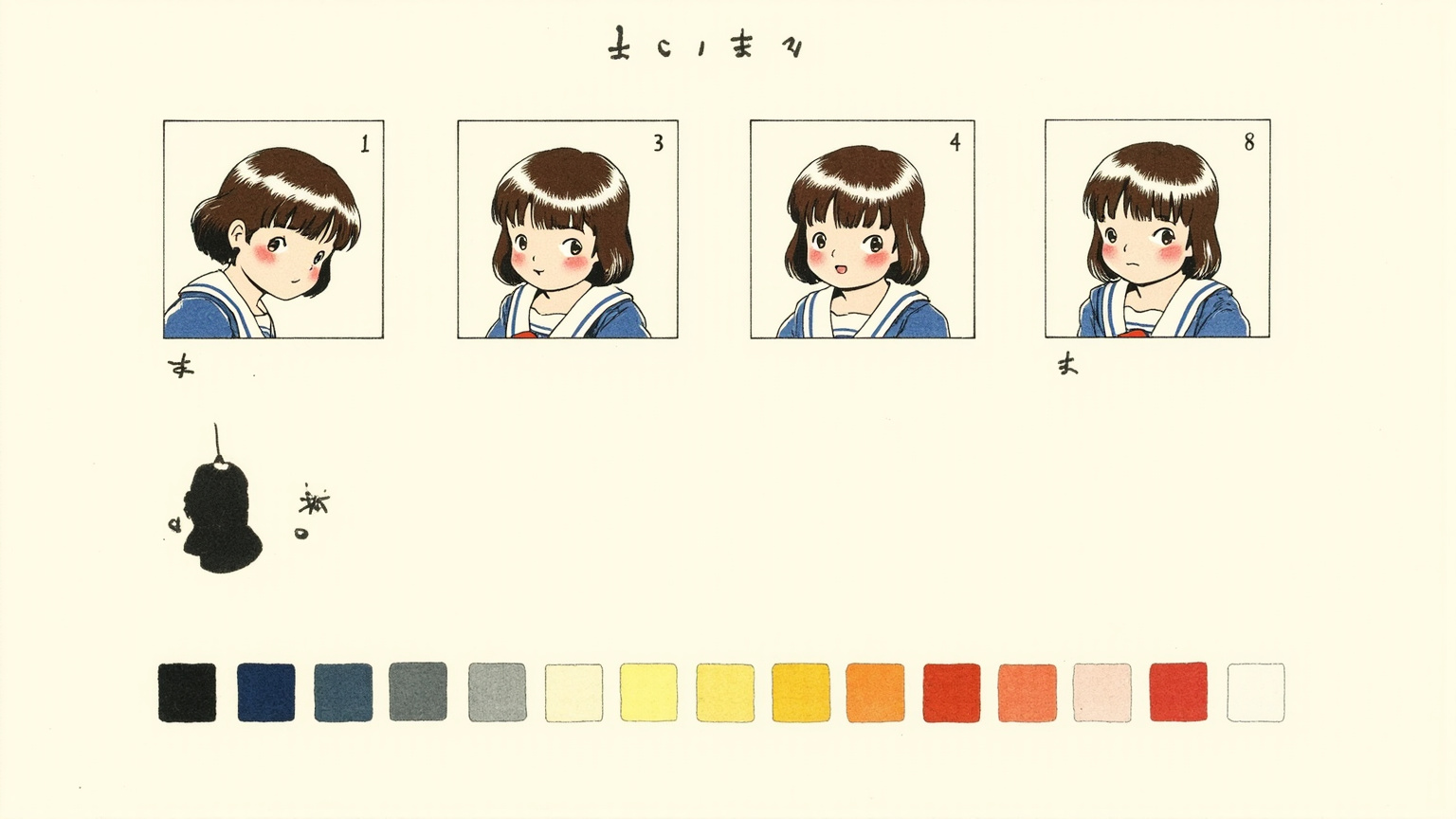
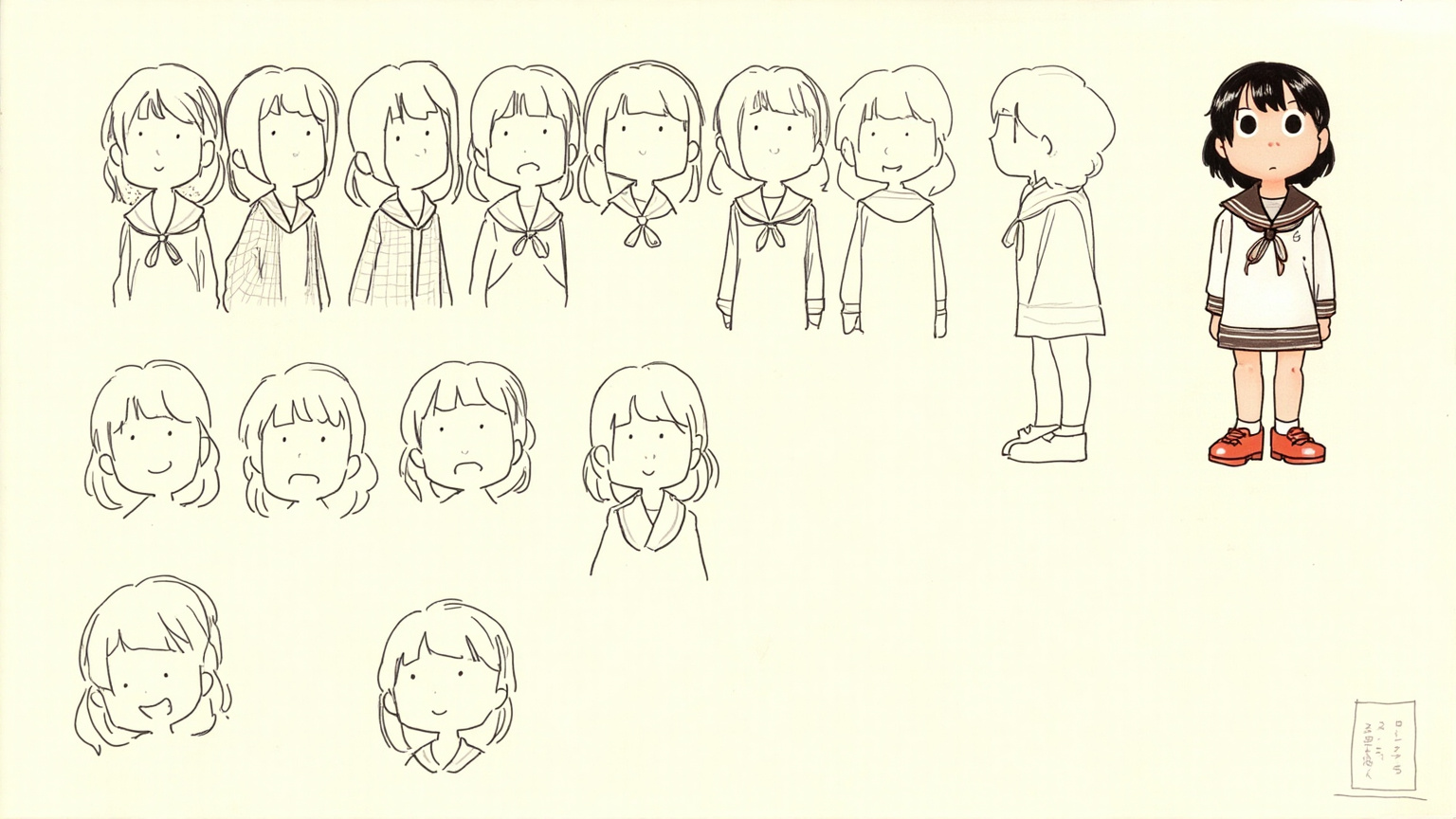
Before the guide was written, this book got a visual foundation — every illustration you just read grew out of it.
The story opens with a girl who doesn't quite fit the rules. On her first day of first grade, Totto-chan leaned out the window to wave at a street performer passing by, and kept waving through the whole class period. She opened and closed the wooden lid of her desk, again and again, for an entire lesson. Her teacher couldn't take it and called her mother in for a talk. Her mother kept the substance of that talk to herself — she was afraid that if Totto-chan learned the words "you've been expelled," it would hurt her for the rest of her life — and instead simply took her to Jiyugaoka and enrolled her at Tomoe Gakuen, as if nothing much had happened. That quiet understanding between adults holds some of the tenderest pain in the whole book.
On her first afternoon at Tomoe Gakuen, Totto-chan met Principal Kobayashi. Looking back on that day, she'd pause for a moment at the memory — this grown man had actually been listening. That detail is close to the emotional foundation of the whole book: an adult willing to spend real time on one child, letting her finish what she had to say. Everywhere else, her talking was a problem for the adults around her. Here, it was welcome.
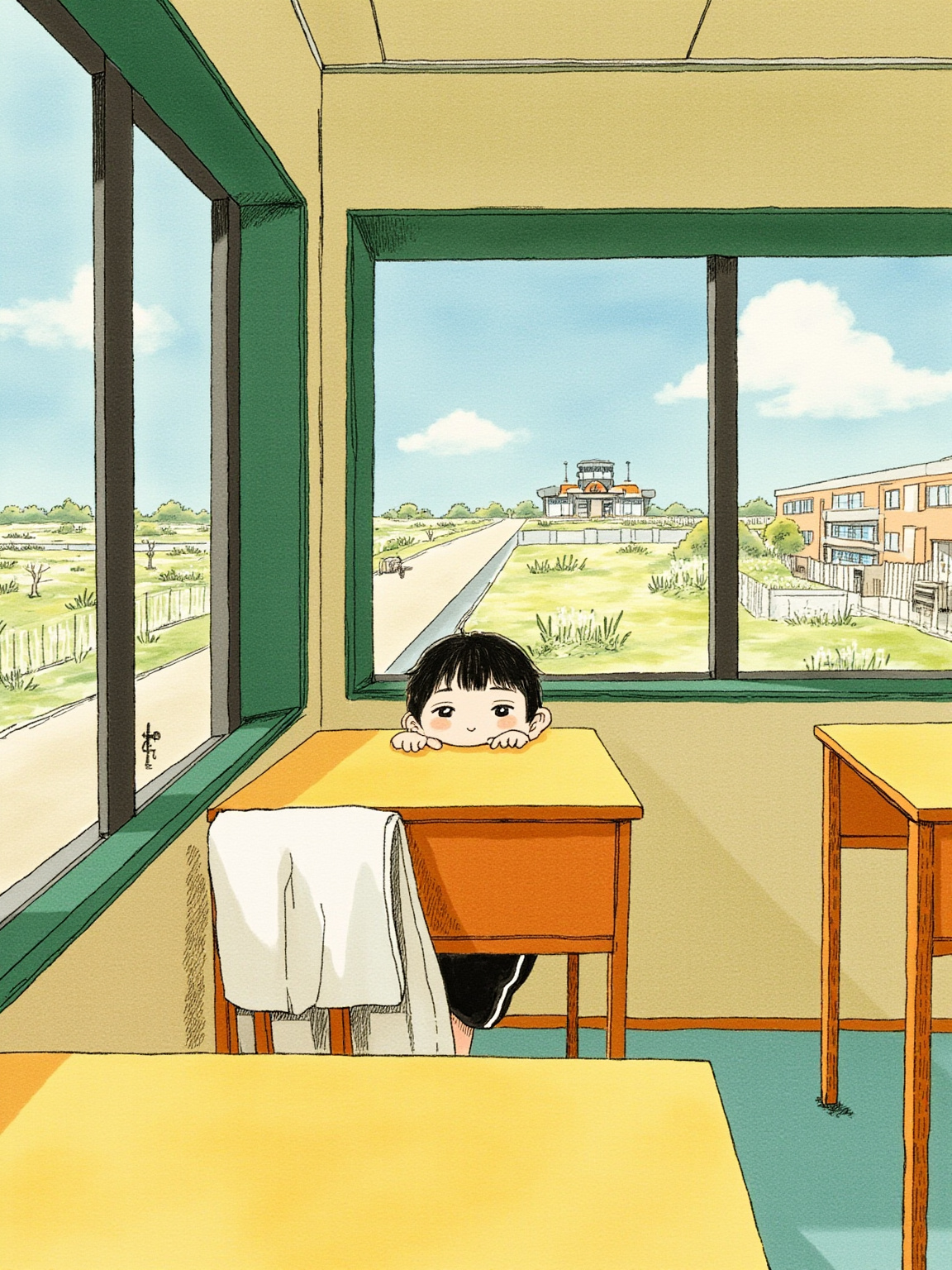
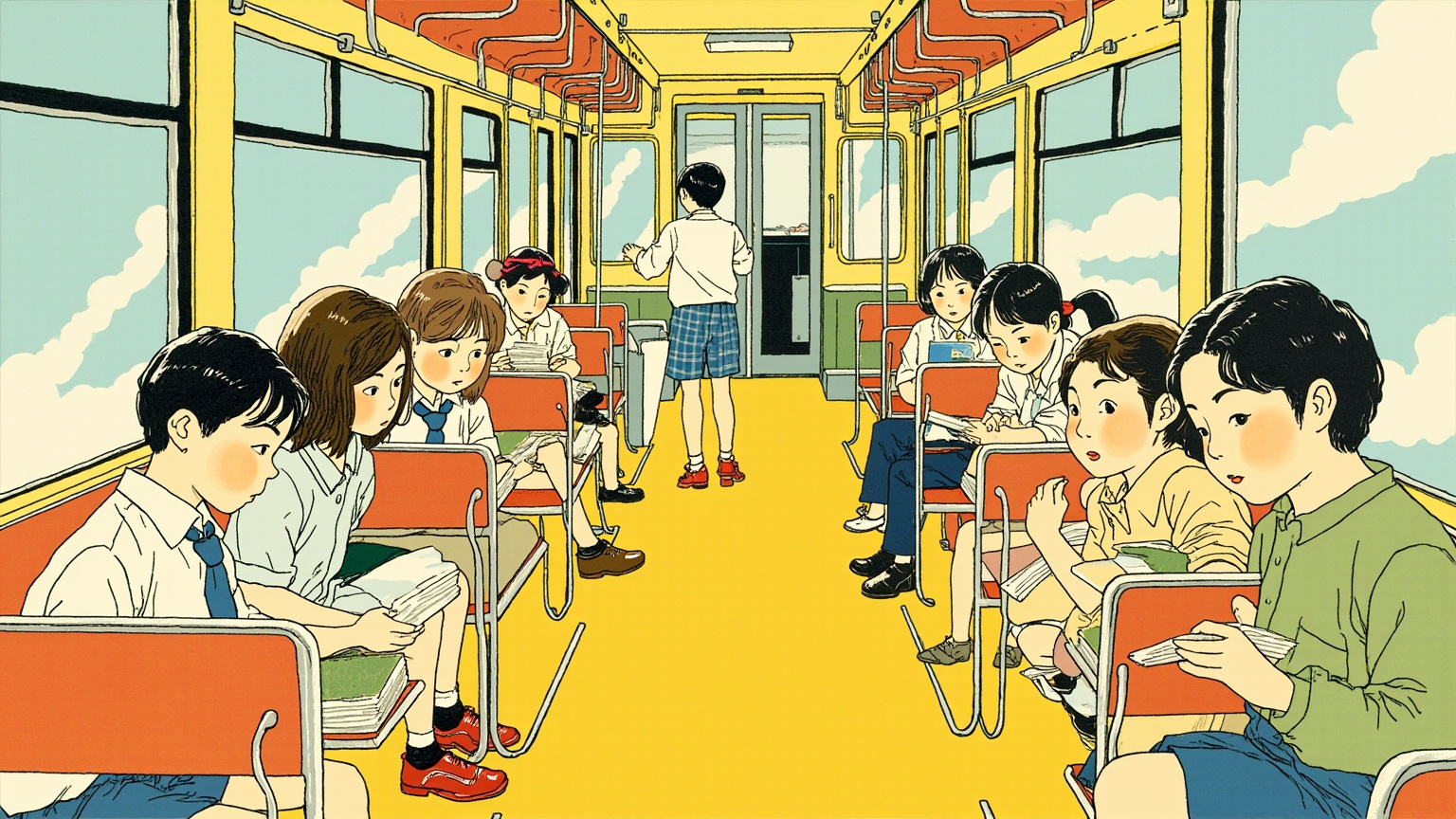
Daily life at Tomoe Gakuen unfolds as a series of small scenes. The classrooms were retired train cars, parked permanently on the school grounds; the children pushed the door open to start a lesson and pushed it open again to step straight onto the grass. The children set their own schedules — open the math book first if that's what you want today, spend a whole morning drawing if that's what tomorrow calls for. Lunch, packed by the mothers, was supposed to bring "something from the mountains and something from the sea" — meat, eggs, and vegetables for the mountains, fish and nori and seaweed for the sea.
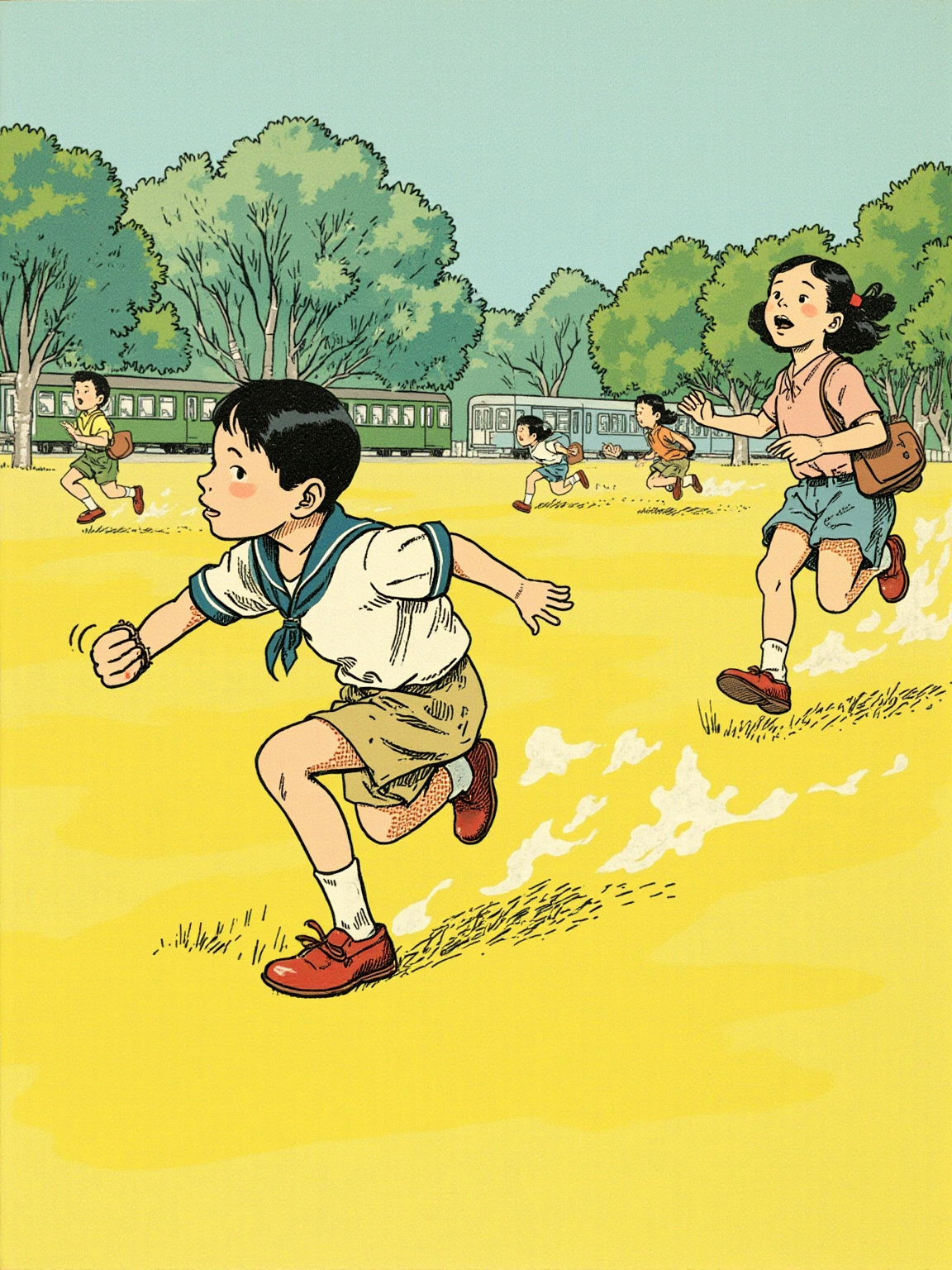
The sports day is the cleverest piece of writing in the book. Every event Principal Kobayashi designed was built so that some particular child would come in first — not the false fairness of "everyone wins," but events actually tailored to a child's height, strength, and pace. Writing as an adult, Totto-chan says it was only then that she understood: some grown-ups spend real thought on making a child feel like she measures up.
Swimming lessons were another piece of design. The children went in without swimsuits. Principal Kobayashi didn't arrange it so the children could play naked — he arranged it so that a child whose body looked different, like Yasuaki-chan's, wouldn't be singled out and stared at in the water. With everyone the same, his difference simply disappeared into the crowd. It's the quietest and heaviest line in the book: kindness in education has to be built, not just spoken.
Because his legs made climbing hard, Yasuaki-chan couldn't get up their favorite tree. Totto-chan tried out one idea after another, working with him to figure out where to place a foot and how to push off, until he finally made it to the top. At the time, she didn't think of it as anything special — she said later that she'd simply wanted to sit up in that tree together with him. Written down, though, it still catches in the throat decades later.
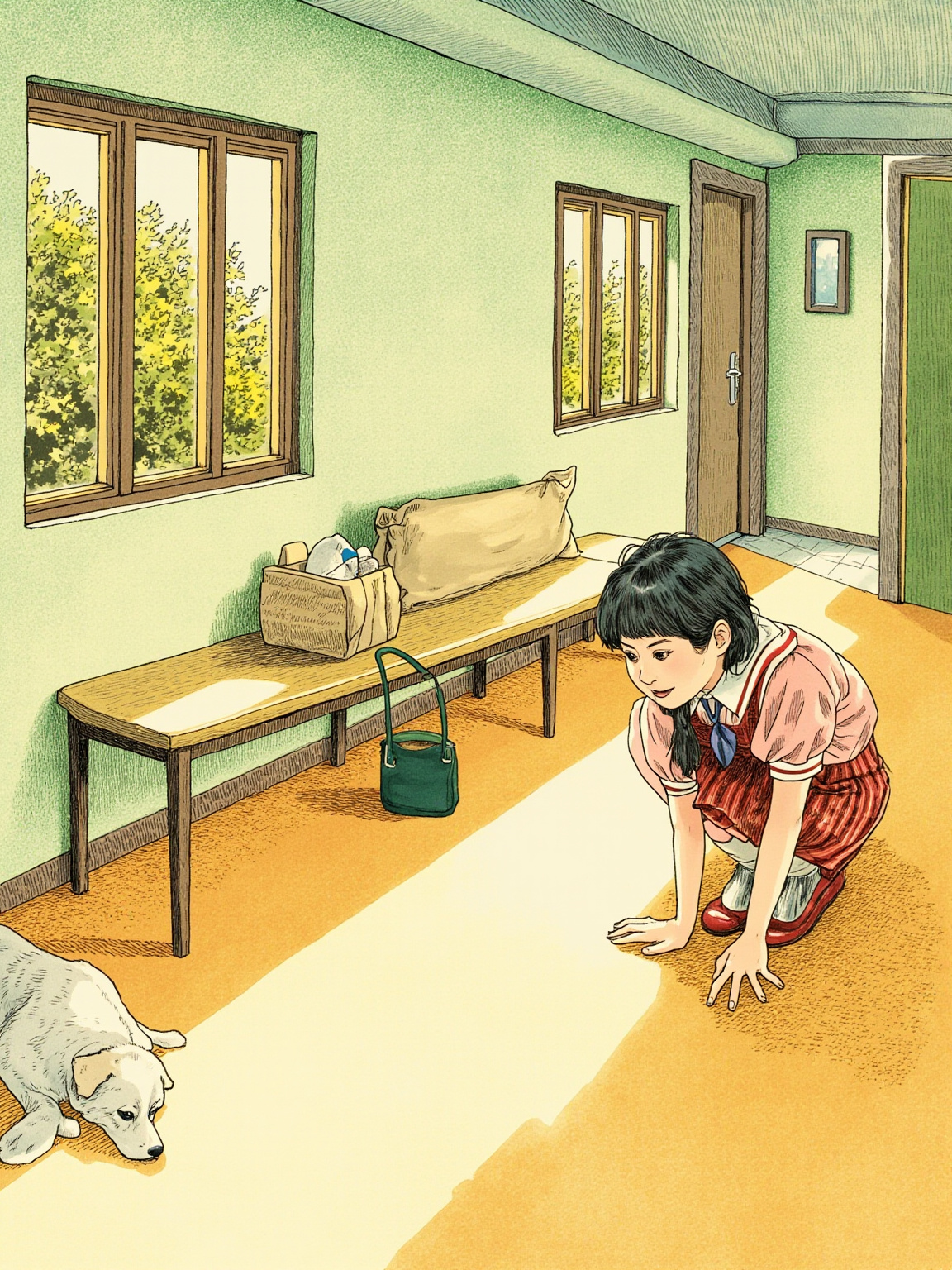
There's a scene at home, too. Rocky was a big, dark-coated German shepherd, a genuine playmate to Totto-chan. During one bout of roughhousing, he accidentally bit her ear, and blood ran down as her mother carried her to the hospital for stitches. But lying on the operating table, the child didn't cry or fuss — the only thing on her mind was whether Rocky would get scolded. The first thing she carried in her heart was whether the friend who'd bitten her was going to be punished for it. That's Totto-chan's particular emotional logic: when she loves something, she puts it before herself.
Time is quietly moving. Life at Tomoe Gakuen stays bright, but the world outside has begun to tighten. The lunchboxes hold less. The streetlights go out on schedule. Rice needs ration coupons. The children's games start to include ducking for air raids. These details work in like stitches, sewn quietly into the bright fabric of daily life. The book never stops to lecture about the war — it simply lets a child keep going to school, keep laughing, keep counting the days. But reading on, you start to feel the ground underfoot growing colder.
The ending doesn't fade out — it burns down in an instant. In the 1945 firebombing of Tokyo, Tomoe Gakuen was reduced to ash. Totto-chan had already left the school years before; she heard the news secondhand. She went to see it and found the train cars burned down to bare frames. Principal Kobayashi had stood at a distance and watched it burn, and, the story goes, the first thing he said to his son standing beside him wasn't about how much had been lost, but a question: what kind of school should we build next. That is the spirit of Tomoe Gakuen — even at the worst possible moment, still refusing to stop imagining the next school.
Totto-chan is remembered because it does something that sounds simple and turns out to be nearly impossible: it treats a child as a child. Tomoe Gakuen doesn't rely on lectures. It relies on design. Self-directed lessons let children move at their own pace. The "something from the mountains, something from the sea" lunch rule teaches children to notice and be grateful. The custom-built sports day lets every child walk away feeling capable. None of this is an abstract slogan; it lives in the specifics. Readers today usually aren't reaching for it out of nostalgia. They want to know what a world actually looks like when it lets a child believe she's a good kid.
Craft-wise, the book holds a card back: it stays bright enough to make you comfortable, then burns without warning. The first eighty percent is loose, warm, unhurried, like someone telling you childhood stories until you're yawning along with them. The final chapters carry no extended outcry, just a few lines, and the fire takes it all away. That contrast is what lands on adult readers — you've already fallen for the school by the time you learn it's gone. Kuroyanagi doesn't write for effect. She simply records what happened and leaves the weight of it for the reader to carry.
The first time I read that closing line, what kind of school should we build next, I went back and reread the lunchtime scene at Tomoe Gakuen. On one side: the principal, the lunchboxes, the children. On the other: fire, empty ground, everything gone. Both are true. That's the trick of this book — it makes two events, separated by years, press on your chest at the same time.