Trent's Last Case · Companion Guide
特伦特的最后一案
理性与爱情在英式庄园的优雅对局,完美推理之下,躺着一声意外的走火。
Opening: a man lying in the garden
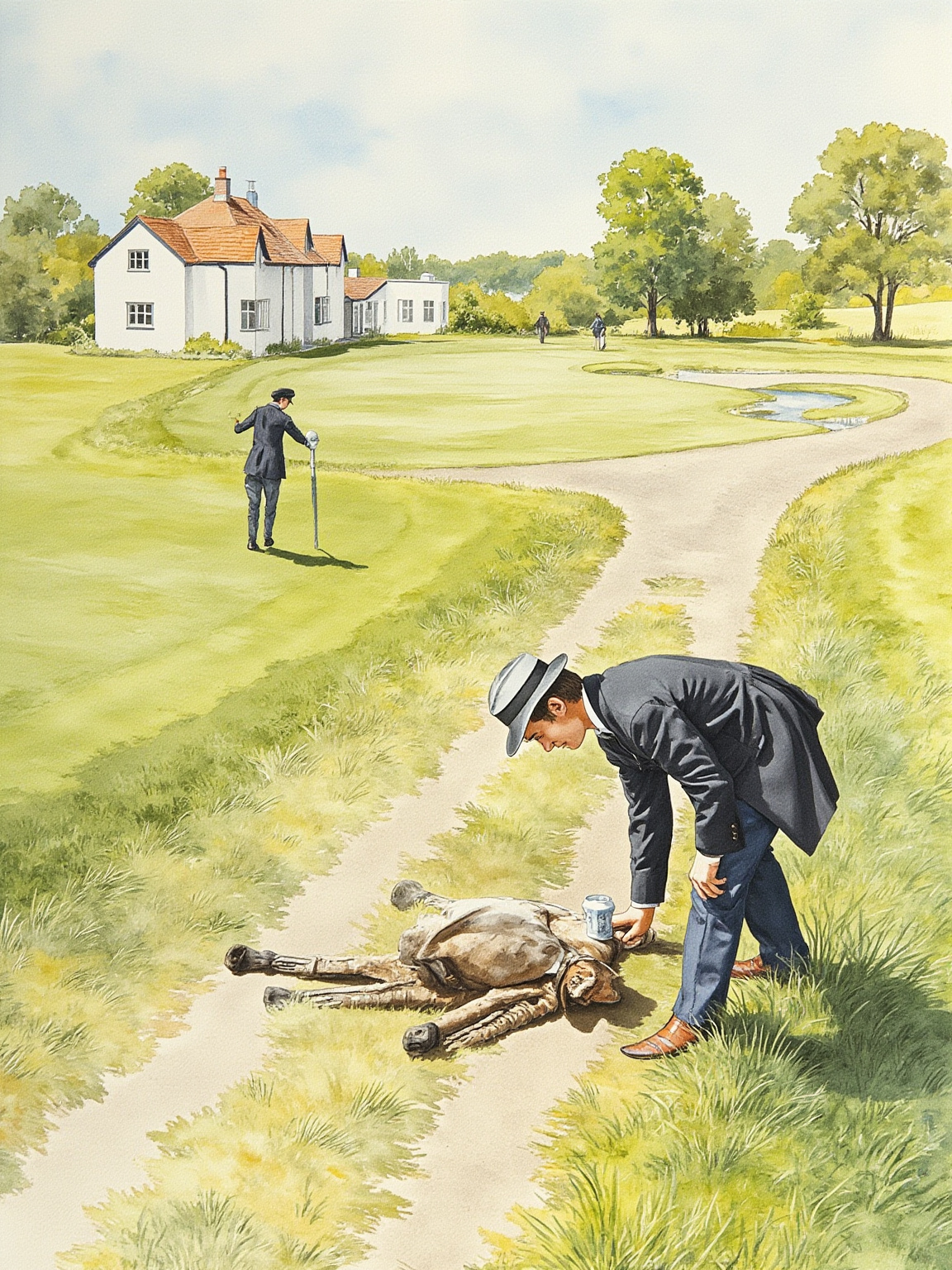
At White Gables, a country house in Kent, sunlight falls across a lawn clipped to the inch. A man lies in the garden — Sigsbee Manderson, the American financier — shot through the head, already dead. The servants keep their voices down; the police haven't arrived yet. When they turn him over, a few small things make people frown: something is wrong about what he's wearing, his false teeth are missing, and a ladder has been moved. Every detail looks placed there, a puzzle waiting to be worked out. The whole estate is still playing at everything being fine, but the air already carries a faint, wrong sweetness.
What kind of book this is
Trent's Last Case was written by E. C. Bentley at the tail end of the Edwardian era, in the early years of the twentieth century. Before it, the detective novel belonged to Sherlock Holmes — the genius closes his eyes, thinks for a moment, and the truth snaps open like a fan. After it, the detective novel began doubting itself for the first time. Dorothy L. Sayers and the rest of the Golden Age generation read this book as a founding text, not for how dazzling the plot is, but for one thing it dared to do: let the clever detective get the murderer wrong, and make him admit it himself. Bentley earned his place in literary history with this book alone — he also has a form of four-line comic verse named after him, the clerihew, but that's another story.
The book is set in Marlstone, a fictional village in Kent. Outside there's lawn and orchard, gentlemen and ladies in flannel trousers; inside, a corpse, a Scotland Yard inspector, a reporter sent down at short notice, a secretary, servants, and a young woman widowed less than twenty-four hours. Underneath the sunlit propriety of the English countryside sits a murder that doesn't look like one.
The characters: four people twisted together by fate
Philip Trent is a contributor to the Record in London, a painter by trade who writes the odd long piece for the paper on the side. His editor, Sir James Molloy, drops him into this mess with a single phone call. Trent is quick-witted and sharp-eyed, exactly the kind of amateur detective this sort of story is built to lean on — except he has one weakness an amateur detective shouldn't have. He falls in love.
Trent, that you needn't trouble to talk your nonsense to me while you're using your eyes.
特伦特,你用眼睛看的时候,不必费神跟我胡扯。
原文金句 · 初访庄园
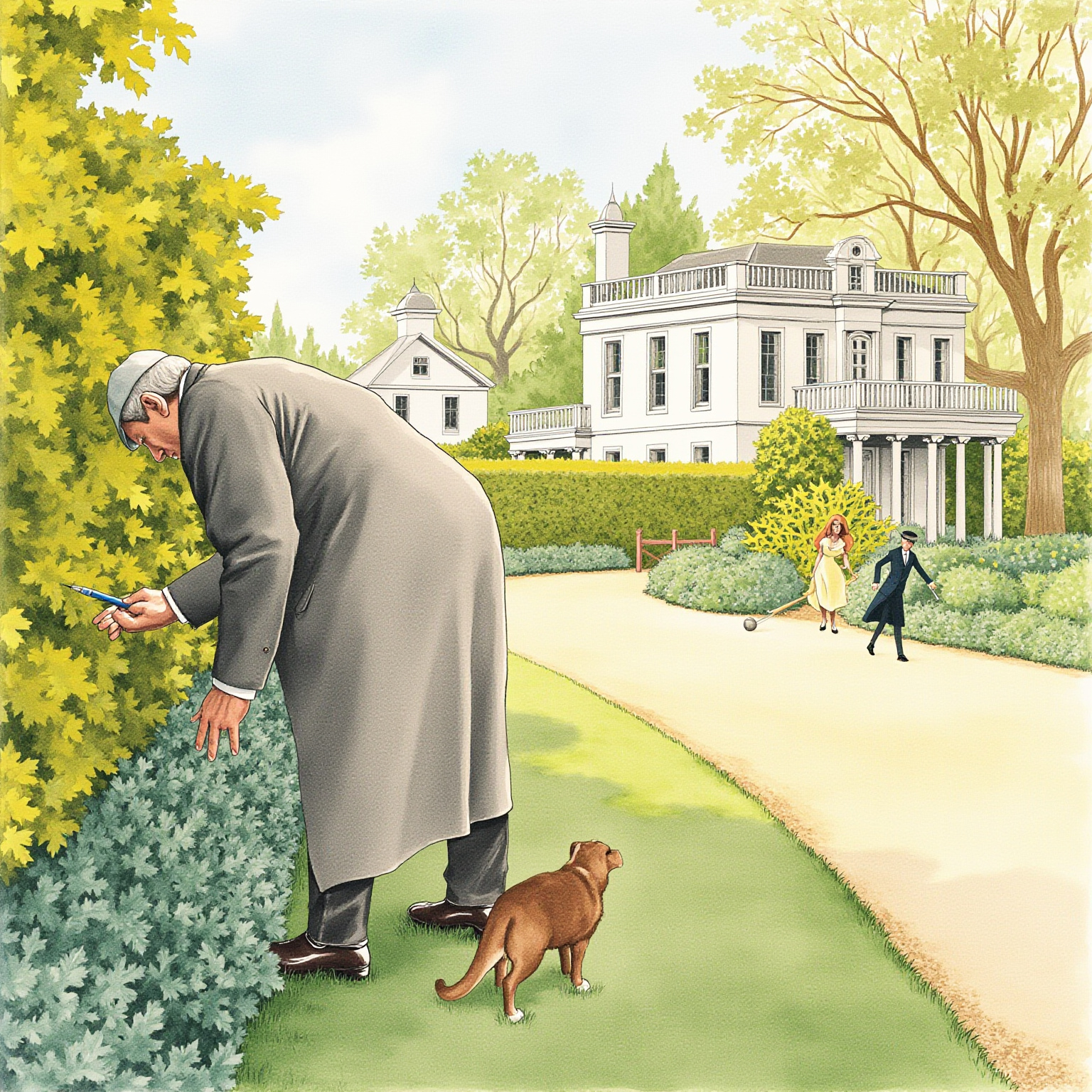
The woman he falls for is Mabel Manderson, the victim's young wife and the prime suspect from the moment the body is found. She stands quiet in the garden sunlight, like a portrait not yet finished. Mabel's uncle, Mr. Cupples, is a retired philosophy professor — thin, slow-spoken, the kind of man who looks like he'd only ever trip over his own bookshelves. And there's one more man Trent's eye keeps returning to: John Marlowe, Manderson's private secretary, young and proper, who seems to carry some feeling for his employer's wife that he hasn't even admitted to himself — or so Trent comes to believe.
The scene: a puzzle laid out too neatly
Inspector Murch of Scotland Yard is the one actually running the case; Trent is the reporter there to write it up. The two of them stay polite on the surface while racing each other for clues underneath. The oddities at the scene sit there like a cold buffet someone has laid out on purpose — the position of the garden ladder, the coat on the body that isn't the dead man's own, the missing false teeth — each one seeming to point somewhere. Bentley writes this section well: he has Trent take in these details one at a time, the way a child sorts puzzle pieces by color before trying to fit them together. The reader is already being led along and doesn't yet know it.
Falling for the suspect: a wrong turn that shouldn't happen
Bentley handles the moment Trent falls for Mabel very lightly — no blushing, no confession, just this man noticing that he's begun keeping track of the pauses in how she talks. And that's exactly the trouble: she's the leading suspect, and he's supposed to be the detective keeping a cool head. From that moment on, reason and feeling wrestle inside the same skull, and feeling is going to win sooner or later. It only needs an excuse.
He hadn't a suspicion of what I felt, and I never let him know; I couldn't, it wouldn't have been fair.
他从不知道我的心思,我也永远不会让他知道——我不能,那不公平。
原文金句 · 无声告白
The perfect solution: a picture drawn too beautifully
He then shuts himself in his room and spends days and nights piecing the small details together. The picture he assembles goes like this: the secretary, Marlowe, shoots Manderson, then swaps coats with the dead man to make it look as though Manderson is still alive and about the house, before driving straight to Southampton to catch a train that would clear him. The chain of evidence fits together like clockwork, right down to a tidy motive for Marlowe — he too, it turns out, nurses that unworthy feeling for Mabel. Every screw is tightened, every thread interlocks.
What's clever is that Bentley has the reader nodding right along with Trent — the reasoning reads so smoothly that you forget to ask whether this is actually what happened. This is exactly the point where the book reshaped the whole Golden Age that followed: however beautifully a piece of reasoning is written, it's still just a story the detective is telling himself, not necessarily what happened in that garden.
Silenced by love: the detective's first dereliction
Trent holds this "perfect solution" in his hands and hands it over to neither Inspector Murch nor the paper. He tells himself it's to protect Mabel — once the secretary is named the murderer, the ugly suggestion of something between her and Marlowe will splash onto her too. A man whose job is to lay the truth on the table hides the knife behind his back instead. I stalled a little myself the first time I read this section: he isn't unaware that he's lying. He just believes this particular lie has a reason.
The case is left hanging there, like a cup of tea gone cold. On the surface, Trent looks like a decent man tangled up by love. Underneath, a detective lets another man go on living under the shadow of a murder charge, just so a woman can be spared some embarrassment. Reason trips over feeling here, and the fall is a spectacular one.
I have done with the Manderson mystery, and I wish to God I had never touched it.
曼德森案我已彻底放弃,真希望我从未碰过它。
原文金句 · 放弃之辞
The truth: a shot that went off on the golf course
Months later, Mabel's uncle, Mr. Cupples, walks in leaning on his cane and says something nobody expected: that night, he had come upon Manderson by the edge of the golf course with the gun pointed at his own head — a thin man sighing the way a philosophy professor might, about to pull the trigger on himself. Cupples lunged for the gun. The two of them grappled, the gun went off, and the bullet went straight through Manderson's face. That was all. A gesture meant to stop death ended up doing death's work instead.
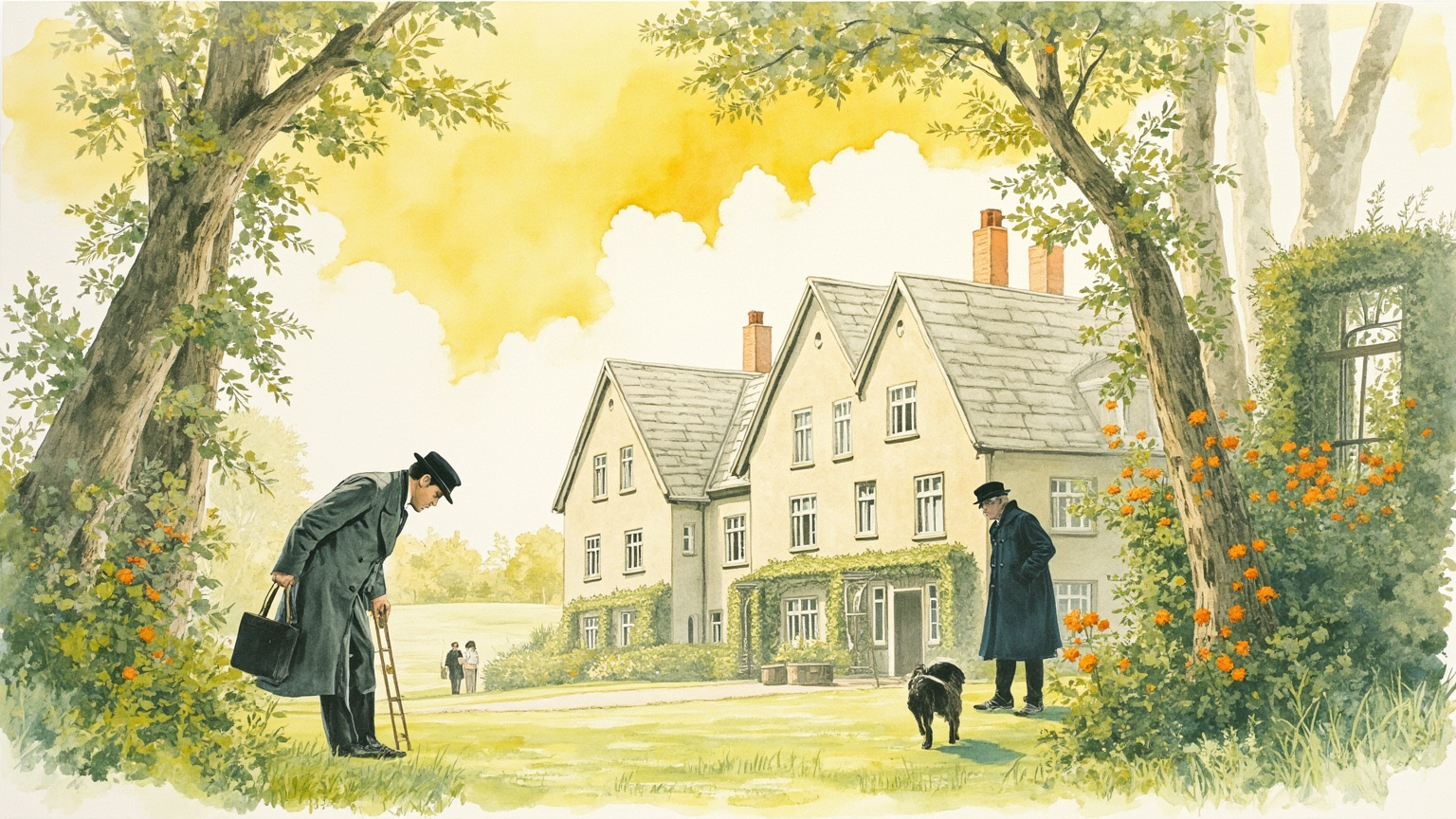
The neatly arranged oddities in the garden were never a murderer's staging — they were traces left behind by a man in his own panic before he died: the wrong coat, thrown on in the scuffle; the false teeth, knocked loose; the ladder, which he had meant to climb, then abandoned, then knocked over. The whole elaborately staged "murder" was really just one man failing to stop another man's suicide.
I always felt uneasy at keeping it from him as I did, because I had led him to expect I should tell him all I discovered, and my silence looked like mystery-making.
我一直为瞒着他感到不安,因为我曾让他以为我会将发现的一切告诉他,而我的沉默像是故弄玄虚。
原文金句 · 真相之忏
Laying down the pen: the last case, not the proudest one
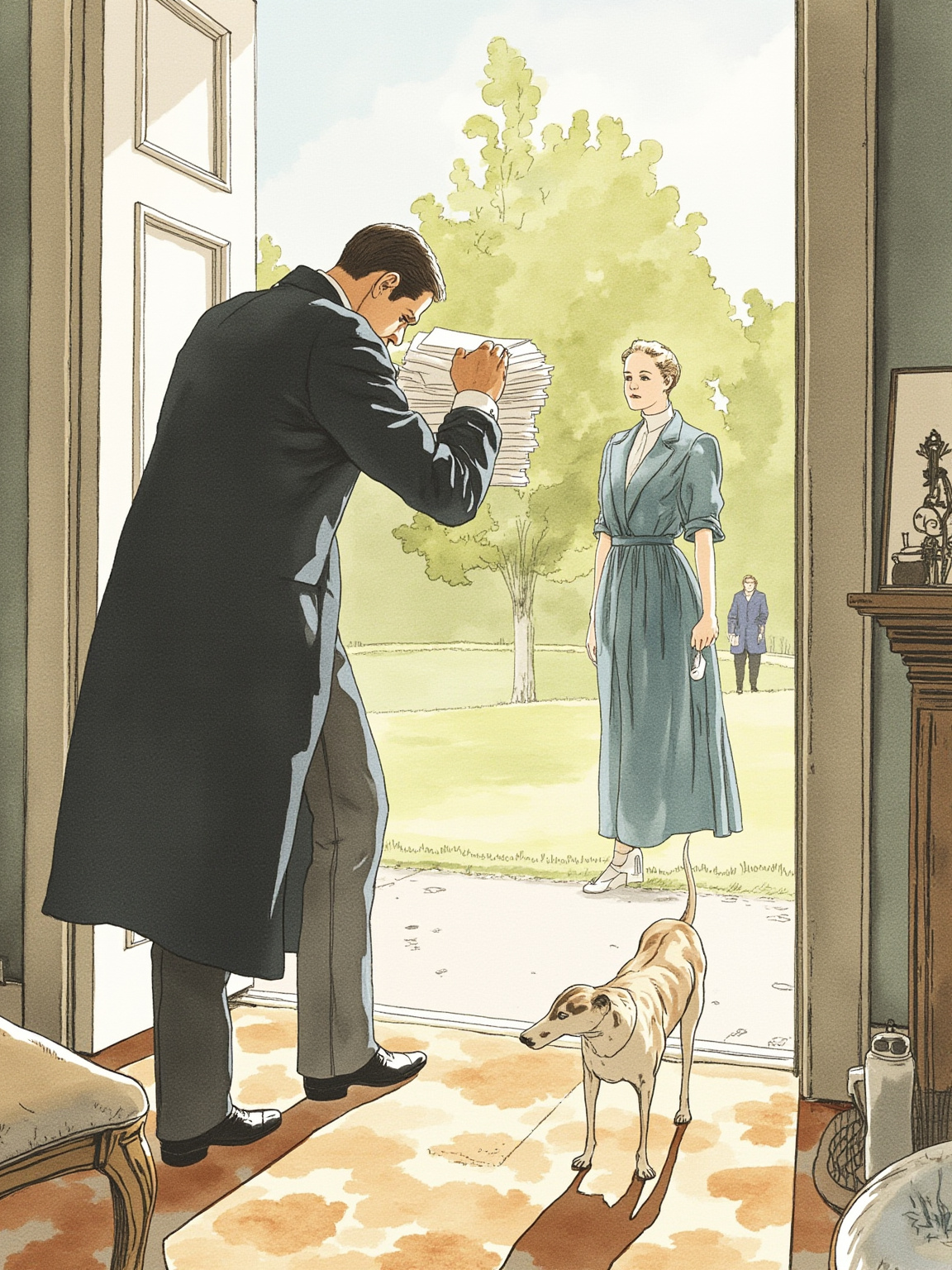
Trent throws the pages of reasoning he spent several sleepless nights on into the fireplace and announces he is done with murder cases for good. That is where the "last" in the title comes from — not his most brilliant solve, but the one where he was most clearly, cleanly wrong. His chain of logic was almost entirely right: the details at the scene, the swapped coats, the gap in the timeline, every gear meshing with the next — except for the one gear that mattered most. He got the wrong man on the trigger.
The bravest thing a detective novel can do isn't invent a clever murderer. It's making the clever detective admit, in front of the reader, that he was wrong.
Why it matters: teaching the genre to doubt itself
Before Trent's Last Case, the detective in a detective novel was a man who couldn't be wrong, and the reader's job was to nod along. After Bentley, the genre carried a hidden proposition: don't trust the person who tells the story best. That sounds like a small thing, but it skinned the whole genre and rebuilt it. Sayers, Christie, and the rest of that Golden Age generation all built on this foundation. You might not get on with early-twentieth-century prose, but you can read Christie, and what Christie stands on is exactly the stumble Trent took.
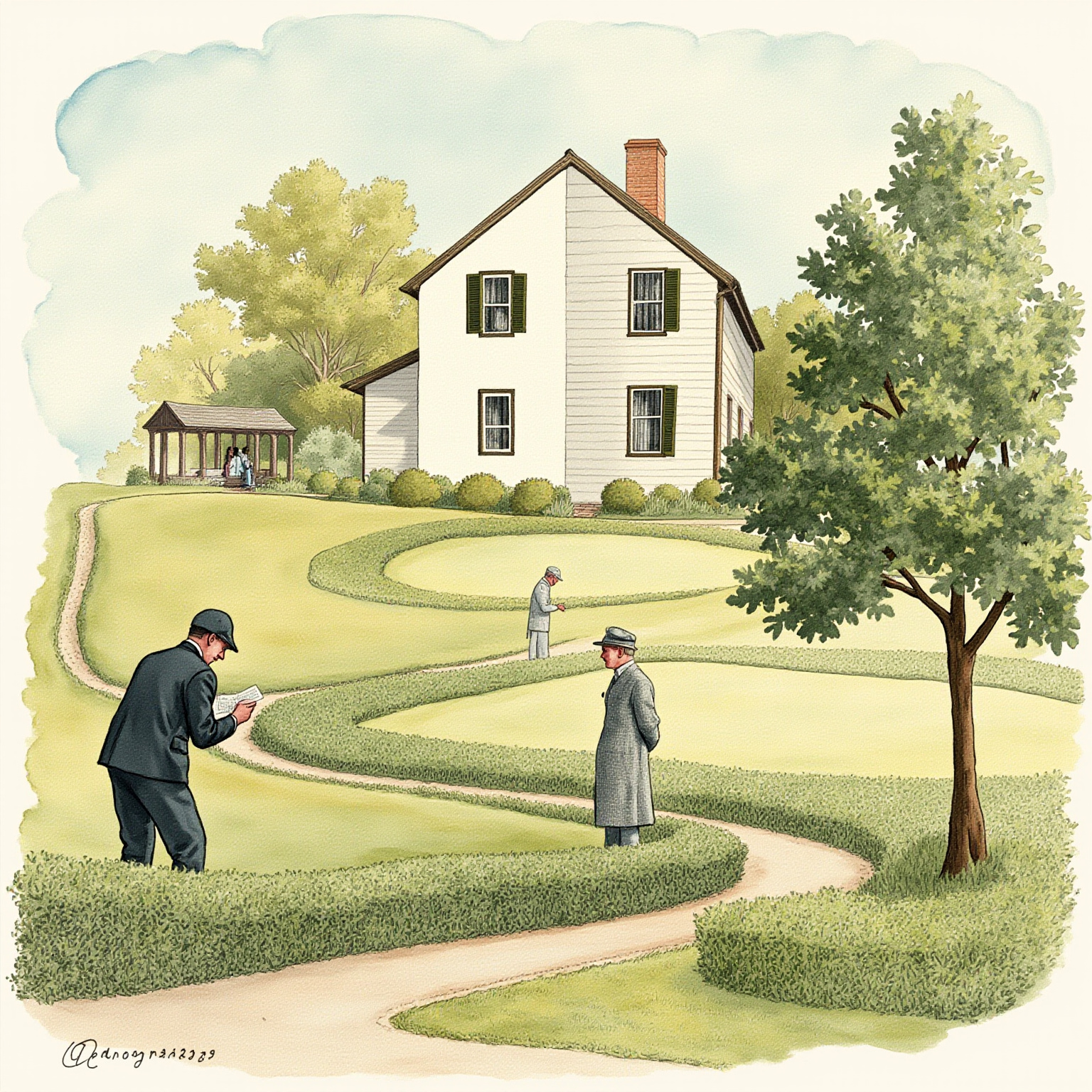
More interesting still is its tone. The murder happens on a sunlit country estate, and Bentley writes it in a brisk, faintly ironic English humor — none of the gothic gloom, no thunderstorm, no crows, no shadow behind the curtain. That bright, ironic register later became the default temperature of the whole Golden Age. Reading it doesn't feel heavy; it has a strange lightness instead, like sipping Earl Grey while watching someone turn a bloody killing into a misunderstanding.
Read the book itself: what a map can't give you
By this point the essay has told you everything it can: there is no murderer, the truth is an accidental shot, and Trent falls in love with the suspect. But a few things can only be reached by opening the book itself — Bentley's tone of writing reasoning while quietly poking fun at it, which even a translation struggles to carry whole; the small, awkward moment of Trent catching himself tracking a woman's pauses in speech, which only works through the kind of understatement English leaves unsaid; and, most of all, the odd feeling you are left with when you close the book, of feeling more for this "failed" detective than for most "successful" ones. None of that belongs to the plot. It belongs to the prose itself. Go read it.
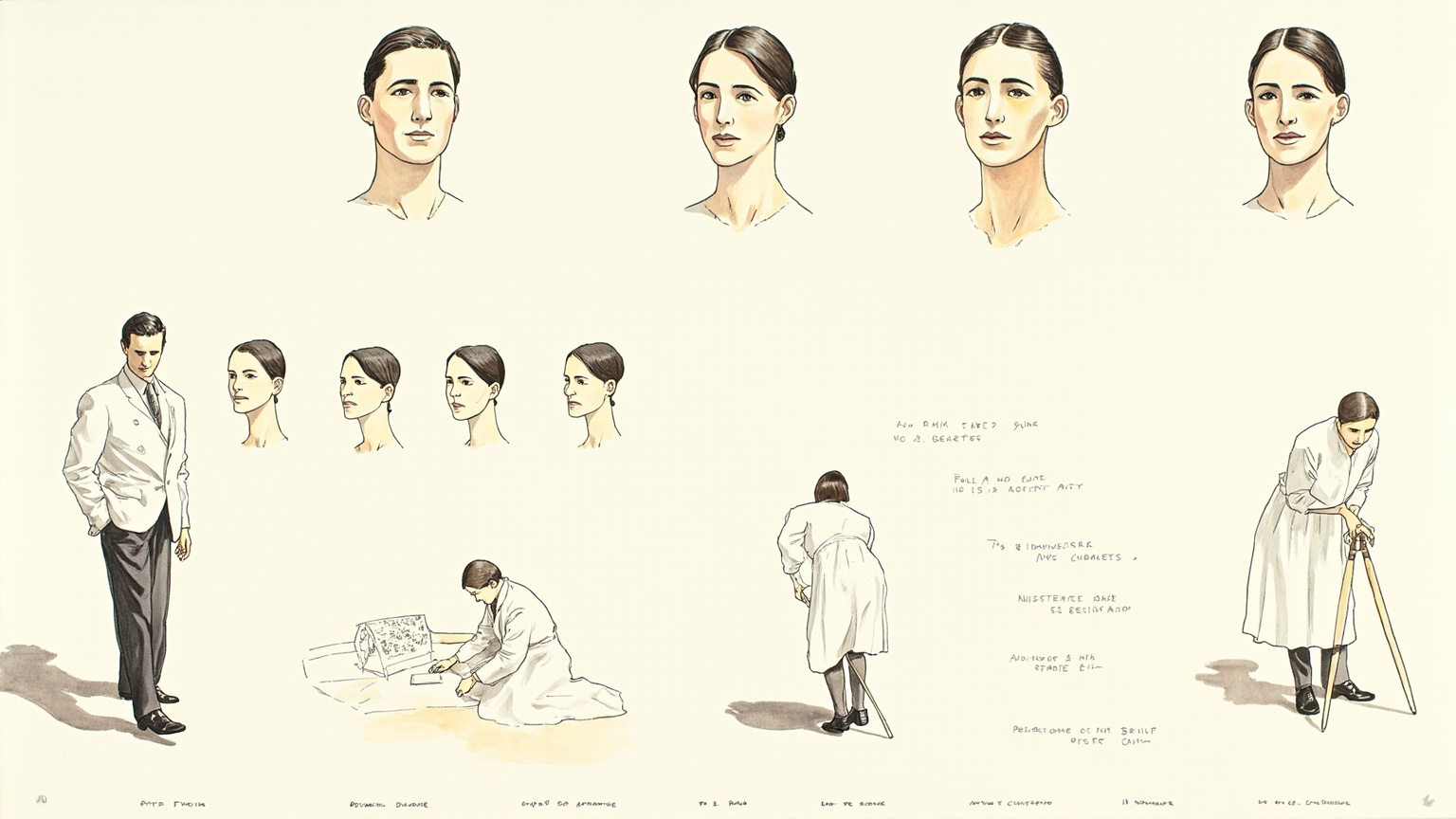
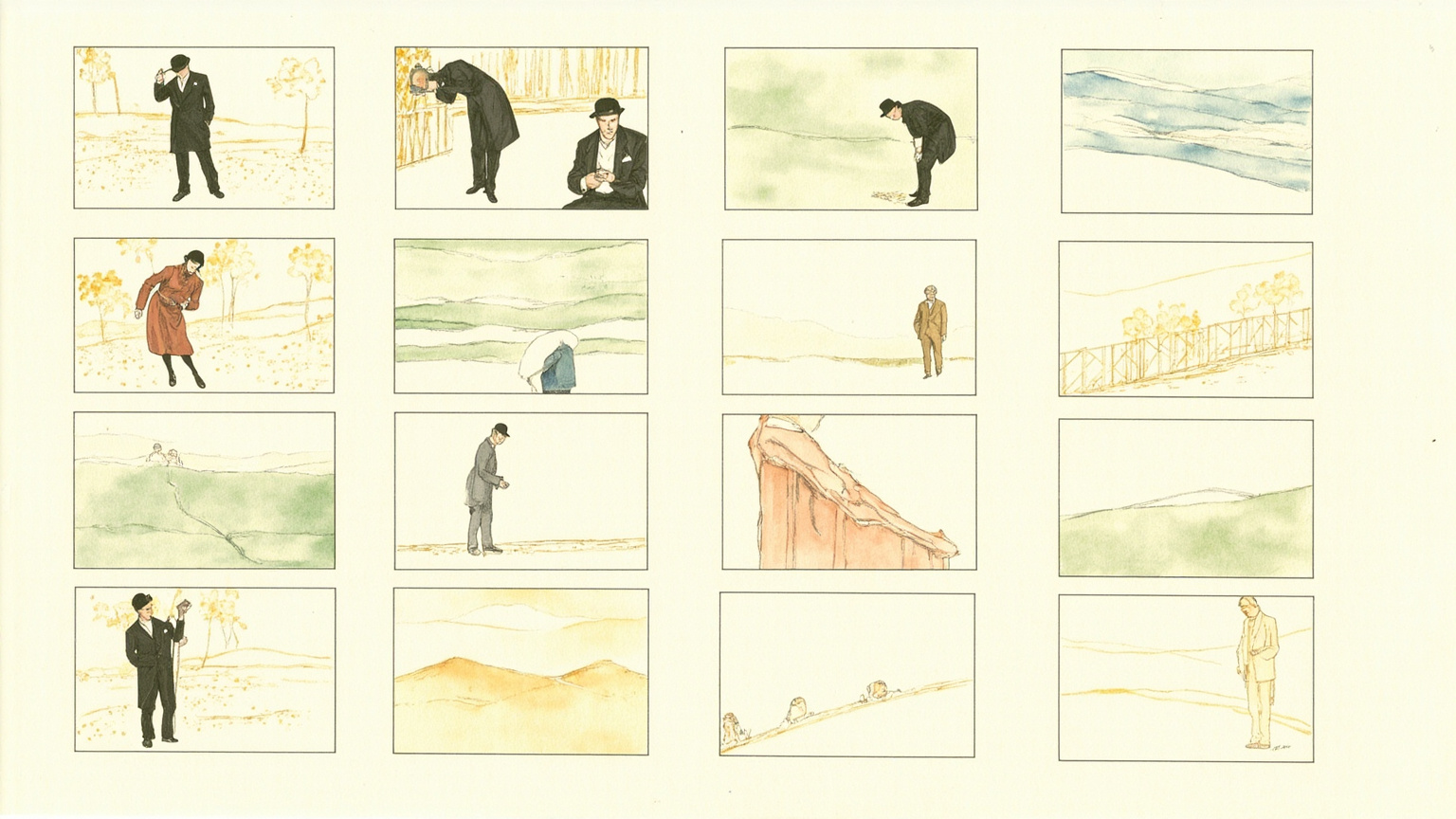
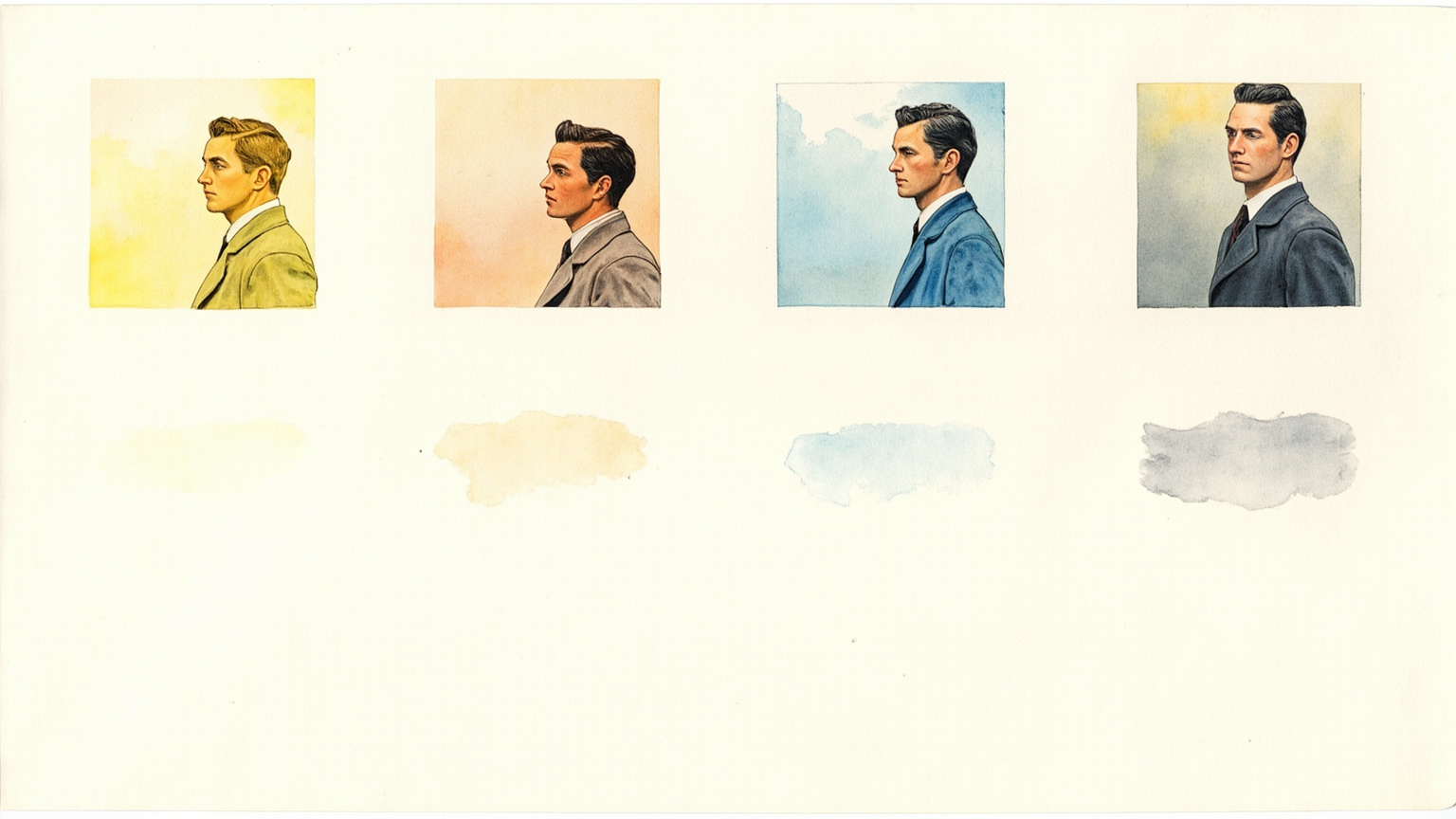
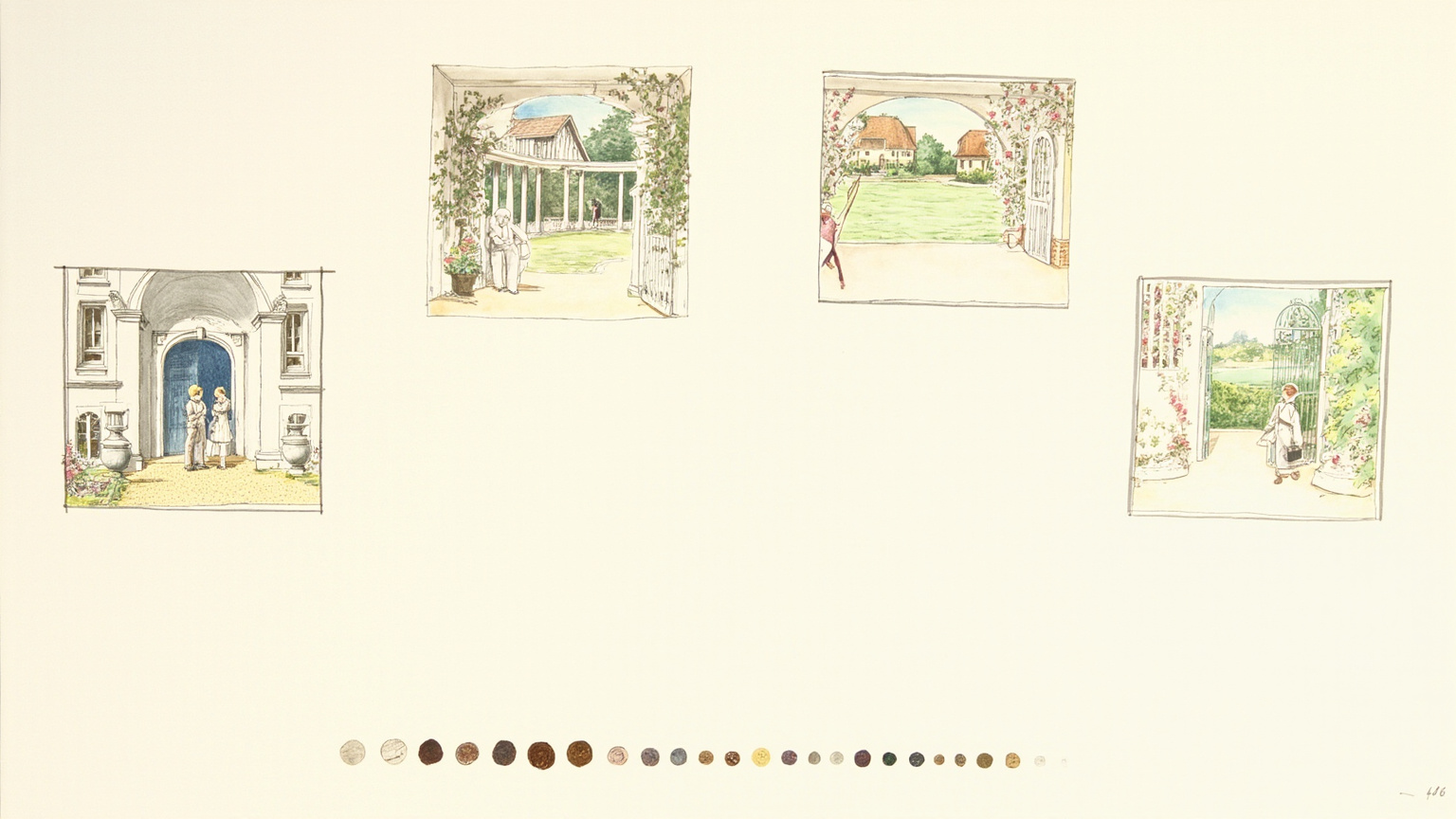
Art Direction4 plates
Before the guide was written, this book got a visual foundation — every illustration you just read grew out of it.