Love Songs of the Sixth Dalai Lama / Tshangs-dbyangs-rgya-mtsho · Companion Guide
仓央嘉措诗集
白日布达拉的金顶与雪夜宕桑的脚印,同一颗心在佛与情人之间来回——世间安得双全法,不负如来不负卿。
One. A Night of Snow, Footprints at Dawn
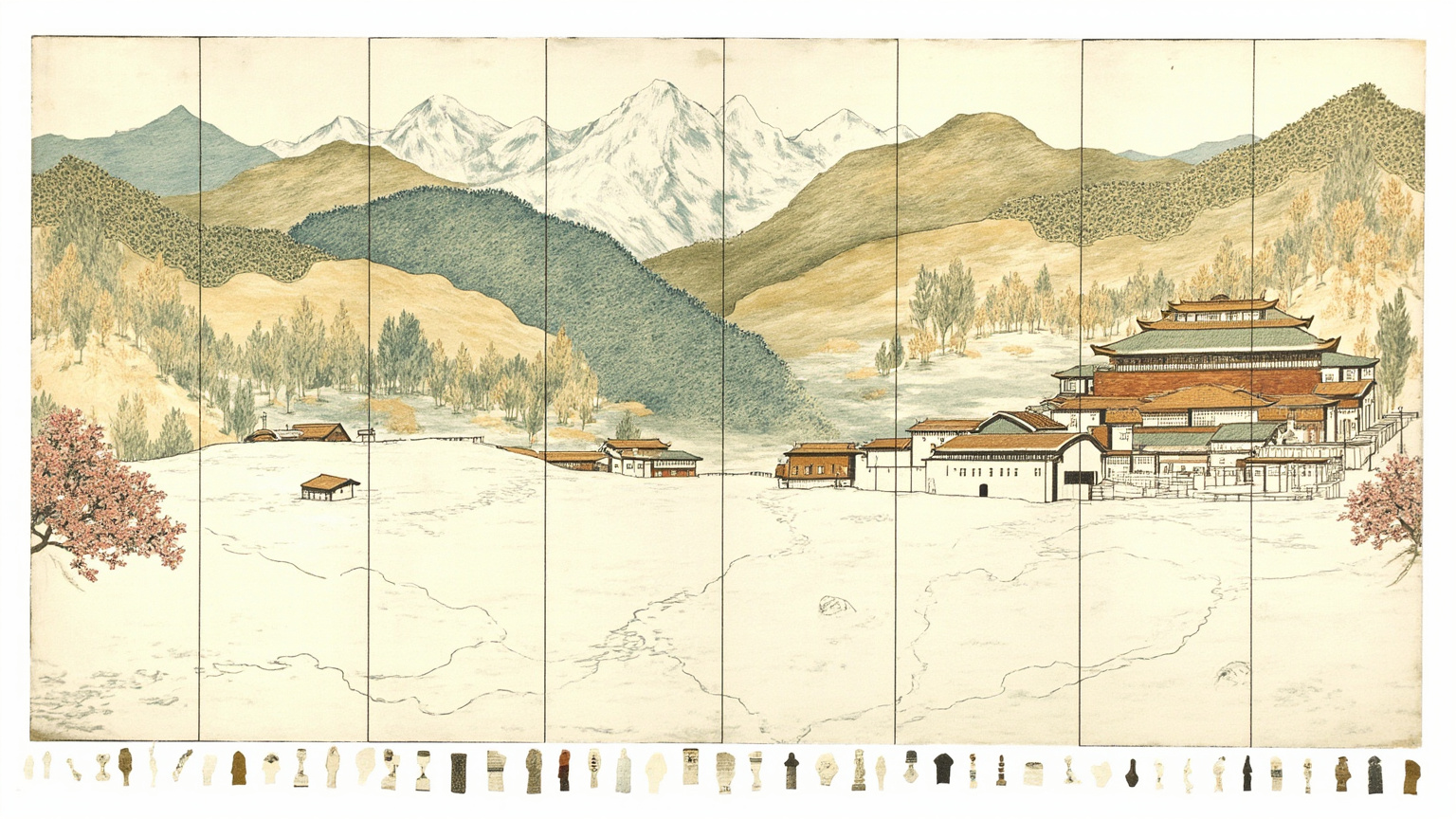
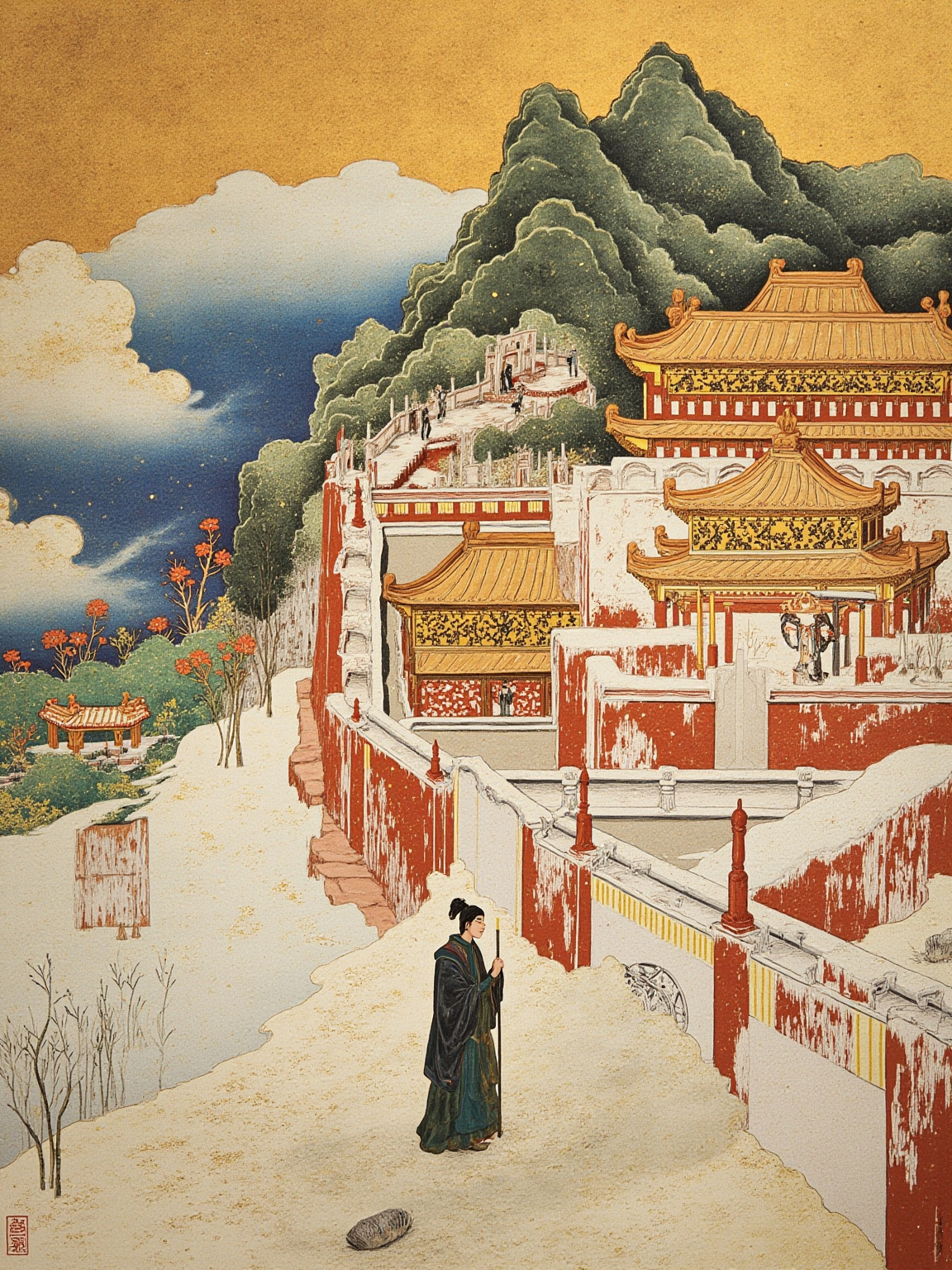
Snow fell on Lhasa all night. Before daybreak, a set of fresh footprints crossed the path below the Potala Palace, over the palace wall, down toward Barkhor Street, and back again by the same route. The gatekeeper followed the tracks south across the city to the courtyard door of an ordinary house, and knocked. It is the single most dramatic frame in the whole collection: footprints in snow give the secret away, and all that remains in the poem is a shut courtyard gate, a blank stretch of snow, and a plea to a shaggy old dog — don't tell them I went out in the night, don't tell them I came back only at dawn.
A man locked inside a palace slips out at night under a false name, walks through the snow to find his lover, and hurries back before dawn to become that other name again. No introduction works better than this image. It pins a person between two impossible demands: pursue the dharma and this life's bond is cut; see her and the Buddha is betrayed. The man who wrote that impossible choice was a boy who had grown up in Mon, in southern Tibet, in the last years of the seventeenth century. His name was Tsangyang Gyatso.
Two. What Kind of Book Is This
In China, the collection is usually published as The Love Songs of Tsangyang Gyatso, but the Tibetan original uses a different word — songs of realization, verses. Yu Daoquan was the first to gather and translate these poems out of Tibetan, in the early 1930s, in a Tibetan-Chinese-English parallel edition, and that is how they entered modern Chinese translation at all. Later versions followed: Liu Xiwu's rendering in five-character lines, Zeng Jian's in seven-character lines, editions by Wang Yinuan and Zhuang Jing. The Tibetan original is written in the folk-song meter of four lines, six syllables each, three beats to a line: short, forceful, easy on the tongue, made to be spoken or sung.
Why has it lasted? Because it distills an old, recurring problem, the pull between love and the spiritual path, into the cleanest couplet imaginable: fearing too much love would ruin my discipline, fearing the mountains would cost me her beauty, is there a way in this world to have both, to fail neither the Buddha nor her? Almost every Chinese reader can recite that couplet by heart; it is the most direct door into the whole tradition of Tibetan lyric verse. But the collection holds far more than this one poem — more than sixty folk verses, where the rhododendrons of Mon, the snowy nights of Lhasa, the golden roofs of the Potala, and the taverns of Barkhor Street all weave into a single web of images.
Three. The Man and His World: Two Names, One Heart
The speaker of every poem is one man wearing two names. By day, living in the Potala, he was Rigzin Tsangyang Gyatso, the knowledge-holder; by night he went down into Lhasa as Dangzang Wangpo, one more face in the street. It is the most riveting self-division in Tibetan literature: by day, the greatest king of the Land of Snow; by night, the most beautiful lover in it. Every Chinese poem and song that has looked back on him since traces to this single split identity.
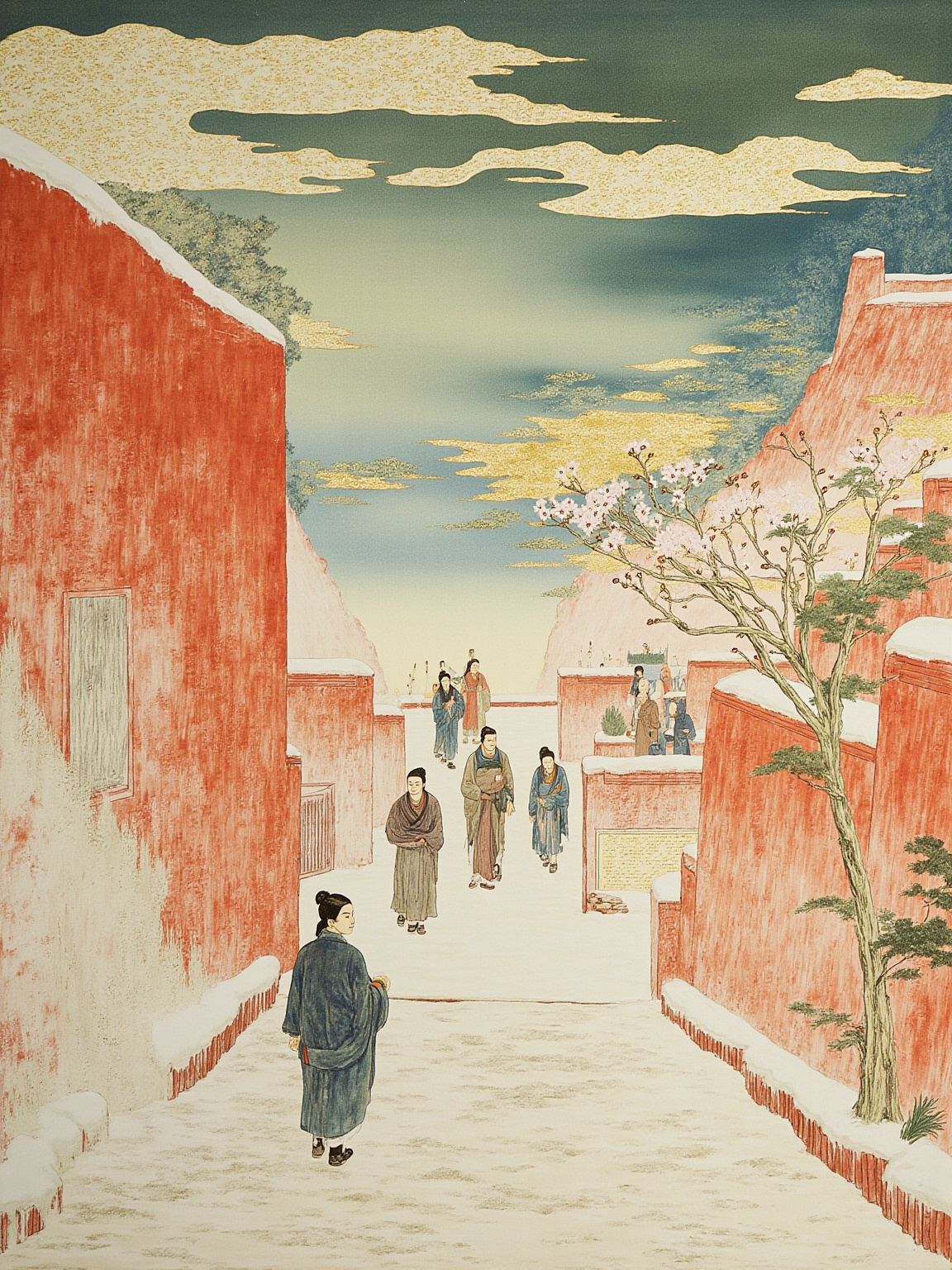
By Potala's white wall I am the vīra Tsangyang; by Lhasa below I am the rover Taksang Wangpo—two names, one single heart.
住在布达拉宫时,叫持明仓央嘉措;住在山下拉萨时,叫浪子宕桑旺波。
金句 · 第三章 · 两个名字,一颗心
The woman in these poems is called Makye Ame. But Makye Ame is not the name of any one woman — it is a title with spiritual weight, meaning something close to the unborn mother, the mother who was never born. She shifts as the poems go on: sometimes a lover from his village in Mon, sometimes a woman he passes in the streets of Lhasa, sometimes the very thing the dharma stands against. It is this refusal to settle into one face that lets the poet write that couplet of two impossible demands. She is a retreating back, a profile, a bronze mirror in someone's house, a hand on a doorframe, never pinned down to any one real woman.
Four. The Barley Fields and Rhododendrons of Mon
The collection opens by taking the reader back to Mon, in southern Tibet: farming country around Urgyeling and Yusong, barley fields, rhododendron thickets, forest paths, snow-capped ridges. The poet looks back at his own boyhood in the first person, a child of a Nyingma family, the Red Hat school, and the four-line, six-syllable meter starts up right there in the hills. This is the emotional homeland of the whole collection: a lover at his side through the working day, labor in the barley fields, meetings among the rhododendrons. That village life, before he ever entered the Potala, is where every later poem of love against the dharma begins.
The countryside of Mon is written with a light hand — the rhododendron comes from the land of Mon, carrying the breath of spring — one line and the whole hillside lights up. That lightness is exactly what makes this folk-song meter so effective: four lines, six syllables, three beats, a clear rhythm with real rise and fall, no piling on of words, no ornament. The image stands on its own.
Five. One Heart by Day, the Same by Night
The collection moves from the boy in Mon to the golden roofs of the Potala, and one poem states the split outright: living in the Potala, I am Rigzin Tsangyang Gyatso; living below in Lhasa, I am the drifter Dangzang Wangpo. By day the greatest king of the Land of Snow, by night, under a different name, the most beautiful lover in it — one self, switching back and forth between the golden roof and the back streets.
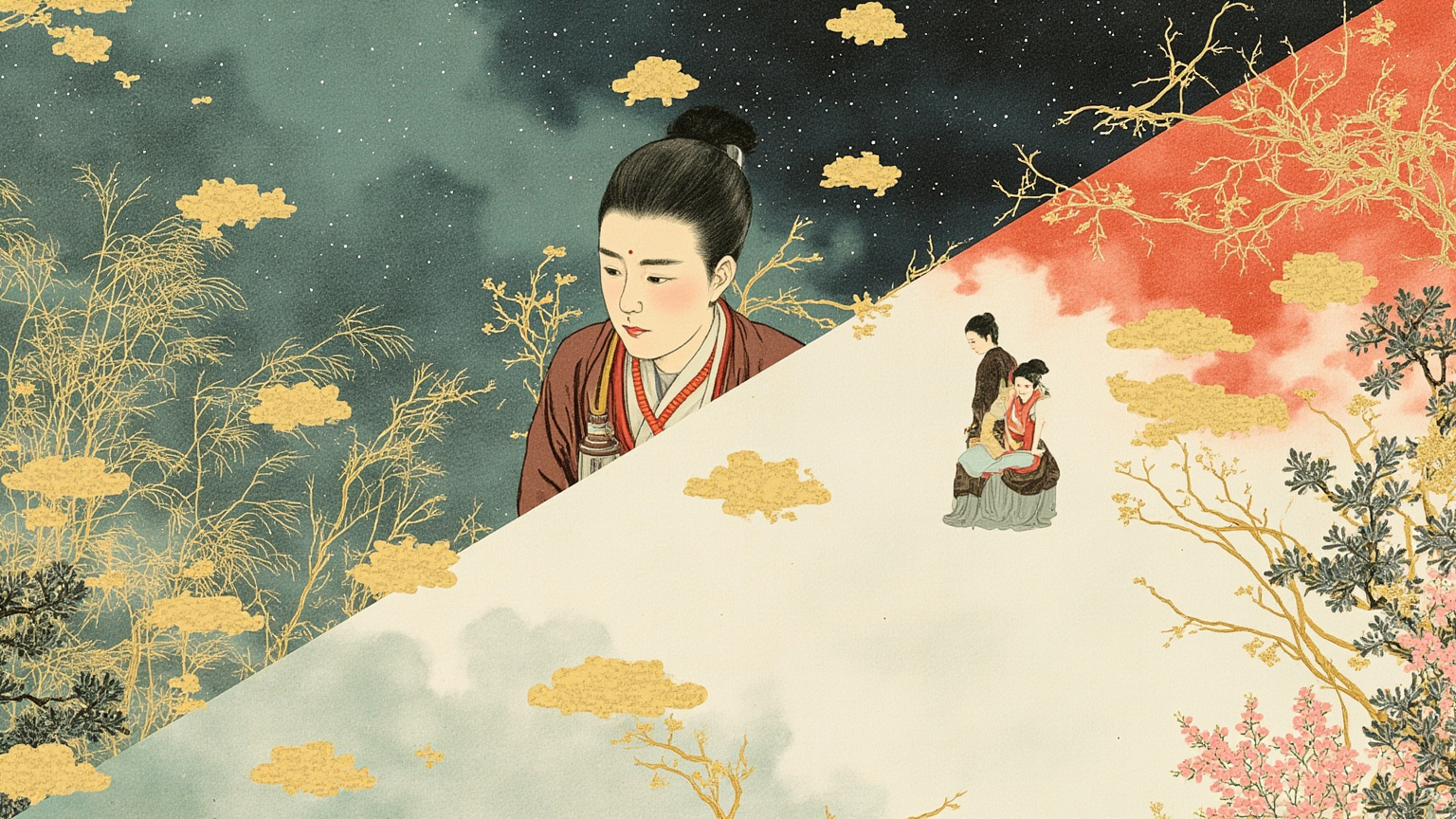
Do not say I stole out in the night; do not say I only came home at the breaking of dawn.
别说我夜里出去,别说我破晓才回。
金句 · 第六章 · 雪地上的脚印
How does a man come to give himself two names? One for the Buddha to see, one for his lover. This is not disguise — it is division, and division the poet admits to openly. Every later romantic legend about his wandering and his discipline traces back to this one confession of a double name.
Six. Footprints in the Snow
The collection's most dramatic scene sits inside a small group of poems about slipping out at night — the snow that fell, the footprints he left coming home at dawn. The gatekeeper follows the tracks straight to the house where he had met his lover. The secret is out from that point on, and all the poem leaves us is a shut courtyard gate, a blank field of snow, and a plea to a shaggy old dog. Not one word of panic appears anywhere in these poems; they speak after the fact, almost offhand: don't tell them I went out in the night, don't tell them I came back only at dawn. The understatement is what makes it land.
The poet never reaches for an adjective to describe the shame of being caught, only the snow, the footprints, the courtyard gate, the word to the dog. The reader has to supply the shame. This is the folk-song method at its sharpest: it never states the feeling directly. It shows one concrete thing catching the light, and lets the image do the rest of the work.
Seven. The Impossible Choice Between Love and the Path
Partway through the collection comes the cleanest couplet of all: fearing too much love would ruin my discipline, fearing the mountains would cost me her beauty, is there a way in this world to have both, to fail neither the Buddha nor her? Take up the dharma and this life's bond with her is severed; go into the mountains and her love goes unanswered. The mountain of the dharma and the walled city of the beloved stand side by side, not as a choice to be made, but as the impasse itself becoming a poem.
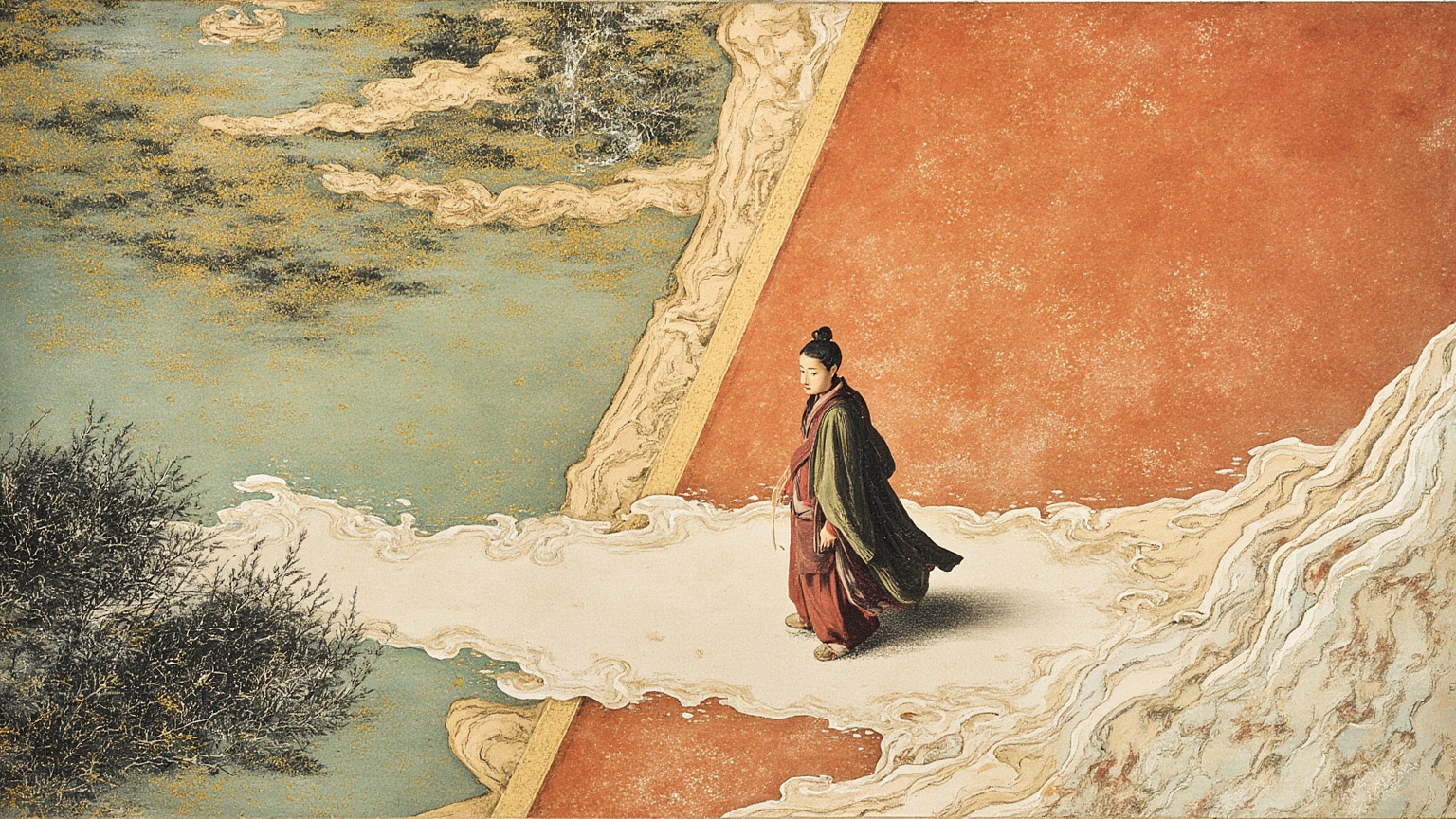
I feared that too much feeling would damage the holy life; I feared that the mountain would part me from her. Where in this world is the law that keeps both vows—unfalse to the Tathāgata, unfalse to you?
曾虑多情损梵行,入山又恐别倾城。世间安得双全法,不负如来不负卿。
金句 · 第七章 · 情与道的两难
That couplet comes from Zeng Jian's seven-character translation, made in the late 1930s. The Tibetan original reads closer to: follow her wishes, and this life's bond with the dharma is cut; wander off into the empty mountains, and her wishes go against. Zeng forged it into the tightest couplet Chinese has for it, and ever since, the phrase love against the path has had its cleanest possible expression in Chinese.
Eight. Writing Love in the Form of a Buddhist Verse, Writing the Path in the Form of a Love Poem
The second half of the collection turns repeatedly to poems that seek the path: asking a lama of real attainment for a clear way forward, because his resolve keeps failing and he keeps stumbling back to his beloved; trying to hold the lama's face in meditation and finding it will not appear, while her face, unbidden, comes through with perfect clarity. Love written in the form of a Buddhist verse, the path written in the form of a love poem: this is the real reason the Tibetan original is named a song of realization, not a folk song of the hills.
Once Yu Daoquan translated the collection as love songs, that identity stuck for Chinese readers. But in the Tibetan tradition, these poems sit closer to songs of realization, not seeking an answer, but turning the impasse itself into verse. That is where the real power lies: the poems never declare a winner.
Nine. First Love, Longing, the Promise, and Grief: The Classic Range of Tibetan Feeling
Four small scenes recur through the collection. The shyness of first love: don't let our feelings show in front of the crowd. The joy of a meeting: the rhododendron comes from the land of Mon, carrying the breath of spring. The regret of hindsight, once longing has set in. And the promise of a next life: when you and I meet again reborn, I will be a young man straight and fine as a tree. Together these four scenes form the most classic range of feeling in Tibetan lyric verse, shyness, longing, promise, grief, and each is written in two or three lines, never a word wasted.
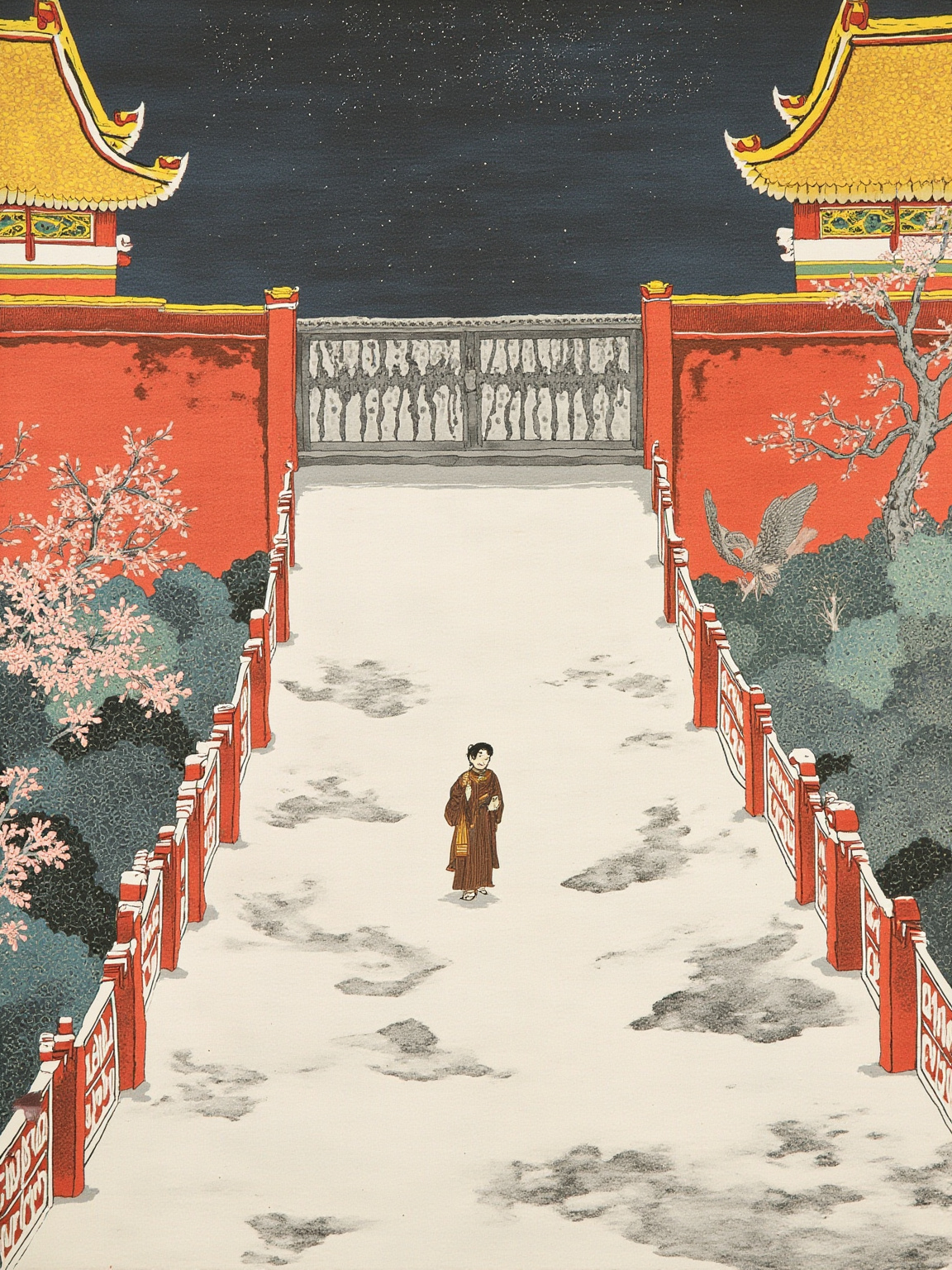
When I try to picture the lama's face it will not appear; when I do not wish for her, her face shines clear in my heart.
默想喇嘛脸儿时心中不能显现,不想爱人容颜时她却在心中清楚映见。
金句 · 第八章 · 佛偈与情诗之间
The most widely quoted stanza of regret — if we had never met, we would never have fallen into this love; if we had never come to know each other, we would never have had to bear this longing — is not so tightly paired in the Tibetan original. Later readers distilled it out of the poem's emotional core. It has traveled so far beyond its Tibetan context because that particular ache, the wish that it had never started, cuts through every language it passes through.
Ten. Mono no Aware, and Betraying Neither: Making the Search Itself Lyric
The poet never truly declares a winner between the love song and the song of realization. The final poems speak of binding every knot of the heart and exhausting every thread of fate: this life is short, but its feeling runs long, carrying a brief life on a current of feeling that does not end, and turning the search itself into another kind of lyric. This is the core spirit of the collection read as a book of spiritual searching: the impasse is never resolved, it is simply written into a poem.
Layer on layer, the shadows of the heart turn into her face, peerless among women: this line sets a fleeting illusion beside a face of unmatched beauty, and that is the deepest register of Tibetan pathos, welding a short life to a long feeling inside a single sentence. Reading this line is what finally made clear to me why the collection counts as a song of realization rather than a folk song of the hills. It is not asking whether love is real. It is asking how short life is, and whether it is worth it.
It never solves the impasse — it turns the impasse into a poem, and that is the real reason the Tibetan original is called a song of realization, not a folk song.
Eleven. What No Companion Guide Can Give You: The Breath of Tibetan Folk Verse
A guide gives you the map; the text itself is the ground — but this is a case worth spelling out. The Tibetan original of these sixty-odd poems is written in four lines of six syllables, three beats to a line, rising and falling, short and forceful, and even the most careful translation loses the one thing that matters most about it: it can be sung. Tibetans still sing these poems to their old melodies today, at a rhythm tighter, more syncopated, and closer to actual breath than any five- or seven-character Chinese line can carry.
Tie heart to heart and seal the bond: this life is short, yet the longing runs long.
结尽同心缔尽缘,此生虽短意缠绵。
金句 · 第十章 · 物哀与不违
There is one more thing a companion guide cannot give you: the sheer visual force of each poem. The opening piece starts among the rhododendrons of Mon: petals falling into the barley field, a boy and a girl walking through it side by side. The poem about shadows of the heart turning into her face, peerless among women layers one illusion directly on top of another in the Tibetan original, image over image, with no transition at all. The poem about the snow-night is more direct still — a blank white field, a single set of footprints, leading straight to her courtyard door. Anyone reading the Tibetan knows these images are telling the story by themselves, with no plot required, just a sequence of things caught in the light.
One last point. Poems such as That Day, That Month, Asking the Buddha, Seen or Unseen, and The Ten Precepts are often wrongly attributed to Tsangyang Gyatso, but they are the work of contemporary writers. The Believer, from He Xuntian and Dadawa's late-1990s album Yanzin Lhamo, is one of them. These poems are good, but they do not belong to this collection. Sorting out which lines are the original and which were written later under his name, before reading the actual text, is what lets you taste it for what it really is.
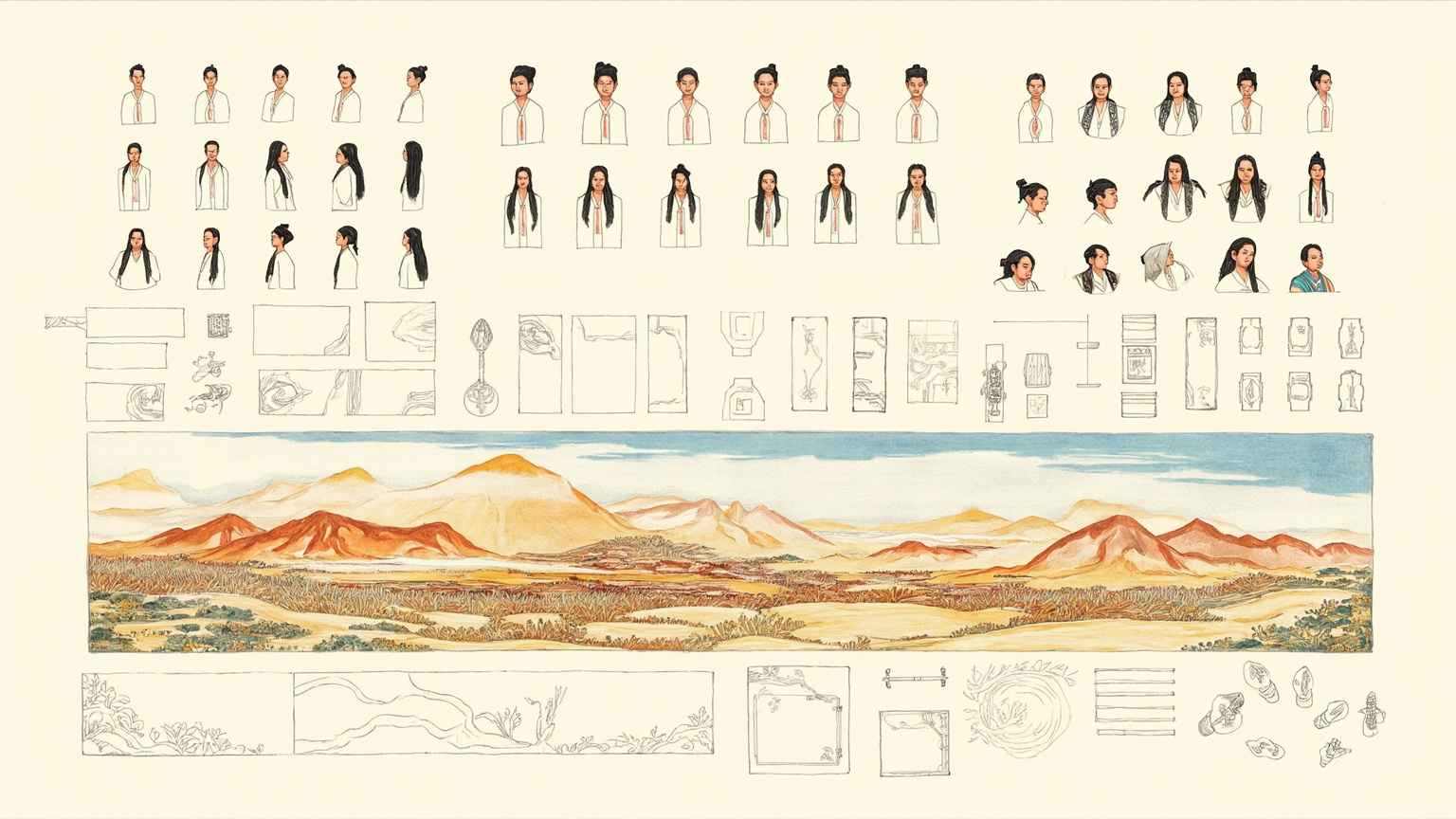
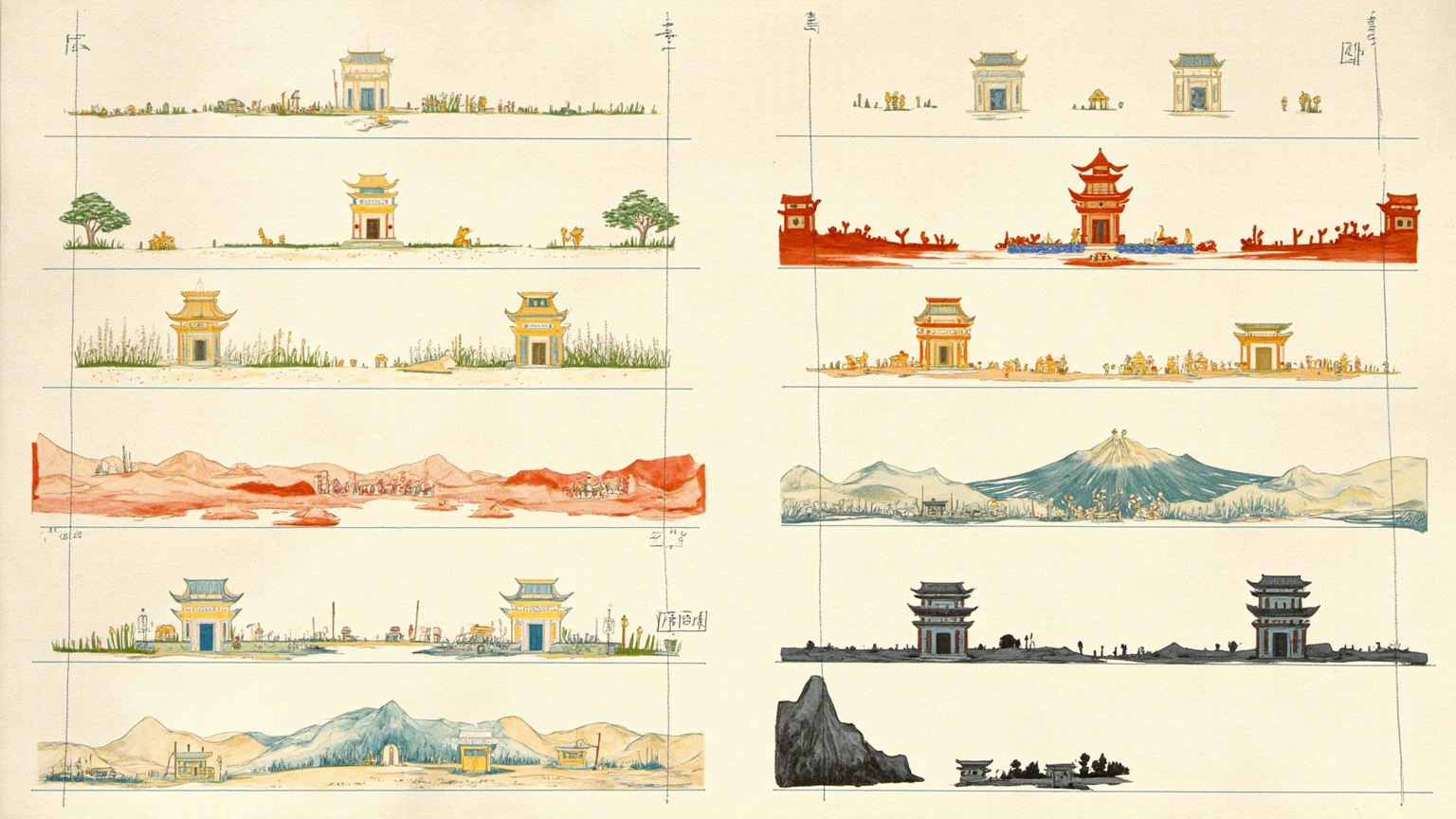
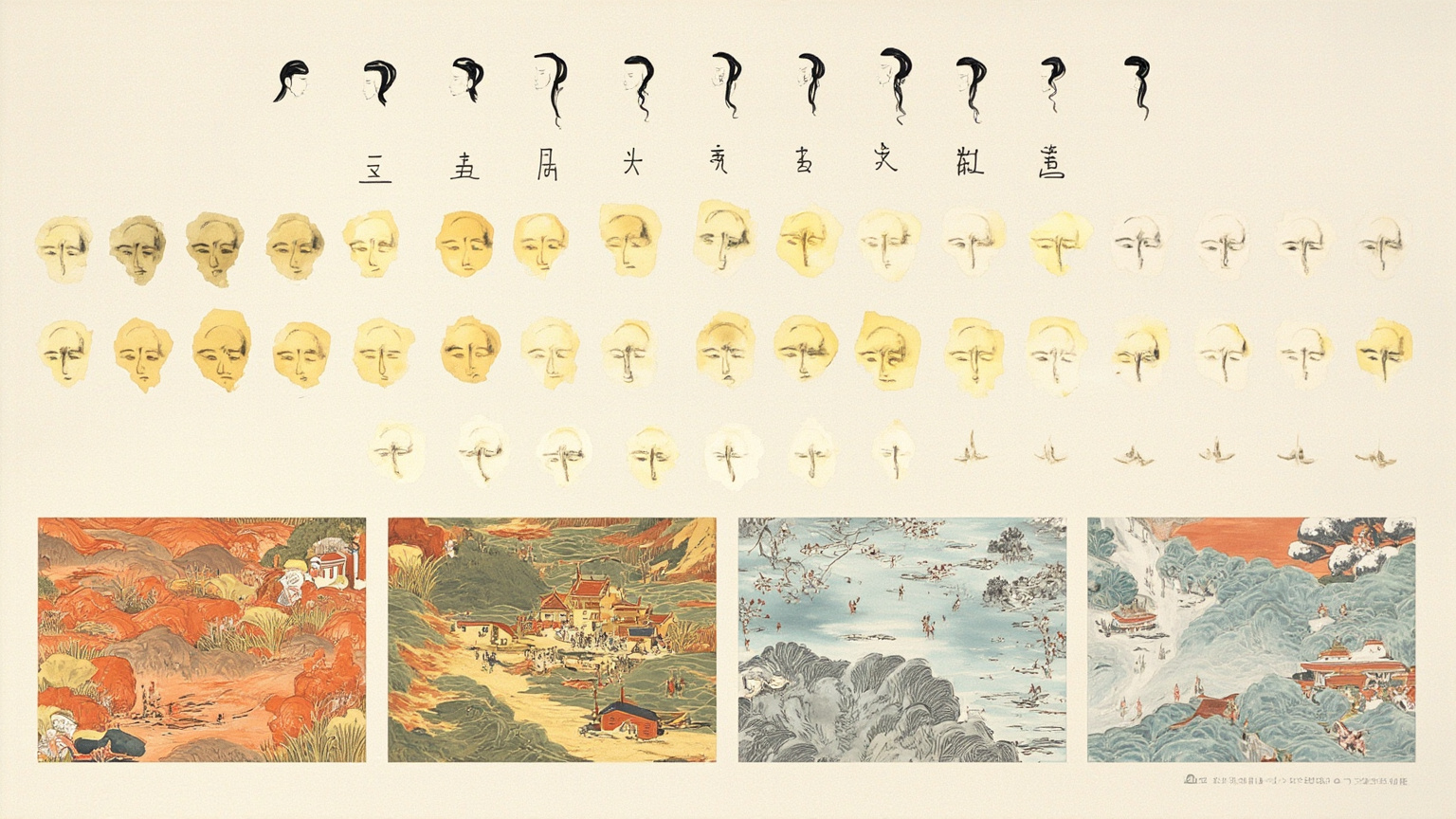
Art Direction4 plates
Before the guide was written, this book got a visual foundation — every illustration you just read grew out of it.