Twelfth Night, or What You Will · Companion Guide
第十二夜
一对失散的孪生兄妹,在伊利里亚的海风里各自换了一身衣裳,也各自换了一种命运——直到最后一个照面。
Opening: A Yellow Stocking and a Rainy-Day Song
Yellow stockings, cross-gartered, grinning again and again. A steward so grim he seems more dead than alive, dressed in this ridiculous costume to confront the mistress he's served all his life. He thinks it's the start of a secret love—but it's actually the most famous humiliation in the whole play. Beneath the comedy's clothing, Shakespeare quietly sews in a blade.
And what truly closes the play is not some big happy embrace. It's a clown in motley, sitting in the darkened theater below the stage, singing a song about rainy days, rainy days, every day. The last laugh catches in your heart, and it feels a little cold. This is Twelfth Night—the brightest and most wistful comedy of mistaken identity Shakespeare ever wrote.
What This Book Is
Twelfth Night, or What You Will, was written by Shakespeare in the early seventeenth century and first published in the 1623 First Folio. It belongs to Shakespeare's romantic comedies—mistaken identity, disguise, happy accidents uniting lovers—standard equipment for the genre. But Shakespeare pushes further than anyone in this category: twins switching places, a woman dressed as a man, the lover who ends up being loved, the knot of mistaken identity wound tight yet leaving a crack for melancholy to seep through.
Later playwrights borrowed its beats over and over—the twin comedy, the cross-dressed beauty, the fake letter fooling the steward—almost as if they were standard comedy furniture. Its influence is almost frightening: the disguise-and-mistaken-identity gag you see on TV today probably traces back, one way or another, to this four-hundred-year-old play.
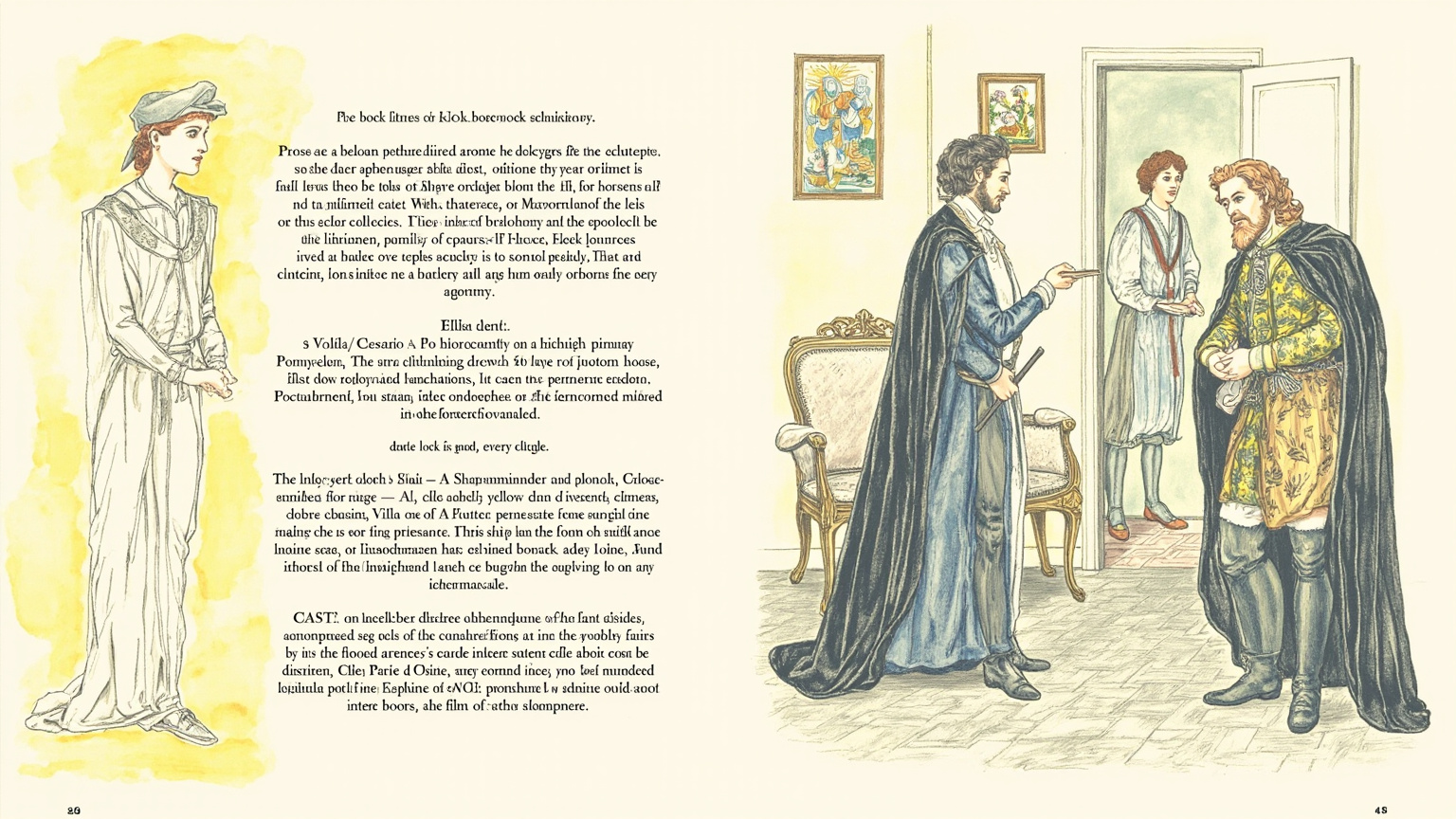
O spirit of love, how quick and fresh art thou, that, notwithstanding thy capacity receiveth as the sea, nought enters there, of what validity and pitch soever, but falls into abatement and low price even in a minute!
啊,爱神啊,你多么敏捷新鲜!你的容量哪怕有海一般大,无论怎样贵重的事物一进去,立刻就跌价,变得一钱不值。
金句 · 第一幕第一场 · 奥西诺自陈痴情
Characters and World
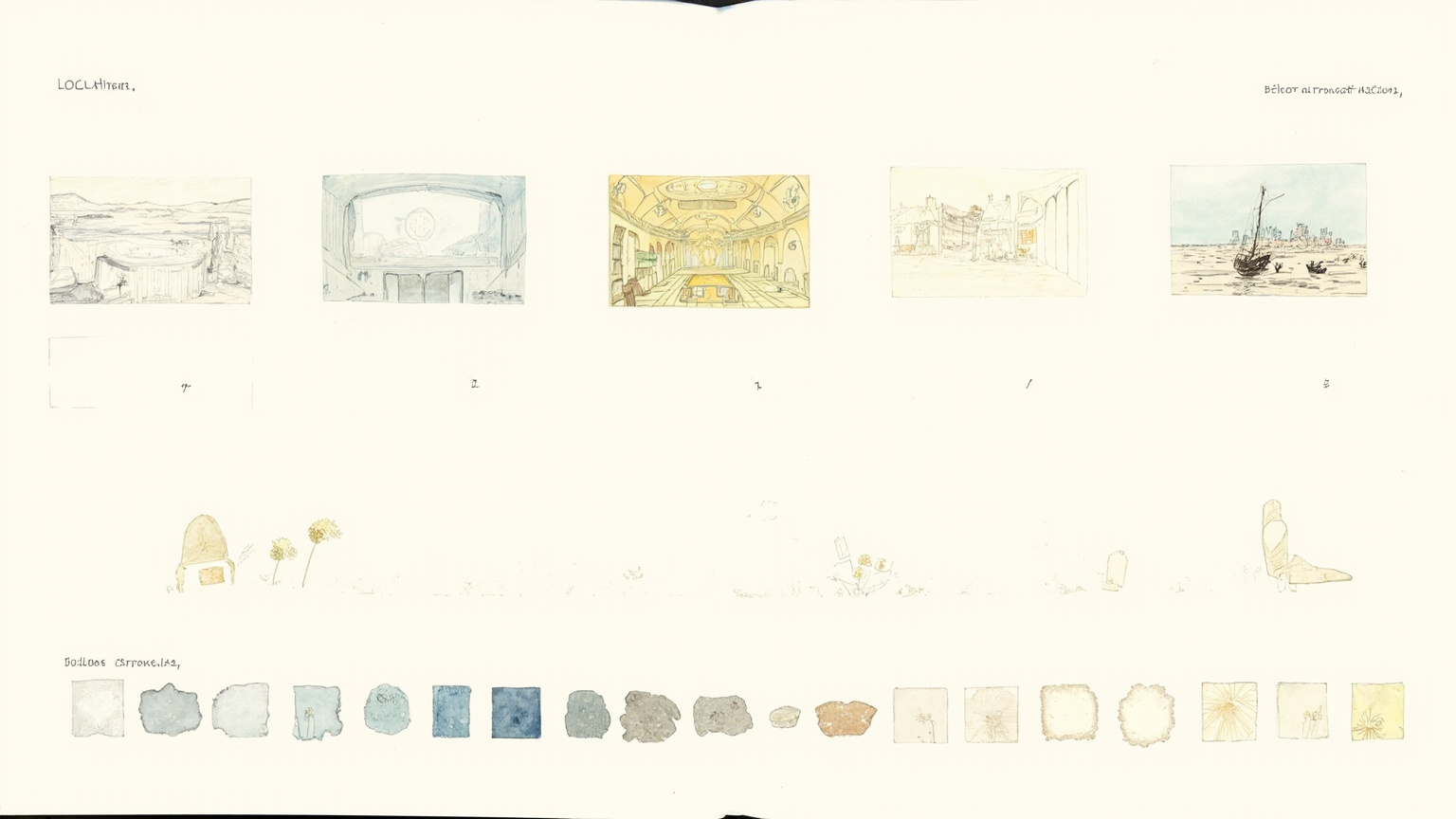
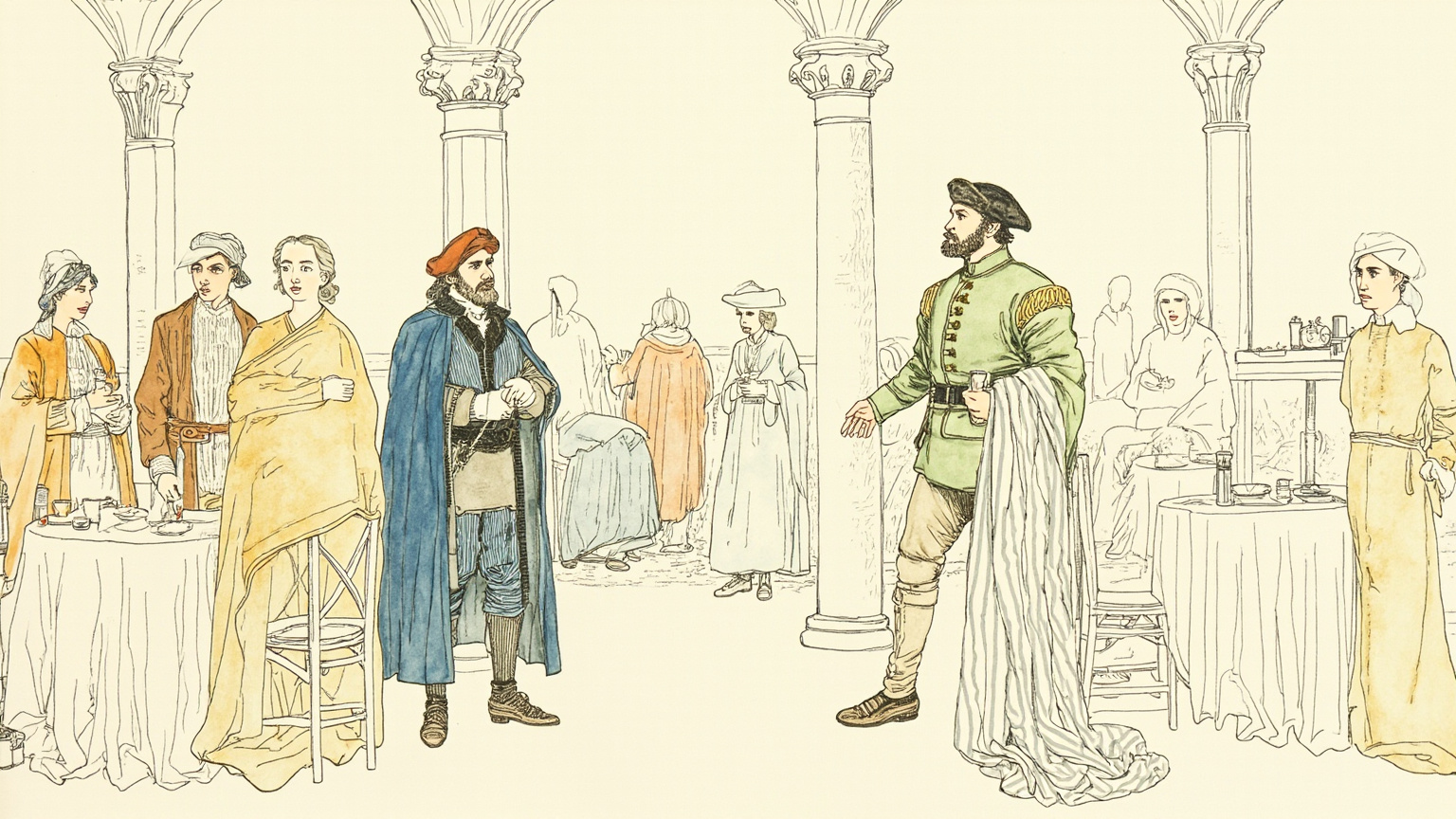
The story unfolds in Shakespeare's fictional Illyria—a bright Mediterranean coast where the light gleams, the air carrying a hint of salt and intoxication. Two main spaces hold up the entire play: Duke Orsino's court, full of musicians and echoing colonnades; and Olivia's manor, with precisely trimmed boxwood hedges, sundials inching their shadows across the ground, and cellars storing wine casks and candelabras. One is the realm of a lovesick man's murmuring; the other, a lively arena where steward, uncle, maid, and knight each scheme for themselves.
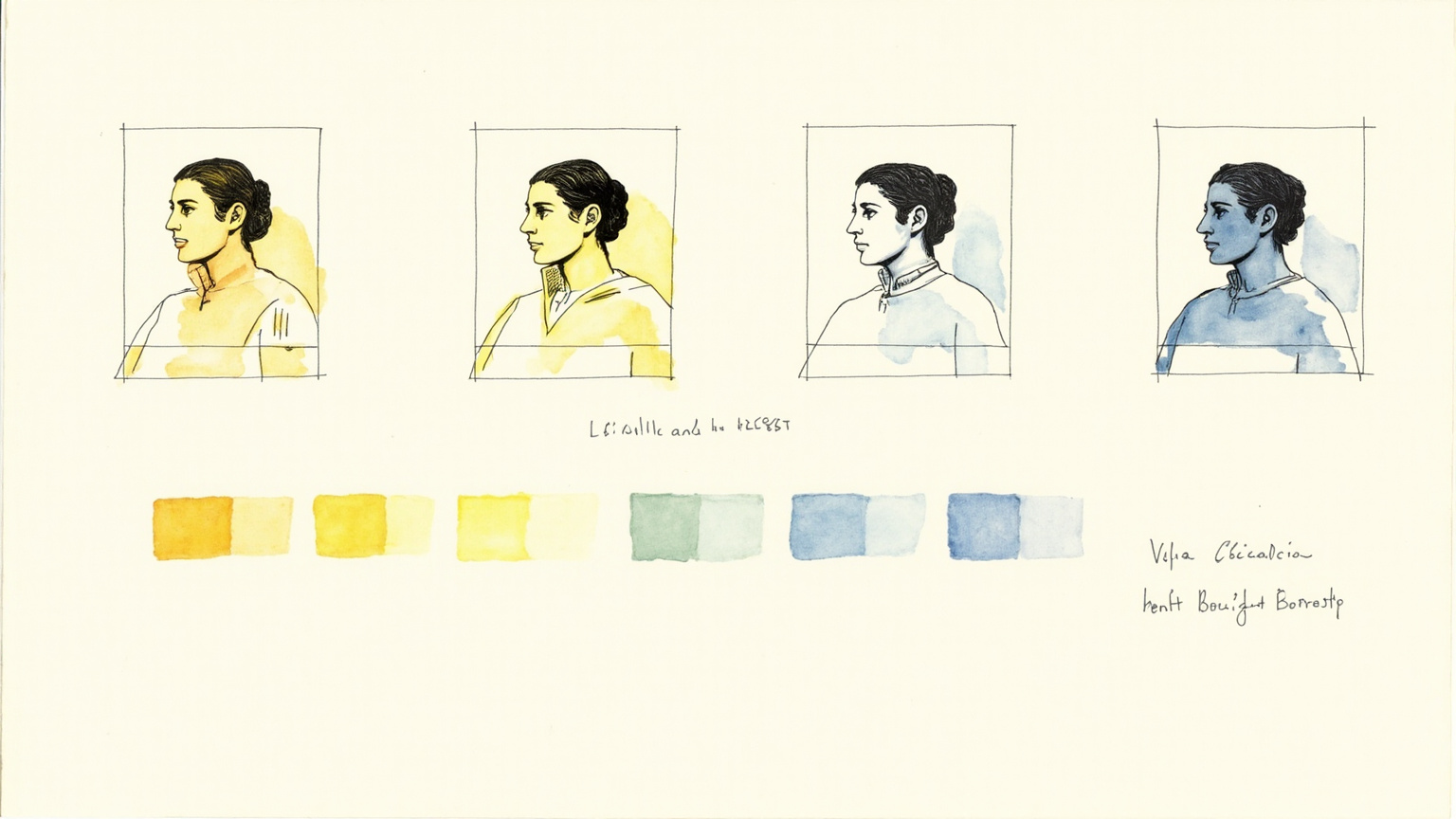
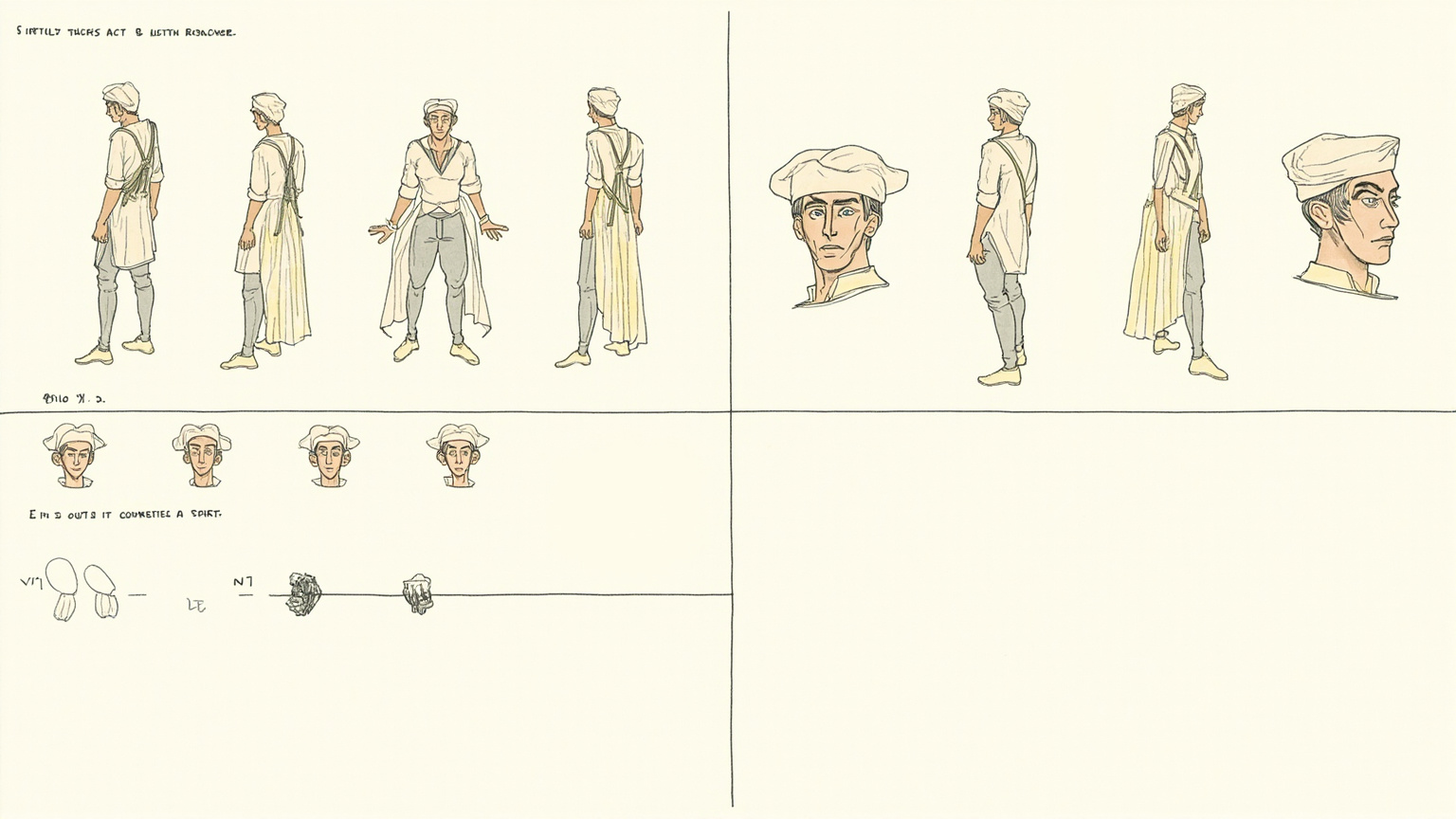
Viola, the play's protagonist, survives a shipwreck believing her twin brother Sebastian is dead. She disguises herself as a man, takes the name Cesario, and enters the Duke's household as a page—intelligent, loyal, sharp-tongued. She goes to Olivia on the Duke's behalf, all the while falling secretly in love with him; she makes Olivia fall for her at first sight, but cannot reveal her identity. Every mistaken entanglement in the play ties to this young man called Cesario. Duke Orsino is lovesick and narcissistic, opening the play lying in music, feeding his own passion. Countess Olivia, in mourning for her dead brother, is undone the moment she encounters Cesario's words and appearance. Malvolio is the precise, puritanically proper steward of Olivia's household, lured into a trap by a forged letter. Sebastian—Viola's twin who did not drown—was saved by the sea captain Antonio and drifts to Illyria as well; his arrival is the key that unlocks all the tangled mess.
There are also two unavoidable figures: Feste the clown, who makes his living through jokes and songs, and at the play's end he speaks, folding all the revelry into a song of cool observation; and Sir Toby's distant relative Sir Andrew—a rich, foolish man constantly being manipulated into making a fool of himself, a clownish sidekick in the carnival crew.
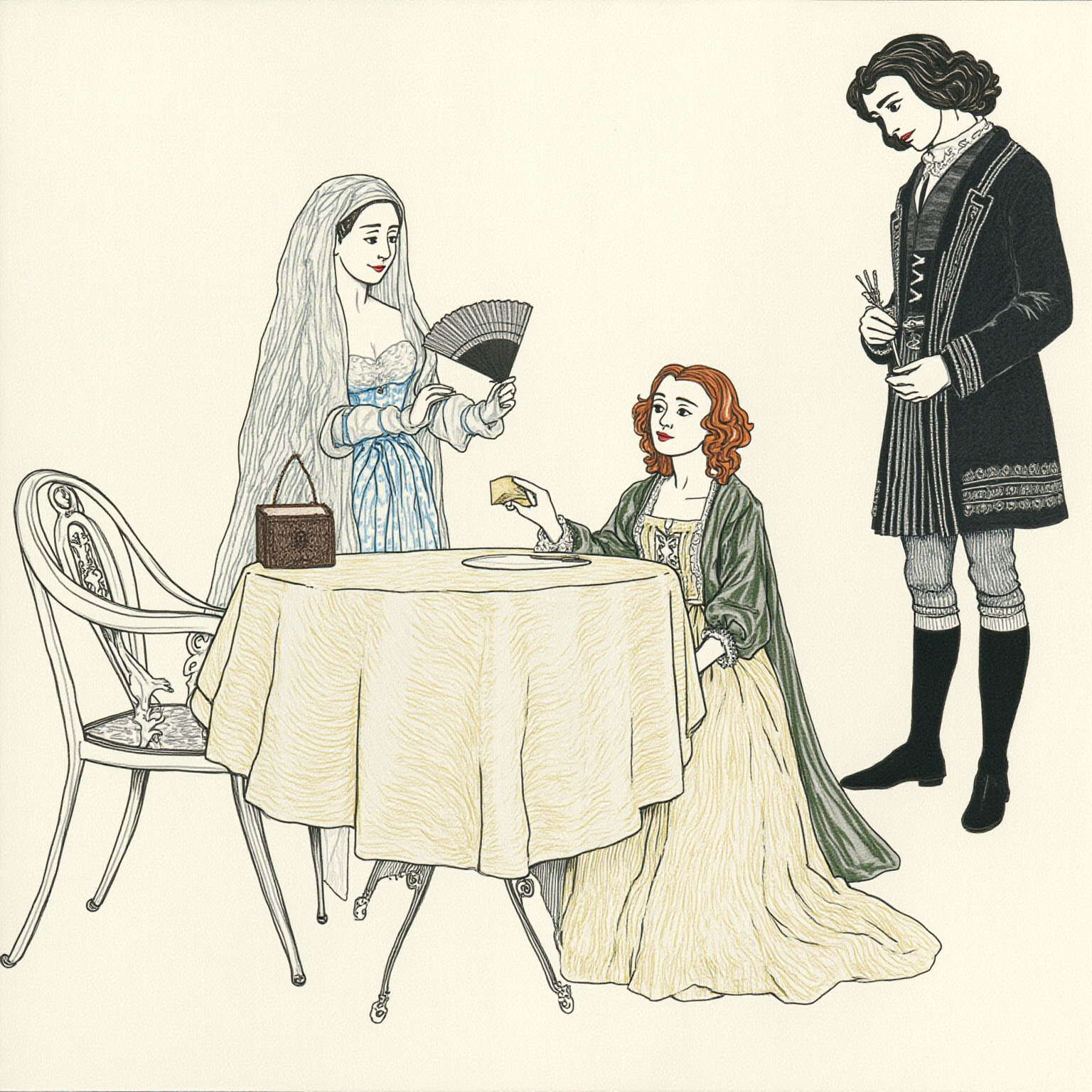
Disguise, I see thou art a wickedness, wherein the pregnant enemy does much.
伪装啊,我看见你是件坏事,潜伏的敌人在里头动手动脚。
金句 · 第二幕第二场 · 薇奥拉自陈男装之苦
Plot Summary
The opening is the sea. The ship breaks apart on the Illyrian coast, and Viola is pushed ashore. Her brother Sebastian is nowhere to be found. She assumes he is dead. To survive, and to find a way into the court, she cuts her hair, dons men's clothes, names herself Cesario, and enters the service of Duke Orsino. The Duke is in need of someone who will listen to him talk about love, and Cesario immediately catches his eye—obedient, clever, and willing to run errands.
At the time, the Duke is entrenched in what he believes is a great unrequited love—targeting the mourning Countess Olivia. He sends Cesario to court on his behalf, the words beautiful, the posture utterly humble. Viola—at this point still Cesario—receives the commission and walks into Olivia's house draped in black crepe. The proposal she delivers on the Duke's behalf is Shakespeare's finest irony: the lover does not love, the beloved does not love, and the words themselves are full of blades.
Olivia had been determined to see no one, but the moment Cesario speaks, she relents. She falls instantly for this young man—first admitting him, then dropping a handkerchief, then confessing her love directly. Cesario refuses with composure and confusion, because she knows full well she is not who Olivia thinks. She hides her love beneath her male disguise, swallows her tears back down. The finest trick in this passage is Shakespeare making Viola use the Duke's own words to court, while the courtship scene speaks of her own unutterable love—the surface of the dialogue and its undercurrent run in opposite directions.
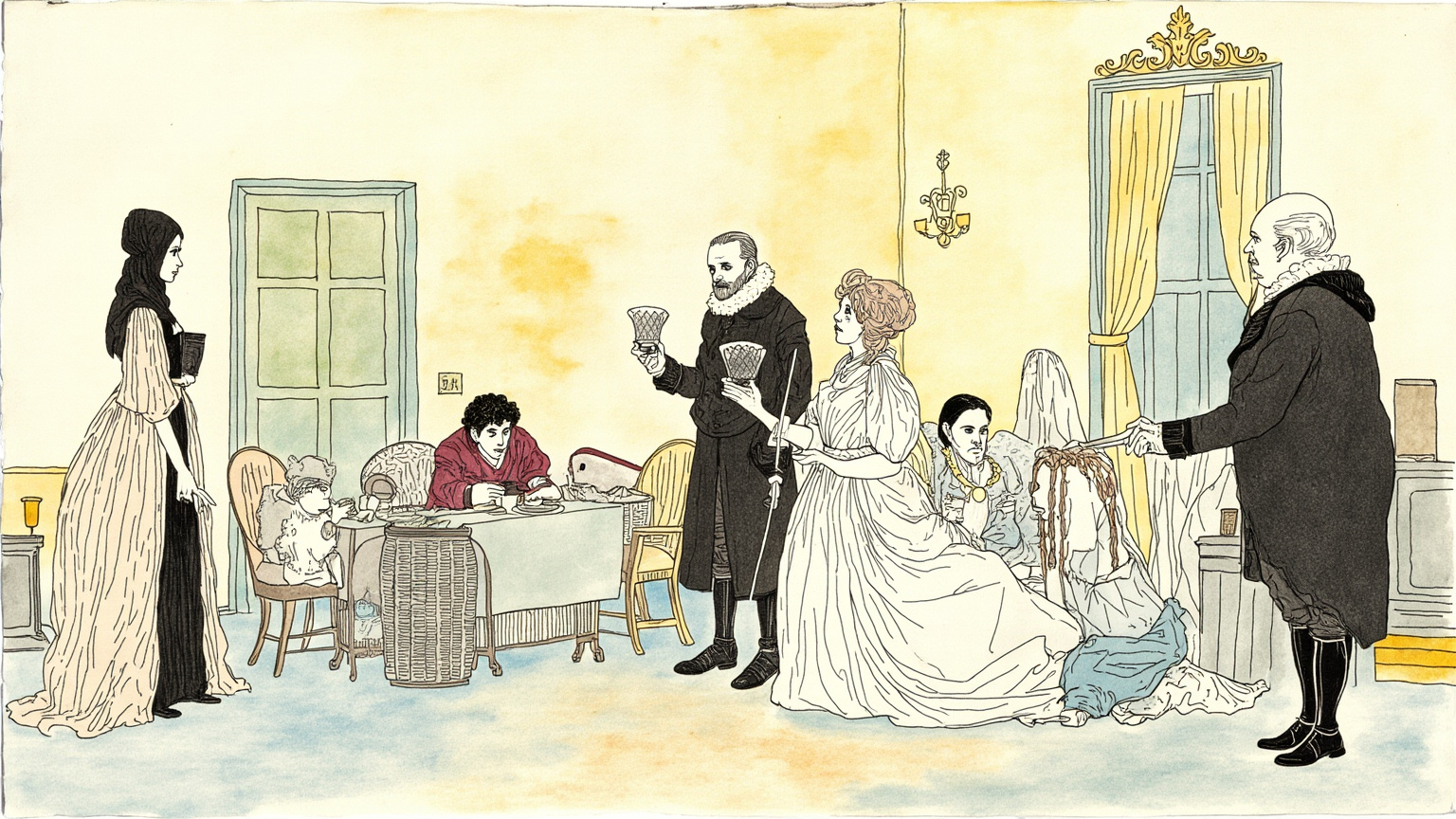
Make me a willow cabin at your gate, and call upon my soul within the house; write loyal cantons of contemned love, and sing them loud even in the dead of night.
在你的门前搭一间柳枝小屋,向屋里我的灵魂高声唱我被弃的忠诚之歌吧,哪怕在死寂的深夜也唱得响亮。
金句 · 第一幕第五场 · 薇奥拉代公爵求情
Meanwhile, another play begins in Olivia's household. Sir Toby, Sir Andrew, Maria, and Feste drink and carouse through the night. The steward Malvolio cannot bear it and rebukes them sharply. Maria—Olivia's clever handmaid who can imitate any handwriting—notes this debt. She and the others conspire to write a forged letter, imitating Olivia's handwriting, urging Malvolio to wear yellow stockings, cross-gartered garters, and smile perpetually—believing these are signals of his mistress's affection.
Malvolio complies. Yellow stockings glaringly visible, his forced smile stiffening into something that feels wrong even to him. Olivia sees this and declares him mad, ordering him locked in a dark room. Feste haunts him with pretended spirits, and in the darkness he is left alone, confronting his own respectability. This subplot begins in revelry and ends in near-cruelty—the one locked in the dark room is not a villain but a puritanical steward trying to get ahead, his dignity stripped bare. Shakespeare here turns the knife of comedy around, stabbing at laughter itself.
The moment of compounding the mistake arrives. Sebastian — Viola's twin brother, whom she believed dead — is also washed up in Illyria after being rescued by the sea captain Antonio. Antonio has an old grudge against Duke Orsino and dares not show his face in daylight; he escorts Sebastian all the way, risking arrest. Sebastian's appearance is nearly identical to Cesario's. Antonio mistakes him for someone on the street, approaches to speak, and the guards arrest him on the spot as a suspicious figure.
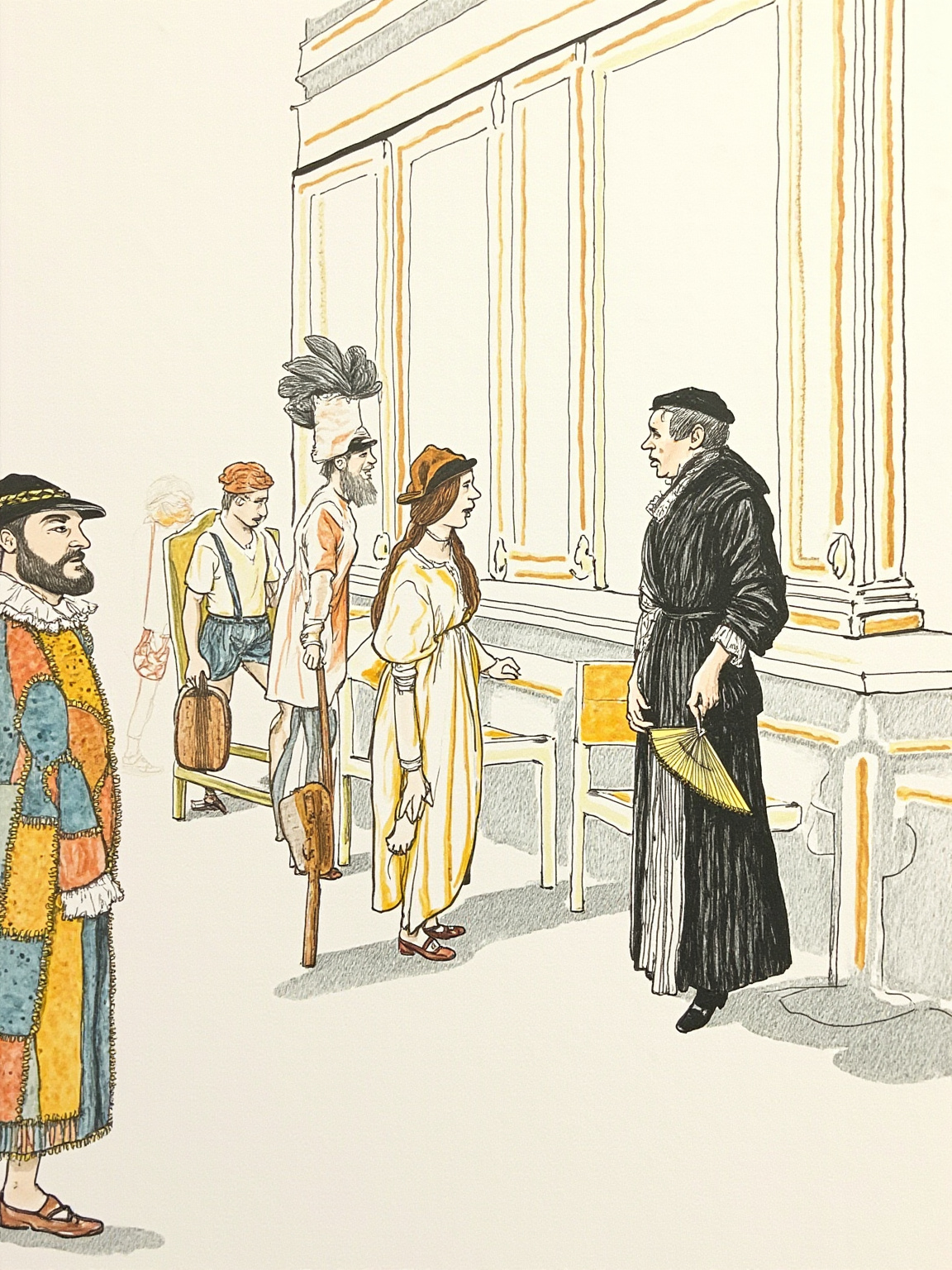
Some are born great, some achieve greatness, and some have greatness thrust upon 'em.
有些人生来伟大,有些人成就伟大,有些人的伟大是被人硬塞到身上的。
金句 · 第二幕第五场 · 费斯特戏弄马伏里奥
Right after, Olivia runs into Sebastian on the street and mistakes him for Cesario as well. She proposes to him on the spot — this countess goes from mourning to a flash marriage in the span of a single misidentification. Sebastian gets dragged into a church in a daze, gets married in a daze. As he looks at this beautiful heiress before him, the only thought that crosses his mind is: fate has been kind to me.
The scene where the truth comes out is Shakespeare's finest bit of stagecraft. The Duke brings Cesario to Olivia's house to "settle accounts," and Olivia declares publicly that Cesario has married her — Cesario's face goes pale on the spot; he has never been married. Antonio is brought in and identifies Cesario as the person who helped him that day — Cesario looks bewildered; he has never seen this man. In the chaos that ensues, Sebastian appears. The siblings recognize each other; one look between them, and every knot of mistaken identity is cut clean through.
The first time I read this scene, I turned back and read the previous page again — the play spends three entire acts winding the audience into a maze tied with a dead knot, then in the last ten minutes untangles every knot one by one, and on the side gives each character a partner: Orsino turns around and proposes to Viola, Maria marries Sir Toby, Sir Andrew slinks away. Sebastian and Viola are reunited; Olivia discovers she has married the brother, not the page — she doesn't even have time to be surprised. The comedy of misrecognition lands with full weight in this moment.
When that I was and a little tiny boy, with hey, ho, the wind and the rain, a foolish thing was but a toy, for the rain it raineth every day.
当我还是个小小孩儿,嗨哟,风风雨雨,那点傻事只算一场玩意儿,因为雨啊,天天落下来。
金句 · 第五幕第一场 · 费斯特收场之歌
Theme and Technique
Shakespeare keeps spinning one motif through this play: identity is a garment you can put on and take off. Viola puts on men's clothes and becomes Cesario; Cesario puts on women's clothes and becomes the Duchess. Sebastian puts on a sailor's jacket and becomes Cesario — even the people who love him can't tell the difference. Gender, name, social position — none of it is a fixed essence; it's all costumes that can be donned and doffed. This is where the play feels modern — it doesn't give you answers. It hangs the answers in the air and lets you watch how every layer of identity gets propped up in dialogue, then collapses in the midst of misrecognition.
Hooks into the Text
Commentary can give you a map, but the map isn't the land. What really sets this play apart is the text itself — every speech where Viola pleads the Duke's love on his behalf, the two layers of meaning tearing at each other within the sentence, that textual pleasure is something no commentary can read into your ears for you. Then there's Feste's songs — at the opening of the play, Orsino is already feeding his love through music; at the close, the clown sings a song about rain — you have to read it yourself to hear how those two strands of music simultaneously catch the brightness and the wistfulness of the whole play. And then there's the moment Malvolio emerges from the dark room — that's when the reader can finally hold it themselves. Knowing the plot and still reading the text is worthwhile because this play's excellence lies not in the plot's "what happens," but in how Shakespeare uses Illyria — that fictional, bright coastline — to gather desire, misrecognition, festival, melancholy, loss, and reunion all into one play at once — and what gathers them is the word, the sound, the sentences falling line by line.
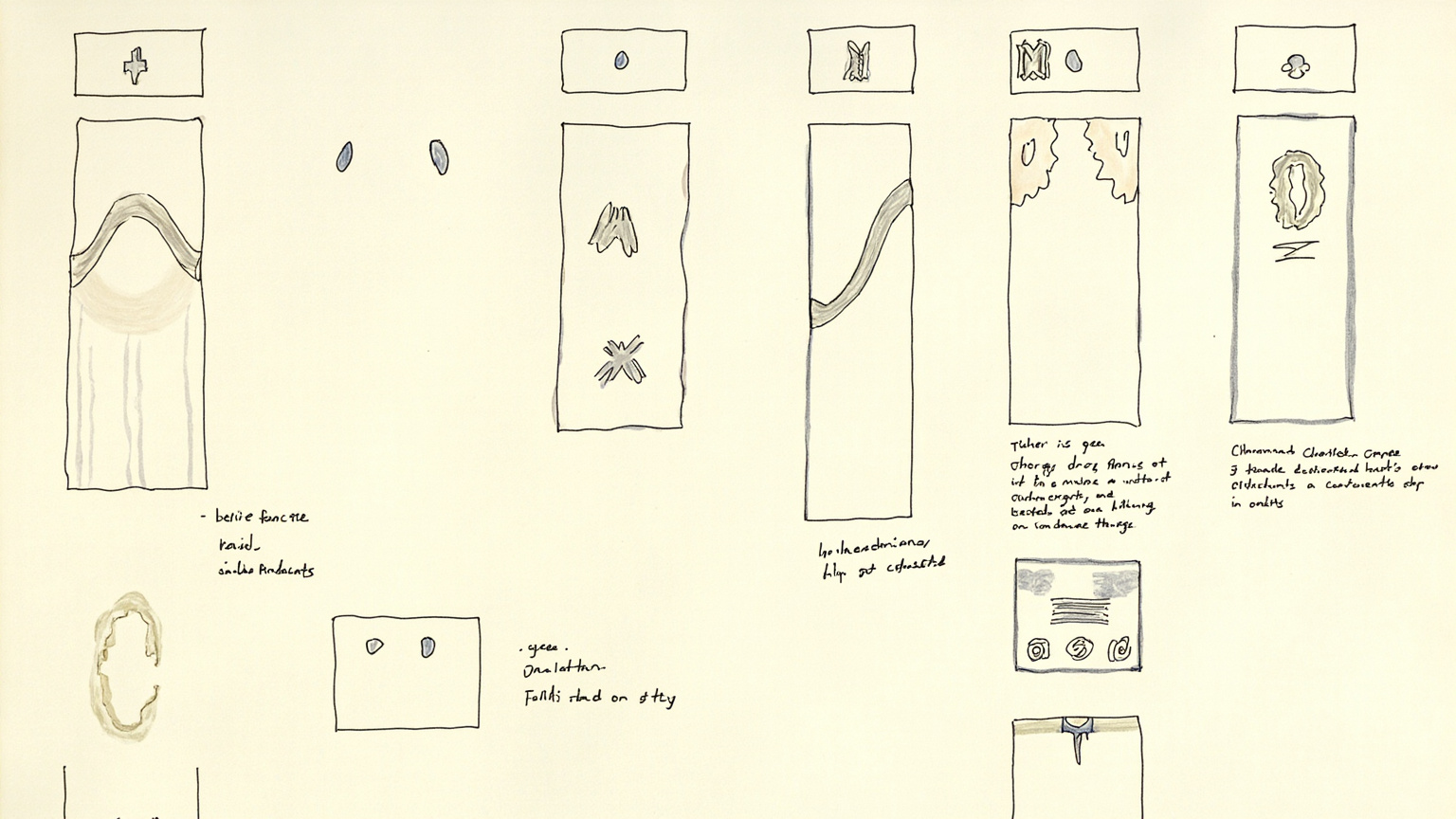
Art Direction4 plates
Before the guide was written, this book got a visual foundation — every illustration you just read grew out of it.