Twenty-Two Goblins (A Translation of Vetala Panchavimshati) · Companion Guide
僵尸鬼故事二十二则
持业国三胜王每夜孤身入坟场,扛回一具倒挂的鬼尸。尸体开口便讲悖论故事,知而不答则头颅炸裂。二十二趟往返的尽头,等待他的是一场十年伪装的活人祭祀。
A Tree, a Corpse, and a Talking Ghost
On the edge of an old Indian city, a graveyard hangs thick with corpses. At night a king walks into it alone and hoists one of the bodies, dangling from a tree, onto his shoulder. The corpse opens its mouth and speaks: a story, and at the end of it a legal riddle. The king answers. The body springs back to the branch. The king sighs, climbs the tree again, and hauls it down once more. Twenty-two times.
This is Twenty-Two Goblins, Arthur Ryder's English translation of the Sanskrit Vetāla Pañcaviṃśati, the Twenty-Five Tales of the Vetala. It belongs to the Sanskrit tradition of frame-story collections, the same lineage as the Arabian Nights and the Decameron: a container that repeats itself, with twenty-two self-contained stories packed inside. What makes it memorable is the mechanism. Reading it feels like working a wooden box with a hidden clasp.
Where the Book Comes From
No one can date the original. It grew out of the Sanskrit oral tradition, collective property from the start. Its most famous version survives because the eleventh-century Kashmiri poet Somadeva folded it into his story collection, the Kathāsaritsāgara, the Ocean of the Streams of Story. That is why you sometimes see it attributed to Somadeva: he was one editor along the way, not a confirmed original author. Ryder's 1917 English translation is the version most Western readers have actually encountered, and the number twenty-two in the title is his own count. He chose twenty-two of the twenty-five tales for his translation.
Three Figures, One Ten-Year Con
In the kingdom of Pratishthana, on the banks of the Godavari River, ruled King Trivikramasena: brave, quick-witted, a man who kept his word. An ascetic calling himself Kshantishila, a name that amounts to the long-suffering one, came to court every day for ten years and offered the king a piece of fruit, asking nothing in return. One day the king had an attendant cut open the latest fruit, and inside the core sat a jewel worth a fortune. Suspicion opened up like a crack. The ascetic finally spoke. He asked the king to go alone, at night, into the corpse-forest outside the city, cut down a body possessed by a spirit and hanging from a tree, and carry it back without saying a single word the whole way.
What lived in that corpse was a vetala, a spirit particular to Indian ghost lore that possesses bodies strung up in graveyards and hangs head-down from the branches. It is not a vampire climbing out of a European coffin, and it is not a shambling zombie. Ryder rendered the word as goblin, which is where the book's title comes from. The ascetic wanted it because it tells stories laced with riddles, but his real purpose was to offer the king himself as a human sacrifice to Chandi, the terrifying goddess of the corpse-forest, and use the killing to master a dark rite for commanding spirits. Ten years of fruit was the longest setup for a murder you will ever read.
How the Chain of Twenty-Two Trips Locks Shut
The king walks into the forest, hoists the body, turns to leave. The spirit starts talking at once, a story about some Brahmin, some princess, some theft or marriage, and at the end of it comes the question: was this person right or wrong? If the king knows the answer and stays silent anyway, his head will split open on the spot. The rule is merciless: he cannot say nothing. So he answers, and the instant he does, the corpse leaps off his shoulder and swings back up into the tree, and he has to walk back and haul it down again. One loop, one story. Twenty-two round trips, and that is the whole frame of the book, locked shut. Night after night the torches in the corpse-forest keep burning, and the weight on the king's shoulder goes up and down.
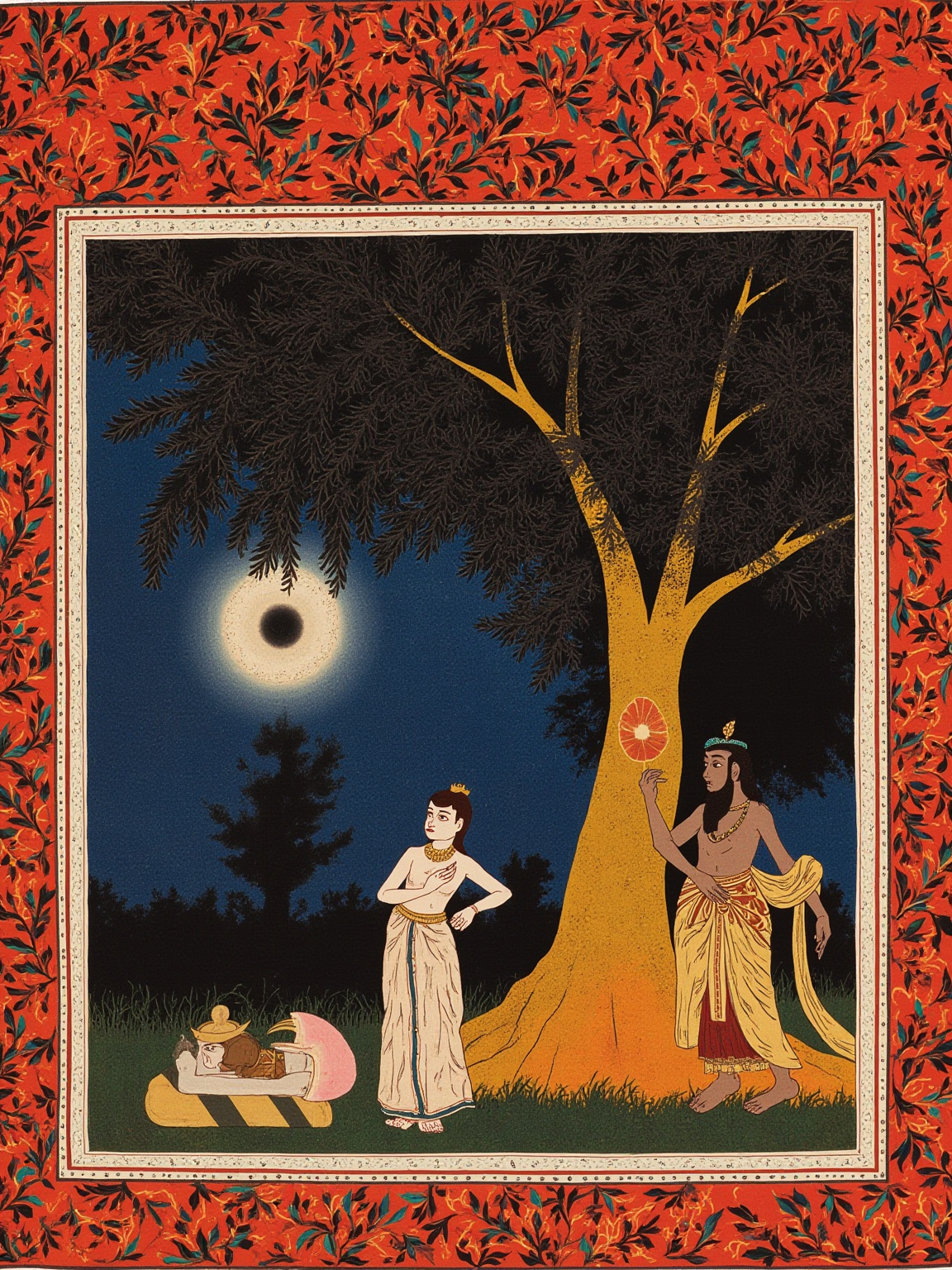
Then the monk was pleased, and said again: "O King, on the last night of the waning moon, you must go to the great cemetery at nightfall, and come to me under the fig-tree."
僧人大喜,又说道:‘大王,在下弦月的最末一夜,你须在黄昏时分前往大坟场,到那棵菩提树下来见我。’
原文金句 · 开篇 · 尸林之约
Here is the trick of it: the king promised the ascetic he would stay silent the whole way, but the curse forces him to speak. His word and his survival are set directly against each other. The reader knows the rule, and the king knows it too, so there is a small pause before he opens his mouth each time. That pause is the tensest moment in the book.
Twenty-Two Separate Moral Puzzles
The frame's only job is to keep the stories coming. The twenty-two tales inside it are the actual flesh of the book. Each one is a clean legal or moral dilemma: a man steals but uses the money to raise an orphan, so what is he guilty of? A princess kills a tyrant to avenge her father, so is she a murderer? A Brahmin lies and saves a crowd of people, so is it still a lie? There are no model answers, only a sense of proportion that gets harder to hold the longer you think about it.
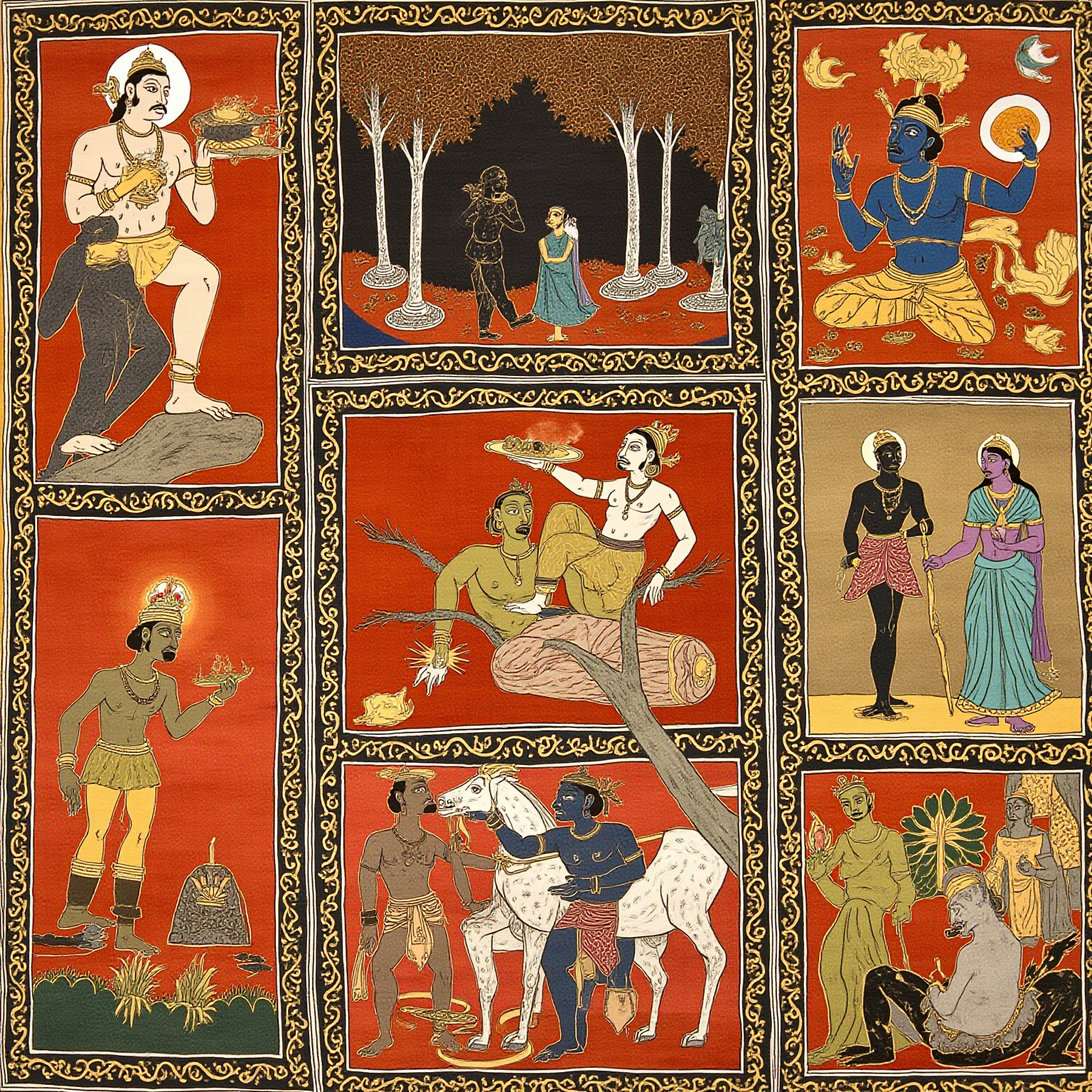
And when she placed her hand on her heart, she meant that she loved you.
她把手按在心口,意思是她爱你。
原文金句 · 第一则故事 · 手放心口
This section only needs to walk through a few of them; the rest belong to the text itself. The stories don't connect to one another, the settings keep changing, the characters keep changing, and that is exactly what makes the book work like a deck of cards. You can draw any one and read it, and the order you draw them in doesn't matter.
The Twenty-Second Time, the Spirit Switches Sides
After the twenty-second story, the spirit suddenly stops asking riddles. Instead it tells the king the truth: you think the ascetic wants you to carry back a corpse? He wants you. He means to offer you as a living sacrifice to the terrifying goddess of the corpse-forest and use your death to master his rite for commanding spirits. The ten years of fruit, the jewel planted to make you suspicious, the pious act of asking for your help: all of it was patience worked all the way down to the bone.
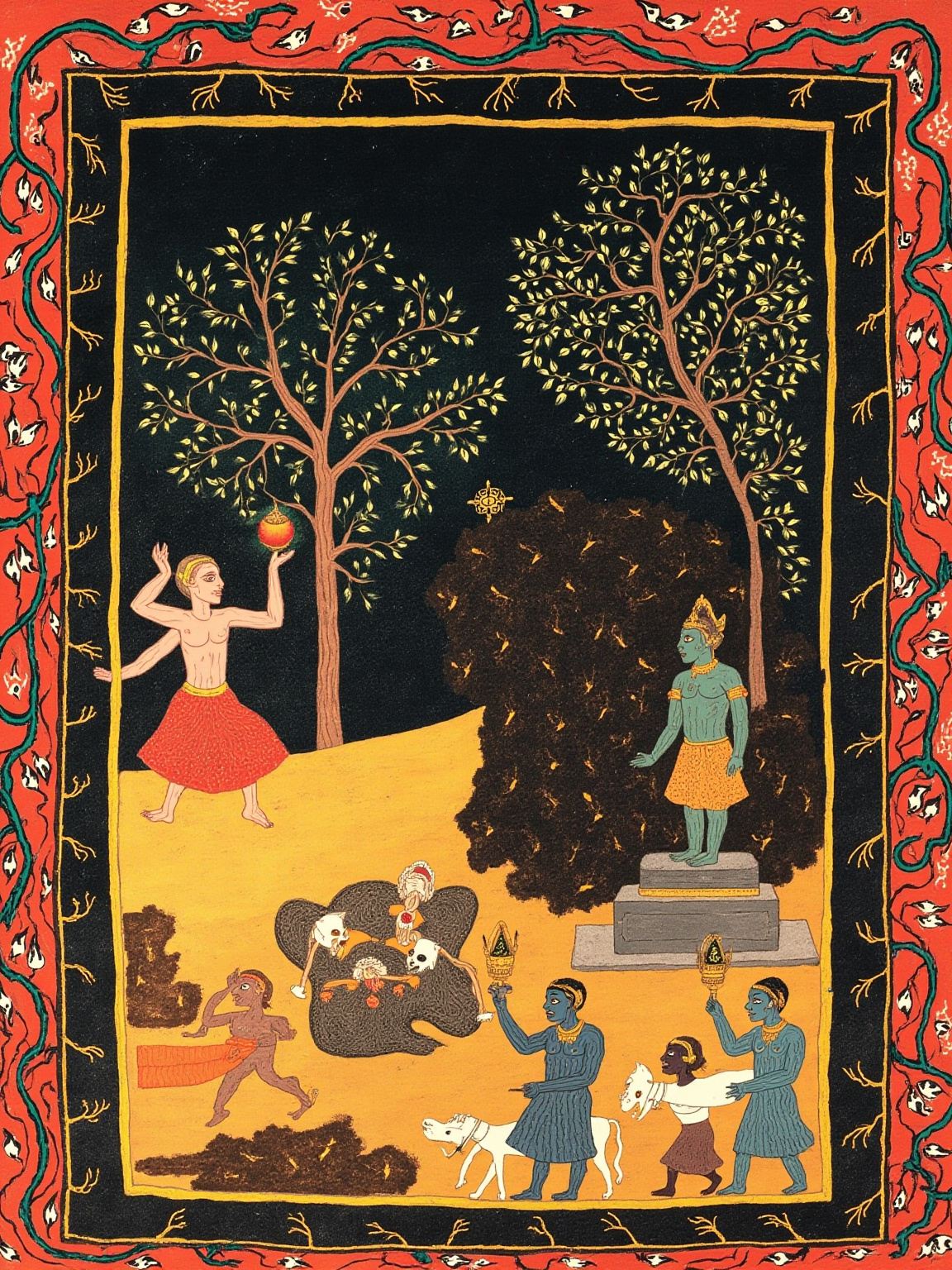
There is still some flesh and blood on me, and I see that you are not satisfied.
我身上还挂着些血肉,我瞧你尚未餍足。
原文金句 · 尸林对谈
This is the most satisfying reversal in the book: the villain turns out to be the real ally. Every time the spirit gave the king trouble, it wasn't obstruction; it was sharpening him with twenty-two hard questions. Each correct answer honed his read on human cunning a little further. By the twenty-second, he was finally sharp enough to see through the ascetic.
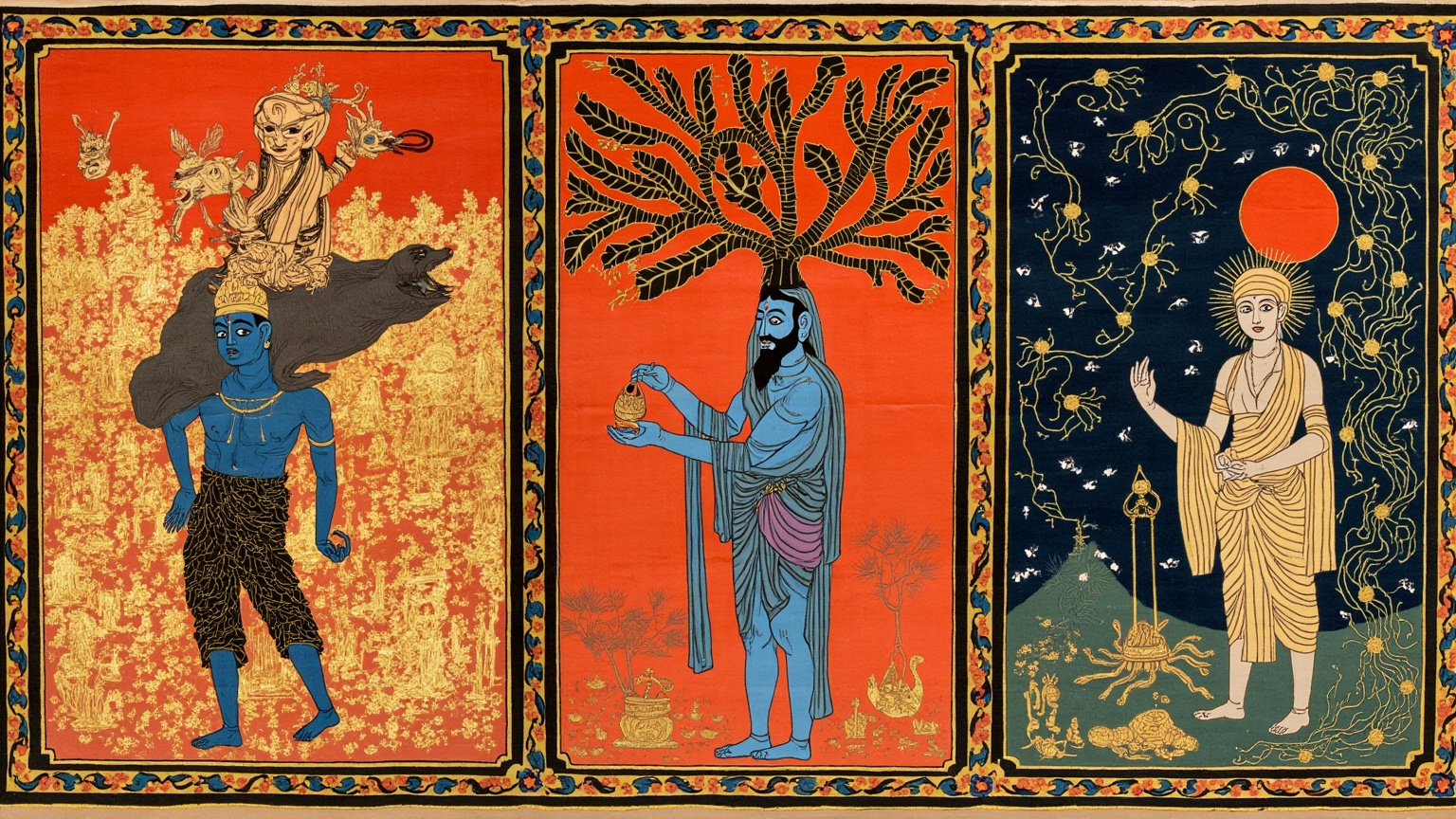
Then Gauri appeared in a visible form, and said: "Daughter, my words are not false."
于是迦梨女神现出真形,说道:‘女儿,我的话语从不落空。’
原文金句 · 女神显灵
Turning the Trap Around: The Last Stroke Before the Goddess
The king returns to the corpse-forest. The ascetic has already laid the altar before the image of the terrible goddess and orders him forward to bow. The king doesn't move. Instead he asks the ascetic to demonstrate the bow himself first, since surely a man practicing this rite knows the proper form. The ascetic hesitates for a moment, then bends down to show him, if only to settle the king's last flicker of doubt. In the instant his head is lowered, the king grabs the ascetic's own sword and brings it down. Ten years of scheming ends in front of the goddess.
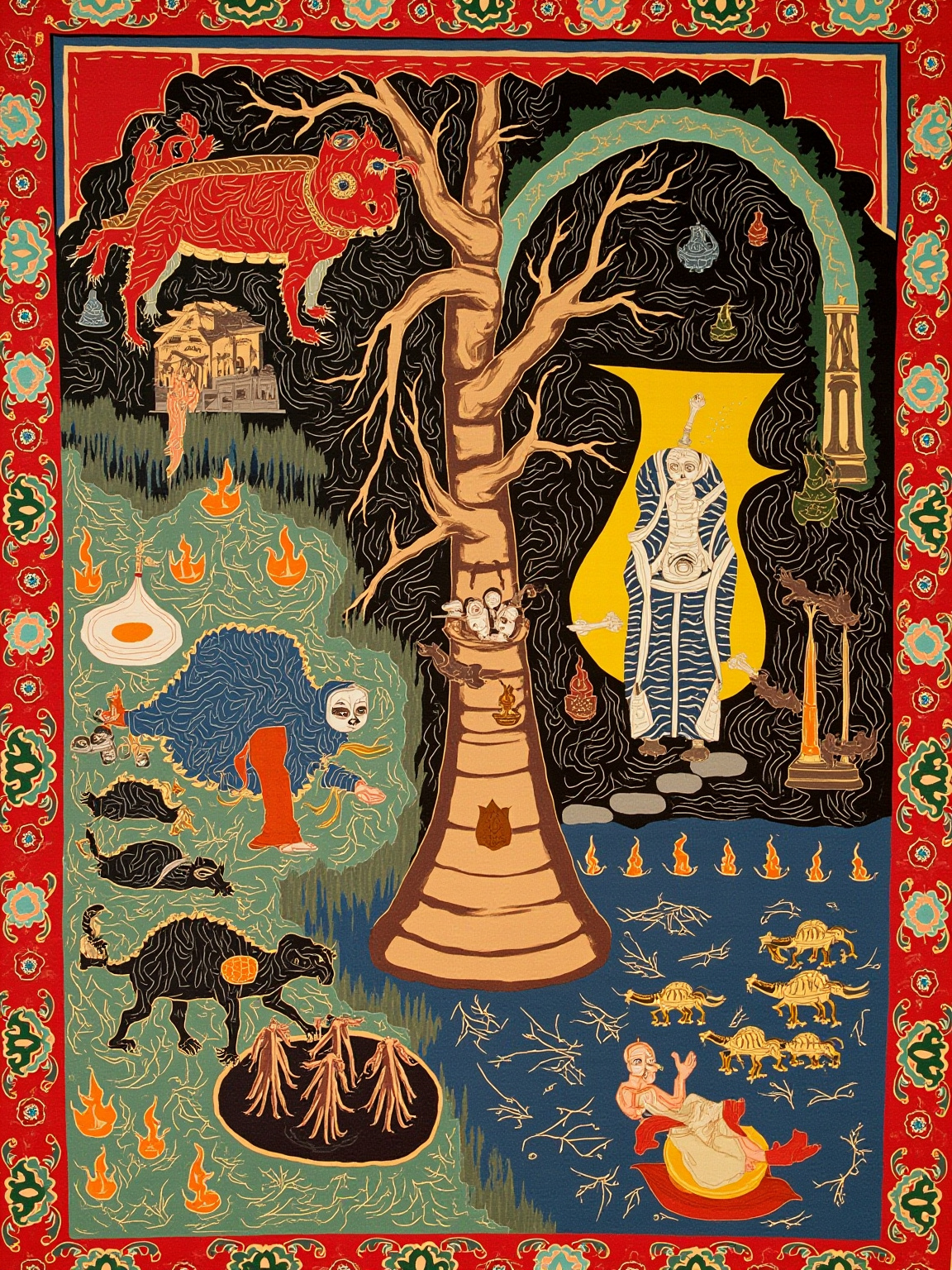
So, driven on by his fate, he respectfully begged the hermit: "Holy sir, if you really feel pity for a poor suppliant like me, teach me that spell which has such power."
他被命运驱赶,恭恭敬敬地央求那隐士:‘圣者啊,你若当真垂怜我这苦求之人,便教我那有如此大能的咒语吧。’
原文金句 · 终局 · 将计就计
The way this moment is written is worth noticing. Ryder's translation strips almost all ornament from it: a run of short actions, one after another, bend, seize the blade, strike. The reader barely registers what happened before the ritual is already in ruins. The violence is total; the prose stays plain.
What the Book Is Actually About
On the surface it's an old story about virtue rewarded: the pious ascetic is the villain, the spirit in the tree is the ally, and the king wins by outthinking them both. What the book is actually testing is judgment. Strength and piety fall well short of enough; what you need is the ability to weigh two competing wrongs and find where the balance sits. The twenty-two embedded stories are all exam questions, and the frame itself is one too: what a person does when forced to speak, or forced to stay silent, while already knowing the answer.
Ten years of patience is itself a kind of force, and worth examining as one.
There's also a whole backdrop of Indian ghost lore running underneath: the corpse-forest, the hanging bodies, the possessing spirit, the graveyard goddess, the dark rite for ruling over spirits. This isn't a moral fable with the supernatural stripped out for tidiness. It's a story rooted in Sanskrit folk belief, and reading it means sitting with that grim, torchlit atmosphere. That atmosphere is part of how the machine runs.
Why the Text Still Matters, Even Knowing the Ending
This guide gives you the map. The text is the actual ground. You already know the king wins, the ascetic dies, the spirit switches sides, but you haven't read the twenty-two paradoxes themselves. Ryder writes each one short, without padding, and leaves the white space for you to fill in. That's the least formulaic thing about this book: it never hands you the verdict. It sits you down next to the question and lets you hesitate on your own. People who finish the text remember a handful of specific dilemmas longer than they remember the beheading.
There's also the physical sense of it: the king walking into the forest twenty-two times, the weight of the body on his shoulder each time, the moment speech is forced out of him, the rush of air as the corpse snaps back into the tree. None of that reaches you except by sitting inside the original text. This guide gives you the skeleton. The warmth on that skeleton only comes from reading the text itself.
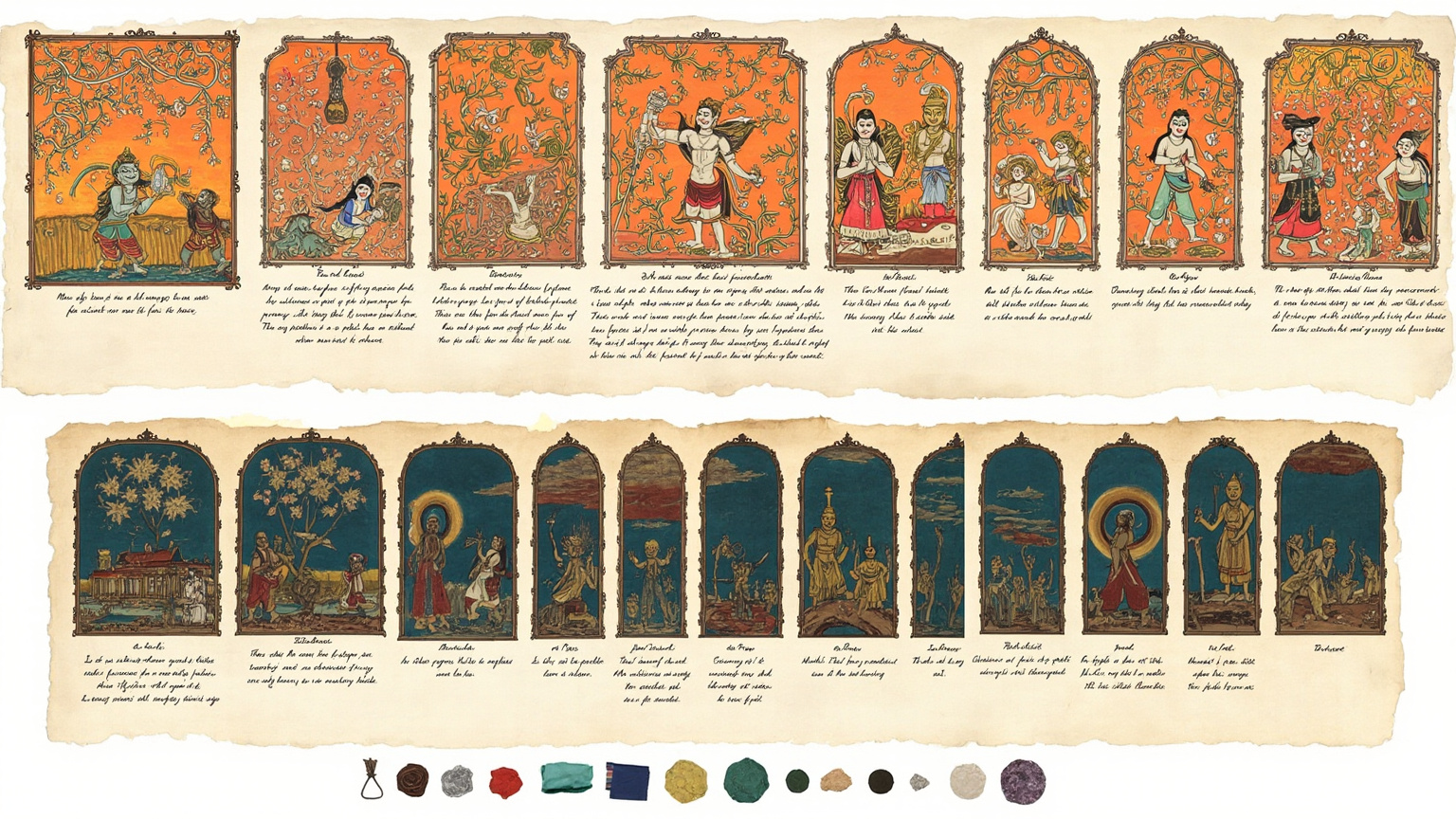
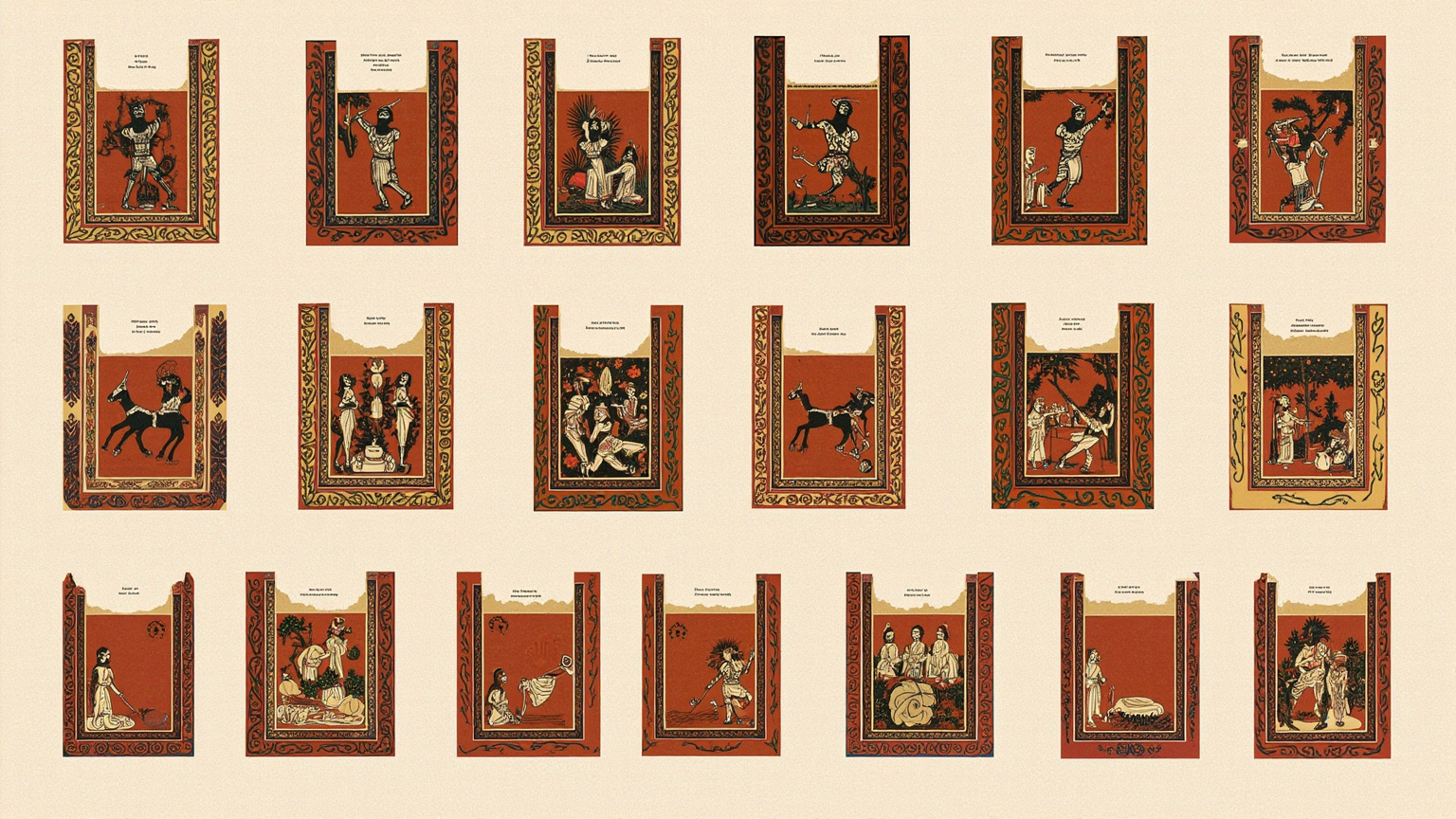
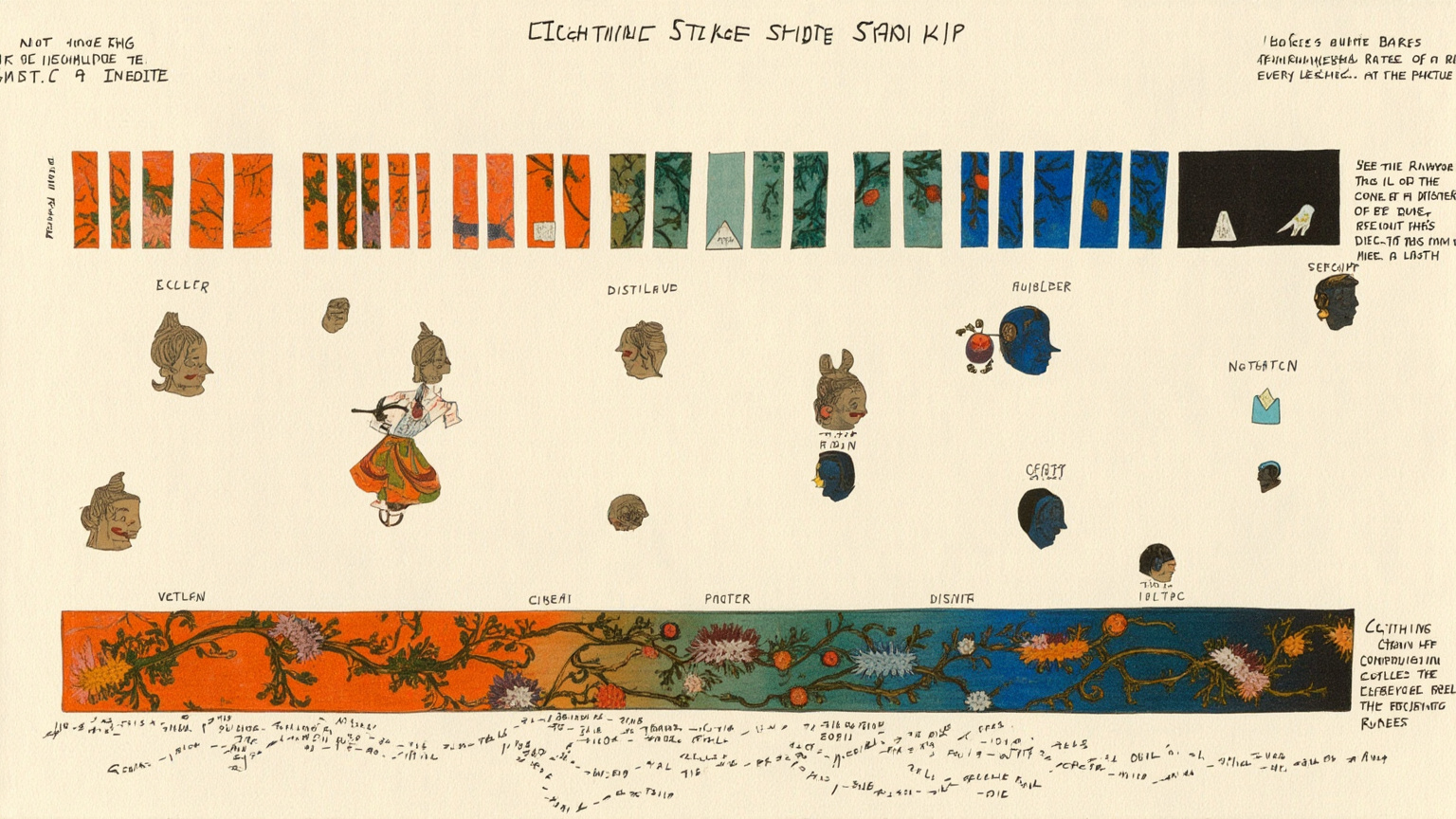
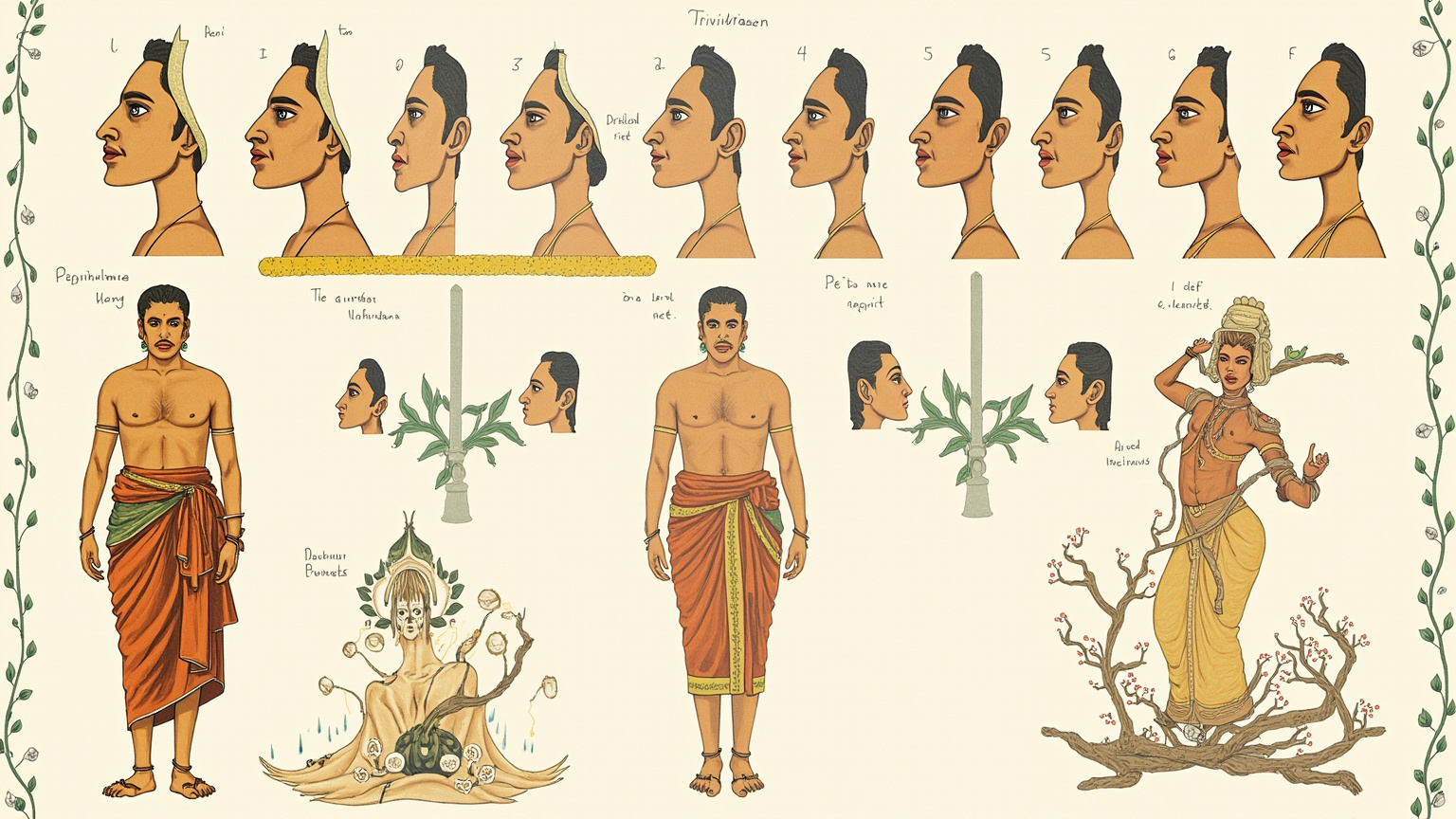
Art Direction4 plates
Before the guide was written, this book got a visual foundation — every illustration you just read grew out of it.