Ukigumo (The Drifting Cloud) · Companion Guide
浮云
一个不肯弯腰写字的小文官,被明治官厅与自家姑母两把软刀子刮到雨夜街头——小说就此断在浮云里。
The Resignation Letter He Never Finished
Utsumi Bunzō sets down his pen. On the desk lies the flattering little piece the section chief wanted, ink still wet, its corner already darkening where the damp air from the window has crept in. Tokyo is under rain in the early Meiji twenties, drops striking the low tile eaves of the ministry, one at a time, as if counting off his days. He is not yet thirty, holding a junior clerkship in this ministry through his uncle Utsumi Seiichi's connections, copying documents and filing papers. Life could have gone on this quietly forever, if only he were willing to ghostwrite for the section chief, to stand in for him, to lock away whatever pride a reader of the classics still had left.
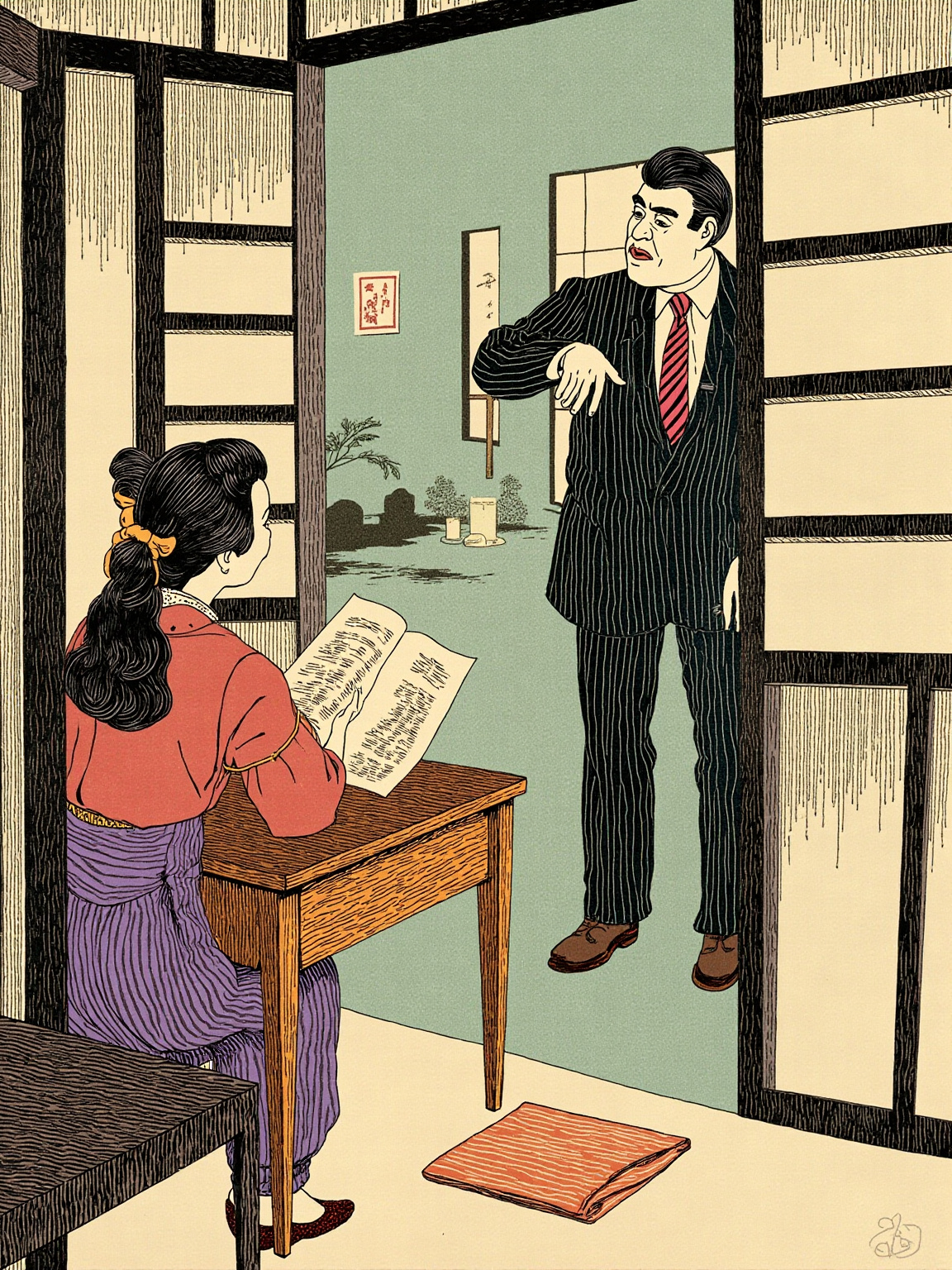
I set the brush aside; the ink had barely dried, and already the paper's corner was darkening with damp.
把笔搁下,墨迹还没干透,纸角已被窗外灌进来的潮气洇出一小片灰。
金句 · 开篇 · 辞表未写完
But he refuses. His uncle Utsumi Seiichi had counted on him to work that angle, writing a few flattering letters, sitting through a few obligatory rounds of drinks, smiling and calling every superior sir. Bunzō sits at the low table in his boardinghouse room, writing one letter, tearing it up, writing another, his head full of old lessons from his classical-studies teacher and a young man's contempt for currying favor. In the next room, Honda Noboru straightens his collar in the mirror, getting ready to go meet his contacts at the trading house. Between the two paper doors sits the whole unfinished shape of the Meiji era.
Why a Slim, Unfinished Book Made Japanese Literary History
Ukigumo ran as a serial in a Tokyo newspaper in the late 1880s, written by Futabatei Shimei, whose real name was Hasegawa Tatsunosuke. He did something no one had done before: he wrote a novel in something close to spoken Japanese. The project had a name, genbun itchi, the unification of speech and writing, a term he coined himself. Before this, written and spoken Japanese lived apart. To write fiction you reached for a register far from how anyone actually talked, stiff, formal, closer to chanting a sutra than to speech. Starting with him, Japanese novelists could finally write in a human voice, short sentences, a level tone, prose that reads as though someone is talking beside you. So even if you have never read this book, you have almost certainly read its descendants: the flat, diary-like, half-confessional narrating voice running through modern Japanese fiction traces back to here. The novel itself was never finished. The style it invented never wavered.
There is another reason it is remembered. It wrote down something no other novel of the time would touch: how an ordinary man gets ground down by the soft blade of the system. No assassination, no ritual suicide, no rallying cry, just a superior who decides he doesn't get how the world works, a dismissal notice, and a future gone. The whole book is this thin, and it stops on a rainy street with nothing resolved. No one saves the hero. No one speaks up for him. That unresolved defeat became an undercurrent running through Japanese literature ever since.
Two Men, One Boardinghouse
Bunzō and Honda Noboru board together in Honjo, old schoolmates now under one roof. Sit them side by side and you get the starkest contrast Meiji Japan could offer: Honda in Western dress, shoes polished bright enough to catch lamplight, studying English, moving easily among the trading houses, a smile women fall for. Bunzō in a kimono, steeped in the classics, wooden-faced, unable even to make small talk over tea. One is the new-style young man who reads which way the wind blows. The other is the old-style scholar who will not bend. The landlady has already sized them up: Bunzō gets the cheapest room in the house, and Honda's has an extra porcelain vase.
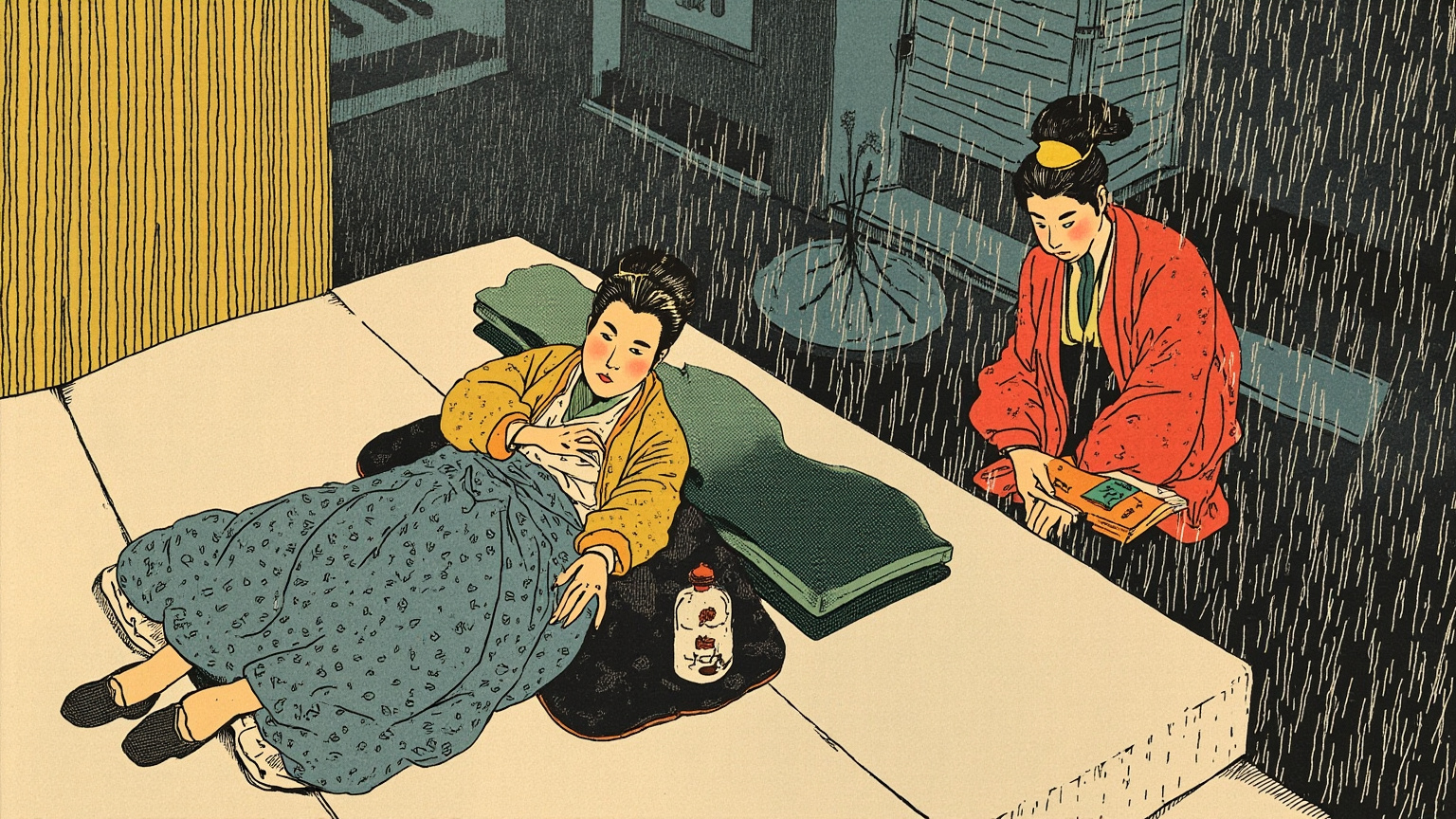
Side by side they sat—two halves of a Meiji portrait, the one in a Western coat, the other in a kimono still smelling of the old schoolroom.
两人并排坐在一起,便是明治时代一张最刺眼的对照表:一个西装革履,一个和服汉学。
金句 · 寄宿舍 · 两个人一间房
One thread still tied Bunzō to the world: his cousin Osei, seventeen or eighteen, lively, fond of dressing up, fond of noise, living in a small house in Tokyo's old downtown. They had been engaged since childhood, and the real gatekeeper of that engagement was Osei's mother, his aunt, who had seven children of her own and kept Bunzō at her dinner table strictly on the strength of that connection. The whole arrangement rested on his low government salary and the face it bought him. Strip away the clerkship, and his aunt would not spare him so much as an extra fish at lunch.
How the Ministry Made Its Cut
There was an unwritten rule at the ministry: the section chief needed gifts sent, courtesy letters written, connections smoothed over, and someone had to do the writing and the smiling in his place. A colleague, Komachiya, was glad to oblige, which kept his job secure and earned him a box of Western sweets every New Year. Bunzō would not do it. Every time he forced himself through one of these pieces, he came home feeling like he had swallowed ash: the words were his, but the signature at the bottom belonged to the section chief, and reading his own polished lines felt like watching someone else live his life for him. The worst of it came when the section chief asked him to ghostwrite a piece flattering a superior. He put it off, then put it off again, wrote three lines and crossed out two. Word got around, and from top to bottom he was marked as a man who doesn't get how the world works. When the dismissal notice finally arrived, he barely reacted. He just sat in his room for a long time, reading the paper over and over, as if it were a verdict written long before the trial.
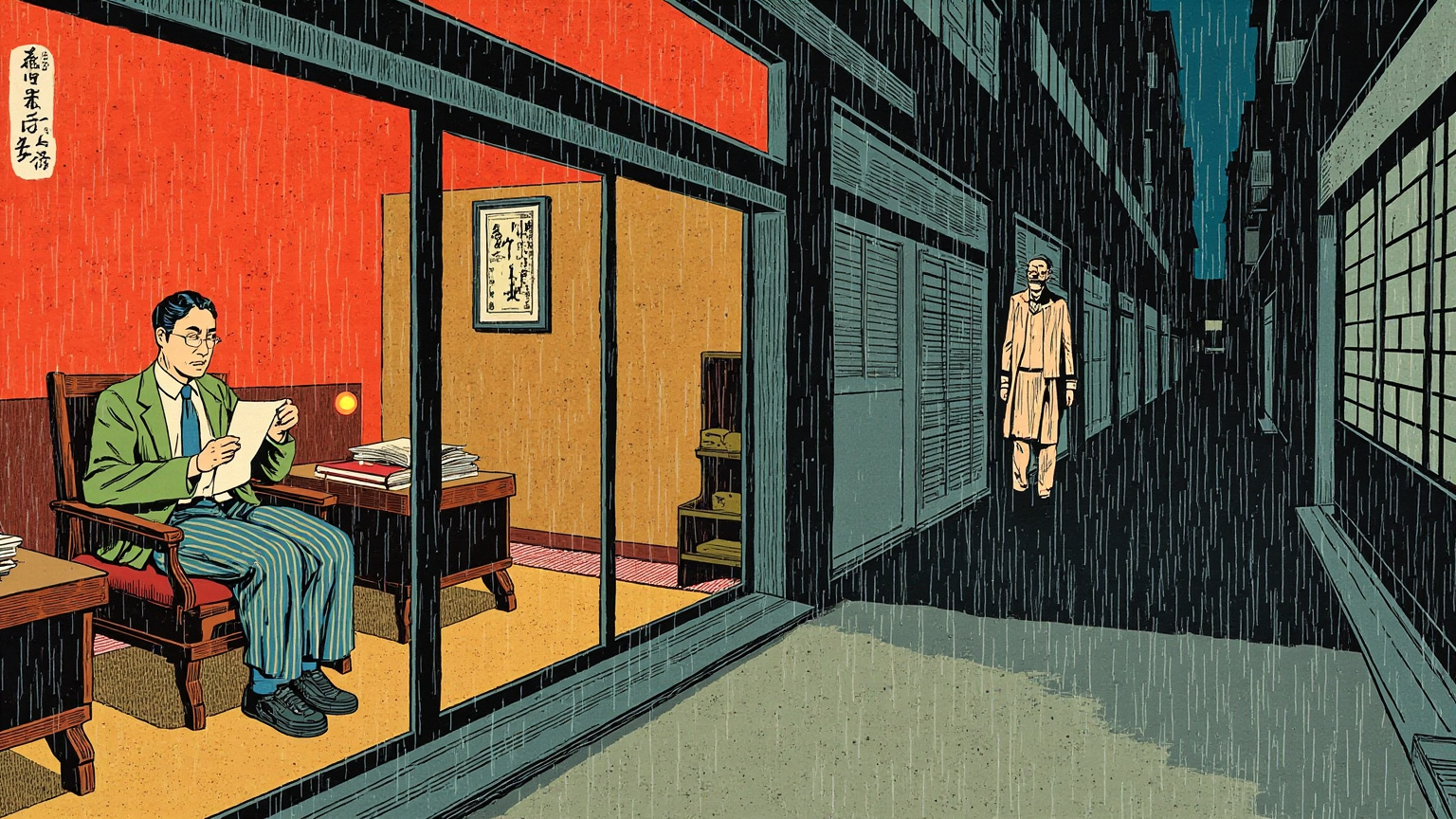
Each letter written for the bureau chief tasted like a mouthful of ash; the hand moved, but the stomach would not swallow it.
每次硬着头皮写完,回家都像吞了一口灰——字是自己的,咽不下去的也是自己。
金句 · 官厅 · 代笔应酬文
His uncle Utsumi Seiichi had smelled the wind changing before Bunzō did. He had clawed his own way up through the same official channels and knew exactly how quickly favor could turn cold in a ministry like this. Once Bunzō refused to bend, his uncle stopped speaking up for him and stopped visiting the boardinghouse altogether. Whatever support had once passed between uncle and nephew was spent.
How the Engagement Went Cold
Word of the dismissal reached his aunt before it reached Bunzō himself, a full night earlier. She had never thought much of the match to begin with: a middling clerk marrying her own niece was money moving from one hand to the other, nothing gained. Now even that small dignity was gone. Her face turned colder than the dismissal notice itself, and the tea she poured came out weaker than before. It was just then that Honda Noboru started coming around, arriving in a sharp suit, not yet a trading-house comprador but already acting like one, bringing Osei a box of Western sweets and greeting her in halting English.
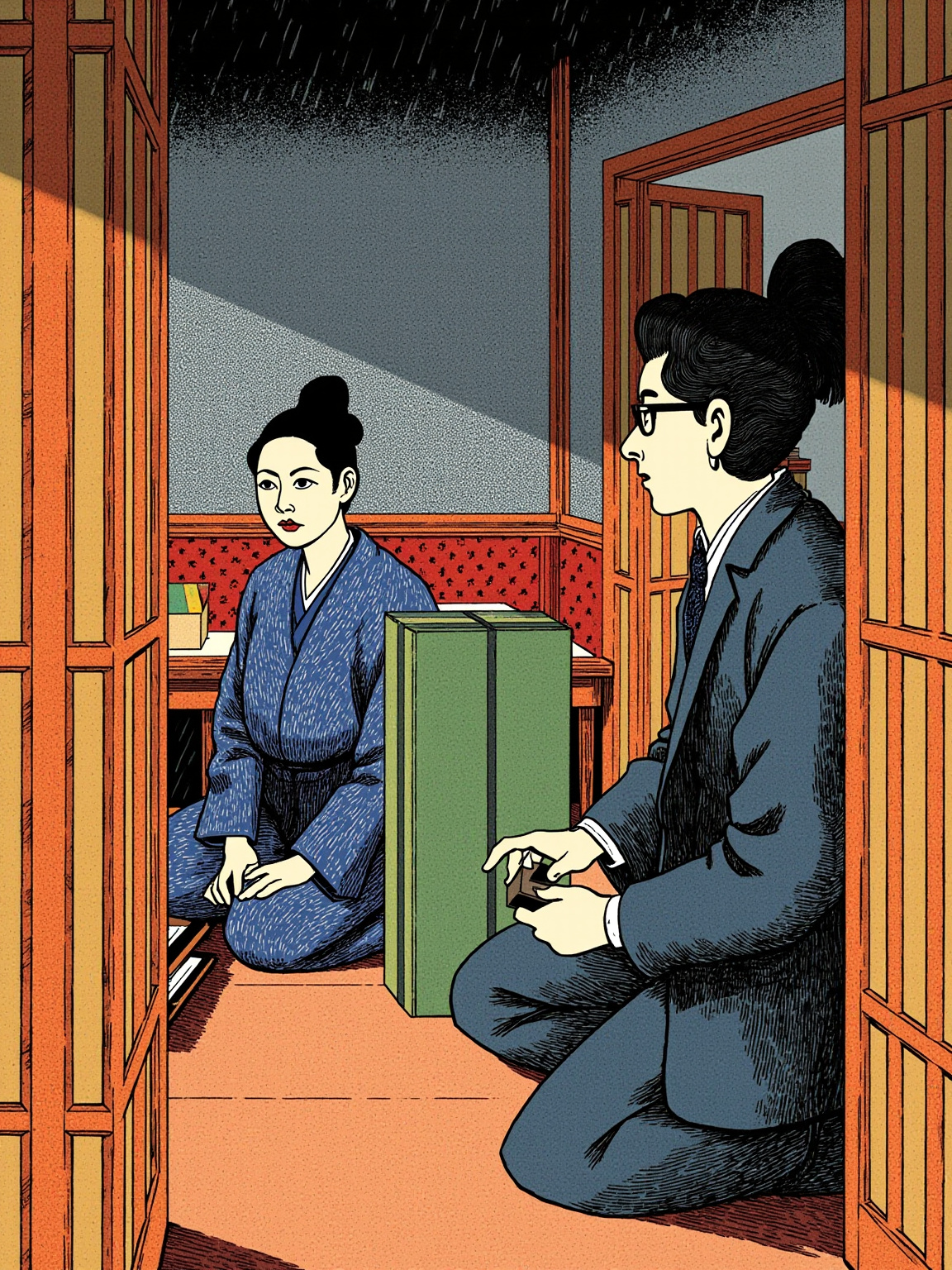
The aunt's face grew colder than the dismissal notice itself; even the tea she served seemed to have turned to ice.
姑母的脸色比免职通知还冷,连端出来的茶都带着霜。
金句 · 姑母 · 婚约冷下来
Osei's feelings cooled by degrees, a little colder each day. There was no scene, no argument, just the smile that used to greet Bunzō at the door thinning into a flat oh, it's you. She is not a villain, and the author never asks us to read her as one. She is simply an ordinary woman with a taste for shine, and reality only had to nudge her once to send her toward the brighter side. Standing on the boardinghouse veranda, watching his aunt's return gift arrive one dish of pickled plums short of last month's, Bunzō understood most of what he needed to.
A Rainy Night, a Teahouse, Ueno and Mukōjima
In his low moment, Bunzō does something out of character: he follows Honda to a teahouse. A geisha comes in with the sake, and he has no idea what to say. No one expects him to. Honda trades easy talk and laughter with the geisha, Omine, while Bunzō sits in the corner like a piece of furniture that cannot speak. When the party breaks up, he walks back out onto the street alone, a rainy Meiji-era night in Tokyo, gas lamps and paper lanterns all lit, and not one of them lit for him.
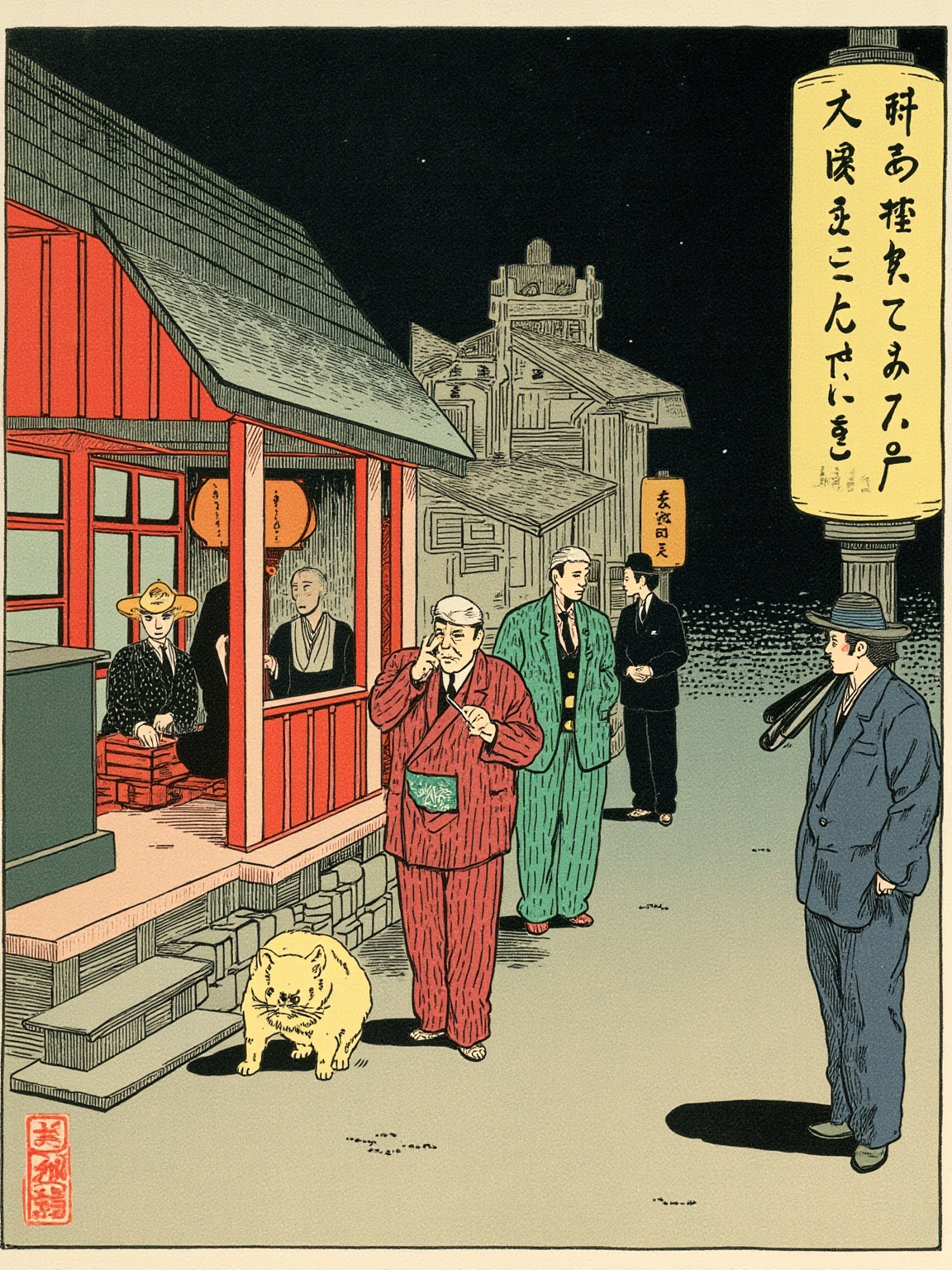
He sat in the corner like a block of wood that had forgotten how to speak; the geisha did not expect him to.
文三坐在角落像一块不会说话的木头;艺妓也不指望他说。
金句 · 料亭 · 席散人走
He walks alone to Ueno, alone to Mukōjima. Neither place is romanticized here; they are just the gray corners of the city: a shrine's wooden fence with the paint peeling off, cherry branches with no buds yet, a few scattered figures in the rain, a rickshaw running late. There is no grand expedition to Mount Ōe, no old Edo dream to chase. He simply walks in circles around this one city, from Honjo to Mukōjima and back to his boardinghouse in Honjo. In the whole book, he never once leaves town.
The Ending: The Place He Never Reached
The story simply stops here. Bunzō has lost his post, the engagement is breaking but not yet broken, and he stands alone on a rainy street: no reversal, no outburst, no suicide, not even a proper goodbye. The serial was only half told when the author seemed to run out of road, and he really did stop writing it. That unfinished state is what the title itself means: a drifting cloud, not landing anywhere, held up and then scattered. Since then, Japanese literature has kept one more way to end a story: give it no ending at all, and leave the reader standing in the rain.
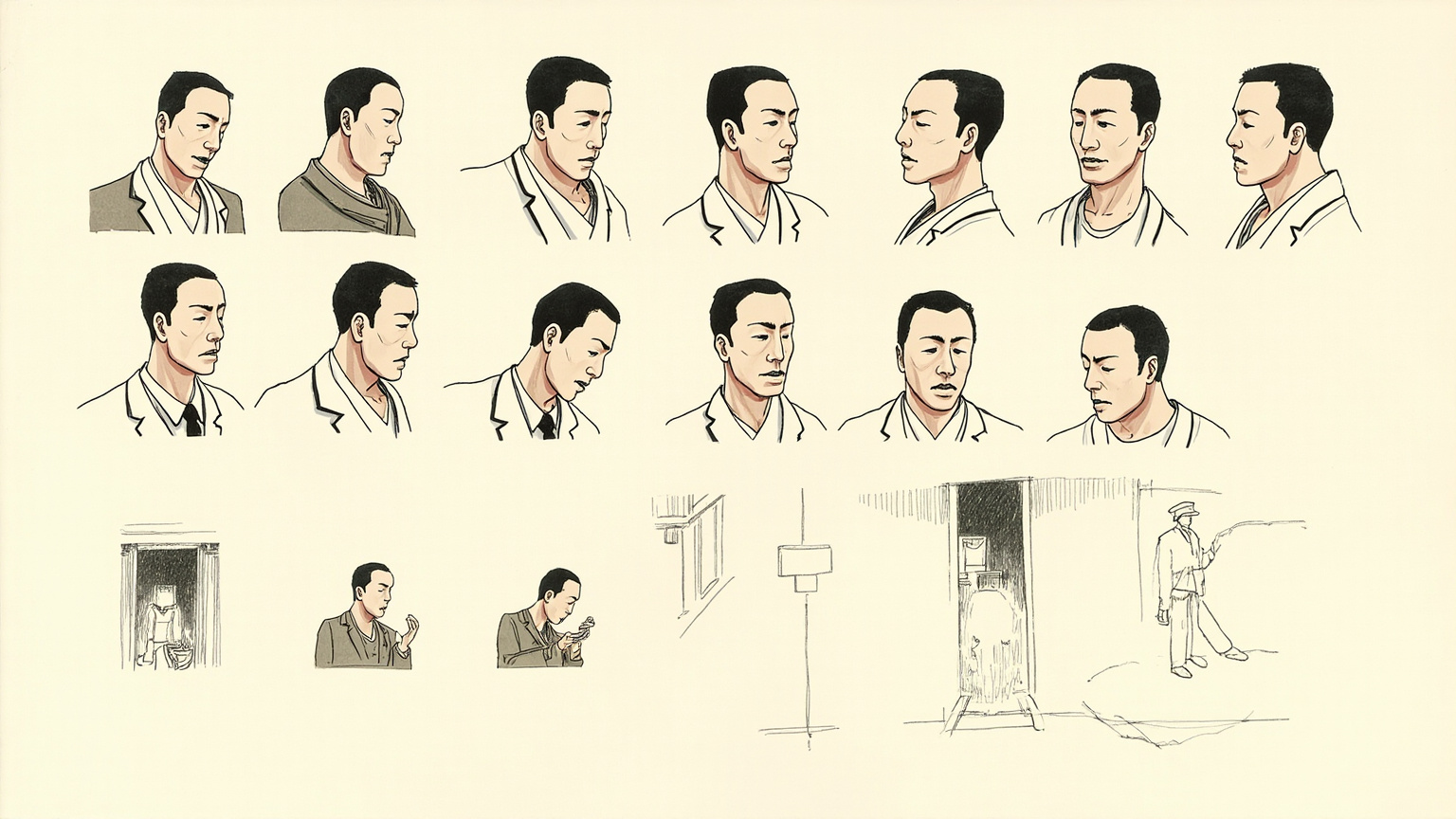
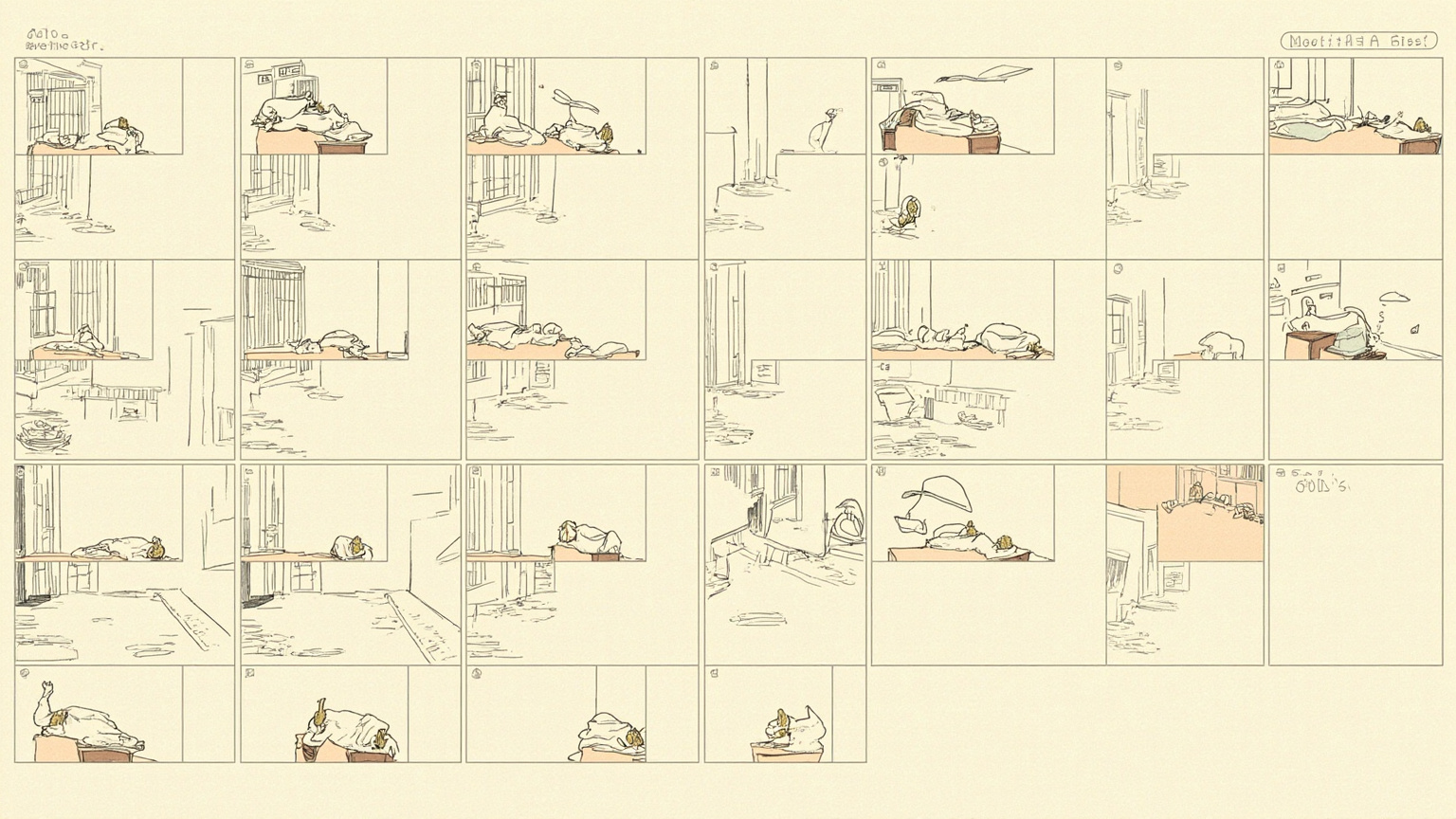
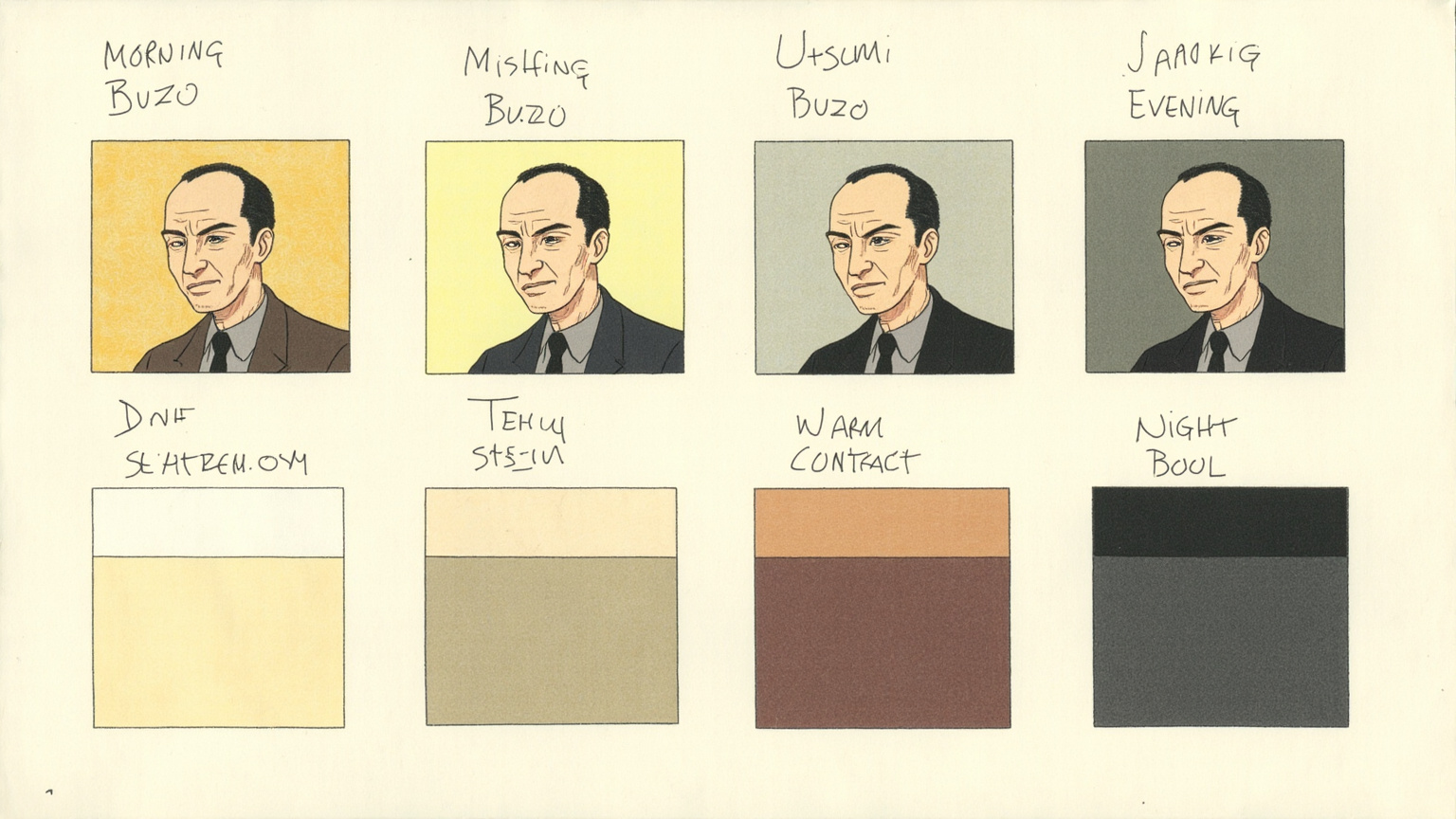
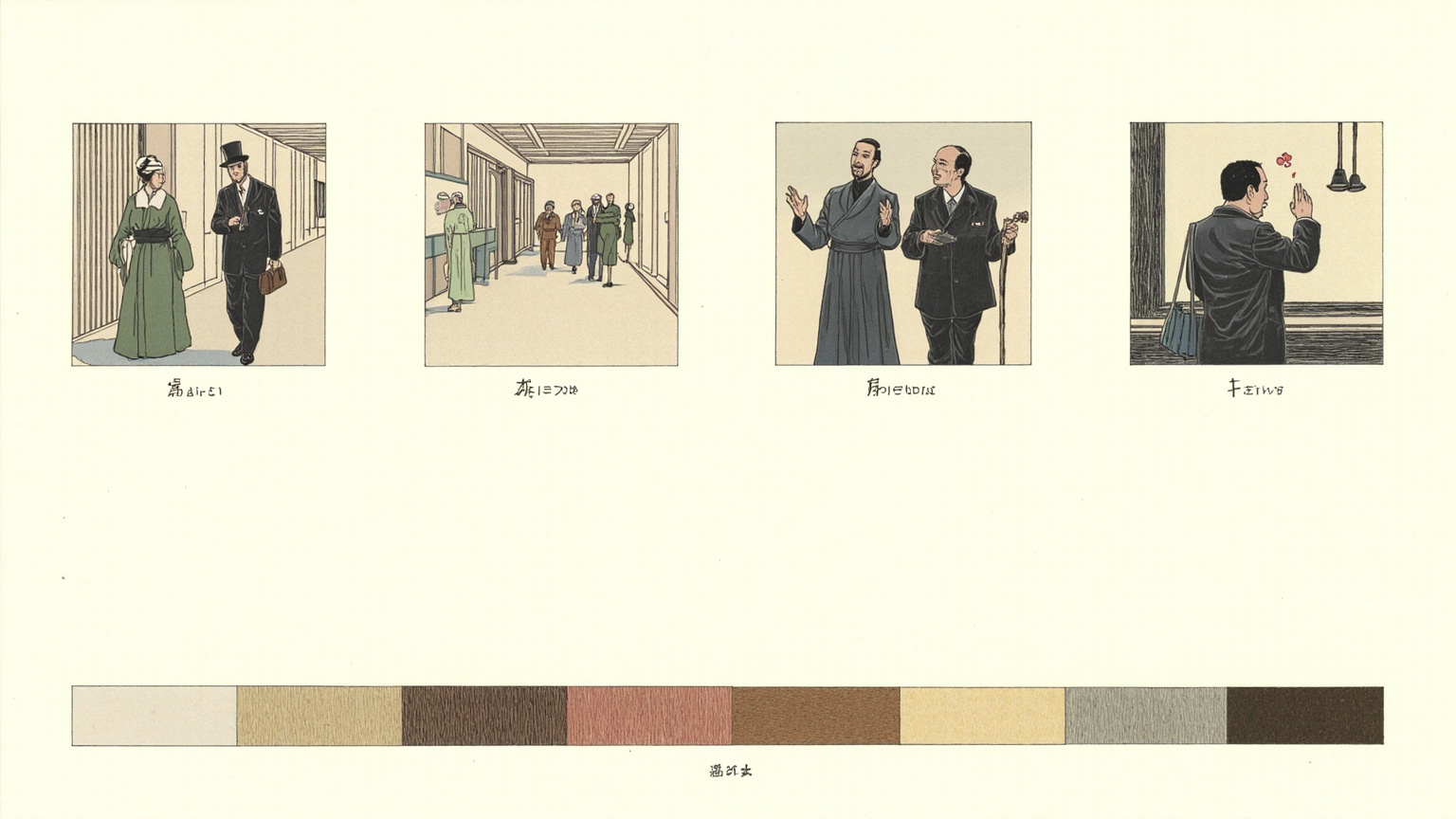
Art Direction4 plates
Before the guide was written, this book got a visual foundation — every illustration you just read grew out of it.