Ulysses · Companion Guide
尤利西斯
一个犹太广告推销员、寻找父亲的青年与整座都柏林,在同一天里沿着街道、记忆与孤独彼此靠近。
Keys and Kidneys
At the top of the Martello Tower, Stephen and Mulligan share a room. Haines is cooking breakfast on the top floor, and as Mulligan shaves, he tosses a key up and catches it, asking Stephen if he wants it. Stephen doesn't answer. He takes the money, turns, and walks down the stairs — from this day on, he never returns. This is the cut Joyce opens with: right from the start, he snatches the key from the protagonist's hand. A few hours later, at the other end of Dublin, a man is in a kitchen feeding milk to a cat, frying his own kidneys for breakfast. He opens a letter, reads the advertisements, looks at his wife still lazing in bed. His name is Leopold Bloom, thirty-eight, Jewish, an advertisement canvasser, ordinary, kind, curious. Today he too is going out — to a funeral, to deliver a letter, to walk the city — not knowing this is one of the most important days of his life. The two events are tied together by the same day, the same city. This is the contract Joyce's first page makes with the reader: anyone reading this book will accompany two Dubliners for twelve hours.
What kind of monster is this book
James Joyce (James Augustine Aloysius Joyce) was in his early thirties when he wrote this novel, living in Paris. It was serialized first, then published in 1922 by Shakespeare and Company. It shares the same author and the same Dublin as Dubliners and A Portrait of the Artist as a Young Man, but the ambition is entirely different: Joyce stuffed an entire day — June 16, 1904 — into eighteen chapters, each in a different style, ranging from Old English epic all the way to the final stream-of-consciousness chapter with no punctuation at all. It is remembered in literary history because it completely changed how the novel works. Earlier modernism was playing with interior monologue, but Joyce found even that insufficient — he made language itself the protagonist: news headlines, catechism, Shakespeare parodies, philosophical Q&A manuals, a tavern monologue swelling into a monster in a cave... each chapter has its own "organ," and the reader has to relearn how to read every time they turn to a new chapter. It is also a publishing history in the Chinese-speaking world. Xiao Qian's translation and Jin Di's translation are almost two different doorways: one reads smoothly, the other sticks close to the original's experimental style. Chinese readers who want to enter need to know that there are two paths through the door.
Two men, two threads, one city
Leopold Bloom is thirty-eight, Jewish, an advertisement canvasser — the most ordinary sort of person on Dublin's streets. His mind turns over advertising copy, kidneys, his wife Molly, his father's suicide, his own Jewish identity. Corresponding to the Odyssey, he is Ulysses — except this hero never fought a war, just walks Dublin's streets buying food, watching a funeral, chatting. Stephen Dedalus is twenty-two, a young poet and teacher, sensitive, fond of Latin, living in the shadow of his dead mother, sharing the Martello Tower top floor with his roommate Mulligan. Corresponding to the Odyssey, he is Telemachus — the child who leaves home to find his father. His father is not blood-related Simon, but the man named Bloom who appears only in the afternoon and into the night. Two lonely people drift through the same day in the same city, gradually drawing closer in the afternoon, until at midnight they are in the small kitchen at 7 Eccles Street, drinking from the same pot of cocoa, looking up at the same starry sky.
Morning: the key tossed from the tower, the kidneys frying in the kitchen
The story begins at eight in the morning. At the top of the Martello Tower, Stephen watches Mulligan grab the key, mock faith, shave and play tricks. Haines has come from England for a holiday, pays his share, but the power to live on the top floor is firmly held by Mulligan's family. Stephen collects his wages, gives them to the housekeeper, and walks down into Dublin. Almost at the same time, Bloom is in the kitchen at 7 Eccles Street pouring milk for the cat, frying his own kidneys, reading the letter left on the table. He replies to a letter from the band manager Boylan, in measured, decent language — the reader will quickly understand this marriage is far more complex than it appears. Bloom leaves the house. Both opening scenes are "a person leaving a home," but the reasons are completely different: Stephen has his key taken, is mocked; Bloom is simply going out to work for the day. The two departures are written differently too — the tower scene is satirical comedy, the kitchen scene is heavily physical realism: cooking smoke, milk, cat.
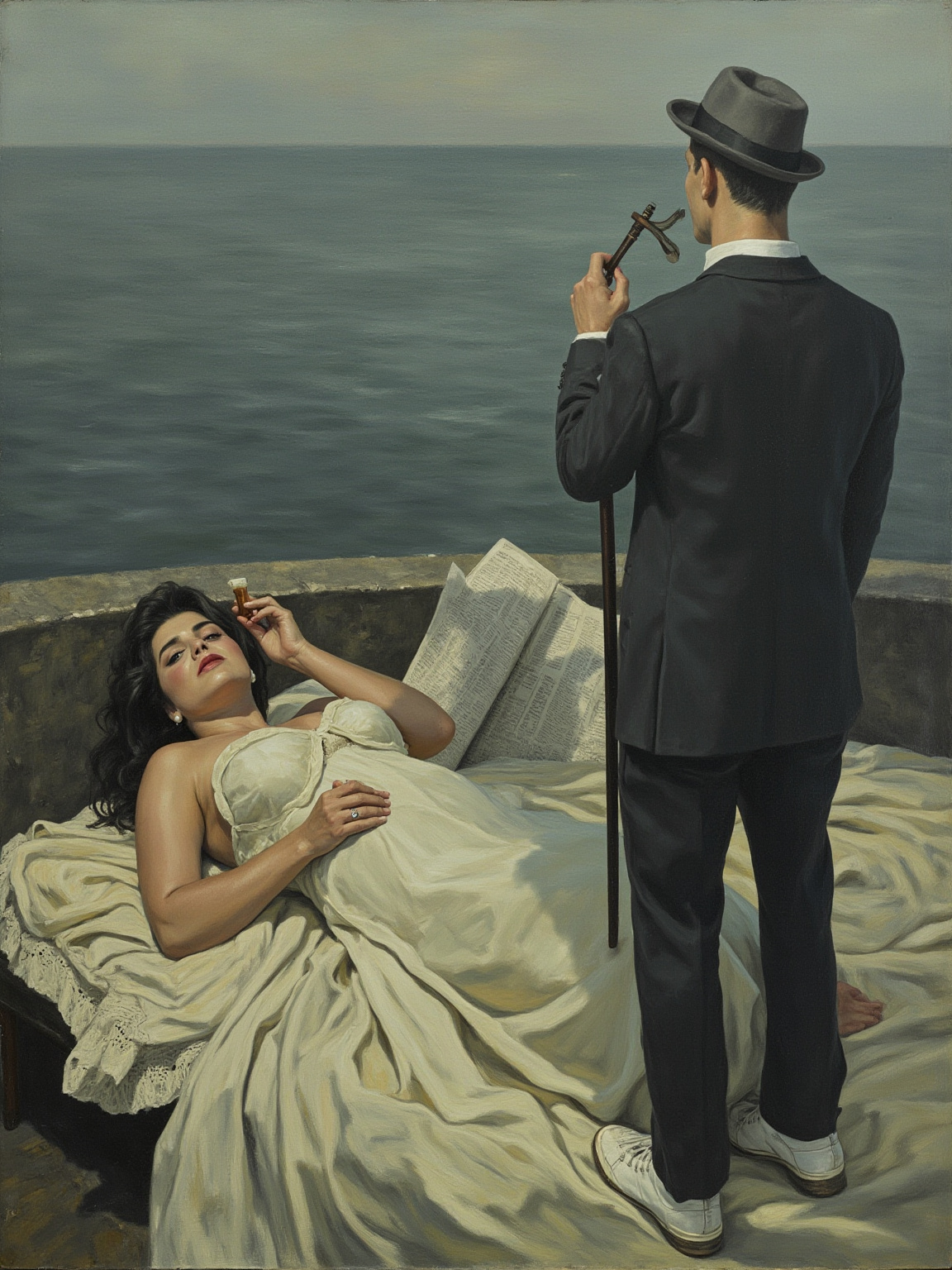
I fear those big words, Stephen said, which make us so unhappy.
斯蒂芬说,我害怕那些大词,它们使我们如此不快。
金句 · 第1章 忒勒玛科斯
Morning to Noon: Three Stops in the City
Bloom's first stop is Hades—attending Paddy Dignam's funeral. The carriage rolls through Dublin, the graveyard surrounded by brick walls, coffins, mourners. Joyce has the dead man's friends cracking jokes, exchanging names, and rattling off their resumes inside a closed carriage, turning 'death' into something that reads less like grief and more like a reunion of old friends. The ending is the dull thud of a coffin hitting the earth. The next stop is Aeolus, the Dublin newspaper office. The rumbling of the rotary press sounds like Aeolus blowing news across the city. Here Joyce turns the newspaper page into a visual collage: headlines, columns, white space, a passage written to look like a typesetting sample. Bloom delivers a message to an advertiser, listens to the editor discuss ad copy and politicians' speeches, while his own thoughts get sliced into a dozen fragments. At noon he eats lunch alone on a street corner, looking at shop window ads and reading street corner notices. This is Joyce's coolest section: he doesn't have Bloom meet anyone, just lets him wander through Dublin's sunlight for an hour. Writing about a salesman's loneliness isn't about his suffering—it's about how many billboards he's seen.
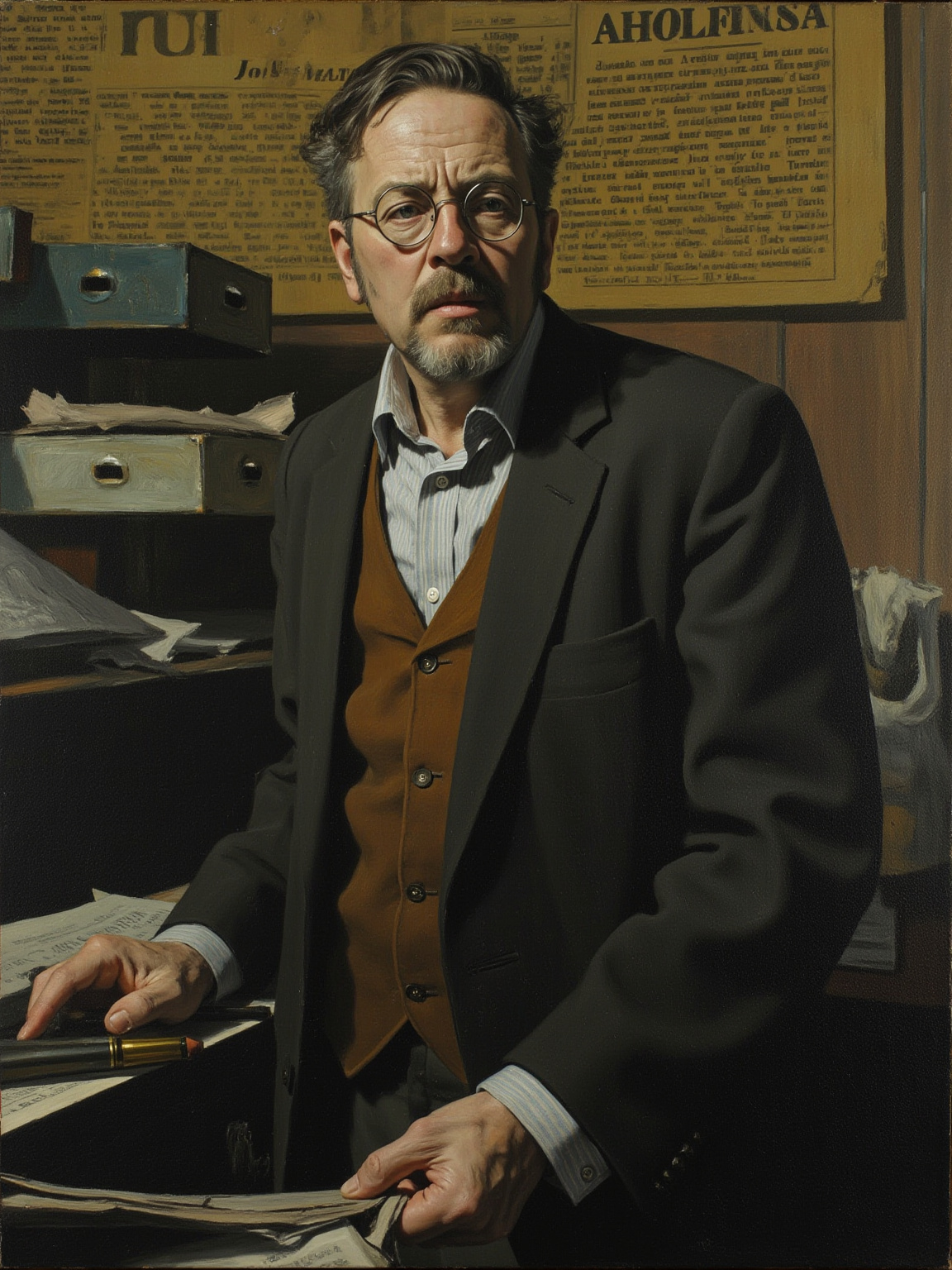
All things are inconstant, love too.
万物皆无常,爱也一样。
金句 · 第6章 哈得斯
Afternoon: The Library's High Talk, The Street's Parallel
Two in the afternoon, the National Library. Stephen stands before a group of English Shakespeare scholars, lecturing in a profound Irish accent on Shakespeare and Hamlet, mixing the illegitimate son complex, the father's ghost, and Irish independence into one pot. The corresponding section of the Odyssey is Scylla and Charybdis—two rock faces, the ship squeezed between them, and the reader knows Stephen is driving himself straight toward the rocks of intellectualism. At the same moment, Bloom crosses central Dublin, chats trivially with a lady on the street, signs a draft at the bank, buys bread for another couple. The two never meet, but they walk parallel lines under the same sky. What Joyce does here is sly: he makes the reader carry both people at once, watching how the same city looks different through different eyes.
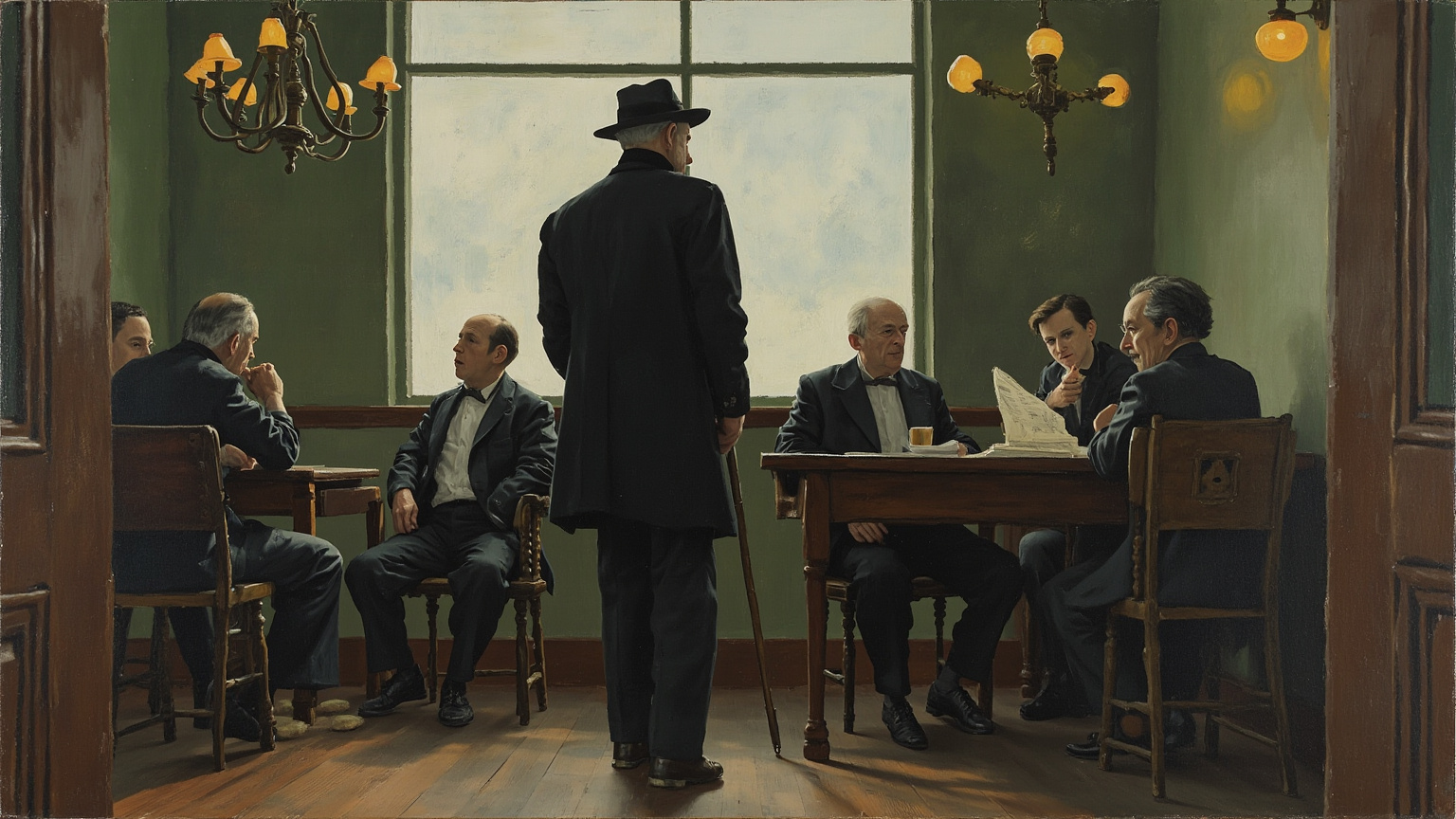
He had heard the name and knew that it was his own name.
他听见那个名字,知道那正是自己的名字。
金句 · 第9章 斯库拉与卡律布狄斯
Evening: The Cyclops' Cave
Six in the evening, Barney Kiernan's pub. Bloom slips in wanting a glass of Burgundy. A big nationalist called 'the Citizen' is holding forth about Irish independence, cursing the English in market-square tones. Bloom leans against the bar reading the paper, just wanting to drink in peace. The moment he hears Bloom is Jewish, the conversation pivots—he starts humiliating the Jewish identity. Joyce inflates this pub chatter into the scene from the Odyssey where Ulysses hides in the Cyclops' cave. The key isn't the plot—it's the tone: the whole chapter is monumental verbal exaggeration, every 'sir' and every curse blown up under a magnifying glass. Bloom doesn't engage, but he refuses to leave. In the end a saucer is flung at him into the sea—the symbolic meaning is that the city closed its door to him during the day. Joyce does something fun here: he makes dialect, swearing, and hiccups literature too. Ancient Greek heroes live in the mouths of drunks too, they just don't know it themselves.
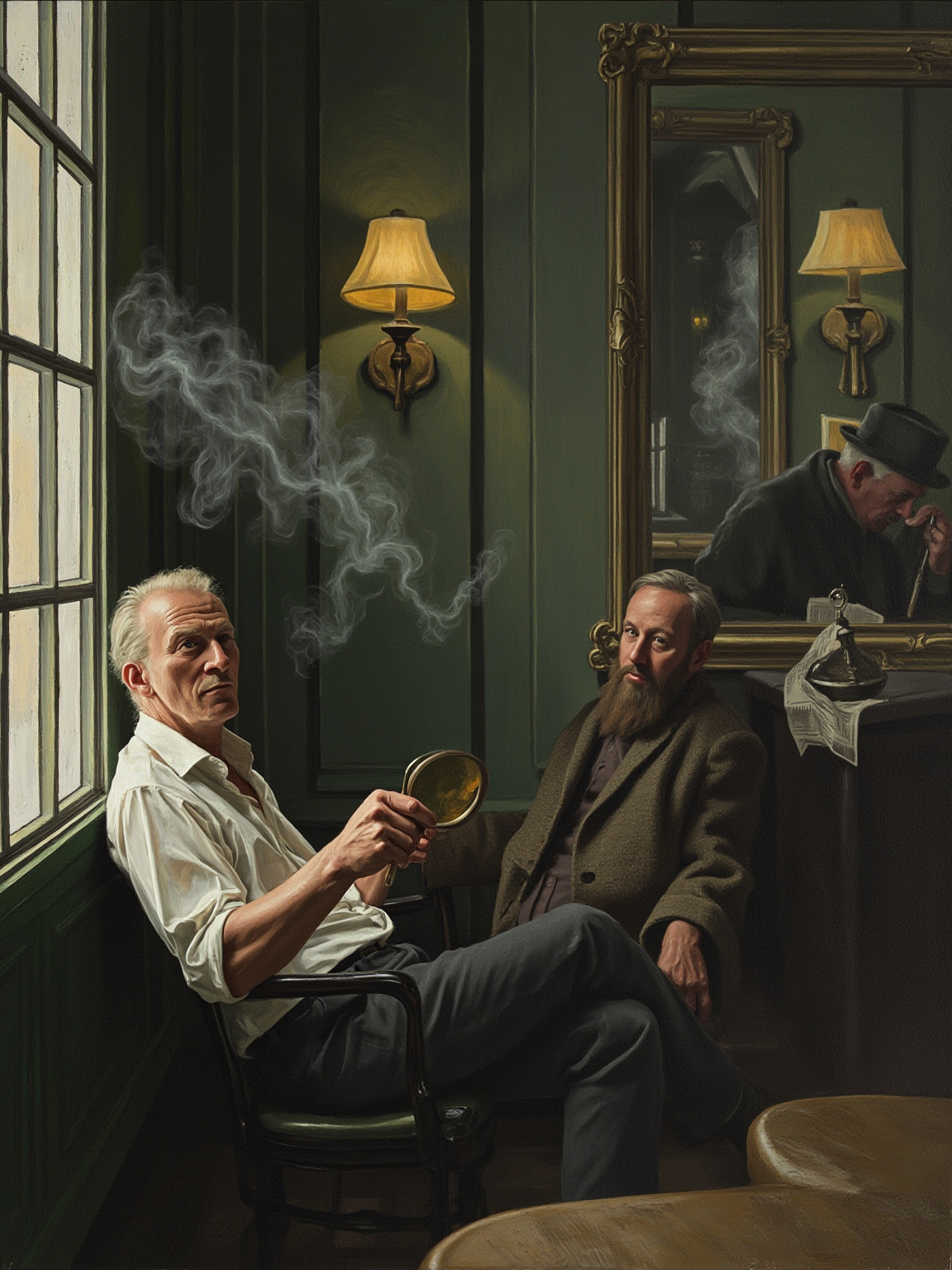
No one can escape the net of time.
没有人能逃离时间织成的网。
金句 · 第12章 独眼巨人
Late Night: The Maternity Hospital, The Phantasmagoric City
Eleven at night, the maternity hospital. Bloom goes to visit a friend whose wife is having a difficult labor. Stephen and some medical students come drifting in tipsy from a party. The two of them meet head-on for the first time in this stark white corridor—Joyce does something here that belongs in literary history: he runs the entire history of English prose, from Anglo-Saxon solemnity to modern slang, each paragraph switching voices, turning a nine-month wait into a carousel of ten different styles. Midnight, they leave the hospital and stumble into Dublin's deeper night. Bloom has had a drink, Stephen is more drunk. Joyce writes this night as a phantom procession (the Circe chapter), corresponding to Odysseus's wandering in the witch's palace: the streets become a stage, passersby become ghosts, all of Dublin like a map softened by alcohol. They thread through alleyways, Stephen gets knocked down, Bloom pulls him up. This is the turning point where the two move from parallel to convergence. Bloom changes from observer to protector, Stephen from loner to someone being caught. There is no blood between them, but Joyce lets the reader see: a father can be someone you meet for the first time today.
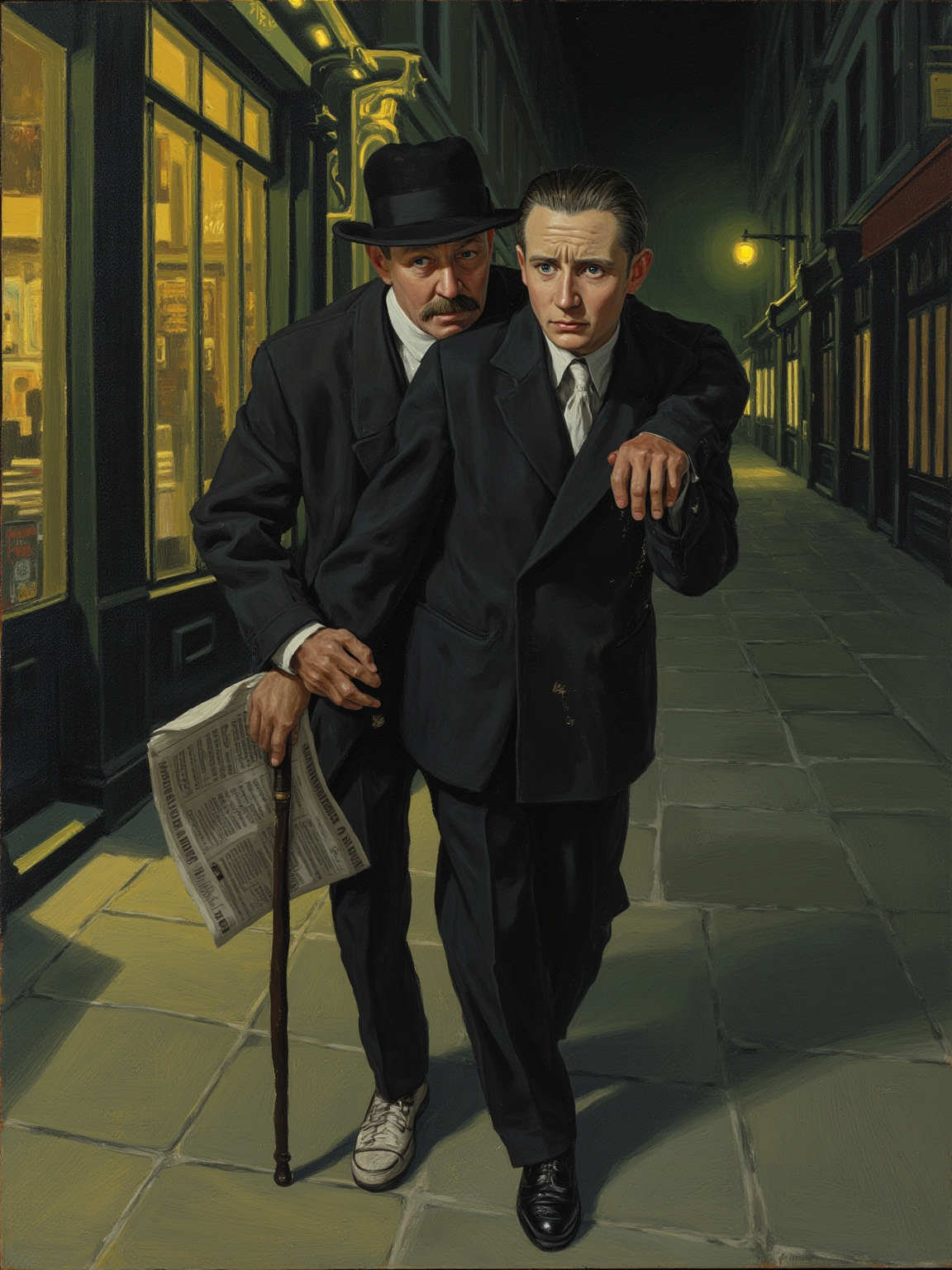
I am the servant of two masters, said Stephen.
斯蒂芬说,我是两个主人的仆人。
金句 · 第15章 太阳神牛
Early morning: the kitchen on Eccles Street
One a.m., 7 Eccles Street. Bloom brings Stephen back to his place. In the tiny kitchen they heat cocoa, break off lumps of sugar, tear bread; Stephen teaches Bloom to say "mater" in Italian, and Bloom talks about his dead son. They share no blood, but these two men are the most understanding pair in all Dublin on this day. The next chapter is Joyce's strangest section (Ithaca): the whole chapter written in catechism form — "Q: Did they drink? A: They drank. Q: What did he see? A: ..." — like a philosophical manual. A scene that should have been emotionally charged, he compresses into the most restrained form. This section describes them going out to the garden, looking up at the starry sky, returning inside, and Stephen taking his leave. Bloom sees Stephen out, then goes upstairs. The day is over.
The final forty minutes: 'yes' ties up the whole city
The final chapter of the novel (the Penelope chapter) has only one speaker: Molly Bloom, thirty-four, a singer, half-lying in bed. The whole chapter is eight long sentences, with no punctuation. Joyce has her start recalling the day Bloom proposed, then jump to her girlhood in Gibraltar, her first kiss, married life, becoming a mother — interleaved with Boylan, with today. At first the reader drowns: which tense, which event, which person? But by the final sentence, the whole chapter collapses into a single voice. The chapter ends with a single word: "yes." Then the book ends. Molly's "yes" is not lust — it is total affirmation: of this day, of this marriage, of this ordinary man named Leopold Bloom, of life itself. Only then does the reader realize: her day was the real final destination.
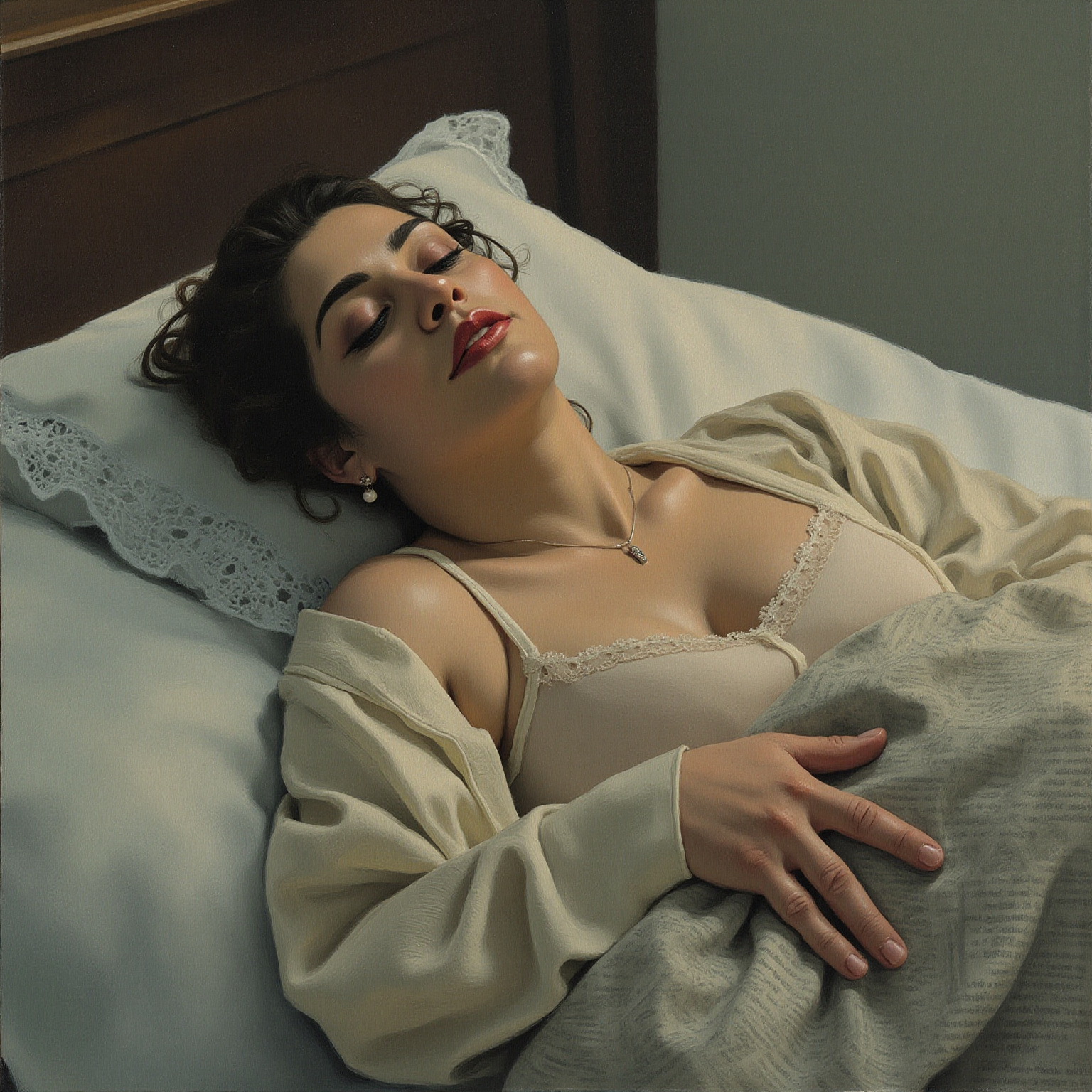
And yes I said yes I will Yes.
而我说,是的,是的,我愿意,是的。
金句 · 第18章 佩涅洛珀
Why no one can bypass this book after the twentieth century
First, it melts realism, modernism, journalism, drama, philosophical manuals, and stream of consciousness into one. Each chapter has its own organ; every time the reader turns a page they must switch reading modes. Today's novel readers will feel at home — many postmodern techniques are actually what Joyce's generation already played with. Second, it invented "the city as a character." Every street in Dublin, every advertisement, every drunk's foul language is precisely pinned to June 16, 1904. Following Bloom for twelve hours is like walking through a map. This approach connects directly to today's urban writing and the TV series trope of "one city, one day." Third, it created the most lovable ordinary person. Bloom is the most unheroic hero in literary history — he has no supernatural powers, no enemies, no mission. He just goes out to buy some pig's kidneys, visits a friend. But after reading, the reader feels: their own day, too, is drifting through the city.
Knowing the plot, why you should still read the actual text
The commentary gives you a map; the text is the land. Knowing that Bloom gets hit with cups and saucers doesn't mean you've heard the "clink" of dialect in a pub; knowing that Molly ends with "yes" doesn't mean you've seen how eight long sentences weave a woman's half-asleep state into one fabric. What's more critical is that style itself cannot be seen. For instance, in the maternity hospital chapter, Joyce walks through the entire history of English prose — that's not in the plot, it's in the sentences. Or take Molly's final chapter with no punctuation at all; the "way of reading" itself is an experience — where the sentences breathe, how the tenses jump within long sentences. These things can only be read from the original. Then there's the physical sensation. Those lines where Joyce describes Bloom frying kidneys, the sound of oil in the pan, the temperature of cooling milk, the weight of a cat jumping onto the table — the commentary can't replace that. What makes Bloom's day moving isn't what he does, but that Joyce captured the texture of a person "living" on Dublin's streets. The best posture for reading this book isn't finishing it; it's picking an afternoon, choosing either the Xiao Qian or Jin Di translation, starting from chapter eight "The Sirens" or chapter fifteen "Circe" — if you can't keep going, switch to another chapter. It's a book meant to be read in pieces, jumping between sections. Once you walk into that street, that ordinary man named Bloom will always be there.
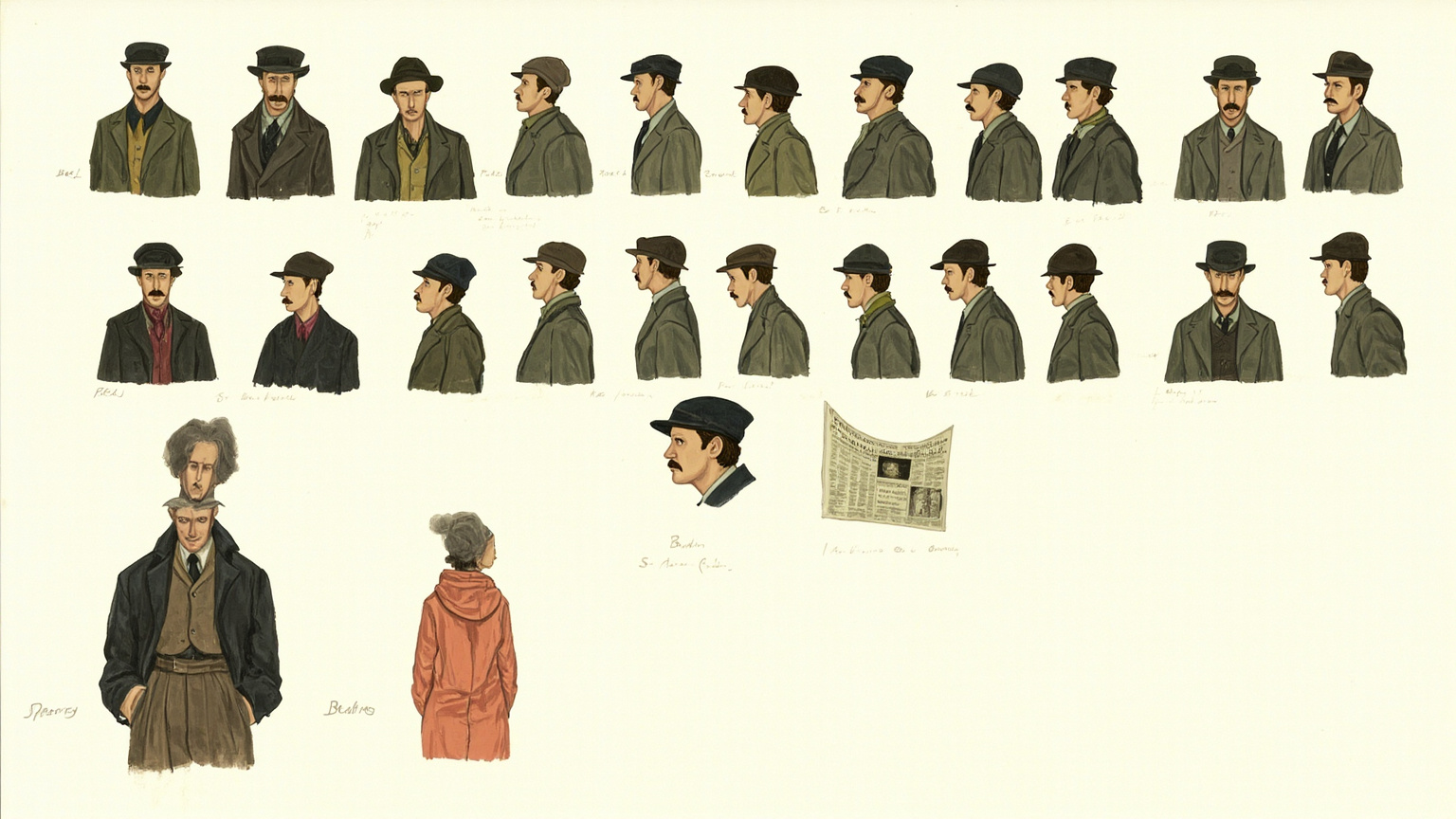
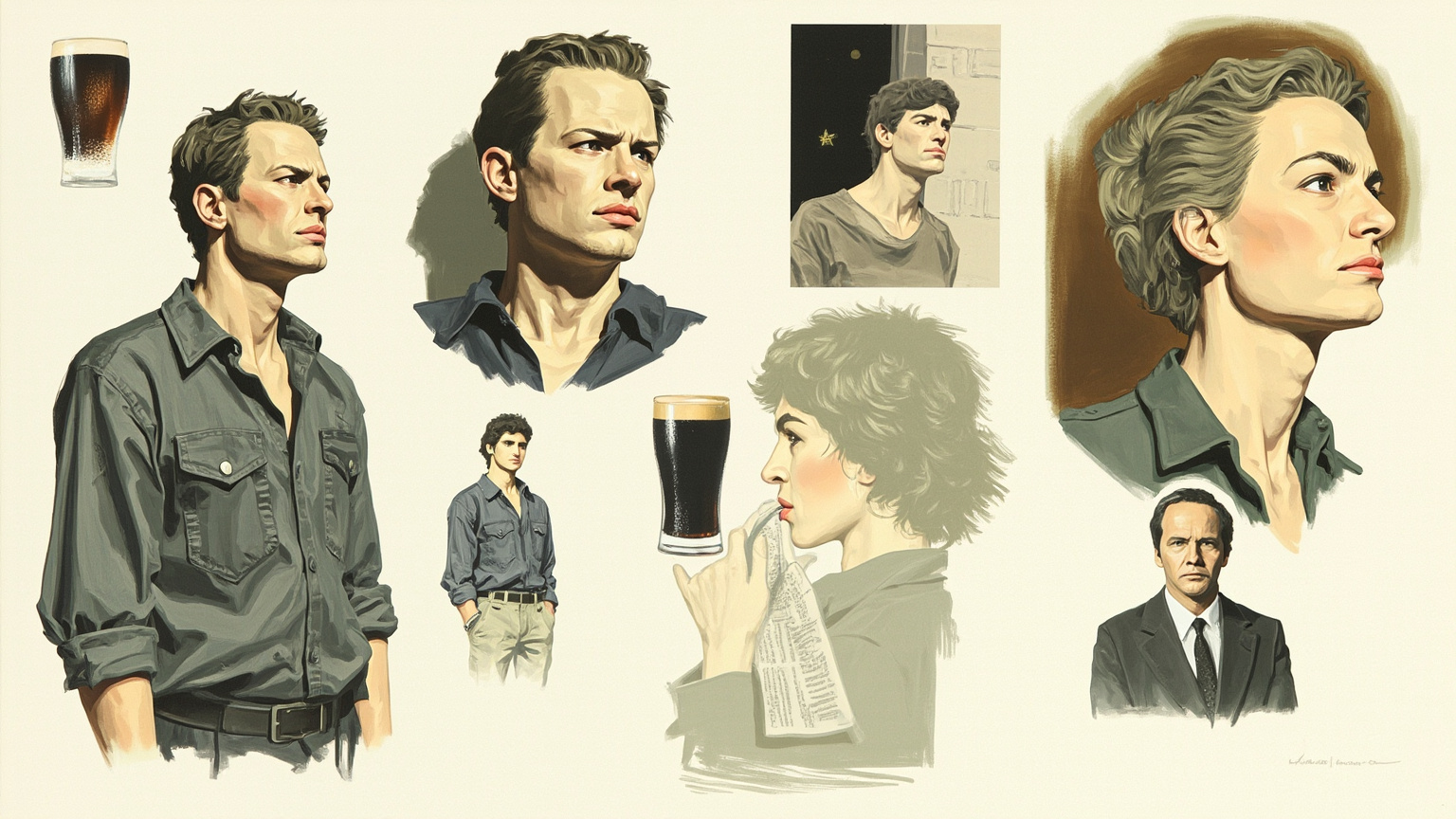
Art Direction4 plates
Before the guide was written, this book got a visual foundation — every illustration you just read grew out of it.