Under the Greenwood Tree, or, The Mellstock Quire: A Rural Painting of the Dutch School · Companion Guide
绿荫下
一支业余唱诗班提灯走过雪夜,一架管风琴静静等候在教堂门口;老乐手放下琴弓的那个下午,与少年提琴手求婚的满月山坡,是同一片威塞克斯最后的明朗。
Opening: Lanterns on a Snowy Night in Mellstock
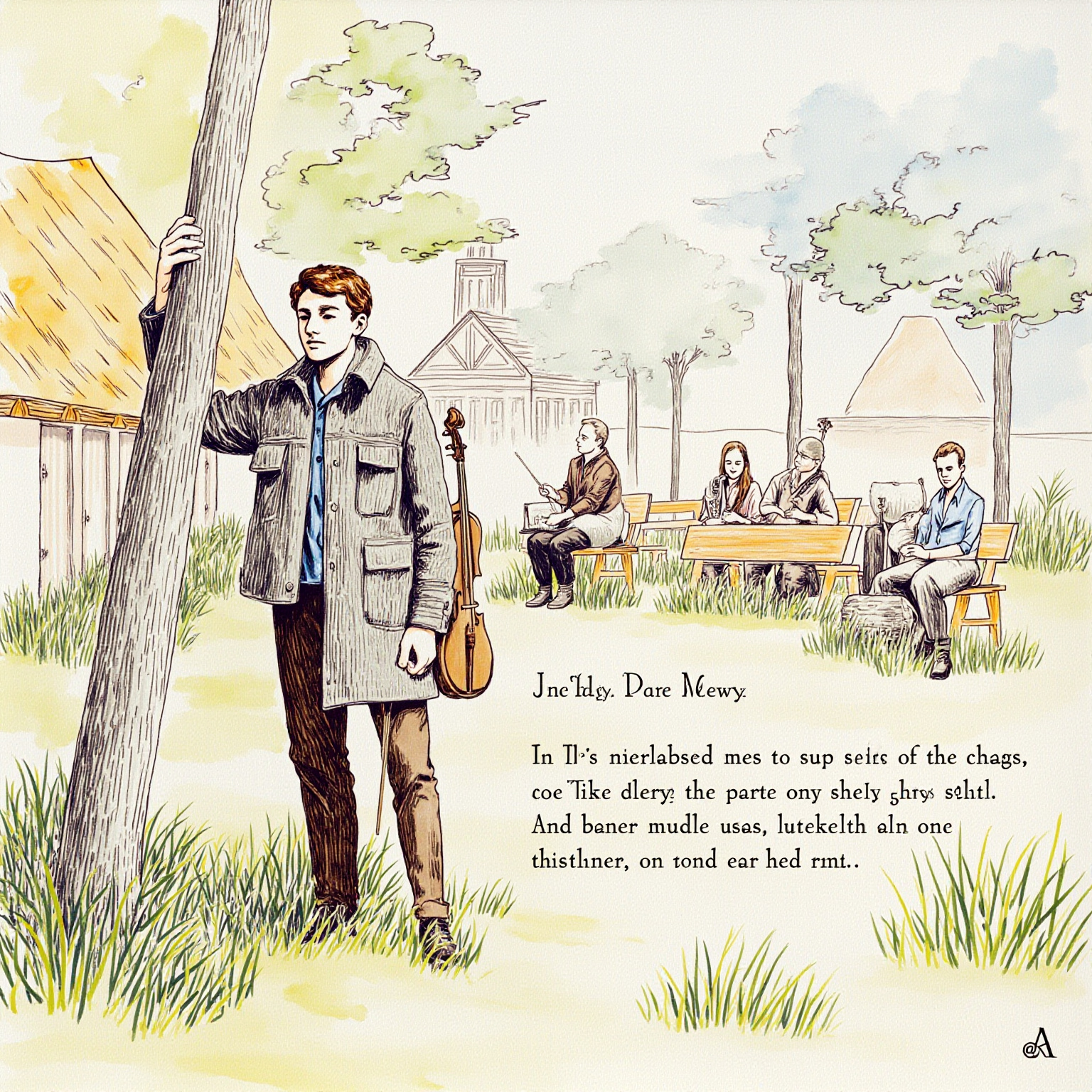
The snow is still falling. A line of men carries lanterns out of the village, fiddles, a cello, and a bassoon striking up in the dark, singing the old carols. It is Mellstock's yearly custom, amateur musicians accompanying the church choir gallery, a practice that ran unbroken from the seventeenth century into the nineteenth. Leading the way are old William Dewy and his son Dick, two fiddles, a pair of Dewys. Lantern light falls on the holly hedges and the snow over the thatched cottages, and the whole village wakes to this small band. That is the opening Hardy wrote.
What Kind of Book This Is
Under the Greenwood Tree is Thomas Hardy's second novel, published in 1872, and its subtitle says exactly what it is: A Rural Painting of the Dutch School. The warm, realist village scenes of Vermeer and Hobbema are what Hardy was reaching for. Among all his novels it is the only one written in a genuinely comic key, the only one that ends happily. Set beside the dark books he would later write, Tess of the d'Urbervilles, Jude the Obscure, Under the Greenwood Tree looks like a bright meadow of apple trees glimpsed just before a black forest.
It belongs to Hardy's invented Wessex, a literary geography built on the real Dorset of southwest England. Under the Greenwood Tree is the brightest corner of that map, and the pastoral negative from which all the later tragedies were printed.
Characters and World
Mellstock village, the 1870s. An old parish church runs a choir made up entirely of villagers, fiddlers, a cellist, a bassoonist, farmers and carpenters and shopkeepers, none of them a professional musician. Dick Dewy, the hero, is the village grocer's son and the youngest fiddle in the choir. Fancy Day, the heroine, is Mr. Day's daughter, the village schoolmistress: clever, quick-tongued, and not short on pride.
The disruption arrives in the shape of Maybold, the newly arrived curate, fresh from the city and modern to his fingertips. He brings two things with him: a plan to replace the amateur band with a real organ, and a growing fondness for Fancy Day. The village elders, Dick's father old William, Uncle Jeb, and Mike, known as the Tranter, the men who have played together in the choir gallery for years, all find themselves pushed toward the same reckoning.
How the Plot Runs
The story opens with that lantern procession on the snowy night, the most famous scene in the book. Hardy gives a whole chapter to the band going door to door singing carols, tramping through snow, pushing open doors, being pulled inside for hot mulled cider, then walking on. It is not scenery. It is introduction: every musician's gait, his fiddle, his jokes, all laid out across that one night.
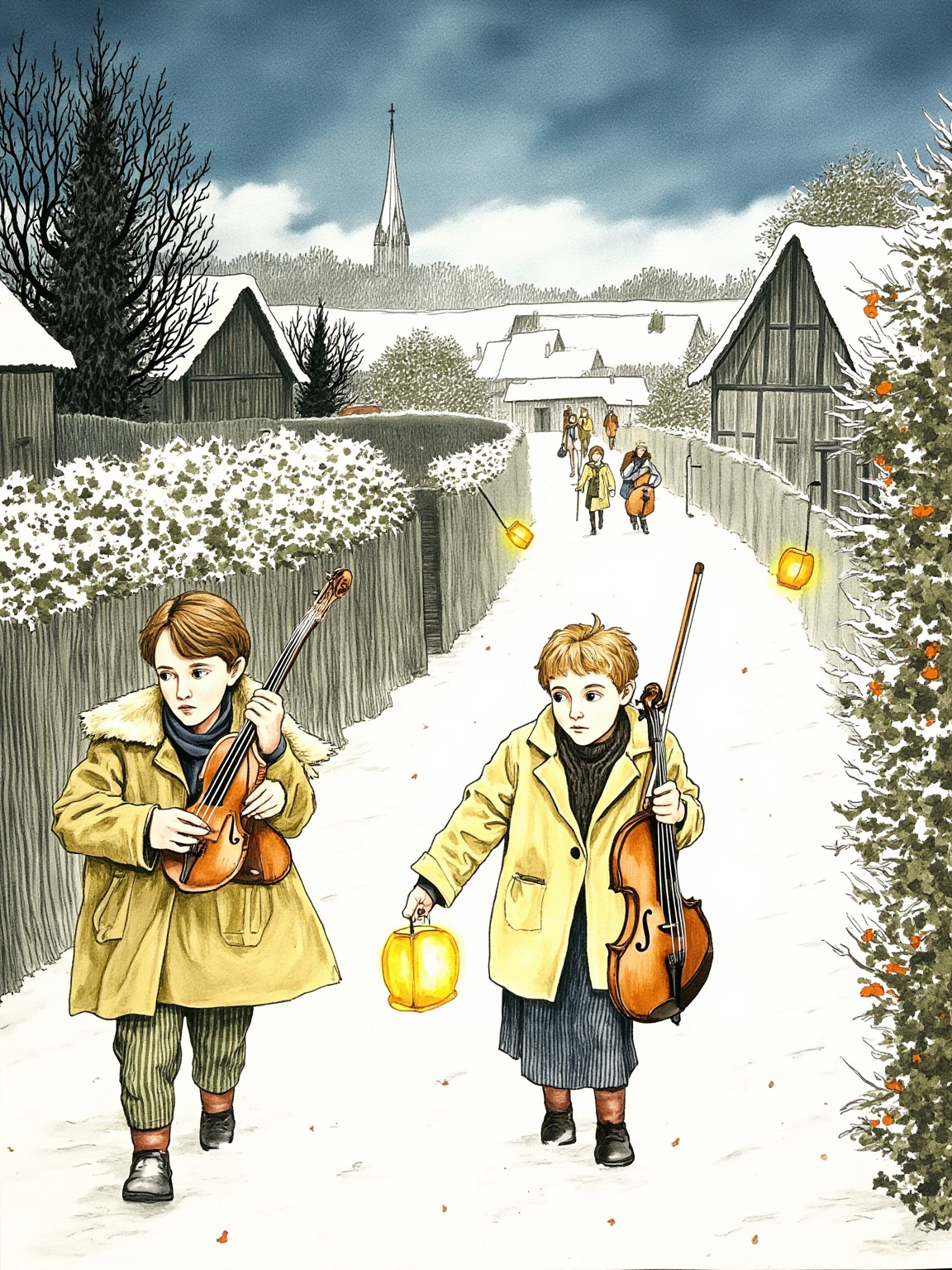
It was still snowing as they set out from the carriers' cottage, and the lanterns threw a warm, unsteady glimmer upon the snow.
他们从车夫的小屋出发时,雪还在下;灯笼把一片摇晃的暖光投在雪地上。
金句 · 第1章 · 雪夜提灯
It is on this same snowy night that young Dick Dewy works up the nerve to speak to Fancy Day. She turns him down. The first time.
Old Against New: That Infernal Organ
Not long after taking up his post, the new curate Maybold proposes replacing the village's out-of-tune amateur band with a proper organ. To him this is progress. To the old musicians it is being pulled up by the roots. The village holds a meeting about it, nothing heated, but tense enough. The old players don't argue and don't make a scene. They simply pool their own money and have the worn fiddles and cello repaired, buying whatever time they can. Mike the Tranter walks the parish on his own two legs, knocking on door after door for donations, and not many doors open happily.
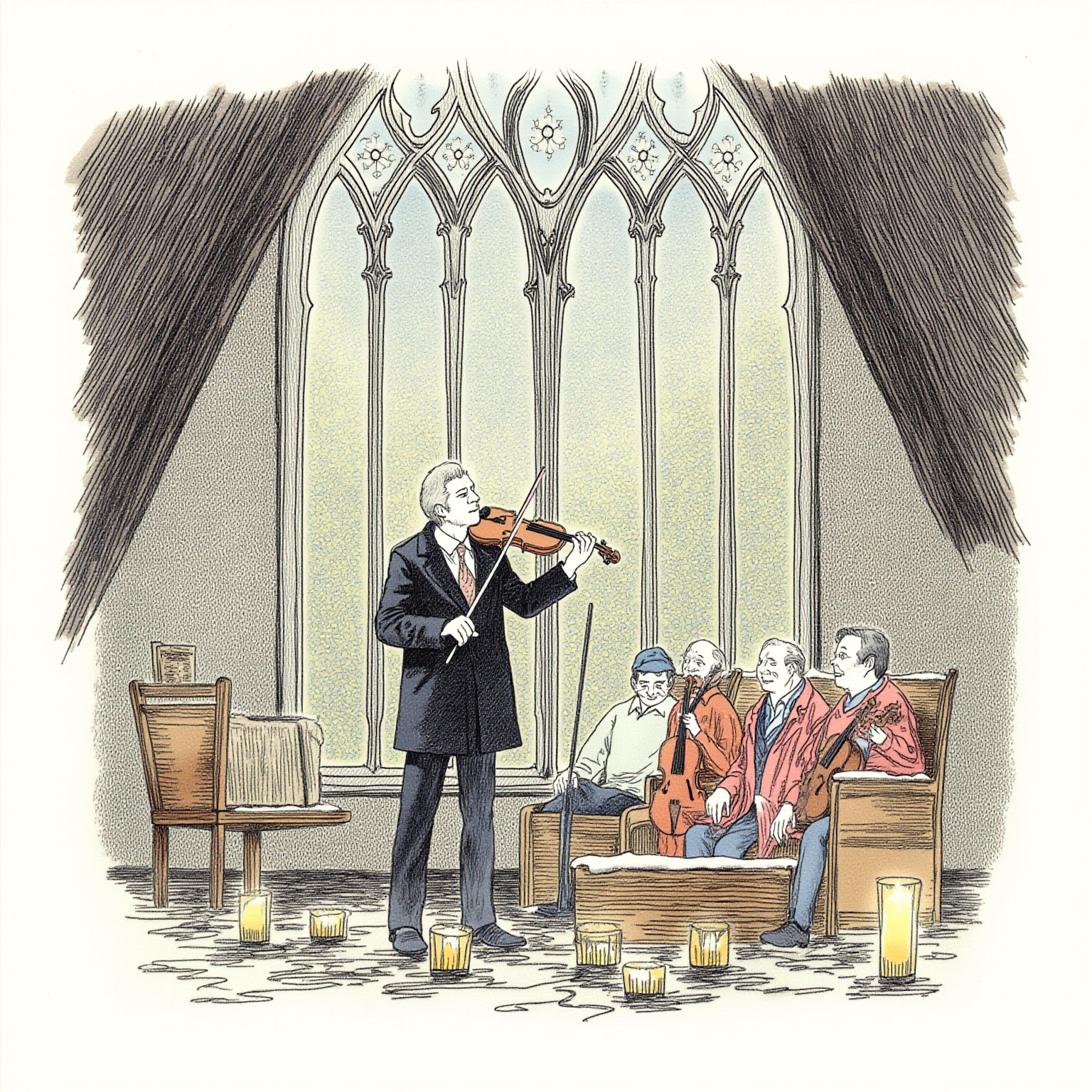
They were simple old men, who played their native tunes with no ambition of any sort; and to be set aside for an organ seemed to them strangely unjust.
他们都是些朴实的老人,只拉拉本乡的曲子,并无半点野心;如今要被一架管风琴挤掉,在他们看来实在是不公。
金句 · 第8章 · 木匠铺里的筹款
The whole conflict is written with real restraint. No confrontation, no dramatic showdown, just a few men in a carpenter's shop restringing fiddles and rosining bows. This is the template for every old-England-disappearing theme Hardy would return to later, a wistfulness with a smile in it, not an angry accusation.
Dick's Courtship: Two Refusals and One Yes
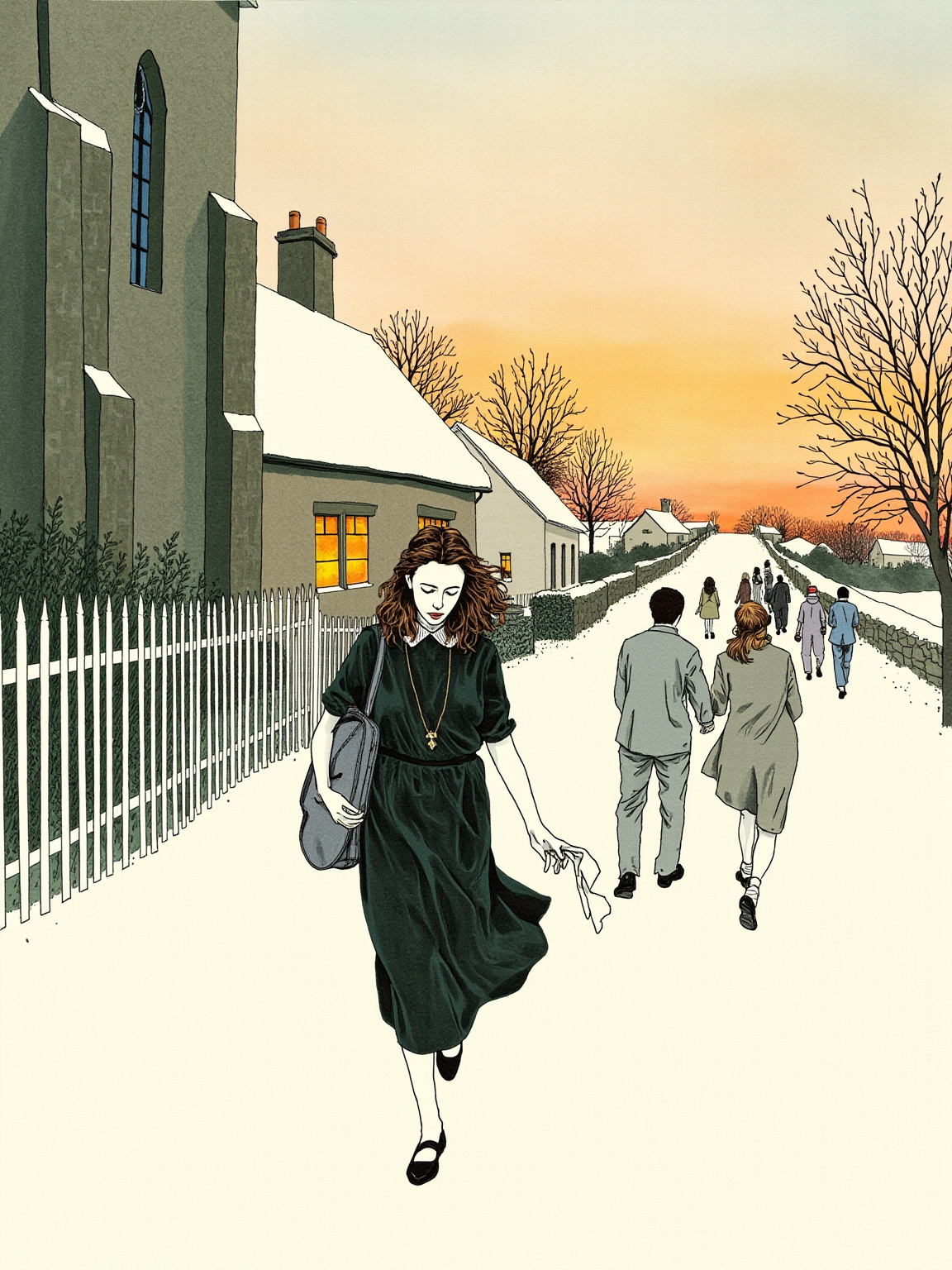
The courtship thread runs alongside the choir thread. Dick asks once, and Fancy laughs him off. He asks again, and is turned down again. Between the two, a rival appears, none other than Maybold, the curate come to replace their band. Fancy's final refusal falls on Maybold, but Dick's two refusals are just as real. What stands between them is not only Fancy's pride but a stray remark from the new archdeacon's wife at a tea party, something like, where we come from, schoolmistresses don't usually attend this sort of thing. Hardy never says outright that it wounds Fancy, but the paragraph of her walking home alone is made of broken glass.
He would walk up the hill on every full-moon night, and stand there till she came; and at last she came, and he was patient no longer.
每个满月之夜他都走上那座山岗,站到她来为止;她终于来了,他再也等不下去。
金句 · 第18章 · 满月山坡
The first time I read that stray remark, I stopped short too. Hardy explains nothing, he just quickens Fancy's steps. In his later tragedies this technique turns into a knife. Here, in Under the Greenwood Tree, it is only a cold gust of wind.
The Organ Arrives, the Musicians Leave
The new organ is finally carried into the church. The village sits through its first hymn under the organ's roar. Afterward none of the old musicians says a word. They go back up to the choir gallery, run through one last silent rehearsal, lay down their bows, close the fiddle cases, and leave the music stands bare. It is the quietest page in the whole book, and the one that sinks hardest. Hardy does not have them smash their instruments or make a protest. He simply lets them walk out the door into an ordinary country evening.
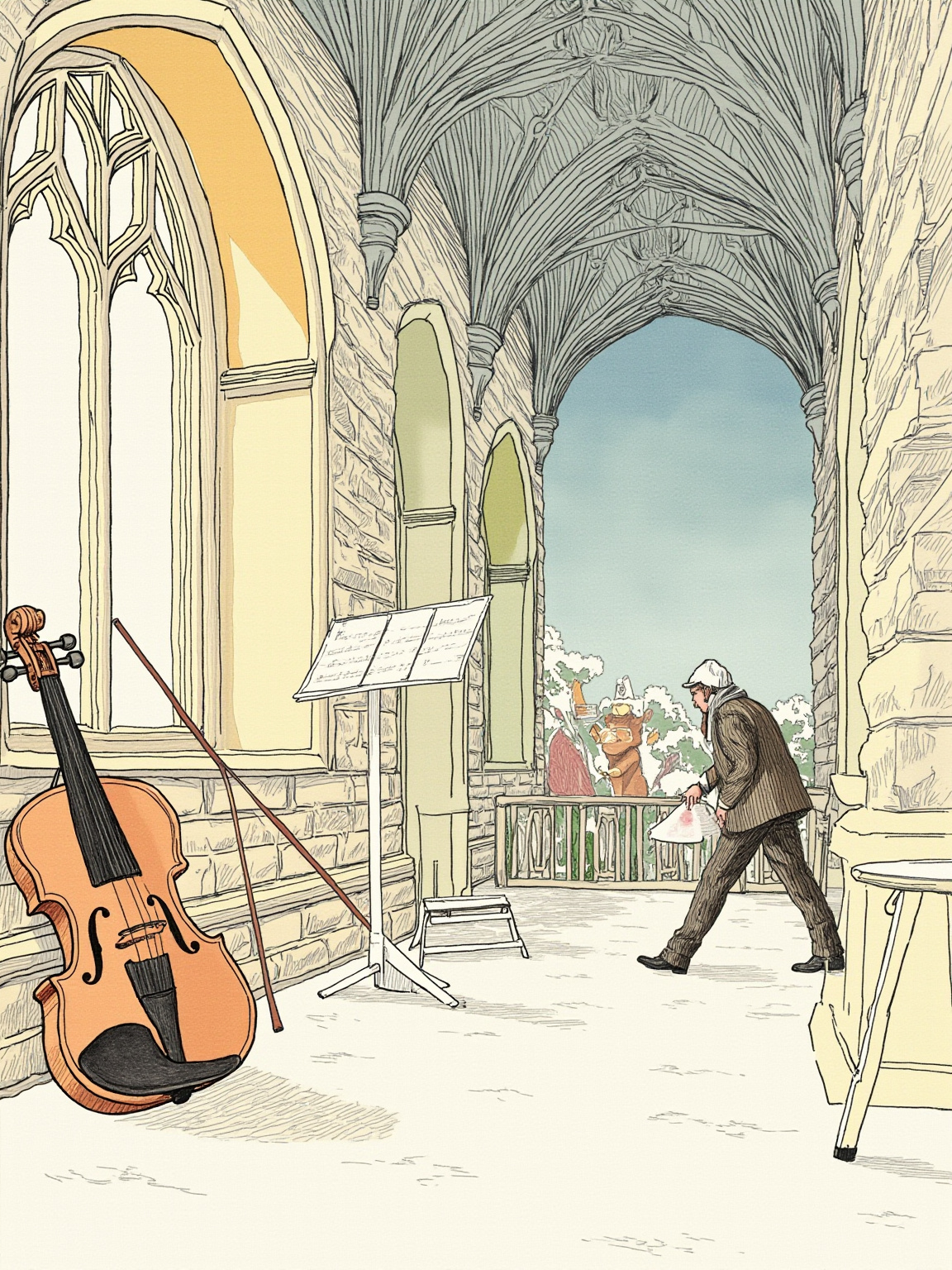
They closed the lids of their old instruments, and laid them gently in their cases, as fathers lay dead children in their coffins.
他们把旧琴的琴盖轻轻合起,放进琴盒;那神情,像是父亲亲手把死去的孩子放进小棺材。
金句 · 第28章 · 最后的演练
It is around this same time that the curate Maybold quietly withdraws from courting Fancy. He never says why, perhaps he has not worked it out himself. What he leaves behind is the organ, and a village romance with no ending.
The Hill Under a Full Moon, and a Midsummer Wedding
Dick is still Dick, still climbing the hill every full moon to wait for Fancy. He has grown a little steadier, less of a hothead. On Fancy's side, an aunt and a mother step in. The aunt picks an afternoon, sits alone with Fancy in her parlor, and asks her plainly which man she really wants. The mother sighs over her bread dough in the kitchen and says every word a country mother is supposed to say, and some she isn't. Fancy finally nods yes, and Dick is so happy he can barely get a sentence out. The wedding is set for midsummer, right after the maypole dance.
On the wedding day, Mellstock's amateur musicians pick up their old fiddles and cello again and scrape their way through a tune that never quite lines up, while outside the villagers dance around the maypole. This time nobody replaces them. They come on their own terms, to send off a bride and groom. Hardy writes the wedding loud and warm, a village scene straight out of a Vermeer frame.
The little procession to the church was bright and clear; the bells rang out so lustily that all Mellstock seemed to rejoice with them.
这一支小小的迎亲队伍走得又鲜亮又清朗;钟声敲得那样响亮,仿佛整个梅尔斯托克都在同他们一起欢喜。
金句 · 第38章 · 仲夏婚礼
What the Book Is Really About
On the surface it is a midsummer wedding. Underneath it is a craft dying out. An out-of-tune amateur choir replaced by a proper organ is a small model of everything happening across rural England in the 1870s: railways, school reform, a renewed church, mechanized farming. None of it has truly landed yet, but its shadow already falls across the edge of the village. Every one of Hardy's later characters ground down by fate, from Eustacia Vye in The Return of the Native to Jude in Jude the Obscure, is a product of what comes after this organ. Under the Greenwood Tree stops right at the moment the organ first sounds, before the tragedy begins.
The hint in that subtitle, A Rural Painting, comes down to the word frame. Hardy is not after fate, not after philosophy. He wants a single frame: a frame of light, a frame of people, a moment caught on canvas. The light outside a window, the green of an apple orchard, snow on a row of beehives, a lantern's small red dot in the dusk. What this book asks of you is to slow your mind down and listen to a fiddle that is slightly out of tune.
Hardy would go on to write so many people ground down by fate. Under the Greenwood Tree is the last bright meadow of apple trees before that black forest.
Knowing the Plot, Why Still Read the Book
The plot is a map. The book itself is the land. I can tell you the organ arrives, the old musicians leave, Dick finally marries Fancy. What I cannot give you is the rhythm of Hardy's own writing of that lantern procession on the snowy night, a whole chapter shot in slow motion. Nor can I give you the tone of old William Dewy telling ghost stories to his grandchildren while he plays, the last few pages of a happy old man about to be swallowed by his own time. There is also the stretch where Fancy walks home alone, nobody in the whole book comforts her, but walk that stretch with her and something in your chest tightens past words. Only the original text can give you that tightness. Not to mention the details tucked into the country lanes, the apple orchards, the beehives, the churchyard, set in one by one by Hardy's own hand, and missed with a single skipped glance. This book is not long. A few hours will get you through it. Take it as a chance to sit in the sun before you reach Hardy's black forest.
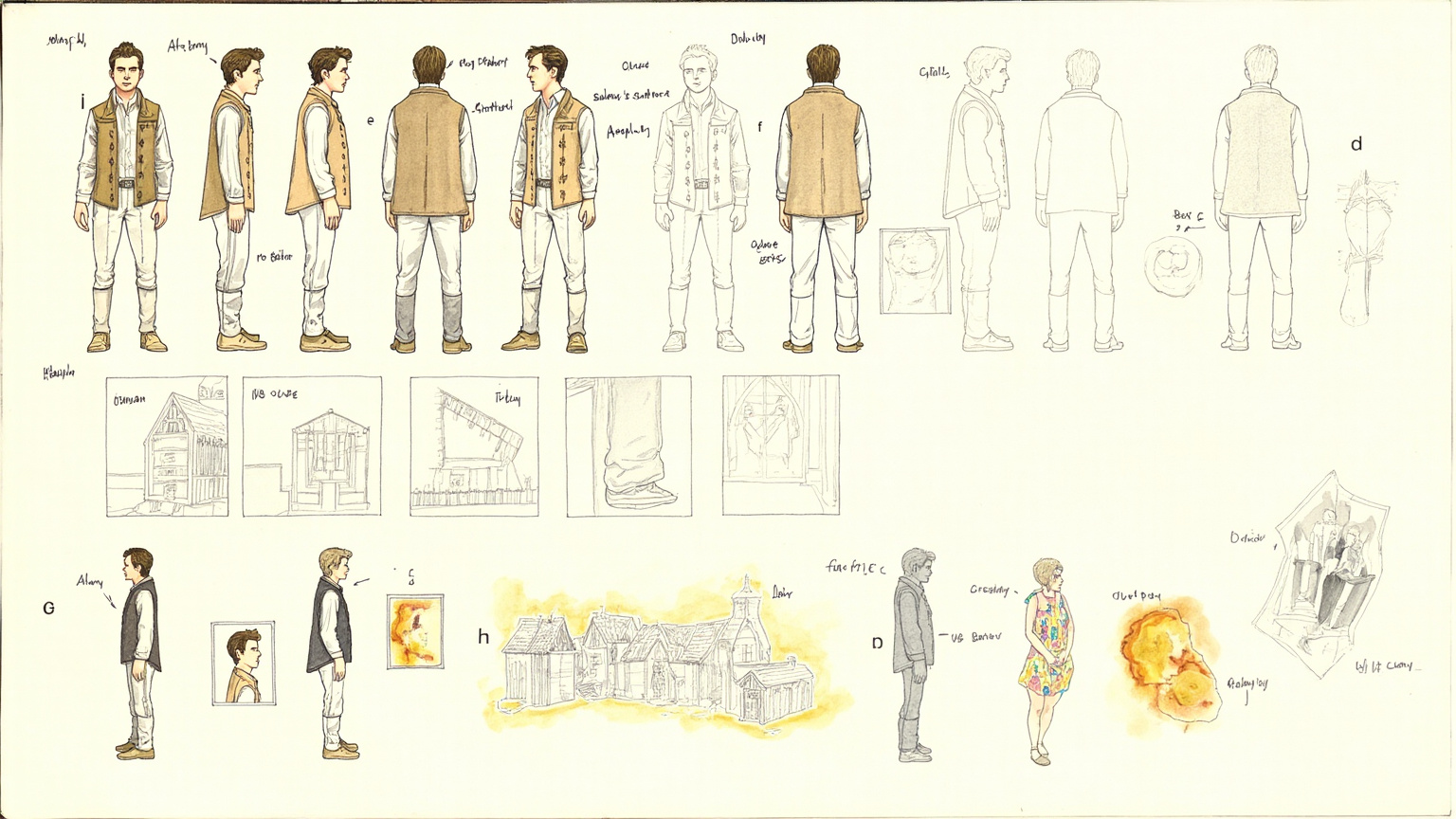
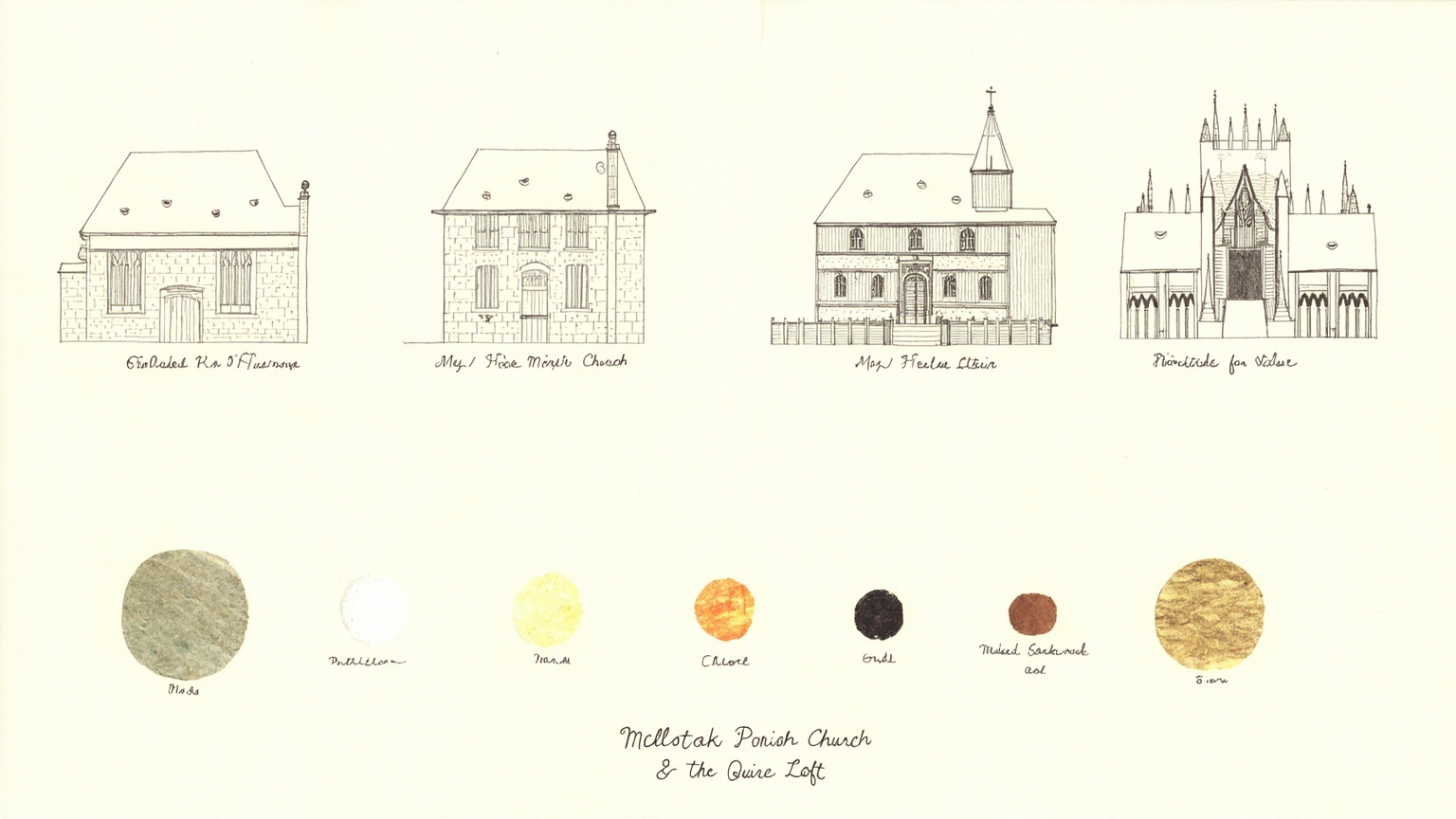
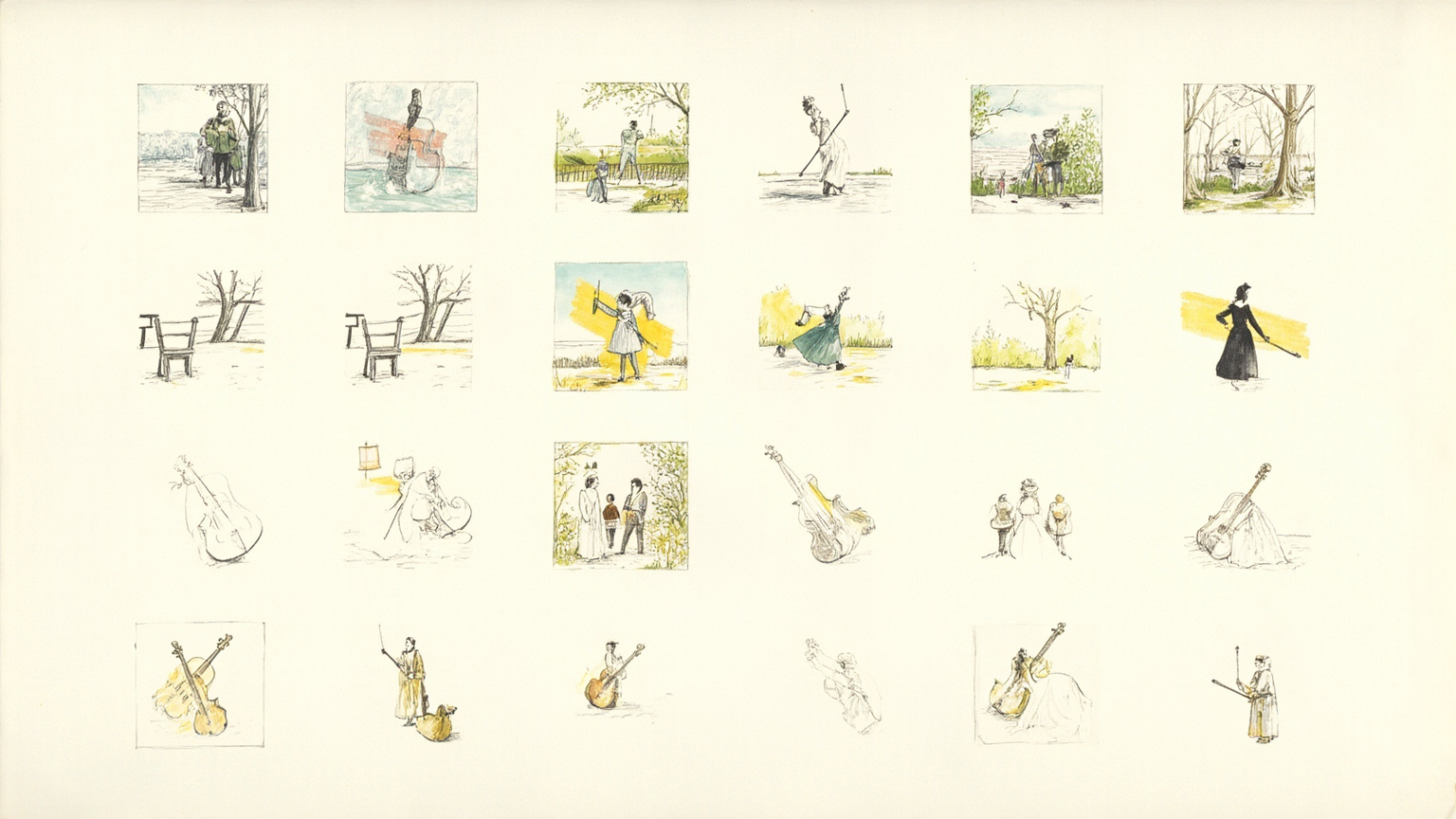
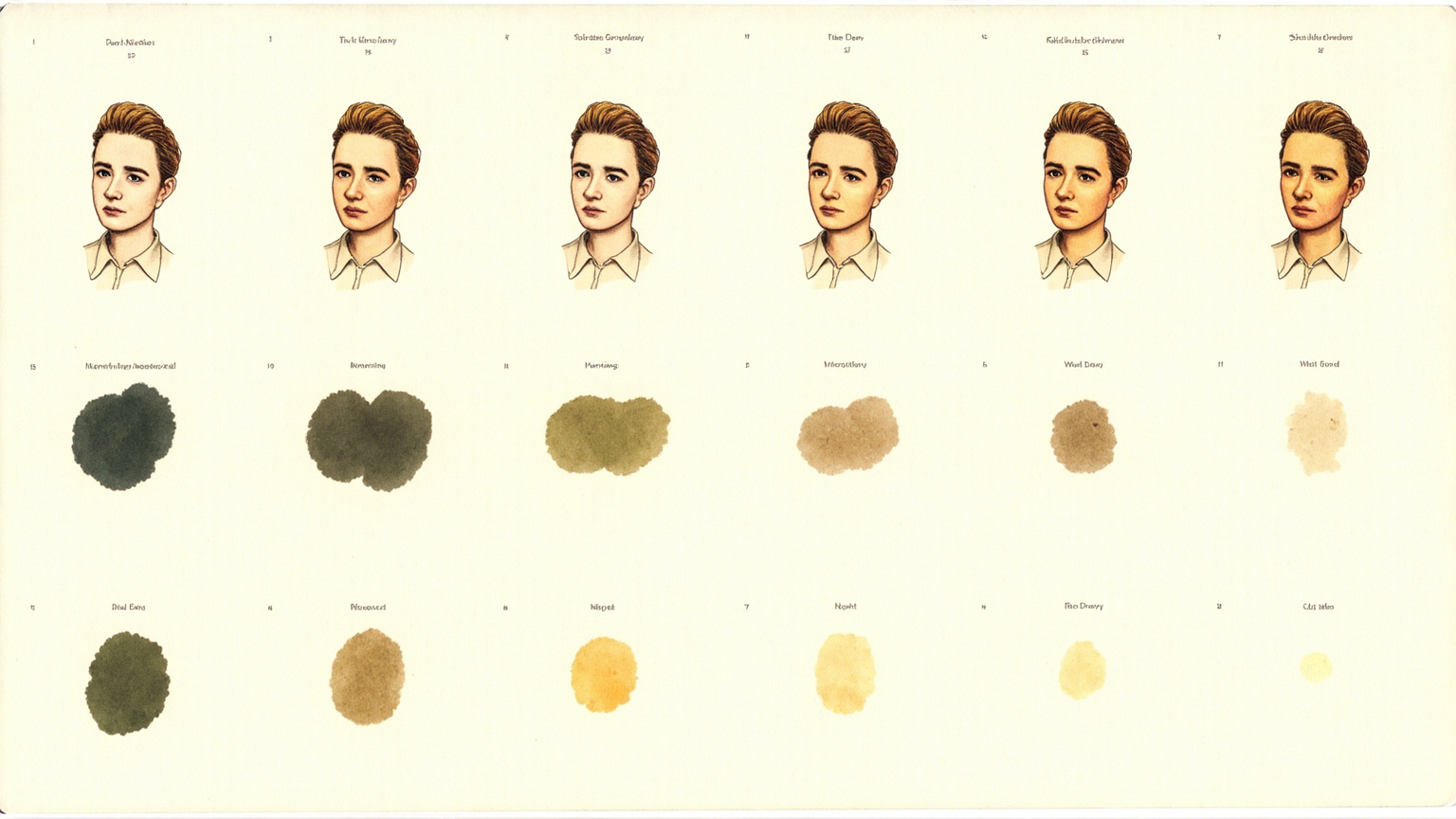
Art Direction4 plates
Before the guide was written, this book got a visual foundation — every illustration you just read grew out of it.